



SUBSCRIBE TO OUR FREE NEWSLETTER
Daily news & progressive opinion—funded by the people, not the corporations—delivered straight to your inbox.
5
#000000
#FFFFFF
To donate by check, phone, or other method, see our More Ways to Give page.


Daily news & progressive opinion—funded by the people, not the corporations—delivered straight to your inbox.
Living in not just the bleakest but dumbest timeline, we must now witness the "off the charts clownfuckery" that is the spectacle of quivering, grown-ass Trump lackeys faithfully, fearfully shuffling around the halls of power in his fave "old-man-from-Queens" shoes - most ill-sized - foisted on them in some weird submission ritual by a sociopath with daddy issues. What he evidently doesn't know: A. They're made in China, B. Their company is suing him for his illegal tariffs. Up next: Kim Jong Un haircuts for all.
The latest manifestation of Trump's petty megalomania came to light when astute observers noticed that first Lil Marco Rubio, then other White House buffoons were sporting the same often-too-large shoes, which all turned out to be the $145, black oxford Florsheims regularly worn and touted by Trump. In a cringe origin story recounted by cringe JD Vance, the Favorite Florsheims Saga began at a December meeting in the Oval Bordello when Trump, always laser-focused, began staring at people’s feet and abruptly declared, "You guys have shitty shoes." He asked their shoe sizes. He (likely) ignored/forgot them. The shoes started arriving. He mercilessly badgered them: "Did you get the shoes?" And the dutiful flunkies, having already "left their manhood pickled in a golden jar on Trump’s desk," took on the latest indignity of clomping around in their sadist dad's shoes.
Rubio, Vance, Hegseth, Duffy, Lutnick, Lindsey Graham, Sean Hannity. "All the boys have them,” said a female White House official. "It's hysterical, because everybody’s afraid not to wear them." Beware Trump bearing gifts: Armchair analysts took the shoe pageantry and ran with it. It's an ugly game of subjugation, an abuser's way of exhibiting dominance over minions like the belligerent handshake, belittling nicknames, savage put-downs if any inferior dares to question or stray. It's a piece of "exquisite and complex satire" about the juvenile male anxiety over penis size. It's a humiliation ritual by a small, hollow, clueless, malignant narcissist with "a black hole of insecurity for a dog shit soul" whose only vestige of sense of self is divulged in a vulgar, outlandish brand - fake hair, fake tan, golf cap, red tie, beloved archaic "mall shoes" - he flaunts before his cowering vassals.
Historically, it's also a classic move by totalitarian leaders intent on establishing political and psychological fealty. See Mao jackets, Heil Hitlers, Stalin humiliating the clumsy Khrushchev by making him dance at his parties, Trump's Cabinet meetings become groveling, ring-and-ass-kissing circle jerks. Shoes can be a potent symbol in a performance: Khrushchev, in power, banging his shoe at the UN to punctuate his threat, "We will bury you"; an Iraqi protester hurling one, then two, in Arab culture "ritually unclean" shoes at Bush - who deftly dodged - at a Baghdad presser to show ultimate contempt; clowns of any variety, circus to MAGA, rendered most foolish in flapping massive flotsam. Imagine preening Pete Hegseth, who just banned un-hot photos of himself, with his tight suits and he-man Nazi tattoos, squeezed into or swimming in sloppy clunkers.
Adding insult to injury for these lame heroes of the manosphere, Florsheims are deeply uncool, "a brand you last saw when you were cleaning out your dead grandpa’s room and they were under his bed." Like most things, they're also the brainchild of immigrants, launched in Chicago in 1892 by German immigrant Sigmund Florsheim and his eldest son Milton. At its peak through two World Wars, a $5 pair of "genuine Florsheims" reportedly sold every 4 seconds; a timely gag in the great Chinatown, set in 1937, has Jack Nicholson's Jake Gittes wading through diverted muddy water and scowling, "Goddamn Florsheims!" Its website boasts of "a reputation for being at the forefront of the newest trends while staying true to a legacy (of) quality craftsmanship"; in truth, they're now mostly found in downscale shopping malls and discount stores, struggling to escape a rep as relics of the past.
Today, Florsheim's belongs to parent company Weyco Group Inc. Unsurprisingly - so much again for the Klan-redolent "America First" mantra - they're made overseas in India, China, Cambodia, Dominican Republic. They seem to have a reasonably modern (sorry, "woke") worldview, with Black models and a Sustainability In Action program. And they're suing Trump - atypically, not just multiple federal agencies, but Trump himself - seeking refunds plus interest for the "unprecedented power grab" of his unlawful, unilaterally levied tariffs "without notice, public comment or Congressional authorization." SCOTUS already struck them down last month, citing the possible "mess" of upcoming "refunds of billions of dollars"; on March 4, a U.S. Trade Court judge basically said have at it when he ordered the regime to start paying those ill-begotten billions.
For now, the case is stayed. But many other companies are demanding their money back, and so is a coalition of two dozen states. As the pitchforks come out, online wags stay busy devising shoe puns: toeing the line, holding your tongue, comments laced with wit, heels with no soles, an ad for Sieg Heels: "Nobody puts the step in goosestep like Sieg Heels!” Meanwhile, our Führer's debased lickspittles stumble across the world stage, tripping on their own moral cowardice en route to the apocalypse. They need to remember Solzhenitsyn’s elemental advice in Gulag Archipelago: “Don’t ever be the first to stop applauding." Or, God forbid, flapping their fucking, war-mongering, world-razing clown shoes.
- YouTube www.youtube.com
From declaring an energy emergency and ditching global climate initiatives to abducting the Venezuelan leader to seize control of the country's nationalized oil industry, President Donald Trump has taken various actions to serve his fossil fuel donors since returning to power last year. Now, his and Israel's war on Iran could soon lead to US liquefied natural gas giants pocketing tens of billions in windfall profits.
"The Persian Gulf has some of the world's largest oil and gas producers," Oil Change International research co-director Lorne Stockman explained in a Tuesday blog post, "and a large proportion of that production, around 20% of global petroleum, must pass through a relatively narrow corridor controlled by Iran to reach global markets: the Strait of Hormuz," between the Persian Gulf and the Gulf of Oman.
Stockman—whose advocacy group works to expose the costs of fossil fuels and facilitate a just transition to clean energy—noted that "crude oil, refined petroleum products, and liquefied natural gas (LNG) traverse the strait in vast quantities every day. But not since Saturday. With missiles, fighter jets, and drones circling, shipping has ground to a halt, and Iran reportedly threatened to close the strait by force on Monday."
As the conflict in the Persian Gulf continues, fossil fuel companies are preparing for record-breaking profits while billions of people face soaring energy bills and "energy poverty."We’re tired of a world where our energy system fuels war and destroys our climate. oilchange.org/blogs/trumps...
[image or embed]
— 350.org (@350.org) March 4, 2026 at 4:43 AM
Based on ship-tracking data from MarineTraffic, Reuters estimated Wednesday that "at least 200 ships, including oil and liquefied natural gas tankers as well as cargo ships, remained at anchor in open waters off the coast of major Gulf producers including Iraq, Saudi Arabia, and Qatar," and "hundreds of other vessels remained outside Hormuz unable to reach ports."
Stockman warned that "depending on how long the violence and its atrocious human toll continues—Trump said it may take weeks until his undefined objectives are achieved—this will have huge implications for energy markets. Oil and gas companies may achieve huge windfall profits in a year that previously looked far less lucrative for them, and billions of people could see their energy bills soar."
Since Trump and Israeli Benjamin Netanyahu launched "Operation Epic Fury" on Saturday, over 1,000 people had been killed as of Wednesday, according to the Iranian government, and oil prices have surged—highlighting how, as Greenpeace International executive director Mads Christensen put it earlier this week, "as long as our world runs on oil and gas, our peace, security and our pockets will always be at the mercy of geopolitics."
Qatar exports about 20% of the global LNG supply, second only to the United States. All of that LNG goes through the Strait of Hormuz. An Iranian drone attack on Monday targeted Qatari LNG facilities, leading state-owned QatarEnergy to declare force majeure on exports. Two unnamed sources told Reuters that QE "will fully shut down gas liquefaction on Wednesday," and "it may take at least a month to return to normal production volumes."
The Qatari shutdown is expected to boost the US LNG industry, which exported about 108 million metric tons last year. Already, shares of the two largest LNG producers in the United States, Cheniere and Venture Global, have surged.
"We've got an acute contraction of global LNG supply," Alex Munton, an expert on natural gas markets at consulting firm Rapidan Energy, told CNBC. "The world is now down 20% from where it was, and that leaves the world short."
As CNBC reported Tuesday:
US producers can't ramp LNG production beyond current levels, Munton said. "They're basically running at capacity," he said.
But since their customer contracts don't have fixed destinations, they can reroute LNG to meet demand, he said. The flexible capacity at US LNG producers like Venture and Cheniere plays a crucial role in moments of crisis, the analyst said. It's a unique feature of the US LNG industry, he added.
"The volumes are able to reroute to where the demand is greatest," Munton said. "We saw this in 2022 after Russia's invasion of Ukraine. Suddenly, Europe was left short, and it was able to call on US LNG and utilize the inherent flexibility of US LNG.
US LNG cannot replace lost supply from Qatar, but buyers who really need the gas and are willing to pay a high enough price will get it, Munton said.
Seb Kennedy, the energy journalist and market analyst behind the newsletter Energy Flux, estimated Wednesday that "American LNG exports could generate up to $4 billion in windfall profits if the force majeure remains in effect for one month. This figure could rise as high as $20 billion per month if the market is deprived of Qatari supply until the summer."
"Over the first four months, US LNG profits could reach more than $33 billion above the pre-Iran average. Over eight months, that figure rises to $108 billion," he continued. "And if, in an extreme scenario, Qatari LNG is shut-in for a full year, the excess profits raining down on US LNG exports could stack up to almost $170 billion—a figure that would represent one of the most concentrated commodity windfalls of the post-2000 era."
"To put that in context, the 12-month Ukraine war windfall accruing to US LNG exporters, from August 2021 through August 2022, is estimated at $84 billion," Kennedy noted. "Iran could, in certain circumstances, eclipse that total in just over six months."
My latest for Energy Flux:💥 War profits, quantified 💥As Middle East regional war upends global gas markets, US LNG exporters stand to pocket a multi-billion-dollar windfallCheck it out 👉 www.energyflux.news/war-profits...
[image or embed]
— Seb Kennedy (@sebkennedy.bsky.social) March 4, 2026 at 11:58 AM
As the US Senate prepared for a vote on a war powers resolution that is not expected to pass but would swiftly halt Trump's assault on Iran, Defense Secretary Pete Hegseth said Wednesday that the war could last at least eight weeks. He also announced that an American submarine fired a torpedo that sank an Iranian naval ship off the coast of Sri Lanka.
On Tuesday, Trump had responded to Iran's attempt to shut down the Strait of Hormuz with a post on his Truth Social platform: "Effective IMMEDIATELY, I have ordered the United States Development Finance Corporation (DFC) to provide, at a very reasonable price, political risk insurance and guarantees for the Financial Security of ALL Maritime Trade, especially Energy, traveling through the Gulf. This will be available to all Shipping Lines. If necessary, the United States Navy will begin escorting tankers through the Strait of Hormuz, as soon as possible. No matter what, the United States will ensure the FREE FLOW of ENERGY to the WORLD. The United States’ ECONOMIC and MILITARY MIGHT is the GREATEST ON EARTH—More actions to come."
However, as the New York Times highlighted Wednesday, "shipping company officials and analysts are skeptical" of Trump's promised fixes, and "some industry executives also worried how quickly these could get up and running."
For example, Helima Croft, the global head of commodity strategy at RBC Capital Markets, wrote to clients on Tuesday that "we think the insurance proposal is likely in a concepts-of-a-plan stage," and she questioned whether there are enough US naval assets in the region to actually provide escorts.
It's been two weeks since Big Tech companies gathered at the White House to sign a nonbinding pledge saying they will not pass on higher utility costs to consumers as the rapid build-out of energy-intensive artificial intelligence data centers sends electricity bills skyrocketing—but polling out Wednesday showed a majority of Americans reject President Donald Trump's plan to leave corporations responsible for tackling the affordability crisis.
Those same companies, said most respondents to a survey by Data for Progress and Groundwork Collaborative, are responsible for higher costs that have hit households across the country, and can't be trusted to ensure life is more affordable for families.
Instead, said 61% of respondents, "cracking down on price gouging" from both utility and energy companies would be the most effective way to lower the cost of electricity. In comparison, just 35% said building more energy infrastructure to meet demands was the answer to high costs.
While Trump has been forced in recent weeks to acknowledge that "energy demands from AI data centers could unfairly drive up" people's energy costs, as he admitted in his State of the Union address while announcing AI companies would sign his "ratepayer protection pledge," the president has largely deflected blame regarding the affordability crisis—or denied its existence altogether.
Trump claimed at a rally in Kentucky last week that "the economy is roaring back," even as his $1 billion-per-day, unprovoked war on Iran inflamed tensions across the Middle East and drove up oil prices.
Groundwork said in its analysis of the poll that following Trump's announcement of the ratepayer protection pledge, "Americans reject this reliance on corporations to do the right thing."
Elizabeth Pancotti, managing director of policy and advocacy for Groundwork Collaborative, said that "utility prices are up and consumers know the truth: These price increases are being driven by corporate greed and unchecked AI data center growth."
Trump has pushed to accelerate the construction of new data centers by fast-tracking the permitting process.
Two-thirds of those surveyed said their monthly electricity payments have gone up in the past year, with nearly a quarter of respondents saying they had increased by "a lot." More than 40% of people said they are now paying between $101-$200 per month for electricity.
As Common Dreams reported last November, Trump's demand for AI companies to build massive, energy-sucking data centers in communities across the US has been linked to rising costs of consumers, with the average overdue balance on utility bills surging by 32% in the last three years and states with high concentrations of AI data centers seeing electricity prices skyrocket by as much as 16% from 2024-25.
Sixty percent of respondents told Data for Progress and Groundwork Collaborative that the energy demand of large commercial users like AI data centers is to blame for higher consumer prices, and the same percentage of people also blamed high compensation for utility company executives. Sixty-three percent of those polled said high profits for utility companies and their investors were to blame.
Joint Economic Committee Democrats revealed Tuesday that the average annual US electric bill increased by $110 last year.
A 2022 analysis by Accountable.US found that the nine largest US energy utility companies raked in nearly $14 billion in combined profits in the first three quarters of that year and handed out $11 billion to shareholders while tens of millions of households struggled with rising utility bills.
Nearly 60% of the 1,149 people polled by the two progressive think tanks also said the public sector must take a leadership role on providing energy, "because the public sector doesn't collect profits and can pass on savings to customers," and 60% said the public sector should be responsible for upgrading and modernizing the electric grid because it is a "public resource that should serve all Americans equally, not generate profits for shareholders."
Alex Jacquez, chief of policy and advocacy for Groundwork and a former Biden administration official, said the poll revealed that "the people believe in public power."
The groups also polled respondents on their opinions of "energy superusers," including cryptocurrency companies, AI data centers, and AI firms.
Crypto companies were the least popular, with 54% disapproving compared to 26% who approved. Voters disapproved of AI data centers by a 16-point margin and AI companies in general by an 8-point margin.
Nearly two-thirds said they believe new AI data centers would raise their energy costs, and voters across the political spectrum opposed new data centers in their communities.
Grassroots efforts have taken off in states including Michigan, Wisconsin, and New Jersey as community members have rejected the construction of data centers on the grounds that they would consume massive amounts of water as well as electricity, threaten jobs, and take up space that could otherwise be used for affordable housing and small businesses.
"Voters feel ripped off by the corporations who hold their utilities hostage and are calling on lawmakers to put an end to the profiteering racket," said Pancotti. "It’s time for regulators and policymakers to answer the call to protect working families from predatory utility corporations and Big Tech.”
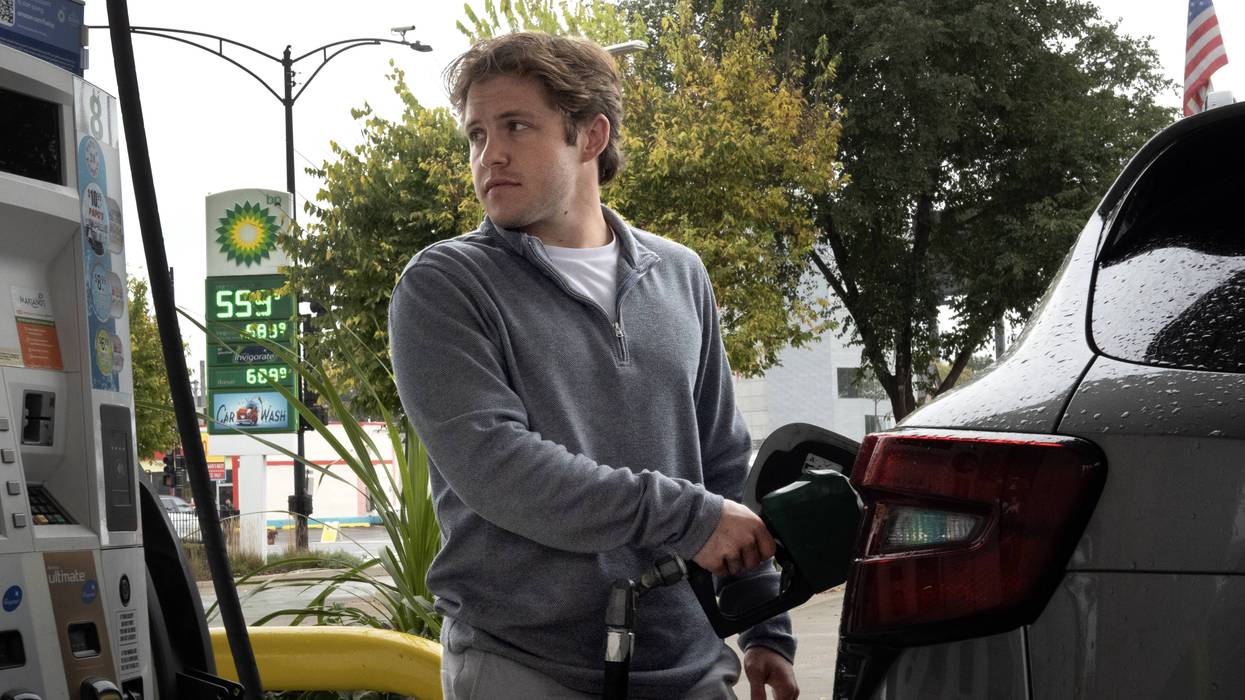
With Big Oil poised to profit from a price spike driven by the US-Israeli war on Iran, congressional Democrats on Wednesday revived an excise tax that proponents say would put money back in the pockets of struggling American workers.
Sen. Sheldon Whitehouse (D-RI) and Rep. Ro Khanna (D-Calif.) reintroduced the Big Oil Windfall Profits Tax Act "to curb profiteering by oil companies and provide Americans relief at the gas pump."
The legislation—which only applies to large oil companies—would impose a per-barrel tax "equal to 50% of the difference between the current price per barrel of oil and the average price per barrel last year, when big oil companies were already earning large profits."
As Democrats on the Senate Committee on the Environment and Public Works explained: "Revenue raised from the windfall profits of Big Oil companies will be returned to consumers in the form of a quarterly rebate, which would phase out for single filers who earn more than $75,000 in annual income and joint filers who earn more than $150,000. At $100 per barrel of oil, the levy would raise approximately $33 billion per year. At that price, single filers would receive approximately $216 annually and joint filers would receive roughly $324 annually.”
The committee Democrats noted:
The price of a gallon of gas is up 80 cents just weeks after the onset of war in Iran, and the price of a barrel of oil has increased 50% from what it was at the start of the year. President [Donald] Trump’s war in Iran has further disrupted an already volatile global oil market by reducing supply and choking key shipping lanes. Qatar has warned that oil prices could surpass $150 per barrel in the coming weeks, far above 2022 highs seen following Russia’s invasion of Ukraine.
Trump—who promised gas under $2 a gallon and no new wars—said last week that "when oil prices go up, we make a lot of money."
As in Venezuela—another oil-rich country attacked by a president who has bombed 10 nations, more than any other US leader in history—Big Oil revenue is projected to surge due to the rising volatility and prices the war on Iran is bringing. The Financial Times reported Tuesday that US oil companies could reap $60 billion in additional revenue this year alone if crude prices remain high.
As one oil industry financial analyst told The New York Times earlier this week, “The oil and gas industry’s financial strategy has been ‘pray for war,’ because those are the conditions under which they make money."
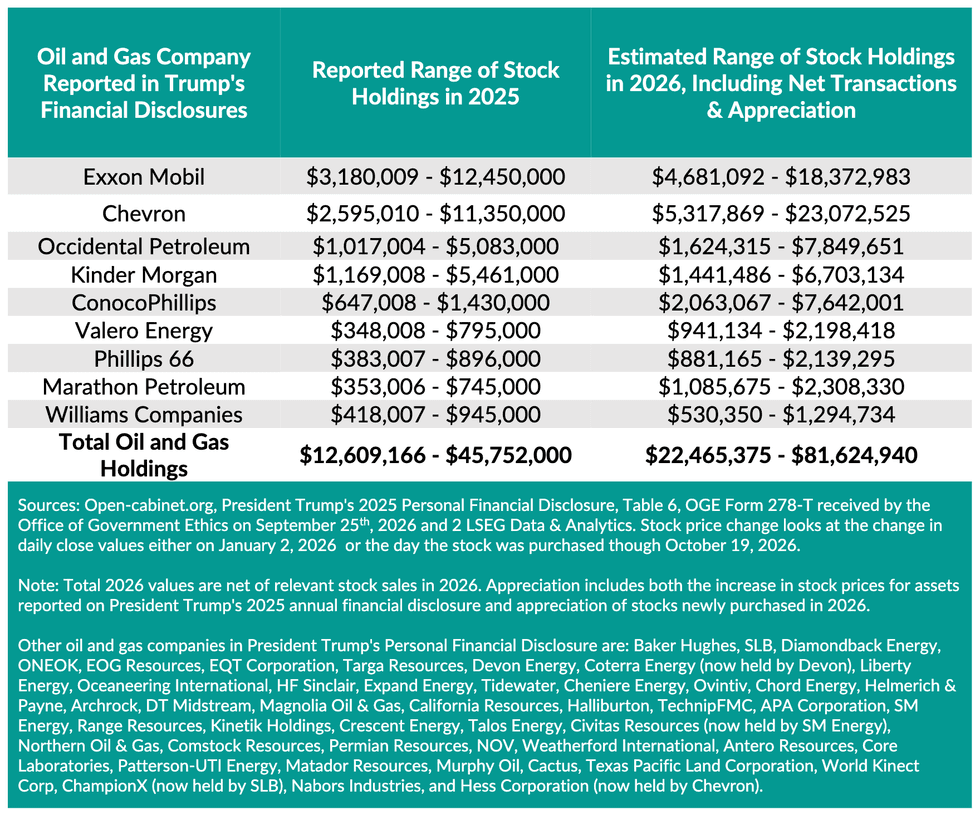
Critics said that while fossil fuel interests—which spent close to half a billion dollars to get Trump and other Republicans elected in 2024—rake in profits, ordinary Americans suffer.
“American consumers are once again getting squeezed at the gas pump as President Trump’s war of choice in Iran sends gas prices soaring and money flowing to his Big Oil donors,” Whitehouse said Tuesday. “We should send any big windfall for Big Oil back to the hardworking people who paid for it at the gas pump."
"Over the longer term, accelerating our transition to clean energy will lower energy costs, insulate consumers from these kinds of price spikes, and reduce America’s dependence on foreign despots and greedy fossil fuel companies," he added.
Khanna said: “Trump’s war of choice in Iran is not just a moral mistake but an economic blunder that is skyrocketing gas prices for working Americans. I’m proud to reintroduce the Big Oil Windfall Profits Tax Act alongside Sen. Whitehouse to stop Big Oil from profiteering off of foreign wars at Americans’ expense and deliver real relief at the pump."
The President shouldn't be a cheerleader for Big Oil companies making fatter profits while Americans pay higher gas prices.We should tax windfall oil profits from Trump's war against Iran and give relief to American families instead.
[image or embed]
— Elizabeth Warren (@warren.senate.gov) March 15, 2026 at 10:38 AM
Green groups and economic justice advocates were among those applauding the reintroduction of the bill, which one 2022 nationwide poll found is supported by 80% of Americans.
“Let’s be crystal clear that when Trump said ‘when oil prices go up, we make a lot of money’, he was talking about billionaire Big Oil executives while ‘we the people’ are stuck paying higher costs," said League of Conservation Voters (LCV) senior federal advocacy campaigns director Leah Donahey.
"A recent analysis estimates the oil industry could rake in over $60 billion in additional profits this year, which would all be paid by consumers struggling with higher energy costs," Donahey added. "Congress should pass this bill as soon as possible to make sure they are putting people over oil CEO profits.”
Mitch Jones, who directs policy and litigation at the watchdog group Food & Water Watch (FWW), said Wednesday that "historical evidence could not be any clearer: Big Oil will undoubtedly leverage the current crisis in the Middle East to maximize profit margins, pinching American families and enriching their executives and Wall Street speculators."
"This demands a policy response—namely, a windfall profits tax... which would recover much of these egregious, opportunistic gains and return them to everyday Americans," Jones added. "At a time when many families are already struggling with skyrocketing energy bills caused by money-driven AI schemes from the tech industry, fossil fuel companies must be held accountable for the profiteering they are orchestrating as we speak.”
LCV and FWW are among the more than 70 groups urging Congress to pass the Big Oil Windfall Profits Tax Act.
“As instability in the Middle East once again drives up oil prices, American families are being asked to pay more for gasoline and other basic necessities,” the groups wrote Wednesday in a letter to congressional leaders. “Meanwhile, the largest fossil fuel companies stand to collect billions in additional profits. A windfall profits tax would ensure that when oil companies benefit from crisis-driven price spikes, some of those gains are returned to the households paying the cost.”
With Republican leadership in the US House of Representatives aiming for "a straightforward extension of Section 702 of the Foreign Intelligence Surveillance Act, or FISA, next week," a diverse coalition on Thursday renewed calls for Congress to impose "much-needed privacy protections against government agencies' warrantless mass surveillance of people in the United States."
Section 702 empowers the US government to spy on electronic communications of noncitizens located outside the United States to acquire foreign intelligence information, without a warrant. However, Americans' data is also collected, and advocates and lawmakers have long demanded reforms to the abused authority, which is set to expire next month unless reauthorized.
As President Donald Trump's White House—including Stephen Miller, his pro-spying deputy chief of staff—pushes for a "clean" reauthorization, 133 artificial intelligence, civil rights, and other progressive groups convened by Demand Progress and the Project On Government Oversight sent a Thursday letter to Republican and Democratic leaders in both chambers of Congress.
The coalition's letter argues that "FISA's sunsets were designed to prompt Congress to consider privacy protections" and calls for "closing the data broker loophole" that intelligence and law enforcement agencies use to buy their way around the Fourth Amendment to the US Constitution, which is supposed to protect Americans against unreasonable searches and seizures.
"Data brokers sell private information about all Americans, often surreptitiously obtaining that data from our phones and other internet-connected devices," the letter explains. "This information paints a mosaic of each and every American's life, which exposes where we sleep, what we believe, whom we vote for, and a staggering amount more."
The loophole "facilitates mass surveillance and circumvents FISA reforms Congress enacted in 2015 to prohibit domestic bulk data collection," the missive continues. Closing it "would ensure government agencies obtain judicial approval before buying information about people in the United States from data brokers if it would otherwise require a court order to seize."
"This would establish a critical legal process to protect privacy before such warrantlessly acquired information is fed into artificial intelligence surveillance systems, and help avert looming and unprecedented threats to Americans' civil liberties," it adds, citing a poll that shows 80% of Americans think the government should have to obtain a warrant before being able to buy such data.
The letter also highlights recent reporting from The New York Times that the US Department of Defense wants AI companies to "allow for the collection and analysis of unclassified, commercial bulk data on Americans, such as geolocation and web browsing data," and appears to have already secured one agreement that could permit any use the government deems lawful.
Demand Progress executive director Sean Vitka warned in a Thursday statement that "by rushing to renew FISA without any reforms, Congress is poised to allow AI companies and government agencies to supercharge mass domestic surveillance systems with our location and web browsing data—all without a warrant or any involvement from the courts."
"The American people do not want the government to bypass the courts and buy our private information in bulk from data brokers," Vitka stressed. "To protect Americans' privacy, our Fourth Amendment rights and the fundamental liberties that privacy protects, Congress must close the data broker loophole before renewing the government's surveillance power."
The letter—whose other signatories include the ACLU, Amnesty International US, Center for Democracy & Technology, Consumer Action, Electronic Privacy Information Center, Fight for the Future, Friends of the Earth US, MoveOn, No Tech for Apartheid, Peace Action, Progressive Democrats of America, Reporters Without Borders, and more—points out that "several already introduced pieces of legislation both reauthorize Section 702 and effectively close the data broker loophole."
Among them is the bipartisan Security and Freedom Enhancement (SAFE) Act, introduced last month by Sens. Dick Durbin (D-Ill.) and Mike Lee (R-Utah), and backed by organizations including Demand Progress.
"Section 702 is a valuable tool to help keep our nation safe," Durbin said at the time. "However, it's being used to conduct thousands of warrantless searches of Americans' private communications. That's unacceptable. Our bipartisan SAFE Act is a commonsense solution to continue protecting our country from foreign threats—while safeguarding Americans' civil liberties and privacy."
The US Department of Justice has reportedly launched multiple drug trafficking investigations into Colombian President Gustavo Petro—a leftist and staunch critic of President Donald Trump—just over two months after dropping a key yet fictitious allegation against Venezuela's kidnapped leader.
"Three people with knowledge of the matter" told The New York Times on Friday that the US Attorney's offices in Manhattan and Brooklyn are conducting the investigations in concert with "prosecutors who focus on international narcotics trafficking," the Drug Enforcement Administration (DEA), and Homeland Security Investigations (HSI).
Investigators are reportedly probing whether Petro met with any drug traffickers or if his presidential campaign solicited donations from them. The sources told the Times that the probes are in their early states and it is unclear whether any criminal charges would be filed.
The Times noted that "there was nothing to indicate that the White House had a role in initiating either investigation."
However, Trump has shown exceptional zeal for weaponizing the government to target his political foes and has repeatedly accused Petro—who has been a vocal critic of US imperialism, high-seas boat bombings, and support for Israel's genocidal war on Gaza—of being a drug trafficker.
Trump has offered no evidence to support his allegations against Petro. The US, on the other hand, has a centuries-long history of involvement in drug trafficking, from China to Southeast Asia to Central America—and Colombia, where the CIA allegedly worked with the United Self-Defense Forces of Colombia (AUC), a far-right paramilitary group founded by drug lords to combat leftist insurgents during the country's decadeslong civil war.
As a sitting head of state, Petro has immunity from US jurisdiction while in office. But that did not stop Trump from bombing and invading Venezuela to abduct President Nicolás Maduro to the United States. The DOJ charged Venezuela's president with narco-terrorism conspiracy, conspiracy to import cocaine into the United States, and possession of machine guns and destructive devices.
The DOJ has quietly dropped its "made-up" allegation against Maduro—that he was the kingpin of the "Cartel de los Soles"—after learning that the name is a slang phrase and not an actual criminal group.
After kidnapping Maduro, Trump told Petro to "watch his ass."
Last October, the US Treasury Department sanctioned Petro and his wife, with Treasury Secretary Scott Bessent saying at the time that Colombia's leader "has allowed drug cartels to flourish and refused to stop this activity."
This, after the US State Department revoked Petro's visa after he used his September 2025 United Nations General Assembly address to accuse Trump of complicity in the Gaza genocide and urged the UN to open a criminal case against the US leader for his extrajudicial bombing of boats allegedly transporting drugs from South America to the United States. Petro also implored US troops to "not point your rifles against humanity."
Some observers say Trump may try to leverage the probe of Petro to pressure him into greater cooperation with the failed but ongoing 55-year War on Drugs. Colombia is the world's leading cocaine producer whose previous right-wing governments were staunch US allies during and after the Cold War.
According to the Times:
At the same time, Colombian news outlets have reported that people linked to traffickers have tried to channel funds to Mr. Petro, including through his son. His son admitted that illicit money entered his father’s 2022 election campaign, Colombian prosecutors said, but they have not brought criminal charges against Mr. Petro himself. He has denied wrongdoing, describing the accusations as politically motivated.
Others speculate that Trump may be trying to put his finger on the scale of Colombia's May 31 election. As Colombia's Constitution limits presidents to a single term, Petro has urged his supporters to vote for leftist Sen. Iván Cepeda. Trump has forged close ties with right-wing governments across Latin America, recently hosting his Shield of the America's summit in Miami and meddling in elections from Honduras to Chile to Argentina.
Relations between Trump and Petro seemed to have been improving. When Petro visited the White House last month for his first face-to-face meeting with Trump, many observers braced themselves for fireworks. However, Trump emerged from the meeting calling it "terrific." He even signed a copy of his ghostwritten book, The Art of the Deal, for Petro, writing, "You are great" on the title page.
Petro, in turn, posted a photo Trump gifted him of the two men shaking hands, and a handwritten message saying, "Gustavo: A great honor—I love Colombia."
"When the international community didn't stop Israel as it deliberately killed nearly 75,000 Palestinians in Gaza, including 20,000 children, Israel knew they could kill civilians with impunity," said one critic.
Eighty percent of Lebanese people killed in Israel's renewed airstrikes on its northern neighbor were slain in attacks targeting only or mainly civilians, a leading international conflict monitor said Friday.
Reuters, using data provided by the Madison, Wisconsin-based Armed Conflict Location and Event Data (ACLED), reported that 666 people were killed by Israeli strikes on Lebanon between March 1-16. As of Thursday, Lebanese officials said the death toll from Israeli attacks had topped 1,000.
While Lebanese authorities do not break down the combatant status of those killed and wounded during the war, Israel's targeting of civilian infrastructure, including entire apartment buildings, and reports of whole families being wiped out, have belied Israeli officials' claims that they do everything possible to avoid harming civilians.
Classified Israel Defense Forces (IDF) data leaked last year revealed that—despite Israeli government claims of a historically low civilian-to-combatant kill ratio—83% of Palestinians killed during the first 19 weeks of the genocidal war on Gaza were civilians.
According to Gaza officials, 2,700 families were erased from the civil registry in the Palestinian exclave during Israel's genocidal assault.
"When the international community didn't stop Israel as it deliberately killed nearly 75,000 Palestinians in Gaza, including 20,000 children, Israel knew they could kill civilians with impunity," Lebanese diplomat Mohamad Safa said on social media earlier this week. "The result is exactly what we're seeing in Lebanon and Iran right now."
US-Israeli bombing of Iran has killed at least 1,444 people, according to officials in Tehran. The independent, Washington, DC-based monitor Human Rights Activists in Iran (HRAI) says the death toll is over twice as high as the official count and includes nearly 1,400 civilians.
The February 28 US massacre of around 175 children and staff at an elementary school for girls in the southern city of Minab—which US President Donald Trump initially tried to blame on Iran—remains the deadliest known incident of the three-week war.
As Israeli airstrikes intensify and the IDF prepares for a possible ground invasion of southern Lebanon—which Israel occupied from 1982-2000—experts are warning that noncombatants will once again pay the heaviest price.
United Nations officials and others assert that Israel's intentional attacks on civilians are war crimes. Israel is the subject of an ongoing genocide case filed by South Africa at the International Court of Justice, and the International Criminal Court has issued arrest warrants for Israeli Prime Minister Benjamin Netanyahu and former Defense Minister Yoav Gallant, who are accused of crimes against humanity and war crimes in Gaza.
"Deliberately attacking civilians or civilian objects amounts to a war crime," UN High Commissioner for Human Rights spokesperson Thameen al-Kheetan said earlier this week. "In addition, international law provides for specific protections for healthcare workers, as well as people at heightened risk, such as the elderly, women, and displaced people."
As was the case during Israel's bombing of Gaza and Lebanon following the October 7, 2023 attack, journalists are apparently being deliberately targeted again. Reporters Without Borders said in December that, for the third straight year, Israel was the world's leading killer of journalists in 2025.
"This was a deliberate, targeted attack on journalists," said RT correspondent Steve Sweeney after narrowly surviving an IDF airstrike on Thursday. "There's no mistake about it. This was an Israeli precision strike from a fighter jet."
"But if they think they’re going to silence us, if they think we're going to stay out of the field, they’re very, very much mistaken," he added.
“With global humanitarian needs already at record levels, further escalation of the conflict in the Middle East and wider region will have grave ramifications for crises across the world,” said one advocate.
The US-Israeli war against Iran has unleashed a "triple emergency" that is draining the global humanitarian aid system of resources and putting millions of the world's most vulnerable people at even greater risk, according to a dire warning issued Friday by the International Rescue Committee.
The war has already resulted in the deaths of thousands and the displacement of millions of people in Iran and Lebanon. But the IRC says that the ripple effects of the war are beginning to spread to conflict zones across the world.
The conflict has caused many nations in the region to partially or fully close their airspace, leaving critical cargo stranded.
Meanwhile, Iran’s closure of the Strait of Hormuz in retaliation for US and Israeli attacks has disrupted the flow of more than 20% of the world’s oil exports, sharply raising transport costs and straining budgets that could go toward lifesaving aid.
“Medical aid is highly dependent on international transport,” said Willem Zuidema, Save the Children’s global supply chain director. “The blockage in the Strait of Hormuz, combined with spiking cost for insurance and fuel, is directly impacting patients in our health facilities, at the worst time possible.”
IRC said $130,000 worth of pharmaceutical aid intended for its humanitarian response to the conflict in Sudan has been left stranded in Dubai due to the strait's closure.
According to Save the Children, this delay has put 90 primary healthcare facilities across Sudan at risk of running low on supplies.
More than 400,000 children, the group estimated, could be affected by the inability to receive antibiotics, antimalarial drugs, pain and fever medications, and other treatments.
The group said it has been forced to deliver the aid using the much more costly method of transporting it across Jeddah, where it will be carried by sea freight to Sudan, which the group said could add as much as $1,000-2,000 per container.
The same is true of humanitarian zones in Afghanistan and Yemen, where treatments for thousands of children must now be delivered by air or by land, dramatically raising the costs.
The closure of the strait has also forced many vessels carrying aid to find alternative routes. IRC said its shipping partners have been forced to reroute their operations to instead travel around Africa's Cape of Good Hope, adding up to a month for ocean freight deliveries to war zones on the continent.
"What we are seeing is the war in Iran unleashing a triple emergency," said David Milliband, the president and CEO of IRC.
"First, a surge in humanitarian need, with Lebanon now the most visible humanitarian scar and one of the fastest-growing displacement crises in the world, with over one million people forced from their homes in weeks," he said.
"Second, a global economic shock, as disruptions to food, fuel, and fertilizer markets, putting up to 30% of fertilizer trade at risk, threatens more than 300 million people already facing acute food insecurity," said Milliband, and "third, a system under strain, with more than 60 conflicts stretching diplomatic attention and funding to a breaking point, pushing crises like Sudan and Gaza further down the list of priorities."
Milliband marveled at the priorities of the powers prosecuting the war. He pointed to a recent estimate from the Pentagon that the first six days of the war alone cost $11.3 billion, noting that "just $4 billion is enough to pay for treatment for every acutely malnourished child in the world."
Zuidema said that the "grave ripple effects" caused by the war are exacerbated by the fact that "governments are cutting vital foreign aid budgets."
He called on all parties to the war to cease hostilities and to adhere to their obligations under international law, including allowing the free flow of humanitarian aid.
“There should be no barriers to lifesaving supplies: Exemptions should be put in place to allow humanitarian supplies, fertilizer, and food to be able to move through the Strait of Hormuz,” Zuidema said. “With global humanitarian needs already at record levels, further escalation of the conflict in the Middle East and wider region will have grave ramifications for crises across the world.”
Estefany Rodríguez's detention "has had a chilling effect, undermining journalists’ ability, especially local reporters, to cover their communities without fear of retaliation," according to one advocate.
Immigrant rights and press freedom groups were celebrating Friday after Nashville journalist Estefany Rodríguez was released from a US Immigration and Customs Enforcement detention center in Louisiana, two weeks after she was detained—but advocates said they would continue challenging the violation of Rodríguez's rights and demanded the Trump administration end its targeting of journalists amid its anti-immigration crackdown.
Rodríguez was freed on a $10,000 bond, more than two weeks after the Nashville Noticias reporter was detained outside a gym while traveling in her marked press vehicle.
As Common Dreams reported, press freedom advocates expressed concern that Rodríguez was detained in retaliation for her reporting on ICE's mass detention and deportation operation under President Donald Trump.
An ICE officer told her lawyer after her arrest that Rodríguez had been labeled a "flight risk" because she "missed" two meetings at the local ICE office—although the agency had previously informed her lawyer and her husband that she didn't need to go to the meetings.
Nora Benavidez, senior counsel of the media rights group Free Press, said the group welcomed the news of Rodríguez's release but emphasized that "while this is a victory for Rodríguez, her free speech rights, and the communities she reports for, the fight is not over."
"We remain troubled by the federal government’s ongoing campaign to silence and deport reporters who cover the administration’s gross mistreatment of immigrants," said Benavidez. "We will continue to fight for Rodríguez and her right to report free from retaliation while we challenge the federal government’s relentless assaults on the First Amendment across this country.”
"Press freedom is not theoretical—it is tested in moments like this. Safeguarding it means removing unnecessary barriers and ensuring that journalists, especially those serving vulnerable communities, can report freely and without fear."
Rodríguez was arrested weeks after journalists Don Lemon and Georgia Fort were arrested for reporting on an anti-ICE protest at a church in Minneapolis. Emmy-winning journalist Mario Guevara was arrested last June after reporting on a No Kings protest against Trump in Atlanta; he was detained for more than 100 days before being deported to El Salvador.
Rodríguez arrived in the US lawfully in 2021 from her native Colombia, where she faced threats due to her reporting work. She applied for asylum before her visa expired.
Nashville Banner reported that Rodríguez was granted the bond by a judge on Monday, but a mandatory stay allowed ICE attorneys the opportunity to appeal the decision, which they ultimately did not. Then it took a day for Rodríguez's family to post the bond through an electronic system on Wednesday, which required approval since they were first-time users.
The bureaucratic delays added to the ordeal Rodríguez faced during her detention, during which she was not able to contact her attorneys until March 14. She first spent a week in a county jail in Alabama where guards placed her in isolation for five days, claiming she had contracted lice. According to Nashville Banner, before she was transferred to the center in Louisiana, the guards "took her to the shower, made her strip naked, and poured cleaning liquid over her head." The substance made Rodríguez's eyes burn, and the outlet reported that "she believed the liquid was also used to clean floors."
Following her release, Rodríguez's legal case is ongoing. Her lawyers filed an emergency petition for a writ of habeas corpus in federal court. Government lawyers are now arguing the case is moot because Rodríguez has been released, but her attorneys are seeking an evidentiary hearing to obtain an injunction against her potential redetenion.
"We plan to proceed with the habeas petition that was filed on March 4, challenging both her warrantless arrest and retaliation for her exercise of First Amendment rights," said Mike Holley, an attorney with the Tennessee Immigrant and Refugee Rights Coalition. "Through that petition, we are seeking not only her complete release, but an order prohibiting ICE from mistreating her in a similar way in the future.”
In the petition, Rodríguez's legal team argued her detention has violated her First, Fourth, and Fifth amendment rights and asserted that she was detained in relation to her coverage of ICE operations.
Jose Zamora, regional director of the Americas for the Committee to Protect Journalists, said Rodríguez's detention "has had a chilling effect, undermining journalists’ ability, especially local reporters, to cover their communities without fear of retaliation."
“The government must uphold press freedom and ensure all journalists can work safely and without reprisal," said Zamora.
Mark Schoeff Jr., president of the National Press Club, said that Rodríguez's case "should never have reached this point."
"We urge authorities to drop any further action against Ms. Rodríguez and allow her to continue her work without interference. She is a community-focused journalist whose reporting serves the public interest, and she must be able to work openly and cooperatively as she seeks to resolve her legal status in the United States," said Schoeff. "A free press depends on the ability of journalists to report without fear of detention or retaliation. Reporters cannot do their jobs if they fear detention for doing their jobs."
"Press freedom is not theoretical—it is tested in moments like this," he added. "Safeguarding it means removing unnecessary barriers and ensuring that journalists, especially those serving vulnerable communities, can report freely and without fear."