
UN: Gaza Won't Be 'Liveable' by 2020 Without 'Herculean' Efforts
Gaza may not be 'liveable' by 2020, and its aquifer may be unusable by as soon as 2016, according to a report from the United Nations published Monday.
Gaza in 2020: A liveable place?, a report launched by Maxwell Gaylard, UN Resident and Humanitarian Coordinator in the occupied Palestinian territory, Jean Gough of the UN Children's Fund (UNICEF) and Robert Turner of the UN Relief and Works Agency for Palestinian Refugees in the Near East (UNRWA) forecasts a worsening situation for the population living under an Israel-enforced blockade, which rights groups have called an "open air prison."
"Gaza will have half a million more people by 2020 while its economy will grow only slowly. In consequence, the people of Gaza will have an even harder time getting enough drinking water and electricity, or sending their children to school," said Gaylard.
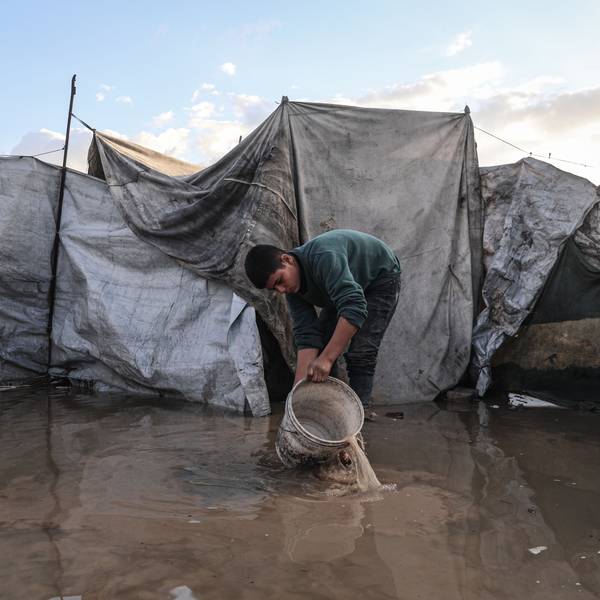
The report highlight Gaza's acute water crisis, noting that Gaza's aquifer may become unusable in as few as four years and may suffer irreversible damage by 2020. It implicates sewage and fertilizer pollution as well as high saline levels in water. While it mentions low levels of water in Gaza's aquifer, it does not mention Israeli use of Gaza's underground water supply. The report also highlights that the already densely populated area will only become more so. The population of 1.6 million people today is set to skyrocket to 2.1 million people in 2020.
"The substantial population growth rate will thus add some 500,000 people to a living area which is restricted and already heavily urbanized. Fundamental infrastructure in electricity, water and sanitation, municipal and social services, is struggling to keep pace with the needs of the growing population," it states.
The report urges the end to the blockade, saying, "Gaza needs to be open and accessible to the world."
"The viability of a future Palestinian state depends on a proper connection between the West Bank and Gaza, providing access to the Mediterranean for the entire occupied Palestinian territory," the report adds.
The report concludes that only "herculean efforts by Palestinians and its partners" will be able to make Gaza livable in 2020.
An Urgent Message From Our Co-Founder
Dear Common Dreams reader, It’s been nearly 30 years since I co-founded Common Dreams with my late wife, Lina Newhouser. We had the radical notion that journalism should serve the public good, not corporate profits. It was clear to us from the outset what it would take to build such a project. No paid advertisements. No corporate sponsors. No millionaire publisher telling us what to think or do. Many people said we wouldn't last a year, but we proved those doubters wrong. Together with a tremendous team of journalists and dedicated staff, we built an independent media outlet free from the constraints of profits and corporate control. Our mission has always been simple: To inform. To inspire. To ignite change for the common good. Building Common Dreams was not easy. Our survival was never guaranteed. When you take on the most powerful forces—Wall Street greed, fossil fuel industry destruction, Big Tech lobbyists, and uber-rich oligarchs who have spent billions upon billions rigging the economy and democracy in their favor—the only bulwark you have is supporters who believe in your work. But here’s the urgent message from me today. It's never been this bad out there. And it's never been this hard to keep us going. At the very moment Common Dreams is most needed, the threats we face are intensifying. We need your support now more than ever. We don't accept corporate advertising and never will. We don't have a paywall because we don't think people should be blocked from critical news based on their ability to pay. Everything we do is funded by the donations of readers like you. When everyone does the little they can afford, we are strong. But if that support retreats or dries up, so do we. Will you donate now to make sure Common Dreams not only survives but thrives? —Craig Brown, Co-founder |
Gaza may not be 'liveable' by 2020, and its aquifer may be unusable by as soon as 2016, according to a report from the United Nations published Monday.
Gaza in 2020: A liveable place?, a report launched by Maxwell Gaylard, UN Resident and Humanitarian Coordinator in the occupied Palestinian territory, Jean Gough of the UN Children's Fund (UNICEF) and Robert Turner of the UN Relief and Works Agency for Palestinian Refugees in the Near East (UNRWA) forecasts a worsening situation for the population living under an Israel-enforced blockade, which rights groups have called an "open air prison."
"Gaza will have half a million more people by 2020 while its economy will grow only slowly. In consequence, the people of Gaza will have an even harder time getting enough drinking water and electricity, or sending their children to school," said Gaylard.
The report highlight Gaza's acute water crisis, noting that Gaza's aquifer may become unusable in as few as four years and may suffer irreversible damage by 2020. It implicates sewage and fertilizer pollution as well as high saline levels in water. While it mentions low levels of water in Gaza's aquifer, it does not mention Israeli use of Gaza's underground water supply. The report also highlights that the already densely populated area will only become more so. The population of 1.6 million people today is set to skyrocket to 2.1 million people in 2020.
"The substantial population growth rate will thus add some 500,000 people to a living area which is restricted and already heavily urbanized. Fundamental infrastructure in electricity, water and sanitation, municipal and social services, is struggling to keep pace with the needs of the growing population," it states.
The report urges the end to the blockade, saying, "Gaza needs to be open and accessible to the world."
"The viability of a future Palestinian state depends on a proper connection between the West Bank and Gaza, providing access to the Mediterranean for the entire occupied Palestinian territory," the report adds.
The report concludes that only "herculean efforts by Palestinians and its partners" will be able to make Gaza livable in 2020.
Gaza may not be 'liveable' by 2020, and its aquifer may be unusable by as soon as 2016, according to a report from the United Nations published Monday.
Gaza in 2020: A liveable place?, a report launched by Maxwell Gaylard, UN Resident and Humanitarian Coordinator in the occupied Palestinian territory, Jean Gough of the UN Children's Fund (UNICEF) and Robert Turner of the UN Relief and Works Agency for Palestinian Refugees in the Near East (UNRWA) forecasts a worsening situation for the population living under an Israel-enforced blockade, which rights groups have called an "open air prison."
"Gaza will have half a million more people by 2020 while its economy will grow only slowly. In consequence, the people of Gaza will have an even harder time getting enough drinking water and electricity, or sending their children to school," said Gaylard.
The report highlight Gaza's acute water crisis, noting that Gaza's aquifer may become unusable in as few as four years and may suffer irreversible damage by 2020. It implicates sewage and fertilizer pollution as well as high saline levels in water. While it mentions low levels of water in Gaza's aquifer, it does not mention Israeli use of Gaza's underground water supply. The report also highlights that the already densely populated area will only become more so. The population of 1.6 million people today is set to skyrocket to 2.1 million people in 2020.
"The substantial population growth rate will thus add some 500,000 people to a living area which is restricted and already heavily urbanized. Fundamental infrastructure in electricity, water and sanitation, municipal and social services, is struggling to keep pace with the needs of the growing population," it states.
The report urges the end to the blockade, saying, "Gaza needs to be open and accessible to the world."
"The viability of a future Palestinian state depends on a proper connection between the West Bank and Gaza, providing access to the Mediterranean for the entire occupied Palestinian territory," the report adds.
The report concludes that only "herculean efforts by Palestinians and its partners" will be able to make Gaza livable in 2020.