SUBSCRIBE TO OUR FREE NEWSLETTER
Daily news & progressive opinion—funded by the people, not the corporations—delivered straight to your inbox.
5
#000000
#FFFFFF
To donate by check, phone, or other method, see our More Ways to Give page.
Daily news & progressive opinion—funded by the people, not the corporations—delivered straight to your inbox.
Over 1.1 million people have been impacted--and 40,000 displaced--after a rare and powerful cyclone dumped a year's worth of rain on Yemen this week, compounding the ongoing humanitarian disaster worsened by Saudi Arabia's seven-month bombing campaign that continued through the storm.
The cyclone, dubbed Chapala, killed at least three people on Monday when it hit the island of Socotra, which is home to 50,000 people and formally part of Yemen. The storm hit the Yemeni mainland's central coast on Tuesday morning with 85 mph winds, and one man reportedly drowned when the storm hit the city of Mukalla.
According to the United Nations Office for the Coordination of Humanitarian Affairs, at least 450 homes sustained damage or were completely destroyed and 34 people were wounded by the storm.
"There's been severe damage the people's farms and homes... two villages have been completely submerged, roads and bridges have been totally washed away by the floods and the government didn't do a thing," said Jamal al-Awlaqi, a resident of Ataq, the capital of Shabwa province, in an interview with Reuters.
Humanitarian groups warn that the long-term impact could be far greater, in a country already devastated by ongoing war.
"Yemen is already one of the world's worst humanitarian crises," Oxfam country director for Yemen, Sajjad Mohamed Sajid, said in a statement released Wednesday. "The cyclone comes on top of seven months of non-stop fighting that has dismantled basic infrastructure, limited the availability of food and other vital supplies, cut off drinking water, destroyed livelihoods and severely damaged people's abilities to cope."
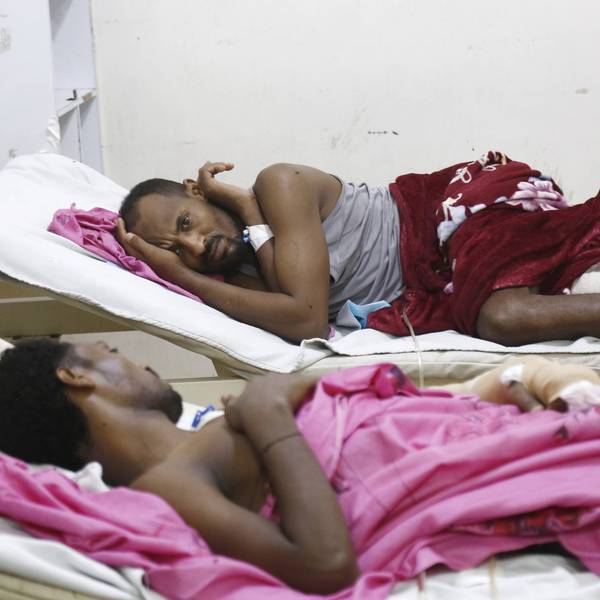
"Hospitals and schools are damaged by the fighting, and medicines are in short supply, which means that many people have no access to basic medical care or temporary shelter if they need them," Sajid continued. "Those previously displaced by the fighting are particularly at risk as many are living in make-shift tents and unsafe accommodation that is too vulnerable to withstand the impact of the cyclone."
The cyclone, however, did not stop the Saudi Arabia-led military alliance--which is backed by the United States--from launching bombs on the country. According to the Saudi-owned news channel Ekhbariya, the coalition conducted air strikes in seven separate provinces across the country on Tuesday.
The cyclone follows record-warm temperatures in nearly all of the Arabian Sea. A study published last month found that, if climate change continues to worsen, Gulf countries could be severely impacted by "unprecedented events of deadly heat," as well as extreme storms.
Dear Common Dreams reader, It’s been nearly 30 years since I co-founded Common Dreams with my late wife, Lina Newhouser. We had the radical notion that journalism should serve the public good, not corporate profits. It was clear to us from the outset what it would take to build such a project. No paid advertisements. No corporate sponsors. No millionaire publisher telling us what to think or do. Many people said we wouldn't last a year, but we proved those doubters wrong. Together with a tremendous team of journalists and dedicated staff, we built an independent media outlet free from the constraints of profits and corporate control. Our mission has always been simple: To inform. To inspire. To ignite change for the common good. Building Common Dreams was not easy. Our survival was never guaranteed. When you take on the most powerful forces—Wall Street greed, fossil fuel industry destruction, Big Tech lobbyists, and uber-rich oligarchs who have spent billions upon billions rigging the economy and democracy in their favor—the only bulwark you have is supporters who believe in your work. But here’s the urgent message from me today. It's never been this bad out there. And it's never been this hard to keep us going. At the very moment Common Dreams is most needed, the threats we face are intensifying. We need your support now more than ever. We don't accept corporate advertising and never will. We don't have a paywall because we don't think people should be blocked from critical news based on their ability to pay. Everything we do is funded by the donations of readers like you. When everyone does the little they can afford, we are strong. But if that support retreats or dries up, so do we. Will you donate now to make sure Common Dreams not only survives but thrives? —Craig Brown, Co-founder |
Over 1.1 million people have been impacted--and 40,000 displaced--after a rare and powerful cyclone dumped a year's worth of rain on Yemen this week, compounding the ongoing humanitarian disaster worsened by Saudi Arabia's seven-month bombing campaign that continued through the storm.
The cyclone, dubbed Chapala, killed at least three people on Monday when it hit the island of Socotra, which is home to 50,000 people and formally part of Yemen. The storm hit the Yemeni mainland's central coast on Tuesday morning with 85 mph winds, and one man reportedly drowned when the storm hit the city of Mukalla.
According to the United Nations Office for the Coordination of Humanitarian Affairs, at least 450 homes sustained damage or were completely destroyed and 34 people were wounded by the storm.
"There's been severe damage the people's farms and homes... two villages have been completely submerged, roads and bridges have been totally washed away by the floods and the government didn't do a thing," said Jamal al-Awlaqi, a resident of Ataq, the capital of Shabwa province, in an interview with Reuters.
Humanitarian groups warn that the long-term impact could be far greater, in a country already devastated by ongoing war.
"Yemen is already one of the world's worst humanitarian crises," Oxfam country director for Yemen, Sajjad Mohamed Sajid, said in a statement released Wednesday. "The cyclone comes on top of seven months of non-stop fighting that has dismantled basic infrastructure, limited the availability of food and other vital supplies, cut off drinking water, destroyed livelihoods and severely damaged people's abilities to cope."
"Hospitals and schools are damaged by the fighting, and medicines are in short supply, which means that many people have no access to basic medical care or temporary shelter if they need them," Sajid continued. "Those previously displaced by the fighting are particularly at risk as many are living in make-shift tents and unsafe accommodation that is too vulnerable to withstand the impact of the cyclone."
The cyclone, however, did not stop the Saudi Arabia-led military alliance--which is backed by the United States--from launching bombs on the country. According to the Saudi-owned news channel Ekhbariya, the coalition conducted air strikes in seven separate provinces across the country on Tuesday.
The cyclone follows record-warm temperatures in nearly all of the Arabian Sea. A study published last month found that, if climate change continues to worsen, Gulf countries could be severely impacted by "unprecedented events of deadly heat," as well as extreme storms.
Over 1.1 million people have been impacted--and 40,000 displaced--after a rare and powerful cyclone dumped a year's worth of rain on Yemen this week, compounding the ongoing humanitarian disaster worsened by Saudi Arabia's seven-month bombing campaign that continued through the storm.
The cyclone, dubbed Chapala, killed at least three people on Monday when it hit the island of Socotra, which is home to 50,000 people and formally part of Yemen. The storm hit the Yemeni mainland's central coast on Tuesday morning with 85 mph winds, and one man reportedly drowned when the storm hit the city of Mukalla.
According to the United Nations Office for the Coordination of Humanitarian Affairs, at least 450 homes sustained damage or were completely destroyed and 34 people were wounded by the storm.
"There's been severe damage the people's farms and homes... two villages have been completely submerged, roads and bridges have been totally washed away by the floods and the government didn't do a thing," said Jamal al-Awlaqi, a resident of Ataq, the capital of Shabwa province, in an interview with Reuters.
Humanitarian groups warn that the long-term impact could be far greater, in a country already devastated by ongoing war.
"Yemen is already one of the world's worst humanitarian crises," Oxfam country director for Yemen, Sajjad Mohamed Sajid, said in a statement released Wednesday. "The cyclone comes on top of seven months of non-stop fighting that has dismantled basic infrastructure, limited the availability of food and other vital supplies, cut off drinking water, destroyed livelihoods and severely damaged people's abilities to cope."
"Hospitals and schools are damaged by the fighting, and medicines are in short supply, which means that many people have no access to basic medical care or temporary shelter if they need them," Sajid continued. "Those previously displaced by the fighting are particularly at risk as many are living in make-shift tents and unsafe accommodation that is too vulnerable to withstand the impact of the cyclone."
The cyclone, however, did not stop the Saudi Arabia-led military alliance--which is backed by the United States--from launching bombs on the country. According to the Saudi-owned news channel Ekhbariya, the coalition conducted air strikes in seven separate provinces across the country on Tuesday.
The cyclone follows record-warm temperatures in nearly all of the Arabian Sea. A study published last month found that, if climate change continues to worsen, Gulf countries could be severely impacted by "unprecedented events of deadly heat," as well as extreme storms.