SUBSCRIBE TO OUR FREE NEWSLETTER
Daily news & progressive opinion—funded by the people, not the corporations—delivered straight to your inbox.
5
#000000
#FFFFFF
To donate by check, phone, or other method, see our More Ways to Give page.
Daily news & progressive opinion—funded by the people, not the corporations—delivered straight to your inbox.
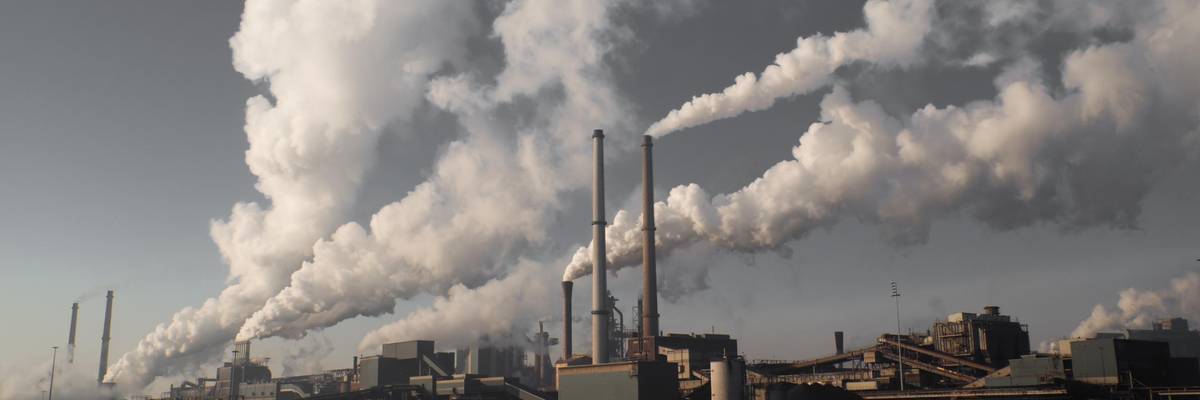
A new report published Tuesday found that the notable share of fossil fuels in the global energy mix barely changed from 2009 to 2019. (Photo: rmitsch/Getty Images)
Despite the growing necessity of transitioning to renewable energy, the share of fossil fuels in the world's total energy mix barely changed during a recent decade, according to a report released Tuesday by the Paris-based think tank REN21.
"The share of fossil fuels in final energy consumption has not moved by an inch."
--Rana Adib, REN21
"We are waking up to the bitter reality that the climate policy promises over the past 10 years have mostly been empty words," said REN21 executive director Rana Adib.
"The share of fossil fuels in final energy consumption has not moved by an inch," Adib added. "Phasing them out and making renewables the new norm are the strongest actions we can take."
The group's Renewables 2021 Global Status Report (pdf) says that fossil fuels accounted for 80.3% of energy consumption in 2009, compared with 80.2% in 2019. Over that period, "modern renewables" only grew from 8.7% to 11.2%.
The 2019 breakdown in the renewables category--based on data from the International Energy Agency (IEA)--was: 1% biofuels for transport; 2.4% wind, solar, biomass, geothermal, and ocean power; 3.6% hydropower; and 4.2% biomass, solar, and geothermal heat.
REN21's latest annual report comes after the IEA last month projected significant increases in renewable capacity over the next two years and warned that fossil fuels must stay in the ground to avoid the most catastrophic impacts of the human-caused climate emergency.
"2020 could have been a game-changer," the think tank noted in a statement (pdf). "Economies worldwide were ravaged by the Covid-19 pandemic. Primary energy demand fell by 4%."
However, Group of 20 (G20) countries, "the planet's biggest polluters, barely met or even missed their unambitious renewable energy targets," the statement continued. "But the benefits of renewables in terms of health, climate, and job creation are indisputable."
REN21 found that the five G20 nations with renewable energy goals struggled to reach them, while the remaining members of the international forum--which includes the European Union and 19 countries with major economies--didn't even have such targets.
The new report, the statement added, "shows that we are nowhere near the necessary paradigm shift towards a clean, healthier, and more equitable energy future."
Although the pandemic era has seen some bolder climate commitments--including net-zero carbon emissions targets from China, Japan, and South Korea--coronavirus recovery packages have also featured hefty investments in fossil fuels, especially compared with funds put toward renewable energy.
"Unfortunately the harsh lesson from the pandemic is that most governments did not use the unique opportunity to further curtail carbon pollution and break the resistance of the fossil fuel incumbents," said Stephan Singer, a senior adviser at Climate Action Network (CAN) International. "What counts for them is corporate profit--neither the climate nor people's health."
REN21 highlights the recent rise in renewable capacity and that "it is now cheaper to build new wind or solar PV plants than to operate existing coal-fired power plants," bolstering scientists' warnings and activists' demands about the necessity of overhauling the global energy system.
Reporting on the findings Tuesday, Reuters pointed out that "renewables also are outcompeting new natural gas-fired power plants on cost in many locations, and are the cheapest sources of new electricity generation in countries across all major continents."
According to Sam Kimmins, head of the global corporate renewable energy initiative RE100, "The renewable energy transition is gaining pace because it makes business sense as well as environmental sense."
"Renewable electricity is already creating millions of jobs, saving businesses money, and providing energy access to millions," Kimmins said. "But businesses and governments need to go faster, not only for the environment, but to remain competitive in a renewably powered 21st-century economy."
In a series of tweets about the new report, the climate advocacy group 350.org declared that "rich governments are doing the EXACT OPPOSITE of what they need to do" and emphasized the need to not only invest in renewables but also urgently end the use of fossil fuels.
REN21's Adib concurred, saying that "governments must not only support renewables but also rapidly decommission fossil fuel capacity."
"A good way to accelerate development is to make the uptake of renewable energy a key performance indicator for every economic activity, every budget, and every single public purchase," she said. "Thus, every ministry should have short- and long-term targets and plans to shift to renewable energy coupled with clear end-dates for fossil fuels."
Dear Common Dreams reader, It’s been nearly 30 years since I co-founded Common Dreams with my late wife, Lina Newhouser. We had the radical notion that journalism should serve the public good, not corporate profits. It was clear to us from the outset what it would take to build such a project. No paid advertisements. No corporate sponsors. No millionaire publisher telling us what to think or do. Many people said we wouldn't last a year, but we proved those doubters wrong. Together with a tremendous team of journalists and dedicated staff, we built an independent media outlet free from the constraints of profits and corporate control. Our mission has always been simple: To inform. To inspire. To ignite change for the common good. Building Common Dreams was not easy. Our survival was never guaranteed. When you take on the most powerful forces—Wall Street greed, fossil fuel industry destruction, Big Tech lobbyists, and uber-rich oligarchs who have spent billions upon billions rigging the economy and democracy in their favor—the only bulwark you have is supporters who believe in your work. But here’s the urgent message from me today. It's never been this bad out there. And it's never been this hard to keep us going. At the very moment Common Dreams is most needed, the threats we face are intensifying. We need your support now more than ever. We don't accept corporate advertising and never will. We don't have a paywall because we don't think people should be blocked from critical news based on their ability to pay. Everything we do is funded by the donations of readers like you. When everyone does the little they can afford, we are strong. But if that support retreats or dries up, so do we. Will you donate now to make sure Common Dreams not only survives but thrives? —Craig Brown, Co-founder |
Despite the growing necessity of transitioning to renewable energy, the share of fossil fuels in the world's total energy mix barely changed during a recent decade, according to a report released Tuesday by the Paris-based think tank REN21.
"The share of fossil fuels in final energy consumption has not moved by an inch."
--Rana Adib, REN21
"We are waking up to the bitter reality that the climate policy promises over the past 10 years have mostly been empty words," said REN21 executive director Rana Adib.
"The share of fossil fuels in final energy consumption has not moved by an inch," Adib added. "Phasing them out and making renewables the new norm are the strongest actions we can take."
The group's Renewables 2021 Global Status Report (pdf) says that fossil fuels accounted for 80.3% of energy consumption in 2009, compared with 80.2% in 2019. Over that period, "modern renewables" only grew from 8.7% to 11.2%.
The 2019 breakdown in the renewables category--based on data from the International Energy Agency (IEA)--was: 1% biofuels for transport; 2.4% wind, solar, biomass, geothermal, and ocean power; 3.6% hydropower; and 4.2% biomass, solar, and geothermal heat.
REN21's latest annual report comes after the IEA last month projected significant increases in renewable capacity over the next two years and warned that fossil fuels must stay in the ground to avoid the most catastrophic impacts of the human-caused climate emergency.
"2020 could have been a game-changer," the think tank noted in a statement (pdf). "Economies worldwide were ravaged by the Covid-19 pandemic. Primary energy demand fell by 4%."
However, Group of 20 (G20) countries, "the planet's biggest polluters, barely met or even missed their unambitious renewable energy targets," the statement continued. "But the benefits of renewables in terms of health, climate, and job creation are indisputable."
REN21 found that the five G20 nations with renewable energy goals struggled to reach them, while the remaining members of the international forum--which includes the European Union and 19 countries with major economies--didn't even have such targets.
The new report, the statement added, "shows that we are nowhere near the necessary paradigm shift towards a clean, healthier, and more equitable energy future."
Although the pandemic era has seen some bolder climate commitments--including net-zero carbon emissions targets from China, Japan, and South Korea--coronavirus recovery packages have also featured hefty investments in fossil fuels, especially compared with funds put toward renewable energy.
"Unfortunately the harsh lesson from the pandemic is that most governments did not use the unique opportunity to further curtail carbon pollution and break the resistance of the fossil fuel incumbents," said Stephan Singer, a senior adviser at Climate Action Network (CAN) International. "What counts for them is corporate profit--neither the climate nor people's health."
REN21 highlights the recent rise in renewable capacity and that "it is now cheaper to build new wind or solar PV plants than to operate existing coal-fired power plants," bolstering scientists' warnings and activists' demands about the necessity of overhauling the global energy system.
Reporting on the findings Tuesday, Reuters pointed out that "renewables also are outcompeting new natural gas-fired power plants on cost in many locations, and are the cheapest sources of new electricity generation in countries across all major continents."
According to Sam Kimmins, head of the global corporate renewable energy initiative RE100, "The renewable energy transition is gaining pace because it makes business sense as well as environmental sense."
"Renewable electricity is already creating millions of jobs, saving businesses money, and providing energy access to millions," Kimmins said. "But businesses and governments need to go faster, not only for the environment, but to remain competitive in a renewably powered 21st-century economy."
In a series of tweets about the new report, the climate advocacy group 350.org declared that "rich governments are doing the EXACT OPPOSITE of what they need to do" and emphasized the need to not only invest in renewables but also urgently end the use of fossil fuels.
REN21's Adib concurred, saying that "governments must not only support renewables but also rapidly decommission fossil fuel capacity."
"A good way to accelerate development is to make the uptake of renewable energy a key performance indicator for every economic activity, every budget, and every single public purchase," she said. "Thus, every ministry should have short- and long-term targets and plans to shift to renewable energy coupled with clear end-dates for fossil fuels."
Despite the growing necessity of transitioning to renewable energy, the share of fossil fuels in the world's total energy mix barely changed during a recent decade, according to a report released Tuesday by the Paris-based think tank REN21.
"The share of fossil fuels in final energy consumption has not moved by an inch."
--Rana Adib, REN21
"We are waking up to the bitter reality that the climate policy promises over the past 10 years have mostly been empty words," said REN21 executive director Rana Adib.
"The share of fossil fuels in final energy consumption has not moved by an inch," Adib added. "Phasing them out and making renewables the new norm are the strongest actions we can take."
The group's Renewables 2021 Global Status Report (pdf) says that fossil fuels accounted for 80.3% of energy consumption in 2009, compared with 80.2% in 2019. Over that period, "modern renewables" only grew from 8.7% to 11.2%.
The 2019 breakdown in the renewables category--based on data from the International Energy Agency (IEA)--was: 1% biofuels for transport; 2.4% wind, solar, biomass, geothermal, and ocean power; 3.6% hydropower; and 4.2% biomass, solar, and geothermal heat.
REN21's latest annual report comes after the IEA last month projected significant increases in renewable capacity over the next two years and warned that fossil fuels must stay in the ground to avoid the most catastrophic impacts of the human-caused climate emergency.
"2020 could have been a game-changer," the think tank noted in a statement (pdf). "Economies worldwide were ravaged by the Covid-19 pandemic. Primary energy demand fell by 4%."
However, Group of 20 (G20) countries, "the planet's biggest polluters, barely met or even missed their unambitious renewable energy targets," the statement continued. "But the benefits of renewables in terms of health, climate, and job creation are indisputable."
REN21 found that the five G20 nations with renewable energy goals struggled to reach them, while the remaining members of the international forum--which includes the European Union and 19 countries with major economies--didn't even have such targets.
The new report, the statement added, "shows that we are nowhere near the necessary paradigm shift towards a clean, healthier, and more equitable energy future."
Although the pandemic era has seen some bolder climate commitments--including net-zero carbon emissions targets from China, Japan, and South Korea--coronavirus recovery packages have also featured hefty investments in fossil fuels, especially compared with funds put toward renewable energy.
"Unfortunately the harsh lesson from the pandemic is that most governments did not use the unique opportunity to further curtail carbon pollution and break the resistance of the fossil fuel incumbents," said Stephan Singer, a senior adviser at Climate Action Network (CAN) International. "What counts for them is corporate profit--neither the climate nor people's health."
REN21 highlights the recent rise in renewable capacity and that "it is now cheaper to build new wind or solar PV plants than to operate existing coal-fired power plants," bolstering scientists' warnings and activists' demands about the necessity of overhauling the global energy system.
Reporting on the findings Tuesday, Reuters pointed out that "renewables also are outcompeting new natural gas-fired power plants on cost in many locations, and are the cheapest sources of new electricity generation in countries across all major continents."
According to Sam Kimmins, head of the global corporate renewable energy initiative RE100, "The renewable energy transition is gaining pace because it makes business sense as well as environmental sense."
"Renewable electricity is already creating millions of jobs, saving businesses money, and providing energy access to millions," Kimmins said. "But businesses and governments need to go faster, not only for the environment, but to remain competitive in a renewably powered 21st-century economy."
In a series of tweets about the new report, the climate advocacy group 350.org declared that "rich governments are doing the EXACT OPPOSITE of what they need to do" and emphasized the need to not only invest in renewables but also urgently end the use of fossil fuels.
REN21's Adib concurred, saying that "governments must not only support renewables but also rapidly decommission fossil fuel capacity."
"A good way to accelerate development is to make the uptake of renewable energy a key performance indicator for every economic activity, every budget, and every single public purchase," she said. "Thus, every ministry should have short- and long-term targets and plans to shift to renewable energy coupled with clear end-dates for fossil fuels."