

SUBSCRIBE TO OUR FREE NEWSLETTER
Daily news & progressive opinion—funded by the people, not the corporations—delivered straight to your inbox.
5
#000000
#FFFFFF
To donate by check, phone, or other method, see our More Ways to Give page.
Daily news & progressive opinion—funded by the people, not the corporations—delivered straight to your inbox.

Marc Fink, Center for Biological Diversity, (218) 525-3884
The Center for Biological Diversity, Save Lake Superior Association,
and the Indigenous Environmental Network today filed formal notice
that they intend to file suit against mining company Cliffs Erie to
stop the ongoing pollution of waters that surround the proposed PolyMet
mine site. According to Cliffs Erie's own monitoring reports, there are
numerous ongoing violations of water-quality laws relating to
management of the former LTV tailings basin. PolyMet's proposal for its
copper-nickel mine is to pile its own tailings waste on top of those
from a former taconite mine that are still polluting. The 60-day notice
letter is a prerequisite to filing a citizen enforcement action under
the Clean Water Act.
"Before the state even
considers the approval of a new wave of mining in northeastern
Minnesota, it should first require the mining companies to clean up the
pollution from past taconite mines," said Marc Fink, an attorney with
the Center for Biological Diversity. "As we all learned as kids, you
should clean up one mess before making another one."
The LTV basin, located six miles north of Hoyt Lakes, was used for
taconite tailings from the 1950s until 2001. The unlined basin is the
source of numerous seeps and discharges of polluted wastewater into
groundwater and surface waters, which eventually reach the Embarrass
River. For the proposed NorthMet mine, PolyMet proposes to process more
than 225 million tons of ore at the LTV processing facility, and use
the same LTV tailings basin already known to be leaking.
"While
past mining has already polluted these waters, the proposed heavy
metals mining would bring severe new threats of pollution to these
waters, which ultimately flow into Lake Superior at the Duluth harbor,"
said Le Lind of the Save Lake Superior Association. "This new threat
includes sulfuric acid runoff and higher levels of mercury in waters
that are already impaired."
In addition to the LTV
site, the groups intend to file suit to stop ongoing pollution at the
Dunka mine site, which is close to where Duluth Metals has plans for a
copper-nickel mine adjacent to the Kawishiwi River, and where Franconia
Minerals proposes a copper-nickel mine at the bottom of Birch Lake.
Both the Kawishiwi River and Birch Lake flow into the Boundary Waters.
"These
are historic tribal lands where the tribes retain treaty rights, and
many tribal members are deeply concerned about additional pollution to
fishing streams and sources of wild rice," said Marty Cobenais of the
Indigenous Environmental Network.
The groups are
represented by attorney Charlie Tebbutt and Marc Fink, an attorney with
the Center for Biological Diversity who resides in Duluth.
For additional information,
the following paragraphs are taken directly from the Draft
Environmental Impact Statement that the U.S. Army Corps of Engineers
and Minnesota Department of Natural Resources prepared for the proposed
NorthMet mine, available at: https://www.dnr.state.mn.us/input/environmentalreview/polymet/index.html
PolyMet
proposes to mine (over an estimated 20-year mine life) an average of
approximately 91,200 tons per day (tpd) of rock, and up to 32,000 tpd
of ore from a new surface mine consisting of three pits (i.e., East,
Central, and West Pits). Over the life of the Project, PolyMet would
process approximately 228 million tons of base and precious metal ore
at the former LTV Steel Mining Company (LTVSMC) taconite processing
facility. (DEIS, p. 1-1).The LTVSMC Tailings
Basin, proposed for reuse by PolyMet, was operated from 1953 until it
was shutdown in January 2001. The existing Tailings Basin is unlined
and the perimeter embankments do not have a clay core or cutoff, which
allows for both surface seepage through the embankment and groundwater
seepage under the embankment. (DEIS, p. 4.1-29).The
LTVSMC Tailings Basin contributes both groundwater and surface water
seepage that ultimately reaches the Embarrass River between monitoring
stations PM-12 and PM-13. As discussed above (Table 4.1-19 and Figure
4.1-14), the LTVSMC Tailings Basin had at least 33 locations where
tailings water was seeping through the embankment to surface waters.
(DEIS, p. 4.1-41).PolyMet does not propose a
liner for the Tailings Basin. As a result, the Proposed Action would
result in increased seepage from the Tailings Basin relative to
existing legacy LTVSMC seepage, including both surface seepage through
the Tailings Basin embankment and groundwater seepage through the base
of the LTVSMC tailings (Table 4.1-35). Most of this seepage would move
north toward the Embarrass River, but a small portion of seepage would
move south toward Second Creek in the Partridge River watershed.
(DEIS, p. 4.1-63).It is the Tribal cooperating
agencies' position that the existing LTVSMC tailings are contributing
substantially to the level of constituents observed in the groundwater.
. . It is unclear how the addition of mine waste to the basins would
cause seepage water quality to improve. (DEIS, p. 4.1-14, footnote 5).
At the Center for Biological Diversity, we believe that the welfare of human beings is deeply linked to nature — to the existence in our world of a vast diversity of wild animals and plants. Because diversity has intrinsic value, and because its loss impoverishes society, we work to secure a future for all species, great and small, hovering on the brink of extinction. We do so through science, law and creative media, with a focus on protecting the lands, waters and climate that species need to survive.
(520) 623-5252
“Climate change isn’t a tragedy, it’s a crime. The fossil fuel industry are arsonists at a global scale. It’s their pollution that’s fueling these horrific wildfires," one climate advocate told Common Dreams.
As wildfires raged across Canada on Thursday, sending dangerous smoke across the border into major US cities, climate advocates called for accountability for the fossil fuel industry, which knew for decades that its products were largely responsible for the climate crisis, yet chose to push climate denial instead.
While fire is a natural part of the lifecycle of Canada's boreal forests, the heating of the atmosphere due to the burning of oil, gas, and coal has made fires more frequent and extreme.
"We need Nuremberg trials for Big Oil," the youth-led Sunrise Movement wrote on social media in response to the fires.
We need Nuremberg trials for Big Oil. https://t.co/nHhbDXB06X
— Sunrise Movement 🌅 (@sunrisemvmt) July 16, 2026
Climate Defiance agreed, posting, "Nuremberg-style trials are in order for the fossil fuel executives who knew what they were doing to our children’s futures and did anyway."
There were 884 fires burning in Canada on Thursday, with 124 out of control, according to the country's national wildland fire summary. Over 100 fires were raging in Ontario alone, where they have forced the evacuation of at least 15 rural communities; destroyed homes in the Indigenous community of Collins First Nation, or Namaygoosisagagun; and polluted the skies over parts of the upper Midwest and Northeastern US.
As of Thursday evening Eastern time, the four cities with the worst air quality in the world were Chicago, Detroit, New York, and Toronto, according to IQAir.
People have shared dramatic footage of the fires on social media. One video shows a train moving through a blaze near Armstrong, Ontario. Thankfully, all crew members were evacuated safely, The Guardian reported.
This is near Armstrong, Ontario.
When will the Canadian National Railway Company make a statement about this incident? pic.twitter.com/6bKJYugeR0
— Sol Mamakwa (@solmamakwa) July 14, 2026
Indigenous photographer Nadya Kwandibens shared images of flames rising over a lake with the words, "“My family hometown, Collins Ontario, is GONE."
Residents of the community fled the blaze in boats before the flames damaged and destroyed several homes and other structures, according to CBC News.
“Collins has burned to the ground. This is a tragedy and we are grateful that everyone got out safely,” Lise Vaugeois, the provincial representative for the region, said, as The Guardian reported. “Fires are part of a natural cycle, but the extreme temperatures we are experiencing across the county and the growing severity of weather events are indicators of climate change.”
Laura Chasmer, a professor of geography and the environment at the University of Western Ontario, noted that fires in Canada like the ones raging across Ontario have increased since 2015.
"This is associated with some of the extreme climate warming that we've been seeing, and the atmospheric drying of the surface," she told BBC News.
Brandi Morin, a Cree-Iroquois-French journalist from Treaty 6 territory in Alberta, noted in her Substack that Canada was warming at twice the global average. Despite this, the Canadian government has made progress on three major fossil fuel pipelines this July.
"Every barrel these new pipelines are built to move adds to the exact warming that’s turning our boreal forests into tinder," Morin wrote.
On the other side of the border, Michigan regulators late Wednesday approved important permits from the controversial Enbridge Line 5 pipeline.
Political leaders and climate advocates responded to the fires and smoke with calls to abandon fossil fuel projects, transition to renewable energy, and hold oil and gas companies accountable for the harms they have caused.
"We have the technology and the policy roadmap to replace fossil fuels with green energy extremely rapidly. The only thing stopping us is a handful of billionaires getting rich while our world burns," the Sunrise Movement said.
We have the technology and the policy roadmap to replace fossil fuels with green energy extremely rapidly.
The only thing stopping us is a handful of billionaires getting rich while our world burns. https://t.co/6oqGxoC8m3
— Sunrise Movement 🌅 (@sunrisemvmt) July 16, 2026
As smoke drifted over Boston on Wednesday, Sen. Ed Markey (D-Mass.) wrote on social media: "Look outside in Massachusetts right now. The climate crisis is here. Wildfire smoke is suffocating our communities and our children are breathing dirty air. We need a Green New Deal."
Look outside in Massachusetts right now. The climate crisis is here. Wildfire smoke is suffocating our communities and our children are breathing dirty air. We need a Green New Deal. https://t.co/pXo5XOOt0q
— Ed Markey (@EdMarkey) July 15, 2026
“Climate change isn’t a tragedy, it’s a crime. The fossil fuel industry are arsonists at a global scale. It’s their pollution that’s fueling these horrific wildfires," Jamie Henn, the director of Fossil Free Media, told Common Dreams. "Instead of approving new pipelines, the Canadian government should be holding the industry accountable and using their record profits to help communities on the frontlines of this crisis.”
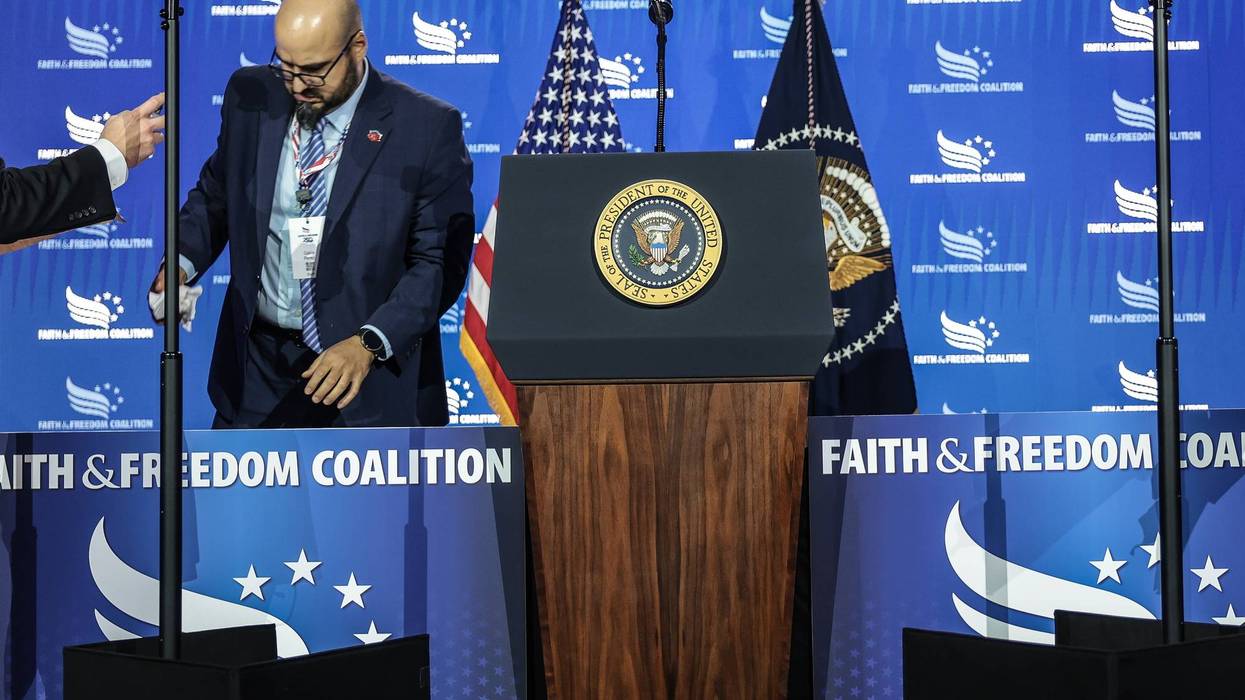
"Public Citizen again calls on the CFTC to wake up and do its job of overseeing the prediction market industry and enforcing the insider trading laws," said the watchdog's government affairs lobbyist.
As Kalshi confirmed Thursday that it referred a White House teleprompter operator to federal regulators for flagged bets on its prediction market, President Donald Trump's press secretary denounced the suspended staffer's reported actions—without addressing any of the mounting outrage over how her boss has cashed in on his return to the Oval Office.
Citing unnamed sources, ABC News reported that Gabriel Perez, who has been one of Trump's teleprompter operators since his first presidential campaign, is in talks with federal regulators at the Commodity Futures Trading Commission (CFTC) "to settle allegations he used his inside knowledge of the president's speeches to win more than $100,000."
"Of all Trump's closest aides, sources say Perez typically has the final eyes on nearly all of the president's prepared remarks—and is often known to take last-minute edits from Trump himself," the outlet detailed. Federal investigators reportedly found that Perez bet on words or topics mentioned by Trump in more than a dozen speeches.
While the CFTC declined to comment, Robert DeNault, Kalshi's head of enforcement, told multiple media outlets that "our surveillance team promptly flagged and referred these trades to the CFTC after an exchange investigation. We have been assisting regulators on this matter and provided evidence we collected, as we do in any referral."
Asked about the insider trading allegations on Thursday—just hours before Trump was set to deliver a prime-time address on election security—White House Press Secretary Karoline Leavitt told reporters that Perez has been put on unpaid administrative leave, at the direction of the president himself, and called his reported behavior a "disgrace."
"The White House has extremely strict ethical guidelines with respect to issues like this," Leavitt also claimed.
As National Public Radio detailed Thursday:
In March, White House staff received a memo warning against using nonpublic government information to place bets on Kalshi and its biggest competitor, Polymarket.
The memo, which was reviewed by NPR, stated that it is a criminal offense for anyone inside the White House to "buy" or "sell" on the sites. Prediction markets offer "yes" or "no" contracts that change in price based on the speculation of bettors. Aides in the White House were told in the memo that misusing government information "is a very serious offense and will not be tolerated."
The US Department of Justice this year has charged at least two people for their use of Polymarket: US Army special forces soldier who allegedly gambled on the abduction of Venezuelan President Nicolás Maduro, and a Google software engineer accused of using internal company information to place bets; they've both pleaded not guilty.
However, in the case of Perez, "the CFTC alerted federal prosecutors in Manhattan, who declined to open a criminal investigation," according to ABC News. Instead, he's discussing a potential settlement that would require him "to give back his profits and refrain from making similar trades."
Responding to the reporting in a Thursday statement, Craig Holman, government affairs lobbyist at the watchdog group Public Citizen, noted that "betting on political events on the prediction markets has become highly profitable for a small handful of anonymous bettors."
"Ever since the American invasion of Venezuela and Iran, a few people have been placing very large bets moments before the events take place, and scoring millions in profits," he emphasized. "The timing and accuracy of these bets strongly suggest insider trading, probably by a few individuals in the know within the Trump administration."
The reported behavior by Perez "is further evidence of illegal insider trading on the prediction markets—an industry that the Commodity Futures Trading Commission has let operate like the Wild West," Holman continued. "Public Citizen again calls on the CFTC to wake up and do its job of overseeing the prediction market industry and enforcing the insider trading laws."
The New York Times reported in May that the Trump administration has stacked CFTC with industry insiders who have systematically "mowed down" staffers interested in providing oversight on prediction markets like Polymarket and Kalshi.
Meanwhile, according to recently unveiled annual financial disclosures, Trump made an unprecedented $2.2 billion—more than half of it from his family's cryptocurrency exploits—during his first year back in the White House.
Based on those disclosures, Trump may have finally "crossed a line that even the presidency cannot erase, violating the nation's insider trading laws," Sen. Ed Markey (D-Mass.)—who helped write those laws—highlighted in a Wednesday blog post.
Trump—who infamously bankrupted multiple Atlantic City casinos—also has plans to get into prediction markets. His social media company, Trump Media and Technology Group, said last October that it would soon launch a prediction betting marketplace on Truth Social.
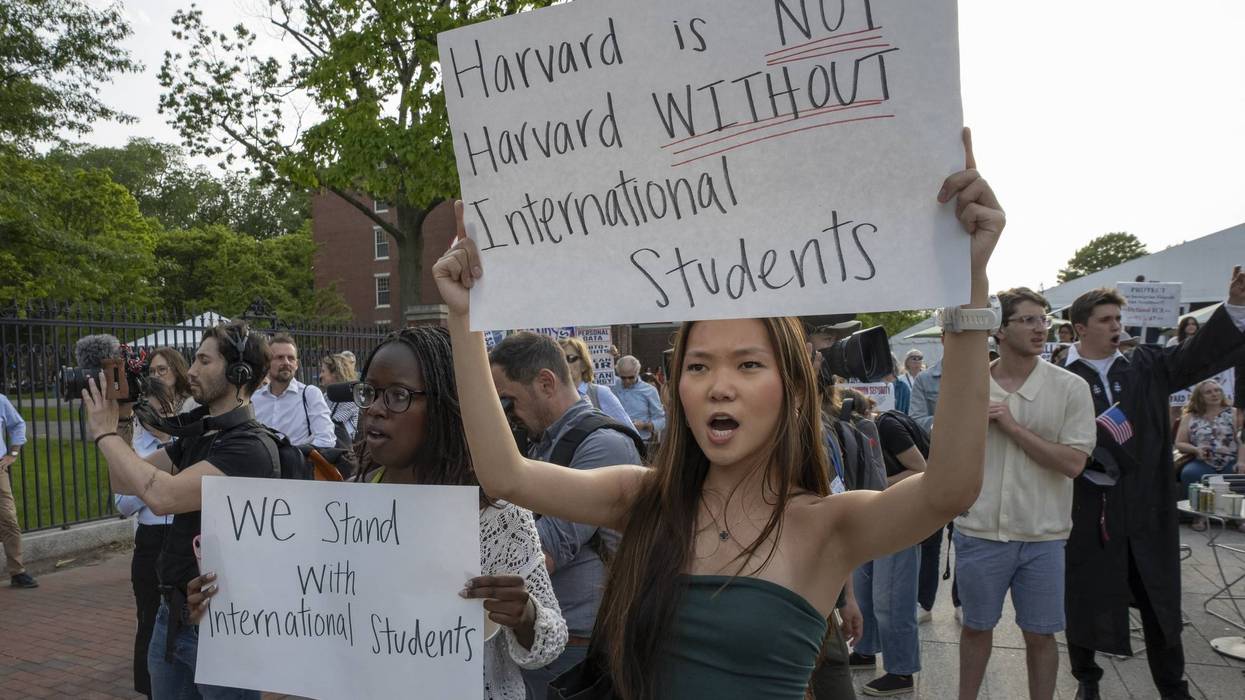
One legal advocacy group said the rule change "will be costly, cause chaos, and cut legal immigration."
The Trump administration on Thursday finalized sweeping new visa restrictions that immigration advocates and higher education professionals say will make it significantly more difficult for international students and journalists to study and work in the United States.
The Department of Homeland Security (DHS) said it is replacing the long-standing "duration of status" system—which allowed students to remain in the country as long as they complied with the terms of their visas—with fixed admission periods that generally cap student and exchange visitor stays at four years.
Foreign journalists, meanwhile, will see their visas limited to 240 days, while Chinese journalists will face an even shorter 90-day limit. Visa holders will have to apply for extensions if they need more time.
NEW: The Trump admin finalized a regulation which makes the largest changes to the student visa process in 50 years, along with changes to rules for exchange visitors and international journalists. 🧵on some of the most consequential changes set to go into effect in September.
[image or embed]
— Aaron Reichlin-Melnick (@reichlinmelnick.bsky.social) July 16, 2026 at 12:09 PM
Homeland Security Secretary Markwayne Mullin claimed that “for nearly half a century, the outdated 'duration of status' system has compromised national security and created an environment ripe for immigration fraud."
"For decades, foreign students have been admitted into the US indefinitely, allowing thousands to abuse our immigration system by perpetually enrolling in courses to avoid having to leave the US," Mullin added. "By implementing clear, finite limits on these visas, the United States is reclaiming its ability to properly screen, vet, and monitor individuals within our borders."
However, Todd Schulte, president of the bipartisan political advocacy and lobbying group Fwd.US, warned that “these new restrictions will only make it harder for international students and researchers to complete their studies in the US and contribute their education to the US workforce after graduating."
"These changes will hurt America’s global competitiveness, hinder businesses’ ability to hire US-educated talent, impose significant and unnecessary costs on universities and students, and increase the workload for federal agencies already struggling with backlogs and delays," Schulte added. "This rule will create more bureaucratic backlogs and delays and help grind the legal immigration system to a halt.”
"Have these people no understanding of how life works?"
The American Immigration Lawyers Association said the rule change "will be costly, cause chaos, and cut legal immigration."
David Bier, the immigration studies director at the libertarian Cato Institute, told Reuters that "international students, many of whom will have spent years in the USA, will now have just 30 days to find an employer to sponsor them or immediately be turned into illegal immigrants. Have these people no understanding of how life works?"
Fanta Aw, executive director of NAFSA: Association of International Educators, said in an interview with The Washington Post that “DHS’ decision to end duration of status is a misguided and unnecessary policy shift that injects uncertainty, bureaucracy, and fear into a system that has long worked effectively."