April, 13 2017, 04:00pm EDT

For Immediate Release
Contact:
AIUSA media office,Email:,media@aiusa.org,Phone: 202-544-0200 x302
USA: Arkansas Must Urgently Halt 'Conveyor Belt' of Executions
The US state of Arkansas must halt the execution of eight death row prisoners, seven of whom are due to be killed in an 11-day period this month, Amnesty International said today, highlighting legal concerns and the fact that two of the men facing death have serious mental disabilities.
Arkansas has not put anyone to death for more than a decade, but plans to execute two men per day on 17, 20 and 24 April, and one man on 27 April, because its supply of the controversial execution drug midazolam will expire at the end of the month.
"The close scheduling of these executions is unprecedented in modern US history. Just four months after the USA recorded its lowest execution total for a quarter of a century, Arkansas is preparing to buck this positive trend in a shameful race to beat a drug expiration date," said Erika Guevara Rosas, Americas Director at Amnesty International
"It is not too late for Arkansas to halt these executions. The conveyor belt of death which it is about to set in motion proves how out of step it is with the rest of the world when it comes to state-sanctioned killing, which is on the decline globally as more and more governments, and more US states, recognize it for the cruel anachronism it is."
A spate of killings
Don Davis and Bruce Ward are scheduled to be killed on 17 April; Ledell Lee and Stacey Johnson on 20 April; Marcel Williams and Jack Jones on 24 April, and Kenneth Williams on 27 April. Although a federal judge has blocked the execution of Jason McGehee, he remains under threat of execution even if not on 27 April as originally scheduled.
Amnesty International continues to call on Governor Asa Hutchinson to commute all eight death sentences.
In some of the cases legal failings meant jurors had nothing like a full picture of who they were being asked to sentence to death. In others, the prisoners have been diagnosed with serious mental disabilities, meaning their executions would be contrary to international law.
At the trial of Jack Jones, for example, the jurors did not know he had been diagnosed with bipolar disorder shortly before the crime. Bruce Ward, who has spent more than 25 years on death row, was diagnosed in 2006, 2010, 2011 and 2015 with paranoid schizophrenia. The doctor described his persecutory and grandiose delusions, and said that he does not have a rational understanding of his punishment.
It is a violation of the US Constitution to execute someone who does not understand the reason for, or the reality of, their punishment. The execution of people with mental disability is clearly prohibited by international law.
In the case of Marcel Williams, the jury was left entirely in the dark about his childhood of appalling poverty, deprivation and abuse. The only judge to consider this mitigation concluded that the defendant had been utterly failed by his trial lawyers.
"Taken together, these cases could serve as a textbook guide to the problems with the death penalty: arbitrariness, inadequate legal representation, questionable prosecutorial tactics and racial and economic discrimination have all played their part in this raft of death sentences," said Erika Guevara Rosas.
"Debates over the use of lethal injection must not just be about fine-tuning the killing process. It is a myth that the premeditated and cold-blooded killing of a human being by the state can ever be 'humane', and it is long past time for the USA to join the global abolitionist trend."
Background
On 27 February 2017, Arkansas Governor Asa Hutchinson scheduled eight executions to take place within an 11-day period in April 2017.
On 6 April, the Arkansas parole board voted that Governor Hutchinson should commute the death sentence of Jason McGehee, who was scheduled to be executed on 27 April. On the same day, a US District Court judge issued an order preventing the authorities from carrying out the execution until the board's recommendation has been kept open for 30 days, as required under state law, and the governor has acted on the recommendation. It is not clear if the state will appeal the judge's order.
Amnesty International's annual report on the death penalty, released on 11 April, showed that, for the first time since 2006 the USA is not among the world's five biggest executioners. Last year saw the lowest national execution total in the USA in a quarter of a century.
The last execution in Arkansas - its 27th since 1977 - was carried out on 28 November 2005. If Arkansas carries out these eight executions in April, it would in a week and a half add 30%to its total judicial death toll of the past four decades. It would be killing nearly a quarter of its current death row population.
Executions were on hold in Arkansas because of lethal injection challenges. Once the current supply of midazolam expires it will be extremely difficult to replace because of concerns about its role in recent "botched" executions.
A number of recent instances have been documented of prisoners who have been given midazolam writhing, gasping and struggling in agony for prolonged periods of time before dying.
Amnesty International is a global movement of millions of people demanding human rights for all people - no matter who they are or where they are. We are the world's largest grassroots human rights organization.
(212) 807-8400LATEST NEWS
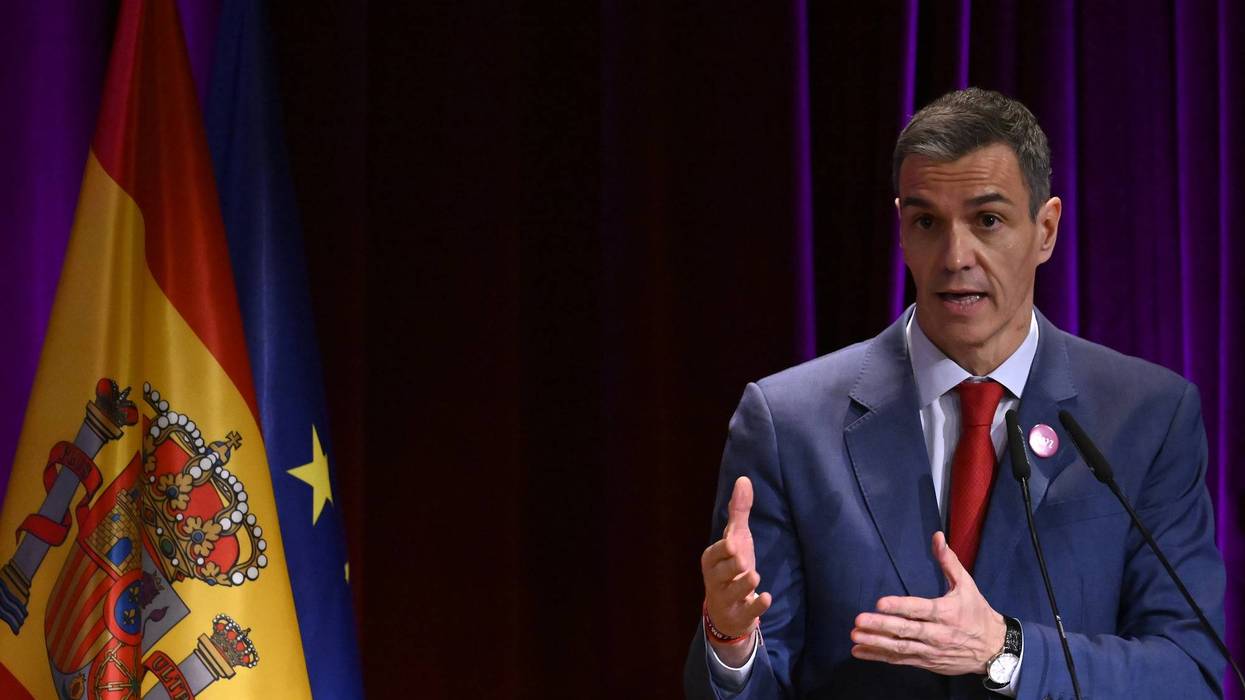
'No to War': Spanish Leader Sánchez Undeterred by Trump's Trade Threat
European leaders expressed solidarity with Spain after Trump threatened a trade embargo in retaliation for the prime minister saying the US could not use Spanish military bases to attack Iran.
Mar 04, 2026
Spanish Prime Minister Pedro Sánchez on Wednesday appeared undaunted by President Donald Trump's threat to impose a full trade embargo on Spain in retaliation for its refusal to allow the US to use its military bases to wage war on Iran.
In a 10-minute televised address, Sánchez told the Spanish public that the country "will not be complicit in something that is bad for the world and contrary to our values and interests simply out of fear of reprisals from someone."
Despite Trump's threat, the Spanish government's position on the US and Israel's attacks on Iran, the prime minister said, can be summarized as "no to war."
The address came hours after Trump claimed the US military would use Spain's military bases to launch warplanes "if we want," despite Spanish Foreign Minister José Manuel Albares' earlier statement that the facilities could not be used "for anything that isn’t covered by the [United Nations] Charter.”
The US and Israel began attacking Iran early Saturday morning after Oman's foreign minister said American and Iranian officials had been making progress toward a deal on Iran's nuclear program.
Legal experts have said the unprovoked attacks are a clear violation of international law and the UN Charter, which prohibits the use of force unless it is "authorized by the UN Security Council or is a necessary and proportionate act of individual or collective self-defense in response to an armed attack.”
Secretary of State Marco Rubio stunned observers this week when he claimed the US and Israel had waged war because of an "imminent threat"—one that was posed because the US believed Israel was planning to strike Iran, and Iran was expected to retaliate against that potential attack.
On Wednesday, Sánchez said the US and Israeli strikes against Iran, which have so far killed more than 1,000 people, according to Iranian officials, signify a "breakdown of international law."
He compared the bombings to the George W. Bush administration's invasion of Iraq, which led to eight years of war and killed over 100,000 Iraqi civilians, and warned against “repeating the mistakes of the past."
“Very often great wars start with a chain of events spiraling out of control due to miscalculations, technical failures, and unforeseen circumstances," said the prime minister, who has also been outspoken in his opposition to Israel's US-backed assault on Gaza and the Trump administration's invasion of Venezuela in January. "Therefore, we must learn from history and cannot play Russian roulette with the fate of millions."
Trump on Tuesday also expressed anger over Spain's refusal to cave to his demand that all North Atlantic Treaty Organization (NATO) member states commit to spending 5% of their gross domestic product on defense by 2035.
But other members of the European Union, which collectively negotiates trade with the US, were quick to express solidarity with Spain.
German Chancellor Friedrich Merz, who met with Trump at the White House on Tuesday, told the president that European countries would not agree to a trade agreement with the US that didn't include Spain, while French President Emmanuel Macron spoke to Sánchez to convey his "solidarity." European Council President António Costa also said he has spoken to the Spanish prime minister and reaffirmed the EU's "firm commitment to the principles of international law and the rules-based order everywhere in the world."
Despite Europe's strong stance against Trump's threats, US Treasury Secretary Scott Bessent on Wednesday doubled down on the president's rhetoric, appearing on CNBC to accuse Spain of "not meeting their NATO requirement" and of putting "American lives at risk" by not allowing the US to use its bases.
Stéphane Séjourné, the EU's internal market commissioner, was not deterred by Bessent's comments, warning that "any threat against member state is by definition a threat against the EU."
He noted that European countries already joined together this year to defend Greenland from Trump's claim that he would take over the autonomous territory, part of the Danish kingdom, by force.
"If you threaten one particular country... well, we’ve seen that about Greenland," said Séjourné. "I think we saw that there was a lot of unity.”
Keep ReadingShow Less
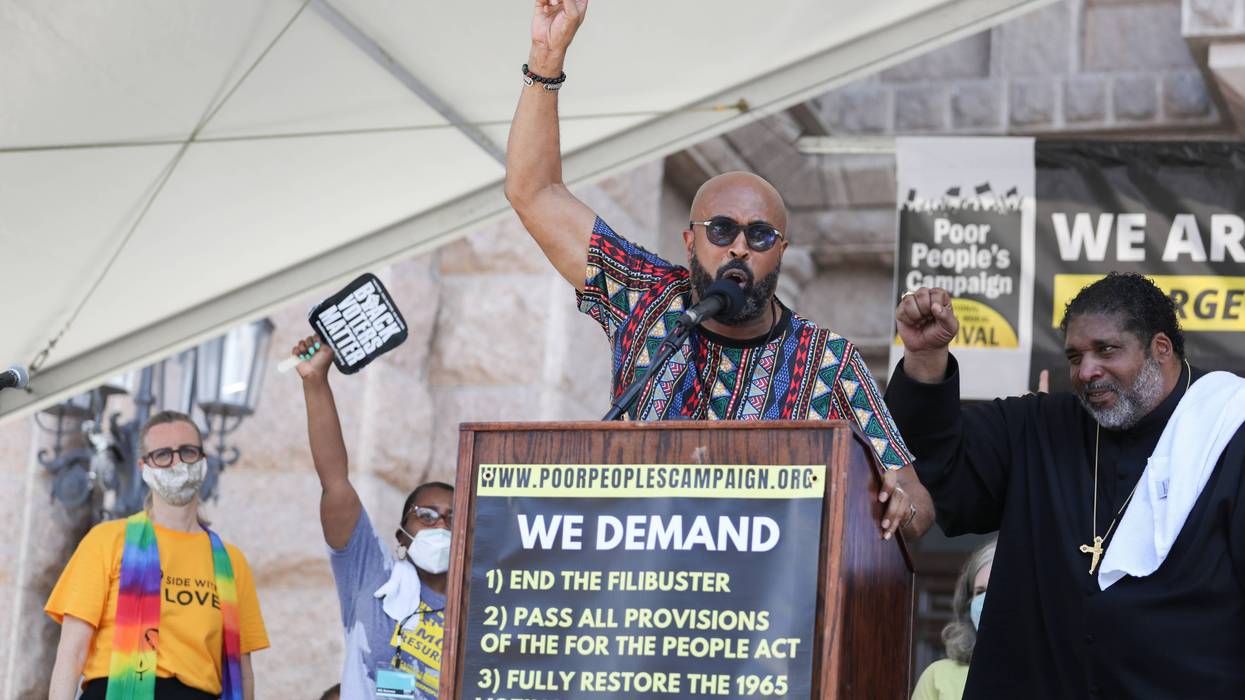
Outspoken Pro-Palestinian Pastor Wins Primary to Replace Crockett in House
A group that tracks pro-Israel lobbying said his victory "proves that the AIPAC era is over."
Mar 04, 2026
A pro-Palestine pastor has won the Democratic primary to fill the House seat in Texas that will be left behind by the pro-Israel Rep. Jasmine Crockett, who was a congregant at his church for years.
Frederick Haynes III, who has led the Friendship-West Baptist Church in Dallas for more than 40 years and was chosen by the late Rev. Jesse Jackson to lead his famed Rainbow PUSH coalition, won the primary for the seat now held by the two-term congresswoman with 72% of the vote.
Crockett announced in December that she would run for the US Senate rather than for reelection to her House seat.
Haynes—who campaigned on Medicare for All, abolishing Immigration and Customs Enforcement (ICE), and hiking the minimum wage—was endorsed by Crockett (D-Texas), who lost the bitterly contested Senate primary to state Rep. James Talarico (D-50) on Tuesday.
But where Crockett has faced heat from the Democratic base over her statements and votes in support of Israel amid its genocide in Gaza and her backing by pro-Israel megadonors, Haynes's credibility was bolstered by his willingness to call out Israel's human rights abuses against Palestinians when few other Democrats would.
On October 8, 2023, as Israel was just beginning what would become a two-year campaign to destroy Gaza in retaliation for Hamas' killing of around 1,200 Israelis the previous day, Haynes delivered a sermon questioning what was then a bipartisan consensus of unwavering military and diplomatic support for Israel.
“I recognize that we’ve got to be pro-Israel... or we get in trouble,” he said, echoing the views of a small number of progressive members of Congress at the time. “Well, I’m coming to get in trouble.”
Quoting former President Jimmy Carter, he said, "Israel is engaging in apartheid with Palestinians."
The Palestinians... don’t have the weaponry of Israel, the Palestinians don’t have the financial backing from the United States that Israel has. And so they throw their rocks and shoot their arrows, and Israel is able to bomb them and kill them. Watch in the news the disparity between Palestinians being killed and Israelis being killed. It is totally unfair. But this country is going to stand on the side of apartheid because that’s its track record.
It was a speech that would prove prescient, as Israel’s military campaign would result in the deaths of around 73,000 Palestinians in the coming years, according to official tallies from the Gaza Health Ministry, nearly 70% of whom were women and children, according to the United Nations Human Rights Office. Independent estimates suggest the actual death toll is much higher.
In that time, neither Democratic former President Joe Biden nor current Republican President Donald Trump cut off weapons sales despite a tremendous collapse of public support for Israel.
Haynes' run for Congress began mere months ago. After testifying against Republicans' efforts to racially gerrymander Texas in July, he waited right up until the federal filing deadline in December to announce a bid for Crockett's seat.
His campaign did not focus heavily on the Israel-Palestine conflict—instead emphasizing issues closer to home like the high cost of living, voting rights, and Trump's use of ICE to attack immigrant and minority communities.
But the virality of his past comments and his campaigning for the Biden administration to cut off weapons to Israel back in 2024 bolstered his image as a fighter for Palestinian rights, which earned him the endorsement of Justice Democrats and $72,000 in support from the American Priorities PAC, a newly formed group intended to support progressive candidates and counter the influence of the American Israel Public Affairs Committee (AIPAC).
His victory on Tuesday comes as Palestinian rights have become vastly more salient among Democratic voters and the public at large. Less than a week ago, a Gallup poll showed that for the first time, a larger percentage of Americans sympathize with the Palestinians than the Israelis.
While support for Israel was also not at the forefront of the Senate primary, both Talarico and Crockett avoided joining the bulk of the party base in calling the US-backed Israeli assault on Gaza a "genocide." However, Talarico referred to the destruction of Gaza as a "moral and spiritual emergency" and condemned Israeli "war crimes."
Haynes's district is considered one of the safest in Texas for Democrats, and he is believed to be the overwhelming favorite to win the seat in November and head to Congress.
The group AIPAC Tracker, which monitors donations that politicians receive from the powerful group and the rest of the pro-Israel lobby, said that Haynes’ “big win” on Tuesday “proves that the AIPAC era is over.”
"Candidates like him all over the country," they said, "are speaking the truth rather than running away in fear."
Keep ReadingShow Less

'Absolutely Massive' Price Shocks Coming as Trump's Iran War Drives Up Gas, Diesel Prices
"What should really terrify Republicans is... the futures price on wholesale gasoline," said economist Paul Krugman.
Mar 04, 2026
President Donald Trump's unprovoked attack on Iran has sent oil prices surging, and it's already hurting Americans at the gas pump.
Petroleum industry analyst Patrick De Haan reported on Wednesday that the average US price for diesel has hit $4 per gallon, the highest it's been since April 2024.
De Haan also projected that the price of diesel would keep rising in the coming days before eventually reaching a price in the range of $4.25 to $4.45 per gallon.
The average price of gasoline is now approaching $3.20 per gallon, De Haan reported, and is projected to rise to at least $3.30 per gallon in the coming days. According to data from the US Energy Information Administration, average US gas prices haven't been that high since September 2024.
Nobel Prize-winning economist Paul Krugman on Wednesday flagged data showing that the price of Reformulated Blendstock for Oxygenate Blending (RBOB) gasoline futures contracts has been going through the roof since the start of the Iran war.
"What should really terrify Republicans is RBOB—the futures price on wholesale gasoline," Krugman commented. "This is up 75 cents a gallon since its low earlier this year."
According to a Wednesday report at Market Watch, researchers at the investment bank Goldman Sachs this week raised their price forecast for Brent crude oil for the second quarter of 2026 to $76 per barrel, an increase of $10.
What's more, Market Watch noted, Goldman is projecting that the price of Brent crude could hit $100 per barrel if the Strait of Hormuz remains closed for the next five weeks due to the war.
Goldman isn't the only investment bank projecting sky-high oil prices if the Strait of Hormuz stays closed for a prolonged period, as JPMorgan Chase earlier this week projected that the price of Brent crude could top $120 if the Iran conflict drags on, according to a Monday report from Market Watch.
Robert Brooks, senior fellow at the Brookings Institution's Global Economy and Development program, said in an interview with Seeking Alpha that global investors at the moment seem to be underestimating the economic risks of a prolonged conflict with Iran, citing "a weird tendency in markets to downplay unexpected shocks when they happen.”
However, Brooks told Seeking Alpha that what's happening with the global oil market right now "is absolutely massive" and should not be ignored.
Trump so far has not outlined any end game for the war he started, and Defense Secretary Pete Hegseth on Wednesday boasted that the Trump administration was "playing for keeps" by delivering "death and destruction from the sky all day" on Iran.
Keep ReadingShow Less
Most Popular