

SUBSCRIBE TO OUR FREE NEWSLETTER
Daily news & progressive opinion—funded by the people, not the corporations—delivered straight to your inbox.
5
#000000
#FFFFFF
To donate by check, phone, or other method, see our More Ways to Give page.
Daily news & progressive opinion—funded by the people, not the corporations—delivered straight to your inbox.
Ufuoma Otu, (202) 454-5108, uotu@citizen.org
An event on Capitol Hill today launched the national #ReplaceNAFTA Day of Action during the last North American Free Trade Agreement (NAFTA) renegotiation talks in 2017, which are now underway in Washington, D.C. U.S. Sen. Bernie Sanders (I-Vt.), U.S. Reps. Rosa DeLauro (D-Conn.) and Keith Ellison (D-Minn.), and union and civil society leaders joined Americans nationwide calling, emailing and tweeting at Congress to demand a successful renegotiation of NAFTA to eliminate its outsourcing incentives and add strong labor and environmental terms.
NAFTA renegotiations have reached a pivot point. Business lobby groups are urging Mexico and Canada simply to ignore U.S. proposals to cut NAFTA's job outsourcing incentives and Buy American waiver, to limit Chinese content in NAFTA goods and to add a five-year review. The corporate strategy increases the chances that talks deadlock and President Donald Trump withdraws from NAFTA, which he has authority to do in no small part because Congress has delegated swaths of its constitutional trade authority to presidents in recent decades.
U.S. civil society groups and activists participating the #ReplaceNAFTA Day of Action are urging the administration to eliminate NAFTA's outsourcing incentives and add strong labor and environmental provisions that meet fundamental international standards, include swift and certain enforcement, and raise wages for all workers. Callers to Congress are demanding that a vote on a renegotiated NAFTA not be held until these essential standards are met.
Among key activities for this national NAFTA Day of Action and leading to it:
Almost one million U.S. jobs have been certified as lost to NAFTA, with more outsourced every week to Mexico where wages are 9 percent lower than before NAFTA and a tenth of what they are in the United States and Canada.
Statements from Members of Congress:
"The biggest economic challenge of our time is that people are in jobs that do not pay them enough to live on - and NAFTA has only exacerbated that problem by allowing companies to outsource American jobs and pay workers even less," said DeLauro. "That is why NAFTA must be rewritten to raise wages and level the playing field for workers. We cannot let corporate special interests write the rules once again and rig this trade agreement against workers."
"Trade deals like NAFTA have decimated families and communities across North America, just so corporate executives can pocket even more in profits," said Ellison. "This is an opportunity to learn from what hasn't worked and come up with an approach to trade that serves the common good. We have to stand strong for a trade policy that lifts up workers, safeguards human rights and protects the environment, not one that simply hands more power and profit to massive corporations."
Statements from Participating Organizations:
"For millions of working families, NAFTA has meant lost jobs, closed factories and call centers, and lower wages, with most unable to find jobs that provide similar levels of pay and benefits. For communities, it's meant a loss of important public services and cuts in education and other programs as employers abandon cities and towns to relocate out of the country," said Chris Shelton, president of the Communications Workers of America. "CWA members understand what's at stake, and that's why we are leading the fight to make sure that a new NAFTA works for workers."
"Americans have had enough with trade deals that make it easier to outsource jobs to wherever workers are the most exploited and environmental regulations are the weakest," said Arthur Stamoulis, executive director of the Citizens Trade Campaign. "It's time to replace NAFTA with a new agreement that prioritizes the creation of good-paying jobs, the protection of human rights and increased wages for all working people. Central to that is ending NAFTA's outsourcing incentives, and the addition of labor and environmental provisions that are based on fundamental international standards and include swift and certain enforcement."
"Across the political spectrum, Americans reject the status quo of NAFTA helping corporations outsource more jobs to Mexico every week and attack health and environmental safeguards in secretive tribunals. We are fighting for a new deal that cuts NAFTA's job-outsourcing incentives and corporate tribunals and adds strong labor and environmental terms to level the playing field," said Lori Wallach, director of Public Citizen's Global Trade Watch. "The corporate lobby is urging Mexico and Canada not to engage on U.S. proposals to improve NAFTA, which increases the prospects that talks deadlock and President Trump withdraws."
"Congress must ensure that NAFTA renegotiations are used to stop the ongoing bleeding from NAFTA while also adding new protections for our environment, creating jobs and raising wages," said Murshed Zaheed, political director of CREDO. "If phony populist Donald Trump gets his way, NAFTA renegotiations will hand over even more power and wealth to the superrich and out-of-control mega-corporations."
"National Farmers Union and its 200,000 farm and ranch families support a renegotiated NAFTA that preserves duty-free market access for agricultural goods with Canada and Mexico, but fixes the flawed framework that has created a substantial trade deficit," said Roger Johnson, president of the National Farmers Union. "Such an agreement should reinstate country-of-origin labeling (COOL) on meat and other food products and should only contain dispute settlement processes that are consistent with the U.S. judicial system."
"People will not stand by and let Donald Trump trade away their jobs, wages, climate, air and water to the highest corporate bidder," said Ben Beachy, director of the Sierra Club's Responsible Trade Program. "To avoid the fate of the corporate-backed Trans-Pacific Partnership, NAFTA's replacement must reverse the outsourcing of jobs and pollution and protect workers and communities across borders by requiring swift enforcement of core international labor, environmental and climate standards."
"Trade agreements have human consequences. For more than 20 years, NAFTA has devastated Mexico's most vulnerable communities. People have been pushed out of their homes by economic, labor and environmental factors and forced to migrate in order to survive," said Sister Simone Campbell, executive director of NETWORK Lobby for Catholic Social Justice. "This renegotiation gives us an opportunity to address the desperate need for better agricultural policies as well as stricter labor and environmental guidelines. The U.S. should approach these negotiations with respect for human dignity. The effects of NAFTA transcend the economy and deeply affect the lives of people who need the benefits of trade the most. We must set things right for our communities; it is the faithful way forward."
"A renegotiated NAFTA must take concrete steps to raise labor and environmental standards throughout the continent," said Peter Knowlton, president of the United Electrical, Radio & Machine Workers of America. "It must increase Mexican workers' wages and eliminate repressive labor laws, including so-called 'right to work' laws in the U.S."
"NAFTA has failed farmers in all three of its partner countries - the U.S. Canada and Mexico - all the while lining the pockets of large-scale corporate agribusiness," said Juliette Majot, executive director of the Institute for Agriculture and Trade Policy. "At its very essence, trade is meant to improve the livelihoods of people residing in all partner countries. NAFTA never has. It is time for a new approach to trade aimed at ensuring fair prices to farmers and fair working conditions and livelihoods for farmworkers."
"As NAFTA renegotiations continue, it is more important than ever that we work together to find solutions to trade that protect workers, the environment and the common good," said Patrick Carolan, executive director of the Franciscan Action Network. "Rather than having a trade deal that benefits corporations looking to make a profit or gain more power, we must find ways to protect the most vulnerable that are in the best interests of workers, public health and the environment."
"NAFTA renegotiations need to be taken very seriously. They represent an opportunity to do what's right. We can eliminate incentives for companies to leave the United States and move jobs overseas, while strengthening the labor and environmental side agreements, turning them into something enforceable with teeth," said Gabriela Lemus, president of the Progressive Congress Action Fund. "NAFTA has greatly disrupted workers' lives in all three countries -- this is our opportunity to fix it."
"The underlying crisis afflicting rural America - rural poverty - is a result of federal agriculture, dairy, food and trade policies that do not provide farmers a fair price that cover our costs of production," said Brenda Cochran, a Pennsylvania dairy farmer with Progressive Agriculture Organization, a member organization of the National Family Farm Coalition. "Farmers do not need NAFTA - we need a fair price - and NAFTA should be terminated unless farmers and workers are paid fairly."
Organizations Participating in the #ReplaceNAFTA Day of Action Include:
AFL-CIO | Jobs with Justice |
American Federation of Teachers (AFT) | Just Foreign Policy |
Alcohol Justice | Labor Council for Latin American Advancement (LCLAA) |
Alliance for Global Justice | National Family Farm Coalition (NFFC) |
California Labor Federation | National Farmers Union (NFU) |
California Nurses | National Nurses United |
California Trade Justice | NETWORK Lobby for Catholic Social Justice |
Centro de los Derechos del Migrante, Inc. (CDM) | NH Labor News |
Center for International Environmental Law | No Maiz Gringo |
Citizens Trade Campaign | Occupy the SEC |
Columban Advocacy | Oregon AFL-CIO |
Common Frontiers | Oregon Fair Trade |
Communication Workers of America (CWA) | Our Revolution |
Connecticut State Council of Machinists | Occupy Wall Street Special Projects Affinity Group |
CREDO | Pennsylvania Council of Churches Ministry of Public Witness |
CT Fair Trade Coalition | Pride At Work |
Demand Progress | Progress for All |
Democracy for CT | Progressive Congress Action Fund |
Fair World Project | Public Citizen |
Family Farm Defenders | Question your Shrimp |
Fight for $15 | Replace NAFTA |
Rock County Progressives | |
Rocky Mountain Peace and Justice Center | |
Global Exchange | Sierra Club |
Global Progressive Hub | South Florida LCLAA |
Good Jobs Nation | Southeast Minnesota Area Labor Council, AFL-CIO |
Greater Boston Trade Justice | SumOfUs |
Green America | Teamsters |
IAMAW District Lodge 26 | 350 Seattle |
IBEW Local 1837 | United Electrical, Radio & Machine Workers of America (UE) |
Institute for Agriculture and Trade Policy | United Steelworkers (USW) |
Institute for Policy Studies | Washington Fair Trade Coalition |
International Association of Machines and Aerospace Workers | Witness for Peace |
International Labor Rights Forum (ILRF) | Women's International League for Peace and Freedom |
Iowa99Media |
Public Citizen is a nonprofit consumer advocacy organization that champions the public interest in the halls of power. We defend democracy, resist corporate power and work to ensure that government works for the people - not for big corporations. Founded in 1971, we now have 500,000 members and supporters throughout the country.
(202) 588-1000
One anti-arms trade advocate said it showed the UK's new policy toward Israel was "nothing more than a soundbite designed to appease voters, whilst failing to deliver meaningful policy change."
Earlier this month, the UK government announced plans to cut off trade with Israel's illegal settlements in the West Bank—including weapons shipments.
But according to new disclosures made to Parliament, reported Thursday by Declassified UK, the sanctions regime has not actually led to any weapons licenses being suspended or revoked, validating warnings by some critics that the new Labour government's effort to cut ties with Israel's occupation was only skin-deep.
Back in 2024, as Israel's genocidal assault on Gaza was raging, then-Prime Minister Keir Starmer had suspended 30 out of approximately 350 arms export licenses to the country.
According to the UK-based Campaign Against Arms Trade (CAAT), the UK has still approved at least £178 million ($235 million) worth of fixed-value military export licenses to Israel since October 2023—a figure that excludes exports authorized under open licenses, including much of Britain's contribution to the F-35 program.
UK Foreign Secretary Ed Miliband described the new restriction on arms export licenses as a “double lock against arms sales” to Israel under which the government would continue its existing suspensions and refuse applications for arms that "materially contribute to the occupation” of Palestine.
However, CAAT warned the following day that the policy, while welcome, "does not go far enough," and included several loopholes—including one that allowed the UK to continue supplying F-35 fighter jet parts to an international pool used by the Israeli military and another allowing Israel to potentially use military equipment exported there for use by third countries.
Several prominent leftists in Parliament, including Your Party co-founders Jeremy Corbyn and Zarah Sultana, as well as Green Party leader Zack Polanski, said that the trade bans should ultimately be just a first step on the way to a full arms embargo.
On September 16, the UK's trade department acknowledged, following a question from MP Iqbal Mohamed, that "no additional licenses have been revoked or suspended since September 8," according to Declassified.
The department explained that this was "largely because licenses for items that might materially contribute to the occupation have already been suspended because of Israel’s conduct in the Gaza conflict."
Declassified called this into doubt, however:
The government insists that many of the extant licenses for Israel cover items that are for re-export to a third country or military-grade goods for civilian use such as body armor.
Yet fighter jet components are still being exported to global spares pools used by Israel, and UK-made trainer aircraft parts, which help to sustain the F-35 program, continue to flow directly to Tel Aviv.
When asked about trainer aircraft, the trade department told Parliament that such components “are not used in Gaza and… do not materially contribute to Israel’s illegal occupation.”
This is despite the Foreign Office previously acknowledging that Israel’s M-346 trainer aircraft are “used to train [Israeli Air Force] fast-jet pilots” and “facilitate the development of an offensive capacity.”
Dearbhla Minogue, a lawyer from Global Legal Action Network, which took the UK to court over arms exports to Israel in 2024, told the outlet that these revelations appear to indicate that there will be "no concrete consequences for Israel after this government recognized the likelihood of war crimes, ethnic cleansing, and what it terms Israeli terrorism."
"Successive governments have done everything in their power to continue aiding and abetting genocide and war crimes with deadly and devastating consequences," said Sam Perlo-Freeman, CAAT’s research coordinator. "The new so-called ‘double-lock’ on arms exports to Israel exemplifies this."
He added that it is "nothing more than a soundbite designed to appease voters, whilst failing to deliver meaningful policy change, and continuing to allow arms dealers to profit from Israel’s genocide in Gaza."
This news comes days after Prime Minister Andy Burnham also affirmed that the UK would provide military support—specifically “defensive” air-to-air refueling—to Saudi Arabia as it launches new strikes on Yemen’s Houthis.
A new CAAT report says the UK approved £464.8 million in military exports to Saudi Arabia in just the first quarter of 2026, with most of the value consisting of air-to-surface weapons.
The Saudi-led war against Yemen that lasted from 2015-22 killed an estimated 377,000 people from direct and indirect causes. During that time, CAAT found that the UK approved £7.1 billion ($9.4 billion) worth of military goods to Saudi Arabia.

"I want elected leaders here in this country to catch up to the American people," said actor and activist Cynthia Nixon, "who understand that what is happening in Gaza and Palestine is a war crime."
As she waited to be loaded into a police vehicle with several other pro-Palestinian protesters in New York City on Thursday, Democratic US House candidate Darializa Avila Chevalier said she was among hundreds of New Yorkers who had risked arrest "because we can't allow a war criminal to roam the streets of our city."
"He needs to be tried in The Hague," she added, speaking about Israeli Prime Minister Benjamin Netanyahu, whose arrival in the city for the United Nations General Assembly sparked the protest outside the UN headquarters.
Other politicians who joined the protest included Brad Lander, Chris Rabb of Pennsylvania, Melat Kiros of Colorado, and Adam Hamawy of New Jersey, while celebrities who have been outspoken supporters of Palestinian rights, including actors Hannah Einbinder, Susan Sarandon, Elliot Page, Cynthia Nixon, and writer Tony Kushner also joined the demonstration led by Jewish Voice for Peace (JVP).
"I'm here because I want to stop US complicity in the genocide that is happening in Gaza and the West Bank," said Nixon. "I want to stop us funding Israel, I want to block the bombs, and I want elected leaders here in this country to catch up to the American people and people everywhere around the globe who understand that what is happening in Gaza and Palestine is a war crime, it's unacceptable, and it's wrong, and history will judge them very harshly."
Mass anti-war sit-in outside Netanyahu's speech https://t.co/iKJas2TeBG
— Jewish Voice for Peace (@jvplive) September 24, 2026
The demonstrators blocked roads outside the UN headquarters, and The New York Daily News reported that more than 100 people were arrested.
“There’s an arrest warrant out for Benjamin Netanyahu for the war crimes he’s committing in Gaza," said Sumaya Awad, director of the New York-based Organizing for Adalah Justice Project. " Trump is refusing to arrest him so we’re taking to the streets to make it clear to our government, and to future generations who will look back on this moment, that we refuse to normalize genocide. We refuse to normalize sending billions to commit war crimes, meanwhile our own schools and hospitals here are underfunded."
The US has provided at least $17.9 billion in military aid to Israel since the country began its military campaign in Gaza—on top of $3.8 billion it provides annually.
But as Nixon noted, public approval for US funding of the Israel Defense Forces has plummeted in recent years. A Quinnipiac University poll last year found that 60% of Americans no longer support providing Israel with weapons and military funding.
Nixon was among many attendees who wore a T-shirt emblazoned with the words, "Fund People, Not Bombs." Protesters chanted, "Netanyahu, you can't hide, you are wanted for genocide!" and "Not another penny, not another dime, no more money for genocide!"
Netanyahu has been welcomed to the US multiple times since the International Criminal Court (ICC) issued a warrant in November 2024 for his arrest, along with that of former Israeli Defense Minister Yoav Gallant and Hamas leader Mohammed Deif, who was killed several months later.
Netanyahu has been accused of war crimes and crimes against humanity for the military campaign his government has ordered in Gaza since October 2023, in retaliation for a Hamas-led attack—which, according to a report by Israeli newspaper Haaretz earlier this month, the prime minister was alerted about ahead of time by the United Arab Emirates.
In Gaza, Israeli forces have killed more than 73,000 Palestinians, decimated the vast majority of housing units, and bombed hospitals, schools, and refugee camps. According to testimony from IDF soldiers, commanders have explicitly allowed the mass killing of civilians.
The government has also blocked humanitarian aid, leading to the starvation of hundreds of people, including at least 130 children. Amnesty International said last year that Netanyahu's government had used starvation as a "weapon of war," and the group is one of numerous human rights organizations that have called the assault on Gaza a genocide.
Netanyahu has joined US politicians in accusing critics of the Israeli government of "antisemitism," but JVP noted that a majority of people who took part in Thursday's protests were "Jewish New Yorkers, joined by Palestinian, Lebanese, and Iranian New Yorkers, including parents, teachers, nurses, grandmothers, and descendants of Holocaust survivors who were determined to raise their voices as Netanyahu roamed free in the streets of New York City."
Stefanie Fox, executive director of JVP, noted that "as we protest, the Israeli military expands its genocide in Gaza and destruction across the region," while "we are living through the crushing conditions of expanding fascism here in the US."
"But this is a movement that refuses to give up, and we know we can end this," said Fox. "From the streets of NYC to the halls of Congress we will be relentless in our demands to stop arming Israel."
Inside the UN headquarters, a number of delegations walked out of the room as Netanyahu began addressing the General Assembly on Wednesday afternoon—leading to jeers from the prime minister, who called the leaders "moral cowards" for objecting to the presence of an accused war criminal at the UN.
By continuing to back Israel, said Utah state Sen. Nate Blouin (D-13), "The US is very much not in step with the rest of the world."

US Sen. Bernie Sanders noted that the expected dinner attendees "have nearly doubled their wealth since Trump's election."
The combined net worth of the tech executives expected to attend US President Donald Trump's private dinner Thursday night with his Chinese counterpart, Xi Jinping, is around $2 trillion, underscoring the staggering wealth and political influence of the small group of moguls poised to profit immensely from rapid developments in artificial intelligence—which researchers and industry insiders say is a threat to humanity.
The dinner attendee list is expected to include Tesla and SpaceX CEO Elon Musk, the world's richest man; OpenAI CEO Sam Altman; Nvidia CEO Jensen Huang; Meta CEO Mark Zuckerberg; Google CEO Sundar Pichai; and Microsoft CEO Satya Nadella. A Forbes analysis released earlier this week estimated that the tech executives are worth a combined $2.2 trillion.
The Trump White House has published the dinner menu for the event but has not released any details on what will be discussed on Thursday night. Given the expected guest list—and intensifying competition between the US and China on AI development—artificial intelligence is expected to be a major topic of discussion.
Earlier this week, during a speech at the United Nations General Assembly in New York, Trump dismissed efforts to regulate AI and said he plans to "encourage" the technology, "not rein it in."
US Sen. Bernie Sanders (I-Vt.), who introduced legislation earlier this week that would ban AI superintelligence and pause advanced AI development, wrote in a social media post on Thursday that "the function of AI must be to improve life for all humanity, not just make a handful of billionaires even richer."
Sanders pointed to the guest list for the Trump-Xi dinner and noted that the expected attendees "have nearly doubled their wealth since Trump's election."
Trump invited 10 Big Tech Oligarchs to his private dinner with President Xi of China.
They have nearly doubled their wealth since Trump's election & are now worth almost $2 trillion. Here's how much richer each of them got since Trump was elected:
Elon Musk: ⬆️ $658 billion…
— Bernie Sanders (@BernieSanders) September 24, 2026
Bloomberg reporter Jonathan Tamari argued that the Trump-Xi dinner shows how the US president has "treated Silicon Valley execs almost like an extension of his administration."
Other executives expected to attend the dinner are Citigroup’s Jane Fraser, Amazon’s Jeff Bezos, and Apple's Tim Cook.

"Wow! The American people are so excited to know now that!" US Sen. Bernie Sanders sarcastically said of Trump's false prescription drugs claim.
Sen. Bernie Sanders on Thursday grilled President Donald Trump's nominee to lead the US Food and Drug Administration about the president's false claims about the price of prescription drugs in the US.
During a Senate confirmation hearing, Sanders (I-Vt.) asked Dr. Heidi Overton about Trump's boast at this year's State of the Union address about giving Americans the cheapest medications of any country in the world.
“President Trump has claimed... that he took prescription drugs from the highest price in the entire world to the lowest,” Sanders said in an incredulous tone.
“Wow!" he continued sarcastically. "The American people are so excited to know now that we pay the lowest prices in the world for prescription drugs.”
BERNIE SANDERS: Trump claims we pay the lowest prices in the world for prescription drugs. Wow! Is the president telling the truth?
FDA NOMINEE HEIDI OVERTON: There has been immense progress--
SANDERS: Do we pay the lowest prices like the president said? You just told us you… pic.twitter.com/X7gWNbSmik
— Aaron Rupar (@atrupar) September 24, 2026
"What do you think?" Sanders asked Overton. "Are we paying the lowest prices in the world for prescription drugs?"
"Senator... there has been immense progress, especially on individual products," Overton replied. "Right now, 89% of branded drugs have signed agreements to lower their prices and make that available..."
Sanders at this point interjected.
"Do we pay the lowest prices?" he asked. "The president said it. He's your boss... He just said we pay the lowest prices in the world for prescription drugs. It's true or it's not true. Is it true?"
"Senator, we have seen..." Overton began.
"Is it true that we pay the lowest prices in the world for prescription drugs, as President Trump has said?" Sanders persisted.
"So, senator, the results that we have seen for the American people... have dropped prices," she replied. "And right now [the Consumer Price Index] says that, for the first time in 60 years, prescription drug prices have gone down by 3%."
"Which may have something to do with the legislation that we passed several years ago," said Sanders, in reference to provisions in the 2022 Inflation Reduction Act that granted Medicare the power to negotiate lower prices for certain prescription drugs.
Even if Trump's policies were solely responsible for a 3% drop in drug prices, that would not make them the lowest in the world by any stretch of the imagination.
A 2024 study from the RAND Corporation found that Americans pay nearly three times as much for prescription drugs compared to the rest of the world.
Sanders' office last year released a report showing that, during the first year of Trump's second term, drug companies raised prices on 688 medications, with a median increase of 5.5%.
Trump has a long history of making false claims about reducing prescription drug costs, and has even said that he has slashed them by as much as 600%, which would mean that pharmaceutical companies are paying consumers to take their medications.
"Our new report exposes this old-fashioned corruption, by a thuggish government and a desperate industry, that is squeezing every last dollar out of Americans' pocketbooks while they still can."
While running for president in 2024, Donald Trump told oil and gas executives that he would pursue their policy priorities if the industry raised $1 billion for his campaign—and after returning to office last year, the Republican did just that, enriching those invested in fossil fuels, including himself, at the expense of the public and planet.
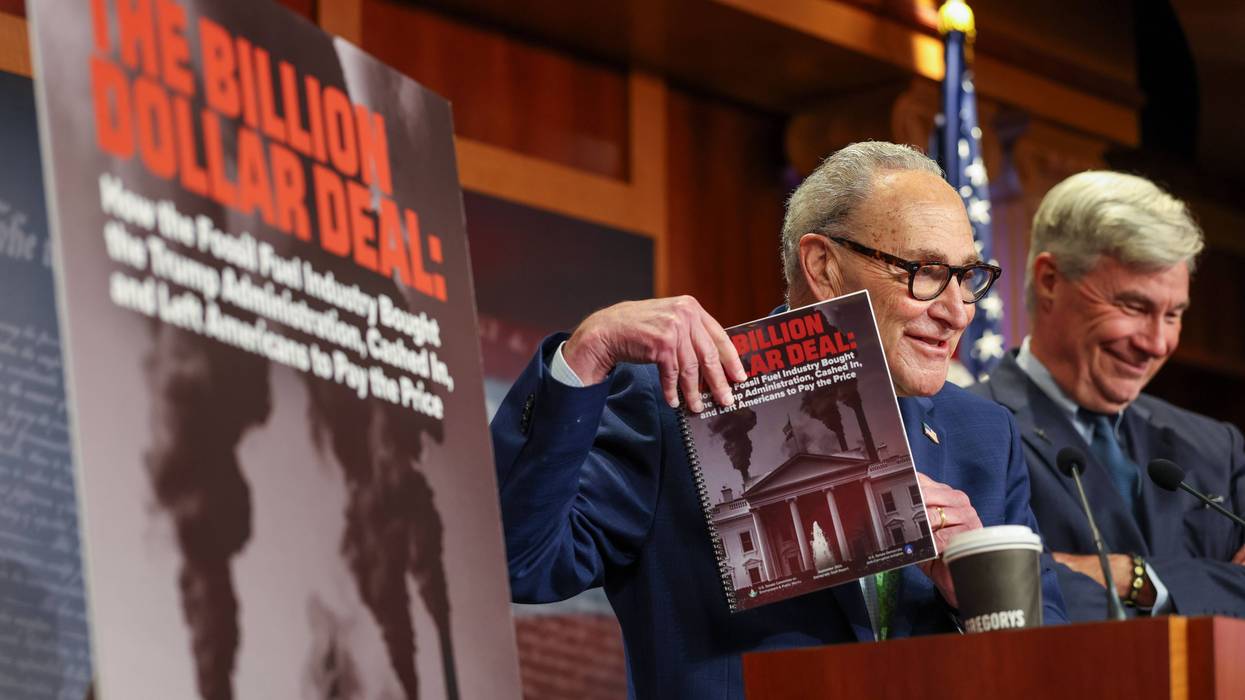
That's according to "The Billion Dollar Deal: How the Fossil Fuel Industry Bought the Trump Administration, Cashed In, and Left Americans to Pay the Price," a report released Thursday by US Senate Minority Leader Chuck Schumer (D-NY) and Committee on Environment and Public Works Ranking Member Sheldon Whitehouse (D-RI).
"The fossil fuel industry and their allies bought their way into the Trump White House with hundreds of millions of dollars in political donations, after Trump promised fossil fuel bigwigs at a Mar-a-Lago fundraiser that he’d do anything and everything they wanted, for the right price," Whitehouse said in a statement.
"Now, their minions run the government from the inside, driving up energy bills to deliver payouts to the donors that put Trump back in office," he continued. "Our new report exposes this old-fashioned corruption, by a thuggish government and a desperate industry, that is squeezing every last dollar out of Americans' pocketbooks while they still can."
The report is based on 19 investigations into Environmental Protection Agency (EPA) regulatory rollbacks, 13 probes of nine other agencies, and 13 investigations into 88 separate polluters. Investigators from Schumer's Anti-Corruption Working Group examined campaign finance filings, corporate earnings, and investor communications.
The document details how, in the aftermath of Trump's quid pro quo offer at the Mar-a-Lago fundraiser in 2024, fossil fuel executives, along with their corporate political action committees (PACs) and dark money groups, contributed an estimated $201 million to support Trump and allied Republican lawmakers—plus $19 million toward the inaugural fund.
"These figures capture only traceable donations," the report emphasizes. "Other substantial sums flowed to candidate Trump through 501(c)(4) organizations that are not legally required to disclose their contributors. Dark money groups—nonprofits and shell companies that do not reveal their donors—contributed over $1.9 billion into the 2024 elections, up from $1 billion in 2020."
The report names key figures from "the fossil fuel donor class" and includes their estimated contribution to Trump's latest election:
There's also former Liberty Energy CEO Chris Wright, who is now Trump's energy secretary and gave an estimated $795,000. According to the report, "Lobbyists say that many CEOs now keep Secretary Wright's personal phone number on speed dial."
Wright is among at least a dozen former oil executives and lobbyists Trump installed at the EPA and departments of Energy, the Interior, and Justice to systematically dismantle "the regulatory architecture built over decades to protect American families from pollution and climate change," the publication points out. "Those captured agencies delivered for the fossil fuel industry."
The report calls out not only Wright but also Trump's other "polluter worker bees," including EPA Administrator Lee Zeldin, Interior Secretary Doug Burgum, and various other officials at their agencies who have ties to polluting industries.
It also calls out the GOP-controlled Congress, which last year sent to Trump's desk the One Big Beautiful Bill Act, a law that includes "tens of billions in new and expanded direct subsidies to fossil fuel companies through tax breaks, royalty cuts, a suspension of the charge on methane pollution, and other giveaways. Combined with the subsidies already on the books, independent analysts estimate the industry will collect some $190 billion in tax breaks and subsidies over the next 10 years."
"The costs of these gifts to the fossil fuel industry fall on everyone else," the report stresses. "Climate-related disasters cost the United States at least $115 billion in direct damages in 2025 alone. Each year, the damages to public health from fossil fuel air pollution run at about $820 billion, or $2,500 per American, and contribute to approximately 91,000 premature deaths and 216,000 new cases of childhood asthma. Homeowners’ insurance has become unaffordable or unavailable across many parts of the country. These are just some of the existing costs associated with fossil fuel production and combustion."
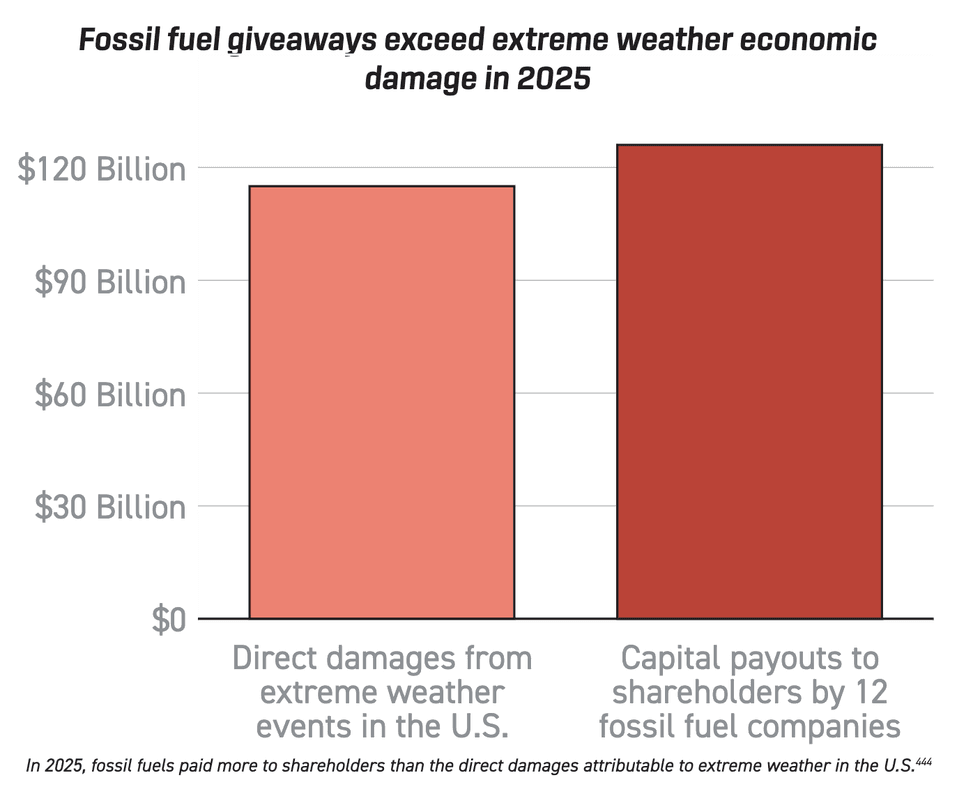
"The Trump administration's regulatory rollbacks will drive them higher, as air and water pollution as well as climate change will all get worse," the document warns, as the fossil fuel-driven climate emergency worsens, with deadly consequences worldwide.
The report notes that "canceled and delayed wind and solar projects are also raising electricity prices for consumers in multiple states, sending billions to fossil fuel plants. And the EPA itself has estimated that the elimination of tailpipe emission standards will cost Americans a minimum of $580 billion in added fuel costs alone over the next three decades. Hundreds of thousands of jobs are being lost as the United States cedes its industrial competitiveness in clean energy technologies to China and Europe."
Trump also partnered with Israel to launch an illegal war on Iran—which has responded by restricting ship traffic through the the Strait of Hormuz, sending global fuel prices soaring. The publication highlights that "the 100 biggest oil and gas companies collectively earned an extra $30 million per hour in the first month of the Iran conflict alone—amounting to $23 billion in windfall profits—with $234 billion projected by year's end if oil prices remain near $100 a barrel."
"As the Trump administration's war in Iran drives up gas prices—with analysts warning crude prices could reach $200—American
consumers pay directly for the chaos that Big Oil's political investments helped purchase," the report warns. Brown University's Costs of War Project estimates the higher diesel and gasoline prices have so far cost Americans $115.7 billion, or $883 per household.
Trump's war is also filling his own pockets. CNBC estimated earlier this month that the president has made up to $4.4 million from his investments in fossil fuel companies—and as Common Dreams reported earlier this week, he continues to make related trades.
"Donald Trump will always choose self-enrichment over helping American families, and as this report reveals, his fossil fuel corruption is costing Americans billions," said Schumer. "Instead of using the presidency to address the affordability crisis, lower costs, and protect Americans' health and safety, Trump has used his power to deliver for his billionaire buddies in the fossil fuel industry. The message from this administration is clear: Big Oil gets the profits, and American families get the bill."
Released less than six weeks away from the midterm elections, Senate Democrats' report not only lays out a range of issues, but offers some fixes, including demands to tax the windfall profits of Big Oil, as well as legislation that would "shine a light behind the dark money front groups and shell organizations that fossil fuel interests use to hide their spending."
The report also calls for making polluters pay for planet-heating emissions and empowering lawsuits to hold them accountable. It further advocates for ending fossil fuel subsidies and directing that money to clean energy, consumer relief, and infrastructure resilience.
"The Trump administration is pumping public money into the fossil fuel industry and stripping public protections to pad the profits of some of the wealthiest corporations in the nation," David Arkush, director of Public Citizen's Climate Program, said in response to the report. "The campaign contributions to Donald Trump by Big Oil have paid dividends and have allowed the fossil fuel industry to continue to pollute our communities."
"This administration has ceded our nation's clean energy future to dirty energy and is doing its best to sacrifice the economy, public health, and the environment to Big Oil's profits," he added. "Every American family struggling with high costs is suffering because of the corrupt relationship between Donald Trump and the fossil fuel industry."

“With everyday costs getting higher and higher, it is clear that we need a system like Medicare for All," said the director of the group behind a new survey.
Nearly half of Michiganders surveyed for a poll published this week said they're struggling to pay for groceries and gas because of the high and rising cost of health insurance, underscoring an affordability crisis that Democratic US Senate candidate Abdul El-Sayed has cited as one of the reasons why the United States needs Medicare for All.
Forty-nine percent of Michigan voters queried by Progress Michigan and Public Policy Polling said the cost of health insurance affects their ability to afford basic necessities at least some of the time. Twenty-four percent said it happens “all the time,” while another 25% said it happens “sometimes.” Among Black Michiganders, the figures were substantially higher, with 34% reporting the problem occurs all the time and 31% saying it happens sometimes.
“Half of Michigan is already struggling with the cost of health insurance,” Progress Michigan executive director Justin Mendoza said Thursday in a statement. “With everyday costs getting higher and higher, it is clear that we need a system like Medicare for All to help Michiganders improve their health and afford their lives.”
El-Sayed, a physician and former Detroit health official, has made universal healthcare one of the three policy pillars of his campaign, alongside getting money "out of politics” and putting it "in your pocket.”
At a Monday "Students vs. Billionaires" town hall at Western Michigan University in Kalamazoo, El-Sayed argued that healthcare should be treated as a basic public investment rather than a commodity.
"You need good healthcare. You need a good education. We need childcare. We need good roads and bridges," he said. "We don’t need to send our money to big corporations to subsidize them, we need to be invested in people so they have the human capital to be able to do all the things as they graduate and come out. That's how the system should work."
El-Sayed has also repeatedly highlighted the plight of families who are insured but still cannot afford care because their deductibles are prohibitively expensive, and others who worry what will happen to their families' healthcare if they lose their jobs—an increasingly likely prospect as artificial intelligence usurps human workers.
“Medicare for All would allow us to actually provide every single person cradle-to-grave insurance,” El-Sayed said in a recent CBS interview, “without having to worry about losing it” after changing jobs, losing employment, getting married, or reaching retirement age.
The health insurance affordability crisis is likely to worsen in 2027. Healthinsurance.org reports that insurers are proposing a median increase of roughly 15% for individual market premiums nationwide, with Michigan insurers seeking an average 14.2% increase. The final rates could change before approval.
“Imagine not having to pay that," El-Sayed told CBS.
A new New York Times/Siena poll of Michigan voters found that 57% of respondents believe El-Sayed would do a better job on healthcare than Republican opponent Mike Rogers. Only 33% said Rogers would do a better job. Among all surveyed women, 67% said El-Sayed would be better for healthcare.
The overwhelming majority of voters ages 18-29 (86%) and Black voters (82%) agreed. Just 4% of Black respondents said Rogers would be better on healthcare. Among young voters, none—0%—said Rogers is the better choice for healthcare.
"When the billionaire class can decide which voices are allowed on stage and which ones are too dangerous to hear, everyone should be paying attention."
Rapper Macklemore on Thursday revealed a new phase in his campaign to raise awareness of the plight of Palestinians.
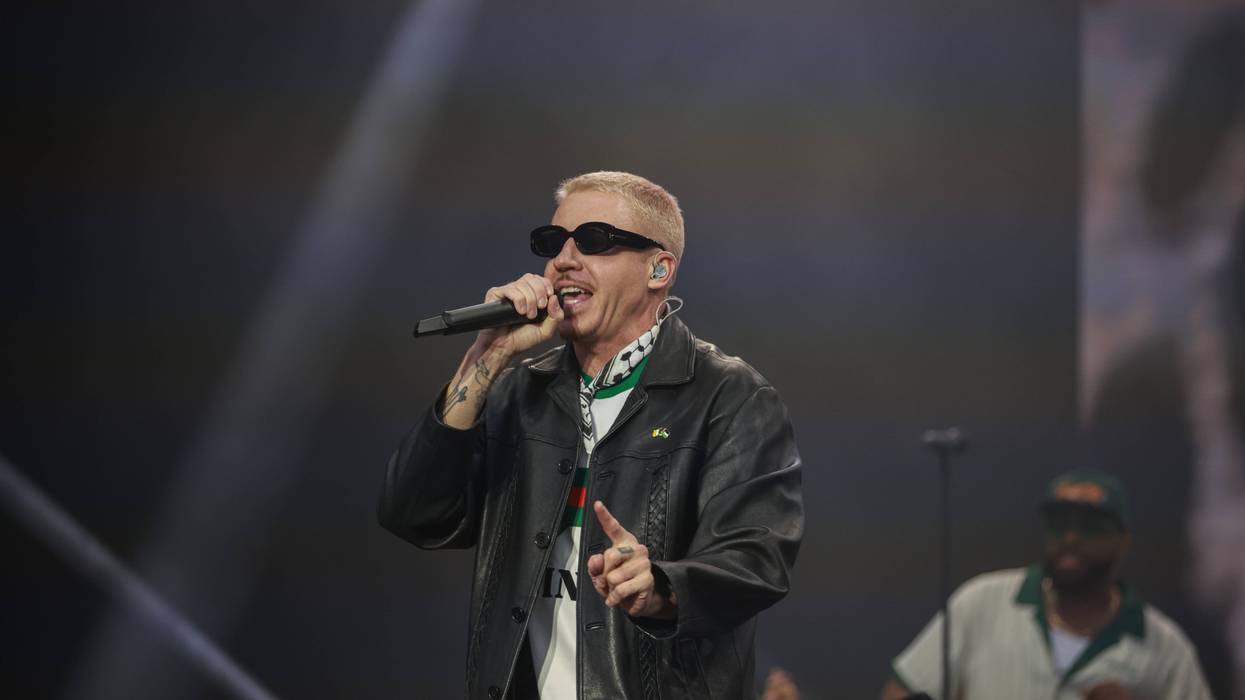
Macklemore, whose pro-Palestinian statements got him removed as a supporting act for fellow musician Ed Sheeran’s stadium tour, announced a series of live shows aimed at raising money for organizations that provide aid to Palestinian civilians suffering under Israeli military occupation and assault.
Several other opening acts for Sheeran subsequently quit the tour in solidarity with Macklemore.
"What happened to me is bigger than one artist or one stage," Macklemore wrote. "When the billionaire class can decide which voices are allowed on stage and which ones are too dangerous to hear, everyone should be paying attention. So we're going on tour. All proceeds will benefit organizations supporting the Palestinian people and movement."
The "Free Palestine Tour" so far has concerts scheduled in London, Dublin, and Paris, and Macklemore said that additional musical guests would be revealed at a later date.
Earlier this month, Macklemore pledged to donate $1 million to six organizations who were aiding Palestinians: HEAL Palestine, Gaza Soup Kitchen, Medical Aid for Palestinians, the United Nations Relief and Works Agency for Palestine Refugees in the Near East (UNRWA), and American Near East Refugee Aid.
Those groups will also be beneficiaries of the upcoming tour, as will organizations such as Jewish Voice for Peace and the Institute for Middle East Understanding.
Rachel Griffin Accurso, the YouTube star and child educator known popularly as Ms. Rachel, last week pledged to match Macklemore's $1 million donation to Palestinian aid groups, and encouraged "every wealthy white celebrity to match it and speak out against the genocide in Gaza."
“Over 20,000 precious Palestinian children have been killed and children continue to be killed every day,” Ms. Rachel said. “We have a moral obligation to use our privilege and platforms to protect children and human rights.”

"It is the duty of every citizen whose government commits crimes to know, and of every soldier who witnessed them to tell."
Israeli journalists and filmmakers Yuval Abraham and Rachel Szor are determined to ensure that their documentary, NAZA, has the farthest reach possible even as Prime Minister Benjamin Netanyahu's government accuses them of "blood libel" for interviewing soldiers who described the Israeli military's mass killing of civilians, and threatens to revoke their citizenship for making the film.
Abraham said Thursday morning on social media that he, Szor, and The Guardian, which produced the film, had decided to make NAZA accessible "online for free, without any time limit, so that every person can watch it and the soldiers' testimonies," starting in November.
Until then, the filmmakers are approaching movie theaters in Israel and offering the film "at no cost, in the hope that it will be screened in the country" as it is distributed worldwide.
Commentators in Israel have criticized Abraham and Szor for not making the film free, said journalist Ryan Grim, and theaters are now "being dared to follow through on their bluff and screen it."
The film builds on reporting Abraham has done since the beginning of Israel's current assault on Gaza, which started in 2023 in retaliation for a Hamas-led attack. In NAZA, as well as in investigative reports for the Israeli news outlets +972 Magazine and Local Call, Abraham has extensively covered the Israel Defense Forces' rules of engagement in Gaza, including its use of artificial intelligence for targeting and the IDF policy of allowing the killing of more than 100 Palestinian civilians for every Hamas commander killed.
The film's title refers to the IDF's term for the number of civilians commanders expected to be killed in a particular strike.
" Journalism is not betrayal. Criticism is not betrayal."
NAZA received a record-breaking standing ovation and the Special Jury Prize at the Venice Film Festival this month, and the film will premiere in North America at the New York Film Festival this Saturday, with a theatrical release beginning four days later. A wider release in the US is scheduled for October 9, and 50 other countries and territories are also expected to release the film.
While the film has been widely acclaimed, Abraham noted that at home in Israel, "many incorrect things were said about us and about the film in the past week."
Officials have accused the filmmakers, who interviewed 24 military and intelligence officers for the film, of lying about the IDF's practices in Gaza.
Netanyahu, who is facing legislative elections next month, said after the film's release at the Venice Film Festival that he would introduce a bill to revoke the citizenship of Israelis who defame the IDF. Eyal Zamir, chief of staff at the IDF, said military lawyers were considering legal action against Abraham and Szor.
Protesters outside Szor's family home could be heard chanting, "Death sentence for traitors" one evening, and the Committee to Protect Journalists noted that the call for violence "followed days of increasingly hostile public rhetoric targeting the filmmakers, which underscores the risks created when government officials publicly target journalists."
The offices of +972 Magazine and Local Call were also reportedly broken into.
"We made the film to spark a public discussion about the government's actions in Gaza, the killing of more than 73,000 people, most of them civilians, the normalization of a war of extermination, of the notion that 'there are no uninvolved,'" said Abraham.
"Journalism is not betrayal. Criticism is not betrayal," he continued. "It is the duty of every citizen whose government commits crimes to know, and of every soldier who witnessed them to tell. There are thousands of such soldiers walking around here, who will watch the film and recognize what is described in it personally: the killing of unarmed people crossing an imaginary line, the [NAZA] approvals in the hundreds, the systematic attacks on family homes, the burning and physical destruction of Gaza, murder and shooting at hungry people in food distribution centers, and other crimes that have no justification."
Ali Abunimah, director of Electronic Intifada, said the filmmakers should have made the film free for viewers "from the start."
He also called for Abraham and Szor to "turn over any and all evidence they have that could lead to the arrest and punishment of perpetrators of war crimes, crimes against humanity, and genocide to the International Criminal Court," which has a warrant out for the arrest of Netanyahu and former Defense Minister Yoav Gallant.

"Meanwhile, ministers and MKs threaten to nuke Gaza, starve the population, annex the West Bank, call to arrest journalists and enshrine Jewish law. This is who gets the all-clear," noted one Israeli writer.
On the heels of voting to disqualify all Arab-majority political parties and multiple candidates from Israel's October 27 Knesset election, the Israeli Central Elections Committee on Thursday declined to bar various far-right parties—a series of events that critics condemned as anti-democratic and racist.
The CEC—which is chaired by a Supreme Court justice but dominated by members of the Knesset's governing coalition—rejected petitions to ban National Security Minister Itamar Ben Gvir's Otzma Yehudit, Finance Minister Bezalel Smotrich's Religious Zionism, and Zehut, founded by Moshe Feiglin, a former member of Prime Minister Benjamin Netanyahu's Likud party.
"Under Israel's Basic Law on the Knesset, candidates and party slates can be barred from elections for rejecting Israel's existence as a Jewish and democratic state, inciting racism, or supporting armed struggle by an enemy state or terrorist organization against Israel," explained Haaretz.
In an unsuccessful bid to bar the Otzma Yehudit slate, Gilad Kariv, a member of the Knesset for the Democrats, declared that "Ben-Gvir is not a right-wing Zionist; he is a racist Kahanist who has been convicted of incitement to racism and supporting a terrorist organization."
While the panel ultimately refused to pass petitions on the right-wing parties, the previous day, it voted to disqualify the United Arab List—also known as Ra'am and led by Member of the Knesset Mansour Abbas—and the Joint List, an alliance made up of the parties Balad, Hadash, and Ta'al.
The committee disqualified the Joint List on grounds including its alleged rejection of Israel's existence as a Jewish and democratic state and support for armed struggle against it, and the United Arab List on those grounds, plus incitement to racism.
Sharply condemning the "political, racist, and anti-democratic decision," the Joint List said that "Netanyahu and Ben-Gvir know that the only way they can remain in power is by disqualifying Arab political representation and suppressing voter turnout in Arab society. This is how they seek to pave their way to another term."
"It is deeply regrettable to see that those who claim to seek to replace Netanyahu are once again falling into the racist trap set by Netanyahu and Ben-Gvir and lending their support to this political campaign," the coalition continued. "In doing so, they are contributing to the continued racist persecution of the entire Arab public, deepening racism, and perpetuating the rule of Netanyahu and his political partners."
"The Joint List is the only party that has placed at the forefront of its platform the struggle for democracy for all, genuine equality, justice and comprehensive peace. It is the only alternative to the racist policies of Netanyahu and Ben-Gvir," it added.
Dov Waxman, a professor of Israeli studies at the University of California, Los Angeles, similarly suggested on social media Wednesday that the CEC disqualified the Arab-majority parties "to delegitimize" them "in the minds of Israeli Jewish voters, and they want to do that in order to make it harder for the opposition to form a coalition government."
An opposition coalition including Ra'am "is the most likely way that an alternative, Eisenkot-led government could take power if the anti-Netanyahu bloc wins the election," Waxman added, referring to Yashar's Gadi Eisenkot.
The CEC on Wednesday also disqualified MK Ofer Cassif of the left-wing Arab-Jewish Hadash party and Balad's leader, Sami Abu Shehadeh. The Times of Israel noted that a representative for Attorney General Gali Baharav-Miara reaffirmed her "position that none of the petitions before the CEC had sufficient grounds except the one against Abu Shehadeh."
"All opposition parties—Gadi Eisenkot's Yashar, Naftali Bennett's B'Yachad, Yair Golan's Democrats, Avigdor Liberman's Yisrael Beytenu, and Benny Gantz's Blue and White—backed the petition" against the Balad leader, as did Supreme Court Justice Noam Sohlberg, the panel's chair, according to The Times of Israel.
"The backing of Sohlberg and Baharav-Miara raises the prospect that the Supreme Court may uphold the decision, despite its historically high threshold for disqualifying candidates and its repeated overturning of such decisions by the committee," the newspaper added, pointing to plans for the justices to consider the decisions next week.
Otzma Yehudit sought to disqualify Abu Shehadeh over an article in which he called the Hamas-led October 2023 attack on Israel—which led to the ongoing Israeli assault on the Gaza Strip widely denounced as genocide—as "an important historic event militarily, politically, and strategically."
As Haaretz detailed:
Abu Shehadeh said he regretted writing the article at the center of the request to disqualify him. "I wrote it on October 7, and I didn't know the scale of the atrocities. If I had known, I would not have written it this way," he said. "I agree with the justified criticism of the article. I should not have written it, and I should have clearly condemned [the attack]."
"My intention was for the military campaign to be halted and for the parties to move to a diplomatic track led by the Palestinian Authority and Arab states," he explained.
As for Cassif, whose ban was spearheaded by Likud, he said that "the disqualification requests are intended to achieve the complete delegitimization of Arab society and Israeli-Arab partnership, and to perpetuate totalitarian rule and majority tyranny," according to the newspaper.
"There is no contradiction between the absolute condemnation I have expressed of the Gaza massacre and the war crimes being committed by the Israeli government, and the absolute condemnation I have expressed of the October 7 massacre and Hamas' horrific crimes," he added.
After the Wednesday decisions, the Haifa-based rights group Adalah said in a statement that "the hearings, like the motions themselves, showed once again that this is an arbitrary, inciting, and racist process, devoid of any legal process. The CEC conducted an illegitimate political process aimed at persecuting ideas the majority does not accept, and it ended with the disqualification of all Palestinian representation in the Israeli Knesset."
"The CEC approved every disqualification motion except a separate motion against Balad/Tajammu' alone, which it rejected on procedural grounds," noted Adalah—which "represented all the political party lists and individual candidates before the CEC, and will represent them against these decisions before the Supreme Court."
"Weirdest way to violate the Hatch Act, ever."
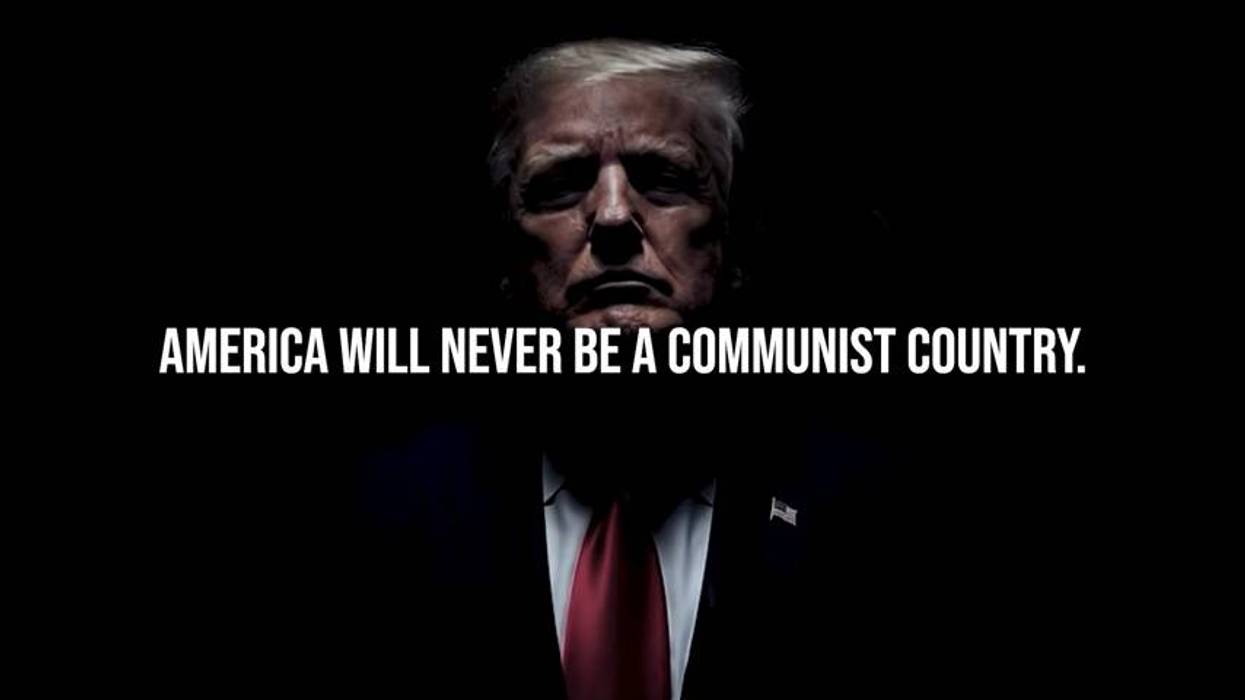
The White House is being accused of violating federal law after it aired an ad glorifying President Donald Trump, which it explicitly said was “paid for by the US government.”
The ad was first reported by CBS News Miami investigative reporter Jim DeFede, who saw it airing on Fox News Wednesday night.
The 30-second spot features numerous videos and images of Trump, set to the song “Love Me” by JMSN. It includes voiceovers by the president railing against “communism,” a label he’s regularly used to hammer Democrats as the midterm elections approach.
"Together we will defeat communism, socialism, and Marxism, in America," it features Trump saying. "America will never be a communist country."
The video then goes on to amplify, in bright red letters, what the White House views as Trump’s signature policy accomplishments and goals: the “largest tax cuts in history,” “reigniting American manufacturing,” and “defend law and order and police.”
Footage from the 2024 Republican National Convention featuring Trump alongside Ultimate Fighting Championship president and CEO Dana White is then shown.
"He is the toughest, most resilient person that I've ever met," White is heard saying about Trump. "And nothing was going to stop him from fighting so hard for the country he loves."
As White is heard slathering Trump with praise, a message appears at the bottom of the screen in large white letters: "Paid for by the US government."
DeFede described the taxpayer-funded message as "clearly a campaign ad."
Many onlookers found the use of government resources to flood the airwaves with nakedly partisan messaging chilling, particularly in light of Trump's recent attempts to censor critical media outlets and establish a state-run TV channel, while designating political opponents as "terrorists."
Fernand R. Amandi, a political science professor at the University of Miami and analyst at MS NOW—a network recently banned from the White House by Trump—said that the use of state organs for messages like these was an "unmistakable [sign] you live under an authoritarian, fascist government."
Longtime Senate Democratic aide Jim Manley said the ad was not just "creepy," but also “illegal.”
Provisions in annual appropriations laws explicitly forbid federal appropriations from being used for "publicity or propaganda purposes."
For decades, the nonpartisan Government Accountability Office has interpreted this to mean that the executive branch can't use federal dollars for material whose “obvious purpose is ‘self-aggrandizement’ or ‘puffery,'" or for communications that are "purely partisan."
The Hatch Act also bans federal employees from using their official authority or government resources for partisan activity. While Trump himself is not subject to the Hatch Act, most other senior government employees and appointees are.
The Trump administration has been accused of violating the Hatch Act on multiple occasions during his second term, including by using official agency websites to run messages blaming “Radical Left” Democrats for last year’s lengthy government shutdown.
During Trump's first term, multiple officials were found to have violated the Hatch Act for arguably less overt offenses.
Former Acting Homeland Security Secretary Chad Wolf was found to have violated the law by hosting a naturalization ceremony orchestrated to generate footage for the 2020 Republican National Convention. Former Trump housing official Lynne Patton, meanwhile, admitted to violating the act by using her government position to recruit participants for an RNC video, resulting in a $1,000 fine and a four-year ban from federal employment.
It's not clear which government employees were behind the taxpayer-funded Trump ad. But Max Flugrath, the communications director at the voting rights group Fair Fight, said it was the "weirdest way to violate the Hatch Act, ever."