November, 04 2019, 11:00pm EDT

For Immediate Release
Contact:
Deb McNamara, Fossil Free PERA (Colorado), campaigns@350colorado.org, (720) 400-3739
Sandy Emerson, Fossil Free California, sandy@fossilfreeca.org, (650) 743-0524
Vanessa Warheit, Fossil Free California, vanessa@fossilfreeca.org, (415) 225-4435
Toby Heaps, Corporate Knights, toby@corporateknights.com, (416) 274-1432
New Study Shows Oil, Coal and Gas Investments Drove Over $19 Billion in Losses for Major Pension Funds
Report highlights increasing financial risk of climate-damaging investments as the transition to clean energy accelerates.
WASHINGTON
As the climate crisis worsens, and with Donald Trump formally withdraws the US from the Paris Climate Accord, a new study shows that three major state pension funds in California and Colorado (CalSTRS, CalPERS and PERA), collectively lost over $19 billion in retirement savings for teachers, state troopers and public workers by continuing to invest in fossil fuels.
The study performed by media and analysis firm Corporate Knights calls into question the rationale for investing in the risky oil, coal, and gas industries, whose stocks damage both the portfolios' profits and the planet's life support systems. Members of California's State Teachers' Retirement System plan to attend that fund's Investment Committee meeting on Wednesday, November 6, demanding answers about why the fund continues to lose money on fossil fuels.
The Report: Full Findings & Background
Corporate Knights retrieved the funds' stock holdings, weights, and valuations for each of the past ten years, and then used public information to compare those actual investment returns with a similar, but fossil fuel-free version.
In this analysis, over ten years, California's $238 billion state teachers retirement fund (CalSTRS) would have gained $5.5 billion without fossil fuels. The $380 billion public employees retirement fund (CalPERS) would have generated an additional $11.9 billion. Similarly, Colorado's $45 billion state pension fund (PERA) would have generated an estimated additional $1.77 billion in value without fossil fuels.
The reports, which were commissioned and funded by non-profit coalitions calling on the Boards of CalSTRS, CalPERS, and PERA to divest from fossil fuels, also highlight that large fossil fuel companies pulled down overall performance - while technology, healthcare, retail and entertainment boosted performance.
Link to Full Report: The full reports and data files are available here. (https://bit.ly/corporate-knights-pers-strs)
A Losing Strategy for Retirement Savings -- and the Planet
These findings help show that fossil fuel companies are no longer wise long-term investment choices, and everyday Americans are feeling the sting.
In California, CalSTRS serves over 900,000 members, mostly public school teachers. CalPERS, the nation's largest public pension fund, serves more than 1.9 million members in its retirement system, including former educators, police officers, firefighters, municipal workers and state employees. In Colorado, PERA serves 600,000 current and former teachers, state troopers, snowplow drivers, corrections officers, and other public employees.
The ten years these funds were invested in fossil fuels translates to a loss of $5,572 per member for CalSTRS; a loss of $6,072 per member for CalPERS; and a loss of $2,900 per member for PERA.
Quote Deck:
"We knew CalPERS' fossil fuel investments did environmental damage to us all. It turns out the damage was fiscal too - CalPERS took an $11.9 billion portfolio hit by persisting in dead-end investments in fossil fuels," said Wynne Furth, Former City Attorney, CalPERS Retiree
"This report confirms what we have been predicting for years, based on the testimony of financial experts like Bevis Longstreth, former commissioner to the SEC: CalSTRS would be billions of dollars ahead if it had divested years ago. We can only hope that the fund will now divest its fossil fuel holdings to avoid further and larger losses," said Jane Vosburg, CalSTRS Retiree; FFCA, Divest CalSTRS Campaign Lead
"Now's the time for CalSTRS to make the morally right decision to divest. They can come out financially ahead and help curb deadly carbon emissions by eliminating fossil fuels from our portfolio," said Lynne Nittler, retired teacher and CalSTRS member.
"As long as PERA's money remains invested in the fossil fuel industry, that investment supports an industry that has willfully denied its role in climate change, accelerating today's climate crisis in favor of profits. For the sake of drowned Pacific islands, migrants fleeing drought, and future generations' lives, PERA must divest from fossil fuels. The Corporate Knights study makes that easier by showing they have billions of dollars to gain as well," said Devon Reynolds, Colorado PERA member
"PERA owes the same fiduciary duty to members retired today and members retiring 30 years from now. What this new information makes clear is that everyone's interests are aligned when it comes to fossil fuel investments. It's time to move our money to safer investments, both for better returns today and a viable future for PERA members of my generation and beyond," said Bobbie Mooney, Fossil Free PERA Spokesperson & Colorado PERA member
"Energy is the worst-performing sector of the S&P 500 over the past decade. Since 2007, the sector has generated bond-like returns with equity risk. Our clients at the SRI Wealth Management Group represent a growing segment of investors expressing concern with climate change. As a result of this concern, many are choosing to shift their investments away from fossil fuel companies and into renewable energy. The collective impact these investors are having on share price for companies across the industry and on the broader environment is significant," said Thomas Van Dyck, Managing Director--Financial Advisor, RBC Wealth Management
"Institutional investors literally have the power to make or break the future. Money lies behind every decision to expand or contract the fossil fuel industry, to slow or accelerate the clean energy transition," said Clara Vondrich, Director of Divest Invest. "There is no more time for shareholder engagement with the fossil fuel industry that is digging and burning us past climate tipping points of no return. It's time to divest. What side of history are you on?"
How Fossil Fuel Investments Directly Impact the Planet
Climate change experts agree that to avoid the most catastrophic effects of the climate crisis -- including sea level rise, extreme weather events, the spread of diseases, massive agricultural loss, and mass extinction of species -- 80 percent of fossil fuel reserves must stay in the ground. But fossil fuel companies have refused to change, doubling down instead on a core business of extracting and burning that destabilizes the Earth's climate. The only thing these companies appear to care about is (short term) financial profits.
Profits depend on investment - and investment requires social license and capital. Climate activists argue that divestment effectively removes both of these supports for the fossil fuel industry. And this strategy appears to be working. At their annual conference in October, CEO's of major oil companies asked, "What more does the industry need to do on the PR front to combat the growing fossil fuel divestment movement?"
A New Investment Trend Offers Hope
Divestment from fossil fuels is a clear and emerging trend. In September of this year, more institutions like churches, universities, and private equity funds pledged to divest. The total of managed assets pledged to divestment has leapt from $52 billion in 2014 to more than $11.5 trillion today -- a stunning 22,000 % increase.
Over 1,110 institutions have now committed to policies black-listing some combination of coal, oil and gas investments. These institutions include sovereign wealth funds, banks, global asset managers and insurance companies, cities, pension funds, health care organizations, universities, faith groups, foundations, and the entire country of Ireland.
In Denver, Mayor Michael Hancock announced this past spring that the city was divesting its $6 billion General Funds' portfolio from fossil fuels. The University of California also recently announced divestment of its $83 billion pension and endowment funds, for "purely financial reasons."
Remaining Questions
In light of the Corporate Knights study findings, key questions for these funds and fund managers remain:
Why would any fund manager continue to invest in fossil fuels? Risky, harmful to our planet and shared future, and less profitable than many other investment opportunities, fossil fuel investments are a lose-lose choice. Why are these major funds still investing in them?
Who will protect public employees' retirement in California and Colorado? Retirees and other members of CalPERS, CalSTRS, and Colorado's PERA might ask: "Now that the fund managers know these fossil fuel investments are losing us money, what are they going to do about it?"
What role do the oil, gas and coal industries play? These studies are being released in the midst of the groundbreaking two week trial of New York v. ExxonMobil, which alleges the corporation defrauded shareholders by not reporting accurately on the impacts of climate change on its business. The California and Colorado pension funds collectively hold over $1.2 billion in Exxon stock. Do these fund managers believe the underperformance of this sector was a result of fraudulent misrepresentation by industry? What responsibility does the industry have for these losses?
350 is building a future that's just, prosperous, equitable and safe from the effects of the climate crisis. We're an international movement of ordinary people working to end the age of fossil fuels and build a world of community-led renewable energy for all.
LATEST NEWS
Dems Demand Answers as Trump Photo Disappears From DOJ Online Epstein Files
"What else is being covered up?"
Dec 20, 2025
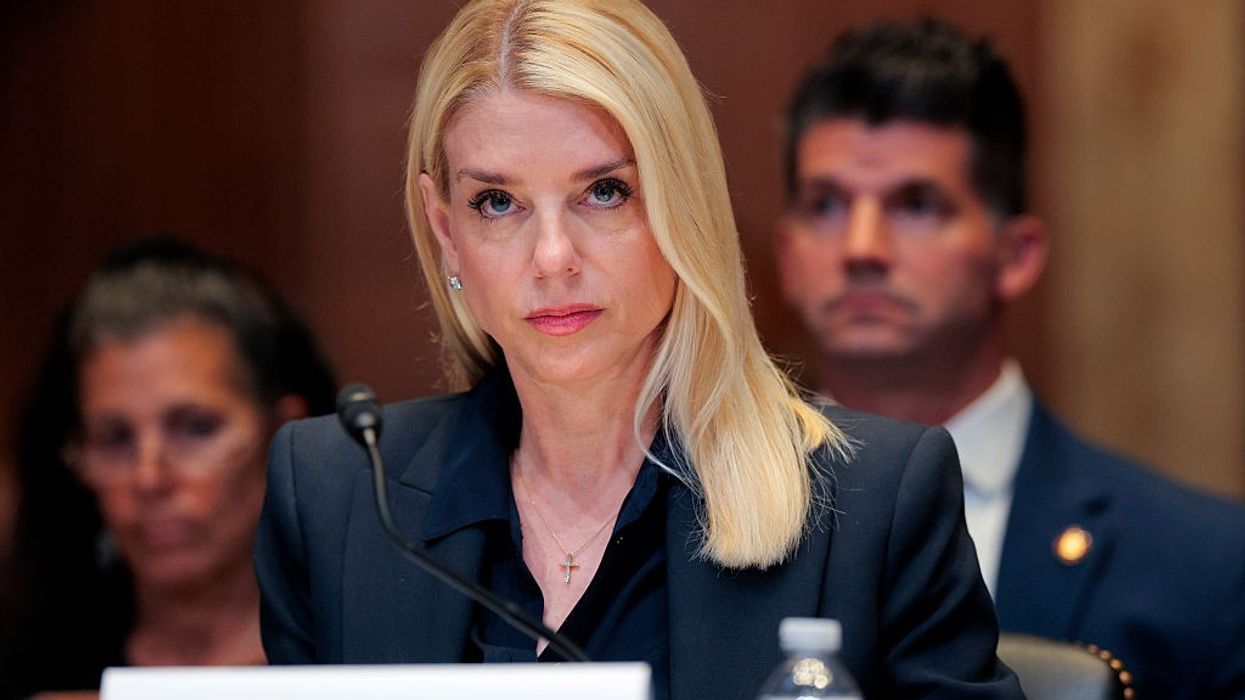
Congressional Democrats on Saturday pressed US Attorney General Pam Bondi for answers regarding the apparent removal of a photo showing President Donald Trump surrounded by young female models from Friday's Department of Justice release of files related to the late convicted child sex criminal Jeffrey Epstein.
Amid the heavily redacted documents in Friday's DOJ release was a photo of a desk with an open drawer containing multiple photos of Trump, including one of him with Epstein and convicted child sex trafficker Ghislaine Maxwell and another of him with the models.
However, the photo—labeled EFTA00000468 in the DOJ's Epstein Library—was no longer on the site as of Saturday morning.
"This photo, file 468, from the Epstein files that includes Donald Trump, has apparently now been removed from the DOJ release," Democrats on the House Oversight Committee noted in a Bluesky post. "AG Bondi, is this true? What else is being covered up? We need transparency for the American public."
This photo, file 468, from the Epstein files that includes Donald Trump has apparently now been removed from the DOJ release.AG Bondi, is this true? What else is being covered up? We need transparency for the American public.
[image or embed]
— Oversight Dems (@oversightdemocrats.house.gov) December 20, 2025 at 9:30 AM
Numerous critics have accused the Trump administration of a cover-up due to the DOJ's failure to meet a Friday deadline to release all Epstein-related documents and heavy redactions—including documents of 100 pages or more that are completely blacked out—to many of the files.
Deputy Attorney General Todd Blanche responded to the criticism by claiming that "the only redactions being applied to the documents are those required by law—full stop."
"Consistent with the statute and applicable laws, we are not redacting the names of individuals or politicians unless they are a victim," he added.
Earlier this year, officials at the Federal Bureau of Investigation reportedly redacted Trump's name from its file on Epstein, who was the president's longtime former friend and who died in 2019 in a New York City jail cell under mysterious circumstances officially called suicide while facing federal child sex trafficking and conspiracy charges.
Trump has not been accused of any crimes in connection with Epstein.
House Oversight Committee Ranking Member Robert Garcia (D-Calif.) said during a Friday CNN interview that the DOJ only released about 10% of the full Epstein files.
The DOJ is breaking the law by not releasing the full Epstein files. This is not transparency. This is just more coverup by Donald Trump and Pam Bondi. They need to release all the files, NOW.
[image or embed]
— Congressman Robert Garcia (@robertgarcia.house.gov) December 19, 2025 at 5:06 PM
"The DOJ has had months and hundreds of agents to put these files together, and yet entire documents are redacted—from the first word to the last," Garcia said on X. "What are they hiding? The American public deserves transparency. Release all the files now!"
In a joint statement Friday, Garcia and House Judiciary Committee Ranking Member Jamie Raskin (D-Md.) said, "We are now examining all legal options in the face of this violation of federal law."
"The survivors of this nightmare deserve justice, the co-conspirators must be held accountable, and the American people deserve complete transparency from DOJ," they added.
Rep. Ro Khanna (D-Calif.)—who along with Rep. Thomas Massie (R-Ky.) introduced the Epstein Files Transparency Act, which was signed into law by Trump last month and required the release of all Epstein materials by December 19—said in a video published after Friday's document dump that he and Massie "are exploring all options" to hold administration officials accountable.
"It can be the impeachment of people at Justice, inherent contempt, or referring for prosecution those who are obstructing justice," he added.
Keep ReadingShow Less

Israeli Forces Massacre 6 Palestinians Celebrating Wedding at Gaza School Shelter
"This isn't a truce, it's a bloodbath," said a relative of some of the victims, who included women, an infant, and a teenage girl.
Dec 20, 2025
Funerals were held Saturday in northern Gaza for six people, including children, massacred the previous day by Israeli tank fire during a wedding celebration at a school sheltering displaced people, as the number of Palestinians killed during the tenuous 10-week ceasefire rose to over 400.
On Friday, an Israel Defense Forces (IDF) tank blasted the second floor of the Gaza Martyrs School, which was housing Palestinians displaced by the two-year war on Gaza in the al-Tuffah neighborhood of Gaza City.
Al Jazeera and other news outlets reported that the attack occurred while people were celebrating a wedding.
Al-Shifa Hospital director Mohammed Abou Salmiya said those slain included a 4-month-old infant, a 14-year-old girl, and two women. At least five others were injured in the attack.
"It was a safe area and a safe school and suddenly... they began firing shells without warning, targeting women, children and civilians," Abdullah Al-Nader—who lost relatives including 4-month-old Ahmed Al-Nader in the attack—told Agence France-Presse.
Witnesses said IDF troops subsequently blocked first responders including ambulances and civil defense personnel from reaching the site for over two hours.
"We gathered the remains of children, elderly, infants, women, and young people," Nafiz al-Nader, another relative of the infant and others killed in Friday's attack, told reporters. "Unfortunately, we called the ambulance and the civil defense, but they couldn't get by the Israeli army."
The IDF said that “during operational activity in the area of the Yellow Line in the northern Gaza Strip, a number of suspicious individuals were identified in command structures," and that "troops fired at the suspicious individuals to eliminate the threat."
The Yellow Line is a demarcation boundary between areas of Gaza under active Israeli occupation—more than half of the strip's territory, including most agricultural and strategic lands—and those under the control of Hamas.
"The claim of casualties in the area is familiar; the incident is under investigation," the IDF said, adding that it "regrets any harm to uninvolved parties and acts as much as possible to minimize harm to them."
Since the October 7, 2023 Hamas-led attack on Israel, more than 250,000 Palestinians have been killed or wounded by Israeli forces, including approximately 9,500 people who are missing and presumed dead and buried beneath rubble. Classified IDF documents suggest that more than 80% of the Palestinians killed by Israeli forces were civilians.
Around 2 million Palestinians have also been displaced—on average, six times—starved, or sickened in the strip.
Gaza officials say at least 401 Palestinians have been killed since a US-brokered ceasefire between Israel and Hamas took effect on October 10. Gaza's Government Media Office says Israel has violated the ceasefire at least 738 times.
"This isn't a truce, it's a bloodbath," Nafiz al-Nader told Agence France-Presse outside al-Shifa Hospital on Saturday.
Israel says Hamas broke the truce at least 32 times, with three IDF soldiers killed during the ceasefire.
Israeli Prime Minister Benjamin Netanyahu and Yoav Gallant, his former defense minister, are fugitives from the International Criminal Court in The Hague, where they are wanted for alleged war crimes and crimes against humanity in Gaza, including murder and forced starvation.
Israel is also facing a genocide case filed by South Africa at the International Court of Justice, also in The Hague. A United Nations commission, world leaders, Israeli and international human rights groups, jurists, and scholars from around the world have called Israel's war on Gaza a genocide.
Friday's massacre came as Steve Witkoff, President Donald Trump's Mideast envoy, other senior US officials, and representatives of Egypt, Qatar, Turkey, and the United Arab Emirates met in Miami to discuss the second phase of Trump's peace plan, which includes the deployment of an international stabilization force, disarming Hamas, the withdrawal of IDF troops from the strip, and the establishment of a new government there.
Keep ReadingShow Less

Trump's 9 New Prescription Drug Deals 'No Substitute' for Systemic Reform
"Patients are overwhelmingly calling on Congress to do more to lower prescription drug prices by holding Big Pharma accountable and addressing the root causes of high drug prices," said one campaigner.
Dec 19, 2025
"Starting next year, American drug prices will come down fast and furious and will soon be the lowest in the developed world," President Donald Trump claimed Friday as the White House announced agreements with nine pharmaceutical manufacturers.
The administration struck most favored nation (MFN) pricing deals with Amgen, Bristol Myers Squibb, Boehringer Ingelheim, Genentech, Gilead Sciences, GSK, Merck, Novartis, and Sanofi. The president—who has launched the related TrumpRx.gov—previously reached agreements with AstraZeneca, EMD Serono, Eli Lilly, Novo Nordisk, and Pfizer.
"The White House said it has made MFN deals with 14 of the 17 biggest drug manufacturers in the world," CBS News noted Friday. "The three drugmakers that were not part of the announcement are AbbVie, Johnson & Johnson, and Regeneron, but the president said that deals involving the remaining three could be announced at another time."
However, as Trump and congressional Republicans move to kick millions of Americans off of Medicaid and potentially leave millions more uninsured because they can't afford skyrocketing premiums for Affordable Care Act (ACA) plans, some critics suggested that the new drug deals with Big Pharma are far from enough.
"When 47% of Americans are concerned they won't be able to afford a healthcare cost next year, steps to reduce drug prices for patients are welcomed, especially by patients who rely on one of the overpriced essential medicines named in today's announcement," said Merith Basey, CEO of Patients for Affordable Drugs Now, in a statement.
"But voluntary agreements with drug companies—especially when key details remain undisclosed—are no substitute for durable, system-wide reforms," Basey stressed. "Patients are overwhelmingly calling on Congress to do more to lower prescription drug prices by holding Big Pharma accountable and addressing the root causes of high drug prices, because drugs don't work if people can't afford them."
As the New York Times reported Friday:
Drugs that will be made available in this way include Amgen's Repatha, for lowering cholesterol, at $239 a month; GSK's asthma inhaler, Advair Diskus, at $89 a month; and Merck's diabetes medication Januvia, at $100 a month.
Many of these drugs are nearing the end of their patent protection, meaning that the arrival of low-cost generic competition would soon have prompted manufacturers to lower their prices.
In other cases, the direct-buy offerings are very expensive and out of reach for most Americans.
For example, Gilead will offer Epclusa, a three-month regimen of pills that cures hepatitis C, for $2,492 a month on the site. Most patients pay far less using insurance or with help from patient assistance programs. Gilead says on its website that "typically a person taking Epclusa pays between $0 and $5 per month" with commercial insurance or Medicare.
While medication prices are a concern for Americans who face rising costs for everything from groceries to utility bills, the outcome of the ongoing battle on Capitol Hill over ACA tax credits—which are set to expire at the end of the year—is expected to determine how many people can even afford to buy health insurance for next year.
The ACA subsidies fight—which Republicans in the US House of Representatives ignored in the bill they passed this week before leaving Capitol Hill early—has renewed calls for transitioning the United States from its current for-profit healthcare system to Medicare for All.
"At the heart of our healthcare crisis is one simple truth: Corporations have too much power over our lives," Rep. Pramila Jayapal (D-Wash.), former chair of the Congressional Progressive Caucus, said on social media Friday. "Medicare for All is how we take our power back and build a system that puts people over profits."
Jayapal reintroduced the Medicare for All Act in April with Rep. Debbie Dingell (D-Mich.) and Senate Health, Education, Labor, and Pensions Committee Ranking Member Bernie Sanders (I-Vt.). The senator said Friday that some of his top priorities in 2026 will be campaign finance reform, income and wealth inequality, the rapid deployment of artificial intelligence, and Medicare for All.
Earlier this month, another backer of that bill, US Sen. Chris Van Hollen (D-Md.), said: "We must stop tinkering around the edges of a broken healthcare system. Yes, let's extend the ACA tax credits to prevent a huge spike in healthcare costs for millions. Then, let's finally create a system that puts your health over corporate profits. We need Medicare for All."
It's not just progressives in Congress demanding that kind of transformation. According to Data for Progress polling results released late last month, 65% of likely US voters—including 78% of Democrats, 71% of Independents, and 49% of Republicans—either strongly or somewhat support "creating a national health insurance program, sometimes called 'Medicare for All.'"
Keep ReadingShow Less
Most Popular