March, 01 2022, 03:24pm EDT

For Immediate Release
Contact:
Ada Recinos at ada@amazonwatch.org
Travis Nichols at travis@stand.earth
Citigroup 'Climate Forward' Reputation Remains Tainted with Impacts of Fossil Fuel Financing in Amazon Rainforest
Report shows bank’s role in funding state-run oil companies with ties to corruption, rights violations, pollution, and deforestation in the Amazon. Indigenous leaders, human rights and environmental campaigners calling for Citi to exit Amazon oil and gas.
WASHINGTON
Ahead of Citigroup Investor Day, environmental campaigners at Amazon Watch and Stand.earth are releasing a report spotlighting the bank's exposure and central role in providing financing and investments of tens of billions to oil and gas companies in the Amazon. Indigenous leaders and federations directly impacted by oil drilling are calling on Citigroup to commit to exit Amazon oil and gas. Citigroup's investments and financing in Amazonian oil are tied to corruption, pollution, deforestation, and Indigenous rights violations - incompatible with its climate forward image. Without a clear commitment to end its role as a major driver of the fossil fuel industry in the Amazon, Citigroup's climate promises remain inadequate.
"Oil drilling in our Amazon has brought contamination, disease, deforestation, destruction of our cultures, and the colonization of our territories. It is an existential threat for us and violates our fundamental rights as Indigenous peoples. We are calling for an end to all new extraction on our lands, and as our ancestors and science now affirm, we must keep fossil fuels in the ground," shared Nemo Andy Guiquita, a Waorani Indigenous leader and Women and Health Coordinator for the Confederation of Indigenous Nationalities of the Ecuadorian Amazon (CONFENIAE).
In 2021, Citigroup released an updated energy policy that rules out financing for oil and gas in the Arctic, yet Citi has made no commitments related to its financing of the oil industry in the Amazon where new oil drilling is a gateway to deforestation. In a global declaration by Indigenous federations and allies, banks are being called to end financing of commodities like oil that are responsible for fragmenting and polluting the Amazon. Leadership on this issue is coming from European banks - including ING, Credit-Suisse, Natixis, Societe Generale, BNP Paribas, and Intesa - all of whom have made commitments to end oil industry or trade finance in Ecuador - consistent with international calls for protecting 80% of the Amazon by 2025 - a critical threshold to prevent the biome from unraveling. Not a single U.S. bank has made any commitments.
With the Amazon rainforest at the tipping point of ecological collapse, Citigroup's lack of an exclusion policy and exit strategy on Amazon oil and gas presents a significant reputational risk. Its financing has been instrumental in the build-out of oil drilling and infrastructure in critical rainforest areas and Indigenous territories. Its investments have long-term impacts and have supported the expansion of oil production, in many cases despite strong opposition from Indigenous communities. Citigroup has held the largest financial involvement by a foreign bank in state-owned oil companies operating in the Amazon. Its clients include Petrobras in Brazil, EcoPetrol in Colombia, PetroAmazonas/Petroecuador in Ecuador, and PetroPeru in Peru.
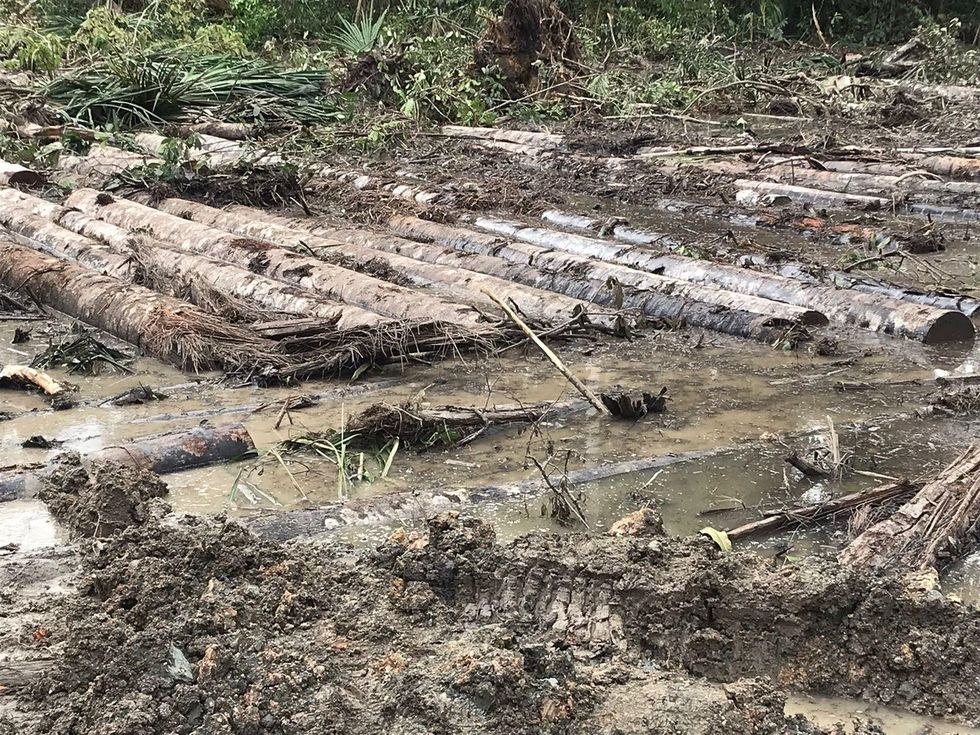
Construction of road inside Yasuni Park to Block 43, Credit: CONFENIAE
"The Amazon is the last place on the planet where oil drilling should be expanding, so Citigroup CEO Jane Fraser has a critical opportunity before her. Will she show a new kind of leadership and commit to aligning bank policy with what the world needs and what generations of Indigenous peoples and concerned citizens are calling for, or will she allow for business as usual and continued degradation of the Amazon?" asked Tyson Miller, Amazon Campaigns Director at Stand.earth.
In January, Citigroup released an outline of its latest plans to achieve net zero in its energy and power portfolios. The bank announced it will use "absolute" emissions reduction targets, which contrast with the "intensity" targets currently used by other major banks tied to Amazon oil, such as JPMorgan Chase and Goldman Sachs. Because absolute emissions increases are what drive the climate crisis, Citi's decision to track its financed absolute targets instead of its financed intensity targets is a step toward accountability.
"Yesterday's IPCC report makes clear the urgent need for immediate emissions reductions. While Citigroup has made strides on climate by adopting absolute emissions reductions targets instead of intensity targets, it fails to account for the impact its financing plays in the Amazon, a region of invaluable ecological and cultural significance. Oil expansion and development in the Amazon rainforest not only runs contrary to scientific consensus on climate but also pollutes and emits at every step of the process - from well to wheel," said Pendle Marshall-Hallmark, Climate and Finance Campaigner at Amazon Watch.
Citigroup is one of the only U.S. banks that has been providing funding to PetroEcuador (formerly PetroAmazonas), the state oil company of Ecuador, and the country is now planning to double oil production. Many of those expansion projects are slated for extraction in largely pristine and roadless Amazon rainforest and titled territories of Indigenous peoples, who have not provided their consent, a right recently upheld by the country's Constitutional Court. Despite averaging two oil spills per week, the country is currently expanding drilling in protected areas such as Yasuni National Park, building roads in intact forests, and in areas near Indigenous peoples living in voluntary isolation. Oil concessions that span approximately 7.5 million acres or 3 million hectares of rainforests are slated to be auctioned off this year.
In Peru, Citigroup is participating in a 10-year, 1.3 billion USD syndicated loan to the state-owned oil company PetroPeru, which is seeking to expand oil operations within the North Peruvian Amazon where the Indigenous Achuar and Wampis peoples live and are strongly opposed to any kind of oil drilling within their ancestral territory.
"We have learned that Citibank is one of the investors that has lent money to Petroperu to expand its operations. They must know that Petroperu is a polluting company and that we will not allow it to enter our Indigenous territory. Citi and other international financiers must stop financing oil expansion in the Amazon," says Nelton Yankur, President of the Federation of the Achuar Nationality of Peru.
About Exit Amazon Oil and Gas
The Exit Amazon Oil and Gas campaign, led by Amazon Watch, and Stand.earth in collaboration with the Confederation of Indigenous Nationalities of the Ecuadorian Amazon (CONFENIAE) and the Coordinating Body of Indigenous Organizations of the Amazon Basin (COICA), is calling on banks to commit to exclude financing for oil and gas in the Amazon biome, starting with ending its expansion. The campaign follows research completed by Stand.earth and Amazon Watch that exposes links between leading banks in the Global North and the Amazon oil and gas trade:
Stand.earth (formerly ForestEthics) is an international nonprofit environmental organization with offices in Canada and the United States that is known for its groundbreaking research and successful corporate and citizens engagement campaigns to create new policies and industry standards in protecting forests, advocating the rights of indigenous peoples, and protecting the climate. Visit us at
LATEST NEWS
Israeli Cabinet Approves 19 New Apartheid Colonies in Occupied West Bank
"The ONLY reason Israel gets away with this naked thievery is US military and political support," said one observer.
Dec 21, 2025
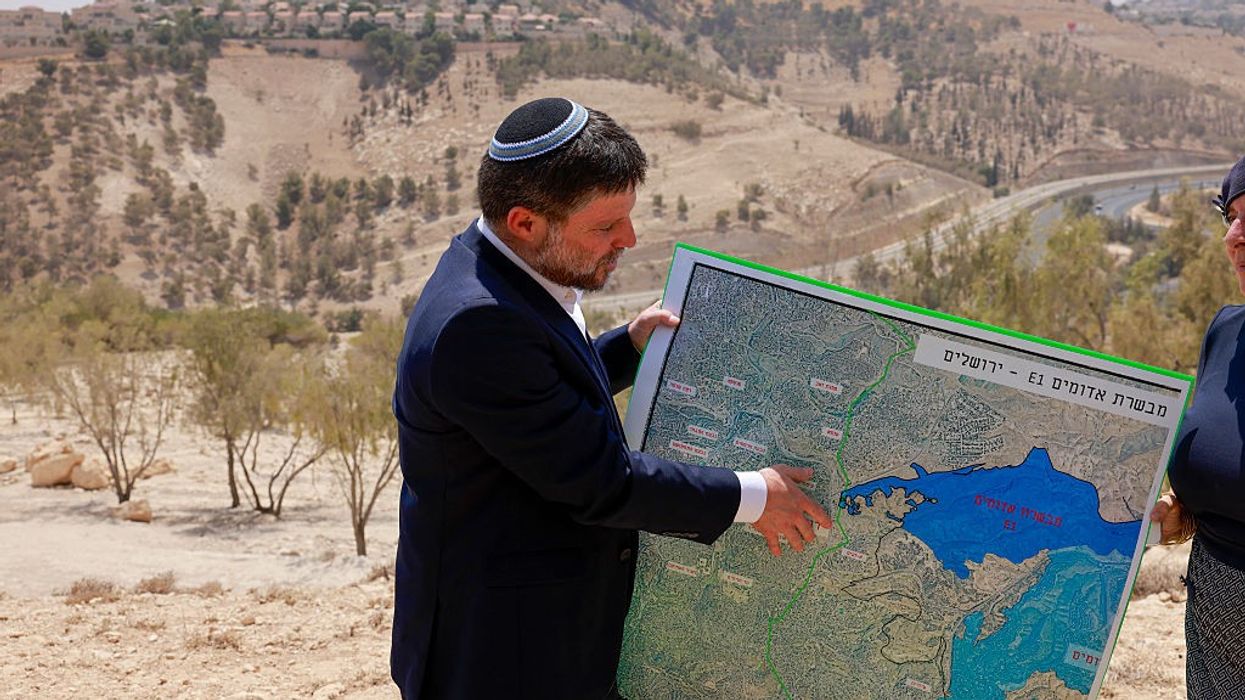
Israel's Cabinet on Sunday finalized approval of 19 new Jewish-only settler colonies in the illegally occupied West Bank, a move the apartheid state's far-right finance minister said was aimed at thwarting Palestinian statehood.
Cabinet ministers approved the legalization of the previously unauthorized settler outposts throughout the occupied Palestinian territory, bringing the total number of new settlements in recent years to 69.
The move will bring the overall total number of exclusively or overwhelmingly Jewish settlements—which are illegal under international law—to more than 200, up from around 140 just three years ago.
Included in the new approval are two former settlements—Kadim and Ganim—that were evacuated in compliance with the now effectively repealed 2005 Disengagement Law, under which Israel dismantled all of its colonies in the Gaza Strip and four in the West Bank.
"This is righting a historic injustice of expulsion from 20 years ago," Israeli Finance Minister Bezalel Smotrich—who is a settler—said on Sunday. "We are putting the brakes on the rise of a Palestinian terror state."
"We will continue to develop, build, and settle the inherited land of our ancestors, with faith in the righteousness of our path," Smotrich added.
Following an earlier round of approval for the new settlements last week, Palestinian presidential spokesperson Nabil Abu Rudeineh said, “All Israeli settlement activity is illegal and constitutes a violation of international law and international legitimacy resolutions."
United Nations Secretary-General António Guterres earlier this month denounced Israel's "relentless" settlement expansion.
Such colonization, said Guterres, "continues to fuel tensions, impede access by Palestinians to their land, and threaten the viability of a fully independent, democratic, contiguous, and sovereign Palestinian state."
Israeli Prime Minister Benjamin Netanyahu and other Israeli officials—some of whom, including Smotrich, deny the very existence of the Palestinian people—have vowed that such a state will not be established.
While Netanyahu—who is wanted by the International Criminal Court for alleged war crimes and crimes against humanity in Gaza—is under pressure from right-wing and far-right government officials, settlers, and others to annex all of the West Bank, US President Donald Trump recently said that "Israel would lose all of its support from the United States if that happened."
Some doubted Trump's threat, with Democracy for the Arab World Now (DAWN) executive director Sarah Leah Whitson reacting to the new settlements' approval by posting on X that "the ONLY reason Israel gets away with this naked thievery is US military and political support."
Israel seized and occupied the West Bank including East Jerusalem along with Gaza in 1967, ethnically cleansing around 300,000 Palestinians. Many of these forcibly displaced people were survivors of the Nakba, the Jewish terror and ethnic cleansing campaign that saw more than 750,000 Palestinians flee or be forced from Palestine during the foundation of the modern state of Israel.
Since 1967, Israel has steadily seized more and more Palestinian land in the West Bank while building and expanding colonies there. Settlement population has increased exponentially from around 1,500 colonists in 1970 to roughly 140,000 at the time of the Oslo Accords in 1993—under which Israel agreed to halt new settlement activity—to around 770,000 today.
Settlers often attack Palestinians and their property, including in deadly pogroms, in order to terrorize them into leaving so their land can be stolen. Israeli colonists have also attacked Israel Defense Forces soldiers they view as standing in the way of their expansion.
In July 2024, the International Court of Justice—where Israel is currently facing a genocide case related to the Gaza war—found the occupation of Palestine to be an illegal form of apartheid that must be ended as soon as possible. The ICJ also ruled that Israeli settler colonization of the West Bank amounts to annexation, also a crime under international law. Article 49 of the Fourth Geneva Convention states that an “occupying power shall not deport or transfer parts of its own civilian population into the territory it occupies.”
As the world's attention focused on Gaza during the past two years, Israeli soldiers and settlers have killed at least 1,039 Palestinians—at least 225 of them children—in the West Bank. This year, at least 233 Palestinians, including at least 52 children, have been killed so far, according to the United Nations Relief and Works Agency for Palestinian Refugees in the Near East.
On Saturday, Israeli occupation forces shot and killed two Palestinians in the northern West Bank, including a 16-year-old boy, Rayan Abu Muallah, who the Israel Defense Forces said was shot after he threw an object at its troops.
Keep ReadingShow Less
Trump Ramps Up Aggression Against Venezuela With Seizure of Ship Not Under US Sanctions
The Venezuelan government condemned the seizure as "a serious act of international piracy;" meanwhile, a US official said the Coast Guard was pursuing a third tanker in the Caribbean.
Dec 21, 2025
The Trump administration's "total and complete blockade" of "all sanctioned oil tankers" off the Venezuelan coast was already denounced by critics as "an act of war"—and the United States further escalated its aggression on Saturday by seizing a tanker that is not on a list vessels under US sanctions.
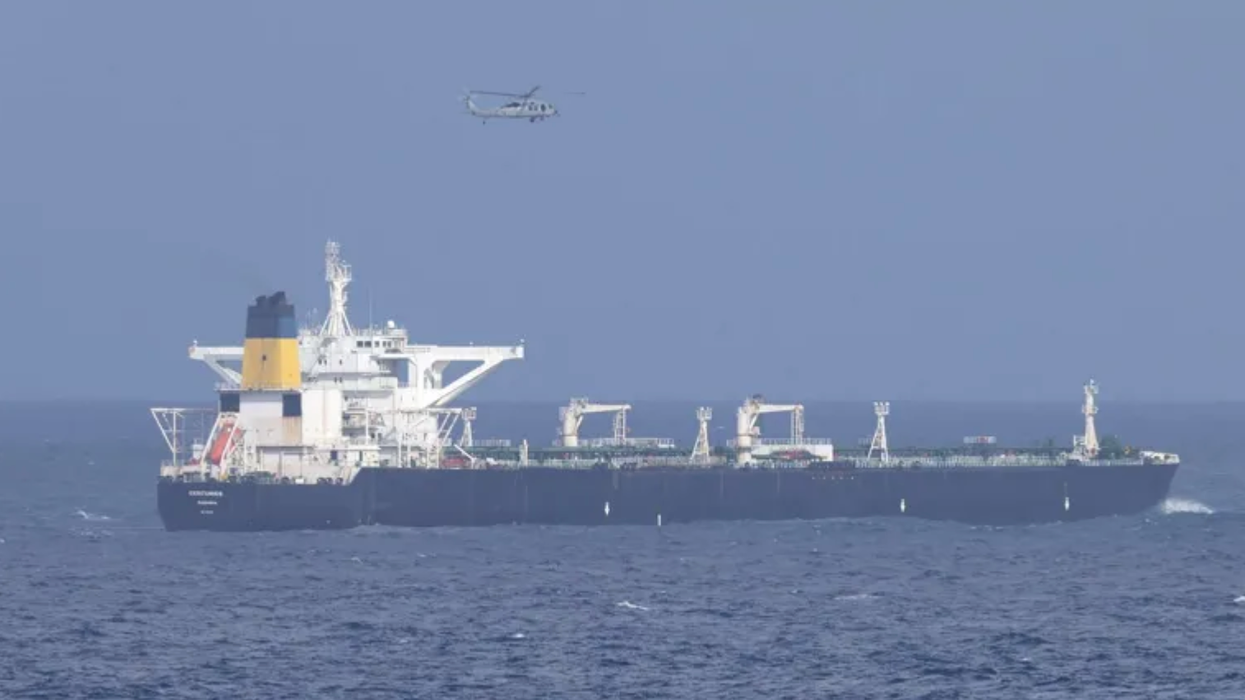
US Coast Guard troops led Saturday's seizure of the Centuries, a Panamanian-flagged, Chinese-owned oil tanker in the Caribbean Sea, after it left Venezuela.
"The United States will continue to pursue the illicit movement of sanctioned oil that is used to fund narco-terrorism in the region," US Homeland Security Secretary Kristi Noem said on X. "We will find you, and we will stop you."
On Sunday, an unnamed US official told Reuters that the Coast Guard "is in active pursuit" of a third tanker near Venezuela, "a sanctioned dark fleet vessel" that "is flying a false flag and under a judicial seizure order.”
The Venezuelan government condemned Saturday's seizure as "a serious act of international piracy."
Venezuela “denounces and rejects the theft and hijacking of a new private vessel transporting oil, as well as the forced disappearance of its crew, committed by military personnel of the United States of America in international waters," Venezuelan Vice President Delcy Rodríguez said in a statement.
“These acts will not go unpunished,” she vowed, adding that Venezuela will pursue "all corresponding actions, including filing a complaint before the United Nations Security Council, other multilateral organizations, and the governments of the world."
Earlier this week, President Donald Trump declared a blockade of all oil tankers under US sanctions that are traveling to or from Venezuela.
Saturday's action followed the US seizure of the Panamanian-flagged Skipper—which is under sanctions—off the Venezuelan coast on December 10.
The Centuries seizure also comes amid the Trump administration's bombing of at least 28 boats allegedly transporting drugs in the Caribbean Sea and Pacific Ocean, attacks that have killed more than 100 people and have been condemned as acts of extrajudicial murder.
In addition to the blockade and boat strikes, Trump has deployed an armada of warships and thousands of troops to the southern Caribbean, authorized covert CIA action against the socialist government of Venezuelan President Nicolás Maduro, and has threatened to invade the South American nation. This latest wave of aggression continues more than a century of US meddling in Venezuela's affairs and sovereignty.
Numerous world leaders have denounced the US aggression toward Venezuela. On Saturday, leftist Brazilian President Luiz Inácio Lula de Silva said during a summit of the South American Mercosur bloc in Foz do Iguaçu, Brazil that an "armed intervention in Venezuela would be a humanitarian catastrophe."
In the United States, multiple efforts by members of Congress—mostly Democrats, but also a handful of anti-war Republicans—to pass a war powers resolution blocking the Trump administration from bombing boats or attacking Venezuela have failed.
Echoing assertions by Venezuelan officials and others, one of those Republicans, Rep. Thomas Massie of Kentucky, said earlier this week that Trump's aggressive escalation "is all about oil and regime change."
Some critics have called Trump's actions a renewal of the "gunboat diplomacy" practiced by the US in the 19th and 20th centuries. The US has conducted scores of military interventions in Latin America, including dozens of regime change operations.
Keep ReadingShow Less
Dems Demand Answers as Trump Photo Disappears From DOJ Online Epstein Files
"What else is being covered up?"
Dec 20, 2025
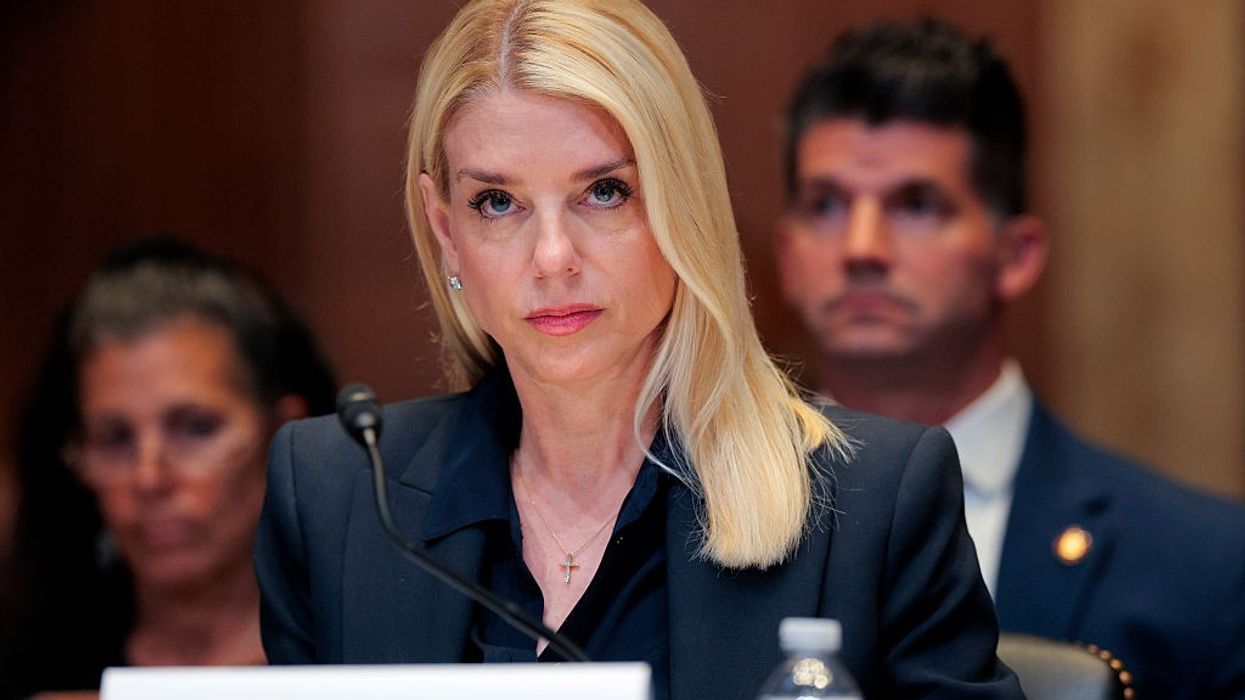
Congressional Democrats on Saturday pressed US Attorney General Pam Bondi for answers regarding the apparent removal of a photo showing President Donald Trump surrounded by young female models from Friday's Department of Justice release of files related to the late convicted child sex criminal Jeffrey Epstein.
Amid the heavily redacted documents in Friday's DOJ release was a photo of a desk with an open drawer containing multiple photos of Trump, including one of him with Epstein and convicted child sex trafficker Ghislaine Maxwell and another of him with the models.
However, the photo—labeled EFTA00000468 in the DOJ's Epstein Library—was no longer on the site as of Saturday morning.
"This photo, file 468, from the Epstein files that includes Donald Trump, has apparently now been removed from the DOJ release," Democrats on the House Oversight Committee noted in a Bluesky post. "AG Bondi, is this true? What else is being covered up? We need transparency for the American public."
This photo, file 468, from the Epstein files that includes Donald Trump has apparently now been removed from the DOJ release.AG Bondi, is this true? What else is being covered up? We need transparency for the American public.
[image or embed]
— Oversight Dems (@oversightdemocrats.house.gov) December 20, 2025 at 9:30 AM
Numerous critics have accused the Trump administration of a cover-up due to the DOJ's failure to meet a Friday deadline to release all Epstein-related documents and heavy redactions—including documents of 100 pages or more that are completely blacked out—to many of the files.
Deputy Attorney General Todd Blanche responded to the criticism by claiming that "the only redactions being applied to the documents are those required by law—full stop."
"Consistent with the statute and applicable laws, we are not redacting the names of individuals or politicians unless they are a victim," he added.
Earlier this year, officials at the Federal Bureau of Investigation reportedly redacted Trump's name from its file on Epstein, who was the president's longtime former friend and who died in 2019 in a New York City jail cell under mysterious circumstances officially called suicide while facing federal child sex trafficking and conspiracy charges.
Trump has not been accused of any crimes in connection with Epstein.
House Oversight Committee Ranking Member Robert Garcia (D-Calif.) said during a Friday CNN interview that the DOJ only released about 10% of the full Epstein files.
The DOJ is breaking the law by not releasing the full Epstein files. This is not transparency. This is just more coverup by Donald Trump and Pam Bondi. They need to release all the files, NOW.
[image or embed]
— Congressman Robert Garcia (@robertgarcia.house.gov) December 19, 2025 at 5:06 PM
"The DOJ has had months and hundreds of agents to put these files together, and yet entire documents are redacted—from the first word to the last," Garcia said on X. "What are they hiding? The American public deserves transparency. Release all the files now!"
In a joint statement Friday, Garcia and House Judiciary Committee Ranking Member Jamie Raskin (D-Md.) said, "We are now examining all legal options in the face of this violation of federal law."
"The survivors of this nightmare deserve justice, the co-conspirators must be held accountable, and the American people deserve complete transparency from DOJ," they added.
Rep. Ro Khanna (D-Calif.)—who along with Rep. Thomas Massie (R-Ky.) introduced the Epstein Files Transparency Act, which was signed into law by Trump last month and required the release of all Epstein materials by December 19—said in a video published after Friday's document dump that he and Massie "are exploring all options" to hold administration officials accountable.
"It can be the impeachment of people at Justice, inherent contempt, or referring for prosecution those who are obstructing justice," he added.
Keep ReadingShow Less
Most Popular