March, 15 2023, 11:54am EDT

For Immediate Release
Contact:
Jen Nessel, Center for Constitutional Rights, jnessel@ccrjustice.org
At 20th Anniversary of U.S. Invasion of Iraq, We Renew Our Call for Reparations and Accountability
We stand in solidarity with Iraqis and all other people harmed by U.S. imperialism
NEW YORK
Ahead of the 20th anniversary of the U.S. invasion of Iraq, the Center for Constitutional Rights issued the following statement:
Twenty years after the U.S. government invaded Iraq, we renew our call for reparations for those harmed as a result of the U.S.’s unlawful act of aggression in its cruel, senseless, and baseless war-for-profit. Ten years ago, we teamed up with Iraqi civil society groups and U.S. service members to demand redress, and this need only becomes more urgent as the incalculable human toll of the war continues to grow: hundreds of thousands dead, some two million disabled, some nine million displaced, environmental devastation, countless people tortured, traumatized, or otherwise harmed in ways unseen, occupation and embrace of torture as policy in the so-called “war on terror,” and an entire generation that was born and raised in only war. Reparations are rooted in precedent and international law, as well as a strong tradition of justice-based organizing by civil rights movements, and we should not let the difficulty of securing justice deter us from seeking it – for Iraqis and for all others harmed by U.S. imperialism, exploitation, and genocide.
Justice also entails accountability for the perpetrators of these horrific crimes, including those responsible for the torture at Abu Ghraib and other detention centers in Iraq, as well as those tortured and detained in the larger “war on terror.” Since 2004, we have filed three separate lawsuits against U.S-based military contractors on behalf of Iraqis tortured in the infamous Abu Ghraib prison. In Al Shimari v. CACI, three Iraqis enter the 15th year of their effort to seek damages from a company whose employees directed and participated in a conspiracy to commit numerous illegal and depraved acts, from abuse involving dogs, to sexual assault, to beatings that broke bones and injured genitals. We sued another private contractor, Erik Prince and his company Blackwater, for killing and injuring Iraqi civilians, obtaining a settlement on behalf of some victims of the Nisour Square massacre. Legal efforts against high-level political and military leaders for the invasion itself and the many crimes committed in the “war on terror” pose a different set of challenges, as demonstrated by our efforts to hold high-level Bush-administration officials accountable at the International Criminal Court for crimes in or arising out of the war in Afghanistan or under universal jurisdiction. Those of us pursuing accountability can draw inspiration from activists in other countries like Argentina and Guatemala who waged successful campaigns over several decades.
As we call for justice for Iraqis, we stand in solidarity with all people who live in countries targeted by U.S. imperialism, and in particular, in Afghanistan, whose civilians have been subjected to endless war and destruction, politicization, and then abandonment of human rights protections, and state-facilitated humanitarian suffering. They include not only those killed and maimed by the U.S. military and its proxies but also those harmed by U.S. sanctions and coups, corporate plunder and extraction, and austerity regimes imposed by U.S.-dominated colonial institutions like the IMF. It also includes Palestinians, who are subjugated by Israel, a U.S. imperial outpost. Grounded in white supremacy and driven by the imperatives of capitalism, U.S. imperialism often receives broad support, including from some who identify as anti-war.
Indeed, Congress continues its overbroad authorizations for use of military force. Such authorizations must be repealed, and the unlawful policies of endless war and militarization must be replaced with international-law-based, rights-respecting policies and practices. But just this month, the House voted 414-2 to maintain unilateral sanctions on Syria even though – or because – they have caused widespread suffering and hindered earthquake relief efforts. The U.S. has imposed similar deadly sanctions on Cuba for decades. Such manifestations of imperialism differ from the war on Iraq only in degree. Indeed, deadly sanctions on Iraq were a precursor to the U.S. invasion.
We also stand with people in the U.S. harmed by imperialism. The trillions of dollars spent on militarism and criminalization abroad and in the U.S. must be reallocated to address the material needs and fulfill the human rights of our most marginalized communities. Furthermore, and in feeding Islamophobia, the U.S. “war on terror” has always faced inward as well as outward as the government uses it to reinforce oppression through immigration restrictions, racial and religious profiling, and mass surveillance. Meanwhile, U.S police are increasingly employing the tactics and weapons of war, often honed through collaborative trainings with other countries’ militaries. In response to the 2020 uprising against police violence, political leaders and police departments dubbed Black Lives Matter protesters “terrorists” and proposed to “hunt them down the way we do those in the Middle East.” Militarism threatens Black people, Indigenous people, and other people of color in the United States in another way: by incubating white nationalist killers. U.S. warmaking has long fed fascism at home. It’s no wonder, then, that some of the strongest domestic opposition to wars can be found in communities of color and social justice movements. Oppression in the United States and imperialism are intertwined, and resistance to each, must be as well.
On this ignominious anniversary, we recommit to our vision of a world in which revolutionary movements across countries and continents struggle together for liberation from U.S. imperialism and all other oppressive systems of power.
The Center for Constitutional Rights is dedicated to advancing and protecting the rights guaranteed by the United States Constitution and the Universal Declaration of Human Rights. CCR is committed to the creative use of law as a positive force for social change.
(212) 614-6464LATEST NEWS
Dems Demand Answers as Trump Photo Disappears From DOJ Online Epstein Files
"What else is being covered up?"
Dec 20, 2025
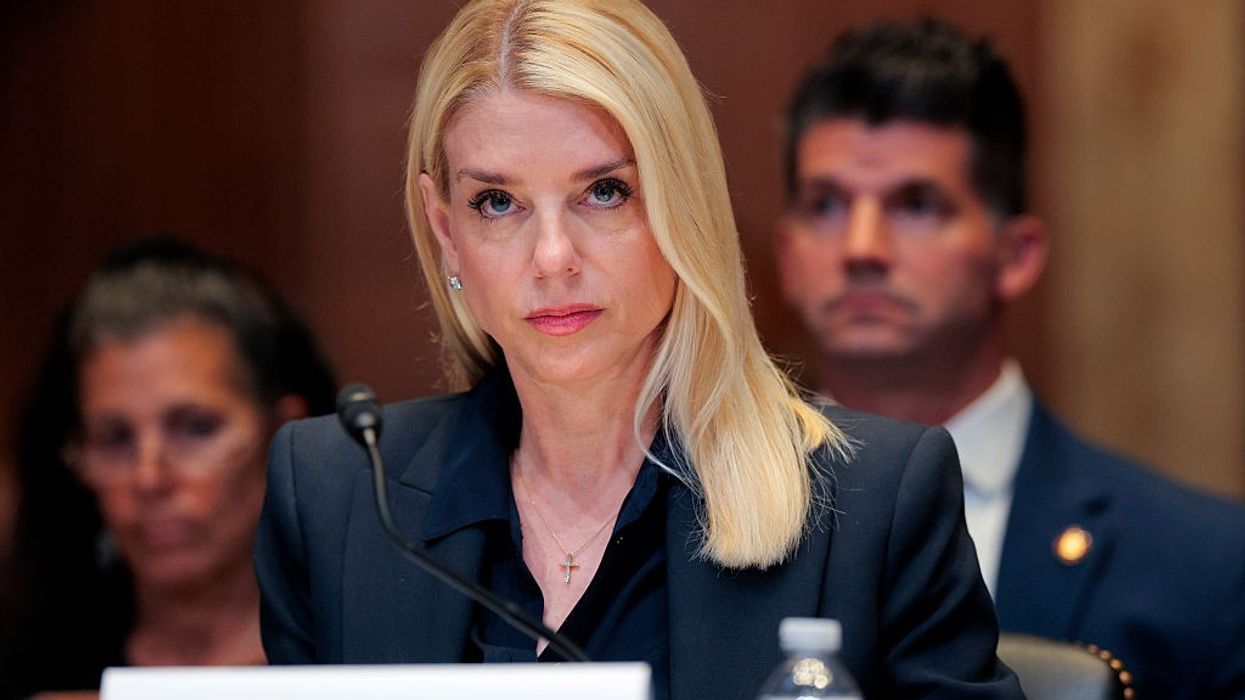
Congressional Democrats on Saturday pressed US Attorney General Pam Bondi for answers regarding the apparent removal of a photo showing President Donald Trump surrounded by young female models from Friday's Department of Justice release of files related to the late convicted child sex criminal Jeffrey Epstein.
Amid the heavily redacted documents in Friday's DOJ release was a photo of a desk with an open drawer containing multiple photos of Trump, including one of him with Epstein and convicted child sex trafficker Ghislaine Maxwell and another of him with the models.
However, the photo—labeled EFTA00000468 in the DOJ's Epstein Library—was no longer on the site as of Saturday morning.
"This photo, file 468, from the Epstein files that includes Donald Trump, has apparently now been removed from the DOJ release," Democrats on the House Oversight Committee noted in a Bluesky post. "AG Bondi, is this true? What else is being covered up? We need transparency for the American public."
This photo, file 468, from the Epstein files that includes Donald Trump has apparently now been removed from the DOJ release.AG Bondi, is this true? What else is being covered up? We need transparency for the American public.
[image or embed]
— Oversight Dems (@oversightdemocrats.house.gov) December 20, 2025 at 9:30 AM
Numerous critics have accused the Trump administration of a cover-up due to the DOJ's failure to meet a Friday deadline to release all Epstein-related documents and heavy redactions—including documents of 100 pages or more that are completely blacked out—to many of the files.
Deputy Attorney General Todd Blanche responded to the criticism by claiming that "the only redactions being applied to the documents are those required by law—full stop."
"Consistent with the statute and applicable laws, we are not redacting the names of individuals or politicians unless they are a victim," he added.
Earlier this year, officials at the Federal Bureau of Investigation reportedly redacted Trump's name from its file on Epstein, who was the president's longtime former friend and who died in 2019 in a New York City jail cell under mysterious circumstances officially called suicide while facing federal child sex trafficking and conspiracy charges.
Trump has not been accused of any crimes in connection with Epstein.
House Oversight Committee Ranking Member Robert Garcia (D-Calif.) said during a Friday CNN interview that the DOJ only released about 10% of the full Epstein files.
The DOJ is breaking the law by not releasing the full Epstein files. This is not transparency. This is just more coverup by Donald Trump and Pam Bondi. They need to release all the files, NOW.
[image or embed]
— Congressman Robert Garcia (@robertgarcia.house.gov) December 19, 2025 at 5:06 PM
"The DOJ has had months and hundreds of agents to put these files together, and yet entire documents are redacted—from the first word to the last," Garcia said on X. "What are they hiding? The American public deserves transparency. Release all the files now!"
In a joint statement Friday, Garcia and House Judiciary Committee Ranking Member Jamie Raskin (D-Md.) said, "We are now examining all legal options in the face of this violation of federal law."
"The survivors of this nightmare deserve justice, the co-conspirators must be held accountable, and the American people deserve complete transparency from DOJ," they added.
Rep. Ro Khanna (D-Calif.)—who along with Rep. Thomas Massie (R-Ky.) introduced the Epstein Files Transparency Act, which was signed into law by Trump last month and required the release of all Epstein materials by December 19—said in a video published after Friday's document dump that he and Massie "are exploring all options" to hold administration officials accountable.
"It can be the impeachment of people at Justice, inherent contempt, or referring for prosecution those who are obstructing justice," he added.
Keep ReadingShow Less
Israeli Forces Massacre 6 Palestinians Celebrating Wedding at Gaza School Shelter
"This isn't a truce, it's a bloodbath," said a relative of some of the victims, who included women, an infant, and a teenage girl.
Dec 20, 2025
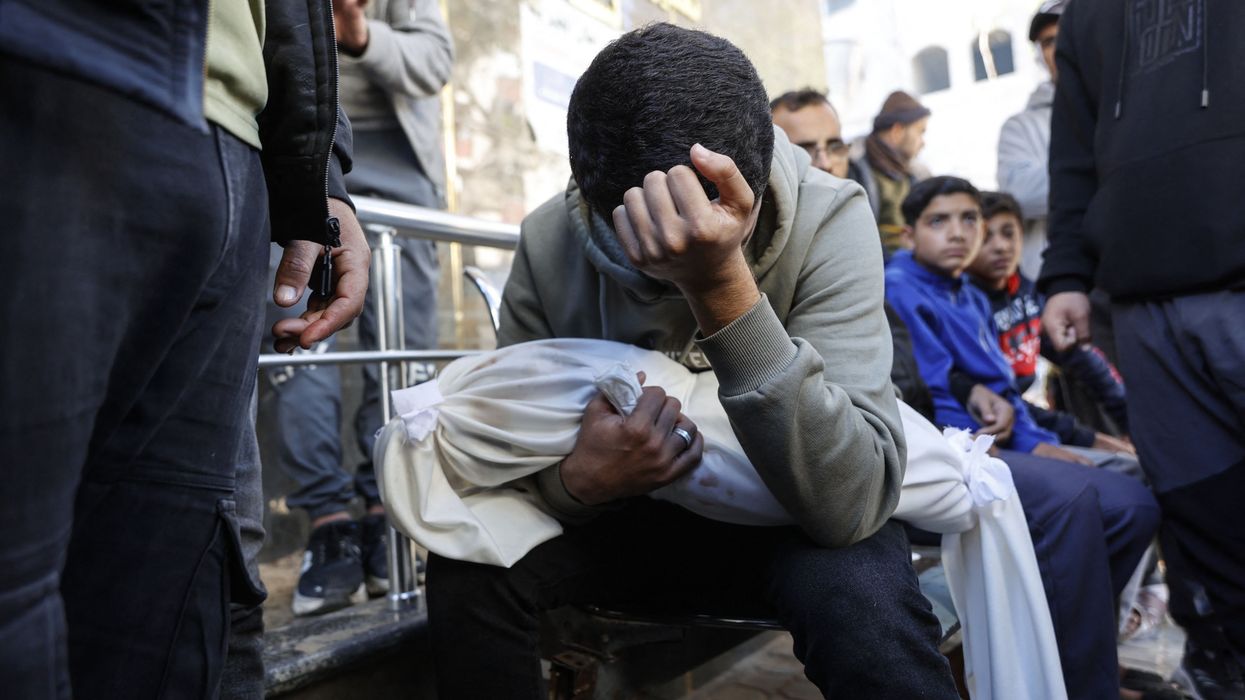
Funerals were held Saturday in northern Gaza for six people, including children, massacred the previous day by Israeli tank fire during a wedding celebration at a school sheltering displaced people, as the number of Palestinians killed during the tenuous 10-week ceasefire rose to over 400.
On Friday, an Israel Defense Forces (IDF) tank blasted the second floor of the Gaza Martyrs School, which was housing Palestinians displaced by the two-year war on Gaza in the al-Tuffah neighborhood of Gaza City.
Al Jazeera and other news outlets reported that the attack occurred while people were celebrating a wedding.
Al-Shifa Hospital director Mohammed Abou Salmiya said those slain included a 4-month-old infant, a 14-year-old girl, and two women. At least five others were injured in the attack.
"It was a safe area and a safe school and suddenly... they began firing shells without warning, targeting women, children and civilians," Abdullah Al-Nader—who lost relatives including 4-month-old Ahmed Al-Nader in the attack—told Agence France-Presse.
Witnesses said IDF troops subsequently blocked first responders including ambulances and civil defense personnel from reaching the site for over two hours.
"We gathered the remains of children, elderly, infants, women, and young people," Nafiz al-Nader, another relative of the infant and others killed in Friday's attack, told reporters. "Unfortunately, we called the ambulance and the civil defense, but they couldn't get by the Israeli army."
The IDF said that “during operational activity in the area of the Yellow Line in the northern Gaza Strip, a number of suspicious individuals were identified in command structures," and that "troops fired at the suspicious individuals to eliminate the threat."
The Yellow Line is a demarcation boundary between areas of Gaza under active Israeli occupation—more than half of the strip's territory, including most agricultural and strategic lands—and those under the control of Hamas.
"The claim of casualties in the area is familiar; the incident is under investigation," the IDF said, adding that it "regrets any harm to uninvolved parties and acts as much as possible to minimize harm to them."
Since the October 7, 2023 Hamas-led attack on Israel, more than 250,000 Palestinians have been killed or wounded by Israeli forces, including approximately 9,500 people who are missing and presumed dead and buried beneath rubble. Classified IDF documents suggest that more than 80% of the Palestinians killed by Israeli forces were civilians.
Around 2 million Palestinians have also been displaced—on average, six times—starved, or sickened in the strip.
Gaza officials say at least 401 Palestinians have been killed since a US-brokered ceasefire between Israel and Hamas took effect on October 10. Gaza's Government Media Office says Israel has violated the ceasefire at least 738 times.
"This isn't a truce, it's a bloodbath," Nafiz al-Nader told Agence France-Presse outside al-Shifa Hospital on Saturday.
Israel says Hamas broke the truce at least 32 times, with three IDF soldiers killed during the ceasefire.
Israeli Prime Minister Benjamin Netanyahu and Yoav Gallant, his former defense minister, are fugitives from the International Criminal Court in The Hague, where they are wanted for alleged war crimes and crimes against humanity in Gaza, including murder and forced starvation.
Israel is also facing a genocide case filed by South Africa at the International Court of Justice, also in The Hague. A United Nations commission, world leaders, Israeli and international human rights groups, jurists, and scholars from around the world have called Israel's war on Gaza a genocide.
Friday's massacre came as Steve Witkoff, President Donald Trump's Mideast envoy, other senior US officials, and representatives of Egypt, Qatar, Turkey, and the United Arab Emirates met in Miami to discuss the second phase of Trump's peace plan, which includes the deployment of an international stabilization force, disarming Hamas, the withdrawal of IDF troops from the strip, and the establishment of a new government there.
Keep ReadingShow Less
Trump's 9 New Prescription Drug Deals 'No Substitute' for Systemic Reform
"Patients are overwhelmingly calling on Congress to do more to lower prescription drug prices by holding Big Pharma accountable and addressing the root causes of high drug prices," said one campaigner.
Dec 19, 2025
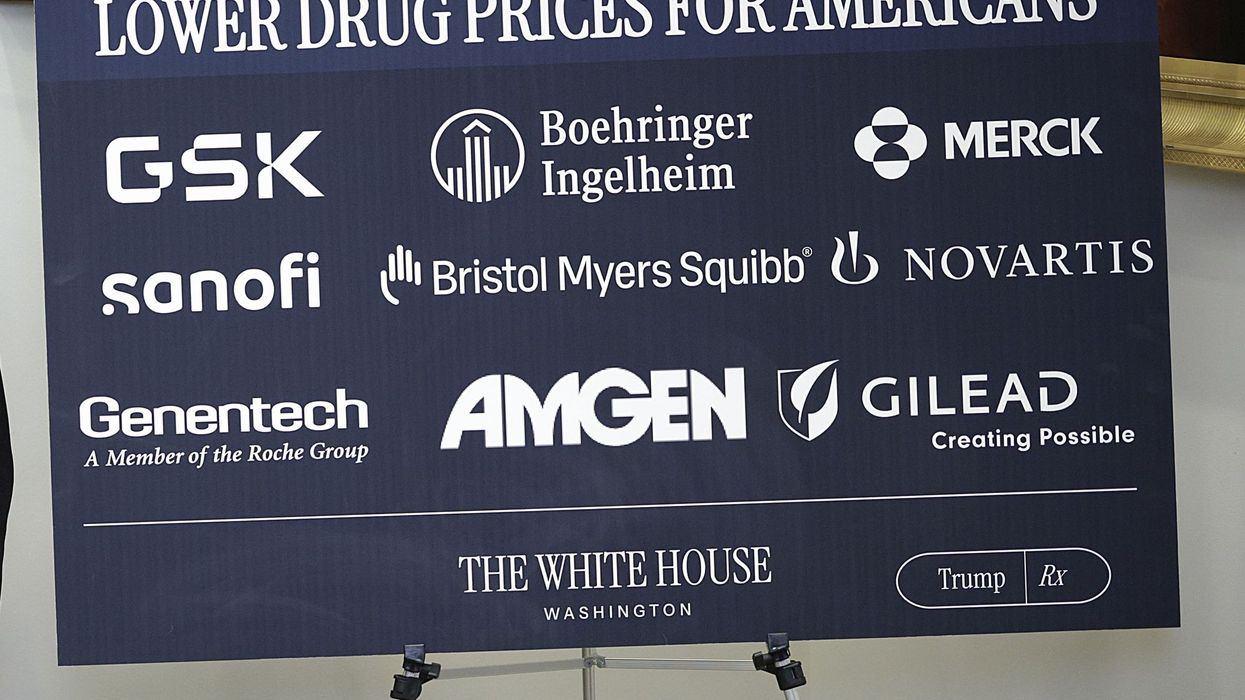
"Starting next year, American drug prices will come down fast and furious and will soon be the lowest in the developed world," President Donald Trump claimed Friday as the White House announced agreements with nine pharmaceutical manufacturers.
The administration struck most favored nation (MFN) pricing deals with Amgen, Bristol Myers Squibb, Boehringer Ingelheim, Genentech, Gilead Sciences, GSK, Merck, Novartis, and Sanofi. The president—who has launched the related TrumpRx.gov—previously reached agreements with AstraZeneca, EMD Serono, Eli Lilly, Novo Nordisk, and Pfizer.
"The White House said it has made MFN deals with 14 of the 17 biggest drug manufacturers in the world," CBS News noted Friday. "The three drugmakers that were not part of the announcement are AbbVie, Johnson & Johnson, and Regeneron, but the president said that deals involving the remaining three could be announced at another time."
However, as Trump and congressional Republicans move to kick millions of Americans off of Medicaid and potentially leave millions more uninsured because they can't afford skyrocketing premiums for Affordable Care Act (ACA) plans, some critics suggested that the new drug deals with Big Pharma are far from enough.
"When 47% of Americans are concerned they won't be able to afford a healthcare cost next year, steps to reduce drug prices for patients are welcomed, especially by patients who rely on one of the overpriced essential medicines named in today's announcement," said Merith Basey, CEO of Patients for Affordable Drugs Now, in a statement.
"But voluntary agreements with drug companies—especially when key details remain undisclosed—are no substitute for durable, system-wide reforms," Basey stressed. "Patients are overwhelmingly calling on Congress to do more to lower prescription drug prices by holding Big Pharma accountable and addressing the root causes of high drug prices, because drugs don't work if people can't afford them."
As the New York Times reported Friday:
Drugs that will be made available in this way include Amgen's Repatha, for lowering cholesterol, at $239 a month; GSK's asthma inhaler, Advair Diskus, at $89 a month; and Merck's diabetes medication Januvia, at $100 a month.
Many of these drugs are nearing the end of their patent protection, meaning that the arrival of low-cost generic competition would soon have prompted manufacturers to lower their prices.
In other cases, the direct-buy offerings are very expensive and out of reach for most Americans.
For example, Gilead will offer Epclusa, a three-month regimen of pills that cures hepatitis C, for $2,492 a month on the site. Most patients pay far less using insurance or with help from patient assistance programs. Gilead says on its website that "typically a person taking Epclusa pays between $0 and $5 per month" with commercial insurance or Medicare.
While medication prices are a concern for Americans who face rising costs for everything from groceries to utility bills, the outcome of the ongoing battle on Capitol Hill over ACA tax credits—which are set to expire at the end of the year—is expected to determine how many people can even afford to buy health insurance for next year.
The ACA subsidies fight—which Republicans in the US House of Representatives ignored in the bill they passed this week before leaving Capitol Hill early—has renewed calls for transitioning the United States from its current for-profit healthcare system to Medicare for All.
"At the heart of our healthcare crisis is one simple truth: Corporations have too much power over our lives," Rep. Pramila Jayapal (D-Wash.), former chair of the Congressional Progressive Caucus, said on social media Friday. "Medicare for All is how we take our power back and build a system that puts people over profits."
Jayapal reintroduced the Medicare for All Act in April with Rep. Debbie Dingell (D-Mich.) and Senate Health, Education, Labor, and Pensions Committee Ranking Member Bernie Sanders (I-Vt.). The senator said Friday that some of his top priorities in 2026 will be campaign finance reform, income and wealth inequality, the rapid deployment of artificial intelligence, and Medicare for All.
Earlier this month, another backer of that bill, US Sen. Chris Van Hollen (D-Md.), said: "We must stop tinkering around the edges of a broken healthcare system. Yes, let's extend the ACA tax credits to prevent a huge spike in healthcare costs for millions. Then, let's finally create a system that puts your health over corporate profits. We need Medicare for All."
It's not just progressives in Congress demanding that kind of transformation. According to Data for Progress polling results released late last month, 65% of likely US voters—including 78% of Democrats, 71% of Independents, and 49% of Republicans—either strongly or somewhat support "creating a national health insurance program, sometimes called 'Medicare for All.'"
Keep ReadingShow Less
Most Popular