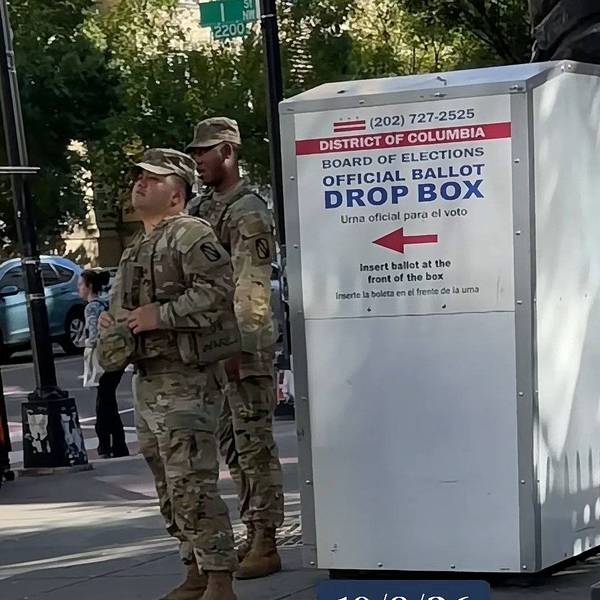

Early voting stickers are seen at an early voting location on June 16, 2021 in the Upper West Side neighborhood of Manhattan in New York City.
The Ballot Box as a Check on War
A vote need not endorse a party’s entire agenda. It can demand answers from those responsible for war.
On September 24, the Senate rejected a resolution directing the president to remove US forces from hostilities with Iran. In American politics, the end of military operations does not necessarily end a war’s political consequences. Some wars enter a decisive phase when the public judges their costs. Missiles may fall silent, troops return to their bases, and governments announce agreements or claim victory, but questions remain: Who decided? Why was war necessary? How transparent was the decision? What did it cost taxpayers, soldiers, allies, and America’s credibility? Who should answer for it?
Elections do more than transfer power between parties. They are among the few institutional channels through which Americans can translate dissatisfaction with foreign policy into political action. A vote need not express partisan loyalty or simple opposition to a president. It can demand answers for decisions whose consequences outlast any administration.
One of American democracy’s fundamental contradictions is that the government makes decisions with far-reaching international consequences while citizens often have little direct power to shape them. Launching or expanding military operations, deploying troops to crisis zones, and allocating billions to foreign wars involve executive and congressional powers, security considerations, and classified intelligence. This setting can distance decision-makers from those who bear the economic, human, and geopolitical consequences. War becomes a question about the quality of political representation: Can democratic institutions balance government power with the public’s right to know, question, and judge?
Voting cannot solve every problem. Its value lies in its capacity to turn passive observers of foreign policy into participants who take positions on government direction and the limits of its authority.
A government that goes to war in the name of national security must explain its objectives, costs, and prospects for an end. A war that begins with a specific justification but continues without a clear endpoint, public evaluation of its outcomes, or political accountability can turn an emergency policy into a permanent condition. It may persist because of the political difficulty of admitting failure, the cost of withdrawal, or institutional and security interests, rather than a new necessity.
This is where elections matter. If citizens cannot intervene when a war begins, can they judge how it is managed, prolonged, or ended? Choosing a candidate can also convey a demand about war, military spending, or presidential powers without endorsing every part of that candidate’s platform.
A vote can register dissatisfaction, demand a change of direction, and warn officials who believe they can manage the political costs of war without public accountability. Someone may approve of a government’s economic policies while opposing its war, or disagree with parts of a party’s social agenda while seeking limits on the incumbent administration’s military powers. Elections allow these conflicting preferences to find expression through political choices, primary contests, civic participation, and pressure on representatives.
America’s two-party system, money in politics, the influence of interest groups, and the many issues bundled into electoral contests can prevent a single concern from translating clearly into a political outcome. Those limits do not necessarily leave citizens with a powerless ballot. They make deliberate use of the vote more important.
Foreign wars are often shaped within security, military, and executive circles whose language centers on threats, deterrence, national interests, and urgent action. During crises, that language can narrow public debate: Opposition may be accused of undermining national security, while demands to end a war may be portrayed as retreat. Democracy requires that national security remain open to scrutiny. Citizens are entitled to know the objectives, measures of success, how costs are financed, and when responsibility for decisions will be assessed.
Supporting the armed forces does not require unconditional acceptance of decisions about their use. Respecting soldiers is compatible with criticizing the politicians who send them to war. Those who hold political power remain responsible for defining missions, setting objectives, and explaining why they must continue.
The long-term costs of Middle Eastern wars, the social consequences of deployments abroad, and doubts about whether interventions were worth their costs can fuel public dissatisfaction. But war fatigue alone does not necessarily change policy. Discontent must move beyond scattered emotions and become a political demand that can be pursued and sustained. Elections offer one route.
When war becomes an electoral issue, candidates and parties face pressure to explain military costs, objectives, and the limits of foreign commitments. Congressional decisions on defense budgets, authorizations for military force, and oversight of foreign operations can affect voters’ trust and lawmakers’ futures. These are not merely technical matters detached from public opinion. A protest vote may not end a war, but it can form part of a chain of pressure through civil society, the media, Congress, and oversight institutions, raising the political cost of leaving questions unanswered.
Accountability must extend beyond ending a particular conflict. Even after fighting ends, the question of how the United States enters future wars remains. If politicians can invoke ambiguous threats, shifting objectives, and vague promises to enter wars, then move past their consequences without clear explanations, changing administrations will not necessarily change how decisions are made.
Are presidential war powers subject to sufficient congressional oversight? Do voters have the information needed to evaluate foreign policy? Are war costs transparent in the budget? Do officials remain accountable after fighting ends? These questions concern the architecture of power, the limits of executive authority, public oversight, and the meaning of representation.
When war decisions can cost billions, endanger lives, reshape regional orders, and have consequences lasting generations, political indifference carries a cost beyond withdrawing from an electoral contest. Beyond deciding who occupies the White House or controls Congress, citizens can remind officials acting in their name that power without accountability eventually becomes detached from representation.
For Americans who see endless wars as a rupture between the public’s will and foreign-policy decisions, voting can express a clear demand: National security must not become a blank check for unlimited wars. Politicians must not be allowed to hide responsibility behind geopolitical complexity, classified information, or partisan competition.
Voting cannot solve every problem. Its value lies in its capacity to turn passive observers of foreign policy into participants who take positions on government direction and the limits of its authority. It is not a final answer to endless wars. It can begin to reclaim a right that opaque decisions and unaccountable foreign policy have pushed beyond the public’s reach: the right to ask why a war began, why it continued, and who should be held responsible for its consequences.
We are at a crossroads
This country and this world are at a monumental crossroads. In a few short weeks, US voters will have an opportunity to beat back the forces of fascism and confront the billionaires who are rigging the economy, our media system, and our democracy, making it increasingly impossible for ordinary people to get by. We’re not just talking about the election. We’re talking about what must be done once these fascist elements are vanquished from power. We need a bolder set of solutions than what either major party has so far been willing to offer and a working-class movement ready to fight like hell for it. Trump didn't emerge from nowhere. The conditions that fueled MAGA authoritarianism were created by decades of radical neoliberal economic policies and a corrupt political system dominated by corporate interests. They slashed taxes on the super-rich, promising that the benefits would trickle down. They said giveaways to the corporate titans would make life more affordable for the rest of us. It was all bullshit. And when a bitter, betrayed populace searches for someone to blame, right-wing demagogues have little trouble finding scapegoats. People know when they're being lied to, but you won't hear any of this from the corporate media. Only independent journalism—powered and funded by people who believe in building a better world—can deliver truly trustworthy daily news. Our Fall Campaign is underway, and we need your help. To power our newsroom through the rest of the year, we need to raise $125,000 by midnight on October 31. So if you share our vision, please contribute whatever you can to sustain our work. |
On September 24, the Senate rejected a resolution directing the president to remove US forces from hostilities with Iran. In American politics, the end of military operations does not necessarily end a war’s political consequences. Some wars enter a decisive phase when the public judges their costs. Missiles may fall silent, troops return to their bases, and governments announce agreements or claim victory, but questions remain: Who decided? Why was war necessary? How transparent was the decision? What did it cost taxpayers, soldiers, allies, and America’s credibility? Who should answer for it?
Elections do more than transfer power between parties. They are among the few institutional channels through which Americans can translate dissatisfaction with foreign policy into political action. A vote need not express partisan loyalty or simple opposition to a president. It can demand answers for decisions whose consequences outlast any administration.
One of American democracy’s fundamental contradictions is that the government makes decisions with far-reaching international consequences while citizens often have little direct power to shape them. Launching or expanding military operations, deploying troops to crisis zones, and allocating billions to foreign wars involve executive and congressional powers, security considerations, and classified intelligence. This setting can distance decision-makers from those who bear the economic, human, and geopolitical consequences. War becomes a question about the quality of political representation: Can democratic institutions balance government power with the public’s right to know, question, and judge?
Voting cannot solve every problem. Its value lies in its capacity to turn passive observers of foreign policy into participants who take positions on government direction and the limits of its authority.
A government that goes to war in the name of national security must explain its objectives, costs, and prospects for an end. A war that begins with a specific justification but continues without a clear endpoint, public evaluation of its outcomes, or political accountability can turn an emergency policy into a permanent condition. It may persist because of the political difficulty of admitting failure, the cost of withdrawal, or institutional and security interests, rather than a new necessity.
This is where elections matter. If citizens cannot intervene when a war begins, can they judge how it is managed, prolonged, or ended? Choosing a candidate can also convey a demand about war, military spending, or presidential powers without endorsing every part of that candidate’s platform.
A vote can register dissatisfaction, demand a change of direction, and warn officials who believe they can manage the political costs of war without public accountability. Someone may approve of a government’s economic policies while opposing its war, or disagree with parts of a party’s social agenda while seeking limits on the incumbent administration’s military powers. Elections allow these conflicting preferences to find expression through political choices, primary contests, civic participation, and pressure on representatives.
America’s two-party system, money in politics, the influence of interest groups, and the many issues bundled into electoral contests can prevent a single concern from translating clearly into a political outcome. Those limits do not necessarily leave citizens with a powerless ballot. They make deliberate use of the vote more important.
Foreign wars are often shaped within security, military, and executive circles whose language centers on threats, deterrence, national interests, and urgent action. During crises, that language can narrow public debate: Opposition may be accused of undermining national security, while demands to end a war may be portrayed as retreat. Democracy requires that national security remain open to scrutiny. Citizens are entitled to know the objectives, measures of success, how costs are financed, and when responsibility for decisions will be assessed.
Supporting the armed forces does not require unconditional acceptance of decisions about their use. Respecting soldiers is compatible with criticizing the politicians who send them to war. Those who hold political power remain responsible for defining missions, setting objectives, and explaining why they must continue.
The long-term costs of Middle Eastern wars, the social consequences of deployments abroad, and doubts about whether interventions were worth their costs can fuel public dissatisfaction. But war fatigue alone does not necessarily change policy. Discontent must move beyond scattered emotions and become a political demand that can be pursued and sustained. Elections offer one route.
When war becomes an electoral issue, candidates and parties face pressure to explain military costs, objectives, and the limits of foreign commitments. Congressional decisions on defense budgets, authorizations for military force, and oversight of foreign operations can affect voters’ trust and lawmakers’ futures. These are not merely technical matters detached from public opinion. A protest vote may not end a war, but it can form part of a chain of pressure through civil society, the media, Congress, and oversight institutions, raising the political cost of leaving questions unanswered.
Accountability must extend beyond ending a particular conflict. Even after fighting ends, the question of how the United States enters future wars remains. If politicians can invoke ambiguous threats, shifting objectives, and vague promises to enter wars, then move past their consequences without clear explanations, changing administrations will not necessarily change how decisions are made.
Are presidential war powers subject to sufficient congressional oversight? Do voters have the information needed to evaluate foreign policy? Are war costs transparent in the budget? Do officials remain accountable after fighting ends? These questions concern the architecture of power, the limits of executive authority, public oversight, and the meaning of representation.
When war decisions can cost billions, endanger lives, reshape regional orders, and have consequences lasting generations, political indifference carries a cost beyond withdrawing from an electoral contest. Beyond deciding who occupies the White House or controls Congress, citizens can remind officials acting in their name that power without accountability eventually becomes detached from representation.
For Americans who see endless wars as a rupture between the public’s will and foreign-policy decisions, voting can express a clear demand: National security must not become a blank check for unlimited wars. Politicians must not be allowed to hide responsibility behind geopolitical complexity, classified information, or partisan competition.
Voting cannot solve every problem. Its value lies in its capacity to turn passive observers of foreign policy into participants who take positions on government direction and the limits of its authority. It is not a final answer to endless wars. It can begin to reclaim a right that opaque decisions and unaccountable foreign policy have pushed beyond the public’s reach: the right to ask why a war began, why it continued, and who should be held responsible for its consequences.
- 'Absolute Dereliction of Duty': House Republicans Kill Venezuela War Powers Resolutions ›
- Fetterman Joins GOP to Kill War Powers Resolution Against Trump's Extrajudicial Venezuela Bombings ›
- 22 Democrats Join GOP to Block Lebanon War Powers Resolution, Enabling Netanyahu's Sabotage of US-Iran Ceasefire ›
- Khanna, Massie Push to Block Trump's Ability to Strike Iran Without Congressional Consent ›
- Senate GOP Kills Bill That Would Block Trump Boat Bombings and War on Venezuela ›
- 'Never Fails to Disappoint': Fetterman Joins GOP to Keep Trump's Iran War Going ›