
SUBSCRIBE TO OUR FREE NEWSLETTER
Daily news & progressive opinion—funded by the people, not the corporations—delivered straight to your inbox.
5
#000000
#FFFFFF
To donate by check, phone, or other method, see our More Ways to Give page.


Daily news & progressive opinion—funded by the people, not the corporations—delivered straight to your inbox.
Khan and members of her team are reportedly "dusting off a little-used 1960s price-gouging statute" in an effort to bolster the mayor-elect's affordability push in New York City.
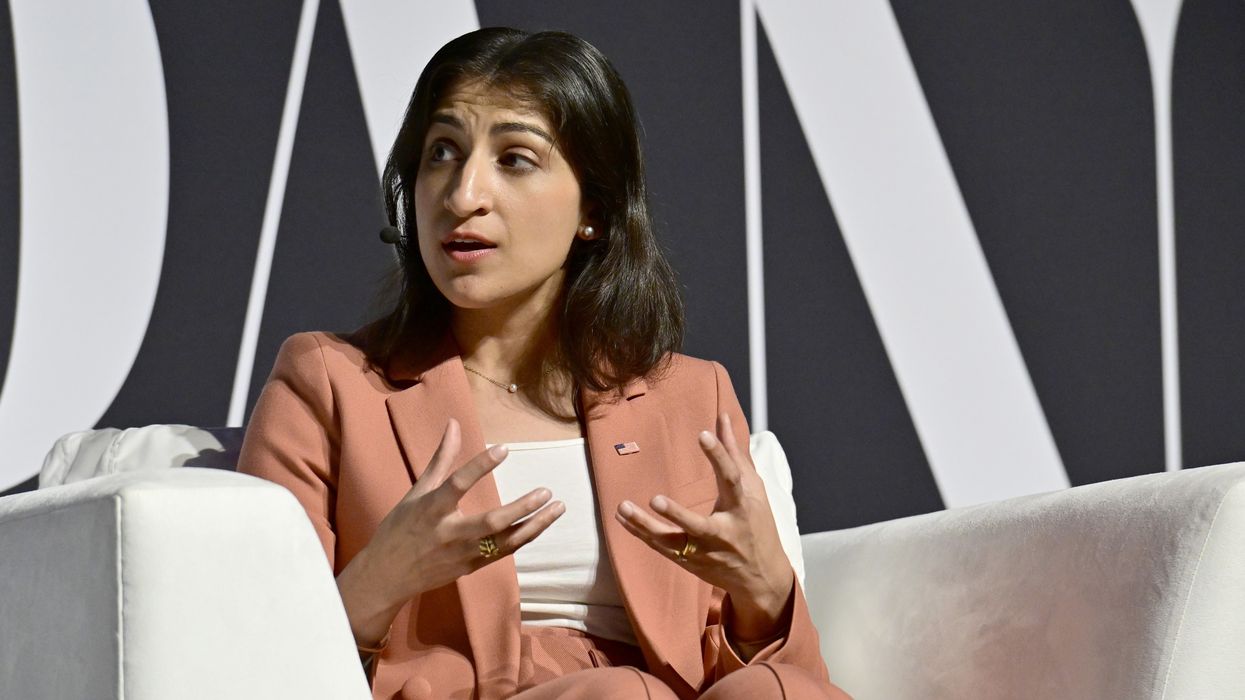
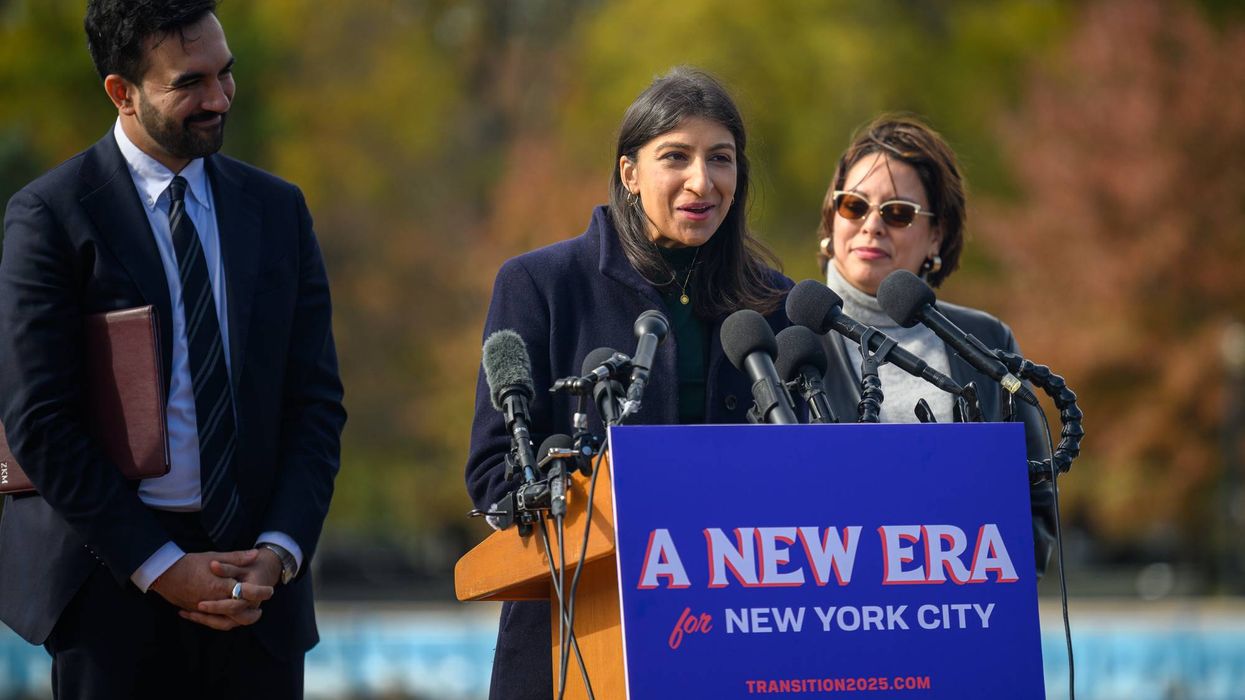
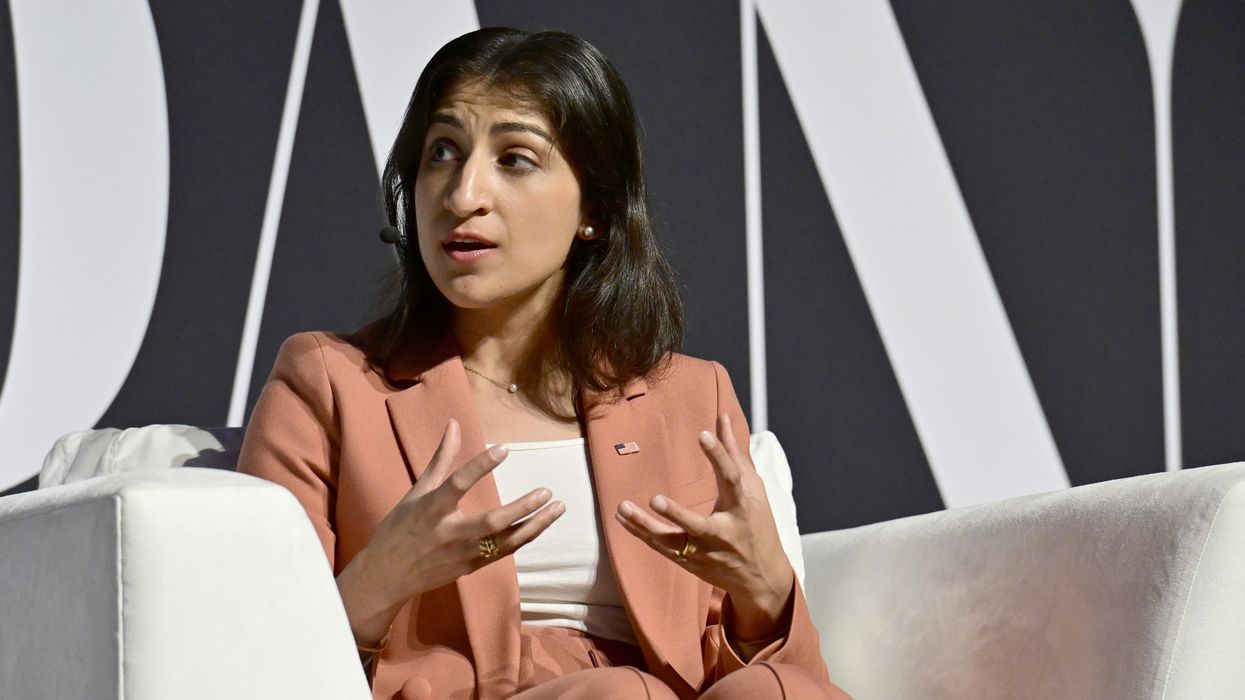
Former Federal Trade Commission chair and antitrust trailblazer Lina Khan is reportedly poring over New York City's laws to help Democratic Mayor-elect Zohran Mamdani fulfill the central promise of his campaign: making the metropolis more affordable.
According to the New York Times, Khan—in her capacity as co-chair of the mayor-elect's transition team—"has spent weeks scouring New York City’s laws to find dormant or underused mayoral authority that could allow Mr. Mamdani to take action in a hurry."
Potential actions "include specific attempts to drive down apartment rental fees and utility costs and compel businesses to be more transparent about pricing," as well as "dusting off a little-used 1960s price-gouging statute and policing new protections for food delivery workers," the Times reported, citing three unnamed people familiar with internal discussions.
As head of the FTC under former President Joe Biden, Khan took groundbreaking legal action against major corporations such as Amazon and, in the words of one antitrust advocacy group, "reinvigorated enforcement of the Robinson-Patman Act, a long-dormant law designed to prevent price discrimination by big corporations, through two separate cases against PepsiCo and Southern Glazer’s—major victories for smaller and independent businesses."
Khan, according to the Times, hopes to spur similar action in New York City. Members of her team, which includes former federal regulators, have "studied a 1969 consumer protection law meant to prohibit 'unconscionable' business tactics, to potentially target hospitals and sports stadiums where consumers typically have little choice but to pay high prices for products that are cheaper elsewhere."
Additionally, the newspaper reported, "they have looked at whether food delivery companies, which wield significant power in the city, are complying with laws that protect their drivers, and whether landlords are complying with a newly enacted law barring many real estate brokers from collecting thousands of dollars in fees."
Douglas Farrar, a spokesman for Khan, told the Times that the former FTC chair and her team have "worked closely" with the Mamdani transition "to provide key research support on ideas for hitting the ground running."
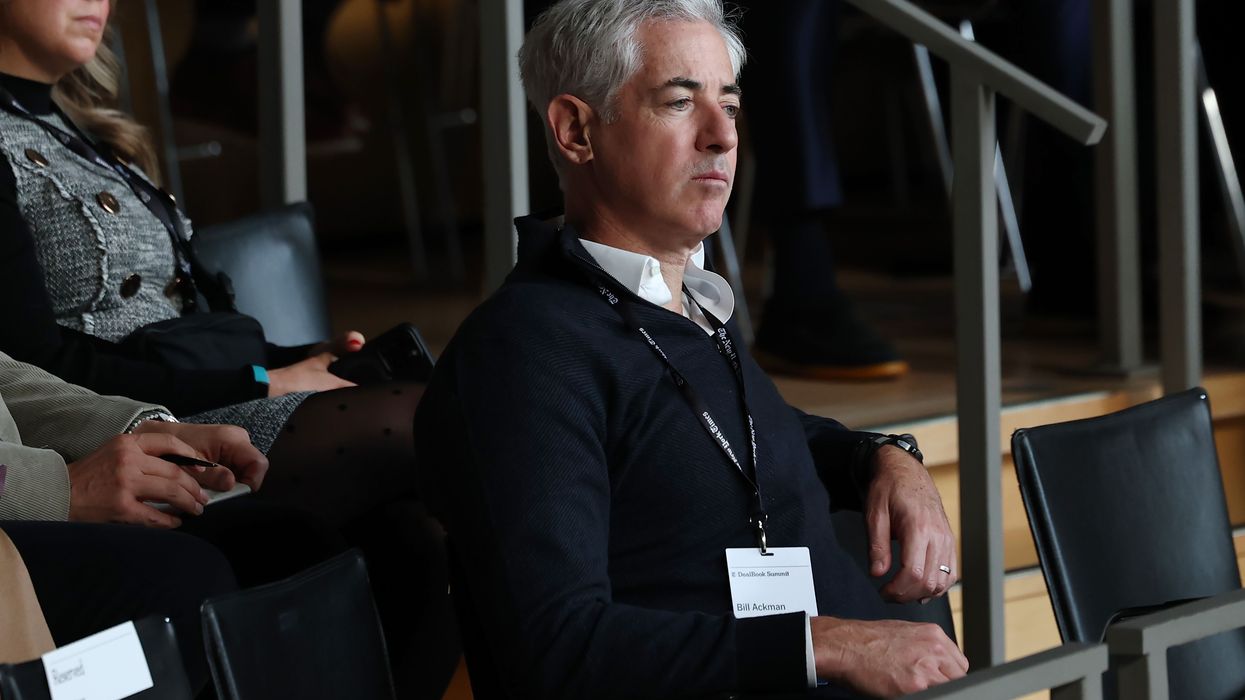
One social media user wrote that the hedge fund executive Bill Ackman "went from acting like Mamdani was going to import ISIS to extending a friendly handshake… in like six hours."
After his resounding election victory on Tuesday night, New York City Mayor-elect Zohran Mamdani's most prominent billionaire antagonist immediately pivoted to kiss the ring of the man he has spent the last more than half-year portraying as an existential threat to the city and the country.
Hedge fund manager Bill Ackman poured over $1.75 million into the mayor's race with a laser focus on stopping Mamdani, whom he often ambushed with several-thousand-word screeds on his X account, which boasts nearly 2 million followers. He accused Mamdani—a staunch critic of Israel—of "amplifying hate" against Jewish New Yorkers, while suggesting that his followers (which happened to include many Jewish New Yorkers) were "terror supporters."
Meanwhile, the billionaire suggested that the democratic socialist Mamdani's "affordability" centered agenda, which includes increasing taxes on corporations and the city's wealthiest residents to fund universal childcare, free buses, and a rent freeze for stabilized units, would make the city "much more dangerous and economically unviable," in part by causing an exodus of billionaires like himself.
In turn, Mamdani often invoked Ackman's name on the campaign trail, using him as the poster boy for the cossetted New York elite that was almost uniformly arrayed against his candidacy. In one exchange, Mamdani joked that Ackman was "spending more money against me than I would even tax him."
After Mamdani's convincing victory Tuesday night, fueled in large part by his dominant performance among the city's working-class voters, Ackman surprisingly did not respond with "the longest tweet in the history of tweets" to lament the result as some predicted. Instead, he came to the mayor-elect hat in hand.
"Congrats on the win," he told Mamdani on X. "Now you have a big responsibility. If I can help NYC, just let me know what I can do."
Many were quick to point out Ackman's near-immediate 180-degree turn from prophecizing doom to offering his help to the incoming mayor.
"This guy went from acting like Mamdani was going to import ISIS to extending a friendly handshake… in like six hours," noted one social media user.
But Mamdani graciously accepted the billionaire's congratulations when asked about them on Wednesday's "Good Morning America."
"I appreciated his words,” Mamdani said. "I think what I find is that there is a needed commitment from leaders of the city to speak and work with anyone who is committed to lowering the cost of living in the city—and that’s something that I will fulfill."
As Bloomberg and Forbes noted, Ackman was just one of many on Wall Street and from the broader finance world who came to kiss the ring.
Ralph Schlosstein, a co-founder of the investment fund BlackRock, Inc., pledged to work with Mamdani despite their different politics: "I do care deeply about the city, and I’m not going anywhere, whoever the mayor is. I’m going to do whatever I can to help him be successful," he said.
Another former BlackRock executive, Mark Kronfeld, said: "Is it a dystopian, post-apocalyptic environment because Mamdani has won? No."
Crypto billionaire Mike Novogratz even credited Mamdani with "tapping into a message that’s real: that we’ve got a tale of two cities in the Dickensian sense," and asked if the incoming mayor could "address the affordability issue in creative ways without driving business out."
But while Mamdani has left the door open to business, he has made it clear that he will not allow them to commandeer his work at City Hall.
After his victory, he called on his base of largely small-dollar donors to resume their financial support for him in order to fund "a transition that can meet the moment of preparing for January 1.”
He announced that this historic all-female transition team will include at least one renowned titan of economic populism, the trust-busting former Federal Trade Commission Chair Lina Khan, as well as other progressive city administrators with backgrounds in expanding the social safety net and public housing.
"I’m excited for the fact that it will be funded by the very people who brought us to this point," Mamdani said, "the working people who have been lost behind by the politics of the city."
The FTC quietly removed from its website an article titled "AI and the Risk of Consumer Harm" as the Trump administration looks to undercut efforts to regulate artificial intelligence.
The Trump administration's sweeping purge of government content that conflicts with its far-right ideological and policy project has extended to Federal Trade Commission blog posts warning about the threat that burgeoning artificial intelligence technology poses to US consumers.
Wired reported Monday that the Trump administration has, without explanation, deleted AI-related articles published by the FTC during antitrust trailblazer Lina Khan's tenure as chair of the agency. The headlines of two of the removed posts were "Consumers Are Voicing Concerns About AI" and "AI and the Risk of Consumer Harm."
The latter article, which can still be read here, states that the FTC "is increasingly taking note of AI's potential for real-world instances of harm—from incentivizing commercial surveillance to enabling fraud and impersonation to perpetuating illegal discrimination."
"As firms think about their own approach to developing, deploying, and maintaining AI-based systems, they should be considering the risks to consumers that each of them carry in the here and now, and take steps to proactively protect the public before their tools become a future FTC case study," reads the post, which was authored by staff at the FTC's Office of Technology and Division of Advertising Practices.
The page on the FTC website that previously hosted the article now displays an error message.
Wired noted that the Trump FTC's deletion of the Khan-era blog post is part of a broader scrubbing of government content critical of tech giants and artificial intelligence. In March, the outlet reported that Trump's FTC—currently led by Andrew Ferguson—"removed four years' worth of business guidance blogs as of Tuesday morning, including important consumer protection information related to artificial intelligence and the agency's landmark privacy lawsuits under former chair Lina Khan against companies like Amazon and Microsoft."
The mass removal of Khan-era posts marks a sharp—and potentially illegal—break from the previous administration's handling of government-hosted content that conflicted with its views.
"During the Biden administration, FTC leadership placed 'warning' labels on business directives and other guidance published during previous administrations that it disagreed with," Wired reported. One unnamed FTC source told the outlet that the Trump administration's removal of the Khan-era posts "raises serious compliance concerns under the Federal Records Act and the Open Government Data Act."
The Trump administration's deletion of government content critical of AI comes months after it released an "AI Action Plan" that watchdogs pilloried as a gift to large tech corporations and an attempt to hamstring future efforts to regulate artificial intelligence.
The plan calls for a review of all AI-related FTC investigations launched during Khan's tenure "to ensure that they do not advance theories of liability that unduly burden AI innovation."
Robert Weissman, co-president of the consumer advocacy group Public Citizen, said in July that the Trump White House's AI plan was "written by Big Tech."
"A serious AI plan would recognize that the regulation to which this administration is so hostile facilitates innovation—it can help us ensure that we have AI for social good, rather than just corporate profit," said Weissman.