

SUBSCRIBE TO OUR FREE NEWSLETTER
Daily news & progressive opinion—funded by the people, not the corporations—delivered straight to your inbox.
5
#000000
#FFFFFF
To donate by check, phone, or other method, see our More Ways to Give page.
Daily news & progressive opinion—funded by the people, not the corporations—delivered straight to your inbox.
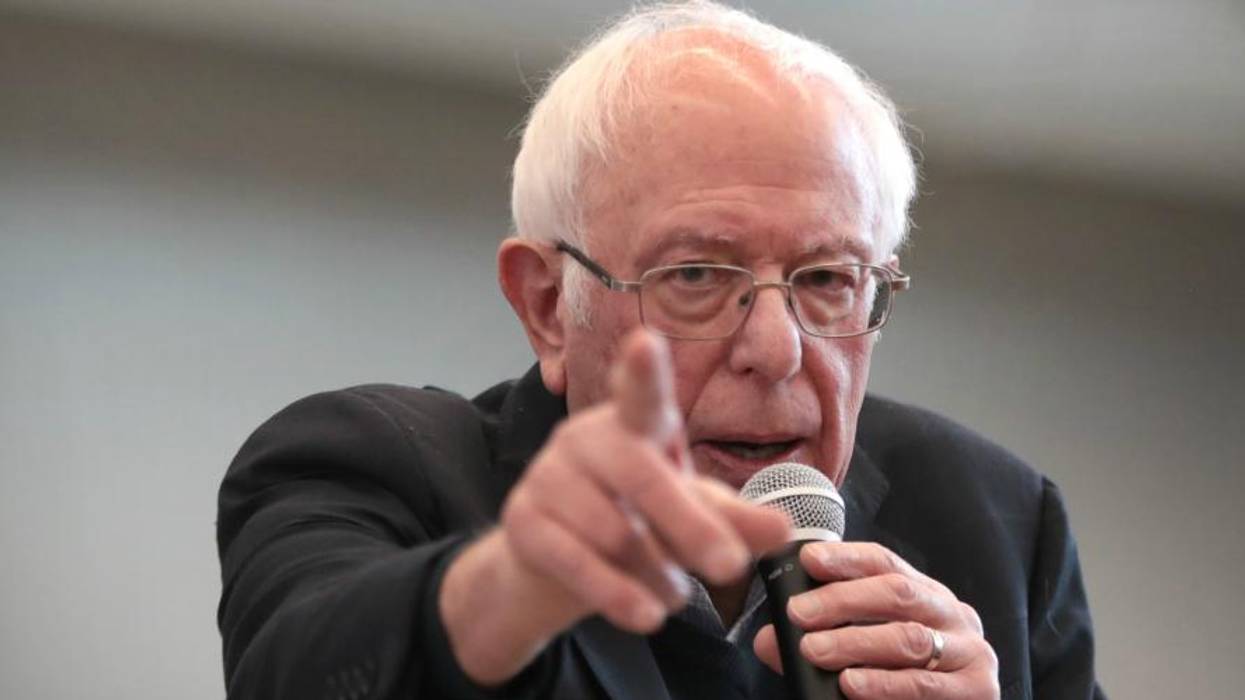
Sen. Bernie Sanders said he would introduce a joint resolution to block the proposed sale of $18 billion worth of warplanes and other weaponry to Israel.
As the Biden administration pushes Congress to approve an additional $18 billion arms sale to Israel even as it wages what much of the international community considers a genocidal war against the people of Gaza, Palestine defenders on Friday urged U.S. senators to support an effort by Sen. Bernie Sanders to block weapons transfers to the key Middle Eastern ally.
The Biden administration is urging congressional lawmakers to sign off on the sale of a package involving as many as 50 McDonnell Douglas F-15 fighters, as well as munitions, training, and other support, to Israel. The sale cleared a key hurdle last month when two holdouts—Rep. Gregory Meeks (D-N.Y.), the ranking Democratic member on the House Foreign Affairs Committee, and Sen. Ben Cardin (D-Md.), the top Senate Foreign Relations Committee Democrat—agreed to support the transfer.
If given final approval, the sale would be one of the largest to Israel since it began its nine-month assault on Gaza in retaliation for the Hamas-led October 7 attacks. More than 137,500 Palestinians have been killed, maimed, or left missing by Israel's onslaught, which is the subject of both an International Court of Justice genocide case and International Criminal Court Prosecutor Karim Khan's bid to arrest Israeli and Hamas leaders, including Israeli Prime Minister Benjamin Netanyahu and Hamas Chief Yahya Sinwar.
The Biden administration has approved billions of dollars in U.S. military aid and more than 100 arms sales to Israel since October. This, atop the nearly $4 billion Israel already got from Washington annually.
"While much of the media is focused on the drama of the U.S. presidential election, we must not lose sight of what is happening in Gaza, where an unprecedented humanitarian crisis continues to get even worse," Sanders said Friday.
"Nine months into this war, more than 38,000 people have been killed and 88,000 injured—60% of whom are women, children, or elderly. The full toll is likely higher, with thousands more buried beneath the rubble," he continued. "Nine in 10 Gazans—1.9 million people—have been driven from their homes."
"Many people have been displaced four or five times, and most do not have homes to return to, with more than 60% of residential buildings damaged or destroyed," he added.
"Israel continues to restrict the entry of [United Nations] humanitarian aid trucks into Gaza, prevent the entry of key humanitarian items, and obstruct aid workers' access to many areas," the senator noted. "These restrictions have prevented aid organizations from setting up a sustained, effective response."
Sanders stressed:
Yet, in the midst of this horror and violations of international law, the United States continues to send billions of dollars and thousands of bombs and other weapons to support this war. We, as Americans, are complicit.
We must end our support for Netanyahu's war. Not another nickel to make this horrific situation even worse. I intend to do everything I can to block further arms transfers to Israel, including through joint resolutions of disapproval of any arms sales. The United States must not help a right-wing extremist and war criminal continue this atrocity.
Palestine defenders backed Sanders' effort.
"Every single senator should be supporting Sen. Sanders upcoming joint resolution of disapproval against an $18 billion weapons giveaway to Israel, which would further enmesh and implicate the U.S. in Israel's genocide against Palestinians in Gaza," Institute for Middle East Understanding policy director Josh Ruebner said on social media.

"Human rights violations have been constant during the Bukele administration," said one activist. "We can only expect it to continue growing."
As right-wing Salvadoran President Nayib Bukele on Sunday night declared victory in his bid for a constitutionally proscribed second term, critics underscored the human rights costs of a state of emergency that's sacrificed civil liberties in the name of security.
Although votes are still being counted, there was no doubt on Monday of Bukele's landslide reelection to another five-year term. The self-described "world's coolest dictator" claimed to have won 85% of the vote, a figure roughly equal to exit polling figures published by Salvadoran and international media.
El Salvador's Constitution probits reelection. However, after securing a legislative majority in 2021, Bukele's Nueva Ideas (New Ideas) party purged the constitutional court's judges and replaced them with ones loyal to the president. The court subsequently ruled Bukele was eligible to run again.
"Bukele, the evangelical dictator and human rights violator, holds on to power in El Salvador for five more years," lamented prominent Salvadoran academic Aníbal Garzón.
"But we leave the E.U. and U.S. sanctions for Venezuela, Cuba, and Nicaragua, since he 'may be a son of a bitch, but he is our son of a bitch,'" Garzón added, referring to then-U.S. President Franklin D. Roosevelt's purported quote about Nicaraguan dictator Anastasio Somoza García.
Speaking before an elated crowd outside the presidential palace in San Salvador, Bukele said Sunday night that "today, El Salvador has broken all the records of any democracy in the history of the world! Never before has a project won with the number of votes we obtained."
"We literally went from being the most unsafe country in the world to the safest in the Western Hemisphere," he continued.
Then, taking aim at his detractors, Bukele noted that "they say I'm violating human rights."
"Whose human rights?" he asked. "Of honest people? No. Putting the human rights of honest people before the human rights of criminals is all we've done, and they call that 'violating human rights'?"
"I ask the organizations, the governments of foreign countries, I ask the journalists, why do you want us to be killed?" he continued. "Why do you want to see the blood of Salvadorans?... Why must we and our children die so that you are happy that we're respecting the false democracy that you don't even respect in your own countries?"
Abraham Abrego, director of strategic litigation at the Salvadoran human rights watchdog Cristosal, told the Buenos Aires Herald that, under a state of emergency declared in 2022 by Bukele, "we are seeing things we hadn't seen since the armed conflict, like forced disappearances and systemic torture," a reference to crimes committed by U.S.-backed death squad governments during El Salvador's 1979-92 civil war.
"Any person can be arrested because these raids are being carried out without prior investigation or court order," Abrego added.
Rina Montti, also from Cristosal, said: "Human rights violations have been constant during the Bukele administration. We can only expect it to continue growing because everything indicates that he will continue with these public policies. The dictatorship is going to be fully legalized."
As the Herald noted:
By the end of 2023, over 74,000 people had been arrested since the beginning of the state of emergency. Less than a third were estimated to be gang members, charged merely based on neighborhood testimony, prior arrests, or for simply having tattoos. Currently, around 2% of the adult population is incarcerated.
Amnesty International presented a report in December of last year, calling the situation in El Salvador "extremely alarming." In addition to abuse in penitentiaries, the NGO warned about the weakening of judicial independence and a crackdown on freedom of expression, with government discourse in the media consistently targeting and harassing groups that defend human rights and journalists who publish any form of criticism.
Citing figures from the Association of Journalists of El Salvador (APES), the Salvadoran news website El Faro said there have been at least 164 press freedom violations or attacks since January 5, the bulk occurring on Sunday. The most serious alleged violations involve police blocking journalists from working near polling centers.
APES reported cases of "intimidation, harassment, and stigmatizing statements by public officials."
El Faro also detailed what it said were government violations of the country's election rules, airing pro-Bukele television and radio ads despite a ban on such broadcasts three days before elections, poll workers in some locations wearing identification from Bukele's Nuevas Ideas party, and the president campaigning on Election Day.
On Monday, Democratic U.S. Sens. Ben Cardin (Md.), Dick Durbin (Ill.), Tim Kaine (Va.), and Jeff Merkley (Ore.) said in a statement, "We are troubled by the unconstitutional moves that strongly influenced the outcome of Sunday's election... and the rapid undermining of the rule of law and human rights protections."
The senators' statement follows a January 30 letter by U.S. House Democrats led by Rep. Ilhan Omar (D-Minn.) to Secretary of State Antony Blinken decrying "democratic backsliding and an increase in reports of human rights violations in El Salvador."
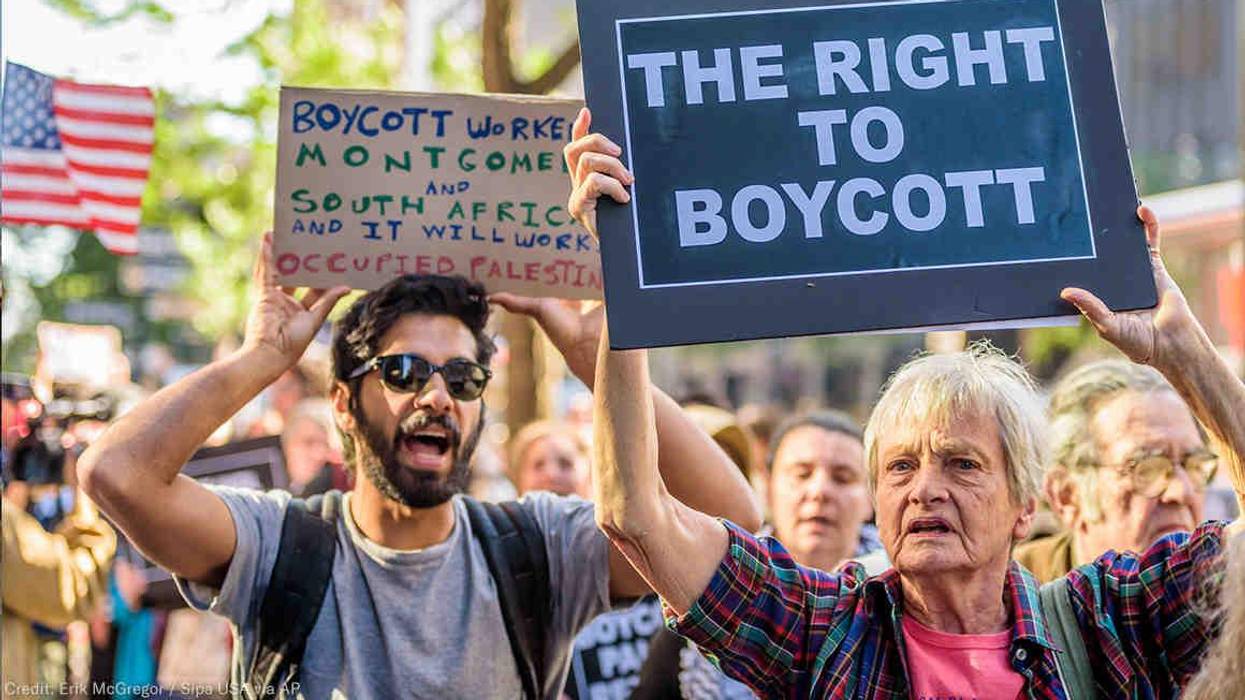
More than 250 million Americans, some 78 percent of the population, live in states with anti-boycott laws or policies. With the right to boycott under attack across the United States, some members of Congress are pushing back against these dangerous and unrelenting attacks.
Last week, Representative Ilhan Omar (D-MN), along with Representatives John Lewis (D-GA) and Rashida Tlaib (D-MI), introduced a resolution reaffirming the First Amendment right to participate in political boycotts as grounded in America's history dating back to the days of Samuel Adams and the Boston Tea Party.
Their recent legislative push stands in stark contrast to repeated attempts by other members of Congress to stamp out constitutionally protected boycotts of Israel.
These attempts include the Israel Anti-Boycott Act, which Senators Ben Cardin (D-MD) and Rob Portman (R-OH), and Reps. Peter Roskam (R-IL) and Juan Vargas (D-CA) introduced in the previous Congress. The bill would have banned participating in political boycotts of countries friendly to the United States when the boycott is called for by an international organization, such as the United Nations.
The bill would have carried a penalty of up to $1 million for engaging in the First Amendment right to boycott. And, believe it or not, that's an improvement. Earlier versions of the bill had included jail time. The bill generated some key opposition and died in Congress last year, but rumor is, this bill might be reintroduced again in this Congress.
Senators Marco Rubio (R-FL), Cory Gardner (R-CO), and Mitch McConnell (R-KY) also managed to push the Combating BDS Act through the Senate as a part of a larger bill. That bill encourages states to create laws that three federal courts have now blocked as unconstitutional. Those laws violate the First Amendment by penalizing businesses, such as our client The Arkansas Times, and individuals who refuse to sign a pledge certifying that they do not and will not engage in a constitutionally-protected boycott of Israel. Penalties often come in the form of denying government contracts to those who dare to disagree with their government.
Senators Rand Paul (R-KY), Chris Van Hollen (D-MD), and Bernie Sanders (I-VT) strongly argued that the anti-BDS legislation was unconstitutional, but the Senate passed it anyway. The bill has not gotten a vote in the House, although Rep. Michael McCaul (R-TX) has tried to find ways to get the House to consider it. The members of Congress who voted for or continue to support the various anti-boycott bills seem to have forgotten that the right to boycott is a proud part of this country's constitutional tradition.
As Reps. Lewis, Omar, and Tlaib's First Amendment resolution reminds these members with selective memory, Americans boycotted Imperial Japan in 1937 in an attempt to slow the country's progress in World War II. Americans boycotted Nazi Germany in response to the dehumanization of Jewish people that led up to the Holocaust. Many Americans also led the boycott campaign against South Africa in protest of apartheid.
Exercising one's right to boycott is quintessentially American, and that reminder was clearly due. Rep. Omar has been attacked on numerous occasions under the premise of anti-Semitism for advocating for political boycotts of Israel due to her position on human rights. And Senator Rubio singled out Rep. Tlaib as anti-Semitic for her criticism of the Combating BDS Act as antithetical to First Amendment principles. Sen. Rubio, notably, did not similarly lambast other critics of the bill for voicing similar criticism.
It's no surprise that Reps. Omar and Tlaib took action by introducing this resolution. It's also not surprising that Rep. Lewis is backing this resolution. He may be a long-time supporter of Israel, and he may not support BDS, but Rep. Lewis is also a long-time civil rights leader and one of the strongest protectors in Congress of the fundamental right to protest. While his views on Israel may stand in contrast to the views of his co-sponsors, all three are united in support of free speech, expression, and the right to boycott.
At the ACLU, we do not take a position on BDS or on the Israel-Palestine conflict. We do however believe strongly in the Constitution and the rights described by this resolution. The right to political boycott is a crucial part of our First Amendment and an important tool for advocacy in the pursuit of equality both here and abroad. The legislation in Congress that seeks to silence this speech is contrary to our Constitution and the rights of all people living in America. The courts know so - it's about time Congress does as well.

A group of congressional Democrats on Wednesday unveiled legislation that aims to tackle the nation's maternal mortality crisis--which disproportionately affects black and Native American women--by promoting community-based, holistic healthcare for pregnant women and new moms.
"Maternal justice is about ensuring that every mom-to-be is listened to and treated with dignity and respect during and after childbirth."
--Rep. Ayanna Pressley
Rep. Ayanna Pressley (D-Mass.) and Sen. Cory Booker (D-Mass.), the lead sponsors, introduced the bill just a day after the Centers for Disease Control and Prevention released an "absolutely devastating" report that revealed the country's maternal mortality rate is rising, most of those deaths are preventable, and black and Native American women are three times more likely than their white peers to die of pregnancy-related causes.
"It is unacceptable that the Unites States, the wealthiest country on Earth, has the highest maternal mortality rate [of] any developed nation in the world," Pressley said in a series of tweets. The congresswoman, a founding member of the new Black Maternal Health Caucus, called the racial disparities in maternal deaths "unconscionable."
The Healthy MOMMIES Act--short for Maximizing Outcomes for Moms through Medicaid Improvement and Enhancement of Services--features several provisions designed to reverse the rising rate of maternal deaths by expanding and improving healthcare coverage.
Specifically, as a fact sheet (pdf) from Pressley's office outlined, the bill intends to curb the national crisis by:
"Maternal justice is about ensuring that every mom-to-be is listened to and treated with dignity and respect during and after childbirth," Pressley said in a statement. "The Healthy MOMMIES Act would do just that, by promoting a community-based, holistic approach to maternal care that recognizes current disparities in healthcare and critical environmental factors impacting communities."
"We simply cannot continue to accept this alarming status quo--we must do something about it and this bill is an important first step," added Booker, a 2020 presidential candidate.
Booker, in a press call reported by Refinery29, highlighted how the legislation would use Medicaid to serve high-risk women:
Our bill takes on an important and meaningful step towards addressing these alarming statistics by extending and enhancing the care pregnant women receive under Medicaid... Medicaid now covers almost half of all births in the United States. It's a powerful tool to use to improve maternal health overall, particularly for women of color, low-income women, and other underserved populations.
Co-sponsors of the Healthy MOMMIES Act include Sens. Tammy Baldwin (D-Wis.), Richard Blumenthal (D-Conn.), Ben Cardin (D-Md.), Kirsten Gillibrand (D-N.Y.), and Kamala Harris (D-Calif.). Like Booker, Gillibrand and Harris are also running for president. In the House, the bill is backed by Reps. Lauren Underwood (D-Ill.) and Alma Adams (D-N.C.), founders and co-chairs of the Black Maternal Health Caucus.
"As a black mother and grandmother, this crisis is deeply personal to me," said Adams. "I co-founded the Black Maternal Health Caucus because black women are dying of preventable pregnancy-related complications at an alarming rate."

A diverse coalition of progressive advocacy groups representing Jewish and Muslim Americans is pressuring House Speaker Nancy Pelosi, Senate Minority Leader Chuck Schumer, and other top Democrats to cancel planned speeches at AIPAC's annual conference as a growing number of the party's presidential candidates are vowing to skip the event.
"At a time when AIPAC's power is clearly waning and we are watching change happen in real time, Nancy Pelosi is lending her legitimacy to them."
--Michael Deheeger, Jewish Voice for Peace
"Instead of speaking at their conference, Nancy Pelosi should be publicly condemning the far-right shift in Israel and AIPAC's dangerous political behavior," Michael Deheeger, congressional organizer with Jewish Voice for Peace (JVP), wrote in an email to supporters Friday.
"Giving AIPAC cover right when progressives are finally responding to their constituents and turning away from AIPAC is simply the wrong thing to do," he added.
To build momentum for the pressure campaign, JVP launched a petition urging Pelosi to cancel her planned appearance and "stand up for true democratic values."
The campaign targeting Democratic leaders comes after MoveOn--a grassroots progressive group with millions of members--called on all Democrats running for president in 2020 to boycott AIPAC's policy conference, which is headlined by Israeli Prime Minister Benjamin Netanyahu.
Sens. Elizabeth Warren (D-Mass.), Bernie Sanders (I-Vt.), Kamala Harris (D-Calif.), Kirsten Gillibrand (D-N.Y.), former Rep. Beto O'Rourke (D-Texas), and South Bend Mayor Pete Buttigieg have all vowed to skip the conference.
Sen. Cory Booker (D-N.J.), however, is reportedly planning to attend the event, which begins on Sunday.
Jewish Voice for Peace said Pelosi's attendance at the conference would "boost" AIPAC's "all-star line-up of anti-Muslim, anti-Palestinian speakers."
"At a time when AIPAC's power is clearly waning and we are watching change happen in real time--with groups like MoveOn coming out strongly in favor for Democrats to skip AIPAC--Nancy Pelosi is lending her legitimacy to them," Deheeger wrote. "This is appalling."
Pelosi and Schumer are hardly the only Democrats slated to speak at AIPAC's conference.
Other Democratic speakers include House Majority Leader Steny Hoyer (D-Md.), Sen. Ben Cardin (Md.), Sen. Bob Menendez (Calif.), Rep. Hakeem Jeffries (N.Y.), and Rep. Ted Deutch (Fla.). View the conference's full line-up here.
MPower Change, the largest Muslim-led social and racial justice organization in the United States, declared that "speaking at AIPAC means supporting an org[anization] that funds anti-Muslim conspiracy theorists like Frank Gaffney, whose bigotry inspires people like the Christchurch shooter."
"Take a stand against Islamophobia," the group wrote to Pelosi, Schumer, and Hoyer.
"Tell your members of Congress it's time to #SkipAIPAC," tweeted JVP. "It's past time for real dialogue about Israel's illegal occupation, the killing of nearly 200 protesters in Gaza's Great Return March, and freedom, justice, and equality for all in Israel/Palestine."
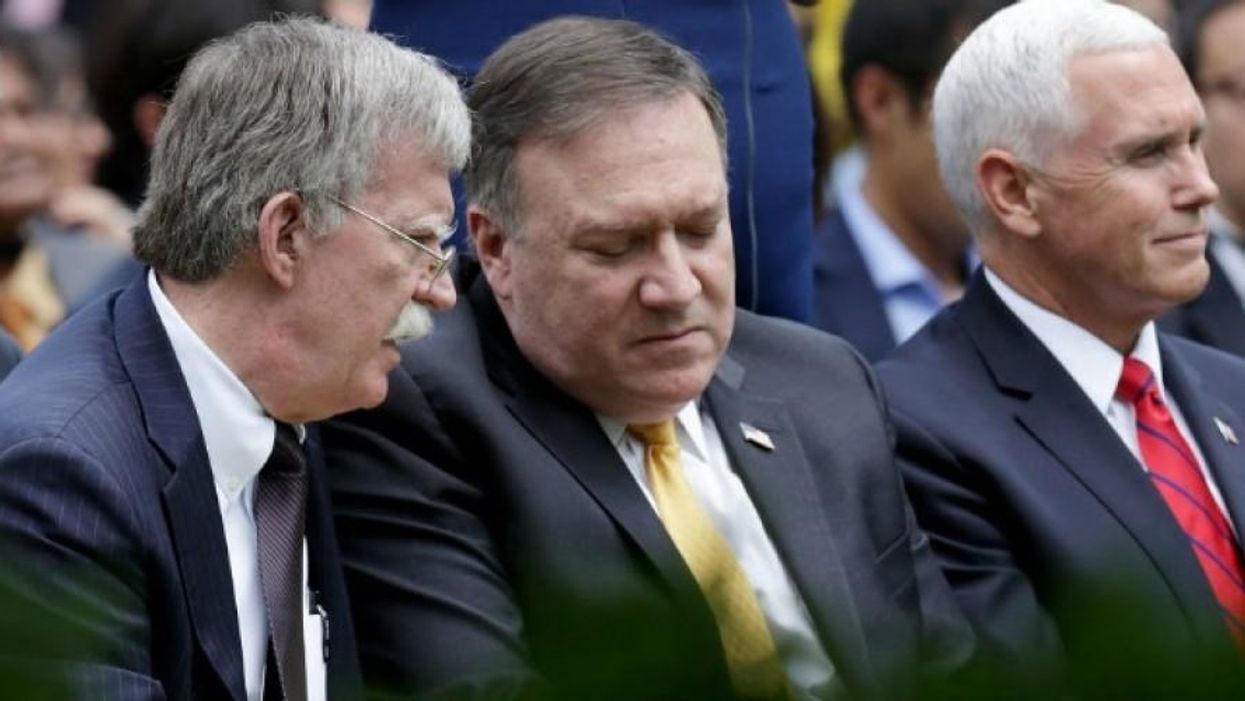
Here's the foreign policy question of questions in 2019: Are President Donald Trump, Israeli Prime Minister Benjamin Netanyahu, and Saudi Crown Prince Mohammed bin Salman, all severely weakened at home and with few allies abroad, reckless enough to set off a war with Iran? Could military actions designed to be limited -- say, a heightening of the Israeli bombing of Iranian forces inside Syria, or possible U.S. cross-border attacks from Iraq, or a clash between American and Iranian naval ships in the Persian Gulf -- trigger a wider war?
Worryingly, the answers are: yes and yes. Even though Western Europe has lined up in opposition to any future conflict with Iran, even though Russia and China would rail against it, even though most Washington foreign policy experts would be horrified by the outbreak of such a war, it could happen.
Despite growing Trump administration tensions with Venezuela and even with North Korea, Iran is the likeliest spot for Washington's next shooting war. Years of politically charged anti-Iranian vituperation might blow up in the faces of President Trump and his two most hawkish aides, Secretary of State Mike Pompeo and National Security Advisor John Bolton, setting off a conflict with potentially catastrophic implications.
Such a war could quickly spread across much of the Middle East, not just to Saudi Arabia and Israel, the region's two major anti-Iranian powers, but Iraq, Syria, Lebanon, Yemen, and the various Persian Gulf states. It might indeed be, as Iranian President Hassan Rouhani suggested last year (unconsciously echoing Iran's former enemy, Iraqi ruler Saddam Hussein) the "mother of all wars."
With Bolton and Pompeo, both well-known Iranophobes, in the driver's seat, few restraints remain on President Trump when it comes to that country. White House Chief of Staff John Kelly, National Security Advisor H.R. McMaster, and Secretary of Defense Jim Mattis, President Trump's former favorite generals who had urged caution, are no longer around. And though the Democratic National Committee passed a resolution last month calling for the United States to return to the nuclear agreement that President Obama signed, there are still a significant number of congressional Democrats who believe that Iran is a major threat to U.S. interests in the region.
During the Obama years, it was de rigueur for Democrats to support the president's conclusion that Iran was a prime state sponsor of terrorism and should be treated accordingly. And the congressional Democrats now leading the party on foreign policy -- Eliot Engel, who currently chairs the House Foreign Affairs Committee, and Bob Menendez and Ben Cardin, the two ranking Democrats on the Senate Foreign Relations Committee -- were opponents of the 2015 nuclear accord (though all three now claim to have changed their minds).
Deadly Flashpoints for a Future War
On the roller coaster ride that is Donald Trump's foreign policy, it's hard to discern what's real and what isn't, what's rhetoric and what's not. When it comes to Iran, it's reasonable to assume that Trump, Bolton, and Pompeo aren't planning an updated version of the unilateral invasion of Iraq that President George W. Bush launched in the spring of 2003.
Yet by openly calling for the toppling of the government in Tehran, by withdrawing from the Iran nuclear agreement and reimposing onerous sanctions to cripple that country's economy, by encouraging Iranians to rise up in revolt, by overtly supporting various exile groups (and perhaps covertly even terrorists), and by joining with Israel and Saudi Arabia in an informal anti-Iranian alliance, the three of them are clearly attempting to force the collapse of the Iranian regime, which just celebrated the 40th anniversary of the 1979 Islamic revolution.
There are three potential flashpoints where limited skirmishes, were they to break out, could quickly escalate into a major shooting war.
The first is in Syria and Lebanon. Iran is deeply involved in defending Syrian President Bashar al-Assad (who only recently returned from a visit to Tehran) and closely allied with Hezbollah, the Lebanese Shiite political party with a potent paramilitary arm. Weeks ago, Israeli Prime Minister Netanyahu openly boasted that his country's air force had successfully taken out Iranian targets in Syria. In fact, little noticed here, dozens of such strikes have taken place for more than a year, with mounting Iranian casualties.
Until now, the Iranian leadership has avoided a direct response that would heighten the confrontation with Israel, just as it has avoided unleashing Hezbollah, a well-armed, battle-tested proxy force. That could, however, change if the hardliners in Iran decided to retaliate. Should this simmering conflict explode, does anyone doubt that President Trump would soon join the fray on Israel's side or that congressional Democrats would quickly succumb to the administration's calls to back the Jewish state?
Next, consider Iraq as a possible flashpoint for conflict. In February, a blustery Trump told CBS's Face the Nation that he intends to keep U.S. forces in Iraq "because I want to be looking a little bit at Iran because Iran is the real problem." His comments did not exactly go over well with the Iraqi political class, since many of that country's parties and militias are backed by Iran.
Trump's declaration followed a Wall Street Journal report late last year that Bolton had asked the Pentagon -- over the opposition of various generals and then-Secretary of Defense Mattis -- to prepare options for "retaliatory strikes" against Iran. This roughly coincided with a couple of small rocket attacks against Baghdad's fortified Green Zone and the airport in Basra, Iraq's Persian Gulf port city, neither of which caused any casualties. Writing in Foreign Affairs, however, Pompeo blamed Iran for the attacks, which he called "life-threatening," adding, "Iran did not stop these attacks, which were carried out by proxies it has supported with funding, training, and weapons." No "retaliatory strikes" were launched, but plans do undoubtedly now exist for them and it's not hard to imagine Bolton and Pompeo persuading Trump to go ahead and use them -- with incalculable consequences.
Finally, there's the Persian Gulf itself. Ever since the George W. Bush years, the U.S. Navy has worried about possible clashes with Iran's naval forces in those waters and there have been a number of high-profile incidents. The Obama administration tried (but failed) to establish a hotline of sorts that would have linked U.S. and Iranian naval commanders and so made it easier to defuse any such incident, an initiative championed by then-Chairman of the Joint Chiefs Admiral Mike Mullen, a longtime opponent of war with Iran.
Under Trump, however, all bets are off. Last year, he requested that Mattis prepare plans to blow up Iran's "fast boats," small gunboats in the Gulf, reportedly asking, "Why don't we sink them?" He's already reinforced the U.S. naval presence there, getting Iran's attention. Not surprisingly, the Iranian leadership has responded in kind. Earlier this year, President Hassan Rouhani announced that his country had developed submarines capable of launching cruise missiles against naval targets. The Iranians also began a series of Persian Gulf war games and, in late February, test fired one of those sub-launched missiles.
Add in one more thing: in an eerie replay of a key argument George Bush and Dick Cheney used for going to war with Iraq in 2003, in mid-February the right-wing media outlet Washington Times ran an "exclusive" report with this headline: "Iran-Al Qaeda Alliance may provide legal rationale for U.S. military strikes."
Back in 2002, the Office of Special Plans at Secretary of Defense Donald Rumsfeld's Pentagon, under the supervision of neoconservatives Paul Wolfowitz and Douglas Feith, spent months trying to prove that al-Qaeda and Iraq were in league. The Washington Times piece, citing Trump administration sources, made a similar claim -- that Iran is now aiding and abetting al-Qaeda with a "clandestine sanctuary to funnel fighters, money, and weapons across the Middle East." It added that the administration is seeking to use this information to establish "a potential legal justification for military strikes against Iran or its proxies." Needless to say, few are the terrorism experts or Iran specialists who would agree that Iran has anything like an active relationship with al-Qaeda.
Will the Hardliners Triumph in Iran as in Washington?
The Trump administration is, in fact, experiencing increasing difficulty finding allies ready to join a new Coalition of the Willing to confront Iran. The only two charter members so far, Israel and Saudi Arabia, are, however, enthusiastic indeed. Last month, Prime Minister Netanyahu was heard remarking that Israel and its Arab allies want war with Iran.
At a less-than-successful mid-February summit meeting Washington organized in Warsaw, Poland, to recruit world leaders for a future crusade against Iran, Netanyahu was heard to say in Hebrew: "This is an open meeting with representatives of leading Arab countries that are sitting down together with Israel in order to advance the common interest of war with Iran." (He later insisted that the correct translation should have been "combating Iran," but the damage had already been done.)
That Warsaw summit was explicitly designed to build an anti-Iranian coalition, but many of America's allies, staunchly opposing Trump's decision to pull out of the Iran nuclear accord, would have nothing to do with it. In an effort to mollify the Europeans, in particular, the United States and Poland awkwardly renamed it: "The Ministerial to Promote a Future of Peace and Security in the Middle East."
The name change, however, fooled no one. As a result, Vice President Pence and Secretary of State Pompeo were embarrassed by a series of no-shows: the French, the Germans, and the European Union, among others, flatly declined to send ministerial-level representatives, letting their ambassadors in Warsaw stand in for them. The many Arab nations not in thrall to Saudi Arabia similarly sent only low-level delegations. Turkey and Russia boycotted altogether, convening a summit of their own in which Presidents Vladimir Putin and Recep Tayyip Erdogan met with Iran's Rouhani.
Never the smoothest diplomat, Pence condemned, insulted, and vilified the Europeans for refusing to go along with Washington's wrecking-ball approach. He began his speech to the conference by saying: "The time has come for our European partners to withdraw from the Iran nuclear deal." He then launched a direct attack on Europe's efforts to preserve that accord by seeking a way around the sanctions Washington had re-imposed: "Sadly, some of our leading European partners... have led the effort to create mechanisms to break up our sanctions. We call it an effort to break American sanctions against Iran's murderous revolutionary regime."
That blast at the European allies should certainly have brought to mind Secretary of Defense Rumsfeld's disparaging comments in early 2003 about Germany and France, in particular, being leaders of the "old Europe." Few allies then backed Washington's invasion plans, which, of course, didn't prevent war. Europe's reluctance now isn't likely to prove much of a deterrent either.
But Pence is right that the Europeans have taken steps to salvage the Iran nuclear deal, otherwise known as the Joint Comprehensive Plan of Action (JCPOA). In particular, they've created a "special purpose vehicle" known as INSTEX (Instrument for Supporting Trade Exchanges) designed "to support legitimate trade with Iran," according to a statement from the foreign ministers of Germany, France, and Great Britain. It's potentially a big deal and, as Pence noted, explicitly designed to circumvent the sanctions Washington imposed on Iran after Trump's break with the JCPOA.
INSTEX has a political purpose, too. The American withdrawal from the JCPOA was a body blow to President Rouhani, Foreign Minister Javad Zarif, and other centrists in Tehran who had taken credit for, and pride in, the deal between Iran and the six world powers (the United States, France, Germany, Britain, Russia, and China) that signed the agreement. That deal had been welcomed in Iran in part because it seemed to ensure that country's ability to expand its trade to the rest of the world, including its oil exports, free of sanctions.
Even before Trump abandoned the deal, however, Iran was already finding U.S. pressure overwhelming and, for the average Iranian, things hadn't improved in any significant way. Worse yet, in the past year the economy had taken a nosedive, the currency had plunged, inflation was running rampant, and strikes and street demonstrations had broken out, challenging the government and its clerical leadership. Chants of "Death to the Dictator!" -- not heard since the Green Movement's revolt against President Mahmoud Ahmadinejad's reelection in 2009 -- once again resounded in street demonstrations.
At the end of February, it seemed as if Trump, Bolton, and Pompeo had scored a dangerous victory when Zarif, Iran's well-known, Western-oriented foreign minister, announced his resignation. Moderates who supported the JCPOA, including Rouhani and Zarif, have been under attack from the country's hardliners since Trump's pullout. As a result, Zarif's decision was widely assumed to be a worrisome sign that those hardliners had claimed their first victim.
There was even unfounded speculation that, without Zarif, who had worked tirelessly with the Europeans to preserve what was left of the nuclear pact, Iran itself might abandon the accord and resume its nuclear program. And there's no question that the actions and statements of Bolton, Pompeo, and crew have undermined Iran's moderates, while emboldening its hardliners, who are making I-told-you-so arguments to Ayatollah Ali Khamenei, the country's supreme leader.
Despite the internal pressure on Zarif, however, his resignation proved short-lived indeed: Rouhani rejected it, and there was an upsurge of support for him in Iran's parliament. Even General Qassem Soleimani, a major figure in that country's Islamic Revolutionary Guard Corps (IRGC) and the commander of the Quds Force, backed him. As it happens, the Quds Force, an arm of the IRGC, is responsible for Iran's paramilitary and foreign intelligence operations throughout the region, but especially in Iraq and Syria. That role has allowed Soleimani to assume responsibility for much of Iran's foreign policy in the region, making him a formidable rival to Zarif -- a tension that undoubtedly contributed to his brief resignation and it isn't likely to dissipate anytime soon.
According to analysts and commentators, it appears to have been a ploy by Zarif (and perhaps Rouhani, too) to win a vote of political confidence and it appears to have strengthened their hand for the time being.
Still, the Zarif resignation crisis threw into stark relief the deep tensions within Iranian politics and raised a key question: As the Trump administration accelerates its efforts to seek a confrontation, will they find an echo among Iranian hardliners who'd like nothing more than a face-off with the United States?
Maybe that's exactly what Bolton and Pompeo want. If so, prepare yourself: another American war unlikely to work out the way anyone in Washington dreams is on the horizon.

With the GOP-controlled Senate set to vote Monday evening on legislation that would hand states more power to punish companies and individuals that participate in pro-Palestinian boycotts of Israel, rights groups urged people to contact their representatives and pressure them to block the "unconstitutional" legislation for the fourth time.
"What's one of the first things the Senate will vote on after finally opening the government? Answer: Undermining the First Amendment right to protest by penalizing those participating in the Boycott, Divestment, Sanctions movement."
--MoveOn.org
"Today at 5:30pm [ET] the Senate is voting on a bill promoting state laws that suppress the right to boycott Israel--even though multiple judges have found such laws to be unconstitutional," the ACLU declared in a tweet. "It's up to us to tell our senators: Hands off the right to boycott."
Targeting key Democratic senators directly on Twitter, MoveOn.org asked: "What's one of the first things the Senate will vote on after finally opening the government?"
"Answer: Undermining the First Amendment right to protest by penalizing those participating in the Boycott, Divestment, Sanctions [BDS] movement. No Senate Democrats should vote for this," the group wrote. "There's no 'compromise' that can come out of Republicans trying to sign away our rights. Any legislation that seeks to penalize or criminalize BDS participation is an attack on free speech and peaceful protest."
Sponsored by Sen. Marco Rubio (R-Fla.) and officially titled the Strengthening America's Security in the Middle East Act, Senate Bill 1 (S.1) is a package of legislation that includes the Combatting BDS Act, a bill that would give states and localities more legal authority to punish companies and individuals who engage in boycotts of Israel.
As Common Dreams reported, most Senate Democrats aligned against S.1 earlier this month, arguing that the Senate should not be pursuing any business unrelated to ending the government shutdown. Just four Democratic senators broke with their party to end cloture on the measure despite the shutdown: Bob Menendez (N.J.), Joe Manchin (W.Va.), Doug Jones (Ala.), and Kyrsten Sinema (Ariz.).
But now that the government has reopened--for now, at least--rights groups are alarmed that Senate Democrats who voted to block S.1 during the shutdown will flip their votes to "yes" because they support the contents of the legislation.
As The Intercept pointed out, Senate Minority Leader Chuck Schumer (D-N.Y.) last year supported "far more draconian" legislation sponsored by Sen. Ben Cardin (D-Md.).
Cardin's bill, which the ACLU called a "full-scale attack" on the First Amendment, was co-sponsored by 15 Democratic senators and Sen. Angus King (I-Maine).
In a tweet ahead of Thursday's vote, Rubio pressured his Democratic colleagues to vote for his legislation, declaring that there "is no excuse not to move to it now."
As MoveOn noted on Twitter: "We've already seen the repercussions of local anti-BDS legislation across the country. An elementary school speech pathologist in Texas lost her job for refusing to sign away her constitutional rights."
"Democrats can stop this bill," MoveOn concluded. "Call your senators now and tell them to vote no on penalizing the boycott movement and undermining First Amendment in the process."

Dozens of Democrats and Sen. Bernie Sanders (I-Vt.) are demanding not only an end to "this wasteful and destructive government shutdown" but also that contractors furloughed by their employers should receive back pay, with funding help from the federal agencies impacted by President Donald Trump's "temper tantrum" over border wall funding.
"Low-wage service contract workers perform jobs that are absolutely vital to the government, such as food service, security, and custodial work. Many of these workers live paycheck-to-paycheck, and cannot afford to pay their rent and other bills if the shutdown continues."
--34 senators
In a letter sent Thursday to Russell Vought, acting director of the Office of Management and Budget (OMB), 34 senators argued that "contract workers and their families should not suffer the consequences of a shutdown that they did not cause."
As the so-called #TrumpShutdown tied for the longest in U.S. history on Friday, Congress sent a bill to the president's desk stipulating that federal employees be provided with back pay, as is customary, once the shutdown concludes. Contract workers, however, are not included in the bill.
"Low-wage service contract workers perform jobs that are absolutely vital to the government, such as food service, security, and custodial work," the letter explains. "Many of these workers live paycheck-to-paycheck, and cannot afford to pay their rent and other bills if the shutdown continues."
"Providing back pay to these low- and middle-income contractor employees who are furloughed by their employers is the right thing to do, and it is in the federal government's best interest to provide funding to the extent necessary to ensure that contractors deliver back pay to their workers," the letter charges.
Specifically, the senators call on Vought "to take immediate steps to ensure that contractor employees get the back pay that they deserve by providing clear directions for agencies and contractors to do so."
Sen. Sherrod Brown (D-Ohio), who signed the letter, met with furloughed workers earlier this week and promised to spearhead legislation to ensure the federal contract workers receive back pay.
Brown and several lawmakers who signed the letter to Vought also endorsed the Federal Employee Civil Relief Act--introduced by Sen. Brian Schatz (D-Hawaii) on Thursday--that aims to protect federal employees, contractors, and their families from foreclosures, evictions, and loan defaults during the shutdown. Rep. Derek Kilmer (D-Wash.) introduced a companion bill in the House.
"Workers and their families should not have to face losing their homes or defaulting on loans because of President Trump's temper tantrum," Brown said in a statement. "President Trump is hurting the people who make this country work, and he needs to do his job and reopen the government right now."
The demands come as concerns grow that Trump is moving closer to declaring a "national emergency" in order to end the deadlock--a move legal experts warn would spark a constitutional crisis.
Otherwise, the shutdown, spurred by Trump's demand for $5.7 billion in border wall funding, could drag on indefinitely so long as Republican Senate Majority Leader Mitch McConnell (Ky.) continues to acquiesce to the president by blocking votes on all bills to reopen the government approved by the Democrat-controlled House.
In addition to Sanders and Brown, the letter was signed by Democratic Sens. Chris Van Hollen (Md.), Tina Smith (Minn.), Mark R. Warner (Va.), Ben Cardin (Md.), Tim Kaine (Va.), Richard Blumenthal (Conn.), Kirsten Gillibrand (N.Y.), Doug Jones (Ala.), Elizabeth Warren (Mass.), Amy Klobuchar (Minn.), Maggie Hassan (N.H.), Mazie Hirono (Hawaii), Dick Durbin (Ill.), Sheldon Whitehouse (R.I.), Tom Udall (N.M.), Jeanne Shaheen (N.H.), Dianne Feinstein (Calif.), Martin Heinrich (N.M.), Ron Wyden (Ore.), Tammy Duckworth (Ill.), Ed Markey (Mass.), Tammy Baldwin (Wis.), Kamala Harris (Calif.), Jack Reed (R.I.), Bob Menendez (N.J.), Bob Casey, Jr. (Pa.), Tom Carper (Del.), Cory Booker (N.J.), Jeff Merkley (Ore.), Debbie Stabenow (Mich.), Chris Coons (Del.), and Chris Murphy (Conn.).
Read the full letter:
Dear Mr. Vought:
We are writing to urge you to direct federal agencies to work with contractors to provide back pay to compensate low- and middle-income contractor employees for the wages they have lost as a result of not being able to report to work during this government shutdown.
Contract workers and their families should not suffer the consequences of a shutdown that they did not cause. Low-wage service contract workers perform jobs that are absolutely vital to the government, such as food service, security, and custodial work. Many of these workers live paycheck-to-paycheck, and cannot afford to pay their rent and other bills if the shutdown continues.
After past shutdowns, contractor employees have generally not received back pay. In addition to our fight to protect federal workers who are being hurt by this shutdown, we are committed to righting this wrong for contractor employees. Government contracts typically have provisions to modify the terms of the contract. Federal contracting officers should use these provisions to work with contractors to provide back pay for employees who lost wages as a result of the government shutdown.
Providing back pay to these low- and middle-income contractor employees who are furloughed by their employers is the right thing to do, and it is in the federal government's best interest to provide funding to the extent necessary to ensure that contractors deliver back pay to their workers. Contractor employees cannot afford the chaos and uncertainty of government shutdowns, and some of these workers may seek other jobs if back pay is not provided to compensate for shutdown-related losses.
Most of all, this wasteful and destructive government shutdown must come to an end. We all support the legislation passed by the House of Representatives to reopen the government, which mirrors legislation that previously passed the Senate with overwhelming bipartisan support.
We urge you to take immediate steps to ensure that contractor employees get the back pay that they deserve by providing clear directions for agencies and contractors to do so.
Thank you for your consideration, and we look forward to your reply.
Sincerely,
This week, amid a partial government shutdown, senators tried to sneak through a bill that would encourage states to suppress constitutionally protected political boycotts of Israel.
Ultimately, the Combating BDS Act failed to make it to the Senate floor, largely because enough people exercised their First Amendment right to protest the bill and educate senators that they should get their priorities straight. But it seems that's not the only education that is in order.
The recent spate of bills that seek to penalize Israel boycotts is a bipartisan problem. Many Senate Democrats blocked the Combating BDS Act this week, rightly arguing that Congress should end the government shutdown rather than making this the first order of business of the new session. But four Senate Democrats voted to pass the bill, and many others, including Sens. Chuck Schumer (D-N.Y.) and Ben Cardin (D-Md.), have expressed support for other anti-boycott efforts, even when they have come at the expense of our constitutional rights.
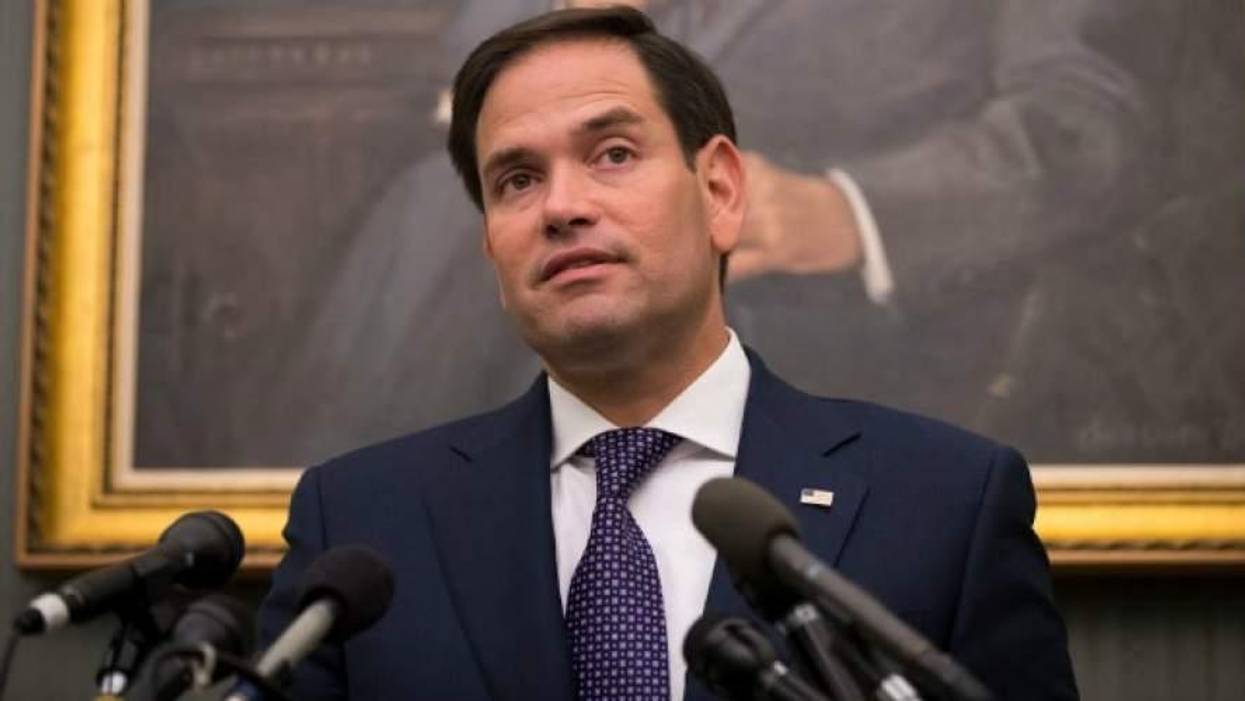
This week, however, Sen. Marco Rubio (R-Fla.) led the charge, and even took to Twitter to spread a number of perplexing and often downright false statements about the First Amendment and the Combating BDS Act.
Here's what Sen. Rubio got wrong:
Senator Rubio suggested that not only should states be free to boycott the boycotters, they have the right to boycott them. That's a troubling proposition, and one specifically prohibited under the Constitution.
First Amendment rights belong to the people, not the government. The government cannot impose its views on people or punish them for expressing views that the government disagrees with. This principle applies to both individuals and companies doing business with the state, and with full force to politically motivated boycotts. Two federal courts recently affirmed this, blocking laws in Arizona and Kansas that penalized individuals and companies for boycotting Israel. And this principle was famously tested in the McCarthy era, when many state laws required government employees to declare they were not members of the Communist Party or other "subversive groups" in order to keep their jobs.
The ACLU successfully challenged many of those laws on constitutional grounds -- just as it's now fighting unconstitutional state laws suppressing lawful boycotts of Israel -- and anti-Communist loyalty tests have been mostly relegated to the dustbin of history. The same should happen to the laws requiring people to pledge not to boycott Israel as a condition of doing business with the government.
That's what Sen. Rubio tweeted to his followers on January 7. Less than a day later, he tweeted that his bill "allows local & state govt's to boycott the boycotters." That, by definition, is state-sponsored punishment for a constitutionally protected activity, and it's what the First Amendment seeks to protect people from.
Representative Eliot L. Engel (D-N.Y.), told The Washington Post that he prefers another bill, the Israel Anti-Boycott Act, because, he argued, it seeks to address constitutional concerns about the Combating BDS Act. That's also false. Both bills come from the same unconstitutional playbook and make a mockery of the First Amendment. In fact, the Israel Anti-Boycott Act takes it to another level, imposing criminal penalties of up to $1 million on individuals or companies boycotting Israel or any foreign country if the boycott were called for by international governmental organizations like the United Nations. Senators Diane Feinstein (D-Calif.) and Bernie Sanders (I-Vt.) similarly expressed concerns that the bill violated the First Amendment.
Not true. The ACLU doesn't take a position on boycotts of Israel, but we have long defended the right to boycott, which is a proud part of America's constitutional tradition and protected by the First Amendment. And we're not the only ones. A number of members of Congress -- many of whom who don't take a position on the Boycott, Divestment, and Sanctions movement or have even expressed opposition to it -- have First Amendment concerns with the bill.
Whatever your views on BDS, we all should be able to agree that the government has no business telling us which causes we can or cannot support.
Marco Rubio and his colleagues may not agree with the BDS movement, and they have a First Amendment right to express that. But public officials cannot use the power of public office to punish views they don't agree with. That's the kind of authoritarian power our Constitution is meant to protect against.

Despite being given a rare opportunity to change their widely denounced vote from earlier this week, four Senate Democrats once again sided with the GOP on Thursday in support of a motion to end debate on "unconstitutional" legislation that would punish those who choose to defend Palestinian rights by backing the international campaign to boycott Israel.
Much to the relief of civil libertarians and Palestinian rights groups, the motion ultimately failed to reach the 60 votes needed to pass, as every other member of the Democratic caucus teamed up to block Senate Bill 1 (S.1)--a slate of four measures that includes the so-called "Combating BDS Act" and legislation to authorize $38 billion in military aid to Israel.
"We hope that as Senator McConnell has called for this to go to to third vote, Kyrsten Sinema--as well as Menendez, Jones, and Manchin--will come to their senses"
--Ariel Gold, CodePink
The four Senate Democrats who voted with Republicans for the second time this week were: Bob Menendez (N.J.), Joe Manchin (W.Va.), Doug Jones (Ala.), and Kyrsten Sinema (Ariz.). These Democrats could get yet another chance to flip their vote as early as next week, as Senate Majority Leader Mitch McConnell (R-Ky.) immediately filed cloture again following the second failed procedural vote.
"Of the four Democrats, Sinema's vote was the most disappointing," Ariel Gold, national co-director of CodePink, told Common Dreams. "In fact, her vote was shocking. In 2003, Sinema joined CodePink protests against the Iraq War. Why she now would be voting in favor of a war on the First Amendment and prioritizing military aid to Israel over the need for federal workers to be paid is baffling."
"We hope that as Senator McConnell has called for this to go to to third vote, Kyrsten Sinema--as well as Menendez, Jones, and Manchin--will come to their senses," Gold added.
While advocacy groups were quick to applaud Democratic senators for standing together to stop McConnell from moving ahead with legislation that is completely unrelated to ending the government shutdown, critics noted that bipartisan support for anti-boycott efforts raises serious concerns that enough Democrats could flip and vote to pass the bill after the prolonged shutdown ends.
Sen. Menendez, a longtime supporter of anti-boycott measures, indicated that this is a possibility the first failed procedural vote earlier this week. The legislation, he predicted in an interview with Al Jazeera, "will come back and it will have very strong bipartisan support."
"The problem right now is that there are those who feel very passionately that we should not do anything unless the government is open," the New Jersey senator added.
As the ACLU's Kate Ruane and Abdullah Hasan pointed out in a blog post on Wednesday, "The recent spate of bills that seek to penalize Israel boycotts is a bipartisan problem."
"Many Senate Democrats blocked the Combating BDS Act this week, rightly arguing that Congress should end the government shutdown rather than making this the first order of business of the new session," Ruane and Hasan continued. "But four Senate Democrats voted to pass the bill, and many others, including Sens. Chuck Schumer (D-N.Y.) and Ben Cardin (D-Md.), have expressed support for other anti-boycott efforts, even when they have come at the expense of our constitutional rights."
As The Intercept reported this past weekend, Schumer was initially planning to back S.1--sponsored by Sen. Marco Rubio (R-Fla.)--and "supported Cardin's far more draconian bill of last year."
But Schumer shifted his position on Monday, opting to stand with Senate Democrats who vowed to vote down any legislation unrelated to ending the government shutdown, which is now in its twentieth day and close to becoming the longest in U.S. history.
"It's absurd that the first bill during the shutdown is legislation which punishes Americans who exercise their constitutional right to engage in political activity."
--Sen. Bernie Sanders
According to the Washington Post's Jeff Stein, Schumer's reason for promising to block the legislation was "because the government shutdown remains unresolved"--not because of any opposition to the bill's contents.
If passed, S.1 would hand states and localities greater legal authority to punish companies and individuals who participate in the Boycott, Divestment, and Sanctions (BDS) movement. Two federal courts have already struck down similar bills as unconstitutional.
In a tweet on Sunday, Sen. Bernie Sanders (I-Vt.) condemned both S.1 itself and the fact that McConnell is attempting to plow ahead with business as usual while the government shutdown continues and hundreds of thousands of federal employees remain furloughed or forced to work without pay.
"It's absurd that the first bill during the shutdown is legislation which punishes Americans who exercise their constitutional right to engage in political activity," Sanders wrote. "Democrats must block consideration of any bills that don't reopen the government. Let's get our priorities right."
In an interview on Democracy Now! on Tuesday, Rep. Rashida Tlaib (D-Mich.)--who became the second member of Congress to back the BDS movement last month after Rep. Ilhan Omar (D-Minn.)--expressed agreement with Sanders, calling S.1 an "anti-speech, anti-First Amendment bill."
"I cannot imagine our country not having the right to economic boycott," Tlaib added. "I just wish the United States senators, that are in power, that are in leadership right now, would not be so focused on taking away our rights, and be focused on helping the thousands of families, millions... that are impacted by this government shutdown."