
SUBSCRIBE TO OUR FREE NEWSLETTER
Daily news & progressive opinion—funded by the people, not the corporations—delivered straight to your inbox.
5
#000000
#FFFFFF
To donate by check, phone, or other method, see our More Ways to Give page.


Daily news & progressive opinion—funded by the people, not the corporations—delivered straight to your inbox.
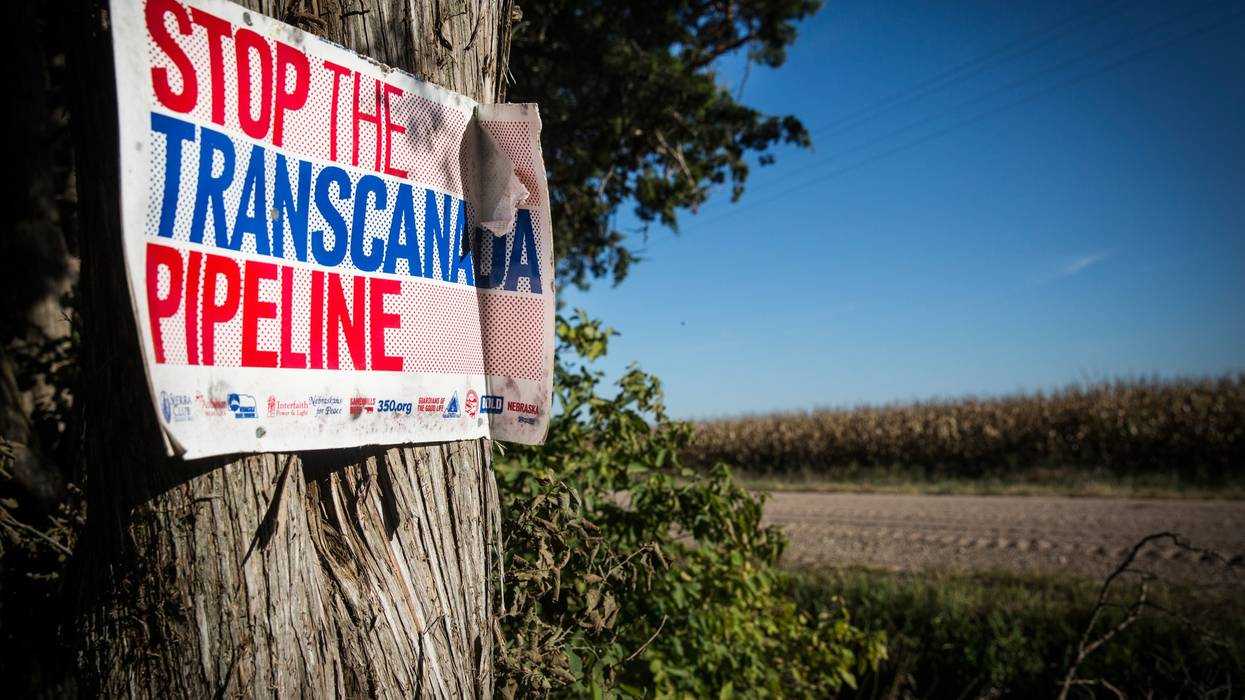
The Big Oil powers that be have a Keystone XL obsession that just won’t die. Opponents are just as adamant that it won’t be built.
Here we go again.
The Big Oil powers that be have a Keystone XL obsession that just won’t die. Opponents are just as adamant that it won’t be built. The latest industry brainstorm is to bring a whole bunch of dirty tar sands oil from Canada to Guernsey, Wyoming, and then… well, “some future company” would need to build an additional pipeline, in order to get that oil down to refineries on the Gulf Coast. That’s a risky plan for a pipeline investor.
To review: The pipeline company TransCanada, which later became TC Energy and then recently spun off into new corporate entity “South Bow,” first proposed building the Alberta to Texas tar sands pipeline in 2008. As a trans-boundary pipeline, it required not only state permits and land acquisition from farmers and ranchers along the route, but also a Presidential Permit determining it to be in the national interest.
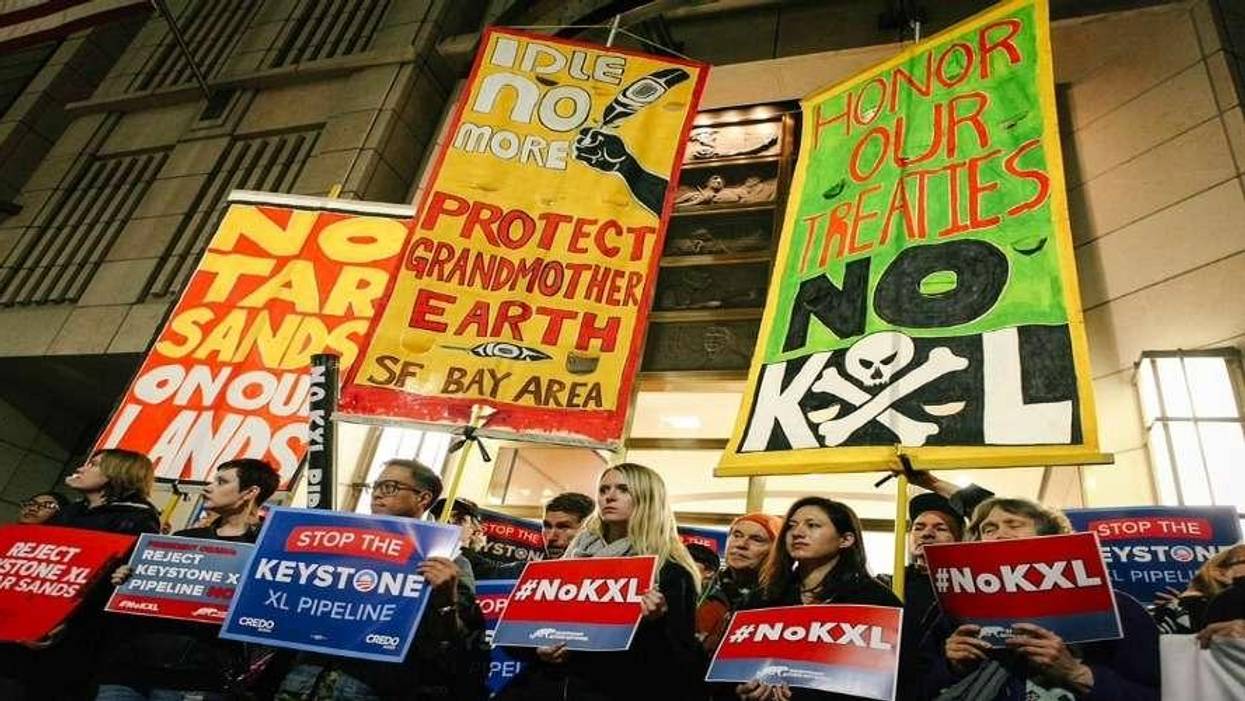
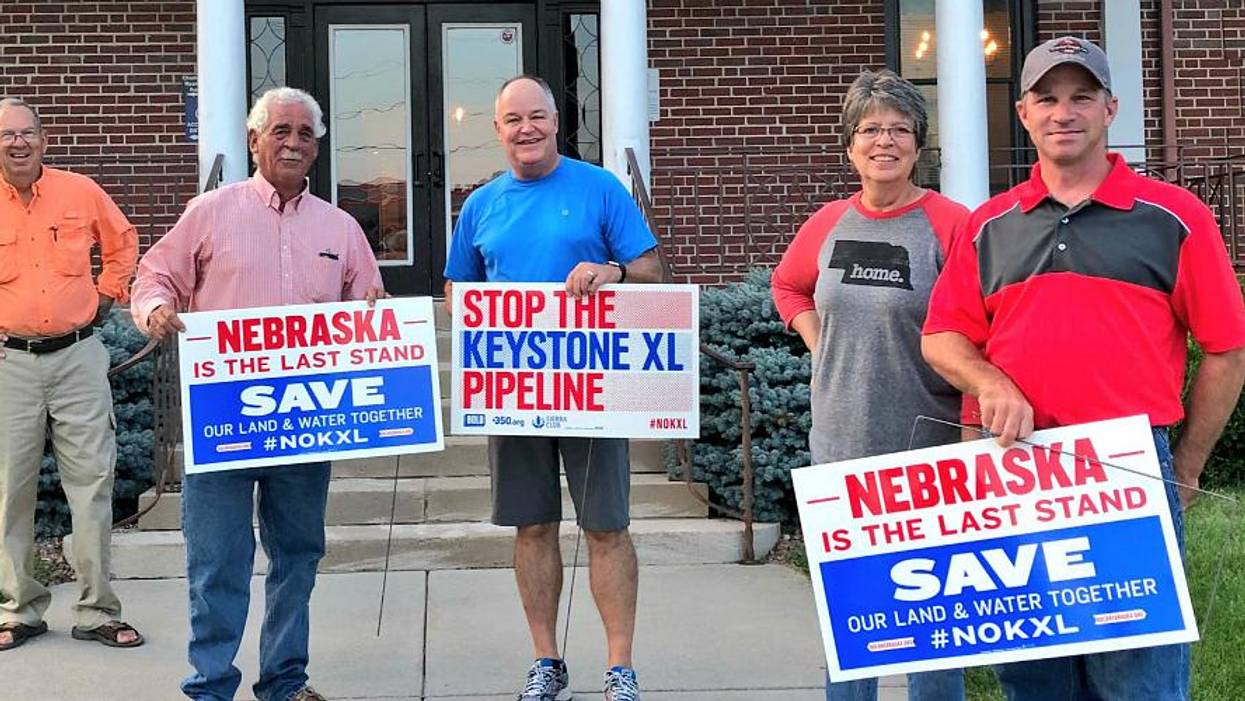
It was sailing along its permitting process despite opposition from First Nations in Canada, when climate scientist James Hansen pointed out that if the super-dirty high-carbon Alberta tar sands were fully developed it would be “game over” for the climate. At the same time, farmers and ranchers in Nebraska noticed that the route went through the fragile Sand Hills region and threatened the Ogallala aquifer. A battle royale ensued, with an unlikely alliance of farmers and ranchers, students, tribal nations, grassroots climate activists, and environmental nonprofits joining together against KXL supporters, which included the Alberta government, the Canadian government, the Republican Party, about half of the Democratic Party, and the entire oil industry.
To call this plan half-baked would be an insult to baking.
Remarkably, the unlikely alliance won. Barack Obama denied the Presidential Permit in 2015. Donald Trump approved it on the first day of his first term, but litigation prevented it from moving forward for the next four years. Joe Biden re-cancelled it on the first day of his presidency, and KXL was not built.
Now, however, there is an inkling of a plan to sort of revive KXL, although “plan” is an exaggeration. A company called Bridger is testing the waters by proposing to take bitumen, the technical term for the thick gooey hydrocarbon also known as tar sands or oil sands, from Alberta and pipe it through Montana to Guernsey, Wyoming. From there, according to press reports, “spurs” would be “bolted on” to take it to refining hubs and to the Gulf Coast for export. But it’s over 700 miles from Guernsey to the hub in Cushing, Olahoma, and over 400 miles to Steele City, Nebraska, where it could connect to existing underutilized pipelines.
Four hundred (400) miles is not exactly a “spur” that you “bolt on.” In fact, that route would require a state permit from the Nebraska Public Service Commission, and the acquisition of land—through eminent domain if necessary—from hundreds of Nebraskans. The process would take years, and generate the same controversy it did back in the early 2010’s. And if South Bow fails to get the full route built before the militantly pro-oil US president is out of office, the cross-border Presidential Permit could be denied—again. That “spur,” potentially cutting across the entire state of Nebraska, is the part that “some future company” would be responsible for. To call this plan half-baked would be an insult to baking.
The current war in Iran is making oil and energy markets more volatile than anytime since the 1970’s, with oil prices over $100. That might make it seem that tar sands oil, which is not only the dirtiest but most expensive oil to produce, could still make money. But in the long run, oil will probably settle somewhere under $100, because that’s where Saudi Arabia, OPEC, and the US producers want it—high enough to generate high profits, but not high enough to provoke recession. And in the even longer run, the world will inevitably electrify transportation, because this dependence on oil, with its wars and spills and price spikes and insecurity and pollution and global warming, is just too crazy.
Let’s add up the risks:
Let’s add up the rewards:
The risks far outweigh the rewards. Which is why this pipeline should not be built.
The US Bureau of Land Management and the Montana Department of Environmental Quality are now jointly accepting public comments on permit applications for the project through May 1, and holding several public meetings in Montana.
Bold Nebraska, the group that helped lead the original fight against Keystone XL by organizing farmers and ranchers along the route into an unlikely alliance with Tribal Nations, grassroots advocates, and national environmental groups, is collecting comments from citizens for the docket that it will deliver by mail on the May 1 deadline. Click here to use Bold’s form to submit a public comment to oppose the new “Keystone Light” pipeline project.
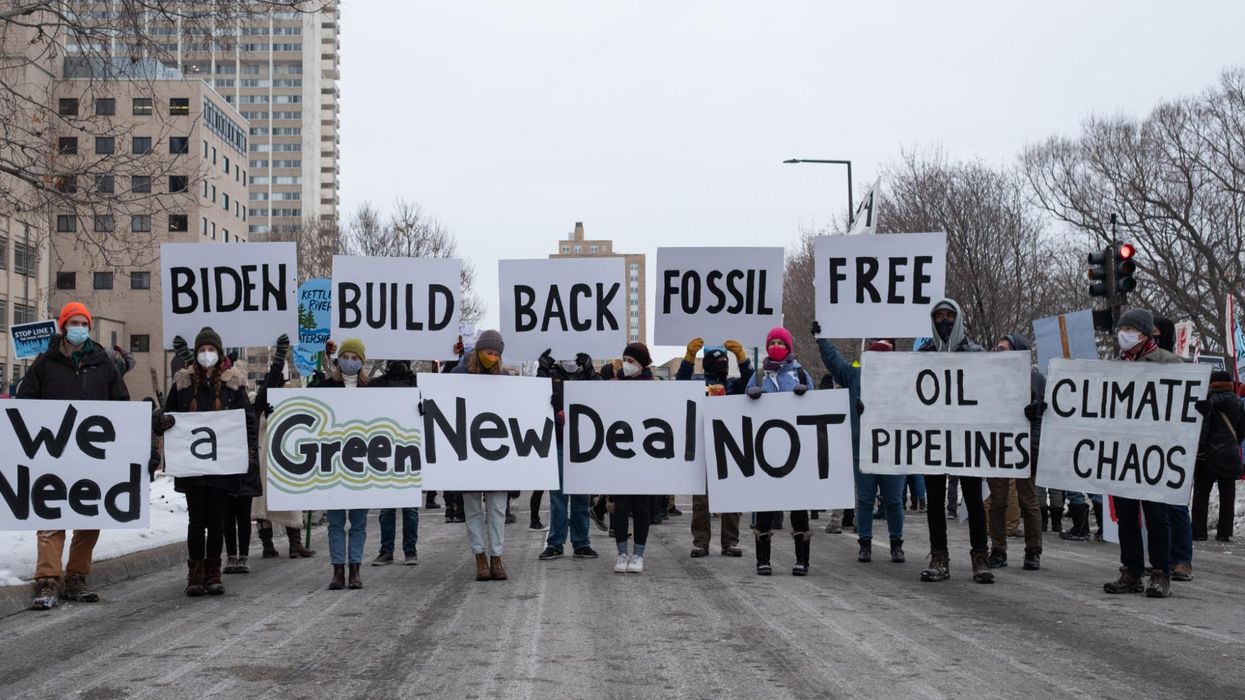
Responding to U.S. President Joe Biden's recent comments calling the climate emergency a "code red" situation, environmental and Indigenous leaders representing a coalition of advocacy groups on Thursday implored the administration to act accordingly by declaring a climate emergency and stopping all fossil fuel projects.
"In the face of the climate crisis, we should not be expanding the fossil fuel industry and allowing the government to subsidize and hand off funds to the fossil fuel industry."
--Tara Houska, Giniw Collective
"President Biden has acknowledged that the climate crisis is here. In fact, to quote him, he said 'climate change poses an existential threat to our lives and our economy, and the threat is here,'" Jane Kleeb, president and founder of Bold Alliance and Bold Nebraska, said during a press call organized by the Build Back Fossil Free campaign.
Kleeb referenced Biden's Tuesday visit to the Tri-State Area in the wake of the deadly devastation wrought by the remnants of Hurricane Ida, during which he said: "They all tell us this is code red. The nation and the world are in peril. And that's not hyperbole. That is a fact."
"Climate change poses an existential threat to our lives, our economy, and the threat is here," the president added. "It's not going to get any better. The question is: Can it get worse?"
Kleeb replied that "all of us who work with frontline communities are here to answer President Biden's question: It can get worse--and with his administration's decisions--it is getting worse."
"President Biden has the full authority right now--without Congress--to hit a pause button on all proposed fossil fuel projects," she said. "If President Biden believes this is an actual 'code red' situation, he should treat it as such by declaring a climate emergency immediately through an executive order and stopping all fossil fuel projects."
While Biden delighted climate campaigners by rescinding the federal permit for the Keystone XL pipeline on his first day in office, the president has disappointed many activists by declining to shut down the Dakota Access Pipeline (DAPL), as well as for defending a massive Trump-era drilling project in Alaska, and for so far refusing to cancel Enbridge's Line 3 project.
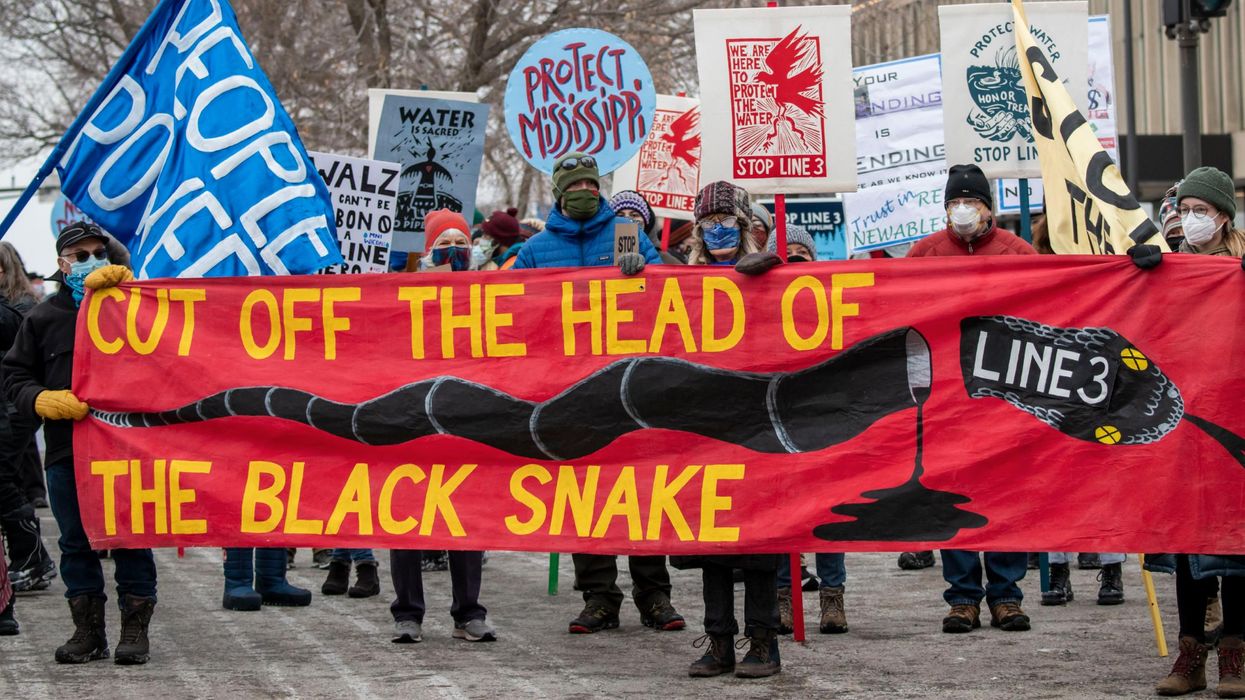
"Over 800 of us have been arrested fighting against the Line 3 tar sands expansion project," Giniw Collective founder Tara Houska said on the call. "To hear President Biden talk about the climate emergency as 'code red' yet knowing that he has said absolutely nothing about the brutalization that's occurred of water protectors, and the collaboration between state and private interests in this fight, is hypocrisy."
Underscoring the dissonance between Biden's often lofty rhetoric and his administration's actions in the face of a worsening emergency, climate campaigners on Thursday responded with alarm after the president tapped Willie L. Phillips--who Food & Water Watch policy director Mitch Jones said "spent his career working on the side of the oil and gas industry and electric utility giants"--to serve on the Federal Energy Regulatory Commission.
"In the face of the climate crisis, we should not be expanding the fossil fuel industry and allowing the government to subsidize and hand off funds to the fossil fuel industry," said Houska. "It'd be good to see action, not words."
Indigenous and climate activists this week launched a national "Stop Trump Pipelines" campaign to pressure U.S. President Joe Biden and other key decision-makers to depart from the polluter-friendly positions of former President Donald Trump by blocking a pair of controversial fossil fuel pipelines.
"Do not be afraid to do the right thing, President Biden."
--Joye Braun, IEN
The effort--led by Bold Alliance, Indigenous Environmental Network (IEN), and partners from frontline communities--is kicking off with a six-figure television and digital campaign targeting Canada-based Enbridge Energy's Line 3 and Line 5 pipelines.
Moving forward, organizers said Friday, the campaign plans to "launch new efforts on the airwaves, online, and in communities across the country to keep the pressure up on policymakers and stop risky pipelines advanced by the Trump administration."
The day he took office in January, Biden revoked a permit that Trump granted for the Keystone XL pipeline in March 2019, citing the climate crisis and declaring that the project did not serve the U.S. national interest.
"Keystone XL was the first pipeline that President Biden rejected," says the new campaign website, "but it should not be the last."
Campaign organizers say that "decision-makers in Washington, D.C. and across the country now have a choice--stand with the Trump pipelines that prop up big oil and gas profits and cronyism or the approach Biden established when he canceled KXL."
"Stand for science, respect for treaty and property rights, racial justice, clean water, and solutions to the climate crisis," campaigners instruct Biden and other political leaders, "and stop the Trump pipelines."
"On Day One Biden canceled KXL, but this was never going to be a one and done, feel good decision to stop climate change," said Joye Braun, frontline community organizer with IEN, in a statement Friday. "We must stop all toxic pipeline projects from moving forward."
"Trump told lies to bolster corporate profit and rape of our lands and resources," Braun added. "Do not be afraid to do the right thing, President Biden."
Jane Kleeb, founder of Bold Nebraska, said that "Biden showed tremendous strength in rejecting Keystone XL in favor of clean water, farmers' property rights, the sovereign rights of tribal nations, and clear action on climate change."
"We want to make sure with the climate goals that Biden has set forth, that it is understood we cannot keep building fossil fuel pipelines and reach those bold goals. Our communities deserve clean water and a future that respects the land," she said.
The Washington Post noted Thursday that Republican politicians and the energy industry blamed gas prices on Biden's decision and claimed that the move hurt workers. Kleeb told the newspaper that "I think it was a failure of our community that we weren't ready with ads and arguments."
The campaign's new ad in Michigan argues against Line 5--a decades-old system that Democratic Gov. Gretchen Whitmer, a key Biden ally, took action to shut down in November, highlighting its threat to the Great Lakes. Enbridge fought back, and the company and state are now engaged in court-ordered mediation talks.
"Gov. Whitmer heeded the call: Strong hearts to the front. It took courage and wisdom to stop the dangerous Enbridge Line 5 pipeline," the ad says. "Her actions are aligned with the Biden administration's commitment to protect clean water."
"Just like when President Biden rejected the KXL pipeline," the ad continues. "President Biden and Gov. Whitmer are strong of heart and are choosing our families over the interests of a foreign oil corporation. Protect our water. Protect our future. Stop Line 5."
After Biden won the November election but before Trump left office, the U.S. Army Corps of Engineers approved a key permit for Enbridge's Line 3, which is being built to replace an aging oil pipeline and crosses Anishinaabe treaty lands. Opponents have challenged it in court and on the ground, sometimes halting construction.
"Trump disrespected tribal nations, violated our rights, and lied about the impacts of oil pipelines on our health, water, and climate in order to rubber-stamp these risky projects across Indigenous lands," said Dawn Goodwin, an IEN member and co-founder the Resilient Indigenous Sisters Engaging (RISE) Coalition, which is fighting against Line 3 in Minnesota.
"By rejecting the Keystone XL pipeline, President Biden signals that he wants to take science and Indigenous rights seriously," Goodwin said. "But the work to protect the land and water cannot stop with that one action. It is time for the president and state leaders to uphold their commitments to tribal sovereignty and racial justice by stopping these toxic pipelines and investing in a better future for the next seven generations of life."
Indigenous leaders and climate activists plan to gather in Minnesota from June 5 to June 8 to peacefully disrupt Line 3 construction. Major events are scheduled for Monday, June 7.
"We need to protect all that we have left of the sacred gifts and land," declared Goodwin. "I said that I would do all that I could. And I have done all that I could in the legal system, thus far following that process. Now, they have failed us through regulatory capture and corporate financing. So now we need you."
Tara Houska, founder of the Giniw Collective and another key opponent of the project, said Friday that "we've elevated the national profile of Line 3 through people power."
"Biden hears our voices, but the wetlands and wild rice need action," she added. "We cannot mitigate climate crisis and we cannot stand idly by as [the Dakota Access pipeline] and Line 5 fossil fuels flow illegally, as young people chain themselves to Mountain Valley pipeline and Line 3. Stand up for what is right."
Environmental and indigenous rights activists vowed Friday to continue fighting after Nebraska's supreme court ruled in favor of the state's proposed route for the Keystone XL pipeline.
"From the tar sands region to the Gulf Coast," said the Indigenous Environmental Network in a tweet, "our resistance has shown that we will not give up, we will protect the sacred for the seven generations to come."
"The fight to stop this pipeline is far from over."
--Ken Winston, Nebraska Sierra ClubIn the new ruling, the seven justices shot down landowner, environmental, and native groups' concerns over the 2017 approval for a proposed compromise route from the state's Public Service Commission.
"It's disappointing that the court ignored key concerns about property rights and irreparable damage to natural resources, including threats to the endangered whooping crane, but today's ruling does nothing to change the fact that Keystone XL faces overwhelming public opposition and ongoing legal challenges and simply never will be built," said Ken Winston, attorney for the Nebraska Sierra Club, in a statement. "The fight to stop this pipeline is far from over."
Domina Law Group, which represented the plaintiffs, warned, "If history recalls Nebraska at all, it may remember this as its most regrettable decision."
Jane Kleeb, founder of Bold Nebraska, also expressed disappointment with the ruling. She called on the state legislature to "fix our broken state laws that give too much power to Big Oil."
"Our water is on the line here," said Kleeb, adding, "It's time for our elected officials to now step up and make it clear that pipelines are not in our public interest."
TC Energy, formerly known as TransCanada and the company behind the pipeline project, welcomed the decision. In a statement, its CEO and president Russ Girling called the ruling "another important step as we advance towards building this vital energy infrastructure project."
Yet its future, as Sierra Club's Winston noted, is uncertain. There are ongoing legal battles over the Army Corps of Engineers' approval of the pipeline as well as President Donald Trump's executive memorandum advancing Keystone XL and another pipeline, the Dakota Access.
"Every day without it is a legal victory for tomorrow, for the people and creatures, and for the Earth itself," tweeted Domina Law. "There is no place, and now is not the time for a crude oil pipeline."
With that frame in mind, groups including Bold Nebraska and the Ponca Tribe of Nebraska are calling on the Democratic presidential candidates to sign the "No KXL Pledge."
The document asks the candidates "to take executive action on Day One to stop any construction on the Keystone XL pipeline--no matter what --and revoke the existing presidential permits issued unilaterally by President Trump for the Keystone XL and Dakota Access pipelines, sending both projects back to relevant federal agencies to undergo legitimate environmental review and tribal consultations."
"The President of the United States," write the groups, "should stand with the sovereign rights of tribal nations, the property rights of farmers and ranchers in rural communities opposed to the pipeline, and everyday Americans who care about a livable planet for our grandchildren who have been fighting together to stop KXL for nearly ten years."
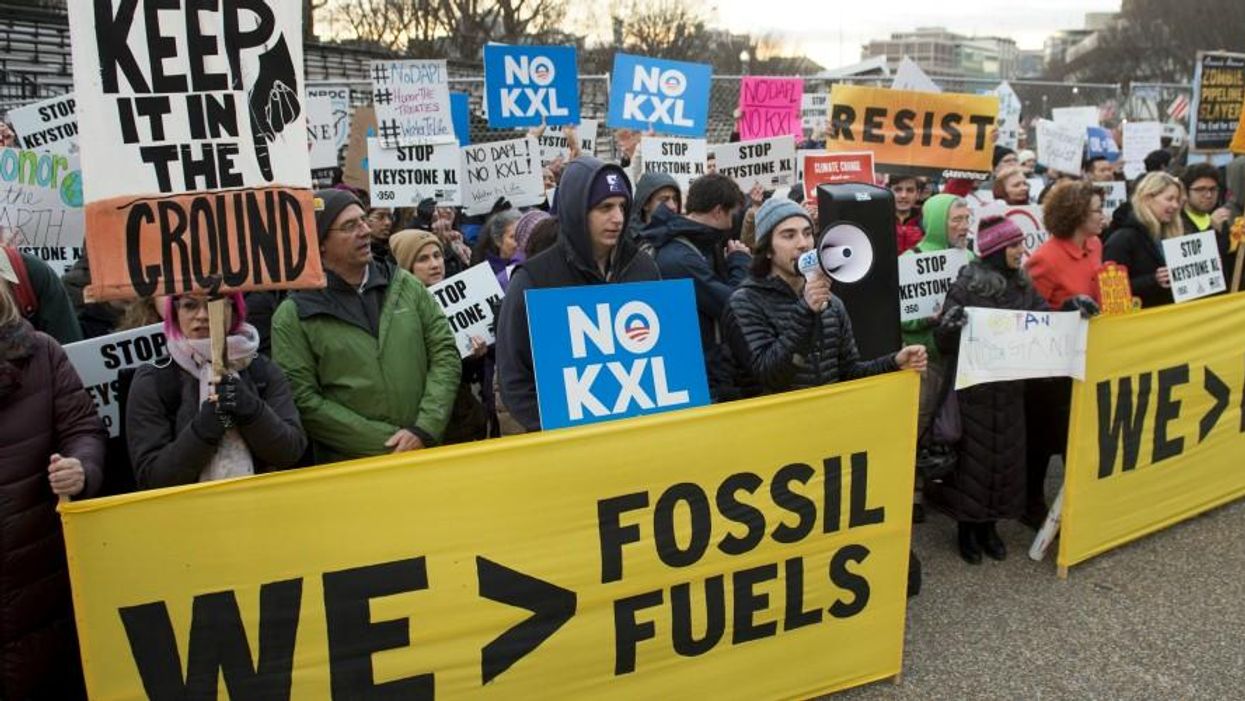
Indigenous, environmental, and landowner groups fighting to block the Keystone XL pipeline sent a letter Tuesday to the two dozen 2020 Democratic presidential primary candidates, urging them to take the "NoKXL pledge" and vow--if elected--to revoke the Trump administration's permit for the tar sands oil project.
"There is no middle ground when it comes to protecting the land, water, and climate," Bold Nebraska founder Jane Kleeb said in a statement. "You either stand with family farmers, ranchers, Tribal Nations, and environmentalists--or you stand with fossil fuel corporations who are abusing eminent domain, and trampling on the treaty rights of Tribal Nations."
"Tribal Nations and communities are battling for the survival of our ecosystems and ways of life, and we need a president who will stand with us against Big Oil and the fossil fuel regime," said Dallas Goldtooth, a Keep It in the Ground campaigner for the Indigenous Environmental Network. "Signing the NOKXL pledge is a solid step in the right direction."
The three-point NoKXL pledge, featured on Bold Nebraska's website, states:
Natalie Mebane, associate director of U.S. Policy at 350 Action, called the pledge "a critical step in moving towards stopping all new fossil fuel projects and protecting communities already experiencing the devastation of fossil fuel disasters."
"To build systems that work for all of us, we must keep fossil fuels in the ground, prioritize Indigenous rights, workers, and frontline communities, and hold fossil fuel billionaires accountable for their destruction," Mebane added. "Together we've stopped the Keystone XL pipeline for over a decade. It's time all presidential candidates join us and commit to stopping KXL once and for all."
"Our next president needs to listen to the science that says we can't build new fossil fuel projects and fight climate change at the same time, not the polluters who say we don't have a choice."
--Charlie Jiang, Greenpeace USA
If constructed, the long-delayed pipeline would carry up to 830,000 barrels of crude oil daily more than 1,000 miles from the Alberta tar sands, across Montana and South Dakota, to Nebraska. In a move that critics decried as a "ridiculous attempt" to skirt the law to benefit a fossil fuel company, President Donald Trump issued an "unprecedented and unilateral" executive memorandum in March, granting TransCanada--now known as TC Energy--a permit for the project.
"Our next president needs to listen to the science that says we can't build new fossil fuel projects and fight climate change at the same time, not the polluters who say we don't have a choice," Greenpeace USA climate campaigner Charlie Jiang said Tuesday. "Reversing Trump's misguided Keystone XL and Dakota Access Pipeline authorizations on day one sends a clear message to the fossil fuel executives that their days of power over the White House are over."
Other groups co-sponsoring the pledge are the Bold Alliance, Nebraska Easement Action Team, Ponca Tribe of Nebraska, Winnebago Tribe of Nebraska, Sunrise Movement, CREDO, Oil Change U.S., Friends of the Earth Action, Center for Biological Diversity Action Fund, Climate Hawks Vote, Chesapeake Climate Action Network, Progressive Democrats of America, NYC Grassroots Alliance, Earth Action, Bucks Environmental Network, Greenbelt Climate Action Network, Anthropocene Alliance, New York Climate Action Group, Coalition Against the Rockaway Pipeline, and Coalition Against the Pilgrim Pipeline.
As climate scientists on Monday issued a fresh warning about the devastating consequences of continuing to burn and extract fossil fuels, national green groups filed a new federal lawsuit targeting the Trump administration's efforts to force through the long-delayed Keystone XL crude oil pipeline.
"Though he seems to think otherwise, Donald Trump is not above the law, and we won't allow him to endanger wildlife, clean water, and the climate to allow a Canadian company to move more tar sands through the United States."
--Doug Hayes, Sierra Club
The lawsuit (pdf) was filed in the U.S. District Court for the District of Montana, the same court that halted construction on the dirty energy project last year, ruling that the administration hadn't adequately considered the consequences of the pipeline when approving it. In response, President Donald Trump revoked the initial permit and issued a new one in March.
"After we won in court, Trump tried to skirt the law," Jackie Prange, a senior attorney with the Natural Resources Defense Council (NRDC), said in a statement Monday. "But as this new lawsuit shows, no president can, on a whim, unilaterally exempt the government from complying with our nation's bedrock environmental laws."
Jared Margolis, a senior attorney with the Center for Biological Diversity (CBD), vowed that opponents of the pipeline "won't stop fighting Trump's underhanded attempt to dodge the courts and ram this dirty fossil fuel project down America's throat."
The NRDC and CBD joined with Sierra Club, Friends of the Earth, Bold Alliance, and Northern Plains Resource Council in launching the new legal battle, which specifically challenges the Army Corps of Engineers' approval of the pipeline that would transport up to 830,000 barrels of crude oil daily across nearly 1,200 miles from Canada's Alberta tar sands to Steele City, Nebraska.
"The Army Corps' lack of transparency in their review process for the Keystone XL pipeline is deeply disturbing," said Marcie Keever, legal director at Friends of the Earth. "On such a major project, the communities who are on the front lines deserve a comprehensive environmental review to protect themselves and our environment. Rubber-stamping Trump's attempt to build the dirty Keystone XL pipeline behind closed doors is devastating for the farmers, tribes, and communities along its route."
Rubber-stamping Trump's attempt to build the dirty Keystone XL pipeline behind closed doors is devastating for the farmers, tribes, and communities along its route."
--Marcie Keever, Friends of the Earth
The green groups collectively warned in a joint statement that "construction activities and spills from the pipeline would threaten protected species like the pallid sturgeon, the American burying beetle, and the critically endangered whooping crane, which remains at the brink of extinction."
"Our scenic Niobrara River and the Platte River, where Sandhill and Whooping Cranes migrate, along with farmers' water wells, are all at risk with this foreign, export pipeline," added Bold Alliance founder Jane Kleeb.
In addition to filing suit Monday, the groups also sent notices to the Army Corps, Trump, companies that would construct power lines for Keystone XL's pump stations, and TC Energy--the pipeline company formerly called TransCanada--informing each recipient that their actions related to the project violate the law. The notices set up an opportunity for future legal action under the Endangered Species Act.
"Though he seems to think otherwise, Donald Trump is not above the law, and we won't allow him to endanger wildlife, clean water, and the climate to allow a Canadian company to move more tar sands through the United States," said Sierra Club senior attorney Doug Hayes. "We've held off construction of Keystone XL for more than a decade, and we won't stop until this dirty tar sands proposal is put to rest for good."
President Donald Trump issued on Friday a new presidential permit to allow for construction of the controversial Keystone XL pipeline.
"This is a ridiculous attempt by Trump to skirt due process to benefit an oil corporation," said 350.org executive director May Boeve in a statement.
The permit states that pipeline company TransCanada has the authority "to construct, connect, operate, and maintain pipeline facilities at the international border of the United States and Canada at Phillips County, Montana, for the import of oil from Canada to the United States." Trump added that the permit he issued for the pipeline on March 23, 2017 was revoked.
"That permit," as The Hill reported, "was invalidated by a Montana federal judge in November. The ruling is being appealed in the 9th Circuit."
"Separately, a December lawsuit placed an injunction on most pre-construction activities," the outlet added.
"Trump issuing another #KeystoneXL permit to try to get around a court order quashing his first one is like a child going to the second parent when their first parent says no to more ice cream," tweeted David Turnbull, strategic communications director at Oil Change International.
Adding to the chorus of pipeline opponents, Bold Nebraska founder Jane Kleeb said that Trump was defeated in court two years ago, and he should expect another defeat with the new move:
As NRDC said in a tweet, "The #KeystoneXL tar sands pipeline was a bad idea from Day One and it remains a terrible idea today."
One thing, though, is abundantly clear.
"This latest move reaffirms where the president's allegiances lie--with the fossil fuel industry," said Boeve.
Opponents of TransCanada's Keystone XL pipeline--from indigenous and environmental groups to local farmers and ranchers--celebrated a win in court after a federal judge ruled on Friday that the fossil fuel giant cannot conduct pre-construction work on the pipeline until the full environmental review ordered last month is complete.
"Somehow TransCanada still hasn't gotten the message that Keystone XL is a lost cause."
--Doug Hayes, Sierra Club
"Somehow TransCanada still hasn't gotten the message that Keystone XL is a lost cause," observed Sierra Club senior attorney Doug Hayes. "We've held off construction of this dirty tar sands pipeline for a decade because it would be a bad deal for the American people, and [Friday's] ruling is yet another reminder that it will never be built."
The ruling (pdf) from U.S. District Court Judge Brian Morris of Great Falls, Montana followed a November decision which found that the Trump administration ignored "prior factual findings related to climate change" and relied on "outdated information" regarding Keystone XL's threat to endangered species, tribal lands, and regional water resources when issuing a permit for the pipeline.
In a move denounced as "corporate bulling at its worst" by Friends of the Earth legal director Marcie Keever, TransCanada had sought permission to conduct pre-construction work. Morris ruled that Calgary-based company may continue activities such as security efforts and conducting surveys needed to revise the environmental review, but barred all field activities along the proposed route.
"Farmers and ranchers thank the judge for seeing through TransCanada's transparent power grab," added Bold Alliance president Jane Kleeb. "We want our property rights and water protected, yet all the Trump administration cares about is aiding a foreign oil corporation."
"If the Trump administration takes an honest look at Keystone XL's impacts, it won't be able to justify this horrible climate-killing project."
--Jared Margolis, Center for Biological Diversity
Calling the judge's latest decision "one more victory for the rule of law over this reckless and risky project," Natural Resource Defense Council senior attorney Jackie Prange said: "Keystone XL cannot be built unless and until the Trump administration complies with the law. So far, we've seen no indication that it plans to do so."
Jared Margolis, a senior attorney at the Center for Biological Diversity, agreed--concluding that "if the Trump administration takes an honest look at Keystone XL's impacts, it won't be able to justify this horrible climate-killing project."
Critics of the Keystone XL continue to battle it in court and on the ground by organizing protests, installing solar panels along the proposed path, and returning land to local tribes in hopes of blocking the hotly contested project.
Bill McKibben, co-founder of 350.org, turned to Twitter after the ruling to thanks those who have continued the fight against the project:
Rejecting what critics have called the Trump administration's "illegal rubber-stamp" of the Keystone XL pipeline, a federal court in Great Falls, Montana has sided with opponents of the project and mandated a full environmental impact review for the proposed route.
"The court saw through the sham fast-track environmental review that TransCanada and the State Department were trying to shove past Nebraska landowners and Tribal Nations."
--Mark Hefflinger, Bold Alliance
"This is a huge win for the landowners and Tribal Nation members whose water and environment would be forever threatened by this dangerous tar sands project," declared Jackie Prange, senior attorney at Natural Resources Defense Council.
"The court saw through the sham fast-track environmental review that TransCanada and the State Department were trying to shove past Nebraska landowners and Tribal Nations," responded Mark Hefflinger of Bold Alliance. "We'll continue to stand together against this tar sands export pipeline that threatens our land, water, and climate at every opportunity, and at every public hearing during the new court-ordered review of Nebraska."
After President Donald Trump reversed the Obama administration's decision to block the TransCanada pipeline--which would run through Alberta and Saskatchewan in Canada as well as Montana, South Dakota, and Nebraska--regulators in Nebraska approved a path that was not part of the federal government's 2014 environmental impact statement. Last month, the Trump State Department issued a draft assessment (pdf) for the Mainline Alternative Route (MAR) through Nebraska, but U.S. District Judge Brian Morris on Wednesday ordered a full review.
While opponents of Keystone XL continue to fight both in court and beyond--by organizing protests, installing solar panels along the planned route, and returning land to local tribes--they celebrated Morris's ruling as a step toward permanently blocking the project.
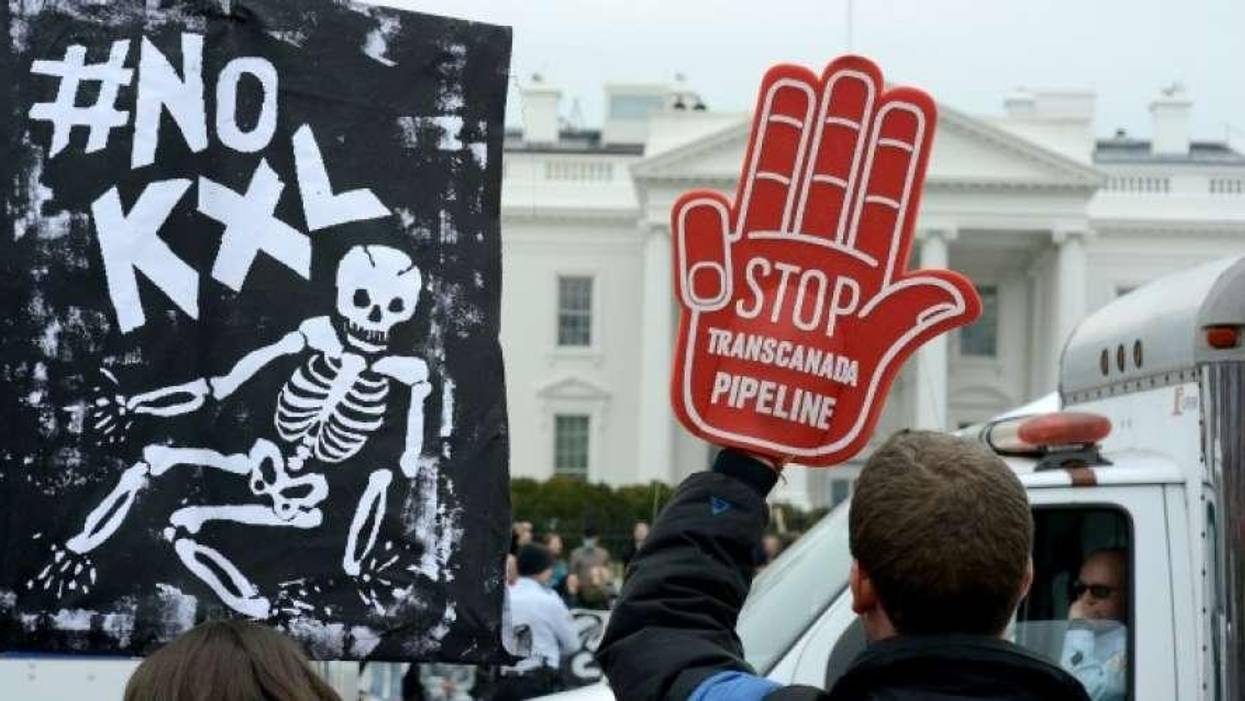
"This is a huge step to once again shut down this zombie pipeline that threatens water, our homelands, and our treaty territory," said water protector Joye Braun of the Wakpa Waste Camp at the Cheyenne River Sioux Reservation in South Dakota. "No route is acceptable for Keystone XL, and I believe a full environmental review of this alternative route will highlight the extraordinary risks this pipeline poses to us all."
Marcie Keever, legal director at Friends of the Earth, called the ruling "a decisive moment in our fight against the corporate polluters who have rushed to destroy our planet," and "a victory for the grassroots activists who have worked against the Keystone XL pipeline for the past decade."
"This proposed project has been stalled for nearly a decade because it would be all risk and no reward," said Sierra Club senior attorney Doug Hayes, celebrating this win "for clean water, climate, and communities that would be threatened."
"No route is acceptable for Keystone XL, and I believe a full environmental review of this alternative route will highlight the extraordinary risks this pipeline poses to us all."
--Joye Braun, water protector
"It's always been painfully obvious what a disaster this pipeline will be," added Center for Biological Diversity senior attorney Jared Margolis, "not just for our climate and local communities but for endangered species like the whooping crane."
Though the ruling acknowledged accusations that the federal government failed to comply with the Endangered Species Act (ESA), which requires consultation with the U.S. Fish and Wildlife Service to make sure a project is "not likely to jeopardize the continued existence of any endangered species or threatened species," or destroy their habitat, Morris wrote that the ESA argument will be addressed in a future order.
"Banks and investors backing this project should take a hard look at the risks still on the horizon for this project. TransCanada still has not made a final investment decision on this project," noted Greenpeace USA climate and energy campaigner Diana Best. "The only thing clear about the future of this pipeline is that it will continue to face delays, scrutiny, and uncertainty."
"The judge was right to order another environmental review," Best added, "as this project would worsen the effects of climate change, risk poisoning water, and violate Indigenous sovereignty."
"This decision is another sign that the Keystone XL pipeline is far from a done deal," concluded 350.org executive director May Boeve. "The #NoKXL resistance has inspired a movement of Indigenous leaders, farmers, ranchers, and allies around the world. We're not going anywhere until we stop this pipeline for good."
This post has been updated with comment from Greenpeace USA.
Green groups denounced an environmental review released Monday by President Donald Trump's State Department--which claims that building, operating, and maintaining the Nebraska portion of TransCanada's Keystone XL tar sands pipeline would have a "negligible" to "moderate" environmental impact--and vowed to keep fighting the project.
"Once again, the Trump administration is attempting to take a shortcut around the legally required review process on Keystone XL, putting our communities at risk for the sake of propping up the Canadian tar sands industry," declared Sierra Club Beyond Dirty Fuels campaign director Kelly Martin.
In March of 2017, the Trump administration reversed former President Barack Obama's decision to block the pipeline and issued a presidential permit. This new draft assessment (pdf) pertains to the Mainline Alternative Route (MAR), which Nebraska regulators approved in November, even though the path was not evaluated as part of the federal government's 2014 environmental impact statement.
"Landowners, Tribal Nations, and everyday citizens will continue to fight the Trump administration's illegal rubber-stamp of a permit for Keystone XL, and this illegal review."
--Jane Kleeb, Bold Nebraska
The Northern Plains Resource Council, Bold Alliance, Center for Biological Diversity, Friends of the Earth, Natural Resources Defense Council (NRDC), and Sierra Club are suing the administration for approving the pipeline using an outdated review and rejected this attempt to, as NRDC senior attorney Jackie Prange put it, "patch over its total failure to comply with the law by releasing this environmental assessment now."
The administration's new draft assessment claims that the MAR portion of the pipeline would have:
Environmentalists, meanwhile, condemned the administration for "failing to conduct an adequate review of the project's climate impacts, harm to endangered species, or changes in oil prices and market forces since 2014" by producing this "abbreviated" assessment rather than a supplemental environmental impact statement.
Calling Keystone XL "a threat to our land, water, wildlife, communities, and climate," Martin concluded that the pipeline "was a bad idea when it was proposed a decade ago, it was a bad idea when former President Obama rejected it, and it's an even worse idea now."
"Landowners, Tribal Nations, and everyday citizens will continue to fight the Trump administration's illegal rubber-stamp of a permit for Keystone XL, and this illegal review that completely violated due process of affected landowners on the Mainline Alternative Route," vowed Jane Kleeb, founder of Bold Nebraska, an alliance of local opponents to the project.
In addition to the federal lawsuit challenging Trump's permit, as Bloomberg noted, "the pipeline still is facing a case before the Nebraska Supreme Court, which the company expects to be resolved by late this year or early next."