

SUBSCRIBE TO OUR FREE NEWSLETTER
Daily news & progressive opinion—funded by the people, not the corporations—delivered straight to your inbox.
5
#000000
#FFFFFF
To donate by check, phone, or other method, see our More Ways to Give page.
Daily news & progressive opinion—funded by the people, not the corporations—delivered straight to your inbox.

"The support for a cease-fire is overwhelming," said one union leader. "We can't stand by in the face of this suffering. We cannot bomb our way to peace."
Seven national and over 200 local labor unions in the United States on Friday announced the establishment of a coalition to promote a cease-fire in Israel's genocidal war on Gaza.
The American Postal Workers Union (APWU), the Association of Flight Attendants, the International Union of Painters and Allied Trades, the National Education Association, National Nurses United (NNU), the United Auto Workers (UAW), and the United Electrical Workers (UE), and 200 local unions and labor organizations launched the National Labor Network for Cease-fire (NLNC) to "end the death and devastation" in Gaza.
The coalition says it represents more than 9 million union workers—"more than half the labor movement in the United States."
"The war between Israel and Hamas has continued unabated since Hamas brutally attacked Israel on October 7, killing 1,163 people, and taking 253 hostages," NLNC said in a statement.
"Israel responded with an onslaught that has killed over 28,000 Palestinians and left over 67,000 others injured," while "1.7 million Palestinians have been displaced, and humanitarian aid remains mostly blocked from those in need," the coalition added.
NLCN is calling for:
In his strongest statement yet, Biden—who has been dubbed "Genocide Joe" by some activists for his staunch support for Israel—said Friday that he has called for a "temporary cease-fire" during private phone calls with Israeli Prime Minister Benjamin Netanyahu.
Leaders of the seven unions—most of which have already called for a cease-fire—issued statements underscoring the imperative for peace.
"The UAW has a long tradition of calling for peace and justice for working-class people across the globe, and we live that tradition today," UAW president Shawn Fain said. "In that spirit, we call for an immediate end to the U.S. government's funding and support of this brutal assault on Gaza."
Carl Rosen, UE's president, said: "The support for a cease-fire is overwhelming. We can't stand by in the face of this suffering. We cannot bomb our way to peace. We express our solidarity with all workers and our common desire for peace in Palestine and Israel."
APWU president Mark Dimondstein said that "as a union that stands for equality, social justice, human and labor rights, we unite with unions and people of goodwill around the world in calls for a cease-fire, for justice and peace. The cries of humanity call for nothing less."
Bonnie Castillo, the NNU's executive director, asserted that "nurses cannot allow our patients and our colleagues to continue suffering from the traumas of war."
"We vow to protect and heal all people, and it's our duty to speak up for every human being's right to a life free of violence," she added. "We're calling for a cease-fire now before one more life is lost, before one more family faces injuries or illnesses."
The NLCN's formation follows last week's cease-fire call by the AFL-CIO, the nation's largest labor federation.

Sen. Bernie Sanders is set to lead a Senate Budget Committee hearing on Medicare for All on Thursday as the coronavirus pandemic continues to lay bare the deadly dysfunction and greed at the heart of the United States' for-profit healthcare system.
The hearing, scheduled to begin at 11:00 am ET, will feature testimony from a number of experts and advocates, including former Michigan gubernatorial candidate Dr. Abdul El-Sayed, critical care physician Dr. Adam Gaffney, and National Nurses United executive director Bonnie Castillo.
"We are seeing unprecedented momentum for Medicare for All not just among nurses, but as part of a growing movement demanding health justice," Castillo said in a statement ahead of Thursday's hearing. "It is past time for the United States government to listen to nurses and listen to the people as we demand: Pass Medicare for All and guarantee healthcare as a human right."
Sanders (I-Vt.), the chair of the budget panel, is also expected to introduce an updated version of his Medicare for All legislation on Thursday with 14 Senate co-sponsors.
The Vermont senator has long argued that a single-payer system that provides comprehensive healthcare to all for free at the point of service would save both lives and money.
In a statement Thursday, Sanders' office noted that estimates show "Medicare for All could save 68,000 lives per year, and numerous studies find that Medicare for All saves the American people and the U.S. healthcare system billions of dollars a year."
"According to the Congressional Budget Office, Medicare for All would save $650 billion each year, improve the economy, and eliminate all out-of-pocket healthcare costs," the statement observes. "Even a study done by the right-wing Mercatus Center estimated that Medicare for All would save more than $2 trillion over a decade."
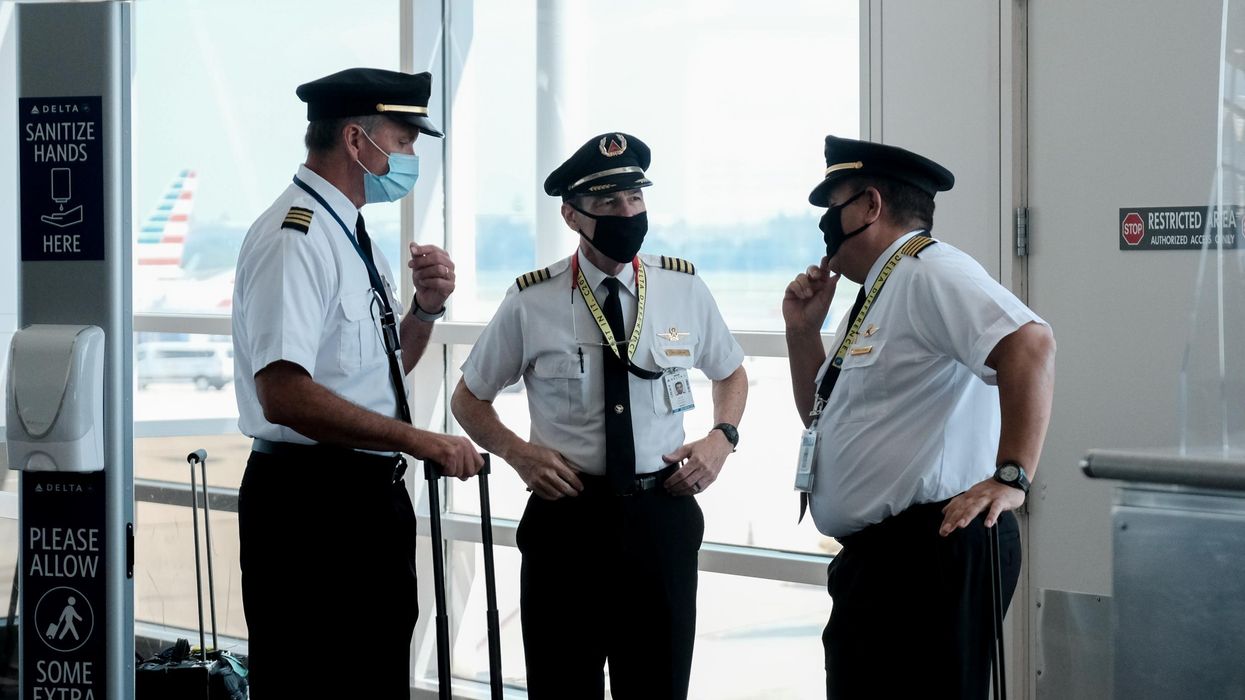
The head of North America's largest pilots union said Thursday that its members would "follow the science" regarding Covid-19 safety precautions as opposed to new guidance released by the CDC earlier this week which critics say put the needs of corporate profits over worker safety.
"We've followed the science throughout the pandemic and will not allow corporate interests to replace the good judgment pilots show daily in making decisions about whether they are healthy to fly," said Capt. Joe DePete, president of the Air Line Pilots Association, which represents pilots at 38 airlines in the U.S. and Canada.
The Centers for Disease Control and Prevention (CDC) has been under fire in recent days after announcing that instead of waiting 10 days as previously recommended, people who test positive for Covid-19 should wait just five days before returning to work and other activities while wearing a face mask. The guidance does not specify that people should take a Covid-19 test before leaving isolation, sparking shock amongst public health experts.
"We've followed the science throughout the pandemic and will not allow corporate interests to replace the good judgment pilots show daily."
Labor advocates have also expressed anger over the guidelines, which were released after the airline industry lobbied federal officials with the complaint that the 10-day protocol would "exacerbate personnel shortages and create significant disruptions to our workforce and operations" as the Omicron variant spreads across the country.
Delta Air Lines promptly appeared to take advantage of the CDC's new guidelines this week, releasing a new sick leave policy Tuesday that provides five days of paid leave for workers who have Covid-19 and encouraging--but not requiring--a negative test to return to work. The new policy does not specify whether employees should continue staying home if they still have symptoms.
"That support for workers who are still sick is not there and the thrust of this is pushing people to come to work in the middle of this busy holiday travel season," Nelson told CNBC Thursday.
CDC Director Dr. Rochelle Walensky defended the new guidance this week, saying the five-day isolation period would be more tolerable for people and that if a person isolates for five days right after testing positive, they will be staying away from others when they are "maximally infectious."
"We shortened the time to encourage people to do the right thing," Walensky told CBS Wednesday.
As Common Dreams reported Sunday, National Nurses United (NNU) has also condemned the CDC for weakening public health precautions amid warnings that Omicron will continue spreading rapidly across the U.S. in the coming weeks.
NNU executive director Bonnie Castillo asked whether the agency aims to encourage Americans to do "the right thing for our health and safety? Or the right thing for our bosses' wallets?"
Also on Thursday, Michigan health officials urged residents to continue following the state's guidance to isolate for 10 days if they test positive, whether they are symptomatic or not, and for 14 days if they are unvaccinated and have an exposure.
"Good choice," tweeted Detroit-based surgeon and scientist Dr. David Gorski, addressing the Michigan Department of Health and Human Services. "The CDC's new guidelines are dubious at best."
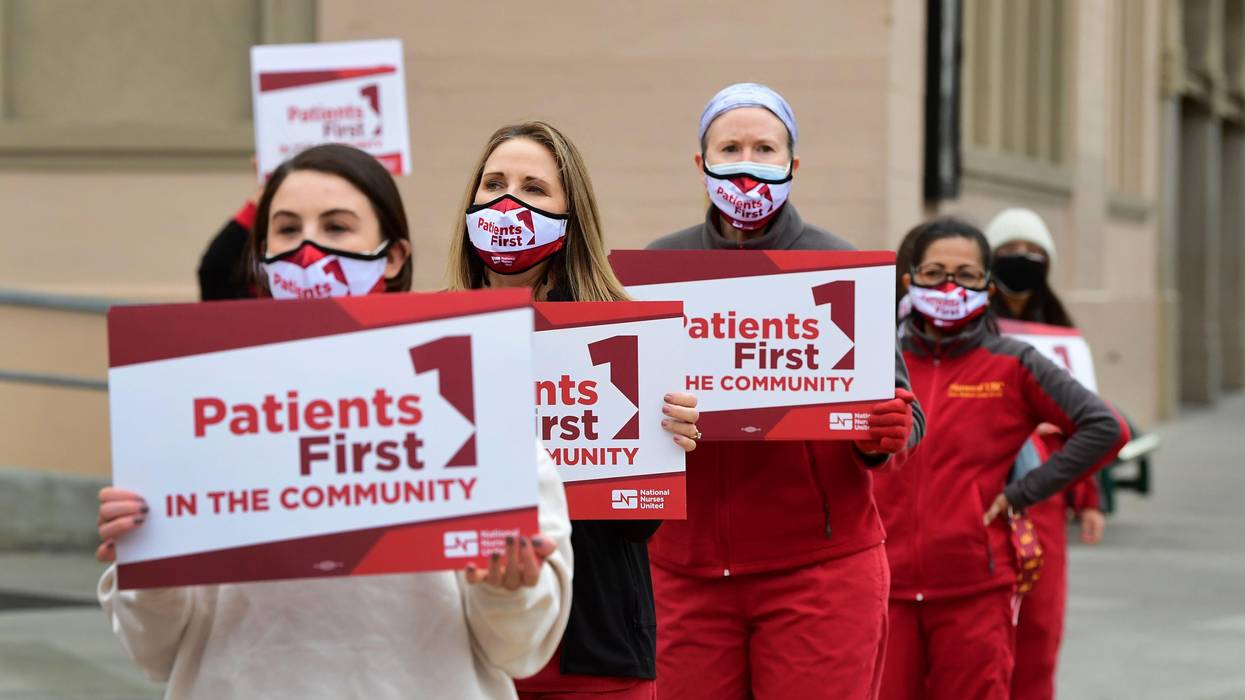
Declaring Covid-19 vaccines "not enough by themselves to combat the pandemic," the nation's largest union of registered nurses on Tuesday called on the Centers for Disease Control and Prevention to reinstate the federal mask mandate.
"The Covid-19 pandemic is far from over," the union said in its letter (pdf) to CDC director Rochelle Walensky.
Signed by NNU executive director Bonnie Castillo, the letter points to a number of factors, including the emergence of concerning variants, to warrant updated guidance, which currently states that fully vaccinated people no longer need to wear masks or abide by physical distancing requirements.
Among the issues is an upward trend in Covid-19 cases.
"In the United States, the CDC reports a 16.0% increase in daily new cases over the previous week," the letter states. "More than 40 states have seen an increase in daily new cases over the previous two weeks, and more than 25 states have seen an increase in hospitalizations." Beyond national borders, cases are also rising in scores of countries.
The emergence of the highly transmissible Delta variant is an additional concern. "Preliminary data from Israel and the United Kingdom indicate that Covid-19 vaccines may be less effective against the Delta variant than other variants," the letter states.
The union calls the rise in U.S. cases unsurprising as it followed "the rapid reopening of many states and the removal of public health measures, including the CDC's May 13 guidance update that told vaccinated individuals they no longer needed to wear masks, observe physical distancing, avoid crowds, or get tested or isolate after an exposure, within only a few exceptions." That guidance, the letter continues, "failed to account for the possibility--which preliminary data from the United Kingdom and Israel now indicates is likely--of infection and transmission of the virus, especially variants of concern, by fully vaccinated individuals."
The dropping of the mask mandate--even as the "threat of this virus remains very real"--also put at risk "medically vulnerable patients, children, and infants who cannot be vaccinated, and immunocompromised individuals for whom vaccines may be less effective," the union says.
In light of those factors, "NNU strongly urges the CDC to reinstate universal masking, irrespective of vaccination status, to help reduce the spread of the virus, especially from infected individuals who do not have any symptoms," wrote Castillo, who pointed to research indicating as many as a half of all transmission events stem from cases that have no symptoms.
NNU is also calling on the CDC to "fully recognize" aerosol transmission of the virus, with updated guidance "including prioritizing engineering controls, such as ventilation and air filtration, and respiratory protection and revoking crisis standards for PPE" that allow for reuse of single-use personal protective equipment and thus put nurses and other workers at risk.
Better tracking of infections among healthcare workers is needed, Castillo wrote, as is tracking of so-called "break through" infections. Such infections should be documented whenever possible, not just when they result in hospitalization or death. This data "is critical to determining vaccine effectiveness and duration of vaccine protection or whether emerging SARS-CoV-2 variants are becoming more resistant to vaccines."
The new letter came two weeks after the World Health Organization said fully vaccinated people should still wear masks and practice social distancing.
"This still continues to be extremely important, even if you are vaccinated, when you have a community transmission ongoing... in general, where you have a high level of continuous community transmission," said Dr. Mariangela Simao, WHO's assistant director-general of Access to Medicines and Health Products. "So, people cannot feel safe just because they had the two doses. They still need to protect themselves."

Registered nurses at Maine's largest hospital have voted to form their first union, overcoming an aggressive anti-organizing campaign assisted by an out-of-state consulting firm that openly touts its experience "fighting" union drives.
According to election results tallied Thursday by the National Labor Relations Board, 1,001 registered nurses at Maine Medical Center (MMC) voted for the union and 750 voted against.
"I am thrilled for my colleagues at Maine Med, for their resolve to win a collective voice for their patients and their community."
--Cokie Giles, Maine State Nurses Association
The culmination of a monthslong organizing push amid the coronavirus pandemic, the 14-percentage-point union victory means the Maine State Nurses Association (MSNA)--a National Nurses United affiliate--will now represent 2,000 RNs at MMC, the Scarborough Surgery Center, and the MMC Brighton Campus in Portland.
"It's a new day for nurses and patients across Maine," MSNA president Cokie Giles, RN, said in a statement late Thursday. "I am thrilled for my colleagues at Maine Med, for their resolve to win a collective voice for their patients and their community. And I look forward to working with you for the future of high-quality patient care for all Maine residents."
Giles called on MMC management to "respect the democratic vote of the RNs, and begin work with them to negotiate a first collective bargaining agreement that would be in the best interests of the hospital, the nurses, and the community."
In a letter to hospital staff sent late Thursday night, Jeff Sanders, president of MMC, acknowledged the election results and said that while hospital management "had encouraged nurses to vote against the union," he also wanted to thank all the nursing staff who engaged with the unionization process.
"Once election results are certified by the National Labor Relations Board, MMC will evaluate how it will move forward," Sanders said. "We will communicate that information with nurse leaders and the full nursing team at a later date."
Janel Crowley, a registered nurse who has worked in MMC's neonatal intensive care for a decade, told Maine Public Radio that she is "so excited and overjoyed" by the election result.
"This is just a really incredible thing that's happened for us," said Crowley, one of the leaders of the organizing effort. "There have been, like, myself and so many other of the nurses that have been working for so long and so hard on this campaign."
MMC Mother Baby RN Jackie Fournier added in a statement that "this is a dream come true, to bring us the unified strength we need to improve patient care conditions and workplace standards at Maine Med."
Nurses at Maine Med filed a petition to join the union in January, a move that was met with swift opposition from the hospital's administration. Later that same month, MMC management began requiring nurses to attend training sessions led by representatives from Reliant Labor Consultants, which lists among its services helping "employees maintain a union-free environment."
In a letter to MMC's president last month, dozens of state Democratic lawmakers wrote that they had heard from RNs "about being accosted in one-on-one anti-union meetings, dragged from patient care to listen to out-of-state anti-union consultants lecture them on why they should vote no for the democratic right to negotiate with their employer, and threatened by certain supervisors that they stand to lose benefits or employment if they vote yes in the upcoming election."
Maine State Senate President Troy Jackson, one of the letter's signatories, congratulated nurses Thursday for their vote to unionize.
"After a tough year responding to a global pandemic, you deserve to have your voices heard and respected," said Jackson. "There's no question that this union drive wasn't easy. The deck was clearly stacked against the workers with the hospital launching one of the most aggressive anti-union campaigns Maine has seen in quite some time. Yet, the nurses never wavered."
Bonnie Castillo, RN, executive director of National Nurses United--the largest union of registered nurses in the U.S.--said in a statement that MMC nurses' "courage to stand up and speak out for your patients and community in the face of the most serious threat to your own health and safety amid the worst global pandemic in a century has inspired nurses across the country."
"We could not be more impressed with your accomplishment," Castillo added.

Students, educators, and parents still relying on remote or hybrid learning are itching to get back into classrooms, but with Covid-19 cases rising in several states, nurses, teachers union leaders, and other experts are expressing alarm over what they warn are short-sighted efforts to rapidly reopen schools and new federal guidance that may be putting economic concerns ahead of public health.
The nation's two largest teachers unions responded cautiously after the U.S. Centers for Disease Control and Prevention announced Friday that, as long as mask-wearing continues, students in K-12 classrooms can be just three feet apart--relaxing the previous six-foot recommendation that prevented some schools from reopening.
"This is another example of where social, political, and economic pressure to send kids back to school as soon as possible is, unfortunately, driving public health decisions instead of science and reality."
--Zenei Triunfo-Cortez, NNU
National Nurses United (NNU), the largest union for the profession in the country, has also put out a statement raising concerns that "the CDC's guidance was based on studies that failed to account for several critical factors, including no differentiation between facilities' ventilation levels, self-reporting of infection data or not testing all contacts of cases, and exclusion of schools that were closed due to need to quarantine or fully remote--especially in denser, urban areas and areas with more Black, Indigenous, and people of color."
As NNU president and registered nurse Zenei Triunfo-Cortez put it: "This is another example of where social, political, and economic pressure to send kids back to school as soon as possible is, unfortunately, driving public health decisions instead of science and reality."
Jean Ross, RN and another president of NNU, emphasized that "we should have more data before we put kids' and their families' lives at risk."
"We understand the need for school," Ross said, "but also must think long term: If you don't protect your health, you won't be able to learn, won't be able to continue with your education, won't be able to graduate and become a healthy, productive adult. And that also applies to all the staff and family members these kids come into contact with daily."
NNU executive director Bonnie Castillo, RN, warned in a tweet that the three-foot recommendation "will unnecessarily put millions at risk."
American Federation of Teachers (AFT) president Randi Weingarten and National Education Association (NEA) president Becky Pringle had shared concerns last week about the three-foot recommendation, with Pringle saying that "the CDC has changed one of the basic rules for how to ensure school safety without demonstrating certainty that the change is justified by the science and can be implemented in a manner that does not detract from the larger long-term needs of students."
Weingarten said that "while we hope the CDC is right and these new studies convince the community that the most enduring safety standard of this pandemic--the six-foot rule--can be jettisoned if we all wear masks, we will reserve judgement until we review them, especially as they apply in districts with high community spread and older buildings with ventilation challenges."
On Tuesday--as the U.S. death toll from the coronavirus pandemic topped 543,400 amid national vaccination efforts--Weingarten sent a letter (pdf) to CDC Director Rochelle Walensky and Secretary of Education Miguel Cardona questioning the recent revision to distancing guidance.
The AFT leader wrote in part:
We appreciate that the body of knowledge regarding the impact of Covid-19 in school environments is expanding, but we are not convinced that the evidence supports changing physical distancing requirements at this time. Our concern is that the cited studies do not identify the baseline mitigation strategies needed to support three feet of physical distancing. Moreover, they were not conducted in our nation's highest-density and least-resourced schools, which have poor ventilation, crowding, and other structural challenges.
One thing the studies were clear on is the need for layered mitigation if there is a shift to reduce physical distancing. Now that we have had a chance to review the research, we conclude that any shift from six feet to three feet must be accompanied by, at a minimum, universal and correct masking; effective ventilation; thorough cleaning of buildings; regular Covid-19 testing of teachers, staff and students; effective contact tracing and quarantine/isolation protocols; and the availability of vaccines to all people in schools who are eligible.
"Weakening one layer of layered mitigation demands that the other layers must be strengthened," the letter adds while urging federal officials to insist on strict adherence to other mitigation strategies, requesting responses to a list of immediate logistical questions, and calling for studies in urban, densely populated schools lacking updated ventilation systems.
Weingarten cited a critical article from a trio of experts published by the Institute for New Economic Thinking that warned the CDC's new guidance could be "dangerous."
Deepti Gurdasani, Phillip Alvelda, and Thomas Ferguson wrote that "the studies commonly cited as supporting school reopening are deeply flawed; they are based on having only tested students who showed symptoms, rather than applying broad screening tests either universally or with true random samples capable of catching the otherwise undetectable asymptomatic spreaders and infected."
"Another lingering concern testifying to the persistent impact of outdated science," they added, "is that so much of schools' reopening guidance remains aimed at hygienic measures, surface wipe-downs, and plexiglass barriers, all of which are completely ineffective in limiting what we now know is the primary mode of indoor transmission, airborne aerosols."
"The latest CDC guidance suggesting that the risks to students are similar at six-foot or three-foot distances and thus that schools can safely reopen with more-or-less normal student seating density and populations in the classrooms completely misses the point," they noted. "A close analysis of the 'three-foot paper' the CDC cited shows it to be riddled with errors in protocol, most importantly, that it again relies on data from primarily symptomatic carriers; that it improperly conflates infectious susceptibility with contact rates; and is based on a flawed sampling methodology."
As the trio explained: "Contrary to the notion that even three feet of distancing is sufficient protection, and six feet is overkill, the critical safety issue is that students are all uniformly at risk in poorly ventilated rooms no matter where they are or how they distance."

"We could not be more proud of the unity, the perseverance, and the patient advocacy and dedication of the Mission RNs to their patients, their colleagues, and their community," Bonnie Castillo, a registered nurse and executive director National Nurses United, said in a statement Thursday. "At a time when nurses are in a daily battle with the deadly fight for their patients and their own lives in the era of Covid-19, they have demonstrated incomparable courage and resilience that is an inspiration to all of us."
The nurses voted by 965 to 411--a 70 percent landslide--to join the National Nurses Organizing Committee (NNOC)/National Nurses United (NNU), in a secret, mail-in ballot election conducted and counted by the National Labor Relations Board (NLRB). The vote count was completed early Thursday morning, and the pro-union votes prevailed, NNU wrote in a statement, despite a "heavily funded anti-union campaign by the hospital owner, HCA, the largest hospital system in the United States, and arguably the most politically and economically influential giant in the hospital industry."
According to reporting from the Citizen Times:
Mission Health operates six hospitals and numerous out-patient clinics across Western North Carolina. Mission Hospital, in Asheville, is its flagship facility. Mission will be NNU's first union in North Carolina and its largest at any HCA-affiliated hospital.
Mission opposed the union effort, saying it would would interfere with supervisor and staff communications and ultimately hurt the hospital's quality of care. In its annual public financial statement, HCA stated more unionization could cause its labor costs to "increase materially."
Sue Fischer, a pro-union float pool registered nurse at the facility, countered the hospital's claim, describing in a statement how HCA, after acquiring Mission Health last spring, has cut corners at the rural, acute care facility.
"We started to see dramatic decreases in the amount of staff and resources we had across the hospital," Fischer said. "The nurse-to-patient ratios started to get much worse, equipment was replaced with cheaper versions, and certified nurse assistants, housekeepers, security, and phlebotomists, along with many other staff were let go in unprecedented levels."
In a press release Thursday, NNU noted, quoting a pediatric ICU nurse at the hospital, HCA told the nurses that "nothing would change for at least a year and a half."
NNOC will now represent 1,800 RNs at Mission. Overall, NNU, the largest U.S. union of RNs, represents more than 155,000 RNs.
"Our families, friends, and fellow citizens rely on the care we provide here," Hannah Drummond, a trauma care unit registered nurse, said in a statement. "Their overwhelming love and support remind me of why we're doing this. They gave us strength. I'm so grateful this victory will allow us to be better advocates for our community."

There are many reasons nurses believe President Trump is hazardous to our health, from his abysmal failure to stop the spread of Covid-19 to his authoritarian behavior. But nurses know there's one issue that doesn't get nearly enough attention, although it impacts the health and safety of our patients across the country: labor and workers' rights. That's an issue where the contrast between President Trump's record and Joe Biden's program couldn't be sharper.
In 2016, Trump sold himself as a champion of workers; nurses know it was just a facade. Working people across the country have suffered from decades of policies that led to deindustrialization, declining real wages, the transfer of wealth to corporations and the economic elite, deregulation, and an all-out assault on unions. Trump, corporate America's BFF, was never going to reverse that.
"The list of Trump's anti-worker decisions is endless!"
His record reads like a Wall Street and Chamber of Commerce wish list. Rather than being a champion of workers, he has acted as a champion of libertarian, far-right ideologues, legislators, donors, and think tank allies.
Let's break down how Trump has hurt working people--especially our Black, Brown, and Indigenous patients.
Trump's alliance with corporate interests is stamped across his administration, from his executive orders to his appointments to Cabinet and other regulatory positions, including by appointing anti-worker, pro-corporate interests to the National Labor Relations Board, the federal agency which oversees labor-management rules. And then there are the pro-corporate judges Trump has appointed to the federal judiciary, including two Supreme Court justices.
The 2018 Janus Supreme Court decision attacked worker protections by encouraging public workers to evade financial support for their unions.
Trump's Labor Secretary Eugene Scalia, son of the late far-right Supreme Court Justice Antonin Scalia, oversees the federal Occupational Safety and Health Administration (OSHA), an agency in charge of workplace safety. Yet he is another prime example of a pro-corporate appointee deciding what is right for workers.
Under Scalia, OSHA has resisted the call by National Nurses United and other unions to require employers to implement safer hospital standards during the pandemic, including providing lifesaving personal protective equipment (PPE) at a time when more than 1,500 health care workers including more than 200 registered nurses have died from COVID-19.
The list of Trump's anti-worker decisions is endless! But here are a few highlights:
Then there's the National Labor Relations Board. Among the most sweeping rollback of federal labor law rights in years are changes that:
Former Vice President Biden, who has a history of support for unions, offers a pronounced difference. His platform acknowledges a "war on organizing, collective bargaining, unions, and workers."
Notably, Biden has endorsed a major labor priority, the Protecting the Right to Organize Act (PRO Act), the most expansive strengthening in many years of federal labor protections for union organizing. The bill passed the House in February, but the Senate has refused to even hold hearings on it.
"Biden has endorsed a major labor priority, the Protecting the Right to Organize Act (PRO Act), the most expansive strengthening in many years of federal labor protections for union organizing. The bill passed the House in February, but the Senate has refused to even hold hearings on it."
While Trump and his allies have targeted union organizing rights, Biden recently endorsed a campaign by 1,700 RNs at Mission Hospital in Asheville, N.C. to join an NNU affiliate.
Biden has also called for holding company executives personally liable for interfering with workers' rights, ensuring federal dollars not go to employers who violate labor laws, establishing penalties for companies that bargain in bad faith, banning state "right to work" laws, protecting the right to strike, and reinstating and expanding protections for federal employees.
Our veterans and VA nurses have also suffered under Trump and would fare better under Biden. He supports ensuring a vibrant Veterans Administration to provide high-quality care for our nation's veterans.
Nurses understand the urgency of ending the disastrous policies and behavior of President Trump this November. But our work doesn't stop there; past the election, we will continue to mobilize and organize for the transformative social changes all workers, and patients, sorely need.
That should be a Labor Day pledge for us all.

National Nurses United held a vigil in front of President Donald Trump's White House on Thursday, a remembrance for 88 nurses--represented by solemn rows of empty whites shoes--who have died so far from the coronavirus as the pandemic continues to rage across the U.S. amid the president's continued mismanagement.
"Who will care for our patients when we get sick?" tweeted NNU executive director Bonnie Castillo.
The demonstrators used 88 empty pairs of shoes to represent the fallen nurses in what Castillo termed a "moving and powerful protest."
"It's a matter of life and death," she said.
As Common Dreams has reported, pleas from healthcare workers for personal protective equipment (PPE) and aid have largely gone unanswered as the outbreak continues to spread around the nation.
In a press release issued Thursday, NNU demanded that Congress and the White House prioritize frontline workers in the next stage of coronavirus legislation.
"The next Covid-19 relief package is being discussed and finalized, and we are demanding that senators include critical protections to keep nurses safe in the bill," the group said.
Watch video of the demonstration:

Hundreds of nurses and their allies from across the country rallied Monday outside the headquarters of the pharmaceutical industry's top lobbying group and plastered the GoFundMe pages of Americans "suffering in an immoral healthcare system" to the building's walls and windows.
"The people inside this building spent $28 million on lobbying last year to keep prescription drug prices so unaffordable that some of our patients needlessly die."
--Zenei Cortez, National Nurses United
The Pharmaceutical Research and Manufacturers of America, or PhRMA, spends tens of millions of dollars a year lobbying on a variety of healthcare issues, and it is currently bankrolling efforts to crush Medicare for All.
"We are here today--at the headquarters of PhRMA--because this is the scene of a crime," said Zenei Cortez, president of National Nurses United (NNU), which organized the demonstration in Washington, D.C.
"The people inside this building spent $28 million on lobbying last year to keep prescription drug prices so unaffordable that some of our patients needlessly die," said Cortez.
Following their rally, nurses used Band-Aids to cover the walls of PhRMA's headquarters with the GoFundMe pages of Americans who have been forced to crowdsource their medical expenses under the for-profit healthcare system.
According to GoFundMe's CEO, a third of all donations on the fundraising platform go toward healthcare costs.
The nurses' day of action comes just 24 hours before the House Rules Committee is set to hold its first-ever congressional hearing on Medicare for All, which NNU celebrated as a "historic" step toward achieving a just and cost-effective healthcare system.
During a speech at Monday's rally, Renelsa Caudill, RN, told the audience that "it is disgusting to me that profit comes from denying care."
"The way to stop this is by passing Medicare for All," said Caudill, "and I'm here to tell you that nurses across the country are going to fight for it."
Activist Ady Barkan, who is battling terminal ALS, traveled all the way from his home in California to testify in favor of Medicare for All at the House hearing, which begins Tuesday at 10am ET.
Barkan joined the nurses' rally outside of PhRMA's headquarters on Monday.
Because Barkan can no longer speak due to his condition, Darius Gordon of the Center for Popular Democracy read remarks on the activist's behalf:
In addition to rallying and marching for single-payer, nurses from across the nation will also be on Capitol Hill all week pressuring lawmakers to support Medicare for All legislation, which has been introduced in both the House and Senate.
"The nurses are back in town," said Kathy Kennedy, RN, "and... we are here for one reason and one reason only, and that is to get Medicare for All."
Trish Gonzalez, RN, said "what we're really fighting for is our patients."
"Medicare for All is what we need in this country for people to not just have access to healthcare but to be provided healthcare," Gonzalez said. "Nobody should have a GoFundMe account to pay for their healthcare, and we're here to make sure that that stops."