
SUBSCRIBE TO OUR FREE NEWSLETTER
Daily news & progressive opinion—funded by the people, not the corporations—delivered straight to your inbox.
5
#000000
#FFFFFF
To donate by check, phone, or other method, see our More Ways to Give page.


Daily news & progressive opinion—funded by the people, not the corporations—delivered straight to your inbox.
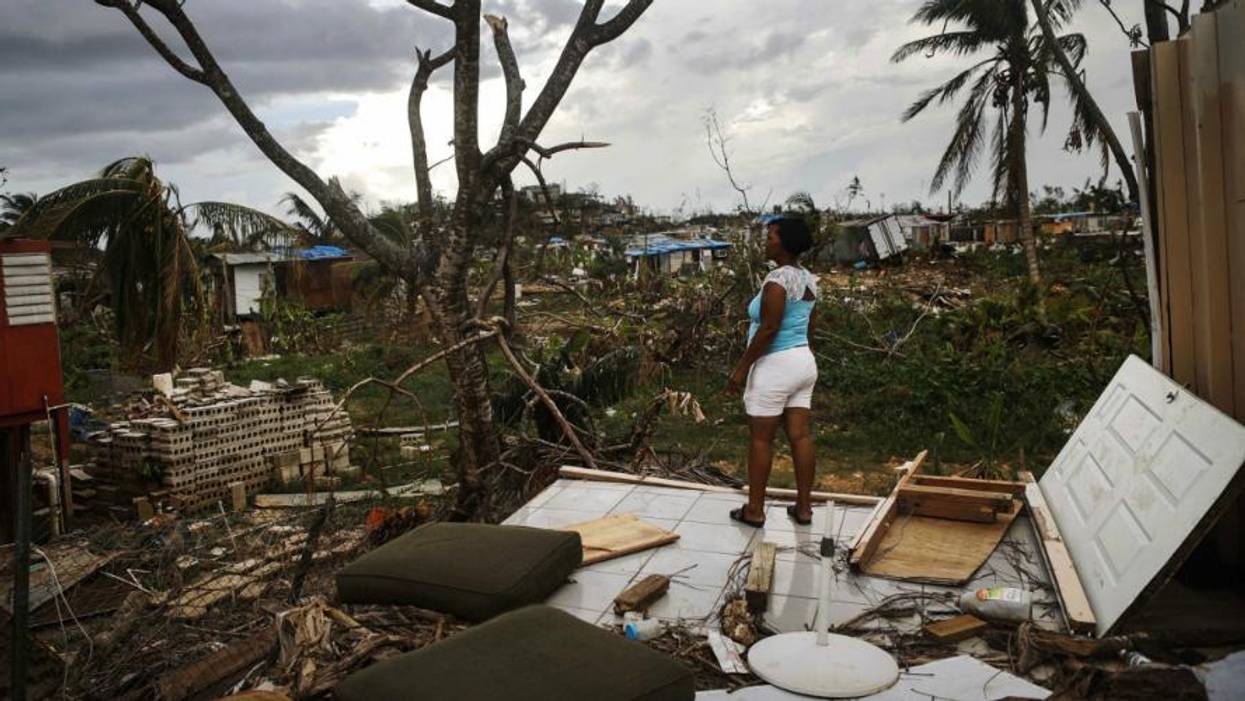
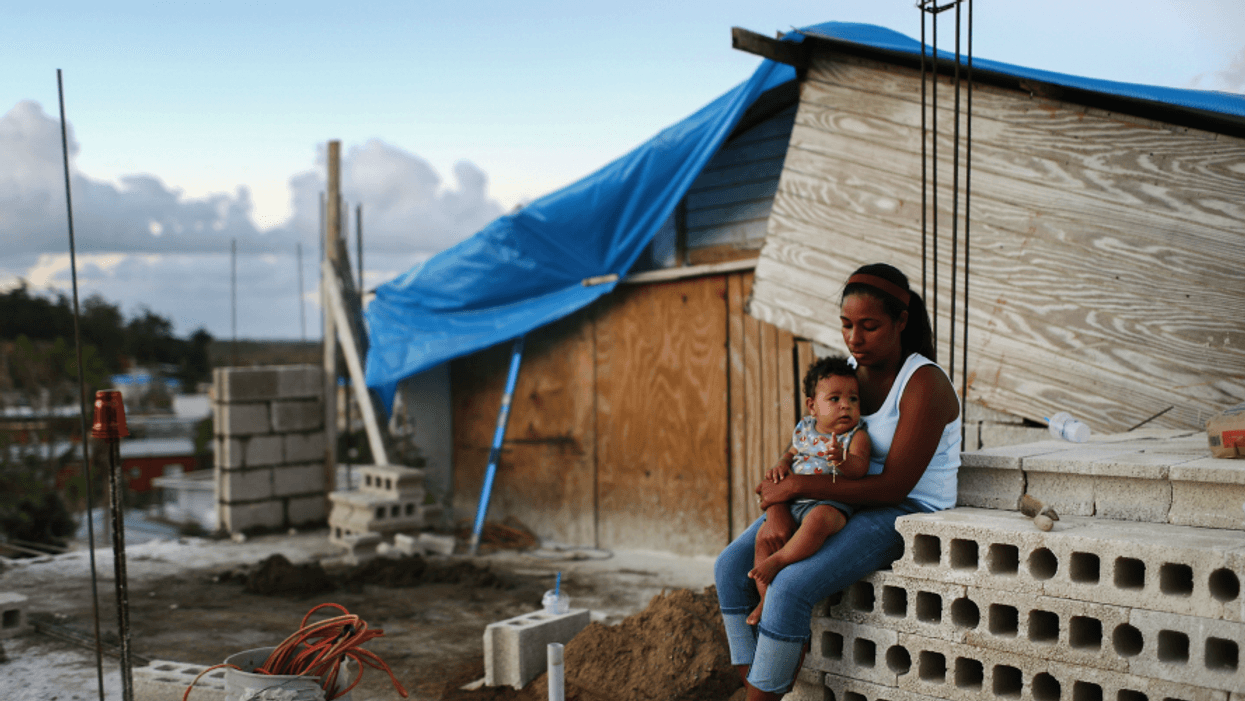
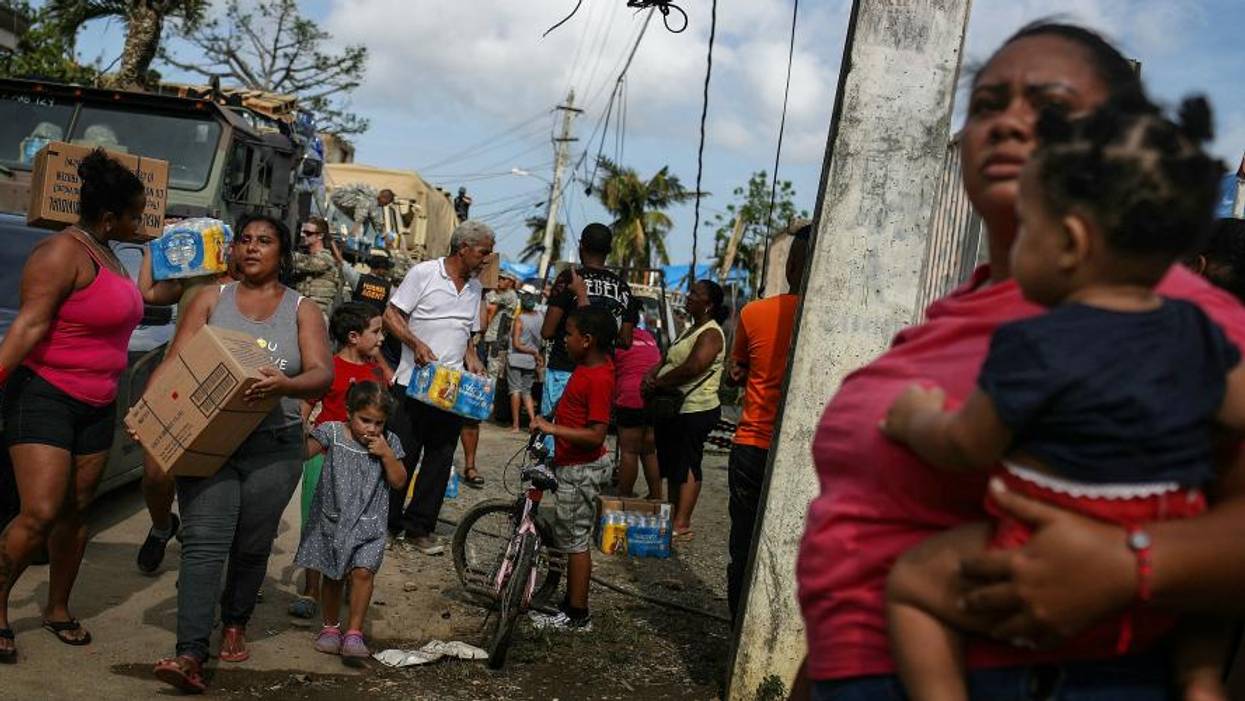
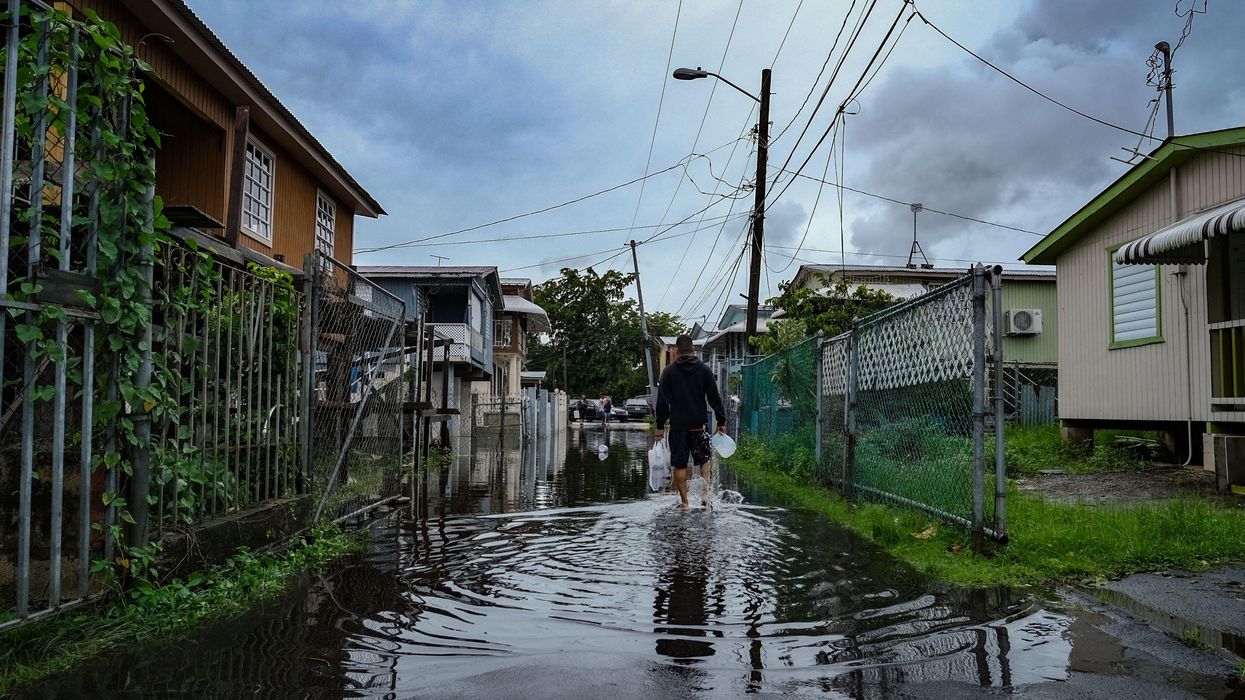
Progressive U.S. lawmakers and green groups on Monday pointed to the damage and blackout Hurricane Fiona caused across Puerto Rico to demand immediate climate action along with relief efforts that center the needs of the U.S. territory's people.
"The climate crisis is urgent and here. We will continue to fight for policies that can protect our planet and people."
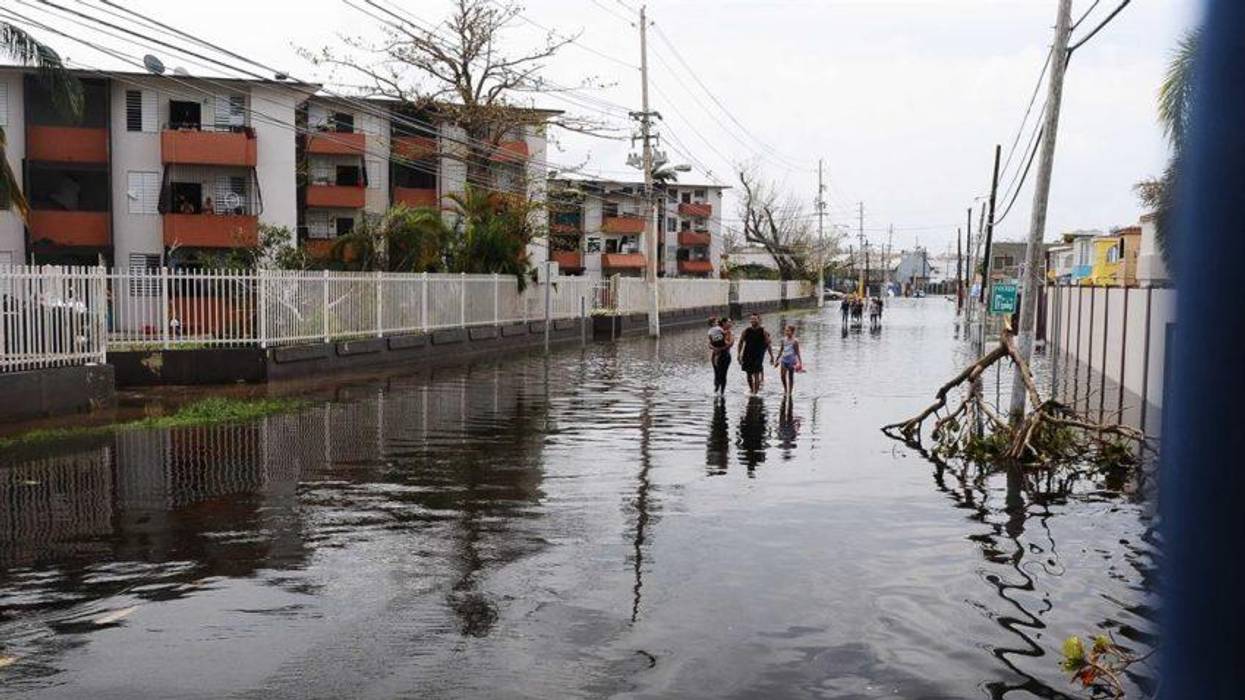
Fiona dumped 30 inches of rain on parts of the Caribbean island almost exactly five years after the devastation of Hurricane Maria, which struck during the recovery from another storm, killing thousands of Puerto Ricans and triggering months of power problems.
In the wake of Maria, as Common Dreams reported Sunday, Puerto Rico's electricity system was controversially privatized. It is now under the control of LUMA Energy, a joint venture by the Canadian company ATCO and Houston-based Quanta Services.
Highlighting the island-wide blackout, Food & Water Watch declared on Twitter Monday that "this is a climate emergency, and it is unacceptable."
LUMA public safety manager Abner Gomez provided an update in a statement Monday.
"We want our customers to know that LUMA has been and will continue to work around the clock to restore power to Puerto Rico following the island-wide outage that began early Sunday afternoon," Gomez said. "While power restoration has now occurred for more than 100,000 customers, LUMA crews continue to work to stabilize the grid."
"We will continue to work nonstop until every customer is restored and the entire grid is reenergized," Gomez added. "While these efforts continue over the coming days, we strongly encourage customers to continue to exercise caution and stay away from any downed power lines."
San Juan-based Democracy Now! correspondent Juan Carlos Davila explained that "we know that we cannot rely on the national electric grid that is now privatized," so post-Maria, some wealthier people have been able to install solar panels and disconnect from the grid.
AccuWeather founder and CEO Joel N. Myers estimated Monday the total damage and economic loss from Fiona at around $10 billion, compared to the $90 billion from Maria.
"There has already been catastrophic flooding in some areas, particularly in the mountains," he said. "Additionally, since Sunday afternoon there has been a major failure of the electrical grid resulting in an outage of power to the entire island impacting more than 1.4 million customers or 3.2 million people, and only 100,000 customers, less than 10%, apparently have restored power currently."
"In addition, water service is not available to over 750,000 customers or more than two million people and there is no estimated time for restored power and water service for the rest of the people of Puerto Rico. All major airports in Puerto Rico have been closed since Saturday night," Myers added--before flight departures from San Juan resumed Monday.
Given that Puerto Rico's gross domestic product is about $103 billion per year, "an economic impact of around $10 billion is slightly less than 10% of the GDP, but, significantly, it is equivalent to a severe recession," Myers explained. "Our estimate largely accounts for damage to homes, businesses, medical facilities, roadways, and vehicles as well as power outages, which results in food spoilage and interruption to medical care."
Advocacy groups and members of Congress highlighted both the recent and longer history of the island, a colony of Spain and then the United States. Puerto Rico is now considered a U.S. territory, though there are movements for statehood and independence.
" Solidarity with the people of Puerto Rico as they begin to recover from Hurricane Fiona," tweeted the Sunrise Movement. "Our leaders must mobilize every resource to help rebuild. As the climate crisis intensifies, the people of PR must be given the resources and agency to build a livable future on their terms."
"The catastrophic flooding and loss of power are the result of colonial policies that put profit over the people of PR," the youth-led group added. "Puerto Rico deserves Green New Deal-style policies that will build a *public* green energy grid, and invest millions into social services."
U.S. Rep. Ilhan Omar (D-Minn.) on Monday called for bold U.S. relief efforts in Puerto Rico, noting that the island "has been through so much--from centuries of colonialism to a debt crisis to Hurricane Maria and now Fiona."
U.S. President Joe Biden on Sunday approved an emergency declaration for Puerto Rico, which authorizes the Federal Emergency Management Agency (FEMA) to " identify, mobilize, and provide at its discretion, equipment, and resources necessary to alleviate the impacts" of the current crisis.
During a call Monday, Biden assured Puerto Rico Gov. Pedro Pierluisi that the federal team--which already includes 300 personnel and is set to grow in the days ahead--"remains on the job to get it done," especially considering the ongoing recovery from Maria.
That's according to the White House account of the call, which also said that "Gov. Pierluisi expressed his appreciation for the partnership and support that he is receiving already from the Biden administration."
Appearing on Democracy Now!, Carmen Yulin Cruz, who was mayor of San Juan when Maria hit, urged the Biden administration to deliver aid directly to municipalities and community centers.
Other U.S. political figures used the disaster to issue a broad demand for climate action.
"Yesterday, Hurricane Fiona wiped out the power, infrastructure, and more in Puerto Rico. It's devastating. Fiona made landfall today in the Dominican Republic," Rep. Jamaal Bowman (D-N.Y.) said Monday. "The climate crisis is urgent and here. We will continue to fight for policies that can protect our planet and people."
Rep. Cori Bush (D-Mo.) similarly said that "my heart goes out to the people impacted by Hurricane Fiona in Puerto Rico and the Dominican Republic. The climate crisis continues to devastate vulnerable communities worldwide. To mitigate the disastrous effects, we need immediate climate action."
Also appearing on Democracy Now!, climate scientist Michael Mann--whose research has connected fossil fuel-driven global heating to more destructive Atlantic hurricanes--explained that "we are witnessing the devastating consequences of climate change now."
Along with destructive extreme weather, research continues to illustrate the need to swiftly transition away from fossil fuels. A database published Monday showed that burning all of the planet's coal, gas, and oil reserves would exceed the world's "carbon budget" seven times over.
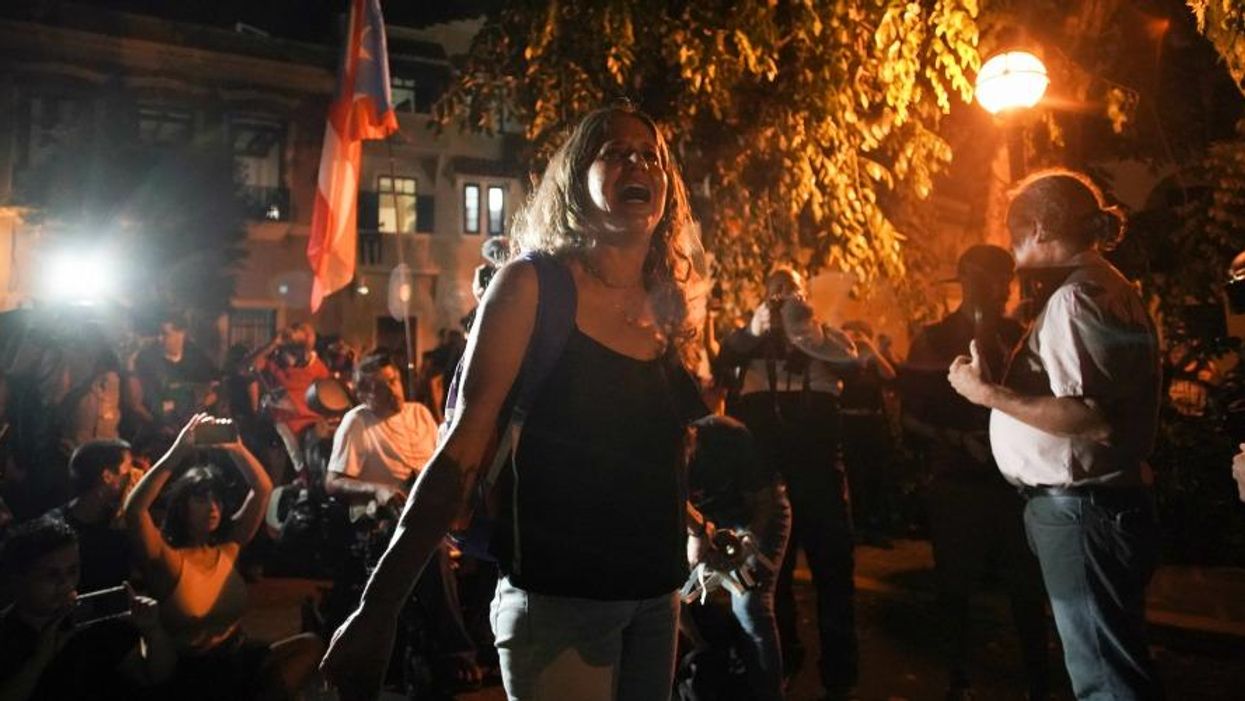
Stepping down after mass protests over alleged corruption and leaked messages in which he denigrated women and LGBTQ people, Puerto Rican Gov. Ricardo Rossello appointed his secretary of state to succeed him--but elation over the success of the recent protests gave way to more demonstrations against the new governor.
Hundreds of Puerto Ricans marched to the governor's mansion Friday night, decrying the appointment of Gov. Pedro Pierluisi as an illegitimate continuation of Rossello's policies.
"We are demanding a real and radical change in [Puerto Rico], in the way that politics are done. We didn't demand the resignation of a corrupted government, for having another equally corrupted," Gabriel Nasario, a protester, told Al Jazeera. "We are demanding a real alternative."
Sen. Bernie Sanders (I-Vt.) congratulated Puerto Ricans on forcing Rossello out of office and said the island must now "receive fair and responsive representation."
Pierluisi's term as governor could be very short-lived, as the Senate will vote to approve or reject his appointment on Monday. But critics are wary of the former secretary of state, who has ties to the federal oversight board which has pushed austerity policies as the island territory has struggled with a bankruptcy crisis in recent years and a recession that's gone on for more than a decade.
"He'll keep promoting policies of austerity, cutbacks, everything that the board says," Rosa Cifrian, a professor of nursing who attended the latest demonstrations, told Al Jazeera.
San Juan Mayor Carmen Yulin Cruz said Friday evening, hours after Pierluisi was sworn in, that her city would file a lawsuit challenging the new governor's appointment early Monday.
"On Monday at 8:00am the Municipality will be filing an appeal challenging the oath of Pierluisi," Yulin Cruz tweeted.
The ACLU's Puerto Rican chapter accused Pierluisi of "hijacking the constitution" by assuming the role of governor without the input of the territory's Senate.
Huffington Post climate reporter Alex Kaufman noted on Twitter that in addition to Pierluisi's ties to the federal oversight board, he is a former fossil fuel lobbyist and, like his predecessor, is in favor of privatizing the public power authority.
If the Senate does not ratify the new governorship on Monday, Pierluisi has said he will hand over the position to the current secretary of justice, Wanda Vasquez, who has come under scrutiny for corruption allegations of her own.
Women's rights groups allege that Vasquez failed to address gender-based violence issues on the island while she was head of Puerto Rico's women's affairs office. She has also been criticized for declining to investigate ethics violations of members of her own party and for her intervention in a theft case involving her son.
As mass street protests demanding his immediate resignation intensified over the weekend and are expected to continue growing Monday, Puerto Rico Gov. Ricardo Rossello stepped down as head of his party on Sunday and announced he will not seek reelection in 2020--but stopped short of leaving his post.
"To every Puerto Rican man and every Puerto Rican woman, I've heard you and I hear you today," Rossello said during a Facebook livestream. "I've made mistakes and I have apologized."
San Juan Mayor Carmen Yulin Cruz, who is running for governor in 2020, tweeted in response to Rossello's remarks: "It is not enough. He needs to go!"
Rossello's announcement came over a week after the publication of nearly 900 pages of conversations between the governor and his aides, which contained racist and sexist messages and mockery of the victims of Hurricane Maria.
The revelations were met with outrage and sparked a flood of demonstrations calling on Rossello to step down immediately.
Rossello's decision Sunday came just hours ahead of what is "expected to be one of the biggest protests ever seen" in Puerto Rico, according to the Associated Press.
"Hundreds of thousands of people were expected to take over one of the island's busiest highways Monday morning to press demands for the resignation of Rossello over an obscenity-laced leaked online chat the governor had with allies as well as federal corruption charges leveled against his administration," AP reported.
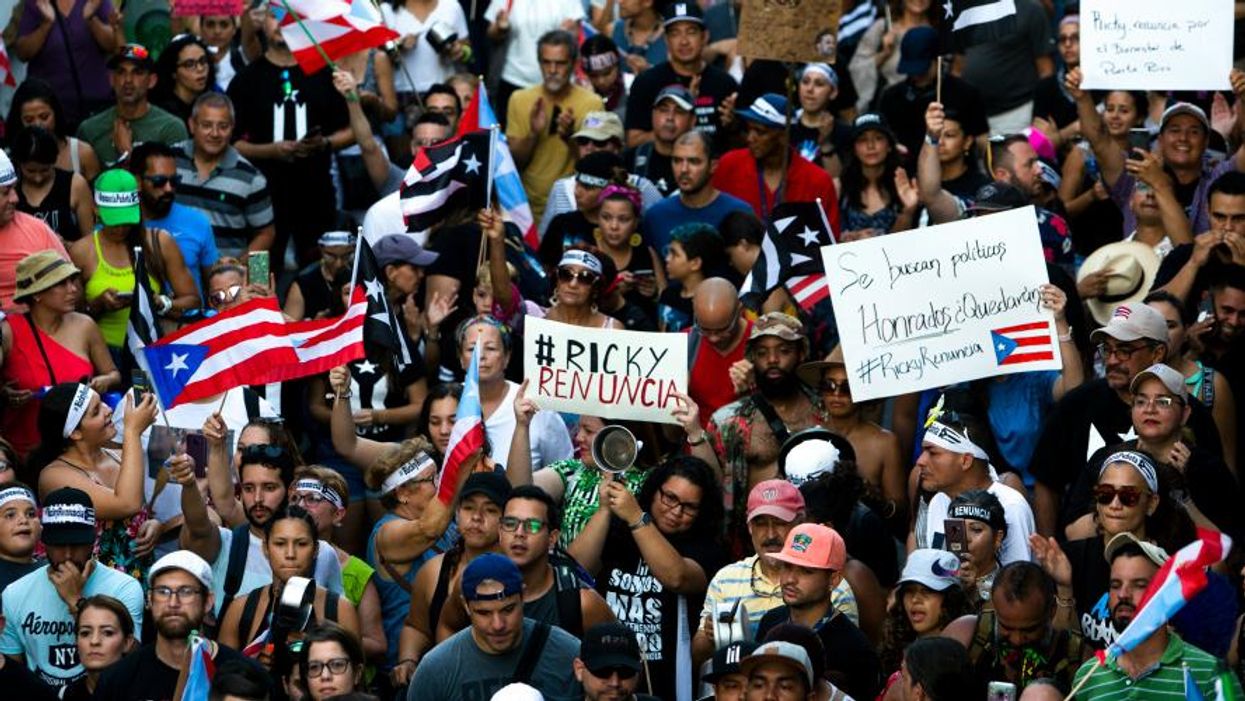
Monday will mark the 10th consecutive day of widespread street demonstrations against Rossello. Johanna Soto, a Puerto Rico resident, told AP that the protests will continue until the governor steps aside.
"The people are not going to go away," said Soto. "That's what he's hoping for, but we outnumber him."
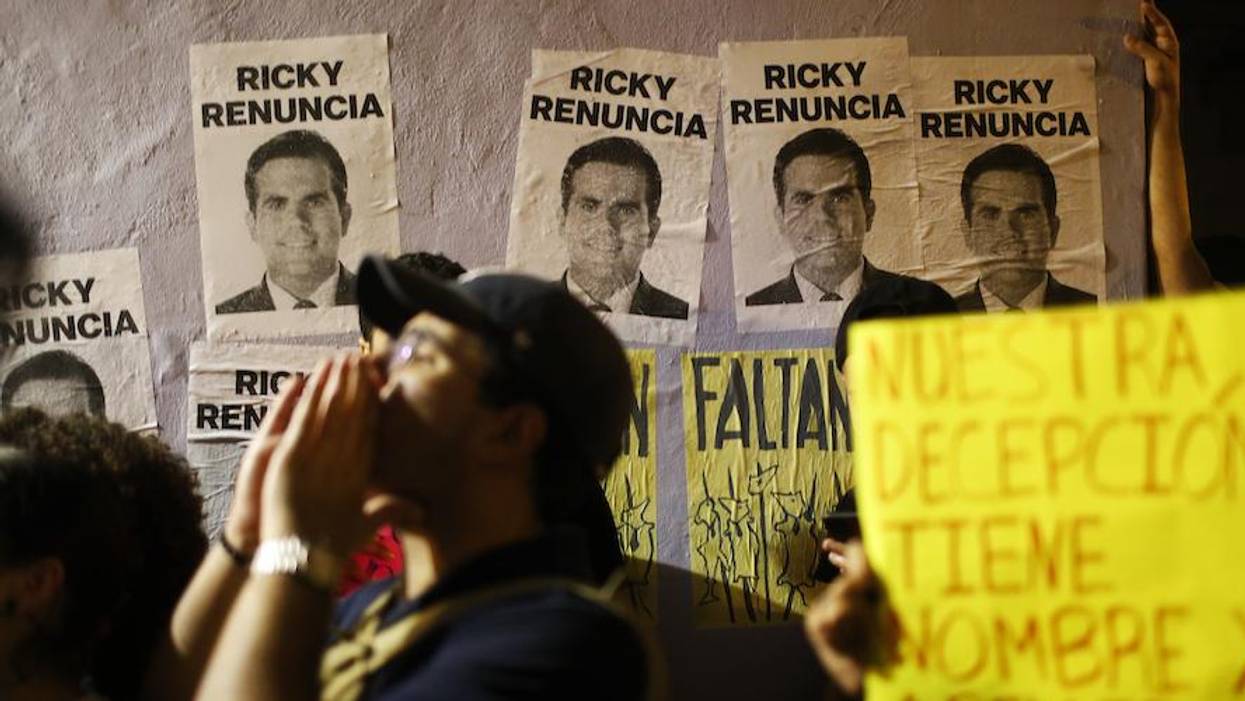
Thousands of Puerto Rican protesters filled the streets of the capital San Juan on Monday night for a third day of protests calling for the immediate resignation of Governor Ricardo Rossello after obscene messages between him and his staff were revealed.
Chanting "Ricky Renuncia," or "Ricky Resign," demonstrators clashed with police in front of La Fortaleza, the 16th century-built governor's mansion in the neighborhood of Old San Juan.
"It was time for Puerto Rico to wake up and rise up against the oppressors, and we want to force the resignation of Governor Ricardo Rossello," said Puerto Rico resident Rafaela Estevez. "He does not deserve the job he has, and the people have spoken."
Protesters set fire to trash cans and overturned cars Monday while police fired tear gas into the crowd and made arrests.
The leaked messages show a dismissive attitude on the part of Rossello, a Democrat, and other government officials to the Puerto Rican people and their concerns as the U.S. territory struggles to recover from 2017's Hurricane Maria. In the messages, which were sent using the app Telegram, officials joked about victims of the hurricane and referred to political adversaries in vulgar terms.
"The chat was the final straw," protester Norma Jean Colberg told The New York Times.
In one exchange, Rossello and his chief fiscal officer Christian Sobrino discussed San Juan Mayor Carmen Yulin Cruz, who intends to run against Rossello for governor in 2020. Sobrino told Rossello Sobrino would like to shoot the mayor, to which Rossello replied, "You'd be doing me a grand favor."
Cruz, who progressives see as the antidote to the corporate-friendly Rossello, said over the weekend that the scandal has only made the people of Puerto Rico--furious at the treatment and lack of aid they have received from the President Donald Trump administration--more distrustful of the current leadership on the island.
In response to the leaked chats, Rossello expressed remorse and asked for forgiveness, but said he would stay on in office.
"We do not give up on the work under way," the governor said in a statement, "and today, more than ever, many people are counting on my commitment to that work."
But it may not be up to the governor. Demonstrators were calling for Rossello's impeachment and, on Monday, Denis Marquez, a representative in the territory's legislature, introduced a formal complaint against the governor, the first step toward Rossello's potential removal from office.
Resident Estevez said that she hoped the message would get across to lawmakers that the people were fed up and that change is needed on the island.
"Even if the Legislature does not care one dime about the people, they are there because of us," said Estevez. "And we are showing them, giving them a lesson that they have to remember we pay their wages."
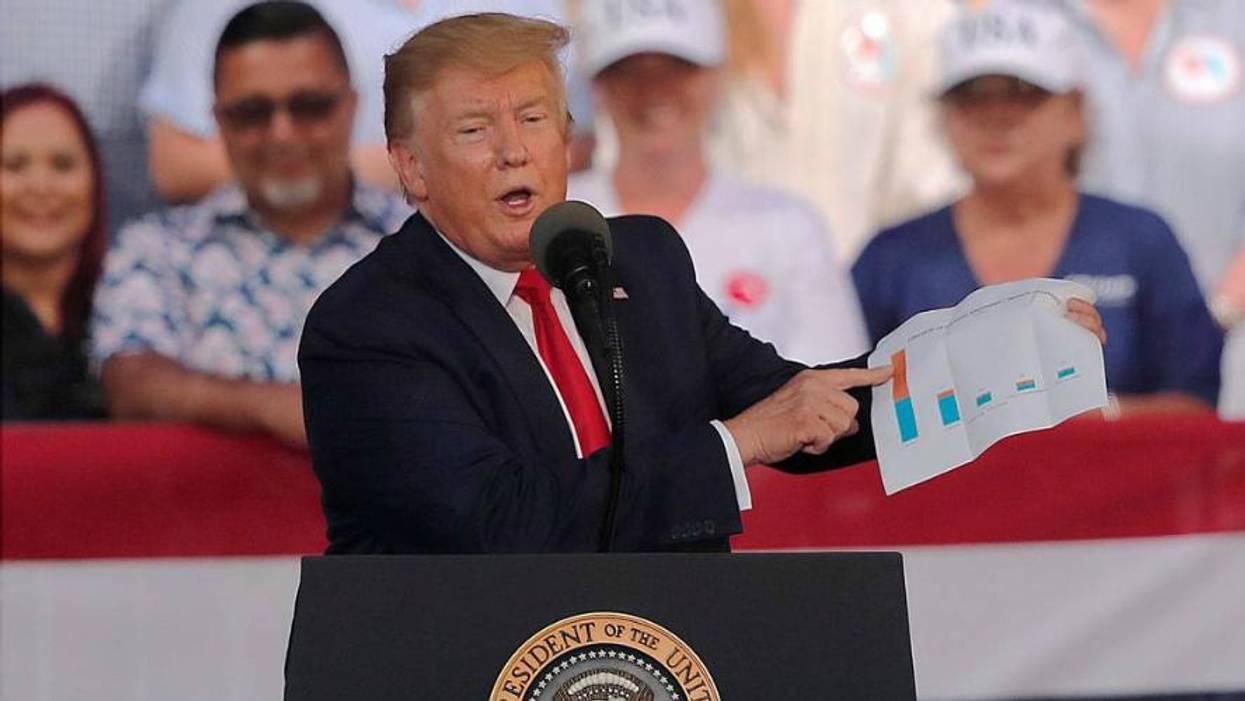
President Donald Trump spent the opening minutes of a campaign rally in Panama City Beach, Florida on Wednesday attacking hurricane-ravaged Puerto Rico for not sufficiently appreciating his administration's relief efforts--which critics have decried as grossly inadequate--and attempting to use a bar graph to bolster his repeatedly debunked claim that the island has received a record amount of storm aid.
"I brought a chart. Would you like to see a chart?" Trump said, pulling a piece of paper from his jacket pocket to cheers from the audience.
"That's Puerto Rico and they don't like me," said the president, pointing to a section of the bar graph purporting to show that Puerto Rico has received $91 billion in hurricane relief funding.
As The Associated Press reported, Trump's "number is wrong, as is his assertion that the U.S. territory has set some record for federal disaster aid. Congress has so far distributed only about $11 billion for Puerto Rico, not $91 billion."
San Juan Mayor Carmen Yulin Cruz--who Trump has repeatedly singled out in his attacks on Puerto Rico's political leaders--slammed the president's remarks on Twitter.
"Unhinged, insensitive, and lying," Cruz wrote. "His racism knows no boundaries."
Others echoed Cruz:
As Common Dreams reported in March, over a million U.S. citizens in Puerto Rico have faced large cuts to food stamps and other services in the aftermath of Hurricane Maria as a relief package--which also includes disaster aid to Florida and other states--remains stalled in Congress due to opposition from Republicans and the Trump administration.
Even in the face of the island's devastating circumstances, Trump has reportedly said that he "doesn't want another single dollar" going to Puerto Rico.
In a statement following the president's rally, House Speaker Nancy Pelosi (D-Calif.) said Democrats are moving ahead this week with a $17.2 billion disaster relief package that includes aid to Puerto Rico.
"Sadly, Senate Republicans have been more committed to hurting our fellow Americans in Puerto Rico than healing communities everywhere," Pelosi said. "Meanwhile, the president has doubled down on Republicans' callousness, deliberately delaying assistance payments to Puerto Rico and inflicting more needless suffering on the Americans who are still reeling from his administration's disastrous response to the hurricanes."
Puerto Rico's death toll of about 3,000 from Hurricanes Irma and Maria in 2017 ought to be the biggest strike against President Donald Trump. The majority of deaths on the island occurred in the days and weeks following the hurricanes, largely due to inadequate health care and the admitted failures of the Federal Emergency Management Authority (FEMA), suggesting that these were preventable deaths. And yet to Trump, Puerto Rico is the recipient of fantastical amounts of undeserved money.
In many ways, Trump sees the U.S. colony as a personification of his usual enemies. Puerto Rico is brown skinned, non-English speaking, foreign, Democratic, and poor--whether or not any or all of these things are entirely true. Therefore, if it does not accept his patronizing gestures with undying gratitude, it deserves nothing but disdain.
That disdain has been apparent right from the start, most notably during Trump's post-hurricane paper towel-throwing exercise in 2017 and in his denials of the extent of the hurricane-related death toll. It was also on full display earlier this week during his Monday night tweet-storm. In an error-filled statement, Trump tweeted that "Puerto Rico got far more money than Texas & Florida combined, yet their government can't do anything right, the place is a mess--nothing works." He also said, "Puerto Rico got 91 Billion Dollars for the hurricane, more money than has ever been gotten for a hurricane before." Trump--who, like his base, feels his manhood is deeply threatened by strong women of color leaders--called San Juan Mayor Carmen Yulin Cruz "crazed and incompetent." He then spoke of himself in the third person, bombastically asserting that "The best thing that ever happened to Puerto Rico is President Donald J. Trump."
Multiple news outlets exposed his $91 billion figure and claims that Puerto Rico received more money than any other region for a hurricane as flat-out lies. No one is quite sure where Trump conjured up the number, but some have speculated that he confused the total amount of damage suffered by Puerto Rico from the 2017 storms with the amount it has actually received. The Washington Post reported that it "is a combination of $41 billion that's been set aside for recovery combined with $50 billion expected to be spent over the life of the recovery effort." Regardless of where he got the figure, the difference between reality and Trump's fiction ironically encompasses Puerto Rico's actual need.
Trump's claim that Puerto Rico was given more money than any hurricane-affected region has ever been granted is also erroneous. Federal funds to Louisiana after the 2005 Hurricane Katrina totaled about $120 billion.
The president's bizarre comments come as the Senate failed to pass two bills on disaster relief this week hinging on expanding Puerto Rico's food stamp program. Trump has privately told his Republican colleagues that he will not support additional funding going to Puerto Rico, proving that the consequences of his defiant misinformation have a real-world impact. Eric LeCompte, executive director of Jubilee USA, put it in these terms in an interview: "Puerto Rico has become kind of a bargaining chip to move forward proposals." He explained that Trump considered "taking aid that was committed for Puerto Rico in order to build or strengthen the border wall."
What Trump also exposed in his series of tweets was how he has clearly "otherized" Puerto Rico. In his complaints against Senate Democrats for voting down the disaster relief bill for other states that he backed, the president tweeted: "Puerto Rico has already been scheduled to receive more hurricane relief funding than any 'place' in history." His use of the quotation marks in referring to Puerto Rico as a "place" is suggestive of his uncomfortable attitude toward the U.S. colony. He also complained about how Puerto Rico's politicians "only take from USA," implying that the island was not part of this country, rather an outsider leeching from the federal treasury. It's not just Trump. White House Deputy Press Secretary Hogan Gidley twice referred to Puerto Rico as "that country" during an interview this week. LeCompte explained to me that "Unfortunately, a lot of Americans don't understand that people who are living in Puerto Rico, people born in Puerto Rico, are U.S. citizens." It seems as though this ignorance may extend to the White House under Trump.
Trump has also decided that Puerto Rico's governor does not deserve his attention, and in a manner that can only be described as utterly juvenile, as he has been actively avoiding Gov. Ricardo Rossello. Rossello responded by saying such behavior was "below the dignity of a sitting President" and "irresponsible, regrettable and, above all, unjustified."
The fact that about 3,000 Americans died on Trump's watch in Puerto Rico should be at least as large a stain on his presidency as Hurricane Katrina was on George W. Bush's legacy. That 2005 tragedy resulted in 1,833 deaths and was seen as the lowest point of Bush's domestic record. But amid the endless fallout of Trump's train wreck of a presidency, there has been very little accountability for Puerto Rico's hurricane deaths. And now Trump has gone further in trying to rewrite history, making up facts and figures to suit his agenda, and shirking his responsibility to even meet with Puerto Rico's leaders.
Today, according to LeCompte, there are more Americans of Puerto Rican descent living on the mainland than on the island. Years of human caused and natural disasters have fueled an ongoing exodus. After Hurricane Maria alone, an estimated 200,000 Puerto Ricans resettled on the mainland, many of them making their homes in places like Florida. Republican politicians counting on reelection in states with a sizable Puerto Rican population have "put distance between themselves and the president," said LeCompte. And he said they have "been very clear in public statements and social media that they disagree with the president's statements on Puerto Rico." For example, Florida Gov. Rick Scott, in a Spanish-language ad last fall, asserted that he "confronted" Trump over his denial of the actual hurricane-related death toll.
Some political scientists have warned that Puerto Rican voters in key presidential election swing states like Florida could undo Trump's reelection hopes in 2020. "The Puerto Rican diaspora vote is a very important vote," said LeCompte. In addition to Florida, he cited key states like Texas, Pennsylvania, New York and Illinois where this critical vote could make a difference. Indeed, it would be a delicious irony if Trump's presidency was to be undone by the very demographic that he has maligned and let suffer.
"He can huff and puff all he wants but he cannot escape the death of 3,000 on his watch."
That was San Juan Mayor Carmen Yulin Cruz's response to President Donald Trump's Monday night tweet-storm, in which he once again inflated the amount of federal aid Puerto Rico has received since Hurricane Maria and attacked Cruz as "crazed and incompetent."
"He is unhinged," Cruz tweeted in response to the president's rant, which came after a GOP emergency aid bill stalled in the Senate, in part due to Democratic opposition over the legislation's inadequate relief to Puerto Rico.
"He knows his response was insufficient at best," the San Juan Mayor continued. "Shame on you!"
Trump's Puerto Rico rant came as over a million U.S. citizens on the island are facing massive food stamp cuts amid congressional inaction.
The president has repeatedly claimed Puerto Rico has received $91 billion in federal disaster relief. According to the Washington Post, this number "appears to be a steep inflation of what's actually been appropriated."
Trump has also reportedly told aides that he "doesn't want another single dollar going to the island."
The $13 billion relief bill that failed in the Senate Monday included $600 million in aid for Puerto Rico's food stamp program, as well as aid to California, North and South Carolina, and other states.
As the Post reported, Senate Democrats argued the GOP legislation is "inadequate to meet the U.S. territory's needs as it attempts to recover from Hurricane Maria."
According to a study published in The New England Journal of Medicine last year, as many as 6,000 people may have died in Puerto Rico due to Hurricane Maria.
"Democrats are embracing a House-passed relief bill containing hundreds of millions of dollars more for Puerto Rico than the GOP version, but it, too, failed to advance Monday as Republicans opposed it," the Post reported. "Trump opposes sending any additional aid to Puerto Rico apart from the food stamp money, funding Republicans convinced him to accept as the price for passing the long-pending disaster bill."
In a statement last week, Puerto Rico governor Ricardo Rossello accused Trump of treating residents of the island as second-class citizens.
"People from all over the nation, and the world, have witnessed the inequalities Americans face on the island," Rossello said. "Mr. President: Enough with the insults and demeaning characterizations."
With over a million U.S. citizens in Puerto Rico facing devastating food stamp cuts as Congress fails to provide necessary hurricane relief funding, President Donald Trump reportedly complained to Republican senators on Tuesday that the island is receiving "too much" aid--a position that was decried as both false and cruel.
"The president continues to show his vindictive behavior towards Puerto Rico and he continues to make the humanitarian crisis worse," said San Juan Mayor Carmen Yulin Cruz. "He is ensuring that people don't have food to put on the table."
"The federal response and its treatment during these past months in the aftermath of Hurricane Maria is clear evidence of our second-class citizenship."
--Ricardo Rossello, governor of Puerto Rico
Trump's remarks came during a private lunch with Republicans Tuesday, during which--according to the Washington Post--the president inflated the amount of aid Puerto Rico has received since Hurricane Maria and pushed lawmakers to limit funding to the island.
"At the lunch Tuesday, Trump rattled off the amount of aid that had been designated for other disaster-hit states and compared it with the amount allocated for Puerto Rico following the 2017 hurricane, which he said was too high," the Post reported.
After claiming that Puerto Rico has received $91 billion in federal aid--it is unclear where he got this number--Trump reportedly said "one could buy Puerto Rico four times over for $91 billion."
Puerto Rico Gov. Ricardo Rossello responded with outrage to Trump's reported comments in a statement late Tuesday.
"People from all over the nation, and the world, have witnessed the inequalities Americans face on the island," Rossello said. "The federal response and its treatment during these past months in the aftermath of Hurricane Maria is clear evidence of our second-class citizenship."
"Mr. President: Enough with the insults and demeaning characterizations," he added. "We are not asking for anything more than any other U.S. state has received. We are merely asking for equality."
Trump's complaint about aid to the storm-ravaged island comes as an estimated 1.3 million Puerto Ricans--including hundreds of thousands of children and elderly people--have had life-saving food aid cut amid inaction and obstruction from the White House and congressional Republicans.
"We just don't have the money right now," said Myrna Izquierdo, an administrator at a Puerto Rican health clinic that relies on food stamp funding. "It's very hard. It is so unfair. That cut is going to kill us."
Late Tuesday afternoon, the Senate advanced a disaster relief bill that Democrats said is far from adequate to address the crises in Puerto Rico in the aftermath of Hurricane Maria. According to one study, the storm may have killed nearly 6,000 people.
"The lack of leadership and coordination, combined with delays in meeting the basic needs of the island, more than 18 months after receiving a presidential disaster declaration, has left far too many children and elderly citizens in unhealthy and unsafe conditions, families in severely damaged homes and communities without adequate infrastructure to sustain a decent quality of life," Sens. Patrick Leahy (D-Vt.) and Chuck Schumer (D-N.Y.) wrote in a letter to the White House on Tuesday.
Despite the island's dire situation, Trump has reportedly said that he "doesn't want another single dollar going to the island."
"Puerto Rico is in dire need of increased food assistance funding," Sen. Bernie Sanders (I-Vt.) wrote on Twitter this week. "It's unconscionable that we've allowed our fellow Americans to suffer for so long without the full resources of the U.S. government. We must act now to end this crisis."
Facing previous criticism that his campaign team during his 2016 presidential run was "too white" and "too male," Sen. Bernie Sanders (I-Vt.) received praise on Tuesday after it was reported his campaign has hired a diverse slate of high-caliber women for key posts on his 2020 leadership team.
As journalist Natalie Gontcharova of Refinery29 was the first to report, the Sanders campaign now claims that "every single one of its teams -- management, political, policy, organizing, communications, advance, digital, and fundraising -- has women, and predominantly women of color, in leadership positions. Overall, the national leadership team is around 70% women."
According to Gontcharova, the ten new female staffers include (emphasis added):
Rene Spellman, deputy campaign manager, a Bernie 2016 alumna who has worked in the Obama White House; Analilia Mejia, political director, a union organizer who was honored by President Obama as a "Champion of Change"; Sarah Badawi, deputy political director, previously the legislative affairs director for the Progressive Change Campaign Committee; Claire Sandberg, national organizing director, a Bernie 2016 alumna and previously the deputy campaign manager for Abdul El-Sayed's gubernatorial run in Michigan; Dr. Heather Gautney, deputy director of policy, formerly a senior policy advisor on the U.S. Senate Budget Committee and a researcher for Bernie 2016; Arianna Jones, communications director, a Bernie 2016 alumna with experience leading media strategy for progressive clients; Sarah Ford, deputy communications director, a Bernie 2016 alumna who served as the communications director for Cynthia Nixon's 2018 gubernatorial campaign in New York; Briahna Joy Gray, national press secretary, a former attorney and senior politics editor at The Intercept; Georgia Parke, senior social media strategist, who worked in Sen. Sanders' Senate office since 2016; and Robin Curran, digital fundraising director, formerly the email director at the Democratic National Committee.
The new staffers follow last month's announcement of Sanders' national co-chairs, who include: former Ohio state and Our Revolution president Sen. Nina Turner, San Juan Mayor Carmen Yulin Cruz, Rep. Ro Khanna (D-Calif), and Ben & Jerry's co-founder Ben Cohen. Over the weekend, the Sanders campaign also announced that staff workers would be unionized.
Tuesday's news of the fresh hires was met with congratulations for many of the well-known progressive journalists, organizers, and scholars headed to the campaign as well as a nod to Sanders for taking concrete step towards fulfilling his promise to build a much more diverse and representative team:
With hurricane relief funding stalled in Congress due to opposition from the Trump administration, Puerto Rico has reportedly started slashing food stamps in an attempt to preserve the life-saving program.
The move could harm as many as 1.4 million Puerto Ricans--including hundreds of thousands of children and elderly people.
"This is not about politics--this is literally about people's lives and their ability to feed their children and their elders in Puerto Rico."
--Carmen Yulin Cruz, San Juan mayor
"This is not about politics--this is literally about people's lives and their ability to feed their children and their elders in Puerto Rico," Carmen Yulin Cruz, the mayor of San Juan, told the Washington Post. "The need is still there."
Sen. Bernie Sanders (I-Vt.) issued an urgent call for congressional action in response to news of the cuts.
"Puerto Rico needs food assistance funding due to the hurricanes which devastated the island. Some 1.4 million U.S. citizens will face large cuts to their food assistance benefits, 230,000 will lose the benefits entirely," Sanders tweeted. "We must act now to end this crisis."
Food stamp use soared in the aftermath of Hurricane Maria, which devastated the island and--according to one study--may have killed as many as 6,000 people.
Due to lack of assistance from the federal government, Puerto Rican officials are reportedly cutting food stamps to pre-hurricane levels.
"It is dangerous. People don't have enough money to buy food already."
--Socorro Rivera, La Fondita de Jesus
"For a senior citizen who lives alone, their benefits have dipped from $194 per month to $112 per month," Buzzfeed reported, citing Puerto Rican authorities. "A family of four with a monthly income of around $2,000 has seen their benefits drop from $649 per month to $410 per month."
Socorro Rivera, executive director of the San Juan non-profit La Fondita de Jesus, told the Post that "a lot of people will have severe problems" if the Congress and the Trump administration do not act quickly to provide relief.
"It is dangerous. People don't have enough money to buy food already," Rivera said.
The reductions in food stamp assistance come just over a month after the Trump administration dismissed as "excessive and unnecessary" House Democrats' plan to provide $600 million in funding for Puerto Rico's Nutritional Assistance Program (NAP).
According to the Post, the White House is now backing a broad Republican proposal that includes $600 million in food stamp aid to Puerto Rico, but there is no vote scheduled on the measure.
"Puerto Rico's food stamp program is uniquely dependent on periodic help from Congress, though the island does not have a voting representative in either the House or Senate, or a say in presidential elections," the Post reported. "Even if approved by Congress, the additional $600 million allocation would only fund the island's food stamps program until September 2019."
According to the Center on Budget and Policy Priorities (CBPP), more than 300,000 children could be effected by the food stamp cuts.
"The fact that we've had to reduce benefits to those that need it the most is alarming," George Laws-Garcia, deputy director of the Puerto Rico Federal Affairs Administration, told Buzzfeed. "Puerto Ricans are being treated unequally and that is unfair."