

SUBSCRIBE TO OUR FREE NEWSLETTER
Daily news & progressive opinion—funded by the people, not the corporations—delivered straight to your inbox.
5
#000000
#FFFFFF
To donate by check, phone, or other method, see our More Ways to Give page.
Daily news & progressive opinion—funded by the people, not the corporations—delivered straight to your inbox.

Fossil fuel companies have for decades "instilled doubt about the need to act on, and the viability of, renewables," said U.N. climate expert Elisa Morgera.
As health officials across Europe issued warnings Monday about extreme heat that could stretch into the middle of the week in several countries—the kind of dangerous conditions that meteorologists have consistently said are likely to grow more frequent due to human-caused climate change—a top United Nations climate expert told the international body in Geneva that the "defossilization" of all the world's economies is needed.
Elisa Morgera, the U.N. special rapporteur on climate change, presented her recent report on "the imperative of defossilizing our economies," with a focus on the wealthy countries that are projected to increase their extraction and use of fossil fuels despite the fact that "there is no scientific doubt that fossil fuels... are the main cause of climate change."
"Despite overwhelming evidence of the interlinked, intergenerational, severe, and widespread human rights impacts of the fossil fuel life cycle," said Morgera, "these countries have and are still accruing enormous profits from fossil fuels, and are still not taking decisive action."
World leaders must recognize the phase-out of fossil fuels "as the single most impactful health contribution" they could make, she argued.
Morgera named the U.S., U.K., Australia, and Canada as wealthy nations where governments are still handing out billions of dollars in subsidies to fossil fuel companies each year—direct payments, tax breaks, and other financial support whose elimination could reduce worldwide fossil fuel emissions by 10% by 2030, according to the report.
"These countries are responsible for not having prevented the widespread human rights harm arising from climate change and other planetary crises we are facing—biodiversity loss, plastic pollution, and economic inequalities—caused by fossil fuels extraction, use, and waste," said Morgera.
She also pointed to the need to "defossilize knowledge" by holding accountable the companies that have spent decades denying their own scientists' knowledge that continuing to extract oil, coal, and gas would heat the planet and cause catastrophic sea-level rise, hurricanes, flooding, and dangerous extreme heat, among other weather disasters.
Defossilizing information systems, said Morgera, would mean protecting "human rights in the formation of public opinion and democratic debate from undue commercial influence" and correcting decades of "information distortions" that have arisen from the public's ongoing exposure to climate disinformation at the hands of fossil fuel giants, the corporate media, and climate-denying politicians.
Morgera said states should prohibit all fossil fuel industry lobbying, which companies like ExxonMobil and Chevron spent more than $153 million last year in the U.S. alone—with spending increasing each year since 2020, according to OpenSecrets.
"More recent research has documented climate obstruction—intentional delaying efforts, including through media ownership and influence, waged against efforts for effective climate action aligned with the current scientific consensus," wrote Morgera. "Fossil fuel companies' lobbyists have increased their influence in public policy spaces internationally... and at the national level, to limit regulations and enforcement. They have instilled doubt about the need to act on, and the viability of, renewables, and have promoted speculative or ineffective solutions that present additional lock-in risks and higher costs."
While a transition to a renewable energy-based economy has been portrayed by the fossil fuel industry and its supporters in government as "radical," such a transition "is now cheaper and safer for our economics and a healthier option for our societies," Morgera told The Guardian on Monday.
"The transition can also lead to significant savings of taxpayer money that is currently going into responding to climate change impacts, saving health costs, and also recouping lost tax revenue from fossil fuel companies," she said. "This could be the single most impactful health contribution we could ever make. The transition seems radical and unrealistic because fossil fuel companies have been so good at making it seem so."
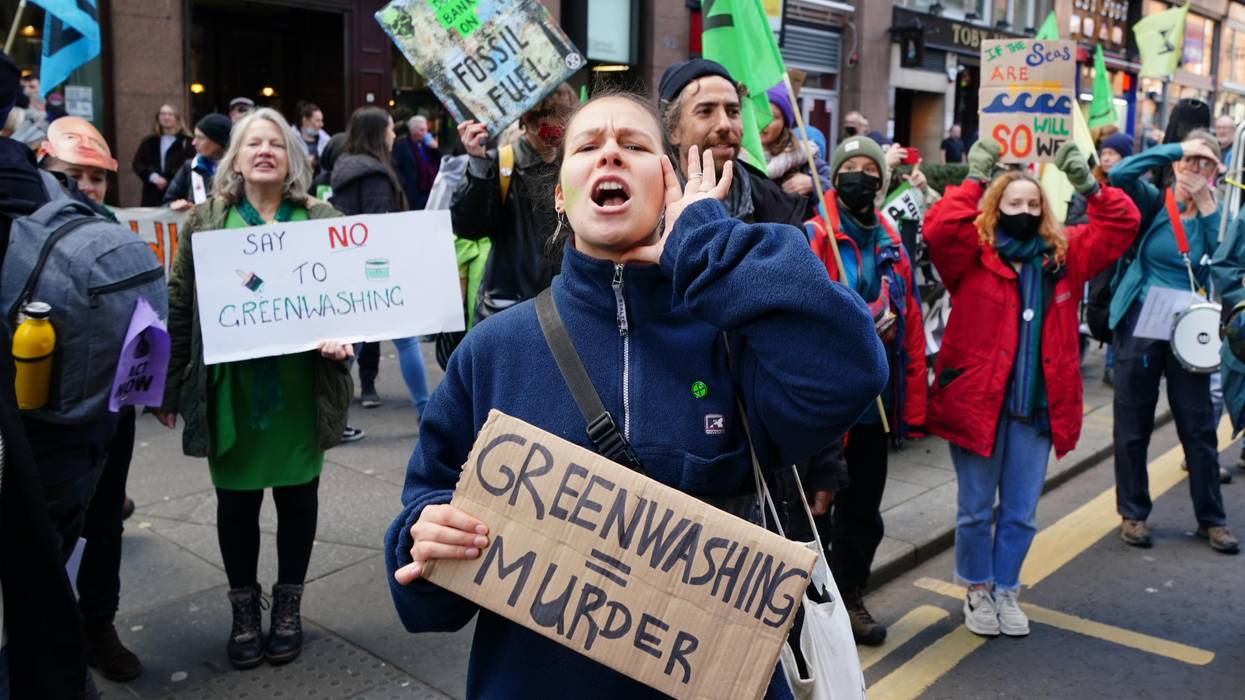
In addition to lobbying bans, said Morgera, governments around the world must ban fossil fuel advertising and criminalize "misinformation and misrepresentation (greenwashing) by the fossil fuel industry" as well as media and advertising firms that have amplified the industry's disinformation and misinformation.
Several countries have taken steps toward meeting Morgera's far-reaching demands, with The Hague in the Netherlands introducing a municipal ordinance in 2023 banning fossil fuel ads, the Australian Green Party backing such a ban, and Western Australia implementing one.
The fossil fuel industry's "playbook of climate obstruction"—from lobbying at national policymaking summits like the annual U.N. Climate Change Conference to downplaying human rights impacts like destructive storms and emphasizing the role of fossil fuels in "economic growth"—has "undermined the protection of all human rights that are negatively impacted by climate change for over six decades," said Morgera.
Morgera pointed to three ways in which states' obligations under international humanitarian laws underpin the need for a fossil fuel phaseout by 2030:
Morgera's report was presented as more than a third of Tuvaluans applied for a visa to move to Australia under a new climate deal between the two countries, as the Pacific island is one of the most vulnerable places on Earth to rising sea levels and severe storms.
Morgera said that fossil fuel industry's impact on the human rights of people across the Global South—who have contributed little to the worsening of the climate emergency—"compels urgent defossilization of our whole economies, as part of a just, effective, and transformative transition."
"It is high time for the American public to understand just how much charitable money is funding climate change disinformation and to recognize the key individuals behind this effort."
A report published Wednesday identifies nearly 140 "climate disinformation organizations" in the United States financed by wealthy donors who receive massive subsidies from the nation's taxpayers.
The analysis by the Institute for Policy Studies (IPS) and the Climate Accountability Research Project (CARP) explains that wealthy donors are "pouring billions of dollars" into nonprofit organizations to "advance misleading, self-serving agendas that do irreparable harm to our planet"—all while reaping the benefits of charitable contribution deductions in the U.S. tax code.
"Funds directed to fossil fuel industry-friendly think tanks and policy groups help turn disinformation into accepted truth and sow doubt about science," the analysis notes. "Then, these ideas get turned into action—or, more often, inaction—by the policy brass of lawmakers and presidential administrations."
The new report highlights "two troubling examples of this chain of influence: The Competitive Enterprise Institute, or CEI, received $21 million in charitable contributions from 2020 to 2022; it bills itself as 'instrumental' both in blocking ratification of the 1997 Kyoto Protocol and in pressuring former President [Donald] Trump to withdraw from the 2016 Paris agreement."
"And the Heritage Foundation received $236 million in contributions over the same three years; this money allowed Heritage to write Project 2025, a policy blueprint overseen by several former Trump administration appointees, that proposes changes to the Department of Energy and the Environmental Protection Agency that would be disastrous for our climate," the report adds.
IPS and CARP estimate that donors to the two right-wing organizations were able to deduct "much of" their $257 million in gifts—effectively receiving major public subsidies.
"We are calling for fundamental transparency reforms so we can assess the total amount of taxpayer-subsidized charitable donations flowing to climate disinformation organizations."
In total, the report counts 137 "climate disinformation" nonprofits that received charitable donations between 2020 and 2022, with six of them focused "largely or entirely" on climate issues. The 137 organizations collectively received $5.8 billion in contributions over the three-year period examined in the analysis, which estimates that the total sum the nonprofits spent on climate disinformation "could range anywhere from a conservative $219 million into the billions of dollars."
The three "climate disinformation charities" that held the most in assets in 2022, according to the new report, were the Charles Koch Institute, the Heritage Foundation, and the Seminar Network.
Between 2020 and 2022, the climate disinformation groups that received the most in total contributions were the Seminar Network, the Stand Together Foundation, and the 85 Fund—an organization connected to Federalist Society co-chair Leonard Leo.
Chuck Collins, director of IPS' Program on Inequality and a co-author of the report, said in a statement that the analysis "provides some much-needed transparency so that the American public can understand the deceptive ways in which the rich seek to advance and protect their interests."
"Based on our findings from the data sources available to us, we are calling for fundamental transparency reforms so we can assess the total amount of taxpayer-subsidized charitable donations flowing to climate disinformation organizations," said Collins. "Many of these donors have built their fortunes in energy or the banking, insurance, transportation, and legal businesses that support the carbon-intensive industries, so they have strong personal interests in ensuring the world's dependence on fossil fuels."
The report notes that wealthy donors have recently been funneling billions of dollars into so-called donor-advised funds (DAFs), which IPS and CARP describe as a kind of "charitable bank account: a donor can donate to a personalized fund managed by a sponsoring nonprofit organization, and take a charitable deduction for that donation right away, but the donor then retains advisory privileges that let them recommend grants out of the fund to whichever charities they want, on whatever timeline they want."
IPS and CARP found that the three largest sponsors of DAFs between 2020 and 2022 were the National Philanthropic Trust, the Schwab Charitable Fund, and DonorsTrust.
"Because DAFs have a near-complete lack of donor and grantee reporting requirements, they allow for a high level of secrecy in donating funds," the report observes.
Private foundations are also major funders of climate disinformation, according to the new report, which lists the Sarah Scaife Foundation, Searle Freedom Trust, and the Lynde and Harry Bradley Foundation, among others.
The report outlines a number of potential policy changes to stem the ability of individuals and organizations with fossil fuel ties to secretively finance climate disinformation with the help of taxpayer subsidies, including barring private foundations from "using grants to donor-advised funds to meet their payout requirements" and requiring DAF sponsors to disclose "the names of all individual donors who have contributed $10,000 or more to each DAF account."
"It is high time for the American public to understand just how much charitable money is funding climate change disinformation and to recognize the key individuals behind this effort," the analysis says.

The report says the U.S. government must move "quickly and decisively" to address the threat of artificial intelligence.
A report released on Monday that was commissioned by the U.S. State Department warns that artificial intelligence could pose an "extinction-level threat."
"Given the growing risk to national security posed by rapidly expanding AI capabilities from weaponization and loss of control—and particularly, the fact that the ongoing proliferation of these capabilities serves to amplify both risks—there is a clear and urgent need for the U.S. government to intervene," the report states.
The report compares the development of AI to the development of nuclear weapons and claims it might "destabilize global security" if it's not properly regulated. The report says the U.S. government must move "quickly and decisively" to address the threat of AI.
🚨 A new report commissioned by the U.S. government has identified "urgent and growing" national security risks "reminiscent of the introduction of nuclear weapons" - including "extinction-level threat to the human species" - from the development of advanced AI & artificial… pic.twitter.com/SvLrdEzz9e
— Future of Life Institute (@FLI_org) March 11, 2024
"The three authors of the report worked on it for more than a year, speaking with more than 200 government employees, experts, and workers at frontier AI companies—like OpenAI, Google DeepMind, Anthropic, and Meta—as part of their research," Time reports. "Accounts from some of those conversations paint a disturbing picture, suggesting that many AI safety workers inside cutting-edge labs are concerned about perverse incentives driving decision making by the executives who control their companies."
The report recommends that the U.S. create a new federal agency to regulate the companies developing new AI tools and limit the growth of AI. Experts say such a move does not seem likely.
“I think that this recommendation is extremely unlikely to be adopted by the United States government,” Greg Allen, director of the Wadhwani Center for AI and Advanced Technologies at the Center for Strategic and International Studies (CSIS), told Time.
AI is a rapidly developing, and experts have warned that many of the companies creating new AI tools are not acting responsibly. A report from earlier this month also noted how generative AI is increasing the spread of climate disinformation and using up valuable resources.
The U.S. was one of 18 countries that joined an agreement in November to keep AI systems "secure by design," but further action will be needed to accomplish that goal.

"Either we maintain the status quo and continue to see more heatwaves, drought, floods, and extreme weather disturbances or we move away from fossil fuels and do our best to make sure that the planet we leave our kids and future generations is healthy and habitable."
U.S. Sen. Bernie Sanders, a Vermont Independent who caucuses with the Democrats and even sought the party's presidential nomination twice, on Tuesday tried to convince Fox News' predominantly Republican audience that not only are scientists right about fossil fuels dangerously warming the planet, but swift and sweeping climate action "is a moral responsibility."
Sanders is no stranger to Fox's opinion page, having previously authored articles on everything from Big Pharma and corporate greed to Medicare for All and Social Security. However, his latest piece—"Climate Change Is a Threat to the Planet: We Must Address It"—takes on a topic readers of the right-wing network's website aren't necessarily eager to tackle.
The results of an NPR/PBS NewsHour/Marist poll published last week showed that 53% of Americans—including 80% of Democrats and 54% of Independents—believed that addressing climate change should be given priority, even at the risk of slowing economic growth. However, 72% of Republicans said the economy should be given priority, even at the risk of ignoring climate change, a 13-point increase from 2018, despite more frequent and devastating extreme weather events in recent years.
Survey results released in November by Climate Action Against Disinformation revealed that among U.S. respondents, belief in climate misinformation "was consistently highest among regular Fox News consumers," with majorities of the network's audience accepting lies about electric vehicles, fossil fuels, renewable energy, and whether scientists largely agree or disagree on what causes climate change.
Sanders, in his new piece, spent several paragraphs addressing claims that "climate change is not real. Or, if it is, it has nothing to do with carbon emissions—and there is nothing we can do about it."
Then, he wrote: "If this is what you believe I would respectfully disagree and I would urge you to get on the phone and call friends and family around the country to hear about what their communities are experiencing. I would also suggest that you check out (reliable) websites and take a look at what's going on in virtually every part of the world."
While fossil fuel giants rake in billions of dollars, communities across the United States and around the world are enduring unprecedented and deadly extreme heat. July is expected to have been the hottest month in recorded history.
The senator highlighted recent records in Brownsville, Texas; Miami, Florida; and Phoenix, Arizona, as well as various locations in China, Cuba, the Dominican Republic, El Salvador, and European countries. He pointed out that "parts of the Middle East exceeded 150°F—near the most intense heat that the human body can survive. It's winter right now in South America, but that hasn't stopped temperatures from exceeding 100°F in some places."
"And it's not just that temperatures have been soaring on land. Our oceans have never been warmer. Right now, 44% of the world's oceans are experiencing a marine heatwave," Sanders noted. He also laid out in plain language how scientists have concluded that human activity—particularly the use of fossil fuels—has created current conditions.
Sanders emphasized the dangers of rising temperatures, explaining that they "create more flooding, extreme weather, droughts, wildfires, and disease. And that means more human suffering, death, mass migrations, and international instability." He also appeared to address readers who may still argue for prioritizing the economy over the climate emergency:
Climate change will not only impact the physical well-being of humans, it will also have enormous economic implications. The Deloitte Economics Institute estimates that if left unchecked climate change could cost the global economy $178 trillion over the next 50 years as a result of lower productivity and employment, food and water scarcity, and worsening health and well-being. We'll also have to spend huge amounts of money repairing the damage that extreme weather causes.
That's the bad news.
The good news is that we can still avoid the worst impacts of climate change, save a great deal of money, and make our energy grid more resilient by transitioning away from fossil fuels toward renewable energy and energy efficiency.
"While the path forward to a cleaner and more sustainable energy future for planet Earth will not be easy, and mistakes will certainly be made, the choice we face is pretty clear," Sanders warned. "Either we maintain the status quo and continue to see more heatwaves, drought, floods, and extreme weather disturbances or we move away from fossil fuels and do our best to make sure that the planet we leave our kids and future generations is healthy and habitable."

"It's time for YouTube to step up, detox its platform, and protect the integrity of the fight against the climate crisis," said Ekō's campaign director.
Google-owned YouTube is again facing allegations of profiting from not enforcing its own ban on the monetization of climate misinformation, this time in a report published Friday amid legislative battles in Brazil over policies on the Amazon rainforest, Indigenous rights, and social media.
Google announced in October 2021 that for advertisers and publishers along with creators on its video platform YouTube, the company would "prohibit ads for, and monetization of, content that contradicts well-established scientific consensus around the existence and causes of climate change."
For four weeks, researchers with Ekō—a group formerly known as SumOfUs that works to curb the power of big corporations—reviewed 60 YouTube videos in English and Portuguese that contained disinformation and conspiracy theories about Amazon deforestation, Indigenous rights, and the climate emergency.
Over two-thirds of the videos were monetized, and Ekō identified more than 150 brands in the ads. Using a common industry tool, researchers estimated that the channels—which collectively had over 40 million subscribers and more than 5 million views—earn $636,000 to $10.1 million a year through monetization.
"The proliferation of disinformation and conspiracy theories are helping to derail efforts by the Lula administration to advance policy agendas around Amazon protection, Indigenous land rights, and social media regulation."
"Well-known Brazilian and global brands like Lyft, Calvin Klein, Budweiser, Panasonic, and Samsung, as well as environmental and human rights groups like Friends of the Earth U.K., UNICEF, and the Peace Corps, are appearing next to extreme climate denial content and conspiracy theories," the report states, "effectively pouring money into the pockets of conspiracy theorists and climate deniers."
"Ekō researchers found top-name apparel, electronics, and drink brands appearing next to videos suggesting actor Leonardo DiCaprio funded nongovernmental organizations to commit arson in the Amazon," the publication continues. "Other false claims include that the rainforest is too humid to catch fire, and that manmade global warming is a lie."
"The proliferation of disinformation and conspiracy theories are helping to derail efforts by the Lula administration to advance policy agendas around Amazon protection, Indigenous land rights, and social media regulation," the document adds, pushing for policy "that prevents platforms from monetizing and profiting from disinformation and lies that are subverting the legislative process."
In a statement Friday, Ekō campaign director Vicky Wyatt also demanded action from the company.
"While global warming, deforestation, and wildfires reach their highest levels ever recorded, YouTube's shameless greenwashing is exposed—with the company giving profits to climate deniers to the tune of millions," said Wyatt. "This is a clear slap in the face to the brands whose advertisements unknowingly support climate disinformation. It's time for YouTube to step up, detox its platform, and protect the integrity of the fight against the climate crisis."
Ekō's analysis follows a May report from Climate Action Against Disinformation (CAAD) for which researchers found 200 YouTube videos containing climate mis- and disinformation. The videos had a total of 73.8 million views and all had featured ads.
YouTube spokesperson Michael Aciman told Engadget in response to those findings that the company is "constantly working" to remove content that violates its rules and welcomes third-party feedback to "help improve the accuracy of our enforcement over time."
"In 2021, we launched a new, industry-leading policy that explicitly prohibits ads from running on content promoting false claims about the existence and causes of climate change, which we designed in consultation with experts and authoritative sources on climate science," Aciman also said. "We do allow policy debate or discussions of climate-related initiatives, but when content crosses the line to climate change denial, we remove ads from serving on those videos.”
Meanwhile, Callum Hood, head of research at the Center for Countering Digital Hate, part of the CAAD coalition, said at the time that "despite Google's green grandstanding, its ads continue to fuel the climate denial industry."
"Whether it's taking cash to target users with climate disinformation, or running ads that make climate denial content profitable, the company is selling out," Hood added. "Tech companies make big promises on hate and misinformation because they know it's hard to see if they've kept them. We need to force Google to open up the black box of its advertising business."
A bigger tent is the only way to stay ahead.
What do people across the U.K. really think about climate misinformation? Outright denial that climate change is real is waning, but there are still real barriers to engagement and effective climate action. Today, most people are neither climate activists nor climate deniers. Confronted with ever-worsening climate impacts, the majority believe that climate change is real—but they aren't actively engaged in trying to create change to tackle it.
According to a 2022 Climate Action Against Disinformation (CAAD) report, 55%-85% of people in surveyed countries believe some form of climate misinformation. This group, the majority that we call the Persuadables, are particularly susceptible to climate disinformation, which is being actively targeted at them by malicious actors. Often the disinformation isn't about denying climate change, but rather casting doubt on its solutions—for example, the suggestion that heat pumps are expensive and ineffective, or that policies to reach net-zero are too expensive.
Often the disinformation isn't about denying climate change, but rather casting doubt on its solutions.
The expert and authoritative International Panel on Climate Change (IPCC), made up of leading scientists from all over the world, has warned that the spread of climate misinformation threatens effective climate policy. Disinformation campaigns, backed by well-funded actors, exploiting marketing techniques and networks of power, are actively seeding doubt and denial over climate science and solutions. As U.N. Secretary-General António Guterres said in his 2023 priorities, we need:
"No more greenwashing. No more bottomless greed of the fossil fuel industry and its enablers."
Disinformation and greenwashing are meant to, and will, delay effective climate action: In democratic countries, where popular support informs government policy, it is a huge barrier. With an ever-shrinking window to meet climate goals, every delay will cost lives and bolster vested interests who profit from the status quo.
The climate movement needs to get ahead of these delay narratives. However, simply pointing to the wealth of scientific evidence that supports climate action and its solutions is not enough to cut through to the Persuadables. We need to reach this group, with well-framed and innovative arguments to support climate action and build their resilience against false climate claims, in order to better 'inoculate' them against climate misinformation.
To understand how to do this, ACT Climate Labs commissioned a three-month qualitative research project to find out what Persuadables in three regions of England think and feel about climate change. We found that most of the climate movement uses language, evidence, and arguments that speak to the young, white, urban, female, and left-wing: essentially the people who are already engaged with climate action.
Data shows that women are more concerned about climate change than men; young people are more worried about climate change than older people; people on the left of the political spectrum are more worried about climate change than those on the right. By continuing to mainly speak to these audiences that are already engaged, the climate movement is failing to effectively communicate with people who are susceptible to climate misinformation. This will only solidify the lack of support for climate action.
To reach the Persuadables, we need to discuss climate in a way that appeals to them. Using frames that focus on the jeopardy of climate change, especially emphasizing the likelihood of bleak futures, is off-putting. For many, the sheer volume of information on climate issues—especially where different sources offer conflicting views—is too overwhelming to engage with. This is particularly true when most people have more immediate, pressing concerns on their minds: the cost of living, employment worries, and health in a post-Covid world.
Persuadables also don't necessarily trust the climate movement to have their best intentions at heart. Our research showed that they often think we're out of touch, 'buzzkills,' or snobby. Our British Black and South Asian respondents also complained that the climate movement feels too white to either represent or include them. Great efforts are being made to change this, but the perceptions remain. The climate movement needs to change how it discusses climate issues, and who acts as messengers to cut through to the Persuadables. ACT's research offers a few clear insights.
Firstly, lead with how people can personally benefit from climate solutions, or how their families or places they live will benefit. This will help them connect with these issues, rather than thinking that this only affects people on the other side of the world. We've found framings which emphasize local pride, jobs, and skills effective with some groups, while for others, health and community benefits work well for example.
We need to reach the persuadable majority before the climate disinformation campaigns do, and earn their trust and engagement, for the sake of the planet and humanity.
Secondly, avoid communications that require high levels of environmental knowledge: Use straight-talking language and avoid environmental buzzwords like "carbon neutrality" or "loss and damage." Emphasize how climate action should work for everyone—but avoid calling it a "just transition" because it's not a term everyone understands.
Thirdly, use cultural codes that align with Persuadables' identities. Create narratives and images that make climate actions appeal more to men; spotlight stories of climate action that benefit local areas and feature familiar people, places, and culture to increase impact. Work with people who Persuadables know and trust, or with spokespeople such as farmers, who Persuadables feel have a high level of knowledge about the environment, rather than actors who they trust less.
Fourthly, develop a diverse approach to communications and outreach. Think beyond traditional PR efforts and advertise in places Persuadables trust—video-on-demand, apps, influencers, and more traditional out-of-home advertising like billboards—can be extremely effective in breaking out of silos and doesn't have to cost the Earth.
Finally, offer concrete, positive stories of climate action that Persuadables can identify with. Climate action at every level—planting in a community garden, cycling to work, joining a recycling group—should be celebrated and supported to create the sense that everybody can get involved.
We have a narrowing window to put the world on a different track toward a low-emissions future. We need to reach the persuadable majority before the climate disinformation campaigns do, and earn their trust and engagement, for the sake of the planet and humanity.
"With vague or unenforced climate misinformation policies, platforms are profiting from activity that successfully delays the necessary action for a livable planet."
A report published Wednesday revealed the extent to which Big Tech platforms profit from selling advertising space to climate-wrecking oil and gas corporations, prompting calls for "tobacco-style" ad rules.
"When we think of fossil fuel advertising, we tend to focus on the big TV commercials. But really, this propaganda is playing out across social media platforms, which are cashing in on the disinformation," Fossil Free Media director Janie Henn tweeted, encouraging people to read the report from the Stop Funding Heat campaign, a United Kingdom-based project with which he is not involved.
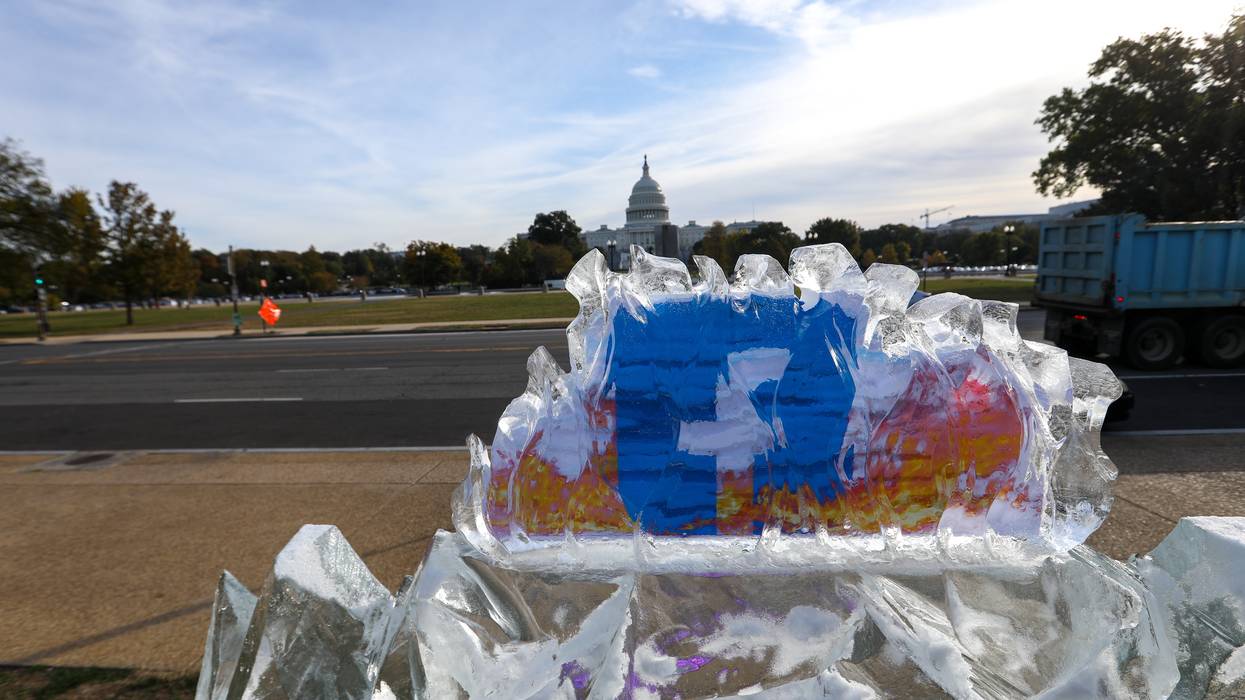
Entitled Cashing In on Climate Delay, the report shows how Facebook, Instagram, Google, and other tech giants receive "tens of millions of dollars every year" in exchange for "greenwashing" oil and gas companies such as Chevron, ExxonMobil, BP, Shell, and Saudi Aramco.
The fossil fuel industry has known for decades that its products cause planet-heating and illness-inducing pollution, and that averting the worst consequences of the climate crisis requires slashing greenhouse gas emissions by replacing coal, oil, and gas with renewable energy sources and taking other steps to decarbonize the economy, as scientists continue to warn.
For just as long, Big Oil has leveraged multimillion-dollar "information and influence campaigns" to "deny the science, deceive the public over the solutions and its role in delivering them, and delay meaningful policy on climate change," the report notes.
United Nations Secretary-General António Guterres recently denounced advertising firms for "raking in billions to shield the fossil fuel industry from scrutiny."
Big Tech is an overlooked piece of the "public relations machine" condemned by Guterres, according to the report, which says that online platforms "are fast becoming the dominant frontier" of fossil fuel industry greenwashing, or misleadingly portraying corporations that generate massive amounts of environmental harm as if they were benign or beneficial.
Earlier this month, it was revealed that in the wake of Big Oil's record-breaking profitmaking in 2022, BP and Shell are weakening their emission-reduction targets and planning to increase fossil fuel production.
"With vague or unenforced climate misinformation policies, platforms are profiting from activity that successfully delays the necessary action for a livable planet," says the report. In addition to "spreading organic content, platforms take money directly in order to promote fossil fuel greenwash."
While researchers were able to confirm that Facebook, Instagram, and Google collectively accept tens of millions of dollars each year to greenwash the fossil fuel industry, the report notes that the situation "could be as bad or worse" on other platforms "with little to no advertising transparency," including Twitter, YouTube, TikTok, and LinkedIn.
To help combat Big Tech's lack of transparency regarding how much money platforms receive to portray oil and gas giants in a positive light, Stop Funding Heat launched "Greenwash Dog," a crowdsourced database of fossil fuel ads found on social media sites, alongside its report.
The group said that "Greenwash Dog will help expose the breadth and depth of misleading greenwashing ads from the fossil fuel industry, as well as the need for Big Tech platforms to clean up their act on this crucial issue."
"If the fossil fuel industry continues to burn fossil fuels at the current rate, it will bring harm, loss, and damages to billions worldwide, many of whom did very little to create the climate crisis," the report warns. "Yet online platforms like Facebook, Google, Twitter, Instagram, YouTube, LinkedIn, and TikTok are complicit in greenwashing for the fossil fuel industry and profiting from the misinformation they continue to publish."
"Given these platforms' keenness to announce commitments to net-zero and climate change action," the authors added, "this activity stands in direct contrast."
The report makes several recommendations including:
• A "tobacco-style" ban on all advertising from fossil fuel producers;
• Opening the black box transparency on ads placed from the wider fossil fuel industry;
• Reduction of viral content pushing fossil fuels as a climate solution; and
• Health warning labels for fossil fuel content.
"At a time of growing international momentum to tackle the issue of greenwashing, online platforms must engage with the issue and introduce meaningful and comprehensive changes," says the report, "otherwise they risk being a complicit partner in delaying and derailing necessary climate action for a livable planet."
The authors called it "the job of governments, regulators, and the public to hold these platforms to account and demand that they stop spreading the misinformation of big polluters who are systemically and knowingly undermining the habitability of our planet."
New Jersey on Tuesday sued five oil and gas companies and a leading fossil fuel lobby group for knowingly lying to the public about the existence of climate change and the role their products play in exacerbating human-caused global heating.
"The defendants have known for decades that use of fossil fuels is a major cause of climate change."
The lawsuit, filed in New Jersey Superior Court in Mercer County, targets ExxonMobil Corporation, Shell Oil Company, Chevron Corporation, BP, ConocoPhillips, and the American Petroleum Institute (API).
The plaintiffs--state Attorney General Matthew Platkin, the New Jersey Division of Consumer Affairs, and the Department of Environmental Protection--argue that "the defendants have known for decades that use of fossil fuels is a major cause of climate change, but instead of warning the public or the state about the danger, they launched public relations campaigns to sow doubts about the existence, causes, and effects of climate change with the goal of confusing the public, delaying the transition to a lower carbon economy and future, increasing their own profits, and further deepening dependence on their products."
The suit also accuses API "of playing a key role in orchestrating and implementing climate denial campaigns on behalf of and under the supervision of" the five oil giants.
Climate campaigners welcomed the lawsuit, with Richard Wiles, president of the Center for Climate Integrity, saying in a statement that "after lying for decades about their role in fueling the climate crisis, these oil and gas corporations deserve to be held accountable for the damages they have caused to communities across the country."
Oil companies including ExxonMobil, Shell, and Total have known since as far back as the early 1970s that burning fossil fuels emits greenhouse gases that cause global heating.
According to Platkin's office:
The state is seeking to hold the defendants accountable for systematically concealing and denying their knowledge that fossil fuel consumption could have a catastrophic impact on the climate, causing the devastating consequences of fossil fuel overconsumption: the significant sea level rise, flooding, and extreme weather that have battered New Jersey's citizens and businesses, requiring the state and its residents to shoulder the enormous costs of rebuilding, hardening New Jersey's defenses against severe weather, and making the necessary transition away from reliance on fossil fuels to a more sustainable clean energy future.
Platkin, a Democrat, said in a statement that the defendants "went to great lengths to hide the truth and mislead the people of New Jersey, and the world."
"In short," he added, "these companies put their profits ahead of our safety. It's long overdue that the facts be aired in a New Jersey court, and the perpetrators of the disinformation campaign pay for the harms they've caused."
New Jersey Commissioner of Environmental Protection Shawn M. LaTourette said that "New Jersey is ground zero for some of the worst impacts of climate change."
"Our communities and environment are continually recovering from extreme heat, furious storms, and devastating floods," he noted. "These conditions will sadly only worsen in the decades ahead, leaving us scrambling to prepare for a parade of harmful climate changes."
"All this while we rush to ween ourselves off the very products these companies have long known would fuel our pain but deceived New Jerseyans about, because keeping us addicted was better for their bottom line," LaTourette added. "It was wrong to mislead us; wrong to undermine climate science; wrong to put profit over people and the planet that we share. It is time New Jersey demands accountability."
New Jersey now joins dozens of states and cities that have filed similar lawsuits against fossil fuel corporations in recent years, including Connecticut, Delaware, Massachusetts, Minnesota, Rhode Island, Vermont, Baltimore, Boulder, Oakland, San Francisco, and Washington, D.C.
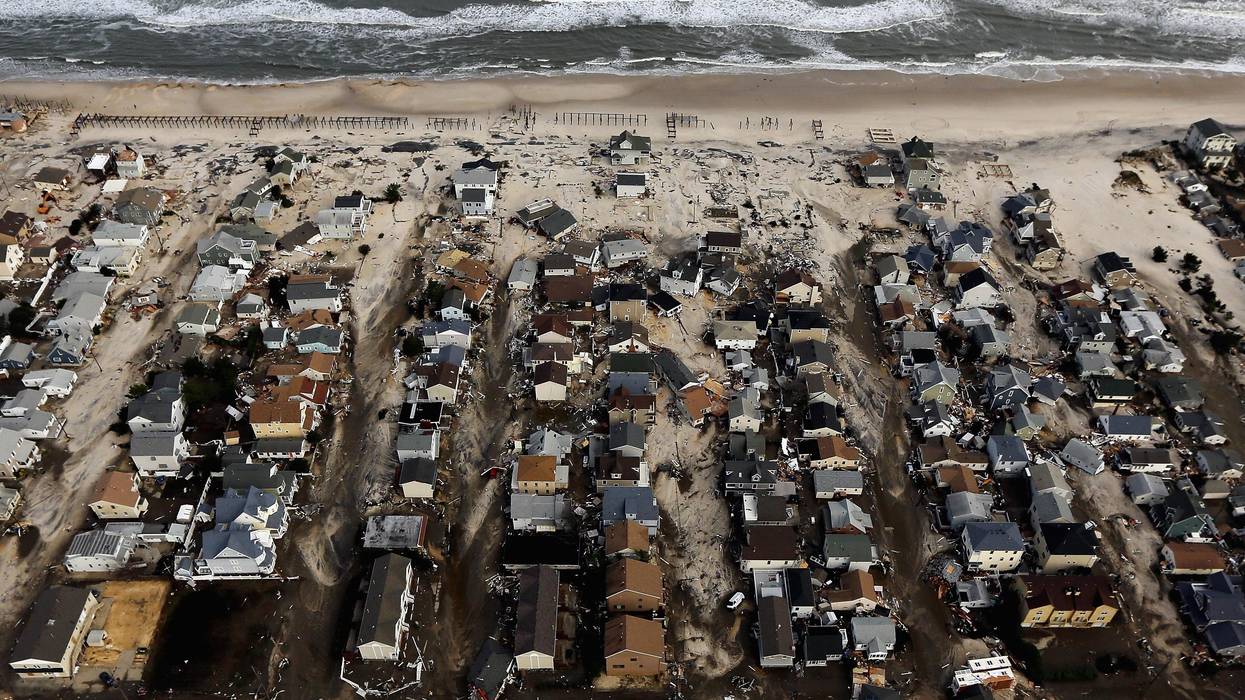
The suit's timing roughly coincides with the 10th anniversary of Superstorm Sandy, which killed 38 people in New Jersey while causing around $30 billion in damage.
"We will work tirelessly to make sure these companies pay every last dollar for the harm they've caused," Platkin vowed. "If you lie to the public to protect your profits, we will hold you accountable."