SUBSCRIBE TO OUR FREE NEWSLETTER
Daily news & progressive opinion—funded by the people, not the corporations—delivered straight to your inbox.
5
#000000
#FFFFFF
To donate by check, phone, or other method, see our More Ways to Give page.


Daily news & progressive opinion—funded by the people, not the corporations—delivered straight to your inbox.
The high-profile lawyer behind the case "wants to shut down doctors in shield law states," said one expert, and "he wants a federal court to weigh in on the Comstock Act."
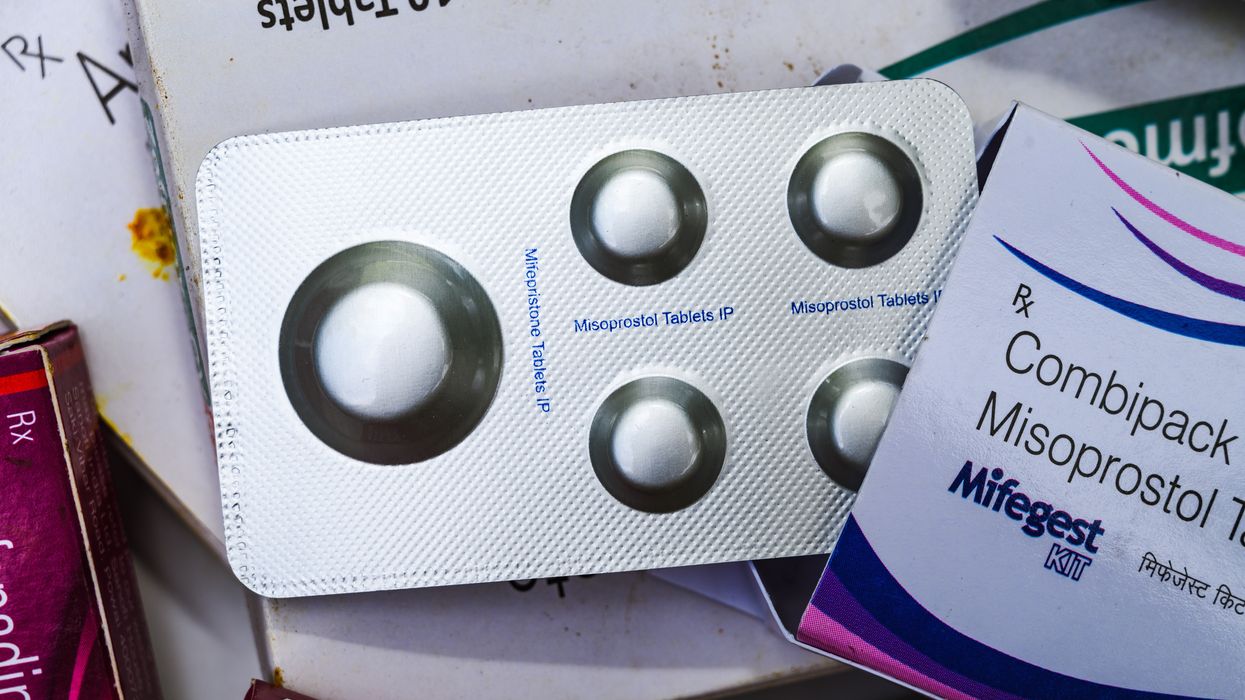
As polling reaffirms U.S. public support for abortion rights, a new case in Texas is generating alarm and outrage, as it involves a federal "zombie law" that the forced birth movement aims to use to block people across the country from accessing abortion pills.
Jonathan Mitchell is serving as lead counsel in the proposed class action lawsuit, filed Sunday in the Southern District of Texas. Described as an "anti-abortion legal terrorist" by Susan Rinkunas in Jezebel, Mitchell is Texas' former solicitor general and the chief architect of a state law that entices anti-choice vigilantes with $10,000 bounties to enforce a six-week abortion ban.
"He's represented at least three other men who've sued over women's abortions—including Marcus Silva, who sued his ex-wife's friends for helping her get abortion pills. That case was eventually dropped, but not before it came out that Silva tried to use the lawsuit to blackmail his ex into having sex with him," Jessica Valenti noted in her Abortion, Everyday newsletter. "Since then, Mitchell and other anti-abortion activists have been cozying up to men's rights groups, 'abortion recovery' ministries, and crisis pregnancy centers—on the lookout for more angry men eager to sue their partners or exes for ending a pregnancy."
In the new wrongful death case in Texas, Mitchell represents Jerry Rodriguez, who is suing Rémy Coeytaux, a California doctor accused of mailing to Galveston County medication that his girlfriend used to end her pregnancy last September. The complaint claims the girlfriend's estranged husband and mother "pressured her to kill the baby with the drugs obtained from Coeytaux."
The complaint also claims the girlfriend ended a second pregnancy with "pills that were illegally obtained" in January—and she is now two months into a third pregnancy, and Rodriguez believes she may seek another medication abortion. He asked for $75,000 in damages and "an injunction to stop Coeytaux from distributing abortion-inducing drugs in violation of state or federal law."
The new "wrongful death" abortion pill lawsuit out of Texas is a BFD for several reasons, but one twist is that the doctor being targeted is the brother of lifelong reproductive health advocate Francine Coeytaux of @plancpills.bsky.social Collab by Nina Martin & me on what the case is all about:
[image or embed]
— Madison Pauly (@msjpauly.bsky.social) July 23, 2025 at 5:25 PM
Among the legislation cited in the filing is the Comstock Act, or 18 U.S. Code § 1461, a dormant 1873 law that criminalized the shipping of "obscene" materials, including abortifacients. While some anti-choice advocates aim to outlaw abortion nationwide with legislation in Congress, Mitchell has said that "we don't need a federal ban when we have Comstock on the books."
Since the U.S. Supreme Court's right-wing majority reversed Roe v. Wade with Dobbs v. Jackson Women's Health Organization in 2022, Republican lawmakers have ramped up their efforts to restrict abortion rights within their states—with deadly consequences. Residents of those parts of the country have increasingly turned to telehealth. States with pro-choice policymakers have enacted "shield laws" to protect abortion providers and patients who are traveling or receiving care online.
"These anti-abortion folks are really upset that all these pills are being sent to their states, and they're doing whatever they can to try to stop it," Jill Wieber Lens, a University of Iowa College of Law professor and reproductive rights expert, told Jezebel.
Lens also framed the Texas case as a fear tactic. "I think so much of this is about the chilling effect, as opposed to actually winning this lawsuit," she said. "This might scare other doctors in shield states from wanting to continue what they're doing."
According to Mother Jones, "The case is the first known test of whether abortion opponents can use federal court lawsuits to circumvent state shield laws aimed at protecting providers—a major escalation of attacks on abortion-friendly states."
Mary Ziegler, an abortion historian and law professor at the University of California, Davis, told the outlet that "the whole game for Jonathan Mitchell is to get into federal court... both because he wants to shut down doctors in shield law states, like everyone in the anti-abortion movement, and because he wants a federal court to weigh in on the Comstock Act."
Ziegler added on social media that the suit is also intended to "force a response" from the U.S. Supreme Court and President Donald Trump, who has so far resisted pressure from forced birth activists to use the Comstock Act to ban abortion nationwide. Further, she said, "it reinforces arguments for fetal personhood (note that is a class action on behalf of all 'fathers of unborn children')."
Three years after the fall of Roe v. Wade, most Americans still support legal abortion.-64% say abortion should be legal in all or most cases.-80%+ support it in cases of rape, incest, or health risks.-Even after Dobbs, public opinion hasn’t budged; the people are not with the ban.
[image or embed]
— Anna DNP, FNP, BC@ AccessToCareAdvocate (@anna1900.bsky.social) July 24, 2025 at 7:33 AM
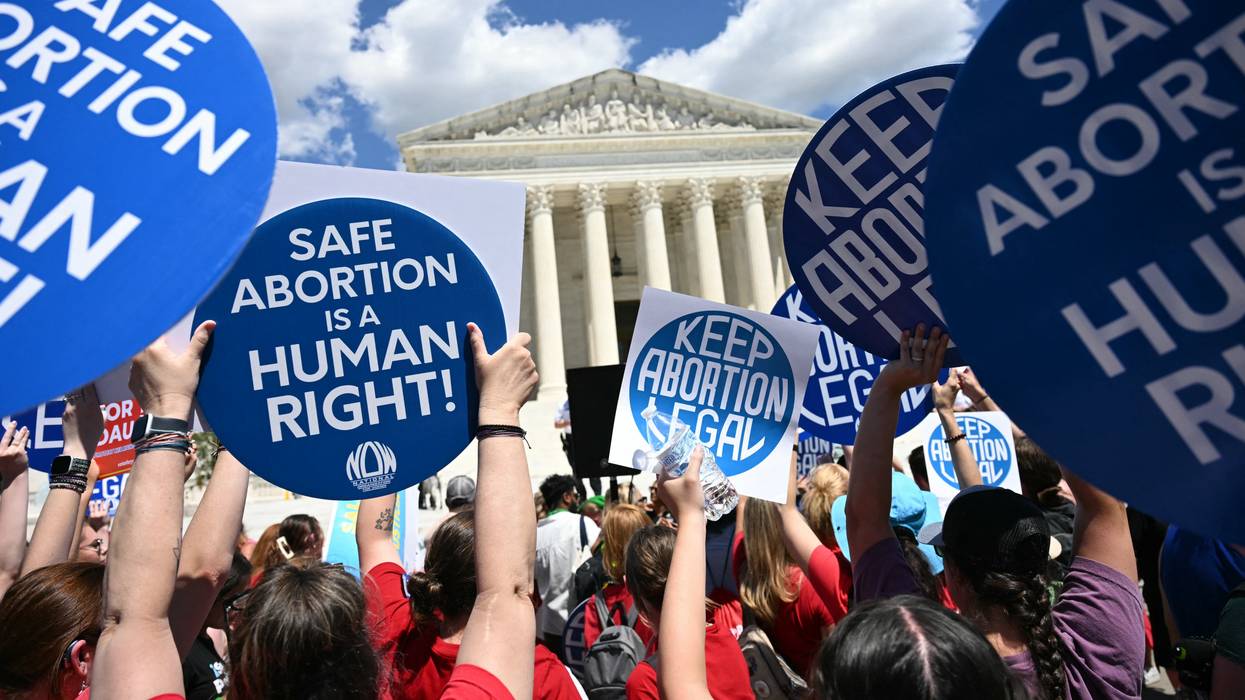
The case comes as Thursday polling from the Associated Press-NORC Center for Public Affairs Research shows that 64% of U.S. adults across the political spectrum say that abortion should be legal in all or most cases.
While 52% of all respondents agreed abortion should be allowed if the patient does not want to be pregnant "for any reason," large majorities believe it should be allowed if the pregnant person's health is seriously endangered (89%), the pregnancy is a result of rape or incest (86%), and an abnormality would prevent the fetus from surviving outside of the womb (85%).
Additionally, according to the poll, a majority of Americans support protecting abortion access for people who endure miscarriages or other pregnancy-related emergencies (69%), protecting a patient's right to obtain care in another state (56%), and protecting doctors from fines or prison time (55%).
"We cannot quit. We cannot be silent. If we quit, we lose more women," said one mother whose daughter died after being denied care under Georgia's six-week ban.
Congresswoman Nikema Williams joined patients, healthcare providers, and activists—including the mother of a woman who died after being refused abortion care in Georgia—at a Tuesday press conference held a day before what would have been the 52nd anniversary of Roe v. Wade, and amid fears of a national abortion ban during U.S. President Donald Trump's second term.
"I refuse to stand by while extremist politicians attack our freedoms, our health, and our future," Williams (D-Ga.) told attendees of the virtual press conference, which was hosted by the abortion rights group Free & Just. "Reproductive freedom is about healthcare, it's about dignity, it's about autonomy. It's about ensuring that everyone, every person, has the ability to make the best decisions for themselves and their families without government interference."
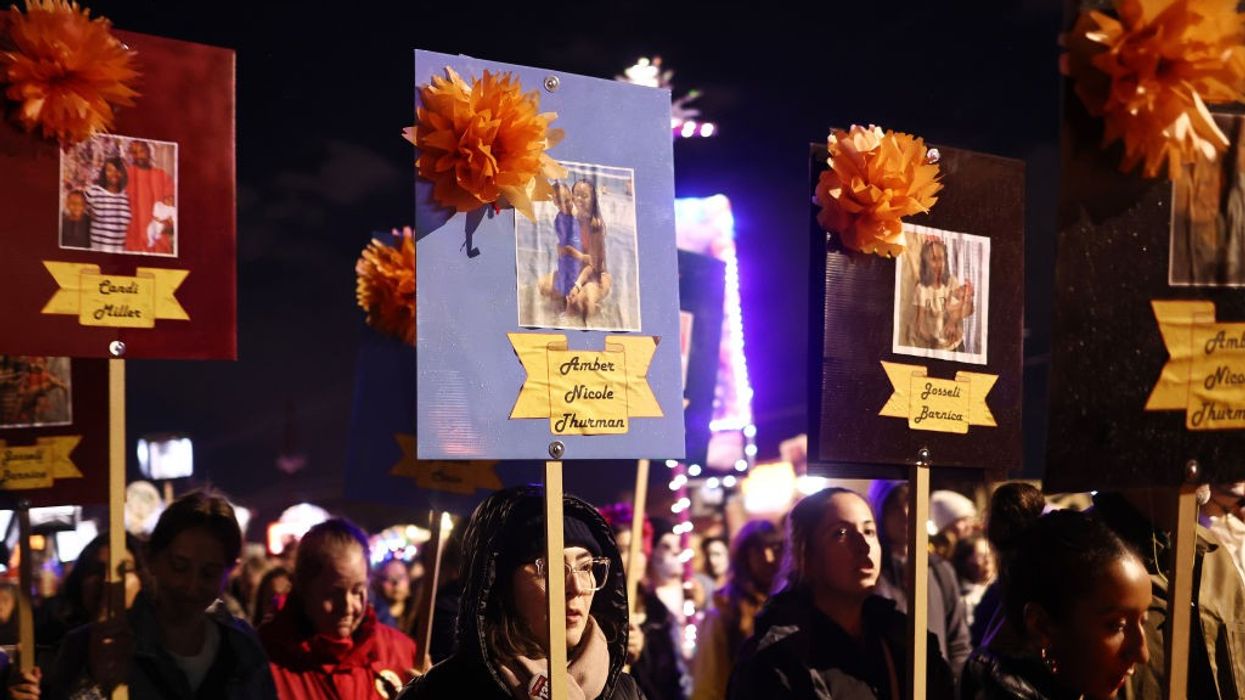
Speakers at Tuesday's event included Shanette Williams, whose 28-year-old daughter Amber Nicole Thurman died in 2022 after being forced to travel out of state to seek care due to a recently passed Georgia law banning almost all abortions after six weeks of pregnancy, a period during which many people don't even know they're pregnant.
"I want to send a clear message to men to get off the sidelines and enter the fight for reproductive justice."
Thurman, who was the single mother of a young son, is one of at least several U.S. women—most of them Black or brown—whose deaths have been attributed to draconian anti-abortion laws.
"She left a son, who every day is confused by why his mother is not here," Williams said of her daughter. "I'm here to be that voice, to fight, to push, to do whatever I need to do to help save another life. Because I never want a mother to feel what I feel today."
"We cannot quit. We cannot be silent. If we quit, we lose more women," Williams added. "In November, following reporting from ProPublica, officials in Georgia dismissed all members of the state's Maternal Mortality Review Committee, which investigates the deaths of pregnant women across the state."
Last September, Fulton County Judge Robert McBurney struck down the state's six-week abortion ban as a violation of "a woman's right to control what happens to and within her body," a decision that made the procedure legal up to approximately 22 weeks of pregnancy. Republican Georgia Attorney General Chris Carr appealed the ruling to the state Supreme Court.
Avery Davis Bell, a Savannah mother who had to travel out of Georgia for care after her fetus was diagnosed with a fatal condition that threatened her own life as well, said during Tuesday's press conference: "I could have been Amber Nicole Thurman. It is important for me to continue sharing my story and advocating for us to be able to build the families we want, protect our lives, and be here for our living children."
Atlanta-area ultrasound technician and abortion care provider Suki O. said during the event that Georgia's ban "has been in place for three years now and it doesn't get any easier."
"To turn women away is the hardest thing for me to do," she added. "How many Black women will die, have died, and will continue to die due to these abortion bans?"
Davan'te Jennings, president of Young Democrats of Georgia and youth organizing director at Men4Choice, told the press conference that abortion "is not just a women's issue, this is a man's issue as well."
"I want to send a clear message to men to get off the sidelines and enter the fight for reproductive justice," Jennings added. "What would it look like for you to have to watch your mother go through this? To watch your sister go through this?"
While Trump has said he would veto any national abortion ban passed by the Republican-controlled Congress, reproductive rights advocates have expressed doubt that the president—a well-documented liar—would actually do so, and warned that his administration could use a 151-year-old law known as the Comstock Act to outlaw the procedure without needing congressional approval.
Critics also note that Trump has repeatedly bragged about appointing three of the U.S. Supreme Court justices who voted to overturn Roe in Dobbs v. Jackson Women's Health Organization, the 2022 decision that canceled nearly a half-century of federal abortion rights.
The Trump administration is also widely expected to revive the so-called Global Gag Rule, which bans foreign nongovernmental organizations from performing or promoting abortion care using funds from any source, if they receive funds from the U.S. government for family planning activities.
Conservative groups, including the Heritage Foundation-led coalition behind Project 2025—a blueprint for a far-right overhaul of the federal government—have proposed policies including a national abortion ban, restricting access to birth control, defunding Planned Parenthood, monitoring and tracking pregnancy and abortion data, and eviscerating federal protections for lifesaving emergency abortion care.
While campaigning for president, Trump said he would allow states to monitor women's pregnancies and prosecute anyone who violates an abortion ban. According to the Guttmacher Institute, 12 states currently have near-total abortion bans, and 29 states have enacted prohibitions based on gestational duration.
"We are not going to trust the futures of our daughters and granddaughters to two men who have openly bragged about blocking access to abortion for women all across this country," said Sen. Elizabeth Warren.
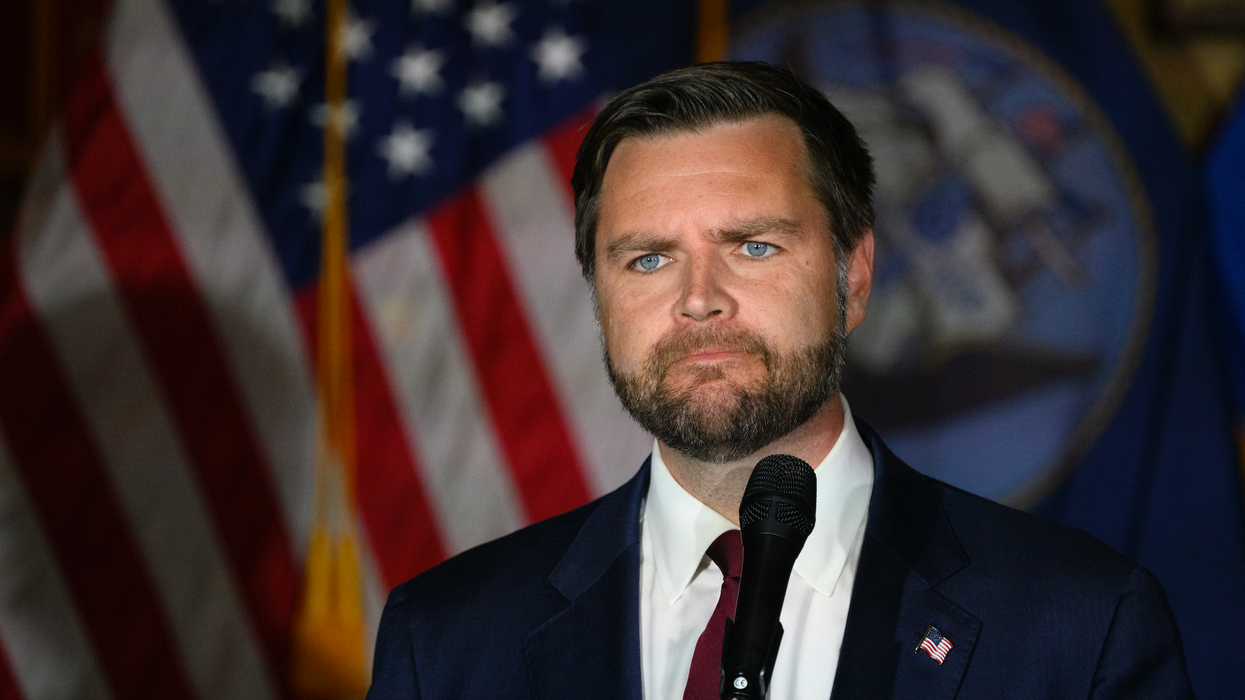
Sen. Elizabeth Warren responded forcefully to Sen. JD Vance on Sunday after the Republican vice presidential nominee claimed that Donald Trump—who has repeatedly celebrated and taken credit for the Supreme Court decision that revoked abortion rights at the federal level—would veto legislation imposing a nationwide abortion ban if it reached his desk.
"American women are not stupid and we are not going to trust the futures of our daughters and granddaughters to two men who have openly bragged about blocking access to abortion for women all across this country," Warren (D-Mass.) told NBC News' Kristen Welker.
The Democratic senator went on to warn that if Trump and Vance win in November, their administration could wield a 151-year-old zombie statute known as the Comstock Act to ban abortion nationwide, without even needing congressional approval.
Last year, Vance joined dozens of Republican lawmakers in calling on Attorney General Merrick Garland to enforce the long-dormant Comstock Act and "shut down all mail-order abortion operations."
"Right now, where we are is Donald Trump and JD Vance take the White House, they have current law, the Comstock Act which, with the right person that they put into the Department of Justice and one of their extremist judges out in the world, they can actually ban all access to abortion all across this country," Warren said Sunday. "So for any woman who's in the middle of a miscarriage who goes into an emergency room and discovers there's no medication and no treatment for her because abortion has been banned nationwide, they can thank Donald Trump and JD Vance."
Warren's comments came after Vance told Welker in an interview that aired Sunday that he believes Trump would veto a federal abortion ban if such a measure passed Congress.
"He said that explicitly that he would," Vance said.
But Welker pushed back, replying: "I don't think he's ever said explicitly that he would. He's said that to you?"
Vance did not respond directly to Welker's follow-up.
Trump said in April that, if reelected, he would do nothing to stop states from imposing draconian bans on abortion, saying they should be allowed to do "whatever they decide."
While the former president stopped short of supporting a federal abortion ban, Trump boasted that he was "proudly the person responsible" for ending Roe v. Wade, which was overturned by a right-wing Supreme Court supermajority that includes three Trump-appointed justices.
When he was president, Trump urged the U.S. Senate to pass legislation banning abortion at the federal level after 20 weeks of pregnancy.
Warren noted Sunday that with Roe overturned, 30% of women in the U.S. "live in states that effectively ban abortion."
"Donald Trump and JD Vance in the White House, it won't be 30%, it will be 100%," Warren said. "The only way that we're going to protect access to abortion is to have a Democratic Congress, send a bill to Kamala Harris, she will sign it into law, and then we will restore a right to half the population in this country. And no longer will a woman have to go into an emergency room and be told she's not near enough death to get the medical treatment that she needs."
Project 2025 "includes a detailed blueprint for a future Republican president to impose a backdoor national abortion ban with a stroke of the pen," a pair of House Democrats warned.
Two congressional Democrats who spearheaded the Stop Project 2025 Task Force warned Thursday that abortion rights opponents are laying the groundwork to revive and wield a 151-year-old "zombie law" to ban abortion nationwide.
In a letter to U.S. President Joe Biden, who is under growing pressure to drop out of the 2024 race, Reps. Jared Huffman (D-Calif.) and Jamie Raskin (D-Md.) noted that the Project 2025 agenda crafted by the Heritage Foundation and other right-wing groups "includes a detailed blueprint for a future Republican president to impose a backdoor national abortion ban with a stroke of the pen by willfully misapplying this antiquated and unconstitutional statute."
The statute in question is the Comstock Act, an 1873 law that prohibits the mailing of any "instrument, substance, drug, medicine, or thing" that "may, or can, be used or applied for producing abortion." Rep. Cori Bush (D-Mo.) is leading the Democratic effort to defang the law.
According to the health policy research organization KFF, the Comstock Act "has not been applied to the mailing of abortion materials in the last fifty years." A trio of legal experts recently described the law as the "most significant national threat to reproductive rights."
Huffman and Raskin noted in their letter Thursday that the statute "was used to prosecute freethinking publisher DeRobigne Mortimer 'D.M.' Bennett," who "was sentenced to 13 months of hard labor in 1879 for mailing an anti-marriage pamphlet that advocated for women's bodily autonomy."
"Emma Goldman was hounded, silenced, and incarcerated for speaking out in favor of contraception," the House Democrats added. "Ida Craddock was charged multiple times for distributing writings on women's rights and sexual relations between husband and wife; she was re-arrested in 1902 after serving a three-month prison sentence, convicted, and died by suicide before serving her five-year sentence in a federal penitentiary. Anna Trow Lohman also died by suicide rather than facing trial for distributing birth control and abortifacients."
"MAGA activists are now working to resuscitate this near-dormant law to advance their far-right agenda."
Huffman and Raskin wrote that while the U.S. Supreme Court "largely overturned most of the Comstock Act through landmark decisions on free speech, abortion, and birth control" over the course of the 20th Century, "many of these decisions have been eroded and attacked" by the current conservative-dominated Supreme Court.
"MAGA activists are now working to resuscitate this near-dormant law to advance their far-right agenda," warned the two Democrats, who called on Biden to issue pardons for "Bennett, Goldman, Craddock, and any others who were unjustly convicted under the Comstock Act" to make clear that he "stands against any efforts in the past, present, or future to weaponize the Comstock Act against Americans' individual rights to free speech and reproductive autonomy."
Huffman and Raskin's letter came a day after The Washington Post highlighted that Sen. JD Vance (R-Ohio)—the running mate of Republican presidential nominee Donald Trump—joined dozens of GOP lawmakers last year in calling on Attorney General Merrick Garland to "shut down all mail-order abortion operations," citing the Comstock Act and other federal statutes.
The Biden Justice Department has said the Comstock Act "does not prohibit the mailing of certain drugs that can be used to perform abortions where the sender lacks the intent that the recipient of the drugs will use them unlawfully."
While Trump has sought to distance himself from Project 2025 and stopped short of explicitly endorsing a federal abortion ban, the platform that Republican delegates approved earlier this week at the party's convention in Milwaukee declares, "We believe that the 14th Amendment to the Constitution of the United States guarantees that no person can be denied life or liberty without due process, and that the states are, therefore, free to pass laws protecting those rights."
As The Intercept's Shawn Musgrave observed Wednesday, abortion opponents welcomed that line as an endorsement of the notion of "fetal personhood."
"Far from moderating on abortion, the GOP platform now suggests that fetuses and embryos already have full constitutional rights—without the need for any new laws or amendments," Musgrave wrote. "This aligns neatly with Project 2025's roadmap and Vance's views."
"Anti-abortion extremists and the Republican Party have shown they will stop at nothing when it comes to stripping away our reproductive freedoms," the Missouri Democrat said of the GOP's reliance on the arcane Comstock Act.
A group of congressional Democrats led by progressive Rep. Cori Bush introduced legislation Thursday that would repeal elements of the 151-year-old law known as the Comstock Act as allies of presumptive GOP nominee Donald Trump plot to use the statute to enact a federal abortion ban without congressional approval.
Bush (D-Mo.) was the first lawmaker to call for the repeal of the Comstock Act in the wake of the U.S. Supreme Court's 2022 decision overturning Roe v. Wade. The new bill, titled the Stop Comstock Act, was introduced with over two dozen backers in the House and at least 19 in the Senate, where Sen. Tina Smith (D-Minn.) put forth companion legislation.
"As a Black woman from the first state to ban abortion post-Dobbs and someone who has had abortions, I deeply and personally understand the critical need to protect and expand access to abortion care," Bush said in a statement. "Anti-abortion extremists and the Republican Party have shown they will stop at nothing when it comes to stripping away our reproductive freedoms."
"They aren't hiding their playbook: Reviving the outdated and obsolete zombie statute, the Comstock Act, is the GOP's latest hack to bypass Congress and impose a nationwide abortion ban," Bush added. "When people tell you who they are, believe them. I am proud to be working alongside my colleagues in introducing legislation to repeal the Comstock Act and protect access to abortion care."
The Comstock Act bars the mailing of any "instrument, substance, drug, medicine, or thing" that "may, or can, be used or applied for producing abortion." Legal experts have described the law, which hasn't been applied in a century, as the "most significant national threat to reproductive rights."
The Stop Comstock Act would "repeal provisions of the Comstock laws that anti-abortion extremists want to willfully misapply in order to criminalize providers and ban abortion nationwide without any congressional action," according to a summary released by the bill's supporters.
"It's time we take immediate action to stop Republicans from abusing the Comstock Act to further erode our reproductive rights," said bill co-sponsor Rep. Becca Balint (D-Vt.).
"Anti-abortion extremists have manipulated laws to ban abortion before, and they are promising to do it again."
The Democratic effort to defang Comstock comes as Trump allies are plotting to use the law to attack abortion rights if the former president wins another four years in the White House.
Project 2025, a sweeping right-wing agenda crafted by conservative organizations with the help of some former Trump administration officials, calls for the U.S. Justice Department to use the Comstock Act against "providers and distributors" of abortion pills. Last week, the U.S. Supreme Court unanimously ruled in favor of preserving access to mifepristone, a medication that is commonly used for abortion care.
Jonathan Mitchell, the key architect of a draconian 2021 Texas abortion ban and a Trump attorney, told The New York Times earlier this year that "we don't need a federal [abortion] ban when we have Comstock on the books."
"I hope he doesn't know about the existence of Comstock, because I just don't want him to shoot off his mouth," Mitchell, who is seen as a possible attorney general pick for the former president, said of Trump. "I think the pro-life groups should keep their mouths shut as much as possible until the election."
Madison Roberts, senior legislative counsel at the ACLU, said in a statement Friday that "Trump's advisers are quietly plotting to bypass Congress and misuse a 150-year-old law to attempt to ban abortion in every state in the country."
"They are arguing that the Comstock Act is a de facto national abortion ban already on the books, and they are wrong," said Roberts. "The Department of Justice has made clear and federal appeals courts have uniformly held for almost a century that the Comstock Act does not apply to legal abortion care. But anti-abortion extremists have manipulated laws to ban abortion before, and they are promising to do it again—even in states that have passed statutory and constitutional protections for abortion."
"We applaud leaders in Congress for introducing the Stop Comstock Act to fight back against extremists' threats to misuse Comstock as a nationwide abortion ban," Roberts added. "We will continue to work with elected leaders to raise the alarm and neutralize this potential anti-abortion attack before Trump allies get the chance to launch it."
Anti-abortion activists want to use the Comstock Act to ban all abortions in the nation, and most birth control pills and devices as a bonus.
Yesterday’s Supreme Court session was a loud and persistent warning: America needs to pay attention.
During oral arguments, the Comstock Act was invoked repeatedly by Justice Samuel Alito, Justice Clarence Thomas, and Erin Hawley, the wife of Republican Senator Josh Hawley, who was arguing before the court that the abortion drug, Mifepristone, should be banned nationwide.
Now that it’s fairly clear the “sad doctors” argument before the court yesterday was so pathetically weak they can’t use it to ban Mifepristone, anti-abortion activists are talking about finding a case they can push up to the court next year that will allow it to ban all abortions in the nation, and most birth control pills and devices as a bonus.
How do they plan to do it? With the Comstock Act. You could see and hear the set-up of this future court case in Yesterday’s arguments.
Justice Sam Alito said:
This [Comstock Act] is a prominent provision. It’s not some obscure subsection of a complicated, obscure law. Everybody in this field knew about it.
Erin Hawley was emphatic:
We don’t think that there’s any case of this court that empowers FDA to ignore other federal law. The Comstock Act says that drugs should not be mailed… either through the mail or through common carriers.
And Clarence Thomas laid out the possibility of future litigation when he essentially threatened the lawyer for Danco Laboratories, the manufacturer of Mifepristone:
“How do you respond to an argument that mailing your product and advertising it would violate the Comstock Act?” He went onto note that the law “is fairly broad, and it specifically covers drugs such as yours.”
In other words, they want the act enforced today.
Bloomberg news laid it out yesterday:
“Do we think the Supreme Court majority is going to rule on the Comstock Act in this case? The answer to that is no,” said Mary Ziegler, a law professor at the University of California at Davis who specializes in reproductive rights. “Do we think that the Comstock Act is going to come up again at some point in the future? The answer to that is definitely.”
So, what the heck is the Comstock Act and why are Republicans trying to revive it before the Supreme Court and in threatening letters to pharmacy chains?
You’ve probably never heard of Anthony Comstock, a Civil War Union soldier and New York postmaster, who died in 1915. You need to learn about him and his legacy, however, as his long fingers are about to reach up out of the grave and wrap themselves around the necks of every American woman of childbearing years.
Anthony Comstock was a mama’s boy who hated sex. His mother died when he was 10 years old, and the shock apparently never left him; women who didn’t live up to her ideal were his open and declared enemies, as were pornography, masturbation, and abortion. He was so ignorant of sex and reproduction that he believed a visible human-like fetus developed “within seconds” of sexual intercourse.
If Hawley’s interpretation is ultimately adopted by the Supreme Court in another case more specifically tailored to it next year—which the anti-abortion movement is working on as you’re reading these words—all abortions in the United States would be ended when drugs and suction and surgical devices designed specifically for the procedure can no longer be shipped to hospitals, clinics, or physicians’ offices.
Comstock spent decades scouring the country collecting pornography, which he enthusiastically shared with men in Congress, and harassing “loose women.” For example, when he visited a belly-dancing show (then a new craze) in Chicago at the Cairo Theatre during the World’s Fair of 1893, he demanded the show be shut down.
As Amy Sohn, who wrote a brilliant Comstock biography titled The Man Who Hated Women, noted:
Despite national controversy and Comstock’s intervention, ultimately the only alteration made to the fair’s belly dancing was costuming: The dancers swapped their gauze blouses for thin woolen undershirts. The vice hunter had lost in Chicago. But he would not forget the dancers, and would have four of them arrested and fined when they came to New York that winter. New York, after all, was Comstockland.
Comstock lobbied for and shepherded through Congress a law passed on March 3, 1873 titled “An Act for the Suppression of Trade in, and Circulation of, Obscene Literature and Articles of Immoral Use.” Today we refer to it as the Comstock Act.
It’s language with regard to abortion is not at all ambiguous:
Every obscene, lewd, lascivious, indecent, filthy, or vile article, matter, thing, device, or substance… designed, adapted, or intended for producing abortion, or for any indecent or immoral use; and
Every article, instrument, substance, drug, medicine, or thing which is advertised or described in a manner calculated to lead another to use or apply it for producing abortion, or for any indecent or immoral purpose; and
Every written or printed card, letter, circular, book, pamphlet, advertisement, or notice of any kind giving information, directly or indirectly, where, or how, or from whom, or by what means any of such mentioned matters, articles, or things may be obtained or made, or where or by whom any act or operation of any kind for the procuring or producing of abortion will be done or performed, or how or by what means abortion may be produced, whether sealed or unsealed; and
Every paper, writing, advertisement, or representation that any article, instrument, substance, drug, medicine, or thing may, or can, be used or applied for producing abortion, or for any indecent or immoral purpose; and
Every description calculated to induce or incite a person to so use or apply any such article, instrument, substance, drug, medicine, or thing—
Is declared to be nonmailable matter and shall not be conveyed in the mails or delivered from any post office or by any letter carrier.
The penalty is also not ambiguous. Persons mailing information about abortion, or drugs or devices to produce an abortion:
S]hall be fined under this title or imprisoned not more than five years, or both, for the first such offense, and shall be fined under this title or imprisoned not more than ten years, or both, for each such offense thereafter.
The Biden administration argues that the Comstock Act of 1873 was set aside almost a century ago.
And, indeed, in 1930, the Appeals Court for the Second Circuit ruled in Youngs Rubber Corp. v. C.I. Lee & Co that the law couldn’t apply to things sent through the mail that are legal, even if they were illegal at the time of the passage of the Comstock Act. (The case involved condoms manufactured by Youngs Rubber.)
“Such a construction,” the court wrote, “would prevent mailing to or by a physician of any drug or mechanical device ‘adapted’ for contraceptive or abortifacient uses, although the physician desired to use or to prescribe it for proper medical purposes.”
The law has been amended by Congress four times (in 1955, 1958, 1971, and 1994), but the language above was never struck because legislators figured the 1930 appeals court’s ruling rendered it nugatory.
But don’t tell that to Trump’s appointee, Texas District Judge Matthew Kacsmaryk of Amarillo, who ruled last year that Mifipristone was to be banned nationwide: He based a large part of his decision on the plain language of the Comstock Act.
And don’t tell it to the three right-wing judges who heard the appeal of Kacsmaryk’s decision before the Fifth Circuit Court of Appeals on its way to SCOTUS.
When the Biden administration’s attorney argued before the Fifth Circuit that Kacsmaryk’s decision, based largely on the Comstock Act, was “unprecedented,” Circuit Judge James Ho—also a Trump appointee, who personally swore his good friend Kacsmaryk into his office, and whose wife is a paid anti-abortion activist—interrupted her with a curt snap, saying:
I guess I’m just wondering why not just focus on the facts of this case rather than have this sort of “FDA can do no wrong” theme.
That appeals court, made up of a George W. Bush appointee and two Trump appointees, earlier had ruled in their preliminary finding to hear the case that they disagreed with the Biden administration’s assertion that, to quote the three judges, “the [Comstock] law does not mean what it says it means.”
When the Biden interpretation of the Comstock Act was brought up in oral arguments, the Bush appointee, Judge Jennifer Walker Elrod, said there is “some disagreement” about whether previous court rulings actually invalidated the law. After all, it’s never been adjudicated before the Supreme Court and is still on the books.
This battle promises to be long and hard-fought, and the only solution will be for Congress to take this gun out of Republicans’ hands by overturning the Comstock Act itself.
Republican members of Congress agree, and want the Comstock Act enforced nationwide now. They think they don’t even need a ruling from the Supreme Court: They just need a Republican president.
In a letter sent to CVS (among other pharmacy chains), Mississippi Republican Senator Cindy Hyde-Smith and eight other Republican senators (Lankford, Daines, Braun, Rubio, Marshall, Risch, Crapo and Blackburn) wrote that the Biden interpretation (and that of Congress in 1955, 1958, 1971, and 1994) is wrong.
They explicitly asserted that the Comstock Act is still in effect and they want it enforced:
“We write to express our support and agreement with 21 [Republican] state attorneys general,” they wrote “who have reminded you that Federal law in 18 U.S.C. 1461-1462 [the Comstock Act] criminalizes nationwide using the mail, or interstate shipment by any express company or common carrier, to send or receive any drug that is ‘designed, adapted, or intended for producing abortion.’”
The 1930 court ruling that lawmakers and judges had, for over 90 years, believed only applied the Comstock Act to items that were illegal (like child porn), Senator Hide-Smith wrote:
[D]oes not protect CVS or any other individual or entity from being prosecuted within the five-year statute of limitations for the illegal mailing or interstate shipment of abortion drugs… even for conduct that occurs today.
Keep in mind, under the plain language of the Comstock Act this could also apply to birth control pills, IUDs, and other things used to prevent pregnancy. And, of course, pornography.
The lawyer for Republicans defending Kacsmaryk’s ruling, Erin Hawley, went so far as to assert before the Fifth Circuit Court of Appeals that even physicians and pharmacies shouldn’t be able to receive Mifipristone or other drugs that could produce an abortion via the mail, FedEx, or UPS:
What the Comstock law says is that it is improper to mail things that induce or cause abortions, which is precisely the action the FDA took in 2021 when it permitted the mailing of abortion drugs.
If Hawley’s interpretation is ultimately adopted by the Supreme Court in another case more specifically tailored to it next year—which the anti-abortion movement is working on as you’re reading these words—all abortions in the United States would be ended when drugs and suction and surgical devices designed specifically for the procedure can no longer be shipped to hospitals, clinics, or physicians’ offices.
This is no idle threat.
As Washington Post reporter Dan Diamond wrote for his Substack newsletter, anti-abortion activist Mark Lee Dickson, who’s helped several cities around the country put into law local versions of the Comstock Act, told him:
If a future president were to enforce these federal statutes, then they could shut down every abortion facility in America.
This is the specific goal of these mostly Catholic religious fanatics: to completely outlaw all abortion and radically restrict access to birth control. And they are not going to give up just because it looks like the Supreme Court isn’t going to ban Mifepristone this year.
Such a case would, based on what they said yesterday, have Republicans in the Senate, Clarence Thomas, and Sam Alito gleefully rubbing their hands in anticipation.
This battle promises to be long and hard-fought, and the only solution will be for Congress to take this gun out of Republicans’ hands by overturning the Comstock Act itself.
And that’s unlikely to happen unless or until Democrats take back the House, hold the White House, and gain a filibuster-proof majority in the Senate (or kill the filibuster).
The stakes this fall couldn’t be higher.
"The Comstock Act must be repealed," said the Missouri Democrat.
Rep. Cori Bush on Tuesday called for the repeal of a long-obsolete law that anti-abortion activists, lawmakers, and judges have worked to revive as part of their nationwide assault on reproductive rights.
"The Comstock Act must be repealed," Bush (D-Mo.) wrote in a social media post on Tuesday as the U.S. Supreme Court heard oral arguments in a case brought by a group of anti-abortion doctors aiming to curtail access to mifepristone—a medication used in more than 60% of U.S. abortions.
"Enacted in 1873, it is a zombie statute, a dead law that the far-right is trying to reanimate," Bush warned. "The anti-abortion movement wants to weaponize the Comstock Act as a quick route to a nationwide medication abortion ban. Not on our watch."
Bush's office said she was the first member of Congress to demand the law's repeal since the U.S. Supreme Court overturned the constitutional right to abortion in the summer of 2022.
The Comstock Act, which hasn't been applied in a century and was repeatedly narrowed following its enactment, prohibits the mailing of any "instrument, substance, drug, medicine, or thing" that "may, or can, be used or applied for producing abortion." Legal experts have described the dormant law as the "most significant national threat to reproductive rights."
Given that "virtually everything used for an abortion—from abortion pills, to the instruments for abortion procedures, to clinic supplies—gets mailed to providers in some form," a trio of experts wrote earlier this year, the anti-abortion movement's "interpretation of the Comstock Act could mean a nationwide ban on all abortions, even in states where it remains legal."
"Enforcing a Victorian-era law would be deeply unpopular and Democrats have a chance to sound the alarm, take action in both chambers, and run on it."
The Biden Justice Department has argued that the Comstock Act "does not prohibit the mailing of certain drugs that can be used to perform abortions where the sender lacks the intent that the recipient of the drugs will use them unlawfully."
But the law has nevertheless been cited with growing frequency by far-right advocacy groups and judges following the overturning of Roe v. Wade.
In 2023, a Trump-appointed federal judge in Texas, Matthew Kacsmaryk, invoked the Comstock Act in a decision suspending the Food and Drug Administration's 2000 approval of mifepristone. In 2021, the FDA said it would allow patients to receive abortion medication by mail—which Kacsmaryk claimed the Comstock Act "plainly forecloses."
That case, which has massive implications for abortion rights nationwide, is now before the U.S. Supreme Court.
During oral arguments on Tuesday, Justices Justices Samuel Alito and Clarence Thomas "repeatedly invoked the Comstock Act," The Washington Post reported, "pressing lawyers about whether the 1873 federal law should apply to abortion drugs sent through the mail today."
The justices' comments raised concerns that they could try to resurrect the Comstock Act in their coming ruling in the mifepristone case.
"While the Biden administration has issued guidance saying that the federal government
will not enforce the laws," the Post noted, "a future administration seeking to restrict abortion could choose to do so."
Donald Trump, the former president and presumptive 2024 Republican nominee, has expressed support for a national abortion ban.
Jezebel's Susan Rinkunas wrote Tuesday that "enforcing a Victorian-era law would be deeply unpopular and Democrats have a chance to sound the alarm, take action in both chambers, and run on it."
"We definitively have one lawmaker on board," Rinkunas added, referring to Bush. "Who's next?"
"Next week as we hear oral arguments in the FDA v. Alliance for Hippocratic Medicine case, remember who will be impacted," said one group.
As abortion bans and restrictions have taken hold in at least 21 states since the right-wing majority on the U.S. Supreme Court voted to overturn Roe v. Wade nearly two years ago, Americans' reliance on medication abortion became increasingly clear—with the use of abortion pills reported in 63% of all abortions that took place within the formal healthcare system in 2023.
Medication abortion represented 53% of all abortions in the U.S. in 2020, signifying a substantial increase since the court ruled in Dobbs v. Jackson Women's Health Organization.
The Guttmacher Institute released the results of its Monthly Abortion Provision Study on Tuesday, a week before the Supreme Court is set to hear oral arguments in Food and Drug Administration, et al., Applicants v. Alliance For Hippocratic Medicine, et al., a case brought by the right-wing Alliance Defending Freedom on behalf of anti-abortion doctors.
The group filed the case aiming to revoke the FDA's approval of mifepristone, one of two drugs used in medication abortions, more than two decades after it was approved following years of research.
"As our latest data emphasize, more than 3 out of 5 abortion patients in the United States use medication abortion," said Amy Friedrich-Karnik, director of federal policy for Guttmacher. "Reinstating outdated and medically unnecessary restrictions on the provision of mifepristone would negatively impact people's lives and decrease abortion access across the country."
Right-wing Judge Matthew Kacsmaryk ruled last year in the U.S. District Court for the Northern District of Texas that mifepristone's registration should be invalidated, a decision that was quickly put on hold by the Supreme Court.
Next week, the Supreme Court will hear the U.S. Department of Justice's appeal of Kacsmaryk's decision with a focus on two issues: whether the Alliance of Hippocratic Medicine has legal standing and whether the FDA did adequate research before it expanded access to mifepristone in 2016 and 2021. A ruling is expected this summer.
Guttmacher's research showed a 10% increase in all abortions in the U.S. between 2020-23, with a rate of 15.7 abortions per 1,000 women of reproductive age last year—the highest rate and number of abortions in more than a decade.
States without total abortion bans saw a 25% rise in abortion care compared to 2020, and the increase was even sharper in states bordering those with bans—37% between 2020-23.
"Next week as we hear oral arguments in the FDA v. Alliance for Hippocratic Medicine case, remember who will be impacted," said Whole Women's Health, which runs reproductive health clinics in several states.
Rachel Jones, principal research scientist for Guttmacher, said the group's findings show that "as abortion restrictions proliferate post-Dobbs, medication abortion may be the most viable option—or the only option—for some people, even if they would have preferred in-person procedural care."
Reproductive rights advocates and medical experts including the American College of Obstetricians and Gynecologists have long warned that restrictions on mifepristone—adopted by the FDA under pressure from the pro-forced pregnancy movement—are medically unnecessary and aim only to stop people from receiving care.
Advocates fear that the Supreme Court could rule that the FDA's 2021 decision to allow mifepristone to be dispensed via telemedicine and the mail violates the Comstock Act, a law that dates back to 1873 and prohibited the distribution of "obscene" materials through the mail.
"The modern anti-abortion movement wants to reinvent the Comstock Act as an abortion ban," University of California, Davis, law professor Mary Ziegler told Ms. magazine on Tuesday.
If healthcare providers can no longer dispense mifepristone via telemedicine, people seeking abortions would be forced to go in person to get care, "exposing them not only to delays and increased costs but also to harassment, threats, and other types of violence from anti-abortion extremism, which has increased dramatically since the fall of Roe," reported Ms.
Ahead of the Supreme Court's hearing in the Alliance for Hippocratic Medicine's "groundless case challenging FDA approval of mifepristone," said Guttmacher, "mifepristone is available and the facts remain clear: medication abortion is safe, effective, widely used, and critical to bodily autonomy for all."
"I think the pro-life groups should keep their mouths shut as much as possible until the election," said an attorney tied to Trump.
The architect of a Texaslaw that entices anti-choice vigilantes with $10,000 bounties supposedly wants former President Donald Trump and his allies to shut up about abortion until after the November presidential election—when right-wingers hope to implement "legally sophisticated" and unpopular forced-pregnancy policies.
After reporting on Friday that Trump "likes the idea of a 16-week national abortion ban" with exceptions for rape, incest, or to save the life of the pregnant person, The New York Times revealed on Saturday that lawyers and strategists in his "orbit" are crafting more complex plans.
"We don't need a federal ban when we have Comstock on the books," attorney Jonathan Mitchell told the Times, referring to a dormant 1873 law heralded by an "anti-vice" crusader that criminalized the shipping of various "obscene" materials, including abortifacients. "There's a smorgasbord of options."
"I hope he doesn't know about the existence of Comstock, because I just don't want him to shoot off his mouth," the lawyer added of Trump. "I think the pro-life groups should keep their mouths shut as much as possible until the election."
Mitchell appeared before the U.S. Supreme Court earlier this month to argue against an effort to remove Trump from Colorado's Republican primary ballot. He previously worked on the Texas vigilante law designed to circumvent Roe v. Wade, the historic abortion rights ruling that the justices—including three Trump appointees—overturned with their June 2022 decision in Dobbs v. Jackson Women's Health Organization.
Calling the existence of the law and its implications "perhaps the worst-kept secret of the post-Dobbs era," The New Republic's Melissa Gira Grant detailed recent coverage of the Comstock Act on Tuesday:
In recent months, numerous opinion pieces from leading experts on abortion, history, and the law, such as law professors David S. Cohen, Greer Donley, Rachel Rebouché, and Mary Ziegler, have warned of these specific plans. There were several at CNN and in the Times itself, and in Teen Vogue and The Atlantic, among others. They follow a trickle of reporting stretching back to the Dobbs decision outlining what legal threats lay on the other side of Roe. Reporters in Texas and reproductive rights reporters have been at the forefront of laying out the Comstock plan and its risks. "I knew about Comstock before Dobbs, but I wanted to say nothing about it," Jonathan Mitchell told Amy Littlefield at The Nation, in a story published in April 2023.
That same month, as a legal challenge to medication abortion amped up the Comstock threat, Susan Rinkunas at Jezebel warned, "Congress Needs to Repeal This Zombie 1873 Abortion Ban Before It Blows Up in Our Faces." Today we are no closer to that possibility, even as someone like Mitchell has become more explicit. The only thing he may be nervous about is more people paying attention. The idea that Trump can be kept in the dark until after the election is not unbelievable, but more likely is that Mitchell is hoping to make the Comstock plan sound that much more far-fetched with his "Oh no, please don't put this in the paper" feint this week.
Noting Mitchell's new comments in a piece for Jezebel on Monday, Rinkunas reiterated to Democrats on Capitol Hill that "now would be a great time for you to repeal this zombie ban once and for all."
Since
Dobbs, Democratic governors and legislators have worked to protect abortion rights for their constituents and "healthcare refugees" from states where GOP officials have ramped up fights for forced-pregnancy laws. Many of the bans or restrictions recently approved in over 20 states are being challenged in courts that GOP governors and Trump pushed to the right.
At the national level, GOP attorneys and strategists now propose bypassing Congress and "leveraging the regulatory powers of federal institutions," including the Food and Drug Administration (FDA), to enact anti-abortion policies that "could be stopped only by courts that the first Trump administration had already stacked with conservative judges," according to the Times.
"Policies under consideration include banning the use of fetal stem cells in medical research for diseases like cancer, rescinding approval of abortion pills at the FDA, and stopping hundreds of millions in federal funding for Planned Parenthood," the newspaper noted. "Such an action against Planned Parenthood would cripple the nation's largest provider of women's healthcare, which is already struggling to provide abortions in the post-Roe era."
Planned Parenthood and other groups and experts who support abortion rights have been strongly advocating for Democratic President Joe Biden's reelection—and renewed their warnings about Trump's return to the White House in response to the Times reporting.
Quoting from the article, Planned Parenthood Affiliates of California president and CEO Jodi Hicks
said on social media Saturday: "They 'are planning ways to restrict abortion rights if he returns to power that would go far beyond proposals for a national ban...' The only thing stopping them from taking your freedom is your VOTE."
Planned Parenthood Texas Votes senior adviser Wendy Davis, a former Democratic state senator,
warned that "as bad as things are now, believe me when I say they'll get much, much worse if we don't do everything we can to win in November—at every level on the ballot."
Reproductive Freedom for All president Mini Timmaraju told the Times that Trump is "trying to masquerade in public as a moderate," but if the likely Republican nominee is elected in November, "he's going to do whatever Jonathan Mitchell wants."
Praising the paper's "deep dive" on social media, Timmaraju
added that "maybe the most chilling is how confident they are that he can do the most damage in a second term, without Congress, and with judges he appointed."
Biden has come under
fire for recent remarks on abortion as well as his administration's support for Israel's war on the Gaza Strip, which has created a maternal healthcare crisis and outraged some "current Planned Parenthood employees, legal experts, nurse midwives, abortion fund workers, and clinic staffers" interviewed by HuffPost.
Still, surely aware of
polling that shows abortion bans are deeply unpopular with the American public, the Biden campaign has highlighted his support for reproductive rights on the campaign trail—including with statements from the president and abortion rights advocates about the Times articles and a new Politico piece on Trump and Christian nationalism.
While the ACLU does not endorse candidates, the group's chief advocacy and political officer, Deirdre Schifeling, stressed in a statement that Trump and "anti-abortion extremists at all levels will stop at nothing until our rights are stripped away."
"The majority of Americans strongly support abortion rights. We must elect leaders this year who reflect our values and push to restore abortion access in every state across the country," she added. "The only way we can stop extreme bans is to elect a president, and a House and Senate, that will pass federal legislation to protect abortion rights and reproductive freedom—voters deserve nothing less."
This post has been updated to note that the ACLU does not endorse candidates.
"In a time when reproductive healthcare is under attack, our group of 23 attorneys general strongly believe we should be encouraging companies and providers to offer easily accessible, safe, and confidential healthcare as broadly as possible."
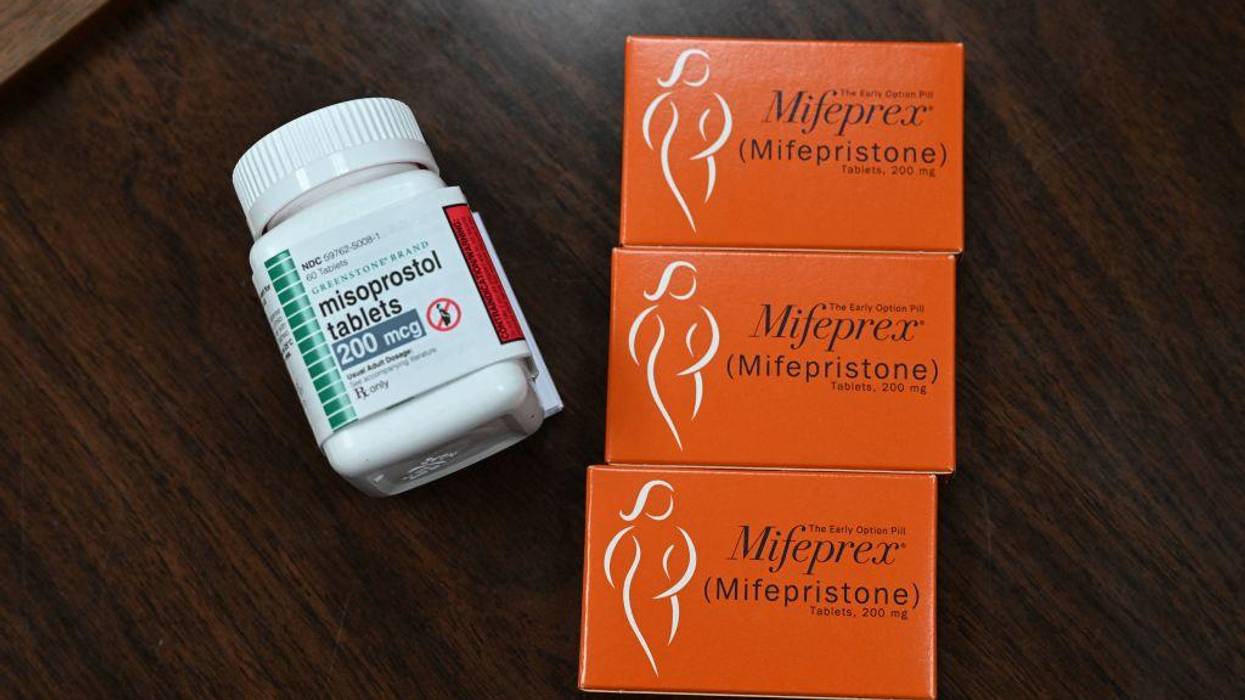
Warning that Republican-led states have launched an effort to keep millions of people from accessing lifesaving medications, 23 Democratic state attorneys general on Thursday sent a letter to officials at CVS and Walgreens to assure the pharmacies that they can legally dispense and mail mifepristone and misoprostol, the pills used in medication abortions.
The attorneys general of Oregon, California, and Washington spearheaded the letter two weeks after their Republican counterparts in 20 states
told the pharmacies that they could be in violation of the Comstock Act, dating back to the 1870s, if they deliver the pills to patients by mail.
"This claim is misguided and disregards over a century's worth of legal precedent," wrote the Democratic attorneys general. "As extensively detailed in the [Food and Drug Administration] Office of Legal Counsel's recent memorandum opinion, since the early 20th century, federal courts have repeatedly and consistently held that the Comstock Act does not categorically prohibit mailing items that can be used to terminate a pregnancy, and does not apply unless the sender intends the recipient to use them unlawfully."
The Republican attorneys general, led by Andrew Bailey of Missouri, issued their warning to the two largest pharmacy chains in the U.S. a month after the FDA announced that certified retail drugstores can dispense misoprostol and mifepristone, reversing longtime regulations that required patients to obtain the latter pill only at health clinics. Health professionals had long advocated for the change, saying the restrictions unnecessarily reduced access to the medications.
Both CVS and Walgreens announced shortly after the rule was changed that they intended to apply for certification to dispense the pills.
Oregon Attorney General Ellen Rosenblum denounced Republican states for attempting "to scare retail pharmacy chains away from offering these critical medications," which are used to treat miscarriages, ectopic pregnancies, and gastric ulcers as well as inducing abortions.
"Mifepristone and misoprostol are safe, effective medications that are prescribed by doctors for many purposes, including abortion," said Rosenblum. "In a time when reproductive healthcare is under attack, our group of 23 attorneys general strongly believe we should be encouraging companies and providers to offer easily accessible, safe, and confidential healthcare as broadly as possible."
In addition to highlighting the safety and effectiveness of the pills, the attorneys general emphasized that:
Medication abortions accounted for 51% of all abortions in the U.S. in 2020, according to the Centers for Disease Control and Prevention. Misoprostol and mifepristone have been approved for use in abortion care through 10 weeks of gestation since 2000.
"Increasing access to safe and affordable reproductive healthcare is critically important to the health and well-being of millions of people across the country," said New York Attorney General Letitia James. "The evidence is clear: Medication abortion is safe and effective, and decades of clinical research back that up. Pharmacies that offer this lifesaving medication have the full support of my office."
The attorneys general sent the letter as reproductive rights advocates brace for a ruling on abortion pills by U.S. District Judge Matthew Kacsmaryk in Texas. The judge, who was appointed by former Republican President Donald Trump, has given attorneys arguing a case brought by an anti-abortion group until February 24 to finish filing legal briefs, indicating that a ruling could come soon.
The plaintiffs have asked Kacsmaryk to reverse the FDA's approval of mifepristone, which would cut off access to the drug across the nation.