
SUBSCRIBE TO OUR FREE NEWSLETTER
Daily news & progressive opinion—funded by the people, not the corporations—delivered straight to your inbox.
5
#000000
#FFFFFF
To donate by check, phone, or other method, see our More Ways to Give page.


Daily news & progressive opinion—funded by the people, not the corporations—delivered straight to your inbox.
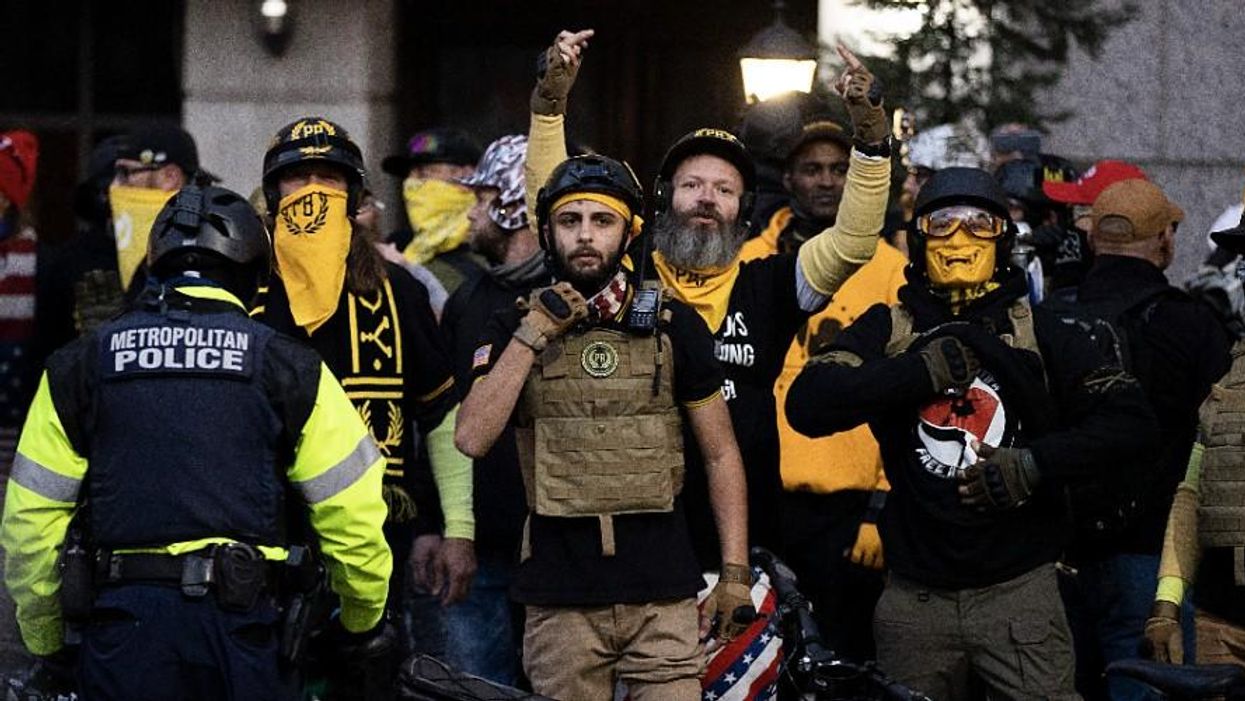
Increasingly, it seems, Americans have an anger problem. All too many of us now have the urge to use name-calling, violent social-media posts, threats, baseball bats, and guns to do what we once did with persuasion and voting. For example, during the year after Donald Trump entered the Oval Office, threats of violence or even death against lawmakers of both parties increased more than fourfold. And too often, the call to violence seems to come from the top. Recently, defendants in cases involving extremist violence have claimed that an elected leader or pundit "told" them to do it. In a country where a sitting president would lunge at his own security detail in rage, I guess this isn't so surprising anymore. Emotion rules the American political scene and so many now tend to shoot from the hip without even knowing why.
As the Trumpists ramp up their anger, if progressives don't find a unifying message of community and love, and find it soon, the guns already out there may be put to use in unspeakable ways.
Increasing numbers of us, however, respond to the growing extremity of the moment by avoiding the latest headlines and civic engagement, fearful that some trauma will befall us, even by witnessing "the news." As a psychotherapist who works with veterans and military families, I often speak with folks who have decided to limit their news intake or have stopped following the news altogether. Repeated mass shootings in places ranging from schools to houses of worship combined with the increased visibility and influence of militias at theoretically peaceful demonstrations can be more scarring than the wounds soldiers once sustained in combat zones.
I must admit that my family and I have sometimes practiced a similar form of political avoidance. Recently, I considered taking my two young children to the March for Our Lives gun-control event on the National Mall in Washington. However, my spouse, an active duty servicemember, urged me to reconsider. If extremists showed up, it might prove difficult for me alone to get our children out of danger. I thought better of it and stayed home.
In a country where a Republican senatorial candidate can run an ad featuring himself with an armed military tactical unit on a residential street, urging Americans to hunt "RINOS"--Republicans in Name Only, or those who criticize Trump--without widespread censure from his party, I believe my family's fears are well founded.
The question "What if something happens?" at a protest would never have occurred to either my spouse or me when we first met more than a decade ago.
As a human rights activist who spent years working in Vladimir Putin's Russia, I can say that I'm now more afraid of the hair-trigger responses of right-wing Americans than I was of that Kremlin strongman's far more carefully targeted violence. I guess the memory of the January 6th Capitol riot, insurrection, coup attempt (or any descriptor of your choice) by a mob of angry Trump supporters still weighs heavily on me.
The Devil's in the Details
These days, it's the mundane stuff like Republican Party meetings that contain the details we'd do well to notice. Such proceedings reveal a new level of combativeness as party leaders attempt to shape state and local laws and policies to their ever less democratic desires. For instance, Politico recently obtained recordings of Republican National Committee (RNC) operatives training thousands of volunteer poll watchers to disrupt future elections in Democratic districts of swing states like Michigan by actively challenging the eligibility of voters.
The RNC and its affiliates are linking those poll watchers to hotlines and websites that list party-friendly lawyers, police officers, and district attorneys who might be ready to stage real-time interventions during voting and vote counts. For example, district attorneys recruited by the right-wing organization the Amistad Project will be able to start investigations and issue subpoenas ever more quickly.
Of course, the RNC initiative at the polls is rooted in the baseless claim that the 2020 election was stolen from former President Donald Trump. That committee's identification with such a lie should instantly debunk any idea that such would-be poll watchers could act fairly. The very roles of poll watcher and poll challenger are supposed to be legally different, with only poll challengers authorized to interfere in the voting process in most states, including Michigan - and then only based on facts.
Yet we're clearly in a world where Republican leaders have begun to treat our polls as war zones. In the spirit of this moment, an RNC election-integrity officer for Michigan, Matthew Seifried, described his future poll volunteers and the public officials supporting them this way: "It's going to be an army." He added that his party is "going to have more lawyers than we've ever recruited, because let's be honest, that's where it's going to be fought, right?"
Seifried and his Michigan colleagues are anything but alone in their combative rhetoric. Such militarized language and imagery are now all-too-regularly part of our political DNA. Only recently, the Texas Republican Party released a statement refusing to recognize the legitimacy of Joe Biden's 2020 election victory. All too typically, it also called for that state's Republicans to "go on offense and win the fight for our country!"
In Texas and beyond, individuals expressing such anger (and sometimes a vision of a future white ethno-state as well) are gaining elected office. Surprising numbers of Republican candidates and public officials who share the view that the 2020 election was stolen also regularly echo the white racist Great Replacement Theory. Meanwhile, across the country, multiple electoral bills are being considered by Republican-controlled state legislatures that would, in the future, enable them to overturn elections.
According to the International Center for Not for Profit Law, 45 state legislatures have considered 230 bills that would criminalize the "threat" of violent leftist or Black protests. And sadly enough, far-right activists are anything but a "fringe minority" movement as they challenge the very idea of peaceful elections and public protests (that aren't theirs).
To be sure, left-wing violence and combative rhetoric is a thing in this country, albeit a small one. The shooting of a Trump supporter by an Antifa protester in Portland, Oregon, during a Black Lives Matter demonstration in August 2020 is the lone example of a lethal attack by that left-wing group or other anti-fascists over the past 25 years. Of 450 murders by political extremists during the last decade, approximately 4% of them were committed by left-wing groups and about 75% by right-wing (white supremacist, anti-government) ones.
In my own extended family of parents, siblings, aunts, and uncles, most of whom support Trump, about half have stopped speaking to me, while some have called me "weak" and a "coward" on social media because of the ideas I discuss in essays like this, where I've openly criticized the U.S. government and its military. (Of note, my immediate military family and friends accept our differences far more gracefully.)
Saving Democracy
So, what are we to do? As a start, given where the Trumpist movement and much of the Republican Party seems to be heading, we really need to do something--almost anything. As Michigan Secretary of State Jocelyn Benson, a Democrat, pointed out, facing the growing crisis on the right, "I have seen no significant increase in support from national party leaders than what we experienced in 2018" when party vigilance was significant enough but not nearly what was needed.
A headline of an article in the satirical online newspaper The Onion caught the mood of the moment among progressives: "Left Wing Group Too Disorganized for FBI Agents to Infiltrate." In it, a fictional FBI agent says, "These people don't ever do anything violent--they don't ever do anything at all."
Recently, a local Democratic candidate in Maryland knocked on my door seeking my name and contact information as a possible volunteer for his campaign. It turned out, however, he wasn't even carrying a pen or paper. That seemed to capture the problem I often note in progressive activism these days. I gave him a couple of our first grader's overdue library slips to write on and a marker we had lying around. And it's sadly true that Democrats and progressives more generally lack a concerted response to right-wing anger and violence.
Ironically, one government institution that has at least made a nod toward countering right-wing violence is our military. Since the January 6th attacks, the Department of Defense under Secretary of Defense Lloyd Austin has acknowledged an increase in domestic extremist violence carried out by active-duty or reserve service members. In response, he initiated a multipronged strategy to screen new recruits, educate military personnel about extremism, and begin investigating extremist activity within the ranks.
While I've encountered my share of bigoted remarks in the five duty stations where we've served, I've also met far more people in those military communities than in civilian ones who are willing to form friendships with those of different ideological leanings. When you depend on one another for companionship and even survival, at home or abroad, you can't be too choosy about the beliefs of your companions.
As partisan rhetoric heats up in this country, I'd say progressives are guilty of focusing too hard on the most politicized identity issues, however valuable, or even whatever asinine behavior ignites our airwaves at a given moment, be it Trump's QAnon-style conspiracy-mongering or ex-New York Governor Andrew Cuomo's groping. The problem is that, as the Trumpists ramp up their anger, if progressives don't find a unifying message of community and love, and find it soon, the guns already out there may be put to use in unspeakable ways.
Progressives would do well to step back and think about the genuine big-tent issues like how to show everyone from white suburban women to rural farmers to Black single parents that they have so much to lose in life if we don't have a government willing to continue regulating health care and doing so in a far better fashion. They would gain so much if, in this all-too-angry country of ours, they could refocus our attention on the importance of childcare for every family who needs it.
Above all, if they could focus in an intense way on the ever more dangerous world we're living in, that would be a positive. Whether or not we agree on what's causing global warming, it's hard not to agree right now that we're living in an ever hotter, ever more drought-stricken, ever more extreme America. Who can't agree that it's already damn hot and the summer's just beginning?
Something needs to be done--and soon--to mitigate the effects of climate change, but no political campaign has yet emerged that captures the urgency and extremity (and for once I'm not thinking about Donald Trump!) of this moment. Most immediately, those of us who favor democracy and a better planet would do well to support the criminal prosecution of former President Trump because if he becomes this country's leader again, we could find ourselves in trouble too deep to ever get out of.
And yes, on so many issues, many of us may not agree with Wyoming Representative Liz Cheney, the top Republican on the House committee investigating the January 6th attacks, or even former Vice President Mike Pence, who risked his own life and his family's to certify Joe Biden's victory. But I agree with Democratic Representative Jaimie Raskin that they're among the Republican heroes of this Trumpian moment (who are few and far between). As the Russian novelist and historian Aleksandr Solzhenitsyn once wrote, "The line separating good and evil passes right through the human heart."
Occupying the hearts of many Americans, however, is Donald Trump, a damaged man who personifies our basest instincts. He needs to be identified forcefully by leaders of all stripes as the threat to democracy he is. (Hurry up, Attorney General Merrick Garland, and bring charges against him!)
Meanwhile, we should all seek opportunities to find common ground among ideological opposites. Invite over a neighbor for dinner, even though you know he listens to conservative radio on his way to work. Help another family with childcare even though the political signs on their lawn aren't ones you agree with. Just try to avoid the angry, armed ones or have them check their guns at the door. They're the ones who need to change their tactics. Otherwise, judging by the flight of tens of thousands of highly skilled Russian professionals from Vladimir Putin's war-mongering regime, I'm sure he has a few job openings for them.
If only their hatred had no place here. It's time to be less angry and far more focused.

As U.S. coronavirus cases continue to climb, millions of Americans remain out of work, and climate campaigners express initial disappointment over President Joe Biden's emerging infrastructure proposal, the Sunrise Movement on Thursday officially launched its Good Jobs for All Pledge with support from eight key progressives in Congress.
"There's no reason anyone in the richest country in the history of the world should be unemployed, underemployed, or working a job that isn't in the public interest."
--Varshini Prakash, Sunrise Movement
The original signatories of the pledge--which is part of a campaign the youth-led climate advocacy group kicked off earlier this month--are Sens. Ed Markey (D-Mass.) and Bernie Sanders (I-Vt.) as well as Reps. Jamaal Bowman (D-N.Y.), Brendan Boyle (D-Pa.), Bonnie Watson Coleman (D-N.J.) Adriano Espaillat (D-N.Y.), Ayanna Pressley (D-Mass.), and Rashida Tlaib (D-Mich.)
"I commit to doing everything in my power to pass legislation that guarantees good jobs for all, invests $10 trillion over the next decade to create millions of union jobs addressing the crises of climate change, economic inequality, and systemic racism, and puts money into the hands of people and communities, not the wealthy few," the pledge reads.
Sunrise and over a dozen partners--including Communications Workers of America, Democracy for America, Indivisible, March For Our Lives, NDN Collective, United We Dream, and the Working Families Party--are encouraging constituents across the country to send letters calling on their federal elected officials to endorse the pledge.
"We live in a moment of historic crises--a health crisis, an economic inequality crisis, a racial justice crisis, and a climate crisis that looms over it all," said Sunrise executive director Varshini Prakash in a statement Thursday. "With so much work to do building a better society that works for all of us, there's no reason anyone in the richest country in the history of the world should be unemployed, underemployed, or working a job that isn't in the public interest."
"That's why we're calling on every single member of Congress to take the Good Jobs for All pledge, demonstrating their commitment to enact policies that meet the scale of the crises we're facing and puts us on a path to a Green New Deal that guarantees a good job to anyone who wants one," she explained. "We're going to put on the pressure to make sure that they do. And if they don't, well then they're really gonna hear from us--we take fighting for good jobs and a liveable future seriously."
Markey--who, along with Rep. Alexandria Ocasio-Cortez (D-N.Y.), has led the push for a Green New Deal in Congress--said he was "proud" to commit to the pledge.
"The climate crisis poses an existential threat to our planet, but it also brings massive opportunity to redress historic injustices and build a better future for all. We can combat the worst effects of the climate crisis while creating millions of good union jobs at the same time," Markey noted. "With a Green New Deal, we can fight for environmental injustice, ignite a clean energy revolution across our country, invest in bold and green infrastructure projects, and put people back to work following this economic recession."
Pressley, a Green New Deal co-sponsor, said Thursday that "establishing the legal right to a good job for every person will help address the current employment crisis, create the foundation for an equitable economic recovery, and ensure that we are able to meet the pressing challenges facing our communities."
"That's why I recently introduced a history-making resolution in Congress calling for a federal job guarantee, and it's why I'm proud to be among the first to sign the Good Jobs for All Pledge," she added, referencing the resolution she unveiled in February. The congresswoman expressed excitement about advancing "bold employment policies that ensure every person has access to a good job that pays a living wage" and putting people to work "addressing urgent priorities, like the climate crisis."
The roll-out of Sunrise's pledge comes after the group criticized Biden's reported plans to put forth a two-part $3 trillion infrastructure package. Sunrise press secretary Ellen Sciales--and other critics of the developing proposal--pointed out that even Sen. Joe Manchin, a conservative Democrat from West Virginia, has called for at least $4 trillion in spending.
The advocacy group is also backing the BUILD GREEN Infrastructure and Jobs Act, introduced last week by Markey and Ocasio-Cortez as well as Sen. Elizabeth Warren (D-Mass.) and Rep. Andy Levin (D-Mich.). The bill would invest $500 billion over 10 years in state, local, and tribal projects with the ultimate goal of a fully electric U.S. public transportation system.
This post has been updated to reflect that Sen. Bernie Sanders' serves as an independent.
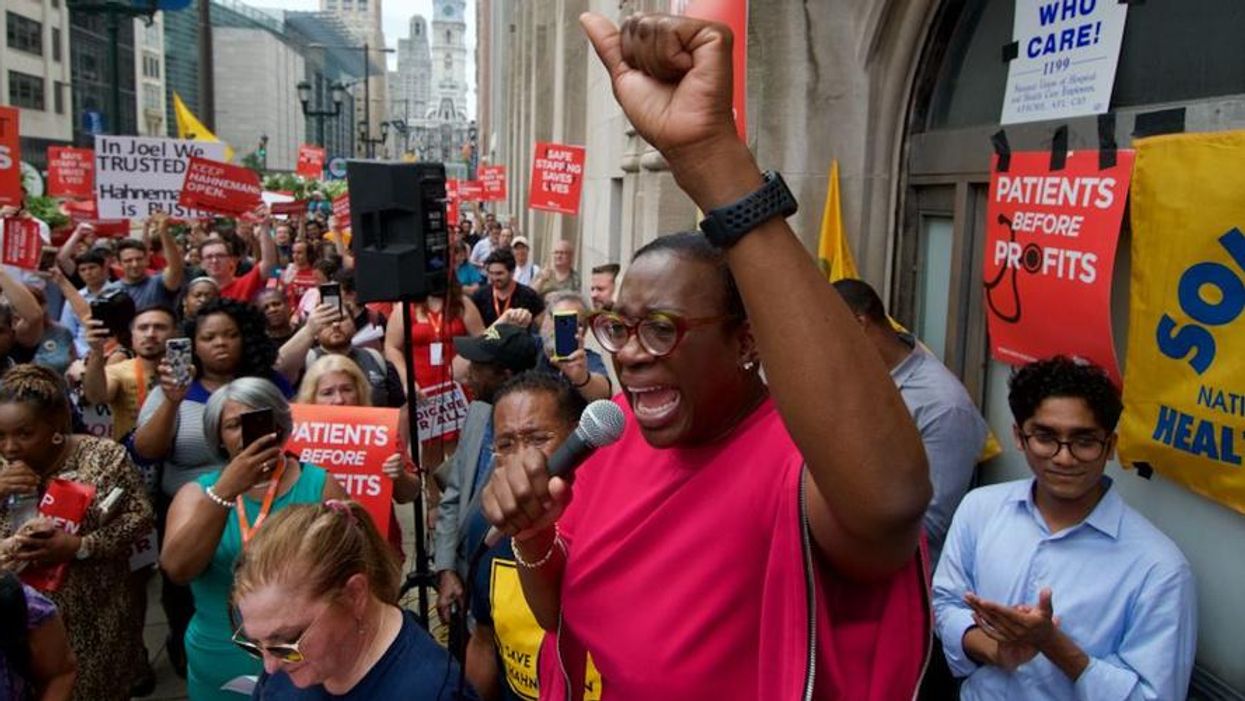
It's official--Nina Turner is running for Congress. The former Ohio state senator kicked off her campaign Tuesday for the House seat to be vacated by Rep. Marcia Fudge, who was selected for a Biden Cabinet post, and no sooner did she announce her candidacy than a parade of progressive powerhouses lined up to offer their support.
"[Nina] deeply cares for working families and she has the heart to be an effective, unwavering fighter for them in Congress. I am proud to endorse her candidacy."
--Sen. Bernie Sanders
Speaking to a capacity crowd of supporters--on Zoom, that is--Turner said that "what I want the people of Akron and Cleveland to know is that I know what it means to be counted out."
"I am running to ensure the people of Akron and Cleveland are always counted in," Turner pledged in the impassioned voice that has made her a favorite of progressive activists across the nation.
And across the nation, progressives were thrilled by Turner's run.
Sen. Bernie Sanders (I-Vt.) moved swiftly to endore the woman who was a standout surrogate during his 2016 presidential run and his national campaign co-chair in 2020.
"I've gotten to know Nina over the last five years," Sanders tweeted. "She deeply cares for working families and she has the heart to be an effective, unwavering fighter for them in Congress. I am proud to endorse her candidacy."
Rep. Ro Khanna (D-Calif.), another former Sanders campaign co-chair, was also quick to throw his support behind Turner, tweeting that she "will bring a phenomenal commitment to a $15 minimum wage, Medicare for All, and free public college."
From national political figures and organizations to local leaders, the support kept pouring in following Turner's announcement.
"Senator Nina Turner has always had my back, and now I'm proud to have hers," tweeted Birmingham, Alabama Mayor Randall Woodfin. "Let's do this!"
Our Revolution, the pro-Sanders political action committee chaired by Turner from 2017 to 2019, and Democracy for America, were among the first groups to show love.
It wasn't just fellow politicians and political organizations that were lining up to support Turner. Rapper and activist Killer Mike; actors and activists Danny Glover, Susan Sarandon, and Mark Ruffalo; and popular podcast host Charlamagne tha God were just some of the prominent progressives who offered their endorsements.
In a Monday interview with Politico, Turner a self-described "daughter of Cleveland," vowed to fight for single-payer healthcare, direct payments for coronavirus relief, a $15 minimum wage, student loan debt cancellation, and free college and trade school.
"Trying to make the Democratic Party better and insist very strongly that it answers to the cries of the people--to me that's what being a Democrat is, not just going along to get along," Turner asserted. "The partnership between President-elect [Joe] Biden and Vice President-elect Kamala Harris shows that people can have their differences. ... [Harris] called out the vice president on his record on race with substance--very strongly, she did--and look at their partnership now."
The date of the special congressional election for Ohio's 11th District will be determined once Fudge--who last week was tapped by Biden for the post of secretary of housing and urban development--officially resigns her House seat.
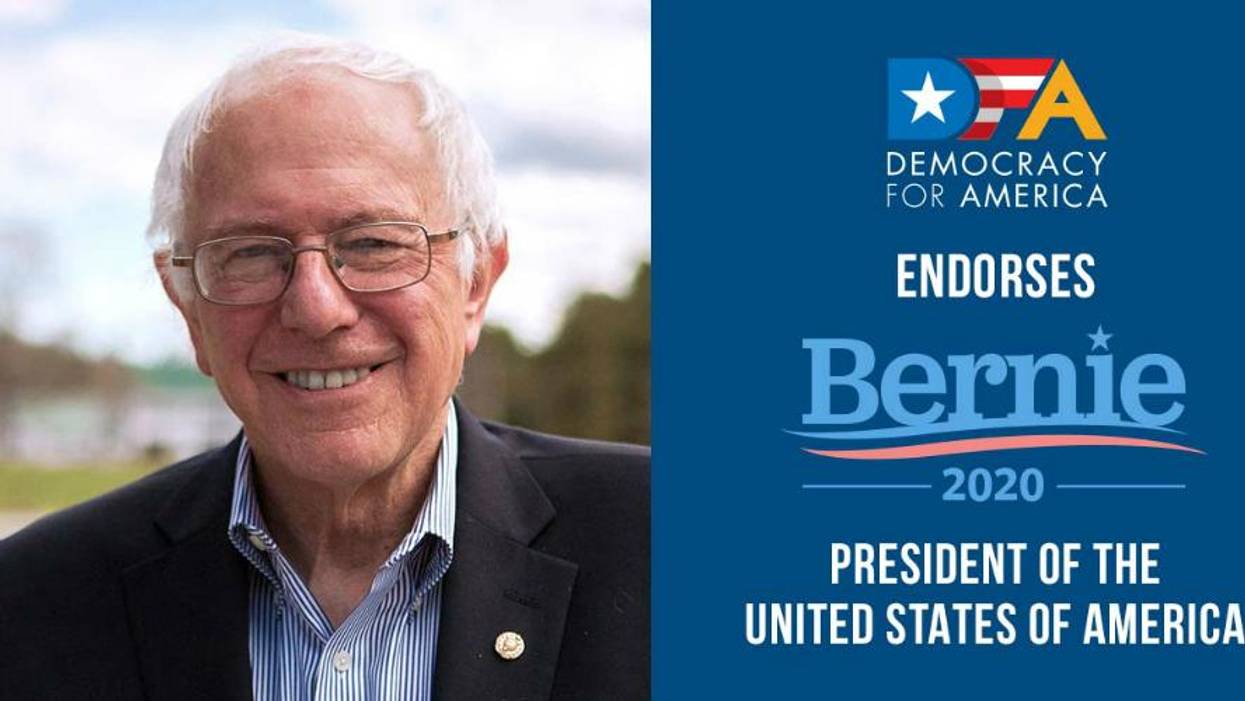
Progressive advocacy group Democracy for America endorsed Sen. Bernie Sanders for president on Monday after the Vermont senator received nearly 80% support in a membership vote.
" Bernie Sanders is the candidate who is energizing our base, connecting with those who have long felt ignored by our politics, and electrifying the next generation of Americans."
--Charles Chamberlain, Democracy for America
DFA said in a statement that more than 38,000 of its members participated in the vote, which took place over a period of 11 days beginning Feb. 20.
Sanders won the support of 79.3% of participants, followed by Sen. Elizabeth Warren (D-Mass.) at 13.2%, former Vice President Joe Biden at 2.5%, Pete Buttigieg at 1.7%, and billionaire businessman Michael Bloomberg at 1.2%.
Charles Chamberlain, chair of DFA, said the "overwhelming support" for Sanders among the organization's members "should be a wake-up call to the broken, visionless, corporate Democratic establishment."
"Americans want fundamental change in Washington, not a return to the status quo," said Chamberlain. "In the most important election of our lifetimes, Bernie Sanders is the candidate who is energizing our base, connecting with those who have long felt ignored by our politics, and electrifying the next generation of Americans we need to beat Donald Trump, win up and down the ballot nationwide, and fight for bold, inclusive populist reforms like Medicare for All, a Green New Deal, and robust criminal justice reform."
DFA, a political action committee founded in 2004 by former Democratic National Committee chair Howard Dean, also endorsed Sanders over Hillary Clinton in the 2016 Democratic primary.
In a statement, Sanders thanked DFA for its endorsement and said that he is proud to have the backing of the group's "grassroots members who know that real change never comes from the top on down but from the bottom on up."
"They've led the fight to guarantee healthcare as a human right, protect and expand Social Security, and end our nation's endless wars," said Sanders. "Together, we will build a movement that sweeps Donald Trump out of the White House and transforms this country so that it works for the working class."
The Nation magazine also threw its support behind Sanders on Monday, celebrating the senator's platform as "both realistic and radical enough to meet the challenges of our time."
"In this election the fundamental question is also the oldest one: Which side are you on? The Nation is on the side of hope, not fear," reads the magazine's endorsement of Sanders. "We're on the side of radical change, not retrenchment and retreat. We are proud, and excited, to stand with the movements that have brought us to this moment, and made this amazing, terrifying, exhilarating, and empowering campaign possible."
"We've got two super-rich guys who are scared to death that a progressive's going to win the primary and then win the general."
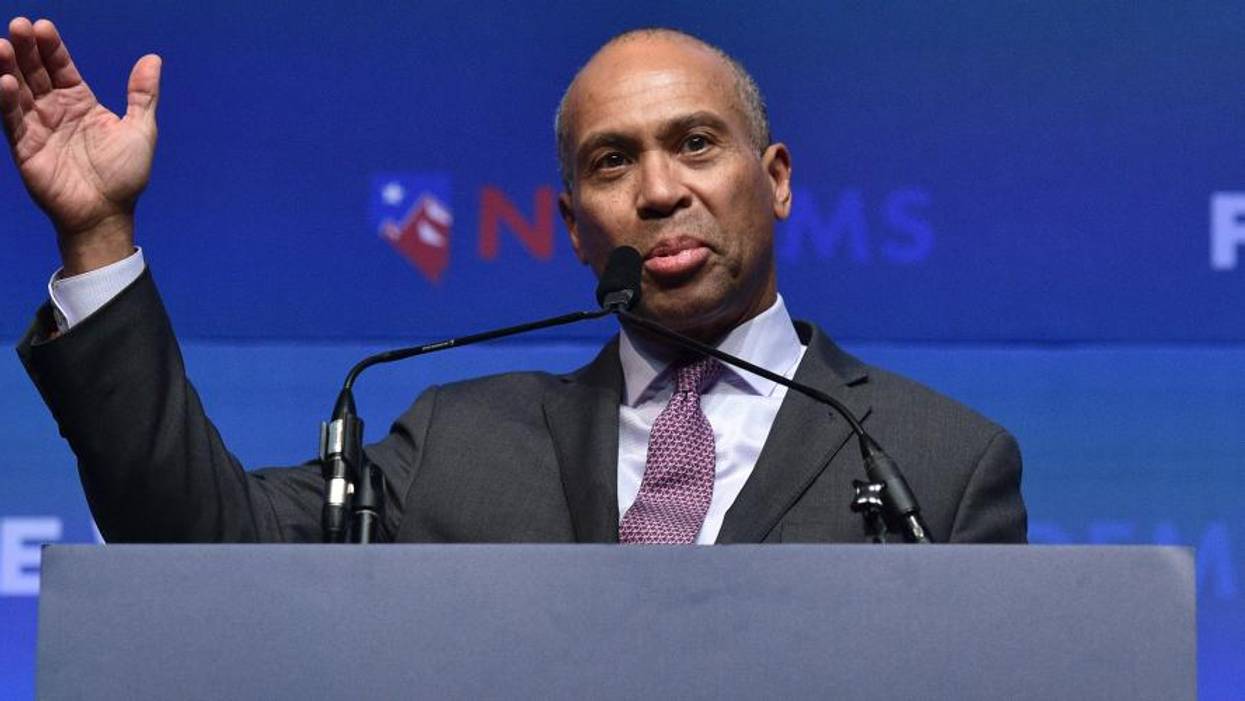
That was how Charles Chamberlain, chairman of progressive group Democracy for America, characterized the last-minute 2020 Democratic presidential bids of former Bain Capital executive Deval Patrick and billionaire businessman Michael Bloomberg.
"I think the high-dollar donor class of the Democratic Party is extremely nervous about having a president of the United States who is not in their pocket."
--Ari Rabin-Havt, deputy campaign manager for Sen. Bernie Sanders
Patrick, the former governor of Massachusetts, announced his presidential run last week. Bloomberg, the former mayor of New York City, filed campaign paperwork earlier this month to get on the ballot in Alabama and is expected to officially enter the 2020 race in the coming days.
Supporters of Bloomberg and Patrick claim they are concerned that progressive candidates like Sens. Bernie Sanders (I-Vt.) and Elizabeth Warren (D-Mass.) would lose to President Donald Trump in the general election. But progressive activists told Politico Monday that Democratic donors are more terrified by the prospect of Sanders or Warren defeating Trump and enacting policies that would threaten their wealth and influence.
"This is about fear of victory, not fear of loss," Chamberlain said.
Waleed Shahid, communications director for progressive group Justice Democrats, echoed Chamberlain, noting that "there's clearly anxiety from parts of the Democratic Party establishment and donor class about becoming a party that is unapologetic about taking on oligarchs, whether they're Donald Trump or Jeff Bezos."
"While he'll basically try to buy votes through tons of ads, billionaire candidates like Bloomberg remain deeply unpopular," said Shahid. "Deval's supporters compare him to Obama, but forget that Obama also ran as an outsider populist in the 2008 primaries."
Sanders and Warren--who have both proposed wealth taxes targeting the ultra-rich--have not hesitated to attack Bloomberg and Patrick as the figureheads of a last-ditch effort by Democratic elites to maintain control over the party.
"I think the high-dollar donor class of the Democratic Party is extremely nervous about having a president of the United States who is not in their pocket," Ari Rabin-Havt, Sanders' deputy campaign manager, told Politico.
In response to recent reports that Bezos--the CEO of Amazon and second-richest man in the world--pushed Bloomberg to run for president earlier this year, Sanders tweeted, "That's some real class solidarity."
"Our campaign on the other hand is a real movement by and for the working class," Sanders added. "We are going to take on the billionaire class, and we are going to defeat them."
Asked about Patrick and Bloomberg on the campaign trail in New Hampshire last week, Warren said she's noticed that some "billionaires go on TV and cry."
"Other billionaires encourage their billionaire buddies to jump into the race," Warren said. "I believe that what our election should be about is grassroots."
Heavy-hitting progressive groups have sent a letter to Democratic presidential nominee Hillary Clinton, urging her to make "a clear, public, and unequivocal statement opposing any vote on the disastrous Trans-Pacific Partnership (TPP) in the post-election, 'lame-duck' session of Congress."
"Allowing a lame-duck vote would be a tacit admission that corporate interests matter more than the will of the people, relying on members of Congress who will be less accountable to voters."
The letter, published at Medium, says Clinton's "continued leadership is sadly necessary as President [Barack] Obama refuses to abandon this unpopular deal."
Even as the White House gears up for an all-out, post-election push on the maligned 12-nation trade deal, "the American public and their elected representatives in both parties are increasingly concluding that the TPP puts corporations ahead of human needs on jobs and wages, human rights, access to medicine, climate change and more," wrote the signatories, including environmental group 350 Action, the Communications Workers of America union, and grassroots political organization Democracy for America.
"In the face of such opposition," they continued, "allowing a lame-duck vote would be a tacit admission that corporate interests matter more than the people's will, relying on members of Congress who will be less accountable to voters. Regardless of the outcome, a vote itself would send an unmistakable signal that the game is rigged in favor of elites and against everyday Americans."
To that end, the groups demanded that Clinton "immediately make a clear and strong public statement" against the vote.
The missive follows a concerted campaign calling on Clinton--who supported the TPP as secretary of state before coming out against it--to take the lead in killing the deal. In the past two weeks, more than 100,000 people have signed CREDO and Democracy for America petitions that ask Clinton the same question. Nobel economist Joseph Stiglitz, who is advising Clinton on her campaign, also said Tuesday that to "rush [the TPP] through in a lame-duck session" would be "outrageous" and "wrong."
As for the candidate herself, she offered her "strongest words yet" against the TPP earlier this month--saying she would oppose the deal "after the election" and "as president"--but stopped short of pushing Obama on the issue.
Is that because, as Cenk Uygur of "The Young Turks" hypothesized this week, she knows that if she's elected, she'll have to support the deal?
Meanwhile, NBC News notes that Clinton's former primary rival, Sen. Bernie Sanders (I-Vt.), "used the launch of his new group Wednesday night to say he too was spoiling for a fight" on the corporate-friendly agreement, opposition to which was a cornerstone of his campaign.
"Let me be very clear. I will do everything I can to defeat the TPP if it comes to the floor of the Senate, as I expect it will," Sanders said during his Our Revolution live address. "The American people have got to stand together and say no to the TPP."
Before the Democratic Party's platform is finalized at a meeting late next week, Bernie Sanders and his progressive allies are mobilizing to ensure that opposition to the Trans-Pacific Partnership (TPP)—described by its critics as a global corporate power grab—becomes the party's official stance.
Though President Obama continues to lobby hard on behalf of the controversial deal, and despite a proposal to include such language being voted down during a drafting session last weekend in St. Louis, Sanders and his supporters are making their case into a rallying cry about the future of the Democratic Party.
On Wednesday, the Sanders campaign and Democracy for America, a progressive advocacy group, launched petitions calling on the platform committee to include the anti-TPP language in the final version.
"The Democratic Platform includes a number of very important initiatives that we have been fighting to achieve during this campaign," reads the petition from the Sanders campaign. "But one big item is missing: preventing the disastrous Trans-Pacific Partnership trade deal from ever coming up for a vote in Congress."
In addition to citing Sanders' and Clinton's publicly stated opposition to the TPP, the Sanders petition points out that key Democratic voting blocs—including "virtually every labor union, environmental group, and even major religious groups"—also oppose it. The petition argues that the party should now "go on record in opposition to holding a vote on the TPP during the lame duck session of Congress and beyond."
According to DFA's petition, "opposition to the job-killing TPP should not be controversial within the Democratic Party: Both Bernie Sanders and Hillary Clinton campaigned against the TPP during this year's presidential primary."
Though many have questioned Clinton's resolute opposition to the TPP, others are willing to take her at her word and argue that Obama and other pro-TPP forces within the Democratic Party undermined her campaign by not following through. Either way, outside progressive forces have remained vigilant against the corporate-friendly agreement even as Obama argues for it.
Meanwhile, in an op-ed in the New York Times this week, Sanders warned the Democratic leadership they needed to "wake up" when it comes to recognizing just how frustrated working people and the poor are when it comes to an economic system that is so clearly rigged against them.
While the 15-member committee voted down the measure in St. Louis by a 10-5 vote--with the five Sanders-appointed members voting in favor and all the Clinton- and DNC-appointed members voting against--the split offers a window into how Sanders and the millions of voters inspired by his campaign hope to influence the party in the weeks and months ahead. In turn, the battle over TPP and similar fights related to the minimum wage, climate action, and universal healthcare will reveal much about how the party establishment, currently transitioning its leadership from Obama to Clinton, will respond to the groundswells from below.
As the Washington Post reports Thursday, members of the platform panel who voted to reject the anti-TPP proposal said the White House's influence, not their own feelings on TPP, most impacted their decision.
Citing "people with knowledge of the platform negotiations," the newspaper reports how
Sanders used his post-primary meeting with the president to say he would push for the party to officially oppose the TPP. The president said he would now allow it. And since then, the White House has leaned on key Democrats to make sure that the platform did not include a rebuke.
This is how Rep. Elijah Cummings (D-MD), co-chair of the platform committee, explained his vote: "We have one president, and I have listened to him argue his case many times, and I know that he truly believes this. He really does. I disagree with him, but I don't want to do anything, as he ends his term, to undercut the president. I'm just not going to do it. In his last six months? I'm not gonna do that."
Sanders, however, appears very willing to challenge the president on the issue that he believes will so negatively impact the planet, people, and communities for generations to come.
"Well, I don't want to embarrass the president either. He's a friend," Sanders told USA Today in an interview this week. "But in a Democratic society, people can have disagreements."
In a series of tweets that began Wednesday night and continued into Thursday morning, he made it clear that the fight over TPP is among the foremost issues on his mind:
The question, however, remains: If a majority of the Democrats on the panel oppose the TPP, the presumptive nominee opposes it, and the challenging candidate who won 22 primary contests by stirring the hopes of millions of voters opposes it, why can't the DNC leadership take this opportunity to recalibrate the party's trajectory on this seminal issue?
The full Democratic Platform Committee will meet in Orlando on July 8th and 9th to approve the final draft of the platform.
The Senate narrowly invoked cloture on fast-track trade legislation Tuesday morning, setting up a final vote Wednesday that will surely send the bill to President Obama's desk for his signature.
In so doing, Congress will surrender remarkable authority to Obama and his successors. For the next six years, Congress will be unable to amend any trade deal signed by the president, and only 50 votes will be required for Senate passage--a reduced burden that hasn't been granted to minimum-wage hikes, equal-pay legislation, gun control, campaign-finance reform, nor any other non-budgetary legislation of the Obama era.
In exchange, these future administrations will promise to be guided by negotiating objectives in the fast-track legislation on human rights, labor standards, and the environment, though many experts and congressional Democrats have decried the objectives as meaningless--in some cases they are satisfied if the president self-certifies that unspecified "progress" was made towards the negotiating goal.
The Senate wasn't supposed to have to vote again; it passed fast-track legislation weeks ago and sent it to the House. But House liberals rebelled and temporarily killed the House package by voting down a program that provides job training to workers screwed over by trade deals. This program was a Democratic priority, but one they strategically killed in order to hopefully stop the entire fast-track passage.
But House Speaker John Boehner held another vote last week and sent fast track back to the Senate without the trade-assistance program, and so the Senate had to vote again on this bill.
There was substantial doubt that Senate Democrats would back fast track without trade assistance for workers, but they did--resting on assurances from congressional Republicans that they will pass the assistance program soon.
The final vote was 60-37, achieving cloture by the thinnest possible margin. (Three senators were absent; Tennessee Republican Bob Corker was delayed getting to Washington, but said he would have voted for fast track; Senators Robert Menendez and Mike Lee both voted "no" last time.)
After the vote, Senator Sherrod Brown took the Senate floor and declared, "This is a day of celebration in the corporate suites of this country, to be sure."
Senator and presidential candidate Bernie Sanders added that "this trade agreement was supported by virtually every major corporation in this country, the vast majority of whom have outsourced millions of jobs to low-wage countries all over the world."
Thirteen Senate Democrats helped get fast track over the line: Michael Bennet of Colorado, Maria Cantwell and Patty Murray of Washington, Tom Carper and Chris Coons of Delaware, Dianne Feinstein of California, Heidi Heitkamp of North Dakota, Tim Kaine and Mark Warner of Virginia, Claire McCaskill of Missouri, Bill Nelson of Florida, Ron Wyden of Oregon, and Jeanne Shaheen of New Hampshire.
Right off the bat, some progressive activists pledged to exact a price for supporting fast track. "The Senate Democrats who allowed Fast Track should know that this vote will be remembered, it will not be erased, and we will hold you accountable," said Jim Dean of Democracy for America in a statement. "Accountability could mean primaries now or in the future, taking no action in your next difficult election, or support for progressive alternatives in future Senate leadership elections. Make no mistake, the memory of this clear betrayal of working families will follow you for years to come."
The threat about Senate leadership elections is particularly notable; Senator Patty Murray is reportedly seeking the whip post in the new Senate, and provided a crucial vote for fast track. The current whip and her presumed competitor for the post, Senator Dick Durbin, voted against fast track.
Once Fast Track passes tomorrow (there is only a 50-vote requirement post-cloture, which this bill will easily achieve) and Obama signs Fast Track, the fight turns to the highly controversial Trans-Pacific Partnership.
Sometime in the late summer or early fall, the Obama administration will finally release the full TPP text, after the president signs it. After 90 days, Congress can vote on it.
Without question, fast track makes the TPP much more likely to pass. No amendments can gum up the process or chase off support, and we already can easily see there are 50 votes in the Senate based on the fast-track votes. But the House remains no sure thing for the TPP. Fast track twice passed by only two votes.
When the TPP actually comes out, there will be some really ugly details that are likely to enrage liberals and solidify opposition among Democrats. For months the White House has been dodging some criticisms of the TPP by stressing that the text isn't final, but that will no longer be an option.
The unknown details of the TPP, incidentally, are what Hillary Clinton cites for not yet having an official position on the trade deal. If the Democrat base gets truly riled up when the details do come out, she may end up opposing the deal. This would give cover for every congressional Democrat to do the same.
Members of the House will also be in the thick of their reelection campaign this fall, and increased progressive activism and actual primary challengers will no doubt make a TPP vote even harder.
On the Republican side, Boehner will almost surely have a more difficult time gathering Republican votes for the TPP than he did for fast track. One argument frequently made by Republicans during the congressional fast-track debate was that it benefited the GOP, too--that it was also a vote to give a theoretical Republican president in 2017 immense power to shape trade deals without congressional meddling. That has no application to the TPP debate.
And 2016 will no doubt have the same effect on the Republican side, as incumbents face challenges from opponents to their right who may decide to blast them for supporting Obama's trade agenda. The presidential race provides more pressure, and we're already seeing it: Only weeks ago, Ted Cruz voted to move fast track. Tuesday, he released an op-ed on Breitbart.com bashing "Obamatrade" and voted against cloture.
So while progressives lost the fast-track battle, the trade debate isn't quite over yet. "What [the vote] doesn't mean is that Congress must pass [the TPP]," said Robert Weissman, president of Public Citizen. "When the inexcusable and anti-democratic veil of secrecy surrounding the TPP is finally lifted, and the American people see what is actually in the agreement, they are going to force their representatives in Washington to vote that deal down."

Drawing the swift ire of progressives around the country, the U.S. House of Representatives on Thursday took a step to revive President Barack Obama's faltering corporate trade agenda, passing Fast Track, or Trade Promotion Authority, in a 218-208 vote.
Twenty-eight Democratic lawmakers voted in favor of Fast Track, which would make it easier for Obama to ram through controversial trade deals like the Trans Pacific Partnership, reducing the role of Congress to an up-or-down vote on such mammoth agreements.
"Thanks to House Republicans and a handful of turncoat Democrats, the army of corporate execs and industry lobbyists who wrote the job-killing Trans-Pacific Partnership will now have an easier time shoving it down the throats of an American public that's broadly opposed to more NAFTA-style trade deals," Democracy for America chair Jim Dean said after the vote. "While we will continue to work to defeat fast-track for the job-killing TPP in the U.S. Senate, we will never forget which House Democrats stood with American working families against Fast Track and who sold them out."
The vote comes as a result of procedural maneuvering and arm-twisting by the White House and GOP leaders--machinations that Fast Track opponents were quick to decry.
"Our disappointment with the president is profound," said Friends of the Earth president Erich Pica on Thursday. "Sadly, we have come to expect Republicans to sell out the environment for the pursuit of corporate profits. But we expect more regard for environmental protection and respect for working families from President Obama and the Democrats who supported this bill."
While Thursday's vote is a setback, the fight is far from over. The legislation will now head back to the Senate, where as Public Citizen notes, "its fate remains at best unclear."
In May, the Senate originally passed a version of Fast Track that was linked to Trade Adjustment Assistance (TAA) legislation that gives aid to workers displaced by trade. But last Friday, the TAA measure was overwhelmingly defeated in the House, in turn derailing Fast Track.
Thursday's vote separated Fast Track from TAA legislation, meaning those who voted in favor supported a bill without protections for workers. It is unknown whether Senate Democrats will support a stand-alone Fast Track bill.
The Hill reports on the wheeling-and-dealing currently happening on Capitol Hill:
Obama spoke with a group of Senate Democrats on Wednesday at the White House, and talks continued in the Senate on Thursday on a way to give the president trade promotion authority, also known as fast-track.
One possible mechanism for giving assurances to Senate Democrats would see the Senate vote first to pass a trade preferences bill, this time with the TAA program attached. It would then be sent to the House for a vote before the Senate considers fast-track.
This planned move angered members of the Congressional Black Caucus, who asked Senate leaders not to use the trade measure, which would provide preferential access to the U.S. market for African countries, as bargaining chip to pass fast-track.
"The legislation that barely squeaked through the House today faces a much more uncertain future in the Senate," said Food & Water Watch executive director Wenonah Hauter. "Today's narrow vote to approve Fast Track in the House is an ominous harbinger of the fate of Fast Track in the Senate, the Trans-Pacific Partnership and the electoral prospects for Fast Track supporters."
Echoing the warning of others, Hauter added: "Voters will remember all this and hold members of Congress accountable for siding with transnational corporations rather than their constituents."
Follow ongoing developments and reaction on Twitter:
With proponents expressing increasing confidence that they have the bipartisan support to pass Fast Track in the House--and Republicans pushing to hold a vote as early as next week and certainly by the end of the month--progressive groups are dialing up the pressure on key lawmakers whose influence they see as critical in the fight over corporate-friendly trade deals.
In particular, groups including the Electronic Frontier Foundation, CREDO Action, and Democracy for America are targeting House Minority Leader Nancy Pelosi (D-Calif.), who thus far has declined to say how she'll vote on Fast Track, or trade promotion authority.
Passed by the Senate last month, the Fast Track bill would grant Congress an up-or-down vote on Obama's trade deals, but prohibit amendments or a filibuster in the Senate. The authority is seen as a necessary step in the president's bid to finalize the highly secretive Trans-Pacific Partnership (TPP), which continues to amass foes on many fronts.
While progressives in the House, such as Keith Ellison (D-Mich.), Raul Grijalva (D-Ariz.), and Donna Edwards (D-Md.), have been outspoken in their opposition to Fast Track and the so-called "free trade" deals it is meant to promote, the mainstream Democratic apparatus--while not supporting Fast Track outright--has been more accommodating to the White House, providing what groups call "extraordinary access to the Democratic House Caucus to make its case."
"As progressive opposition to Fast Track intensifies, Leader Pelosi is conspicuously absent from the fight," said Murshed Zaheed, deputy political director at CREDO Action. "President Obama has chosen to side with Republicans and big corporations. Now Leader Pelosi has to decide if she's going to use her position to help President Obama or rally her caucus on behalf of the millions of Americans who want to stop Fast Track and the TPP."
In an email sent Friday to members, Democracy for America chair Jim Dean echoed that call: "House Democrats are under intense pressure from the president, from Republicans, and from big corporations to support Fast Track. If Nancy Pelosi comes out against Fast Track, that will help give those Democrats important cover to stand up to the rich and powerful and stop this bad deal."
Meanwhile, members of the Electronic Frontier Foundation met Thursday with Pelosi's chief of staff to hand-deliver a letter from over 250 tech companies and digital rights organizations who oppose the TPP and Fast Track for containing threats to net neutrality, digital innovation, and online freedom of expression.
According to reporting by the Wall Street Journal on Thursday:
House Republican aides estimate that between 25 to 30 Democrats will be needed to pass the fast-track bill--a smaller number than previously estimated, because more Republicans are now indicating support. Mr. Obama has told lawmakers that he believes he has lined up 20 Democratic votes.
Mrs. Pelosi suggested Thursday morning that Mr. Obama has reached the limit of Democratic votes he will be able to muster. She stuck with her estimate that Republicans would need to produce 200 votes to get the measure passed. Mr. Ryan has suggested Republicans aren't yet at that level.
The Hill is updating a detailed--and constantly shifting--"whip count" here.
Obama is reportedly wooing select members of Congress, even as labor groups threaten political consequences for those legislators who vote in favor of Fast Track.
"Some of our lawmakers already have committed to stand with their wealthy campaign donors and support Fast Track," the AFL-CIO said in blog post this week. "But many of our elected officials still can be moved--especially if we remind them that we vote."
CREDO Action's Zaheed added on Friday: "Pelosi is the quarterback for House Democrats. Will she throw the game on behalf of the President or step up and be a true progressive leader by rallying her caucus to block Fast Track and kill this terrible pro-corporate trade deal? It's long past time for Leader Pelosi to prove whose side she is on."