SUBSCRIBE TO OUR FREE NEWSLETTER
Daily news & progressive opinion—funded by the people, not the corporations—delivered straight to your inbox.
5
#000000
#FFFFFF
To donate by check, phone, or other method, see our More Ways to Give page.


Daily news & progressive opinion—funded by the people, not the corporations—delivered straight to your inbox.
With mainstream US politics offering at the moment only Trumpian neofascism and tepid, corporate-friendly Democratic progressivism, a group of left-wing activists in Tacoma, Washington are showing the potential for mobilizing ordinary Americans on behalf of economic justice.
Tacoma, Washington is a city of about 222,000 persons, 35 miles southwest of Seattle along Interstate 5. It, and the broader Pierce County of which it is the largest city, are typical of many areas of the United States: majority white but with visible communities of color—including many first generation immigrants—and a largely working class population heavily dependent on low-wage, mostly non-union, service sector employment.
As is the case with the vast majority of Americans, most Tacoma residents are only intermittently interested in politics, concentrating on the day to day struggle of living paycheck to paycheck. Politics in the city is dominated by business interests, with elected representatives running the cliched gamut from tepid centrist progressives to right-wing Republicans.
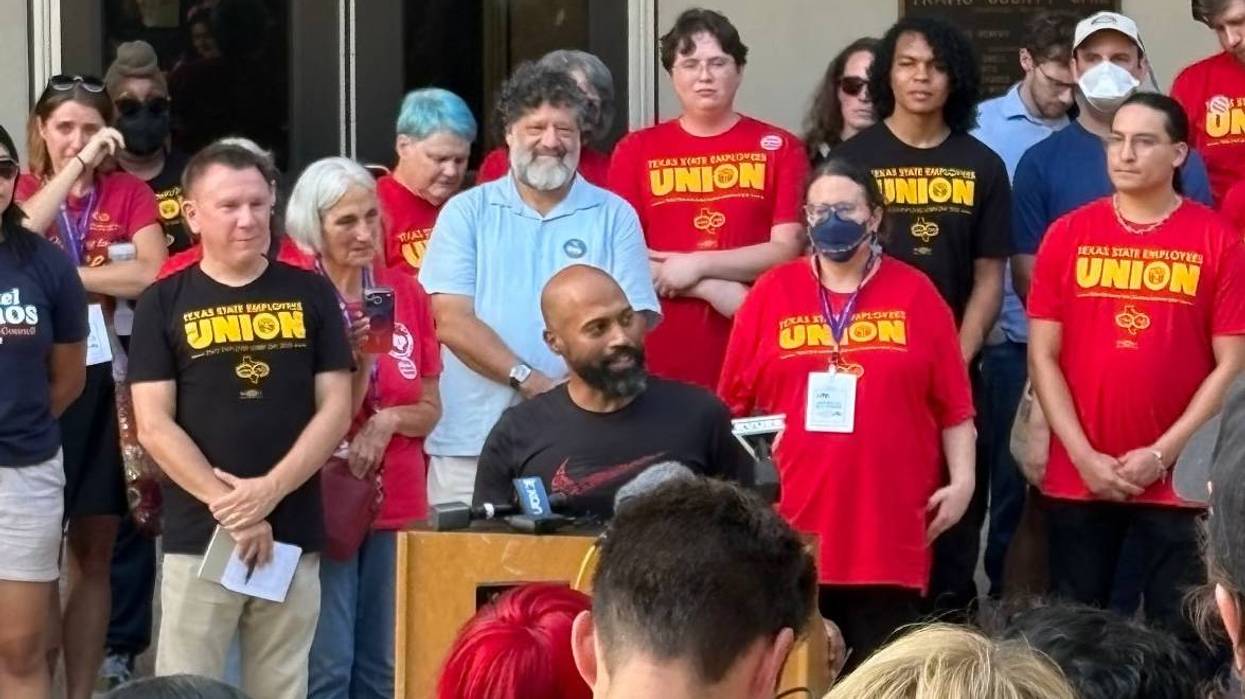
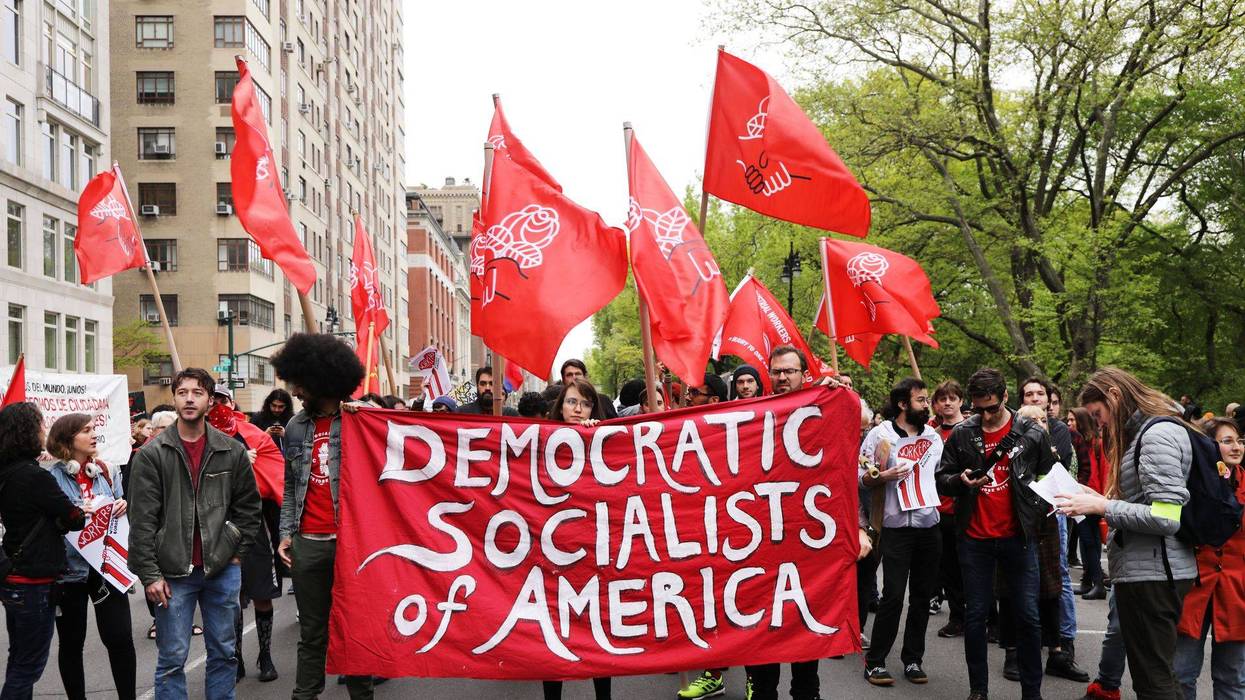
Recently, the Tacoma chapter of the Democratic Socialists of America (DSA) and United Food and Commercial Workers (UFCW) Local 367 have successfully mobilized ordinary people to fight for greater housing security, affordability, and pro-worker politics. Several years ago, for example, both organizations launched Tacoma 4 All (T4A), an organization whose activism succeeded in securing from the city’s voters in November 2023 the passage of what has been informally called the Tenants Bill of Rights—its formal legal title is the Landlord Fairness Code (LFC). The main features of the LFC were a $10 cap on late rental fees, a moratorium on rental evictions within the city during winter months, and a limit on rent increases at 5% annually. If landlords chose to raise the rent by more than 5% per year (and the tenant did not accept the rent increase), they were required to provide the tenant with relocation assistance.
T4A’s grassroots power has been on display in recent months during Tacoma City Council meetings as the organization has mobilized Tacoma residents—in what Tacoma’s business-friendly Democratic Mayor Victoria Woodards called "unprecedented" numbers for the December 9 meeting—to speak out during the meetings in support of the LFC. At the meetings, working class person after working class person has arisen to give testimony as to how the measures' regulations—particularly the winter month eviction moratorium—have given them desperately needed breathing space when temporary financial difficulties have made it impossible for them to pay rent. Such grassroots mobilization helped keep most of the LFC intact when the Tacoma City Council voted during the December 9 meeting on Council Member Sarah Rumbaugh’s proposal to make the LFC more landlord friendly.
The situation of ordinary Tacomans is a microcosm of broader economic injustices facing Washington state (and the United States as a whole).
The popular mobilization helped defeat some of Rumbaugh’s worst proposals, but other landlord-friendly revisions made it into the final revised LFC legislation, which the council approved by a 7-2 margin. The winter eviction moratorium was reduced from five months to four months; the $10 late fee cap was replaced by a charge of 1.5% of monthly rent; residents of nonprofit-owned buildings and Tacoma Housing Authority properties were removed from LFC winter eviction moratorium protections, as were “small landlords,” those defined as owning four or fewer properties in Tacoma and implied as being mom-and-pop landlords but who, in reality, are often large corporations, including private equity firms.
Tacoma DSA, T4A and, UFCW 367 have also sought to mobilize ordinary Tacomans to expand workers’ rights. By late June 2025, the three organizations had collected 10,000 signatures (twice the required number) for a Worker’s Bill of Rights Initiative to be put before Tacoma voters. The proposed measure would increase Tacoma’s minimum wage with relative rapidity to $20 an hour (it now sits at $16.66 an hour, equivalent to Washington state’s minimum wage); implement fair scheduling regulations (requiring Tacoma employers to give workers adequate advanced notice of shift schedule changes); and improve worker safety conditions.
Since last summer—and although the proposed ballot initiative gained the required number of validated signatures—the Tacoma city government has successfully sued in court to delay the placement of the Worker’s Bill of Rights on voters’ ballots. The majority of the Tacoma City Council has requested these delays on the grounds that more time is needed to study the measure and have expressed the fear that it could derail business investment in the city. In the meantime, the struggle continues with T4A, Tacoma DSA, and Local 367 continuing the fight in the courts and at the grassroots to finally get the Worker’s Bill of Rights before Tacoma voters.
As Tacoma city officials fret over the Workers Bill of Rights as potentially creating a less favorable investment climate in the city by raising worker wages, it is crucial to consider some important context. Tacoma residents are struggling with stagnating wages and increasingly unaffordable rent. The situation of ordinary Tacomans is a microcosm of broader economic injustices facing Washington state (and the United States as a whole). The New York Times reported in April that “between 2001 to 2023, median residential rents in Washington state rose by 43%, adjusted for inflation” while state renter income grew by only 26% during the same time period.
What is remarkable about the social justice activism that I’ve outlined above is that it has featured a determination to use the push for relatively modest progressive reform as a mechanism to empower and raise the political consciousness of ordinary people in potentially more radical directions.
For example, since the passage of the Landlord Fairness Code (LFC) in 2023, T4A activists have been frequently visiting Tacoma’s apartment complexes, informing tenants of their rights under the LFC, engaging in dialogue with residents about the ownership by predatory private equity firms of rental properties, and offering pro bono legal assistance for tenants having problems with landlords. T4A structures membership meetings to have organizational policy democratically determined by the group’s paying members. Meanwhile, earlier this month, T4A helped launch Tacoma’s first tenant union at one of the city’s privately owned apartment complexes. T4A, Tacoma DSA, and Local 367 are in the beginning stages of attempting to extend their organizing model from Tacoma into the rest of Pierce County.
It is the model of groups like T4A in patiently dialoguing with ordinary people over a long period of time and seeking to slowly but surely build popular power through organizing and consciousness raising that has the best chance of eventually replacing political rule by MAGA neofacists and neoliberal Democrats with the true economic and political empowerment of ordinary people.
"They wanted her bound, broken, and paraded as an example, but instead, she slipped their grip and lived out her life in exile, surrounded by people who honored her struggle and her survival," said one admirer.
Assata Shakur, a Black revolutionary who inspired generations of activists to struggle for a better world, passed away on Thursday in Havana, Cuba, where she had lived in exile from the US for over four decades.
Cuba's Ministry of Foreign Affairs announced her death on Friday, saying it was caused by a combination of “health conditions and advanced age." She was reportedly 78 years old.
"At approximately 1:15 pm on September 25, my mother, Assata Shakur, took her last earthly breath," her daughter Kakuya Shakur wrote on Facebook on Friday. "Words cannot describe the depth of loss that I am feeling at this time. I want to thank you for your loving prayers that continue to anchor me in the strength that I need in this moment. My spirit is overflowing in unison with all of you who are grieving with me at this time."
Shakur, who was born Joanne Deborah Byron and was also known as Joanne Deborah Chesimard, spent the first three years of her life in Queens, New York before moving to Wilmington, North Carolina. She then returned to Queens for third grade.
"Assata’s unwavering commitment to the liberation of her people continues to inspire generations."
"I spent my early childhood in the racist segregated South," she recalled in a 1998 letter to Pope John Paul II. "I later moved to the northern part of the country, where I realized that Black people were equally victimized by racism and oppression."
Shakur became active in the anti-Vietnam War, student, and Black liberation movements while attending Borough of Manhattan Community College and the City College of New York. After graduation, she joined first the Black Panther Party and then the Black Liberation Army (BLA).
"I have been a political activist most of my life, and although the US government has done everything in its power to criminalize me, I am not a criminal, nor have I ever been one," she wrote in 2013.
In 1973, she and two other BLA activists were stopped at the New Jersey Turnpike by two state troopers. By the end of the encounter, both Shakur's friend Zayd Malik Shakur and trooper Werner Foerster were shot dead. In 1977, Shakur was convicted of Foerster's murder in a trial she described as a "legal lynching." Throughout her life, she maintained her innocence.
"I was shot once with my arms held up in the air and then once again from the back," she wrote of the shootout.
She was sentenced to life in prison plus 33 years, but didn't long remain behind bars.
"In 1979, fearing that I would be murdered in prison, and knowing that I would never receive any justice, I was liberated from prison, aided by committed comrades who understood the depths of the injustices in my case and who were also extremely fearful for my life," she wrote.
In 1984, she claimed asylum in Cuba. Throughout her life, she also remained staunchly committed to the cause of liberation for all oppressed peoples.
"I have advocated and I still advocate revolutionary changes in the structure and in the principles that govern the United States," she wrote to John Paul II. "I advocate self-determination for my people and for all oppressed inside the United States. I advocate an end to capitalist exploitation, the abolition of racist policies, the eradication of sexism, and the elimination of political repression. If that is a crime, then I am totally guilty."
During her exile, her writings, including her 1987 autobiography, gained a wide audience and brought her story and voice to younger activists.
"It is our duty to fight for our freedom," she wrote in one of the book's most famous passages. "It is our duty to win. We must love each other and support each other. We have nothing to lose but our chains.”
She was also influential in the world of music and hip-hop, serving as godmother to Tupac Shakur and inspiring songs by Public Enemy and Common, among others.
The US government did not give up its pursuit of her. In 2013, under President Barack Obama, the Federal Bureau of Investigation named her the first woman on its "Most Wanted Terrorist" list. The FBI and the state of New Jersey also doubled the reward for information leading to her capture. That reward will now never be claimed.
"She died free!" one of her admirers, who uses the handle The Cake Lady, wrote on social media on Friday. "The US government, after decades of pursuit, never got the satisfaction of putting her in a cage. They wanted her bound, broken, and paraded as an example, but instead, she slipped their grip and lived out her life in exile, surrounded by people who honored her struggle and her survival."
News of her passing inspired tributes from social justice and anti-imperialist leaders and organizations, including former Ohio state Sen. Nina Turner and Rep. Ayanna Pressley (D-Mass.)
"We honor the life of comrade Assata Shakur, a revolutionary who inspires and pushes all of us in the struggle for a better world," wrote anti-war group CodePink on social media.
Community organizer Tanisha Long posted: "Assata Shakur joins the ancestors a free woman. She did not die bound by the carceral system and she did not pass away living in a land that never respected or accepted her. Assata taught us that liberation can not be bargained for, it must be taken."
The Revolutionary Blackout Network wrote, "Thank you for fighting to liberate us all, comrade."
The New York-based People's Forum said: "We honor Assata’s life and legacy as a tireless champion of the people and as a symbol of hope and resistance for millions around the world in urgent fight against racism, police brutality, US imperialism, and white supremacy. Assata’s unwavering commitment to the liberation of her people continues to inspire generations."
The Democratic Socialists of America vowed to "honor her legacy by recognizing our duty to fight for our freedom, to win, to love, and protect one another because we have nothing to lose but our chains."
Black Lives Matter organizer Malkia Amala Cyril lamented to The Associated Press that Shakur died during a global rise of authoritarianism.
“The world in this era needs the kind of courage and radical love she practiced if we are going to survive it,” Cyril said.
Several tributes featured Shakur's own words.
"I believe in living," she wrote in a poem at the beginning of her autobiography.
"I believe in birth. I believe in the sweat of love and in the fire of truth. And i believe that a lost ship, steered by tired, seasick sailors, can still be guided home to port."
Democrats need Zohran Mamdani and other young politicians with fight in their hearts and rage in their bellies who can show that Trump is bad for working people and terrible for America and the world, and who can point the way forward.
Leave it to the Democratic Party to snatch existential crisis from the jaws of electoral victory.
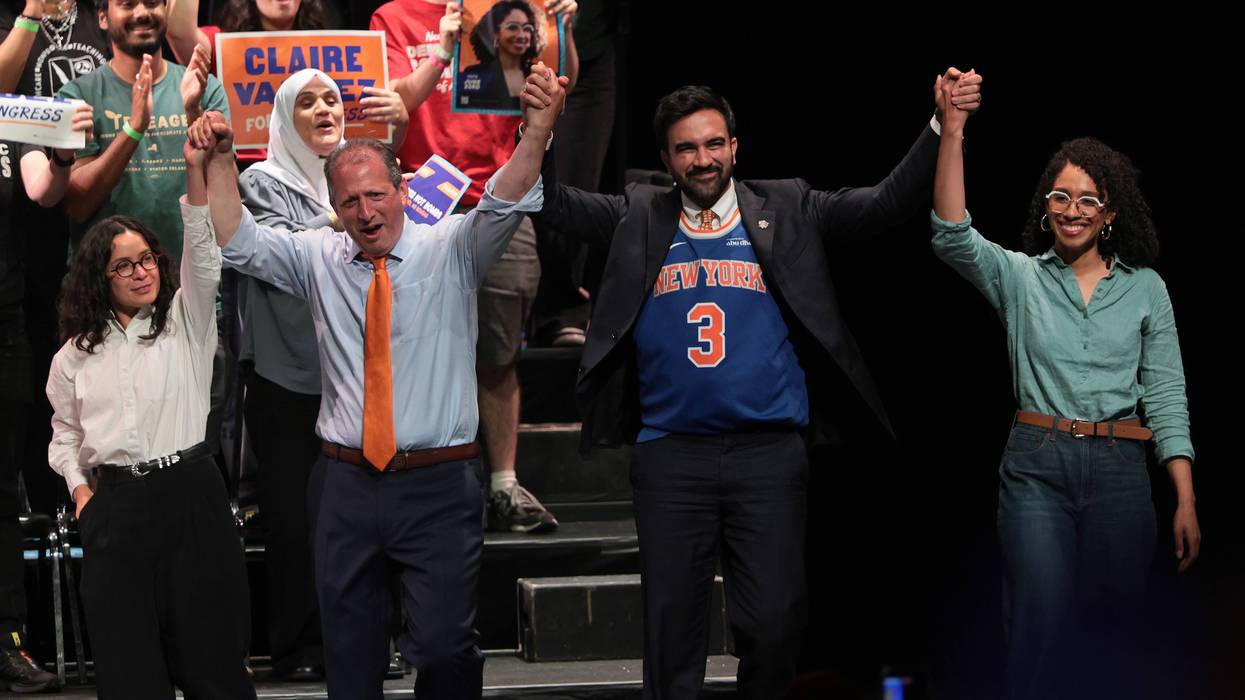
The stunning success of 33-year-old Zohran Mamdani, a self-described democratic socialist, in the race for New York City mayor is causing anguish in the Democratic Party.
It’s one thing for U.S. President Donald Trump to call Mamdani “a 100% Communist Lunatic.” That’s to be expected from the vulgarian-in-chief. It’s another for Matt Bennett, co-founder of the centrist Democratic group Third Way, to warn that Mamdani’s “affiliation with the (Democratic Socialists of America) is very dangerous.”
Mamdani is the corporate Democrat’s biggest nightmare—a young, charismatic politician winning over Democratic voters with an optimistic message centering on the cost of living.
Dangerous for whom? Sen. Bernie Sanders (I-Vt.) nearly won the Democratic primary for the 2016 presidential election after announcing he was a democratic socialist—and probably would have won had the Democratic National Committee not torpedoed him.
Lawrence Summers, treasury secretary under former Democratic President Barack Obama, says the New York City results make him “profoundly alarmed about the future of the (Democratic Party) and the country.”
Well, I’m profoundly alarmed, too—by just this kind of vacuous statement. If polls are to be believed, the current Democratic Party doesn’t have much of a future. Mamdani and other young politicians with the charisma to connect with the people and a willingness to take on corporate America and Wall Street may be the only way forward for the Democrats.
Nor has the mainstream media greeted Mamdani’s upset victory with much enthusiasm. The Associated Press writes that “the party’s more pragmatic wing cast the outcome as a serious setback in their quest to broaden Democrats’ appeal.”
Pragmatic wing? Since when has the corporate establishment of the Democratic Party distinguished itself by its pragmatism or its quest to broaden Democrats’ appeal? If it were pragmatic—in the sense of wanting to win elections and fire up the base—Democrats would not have lost the House, Senate, and presidency in 2024.
Meanwhile, Jeff Bezos’s Washington Post editorializes that “Democrats should fear that [Mamdani] will discredit their next generation of party leaders, almost all of whom are better than this democratic socialist.”
Bezos—who controls the content of the Post’s editorial page as he sucks up to Trump and is now occupying vast swaths of Venice for his wedding with Lauren Sanchez—is not the most credible source of wisdom when it comes to the identity of the Democrats’ next generation of party leaders.
Not surprisingly, the Post criticizes Mamdani’s proposals for a 2% annual wealth tax on the richest 1% of New Yorkers and for increasing the state’s corporate tax rate from 7.25% to 11.5%: “Mamdani’s tax plans would spur a corporate exodus and drive more rich people out of town, undermining the tax base and making existing services harder to maintain.”
It’s the same argument we’ve heard for 40 years: If you raise taxes on corporations and the wealthy, you’ll drive them away—from your city, your state, your nation.
Rubbish. The reality is that if you invest in your people—in their skills, education, affordable child care, affordable elder care, and the infrastructure needed to link them together—they’ll be more productive, and their higher productivity will attract corporations (and the wealthy). A major way to afford all these things is to raise taxes on corporations and the wealthy.
Mamdani is the corporate Democrat’s biggest nightmare—a young, charismatic politician winning over Democratic voters with an optimistic message centering on the cost of living. Putting together a multiethnic and multiracial coalition backed by a sprawling grassroots campaign that brings out enormous numbers of volunteers. Aiming to fund what average people need by taxing corporations and the rich.
Instead of wringing their hands over him, Democrats should follow his lead.
The largest force in American politics today is antiestablishment fury at a system rigged by big corporations and the wealthy to make them even richer and more powerful.
The corporate Democratic establishment—fat cats on Wall Street, corporate moguls in C-suites, billionaire backers of Democrats who will do their bidding, and the big-named Democrats who endorsed Andrew Cuomo—are the biggest problem for the party. They are standing in the way of it’s mounting a forceful response to Trump and providing a blueprint for the future.
Trump is killing the economy, fueling inflation with his tariffs, reducing the U.S. government to rubble, and destroying our relationships with our allies. He’s readying another giant tax cut for the wealthy and big corporations—this one to be financed by cuts in Medicaid, food stamps, and other things average people need, along with trillions more in national debt.
My old friend James Carville advises Democrats to “roll over and play dead.” With due respect to James, Democrats have been rolling over and playing dead too long. That’s one reason the nation is in the trouble we’re in.
If Democrats had had the guts years ago to condemn big money in politics, fight corporate welfare, and unrig a market that’s been rigged in favor of big corporations and the rich, Trump’s absurd bogeymen (the deep state, immigrants, socialists, trans people, diversity-equity-inclusion) wouldn’t have stood a chance.
My simple advice to congressional Democrats: Wake the hell up. According to polls, most Americans don’t want a Trump Republican budget that slashes Medicaid, food stamps, and child nutrition in order to make way for a giant tax cut mostly for the wealthy.
Most don’t want tariffs that drive up the prices they pay for food, gas, housing, and clothing. Most understand that tariffs are taxes paid by American consumers. Most don’t want a government of, by, and for billionaires. Most believe in democracy and the rule of law and don’t want Trump trampling on the Constitution, acts of Congress, and federal court orders.
Not only should Democrats be making noise about all this, they should stop relying on so-called “moderates” to speak for them. The nation is in clear and present danger. Democrats must stand up for American ideals at a time when the Trump regime is riding roughshod over them.
Democrats need Zohran Mamdani and other young politicians with fight in their hearts and rage in their bellies who can show that Trump is bad for working people and terrible for America and the world, and who can point the way forward.
We need a new generation of leaders who are the voices of democracy, freedom, social justice, and the rule of law. A new generation that gives meaning to the “we” in “we the people.”
Instead of fretting over Mamdani, the Democratic Party should embrace him as the future.