
SUBSCRIBE TO OUR FREE NEWSLETTER
Daily news & progressive opinion—funded by the people, not the corporations—delivered straight to your inbox.
5
#000000
#FFFFFF
To donate by check, phone, or other method, see our More Ways to Give page.


Daily news & progressive opinion—funded by the people, not the corporations—delivered straight to your inbox.
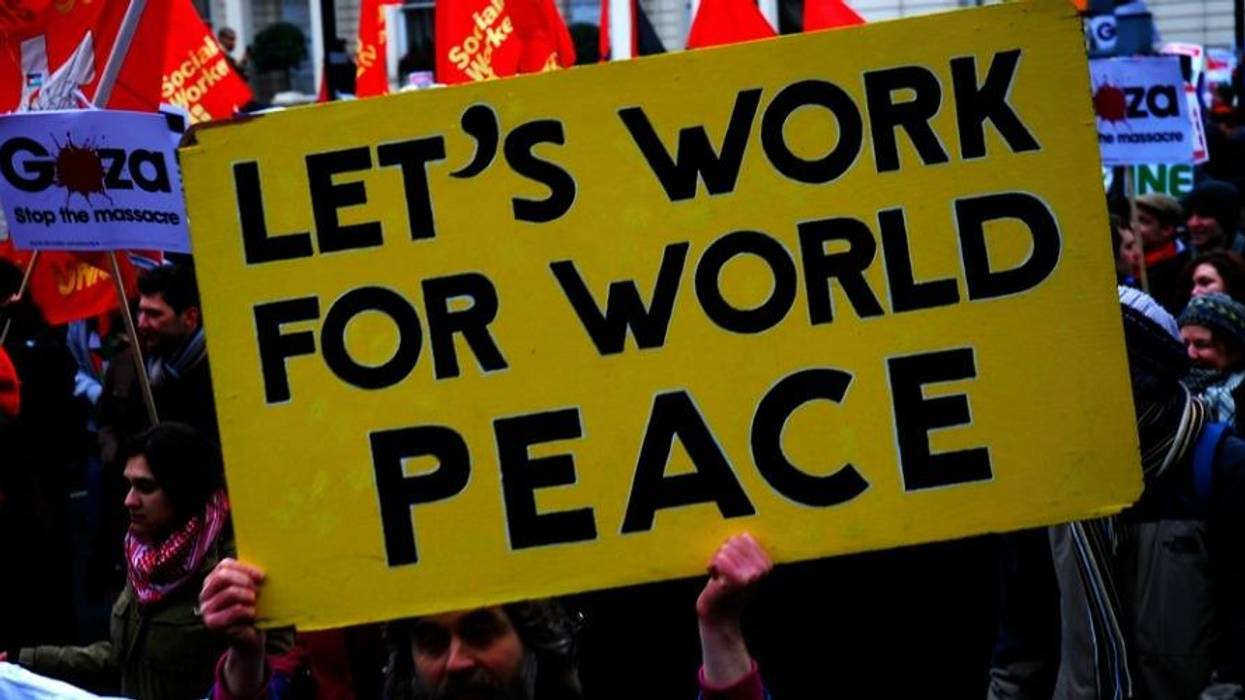
On International Peace Day this September 21, imagine an unstoppable wave of peace actions sweeping across our country.
I am heartened each time I come across a study affirming that waging war is not an innate part of human nature, that we humans are just as likely to be peaceful as we are to be violent. To quote the revered anthropologist Margaret Mead, “warfare is only an invention—not a biological necessity.”
And why do I cherish findings by historians, anthropologists, psychologists, and others that we are not doomed inevitably to human conflict; that, in the words of President John F. Kennedy “our problems are man-made—therefore, they can be solved by man.”
In my lifetime, there has been barely a year that my government has not been at war overtly or covertly. By some calculations the United States has been involved in more than 100 wars since 1776—early on with Native Americans to steal their land, claim their natural resources, and imprison them on reservations. Between 1945 and 1989 the U.S. attempted to change other (many democratic) countries’ governments overtly and covertly 72 times. More than 4.5 million people have died in the more than two decades of post-9/11 U.S. wars in Afghanistan, Iraq, Yemen, Syria, and Libya.
Recent landmark research by Erica Chenoweth and Maria Stephan of movements from 1900 through 2006 to overthrow dictatorships, expel foreign occupations, or achieve self-determination reveal that nonviolent resistance campaigns were more than twice as successful as violent insurrections with the same goals.
But war is relatively new in the more than 200,000-year history of us homo sapiens: Evidence of war dates back to 10-12,000 years ago, especially with the emergence of more settled communities. Further, societies that were once extremely warlike are now peaceful: the countries of Scandinavia, for example, and the tribes of the Iroquois from around 1600. Ireland, Austria, and Switzerland are neutral Western European countries, not members of NATO; and Costa Rica has eliminated its military in a hemispheric region where conflict has been rife. All undercut the notion of war being a deeply ingrained, inevitable biological behavior
Moreover, experts who have studied the history of violent and non-violent responses to conflict have found that violence is not the most effective nor successful way to resolve country-level disputes. Recent landmark research by Erica Chenoweth and Maria Stephan of movements from 1900 through 2006 to overthrow dictatorships, expel foreign occupations, or achieve self-determination reveal that nonviolent resistance campaigns were more than twice as successful as violent insurrections with the same goals. Elsewhere Chenoweth found that when women have leadership roles, they are “more likely to maintain nonviolent discipline… in resistance campaigns against repressive regimes.”
Especially uplifting, too, are the multitudinous creative individuals and movements in recent decades at work for peace in their countries. In 2005, 1,000 outstanding women peacemakers from 150 countries were nominated for the Nobel Peace Prize. Why 1,000 women? Because “creating peace requires a culture of peace practiced by millions in our daily life,” explained their Nobel prize sponsors. Their slogan, “I am not a wall that divides—I am a crack in that wall” conjures up the lyrics of singer/songwriter Leonard Cohen: “There are cracks in everything/that’s how the light gets in.”
A final piece of wisdom about the necessity of sustaining peace following violent conflict comes from Liberian Nobel Peace Prize winner Leymah Gbowee, who brought Christian and Muslim women together in her West African country to end Liberia’s brutal 14-year-long civil war in 2003. According to Gbowee, “Stopping a war does not bring lasting peace.” Peace persists through peacebuilding, using community organizing and expressing dissent; teaching peace and nonviolence; and prioritizing the basic issues of women’s, racial and social equality, and environmental protection.
Few of us have imagined forgiveness as a crucial element of peace that can enable peace to endure. In 1995, Archbishop Desmond Tutu and Nelson Mandela, who had spent 27 years as a political prisoner before emerging as South Africa’s first Black president, called for a Truth and Reconciliation Commission that offered amnesty to “those responsible for atrocities during the long nightmare of white-minority rule,” provided they publicly confess all the brutalities they had committed and request amnesty. The Commission intended to refrain from revenge and to reconcile the peoples of a deeply unjust, deeply racist society in order to inaugurate social healing that would last. Knowing that forgiveness would not assure perfect justice for all, Desmond Tutu realistically stated that simply punishing their oppressors with prison sentences may have resulted in a civil war ending with “a South Africa lying in ashes.”
There were shortcomings, though. Some of the worst unrepentant war criminals escaped prosecution; some citizens grievously harmed by apartheid citizens felt that amnesty was too easily given; and the country is still ridden with vast inequities. Elsewhere, others believe that peace without accountability for violence is a peace without justice, including Gbowee and other advocating for a war crimes court to ensure accountability for Liberian war criminals.
On International Peace Day this September 21, imagine an unstoppable wave of peace actions sweeping across our country, like that of the first Earth Day, April 22, 1970. That day Congress closed so its members could attend environmental teach-ins; 20 million citizens and politicians (one-fifth of the population) came out for marches, rallies, and concerts; and 10 million children participated in peace teach-ins in their schools. A surge of environmental legislation and the creation of the U.S. Environmental Protection Agency by President Richard Nixon followed in the next years.
May we be part of finding our country’s lost path to peace: by peace education and active bystander programs in every school; by interracial and interfaith collaborations; by reparations for the historical injustices of slavery and theft of land from Native Americans; by ensuring women’s full equality, including restoring women’s reproductive rights; by beating warheads into windmills through shifting our government’s priorities from militarism to renewable technologies; and by demanding that our lawmakers have a real democratic debate on war, peace, and the military budget.
As Eleanor Roosevelt asked, “When will our conscience grow so tender that we will act to prevent human misery rather than avenge it?”
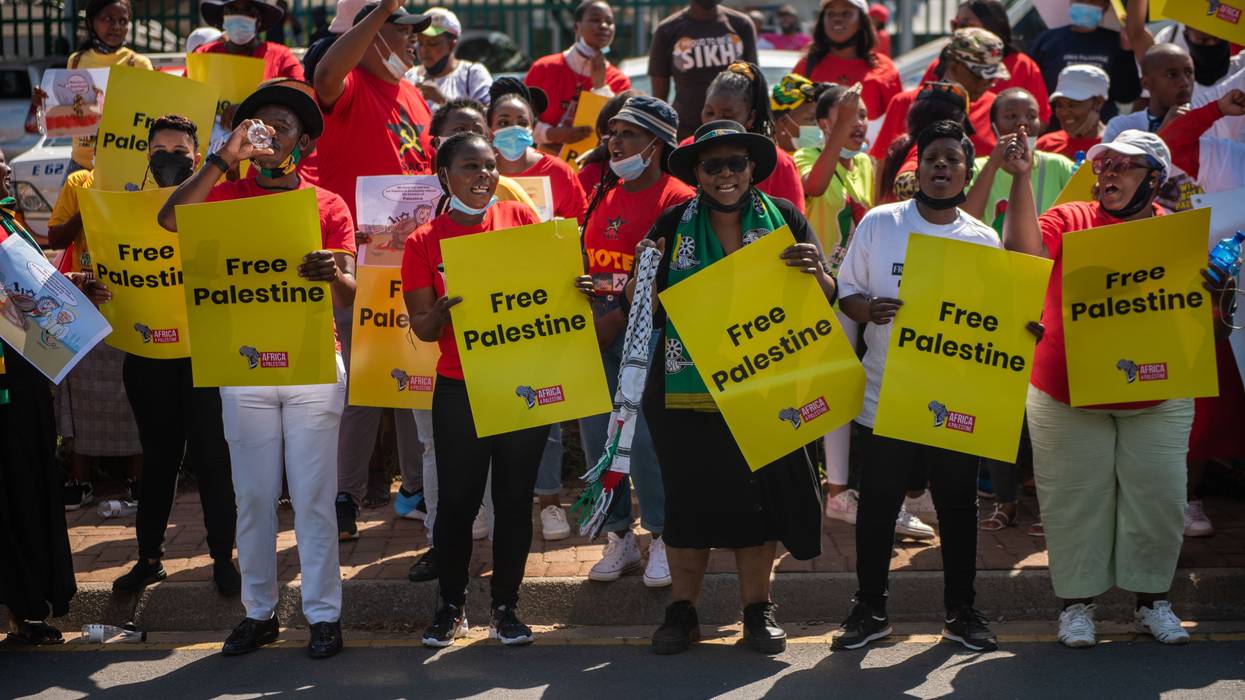
"As South Africans, we refuse to stand by while apartheid is being perpetrated again," the resolution's author asserted.
South African lawmakers voted Tuesday to downgrade the country's embassy in Israel in response to its apartheid, illegal occupation, and other crimes against Palestinians—a move welcomed by human rights advocates around the world.
The resolution to downgrade the status of South Africa's embassy in Ramat Gan, just east of Tel Aviv, to a liaison office was introduced by the center-left National Freedom Party (NFP), which hailed the measure's passage as "a historic moment for our country and a demonstration of our unwavering commitment to justice, human rights, and freedom."
Holding just two seats in the Parliament, the NFP secured the resolution's passage with the support of parties including the dominant African National Congress (ANC), Economic Freedom Fighters, United Democratic Movement, African Independent Congress, Al-Jama-ah, and Pan-Africanist Congress of Azania.
"We can no longer stand by while Palestinian human rights are being trampled on."
While Israel's Foreign Ministry called the vote "shameful and disgraceful," NFP Member of Parliament Ahmed Munzoor Shaik Emam, who introduced the resolution, said after its passage that "this is a moment Madiba would be proud of."
Emam was referring to former South African president and anti-apartheid icon Nelson Mandela, who advocated for Palestinian rights and for Israel's right to exist as a Jewish and democratic state.
"He always said our freedom is incomplete without the freedom of Palestinians," Emam said of Mandela, who died in 2013. "Today we took a step closer to the attainment of that freedom for Palestinians."
"We can no longer stand by while Palestinian human rights are being trampled on," Emam asserted. "By passing this resolution, we are sending a powerful message to the world that South Africa remains a beacon of hope and a shining example of what is possible when we come together in pursuit of a more just and equitable world."
Emam continued:
This resolution demands accountability from Israel. It is a courageous move that demonstrates our commitment as a country to justice, human rights, and freedom. The state of Israel was built through the displacement, murder, and maiming of Palestinians. And to maintain their grip on power, they have instituted apartheid to control and manage Palestinians. This institution of apartheid by the state of Israel contravenes international law and is a violation of the human rights of Palestinians.
"As South Africans," he added, "we refuse to stand by while apartheid is being perpetrated again."
Israel—like the United States, United Kingdom, and other Western democracies—supported South Africa's apartheid regime and even helped it develop nuclear weapons. After the fall of South African apartheid and the return to majority rule, the ruling ANC has vocally opposed Israeli crimes against Palestine.
For example, in May 2018 the party responded to Israeli forces' killing of scores of Palestinian protesters by excoriating the actions of "people who continuously remind us all about the hate and prejudice Jews went through during Hitler's anti-Semitism reign [and yet] exhibit the same cruelty less than a century later."
More recently, the ANC last month cheered the expulsion of a senior Israeli diplomat from the African Union summit in Addis Ababa, Ethiopia.
Senior South African officials have consistently condemned Israeli apartheid, which is being acknowledged by a growing number of human rights groups around the world, including in Israel.
Echoing former U.S. President Jimmy Carter, Baleka Mbete—who served as South Africa's deputy president, National Assembly speaker, and head of the ANC—in 2012 called Israel "far worse than apartheid South Africa."
Like Carter and other Nobel Peace laureates including Mairead Maguire, Rigoberta Menchú, Jody Williams, Betty Williams, and Adolfo Pérez Esquivel, the late South African anti-apartheid activist and religious leader Desmond Tutu condemned Israeli apartheid.
The new NFP-led resolution follows last year's call by the South African government for the United Nations General Assembly to declare Israel an apartheid state.
The measure was also passed on the same day that the Palestinian National Authority called on the world "to take immediate, concrete measures to hold Israeli officials accountable for their crimes and continual incitement and threats to commit crimes against the Palestinian people."
"Only the end of Israel's occupation and the dismantling of its apartheid regime will end this violence, racism, and fascism against the Palestinian people," the Palestinian Ministry of Foreign Affairs and Expatriates said in a statement.
"If not accompanied by action, statements of condemnation will not suffice," the ministry added. "Urgent international intervention is needed to curb Israel's dangerous aggressions against the Palestinian people and to provide necessary protection."
Long before intersectionality became a prevailing concept which helped delineate the relationship between various marginalized and oppressed groups, late South Africa's Archbishop Desmond Tutu said it all in a few words and in a most inimitable style. "My humanity is bound up in yours, for we can only be human together," he said.
Tutu will never die, because his words continue to lead the way, in Palestine as in South Africa.
Like other freedom and justice icons, Tutu did not merely coin the kind of language that helped many around the world rise in solidarity with the oppressed people of South Africa, who fought a most inspiring and costly war against colonialism, racism and apartheid. He was a leader, a fighter and a true engaged intellectual.
It is quite convenient for many in corporate media to forget all of this about Tutu, the same way they deliberately rewrote the story of Nelson Mandela, as if the leader of South Africa's anti-apartheid movement was a pacifist, not a true warrior, in word and deed. Tutu is also depicted by some in the media as if he was merely a quotable man who helped in the 'healing' of the nation after the formal end of apartheid.
There is no use to preach to South Africans, and those who knew Tutu well, to understand the great man's centrality in the anti-apartheid struggle and in the shaping of a powerful narrative, which exposed and, eventually, demolished apartheid.
As a Palestinian, however, I think it is very important to emphasize the crucial role played by Tutu in linking the apartheid experience in his country with Israeli apartheid and military occupation in Palestine, and in influencing a generation of Palestinian intellectuals who have sagaciously tapped into the collective South African anti-apartheid experience and applied many of its valuable lessons to the Palestinian experience as well.
"When you go to the Holy Land and see what's being done to the Palestinians at checkpoints, for us, it's the kind of thing we experienced in South Africa," Tutu told The Washington Post in an interview in 2013.
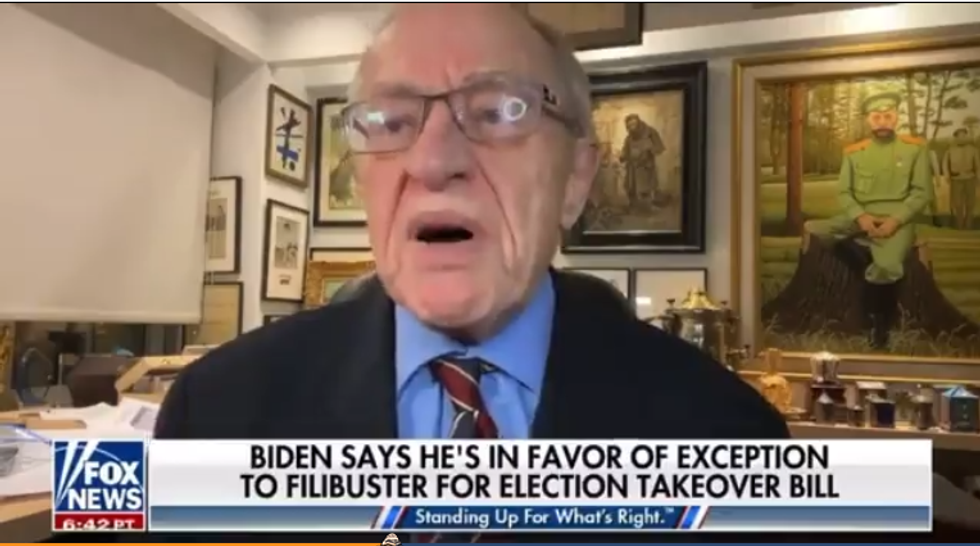
To be accepted into mainstream circles, activists of high caliber are often careful in the language they use and in the references they make. With weak and indecisive intellectual courage, they falter at the first challenge or in the face of abuse and attacks by their detractors. Not Tutu. When the man began making references to an Israeli apartheid in Palestine, Zionists and their friends were merciless in their accusations that the beloved spiritual leader, in the words of infamous American Zionist lawyer, Alan Dershowitz, was "evil".
Dershowitz, hardly known for his moral fortitude and well known for his undying love for Israel, was one of those who used the opportunity to cowardly pounce on the great South African spiritual leader almost immediately after the news of his death.
"The world is mourning Bishop Tutu, who just died the other day," Dershowitz said during an interview on Fox News on December 28, adding, "Can I remind the world that although he did some good things, a lot of good things on apartheid, the man was a rampant anti-Semite and bigot?"
Dershowitz also described Tutu as "evil". Indeed, Tutu was also 'evil' in the eyes of the racist apartheid government of South Africa, as he was 'evil' in the eyes of Israel. Mandela, Che Guevara, Yasser Arafat, Malcolm X and Martin Luther King were also 'evil' in the eyes of the racists, the colonialists, the Zionists and the imperialists.
Expectedly, Tutu did not back down despite years of pressure and abuse. "I know, first-hand, that Israel has created an apartheid reality within its borders and through its occupation. The parallels to my own beloved South Africa are painfully stark, indeed," Tutu wrote in 2014, calling on US Presbyterians to impose sanctions on Israel.
In that same year, an interview with the South African news outlet News 24, Tutu said:
"I have witnessed the systemic humiliation of Palestinian men, women and children by members of the Israeli security forces. Their humiliation is familiar to all black South Africans who were corralled and harassed and insulted and assaulted by the security forces of the apartheid government."
It is such support by such great men and women like Tutu that gave the Palestinian Boycott, Divestment and Sanctions (BDS) Movement the needed impetus to build the foundation of its current success around the world.
Tutu went further. Instead of appealing to people's consciousness, he also reminded them that making the wrong moral choice is a moral indictment of them as well. "Those who turn a blind eye to injustice actually perpetuate injustice. If you are neutral in situations of injustice, you have chosen the side of the oppressor," he said.
In South Africa, in Palestine and all around the world, we mourn the death of Archbishop Tutu but we also celebrate his life. Particularly, we celebrate the legacy that this formidable intellectual and spiritual leader left behind.
Palestinians all over the world paid tribute to Tutu. Palestinian Archbishop Atallah Hanna, himself a great warrior for justice, said that Tutu "will always be remembered for his rejection of racism and apartheid, including in Palestine."
Because of Tutu and his comrades, we have a roadmap on how to fight against and end apartheid, how to confront the racists and how to defeat racism; how to embrace our moral responsibility and how to strive for a better, more equitable world. And, because of Tutu, we are constantly reminded that Israeli apartheid in Palestine must be fought with the same ferocity, will and moral fortitude as that of South Africa.
Tutu will never die, because his words continue to lead the way, in Palestine as in South Africa. Equally important, we must never allow the honorable legacy of Desmond Tutu to be exploited, demonized or rewritten by his detractors or by those whose sensibilities cannot accommodate the courage of this black fighter, who will continue to lead the way, long after his passing.
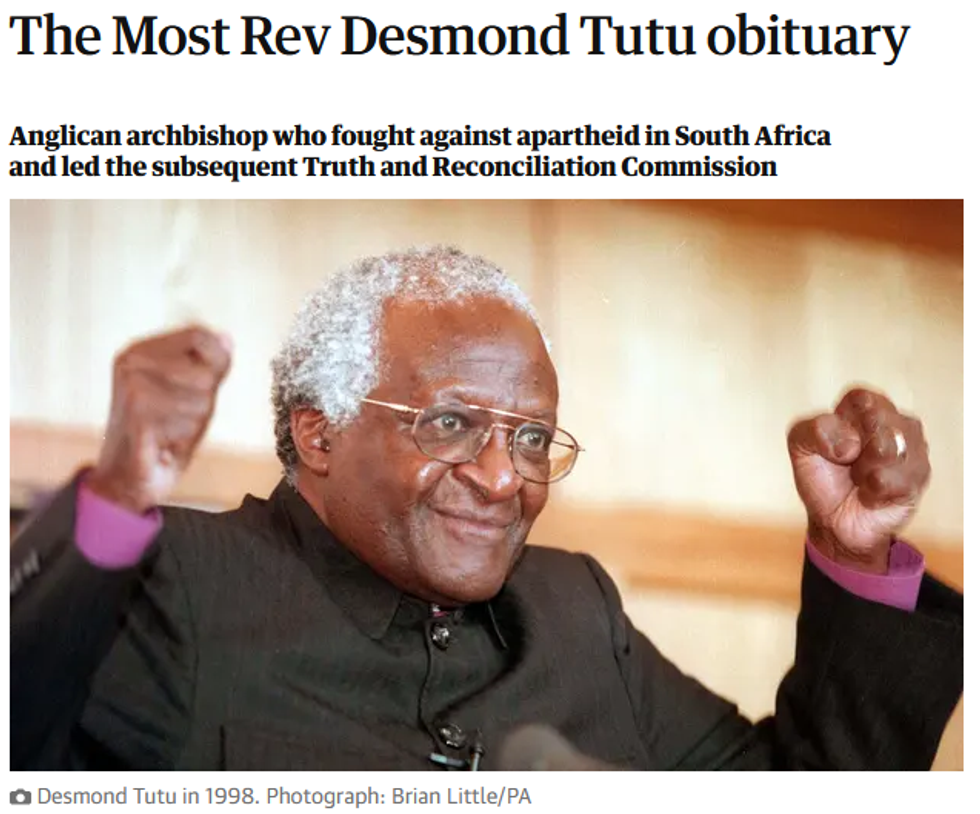
Obituaries in the corporate and establishment press for South African Archbishop Desmond Tutu rightly celebrated him not only as one of the key leaders of the struggle against apartheid in his own country, but as a global advocate against oppression, including being a fierce Christian voice against homophobia.

AP (12/26/21) noted that Desmond Tutu "campaigned internationally for human rights"--but didn't mention Israel/Palestine.
These obituaries often underplayed or ignored, however, that Tutu, as a South African crusader against apartheid, helped to normalize the idea that Palestinians suffered under a similar apartheid system. Likewise marginalized was the enormous amount of hate he received for his advocacy for Palestinians and his criticism of the Israeli government.
The New York Times (12/26/21) obituary reduced his Palestine advocacy to one incident in 2010 when "he unsuccessfully urged a touring Cape Town opera company" to not perform in the country, quoting his urging the company to postpone its production of Porgy and Bess "until both Israeli and Palestinian opera lovers of the region have equal opportunity and unfettered access to attend performances."
The AP obituary (12/26/21) ignored this issue entirely, as did obituaries in USA Today (12/26/21), the BBC (12/26/21) and NPR (12/26/21). The Washington Post (12/26/21) did the issue some justice, saying that Tutu "repeatedly compared Israel's treatment of Palestinians in the West Bank and Gaza to South Africa during the apartheid regime." While CNN's initial obituary (12/26/21) devoted only part of a sentence to his call for a boycott of Israel in 2014, a follow-up piece explored his broad range of activism: "As South Africa Mourns Desmond Tutu, So Do LGBTQ Groups, Palestinians and Climate Activists" (11/27/21).

Critics complained that the Guardian's obituary (12/26/21) contained all of four words on Desmond Tutu's criticism of Israel. The paper later printed an op-ed (12/30/21) on his advocacy for Palestinians.
As of this writing, more than 3,000 people had signed a petition demanding a correction to the Guardian's obituary (12/26/21). Petitioners complained that while the obit:
documents the archbishop's tireless struggle against oppression and racism of all kinds...Tutu's repeated criticism of Israeli apartheid policies, and his commitment to the cause of the Palestinian people, are all simply omitted.
The article's lone mention of Israel cited Tutu's blasting "the US for supporting the Contras in Nicaragua and Israel for bombing Beirut." The petition said that the article "exemplifies the Guardian's consistent pro-Israel bias," a trend FAIR has previously documented (2/22/21). According to the Palestine Solidarity Campaign (12/30/21), activists were concerned with the Guardian's "deletion of a large number of comments in response to the obituary which all highlighted Tutu's condemnation of Israeli apartheid." The comments were restored upon pressure, the group said, but the original deletion, the group said, still inspired unease.
This backlash is rooted in the idea that advocacy for the Palestinians must be antisemitic because Israel is an officially Jewish state--an idea that borrows from the now-ridiculous notion that fighting apartheid in South Africa was somehow anti-white.
The Guardian (12/30/21) did eventually publish a piece on Tutu's Palestine activism, in an apparent response to the media activism.
As the Middle East Eye (12/26/21) reported, Tutu likened Palestinians' political conditions to those of Black South Africans under apartheid. He supported the boycott, divestment and sanctions (BDS) campaign as a form of peaceful pressure, and often spoke of Israel's policies as being contrary to the teachings of Jewish and Christian values.
Upon his death, the Israeli newspaper Ha'aretz (12/26/21) quoted Tutu's defense of boycotting Israel, saying those who continue to do business with Israel "are contributing to the perpetuation of a profoundly unjust status quo." "Those who contribute to Israel's temporary isolation," meanwhile, "are saying that Israelis and Palestinians are equally entitled to dignity and peace."

Alan Dershowitz on Fox News (12/27/21): "Let's make sure that history remembers both the goods he did and the awful, awful bads that he did as well."
Skating over Tutu's outspokenness about Palestinian rights in his official obituaries does a disservice to Tutu's life, as his intense advocacy for Palestinians was a major part of his devotion to social justice, and like all campaigns for social justice, it inspired reactionary pushback from defenders of the status quo.
The pro-Israel Anti-Defamation League (5/3/12) said that he "veered into classical religion-based antisemitism" with his condemnation of Israel's treatment of Palestinians. AP (10/4/07) reported that Tutu had even been disinvited from speaking at a university because the administration "worried his views on the Israeli/Palestinian conflict would offend the Jewish community."
The London Times (1/13/11) reported that a petition "signed by three well-known members of Cape Town's Jewish community" accused Tutu of being a "bigot, dishonest, and a defamer of Israel and the Jewish community." "Over the years," they said, "Archbishop Tutu has been guilty of numerous antisemitic and anti-Israel statements."
Alan Dershowitz--lawyer for Donald Trump, Harvey Weinstein and Jeffrey Epstein--even took to Fox News (12/27/21; Crooks & Liars, 12/28/21) to dance on Tutu's grave: "Can I remind the world that...the man was a rampant antisemite and bigot?"
This backlash is rooted in the idea that advocacy for the Palestinians must be antisemitic because Israel is an officially Jewish state--an idea that borrows from the now-ridiculous notion that fighting apartheid in South Africa was somehow anti-white. The Jewish Telegraphic Agency's obituary (12/26/21) highlighted this absurdity, saying Tutu "identified closely with the historical suffering of the Jewish people in his forceful advocacy against apartheid in South Africa."
Underplaying this aspect of Tutu's life also understates his impact, because it was Tutu, as a hero of South African liberation struggle, who gave major legitimacy to both the movement to boycott Israel and to critics who labeled Israel's occupation as apartheid. Tutu's early recognition that Israel's anti-Palestinian policies mirrored what he had campaigned against in South Africa laid the groundwork for human rights groups like Human Rights Watch (New York Times, 4/27/21) and B'Tselem (NBC, 1/12/21) to recognize Israel's occupation as a form of apartheid.
The omission or underplaying of this facet of Tutu's life is a reminder of how scared many corporate media institutions are of touching what is often called the third rail of politics. That the AP's obituary, for example, can highlight Tutu's heroic commitment against homophobia but not his views on the Israel/Palestine conflict, or the backlash he faced as a result, underscores the limits of intersectional social justice in the establishment press.
The Guardian has published an important eulogy to the late Desmond Tutu by Chris McGreal, saying what so many in the Palestinian solidarity community are saying: After fighting apartheid in South Africa, Tutu used his stature to call out apartheid in Israel and Palestine, and he paid a large price for doing so.
Indeed, opposing apartheid in Palestine was one of Tutu's salient achievements. And yet the American media are--no surprise--playing that angle down in memorializing Tutu as a great moral leader. They seem embarrassed by this aspect of Tutu's legacy.
The PBS News Hour gave the Anglican archbishop's work on Palestine one line in a lengthy obit, between his visiting Rwanda after the genocide and his opposition to the Iraq war. "He weighed in on the Israeli Palestinian conflict, at times likening Israeli actions to apartheid era South Africa," the News Hour said simply.
National Public Radio repeatedly failed to mention Tutu's stand on Palestine in coverage here, here and here--even as its correspondents discussed the ways that Tutu "used his reputation" since the fall of apartheid by speaking "truth to power."
The New York Times also scanted Tutu's courage on Palestine in its obit, titled, "Desmond Tutu, whose voice helped slay apartheid, dies at 90." This paragraph came near the very end, and it slights Tutu's direct accusation of apartheid against Israel.
He remained equally outspoken even in later years. . .
In 2010 he unsuccessfully urged a touring Cape Town opera company not to perform in Israel, invoking South Africa's struggle against apartheid in criticizing Israel's policy toward Palestinians. He said that the company's production of "Porgy and Bess" should be postponed "until both Israeli and Palestinian opera lovers of the region have equal opportunity and unfettered access to attend performances."
The Washington Post adopted the same approach. Its main obit left Tutu's pro-Palestinian views to the fourth paragraph from the end, and gave them half a sentence.
He also called for President Barack Obama to apologize for the American-led invasion of Iraq in 2003 and repeatedly compared Israel's treatment of Palestinians in the West Bank and Gaza to South Africa during the apartheid regime.
The Post partly made up for that with an Op-Ed by the South African journalist Redi Tlhabi about Tutu's activism for justice globally, including opposition to the Iraq war and statements on climate change. Tlhabi's op-ed had Palestine in the headline--"Desmond Tutu stood for Palestinians and many others"--and this good summary in the text:
But it was perhaps his support for Palestinians and his criticism of Israel that got him in trouble with many who wanted to preserve him in amber, a sort of living monument to a past struggle. "When you go to the Holy Land and see what's being done to the Palestinians at checkpoints, for us, it's the kind of thing we experienced in South Africa," he told The Post in 2013.
Many around the world have reached the inevitable conclusion that Israel is an apartheid state, including leading human rights organizations.
Chris McGreal made a similar point to Tlhabi's in his piece in the Guardian. Tutu crossed a line with his stance on Israel, but the world is catching up to him.
"Tutu's real crime in the eyes of Israel's most unrelenting supporters was to liken its rule over the Palestinians to apartheid and then refuse to back off in the face of an onslaught of abuse," McGreal says. He gives some of those statements.
"I know first-hand that Israel has created an apartheid reality within its borders and through its occupation. The parallels to my own beloved South Africa are painfully stark indeed," [Tutu] wrote in 2014 in a call for the Presbyterian general assembly in the US to back sanctions against Israel.
Tutu alarmed the government of Israel with these testimonies, McGreal writes, and the situation has only gotten worse. With the two-state solution "moribund," the discourse of apartheid has accelerated in the last year, with two leading human rights groups accusing Israel of practicing that crime.
More on the mainstream's myopia. Terry Gross yesterday ran excerpts of two superb interviews she did with Tutu on "Fresh Air", in 1984 and 1999. Gross is a great interviewer, but she made no references to Israel and Palestine in the 43-minute-long segment. Gross has long objected to the apartheid discourse about Israel, as when she assailed Jimmy Carter for using the word in 2006--and cited Alan Dershowitz as an authority on the matter.
Dershowitz is still with us, too: He published an op-ed saying that Tutu was a bigot who hated Jewish people. And that op-ed has gotten a lot of attention from Israel and its friends.
J Street tweeted the excellent Tlhabi piece in the Washington Post on Tutu, but the liberal Zionist organization has not directly eulogized Tutu, even as it mourns the loss of Harry Reid. Saluting Tutu might be a bridge too far for liberal Zionists, when Democratic Majority for Israel is ignoring Tutu's death and Dershowitz is slamming Tutu.
By the way, Terry Gross's interview with Tutu from 1984 is particularly insightful. Tutu repeatedly said the only thing that would bring down a hateful, brutal order was international pressure. "What do you think other countries can do in support of dismantling the apartheid system?" Gross asked. Tutu's brilliant answer:
I believe that they must make it quite clear that there is no way in which the perpetrators of apartheid will ever become respectable, and that apartheid will ever become acceptable. I think, I mean, that the perpetrators of apartheid must continue to be treated as pariahs in the world community. And the world community must lay down stringent conditions. I think that the world community can say--I mean, especially the business community, who are the ones who have enormous clout, you know? That is indicated by the fact that if I were to say on your program that I support economic sanctions against South Africa, disinvestment, that is a criminal offence. And until recently, if I was found guilty, the minimum mandatory sentence would be five years in prison, which shows that those who invest have considerable leverage, which they are refusing to use.
And so I would say to them, please, remember that your investment in South Africa is as much a political and moral factor as it is an economic one, that you are buttressing one of the most vicious systems in the world.
That lesson applies today, when only outside pressure will bring down Israeli apartheid. But so far powerful media outlets in the U.S. can't report that news.
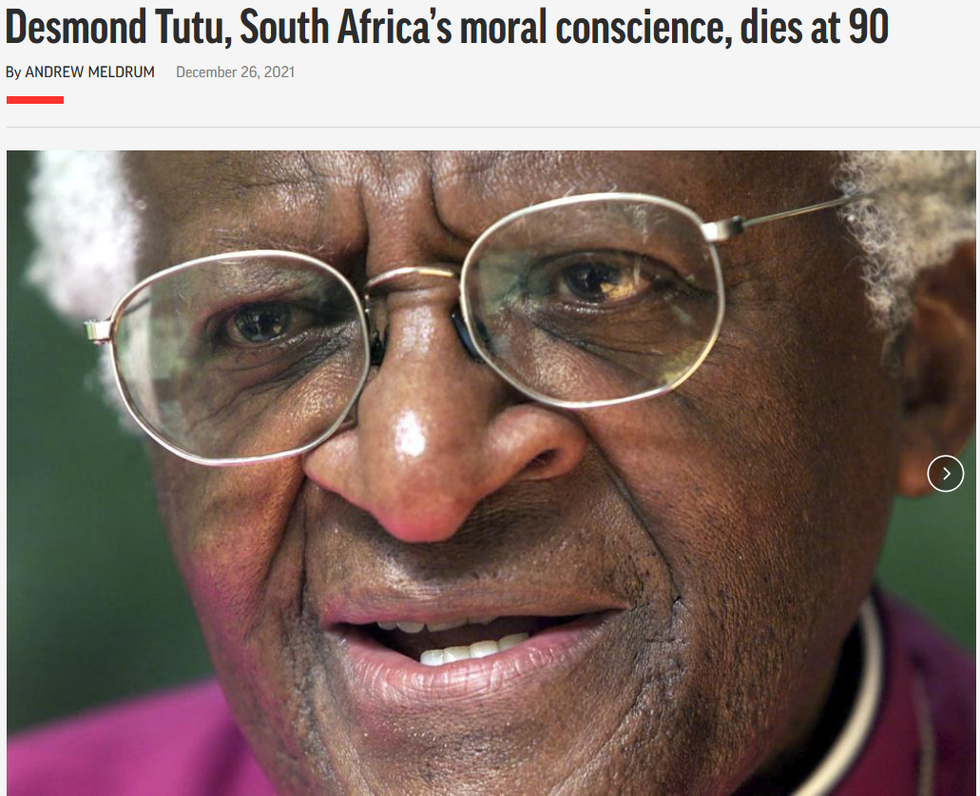
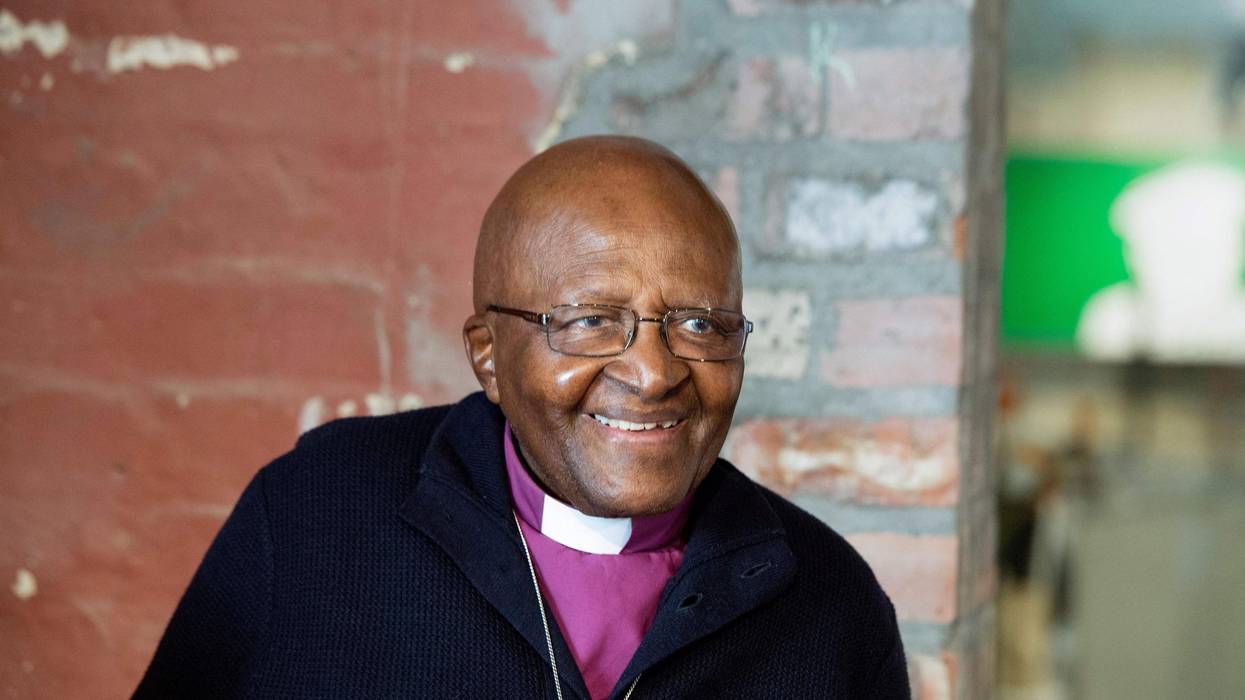
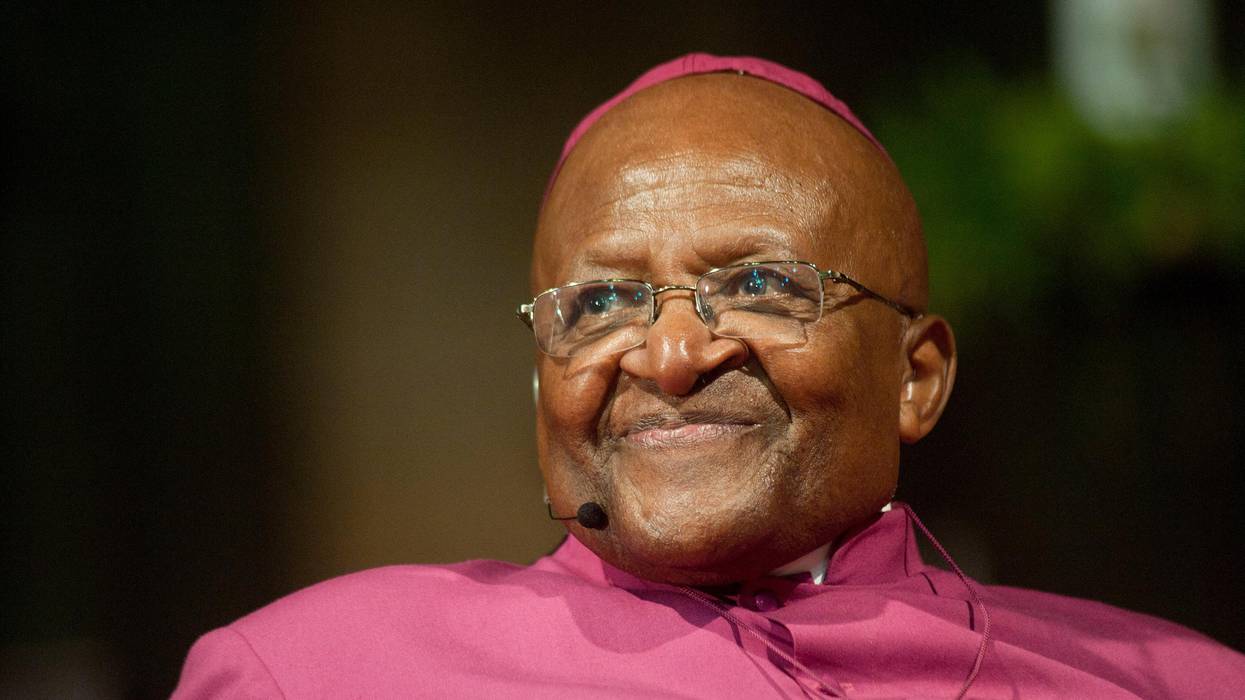
Archbishop Desmond Tutu died the day after Christmas at the age of 90. The Nobel Peace laureate was a leader in the movement to overthrow apartheid, South Africa's brutal system of racial segregation. After that historic victory and the election of Nelson Mandela as South Africa's first Black president in 1994, Tutu led the Truth and Reconciliation Commission, pursuing restorative justice rather than retribution. After that, Tutu continued demonstrating and speaking out around the world for justice, peace, women's equality, gay rights, in solidarity with Palestinians, and more.
Tutu continued demonstrating and speaking out around the world for justice, peace, women's equality, gay rights, in solidarity with Palestinians, and more.
Born in South Africa in 1931, Tutu grew up under racist laws imposed over centuries of colonialism. In 1948, the hardline white supremacist National Party swept the elections and instituted apartheid. As a college student in the early 1950s, Tutu met Nelson Mandela. They wouldn't meet again for close to 40 years, until after Mandela served 27 years in prison.
Tutu became an Anglican priest, and rapidly rose in the clergy. He took charge of the South African Council of Churches, transforming it into a major human rights organization. He mobilized domestic and international opposition to apartheid, including an international economic boycott of South Africa.
Testifying before the U.S. Congress in 1984, Tutu denounced the Reagan administration:
"Apartheid is as evil, as immoral, as un-Christian, in my view, as Nazism. And in my view, the Reagan administration's support and collaboration with it is equally immoral, evil and totally un-Christian."
Later that year he received the Nobel Peace Prize.
"Governments don't always represent their people," Tutu said at the 2001 World Conference against Racism in Durban, South Africa, reflecting on the importance of grassroots action in the United States in overcoming Reagan's support for the apartheid regime. "We tried to persuade the Reagan White House to impose sanctions against South Africa. And the Reagan White House was firmly set against that. We appealed over their heads, to the people. And they were fantastic. The response was that the moral climate in the United States changed. And they did not just pass the anti-apartheid legislation, they mustered a presidential veto override."
Tutu was referring to Reagan's veto of The Comprehensive Anti-Apartheid Act of 1986, which had passed both houses of Congress with overwhelming support. The Republican-controlled Senate overrode Reagan's veto by a vote of 78-21.
"Apartheid's rulers bit the dust, as all oppressors have done always, for this is a moral universe," Tutu said in 2007 in a speech at Boston's Old South Church. "Right and wrong matter. It cannot happen that evil, injustice and oppression can have the last word. No, ultimately goodness, justice, freedom--these will prevail."
Archbishop Tutu gave the Boston speech not long after St. Thomas University in Minneapolis/St. Paul rescinded an invitation to speak because of his unwavering solidarity with Palestinians. Facing a public backlash, the Catholic university then reversed its own decision and issued Tutu an apology and a re-invitation. He elaborated on Israel/Palestine in 2008, appearing on the Democracy Now! news hour. He described a visit to the region, during which Israel prevented him from entering Gaza:
"For me, coming from South Africa and looking at the checkpoints and the arrogance of those young soldiers--it reminds me of the kind of experiences that we underwent. I was Bishop of Johannesburg and would be driving with my wife from town to Soweto, where we lived, and we'd have a roadblock, and the fact of our having to have passes allowing us to move freely in the land of our birth. And now you have that extraordinary structure--the wall."
Tutu "selflessly fought the evils of racism during the most terrible days of apartheid," Nelson Mandela wrote of Desmond Tutu in his autobiography, Long Walk to Freedom. Mandela went on, describing their reunion following his release from prison: "When I greeted Archbishop Tutu, I enveloped him in a great hug; here was a man who inspired an entire nation with his words and his courage, who had revived the people's hope during the darkest of times."
We find ourselves again in dark times, with authoritarianism on the rise, widening economic inequality, vaccine apartheid in the midst of a pandemic and the worsening climate emergency. Speaking to youth activists outside the United Nations climate summit in Copenhagen, Denmark in 2009, Tutu said, "For those who think that the rich are going to escape--hahaha!--we either swim or sink together." Unleashing his signature squeal of laughter, Tutu's principled resistance was suffused with expressions of joy and compassion. "We have one world, and we want to leave a beautiful world for this beautiful, wonderful young generation. We, the oldies, want to leave you a beautiful world. It is a matter of morality. It is a question of justice."
The death of Desmond Tutu has been a tragic loss to human rights, justice and development in Africa. Many words will be said in his honor. However, the best way to honor his memory is for leaders of industrialized countries to provide increased public health and socio-economic support to the African people to whom Desmond Tutu devoted his life and work.
Aid to Africa should be aimed at strengthening civil society and community-based organizations.
Today the coronavirus pandemic has resulted in hundreds of thousands of deaths in Africa that could have been avoided. Having sufficient vaccines available to all will help curtail the coronavirus pandemic in Africa. And, by stalling the development of new mutations, in the rest of the world.
Health problems in Africa still require considerable technical and financial assistance.
Improving the infrastructure of health systems in most African countries will be critical to address long-term health crises in addition to the current pandemic.
Increasing access to primary health care, including vaccinations, should also be paired with strengthening civil society and community-based organizations and providing access to education for all. This will require a commitment from the international community, the collaboration of health workers worldwide, and the leadership of African churches and organizations.
Aid to Africa should be aimed at strengthening civil society and community-based organizations. African governments need help to provide education for all age levels, and they need better trade conditions for their products. They need financial assistance given in a carefully planned and responsible way.
Writer Paul Theroux, who has traveled extensively in several African countries wrote, "I would not send private money to a charity, or foreign aid to a government, unless every dollar was accounted for. Dumping more money in the same old way is not only wasteful, but stupid and harmful." To be effective aid must bypass corrupt governments and find ways of helping people in more direct ways. It is a measure of the humanity of industrialized nations to provide public health resources and support at this critical moment.
Desmond Tutu has said, "Africans believe in something that is difficult to render in English. We call it ubuntu, botho. It means the essence of being human. You know when it is there and when it is absent. It speaks about humaneness, gentleness, hospitality, putting yourself out on behalf of others, being vulnerable. It embraces compassion and toughness. It recognizes that my humanity is bound up in yours, for we can only be human together."
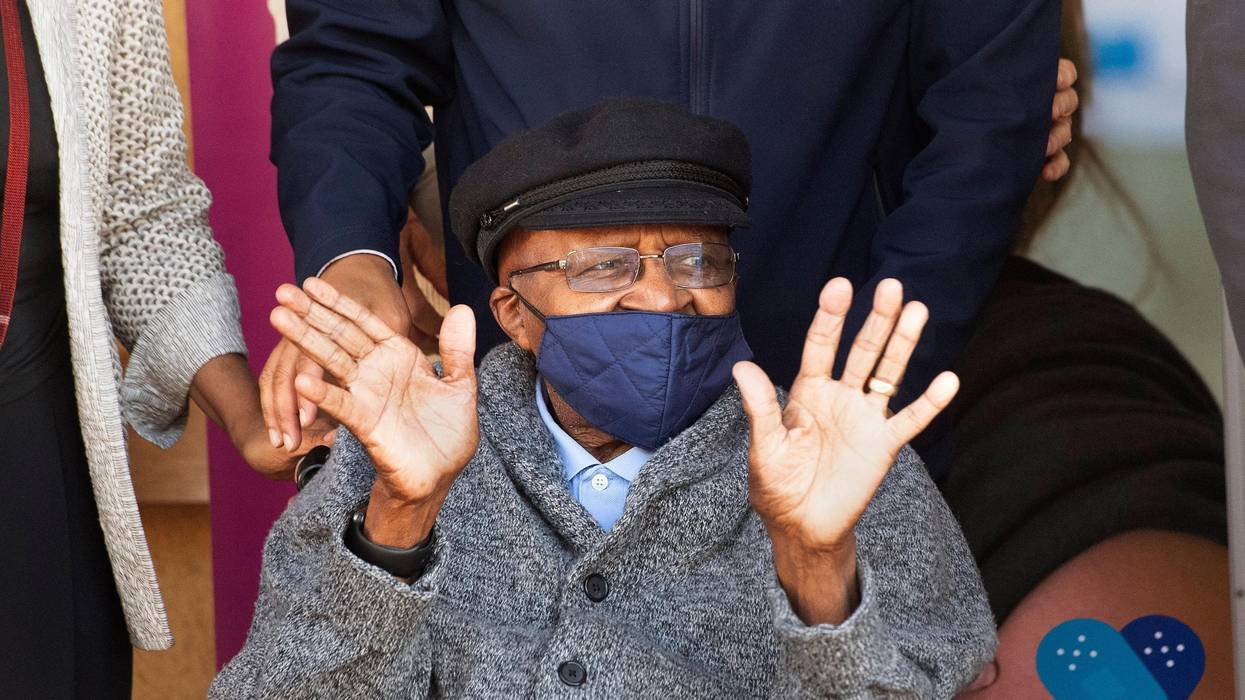
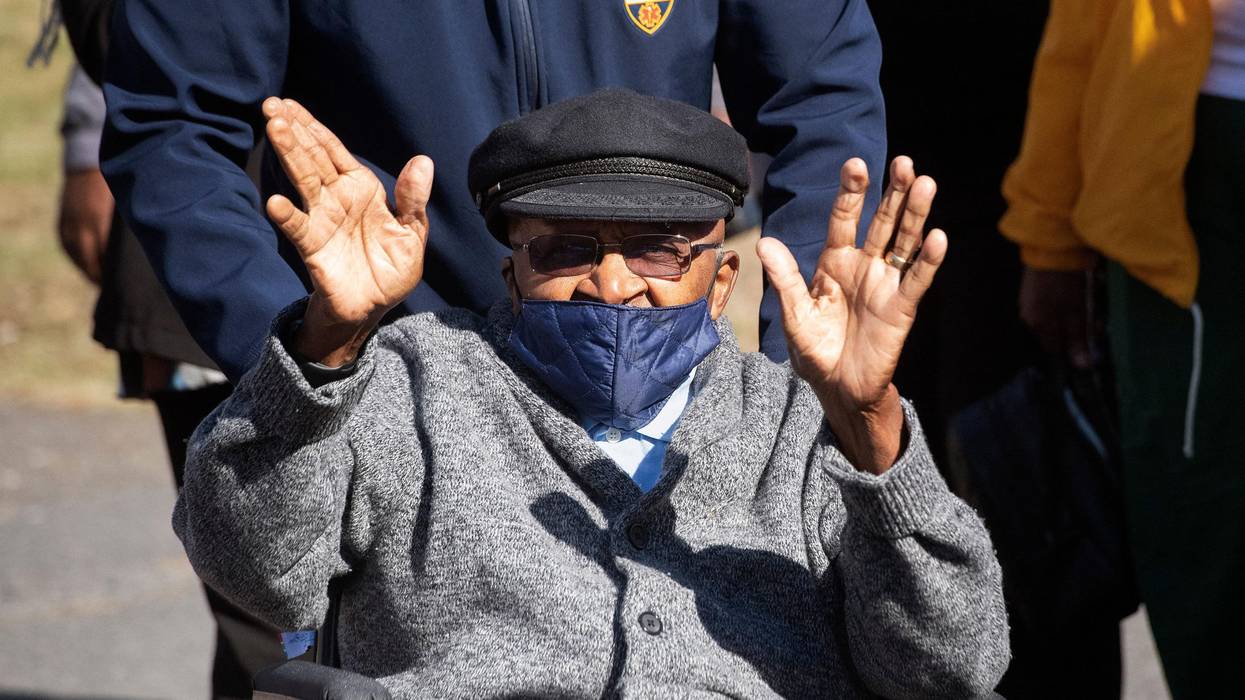
Leaving behind a legacy of fighting for oppressed people in South Africa and around the world, Archbishop Desmond Tutu died Sunday at age 90 in Cape Town, South Africa. The cause was reportedly cancer.
Advocates for human rights, health equity, economic justice, and nonviolence honored Tutu, who helped lead the anti-apartheid movement in South Africa and the Truth and Reconciliation Commission which was formed afterwards.
The Elders, the independent groudenp of global leaders working for justice and good governance, said his "commitment to peace, love, and the fundamental equality of all human beings will endure to inspire future generations."
"If you are neutral in situations of injustice, you have chosen the side of the oppressor."
"The Elders would not be who they are today without his passion, commitment, and keen moral compass," said Mary Robinson, former Irish president and chair of The Elders. "He inspired me to be a 'prisoner of hope,' in his inimitable phrase. [Tutu] was respected around the world for his dedication to justice, equality, and freedom. Today we mourn his death but affirm our determination to keep his beliefs alive."
Tutu served as The Elders' first chair from 2007 until 2013, after becoming internationally recognized for his work leading Black South Africans in the fight against the apartheid system, which he condemned as "evil" while urging nonviolent methods of protest.
He preached that apartheid threatened the dignity and humanity of both Black and white South Africans and called on international leaders to impose sanctions on the country's government in protest of the apartheid system, a demand which led South African officials to revoke his passport twice.
"If you are neutral in situations of injustice, you have chosen the side of the oppressor," Tutu famously said during the struggle against apartheid. "If an elephant has its foot on the tail of a mouse and you say that you are neutral, the mouse will not appreciate your neutrality."
He was awarded the Nobel Peace Prize for his work in 1984. After the fall of the apartheid system in 1994, Tutu chaired the Truth and Reconciliation Commission, which aimed to provide a record of the violence and injustice perpetrated by the government under the system. The archbishop sought to provide "restorative justice," offering compensation to survivors and amnesty to perpetrators who cooperated with the inquiry.
Tutu was a fierce critic of economic and racial inequality that persisted in South Africa following the formal end of the apartheid system, accusing President Thabo Mbeki in 2004 of serving a small number of elites while "too many of our people live in grueling, demeaning, dehumanizing poverty."
"Can you explain how a Black person wakes up in a squalid ghetto today, almost 10 years after freedom?" Tutu said in 2003. "Then he goes to work in town, which is still largely White, in palatial homes. And at the end of the day, he goes back home to squalor?"
Beyond his home country, Tutu was an outspoken critic of militarism and imperialism in the Global North, calling for former U.S. President George W. Bush and former U.K. Prime Minister Tony Blair to face prosecution at the International Criminal Court over their invasion and occupation of Iraq.
Tutu was also a defender of Palestinians' rights and a critic of Israel's violent policies targeting millions of people in Gaza and the West Bank, comparing their treatment to the apartheid system.
In 2014, as the Israeli Defense Forces carried out attacks that killed more than 2,100 Palestinians--the vast majority of whom were civilians--Tutu wrote an exclusive article in Israeli newspaper Haaretz, calling for a global boycott of Israel.
He called on Israelis "to actively disassociate themselves and their profession from the design and construction of infrastructure related to perpetuating injustice, including the separation barrier, the security terminals and checkpoints, and the settlements built on occupied Palestinian land."
"Those who continue to do business with Israel, who contribute to a sense of 'normalcy' in Israeli society, are doing the people of Israel and Palestine a disservice," Tutu wrote. "They are contributing to the perpetuation of a profoundly unjust status quo. Those who contribute to Israel's temporary isolation are saying that Israelis and Palestinians are equally entitled to dignity and peace."
That same year, Tutu called for a global divestment from the fossil fuel industry modeled on the international sanctions that he supported against South Africa, which helped to end apartheid.
"As we celebrate Desmond Tutu's legacy, remember his unflagging support for the people of Palestine."
"We live in a world dominated by greed," Tutu wrote in The Guardian. "We have allowed the interests of capital to outweigh the interests of human beings and our Earth. It is clear [the companies] are not simply going to give up; they stand to make too much money."
"People of conscience need to break their ties with corporations financing the injustice of climate change," he added. "We can, for instance, boycott events, sports teams, and media programming sponsored by fossil-fuel energy companies... We can encourage more of our universities and municipalities and cultural institutions to cut their ties to the fossil-fuel industry."
Tutu was also recognized for his global fight for LGBTQ+ rights, his calls for an end to AIDS denialism in South Africa, and recently, his efforts to combat misinformation about Covid-19 vaccines.
"Bishop Tutu meant so much to so many," said Rev. Dr. William Barber II, co-chair of the anti-poverty Poor People's Campaign in the U.S. "Thank God for his life. Let we who believe in freedom and justice be his legacy always."
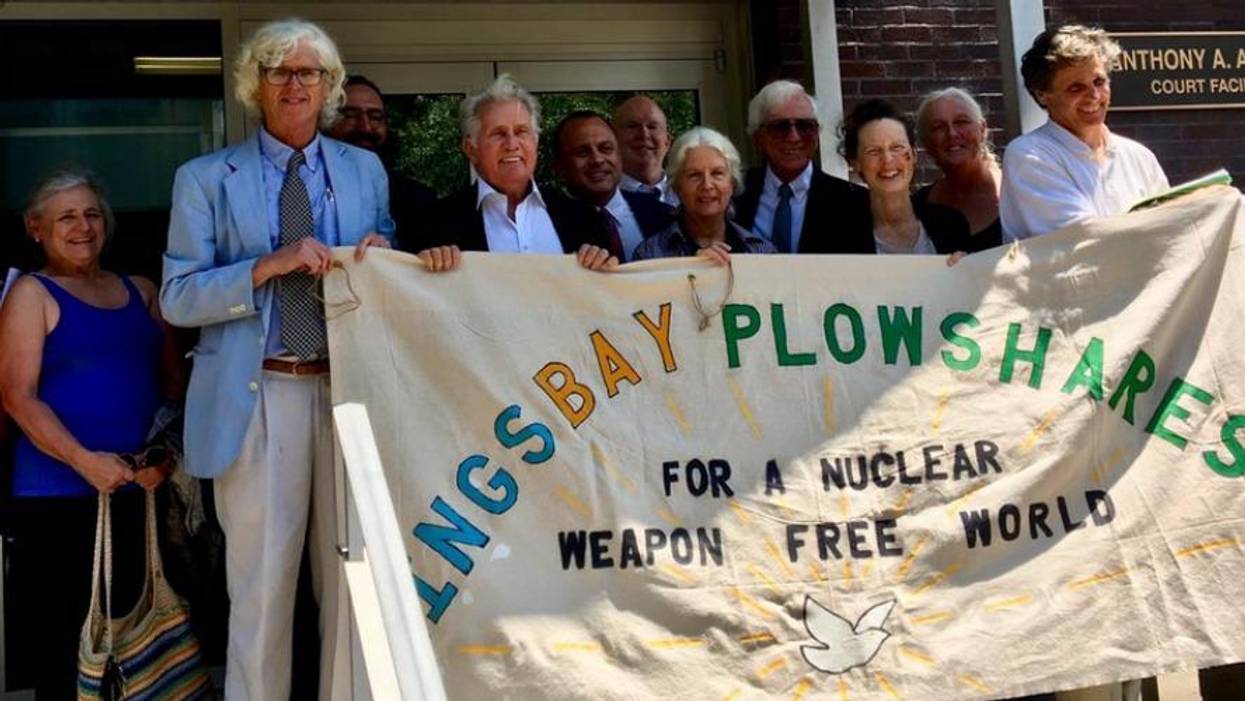
Advocates for seven faith-based peace activists are calling on the public to support the group as they fight federal charges and a potential 25-year prison sentence for disarming a nuclear submarine base.
The Kings Bay Plowshares Seven (KBP7) nonviolently and symbolically disarmed the Trident nuclear submarine base in Kings Bay, Georgia on April 4, 2018. Last week in federal court, District Judge Lisa Godbey Wood heard the peace advocates' pre-trial arguments asking her to dismiss the felony and misdemeanor charges against them.
Lawyers for Mark Colville, Father Steve Kelly, Elizabeth McAlister, Martha Hennessy, Clare Grady, Patrick Michael O'Neill, and Carmen Trotta say the federal government violated the Religious Freedom Restoration Act (RFRA) when it charged the KBP7 with conspiracy, trespassing, and destruction and depredation of property.
"I've been inspired most of my life by people who take the gospel seriously and live the gospel as a basic truth. If what you believe doesn't cost you anything, then what is it good for?"
--Martin Sheen, actor and KBP7 supporterThe activists say they were acting in the name of their Catholic faith when they cut through fencing and wire at the submarine base and allegedly vandalized a building and static missiles.
"All of my actions and those of my co-defendants have been measured and guided by the principles of nonviolence expressed in Sacred Scripture. I would argue our communal criminal history has been all about upholding the basic tenets of love and providing for the common good," said O'Neill in his oral argument. "My actions are an extension of my beliefs. This connection between sincerely held religious beliefs and sacramental practice (action) are one and the same."
Under the RFRA, their lawyers argued, the government is required to take each of the defendants' beliefs into consideration and to levy the least restrictive charge against the group possible.
"A prosecution on three felonies and a misdemeanor was not close to that standard," argued attorney Stephanie McDonald, according to The Brunswick News in Brunswick, Georgia.
Colville said in his argument that the group doubts the government ever considered a punishment less restrictive than the felony and misdemeanor charges and the potential 25-year prison sentence the group now faces.
"Despite being given numerous opportunities, the government has yet to produce any evidence that it ever considered any less-restrictive means of protecting its so-called 'compelling interest,' while its own witnesses indicated that there were/are several such means available," Colville said. "The question this begs, then, is: did the government consider something more restrictive, and then talk themselves down? To this? What exactly could that have been? Is there still some federal statute on the books that allows for a public flogging?"
The KBP7's case marks the first time the RFRA has been invoked in this way.
In the courtroom last Wednesday, three of the defendants were seeing each other and the other advocates for the first time in 16 months after being incarcerated in a county jail in Georgia. Colville, Kelly, and McAlister argue that their civil rights have been violated by their prolonged imprisonment, during which they have not had access to in-person legal preparation.
The courtroom last Wednesday overflowed with supporters, with about 60 people in the room as the KBP7 gave their arguments, and another 25 outside.
Actor and activist Martin Sheen was among the advocates who assembled in the court.
"I've been inspired most of my life by people who take the gospel seriously and live the gospel as a basic truth," Sheen told The Brunswick News. "If what you believe doesn't cost you anything, then what is it good for? I think that's the fundamental value of the Plowshares' action."
Circulating their petition on social media after the hearing, the KBP7's support committee called on the public not only to join their call for the government to dismiss their charges, but also to help rebuild the anti-nuclear weapons movement "that helped disarm the world's nuclear arsenals from 90,000 down to 15,000 weapons in the 1980s."
"We who share the moral vision of the Kings Bay Plowshares Seven proclaim our support for their courage and sustained sacrifice and call for the immediate dismissal of all charges against them," reads the petition, addressed to Attorney General William Barr. "The defendants invite us to act creatively. They invite us to join global coalitions working to promote governments' adherence to, and full implementation of, the Treaty on the Prohibition of Nuclear Weapons. They also invite us to participate in campaigns for divestment from nuclear weapons as complementary efforts towards the realization of a world free of nuclear weapons."
A number of global peace advocates and Nobel Peace Laureates are among the signers of the petition, including Archbishop Desmond Tutu, Poor People's Campaign leaders Rev. William Barber and Rev. Liz Theoharis, and Medea Benjamin.
Judge Wood is currently considering the KBP7's arguments.
Should we save the planet or kill the enemy?
Perhaps no question more succinctly separates the past from the future, or so it occurred to me after I read Rebecca Solnit's stunning observation in a recent essay: that the mass murders in Christchurch, N.Z. on March 15 occurred on the same day, and in the same general area, as the climate strike young activists were holding in Christchurch as part of a global action, with rallies in well over a hundred countries involving tens of thousands of people.
This juxtaposition was "also a perfectly coherent one, a clash of opposing ideologies," Solnit wrote. "Behind the urgency of climate action is the understanding that everything is connected; behind white supremacy is an ideology of separation."
Everything is connected -- insects, humanity, the oceans, the planet. The meaning and spiritual pull of these words is beyond simple comprehension. The propensity of molecules to unite led to cellular life, Pierre Teilhard de Chardin points out in The Phenomenon of Man, then adds: "Driven by the forces of love, the fragments of the world seek each other so that the world may come into being."
This is the core of the environmental movement that has begun simmering across the planet and has found its way into the U.S. political system, but the ideology of separation remains entrenched: the idea, Solnit writes, "that human beings are divided into races, and those in one race have nothing in common with those in others. . . .
"To kill someone you have to feel separate from them, and some violence -- lynching, rape -- ritualizes this separateness. Violence too comes out of a sort of entitlement: I have the right to hurt you, to determine your fate, to end your life. I am more important than you. It seems like, among other things a miserable mindset, one that aggrandizes your ego but withers your soul."
The U.S. may well be the leader of the global ideology of separation, which means a world of standing armies, unconscionable military budgets and endless war; a world of wealth and poverty, where profit is officially valued over the common good; a world of guns and racism; a world of borders and immigrant scapegoating; a world of nuclear weapons.
This isn't just extremism and white supremacy. This is our social infrastructure, our status quo: a consensus utterly unquestioned by most politicians and the mainstream media. Indeed, the U.S. may well be the leader of the global ideology of separation, which means a world of standing armies, unconscionable military budgets and endless war; a world of wealth and poverty, where profit is officially valued over the common good; a world of punishment-based justice, a growing prison-industrial complex and indifference to healing; a world of guns and racism; a world of borders and immigrant scapegoating; a world of nuclear weapons.
And, of course, a world where most political leaders are clueless about addressing climate change, perhaps because they are funded by the fossil fuel industry and all the interests threatened by ideological change.
For instance, David Roberts, writing at Vox about the Green New Deal, notes the hypocrisy of its political opponents as they cry that we can't afford it: "When Congress funnels trillions to the military or cuts taxes for the wealthy, no one asks how they will pay for it. Pay-for demands seem only to apply to Democrats, and only for social spending."
In other words, spending to maintain the ideology of separation knows no limits. But spending that acknowledges and strengthens connection . . . uh, sorry, kids, we can't let you bankrupt us. Or as Mitch McConnell put it the other day, just prior to the Senate's sham vote to kill the Green New Deal, senators who support it "are so fully committed to radical left-wing ideology that they can't even vote 'no' on self-inflicted economic ruin that would take a sledgehammer to America's middle class."
There's no compromise with such a lie, just as there was no compromise, back in the day, with segregated schools and segregated bathrooms and legal tricks that prevented African-Americans from voting.
This is a revolution. Indeed, it's the same revolution -- nonviolent, uncompromising, spiritual. It will -- it must -- keep growing, beyond McConnell's wildest dreams and fears. Eventually it will crack the established order, the unchallenged belief in the existence of enemies, the need for an enemy, and the core thinking of how we create and organize our world will change.
Imagine Mitch McConnell sitting in a circle with tribal elders, with the spiritual leaders of Planet Earth, learning about the Anthropocene and human responsibility for the changing planet. Imagine him listening to Desmond Tutu speak of ubuntu: "Ubuntu is not easy to describe because it has no equivalent in any of the Western languages," Tutu has said. "The solitary individual is in our understanding a contradiction in terms. You are a person through other persons."
I am because you are!
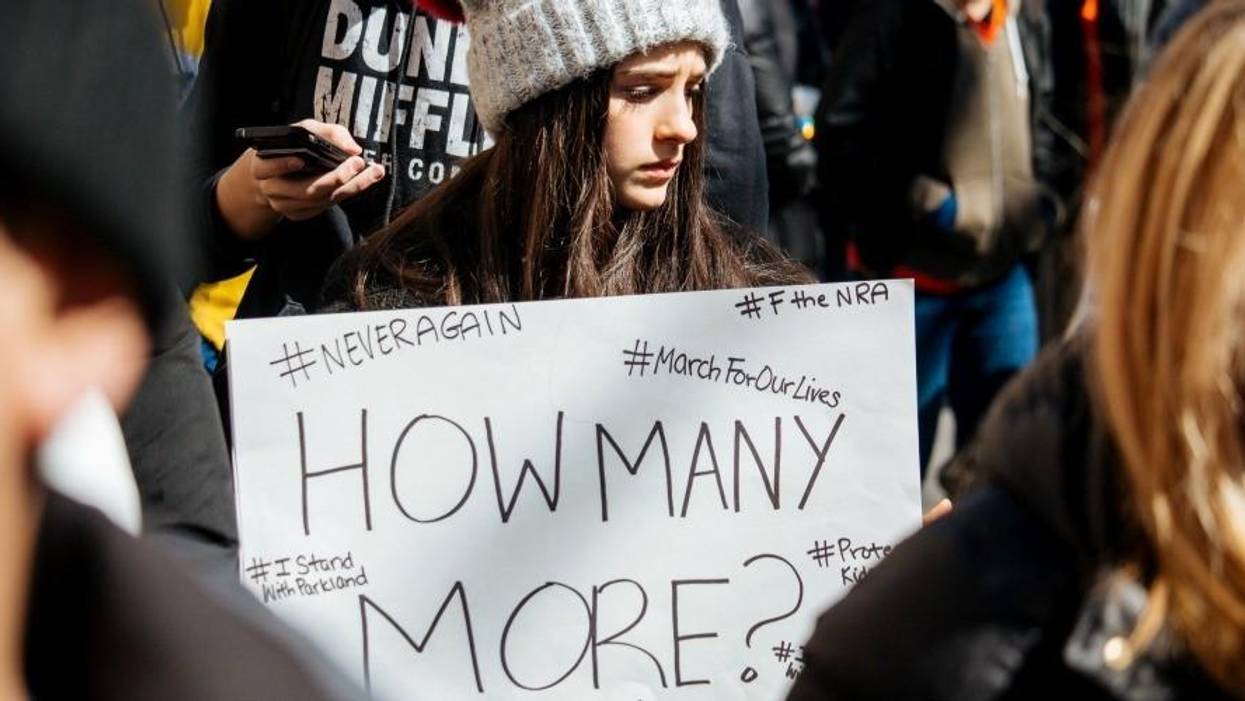
The world we live in today is far too bereft of such wisdom. The mass murders continue. When an ideology of separation rules, the killing never stops. In the past few days, two young survivors of the Parkland shootings a year ago committed suicide; so did the father of a 6-year-old child who was murdered in 2012 at Sandy Hook Elementary School. And since 2008, more than 6,000 U.S. military veterans and enlisted men and women have committed suicide every year.
Jeremy Richman, the Sandy Hook dad, tried to reach past the horror of what happened to his daughter, toward healing and prevention. He helped launch a foundation, named after his daughter, Avielle, funding "neuroscience research aimed at understanding the brain's chemistry, structure, and circuits that lead to violence and compassion."
This wasn't enough to save his life. His wound was too large -- but it's part of the collective wound we all must bear. It's part of our wounded planet.