The US-backed despots replacing popular democratic and socialist governments across Latin America today are indeed doing so in the name of liberty, as Bolivar warned. But in practice this means only the liberty of traditional ruling classes to exploit, impoverish and kill their less privileged neighbors, formerly as conquistadors and compradors for the Spanish Empire and now as agents of the US government and transnational corporations.
Trump’s 2025 National Security Strategy (NSS) vowed to “restore American preeminence in the Western hemisphere.” It reiterated the 19th century Monroe Doctrine, demanded “sole source contracts to our companies,” and promised to “push out foreign countries that build infrastructure in the region.”
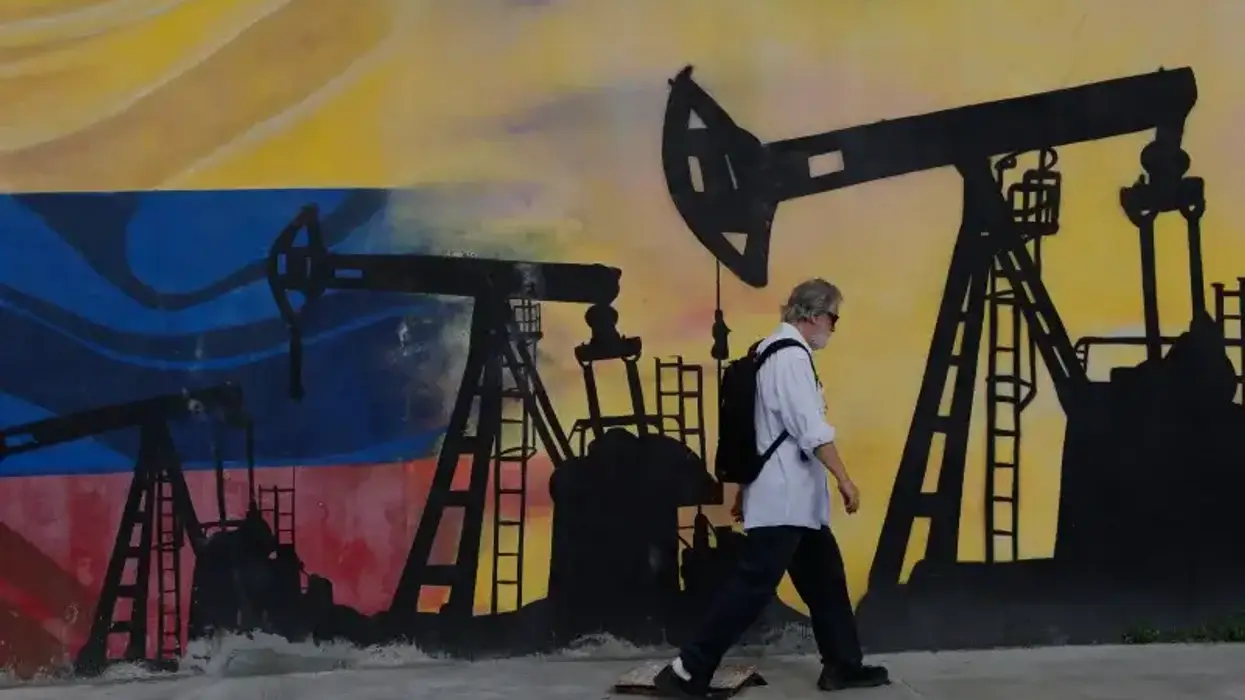
Then came the most blatant demonstration of what Trump’s new Monroe Doctrine means in practice: the US invasion of Venezuela. On January 3, 2026, US forces bombed targets in Venezuela, stormed Caracas and kidnapped President Nicolás Maduro and his wife, Cilia Flores. Trump has openly declared that the United States would “run” Venezuela and recently claimed that the U.S. had secured the biggest oil deal in world history.
And Venezuela is not the only place where the US is using military force. The “war on drugs” has become a pretext for expanding US military power throughout the region. Since September 2025, the US military has incinerated small boats in the Caribbean and eastern Pacific, killing at least 227 people without providing proof that they committed any crime. US forces are now participating in counternarcotics operations inside Ecuador, while the Trump administration is seeking similar joint military operations in Colombia, Honduras and other countries.
But military force is only one weapon in Washington’s arsenal. Trump has also cajoled, threatened and encouraged people throughout Latin America to elect extreme right-wing authoritarian presidents in his own image. Before Argentina’s 2025 midterm elections, Trump offered Javier Milei’s far-right government a $20 billion currency lifeline and backed another $20 billion in financing, while warning that US generosity depended on Milei’s political success. After Milei’s party won, Trump boasted, “He had a lot of help from us.”
Across the continent—from Colombia and Peru to Argentina, Chile, Ecuador, Honduras, Bolivia and Panama—there has been a stark reversal of the region's progressive pink tide that brought hope for a more independent and socially just Latin America. The only two major powers in Latin America still governed by the left are Mexico and Brazil—and Brazil faces a fiercely contested presidential election in October.
The progressive coalitions that came to power in Latin America had forged impressive grassroots ties between indigenous and rural communities in heavily exploited areas and urban working classes, linking struggles over identity, land and sovereignty with struggles over class and economic justice. But these broad coalitions were fragile, while the economic and institutional power of entrenched oligarchies remained largely intact. Those elites were never going to surrender their wealth and power without a fight.
And that fight is hardly unique to Latin America. In the United States, oligarchs are reacting furiously to the election victories of democratic socialists, who propose real-world solutions to America’s problems that would improve ordinary people’s lives instead of making the rich even richer, as our current system of neoliberal capitalism demands. In Latin America and the Caribbean, the same battle is playing out on a larger and often more brutal scale.
The right has capitalized on genuine voter concerns about crime, drug trafficking, economic hardship and, in some cases, immigration. Promises to eradicate violent crime through harsh crackdowns modeled on El Salvador’s Nayib Bukele resonate with many voters.
Just as Americans who are disillusioned by economic insecurity and the broken promises of the Democrats have turned to Donald Trump and the Republicans as the only alternative on offer within this undemocratic two-party system, elections in Latin America present voters with similarly narrow and deliberately confusing choices that can lead to the election of Trump-allied right-wing governments.
This pattern is also reflected in the news media that frame these choices for voters. Since the 1980s, Latin American broadcast media have become increasingly dominated by a small number of large commercial conglomerates, mostly tied to wealthy, powerful families. Latin America lacks the public broadcasting and community media that balance the dominance of commercial media in other parts of the world, although, as in the United States, there is a small but growing alternative media movement, with outlets like TeleSur, Brasil do Fato, La Jornada and Kawsachun News.
The United States also has a narrow range of dominant corporate media, but Latin America’s media are even more concentrated and responsive to oligarchic interests. The market concentration of Latin American media conglomerates is among the highest in the world, with four transnational companies controlling 89% of the broadcast media across six major countries, while Mexican billionaire Carlos Slim has the largest media holdings anywhere. The market power of these huge media conglomerates is a real obstacle to any movement for democracy or socialism.
Another major factor working against progressive forces is direct intervention from the United States. As working people come together to organize coalitions for structural change in Latin America and the Caribbean, the United States pours money into right-wing political movements to counter them.
The US-funded National Endowment for Democracy (NED), has spent billions of dollars to interfere in the political systems of countries around the world, especially to organize opposition to governments that won’t take orders from Washington. Allan Weinstein, who helped to create the NED, told the Washington Post in 1991, “A lot of what we do today was done covertly 25 years ago by the CIA.”
The NED’s annual budget for Latin America and the Caribbean in 2025 was $36.7 million. But the NED spends most of its money in the countries where the US has the least influence, so it spent the largest amounts in Cuba, Venezuela and Nicaragua, and the most globally in China and Russia.
In countries where the US already has more influence through existing ruling classes and captive corporate media, it protects and promotes its interests through ideologically-crafted NGOs. Some receive direct US funding, while others are funded by corporate sponsors and foundations.
An organization that plays an outsized role in Latin America is the Atlas Network, a sprawling international network that brings together corporate interests, conservative donors and extreme right-wing groups to coordinate their activities. The Atlas Network receives no direct US government funding, but the US does fund many of the NGOs and foundations that Atlas works with to build right-wing coalitions and parties.
Atlas Network was founded in San Francisco in 1981 by Sir Antony Fisher, a British businessman and a colleague of Margaret Thatcher, Milton Friedman and F.A. Hayek, who all reportedly approved of his Atlas Network project. Atlas works in the shadows as “a think tank that creates think tanks,” and trains its partners on “how to win the battle for hearts and minds.” It has annual revenue of $28 million and works with more than 500 partner organizations in nearly 100 countries.
Atlas has a long history of connections to powerful corporate interests. In the 1990s it was strongly linked with the tobacco industry, and the UK’s Tobacco Control Research Group reported that Atlas “appears to have played a particular role in helping the tobacco industry oppose tobacco control measures in Latin America.” Atlas also has long-standing links with ExxonMobil and the Charles Koch Foundation.
More recently, the Atlas Network has been linked to Donald Trump, the Brexit campaign in the UK, and to protest movements against left-wing governments in Latin America.
Atlas and its partners set up fake online accounts to boost the #SOSCuba campaign on Twitter during protests in Cuba in 2021, and also ran trolling campaigns during the 2019 coup in Bolivia and elections in Ecuador and Peru. Atlas also worked with the now jailed Argentine right-wing fixer Fernando Cemedo to orchestrate “Gen Z” protests against the Scheinbaum government in Mexico in November 2025.
In Brazil, where agribusiness is gradually destroying the Amazon rainforest, climate science denial is a central part of Atlas’s work. Atlas Network sponsors the annual Liberty Forum, which brings right-wing groups together with the agribusiness industry to plan their strategy and messaging in Brazil. Atlas’s main partner organizing the Liberty Forums is the libertarian Institute for Business Studies, which has close links to the jailed former president Jair Bolsonaro. His son, Flavio, is challenging President Lula in October’s presidential election.
Another influential US ideological export to Latin America is evangelical protestant Christianity, which has grown from 4% of the population 50 years ago to 20-25% today. As in the United States, evangelical Christianity is a political force as much as a religion, leading movements against abortion, homosexuality and liberal, scientific education, and often supporting brutal state violence in the name of law and order.
The spread of evangelical christianity in Latin America was a deliberate Cold War policy launched by the US Information Agency in 1954 as a weapon against communism and later used to counter the growing influence of liberation theology among Catholics.
By the 1980s, Guatemala had its first evangelical president, Efrain Rios Montt, who seized power in a 1982 coup and conducted a US-backed genocide against the Mayan indigenous people, particularly the Ixil. Ríos Montt’s evangelical faith helped him cultivate powerful allies among US evangelicals, who raised money for his regime and lobbied Congress to restore US military aid even as evidence of massacres mounted.
Incredibly, evangelical Christianity has kept spreading in Guatemala since the end of the civil war in the 1990s, even among the Ixil themselves. The evangelical religion has become deeply rooted in the Ixil region even as survivors have struggled with the legacy of a genocide carried out under an evangelical dictator.
On a trip to Guatemala, Nicolas met a family in Ixil whose father was beheaded by an army death squad, after being accused of giving food to the Guerrilla Army of the Poor. His widow joined a weaving collective of genocide survivors, working long hours on a back-strap loom to weave the beautiful, intricate geometric designs that Ixil women are famous for. And yet, like many Ixil families in the decades since the genocide, the family had also joined an evangelical church.
It is tragic to see the recent resurgence of right-wing parties and politicians in Latin America and the Caribbean, but indigenous and working people are resisting, and they deserve our solidarity.
The mostly indigenous people of Bolivia have endured two right-wing coups in less than 10 years, but they have learned that when they say “No,” they have the power to down tools, withdraw their labor, block the roads and shut down the system that provides profits to the ruling class. They deserve our support.
The people of Cuba are enduring their worst test since the revolution, as the United States tightens its already deadly blockade, denying them fuel, electricity, medicine and even food. Many are dying of preventable causes at the hands of Trump and the US government. For 68 years, American politicians of both parties have tried and failed to snuff out this dangerous example of a poor country that, until this latest brutal escalation of the blockade, provided better healthcare to its people than the United States does. They too deserve our support.
The people of Brazil are going to the polls, and millions are standing up to Trump’s threats, manipulation by the Atlas Network, hypocritical sermons in evangelical churches, and the sneering arrogance and greed of Bolsonaro and his cronies. They too deserve our support.
In Argentina, Chile, Colombia and Honduras, brave people are already resisting the austerity and abuses of new right-wing rulers, as they have all done many times before. They all deserve our support.
In much of Latin America, the right’s grip on power is tenuous. The recent presidential elections in Colombia and Peru were extraordinarily close and many new right-wing governments face deeply divided parliaments and powerful opposition movements. We might well see a new wave of progressive politicians taking power across the region in less than four years.
For those of us in the United States, our job is to stop our government from interfering. While Simon Bolivar has been right for 200 years, the US is not doomed to act this way forever. It can and must stop exploiting, impoverishing and killing its neighbors.