

SUBSCRIBE TO OUR FREE NEWSLETTER
Daily news & progressive opinion—funded by the people, not the corporations—delivered straight to your inbox.
5
#000000
#FFFFFF
To donate by check, phone, or other method, see our More Ways to Give page.
Daily news & progressive opinion—funded by the people, not the corporations—delivered straight to your inbox.
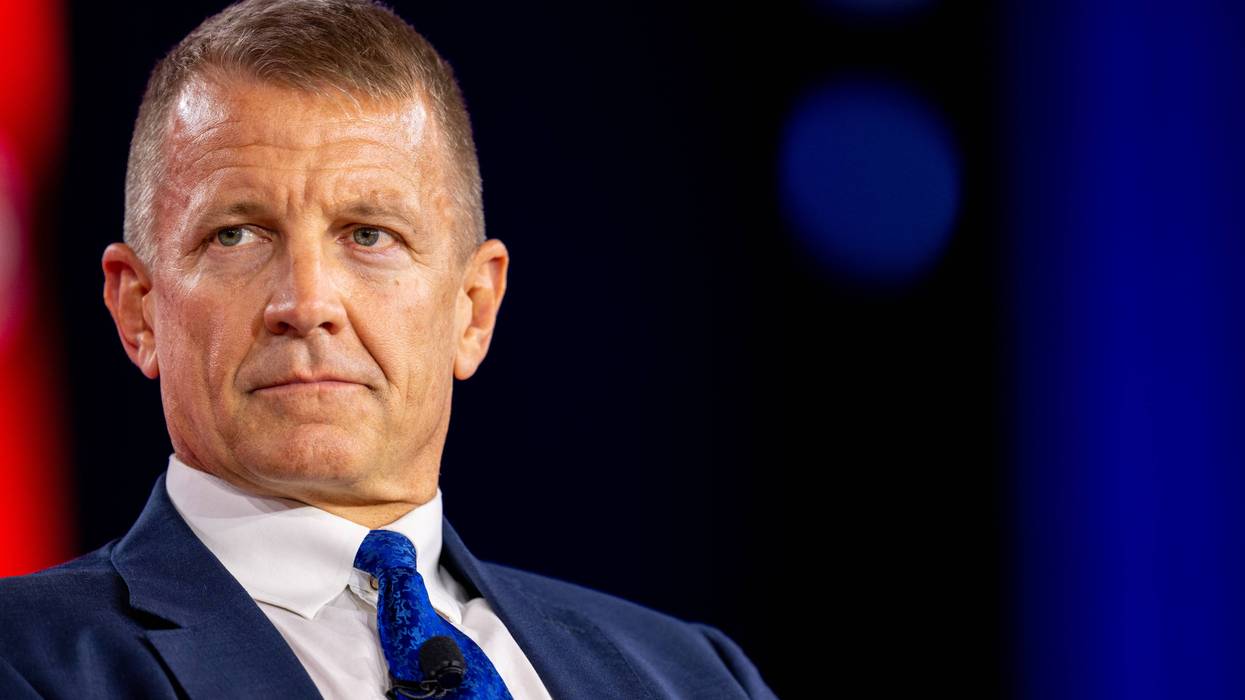
Prince’s private military firm Vectus Global has helped carry out a Haitian government drone campaign that has killed dozens of civilians, including children.
A Democratic congressman said he is ramping up oversight as the Trump administration plans to strengthen its ties to a private military contractor in Haiti run by the president's close ally Erik Prince, which has conducted drone strikes that have killed dozens of innocent Haitians.
At a hearing of the House Foreign Affairs Committee on Tuesday, Rep. Joaquin Castro (D-Texas) grilled State and Defense department officials on the Pentagon's plans to “formalize” coordination among the United Nations-backed Gang Suppression Force, the Haitian government’s anti-gang task force and the contractor, Vectus Global.
Vectus was launched in 2025 by Prince, the former CEO of the mercenary group Blackwater, which became infamous for killing civilians during the war in Iraq. Near the end of his first term, President Donald Trump pardoned a group of Blackwater guards who'd been serving prison sentences for massacring 14 Iraqi civilians in Baghdad in 2007.
Though Prince never held an official position in Trump’s administrations, his sister Betsy DeVos has, and he's a major donor who has been described as an influential shadow adviser to the president on foreign policy. During Trump's second term, he's expanded his private security operations into the Democratic Republic of the Congo and Ecuador as well.
As Castro pointed out on Tuesday, Vectus' track record in Haiti has not been much better than Blackwater's.
He cited a March report from Human Rights Watch which found that between March 1, 2025 and January 21, 2026, drone strikes launched in Haiti killed 43 adults who were not members of criminal groups, as well as 17 children. Another 49 people without criminal ties were injured.
On September 20, a kamikaze drone detonated outside a recreational complex in Port-au-Prince, where the leader of a criminal group was distributing gifts to children. The attack killed nine children and one other person who was not a gang member, according to Human Rights Watch.
One mother described rushing to the hospital to find her 3-year-old daughter and her husband had been killed in the attack.
"When I saw them, my daughter’s foot was crushed, and she had other holes in her body," she said.
Another resident who arrived after the explosion said she saw a woman clutching her child.
"The explosion had taken off the baby’s two feet,” he said.
Gorkowski said that Vectus' operations with the task force in Haiti had become "more and more discriminant" as time has passed and said its efforts against gangs had been a "considerable success."
"It looks like they've killed 17 children and 43 adults who were not associated with any criminal group," Castro responded. "Certainly we would expect more discrimination or discernment than that."
According to a report from the UN mission in Haiti, the killing of civilians by drones in the country has continued. Between January and March 2026, drones killed or injured at least 69 more people who were not found to be gang members, including five children.
During the first quarter of 2026, security-force operations killed 1,149 people and injured 454. Among those casualties, 196 people unaffiliated with gangs were killed, and 192 were injured—making up about 24% of the total casualties.
It is unclear what involvement Vectus may have had with non-drone-related attacks. According to a UN report in March, Vectus has also been involved in task force attacks involving "helicopter gunfire."
A State Department official told Reuters that because they are foreign government contractors, US citizens working for Vectus were not required to disclose their activities, and the US has had no oversight over the group's operations.
"Private military contractors like Vectus Global are putting innocent Haitians at risk," Castro said on Tuesday. "I will continue to conduct oversight of these operations and demand congressional scrutiny."
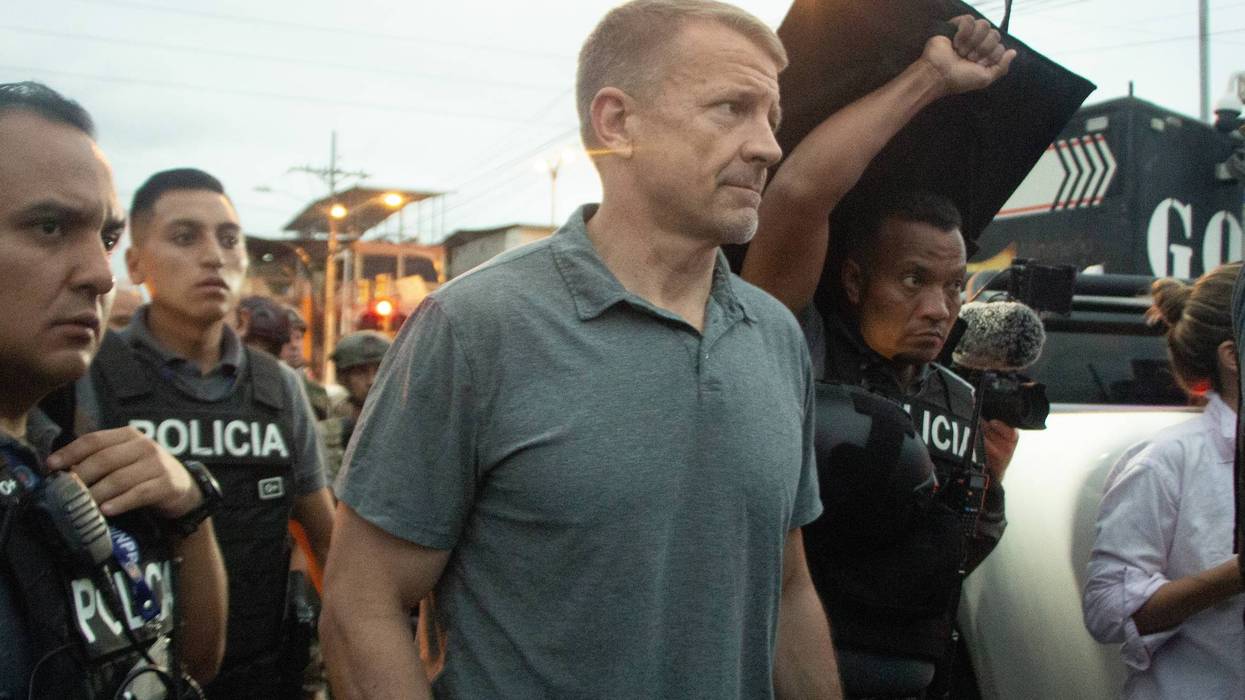
Erik Prince, the notorious founder of Blackwater, has reportedly been floated as a possible option as the Trump administration seeks help securing and exploiting Venezuela's oil operations.
The Trump administration is reportedly planning to hire private military contractors—including possibly the notorious mercenary Erik Prince—to provide security as the US works to plunder Venezuela's massive oil reserves.
CNN reported Thursday that "multiple private security companies are already jockeying to get involved in the US presence in Venezuela" as American oil giants push for physical security guarantees before they back President Donald Trump's push for $100 billion in investment in the country.
"Interest is high given the potential payday; during the Iraq War, the US spent some $138 billion on private security, logistics, and reconstruction contractors," the outlet noted. "One source suggested that Erik Prince, the former Blackwater founder and controversial Trump ally, could also be tapped for help. Prince’s Blackwater played an outsized role in Iraq after the 2003 US invasion, providing security, logistics, and support for oil infrastructure. But the firm came under intense scrutiny following the 2007 deadly shooting of Iraqi civilians."
Prince is currently operating in the region, having partnered with Ecuador's right-wing government as part of a crackdown on organized crime that has been replete with human rights abuses.
News of the Trump administration's potential use of private mercenaries in Venezuela came after the US officially completed its first sale of Venezuelan oil. The sale, valued at $500 million, came days after Trump met with top oil executives at the White House to discuss efforts to exploit Venezuela's oil reserves following the illegal US abduction of President Nicolás Maduro earlier this month.
Darren Woods, the CEO of Exxon Mobil, said his company would need "durable investment protections" before making any commitments in Venezuela.
CNN reported Thursday that the Pentagon has "put out a Request for Information to contractors about their ability to support possible US military operations in Venezuela."
"Contractors are also in touch with the State Department’s overseas building operations office to cite interest in providing security if and when the US embassy in Venezuela reopens," according to CNN.

"Who, ultimately, will assume responsibility for this attack: The prime minister? The transitional presidential council? Private security companies? The leadership of Haitian National Police?” asked one advocate.
A weekend attack by a pair of so-called "kamikaze" drones attributed to Haiti's fragile government killed at least 11 people including eight children, drawing widespread condemnation this week and demands for accountability.
The Miami Herald reported Monday that kamikaze drones, also known as suicide drones, targeted a party in Simon Pelé, a gang-controlled area in the Cité Soleil neighborhood of the capital, Port-au-Prince, where Albert Steevenson, a gang leader also known as Djouma, was celebrating his birthday and handing out gifts to local children.
According to The New York Times, the first exploding drone killed three adults including a pregnant woman and eight children ages 2-10, and wounded six others. A second drone then exploded outside the gang's headquarters, killing four members and injuring others.
Mimose Duclaire, 52, told the Herald that children including her 4-year-old granddaughter Merika Saint-Fort Charles were playing outside when she heard an explosion.
"I heard a ‘boom’ and when I looked I saw her both of her knees were broken and her head was split open," Duclaire said.
"If they cannot effectively use the drones they need to stop their use."
Nanouse Mertelia, 37, told The Associated Press that she was inside her home when she heard an explosion and ran outside to see what was happening, because her son had just left to go get something to eat. That's when she saw her child on the ground with one of his arms and legs blown off.
“Come get me, come get me, please mama,” she said he told her, but it was too late. “By the time we got to the hospital, he died.”
There is still some uncertainty over who carried out the attack. There has been speculation that mercenaries from the private contractor Vectus Global, which was founded by Erik Prince—the founder and ex-CEO of the notorious mercenary firm formerly known as Blackwater—was involved in the strike.
The Times previously reported that Haiti's government is working with Prince “to conduct lethal operations against gangs that are terrorizing the nation and threatening to take over its capital.”
According to the new Times reporting, it is unclear whether Prince's contractors or the Haitian National Police (HNP) were responsible for Saturday's massacre. Neither Prince nor the HNP have responded to Times' requests for comment.
Romain Le Cour, head of the Haiti Observatory at the Global Initiative Against Transnational Organized Crime, told The Guardian Tuesday that the attack raises “urgent questions of accountability."
“It has now been [over] 48 hours since the incident, and the authorities have yet to issue any official communication or assume public responsibility," Le Court said. "Who, ultimately, will assume responsibility for this attack: The prime minister? The transitional presidential council? Private security companies? The leadership of Haitian National Police?”
Regardless of who committed the killings, they have sparked renewed focus on the use of kamikaze drones in Haiti. Pierre Esperance, who heads Haiti's National Human Rights Defense Network, told the Herald that—as in the case of the killing of two elite police officers in a drone strike last month—the culprit appears to be lack of coordination and oversight.
“We’ve always said that the use of drones have to be coordinated with the security forces,” Esperance said. “This is why you have collateral damage... If they cannot effectively use the drones they need to stop their use."
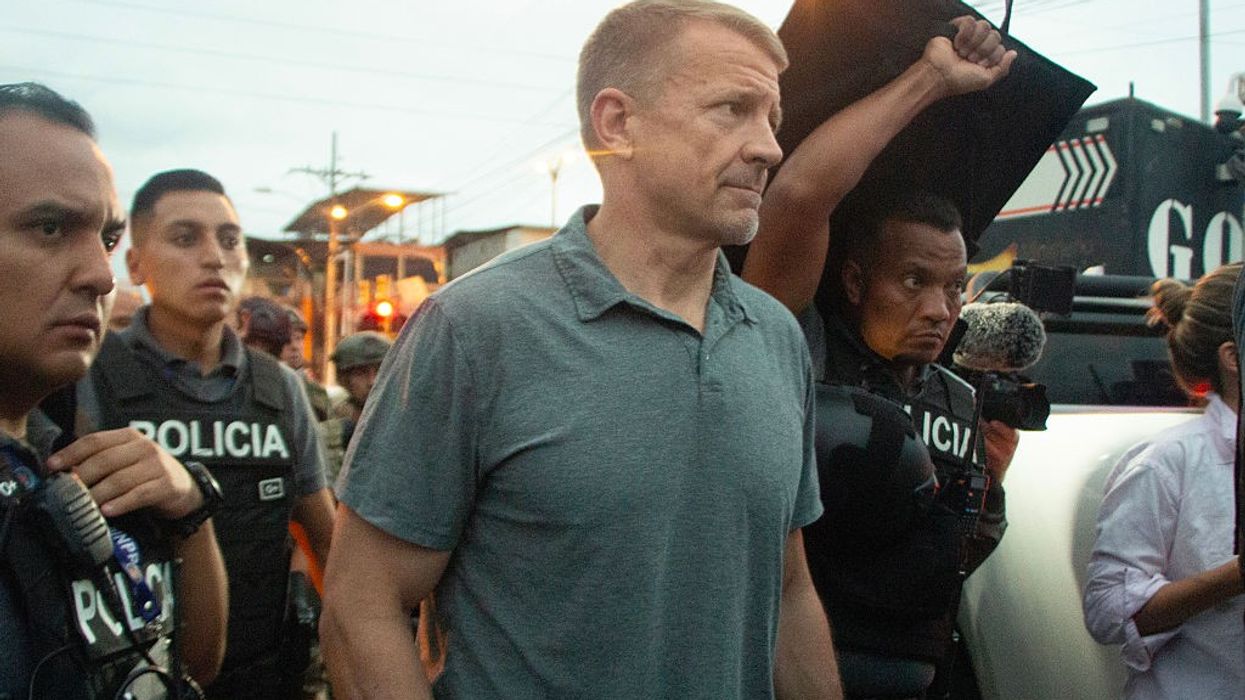
"It's hard to overstate how badly wrong bringing in foreign mercenaries, such as those allied with Erik Prince, will likely go given the current security, social, and political dynamics," one journalist warned.
"What could possibly go wrong?"
That's a question New York Times readers sarcastically asked on social media Wednesday, after the newspaper reported that Erik Prince, founder of the notorious mercenary firm Blackwater and a key ally of U.S. President Donald Trump, is working with Haiti's interim government "to conduct lethal operations against gangs that are terrorizing the nation and threatening to take over its capital."
The newspaper noted that Prince declined to comment, and while Blackwater is now defunct, the former Navy SEAL "owns other private military entities." The reporting is based on unnamed American and Haitian officials and other security experts.
"Haiti's government has hired American contractors, including Mr. Prince, in recent months to work on a secret task force to deploy drones meant to kill gang members," who "have been killing civilians and seizing control of vast areas of territory" in the Caribbean country, the Times detailed.
"Mr. Prince's team has been operating the drones since March, but the authorities have yet to announce the death or capture of a single high-value target," according to the paper. Pierre Espérance, executive director of the National Human Rights Defense Network in Haiti, said the drone attacks have killed more than 200 people.
American journalist Michael Deibert said on social media, "If this story is accurate, on what authority does Haiti's unelected, temporary interim [government] invite foreign forces into the country and by what means—with whose money—do they intend to pay them for their work there?"
The U.S. State Department has poured millions into Haiti's National Police but told the Times it is not paying Prince.
Deibert said that "as someone who has reported on Haiti's armed groups for 25 years, it's hard to overstate how badly wrong bringing in foreign mercenaries, such as those allied with Erik Prince, will likely go given the current security, social, and political dynamics in the country."
This is Bad. Like Capital B. www.nytimes.com/2025/05/28/u...
[image or embed]
— r: The Alignment Problem, Christian (@jacky.wtf) May 28, 2025 at 5:44 PM
Also weighing in on social media, Keanu Heydari, a history Ph.D. candidate at the University of Michigan, said: "A lot's going on here! A majority-Black nation, hollowed out by decades of foreign intervention, 'turning to' a white war profiteer to restore 'order.' That is not about logistics, this is about coloniality."
Heydari continued:
This isn't a story about drones and gangs. It's about how the world has made it structurally impossible for Haiti to govern itself—then offers mercenaries as a "solution." Haiti's sovereignty has been chipped away by debt, coups, U.N. missions, and now private warlords.
Why does Erik Prince show up where Black and Brown countries are in crisis? Because the global market rewards violence disguised as security, especially when it's sold by Westerners to postcolonial states. It's racial capitalism in full view.
The NYT missed the story: This isn't a desperate government making tough choices. It's a story of empire outsourcing control, where mercenaries profit from the very chaos empire helped produce. Haiti deserves justice, not occupation by other means.
The Times article follows The Economist's reporting earlier this month that Haiti's interim government, the Transitional Presidential Council, "is so desperate that it is exploring deals with private military contractors. It has been talking to Osprey Global Solutions, a firm based in North Carolina. The founder of Blackwater, Erik Prince, visited Haiti in April to negotiate contracts to provide attack drones and training for an anti-gang task force. The council declined to comment."
In response to that paragraph in the May 7 article, Jake Johnston, director of international research at the Center for Economic and Policy Research and author of Aid State: Elite Panic, Disaster Capitalism, and the Battle to Control Haiti, also asked, "What could possibly go wrong?"
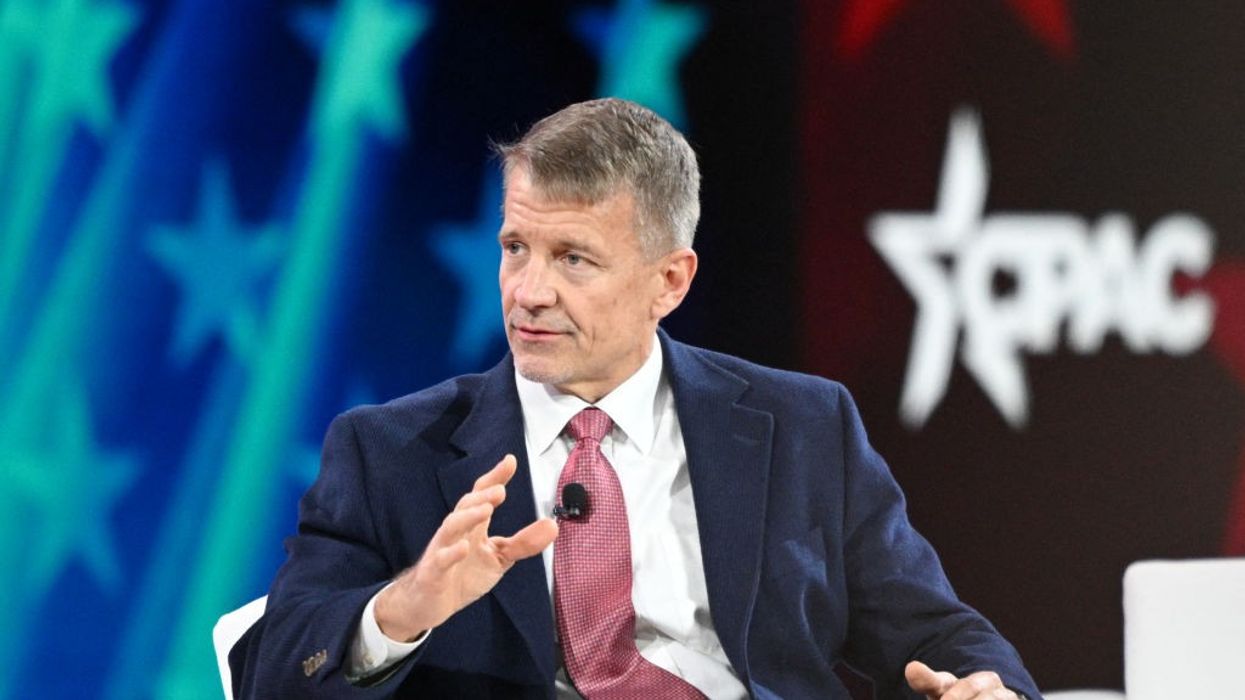
"War profiteer Erik Prince, the same man infamous for spreading chaos and profiting off human suffering, is signing up to help carry out Trump's mass deportation and family separation agenda," said one critic.
Private military contractors including Erik Prince—the founder and ex-CEO of the notorious mercenary firm formerly known as Blackwater—pitched advisers to President Donald Trump a $25 billion plan to deport 12 million undocumented immigrants before the 2026 midterm elections using a "small army" of citizens, a fleet of 100 private planes, and a network of "processing camps," according to Tuesday reporting.
Politico's Dasha Burns and Myah Ward reported that the 26-page blueprint for an aggressive mass deportation campaign, a copy of which was obtained by the journalists, was presented to advisers to Trump before his inauguration. The group of private contractors, who call themselves 2USV, is led by Prince and also includes former Blackwater chief operating officer Bill Mathews.
Burns and Ward wrote:
Deporting 12 million people in two years "would require the government to eject nearly 500,000 illegal aliens per month," the document says. "To keep pace with the Trump deportations, it would require a 600% increase in activity. It is unlikely that the government could swell its internal ranks to keep pace with this demand... in order to process this enormous number of deportations, the government should enlist outside assistance."
Top White House officials are having multiple conversations with military cfontractors, coinciding with Republicans' mad dash on Capitol Hill to secure more resources for the president's immigration crackdown. Immigration and Customs Enforcement (ICE) increased arrests during Trump's first couple of weeks in office, but the pace has since slowed, and arrests do not always equal deportations.
To boost deportations, the 2USV plan calls for deputizing 10,000 private citizens, forming a "skip tracing team" to locate targeted immigrants, a "screening team of 2,000 attorneys and paralegals," a "bounty program which provides a cash reward for each illegal alien held by a state or local law enforcement officer," and "mass deportation hearings." Legal experts warn that components of the plan likely run afoul of the law.
It is unclear whether Trump has seen the 2USV white paper. White House spokesperson Kush Desai told Politico that the Trump administration "remains aligned on and committed to a whole-of-government approach to securing our borders, mass deporting criminal illegal migrants, and enforcing our immigration laws."
Prince, a former U.S. Navy SEAL, founded Blackwater—now called Constellis—in 1997. He rose to prominence during the George W. Bush administration and the so-called War on Terror, in which the U.S. relied heavily upon private contractors.
On September 16, 2007, Blackwater guards
massacred 17 men, women, and children in Nisour Square in Baghdad, Iraq. This was one of at least several incidents in which the company's mercenaries harmed Iraqi civilians. Trump pardoned four of the Nisour Square killers—who had been sentenced to 12 years to life in prison for crimes including first-degree murder—in 2020 shortly before his first term ended.
Trump and Prince have long enjoyed warm relations. Prince was a major Trump donor whose sister, Betsy DeVos, served as education secretary during his first administration. Prince also reportedly helped raise money to spy on progressives and Democratic organizations opposed to Trump, and was involved in former senior Trump adviser Steve Bannon's fraudulent campaign to ostensibly build a wall along the U.S.-Mexican border.
Last year, Venezuelan authorities launched an investigation into an online site allegedly fronted by Prince that raised funds for the ouster of Venezuelan President Nicolas Maduro.
Critics interviewed by Burns and Ward cast doubts on 2USV's plan, with former ICE Chief of Staff Jason P. Houser saying that "the idea of forcibly removing 12 million people from the United States is not just operationally impossible—it is a moral and economic catastrophe in the making."
Responding to the Politico report, Beatriz Lopez, co-executive director of the Immigration Hub, an advocacy group, said in a statement that "war profiteer Erik Prince, the same man infamous for spreading chaos and profiting off human suffering, is signing up to help carry out Trump's mass deportation and family separation agenda."
"Simply put, this despicable plan will deploy mass internment, detention camps, and a civilian army to come after our neighbors, family, and friends," she continued. "At $25 billion, this cruel machinery would merely be the opening act in Trump and [White House Deputy Chief of Staff] Stephen Miller's $350 billion campaign of state-sanctioned 'hunts' for immigrant families."
"We're witnessing the deliberate transformation of everyday Americans—parents dropping children at school, healthcare workers saving lives, farmers feeding our nation—into targets who, if the Trump administration has it their way, could be hunted by an unaccountable militia motivated by profit and prejudice," Lopez added. "As Trump expands the definition of who is 'deportable,' the circle of safety shrinks until it contains only those who share his extreme vision. Today immigrants, tomorrow anyone who opposes them."
"Our leaders face a defining choice: stand against this atrocity now, or be complicit in what history will remember as America's darkest chapter," she warned.

Blackwater founder Erik Prince on Wednesday faced fresh accusations of being a war profiteer in response to reporting that he's charging $6,500 per person for a seat on an evacuation flight out of Kabul.
The reporting by the Wall Street Journal comes amid ongoing evacuations from Afghanistan of civilians, including at-risk Afghans, and follows President Joe Biden's Tuesday statement he still wants an August 31 deadline for the withdrawal of U.S. troops.
The Journal said that "chartered planes are flying out of Kabul with hundreds of empty seats," further reported that Prince would put an additional charge to get those trapped in their homes to the airport. However, it was unclear he had the capability to execute the flights.
"After making millions of dollars off the Afghanistan war, Erik Prince is back at it, exploiting people's desperation for cash," tweeted journalist Maria Abi-Habib. "Prince is charging $6,500 a person to get people out of Afghanistan while planes organized by NGOs leave Kabul empty."
Prince--the brother of former President Donald Trump's billionaire Education Secretary Betsy DeVos--previously pushed Trump to privatize the U.S. war in Afghanistan.
Last year, Trump pardoned four contractors of the now-defunct Blackwater who were convicted of killing over a dozen unarmed citizens in Baghdad's 2007 Nisour Square massacre. Earlier this year, a United Nations report accused Prince of violating an arms embargo by sending weapons to Libyan warlord and former CIA asset Khalifa Haftar.

In a "bonkers" report that drew comparisons to a movie script or Tom Clancy novel, the New York Times on Friday exposed a sophisticated right-wing plot to infiltrate Democratic politics in three Western states using undercover operatives.
"The use of spies is an escalation of tactics by Wyoming's political far-right."
--Better Wyoming
"Using large campaign donations and cover stories, the operatives aimed to gather dirt that could sabotage the reputations of people and organizations considered threats to a hard-right agenda advanced by President Donald J. Trump," revealed journalists Adam Goldman and Mark Mazzetti.
Despite some "bumbling and amateurish" tactics, the now-married couple at the center of the report connected with political figures and groups in Arizona, Colorado, and Wyoming in an operation the reporters pieced together through a review of federal election records and over two dozen interviews.
The full scope of information that the spies may have gained access to is not clear, but they attended various events--including a fundraiser at which one of them was photographed with Tom Perez, then the chairman of the Democratic National Committee--and have now generated concerns about the possibility of other right-wing operatives and operations across the U.S. political system.
The expose includes some characters from Goldman and Mazzetti's previous reporting on covert right-wing operations to "discredit" Trump's enemies and infiltrate groups "hostile" to the ex-president's agenda: war profiteer Erik Prince--founder of the mercenary firm Blackwater and brother of Trump Education Secretary Betsy DeVos--and former British spy Richard Seddon.
As the Times explains:
Mr. Prince had set Mr. Seddon's work in motion, recruiting him around the beginning of the Trump administration to hire former spies to train conservative activists in the basics of espionage, and send them on political sabotage missions.
By the end of 2018, Mr. Seddon secured funding from the Wyoming heiress, Susan Gore, according to people familiar with her role. He recruited several former operatives from the conservative group Project Veritas, where he had worked previously, to set up the political infiltration operation in the West.
The "spies" exposed in the report are Sofia LaRocca, 28, and Beau Maier, the 36-year-old nephew of conservative commentator Glenn Beck. Maier's mother worked at the Prince family ranch in Wyoming, where Seddon trained Project Veritas operatives in 2017, before leaving the group the next year.
Seddon, Maier, LaRocca, Gore, and the heiress's attorney did not respond to the newspaper's requests for comment, including questions about campaign contributions. "Straw donations" in which donors are reimbursed for contributing to a political campaign are illegal under federal law.
LaRocca secured a job at the Wyoming Investor Network (WIN), a consortium of rich liberal donors that quietly supported some moderate Republicans. Chris Bell, who worked as a political consultant for the consortium, told the Times that "getting the WIN stuff is really damaging" because "it's the entire strategy. Where the money is going. What we're doing long term."
Maier, an Army veteran who fought in Iraq, met with Democrats and Republicans--including Eric Barlow, who is now the Wyoming speaker of the house--about medicinal use of marijuana, "which he said was particularly valuable for war veterans suffering from post-traumatic stress disorder."
Barlow, who said he was open to medical marijuana and decriminalization, called himself a "practical Republican," and told the Times that "for some people, that's a RINO." Trump and other right-wingers use the term, which means "Republican in Name Only," to attack more centrist members of the GOP.
Maier and LaRocca also went on double dates with Karlee Provenza, a Democrat elected to the Wyoming House of Representatives last year, and her now-husband Nate Martin, executive director of the group Better Wyoming, which released a statement on the report Friday.
The statement highlighted the financing from Gore--who had been involved in the state's GOP politics since the 1990s and founded the Wyoming Liberty Group in 2008--and shared that Maier and LaRocca donated thousands of dollars to Better Wyoming.
"The use of spies is an escalation of tactics by Wyoming's political far-right, which already employs anonymous websites, purity tests, smear campaigns, and has secretly recorded Better Wyoming staff members in the past," the nonprofit said.
Martin, in the statement, said that "the use of spies is pretty far out there, but so are many of the Wyoming Liberty Group's ideas... Wyoming's far-right promotes tinfoil-hat conspiracy theories like Medicaid expansion causes abortion and cannabis is ruining the daycare industry. It makes sense that they would use spies to try to attack their opposition or uncover some imagined liberal plot."
The Better Wyoming leader also addressed the social relationship he formed with the spies.
"The whole time, they were lying to my wife and me about who they were and what they were up to, and they were actively trying to get us to say or do things that could ruin our careers and hurt us," Martin said. "Politics aside, that's just a disgusting thing to do to other people. But, again, the people who hired them support policies that defund public schools and block folks from getting healthcare, so it's pretty clear they don't care much about people to begin with."

It was deja vue all over again.
--Attributed to Yogi Berra
They're still with us--the Prince family that is. It's hard not to marvel at their staying power. Those with long memories will recall the great trump friend and cabinet member of the trump administration Betsy Dee Prince. By the time we got her, of course, she was married, and was known as Betsy De Vos. She was especially distinguished since she was one of the few trump appointed cabinet secretaries who managed to hang on to her position for the four years the trump was living in the White House.
Throughout the trump White House years, she was the Secretary of Education. In that capacity she did so many great things for the education of wealthy children that it is hard to recall them all. A couple of her more recent ones, however, serve as good examples of her efforts on their behalf. During the second month of the COVID 19-pandemic in 2020, she demanded that public schools reopen in the fall. She said that if they didn't she'd send their money to private and religious schools. In May she used federal coronavirus relief funds to create a $180 million voucher program for private and religious schools.
The good works of Betsy and her family were not limited to helping private and religious schools. In May 2020 it was disclosed that Betsy and other family members had funded the Honest Election Project. Its goal was to fight efforts to expand vote-by-mail options in the 2020 elections. Betsy's brother, Erik Prince, was also involved in assorted companies that were engaged in non-education ventures. One of them was Blackwater USA.
In its early incarnation, Blackwater USA was a training facility for special operations personnel. In its later years its operations were expanded to protect U.S. personnel in Iraq and Afghanistan. Among services rendered, a Congressional Report found, Mr. Prince's employees at Blackwater Worldwide were involved in almost 200 shootings between 2005 and 2007 in Iraq. Not all of the shootings were directed at enemy combatants. Among the non-enemy shootings was a December 24, 2006 shooting of one of the men guarding Iraqi Vice President, Adel Abdul Mahdi. He was killed by a drunk Blackwater employee.. On February 4, 2007, an Iraqi journalist was killed by another Blackwater employee. On September 9 five people near a government building were killed by one of the Blackwater employees; three days later five people were wounded by Blackwater employees, and four days after that seventeen Iraqis were killed by Blackwater employees in Nisour Square. As a result of that last shooting, four of the men involved were tried in the United States. One of them was sentenced to life in prison without parole after being convicted of murder and three of the men were convicted of manslaughter and weapons charges. All were pardoned by the trump in the blissful waning days of his White House tenure.
Prince sold Blackwater in 2010 after he settled federal investigations into its activities in Iraq by paying $42 million in fines. Notwithstanding the hefty fines it paid for the conduct of its employees during their years in Iraq, the overall operation was profitable for Erik. Over the course of its operations Blackwater billed the United States Government more than $1 billion for services it had rendered. Ridding himself of Blackwater has not, however, removed Erik from having an interest in military matters in that part of the world. On February 26, 2021 it was reported that Erik is once again under investigation for his military activities although no longer in Iraq or Afghanistan. According a recently released United Nations report, he has selected a new venue. It is Libya.
A United Nations panel of experts began investigating Erik's activities in connection with his possible participation in activities that were violations of an extant arms embargo on Libya. As a result of that investigation, the panel prepared a report that has been viewed by assorted sources that are now disclosing the report's conclusions. Among other things the report concludes that Erik helped arms suppliers evade an arms embargo that was imposed on Libya by the United Nations. The New York Times reported that Erik had, among other things, furnished weapons and a force of armed mercenaries to a militia commander whose goal was to overthrow the extant government in Syria. According to the New York Times the forces were exceptionally well equipped. They were armed with gunboats, attack aircraft and cyberwarfare capabilities. The operation provided by Erik reportedly cost $80 million which seems like a lot until you recall that when he disbanded Blackwater he had paid $42 million in fines which, in the Prince scheme of things, suggests those large numbers may be large but they're not intolerable.
It is not now known whether Erik will suffer any adverse consequences as a result of the report. His reaction to the report was not surprising. He denied all its conclusions. As he said to one reporter: "My name has become click bait for people who like to weave conspiracy theories together. And if they throw my name in, it always attracts attention. And it's pretty damn sickening." Some might conclude that comment by suggesting to Erik: "So is your conduct."
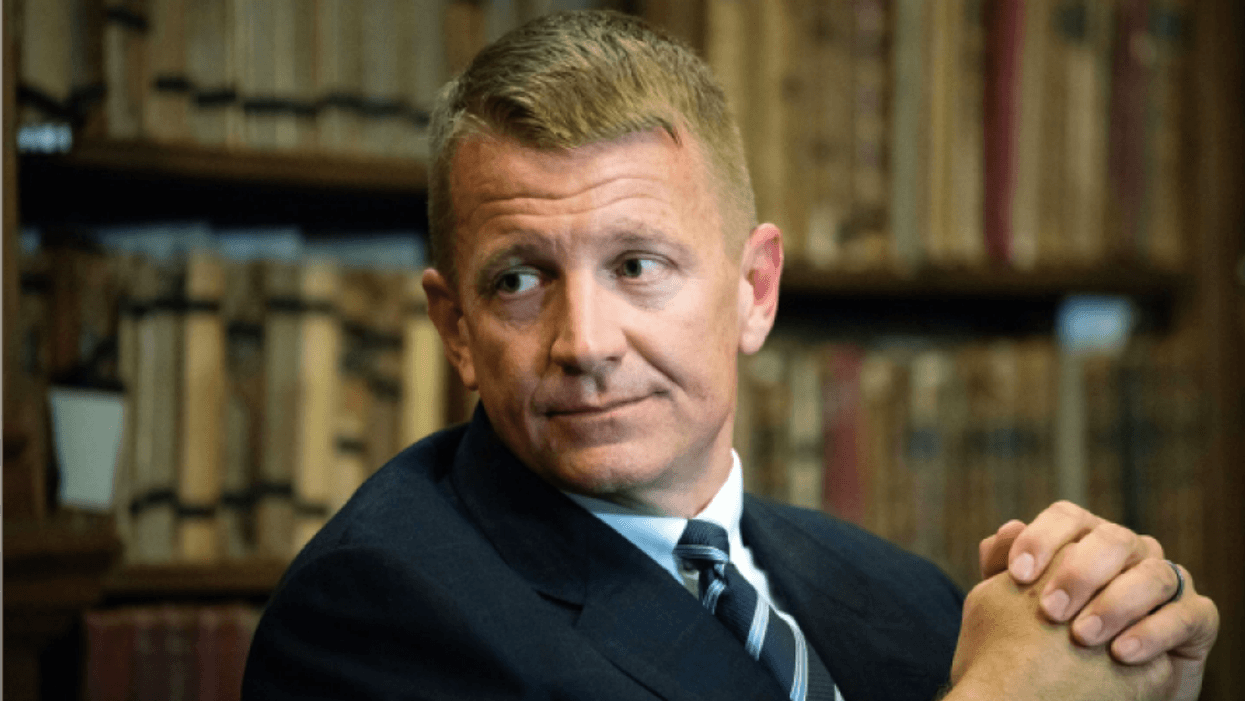
Erik Prince, the founder and former CEO of the mercenary firm Blackwater and a close ally of former President Donald Trump, sent weapons to a Libyan warlord in violation of a United Nations arms embargo, according to a confidential U.N. document reported Friday by the New York Times.
"To what degree did Trump help facilitate this war alongside Erik Prince?"
--Anas el-Gomati,
Sadeq Institute
The U.N. report, which investigators sent to the Security Council on Thursday, reportedly details how Prince sent foreign mercenaries armed with attack aircraft, gunboats, and cyberwarfare capabilities to support renegade military commander Khalifa Haftar during a major 2019 battle in eastern Libya.
According to the U.N. report, the mercenary operation cost $80 million and included a plan to form a hit squad to locate and assassinate commanders opposed to Haftar.
Haftar, a one-time CIA asset considered Libya's most powerful warlord, has fought to overthrow the North African nation's internationally recognized government during the country's second civil war since the overthrow of longtime dictator Muammar Gaddafi in the 2011 Arab Spring revolts. Haftar has enjoyed various degrees of support from Egypt, the United Arab Emirates, and Russia. British, French, U.S., and UAE warplanes have also assisted his forces.
In 2019, Trump reportedly granted permission for Haftar--who stands accused of ordering his troops to commit war crimes--to launch an air campaign against the U.N.-backed Government of National Accord, attacks which killed hundreds of civilians in the Libyan capital of Tripoli.
The U.N. report raises questions about whether Trump was complicit in Prince's violation of the international arms embargo against Haftar's forces.
Anas el-Gomati, director of Libyan think tank Sadeq Institute, told Al Jazeera that using mercenaries allows leaders to "outright refuse that you have any knowledge of what's going on."
"To what degree did Trump help facilitate this war alongside Erik Prince?" asked el-Gomati, who also wondered whether "Erik Prince was coordinating with Russian Wagner Group mercenaries in Libya, and has helped them establish a foothold in the way he helped the United Arab Emirates establish a foothold in Libya."
Another unanswered question is who funded Prince's $80 million operation. Wolfram Lacher, a Libya expert at the German Institute for International and Security Affairs, told the Times that Prince has "been linked to the Trump administration, the Emirati leadership, and the Russians."
"For me, the question is who is tacitly backing him?" asked Lacher.
Prince, a former U.S. Navy SEAL, founded Blackwater--now called Constellis after multiple sales--in 1997. He rose to prominence during the George W. Bush administration and the so-called War on Terror, in which the U.S. relied heavily upon private contractors. On September 16, 2007, Blackwater guards massacred 17 men, women, and children in Nisour Square in Baghdad, Iraq.
Last December, Trump pardoned four of the Nisour Square killers, who had been sentenced to 12 years to life in prison for crimes including first-degree murder.
Trump and Prince have long enjoyed warm relations. Prince was a major Trump donor whose sister, Betsy DeVos, was confirmed as secretary of education in 2017.
This isn't the first time Prince has been accused of breaking domestic and international laws against weapons transfers. In 2012 his anti-piracy security force in Somalia was accused by the U.N. of "the most brazen violation of the arms embargo by a private security company." Prince was also reportedly the target of an FBI investigation last year for weaponizing crop dusters.

An explosive New York Times report revealed Saturday that notorious war profiteer Erik Prince recruited former American and British spies to work with the right-wing group Project Veritas to infiltrate at least one Democratic congressional campaign and organizations "considered hostile" to President Donald Trump's agenda.
"Secretary DeVos' brother was directly involved in a spying scheme in her home state against a teachers' union she's been hostile with for years. If this doesn't clear the bar for an immediate Congressional investigation, nothing does."
--Derek Martin, Allied Progress
Prince is the brother of Education Secretary Betsy DeVos and founder of the mercenary firm Blackwater. Through a spokesperson, he declined the Times' request for comment on the piece, which is based on interviews and documents obtained by the newspaper, including internal Project Veritas emails.
"Both Project Veritas and Mr. Prince have ties to President Trump's aides and family," the Times noted. "Whether any Trump administration officials or advisers to the president were involved in the operations, even tacitly, is unclear. But the effort is a glimpse of a vigorous private campaign to try to undermine political groups or individuals perceived to be in opposition to Mr. Trump's agenda."
The results of the Times' investigation were described by readers on social media as "chilling," "stunning," and "insane." Jacobin magazine assistant editor Alex Press declared, "My paranoid fantasies are all true!" In response to a tweet about the reporting, author and activist Naomi Klein simply wrote, "Read."
The consumer watchdog group Allied Progress responded with a statement Saturday night, calling on the House Oversight Committee to conduct an immediate investigation into what DeVos knew about Prince's activities.
"There's not a lot of dots to connect here," said Allied Progress director Derek Martin. "Secretary DeVos' brother was directly involved in a spying scheme in her home state against a teachers' union she's been hostile with for years. If this doesn't clear the bar for an immediate Congressional investigation, nothing does."
"We already know Secretary DeVos is no friend of public education, but if she gave the go-ahead to enlist former intelligence officers to steal documents from public education advocates that she disagrees with, it steps well beyond policy disagreement and into criminal territory," Martin added. "If Secretary DeVos was in any way involved, it will confirm that she stops at nothing to undermine public schools."
According to the Times:
One of the former spies, an ex-MI6 officer named Richard Seddon, helped run a 2017 operation to copy files and record conversations in a Michigan office of the American Federation of Teachers, one of the largest teachers' unions in the nation. Mr. Seddon directed an undercover operative to secretly tape the union's local leaders and try to gather information that could be made public to damage the organization, documents show.
Using a different alias the next year, the same undercover operative infiltrated the congressional campaign of Abigail Spanberger, then a former CIA officer who went on to win an important House seat in Virginia as a Democrat. The campaign discovered the operative and fired her.
Both operations were run by Project Veritas, a conservative group that has gained attention using hidden cameras and microphones for sting operations on news organizations, Democratic politicians, and liberal advocacy groups. Mr. Seddon's role in the teachers' union operation--detailed in internal Project Veritas emails that have emerged from the discovery process of a court battle between the group and the union--has not previously been reported, nor has Mr. Prince's role in recruiting Mr. Seddon for the group's activities.
The Times reported that it is unclear whether Seddon was involved in the Spanberger operation and the former British intelligence officer--who is married to American diplomat Alice Seddon--did not respond to the newspaper's request for comment.
James O'Keefe of Project Veritas told the Times that his group is a "proud independent news organization" and "no one tells Project Veritas who or what to investigate." Although he declined to discuss the details of the report, he also claimed that various sources are "providing confidential documents, insights into internal processes, and wearing hidden cameras to expose corruption and misconduct."
Past targets of Project Veritas have included the nonprofit healthcare organization Planned Parenthood, the political group Disrupt J20, and recently, David Wright, a 20-year veteran political correspondent at ABC News. Project Veritas has also recorded undercover video of a Times editor and approached the Washington Post with a false story about Roy Moore, a Republican Senate candidate in Alabama.
The Project Veritas operative inside AFT Michigan was Liberty University graduate Marisa Jorge, according to the Times. O'Keefe and Seddon used the code name "LibertyU" for Jorge when discussing the operation over email. Jorge, who also reportedly infiltrated the Spanberger campaign by posing as a volunteer, did not respond to the newspaper's request for comment. The federal lawsuit that AFT Michigan brought against Project Veritas is scheduled to go to trial later this year.
In a statement to the Times, AFT president Randi Weingarten said: "Let's be clear who the wrongdoer is here: Project Veritas used a fake intern to lie her way into our Michigan office, to steal documents and to spy--and they got caught. We're just trying to hold them accountable for this industrial espionage."
Weingarten added on Twitter Saturday, "They didn't succeed in their attempt to hurt our union but note what the right wing will do to try to eliminate workers' voice."
The Intercept co-founder Jeremy Scahill--who released the book Blackwater: The Rise of the World's Most Powerful Mercenary Army in 2007--wrote on Twitter Saturday that with this piece, the Times "pushes the 2017 story from [The Intercept's Matthew Cole] forward about Erik Prince attempts to infiltrate liberal groups via Project Veritas."
Last year, Cole published an article for The Intercept titled "The Complete Mercenary: How Erik Prince Used the Rise of Trump to Make an Improbable Comeback."
Noting that Trump gave Project Veritas thousands of dollars through his foundation and met with O'Keefe shortly after announcing his run for president, Cole reported:
It is unclear if Trump's support of Project Veritas spurred Prince's interest in the group, but in late 2015 or early 2016, Prince arranged for O'Keefe and Project Veritas to receive training in intelligence and elicitation techniques from a retired military intelligence operative named Euripides Rubio Jr. According to a former Trump White House official who discussed the Veritas training with Rubio, the former special operative quit after several weeks of training, complaining that the Veritas group wasn't capable of learning. Rubio did not respond to requests for comment.
In the winter of 2017, Prince arranged for a former British MI6 officer to provide more surveillance and elicitation training for Veritas at his family's Wyoming ranch, according to a person with direct knowledge of the effort. Prince was trying to turn O'Keefe and his group into domestic spies. For his part, O'Keefe posted photos on Instagram and Twitter from the Prince family ranch of himself holding a handgun with a silencer attached and wearing pseudo-military clothing. He described the ranch as a "classified location" where he was learning "spying and self-defense," in an effort to make Project Veritas "the next great intelligence agency."
"Erik was weaponizing a group that had close ties to the Trump White House," said the former White House official familiar with Prince's relationship with O'Keefe and Project Veritas.
Cole acknowledged the Times reporting on Twitter Saturday and highlighted a summary of it tweeted by The Atlantic's Adam Serwer:
Currently, the Times noted, "Prince is under investigation by the Justice Department over whether he lied to a congressional committee examining Russian interference in the 2016 election, and for possible violations of American export laws."
Former FBI assistant director and current NBC News national security contributor Frank Figliuzzi shared the Times report on Twitter Saturday and commented that "there are likely numerous criminal violations here."
This post has been updated with comment from the consumer watchdog group Allied Progress.