

SUBSCRIBE TO OUR FREE NEWSLETTER
Daily news & progressive opinion—funded by the people, not the corporations—delivered straight to your inbox.
5
#000000
#FFFFFF
To donate by check, phone, or other method, see our More Ways to Give page.
Daily news & progressive opinion—funded by the people, not the corporations—delivered straight to your inbox.
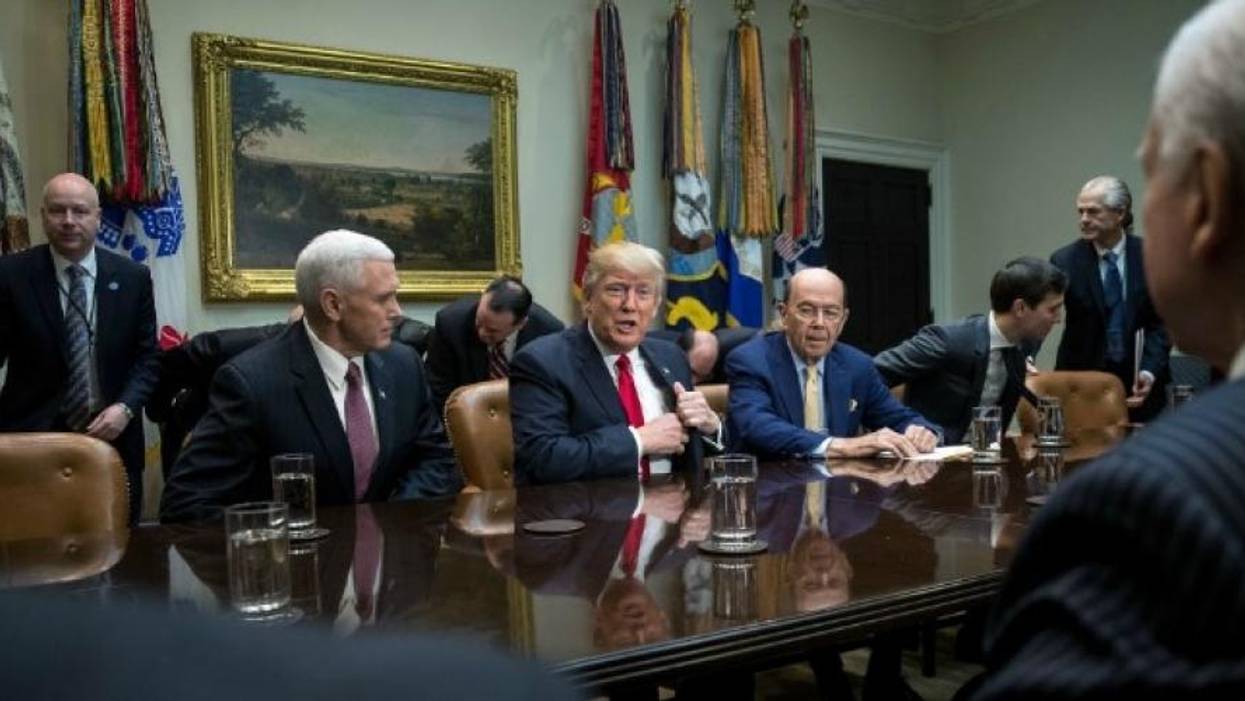
As Jonathan Swift once noted: "There is nothing constant in this world but inconsistency."
That's the operative motto for all things Trump, one that makes analyzing the gap between what he thinks and what he tweets much easier. Along those lines, my former boss from my Goldman Sachs days--Gary Cohn--just resigned from his White House post as chief economic adviser to the Chaos Producer in Chief. This was ostensibly in protest against the president's announcement about imposing steel and aluminum tariffs. The next day, Trump signed the order sealing that deal, citing his actions as a "matter of necessity for our security."
Along the way, he said there would be no exemptions to the tariffs, then said there would be--for Canada and Mexico. Trump glowed in the light of his new-found power grab over trade agreements, leaving himself room to decide which countries would be "in" and "out" with respect to these and other tariffs in the future. And that was the week that was in Trump World.
The timing of Cohn's departure certainly put a wrench in his plans to convene executives dependent on steel and present their case against steel tariffs to Trump. Instead, Trump signed the tariffs order flanked by steel and aluminum workers supporting it. Speaking of steel, Cohn's nerves were seemingly made of that metal. At Goldman, he was the man who regularly waded through deals without losing his cool (unlike Trump). On 9/11, I witnessed him directing traders to keep trading oil as shreds of debris and billows of smoke engulfed the windows of the Goldman trading floor, only a few blocks away from the World Trade Center.
He became president (or number two) at Goldman, continually handling the less "cool" behavior of chairman and CEO Lloyd Blankfein, who remained above him in the pecking order for decades. Cohn commanded daily activities at Goldman that led to the firm's creation of shady financial instruments that were later at the core of the financial crisis. Under Cohn, Goldman was bailed out by U.S. taxpayers. The firm morphed, for government subsidy purposes, into a bank holding company, though it handled scant deposits from regular people. It did this to retain access to Federal Reserve support, as it has done, over the past decade. Cohn was also at Goldman when it reached a $5 billion settlement with the Department of Justice over its consistent misconduct regarding mortgage-related securities from 2005 to 2007.
That type of conflict-meets-crisis readied him for his government service. When Cohn came up against Trump, the president's flavor-of-the-minute trade policy hawk, Peter Navarro, met "Globalist Gary" head on. Then Cohn's Trump administration career was over.
The financial news media didn't take Cohn's departure well. Past transgressions forgotten completely, it considered Cohn, one of the few adults in the room, another Trump appointee biting the dust, pointing to what we already know: Inconsistency is the only constant in this White House.
The Tariffs
When Trump added imported steel and aluminum to his list of already announced tariffs for solar panels and washing machines, members of his own party joined the world in expressing their disapproval. Many business sectors reliant on raw steel expressed fears that the tariffs would ultimately lead to major job losses, not gains, throughout that U.S. economy. Though the action invoked Section 232 of the 1962 Trade Expansion Act, the rest of the world knows that imported steel costs don't represent security risks, whereas the alienation of allies actually does.
As European Commission President Jean-Claude Juncker said: "We strongly regret this step, which appears to represent a blatant intervention to protect U.S. domestic industry and not to be based on any national security justification." He vowed that Europe would retaliate.
There were three sets of tariffs proposed by the Commerce Department, run by billionaire Wilbur Ross, and the latest, a 25 percent tariff on steel and 10 percent tariff on aluminum imports, are the harshest so far. For the president to circumvent Congress on tariffs, it must allegedly alleviate what would otherwise be a national security risk. That's just the loophole Trump used to ostensibly deliver on his campaign promises to American steelworkers. The problem is that the tariffs could wind up hurting those and other workers, as well as American consumers, instead. It would also add fuel to the fire in an already existing trade war.
Why is it already existing? Because Trump's entire isolationist posture and dogma have already caused U.S. allies and adversaries to seek tighter relationships with each other, from a currency and trade agreement perspective. The latest tariffs are another element on the path away from diplomacy (which could be better used to create agreements that truly benefit workers on all sides of our borders) and toward the street-yard bullying tactics Trump adheres to.
Reactions from around the world were of anger. China's foreign ministry called the tariffs "unreasonable and excessive" and, in true trade war style, promised that Beijing "will take necessary measures to safeguard its legitimate rights and interests."
Our friend to the north, Canada, one of the biggest sources of steel for the U.S., and one of biggest buyers of American steel, was equally incensed. Foreign Affairs Minister Chrystia Freeland said tariffs on Canadian steel and aluminum would be "absolutely unacceptable."
Even if Trump meant well (OK, a really big IF), his lack of diplomacy will ultimately render products the U.S. must import more expensive. As for American steel, any money made on extra tariffs will be lost on a reduced pool of buyers for our exported products. Domestic consumers ranging from home to bridge builders will inevitably face higher raw steel prices as a result.
Tariff Timing and Mexico's Stance Affecting NAFTA Talks
Before Trump decided to levy the tariffs, conversations between the U.S. and its NAFTA partners, Mexico and Canada, were coming along, not perfectly, but well enough. Then, the subject of the border wall resurfaced during a phone conversation between Trump and Mexican President Enrique Pena Nieto. That stalemate continues. Pena Nieto reiterated that Mexico won't pay for the wall. Trump "insisted that it would." According to The Washington Post, an involved Mexican official said that the entire conversation sparked Trump's temper. Surprise, surprise. Trump's ongoing temper tantrums are a real chip at the wall of international diplomacy.
It was following that heated discourse (after which Pena Nieto canceled his trip to the U.S., the second time he has done so due to the wall dispute), Trump declared he would impose the tariffs.
Whether a negotiation technique, or a campaign promise confirmed to his base, Trump initially implied that the tariffs were aimed at China (from which the U.S. imports less than 6 percent of its steel). But they hurt Canada the most. Canada provides 16 percent of U.S. imported steel. Brazil and South Korea rank second and third. China isn't even one of America's top 10 suppliers. Worse for Canada, 75 percent of our northern friend's total steel exports go to the U.S. The tariff would cripple one of Canada's leading exports while we are trying to negotiate the "best" NAFTA deal with them.
But that's exactly what Trump wants. By dangling financial threats and then taking them away, he elevates himself to being more of a dictator, and less of a leader, of the country's trade agenda. On Monday, he tweeted that he might consider dropping the tariff on Canada and Mexico if they played ball with him on the new NAFTA agreement. Trump's notion of reciprocity at that time meant Mexico paying for a wall and Canada "treating our farmers better." Navarro, director of the White House National Trade Council, had said something different earlier that morning, but the mismatch between Trump's tweets and people trying to do their jobs in perpetual guess mode as to his decision is par for the course.
All manner of diverse voices called out the tariffs. Goldman Sachs noted that "import tariffs make the U.S. less competitive by raising the prices of raw materials."
In Hamburg, Juncker responded to Trump's announcement with: "We can also do stupid." He vowed to fight back against Trump's tariffs, noting, "This is basically a stupid process, the fact that we have to do this. But we have to do it. We will now impose tariffs on motorcycles, Harley Davidson, on blue jeans, Levis, on bourbon. We can also do stupid. We also have to be this stupid."
Trump retorted with an uppercut to the jaw. "If the E.U. wants to further increase their already massive tariffs and barriers on U.S. companies doing business there, we will simply apply a Tax on their Cars which freely pour into the U.S.," he tweeted on Saturday. "They make it impossible for our cars (and more) to sell there. Big trade imbalance!"
Perhaps, just perhaps, competition for stupid isn't in the interest of the U.S., other countries, or the workers and citizens of the world. Destroying U.S. credibility only reduces the desire of other countries to buy from the U.S., or to negotiate better terms for U.S. consumers or workers, and instead, trade more with each other.
Trade War Casualties
It's not rocket science. If it costs more to import steel, either that cost will be passed on to the end user of steel-made products and to middlemen that build things using steel, or U.S. steel manufacturers will step up to the demand that comes from less imported steel.
The part of U.S. industry that uses steel is far larger than that which supplies steel. The ratio is more than 6.5 million workers to about 140,000 in the steel industry itself. And sure, as billionaire U.S. Secretary of Commerce Wilbur Ross pointed out, if a Campbell's soup can uses 2.6 cents worth of steel, and if that steel cost rises by 25 percent, it adds only an extra six-tenths of one cent to the can's price.
But that math doesn't account for whether American companies can accommodate extra domestic steel demand, or whether they will also now raise steel prices--because they can. The U.S. has been behind in infrastructure surrounding the steel industry, one of the reasons U.S. steel mills have been at over, not under, capacity. Renovating mills would enable domestic steel producers to produce more steel for domestic use than raising tariffs on importing steel would.
When the Bush steel tariff was in effect in 2002, 200,000 Americans in industries requiring steel lost their jobs because of higher steel prices, versus 187,500 workers working in the steel industry. The reality is that there needs to be better infrastructure.
The Trade Deficit
Trump's use of tariffs as a means to control trade deficits comes after his first year in office, during which the overall U.S. trade deficit widened 12.1 percent to $566 billion, its highest level since the 2008 financial crisis. Exports rose 5.5 percent to $2.33 trillion, while imports climbed 6.7 percent to a record $2.9 trillion. The trade gap with China increased 8.1 percent to a record $375.2 billion, and the gap with Mexico rose to $71.1 billion, the second highest on record.
According to the Department of Commerce's International Trade Administration, the U.S. is the world's largest steel importer, with U.S. imports representing about 8 percent of all steel imported globally. Part of the reason for that is not just the price of steel, but the ability of U.S. steel companies to produce it in the U.S. The top eight countries that export steel to the U.S. provide about 1 million metric tons each and make up 75 percent of U.S. steel imports. Canada, Brazil and Mexico send more than a third of their total steel exports to the U.S.
Treasury Secretary Steven Mnuchin tried to assuage fears of global trade wars at a congressional committee hearing, saying, "We are not looking to get into trade wars." He added that he was "supportive" of imposing the duties, thereby contradicting himself, taking a page out of Trump's book of bipolarity and reducing the legitimacy of anything the U.S. government says or does.
House Speaker Paul Ryan has also expressed repeated concerns about a trade war. Yet our internal dramas just serve to alienate us from the world, not obtain better overall "deals," because we are doing so from a position of increasing weakness and erratic White House behavior.
1920s Isolationism and Tariffs
U.S. history during an equally isolationist and deregulatory period shows that alienating the world doesn't help the U.S.--or the world. The Emergency Tariff Act, signed in May 1921, increased import taxes on wheat, sugar, meat, wool and other agricultural products.
The Fordney-McCumber Tariff Act, signed in September 1922, raised tariffs and extended them to industrial goods. The tariffs did encourage Americans to buy American goods. However, they did not help U.S. exports. Other countries retaliated by introducing tariffs of their own, so U.S. exports became more expensive and less popular.
In 1930, following the crash of 1929, President Hoover signed the Smoot-Hawley Tariff Act, against, raising already high tariffs on more than 20,000 imported goods to as much as 60 percent. That set off a global trade war, causing more trading partner retaliation, and a 66 percent drop in global trade between 1929 and 1934 that deepened the Great Depression. To lower the high tariffs, President Roosevelt passed the Reciprocal Trade Agreements Act in 1934.
Why Mexico Matters
Meanwhile, the seventh round of NAFTA talks between Mexico, Canada and the U.S. finished in Mexico City this week, three weeks before Mexico's' campaign season begins on March 30. Jared Kushner flew to Mexico City, having lost his security clearance and thus ability to negotiate world peace in the Middle East. Whether he had anything to do with it or not, the next day, Trump did relent, and agree to exempt Mexico and Canada from tariffs. That said, he could easily re-impose them if talk about a wall or other conversation goes against his demands.
A trade war is about more than prices in and prices out. It's about considering how those prices impact real people and jobs. It's about considering multiple trade and diplomatic relationships--not just between other countries and the U.S., but among those countries with each other.
Trump's supporters may believe that drawing a line in the sand against China that impacts Canada is good for American jobs, but the devil is in the details, and details are not Trump's forte. The reality is that America is losing its position on the world stage as a country that shows consistency in any capacity. These tariffs will inspire better trade relationships among other countries, something Trump's isolationist stance has already put in motion. They will diminish U.S. credibility, the lack of which is a product Trump has coined as his main export.
In the 1930s, U.S.-initiated trade wars contributed to a global Great Depression, one factor that lead to World War II. This time around, the rest of the world is more likely to work together and less with the U.S., not quake in economic fear of U.S. retaliation. This is clear and evidenced by the recent agreement between Japan and the EU, and the Regional Comprehensive Economic Partnership, in which Japan and China are key participants, their historical differences set aside, in efforts to forge non-U.S. trade relationships.
The U.S. remains in a precarious economic situation, as does the world, and that means Trump's trade war and nationalism, coupled with bank deregulation, could inflict more risk on depleted economies. That path would be a truly disastrous one for the U.S.
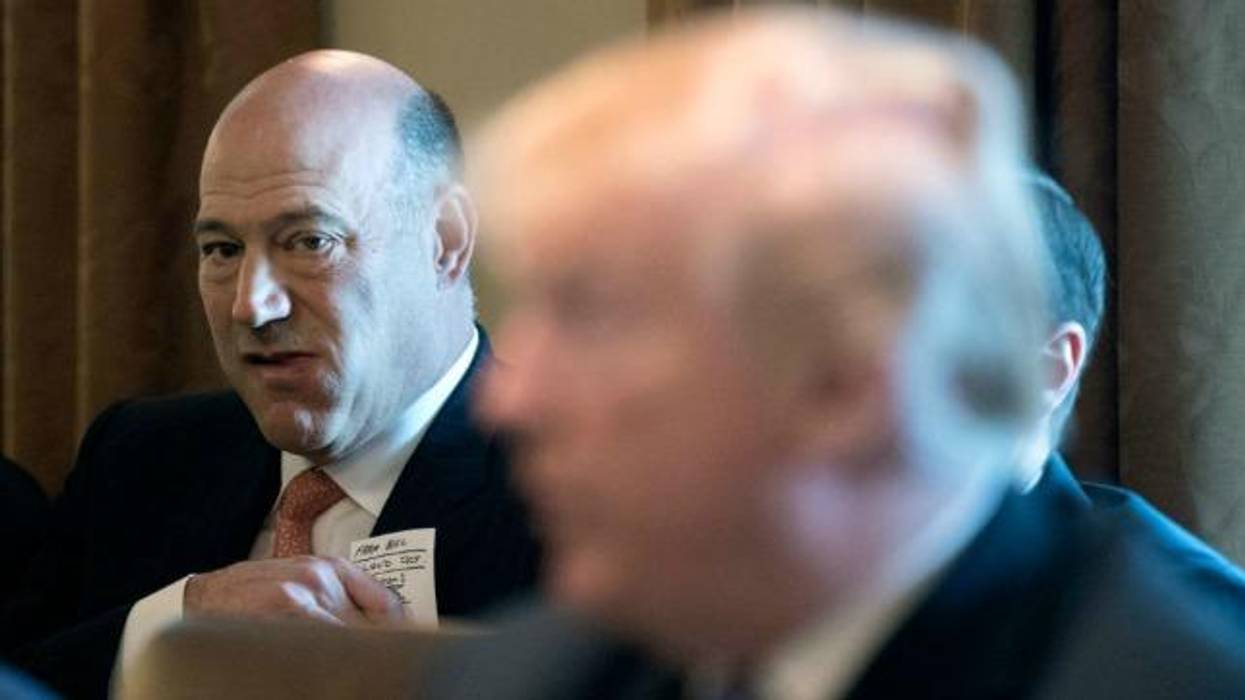
While chief White House economic adviser Gary Cohn is set to leave his post in the coming weeks, President Donald Trump suggested during a cabinet meeting on Thursday that he may eventually return to the administration--but only after he spends some time in the private sector reaping the benefits of the massive tax cuts he helped craft.
"Cohn delivered bigly for Goldman Sachs."
--Gary Rivlin
"He's gonna go out and make another couple hundred million and then he's gonna maybe come back," Trump said of Cohn, an ex-Goldman Sachs executive whose estimated net worth is somewhere between $200-600 million. "We'll be here another seven years, hopefully. That's a long time, but I have a feeling you'll be back."
Watch:
Cohn's imminent departure from the White House was first announced on Tuesday, news that came in the midst of a heated dispute over Trump's decision to impose steep tariffs on aluminum and steel--a move Cohn strongly resisted.
As journalist Gary Rivlin noted in a piece for The Intercept on Thursday, Cohn will likely receive a warm welcome from corporate America when he finally returns, given all the "generous gifts" he helped deliver to big business during his year in the White House.
"Cohn delivered bigly for Goldman Sachs," Rivlin writes.
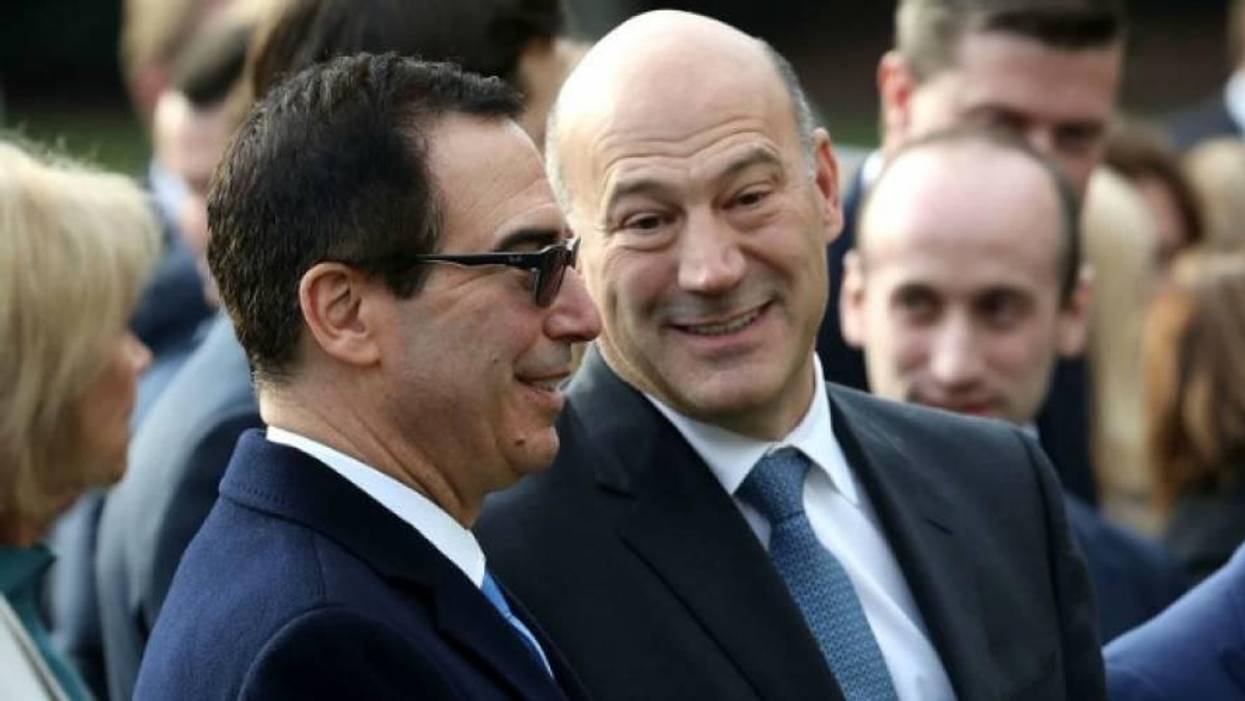
Just over two months after the Trump administration celebrated its most notable policy achievement of President Donald Trump's term--passage of massive tax cuts for corporations and the wealthy--the President's chief economic advisor Gary Cohn, former head of Wall Street giant Goldman Sachs, announced his resignation on Tuesday.
Reportedly over an intractable dispute over a plan by Trump to impose new tariffs on steel and aluminum imports, a policy the top aide had opposed and lobbied against, Cohn's departure is both the latest exit of a senior White House official and a development met in progressive circles with a collective, "Don't let the revolving-door hit you on the way out."
Gary Cohn took a $285 million exit bonus from Goldman Sachs when he left the bank.
Wrote a tax bill that rigged the tax system in favor of the big banks as a whole.
Let's see who his next employer is.
This is the revolving door that has plagued Washington for too long.
-- Nick Scott (@ItsNickScott) March 7, 2018
"It has been an honor to serve my country and enact pro-growth economic policies to benefit the American people, in particular the passage of historic tax reform," said Cohn in a statement. He didn't mention that by 2027, when the tax cuts are full implemented, how a Tax Policy Center analysis showed that 83% of the benefits of those tax cuts will go to the top 1% wealthiest of taxpayers.
Many noted that since the passage of the tax cuts in December, Cohn likely had little incentive to stay in the White House:
Other widely-shared sentiments on Twitter included:
"It is very telling that for Cohn, a registered Democrat, the final straw in leaving was not Trump's horrifying response to the Charlottesville white supremacist uber-hate fest or endless attacks on Mexicans and Muslims, but a steel trade enforcement action involving tariffs that would be 5 percent lower than the steel trade action enacted by President George W. Bush in 2002," said Lori Wallach, director of Public Citizen's Global Trade Watch.
"That Cohn is a Democrat," she continued, "did not stop him from joining the Trump administration, but that his departure would be spurred over a trade policy dispute reveals that his years on Wall Street at Goldman Sachs apparently made his one unbending principle the defense of the corporate-managed trade policies that have outsourced millions of middle class jobs and pushed down Americans wages."
As journalists Gary Rivlin and Michael Hudson detailed for The Intercept and The Nation's Investigative Fund last fall, Cohn provided his former colleagues at Goldman, and his friends on Wall Street more broadly, "everything [they] ever wanted from the Trump administration" during his time in Trump's inner circle.
While some considered Cohn at first an unlikely choice to guide the president, Rivlin and Hudson explained how the Trump economic agenda, it turned out--from privatization schemes to massive deregulation to endless corporate giveaways and tax cuts--was "largely the Goldman agenda, one with the potential to deliver any number of gifts to the firm that made Cohn colossally rich."
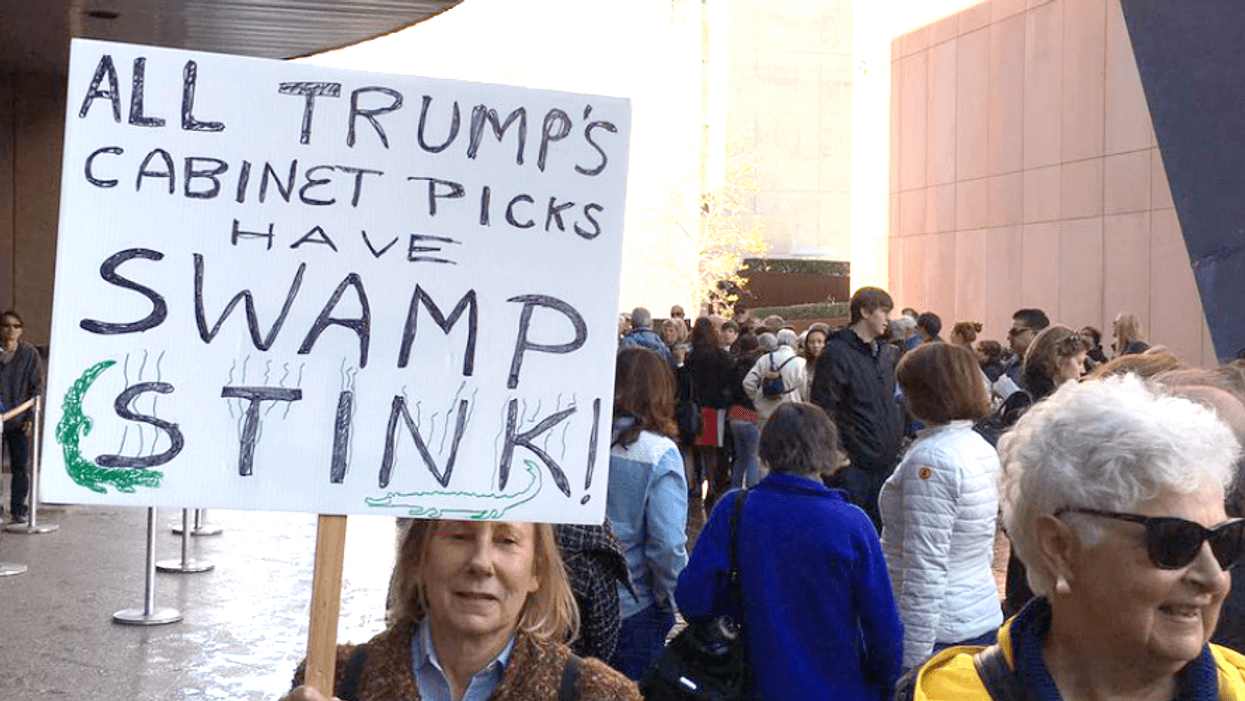
In the early phases of the Trump administration, it was a macabrely amusing, if horribly depressing, parlor game to predict who would be the worst Cabinet nominee. One year into the administration, considering the same question, it's just plain depressing.
With a president who has minimal and only passing familiarity with policy, Cabinet officials and their deputies are crucial in driving what the administration is actually doing. What the administration is actually doing - not just tweeting about - is truly horrific, far worse than most realize.
As they considered nominations for Worst Cabinet Member, that situation posed an impossible challenge for the Trumpy judges. There was just no way to whittle down to four nominees. Accordingly, the judges unilaterally decided to create two awards, based on an arbitrary division of Cabinet members. Even naming eight nominees required the judges to exclude many candidates - Cabinet members who in a regular administration would be judged the worst don't even fall into the category of eight worst.
You can vote on today's nominees here.
Stay tuned to see the remaining four nominees tomorrow.
Mick Mulvaney
Director of the Office of Management and Budget (OMB): "Kind of Cool" to be in Charge of Shutting Down the Government
1. Proposed a budget replete with draconian cuts, including elimination of the home heating assistance program for the poor.
2. As acting director of the Consumer Financial Protection Bureau, he is actively gutting the agency, proclaiming that it must work for all "citizens" - such as payday lenders, credit card companies and Big Banks. Really.
3. Oversees Trump's extremist and dangerous rollback of regulatory protections.
Ryan Zinke
Secretary of the Interior: "Is Ryan Zinke Cynical or Incompetent?"
(Answer: Don't rule out both.)
1. Announced plans to open up East Coast offshore areas to oil and gas drilling, then arbitrarily announced by tweet an exception for Florida as a political favor to the state's governor.
2. Aims to shrink Bears Ears and other national monuments, trampling Native American rights and opening up the areas to resource exploitation.
3. Muzzling scientists and whistleblowers, especially those trying to protect American lands from climate change-related threats.
Jeff Sessions
Attorney General: "I have not followed through to see where we are on that" [protecting U.S. elections from foreign interference]
1. Adopted new policy for maximum charges against low-level nonviolent offenders - with disproportionate impact on people of color - while making it easy for corporate executives to evade criminal charges for overseas bribery - with massive disproportionate effect on white people.
2. Ended the Deferred Action for Childhood Arrivals (DACA) program.
3. Reversed the Department of Justice's historic defense of voting rights.
Gary Cohn
Director of the National Economic Council (NEC): "Once in a Lifetime Opportunity" to Help the Rich Get Richer
1. Publicly proclaimed his disgust with Trump's response to Charlottesville, but decided to stay in administration to push the tax bill.
2. Claimed that, as a Jewish American, staying in an administration headed by a president whose conducted "disgusted" him was a way to stand up to Nazis.
3. Was the administration point on a tax plan that constitutes one of the greatest upward transfers of wealth in American history. (Yes, the judges know that the NEC is not formally part of the Cabinet, but Cohn is the key economic policy driver in the Trump administration.)
Which of these characters should be named Worst Cabinet Official? Vote here.
And don't to forget to vote for:
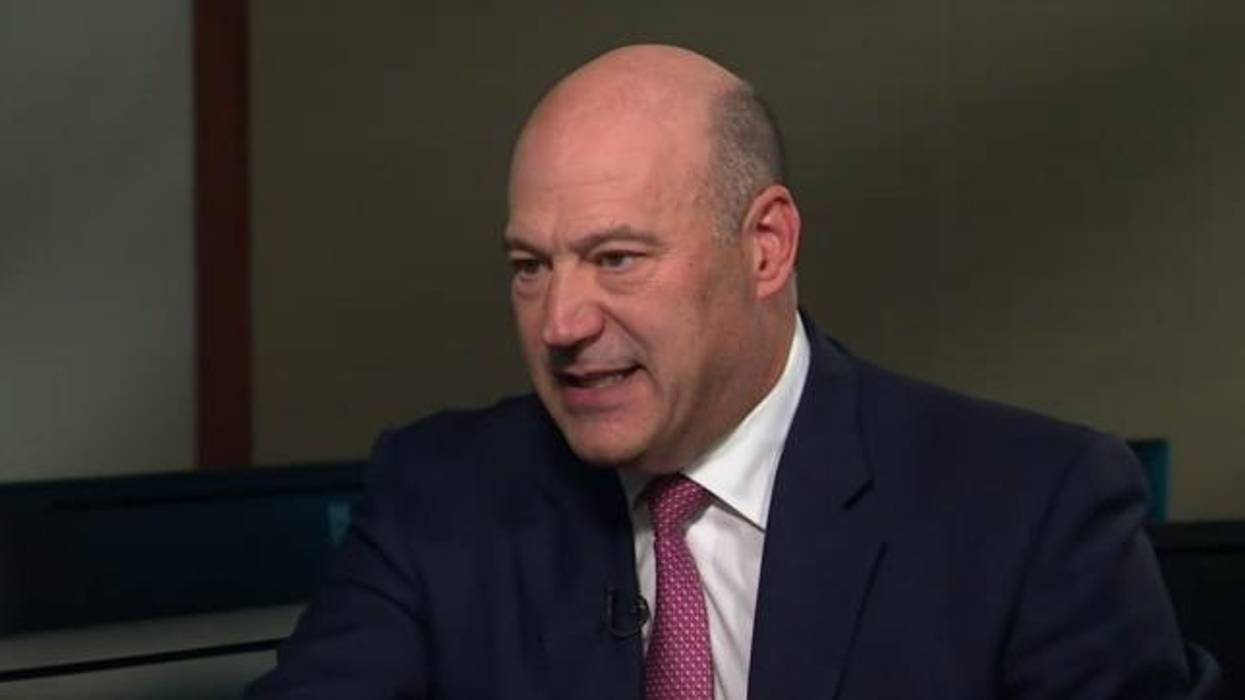
President Donald Trump's chief economic adviser and former Goldman Sachs banker Gary Cohn dealt yet another blow to Republicans' claim that their tax plan will primarily benefit middle class Americans on Thursday, telling CNBC's John Harwood in an interview that the Americans who are "most excited" about the GOP's push for massive tax cuts are actually "big CEOs"--a reversal from his claim just weeks ago that the wealthy "are not getting a tax cut under our plan."
"The most excited group out there are big CEOs, about our tax plan. They all tell me how excited they are to get a tax plan that makes the United States competitive, makes it so they can grow their business domestically," Cohn declared, prompting many to wonder whether he was actually "supposed to say that."
Watch:
Cohn went on to claim against all evidence that "trickle-down economics" is "good for the economy" and repeat the familiar line that the Trump administration and the GOP did not "set out to create a tax cut for the wealthy," implying that any tax cuts for the rich would be purely incidental.
However, "if someone's getting a tax cut, I'm not upset that they're getting a tax cut. I'm really not upset," Cohn added.
Cohn's comments to CNBC came just as Senate Republicans are preparing to release their own tax bill, which is expected to resemble the House version in offering massive tax cuts to the rich and massive corporations.
In acknowledging that the GOP's tax proposals would be a boon for CEOs, Cohn departed drastically from his previous insistence--as recently as September--that the "wealthy are not getting a tax cut" under the Trump-GOP plan.
Watch:
But as Vox's Matt Yglesias notes, Cohn's latest remarks are far more accurate.
"He's right--this plan is great for big CEOs!" Yglesias writes, noting that the GOP bill:
While Cohn may be correct in saying that CEOs are excited about Republicans' aggressive tax cut push, he would be wrong to think that middle class Americans share this excitement, according to recent polls.
As Common Dreams reported last week, only 13 percent of Americans believe the GOP tax plan will benefit the middle class, while 60 percent believe the plan will "mainly favor" the rich.
Numerous expert analyses published in recent days appear to validate the public's view.
According to a New York Times analysis published Monday, 45 percent of middle class families would actually face a tax hike within a decade if the GOP plan becomes law. Meanwhile, benefits for the richest Americans would continue to grow over time.
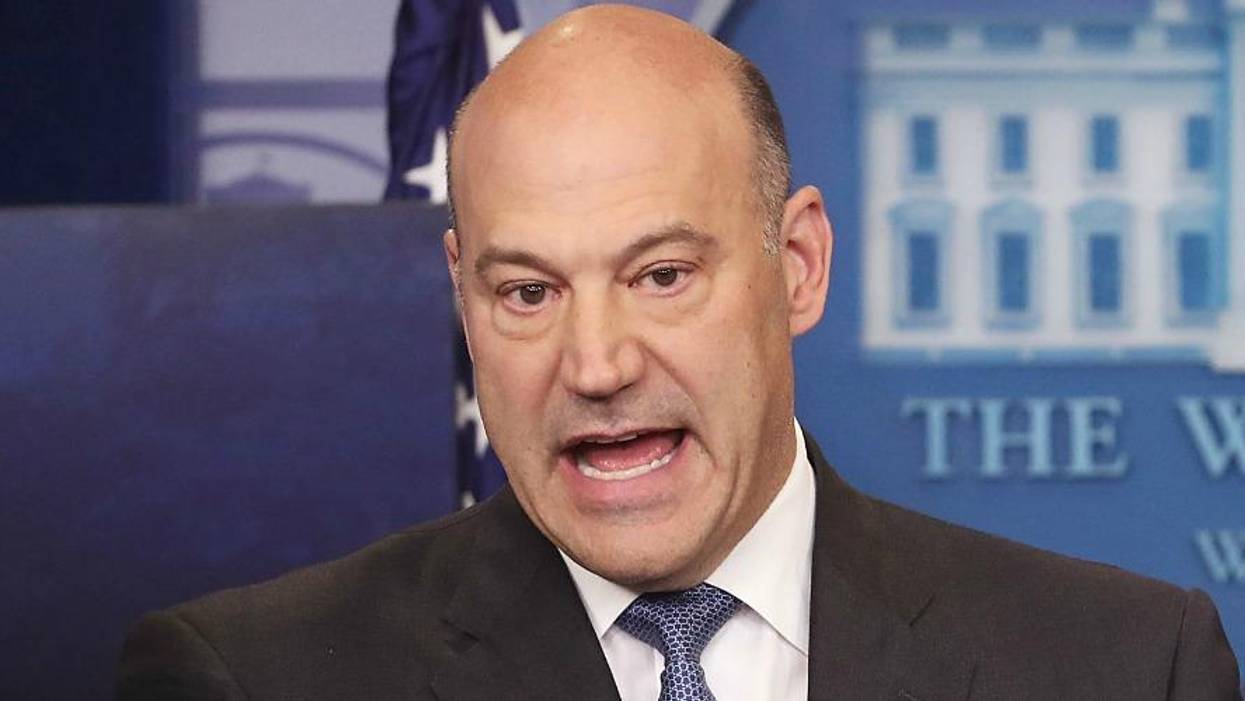
Though President Donald Trump's top economic advisor Gary Cohn previously said he felt "enormous pressure" to resign his position from the administration after the president's disastrous equivocating on white supremacy and racism in the wake of a violent protest by neo-nazis in Charlottesville, Virginia earlier this year, he made clear at a Thursday press conference why he ultimately opted to stay for a very specific purpose: a chance to give massive tax cuts to the nation's corporations and wealthy.
"Why am I here?" Cohn said in response to a question by the New York Times' Jeff Zeleny. "I am here just for this reason. Think about the opportunity I'm involved in with President Trump, being able to rewrite the tax code - something that hasn't been done in thirty-one years... This is a once in a lifetime opportunity and I would never miss this."
Watch:
As analysis after analysis has shown, the outline of the tax reform put forth by the White House is undeniably and specifically geared toward giving the nation's wealthiest corporations and families tax cuts at the expense of social service programs that will inevitably be targeted in the face of dwindling revenues those giveways will create in the years and decades ahead.
And though Cohn himself said he struggled in the wake of Charlottesville--and reports indicated he even drafted a resignation letter--his comments on Thursday make it pretty clear that nothing remains more important to him than the chance to give massive tax relief to the Americans who deserve and need it least: the filthy rich like his former colleagues at Goldman Sachs and his new billionaire boss at the White House.
White House National Economic Council director Gary Cohn, former president of Goldman Sachs, said recently that "only morons pay the estate tax."
I'm reminded of Donald Trump's comment that he didn't pay federal income taxes because he was "smart." And billionaire Leona Helmsley's "only the little people pay taxes."
What Cohn was getting at is how easy it is nowadays for the wealthy to pass their fortunes to their children, tax-free.
The estate tax applies only to estates over $11 million per couple. And wealthy families stash away dollars above this into "dynastic" trust funds that escape additional taxes.
No wonder revenues from the estate tax have been dropping for years even as wealth has become concentrated in fewer hands. The tax now generates about $20 billion a year, which is less than 1 percent of federal revenues. And it applies to only about 2 out of every 1,000 people who die.
Now, Trump and Republican leaders are planning to cut or eliminate it altogether.
There's another part of the tax code that Cohn might also have been referring to--capital gains taxes paid on the soaring values of the wealthy people's stocks, bonds, mansions and works of art, when they sell them.
If the wealthy hold on to these assets until they die, the tax code allows their heirs to inherit them without paying any of these capital gains taxes. According to the Congressional Budget Office, this loophole saves heirs $50 billion a year.
The estate and capital gains taxes were originally designed to prevent the growth of large dynasties in the U.S. and to reduce inequality.
They've been failing to do that. The richest 1 tenth of 1 percent of Americans now owns almost as much wealth as the bottom 90 percent.
Many of today's super rich never did a day's work in their lives. Six out of the ten wealthiest Americans alive today are heirs to prominent fortunes. The Walmart heirs alone have more wealth than the bottom 42 percent of Americans combined.
Rich millennials will soon acquire even more of the nation's wealth.
America is now on the cusp of the largest inter-generational transfer of wealth in history. As wealthy boomers expire, an estimated $30 trillion will go to their children over the next three decades.
Those children will be able to live off of the income these assets generate, and then leave the bulk of them--which in the intervening years will have grown far more valuable--to their own heirs, tax-free.
After a few generations of this, almost all of the nation's wealth will be in the hands of a few thousand families.
Dynastic wealth runs counter to the ideal of America as a meritocracy. It makes a mockery of the notions that people earn what they're worth in the market, and that economic gains should go to those who deserve them.
It puts economic power into the hands of a relative small number of people who have never worked, but whose investment decisions will have a significant effect on the nation's future.
And it creates a self-perpetuating aristocracy that is antithetical to democracy.
The last time America faced anything comparable to the concentration of wealth we face now, occurred at the turn of the last century.
Then, President Teddy Roosevelt warned that "a small class of enormously wealthy and economically powerful men, whose chief object is to hold and increase their power," could destroy American democracy.
Roosevelt's answer was to tax wealth. The estate tax was enacted in 1916 and the capital gains tax in 1922.
But since then, both have been eroded. As the rich have accumulated greater wealth, they have also amassed more political power, and they've used that political power to reduce their taxes.
Teddy Roosevelt, a Republican, helped create a movement against dynastic wealth. Trump and today's congressional Republicans will not follow in his footsteps. I doubt even today's Democrats would do so if they had a chance. Big money has become too powerful on both sides of the aisle.
But taxing big wealth is necessary if we're ever to get our democracy back, and make our economy work for everyone rather than a privileged few.
Maybe Gary Cohn is correct that only morons pay the estate tax. But if he and his boss were smart and they cared about America's future, they'd raises taxes on great wealth. Roosevelt's fear of an American dynasty is more applicable today than ever before.
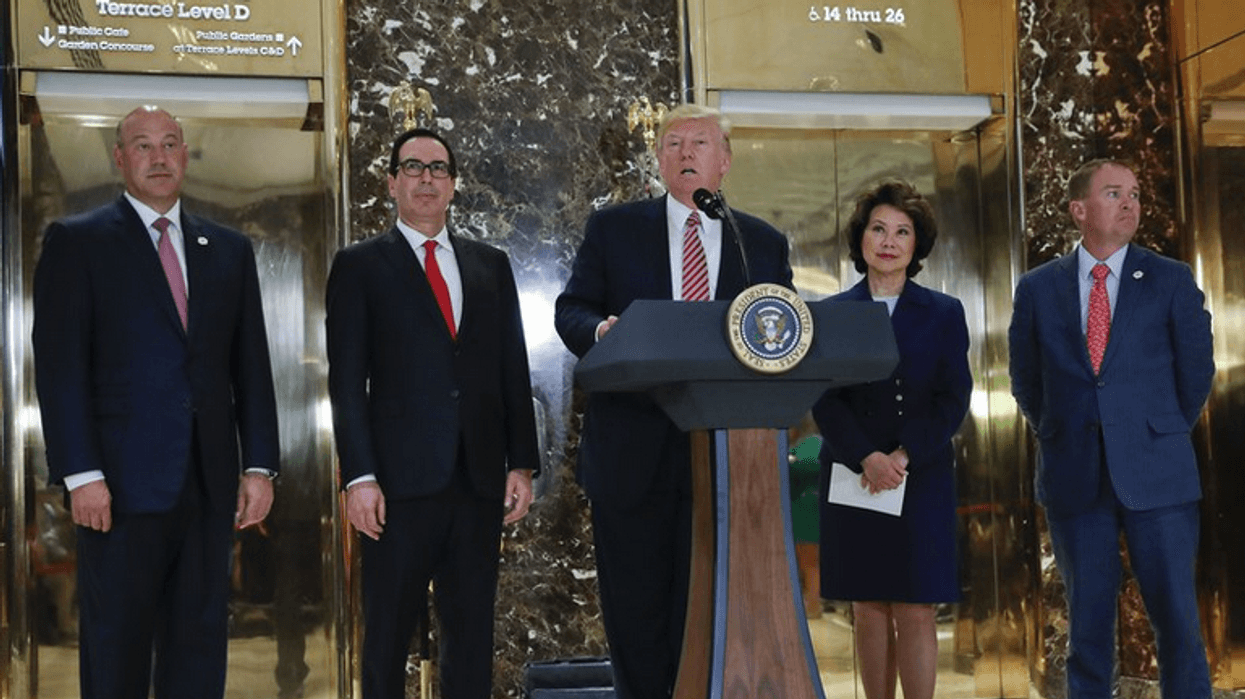
If top advisors and others are as angry with President Donald Trump as some reporting indicates, why don't they speak out publicly or resign their posts?
"[The] self-exonerating practice of anonymously leaking one's private 'disgust,' while saying & doing nothing publicly, is simply pathetic." --Glenn Greenwald, journalistWhile the New York Times' Glenn Thrush reported he had it from "three people with knowledge" that Gary Cohn, chair of President Donald Trump's National Economic Council, was "upset" and "disgusted" with his boss's defense of white supremacists during an "unhinged" performance at a Tuesday press conference, Cohn has yet to speak publicly about such feelings.
In response to Thrush, many people asked why, if Cohn felt the way he did, would he remain silent or continue to stand with the president? "So he's resigning..." begged one. "That's nice," quipped another. "The exits are clearly marked and not hard to find."
Cohn's private feelings were also reported by Axios on Wednesday, where journalists Mike Allen and Jonathan Swann were "told" that Cohn's reaction to Trump's remarks were "somewhere between appalled and furious."
Noting the discrepancy between what's being said or felt behind closed doors versus what a high-ranking official like Cohn is saying (or not saying) publicly, journalist Glenn Greenwald had this to say:
One anonymous White House official told CNN that none of Trump's senior staff or top advisors--including Chief of Staff John Kelly or Treasury Secretary Steve Mnuchin, both of whom stood nearby as Trump spoke on Tuesday--knew he was going to backtrack on Monday's condemnation of the violent racists who gathered in Charlottesville, Virginia over the weekend. "That was all him--this wasn't our plan," the official told CNN.
Kelly, highlighted Axios, "exhausted and dismayed, was shown in iconic TV shots with his head hanging during Trump's blast"
According to "multiple sources inside and close to the White House described the president's senior staff as confused and frustrated," NBC News reported, "caught off guard by Trump's decision to defend his initial response to the violence in Virginia." The president "went rogue," confessed a person described as a "senior White House official."
The situation was repeated on Wednesday morning when news broke that Senate Majority Leader Mitch McConnell, arguably the nation's second-most powerful Republican, was reportedly "upset" about Trump's comments on Tuesday.
The reporting by CNN, based on a "a source close to the leader," led Greenwald to ask his previous question this way: "What is more cowardly than dispatching anonymous sources to claim you're 'upset' while lacking the courage to just say so yourself?"
Perhaps he'll get an answer soon. According to reports, McConnell will release a statement later on Wednesday.
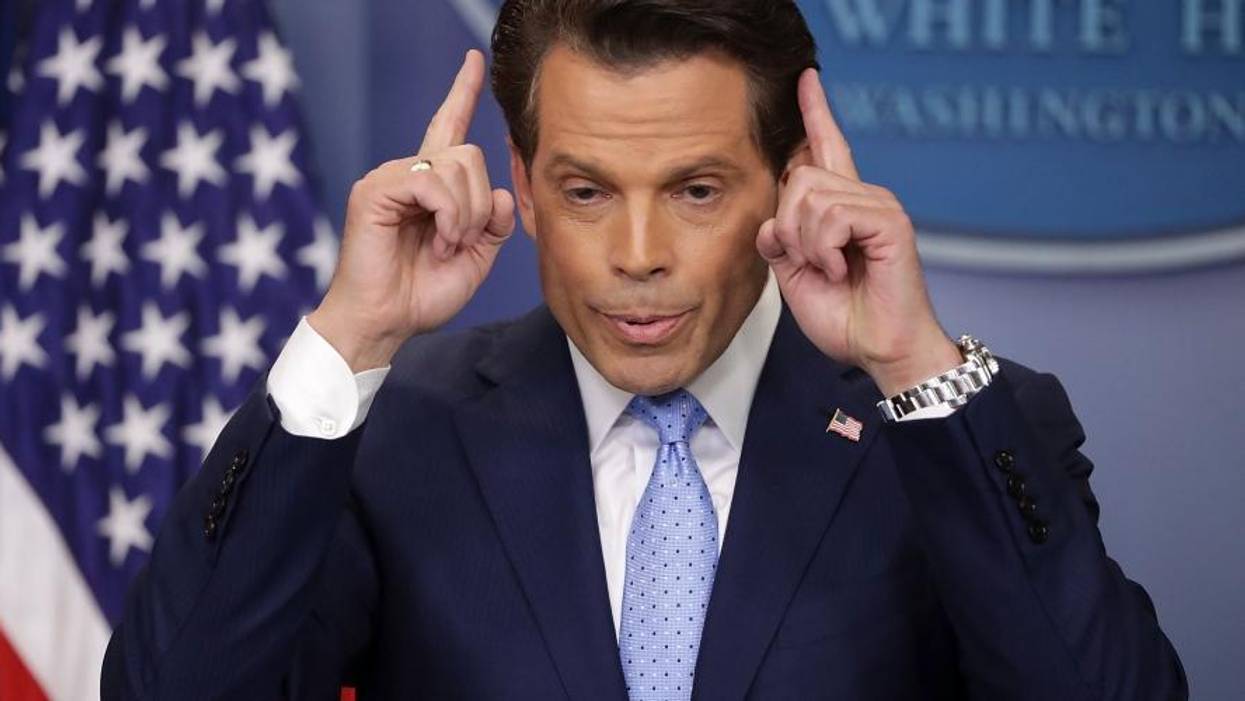
Donald Trump's White House seems more like a Quentin Tarantino movie every day. Amid allegations of broken laws and self-dealing at the highest levels, the president has now hired a Communications Director called "The Mooch."
The name brings to mind the famous "Mr. Pink" scene from Reservoir Dogs, where a macho Harvey Keitel resents being given that appellation during a heist and wants to trade names with another crook.
You can almost hear it now: "Why am I The Mooch?"
Donald Trump's White House seems more like a Quentin Tarantino movie every day. Amid allegations of broken laws and self-dealing at the highest levels, the president has now hired a Communications Director called "The Mooch."
The name brings to mind the famous "Mr. Pink" scene from Reservoir Dogs, where a macho Harvey Keitel resents being given that appellation during a heist and wants to trade names with another crook.
You can almost hear it now: "Why am I The Mooch?"
It's true that most members of Trump's team, including the president himself, could easily trade nicknames with Anthony Scaramucci. They're all moochers. Education Secretary Betsy DeVos was tied to a student loan firm and her department's actions directly benefited the family of a senior DeVos aide, who resigned after the conflict of interest came to light.
There are serious questions about Treasury Secretary Steve Mnuchin's financial interest in the administration's investigation of OneWest Bank. And virtually every senior Trump official stands to gain financially by his proposed tax cuts for millionaires and billionaires - an underlying conflict of interest that would let them "mooch" off the poor and middle-class families who would be hurt as a result.
Trump himself is the Moocher-in-Chief, monetizing his presidency to the limits of the law and beyond. He even skimmed from a fundraiser by holding it at a Trump Hotel so the family business could profit from it.
Of course, Anthony Scaramucci would only want to trade away his nickname if he were ashamed of it, but he shows no sign of shame. On the contrary, the brash, self-promoting huckster seems proud of his background as a Goldman Sachs banker turned hedge-fund super salesman.
Scaramucci's firm, SkyBridge Capital, isn't even really a hedge fund. It's more of a hedge fund retailer. Scaramucci closes the deal and then farms the money out to other funds to manage. The firm sponsors a schmoozefest called the SALT Conference every year, where famous speakers talk while everyone in the crowd tries to hustle one another for business. Think of it as TED for greedheads.
Celebrities like like Magic Johnson and Al "Say Hello to My Little Friend" Pacino have put in appearances at SALT. So have famous business people like Dallas Mavericks owner Mark Cuban and hedge-fund investor John Paulson, an early Trump backer who made billions off of the subprime lending meltdown.
And in our "money talks" political environment, it's not surprising that a number of politicians and officials have also wet their beaks at the Scaramucci trough, including Bill Clinton, George W. Bush, Tim Geithner, and Tony Blair.
It's somehow fitting that a hedge fund investor who does no investing has now become the spokesman for a president who appears to do very little actual governing.
What Scaramucci does very well, however, is promote Scaramucci. You might think that would make the vain showman who occupies the Oval Office jealous, but you'd be wrong. The Mooch's antics make him Trump's ideal Mini-Me. He's another empty-hatted showboater, loudly distracting the audience from the pickpockets moving among them.
But just to be on the safe side, Scaramucci professes his love for the president loudly and frequently.
In his first few days on the job, Scaramucci has already shown his ability to dazzle and distract the press, turning attention away from the dirty dealing going on all around them. He has incited a showy feud with White House Chief of Staff Reince Priebus, for example, a headline-grabbing move in which he says that the man he once called a "brother" is really only a brother in the "Cain and Abel" sense.
If you're not biblically inclined, here's a quick reminder: Cain slew Abel.
In a call to CNN that was described as a "meltdown," Scaramucci accused Priebus of "leaking" his financial disclosure forms to the press, a move he had earlier characterized as a "felony."
Those forms are public, by the way, which means they can't be "leaked," and it is not illegal to cite them.
"Meltdown"? To this observer, Scaramucci's antics look more like the over-the-top theatrics of the "heel," or designated bad guy, in a wrestling match. (Wrestling impresario Linda McMahon also works in the Trump White House.)
It's true that those financial disclosure forms reveal some serious ethical concerns arising from Scaramucci's failure to divest his SkyBridge holdings before entering government, but a good heel is always willing to take a fall for the sake of the show.
Hewing to bad-guy convention, The Mooch also unleashed a fusillade of vulgar language on The New Yorker's Ryan Lizza, attacking Priebus and accusing presidential advisor Steve Bannon of attempting an anatomically impossible act of sexual self-gratification.
In light of that publication's illustrious literary history, Scaramucci's foul talk to its reporter was the journalistic equivalent of passing gas in church.
Scaramucci apparently also leaked a story to the press and then complained about the leak, an in-the-ring pratfall that seems to further reinforce the "heel" theory.
It's working. While the press was writing about about The Mooch's theatrics, less attention was being paid to the ongoing Goldmanization of Trump's administration - a trend that poses a serious risk to the American people, and potentially to the global economy.
America's big banks have a stunning record of proven criminality, and Goldman Sachs is up there with the worst of them. Its rap sheet of documented offenses includes securities fraud, investor fraud, insider trading, and subprime loan abuses. Goldman misled its own customers and bet against them.
A former Goldman trader wrote about its "toxic and destructive" culture, and Goldman Sachs CEO Lloyd Blankfein is widely believed to have perjured himself in testimony before Congress. Following his committee's inquiry into banking practices, Sen. Carl Levin concluded that "Goldman clearly misled their clients and they misled the Congress." The committee recommended that charges be brought against Blankfein, but the Justice Department declined to prosecute.
Trump openly ran against Goldman Sachs, slamming both Ted Cruz and Hillary Clinton for past associations with the firm. And yet, Scaramucci is just the latest in a long list of ex-Goldmanites to join the Administration. They include Steve Mnuchin, Secretary of the Treasury; Steve Bannon, strategic advisor; Gary D. Cohn, Chair of the Council of Economic Advisors; and, Dina Powell, Deputy National Security Advisor. Trump also nominated Goldmanite James Donovan to be Assistant Treasury Secretary, but Donovan withdrew his name from consideration after meeting political resistance.
This week Trump said he's thinking about naming Cohn, the former president of Goldman Sachs, to be chair of the Federal Reserve. "He doesn't know this, but yes he is (under consideration)," Trump said.
Cohn, like Mnuchin and other senior Trump officials, is singing from the Goldman Sachs hymnal. Lobbying reports compiled by Open Secrets show that Goldman has already spent $1,430,000 on lobbying this year, on subjects that include tax policy and weakening bank regulations.
Cohn is one of six Republican officials and members of Congress tasked with forging a "tax reform" plan, a job that aligns nicely with his former employer's interests. The Republican House voted last week to repeal the Consumer Financial Protection Bureau's new arbitration rule, scheduled to take effect in September, a move that also aligns nicely with Goldman Sachs's interests. So does Treasury Secretary Mnuchin's push to roll back the Dodd-Frank law.
But then, is any of this really a surprise? By turning to Goldman Sachs to staff his administration, Trump has surrendered the nation's economic policy to the Goldman agenda. He is turning the economy over to some of its worst actors, and all signs suggest that he's not done yet.
There are, however, no confirmed reports yet that Trump plans to appoint Mr. Pink to a senior position in his administration.
President Donald Trump unveiled his latest giveaway to corporations and the ultra-wealthy on Wednesday, with a tax plan that would, according to one analyst, "personally help Trump enormously."
The proposal, as outlined by Goldman Sachs alums and Trump administration officials Gary Cohn and Steven Mnuchin at the White House, would cut tax rates for businesses from (a rarely paid) 35 percent to 15 percent--a plan described this week by former Labor Secretary Robert Reich as "truly dumb."
Trump's package would also involve a "pass-through" tax cut on business income that is currently taxed at the business owners' individual income tax rates rather than the corporate rate. Such a tax cut is also a centerpiece of House Speaker Paul Ryan's (R-Wis.) "Better Way" plan, and as the Center on Budget and Policy Priorities (CBPP) notes, "would overwhelmingly benefit high-income people and create a costly loophole." (Trump himself is said to have 500 pass-through arrangements.)
Eileen Applebaum, a senior economist with the Center for Economic and Policy Research (CEPR), further explained:
During the campaign, President Trump proposed reducing the top tax rate on pass-through income to 15 percent--a tax break that would benefit him tremendously. Speaker Paul Ryan's proposed tax plan would reduce the top rate to 25 percent. Both have claimed this reduction would benefit small business owners and grow the economy. However, these proposed cuts in the pass-through tax rate benefit only a small number of wealthy households; the majority of business owners and partners are already taxed at rates lower than Ryan's or Trump's proposed top rates.
Decrying Trump's proposal as "a very big step in precisely the wrong direction," the Economic Policy Institute's Josh Bivens and Hunter Blair wrote of the pass-through tax cut that "it will help private equity managers and people like President Trump: wealthy people who will now be able to reconfigure their taxes by reclassifying themselves as independent contractors. This isn't theory, this is exactly what happened in Kansas."
In that state, Blair elaborated in a separate post on Wednesday, establishing a pass-through loophole led to "even more lost tax revenue."
Another aspect of Trump's plan would eliminate the alternative minimum tax, or AMT, which was established to ensure that the super-rich are not able to use loopholes to escape their tax liability altogether. Trump's 2005 tax return showed that for that year, "he paid 25 percent of $153 million in taxable income instead of the less than 4 percent that he would have paid without" the AMT, as the New York Times reported when the return was released last month.
Cohn also announced that the administration's proposal would repeal the so-called "estate tax" on holdings transferred from deceased people to their heirs. CBPP's deputy director on federal tax policy Chye-Ching Huang said its elimination amounted to a "windfall for heirs of [the] wealthiest," pointing to an analysis that showed only the heirs of the wealthiest two out of every 1,000 estates will face any estate tax.
In fact, former national economic advisor to Presidents Bill Clinton and Barack Obama Gene Sperling argued this week in The Atlantic that rather than cutting the estate tax, Trump should raise it.
Responding to Wednesday's announcement, Americans for Tax Fairness was just one voice in a chorus vowing to "fight this tax plan tooth and nail."
"President Trump has brought his reckless tax plan from the campaign into the White House, and the math still doesn't add up," said Frank Clemente, the group's executive director. "To pay for massive tax giveaways to corporations, the wealthy, and his own family, he will add trillions of dollars to the deficit."
Robert Weissman, president of Public Citizen, labeled the plan "Goldman Sachs populism" and said there "is zero rationale for cutting corporate taxes and zero reason to think that lower taxes will generate more investment."
Weissman said Trump's proposal is "dead on arrival," and indeed, the plan faces an uphill battle in Congress, even among Republicans.
Democrats are strongly opposed. For his part, U.S. Rep. Ted Lieu (D-Calif.) denounced the plan as "voodoo economics on steroids. If you believe in magic, unicorns, or Batman," he wrote on Twitter, "this plan is for you."