

SUBSCRIBE TO OUR FREE NEWSLETTER
Daily news & progressive opinion—funded by the people, not the corporations—delivered straight to your inbox.
5
#000000
#FFFFFF
To donate by check, phone, or other method, see our More Ways to Give page.
Daily news & progressive opinion—funded by the people, not the corporations—delivered straight to your inbox.
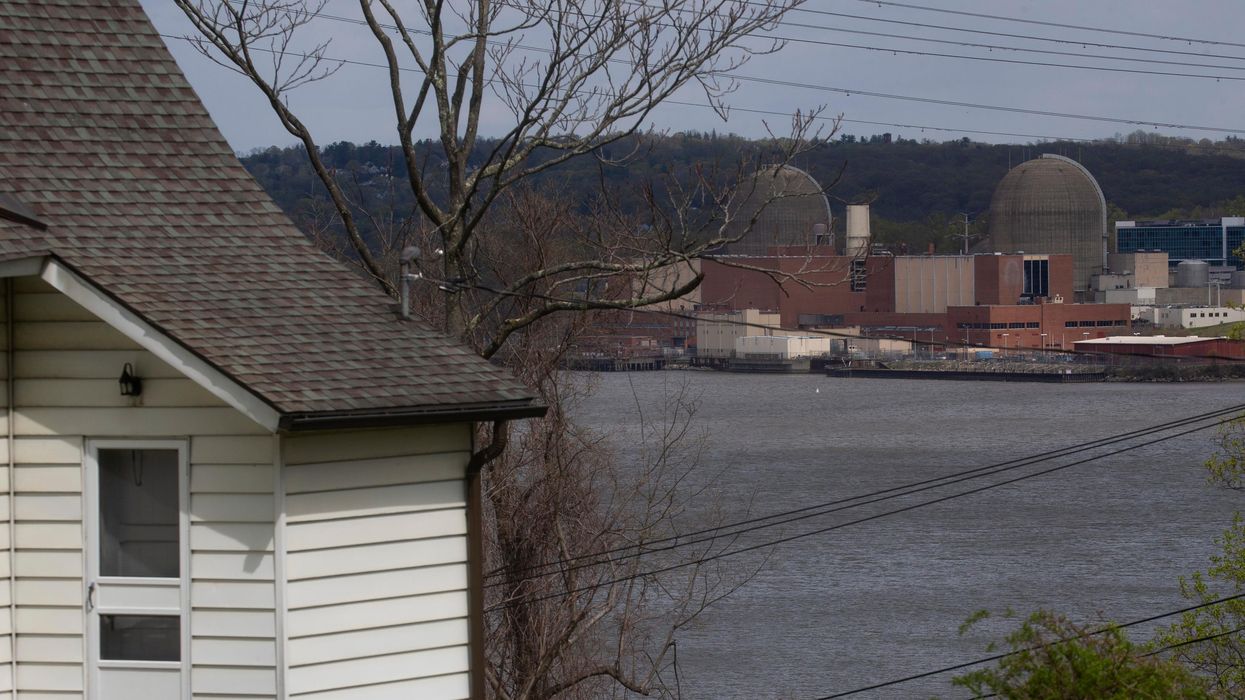
"We have spent decades cleaning up the Hudson, and now the river is, once again, a major economic driver for the region and the state as a whole," said one state lawmaker. "Let's keep protecting the Hudson!"
State and local lawmakers rallied with public health advocates in White Plains, New York on Tuesday to demand that Gov. Kathy Hochul end her silence on legislation that was passed in June to prohibit the dumping of radioactive waste into the Hudson River.
The rally was held ahead of a "listening tour" the Democratic governor is beginning regarding environmental legislation, and weeks before energy technology firm Holtec International is scheduled to begin discharging 45,000 gallons of wastewater from pools that were used to cool spent nuclear reactor fuel at the former Indian Point nuclear power plant.
The company ultimately plans to dump one million gallons of the wastewater into the Hudson, which at least 100,000 people rely on for their drinking water.
The New York Legislature passed a bill (A.7208/S.6893) in June to prohibit such discharges, but Hochul has yet to sign it.
"Gov. Hochul is running out of time to save the Hudson," said Emily Skydel, Hudson Valley organizer for Food & Water Watch. "With less than a month until Holtec's planned toxic dump, Gov. Hochul must waste no more time protecting our river. Gov. Hochul must sign the 'Save the Hudson' bill now—before it's too late."
The discharge was originally slated to begin in May, but Holtec paused the plan after outcry from U.S. Sens. Chuck Schumer (D-N.Y.) and Kirsten Gillibrand (D-N.Y.) as well as state Sen. Pete Harckham (D-40) and state Assemblymember Dana Levenberg (D-95).
The lawmakers spoke out as groups including Riverkeeper and Physicians for Social Responsibility warned that the wastewater could be contaminated with the isotope tritium, which is linked to cancer, miscarriages, and genetic defects.
"We have spent decades cleaning up the Hudson, and now the river is, once again, a major economic driver for the region and the state as a whole," said Harckham on Tuesday. "Let's keep protecting the Hudson! I urge Gov. Hochul to sign our 'Save the Hudson' legislation, and truly thank all of the environmental advocates and supporters who are helping to stop radioactive wastewater from being dumped into this magnificent river, one of our country's natural treasures."
Assemblymembers representing Westchester County wrote to Hochul last week, urging her to sign the bill. More than 400,000 people, 35 localities, and 138 civil society groups have also called on her to take action to stop the discharge.
"Residents and advocates here have spoken loudly and we have a responsibility to listen to their concerns," said Erika Pierce, a Westchester County legislator. "The radioactive wastewater needs to be tested thoroughly before it is released into the Hudson River, and we need those results back so that they can be evaluated before this process can move forward. We don't get a redo on this."
Assemblymember Chris Burdick (D-93) called Holtec's plan "unconscionable."
"Such an action would be detrimental to our health, our water quality, and our environment," he said. "We simply cannot allow this dangerous dumping to occur."
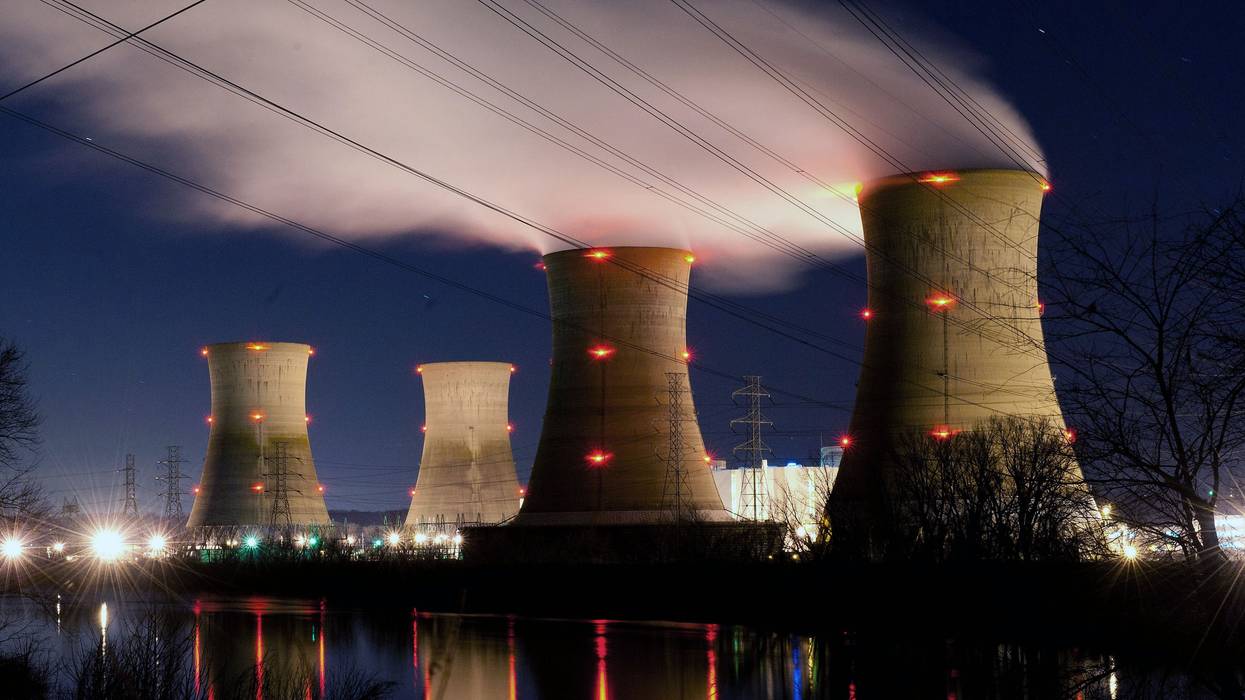
"The recent catastrophic train derailment in East Palestine, Ohio, and the crash of two Boeing 737 Max jets demonstrate the real-world consequences of inadequate or capriciously enforced safety regulation and oversight. We can't add radiological releases from U.S. nuclear plants to this list."
In the wake of another nerve-wracking outage at a Russian-held Ukrainian nuclear energy facility this week, 90 groups and dozens of individuals wrote to U.S. President Joe Biden expressing "grave concerns regarding security at U.S. nuclear power plants."
"We commend and wholeheartedly support your administration's much-needed efforts to make nuclear plants in the Ukraine war zone more secure in the face of daunting political and military challenges," states the letter, spearheaded by Nuclear Energy Information Service (NEIS) and sent to the White House Wednesday. "This work protects not only Ukraine but the entire planet."
"Our concern is that the security of U.S. nuclear power plants does not seem to be receiving a commensurate amount of attention, neither from the U.S. Nuclear Regulatory Commission (NRC), nor the administration," the coalition explained. "Worse, your administration is also seeking to expand the nuclear industry in dangerous ways that compound nuclear plant security threats."
"Attacks on nuclear facilities and other external dangers they face are credible threats and could happen here."
While the letter argues that given the associated security threats, "federal funding should prioritize scaling up renewables, storage, efficiency, and transmission upgrades, so as to phase out nuclear power as quickly as possible," it also calls for immediate action.
"Nuclear plant security MUST begin at home," the groups declared, urging the U.S. government to "learn the lesson" from Zaporizhzhia Nuclear Power Plant (ZNPP) since Russian forces invaded Ukraine early last year—that "attacks on nuclear facilities and other external dangers they face are credible threats and could happen here."
"The recent catastrophic train derailment in East Palestine, Ohio, and the crash of two Boeing 737 Max jets demonstrate the real-world consequences of inadequate or capriciously enforced safety regulation and oversight," the organizations asserted. "We can't add radiological releases from U.S. nuclear plants to this list."
The coalition also sent the president a separate document detailing security concerns and recommendations for U.S. facilities, but the letter highlights the top takeaways:
The coalition is calling on the Biden administration to enforce "enhanced, mandatory security measures for existing nuclear facilities and spent nuclear fuel to make them less vulnerable to attack," at the cost of licensees, not U.S. taxpayers.
The groups' recommendations include changes to storage policies. The letter says that "instead of transporting it to proposed CISFs, most spent nuclear fuel should be stored at reactor sites using hardened onsite storage (HOSS)."
In a statement, Kevin Kamps—a radioactive waste specialist with Beyond Nuclear, which signed the letter to Biden—took aim at Holtec International, a U.S.-based company that owns a proposed New Mexico CISF, has handled spent fuel in Ukraine, and recently signed a contract to deploy small modular nuclear reactors in the war-torn country.
"Holtec's performance in handling spent fuel has been abysmal in Ukraine and similarly abysmal in the United States," said Kamps. "That's one illustration among others that the problem is not limited to Ukraine, and that U.S. nuclear plants are subject to security threats we need to start addressing."
NEIS director Dave Kraft asked, "What sense does it make to send tens of millions of dollars to Ukraine to enhance security and safety, when our own 92 operating reactors and 90,000 tons of high-level radioactive wastes are not secure?"
"What sense does it make to sprinkle the next-generation micro- and mini-nuke reactors around the nation and the world, boasting they can be mobile on flatbed trucks or housed in factories or Walmarts, when it is daily demonstrated that silent drones are capable of turning heavily armored tanks and military vehicles into shredded heaps of burning metal?" he added. "This is the real world nuclear power now exists in, and this administration is not prepared to provide the safety and security necessary for it to survive."
On Monday, for the seventh time since the Russians took control of ZNPP last year, Europe's largest nuclear facility was fully disconnected from Ukraine's electricity grid and had to rely on backup diesel generators. The outage lasted over five hours.
Reuters reported that a "Russia-installed local official said Ukraine had disconnected a power line and Ukrainian state nuclear energy company Energoatom said the problem was caused by Russian shelling."
Rafael Mariano Grossi, director general of the International Atomic Energy Agency, said Monday's incident "demonstrates the highly vulnerable nuclear safety and security situation" at the facility and reiterated that "this simply can't go on."
"We're playing with fire. We must act now to avoid the very real danger of a nuclear accident in Europe, with its associated consequences for the public and the environment," he added. "I'm continuing to engage in intense negotiations with all the involved parties to secure the protection of the Zaporizhzhia Nuclear Power Plant. I will not stop until this has been achieved."
"My constituents are already overburdened with the negative environmental externalities left behind by industrial infrastructure, and we should not be treated like pawns in this process," said one local lawmaker about Holtec International's now-paused plan.
Clean water and public health advocates in New York's Hudson Valley applauded Thursday as the energy technology company Holtec International announced it will not move ahead with plans to dump wastewater next month from the former Indian Point Nuclear Power Plant, following intense pressure from local communities and state lawmakers.
The company had initially planned to complete its first discharge of wastewater from pools that were used to cool spent nuclear reactor fuel rods late this summer, but recently announced that in May it would discharge 45,000 gallons of the water into the Hudson River, which at least 100,000 people rely on for their drinking water.
The company ultimately plans to release one million gallons of wastewater into the river.
Holtec International said it was taking a "voluntary pause" in the plan to better explain the process of decommissioning the plant, which was shut down in 2021, to the local community and elected officials.
Local clean water group Riverkeeper expressed appreciation that Holtec "heard the concerns of public" and said advocates will continue pushing for an alternative to releasing the wastewater into the Hudson.
Riverkeeper and Physicians for Social Responsibility (PSR) are among the groups that have raised concerns about the presence in the wastewater of the isotope tritium, which can be carcinogenic and is harmful to pregnant women and developing fetuses. Advocates have called on Holtec to store the water in tanks on the Indian Point site until a safe alternative disposal method can be found.
"There has been no prior disclosure of what pollutants or radioactive contaminants are in the wastewater or any public education on the environmental safety and public health risks associated with any potential discharges from the site," said local public health experts in a statement in January as PSR held the first of several public forums about the risks associated with Holtec's discharge plan.
The proposal has sparked outcry from local, state, and federal officials in New York in recent weeks. In March, state Sen. Pete Harckham (D-40) proposed legislation to ban any release of radioactive waste into the Hudson.
"I welcome Holtec postponing the planned release of radioactive wastewater into the Hudson River," said Harckham on Thursday.
State Assemblymember Dana Levenberg (D-95) expressed relief that Holtec's plan has been postponed for the time being and said she is as "committed as ever to ensuring that the needs of my constituents are respected throughout this process."
"My constituents are already overburdened with the negative environmental externalities left behind by industrial infrastructure, and we should not be treated like pawns in this process," said Levenberg earlier this month. "What we need is a partner who will work with us to facilitate a safe and just decommissioning of this plant, in a way that respects the surrounding communities. The people of my district have made it clear that this conversation should not be one-sided; Holtec should not be the only participant driving the schedule. What is efficient for Holtec may not be what is in the best interest of our communities and our natural resources."
U.S. Senate Majority Leader Chuck Schumer (D-N.Y.), who joined Sen. Kirsten Gillibrand (D-N.Y.) in writing to the Nuclear Regulatory Commission about Holtec's plan on April 6, said he was "relieved that Holtec has heeded our call and will put a stop to its hastily hatched plan to dump radioactive wastewater into the Hudson."
The state's Indian Point Decommissioning Oversight Board is scheduled to hold an online meeting regarding the wastewater on April 25, where community members and officials will be able to comment on the issue.
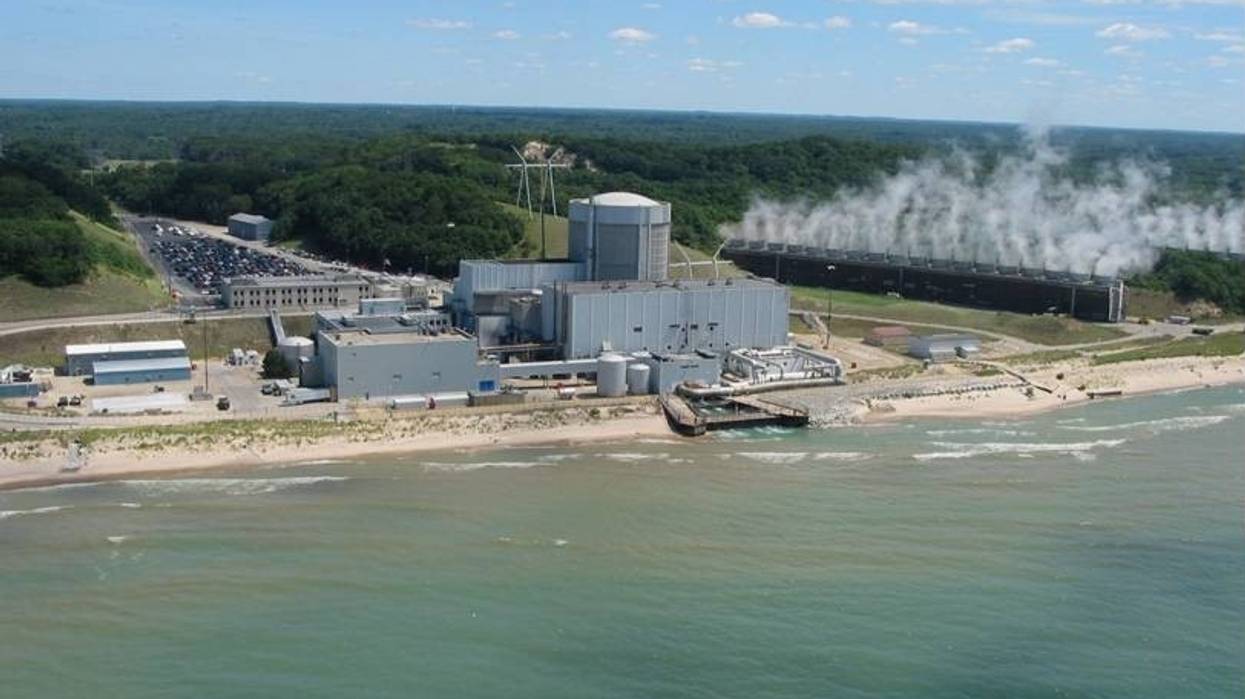
"This more than $10 billion in ratepayer and taxpayer robbery would merely fund an insanely high-risk game of radioactive Russian roulette on the Lake Michigan shoreline," said one critic.
A coalition of 191 individuals and 185 groups representing thousands of people on Wednesday implored the federal government for the third time not to fund the revival of a roughly 51-year-old nuclear power plant that was shut down last May in Covert, Michigan.
In a letter to the U.S. Department of Energy (DOE), the coalition warned that providing financial aid to Holtec International, which purchased the Palisades Nuclear Plant (PNP) last June, could lead to a massive public health and environmental disaster that reverberates far beyond the shoreline of Lake Michigan—a source of drinking water for millions of people in multiple states.
A little over a week after taking ownership of PNP "under the false pretense of decommissioning it," Holtec secretly applied for funding from the DOE's Civil Nuclear Credit (CNC) program in early July to reopen the plant, the coalition explained in a statement. The company's application—supported by Democratic Michigan Gov. Gretchen Whitmer, who had been advocating for a "dangerous 'zombie reactor' bailout and restart scheme at Palisades" since April 2022—was made public in early September.
Thanks in part to opposition from the coalition, which sent its first letter to U.S. Energy Secretary Jennifer Granholm in September, the DOE rejected Holtec's first funding request in mid-November. The following month, however, Holtec announced it would apply for federal funding during a second round of allocations, prompting a second letter of opposition from the coalition.
As The Holland Sentinel reported earlier this month: "Holtec is taking a different route with its second attempt at funding. Rather than applying through the CNC program, the company applied for funds from the U.S. Department of Energy loan office."
Terry Lodge, legal counsel for the coalition's lead groups, Beyond Nuclear and Don't Waste Michigan, wrote in Wednesday's letter that "DOE's recently issued amended 'guidance,' which was specifically rewritten to enable Holtec to apply for $1.2 billion of federal taxpayer funds, is not legal under the Infrastructure Investment and Jobs Act (IIJA)."
"We understand that Holtec... may be applying to DOE for a subsidized loan under a different law, with the intention of using funds from the IIJA to pay off the loan," wrote Lodge. "We question whether such a combined transaction would be lawful under the IIJA. Even if it is, IIJA credits may not be used to support Palisades. Congress intended the IIJA to support only currently operating commercial nuclear reactors that face termination of operations for economic reasons. Palisades does not meet any criteria for eligibility."
The coalition once again asked Granholm—a former Democratic governor and attorney general of Michigan—and other high-ranking officials at the DOE to deny Holtec's request that the non-operational PNP be certified to receive such federal funding.
Most importantly, PNP is unable "to operate safely due to a litany of chronic and acute problems associated with age-related degradation and neglected maintenance on safety-significant systems, structures, and components," the coalition argued in its statement. "This includes the worst neutron-embrittled reactor pressure vessel in the country and perhaps the world, at risk of pressurized thermal shock through-wall fracture, which would lead to reactor core meltdown."
"But additional pathways to catastrophic meltdown include a reactor lid, as well as steam generators, that have needed replacement for 17 years or longer," the coalition continued. "Palisades' control rod drive mechanism seal leaks have been uniquely bad in all of industry, for more than a half-century. Now added to this long list is Holtec's neglect of vital maintenance, such as of the turbo-generator, bending under its own immense weight, as well as the steam generators, to name but two examples."
Holtec has "applied to DOE for a billion dollar federal taxpayer-backed nuclear loan guarantee under the Inflation Reduction Act, which it would use to promote the reactor restart scheme, hoping to pay it back over time with the CNC program bailout," said the coalition. In addition, Holtec is "seeking a more than billion dollar subsidy from the state of Michigan, as well as yet another lucrative, above-market rate power purchase agreement with an unnamed utility company in the area. Also, Holtec has applied to DOE for $7.4 billion in federal nuclear loan guarantees, authorized under the 2005 Energy Policy Act and congressionally appropriated on December 23, 2007, for the design certification, construction, and operation of four small modular (nuclear) reactors, more than one of which would also be located at the Palisades site."
In the words of Kevin Kamps, a radioactive waste specialist at Beyond Nuclear and board member of Don't Waste Michigan, "This more than $10 billion in ratepayer and taxpayer robbery would merely fund an insanely high-risk game of radioactive Russian roulette on the Lake Michigan shoreline."
"Both extremes of the risk spectrum would be co-located at the Palisades site, if Holtec gets its way," said Kamps. "The ever-worsening breakdown phase risks at the old reactor would exist alongside the break-in phase risks of the new reactors, risking a Chernobyl-scale catastrophe, with the potential for Fukushima-style, domino-effect, multiple meltdowns."
According to The Holland Sentinel: "Holtec has acknowledged there will be 'a number of hurdles' to reopening the plant even if funding is secured. Those include financial commitment from the state, procuring a power purchasing agreement, upgrading the switchyard, partnering with a licensed operator for the restart, rehiring qualified and trained staff, and maintenance and delayed capital improvements of the facility—the plant closed earlier than planned due to failure of a control rod drive seal."
Citing comments a U.S. Nuclear Regulatory Commission official made during a public meeting on Monday, MLive reported this week that PNP "would be the first plant to enter the decommissioning phase and then try to restart."
During the meeting, Kamps declared, "Over my dead body are you all going to get away with this."