

SUBSCRIBE TO OUR FREE NEWSLETTER
Daily news & progressive opinion—funded by the people, not the corporations—delivered straight to your inbox.
5
#000000
#FFFFFF
To donate by check, phone, or other method, see our More Ways to Give page.
Daily news & progressive opinion—funded by the people, not the corporations—delivered straight to your inbox.

“Haul in corporate CEOs. Put them under oath. Make them answer for the rip-offs,” said Groundwork Collaborative president Lindsay Owens after the midterm elections.
After receiving a resounding mandate to act on America’s cost-of-living crisis, Democrats are considering bringing corporate executives before Congress in January.
The Washington Sun reported Thursday that House Democrats on the Judiciary and Oversight committees are examining a 181-page dossier created by Groundwork Collaborative, a consumer advocacy group that has chronicled “price gouging” by grocery chains and retailers like Walmart.
According to the Sun, the document singles out some of "the biggest tech giants, artificial intelligence labs, natural gas firms, private prisons and nursing home operators, among dozens of others," including for their alleged roles in driving up prices for cash-strapped Americans in recent years.
Rep. Jamie Raskin (D-Md.), who is expected to take over as chair of the House Judiciary Committee in January, told the Sun that his staff had been examining potential investigations, but he remained vague about his plans.
“We’re not targeting particular corporations,” Raskin said. “We’re targeting systems and networks of corruption, and to the extent corporations are involved, they are subject to the oversight project of Congress and our subpoena authority like everyone else.”
Democrats steamrolled across the map in Tuesday's midterms, with 48% of voters saying that the cost of living was the single most important issue motivating them, according to a pre-election survey by Reuters/Ipsos.
Lindsay Owens, Groundwork’s president and CEO, said that, to fulfill their campaign-trail promises to fight for “affordability,” Democratic lawmakers must relentlessly pursue accountability for corporate greed.
“Last night made it pretty clear: People are sick and tired of corporate America scheming its way to record profits while the rest of us get stuck with the bill,” she wrote on social media Wednesday. “Haul in corporate CEOs. Put them under oath. Make them answer for the rip-offs. Time for some accountability.”
In a Tuesday podcast appearance with Theo Von before the election, Owens said Democrats must zero in on what she has called corporate America’s “reinvention of the rip-off” over the past five years, which has involved increasingly targeted and sophisticated methods—including algorithmic price-fixing, junk fees, and subscription traps—to squeeze every possible cent out of consumers.
Rather than focusing solely on investigating President Donald Trump and his administration, Owens said Democrats also need to bring in "everyone from corporate America" and take them to task for their pricing tactics.
“Put the CEO of Walmart in the hot seat and [say], ‘Tell me what’s going on with Sparky,’” she said, referencing an artificial intelligence-powered chatbot the company launched last year. Executives have boasted during an earnings call that consumers who use the shopping assistant spend an average of 40% more per order than those who do not.
She said the CEO of DoorDash should also be called to testify over its planned "agitation index," which would have monitored users' scrolling speed, jerky movements, battery level, and other variables to adjust what they see on the app. The company withdrew its patent application for the technology two days after Owens testified before the US Senate, warning it could be used to hike prices on hungry customers.
The CEO of Uber, she said, should also be brought in to explain why customers have been charged dramatically different fares for the same route using algorithms that the company has said are based on what a consumer is willing to pay.
Much of what has already been documented about these practices comes from publicly available sources, such as patent filings and “the stuff they’re stupid enough to say to their investors” on earnings calls, Owens said.
But with control of House and Senate committees, she said, Democrats will have the power to force companies to "turn over their books, their algorithm... all of the stuff that they don't want us to see."
She said, "That will require ticking off some companies and ticking off some lobbyists and doing business a little differently than Washington has done business in the past."

"Those in control of the House have the power and responsibility to hold this lawless president accountable through impeachment.”
A campaign launched on Wednesday is urging Democrats to use their new majorities in the US House of Representatives and Senate next year to impeach and remove President Donald Trump.
In announcing its "Time to Impeach" campaign, nonprofit legal advocacy organization Free Speech For People said impeachment proceedings against the president should begin on the very first day of the next Congress.
The group noted that 147 House Democrats in September voted to advance impeachment articles against Trump filed by Rep. Al Green (D-Texas), who accused the president of abusing his powers by letting federal immigration enforcement officials run roughshod over people's constitutional rights.
Free Speech For People also said it has already gathered more than 1.1 million signatures for its online petition to impeach the president.
"Members of Congress swear an oath to support and defend the Constitution," said Alexandra Flores-Quilty, campaign director at Free Speech For People. "When the new Congress convenes in January, those in control of the House have the power and responsibility to hold this lawless president accountable through impeachment."
John Bonifaz, president of Free Speech For People, said impeachment was the only acceptable remedy "to address a corrupt and dangerous executive who tramples on the Constitution and the rule of law."
"If Congress fails to act, it will set a dangerous precedent that Trump—and any president hereafter—can operate above the law," Bonifaz stressed. "The Constitution demands that we impeach and remove Trump from public office."
Despite the group's advocacy for aggressive action, House Democratic Leader Hakeem Jeffries (D-NY) signaled that he is not in any rush to begin impeachment proceedings.
"I haven't had a single member of the House Democratic caucus talk to me about impeachment," Jeffries told reporters on Wednesday. "We've been relentlessly focused on affordability and accountability. Because the House is a separate and coequal branch of government... and the days of the House of Representatives functioning like a wholly owned subsidiary of the Trump administration are over."
Jeffries: "I haven't had a single member of the House Democratic caucus talk to me about impeachment. We've been relentlessly focused on affordability and accountability."
[image or embed]
— Aaron Rupar (@atrupar.com) November 4, 2026 at 12:32 PM
Jeffries emphasized this means that Congress under his leadership will "serve as a check and balance on an out-of-control executive branch."
In an interview with the Baltimore Banner published Wednesday, Rep. Jamie Raskin (D-Md.), who is in line to take over as chair of the House Judiciary Committee next year, would not take a third impeachment of the president off the table.
"We’re not afraid to impeach Donald Trump," said the Maryland Democrat. "We’ve done it twice. He has 50% of all the presidential impeachments in American history."
Raskin also addressed critics who said that impeaching Trump a third time should be off the table given there is little chance of him being convicted in the US Senate.
"[Impeachment] cannot be a fetish, but it also can’t be a taboo either,” Raskin said. “It is one of the people’s major instruments of constitutional self-defense against a president who continues to act like a king or an emperor."
“To avoid repeating this descent into authoritarianism," he said, "we must study this corrupt president’s actions and allow the public to learn about the numerous tools he deployed."
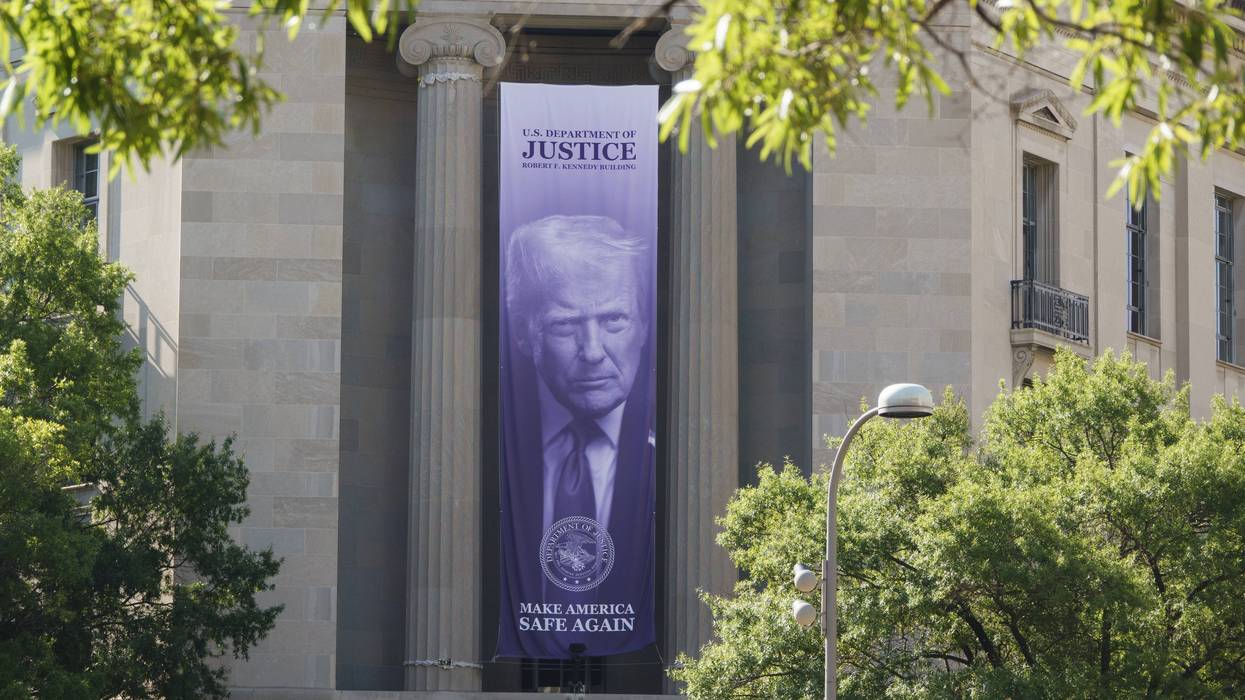
President Donald Trump stands apart from his predecessors with his use of government resources to glorify himself. During his second presidency, he has used taxpayer funds to blast the airwaves with ads singing his praises, drape giant banners of his face from agency buildings, and mint coins bearing his image.
Rep. Jamie Raskin (D-Md.) said the Smithsonian National Museum of American History—which houses some of the nation's most significant historical collections—should preserve artifacts like these as evidence of what he calls Trump's official "governmental propaganda" for future generations.
On Wednesday, Raskin announced a bill that would compel the Smithsonian to collect and preserve objects "reflecting the rise of governmental propaganda, corruption, and authoritarianism" under Trump's two presidencies.
 The 2026 America the Beautiful annual national parks pass features President Donald Trump alongside George Washington. (Photo from the US Department of the Interior via Wikimedia Commons)
The legislation comes amid Trump's attempts to warp the Smithsonian's content to reflect his personal view of the nation's history. In July, he signed an executive order directing the Interior Department to erect signs along the walkway warning that it contained exhibits that reflect the “personal, radical ideologies" of the curators.
The language is pulled from a 162-page report released that same month objecting to exhibits that it claims demonstrate "extreme political activism"—including some which highlight the experiences of immigrants, LGBTQ+ people, Native Americans, and other historically marginalized groups. It also claims that the museum does not adequately venerate the nation's founders, while accentuating their faults, including participation in slavery and other historic injustices.
Raskin said that the signs warning passersby of the Smithsonian's dangerous content—which are expected to cost $84,000 to install—are among the artifacts that should be preserved as an example of how authoritarians seek to control media, government, and culture.
He said the signs should be among several other "manifestations of authoritarian narcissism" that the museum should put on display, as well as the "Stalinist" banners of Trump's face that have adorned the departments of Agriculture, Labor, Justice, and Interior.
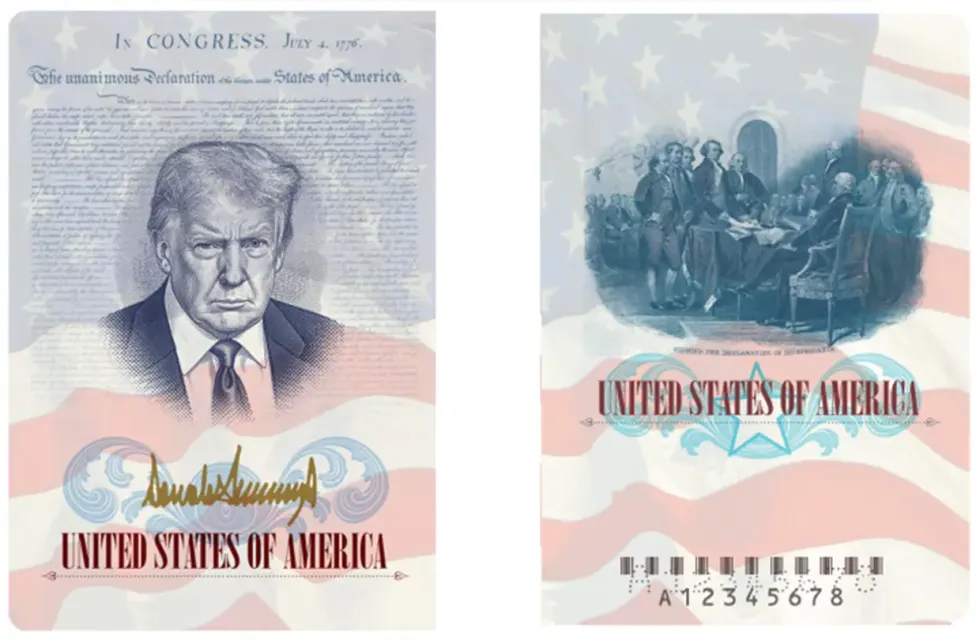 The inner cover of an official commemorative passport for the 250th anniversary of the United States, which featured the image of President Donald Trump. (Photo from the US Department of State via Wikimedia Commons)
In addition, Raskin said the exhibition should include other photos and videos captured by journalists and private citizens documenting the Trump era, as well as personal testimonials from Americans who "resisted and opposed the rise in authoritarianism," including those who participated in protest movements.
In March 2025, Trump signed an executive order directing the Smithsonian to purge its halls of what he called "improper ideology" or risk losing funding, which was followed by sweeping content reviews.
Earlier this week, The Atlantic reported that the White House had conditioned nearly $190 million in Smithsonian funding on its adherence to the order's vague ban on "exhibits or programs that degrade shared American values, divide Americans based on race, or promote programs or ideologies inconsistent with Federal law and policy.”
The museum has bowed to the pressure sometimes in ways that critics deemed "Orwellian," such as when references to Trump were scrubbed from an exhibit on presidential impeachments before being restored following backlash.
In January, a Smithsonian staff member told The Guardian that administrators had objected to the description of the World War II-era internment of Japanese Americans as "unjust" because the label could appear partisan. Another said they changed "diversity" to "variety" in text discussing astronomical objects, fearing that the administration might flag the word during its content reviews.
Raskin said his legislation is aimed at making sure this sort of heavy-handed censorship is not forgotten.
“To avoid repeating this descent into authoritarianism," he said, "we must study this corrupt president’s actions and allow the public to learn about the numerous tools he deployed while attempting to remake American history in his own image and according to his own autocratic and white nationalist beliefs.”

"This was a miscarriage of justice, and what happened... is an outrage that should shock every American," said attorneys representing former Olympian David Hearn.
A Washington, DC judge on Thursday shut down President Donald Trump's push to have the US Department of Justice indict a former Olympian on false charges of vandalizing the Lincoln Memorial Reflecting Pool.
In a 26-page ruling, Washington, DC Superior Court Judge Todd Edelman said that charges against former Olympic canoeist David Hearn deserved to be dismissed with prejudice, meaning future DOJ attorneys can never revive the case against him.
Edelman noted that, within a month of having Hearn indicted on felony vandalism charges, the DOJ moved to dismissed the case "not because it had misidentified Mr. Hearn as the perpetrator of the alleged act, but because no crime occurred."
Rather, Edelman continued, the damage done to the Reflecting Pool "was due to a contractor's 'rushed and botched' installation of the lining while conducting renovations, and Mr. Hearn's actions had no effect on the value of the pool."
Attorneys representing Hearn issued a joint statement celebrating Edelman's decision, while emphasizing that the case "never should have been brought in the first place."
"This was a miscarriage of justice, and what happened to Mr. Hearn is an outrage that should shock every American," the attorneys said. "This administration chose to pursue an unjust prosecution against Mr. Hearn. It should not get repeated chances to wield the power of criminal prosecution against someone who should never have been prosecuted."
Rep. Jamie Raskin (D-Md.), who counts Hearn as a constituent, ridiculed Trump-appointed DC US Attorney Jeanine Pirro for trying to prosecute the former Olympian despite lacking "any evidence" against him.
Raskin also suggested that the president was more deserving of being charged with vandalizing iconic Washington, DC landmarks.
"If Detectives Pirro and [US Attorney General Todd] Blanche are still searching for felon vandals in the Nation’s Capital," Raskin wrote, "I’ve got great leads on who illegally bulldozed the East Wing of the White House and who has been desecrating the Kennedy Center with deranged narcissistic graffiti."
Trump personally pushed the DOJ to indict Hearn, and rebuked Pirro in August after her office moved to drop the case.
"I disagree 100% with Jeanine Pirro... on the Reflecting Pool," Trump wrote in a Truth Social post. "I don't know what she was thinking? To me, it was a pure case of VANDALISM."
Norm Eisen, one of the attorneys representing Hearn, revealed later that month that he and other members of the former Olympian's legal team were seeking grand jury transcripts related to the case to determine “whether prosecutors were candid" when seeking the indictment of their client.
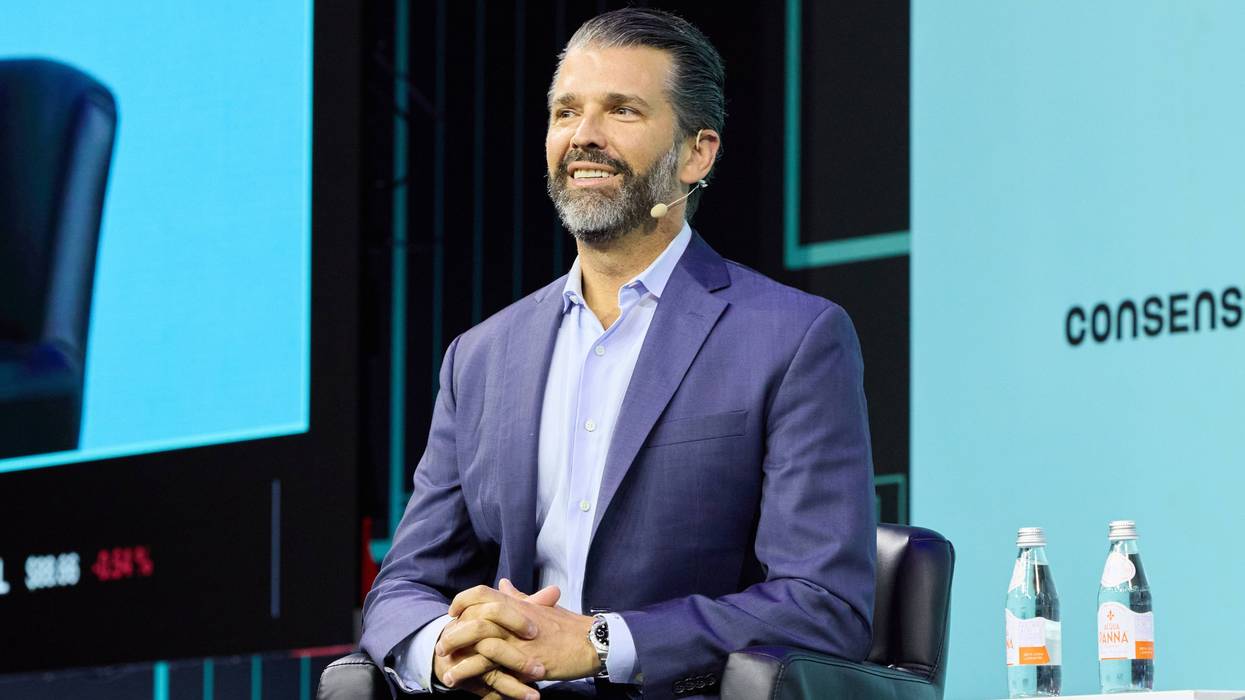
After the president's son came on board, "a trio of businessmen with heretofore lackluster records in the market was suddenly running the hottest firm in the United States."
Just two years ago, 1789 Capital Management "was a struggling venture capital firm that earned consistently disappointing results by serially investing in total market flops," but after recruiting President Donald Trump's eldest son in the wake of the 2024 US election, it "suddenly had the Midas touch," a key congressional Democrat highlighted this week, launching an investigation.
House Judiciary Committee Ranking Member Jamie Raskin (D-Md.)—a lawyer who managed the historic second impeachment of the president—revealed Thursday that the previous day he had sent a letter demanding answers from Donald Trump Jr., who is a partner at 1789 Capital, as well as company president Omeed Malik and chief investment officer Christopher Buskirk.
After the president's son joined the firm, just four days post-election, Raskin wrote, "you became the overnight darling of the venture capital world, rocketing from $150 million in assets under management to an astonishing $3 billion. A trio of businessmen with heretofore lackluster records in the market was suddenly running the hottest firm in the United States, picking out with almost clairvoyant accuracy winner after winner by investing in companies that would soon come to win hugely lucrative federal government contracts and grants and favorable regulatory actions."
"How did this miraculous transformation in the fortunes of your LLC come about?" he wondered. "Was it indeed magic? Or was it rank corruption, a toxic blend of trading on insider knowledge, and the use of insider political influence to steer major federal contracts and other financial benefits to Donald Trump Jr.'s new favorite businesses?"
"Based on his own personal business resume, Don Jr. may have been an unlikely choice to originate investments for an upstart venture capital company. His rare solo ventures—outside the paternal eye of the Trump Organization—have been well-documented flops, including investing in dry oil wells, hydroponic lettuce farms, and an African mining company," Raskin noted. "But despite his proven record of business investment failure, Don Jr. has become the lucky charm for 1789 Capital."
Raskin's letter provides a series of examples in which 1789 Capital has identified "companies that are about to receive massive influxes of cash from the Trump administration or to benefit from significant changes in federal policies and regulations."
"On the day Donald Trump was elected, Vulcan Elements was a small startup with no active manufacturing facilities and no history of fulfilling government contracts," he detailed. "Then 1789 Capital invested several million dollars. Soon after this investment, Vulcan Elements boasted that it had been raking in federal dollars throughout its capital raise, securing nine different government contracts in the past eight months."
"While the list of 1789 Capital portfolio companies that have benefited from favorable administration decisions is too long to explore in full here, three additional companies with strikingly similar success stand out," he wrote.
There's Anduril Industries, "an American technology company founded in 2017 by Palmer Luckey, a prominent Trump donor who has been dubbed 'the godfather of Republican fundraising on the West Coast,'" which got an enormous $22 billion contract that was previously assigned to Microsoft just weeks after Trump's inauguration, the letter notes. Then, it was reported that the VC firm was acquiring a stake in the company, which in March won another $20 billion contract from the US Army.
The letter also points out Juul, which "notoriously ushered in an epidemic of youth vaping in the United States by aggressively marketing its e-cigarettes to young people" and "had suffered a series of setbacks that nearly bankrupted the company" before Trump's return to office. Just months after 1789 Capital quietly acquired a $5 million stake in the company, the Food and Drug Administration ditched previous efforts to ban its products and allowed the marketing of five products.
Raskin's final example is the online prediction market Polymarket—which, at the time Trump was reelected, was banned from operating in the country by the Commodity Futures Trading Commission and faced a federal investigation. Last summer, the Department of Justice closed that probe and the CFTC signed off on an acquisition that allowed the company to enter the US market. The letter notes that "a few short weeks later, it was revealed that 1789 Capital had already acquired a sizable stake in Polymarket."
"Alas, it is now impossible to believe that your firm's astonishing growth and success are due to anything other than insider political influence and thoroughgoing corruption," the congressman wrote to the trio. "Indeed, President Trump recently admitted that his oldest sons have 'inside information' with 'almost anything they do.'"
In a statement to MS NOW, which had early access to Raskin's letter, counsel AJ Merton dismissed the accusations as "unsubstantiated talking points," adding that "repackaging press clippings on congressional letterhead does not turn news headlines into evidence, and that practice is a hallmark of partisan stunts and politically motivated harassment, not oversight."
However, Raskin still wants answers from 1789 Capital by September 9. He's demanding a list of investments, communications with federal officials or contractors, records on how government policies may impact the firm, documents on the hiring of Trump's son, and more. He also told the firm to preserve all communications between its employees and the administration.
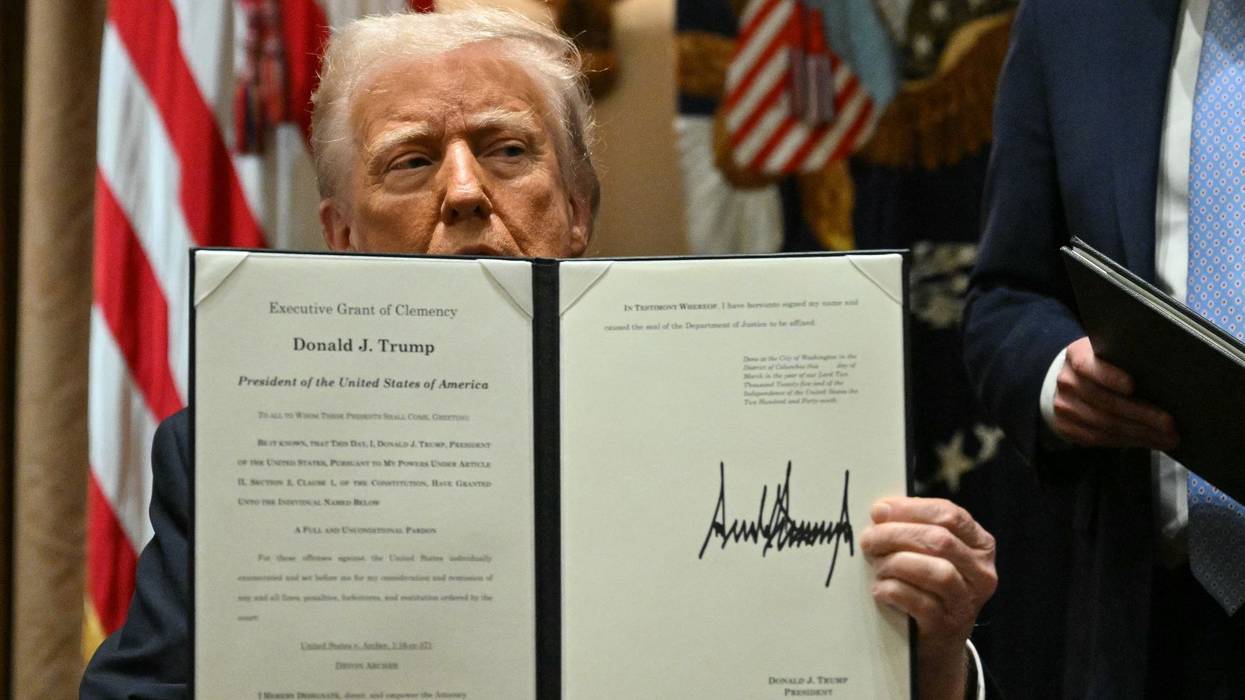
“Wealthy white-collar criminals and drug traffickers hire Trump insiders, pour money into his political operation... and suddenly the doors of the White House swing open for a pardon.”
President Donald Trump's pardons for rich criminals have robbed their victims of $1.7 billion in compensation, according to a report out Friday from the top Democrat on the House Judiciary Committee.
The analysis, released by the committee’s ranking member, Rep. Jamie Raskin (D-Md.), examines how Trump has turned the traditional pardon process into a “cash-for-clemency” system that has allowed influencers and fixers close to the president to make millions by selling access to his pardon power.
"Donald Trump has taken one of the most solemn constitutional powers of the presidency and turned it into a bustling marketplace for insider political influence and unjust personal enrichment," Raskin said in a statement on Friday.
"Wealthy white-collar criminals and drug traffickers hire Trump insiders, pour money into his political operation or cultivate his family’s financial interests, and suddenly the doors of the White House swing open for a pardon, commutation, and forgiveness of all fines and financial restitution owed," he continued.
Drawing on Reuters' reporting from June, the report examines how Trump has sidelined the traditional Department of Justice guidelines for offering pardons, which long involved career civil servants evaluating petitions for clemency based on the seriousness of the offense, the individual's rehabilitation, and restitution to victims.
In its place, Trump has consolidated control of the pardon power within the White House, where the determining factor has often been a person's connections to Trump's inner circle. This has allowed the clique of people with access to the president to act as gatekeepers and reap the rewards.
According to Reuters:
Reuters identified 290 advocates, or influencers, who publicly or privately helped secure clemency for 197 recipients. Because some of the advocates worked on behalf of multiple candidates, their efforts at times overlapped, representing 624 different acts of influence. Among the influencers, 73 helped secure more than one pardon or sentence commutation. Brett Tolman, a former US attorney now in private practice in Utah, has been involved in at least 12 pardons or commutations. Roger Stone, a veteran political consultant and longtime Trump confidant, had a hand in at least five.
Trump's use of the pardon system to reward friends and donors is widely reported. But Raskin's report sheds new light on the other side of the equation: the victims who were denied compensation after Trump waved away the sentences of those who scammed and stole from them.
Trevor Milton, an auto company executive who was convicted in 2022 of defrauding investors after pretending that one of his company's vehicles had autonomous capabilities, was potentially on the hook for nearly $700 million.
But after he and his wife donated a combined $1.8 million to committees supporting Trump and soon-to-be Health and Human Services Secretary Robert F. Kennedy Jr. in 2024, Milton received a pardon from the president that wiped out his obligation to pay.
Afterward, Trump called Milton personally and told him to "call Bobby [Kennedy] and thank him" for the pardon, according to Reuters.
Paul Walczak, a healthcare executive who funded a lavish lifestyle by stealing millions in payroll taxes from his low-wage employees, got a pardon from Trump weeks after his mother, a top GOP fundraiser, attended a $1-million-a-plate event at Mar-a-Lago. As a result, he got out of paying back $4.5 million in stolen payroll taxes, which go to fund programs like Medicare and Social Security.
Jason Galanis, who was convicted of stealing millions from the Oglala Sioux Nation and defrauding pension funds for union workers in New York State, avoided paying over $84 million in restitution after Trump pardoned him in early 2025.
A longtime associate of former President Joe Biden's son Hunter, Galanis gained favor with Trump after he appeared as a star witness for Republicans during their impeachment effort over the Democratic president's alleged "influence peddling."
Other fraudsters relied directly on the network of pardon lobbyists, like nursing home owner Joseph Schwartz, who also stole payroll taxes from his employees and had separately lost several wrongful death lawsuits for neglecting elderly patients.
While in prison on a three-year sentence, Schwartz spent more than $1.1 million on lobbyists to advocate for his release. This included access to the powerful pro-Trump influencer Laura Loomer, White House “pardon czar” Alice Marie Johnson, and White House Counsel David Warrington.
The report said this got him out of paying $33 million he still owes in federal taxes, and the report also notes his apparent attempts to avoid paying out wrongful death judgments.
The report also details Trump's pardon of former Honduran President Juan Orlando Hernández, who'd been convicted of helping the Sinaloa Cartel import hundreds of tons of drugs into the United States.
He was convicted in 2024 after prosecutors spent more than 15 years building a case against him. But his role in helping rich, MAGA-allied tech moguls, including Peter Thiel and Marc Andreessen, with a project called Próspera—a libertarian “charter city” for cryptocurrency investors—made his case a cause célèbre among Trump’s inner circle.
Roger Stone, who claimed that pardoning Hernández would "save the Próspera experiment," joined former Rep. Matt Gaetz (R-Fla.) and others at Mar-a-Lago to push for the ex-Honduran leader's freedom, and within hours it was granted.
As the report details, "the Bureau of Prisons paid a tactical team overtime to drive Mr. Hernández from his maximum-security prison in West Virginia to the Waldorf Astoria in New York City, where he was treated to a luxury stay at taxpayer expense in one of New York’s finest hotels."
Some of the criminality pardoned by Trump verges on cartoonish. A former Las Vegas City Council member, Michele Fiore, nicknamed "Lady Trump," stole $70,000 from a memorial for police officers killed on duty and used it to pay for rent, cosmetic surgery, and her daughter's wedding. To this day, she refuses to pay the money back.
Adriana and Andres Camberos, meanwhile, escaped having to pay their victims over $50 million and forfeit an additional $30 million in illegal proceeds from an elaborate grocery store fraud scheme that allowed them to pay for luxury sports cars, beachfront properties, investments, and cryptocurrency.
Adriana, who'd previously been convicted for selling counterfeit 5-Hour Energy drinks filled with fake liquid, had already had her sentence commuted at the end of Trump's first term after her brother donated to his 2020 campaign and got the ear of two attorneys close to the president, defense attorney Adam Katz and White House Counsel Stefan Passantino. After she and her brother were convicted of grocery fraud, they went back to Katz and Passantino, who helped secure a pardon for both of them last year.
“In recent months, often to justify immigration crackdowns or cuts to healthcare and food assistance programs, House Republicans have, hilariously, made ‘fighting fraud’ one of their central talking points,” the report concluded. “But convicted fraudster Donald Trump and the MAGA pardon industrial complex are all about committing fraud, protecting fraudulent schemes, and pardoning convicted fraudsters.”
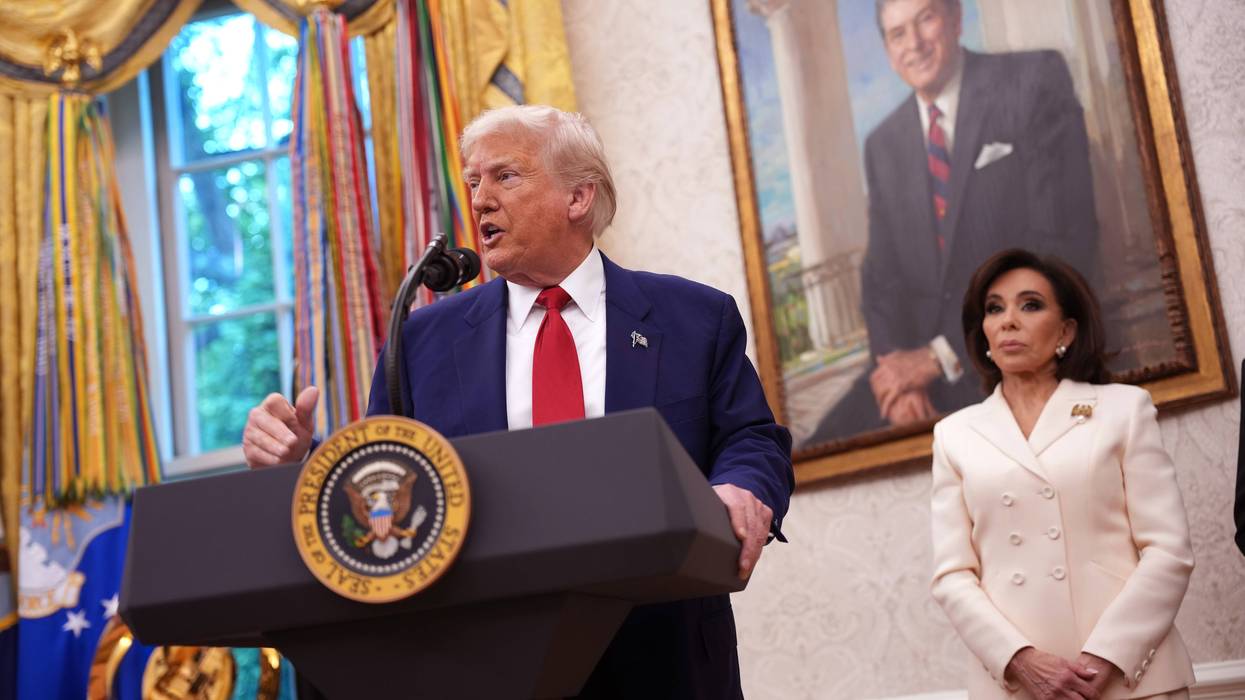
Rep. Jamie Raskin wants to know if the Trump administration withheld "key evidence to blame the disastrous reflecting pool renovation on an innocent man?"
The top Democrat on the House Judiciary Committee on Tuesday launched an investigation into the Trump administration's attempt to prosecute former Olympic canoeist David Hearn for felony vandalism amid reports that the White House is pushing the Justice Department to reopen the dropped case.
Rep. Jamie Raskin (D-Md.) announced the new probe in a letter to Interior Secretary Doug Burgum and Jeanine Pirro, the US attorney for the District of Columbia. Pirro, a longtime friend and ally of President Donald Trump, dropped the vandalism case against Hearn earlier this month, saying in a filing that the damage he was accused of inflicting on the Lincoln Memorial Reflecting Pool "was the result of a botched installation and not vandalism."
"Did DOJ prosecutors knowingly bring a bogus indictment?" Raskin asked in his letter. "Did [the Department of Interior] withhold key evidence to blame the disastrous reflecting pool renovation on an innocent man? Did President Trump pressure or influence either department to engage in wrongful actions against an American citizen?"
"At a minimum, it appears that members of the Trump administration were ready and willing to imprison an innocent American for a decade in a desperate effort to soothe an ex-landlord’s wounded ego about a terrible paint job and wasteful contract,” Raskin added. "We must get to the bottom of these murky waters to rid our justice system of any and all residual contamination."
"The conclusion seems inescapable that at least one, if not both, of you have misled the American public about the evidence and used it to corrupt and weaponize our justice system."
News of Raskin's investigation came shortly before The Wall Street Journal reported that "White House officials have asked the Justice Department to consider a new prosecution" of Hearn "as President Trump fumes over US Attorney Jeanine Pirro’s decision to drop the case."
"A new prosecution of the defendant... would be highly unusual, especially after Pirro told a judge in surprising detail that the government’s decision to indict him on a felony charge was ill-informed," the Journal noted. "Pirro said a botched renovation, not vandalism, was responsible for the reflecting pool’s problems."
Trump publicly accused Pirro of "folding like a cheap umbrella" after she dropped the effort to prosecute Hearn, whose legal team is seeking documents to show whether Justice Department prosecutors "were candid with the grand jury" when pursuing their indictment against the 67-year-old former Olympian.
Pirro, a former Fox News host who boasted in July that she had "tremendous evidence" of Hearn's guilt, has privately blamed Burgum for the debacle.
In his letter on Tuesday, Raskin demanded that Pirro and Burgum turn over "all documents related to the decision to prosecute" Hearn as well as "all communication between DOJ, DOI, and the White House related to the prosecution." Raskin also demanded "all evidence presented to the grand jury in connection with the indictment" of Hearn, a Maryland resident and one of Raskin's constituents.
"The conclusion seems inescapable that at least one, if not both, of you have misled the American public about the evidence and used it to corrupt and weaponize our justice system against an innocent 67-year-old American citizen," Raskin wrote.

"Americans deserve a government that works for them, not one that’s for sale to hedge funds and Wall Street banks."
US Sen. Alex Padilla on Tuesday introduced legislation aimed at blocking President Donald Trump, Vice President JD Vance, and future occupants of their offices from profiting by selling early access to official or personal social media posts that could move financial markets, calling the practice a blatant abuse of public office for private gain.
Padilla's (D-Calif.) Stop Corrupt Trading Act would prohibit any sitting president or vice president—and any business in which they hold a substantial financial interest—from selling advance or exclusive access to presidential social media announcements. It would also establish civil penalties for the sale of nonpublic government information through such services.
“This is out in the open—Donald Trump is the most corrupt president in American history," Padilla said in a statement introducing the legislation. "Despite already being the richest president in history, President Trump’s number one priority in office is to make himself richer while everyday Americans struggle to make ends meet."
“Selling access to his market-moving social media posts is just one example of the brazen corruption we’ve seen coming out of the Oval Office—and I am fighting back to put a stop to it," he added. "Americans deserve a government that works for them, not one that’s for sale to hedge funds and Wall Street banks that can afford the subscription fee.”
Padilla's bill comes days after the Trump Media & Technology Group (TMTG) launched a premium service offering subscribers expedited access to the president's Truth Social posts, a move that ethics watchdogs and government accountability advocates have warned could provide wealthy investors with an unfair advantage if presidential statements affect stock prices, tariffs, or other market-sensitive policies.
US House Judiciary Committee Ranking Member Jamie Raskin (D-Md.) responded to TMTG's move by announcing an investigation into what he called an "insider-information scheme."

"This White House-Wall Street-Trump-Business feedback loop represents the depraved essence of insider trading," said the Maryland Democrat.
"Are you helping the president sell people advance access to market-moving information?"
That's the opening line of a Thursday letter that US House Judiciary Committee Ranking Member Jamie Raskin (D-Md.) sent to Kevin McGurn, interim CEO of President Donald Trump's Trump Media & Technology Group (TMTG) Corp.
TMTG runs Trump's Truth Social platform and earlier this month announced plans to launch "Truth API" by August 1. API, or application programming interface, lets software applications talk to each other. Critics have warned that the new endeavor will give Wall Street firms faster access to posts by the president and other top accounts.
"Trump Media's target market for buyers of this service is 'high-frequency and algorithmic trading firms,' which would each pay a
handsome $100,000 monthly subscription fee," Raskin wrote. "Nearly half of each fee would go directly into the pocket of Donald Trump, who owns roughly 41% of the company's shares through a trust that he continues to control."
"Put another way, Trump Media will soon be selling early access to President Trump's so-called 'Truth' missives to the most sophisticated investment firms in the world," he stressed. "This insider-information scheme will enable Wall Street to profit from the president's frequent market-moving posts on major businesses and cash in on swings in stock prices caused by the president's buying and selling (or pumping and dumping, if you prefer) of publicly traded stocks to unwitting retail investors."
As Investopedia pointed out Thursday: "In recent months Trump has posted about new developments in the Iran War, which is particularly important for buyers and sellers of futures contracts who are trying to ascertain where oil prices are headed. Over the past year, he has also posted about tariff policy, government investments in publicly traded companies, and other corporate news developments."
Additionally, as Raskin highlighted, "Trump has promoted over 20 companies on his Truth Social account shortly after purchasing the companies’ stocks, including government contractors where the Trump administration exerted substantial ability to move markets in those companies' favor. Donald Trump Jr.'s investment firm, 1789 Capital, has posted a staggering 200% investment return since his father's return to the White House, with the president recently admitting that his oldest sons are coventurers in his corruption."
Once the new service is up and running, "whenever President Trump uses Truth Social to announce that a ceasefire is imminent, or prematurely leaks US jobs data, his customers will now be able to front-run the market using their privileged access to his social media posts, leaving retail investors, pension plans, and retirement accounts irreparably disadvantaged," he warned. "This is precisely the type of harm that federal securities laws are designed to prevent."
Concerns about TMTG's plans led Democratic Sens. Elizabeth Warren (Mass.) and Adam Schiff (Calif.) to demand that US Securities and Exchange Commission Chair Paul Atkins launch an investigation. The senators wrote to the Trump-nominated SEC leader on Tuesday that the current administration "is the most corrupt in the nation's history," and the company's "new service threatens to undermine the integrity of capital markets."
In the meantime, Raskin—a constitutional scholar who managed Trump's historic second impeachment—is conducting his own probe of what he called a "reverse Robin Hood scheme," arguing that "this White House-Wall Street-Trump-Business feedback loop represents the depraved essence of insider trading." The congressman is demanding a lengthy list of records from the CEO of Trump's company by August 13.
"The president of the United States should be using the office to 'take care' that laws are enforced and to advance the public interest," he said, nodding to the US Constitution. "Instead, President Trump is, once again, using it to enrich in spectacular fashion himself, his family, and corporate cronies while also destroying the integrity of financial markets in the process."
"Numerous recently released documents now show he acted aggressively on behalf of multiple foreign governments... in order to influence policies of the first Trump administration."
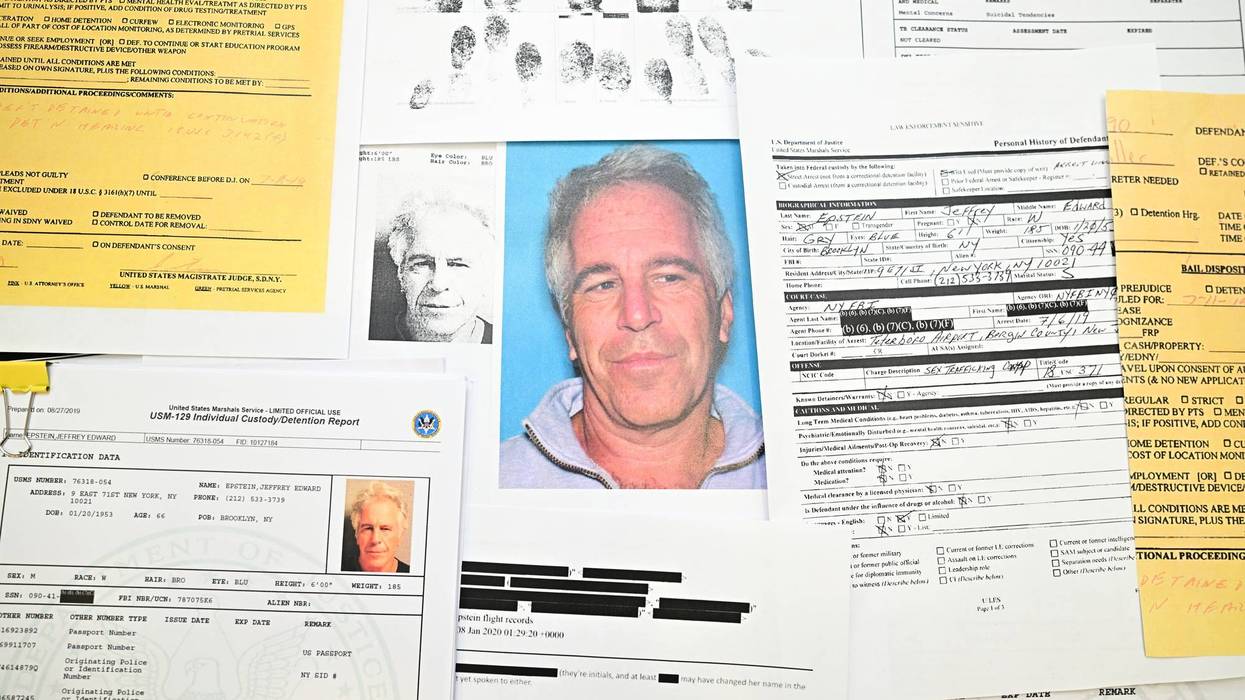
The top Democrat on the House Judiciary Committee, Rep. Jamie Raskin, launched an investigation Monday into whether the disgraced financier Jeffrey Epstein worked on behalf of foreign governments to influence President Donald Trump during his first term.
In a letter addressed to acting Attorney General Todd Blanche; Trump’s nominee to be director of national intelligence, Jay Clayton; and Secretary of State Marco Rubio, Raskin (D-Md.) said that files provided to the Judiciary Committee show “substantial evidence” that Epstein acted to advance the interests of Saudi Arabia and Kuwait, advised the Russian government on its dealings with Trump, and worked as a consultant to former Israeli Prime Minister Ehud Barak.
“Jeffrey Epstein never registered as a foreign agent," Raskin said. "Yet numerous recently released documents now show he acted aggressively on behalf of multiple foreign governments, including several with interests adverse to the United States, in order to influence policies of the first Trump administration."
Epstein, a convicted sex criminal who was found dead in his jail cell in 2019 after being charged with trafficking minors, has long been surrounded by questions about his relationships to foreign governments. But this is the first time an inquiry from the US Congress has expressly focused on them.
Raskin called attention to a trip taken by Epstein to Riyadh in November 2016, the week of Trump's first election, during which he met with Crown Prince Mohammed bin Salman (MBS) before sending one of his representatives an email offering to become the "financial confidant" to members of the Saudi government. "I am happy to represent [Kingdom of Saudi Arabia] interests. period," he said.
Epstein also apparently offered to represent Saudi Arabia's sovereign wealth fund in the US and serve as an adviser to a development project overseen by MBS. The crown prince's response to the proposal has not been provided to the committee, according to Raskin.
Several emails to friends and confidantes indicate that around the same time, Epstein was regularly boasting of his visits to Trump Tower and meetings with "Trump people" during the presidential transition, which he said presented "lots of opportunity."
Other correspondence seems to indicate that Epstein coached the emir of Kuwait on how to deal with Trump. In May 2017, prior to a summit of Gulf states in Riyadh, Epstein wrote to an unnamed political figure that he had “much to do around the Trump trip.”
The figure responded that he wanted “tips on how we should communicate with Trump,” specifically on the Saudi-led war against Yemen; Kuwait had played host to three months of UN-led negotiations related to the conflict the year before.
It is unclear from the records which US officials, if any, Epstein intended to engage on Kuwait's behalf.
Raskin also highlighted what is perhaps Epstein's most well-documented foreign government contact, Ehud Barak, who served as Israel's prime minister from 1999 to 2001 and later its minister of defense.
According to a trove of leaked emails published by Drop Site News last year, Epstein worked to create a backchannel between Barak and the Russian government and helped him to pursue a meeting with President Vladimir Putin in 2013 as he pushed for Russia to abandon its support for then-Syrian President Bashar al-Assad, which was a major national security priority of Israel.
Epstein also provided information about US officials to Barak as he tried to push the Obama administration to take a harder stance toward Iran and Syria.
It is one of many instances in which Epstein and Barak worked to advance Israeli interests across the world, including brokering security and surveillance agreements with the governments of Mongolia and Côte d'Ivoire and helping to build the relationship between Israel and the United Arab Emirates.
Other emails reveal Epstein advising high-ranking Russian officials on how to deal with Trump as they sought to avoid sanctions placed by the US over its interference in the 2016 election and its aggression toward Ukraine.
Raskin said that Epstein seemed to be consciously acting as a foreign agent despite never registering as one under the Foreign Agents Registration Act (FARA). The congressman pointed to exchanges in which Epstein appeared to advise Trump's former chief strategist Steve Bannon on how to avoid FARA reporting requirements.
Raskin argued that Epstein's deep well of knowledge about Trump and his apparent access to members of his circle "posed a major national security liability." Epstein often bragged that he had leverage over the president and said he was "the one able to take [Trump] down."
The congressman argued for transparency in light of the administration’s efforts to delay the release of the files and withhold information despite congressional requirements.
Beyond potentially embarrassing revelations about Trump, he said the repeated use of the White House Situation Room to discuss the Epstein scandal indicated that it posed possible national security concerns that have not been disclosed to the public.
Raskin called on the Department of Justice and State Department to release all files referencing Epstein and other foreign nations and information that may point to his efforts to avoid FARA requirements.