

SUBSCRIBE TO OUR FREE NEWSLETTER
Daily news & progressive opinion—funded by the people, not the corporations—delivered straight to your inbox.
5
#000000
#FFFFFF
To donate by check, phone, or other method, see our More Ways to Give page.
Daily news & progressive opinion—funded by the people, not the corporations—delivered straight to your inbox.
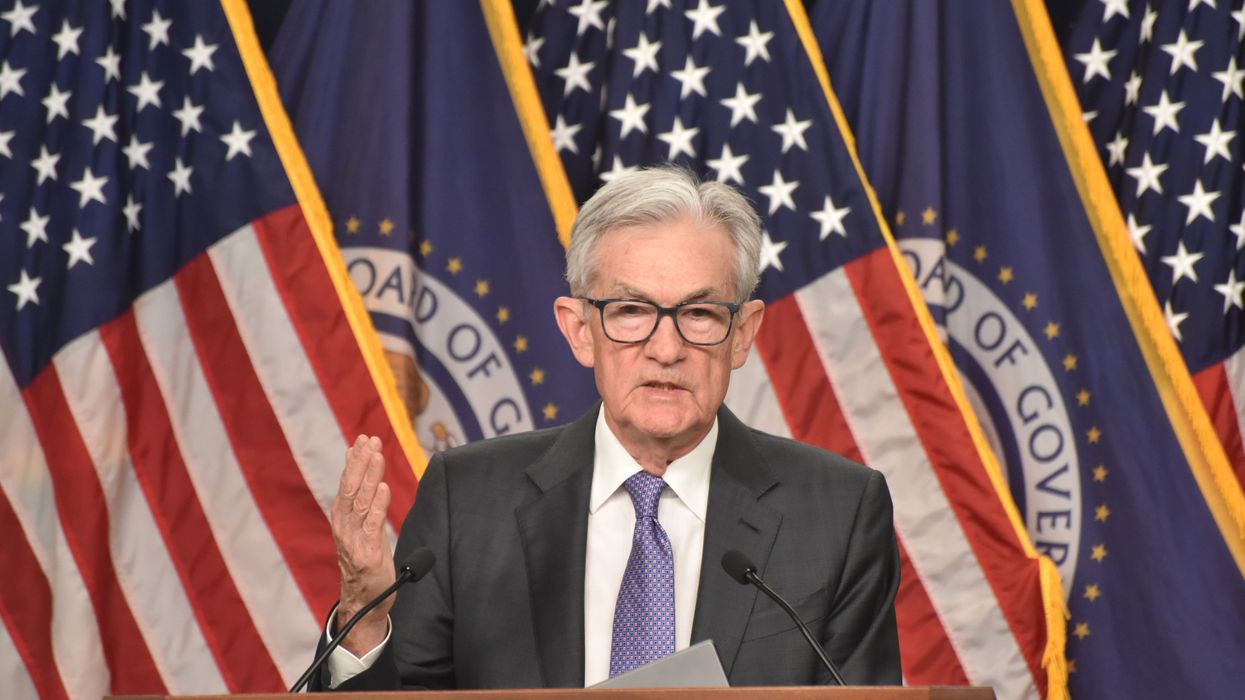
"Working families are heading into the holidays feeling stretched, stressed, and far from jolly."
A leading economist and key congressional Democrat on Wednesday pointed to the Federal Reserve's benchmark interest rate cut as just the latest evidence of the havoc that President Donald Trump is wreaking on the economy.
The US central bank has a dual mandate to promote price stability and maximum employment. The Federal Open Market Committee may raise the benchmark rate to reduce inflation, or cut it to spur economic growth, including hiring. However, the FOMC is currently contending with a cooling job market and soaring costs.
After the FOMC's two-day monthly meeting, the divided committee announced a quarter-point reduction to 3.5-3.75%. It's the third time the panel has cut the federal funds rate in recent months after a pause during the early part of Trump's second term.
"Today's decision shows that the Trump economy is in a sorry state and that the Federal Reserve is concerned about a weakening job market," House Budget Committee Ranking Member Brendan Boyle (D-Pa.) said in a statement. "On top of a flailing job market, the president's tariffs—his national sales tax—continue to fuel inflation."
"To make matters worse, extreme Republican policies, including Trump's Big Ugly Law, are driving healthcare costs sharply higher," he continued, pointing to the budget package that the president signed in July. "I will keep fighting to lower costs and for an economy that works for every American."
Alex Jacquez, a former Obama administration official who is now chief of policy and advocacy at the Groundwork Collaborative, similarly said that "Trump's reckless handling of the economy has backed the Fed into a corner—stuck between rising costs and a weakening job market, it has no choice but to try and offer what little relief they can to consumers via rate cuts."
"But the Fed cannot undo the damage created by Trump's chaos economy," Jacquez added, "and working families are heading into the holidays feeling stretched, stressed, and far from jolly."
Thanks to the historically long federal government shutdown, the FOMC didn't have typical data—the consumer price index or jobs report—to inform Wednesday's decision. Instead, its new statement and projections "relied on 'available indicators,' which Fed officials have said include their own internal surveys, community contacts, and private data," Reuters reported.
"The most recent official data on unemployment and inflation is for September, and showed the unemployment rate rising to 4.4% from 4.3%, while the Fed's preferred measure of inflation also increased slightly to 2.8% from 2.7%," the news agency noted. "The Fed has a 2% inflation target, but the pace of price increases has risen steadily from 2.3% in April, a fact at least partly attributable to the pass-through of rising import taxes to consumers and a driving force behind the central bank's policy divide."
The lack of government data has also shifted journalists' attention to other sources, including the revelation from global payroll processing firm ADP that the US lost 32,000 jobs in November, as well as Gallup's finding last week that Americans' confidence in the economy has fallen by seven points over the past month and is now at its lowest level in over a year.
The Associated Press highlighted that the rate cut is "good news" for US job-seekers:
"Overall, we've seen a slowing demand for workers with employers not hiring the way they did a couple of years ago," said Cory Stahle, senior economist at the Indeed Hiring Lab. "By lowering the interest rate, you make it a little more financially reasonable for employers to hire additional people. Especially in some areas—like startups, where companies lean pretty heavily on borrowed money—that's the hope here."
Stahle acknowledged that it could take time for the rate cuts to filter down to employers and then to workers, but he said the signal of the reduction is also important.
"Beyond the size of the cut, it tells employers and job-seekers something about the Federal Reserve's priorities and focus. That they're concerned about the labor market and willing to step in and support the labor market. It's an assurance of the reserve's priorities."
The Federal Reserve is now projecting only one rate cut next year. During a Wednesday press conference, Fed Chair Jerome Powell pointed to the three cuts since September and said that "we are well positioned to wait to see how the economy evolves."
However, Powell is on his way out, with his term ending in May, and Trump signaled in a Tuesday interview with Politico that agreeing with immediate interest rate cuts is a litmus test for his next nominee to fill the role.
Trump—who embarked on a nationwide "affordability tour" this week after claiming last week that "the word 'affordability' is a Democrat scam"—also graded the US economy on his watch, giving it an A+++++.
US Sen. Bernie Sanders (I-Vt.) responded: "Really? 60% of Americans live paycheck to paycheck. 800,000 are homeless. Food prices are at record highs. Wages lag behind inflation. God help us when we have a B+++++ economy."
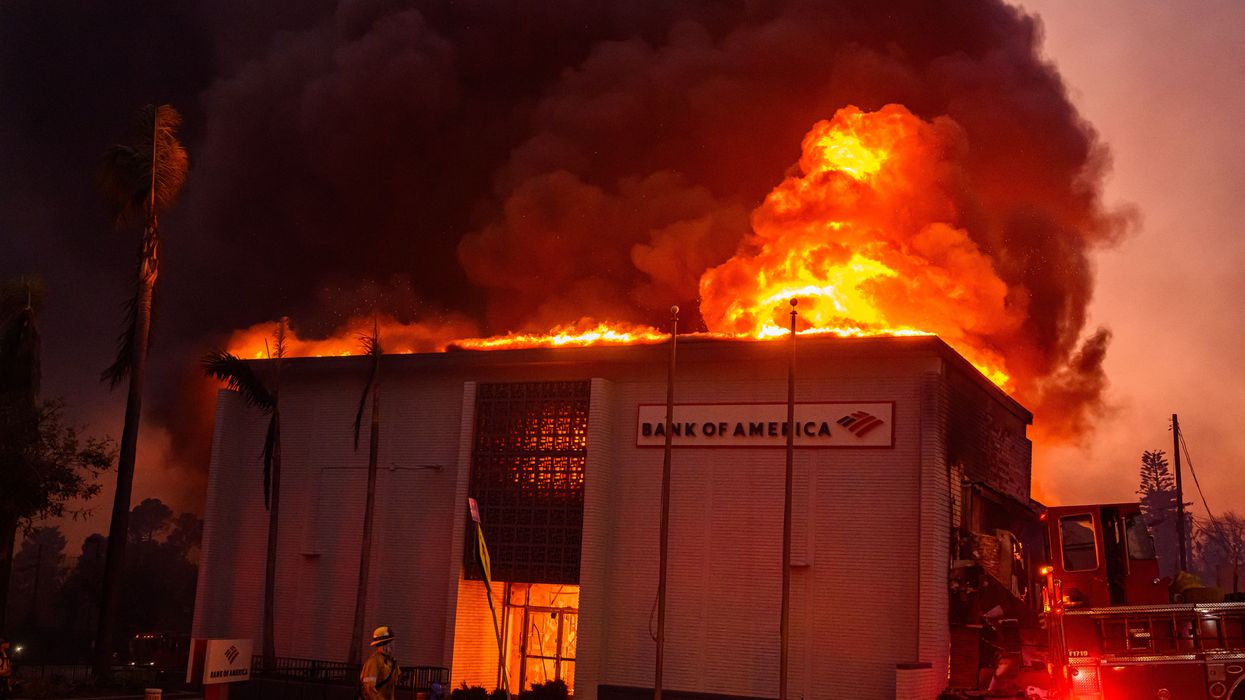
Federal Reserve Chair Jerome Powell recently warned that due to climate disasters, "there will be regions of the country where you can’t get a mortgage, there won’t be ATMs, banks won’t have branches."
Federal regulators have rescinded a set of guidelines for large banking institutions to consider the financial dangers of the climate crisis when making decisions about business strategy, risk management, and strategic planning.
On Thursday, the Federal Deposit Insurance Corporation (FDIC), Office of the Comptroller of the Currency (OCC), and the Federal Reserve Board announced that they would immediately withdraw their interagency Principles for Climate-Related Financial Risk Management for Large Financial Institutions, a framework that required financial institutions with $100 billion or more in assets to consider climate risks.
The guidelines were first issued in 2023, which was, at the time, the hottest year on record. That year, the US experienced a record number of weather and climate-related disasters—including a massive drought across the south and Midwest, historic wildfires in Hawaii, and major flooding events across the country—that caused at least $92 billion worth of damage.
In October of that year, Federal Reserve chair Jerome Powell said: "Banks need to understand, and appropriately manage, their material risks, including the financial risks of climate change."
The OCC, meanwhile, explained that "financial institutions are likely to be affected by both the physical risks and transition risks associated with climate change." This included both the risks to the safety of people and property "from acute, climate-related events, such as hurricanes, wildfires, floods, and heatwaves, and chronic shifts in climate," as well as changes due to "shifts in policy... that would be part of a transition to a lower carbon economy."
But these concerns have not carried over to the administration of President Donald Trump, who recently referred to climate change as a "con" and has sought to purge the federal government of any acknowledgement of the scientific consensus that it is being caused by human fossil fuel usage, which he has moved to aggressively expand.
In a joint release Thursday, the agencies said they "do not believe principles for managing climate-related financial risk are necessary because the agencies' existing safety and soundness standards require all supervised institutions to have effective risk management commensurate with their size, complexity, and activities," adding that "all supervised institutions are expected to consider and appropriately address all material financial risks and should be resilient to a range of risks, including emerging risks."
Elyse Schupak, policy advocate with Public Citizen's climate program, criticized the withdrawal of the guidelines, calling it "an irresponsible and politically motivated move in the wrong direction."
"The increase in the frequency and severity of climate disasters and the rapidly escalating property insurance crisis mean the agencies should be working harder to understand and mitigate climate-related financial risks faced by banks and the financial system—not backtracking," she said. "Effective bank regulation requires looking squarely at all risks to supervised institutions, including climate risks, and addressing them before they have destabilizing effects. This approach, rather than politics, should guide regulator action."
The move comes as the globe is reaching the point of no return for the climate crisis. Global temperatures have already soared to between 1.3°C and 1.4°C above preindustrial levels and are expected to pass the 1.5°C threshold within the next five years, at which point many of the worst effects will become unavoidable. These effects include more frequent heatwaves, sea level increases, more frequent severe storms, and aggressive droughts.
In addition to the human toll, these entail considerable financial damage. In December 2024, the Congressional Budget Office (CBO) estimated that if the Earth continues to warm at current rates, the nation's gross domestic product (GDP) will be 4% lower than if temperatures had remained stable.
It predicted that sea level rise—projected 1 to 4 feet by the turn of the century—would cause anywhere from $250 billion to $930 billion worth of losses to property owners, mortgage lenders, insurance companies, and the federal government. Other untold costs, it said, would be borne as a result of heightened mortality from heat, declines in available food and water, increased rates of illness, and forced migration due to unlivable conditions.
Testifying before Congress earlier this year, Powell noted that banks and insurance companies have been pulling out of coastal areas at risk of flooding and places prone to wildfires due to the financial risk.
State Farm had recently canceled thousands of policies in the Pacific Palisades neighborhood of Los Angeles shortly before it was hit with massive wildfires in January. He warned that as climate change worsens, financial institutions will deem it too risky to serve large portions of the country.
"If you fast forward 10 or 15 years," Powell said, "there will be regions of the country where you can't get a mortgage, there won't be ATMs, banks won't have branches, and things like that."
Schupak said: "For the Federal Reserve, capitulation to the politics of climate denial championed by the Trump administration is a threat to both its legitimacy and efficacy, which will be hard to repair."
"Powell has admitted that the Federal Reserve has done the 'bare minimum' on climate," she continued. "Now it will do even less, putting the banks it supervises and the broader financial system at risk."
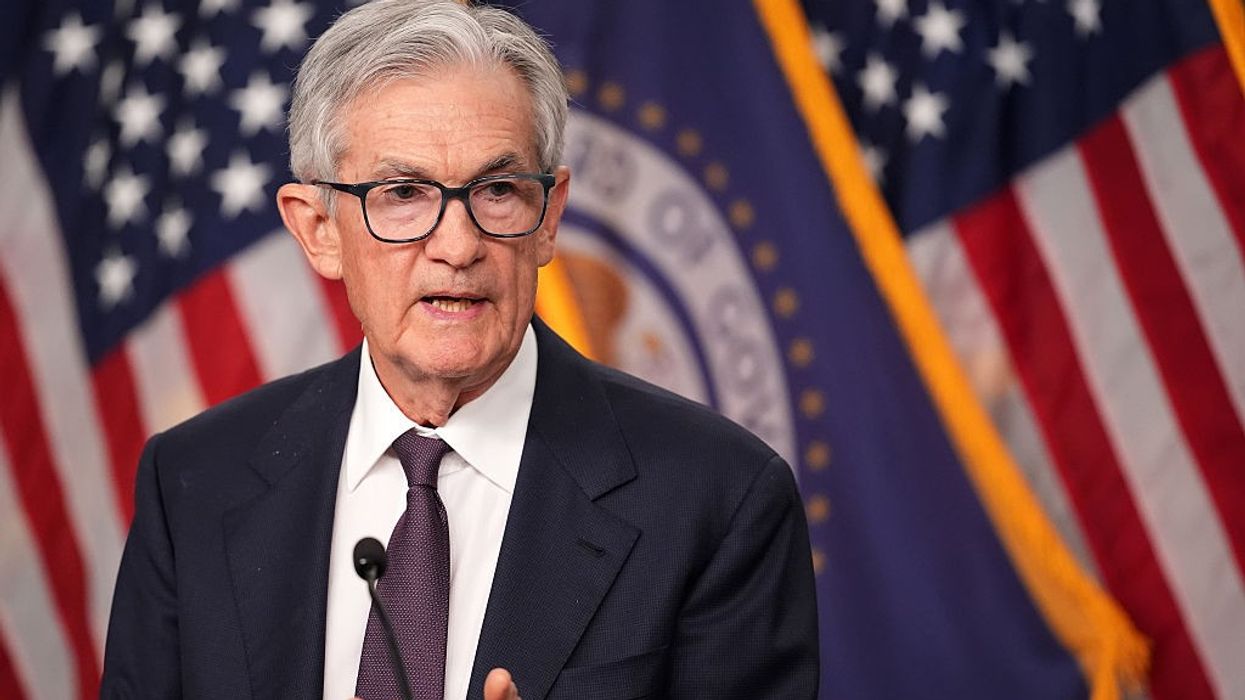
"Trump promised to lower prices on day one and be 'the champion of the American worker,' yet his economic agenda has delivered higher prices, a stalled job market, and sluggish growth," said another economist.
As working-class Americans contend with a stalled labor market and rising prices under US President Donald Trump, economist Alex Jacquez warned Wednesday that the Federal Reserve's "small rate cut will do little to address Trump's economic turmoil."
"Driven by a stagnant job market, the Fed's move offers no real relief to American households, consumers, or workers—all of whom are paying the price for Trump's economic mismanagement," said Jacquez, who previously served as a special assistant to former President Barack Obama and is now chief of policy and advocacy at the think tank Groundwork Collaborative. "No interest rate tweak can undo that damage."
Jacquez's colleague Liz Pancotti, managing director of policy and advocacy at Groundwork, similarly said Wednesday that "President Trump promised to lower prices on day one and be 'the champion of the American worker,' yet his economic agenda has delivered higher prices, a stalled job market, and sluggish growth. He's leaving families and workers high and dry—and no move by the Fed will save them."
The president has been pressuring the US central bank to slash its benchmark interest rate, taking aim at Fed Chair Jerome Powell, whom Trump appointed during his first term. Powell remained in the post under former Democratic President Joe Biden.
The Federal Open Market Committee (FOMC) voted to lower the federal funds rate by 0.25 percentage points, from 4.25-4.5% to 4-4.25%. It is the first cut since December 2024, and Powell said the decision reflects a "shift in the balance of risks" to the Fed's dual mandate of price stability and maximum employment.
Daniel Hornung, who held economic policy roles during the Obama and Biden administrations and is now a policy fellow at the Stanford Institute for Economic Policy Research, said in a statement that "beyond the Fed's September cut, the main story from the Fed's projections is a cloudy outlook for the economy and monetary policy over the rest of the year."
The cut came after Trump ally Stephen Miran was sworn in to a seat on the Fed's Board of Governors on Tuesday—which made this FOMC gathering "the most politically charged meeting in recent memory," as Politico reported.
The new appointee "was the only Fed official to dissent from the decision," the outlet noted. "Miran called for twice as large a cut in borrowing costs, and the Fed's economic projections suggest that one official—likely Miran—would support jumbo-sized rate cuts at the next two meetings as well—an estimate that is conspicuously lower than the other 18 estimates."
Hornung highlighted that "an equal number of members favor hiking, no further cuts, or one cut to the number of members who favor two more cuts, and one outlier member—presumably, President Trump's current Council of Economic Advisers chair—favors the equivalent of five cuts."
"Besides Miran’s outlier status, which sends concerning signals about continued Fed independence," he added, "the wide range of views on the committee is a reaction to the real risks that tariff and immigration policy pose to both sides of the Fed's mandate."
Federal immigration agents across the United States are working to deliver on Trump's promised mass deportations, despite warnings of the human and economic impacts of rounding up immigrants living and working in the country. The president is also engaged in a global trade war, imposing tariffs that have driven up prices for a range of goods.
The Bureau of Labor Statistics (BLS) announced last week that overall inflation rose by 2.9% year-over-year in August and core inflation rose by 3.1%. Jacquez said at the time: "Make no mistake, inflation is accelerating and American families continue to feel price pressures across the board from children's clothing, to groceries, to autos. Rate cuts will not ease the inescapable financial pain that the Trump economy is inflicting on households across the nation."
That came less than a week after BLS revealed in its first jobs report since Trump fired the agency's commissioner that the US economy added only 22,000 jobs in August, and the number of jobs created in July and June were once again revised downward.
Jacquez had called that report "more evidence that Trump’s promises to working families have fallen flat."
Recent polling has also exposed how working people are suffering under Trump's second administration. One survey—conducted by Data for Progress for Groundwork and Protect Borrowers—shows that "American families are trapped in a cycle of debt," with 55% of likely voters reporting at least some credit card debt, and another 18% saying they “had this type of debt in the past, but not anymore.”
The poll, released last week, also found that over half have or previously had car loan or medical debt, more than 40% have or had student debt, and over 35% are or used to be behind on utility payments. Additionally, nearly 30% have or had “buy now, pay later” debt through options such as Afterpay or Klarna.