SUBSCRIBE TO OUR FREE NEWSLETTER
Daily news & progressive opinion—funded by the people, not the corporations—delivered straight to your inbox.
5
#000000
#FFFFFF
To donate by check, phone, or other method, see our More Ways to Give page.


Daily news & progressive opinion—funded by the people, not the corporations—delivered straight to your inbox.
By providing immense quantities of ordnance to Israel, Biden ensures the war’s perpetuation and facilitates the continued slaughter of noncombatants.
Joe Biden is neither an original thinker nor a profound one. Granted, few if any figures laboring in the trenches of contemporary American politics can claim to be either. On that score, it would be unreasonable for us to hold Biden’s lack of depth and originality against him. He is, after all, just an Average Joe.
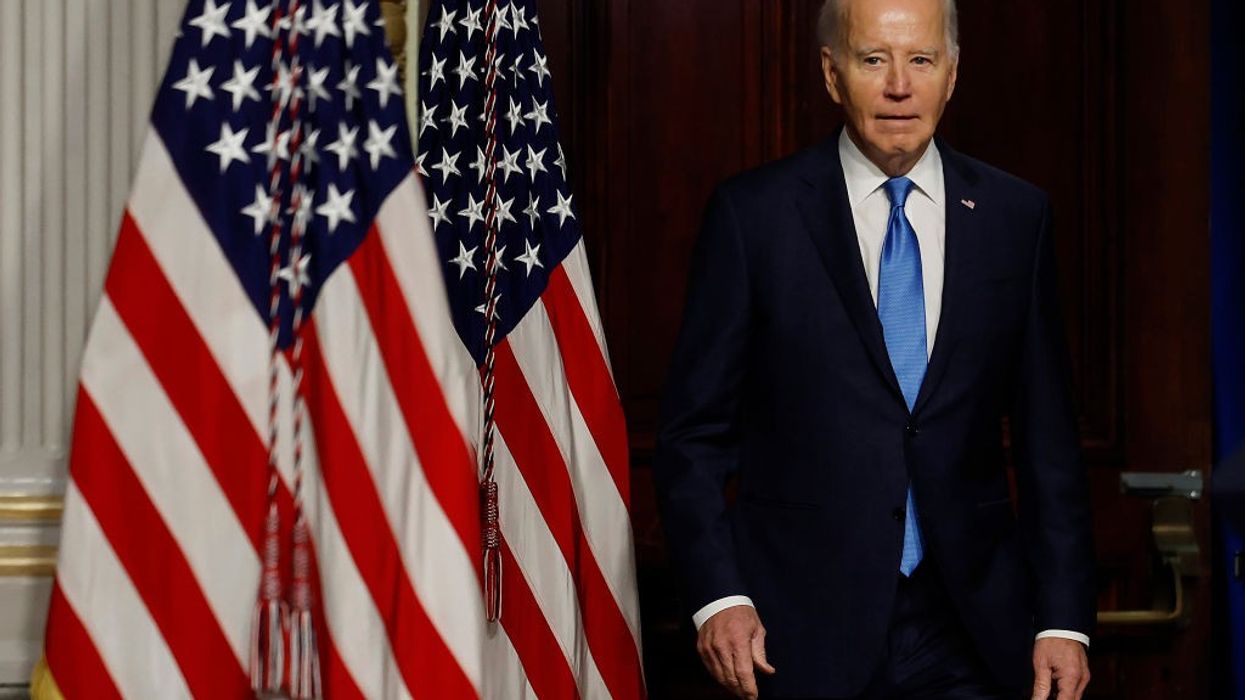
Somewhat more problematic is Biden’s penchant for appropriating the words of others without attribution. The habit has not enhanced his reputation. Yet to be fair, when the President recently described the United States as the “indispensable nation,” he did credit the origin of that phrase to his “friend” Madeleine Albright.
Such honesty is commendable. Even so, wary Americans might find Biden’s resurrection of Albright’s several decades-old phrase to be more than a little troubling.
The provenance of the expression is worth noting. Speaking on national television in 1998, then Secretary of State Albright had used the occasion to articulate an Albright Doctrine of sorts. “If we have to use force,” she declared with sublime confidence, “it is because we are America; we are the indispensable nation. We stand tall and we see further than other countries into the future.”
In Albright’s defense, she issued this grandiose pronouncement at a moment when American elites were enjoying a prolonged post-Cold War victory lap. In political circles, chest-thumping triumphalism had become the lingua franca. Had not the fall of the Berlin Wall in 1989 ostensibly brought history itself to its intended conclusion? A mere decade later, had not Operation Desert Storm definitively affirmed history’s verdict? By the 1990s, America was on a roll, destined, it seemed, to remain the world’s number one in perpetuity.
Soon enough, however, all of this came to seem like so much hot air. First came the terrorist attacks of 9/11, with the follies of the Global War on Terrorism following in short order. The epic failure of the Afghanistan War in tandem with costly and bungled efforts to “liberate” Iraq left America’s reputation for peering into the future in tatters. Sundry other missteps demolished claims that the United States possessed some special knack for anticipating what comes next. Then came the election of Donald Trump, unforeseen by those ostensibly in the know.
If remembered at all, the Albright Doctrine survived as a sort of punchline — the equivalent of “Mission Accomplished” or “We got him!”
Today the future to which Albright had confidently alluded in 1998 has become our own immediate past. Events since have brought us to where we are today. They provide a backdrop and frame of reference for the exercise of American power. That Biden has chosen our present moment to resuscitate the Albright Doctrine is, to put it mildly, disconcerting. It suggests someone badly out of touch with reality.
Albright had credited the United States with the ability to “see” and by implication to shape the future course of world history. Today, with the nation’s ability to sustain its own democracy beyond the upcoming presidential election up for debate, we may question the Biden administration’s ability to see beyond next Thursday.
Yet let us take Biden at his word, as a true believer in American indispensability, advised by a cadre of like minded civilian and military officials. Even today, their collective confidence in American global primacy is undiminished, as if events since 1998 either didn’t happen or don’t matter.
Today challenges to the nation’s erstwhile indispensability premier abound: the rise of China, a stalemated conflict in Ukraine, porous borders at home, the pressing existential threat posed by climate change. Yet none poses a more urgent test than the ongoing war in Gaza. Here, more than anywhere else, events summon the United States to affirm its claim to primacy. Right now, without delay.
Doing so would mean employing U.S. power and influence to bring this wretched war to an immediate end.
As measured by actions rather than rhetorical gestures, however, the Biden administration has done just the opposite. By providing immense quantities of ordnance to one side, it ensures the war’s perpetuation and facilitates the continued slaughter of noncombatants. By vetoing UN Security Council efforts to force a ceasefire, it stands virtually alone in defiance of world opinion. While American diplomats travel hither and yon, their efforts cannot be rated as other than ineffectual.
On a recent trip to the Middle East, national security adviser Jake Sullivan remarked, “We’re not here to tell anybody, ‘You must do X, you must do Y’.” How this accords with any meaningful conception of indispensability is not clear.
My guess is that Madeleine Albright would be embarrassed. Joe Biden should be as well.
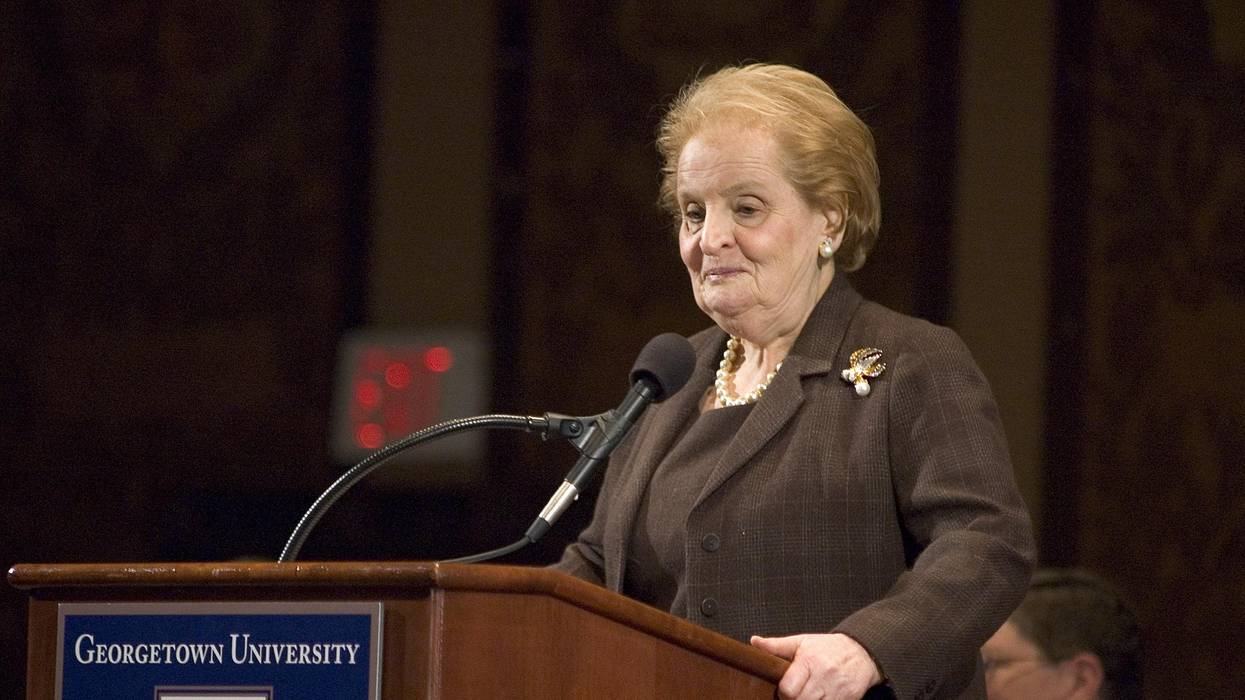
Often, after the demise of political figures, their troubling histories are whitewashed in the name of respecting their memories and the feelings of their families. The passing of former United States Secretary of State Madeleine Albright on Wednesday has been no exception.
Western media responded to the news of her death with a plethora of obituaries eulogizing her achievements. Countless statements have been released, by governments, institutions and public figures, celebrating the "trailblazing" politician for being the first woman to hold the office of Secretary of State and for receiving the Presidential Medal of Freedom. Former President Bill Clinton, under whom Albright served as America's top diplomat, referred to her as "a passionate force for freedom, democracy, and human rights". President Joe Biden, meanwhile, proclaimed she "was always a force for goodness, grace, and decency - and for freedom".
Before you write or repost articles about Albright and how wonderful it is to see women pushing boundaries and breaking glass ceilings in politics, take a minute to learn what she chose to do with the power she had--how she supported the devastation and suffering of my people.
For me as an Iraqi, however, the memory of Albright will forever be tainted by the stringent sanctions she helped place on my country at a time when it was already devastated by years of war. Millions of innocent Iraqis suffered terribly and hundreds of thousands died because of the sanctions which, in the end, achieved almost none of Washington's policy objectives. As we remember Albright's life and achievements, we must also remember those innocent Iraqi lives lost because of her policy decisions.
The most prominent memory of Albright that I have in my mind is from an interview she gave to CBS 60 Minutes in 1996.
In that now-iconic interview, veteran journalist Lesley Stahl questioned Albright--then the US ambassador to the United Nations--on the catastrophic effect the rigorous US sanctions imposed after Iraq's invasion of Kuwait had on the Iraqi population.
"We have heard that half a million [Iraqi] children have died. I mean, that is more children than died in Hiroshima," asked Stahl, "And, you know, is the price worth it?"
"I think that is a very hard choice," Albright answered, "but the price, we think, the price is worth it."
With this response, Albright showed that she sees innocent Iraqi children as nothing more than disposable fodder in a conflict between the US administration and the Iraqi leadership.
She demonstrated, with no room left for any doubt, that she had no humanity--that she cannot and shall never be described as "a force for goodness, grace, and decency".
I remember sanctions era Iraq very well. It was almost impossible to maintain contact with family members and friends in the country, as telephone services remained very limited. When I visited Iraq, to my shock I saw even the most basic products - like milk - could not be found in local markets. The people were hungry and hopeless.
Indeed, the US imposed sanctions on Iraq to punish Saddam Hussein's regime, but it was innocent civilians, not the regime officials who suffered. The sanctions pushed the already struggling masses into deeper poverty, but only marginally affected the rich, widening the wealth gap in the country. As poor Iraqis struggled to put food on their tables, President Hussein and his inner circle maintained their lavish lifestyles. Despite crippling sanctions, the president managed to build 80 to 100 luxury palaces during his tenure.
By 2003, it is estimated that nearly 1.5 million Iraqis, primarily children, had died as a direct consequence of sanctions.
And this devastating toll was hardly surprising, or unexpected.
The sanctions, implemented in August 1990 by the UN Security Council Resolution 661, included a total financial and trade embargo. Not only was Iraq barred from exporting oil (its main income source) on the world market for several years, but it was also prevented from importing products from abroad.
This ban included healthcare equipment and medications, which translated into immeasurable suffering for common Iraqis, but placed no immediate pressure on Hussein's regime.
"Requested radiotherapy equipment, chemotherapy drugs and analgesics are consistently blocked by United States and British advisers [to the Sanctions Committee at the UN]," explained Professor Karol Sikora, then chief of the cancer programme of the World Health Organization, in a 1999 article published in the British Medical Journal. "There seems to be a rather ludicrous notion that such agents could be converted into chemical or other weapons."
According to UNICEF, the UN Children's Fund, the death rate of children below five crossed 4,000 a month due to the lack of food and basic medications caused by the sanctions - that is up to 200 babies and toddlers dying avoidable deaths a day.
Several UN officials resigned over the years in protest at this disastrous, ineffective and murderous sanctions policy, but Albright, the "passionate force for freedom, democracy and human rights", thought it was all "worth it".
To make matters worse, 13 years after the sanctions were first implemented to pressure the Iraqi regime, the US opted to invade the oil-rich country anyway under the pretense that Hussein managed to amass weapons of mass destruction despite the embargo. The years of suffering were for nothing - the sanctions had achieved nothing other than devastating millions of Iraqis who had no say over the actions of those ruling over them.
So, before you write or repost articles about Albright and how wonderful it is to see women pushing boundaries and breaking glass ceilings in politics, take a minute to learn what she chose to do with the power she had--how she supported the devastation and suffering of my people.
Today, with sanctions imposed on Venezuela still causing thousands of deaths among the country's poorest, and demands for more stringent sanctions on Russia getting louder, we cannot afford to whitewash Albright's mistakes.
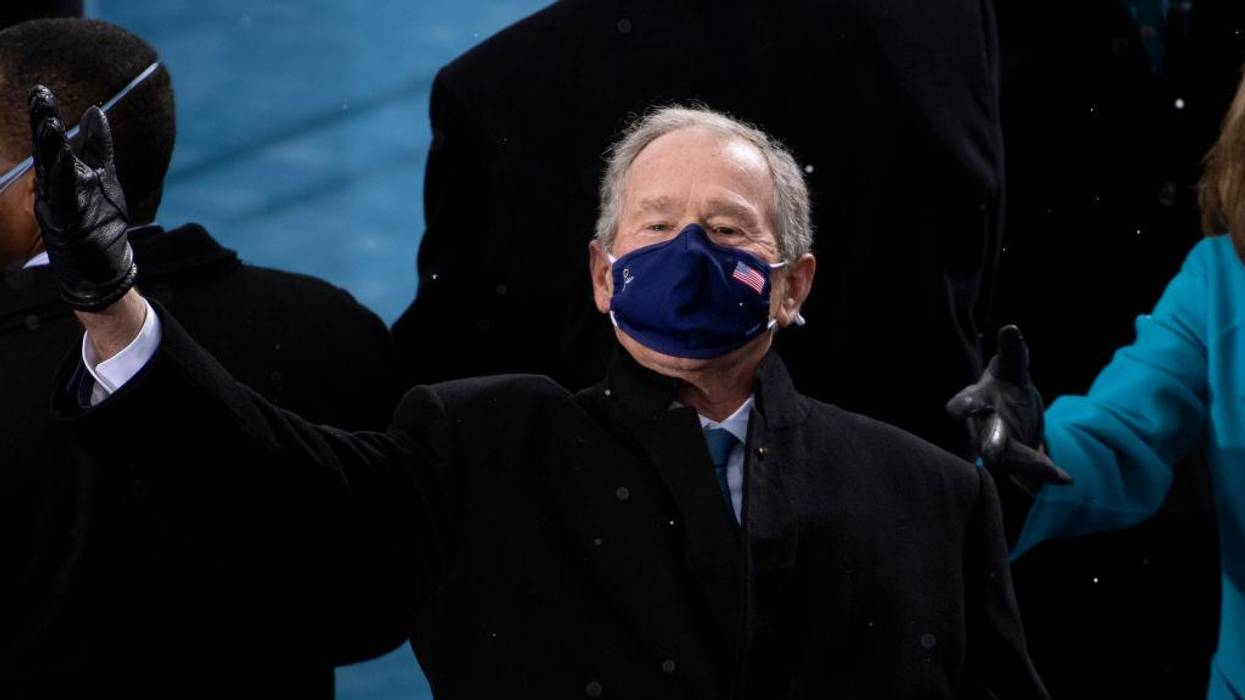
George W. Bush is back. He is back, this time not to bomb countries and cause the death of thousands. This time the man is back as an artist who advocates for the rights of immigrants, and the U.S. media is on heat.
That death in Iraq is eliminated from the conversation makes it clear that to 'them Americans', 'us Iraqis' are non-existent.
Bush, the former US president, recently penned an Op-Ed for The Washington Post, and received a round of applause on 'Jimmy Kimmel Live!' when the eponymous host complimented him on his painting of American politician Madeleine Albright. He appears on TV to speak about his new book of oil paintings of America's immigrants, 'Out of Many, One', he is not wearing handcuffs, and all rehabilitated. It is all normal.
What is also normal is how the starvation and deprivation of medication that caused the early death of hundreds of thousands of Iraqi children because of the severe UN sanctions on the country in the 1990s, have fallen into oblivion. To Albright, speaking in a 1996 TV interview, the political price was "worth it", though she would later express regret for her wording.
Bush's grinning face seems to be traveling at a smooth pace from one TV show to the next. Kimmel admired his guest's reflexes when he dodged Muntadhar al-Zaidi's shoe throw, and the two had a laugh about it. Of course, it slipped Kimmel's mind to ask his guest about his time ordering cluster bombs be dropped on my family's house in Baghdad to "liberate it". It also slipped the host's mind to ask why in the first place a man would want to throw a shoe at the former president.
For their part, the cheering crowd gave the impression that the next rich guy to oversee the annihilation of inferior beings overseas could as well re-emerge from the gutter and be celebrated as a cool, funny grandpa.
Bush's blood-stained past tells us the man is dangerous. If Richard Nixon--in the words of the late Hunter S. Thompson--"could shake your hand and stab you in the back at the same time", you might lose a finger or two if you extend your hand to shake Bush's.
And with the way things are going, there's a big chance he will get away with it--again.
It is well known that columnists in the US were at war with Iraq even before depleted uranium was generously distributed among its citizens in 2003, but the slick anchors and boring television hosts of today seem to be suffering from amnesia.
George W. Bush is responsible for the destruction of an incalculable number of innocent Iraqi lives. Have the decency to remember his victims.
In an interview after a tour of Bush's Texas ranch, CBS's Norah O'Donnell told the former president that she thought the paintings in his new book were "beautiful". And when she asked him about the 6 January storming of the Capitol, Bush said that it made him sick: "This sends a signal to the world, you know, like, we're no different, and this book says we are different, much different".
In the words of the great Iraqi poet Saadi Youssef:
"But I am not an American
Is it enough that I am not American for the Phantom pilot to send me back to stone age?"*
The entire charade reeks with hypocrisy. Even when preaching on immigration reforms, Bush failed to hide his 'us versus them' complex.
But the American exceptionalism is not what bothers me the most.
That death in Iraq is eliminated from the conversation makes it clear that to 'them Americans', 'us Iraqis' are non-existent. We are not worthy of receiving justice or of anybody at least bothering to ask Bush about that long-forgotten 'blunder', as Iraqi scholar Sinan Antoon reminds us.
Meanwhile, war is ongoing in Iraq. Its signs are unmistakable; walls and road signs riddled with bullet holes, concrete barriers blocking main streets, dead youth staring from faded billboards and military choppers occupying the skies above.
In Baghdad, militiamen nurtured under the lawlessness birthed by the US invasion still fire rockets on the airport and the 'Green Zone'. They still roam the streets, armed to the teeth, terrorizing the city's traumatized residents who are left unprotected by empty promises from the Iraqi state.
While Iraq no longer receives aerial bombing from the West, death has become a permanent resident of Baghdad. The lethal failure of its subsequent 'post-liberation' rulers continues what George W. Bush started 18 years ago: non-stop civilian killings in Iraq.
The negligence behind the recent al-Amiriyah-like incineration of dozens of patients inside Ibn al-Khatib's hospital is an example of the consequences of war faced by the people of Iraq since 2003.
George W. Bush is responsible for the destruction of an incalculable number of innocent Iraqi lives. Have the decency to remember his victims.
*From Saadi Youssef's poem, America America. Translated by the author of the piece.
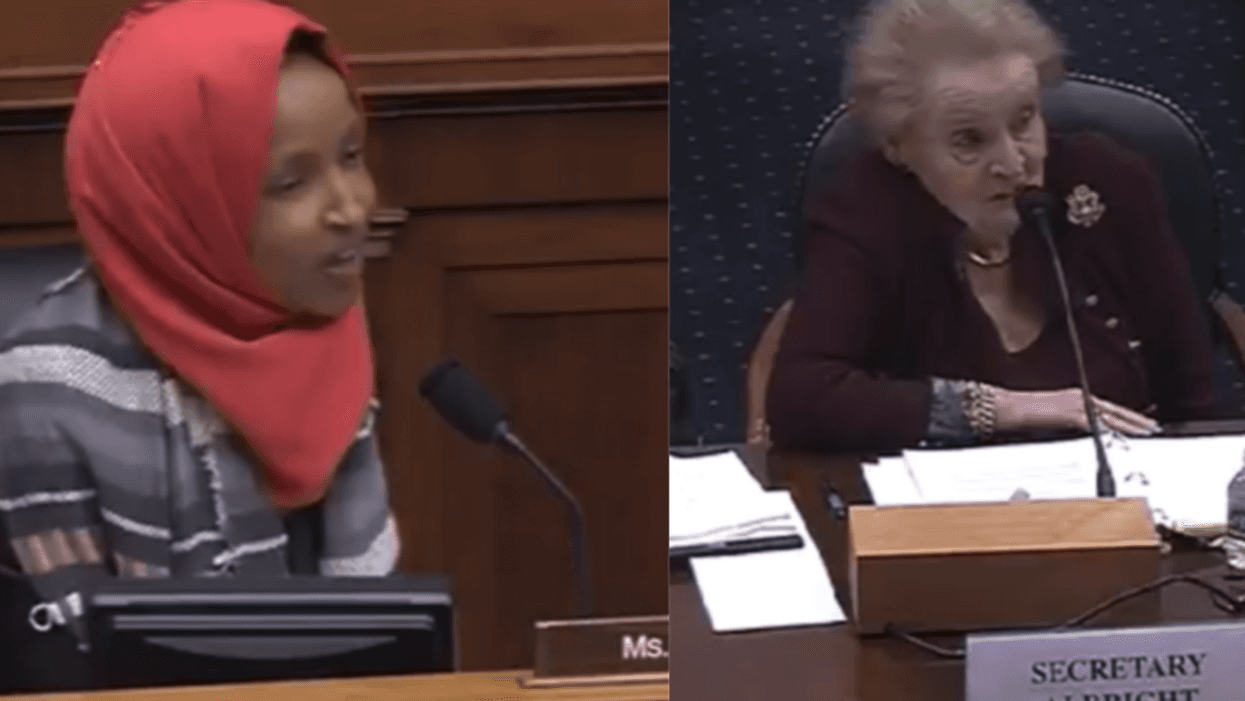
While much of the country was watching the testimony of Michael Cohen on Wednesday, Rep. Ilhan Omar (D-Minn.) was questioning former Secretary of State Madeline Albright in a separate, largely vacant hearing room about sanctions and the pitfalls of past U.S. military interventions.
"Some scholars and practitioners of foreign policy have questioned whether sanctions are effective in changing the behavior of certain governments," Omar said, pointing out that economic sanctions can have dire effects on the innocent populations of targeted countries.
Albright, who once infamously told 60 Minutes reporter Lesley Stahl that the deaths of half-a-million Iraqi children due to sanctions were "worth it" to get rid of then-Iraqi President Saddam Hussein, said sanctions still have a role to play in American foreign policy.
Sanctions should be understood as a foreign policy tactic between diplomacy and force, explained Albright.
"We have learned a lot about sanctions," said Albright. "We learned that comprehensive sanctions, which we did in Iraq, hurt the people, and we began to look at targeted or smart sanctions."
Omar and Albright's exchange came during a hearing (pdf) in the House Foreign Affairs Committee Wednesday entitled "The Trump Administration's Foreign Policy: A Mid-Term Assessment." Albright was on hand to discuss the administration's priorities and didn't hold back in her assessment of the first two years of the Trump doctrine.
"The administration's record is marked by confusion, inconsistency, a lack of diplomacy, and, in some cases, a complete abdication of responsibility," Albright said in her testimony, adding that the State Department's funding and staffing woes were adding to a loss of U.S. standing in the world.
Newly-elected to the House, Omar joined The Intercept's Medhi Hassan this week to discuss her first two months in office. Listen to the podcast here.
Watch the full exchange between Omar and Albright below:
Marx was certainly right in arguing that the point is not to understand the world but to change it, but what he underemphasized was that the world cannot be transformed if one does not understand what is to be changed. As Terry Eagleton rightly notes "Nobody can change a world they didn't understand."[1] Moreover, the lack of mass resistance to oppression signals more than apathy or indifference, it also suggests that we don't have an informed and energizing vision of the world for which we want to struggle.[2] Political struggle is dependent on the political will to change, which is central to any notion of informed agency willing to address the radical and pragmatic issues of our time. In addition to understanding the world, an informed public must connect what they know and learn to the central task of bringing their ideas to bear on society as a whole. This means that a critical consciousness must be matched by a fervent willingness to take risks, and challenge the destructive narratives that are seeping into the public realm and becoming normalized.
Any dissatisfaction with injustice necessitates combining the demands of moral witnessing with the pedagogical power of persuasion and the call to address the tasks of emancipation. We need individuals and social movements willing to disturb the normalization of a fascist politics, oppose racist, sexist, and neoliberal orthodoxy.
As Robin D. G. Kelley observes we cannot confuse catharsis and momentary outrage for revolution.[3] In a time of increasing tyranny, resistance in many quarters appears to have lost its usefulness as a call to action. At the same time, the pedagogical force of civic ignorance and illiteracy has morphed into a national ideal. Tyranny and ignorance feed each other in a theater of corporate controlled media ecosystems and function more as a tool of domination than as a pedagogical outlet in pursuit of justice and the practice of freedom. Under such circumstances, when education is not viewed as central to politics itself, resistance withers in the faux language of privatized struggles and fashionable slogans. [4]
For instance the novelist Teju Cole has argued that "'resistance' is back in vogue, and it describes something rather different now. The holy word has become unexceptional. Faced with a vulgar, manic and cruel regime, birds of many different feathers are eager to proclaim themselves members of the Resistance. It is the most popular game in town."[5] Cole's critique appears to be born out by the fact that the most unscrupulous of liberal and conservative politicians such as Madeline Albright, Hilary Clinton, and even James Clapper, the former director of national intelligence, are now claiming that they have joined the resistance against Trump's fascist politics. Even Michael Hayden, the former NSA chief and CIA director under George W. Bush, has joined the ranks of Albright and Clinton in condemning Trump as a proto-fascist. Writing in the New York Times, Hayden, ironically, chastised Trump as a serial liar and in doing so quoted the renowned historian Timothy Snyder, who stated in reference to the Trump regime that "Post-Truth is pre-fascism."[6]The irony here is hard to miss. Not only did Hayden head Bush's illegal National Security Agency warrantless wiretapping program while the head of the NSA, he also lied repeatedly about his role in Bush's sanction and implementation of state torture in Afghanistan and Iraq.
The Democratic Party now defines itself as the most powerful political force opposing Trump's fascist politics. What it has forgotten is the role it has played under the Clinton and Obama presidencies in creating the economic, political, and social conditions for Trump's election in 2016. Such historical and political amnesia allows them to make the specious claim that they are now the party of resistance. Resistance in these instances has little to do with civic courage, a defense of human dignity, and the willingness to not just bear witness to the current injustices but to struggle to overcome them. Of course, the issue is not to disavow resistance as much as to redefine it as inseparable from fundamental change that calls for the overthrow of capitalism itself. Neoliberalism has now adopted unapologetically the language of racial cleansing, white supremacy, white nationalism, and fascist politics. Unapologetic for the widespread horrors, gaping inequality, destruction of public goods, and re-energizing of the discourse of hate and culture of cruelty, neoliberalism has joined hands with a toxic fascist politics painted in the hyper-patriotic colors of red, white, and blue. As I have noted elsewhere:
Neoliberalism's hatred of democracy, the common good, and the social contract has unleashed generic elements of a fascist past in which white supremacy, ultra-nationalism, rabid misogyny and immigrant fervor come together in a toxic mix of militarism, state violence, and a politics of disposability. Modes of fascist expression adapt variously to different political historical contexts assuring racial apartheid-like forms in the post-bellum U.S. and overt encampments and extermination in Nazi Germany. Fascism with its unquestioning belief in obedience to a powerful strongman, violence as a form of political purification, hatred as an act of patriotism, racial and ethnic cleansing, and th superiority of a select ethnic or national group has resurfaced in the United States. In this mix of economic barbarism, political nihilism, racial purity, economic orthodoxy, and ethical somnambulance a distinctive economic-political formation has been produced that I term neoliberal fascism.
While the call to resist neoliberal fascism is to be welcomed, it has to be interrogated rather than aligned with individuals and ideological forces that helped put in place the racist, economic, religious, and educational forces that helped produce it. What many liberals and conservative calls to resistance have in common is an opposition to Trump rather than to the conditions that created him. In some cases, liberal critics such as Christopher R. Browning, Yascha Mounk, and Cass R. Sunstein document insightfully America's descent into fascism but are too cautious in refusing to conclude that we are living under a fascist political regime.[9] This is more than a retreat from political courage, it is a refusal to name how liberalism itself with its addiction to the financial elite has helped create the conditions that make a fascist politics possible.[10]
Trump's election and the Kavanaugh affair make clear that what is needed is not only a resistance to the established order of neoliberal capitalism but a radical restructuring of society itself. That is not about resisting oppression in its diverse forms but overcoming it--in short, changing it.[11] The Kavanaugh hearings and the liberal response was a telling example of what might be called a politics of disconnection.
While it is crucial to condemn the Kavanaugh hearings for its blatant disregard for the Constitution, expressed hatred of women, and its symbolic expression and embrace of white privilege and power, it is necessary to enlarge our criticism to include the system that made the Kavanaugh appointment possible. Kavanaugh represents not only the deep seated rot of misogyny but also as Grace Lee Boggs, has stated "a government of, by, and for corporate power."[12] We need to see beyond the white nationalists and neo-Nazis demonstrating in the streets in order to recognize the terror of the unforeseen, the terror that is state sanctioned, and hides in the shadows of power. Such a struggle means more than engaging material relations of power or the economic architecture of neoliberal fascism, it also means taking on the challenge producing the tools and tactics necessary to rethink and create the conditions for a new kind of subjectivity as the basis for a new kind of democratic socialist politics. We need a comprehensive politics that brings together various single interest movements so that the threads that connect them become equally as important as the particular forms of oppression that define their singularity. In addition, we need intellectuals willing to combine intellectual complexity with clarity and accessibility, embrace the high stakes investment in persuasion, and cross disciplinary borders in order to theorize and speak with what Rob Nixon calls the "cunning of lightness" and a "methodological promiscuity" that keeps language attuned to the pressing the claims for justice. [13]
Outside of those intellectuals who write for CounterPunch, Truthout, Truthdig, Rise Up Times, Salon, and a number of other critical media outlets, there are too few intellectuals, artists, journalists willing to challenge the rise of an American version of neoliberal fascism. It is not enough to report in an alleged "balanced fashion" on Trump's endorsement of violence against journalists, the massive levels of inequality produced under neoliberalism, the enactment by the Trump administration of savage policies of racial cleansing aimed at undocumented immigrants, and the emergence of a police state armed terrifying new technologies aimed at predictive policing. The real challenge is to tie these elements of oppression together and to recognize the threads of state violence, white supremacy, and fascist politics that suggest the emergence of a distinctive new political order.
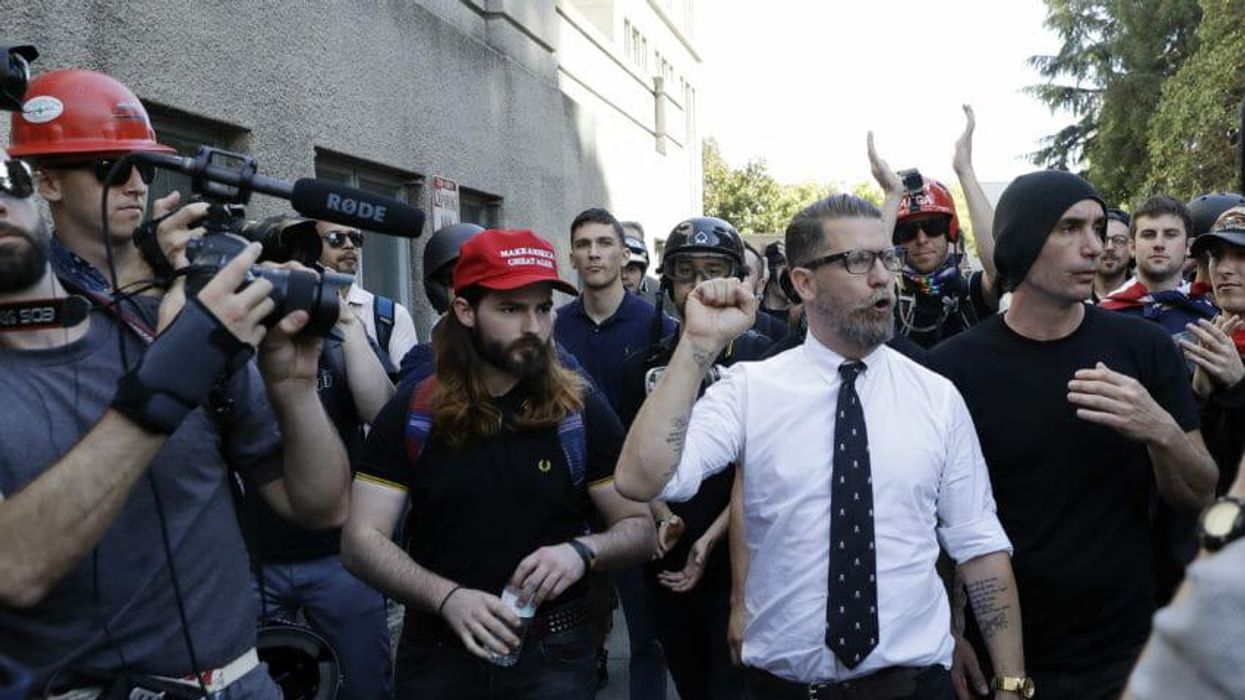
Shock and outrage in the midst of a fascist politics is now undermined by the mainstream press which is always on the hunt for higher ratings and increasing their bottom line. Rather than talk about fascism, they focus on the threat to liberal institutions. Rather than talk about the mounting state violence and the increased violence of neo-fascist thugs such as the Proud Boys, they talk about violence coming from the left and right. Rather than raise questions about the conditions and a society in which more and more people seem to prefer authoritarian rule over democracy, they talk about Trump's eccentric behavior or keep tabs on his endless lying. This is not unhelpful, but it misses the nature of the true threat, its genesis, and the power of a corporate elite who are now comfortable with the fascist politics that Trump embodies.
An iPsos poll found that "a surprising 26 percent of all Americans, and 43 percent of Republicans, agree with the statement that the president "should have the authority to close news outlets engaged in bad behavior."[14] In addition, a majority of Americans across the ideological spectrum-- 72 percent -- think "it should be easier to sue reporters who knowingly publish false information." [15] Couple this with the fact that Trump has recently stated privately to his aids that he regrets reversing his policy of separating children from their parents at the border and you have a mix of fascist principles coupled with a dangerous demagogue who cannot bring the country fast enough to the fascist abyss.[16] While it is true that the United States under Trump is not Hitler's Germany, Trump has tapped into America's worst impulses and as Jason Stanley and others remind us his ultra-nationalism, white supremacist views, and racist diatribes coupled with his attack on immigrants, the media, African-Americans, and Muslims are indicative of a politics right out the fascist playbook. [17] If the public and media keep denying this reality, the endpoint is too horrible to imagine. If we are to understand the current resurgence of right-wing populist movements across the globe, economic factors alone do not account for the current mobilizations of fascist passions.
As Pierre Bourdieu once put it, it is crucial to recognize that "the most important forms of domination are not only economic but also intellectual and pedagogical, and lie on the side of belief and persuasion."[18] He goes on to state that left intellectuals have underestimated the symbolic and pedagogical dimensions of struggle and have not always forged appropriate weapons to fight on this front."[19] In part, this means that the left and others must make matters of culture and pedagogy central to politics in order to address people's needs and struggles. And they should do so in a language that is both rigorous and accessible. Matters of culture and consciousness in the Gramscian sense are central to politics and only when the left can address that issue will there be any hope for massive collective resistance in the form of a broad-based movement.
Trump has emboldened and legitimated the dire anti-democratic threats that have been expanding under an economic system stripped of any political, social, and ethical responsibility. This is a form of neoliberal fascism that has redrawn and expanded the parameters of the genocidal practices and hate filled politics of the 1930s and 40s in Europe in which it was once thought impossible to happen again. The threat has returned and is now on our doorsteps, and it needs to be named, exposed, and overcome by those who believe that the stakes are much too high to look away and not engage in organized political and pedagogical struggles against a fascist state and an omniscient fascist politics. We live in an age when the horrors of the past are providing the language and politics of illiberal democracies all over the globe. This is a world where dystopian versions of a catastrophic, misery producing neoliberalism merge with unapologetic death dealing visions of a fascist politics. We live in an era that testifies to the horrors of a past struggling to reinvent itself in the present, and which should place more than a sense of ethical and political responsibility on those of us bearing witness to it. As my friend, Brad Evans, notes under such circumstances, we live in a time "that asks us all to continually question our own shameful compromises with power," and to act with others to overcome our differences in order to dismantle this assault on human rights, human dignity, economic justice, equality, and democracy itself. [20]
Notes.
[1] Terry Eagleton, "The ambition of advanced capitalism is not simply to combat radical ideas-it is to abolish the very notion that there could be a serious alternative to the present," Red Pepper(October 13, 2013). Online: https://www.redpepper.org.uk/death-of-the-intellectual/
[2] Brad Evans, "A World Without Books," Atrocity Exhibition: Life in the Age of Total Violence,(Los Angeles: Los Angeles Review of Books, 2019). P. 177
[3] Robin DG Kelley, "Sorry, Not Sorry," Boston Review,[September 13, 2018] Online: https://bostonreview.net/race-literature-culture/robin-d-g-kelley-sorry-not-sorry
[4] Anthony DiMaggio and Paul Street have addressed this issue in a number of brilliant books and articles.
[5] Teju Cole, "Resist, Refuse," The New York Times,[September 8, 2018] Online: https://www.nytimes.com/2018/09/08/magazine/teju-cole-resistance-op-ed-...
[6] Michael Hayden, "The End of Intelligence," New York Times (April 28, 2018). Online: https://www.nytimes.com/2018/04/28/opinion/sunday/the-end-of-intelligence.html
[7] Anonymous, "I Am Part of the Resistance Inside the Trump Administration," New York Times (September 5, 2018). Online: https://www.nytimes.com/2018/09/05/opinion/trump-white-house-anonymous-resistance.html?module=inline
[8] Ibid. Anonymous.
[9] Christopher R. Browning, "The Suffocation of Democracy", The New York Review,(October25, 2018 | Vol. 65, No 16). Online at: https://www.nybooks.com/articles/2018/10/25/suffocation-of-democracy/
Cass R. Sunstein, "It Can Happen Here," The New York Books Review, [June 28, 2018] Online: https://www.nybooks.com/articles/2018/06/28/hitlers-rise-it-can-happen-here/
[10] See, for instance, Jason Hirthler, "The Pieties of the Liberal Class," Counterpunch (October 19, 2018). Online: https://www.counterpunch.org/2018/10/19/the-pieties-of-the-liberal-class/
[11] Michelle Alexander, "We Are Not the Resistance," The New York Times,[September 21, 2018]. Online: https://www.nytimes.com/2018/09/21/opinion/sunday/resistance-kavanaugh-trump-protest.html
[12] Grace Lee Boggs with Scott Kurashige, The Next American Revolution: Sustainable Activism for the Twenty-First Century (Oakland: University of California Press, 2012), p. 36.
[13] Rob Nixon, Slow Violence and the Environmentalism of the Poor(Cambridge: Harvard University Press, 2011), p. X.
[14] Christal Hayes, "Nearly half of Republicans think Trump should be able to close news outlets: Poll," USA Today(Aug 7, 2018). Online: https://www.usatoday.com/story/news/politics/2018/08/07/trump-should-ab...
[15] Editorial, "As Lincoln advised, this, too, shall pass," Herald Tribune (August 16, 2018). Online: https://www.heraldtribune.com/opinion/20180816/editorial-as-lincoln-advised-this-too-shall-pass
[16] Kevin Liptak, "Trump says he doesn't regret signing immigration order," CNN Politics (June 25, 2018). Online: https://www.cnn.com/2018/06/25/politics/trump-immigration-order/index.html
[17] See, for example, Jason Stanley, How Fascism Works: The Politics of Us and Them(New York: Random House, 2018); Henry A. Giroux, American Nightmare: Facing the Challenge of Fascism(San Francisco: City Lights Books, 2018); Timothy Snyder, The Road to Unfreedom(New York: Tim Duggan Books, 2018);Brian Klaas, The Despot's Apprentice: Donald Trump's Attack on Democracy(New York: Hot Books, 2017).
[18] Pierre Bourdieu and Gunter Grass, "The 'Progressive' Restoration: A Franco-German Dialogue," New Left Review14 (March-April, 2002), P. 2
[19] Pierre Bourdieu, Acts of Resistance (New York: Free Press, 1998), p. 11.
[20] Brad Evans, The Atrocity Exhibition (Los Angeles, LARB, in press).
Even in the darkest of times we have the right to some illumination.
--Hannah Arendt
The threads of a general political and ideological crisis run deep in American history, and with each tweet and policy decision Donald Trump pushes the United States closer to a full-fledged fascist state. His words sting, but his policies can kill people. Trump's endless racist taunts, dehumanizing expressions of misogyny, relentless attacks on all provisions of the social state and ongoing contempt for the rule of law serve to normalize a creeping fascist politics. Moreover, his criminogenic disdain for any viable sense of civic and moral responsibility gives new meaning to an ethos of selfishness and a culture of cruelty, if not terror, that has run amok. Yet it is becoming more difficult for the mainstream media and pundits to talk about fascism as a looming threat in the United States in spite of the fact that, as Michelle Goldberg observes, for some groups, such as "undocumented immigrants, it's already here."
The smell of death is everywhere under this administration. The erosion of public values and the rule of law is now accompanied by a developing state of emergency with regards to a looming global environmental catastrophe. An ecological disaster due to human-caused climate change has accelerated under the Trump administration and appears imminent.Trump's ongoing attempt to pollute the planet through his rollback of environmental protections will result in the deaths of thousands of children who suffer from asthma and other lung problems. Moreover, his privatized and punitive approach to health care will shorten the lives of millions of poor people, uninsured youth, undocumented immigrants, the unemployed and the elderly. His get-tough "law and order" policies will result in more police violence against blacks while his support for the arms industry, military budget and gun laws will accelerate the death of the marginalized both at home and abroad. Under the Trump regime all bets are off regarding the sustainability of democracy.
Why does Judge Brett Kavanaugh, accused of sexual assault, feel entitled to a lifetime appointment to the Supreme Court of the United States, while my formerly incarcerated students -- often jailed for crimes like battery from fistfights -- are left unemployed, sometimes for life, banned from even the most entry-level work? That Kavanaugh is under consideration for appointment to the Supreme Court at all throws the racist double standard in our justice system into sharp relief. There is one standard of behavior for African-American and Latinx young people, who are harshly punished for crimes in adolescence, and quite another for wealthy white boys, who can be accused of sexual assault and still go on to be nominated to serve on the most important court in the world.
Kavanaugh perfectly aligns with Trump's racism and his decisions on matters of civil rights and racial justice will more than likely further reproduce a long legacy of white racism and state violence in the United States. This is especially tragic and ominous given that Trump's contempt for people of color appears boundless and legitimates the notion of whiteness as a site of terror. He slanders and humiliates black athletes, black women and any other person of color who calls him on his racism and white supremacist views. Moreover, his thuggery in support of police brutality and mass incarceration further accelerates the growth of a racialized carceral state.
Most recently, in a brutish and deeply troubling display of misogyny, Trump viciously mocked the testimony of Christine Blasey Ford, who accused Kavanaugh of a sexual assault. Drawing laughter and shouts from a crowd in Southaven, Mississippi, Trump went further, following up his vile remarks by stating that men were the real victims of the #MeToo movement because they were being unfairly accused of sexual harassment, and that many males would lose their jobs. It is hard to miss the irony of this statement coming from a man who has been accused of sexual misconduct by at least 22 women and has been caught on tape bragging about grabbing women by the crotch. What is worth noting here is not only his indifference to the shocking levels violence waged against women but also the degree to which misogyny has always been endemic to fascist politics.
While it is easy for the mainstream press to go after those politicians who remain silent in the face of Trump's sexism and racism, there is little interest in situating his misogyny and white supremacy within a neoliberal fascist politics that is aligned with neo-Nazis, white nationalists and other militant groups who argue for racial cleansing and increasingly commit violent acts against people of color who oppose their views. Trump's politics are endlessly whitewashed in the mainstream media, which too often views his policy decisions more as the infantilized outbursts of an impetuous tweeting teenage bully rather than as a shock and threat to the laws and values that constitute a democracy currently in peril. The mainstream press argues that Trump's rhetoric is divisive, humiliating and hateful, but rarely is it associated with the rhetoric of fascist politics or for that matter with the power of moneyed interests of the financial elite.
This evasion is all the more frightening since Trump, not to mention most of his critics, seem unaware of the accumulated terror unleashed by past fascists. Trump appears reckless when implementing policies that echo faintly the genocidal practices used by Nazis in their concentration camps, such as separating children from their undocumented parents and putting both in caged prisons. While Trump has not gassed tens of thousands of children as Hitler did, putting children in cages suggests crossing a moral and political line that opens the door to even more extreme forms of barbarism. -At the same time, his anti-democratic proclivities are on display almost every day. For instance, Trump's open infatuation with demagogues such as Vladimir Putin and Kim Jong-un is matched only by his consistent vilification of America's democratic allies. One clear cut example is his ludicrous claim that trade wars with Canada are justified because Canada represents a threat to America's national security. The latter is uttered at the same time that Trump calls Kim Jong-un terrific.
Trump has not only normalized racism in the United States and given new legitimacy to the hate filled rants and ideologies of neo-Nazis and white nationalists, he has deepened the crisis of democracy by elevating emotion over reason and turning civic illiteracy into a virtue. Ignorance turns deadly when embraced by the powerful and removed from any notion of the material consequences it has for those who have to suffer from a practices of abandonment, terminal exclusion, and state violence.
State-sanctioned ignorance is more than fodder for late night comedy shows, it also provides the psychological conditions for certain individuals and groups to associate "pollution" and disposability with what Richard A. Etlin calls "a biologically racialist worldview, which divides the human race according to the dichotomy of the pure and impure, the life-enhancing and the life-polluting." This is a language mobilized by the energies of the ethically dead, and echoes strongly with the anti-Semitism that was at the center of the genocidal policies of the Third Reich. This poisonous anti-Semitic discourse has returned with a vengeance in Hungary, Poland and a number of other countries now moving towards fascism. It is also surfacing among alt-right and other neo-Nazi groups in the United States. Unsurprisingly, there are also coded hints of it in Trump's language. Trump is more careful with his displays of anti-Semitism, especially given the uproar that followed his comments stating that there were decent people marching with neo-Nazis in Charlottesville.
One of the most revealingly ideological comments made by Trump during the Kavanaugh affair was contained in a tweet aimed at the women who had confronted Sen. Jeff Flake and other Republican senators over their support for Kavanaugh. Trump stated that "the very rude elevator screamers are paid professionals only looking to make Senators look bad. Don't fall for it. Also, look at all the professional made identical signs. Paid for by Soros and others. These are not signs made in the basement from love."
Trump exposed more than the level of political corruption and hatred of women that now defines American politics, he also appropriated an anti-Semitic discourse to discredit both the women to whom he is referring and dissent in general. Many conservative pundits and commentators have also followed Trump's lead and claimed that protesters were paid by George Soros. This display of anti-Semitism directed at Soros is not new for Trump. As Greg Sargent pointed out in the Washington Post, this vile piece of anti-Semitism directed at Soros played a "starring role in Trump's 2016 closing ad, which was the perfect expression of this type of exclusionary populist demagoguery." Not only do Trump's comments and the earlier ad mirror anti-Semitic propaganda from the 1930s, it also legitimates the vicious attacks on Soros in a number of Eastern European countries, including Poland, Romania and Serbia. But it is President Viktor Orban of Hungary who is leading the pack in his attack on Soros as part of a larger attack on Jews.
Trump's coded endorsement of Orban's attack on Jews, whom he appears to blame for all of Hungary's problems, is particularly repellent given its viciousness and the horrors of the past it echoes. For instance, recalling the genocidal rhetoric aimed at Jews in the past by the Nazis, Orban commemorated the 170th anniversary of the Hungarian Revolution of 1848 by stating the following (without mentioning Jews directly):
They do not fight directly, but by stealth; they are not honorable, but unprincipled; they are not national, but international; they do not believe in work, but speculate with money; they have no homeland, but feel the whole world is theirs. They are not generous but vengeful and always attack the heart -- especially if it is red, white and green [the colors of the Hungarian flag].
Prior to the recent election in Hungary, Orban plastered images of George Soros throughout the country. Soros is both a Hungarian citizen and a Jew, and was a perfect symbol for Orban to vilify in his efforts to take over the country. Soros is dangerous to Orban because of his promotion of the open society, open borders, cosmopolitanism, human rights and democracy. That he is Jewish made it easier for Orban to attack him personally without having to openly express his hatred of democracy.
That Trump would use a reference taken out of the poisonous playbook of this fascist leader is both revealing and dangerous. Not only because such rhetoric indexes a fascist politics and the potential dangers that follow, but also because of the silence that surrounded Trump's reference to Soros, with all of its toxic implications. Even if Trump is not consciously anti-Semitic, he should know better since, as journalist Ron Kampeas points out, his comments traffic "in conspiracies of control and destruction identified with classical anti-Semitism." Trump's consistently coded support for an ideology embraced by neo-Nazis and other white nationalists is not new. It is the discourse of blood and soil that propelled an emotionally charged language of hate, reification, dehumanization and eventually mass murder. Forgetting this history is less an act of historical ignorance than a complicitous practice of reviving the conditions that give birth to the horrors of the past.
Trump's defenders might argue that Trump is not an anti-Semite because two of his former lawyers were Jewish -- Roy Cohn and Michael Cohen. Moreover, his daughter converted to Judaism. This may be true, and Trump may just be so stupid to know and not to care when he is producing an anti-Semitic stereotype, and so ignorant of history that he can't put together the threat of rising anti-Semitism in Europe and the history of genocide that it produced. But if we are to believe writers such as Michael Wolff and Bob Woodward who have chronicled the post-2016 chaos in the White House that Trump has overt white supremacists such as Stephen Miller making decisions for him, the Kavanaugh hearings may signal a danger that far exceeds the misogyny and Vichy-type silence revealed by the spineless Republican Party and the Trump administration.
Mitch McConnell and the other gravediggers of democracy in the Congress could care less about Trump's crude language, governing style, character or potential revelations of criminal acts. They have no qualms or reservations about supporting a fascist politics as long as they get what they want from their alliance with the racists, xenophobic ultra-nationalists and white nationalists. According to historian Christopher R. Browning, the Republican Party, in particular has received a big payoff in selling its soul to Trump's worldview:
[H]ugetax cuts for the wealthy, financial and environmental deregulation, the nominations of two conservative Supreme Court justices (so far) and a host of other conservative judicial appointments, and a significant reduction in government-sponsored health care (though not yet the total abolition of Obamacare they hope for). Like Hitler's conservative allies, McConnell and the Republicans have prided themselves on the early returns on their investment in Trump.
The Kavanaugh appointment exposes more than what commentators such as Robert Reich and historians such as Timothy Snyder view as alarming and frightening parallels between the United States and Hitler's regime, or what the Yale historian Jason Stanley calls an accelerating fascist politics. Their analyses seem overly cautious. There is little doubt that Kavanaugh's appointment to the Supreme Court is an abomination not only because of his alleged sexual assaults, but his equally revealing and right-wing ideological rant against the left, Hillary Clinton and the Democratic Party during his Senate hearing. More ominous, when comprehended within the context of an emerging fascist politics, is the recognition that his appointment is part of a broader effort on the part of the Trump administration to radically modify the rule of law and individual rights, further depriving them of any meaning and cutting them off from any viable humanitarian standards.
We are in the midst of an American version of fascism, which is not to suggest a fascism modeled exclusively after Nazi Germany. Fascist rhetoric has become normalized in the United States, white terror is no longer coded, and ultra-nationalism has merged into a love affair between the U.S. and a host of ruthless dictators. Of course the U.S. has a long tradition of civil liberties but it also has a long tradition of lawlessness, and the latter is now winning out. It thrives under the guise of a neoliberalism that has fueled for the past 40 years vast inequalities in wealth and power, producing a level of political and economic corruption that signals not just a hatred of democracy, but a unique style of American fascism.
The Kavanaugh hearings should serve to remind us that we live in increasingly dangerous times. It is important to remember that fascism begins not with violence, police assaults or mass killings, but with language. Not only have we learned this from the rise of fascism in the 1930s in Europe but also in the current historical moment -- a moment in which lawlessness, misogyny, white nationalism and racism are resurgent all over the globe. If fascism begins with language so does a strong resistance willing to challenge it.
This is all the more reason for individuals, institutions, labor unions, educators, young people and others not to be silent in the face of the current fascist turn in the United States and elsewhere. In the face of the hatred, racism, misogyny and deceit that have become part of a state-sanctioned public dialogue, no one can afford to look away, fail to speak out, and risk silence. This is especially true at a time when history is used to hide rather than illuminate the past, when it becomes difficult to translate private issues into larger systemic considerations and people willingly allow themselves to be both seduced and trapped into spectacles of violence, cruelty and authoritarian impulses. Under such circumstances, the terror of the unforeseen becomes all the more ominous.
Any viable notion of change will have to reject the notion that capitalism and democracy are synonymous and that participatory democracy begins and ends with elections. Doing so is crucial to undoing the myth that political power is separate from economic power -- a myth that upholds the false assumption that whatever problems currently exist under the Trump administration are endemic to Trump's alleged mental health, ignorance and other character flaws. In actuality, the fascist politics now shaping the United States have been in the making for decades and are systemic to neoliberal capitalism and deeply entwined with iniquitous relations of power. Rob Urie illuminates the issue, particularly in relation to class divisions. He writes:
The class relations of American political economy are antithetical to the notion of a unified public interest. The point isn't to suggest that this or that authoritarian leader isn't authoritarian, but rather to sketch in the political backdrop to argue that the lived experience of social, economic and political repression is lived experience, not academic theories or bourgeois fantasies. The circumstances of investment bankers stripping assets, industrialists relocating factories built by workers to low-wage locations and tech 'pioneers' using licenses and patents to extract economic rents is systemically 'authoritarian' in the sense that democratic consent to do so was neither sought nor given.
It is time for a broad-based social movement to reject finance capitalism, embrace education as central to a politics willing to fight to persuade people to reclaim their sense of agency and push at the frontiers of the ethical imagination, connect what they learn to addressing social issues, taking risks and challenging the destructive narratives that are seeping into the public realm and becoming normalized. Any dissatisfaction with injustice necessitates combining the demands of moral witnessing with the pedagogical power of persuasion and the call to address the tasks of emancipation. We need individuals and social movements willing to disturb the normalization of a fascist politics, and to oppose racist, sexist and neoliberal orthodoxy. As Robin D.G. Kelley observes, we cannot confuse catharsis and momentary outrage for revolution. In a time of increasing tyranny, resistance appears to have lost its usefulness as a call to action.
For instance, the novelist Teju Cole has argued that "'resistance' is back in vogue, and it describes something rather different now. The holy word has become unexceptional. Faced with a vulgar, manic and cruel regime, birds of many different feathers are eager to proclaim themselves members of the Resistance. It is the most popular game in town." Cole's critique appears to be borne out by the fact that the most unscrupulous of liberal and conservative politicians, such as Madeline Albright, Hillary Clinton and even James Clapper, the former director of national intelligence, are now claiming that they have joined the resistance against Trump fascist politics.
Even Michael Hayden, the former NSA chief and CIA director under George W. Bush, has joined the ranks of Albright and Clinton in condemning Trump as a proto-fascist. Writing in the New York Times, Hayden chastised Trump as a serial liar and in doing so quoted the renowned historian Timothy Snyder, who stated in reference to the Trump regime that "Post-Truth is pre-fascism." The irony here is hard to miss. Not only did Hayden head Bush's illegal National Security Agency warrantless wiretapping program while head of the NSA, he also lied repeatedly about his role in Bush's sanction and implementation of state torture in Afghanistan and Iraq.
This tsunami of banal resistance was on full display when an anonymous member of the Trump's inner circle published an op-ed in the New York Times claiming that he or she and other senior officials were part of "the resistance within the Trump administration." The author was quick to qualify the statement by insisting such resistance had nothing to do with "the popular 'resistance' of the left." To prove the point, it was noted by the author that the members of this insider resistance liked some of Trump's policies such as "effective deregulation, historic tax reform, a more robust military and more." Combining resistance with the endorsements of such reactionary policies reads like fodder for late-night comics.
The Democratic Party now defines itself as the most powerful political force opposing Trump's fascist politics. What it has forgotten is the role it has played under the Clinton and Obama presidencies in creating the economic, political and social conditions for Trump's election in 2016. Such historical and political amnesia allows them to make the specious claim that they are now the party of resistance. Resistance in these instances has little to do with civic courage, a defense of human dignity, and the willingness to not just bear witness to the current injustices but to struggle to overcome them. Of course, the issue is not to disavow resistance as much as to redefine it as inseparable from fundamental change that calls for the overthrow of capitalism itself.
While the call to resist neoliberal fascism is to be welcomed, it has to be interrogated and not aligned with individuals and ideological forces that helped put in place the racist, economic, religious and educational forces that helped produce it. What all of these calls to resistance have in common is a opposition to Trump rather than to the conditions that created him. Trump's election and the Kavanaugh affair make clear that what is needed is not only a resistance to the established order of neoliberal capitalism but a radical restructuring of society itself. That is not about resisting oppression in its diverse forms but overcoming it -- in short, changing it.
While it is crucial to condemn the Kavanaugh hearings for their blatant disregard for the Constitution, expressed hatred of women, and symbolic expression and embrace of white privilege and power, it is necessary to enlarge our criticism to include the system that made the Kavanaugh appointment possible. Kavanaugh represents not only the deep-seated rot of misogyny but also, as Grace Lee Boggs has stated, "a government of, by, and for corporate power." We need to see beyond the white nationalists and neo-Nazis demonstrating in the streets in order to recognize the terror of the unforeseen, the terror that is state sanctioned, and hides in the shadows of power.
Such a struggle means more than engaging material relations of power or the economic architecture of neoliberal fascism, it also means taking on the challenge of producing the tools and tactics necessary to rethink and create the conditions for a new kind of subjectivity as the basis for a new kind of democratic socialist politics. We need a comprehensive politics that brings together various single-interest movements so that the threads that connect them become equally as important as the particular forms of oppression that define their singularity. In addition, we need intellectuals willing to combine intellectual complexity with clarity and accessibility, embrace the high-stakes investment in persuasion, and cross disciplinary borders in order to theorize and speak with what Rob Nixon calls the "cunning of lightness" and a "methodological promiscuity" that keeps language attuned to the pressing claims for justice.
Trump has surfaced the dire anti-democratic threats that have been expanding under an economic system stripped of any political, social and ethical responsibility. This is a form of neoliberal fascism that has redrawn and expanded the parameters of what after the genocidal practices and hate-filled politics of the 1930s and 40s in Europe was once thought impossible to happen again. The threat has returned and is now on our doorsteps, and it needs to be named, exposed, and overcome by those who believe that the stakes are much too high to look away and not engage in organized political and pedagogical struggles.
***
Hannah Arendt once wrote that terror was the essence of totalitarianism. She was right and we are now witnessing the dystopian visions of the new authoritarians who now trade in fear, hatred, demonization, violence and racism. This will be Trump's legacy. It is easy to despair in times of tyranny, but it is much more productive to be politically and morally outraged and to draw upon such anger as a source of hope and action. Without hope even in the most dire of times, there is no possibility for resistance, dissent and struggle.
A critical consciousness is the prerequisite for informed agency and hope is the basis for individual and collective resistance. Moreover, when combined with collective action, hope translates into a dynamic sense of possibility, enabling one to join with others for the long haul of fighting systemic forms of domination. Courage in the face of tyranny is a necessity and not an option and we can learn both from the past and the present about resistance movements and the power of civic courage and collective struggle and how such modes of resistance are emerging among a number of groups across a wide variety of landscapes.
What is crucial is the necessity of not facing such struggles alone, allowing ourselves to feel defeated in our isolation or giving in to the crippling neoliberal survival-of-the-fittest ethos that dominates everyday relations. Radical politics begins when one refuses to face one's fate alone, learns about the workings and mechanisms of power, and rejects the dominant mantra of social isolation.
There is strength in numbers. One of the most important things we can do to sustain a sense of courage and dignity is to imagine a new social order. That is, we must constantly work to revive a radical political imaginary by talking with others in order to rethink what a new politics and society would look like, one that is fundamentally anti-capitalist and dedicated to creating the conditions for new democratic political and social formations. This suggests creating new public spheres that make such a dialogue and notion of solidarity possible while simultaneously struggling against the forces that gave rise to Trump, particularly those that suggest that totalitarian forms are still with us.
As I have stressed, rethinking politics anew also suggests the possibility of building broad-based alliances in order to create a robust economic and political agenda that connects democracy with a serious effort to interrogate the sources and structures of inequality, racism and authoritarianism that now plague the United States. This points to opening up new lines of understanding, dialogue and radical empathy. It means, as the philosopher George Yancy suggests, learning "how to love with courage."
A nonviolent movement for democratic socialism does not need vanguards, political purity or the seductions of ideological orthodoxy. On the contrary, it needs an informed and energized politics without guarantees, one that is open to new ideas, self-reflection and understanding. Instead of ideologies of certainty, unchecked moralism and a politics of shaming, we need to understand the conditions that make it possible for people to internalize forms of domination, and that means interrogating forgotten histories and existing pedagogies of oppression. Recent polls indicate that two-thirds of Americans say this is the lowest point in American politics that they can recall. Such despair offers the possibility of a pedagogical intervention, one that provides a political opening to create a massive movement for organized struggle in the United States.
Rebecca Solnit has rightly argued that while we live in an age of despair, hope is a gift we that we cannot surrender because it amplifies the power of alternative visions, offers up stories in which we can imagine the unimaginable, enables people to "move from depression to outrage," and positions people to take seriously what they are for and what they are against. This suggests trying to understand how the very processes of learning constitute the political mechanisms through which identities -- individual and collective -- are shaped, desired, mobilized and take on the worldly practices of autonomy, self-reflection and self-determination as part of a larger struggle for economic and social justice.
First, it is crucial to develop a language in which it becomes possible to imagine a future much different from the present, one that refuses to privatize hope with a crude individualism. Second, it is crucial to develop a discourse of critique and possibility that rejects the ongoing normalizing of existing relations of domination and control while simultaneously repudiating the notion that capitalism and democracy are synonymous. It would be wise to heed the words of the late science-fiction visionary Ursula K. Le Guin when she wrote, "We live in capitalism. Its power seems inescapable. So did the divine right of kings. Nay, human power can be resisted and changed by human beings."
Third, it is imperative to reject the notion that all problems are individual issues and can only be solved as a matter of individual action and responsibility. This is one of neoliberalism's most powerful ideological tenets, working to make the personal the only politics that matters while detaching private troubles from the wider world. All three of these assumptions serve to depoliticize people and erase both what it means to make power visible and to organize collectively to address such problem. Fourth, there is a need, I believe, for a discourse that is both historical, relational and comprehensive. Memory matters both in terms of reclaiming lost narratives of struggle and for assessing visions, strategies and tactics that still hold enormous possibilities in the present.
Developing a relational discourse means connecting the dots around issues that are often viewed in isolated terms. For instance, one cannot study the attack on public schools and higher education as sutured internal issues that focus exclusively on the teaching methods and strategies. What is needed are analyses that link such attacks to the broader issue of inequality, the dynamics of casino capitalism and the pervasive racism active in promoting new forms of segregation both within and outside of schools.
A comprehensive politics is one that does at least two things. On the one hand, it tries to understand a plethora of problems from massive poverty to the despoiling of the planet within a broader understanding of politics. That is, it connects the dots among diverse forms of oppression. In this instance, the focus is on the totality of politics, one that focuses on the power relations of global capitalism, the rise of illiberal democracy, the archives of authoritarianism and the rise of financial capital. A totalizing view of oppression allows the development of a language that is capable of making visible the ideological and structural forces of the new forms of domination at work in the United States and across the globe. On the other hand, such a comprehensive understanding of politics makes it possible to bring together a range of crucial issues and movements so as to expand the range of oppressions while at the same time providing a common ground for these diverse groups to be able to work together in the interest of the common good and a broad struggle for democratic socialism.
Finally, any viable language of emancipation needs to develop a discourse of what Ron Aronson calls social hope. He writes:
Social hope, the disposition to act collectively to change a situation, entails that we act not blindly but with a sense of possibility. The cold stream demands that we prepare ourselves and assess the conditions under which we are operating. The hope of social movements calls for objective, clearheaded organization and action, and an appreciation of the circumstances in which we may be successful. This realistic stream of hope mingles with the visionary stream that motivates us; without both, there is no hope. Hope uniquely combines our longing, our own real intention, and our sense of potency with real possibility, the subjective and the objective.
Aronson is right in arguing that naming what is wrong in a society is important but it is not enough, because such criticism can sometimes be overpowering and lead to a paralyzing despair or, even worse, a crippling cynicism. Hope speaks to imagining a life beyond capitalism, and combines a realistic sense of limits with a lofty vision of demanding the impossible. As Ariel Dorfman has argued, progressives need a language that is missing from our political vocabulary, one that insists that "alternative worlds are possible, that they are within reach if we're courageous enough, and smart enough, and daring enough to take control of our own lives." Reason, justice, and change cannot blossom without hope because educated hope taps into our deepest experiences and longing for a life of dignity with others, a life in which it becomes possible to imagine a future that does not mimic the present.
I am not referring to a romanticized and empty notion of hope, but to a notion of informed social hope that faces the concrete obstacles and realities of domination but continues the ongoing task of realizing a future in which matters of justice, equality, freedom and joy matter. Casino capitalism is a toxin that has created a predatory class of unethical zombies who are producing dead zones of the imagination and massive ecologies of immiseration that even George Orwell could not have envisioned, while waging a fierce fight against the possibilities of a democratic future.
The time has come to develop a political language in which civic values, social responsibility and the institutions that support them become central to invigorating and fortifying a new era of civic imagination, a renewed sense of social agency and an impassioned international social movement with a vision, organization and set of strategies to challenge the neoliberal nightmare engulfing the planet. Such a strategy would have to revive the radical imagination and the task of thinking about a future without capitalism and oppression; launch a comprehensive education program to provide alternative narratives, memories and histories that enable the capacities for informed judgment, ethical responsibilities and civic courage; and last but not least create those alternative public spheres where a new conversation can be opened up about the creation of a new progressive and socialist political formation. As Karl Marx said, there is nothing to lose but our chains.
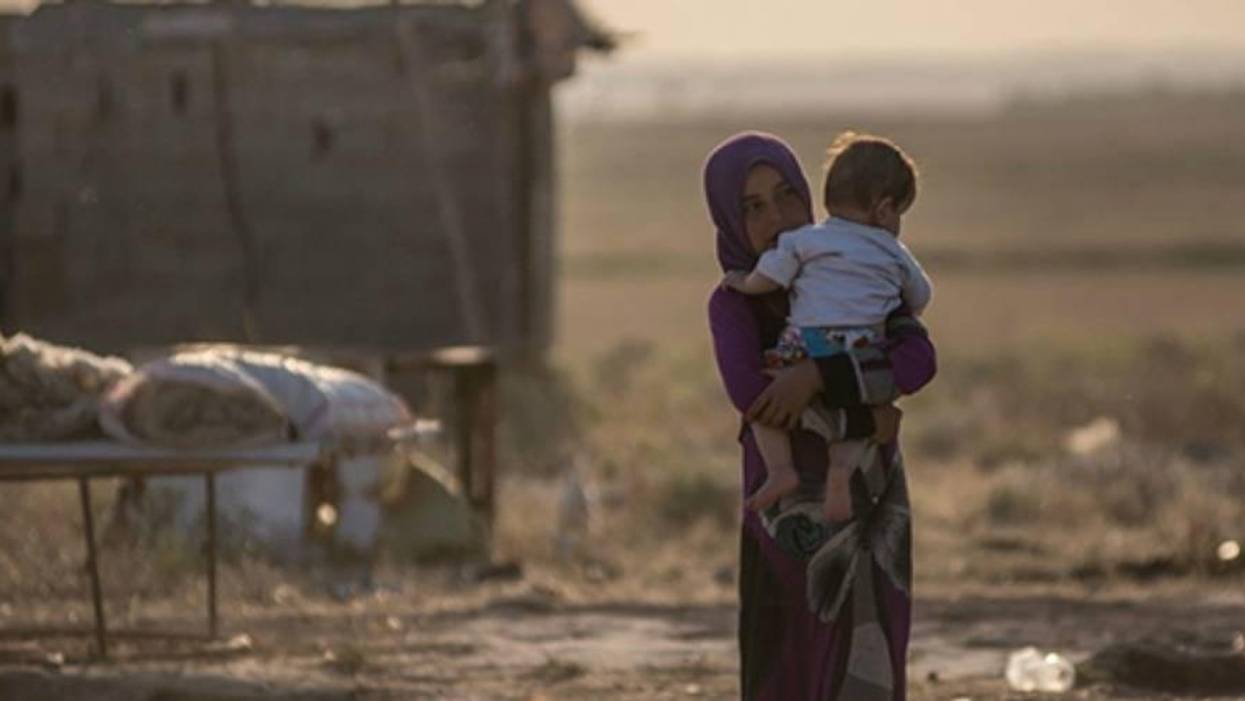
More than twenty years ago, in August 1996 Garca Machel the UN Special Representative on Children and Armed Conflict, issued her report to the Secretary-General of the UN: Promotion and Protection of the Rights of Children: Impact of Armed Conflict on Children. The introduction outlined a bleak international landscape in which "...nothing was spared or protected--not children, families or communities". It estimated two million children had been killed in the decade previous to her report and three times as many seriously injured or permanently disabled. I want to drag it off the dusty shelf where it sits, forgotten in some UN office.
When you hear figures for dead and injured in Syria, compute this statistic: one in four deaths is a child. Then there is Congo, Somalia, Yemen, Iraq; the list goes on and on and on.
Children and youth in the US are asking why there has been no effective government action on gun control, and insisting that gun control measures be taken to protect them in their schools and neighborhoods. I am asking why there are not more effective international efforts to protect children and their human rights from another kind of violence--the ravages of war around the globe? Where is the passion to save children in 2018? Where are the laws and resources --both here and abroad--we need to enforce them?

This moment is rightfully about children in schools, guns and gun violence. Kudos to the youth who expanded the movement to include children and youth who live in communities where violence is part of their everyday lives, where they must worry and be vigilant about every place, every day. And deep gratitude to the international children and youth who stood in solidarity with those in America to call for an end to guns and gun violence. Expanding the focus beyond Parkland or any one particular place or incident is an important and significant step. Leave it to kids to lead the way.
I want to expand it further. For me, to paraphrase a Quaker poster about war: this current moment is not about this or that child, in this or that country, in this or that circumstance. It's about children. Children will make and occupy the future of every village, town and city, every inch of humanly habitated land around the world. They are the planet's most valuable and most vulnerable resource. At some more enlightened time, the international community recognized this; children, were given special status in local, national and international laws, in treaties and conventions to help guarantee their well-being and their basic human rights.
Yet, looking at figures of children killed and injured around the globe "just" in 2017...the numbers are staggering. According to UN statistics, the number of child deaths in Afghanistan in 2017 was the highest ever recorded; this in a country that has been at war for decades. When you hear figures for dead and injured in Syria, compute this statistic: one in four deaths is a child. Then there is Congo, Somalia, Yemen, Iraq; the list goes on and on and on.
Governments are always quick to tell us how precise their weapons of war are. Civilian deaths--if they are counted at all -- are portrayed as isolated, unfortunate incidents. But, on May 12, 1996 in a rare moment of truth-telling, Madeline Albright, Secretary of State under Bill Clinton, acknowledged the U.S. government knew and accepted that hundreds of thousands -- half a million -- Iraqi children had died as a result US government determination to support UN Economic Sanctions against Iraq. Asked about the deaths in her now-infamous interview on 60 Minutes in 1996, Albright responded. "I think this is a very hard choice, but the price -- we think the price is worth it." The Machel report was also released in 1996 just months after this. It is difficult to comprehend how a government -- the US government -- could bargain with the lives of children at the same time they join with the international community's efforts to protect and care for them.
Just as it is shocking to see how little has happened in the wake of school shootings in the US, it is shocking to read the current statistics about dead and injured children in war zones, and contemplate how little has been done overall to protect the lives of children around the world after the passionate call to action of the Machel Report some twenty years ago.
Below, some excerpts from the report, numbered by paragraph in which they appear:
(3) These statistics (2 million killed, 3 times as many injured) are shocking enough, but more chilling is the conclusion to be drawn from them: more and more of the world is being sucked into a moral vacuum. This is a space devoid of the most basic human values; a space in which children are slaughtered, raped and maimed;...a space in which children are starved and exposed to extreme brutality. Such unregulated terror and violence speak of deliberate victimization. There are few further depths to which humanity can sink.
(29) Armed conflicts across and between communities result in massive levels of destruction: physical, human, moral and cultural. Not only are large numbers of children killed and injured, but countless others grow up deprived of their material and emotional needs, including the structures that give meaning to social and cultural life. The entire fabric of their societies--their homes, schools, health system and religious institutions -are torn to pieces.
(30) War violates every right of a child--the right to life, the right to be with family and community, the right to health, the right to the development of the personality and the right to be nurtured and protected. Many of today's conflicts last the length of a "childhood"...and for this duration, can have profound physical and psychological implications.
(270) Governments bear the primary responsibility for protecting children from the impact of armed conflict, and indeed for preventing conflicts from occurring. While this report provides testimony of the efforts...it is ultimately a testimony of their collective failure to do so. Governments have clearly failed to harness the necessary financial and human resources or to demonstrate the compassion, the commitment and the tenacity required to fulfill their moral, political and social obligations to children.
I am--we are all rooting --for the brave, articulate and determined children and youth who are leading a movement against guns and to halt gun violence. I feel hope re-born. I'm trying to quiet my rumbling skepticism, hoping there will finally be action this time. There is no excuse for what we are witnessing --in the US and around the globe--today. No excuse.
As we approach the 50th anniversary on April 4 of the assassination of Dr. Martin Luther King, Jr., perhaps the most appropriate testament to his moral leadership would be the citation of certain prophetic passages in his compelling address, "A Time to Break Silence." Delivered at the Riverside Church in New York City one year to the day before his death, much of the focus of that talk is on the origins and impact of the Vietnam War. Because of Dr. King's uncompromising denunciation of the war, he was subjected to vicious criticism from both the corporate media and even mainstream civil rights leaders, such as Roy Wilkins of the NAACP.
Nevertheless, the incisive and righteous content of Dr. King's speech remains relevant, precisely to the degree to which the triple evils identified in his talk of "racism, materialism, and militarism" are still prevalent. Indeed, with continuing racial inequities, massive wealth inequalities, and bloated Pentagon budgets, we need to be reminded constantly of their interconnections. As he made clear in linking his commitments to civil rights and non-violence: "I knew that I could never again raise my voice against the violence of the oppressed in the ghettos without having first spoken clearly to the greatest purveyor of violence in the world today - my own government."
Not only did Dr. King recognize the arrogance of such imperial interventions, but he also deplored in no uncertain terms the distorted priorities that accompanied such militarism and imperialism.
I want to turn to those connections between the violence perpetrated abroad by the Pentagon and, in particular, the persistence of gun violence at home. With the U.S. military actively engaged in at least six violent conflicts, with special forces in over 80 countries, and with somewhere around 800 military bases around the globe, no amount of rationalization about a "war on terror" can negate the fact that militarism and imperialism dominate U. S. policy. Not only did Dr. King recognize the arrogance of such imperial interventions, but he also deplored in no uncertain terms the distorted priorities that accompanied such militarism and imperialism. "A nation that continues year after year to spend more money on military defense than on programs of social uplift," he famously decried, "is approaching spiritual death."
Sowing that spiritual death has been integral to imperial presidents ever since Dr. King's assassination in 1968. From Nixon's murderous prolongation and expansion of the U.S. War on Southeast Asia to Reagan's support for the death squads of Central America to H. Bush's Gulf War toxic fallout to W. Bush's wars of choice in Afghanistan and Iraq right up to Trump's renewed bombing in those war-torn countries, Republican presidents have demonstrated their fidelity to muscular and macho militarism and its inevitable so-called collateral damage. Only in a world of such depraved militarism could the butcher of Fallujah, General "Mad Dog" Mattis be considered a "moderate" and "adult voice" in the Trump Administration.
When confronted with the fact that upwards of one half a million children may have died as a consequence of sanctions imposed on Iraq by President Clinton, Albright responded that it "was worth it."
Democratic Presidents Clinton and Obama with their unapologetic militaristic Secretaries of State, Madeline Albright and Hilary Clinton, used sanctions and drones to inflict terrible damage, especially to children. When confronted with the fact that upwards of one half a million children may have died as a consequence of sanctions imposed on Iraq by President Clinton, Albright responded that it "was worth it." Draped in the mantle of such militarism, President Obama even managed to defend the murder of a teenage U.S. citizen by a drone because of his connection to a well-known Afghan warlord. One wonders, in this case, who are the more destructive and vicious warlords!
Perhaps one example from the early days of that long war in Afghanistan (now in its 17th year) may suffice to explain the corrosive effects of militarism abroad on the spiritual health of the U.S. In a village north of Kandahar, U.S. AC-130 gunships strafed the area indiscriminately, resulting in the death of at least ninety-three civilians. The blunt response by one Pentagon official was that "the people were dead because we wanted them dead." Trying to avoid any further probing of the incident, then Secretary of Defense, Donald Rumsfeld, said, "I cannot deal with that particular village." In a related June 28, 2002 Los Angeles Times story about such civilian deaths, one Afghan who had lost his wife, mother and seven children in the U.S. bombing run angrily lamented: "I put a curse on the Americans who did this. I pray that they will have the tragedy in their lives that I have had in mine."
Beyond the terrible physical and psychic damage, in the form of long-term injuries and PTSD, suffered by those who have served as the foot-soldiers of the empire, the weapons of war, especially assault rifles like the AR-15, have taken a terrible toll on the lives of children in the U.S. While the mass shootings in school are only a small percentage of the overall gun violence against children, nonetheless, as reported recently by the Washington Post, starting with the Columbine massacre more than 187,000 students from 193 primary or secondary schools have suffered a shooting incident during regular school hours.
Outside of schools, the streets, particularly in neighborhoods where people of color predominate, are even more dangerous war zones as a consequence of gun violence. According to the Washington Post, since 1999 almost 63% of young people victimized by gun violence are students of color. In this case, as in much of the rest of American life, the racial disparities underscore the fact that racism hasn't gone away. Indeed, measured by the number of unarmed black youth murdered by police and/or white vigilantes, we have not transcended the violent oppression that Dr. King most fervently challenged.
More people have died from gun violence since Dr. King's death that have all of the soldiers from all of the combat deaths in all of the wars in U.S. history.
Certainly, gun violence has its own trajectory, separate from the history of militarism in America. However, as so brilliant argued by Roxanne Dunbar Ortiz in her essential study of the origins and impact of the Second Amendment called Loaded, the history of guns, militarism, colonialism, and racism is incontrovertibly interconnected. Moreover, most startling about the recent history of gun violence is the statistic that more people have died from gun violence since Dr. King's death that have all of the soldiers from all of the combat deaths in all of the wars in U.S. history.
In calling for moving "past indecision to action," in his Riverside Church address, Dr. King also noted: "If we do not act we shall surely be dragged down the long dark and shameful corridors of time reserved for those who possess power without compassion, might without morality, and strength without sight." This past weekend, young people from Parkland, from DC, from Chicago and around the country, along with hundreds of thousands of others, gathered in front of those who exercise "power without compassion" to remind those in Congress and the White House that they are facing a moral movement that could sweep them from their NRA bought-and-sold offices.
As important as the mobilization for political change unleashed by these courageous multi-cultural/multi-ethnic/multi-racial/multi-class youth is the spiritual awakening represented by those who implicitly endorse Dr. King's call for a "radical revolution of values." A refusal to heed their call for such a change, not only to end gun violence, but also to restore the health of a nation would be, in the words of Dr. King, "a tragic death wish."
There's a big conference going on at the moment in Brussels, where the bipartisan Alliance for Securing Democracy - a group of journos, pols, and intelligence vets from around the West - is holding a conference to discuss how to rebuild the world order in a "time of distrust."
The president has taken his saber-rattling beyond Twitter - showing a real willingness to gamble with millions of lives
Speakers like Madeline Albright, Senator Chris Murphy, New York Times correspondent Steven Erlanger, U.S. NATO Ambassador Kay Bailey Hutchinson, and a host of other CNN panelist types are getting together to discuss how to solve that whole "The people are revolting!" problem Beltway pols have been stumbling over for years now.
The Alliance is part of the German Marshall Fund, which in turn is the group that built Hamilton 68, whose "digital dashboard" blacklist site exists to remind us daily that Russians are lurking behind basically all unorthodox opinions here in the U.S. Such opinions apparently include any desire to not get into a nuclear war.
For instance, according to Hamilton 68, five of the Russian bots' current six "top trending topics" are "South Korea," "Kim Jong Un," "Kim," "Jong" and "Un."
This comes in the wake of Thursday evening's news that Trump met in the White House with South Korean envoys, who in turn announced that Trump would be meeting with Kim Jong Un "by May, to achieve permanent de-nuclearization."
I stupidly thought it was good news that Trump had been convinced to sit down with Kim Jong Un to negotiate an end to the nuclear standoff, as opposed to letting him continue to egg Kim on to launch via Freudian name-calling sessions and late-night tweets.
Obviously, whenever Donald Trump is involved in any meeting of import, and particularly a peace negotiation, it would be preferable to have him gagged, perhaps with the straitjacket-and-mask setup they used to allow Hannibal Lecter to speak with Senator Ruth Martin in Silence of the Lambs. Certainly you don't want him making any sudden movements toward the nuclear football in a meeting with Kim. But talking is for sure better than trading warheads. Right?
Nope. According to David Ignatius, the well-known Washington Post reporter who apparently is also on the board of this Alliance For Securing Democracy, Trump's negotiation plan is a sign of weakness.
Ignatius wrote as much in a column this morning called "Trump is Wile E. Coyote," in which the Post writer relayed that his CIA buddies think Trump is getting pantsed by Little Rocket Man. Here's the lede:
"Beep beep" was the subject line of an email message I received a few weeks ago from former CIA analyst Robert Carlin, as Kim Jong Un was accelerating his diplomatic charm offensive. "So typical," wrote Carlin in his brief text. "The North Koreans as Road Runner, the U.S. as Wile E. Coyote."
So to recap: Russian bots are pushing Korean peninsula-related hashtags, according to the Alliance for Securing Democracy, whose board member David Ignatius is simultaneously telling America that negotiating an end to an unprecedented nuclear danger there makes us look like loser cartoon characters.
As Ignatius wrote: "We'll probably be chasing Kim around a negotiating table for a while, which is better than 'duck and cover.' But as Carlin says, 'Beep beep.'"
I wrote to Ignatius to ask him what would be good, if negotiating an end to a nuclear standoff is bad. He hasn't answered.
While the Trump White House has been fumbling to coordinate a response to the whole "The President of the United States apparently cheated on his wife with a porn star and then paid her off" problem, and fighting off the anaconda-like Mueller criminal probe, Trump's political opposition has been spending more and more time pushing our president into aggressive military stances.
Continuing a theme that really began last year with Trump's much-praised decision to lob missiles into Syria while eating cake with horrified Chinese leaders, Beltway voices continue to demand, for instance, that Trump escalate America's on-the-ground opposition to Syrian president Bashar al-Assad.
Both Ignatius and Kenneth Pollock of the American Enterprise Institute are examples of think-tankers arguing the widespread D.C. consensus, that Syria is the perfect place for American forces to dig in and take on Iran, Assad, and by extension Russia as well.
Americans seem to be in denial about the tinderbox nature of this lunatic Syrian situation.
Things took a serious turn in early February, when a mysterious news story suggested Russian contract fighters were killed by American weapons in a town called Deir al-Zour. The incident reportedly happened on the night of February 7th, as part of a counterattacking raid conducted across the Euphrates River by U.S.-backed Syrian Democratic Forces (SDF).
News outlets in both the east and the west seriously buried the lede when this incident first took place. The BBC and the AP were classic examples. This was the second-to-last line in the BBC's February 8th article: The Russian defense ministry said the U.S. strike wounded 25 pro-government volunteers...
What? Were any of those "wounded" by our strike Russians? Were they planning to retaliate? What was going on?
The Russians similarly downplayed the incident at first. There were reports from the Russian government that first suggested "five Russian citizens" had died. That later became dozens "injured."
Then on February 14th, Novaya Gazeta, historically the most trustworthy and independent of Russian news outlets, ran a piece called "Mistake or Treason?" that asserted 13 Russians had died that night. The paper claimed Russian officials let private Russian "Wagner" contract fighters join pro-Assad forces in a troop advance Russian military leaders had assured their American counterparts would not take place.
Novaya Gazeta said the Russians died under fire from Apache helicopters, F-15s, drones, and ground batteries. There were later rumors that the casualties were in the hundreds, but subsequent investigations by outlets like Der Spiegelfailed to bear that out.
Still, the mere fact that Russian citizens were killed by American forces in an ongoing proxy war that both sides seem determined to escalate should be absolutely terrifying to ordinary citizens here and there - especially given that aggressive rhetoric is at an all-time high, again on both sides.
Vladimir Putin recently gave a frightening speech in advance of the March 18 presidential "election" in which he spent most of his time boasting about the size, modernity, and potency of Russia's military.
Pooty-poot boasted of new "unlimited range" nuclear missiles. He paused mid-speech to show a pulled-straight-from-Dr.-Strangelove animated clip of a missile weaving through snow-covered mountains on its way to the American continent (the presentation ended up including simulated explosions over Florida).
"Nobody in the world has anything like this," Putin bragged.
Meanwhile here in the States we've had a constant drumbeat of "new Pearl Harbor" stories describing the troll farm indictment as an "act of war," with politicians and pundits alike calling for escalations of hostilities with Russia.
Putin's boasts are completely in line with what he's always been about, using nationalist rhetoric and military imagery to cover up his almost total incompetence as an economic leader. He's just the latest in a long line of Russian heads of state, dating back to the Soviet days, who reflexively try to cover up for empty shelves and crumbling infrastructure with marches and missile parades.
Meanwhile, in the States, the only thing about Donald Trump that any sane person ever had to be grateful for was that he entered the White House claiming to be isolationist and war-averse. That soon proved to be a lie like almost everything else about his campaign, but Jesus, do we have to help this clown down the road toward General Trump fantasies?
We have the dumbest, least competent White House in history. Whatever else anyone in America has as a goal for Trump's remaining time in office, the single most important priority must to be keeping this guy away from the nuclear button. Almost anything else would be survivable.
Which is why it makes no sense to be taunting Trump and basically calling him a wuss for negotiating with Kim Jong Un or being insufficiently aggressive in Syria. In the middle of a shooting conflict, our troops are currently stationed right across the river from large numbers of both private and official Russian forces. Who doesn't think this is crazy?
The rhetoric we're hearing now about Trump's weakness from the likes of Ignatius and Max Boot is essentially identical to the stuff we heard directed at Barack Obama when he had the temerity to express willingness to talk to leaders of nations like Iran.
There is a segment of D.C. thinkluencers who seem to think the U.S. is setting a bad precedent if it doesn't bomb and threaten its way through every foreign policy conundrum, from Libya to Yemen to Iran to Syria to, apparently, even Russia.
It seems like the smart thing to do would be to wait until we had someone with an IQ over 9 in office before we start demanding that the White House play war with nuclear opponents. Of course, I might be biased because I have kids and live in a major population center. Can we chill on the gunboat diplomacy for a couple of years at least? And if not, why not?
There are good reasons for any good progressive to bemoan the presence of the childish, racist, sexist and ecocidal, right-wing plutocrat Donald Trump in the White House. One complaint about Trump that should be held at arm's-length by anyone on the left, however, is the charge that Trump is contributing to the decline of U.S. global power--to the erosion of the United States' superpower status and the emergence of a more multipolar world.
This criticism of Trump comes from different elite corners. Last October, the leading neoconservative foreign policy intellectual and former George W. Bush administration adviser Eliot Cohen wrote an Atlantic magazine essaytitled "How Trump Is Ending the American Era." Cohen recounted numerous ways in which Trump had reduced "America's standing and ability to influence global affairs." He worried that Trump's presidency would leave "America's position in the world stunted" and an "America lacking confidence" on the global stage.
But it isn't just the right wing that writes and speaks in such terms about how Trump is contributing to the decline of U.S. hegemony. A recent Time magazine reflection by the liberal commentator Karl Vick (who wrote in strongly supportive terms about the giant January 2017 Women's March against Trump) frets that that Trump's "America First" and authoritarian views have the world "looking for leadership elsewhere."
"Could this be it?" Vick asks. "Might the American Century actually clock out at just 72 years, from 1945 to 2017? No longer than Louis XIV ruled France? Only 36 months more than the Soviet Union lasted, after all that bother?"
For the purposes of this report, I'll leave aside the matter of whether Trump is, in fact, speeding the decline of U.S. global power (he undoubtedly is) and how he's doing that to focus instead on a very different question: What would be so awful about the end of "the American Era"--the seven-plus decades of U.S. global economic and related military supremacy between 1945 and the present? Why should the world mourn the "premature" end of the "American Century"?
It would be interesting to see a reliable opinion poll on how the politically cognizant portion of the 94 percent of humanity that lives outside the U.S. would feel about the end of U.S. global dominance. My guess is that Uncle Sam's weakening would be just fine with most Earth residents who pay attention to world events.
According to a global survey of 66,000 people conducted across 68 countries by the Worldwide Independent Network of Market Research (WINMR) and Gallup International at the end of 2013, Earth's people see the United States as the leading threat to peace on the planet. The U.S. was voted top threat by a wide margin.
There is nothing surprising about that vote for anyone who honestly examines the history of "U.S. foreign affairs," to use a common elite euphemism for American imperialism. Still, by far and away world history's most extensive empire, the U.S. has at least 800 military bases spread across more than 80 foreign countries and "troops or other military personnel in about 160 foreign countries and territories." The U.S. accounts for more than 40 percent of the planet's military spending and has more than 5,500 strategic nuclear weapons, enough to blow the world up 5 to 50 times over. Last year it increased its "defense" (military empire) spending, which was already three times higher than China's, and nine times higher than Russia's.
Think it's all in place to ensure peace and democracy the world over, in accord with the standard boilerplate rhetoric of U.S. presidents, diplomats and senators?
Do you know any other good jokes?
A Pentagon study released last summer laments the emergence of a planet on which the U.S. no longer controls events. Titled "At Our Own Peril: DoD Risk Assessment in a Post-Primary World," the study warns that competing powers "seek a new distribution of power and authority commensurate with their emergence as legitimate rivals to U.S. dominance" in an increasingly multipolar world. China, Russia and smaller players like Iran and North Korea have dared to "engage," the Pentagon study reports, "in a deliberate program to demonstrate the limits of U.S. authority, reach influence and impact." What chutzpah! This is a problem, the report argues, because the endangered U.S.-managed world order was "favorable" to the interests of U.S. and allied U.S. states and U.S.-based transnational corporations.
Any serious efforts to redesign the international status quo so that it favors any other states or people is portrayed in the report as a threat to U.S. interests. To prevent any terrible drifts of the world system away from U.S. control, the report argues, the U.S. and its imperial partners (chiefly its European NATO partners) must maintain and expand "unimpeded access to the air, sea, space, cyberspace, and the electromagnetic spectrum in order to underwrite their security and prosperity." The report recommends a significant expansion of U.S. military power. The U.S. must maintain "military advantage" over all other states and actors to "preserve maximum freedom of action" and thereby "allow U.S. decision-makers the opportunity to dictate or hold significant sway over outcomes in international disputes," with the "implied promise of unacceptable consequences" for those who defy U.S. wishes.
"America First" is an understatement here. The underlying premise is that Uncle Sam owns the world and reserves the right to bomb the hell out of anyone who doesn't agree with that (to quote President George H.W. Bushafter the first Gulf War in 1991: "What we say goes."
It's nothing new. From the start, the "American Century" had nothing to do with advancing democracy. As numerous key U.S. planning documents reveal over and over, the goal of that policy was to maintain and, if necessary, install governments that "favor[ed] private investment of domestic and foreign capital, production for export, and the right to bring profits out of the country," according to Noam Chomsky. Given the United States' remarkable possession of half the world's capital after World War II, Washington elites had no doubt that U.S. investors and corporations would profit the most. Internally, the basic selfish national and imperial objectives were openly and candidly discussed. As the "liberal" and "dovish" imperialist, top State Department planner, and key Cold War architect George F. Kennan explained in "Policy Planning Study 23," a critical 1948 document:
We have about 50% of the world's wealth, but only 6.3% of its population. ... In this situation, we cannot fail to be the object of envy and resentment. Our real task in the coming period is to devise a pattern of relationships which will permit us to maintain this position of disparity. ... To do so, we will have to dispense with all sentimentality and day-dreaming; and our attention will have to be concentrated everywhere on our immediate national objectives. ... We should cease to talk about vague and ... unreal objectives such as human rights, the raising of the living standards, and democratization. The day is not far off when we are going to have to deal in straight power concepts. The less we are then hampered by idealistic slogans, the better.
The harsh necessity of abandoning "human rights" and other "sentimental" and "unreal objectives" was especially pressing in the global South, what used to be known as the Third World. Washington assigned the vast "undeveloped" periphery of the world capitalist system--Africa, Latin America, Southeast Asia and the energy-rich and thus strategically hyper-significant Middle East--a less than flattering role. It was to "fulfill its major function as a source of raw materials and a market" (actual State Department language) for the great industrial (capitalist) nations (excluding socialist Russia and its satellites, and notwithstanding the recent epic racist-fascist rampages of industrial Germany and Japan). It was to be exploited both for the benefit of U.S. corporations/investors and for the reconstruction of Europe and Japan as prosperous U.S. trading and investment partners organized on capitalist principles and hostile to the Soviet bloc.
"Democracy" was fine as a slogan and benevolent, idealistic-sounding mission statement when it came to marketing this imperialist U.S. policy at home and abroad. Since most people in the "third" or "developing" world had no interest in neocolonial subordination to the rich nations and subscribed to what U.S. intelligence officials considered the heretical "idea that government has direct responsibility for the welfare of its people" (what U.S. planners called "communism"), Washington's real-life commitment to popular governance abroad was strictly qualified, to say the least. "Democracy" was suitable to the U.S. as long as its outcomes comported with the interests of U.S. investors/corporations and related U.S. geopolitical objectives. It had to be abandoned, undermined and/or crushed when it threatened those investors/corporations and the broader imperatives of business rule to any significant degree. As President Richard Nixon's coldblooded national security adviser Henry Kissinger explained in June 1970, three years before the U.S. sponsored a bloody fascist coup that overthrew Chile's democratically elected socialist president, Salvador Allende: "I don't see why we need to stand by and watch a country go Communist because of the irresponsibility of its own people."
The U.S.-sponsored coup government that murdered Allende would kill tens of thousands of real and alleged leftists with Washington's approval. The Yankee superpower sent some of its leading neoliberal economists and policy advisers to help the blood-soaked Pinochet regime turn Chile into a "free market" model and to help Chile write capitalist oligarchy into its national constitution.
"Since 1945, by deed and by example," the great Australian author, commentator and filmmaker John Pilger wrote nearly nine years ago: "The U.S. has overthrown 50 governments, including democracies, crushed some 30 liberation movements and supported tyrannies from Egypt to Guatemala (see William Blum's histories). Bombing is apple pie." Along the way, Washington has crassly interfered in elections in dozens of "sovereign" nations, something curious to note in light of current liberal U.S. outrage over real or alleged Russian interference in "our" supposedly democratic electoral process in 2016. Uncle Sam also has bombed civilians in 30 countries, attempted to assassinate foreign leaders and deployed chemical and biological weapons.
If we "consider only Latin America since the 1950s," writes the sociologist Howard Waitzkin:
[T]he United States has used direct military invasion or has supported military coups to overthrow elected governments in Guatemala, theDominican Republic, Chile, Haiti, Grenada, and Panama. In addition, the United States has intervened with military action to suppress revolutionary movements in El Salvador, Nicaragua, and Bolivia. More recently ... the United States has spent tax dollars to finance and help organize opposition groups and media in Honduras, Paraguay, and Brazil, leading to congressional impeachments of democratically elected presidents. Hillary Clinton presided over these efforts as Secretary of State in the Obama administration, which pursued the same pattern of destabilization in Venezuela, Ecuador, Argentina, Chile, and Bolivia.
The death count resulting from "American Era" U.S. foreign policy runs well into the many millions, including possibly as many as 5 million Indochinese killed by Uncle Sam and his agents and allies between 1962 and 1975. The flat-out barbarism of the American war on Vietnam is widely documented on record. The infamous My Lai massacre of March 16, 1968, when U.S. Army soldiers slaughtered more than 350 unarmed civilians--including terrified women holding babies in their arms--in South Vietnam was no isolated incident in the U.S. "crucifixion of Southeast Asia" (Noam Chomsky's phrase at the time). U.S. Army Col. Oran Henderson, who was charged with covering up the massacre, candidly told reporters that "every unit of brigade size has its My Lai hidden somewhere."
It is difficult, sometimes, to wrap one's mind around the extent of the savagery Uncle Sam has unleashed on the world to advance and maintain its global supremacy. In the early 1950s, the Harry Truman administration responded to an early challenge to U.S. power in Northern Korea with a practically genocidal three-year bombing campaign that was described in soul-numbing terms by the Washington Post years ago:
The bombing was long, leisurely and merciless, even by the assessment of America's own leaders. 'Over a period of three years or so, we killed off--what--20 percent of the population,' Air Force Gen. Curtis LeMay, head of the Strategic Air Command during the Korean War, told the Office of Air Force History in 1984. Dean Rusk, a supporter of the war and later Secretary of State, said the United States bombed 'everything that moved in North Korea, every brick standing on top of another.' After running low on urban targets, U.S. bombers destroyed hydroelectric and irrigation dams in the later stages of the war, flooding farmland and destroying crops ... [T]he U.S. dropped 635,000 tons of explosives on North Korea, including 32,557 tons of napalm, an incendiary liquid that can clear forested areas and cause devastating burns to human skin.
Gee, why does North Korea fear and hate Uncle Sam?
This ferocious bombardment, which killed 2 million or more civilians, began five years after Truman arch-criminally and unnecessarily ordered the atom bombing of hundreds of thousands pf civilians in Hiroshima and Nagasaki to warn the Soviet Union to stay out of Japan and Western Europe.
Some benevolent "world policeman."
The ferocity of U.S. foreign policy in "America Era" did not always require direct U.S. military intervention. Take Indonesia and Chile, for two examples from the "Golden Age" height of the "American Century." In Indonesia, the U.S.-backed dictator Suharto killed millions of his subjects, targeting communist sympathizers, ethnic Chinese and alleged leftists. A senior CIA operations officer in the 1960s later described Suharto's 1965-66 U.S.-assisted coup as s "the model operation" for the U.S.-backed coup that eliminated the democratically elected president of Chile, Salvador Allende, seven years later. "The CIA forged a document purporting to reveal a leftist plot to murder Chilean military leaders," the officer wrote, "[just like] what happened in Indonesia in 1965."
As John Pilger noted 10 years ago, "the U.S. embassy in Jakarta supplied Suharto with a 'zap list' of Indonesian Communist party members and crossed off the names when they were killed or captured. ... The deal was that Indonesia under Suharto would offer up what Richard Nixon had called 'the richest hoard of natural resources, the greatest prize in south-east Asia.' "
"No single American action in the period after 1945," wrote the historian Gabriel Kolko, "was as bloodthirsty as its role in Indonesia, for it tried to initiate [Suharto's] massacre."
Two years and three months after the Chilean coup, Suharto received a green light from Kissinger and the Gerald Ford White House to invade the small island nation of East Timor. With Washington's approval and backing, Indonesia carried out genocidal massacres and mass rapes and killed at least 100,000 of the island's residents.
Among the countless episodes of mass-murderous U.S. savagery in the oil-rich Middle East over the last generation, few can match for the barbarous ferocity of the "Highway of Death," where the "global policeman's" forces massacred tens of thousands of surrendered Iraqi troops retreating from Kuwait on Feb. 26 and 27, 1991. Journalist Joyce Chediac testified that:
U.S. planes trapped the long convoys by disabling vehicles in the front, and at the rear, and then pounded the resulting traffic jams for hours. 'It was like shooting fish in a barrel,' said one U.S. pilot. On the sixty miles of coastal highway, Iraqi military units sit in gruesome repose, scorched skeletons of vehicles and men alike, black and awful under the sun ... for 60 miles every vehicle was strafed or bombed, every windshield is shattered, every tank is burned, every truck is riddled with shell fragments. No survivors are known or likely. ... 'Even in Vietnam I didn't see anything like this. It's pathetic,' said Major Bob Nugent, an Army intelligence officer. ... U.S. pilots took whatever bombs happened to be close to the flight deck, from cluster bombs to 500-pound bombs. ... U.S. forces continued to drop bombs on the convoys until all humans were killed. So many jets swarmed over the inland road that it created an aerial traffic jam, and combat air controllers feared midair collisions. ... The victims were not offering resistance. ... [I]t was simply a one-sided massacre of tens of thousands of people who had no ability to fight back or defend.
The victims' crime was having been conscripted into an army controlled by a dictator perceived as a threat to U.S. control of Middle Eastern oil. President George H.W. Bush welcomed the so-called Persian Gulf War as an opportunity to demonstrate America's unrivaled power and new freedom of action in the post-Cold War world, where the Soviet Union could no longer deter Washington. Bush also heralded the "war" (really a one-sided imperial assault) as marking the end of the "Vietnam Syndrome," the reigning political culture's curious term for U.S. citizens' reluctance to commit U.S. troops to murderous imperial mayhem.
As Noam Chomsky observed in 1992, reflecting on U.S. efforts to maximize suffering in Vietnam by blocking economic and humanitarian assistance to the nation it had devastated: "No degree of cruelty is too great for Washington sadists."
But Uncle Sam was only getting warmed up building his Iraqi body count in early 1991. Five years later, Bill Clinton's U.S. Secretary of State Madeline Albright told CBS News' Leslie Stahl that the death of 500,000 Iraqi children due to U.S.-led economic sanctions imposed after the first "Persian Gulf War" (a curious term for a one-sided U.S. assault) was a "price ... worth paying" for the advancement of inherently noble U.S. goals.
"The United States," Secretary Albright explained three years later, "is good. We try to do our best everywhere."
In the years following the collapse of the counter-hegemonic Soviet empire, however, American neoliberal intellectuals like Thomas Friedman--an advocate of the criminal U.S. bombing of Serbia--felt free to openly state that the real purpose of U.S. foreign policy was to underwrite the profits of U.S.-centered global capitalism. "The hidden hand of the market," Friedman famously wrote in The New York Times Magazine in March 1999, as U.S. bombs and missiles exploded in Serbia, "will never work without a hidden fist. McDonald's cannot flourish without McDonnell Douglas, the designer of the F-15. And the hidden fist that keeps the world safe for Silicon Valley's technologies to flourish is called the U.S. Army, Air Force, Navy and Marine Corps."
In a foreign policy speech Sen. Barack Obama gave to the Chicago Council of Global Affairs on the eve of announcing his candidacy for the U.S. presidency in the fall of 2006, Obama had the audacity to say the following in support of his claim that U.S. citizens supported "victory" in Iraq: "The American people have been extraordinarily resolved. They have seen their sons and daughters killed or wounded in the streets of Fallujah."
It was a spine-chilling selection of locales. In 2004, the ill-fated city was the site of colossal U.S. war atrocities, crimes including the indiscriminate murder of thousands of civilians, the targeting even of ambulances and hospitals, and the practical leveling of an entire city by the U.S. military in April and November. By one account, "Incoherent Empire," Michael Mann wrote:
The U.S. launched two bursts of ferocious assault on the city, in April and November of 2004 ... [using] devastating firepower from a distance which minimizes U.S. casualties. In April ... military commanders claimed to have precisely targeted ... insurgent forces, yet the local hospitals reported that many or most of the casualties were civilians, often women, children, and the elderly... [reflecting an] intention to kill civilians generally. ... In November ... [U.S.] aerial assault destroyed the only hospital in insurgent territory to ensure that this time no one would be able to document civilian casualties. U.S. forces then went through the city, virtually destroying it. Afterwards, Fallujah looked like the city of Grozny in Chechnya after Putin's Russian troops had razed it to the ground.
The "global policeman's" deployment of radioactive ordnance (depleted uranium) in Fallujah created an epidemic of infant mortality, birth defects, leukemia and cancer there.
Fallujah was just one especially graphic episode in a broader arch-criminal invasion that led to the premature deaths of at least 1 million Iraqi civilians and left Iraq as what Tom Engelhardt called "a disaster zone on a catastrophic scale hard to match in recent memory." It reflected the same callous mindset behind the Pentagon's early computer program name for ordinary Iraqis certain to be killed in the 2003 invasion: "bug-splat." Uncle Sam's petro-imperial occupation led to the death of at least 1 million Iraqi "bugs" (human beings). According to the respected journalist Nir Rosen in December 2007, "Iraq has been killed. ... [T]he American occupation has been more disastrous than that of the Mongols who sacked Baghdad in the thirteenth century."
Along with death came the ruthless and racist torture. In an essay titled "I Helped Create ISIS," Vincent Emanuele, a former U.S. Marine, recalled his enlistment in an operation that gave him nightmares more than a decade later:
I think about the hundreds of prisoners we took captive and tortured in makeshift detention facilities. ... I vividly remember the marines telling me about punching, slapping, kicking, elbowing, kneeing and head-butting Iraqis. I remember the tales of sexual torture: forcing Iraqi men to perform sexual acts on each other while marines held knives against their testicles, sometimes sodomizing them with batons. ... [T]hose of us in infantry units ... round[ed] up Iraqis during night raids, zip-tying their hands, black-bagging their heads and throwing them in the back of HUMVEEs and trucks while their wives and kids collapsed to their knees and wailed. ... Some of them would hold hands while marines would butt-stroke the prisoners in the face. ... [W]hen they were released, we would drive them from the FOB (Forward Operating Base) to the middle of the desert and release them several miles from their homes. ... After we cut their zip-ties and took the black bags off their heads, several of our more deranged marines would fire rounds from their AR-15s into their air or ground, scaring the recently released captives. Always for laughs. Most Iraqis would run, still crying from their long ordeal.
The award-winning journalist Seymour Hersh told the ACLU about the existence of classified Pentagon evidence files containing films of U.S-"global policeman" soldiers sodomizing Iraqi boys in front of their mothers behind the walls of the notorious Abu Ghraib prison. "You haven't begun to see [all the] ... evil, horrible things done [by U.S. soldiers] to children of women prisoners, as the cameras run," Hersh told an audience in Chicago in the summer of 2014.
It isn't just Iraq where Washington has wreaked sheer mass murderous havoc in the Middle East, always a region of prime strategic significance to the U.S. thanks to its massive petroleum resources. In a recent Truthdig reflection on Syria, historian Dan Lazare reminds us that:
[Syrian President Assad's] Baathist crimes pale in comparison to those of the U.S., which since the 1970s has invested trillions in militarizing the Persian Gulf and arming the ultra-reactionary petro-monarchies that are now tearing the region apart. The U.S. has providedSaudi Arabia with crucial assistance in its war on Yemen, it has cheered on the Saudi blockade of Qatar, and it has stood by while the Saudis and United Arab Emirates send in troops to crush democratic protests in neighboring Bahrain. In Syria, Washington has worked hand in glove with Riyadh to organize and finance a Wahhabist holy war that has reduced a once thriving country to ruin.
Chomsky has called Barack Obama's targeted drone assassination program"the most extensive global terrorism campaign the world has yet seen." The program "officially is aimed at killing people who the administration believes might someday intend to harm the U.S. and killing anyone else who happens to be nearby." As Chomsky adds, "It is also a terrorism generating campaign--that is well understood by people in high places. When you murder somebody in a Yemen village, and maybe a couple of other people who are standing there, the chances are pretty high that others will want to take revenge."
"We lead the world," presidential candidate Obama explained, "in battling immediate evils and promoting the ultimate good. ... America is the last, best hope of earth."
Obama elaborated in his first inaugural address. "Our security," the president said, "emanates from the justness of our cause; the force of our example; the tempering qualities of humility and restraint"--a fascinating commentary on Fallujah, Hiroshima, the U.S. crucifixion of Southeast Asia, the "Highway of Death" and more.
Within less than half a year of his inauguration, Obama's rapidly accumulating record of atrocities in the Muslim world would include the bombing of the Afghan village of Bola Boluk. Ninety-three of the dead villagers torn apart by U.S. explosives in Bola Boluk were children. "In a phone call played on a loudspeaker on Wednesday to outraged members of the Afghan Parliament," the New York Times reported, "the governor of Farah Province ... said that as many as 130 civilians had been killed." According to one Afghan legislator and eyewitness, "the villagers bought two tractor trailers full of pieces of human bodies to his office to prove the casualties that had occurred. Everyone at the governor's cried, watching that shocking scene." The administration refused to issue an apology or to acknowledge the "global policeman's" responsibility.
By telling and sickening contrast, Obama had just offered a full apology and fired a White House official because that official had scared New Yorkers with an ill-advised Air Force One photo-shoot flyover of Manhattan that reminded people of 9/11. The disparity was extraordinary: Frightening New Yorkers led to a full presidential apology and the discharge of a White House staffer. Killing more than 100 Afghan civilians did not require any apology.
Reflecting on such atrocities the following December, an Afghan villager was moved to comment as follows: "Peace prize? He's a killer. ... Obama has only brought war to our country." The man spoke from the village of Armal, where a crowd of 100 gathered around the bodies of 12 people, one family from a single home. The 12 were killed, witnesses reported, by U.S. Special Forces during a late-night raid.
Obama was only warming up his "killer" powers. He would join with France and other NATO powers in the imperial decimation of Libya, which killed more than 25,000 civilians and unleashed mass carnage in North Africa. The U.S.-led assault on Libya was a disaster for black Africans and sparked the biggest refugee crisis since World War II.
Two years before the war on Libya, the Obama administration helped install a murderous right-wing coup regime in Honduras. Thousands of civilians and activists have been murdered by that regime.
The clumsy and stupid Trump has taken the imperial baton from the elegant and silver-tongued "imperial grandmaster" Obama, keeping the superpower's vast global military machine set on kill. As Newsweek reported last fall, in a news item that went far below the national news radar screen in the age of the endless insane Trump clown show:
According to research from the nonprofit monitoring group Airwars ... through the first seven months of the Trump administration, coalition air strikes have killed between 2,800 and 4,500 civilians. ... Researchers also point to another stunning trend--the 'frequent killing of entire families in likely coalition airstrikes.' In May, for example, such actions led to the deaths of at least 57 women and 52 children in Iraq and Syria. ... In Afghanistan, the U.N. reports a 67 percent increase in civilian deaths from U.S. airstrikes in the first six months of 2017 compared to the first half of 2016.
That Trump murders with less sophistication, outward moral restraint and credible claim to embody enlightened Western values and multilateral commitment than Obama did is perhaps preferable to some degree. It is better for empire to be exposed in its full and ugly nakedness, to speed its overdue demise.
The U.S. is not just the top menace only to peace on Earth. It is also the leading threat to personal privacy (as was made clearer than ever by the Edward Snowden revelations), to democracy (the U.S. funds and equips repressive regimes around the world) and to a livable global natural environment (thanks in no small part to its role as headquarters of global greenhouse gassing and petro-capitalist climate denial).
The world can be forgiven, perhaps, if it does not join Eliot Cohen and Karl Vick in bemoaning the end of the "American Era," whatever Trump's contribution to that decline, which was well underway before he entered the Oval Office.
Ordinary Americans, too, can find reasons to welcome the decline of the American empire. As Chomsky noted in the late 1960s: "The costs of empire are in general distributed over the society as a whole, while its profits revert to a few within."
The Pentagon system functions as a great form of domestic corporate welfare for high-tech "defense" (empire) firms like Lockheed Martin, Boeing and Raytheon--this while it steals trillions of dollars that might otherwise meet social and environmental needs at home and abroad. It is a significant mode of upward wealth distribution within "the homeland."
The biggest costs have fallen on the many millions killed and maimed by the U.S. military and allied and proxy forces in the last seven decades and before. The victims include the many U.S. military veterans who have killed themselves, many of them haunted by their own participation in sadistic attacks and torture on defenseless people at the distant command of sociopathic imperial masters determined to enforce U.S. hegemony by any and all means deemed necessary.