

SUBSCRIBE TO OUR FREE NEWSLETTER
Daily news & progressive opinion—funded by the people, not the corporations—delivered straight to your inbox.
5
#000000
#FFFFFF
To donate by check, phone, or other method, see our More Ways to Give page.
Daily news & progressive opinion—funded by the people, not the corporations—delivered straight to your inbox.
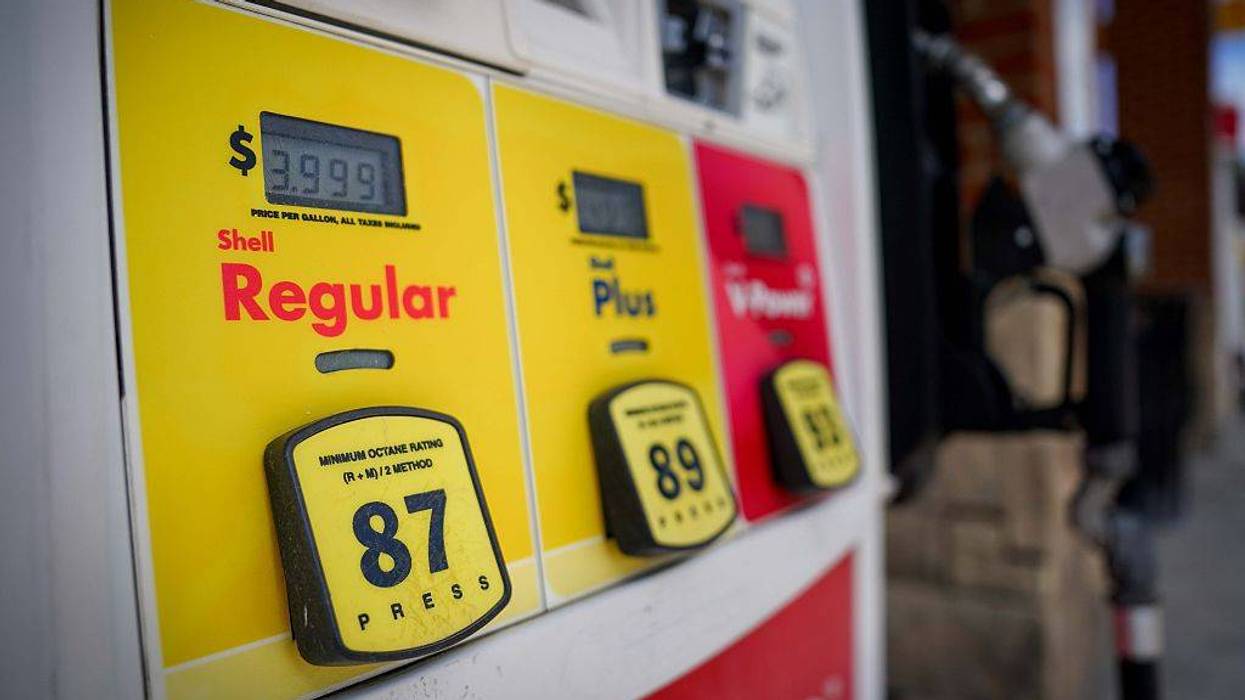
Rep. Don Beyer blamed the surge in gas prices on President Donald Trump's decision to wage "an illegal war against Iran with no plan or strategy."
As President Donald Trump continues threatening to commit war crimes in Iran by bombing power plants, Iran is signaling that it could put a further squeeze on global oil prices by shutting down yet another strait used for transporting petroleum outside the Middle East.
Ali Akbar Velayati, a former Iranian foreign minister and a top adviser to Iran's Supreme Leader Mojtaba Khamenei, threatened in a Sunday social media post to close down the Strait of Bab al-Mandeb, a waterway adjacent to the coast of Yemen that is under control of Iran-backed Houthi militants.
“If the White House dares to repeat its foolish mistakes," Velayati cautioned, "it will soon realize that the flow of global energy and trade can be disrupted with a single move."
As Al Jazeera noted in a Monday report, the Houthis already shut down the strait during Israel's war on Gaza, and doing so again at the same time Iran has shut down the Strait of Hormuz could send global energy prices to unprecedented highs.
"The strait is a vital route through which Saudi Arabia sends its oil to Asia," Al Jazeera reported. "If Bab al-Mandeb and the Strait of Hormuz were both shut, that would block 25%... of the world’s oil and gas supply."
Oil prices have shot up since Trump launched his illegal war with Iran more than a month ago, and on Monday the price of Brent crude oil futures was trading at $110 per barrel, while the average price for gas in the US rose to $4.12 per gallon, according to data from AAA.
Democratic members of the US Congress Joint Economic Committee (JEC) last week released a study estimating that, thanks to Trump's war, Americans are paying 35% more to fill up their cars than they were paying a month earlier.
Rep. Don Beyer (D-Va.), a member of the JEC, pointed to the report in a Monday social media post and said Americans were getting hit with major price shocks because "President Trump decided to wage an illegal war against Iran with no plan or strategy."
Sen. Maggie Hassan (D-NH), Ranking Member of the JEC, told WMUR that Trump's Iran war took an already bad situation for American families and made it worse.
"Families are already being pushed to the brink," Hassan said. "That was true before the war started, by the cost of everything from groceries to rent to healthcare insurance premiums and prescriptions and even more. But now they're being forced to pay more at the pump."
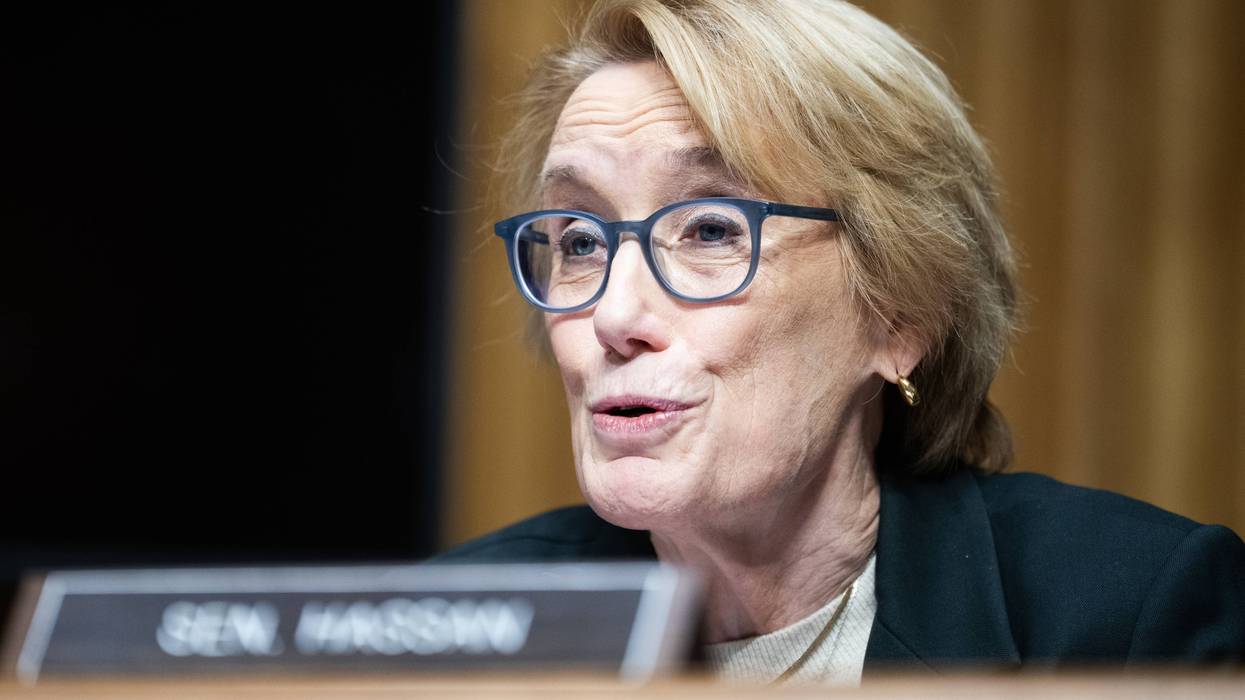
Sen. Maggie Hassan said that while paying back businesses hit by Trump’s illegal tariffs, the administration “refuses to provide relief for families.”
American families could pay a combined $330 billion this year as a result of President Donald Trump's aggressive tariff policy, according to a report released Friday by the Democratic minority on the Joint Economic Committee in Congress.
Although the Supreme Court ruled Trump's use of emergency powers to pass sweeping tariffs illegal last month, US Treasury Secretary Scott Bessent has said the government is expected to bring in "virtually unchanged tariff revenue in 2026" compared with the previous year, as Trump has continued to enact new tariffs using different legal authorities in hopes of getting around the high court's ruling.
If Bessent's projection holds true, the committee's Democrats estimated that the average US household would pay more than $2,500 in tariff costs this year, a considerable increase from the more than $1,700 the committee found Americans paid in 2025.
The minority said it reached its findings based on official data on the amount of tariff revenue collected by the Treasury since 2025 combined with independent research from the nonpartisan Congressional Budget Office (CBO), which found last month that only about 5% of tariff costs are borne by foreign entities. About 30% is taken on by domestic companies, and the remaining 65% is passed on to consumers.
There is already somewhat of an answer in the works for businesses to recoup the illegal duties they've had to pay. Earlier this month, the US Court of International Trade (CIT) ruled that the Treasury Department and Customs and Border Protection must return $166 billion to around 330,000 importers hit by tariffs, including thousands of companies that have filed lawsuits seeking to recover their money.
However, the Trump administration has said it could take more than 4.4 million hours to process all refund requests for more than 53 million entries subject to the now-illegal tariffs.
On Thursday, Brandon Lord, an official with US Customs and Border Protection responsible for tariff collections, informed the court that CBP is about 40-80% done creating a system that will allow importers and brokers to submit refund requests. He said in a filing last week that it could be operational as soon as mid-April.
But Sen. Maggie Hassan (D-NH), the ranking member of the joint committee, lamented on Friday that while businesses are going to be reimbursed with interest, "the Trump administration refuses to provide relief for families" and is instead "choosing to institute new tariffs that will push prices even higher.”
On Thursday, Sen. Martin Heinrich (D-NM), another committee member, introduced a bill to create a new tax rebate for individuals and families hit by tariffs.
The so-called "Working Families Refund" would provide a $600 rebate to individuals earning $90,000 or less annually and to head-of-household filers earning $120,000 or less. Joint filers earning $180,000 or less per year would receive a $1,200 rebate. Each family would also receive an additional $600 for each dependent child.
"This is money that belongs to working families—not the CEOs of Walmart or Amazon or any other big corporation,” Heinrich said.
Trump has pressed ahead with his tariffs despite their rising unpopularity. In an NBC News poll last week, 55% of voters said the tariffs have hurt the economy, while just 33% said they have helped. And as his newly launched war with Iran has heightened economic instability, 62% of voters said they disapproved of his handling of inflation and the cost of living.
Seeking to stop Trump from squeezing a political win out of his policy's failure, Heinrich's bill also forbids the president from putting his own name on the tariff rebate checks, as he famously did with Covid-19 stimulus checks sent months before the 2020 election.
“The president may call the affordability crisis a ‘hoax,’ but working people feel it every time they pay for groceries or everyday essentials," Heinrich said. "This bill will return the money lost to Trump’s tariffs back to the people who paid the price.”
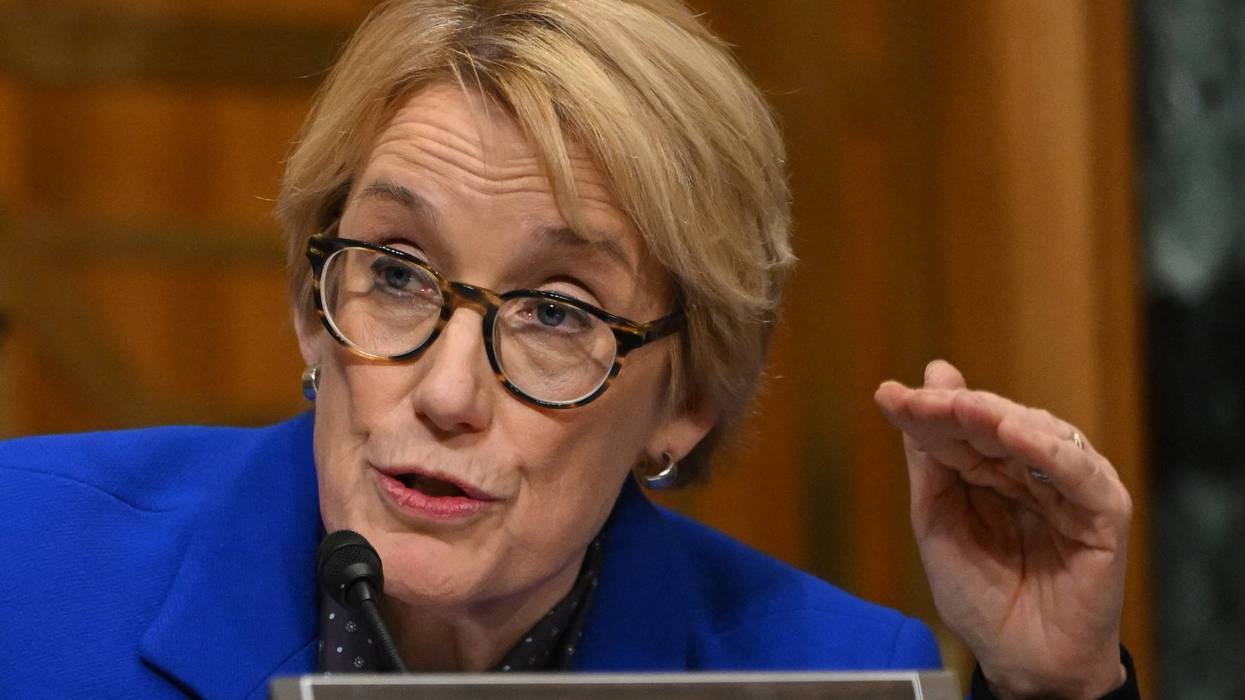
Just four major data broker breaches in recent years have cost US consumers over $20 billion, according to a Thursday report from a key leader in Congress that argues "additional action is needed to protect Americans from scams."
Sen. Maggie Hassan (D-NH), ranking member of the congressional Joint Economic Committee (JEC), launched a sweeping investigation into financial scams last July. As part of it, she's examined data brokers, which collect and sell individuals' personal information. These companies often operate with limited transparency, her report explains, making it "more difficult for individuals to secure their information online and, ultimately, protect themselves from the growing threat of scams."
"Data brokers, for example, can enable scams by making consumers' personal information available to bad actors, who can then use details like Social Security numbers, home addresses, or banking information to develop customized and convincing scams," the report explains. "In some cases, data brokers have allegedly sold this information directly to scammers; in others, cyber hacks of data brokers have exposed individuals' data to uncontrolled circulation online."
Last August, after Wired reported that some data brokers took steps to hide their opt-out pages, Hassan issued investigative requests to Comscore, Findem, IQVIA Digital, Telesign, and 6Sense Insights. The report states that all of the companies but Findem responded with "actions to make their opt-out options more accessible to consumers and other parties," which "included removing 'no index' code that had blocked opt-out pages from search engine results, adding opt-out links in more prominent locations, and publishing blog content explaining how people can exercise their privacy rights."
"Notably," the report continues, "Findem did not respond to the ranking member's requests or written outreach from committee staff and has not removed the 'no index' code from its opt-out page—raising serious concerns about its responsiveness to opt-out requests and commitment to data privacy."
Months after the report was first released, on May 15, the JEC announced that Findem had also "updated its data collection opt-out processes to make it easier for people to protect their personal data." The panel published a supplement about the update.
While recognizing the companies for their positive responses, Hassan's report also stresses that more must be done. For instance, she requested information about efforts "to audit or assess the visibility of opt-out options or the success rates of opt-out requests," and "only 6sense stated that it contracts with third-party auditors to conduct both of these assessments."
Highlighting the need for further action, Hassan's staff estimated that identity theft stemming from four large data broker breaches—Equifax in 2017, impacting 147 million US residents; Exactis in 2018, impacting 230 million; National Public in 2023, impacting 270 million; and TransUnion in 2025, impacting 4.4 million—cost American consumers $20.9 billion.
"As international criminal syndicates increasingly use scams to target Americans, data brokers shouldn't make it harder for people to protect themselves," Hassan said in a statement. "This report shows the scope of the threat that people face from data broker breaches and underscores the importance of protecting Americans' private data."
She added that "it is encouraging that after we launched our investigation, many companies took steps to improve opt-out options for Americans, which in turn can help more consumers keep their information out of the wrong hands."
As a related webpage from the Electronic Privacy Information Center details: "There is no federal law in the United States that adequately regulates the data broker industry. As a result, private companies invade our private lives, spy on our families, and gather our most intimate facts, on a mass scale, for profit. EPIC supports state and federal legislative efforts that set limits on data brokers’ collection, use, retention, and disclosure of personal data."
In recent years, members of Congress have introduced various legislative proposals aimed at reining in data brokers—including in the Security and Freedom Enhancement (SAFE) Act, introduced on Monday. The bipartisan bill would, among other things, close the so-called "data broker loophole" that, as Sens. Dick Durbin (D-Ill.) and Mike Lee (R-Utah) put it, "intelligence and law enforcement agencies use to buy their way around the Fourth Amendment" to the US Constitution.
There are some limits that have passed, including in Protecting Americans’ Data from Foreign Adversaries Act of 2024. Earlier this month, the Federal Trade Commission sent letters reminding 13 companies of their obligations to comply with the PADFAA, which "prohibits data brokers from selling, licensing, renting, trading, transferring, releasing, disclosing, providing access to, or otherwise making available personally identifiable sensitive data of a United States individual to any foreign adversary country or any entity that is controlled by a foreign adversary."
However, as Lartease Tiffith, an expert at American and George Mason universities, laid out in an article for Just Security last November, while Congress enacted the PADFAA "with the right goal," the law, as written, "could penalize legitimate US companies for routine global operations while failing to deliver the targeted national security tool Congress intended."
This article has been updated to include the announcement and supplement about Findem released on May 15.