

SUBSCRIBE TO OUR FREE NEWSLETTER
Daily news & progressive opinion—funded by the people, not the corporations—delivered straight to your inbox.
5
#000000
#FFFFFF
To donate by check, phone, or other method, see our More Ways to Give page.
Daily news & progressive opinion—funded by the people, not the corporations—delivered straight to your inbox.
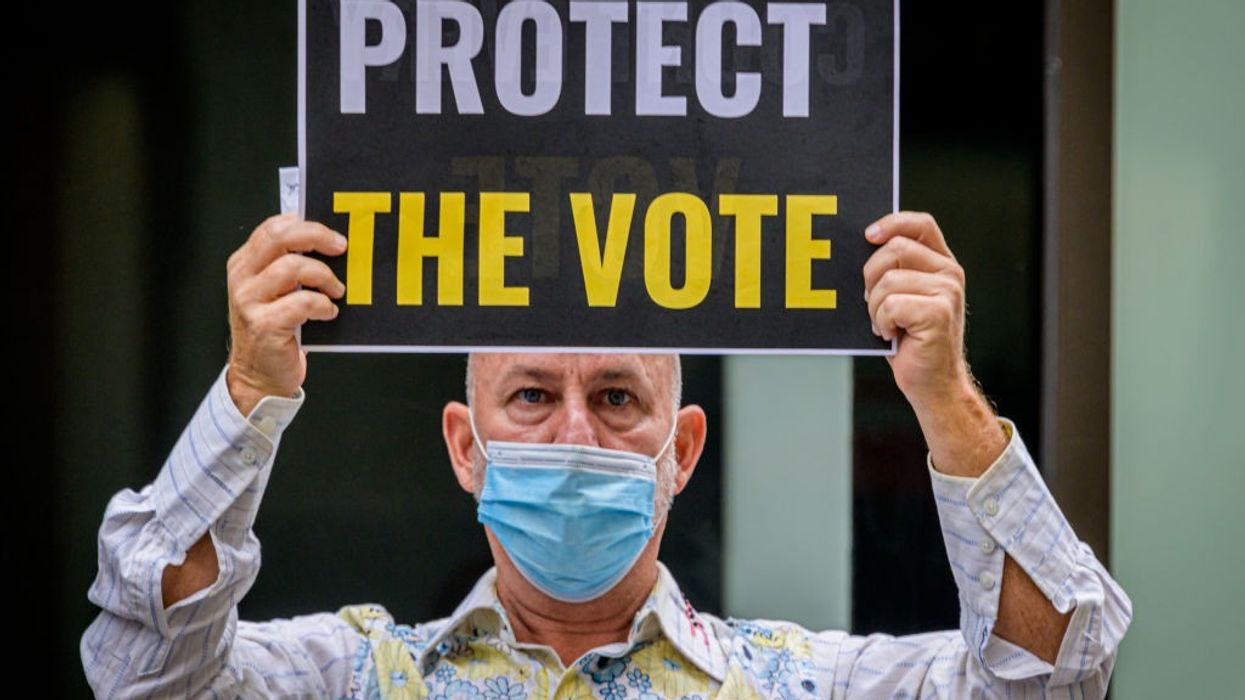
New data find that Americans’ concerns about political violence, democratic participation, and safety at the polls remain alarmingly high.
President Donald Trump has baselessly claimed that there was fraud in California’s recent elections. The Department of Justice sent a federal prosecutor to observe ballot processing in Los Angeles, and the US attorney appointee has said there are “multiple election fraud investigations under way.”
These false allegations levied for years against our election systems by Trump are taking their toll on voters. New data find that Americans’ concerns about political violence, democratic participation, and safety at the polls remain alarmingly high.
This constant stoking of fears over nearly nonexistent voter fraud by Trump and other political figures is harming people’s faith in the system: 44% of Americans across the political spectrum are not confident that our elections will be free and fair, and 59% are now afraid of voter fraud either by ineligible individuals or election officials. People are afraid of each other.
Worse, voters are fearful of exercising their rights and have multiple concerns about involvement in the democratic process. In political situations, only 48% of respondents feel completely safe going to their polling place. Only 22% feel completely safe at events like political rallies and candidate forums, and only 17% feel completely safe attending a demonstration or protest. These numbers are alarming and speak to the lack of trust in our institutions and could be an indicator of significant unwillingness to participate in important aspects of our democratic processes.
When those people were asked who or what was to blame for the divisions, the top answer was President Trump and the Republican Party.
Most concerning is that a full 15% of voters would leave without voting if they witnessed or experienced harassment or intimidation at the polls. That includes 21% of Black people and 22% of Latinos compared with 11% of white people. And 19% of Gen Z and 23% of Millennials would leave. This obviously presents a challenge at a time when it’s imperative that young people are brought into the democratic process and their faith in the system is bolstered.
The Trump administration’s immigration crackdown is also stoking fear. A disturbing number, 33% of Americans, say they are very worried about future violent attacks by Immigration and Customs Enforcement (ICE), higher than fear of groups like the white supremacist Proud Boys at 26% or armed militias at 27%. When asked about an ICE attack, 70% of Black and Latino people reported being worried, while 49% of white people did so.
Of those who feel less safe than in 2022, mass shootings at 57% and general crime at 52% are the top two reasons, as would be expected, but continued political divisiveness is blamed by 51%, right behind crime. Tragically, 70% of Gen Z feel less safe because of mass shootings. And a third of respondents cite the cultural divides created by targeting specific groups as bad for the country. Another third blame fear of extreme right-wing groups as a reason for feeling less safe, compared with 17% who named fear of extreme left-wing groups.
At this moment, the political landscape of America seems to be one where acts of violence and unrest are expected. Furthermore, expectations of disruption, dispute of election results, and even the advent of another January 6 following the next presidential elections are high. Throughout the survey, people cited political and racial divides as areas of concern when it comes to fears and violence. When asked if our nation and people are as or more divided as we were at the Civil War, 69% said yes. The response was 68% four years ago.
And when those people were asked who or what was to blame for the divisions, the top answer was President Trump and the Republican Party. The number has risen to 52% in 2026 from 41% in 2022. Most significant are the changes in the Republican and Independent responses since 2022. Republicans reported a sharp increase from only 8% in 2022 to 19% in 2026 saying that Trump is to blame for the nation’s divided nature. And Independents went from 38% to 50% blaming Trump in 2026.
Given these fears, what can secretaries of state and election officials do to ensure voters feel safe exercising their rights? Well, there is one issue that is broadly agreed to by those polled: 68% of Americans fully support banning guns within 100 feet of polling stations, including 62% of gun owners. Black and Latino Americans report their greatest fear is others carrying guns at the polls. Today, 17 states have prohibitions on open and concealed carry of firearms at polling places and a total of 20 ban concealed carry. That’s up from 12 states in 2022.
Based on this alarming data, we recommended to secretaries of states across the country earlier this month that states:
In addition to stopping the false election fraud narrative, taking these actions is critical to protect voters, especially as President Trump’s Department of Justice (DOJ) has not taken the usual steps to establish a “command center” to monitor and address the typical emergencies that pop up around Election Day, and which would address things like voter intimidation and targeted disinformation meant to interfere with a fair process.
The DOJ has also canceled election-integrity training sessions for prosecutors and FBI agents, deleted a 281-page guide to prosecuting elections offenses, fired most of the lawyers in its Public Integrity Section, and failed to replace the director of its Election Crimes Branch. It is up to state governments to fill the breach.
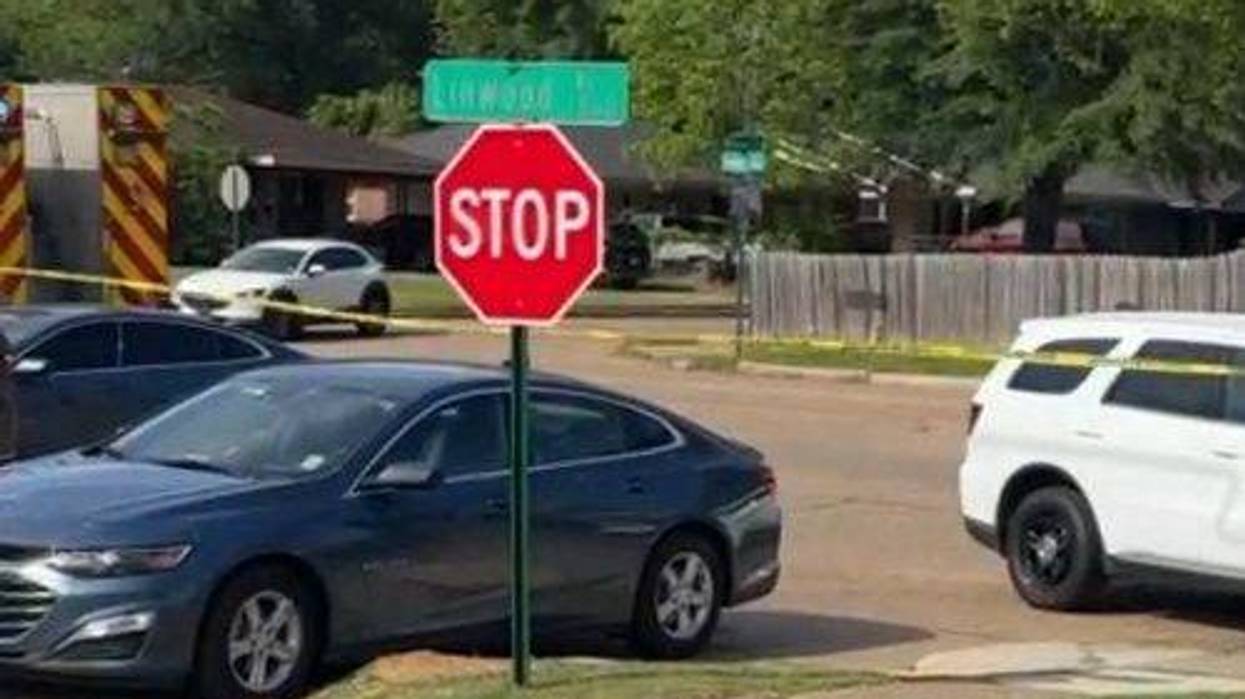
"This is a tragic situation, maybe the worst tragic situation we’ve ever had in Shreveport," said the mayor.
This is a developing story… Please check back for updates…
Eight children were killed on Sunday morning in Shreveport, Louisiana, in what authorities described as a domestic disturbance.
Police Chief Wayne Smith reported that the victims were between the ages of 1 and 14 years old. Officials are still gathering information about the spree killing, which they say took place across three different locations. A total of ten people were shot.
"This is an extensive scene, unlike anything most of us have ever seen," Smith said.
Gunshot victims were found at two homes and at the scene of a carjacking. The suspected gunman was shot dead in nearby Bossier City by police during a car chase.
Two adult women were also reportedly shot. One of them has life-threatening injuries after being shot in the head. One of the women is believed to have had a relationship with the suspect, whose name has not yet been released.
Police said some of the children who were killed were also "descendants" of the alleged shooter.
There have been at least 114 mass shootings in the United States in 2026, according to the Gun Violence Archive, a decline from previous years. At least 65 children between ages 0-11 have been killed and 124 injured in gun violence incidents this year.
"This is a tragic situation, maybe the worst tragic situation we’ve ever had in Shreveport," said Mayor Tom Arceneaux. "So, right now we’re going to process the information, and it's in very good hands."
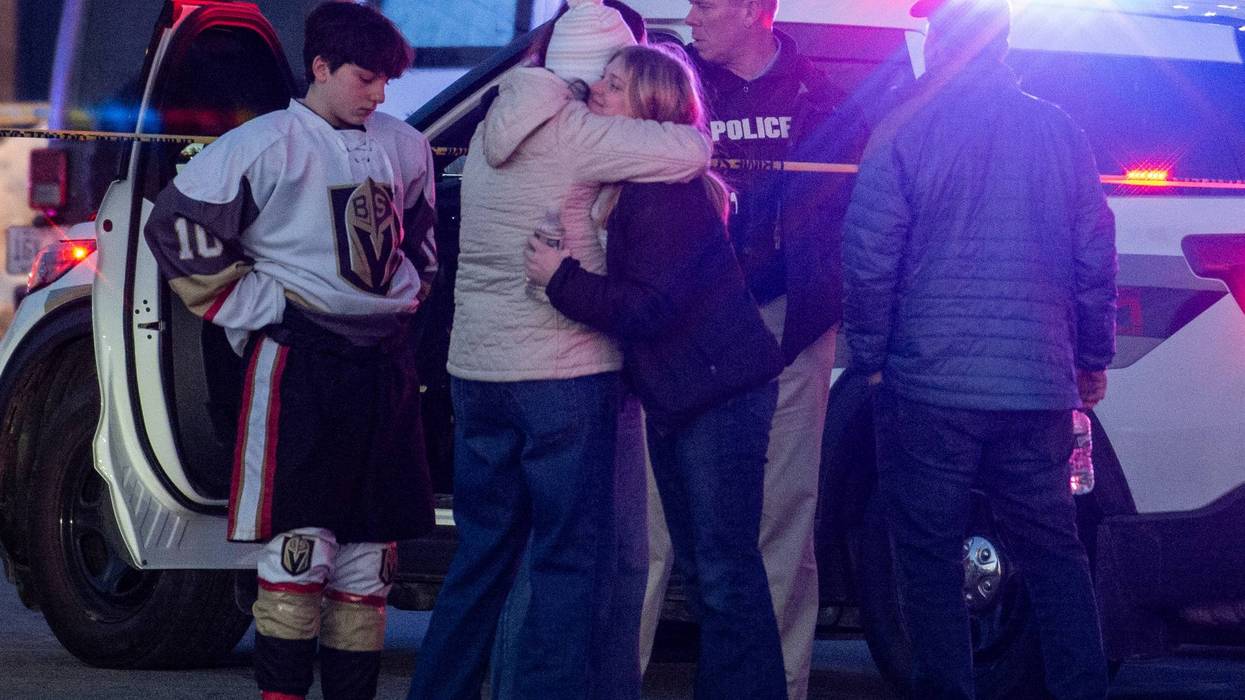
"This is no way for our kids to live," said one gun control advocate.
Child safety advocates renewed calls for tighter gun control measures following a Monday mass shooting at a high school hockey game in Rhode Island that left three people including the gunman dead and three others injured.
WPRI reported that the father of a North Providence High School senior shot five members of his family at a hockey game at Dennis M. Lynch Arena in Pawtucket at around 2:30 pm local time. The student's mother was killed at the rink, while his sister died after being rushed to a local hospital. Three other relatives are reportedly in critical condition at Rhode Island Hospital.
"We realized pretty quickly that it was a gunshot. It was very scary," hockey player Silas Core said during an interview with WCVB, adding that he and his teammates rushed into a locker room.
"We barricaded the locker room with our bodies. We were all pressing up against it," he said. "Everybody was, you know, worried about our parents and everybody."
Core's mother told WCVB that everything "just happened so fast."
"You don't even know. You know, you just see everybody else on the ground and you kind of get on the ground," she said. "This is really disturbing, you know? And it's the other team's senior day. Like, it was supposed to be a special day for the team."
Pawtucket Police Chief Tina Goncalves said the shooting appeared to be “a family dispute," a “tragic” but "isolated" incident.
A woman who said she was the shooter's daughter told WCVB that the man suffered from mental health problems.
"He shot my family, and he's dead now," she said.
FBI Director Kash Patel said on X that the agency "will provide state and local law enforcement any and all resources necessary and keep the public updated as we are able."
"In the meantime," he added, "please pray for the victims and their families."
Democratic Rhode Island Gov. Dan McKee said that "as governor, a parent, and a former coach, my heart breaks for the victims, families, students, and everyone impacted by the devastating shooting at Lynch Arena in Pawtucket."
McKee added that he is "praying for our communities."
Gun control advocates demanded more than the customary thoughts and prayers.
People in this country should be able to enjoy school athletics without the fear of being gunned down. When will enough be enough?
— Moms Demand Action (@momsdemandaction.org) February 16, 2026 at 2:29 PM
"As a native Rhode Islander who has played many games in that very rink, this tragedy hits especially close to home," Stop Gun Violence board chair Brian Lemek said. "That space holds memories of community, competition, and joy—and now it’s filled with pain no community should have to carry."
"The only thing young athletes should worry about is the scoreboard—not their safety," he continued. "Our kids deserve spaces that bring communities together, they deserve to be safe, and they deserve a future free from this constant fear."
"This is no way for our kids to live," Lemek added. "We need to stop this madness."
Monday's incident follows December's mass shooting at Brown University in Providence—which is less than 10 miles from Pawtucket—that left two people dead and nine others wounded.
"We can and should work together to promote responsible gun ownership and pass legislation like safe storage laws and red flag laws—widely supported measures that keep guns out of dangerous situations while respecting responsible ownership," Lemek asserted Monday.
"I’m holding the victims and their loved ones in my heart," he added, "and I’m more determined than ever to build a future where our kids are safe in the places meant for joy."
Has anyone noticed how much peace has broken out in the USA ever since Donald Trump descended that golden escalator onto the stage of American politics?
This past January 15, the 2025 Nobel Laureate for Peace, Maria Corina Machado, took her prize medal, encased in a gold (of course) and glass frame, to the White House and presented it to our president. Beneath the medal, Machado had inscribed these words:
Presented as a Personal Symbol of Gratitude on behalf of the Venezuelan People in Recognition of President Trump’s Principled and Decisive Action to Secure a Free Venezuela. The Courage of America and its President Donald J. Trump, will Never be Forgotten by the Venezuelan People.
While our “peacemaker-in-chief” was no doubt gladdened by Machado’s unprecedented gesture, he still sounded a bit pouty by claiming that having “put out eight wars, in theory, you should get [a Nobel Peace Prize] for each war” in which he boasted that he had “saved millions and millions of lives.”
The eight “wars” he takes credit for ending—Israel-Hamas, Israel-Iran, India-Pakistan, the Democratic Republic of Congo-Rwanda, Armenia-Azerbaijan, Cambodia-Thailand, Serbia-Kosovo, and Egypt-Ethiopia—on the one hand, were all short-lived ceasefires or border skirmishes rather than the end of formal wars and, on the other, are places where tensions persist and conflict continues. Bottom line regarding all these faux wars is that Trump is as entitled to claim Machado’s Nobel Peace Prize as he is to take credit for walking on the moon long before Neil Armstrong did.
Where are our patriots—progressive patriots, five, eight, ten-million strong—called to the nation’s capital, like the “patriots” of January 6, willing to take our stand and storm the White House?
Closer to home, has anyone noticed how much peace has broken out in the USA ever since Donald Trump descended that golden escalator onto the stage of American politics?
In his very first very “presidential” campaign speech, he launched his first anti-immigration salvo: “When Mexico sends its people, they’re not sending their best… They’re bringing drugs. They’re bringing crime. They’re rapists. And some, I assume, are good people.”
Since Trump entered politics, a 2020 report from the FBI revealed that hate crimes increased by just under 20% in America.
According to CNN (January 26, 2026), the Obama years (2009-2016) saw 213 mass shootings at schools, churches, or shopping areas—an average of 26.6 shootings per year. Since Trump (2017-2025), the total number has risen to 556 and an average of 61.8 per year.
At Charlie Kirk’s memorial service, Trump contrasted his approach to campaigning to that of Charlie Kirk—himself no saint in the political arena:
He did not hate his opponents. He wanted the best for them. That's where I disagreed with Charlie. I hate my opponent, and I don't want the best for them… maybe they can convince me that that's not right, but I can't stand my opponent.
Since Trump, instances of school bullying and antisemitic attacks have risen precipitously. These included the mass shootings in the Tree of Life Synagogue in Pittsburgh, Pennsylvania, and in a Walmart supermarket in El Paso, Texas, conducted by white supremacists who embraced racist “Great Replacement” conspiracy theories popular in their circles. As to instances of bullying, just after Trump’s 2024 election victory an elementary school teacher in Georgia reported, “This is my 21st year of teaching. This is the first time I’ve had a student call another student the N-word.”
In 2022 a deranged attacker broke into the San Francisco home of then-Speaker of the House Nancy Pelosi (D-Calif.). Finding her husband at home, he asked, “Where’s Nancy?” Learning she was in Washington DC, he began assaulting Paul Pelosi, beating him with a hammer and fracturing his skull. Several days later, a number of Republicans, including the president, made light of the attack.
The president’s official coin commemorating the 250th anniversary of the American Revolution bears the face of Trump on one side and on the other his post-assassination image of a bloodied but defiant Trump admonishing his fellow Americans to “Fight! Fight! Fight!”
During his 2016 campaign rallies, he urged his followers to punch protesters in the mouth, promising to pay their lawyers’ fees.
In his first term, on immigration he wondered why the US could not get more migrants from, say, Norway instead of from “shithole countries” in Africa or elsewhere.
In his first off-year election (2018) Alexandria Ocasio-Cortez (D-NY), Ilhan Omar (D-Minn.), Ayanna Pressley (D-Mass.), and Rashida Tlaib (D-Mich.) were all elected to the US House of Representatives and became known as “The Squad.” On July 14, 2019, Trump publicly advised them to “go back and help fix the totally broken and crime infested places from which they came. Then come back and show us how it is done.”
Rep. Adam Schiff (D-Calif.) led the fight(s) to impeach Trump, one of whose followers left Schiff a warning in the congressman’s voice mailbox: “I’m gonna f-ing blow your brains out,”
As his first term was ending, Trump encouraged some 2,500 of his closest friends to march on Congress and “fight like hell” on January 6, 2021. Later, very early in his second term he pardoned them and awarded some of them the Presidential Medal of Freedom. When informed that the “patriots” had hung a noose from makeshift gallows on Capitol grounds to “hang Mike Pence,” as the chant admonished, Trump, the defender of evangelical Christians, replied, “So what?”
All through his second campaign for the presidency (2024) he centered his message on anti-immigration, frequently referring to immigrants as “not even human. They’re animals.” He warned that these newcomers would increase crime in the streets and, in a quotation from Hitler’s Mein Kampf, “poison the bloodstream” of America.
All the while, America’s megalomaniacal monster waved an imaginary Christian flag and promised to fight for it. That is one reason evangelicals were less than unenthusiastic about a potential Mike Pence presidency. As sociologists of religion Phillip Gorski and Samuel Perry explained, “[T]he fight was more important than the faith… Pence had the faith, but Trump had the fight. And the fight was really all they cared about.” (The Flag and the Cross: White Christian Nationalism and the Threat to American Democracy, 3.)
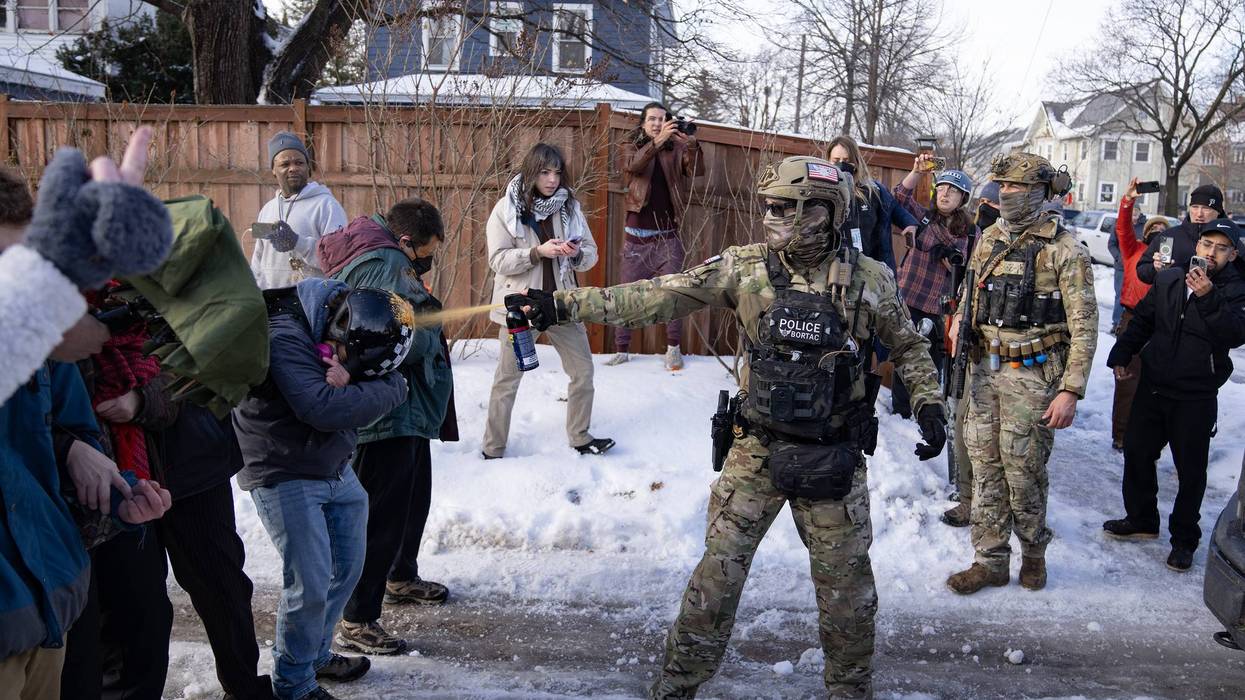
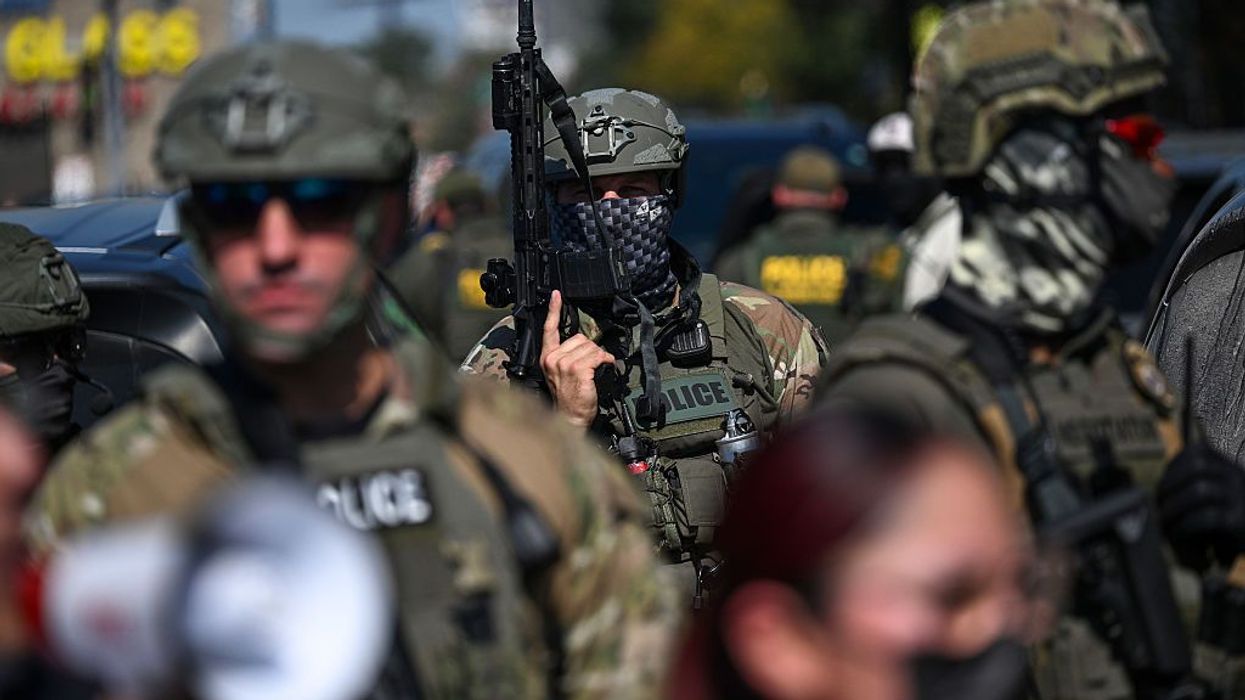
All of which has brought us through several weeks of clashes between masked Immigration and Customs Enforcement agents and American citizens using their First Amendment right of free speech to protest Trump’s dragnet of blue states, searching and destroying Black and brown families—some illegal, some documented, some American citizens—that have brought the nation to the boiling point.
Nowadays we have no “Crosby, Stills, Nash, and Young” lamenting “four dead in Ohio.”
But we do have a president who makes Richard Nixon look like a Boy Scout. And we have Bruce Springsteen:
King Trump's private army from the DHSPeace, it would seem, is not what it’s cracked up to be. In Trumplandia, it appears, P-E-A-C-E spells MURDER.
Guns belted to their coats
Came to Minneapolis to enforce the law
Or so their story goes
Against smoke and rubber bullets
In the dawn's early light
Citizens stood for justice
Their voices ringing through the night
And there were bloody footprints
Where mercy should have stood
And two dead, left to die on snow-filled streets
Alex Pretti and Renee Good
Oh, our Minneapolis, I hear your voice
Singing through the bloody mist
We'll take our stand for this land
And the stranger in our midst
Here in our home, they killed and roamed
In the winter of '26….
Now they say they're here to uphold the law
But they trample on our rights
If your skin is black or brown, my friend
You can be questioned or deported on sight….
Oh, our Minneapolis, I hear your voice
Singing through the bloody mist
Here in our home, they killed and roamed
In the winter of '26
We'll take our stand for this land
And the stranger in our midst
We'll remember the names of those who died
On the streets of Minneapolis...
But where are our patriots—progressive patriots, 5-, 8-, 10-million strong—called to the nation’s capital, like the “patriots” of January 6, willing to take our stand and storm the White House?
In 1970, massive numbers of protesters marched to Kent State University. Millions of others showed America that nonviolent protest could work. So where are those of us willing to chant; spill some of our own blood, if necessary; and chant, “Hey, hey, Donald J, how many protesters did you kill today?” until “We the People” come face to face with Mr. Trump, call on Congress to invoke the 25th Amendment, and tell them all: “NO MORE KINGS!?”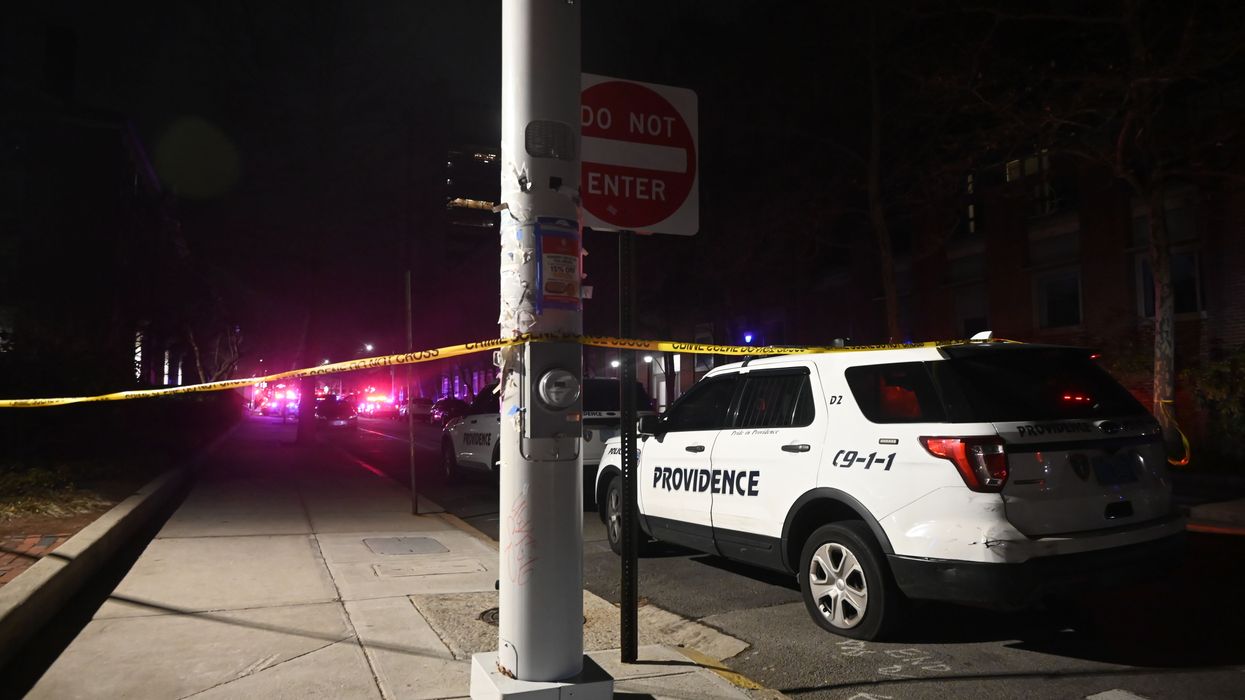
Rather than embrace human complexity, we choose to create enemies. But this is exactly the mindset that motivates mass shooters.
I stare blankly at the news. Little men with guns once again stir the country—the world—into a state of shock and grief and chaos. Attention: Every last one of us is vulnerable to being eliminated... randomly,
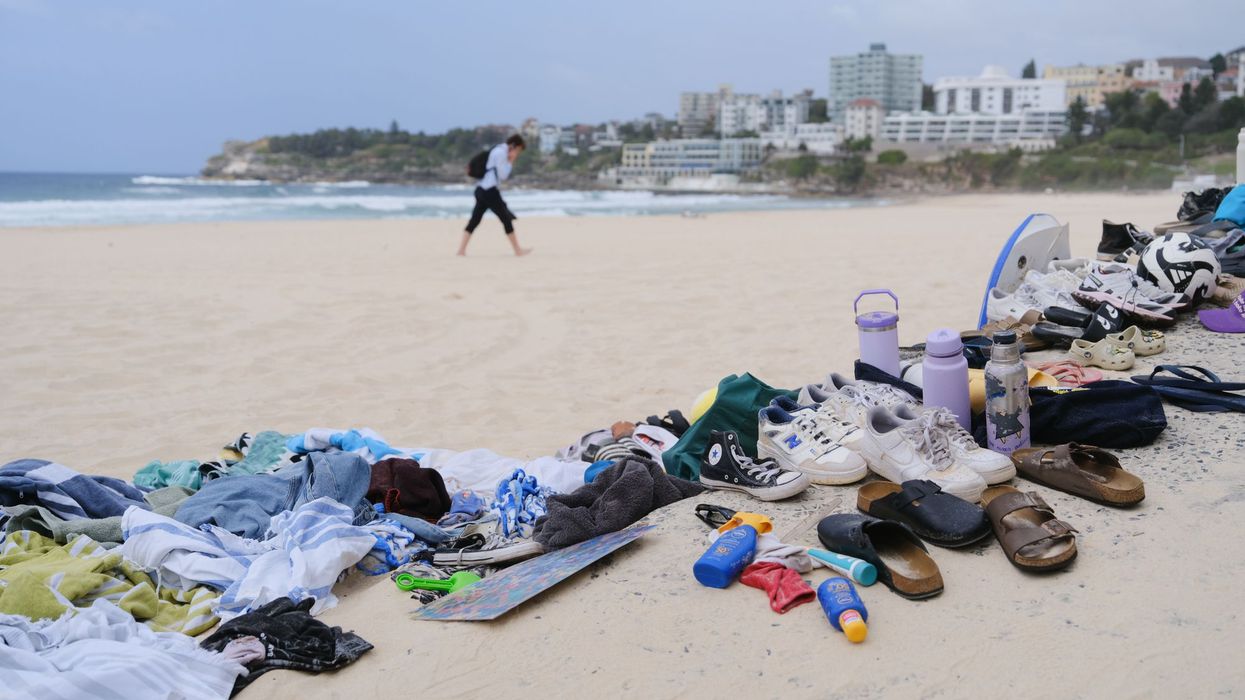
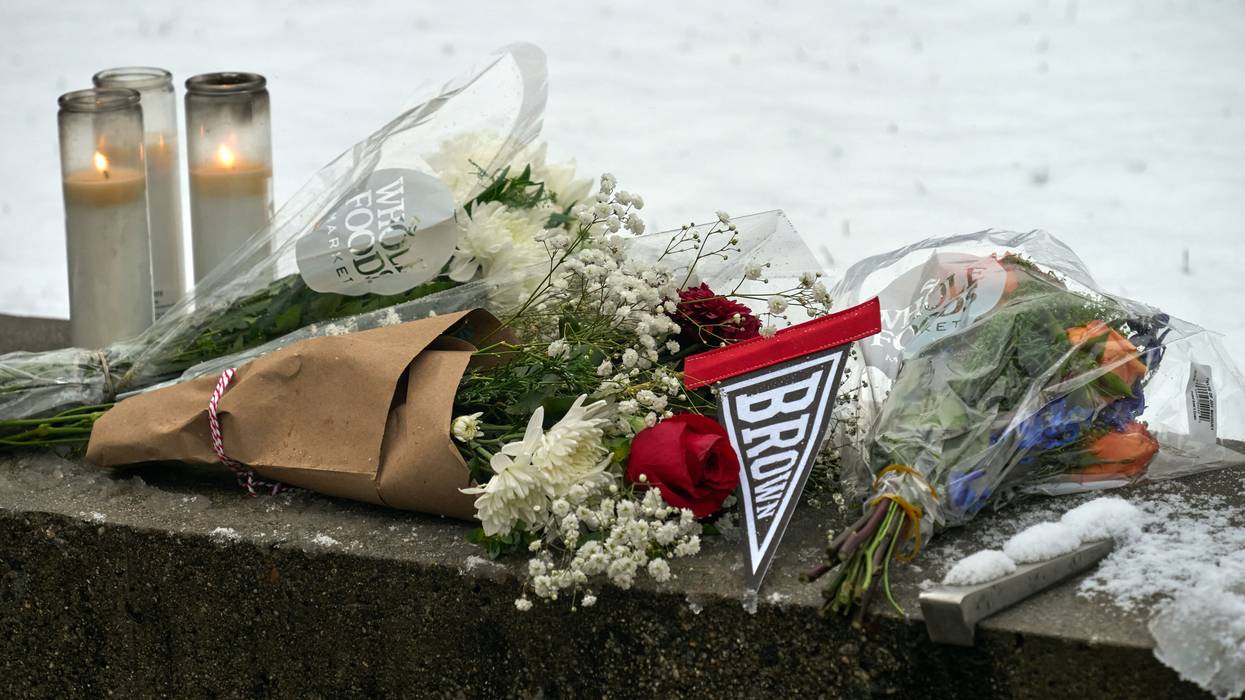
On Saturday, December 13, there’s a classroom shooting at Brown University, in Providence. Rhode Island. Two students are killed, nine others wounded. A day later, in Sydney, Australia—in the midst of a Hanukkah celebration at Bondi Beach—two gunmen fire into the crowd of celebrants. Fifteen people are killed. The shock is global. The grief and anger flow like blood.
So do the questions: Why? How can we stop this? How can we guarantee that life is safe?
Usually, the calls for change after mass shootings focus on political action: specifically, more serious gun control. Ironically, Australia does have serious gun control. And, unlike the US, mass shootings there are extremely rare, but they still happen, which indicates that legal efforts can play a significant, but not total, role in reducing violence.
Good guy vs. bad guy—good violence vs. bad violence—is the essence of linear thinking.
But that ain’t gonna happen in the USA—not until God knows when, which seriously expands and intensifies the nature of the questions we must start asking. Yeah, there are an incredible number of guns in the United States. Some 400 million of them. And embedded into American culture along with the presence of guns is the belief that they are necessary for our safety, even as they also jeopardize it. Only a good guy with a gun can stop a bad guy with a gun. What a paradox.
And here’s where the process of change must begin. Good guy vs. bad guy—good violence vs. bad violence—is the essence of linear thinking. One person wins, one person loses. And if I draw my gun first, yeehaw, I’m the winner. This simplistic mindset is, and has long been, part of who we are—ultimately resulting, good God, in stockpiles of nuclear weapons, giving humanity the opportunity to commit mass suicide.
And while nukes may be declared to be simply deterrents for our enemies—threatening mutually assured destruction (oh, the MADness)—the global, and especially the US, non-nuclear military budget is itself almost beyond comprehension: larger by far than what we spend on healthcare, education, diplomacy, or environmental salvation, aka, human survival.
As Ivana Nikolić Hughes writes at Common Dreams: “But I think that the problem is far deeper than lack of gun control. The problem lies in having a state, a society, a world, in which violence is not only excused and sanctioned on a regular basis, but celebrated both as a matter of history, but also the present and the future.”
And this thinking isn’t sheerly political. It permeates our social and cultural infrastructure. And it gets personal. “We live in a culture of violence, where weapons are a symbol of power,” Ana Nogales writes in Psychology Today. And having power—over others—also means having the ability, and perhaps the motive, to dehumanize them. And this is the source of human violence—both the kind we hate (mass killings) and the kind we worship (war).
All of which leads me to a quote I heard the other day, in regard to the Bondi Beach shootings, which left me groping for sanity. The speaker was Indiana Republican Sen. Jim Banks, speaking on Fox News. “In America,” he said, “we have to do more to deport terrorists out of the United States to make sure this doesn’t happen in the homeland, and root out antisemitism around the world as well.”
Flush ’em out! All of them—you know, the ones that are different from us. Skin color, whatever. This is the essence of dehumanization, and it’s how we govern. Rather than embrace human complexity, we choose to create enemies and declare them... deportable, and if necessary, killable. This mindset is infectious. Just ask the students at Brown University or the Hanukkah celebrants at Bondi Beach.

Australia’s response to a December 14 mass shooting reminds us that violence is not an inevitability to be endured; it is a problem to be confronted.
Days ago, two tragedies unfolded on opposite sides of the world—each marked by gun violence and grief, yet met with starkly different national responses.
On December 14, on the first night of Hanukkah, a gathering on Bondi Beach in Sydney turned into horror when a father and son opened fire during a “Hanukkah by the Sea” celebration, killing 15 people and wounding 40 in what Australian authorities called an antisemitic terrorist attack. The carnage would have been much worse were it not for the heroic act of Ahmed al-Ahmed, an Australian citizen who migrated from Syria two decades ago.
The day before in Providence, Rhode Island, a shooter opened fire at Brown University during finals, killing two students and wounding nine. As of this writing, authorities are actively searching for a suspect—and a motive.
These shootings—one at a beloved public beach, the other on an Ivy League campus—expose not only shared grief but radically different understandings of responsibility. In Australia, sorrow was quickly followed by collective resolve. The US followed a familiar ritual: shock, condolences, and political paralysis. If I had a dollar for every politician’s “thoughts and prayers,” I could join the billionaire class those officials so eagerly protect.
If we are serious about honoring the victims and survivors in Sydney, at Brown, and everywhere else touched by mass shootings, expressing grief is not enough.
Australian Prime Minister Anthony Albanese condemned the Bondi Beach massacre as an act of “evil beyond comprehension,” pledging solidarity with the Jewish community and signaling renewed efforts to strengthen gun laws: tougher licensing, tighter oversight, and renewed limits on gun ownership.
Australians remember what followed the 1996 Port Arthur massacre. Within days, the country banned rapid-fire weapons, bought back and destroyed nearly 1 million firearms, and created a national gun registry. The result? Decades with virtually no similar mass shootings.
In the US, by contrast, each new tragedy yields the same results: more guns, more shootings, more grief; this in a country with more guns than people! And once again, the gendered reality of this violence is almost entirely ignored. There's a reason we never hear the phrase, gunwoman.
The overwhelming majority of US mass shooters are male—frequently young, usually white, and commonly driven by grievance, isolation, and entitlement. This is not incidental. It’s a pattern demanding honest cultural reckoning. For decades, we’ve failed to challenge destructive norms of masculinity. No surprise that those norms keep finding their most lethal expression through guns.
Let’s be clear: This is not about demonizing men. It’s about telling the truth. We train boys to suppress vulnerability, to equate manhood with dominance, and to interpret frustration as humiliation. When that script collides with easy access to weapons designed to kill many people quickly, the outcome is predictable. Every time. Full stop.
Australia acted on that reality. After Port Arthur, it banned fully automatic weapons, semi-automatic rifles, and pump-action shotguns—and treated firearms not as sacred objects, but as regulated tools with enormous public risk. Rather than deny their grief, Australians transformed it into collective responsibility, identifying gun violence as a systemic problem requiring systemic solutions.
In the US, mass shootings are still framed as isolated incidents—acts of deranged individuals—or worse, as unavoidable features of national life: school shootings; movie theater shootings; grocery store shootings; church, mosque, and synagogue shootings. Together they form a normalized nightmare we refuse to confront honestly, ignoring the 393 mass shootings so far in 2025, according to the Gun Violence Archive.
At Brown University, students and families are now living with the trauma of a field of learning turned into a killing field. Final exams meant to test academic mastery became tests of life and death. The remainder of the semester was canceled, and students headed home to process a violent assault rather than celebrating the end of the semester.
And yet, even as Brown students grieve, politicians employ familiar distractions—talking about mental health or spiritual resilience—anything to avoid confronting easy access to weapons of mass destruction.
Australia’s response reminds us that violence is not an inevitability to be endured; it is a problem to be confronted. Their approach is not perfect; nor is their country. Their strategy reflects a fundamental belief: Government exists to protect lives, not to fetishize weapons. The US, trapped in a twisted love affair with the Second Amendment, continues to block meaningful reform.
Still, this country has a choice. We can center honest conversations about masculinity and how we raise boys. We can invest in early interventions for alienated youth. We can regulate weapons of mass killing. Or we can keep normalizing trauma and, laughably, calling it freedom.
When Brown students return to campus, many will have already spent weeks organizing for tougher gun laws. I predict students across the country will join them.
If we are serious about honoring the victims and survivors in Sydney, at Brown, and everywhere else touched by mass shootings, expressing grief is not enough. Action—the antidote to despair—is required. Now.
The true problem lies elsewhere, such as in economic and power interests, the old drivers of wars and genocides.
On December 13, 2025, a man with a gun killed two students in a classroom at Brown University and left half a dozen seriously injured. This tragedy did not make headlines around the world because shootings are a tradition in the United States. According to various statistics, for a century (it would be necessary to add the colonization of centuries before, carried out by religious fanatics against Indians, Blacks, and Mexicans), mass murderers have tended to be supporters of the supremacist right, but it is they who blame diversity for all the ills of their societies. Fear is big business.
This massacre took a back seat when, the following day, 11 people were killed in Sydney, Australia. The victims were members of a Jewish community celebrating Hanukkah. Since the ban on semi-automatic rifles and strict regulation of firearms in 1996, massacres in Australia are a rarity.
Immediately, social media was flooded with explanations about the danger of Islam to the world, even when it was revealed that the man who stopped and disarmed one of the two attackers in the midst of the massacre was a 43-year-old Muslim, father of two children, who was shot twice. Benjamin Netanyahu will probably honor him with the Israel Prize in Human Values and Civil Heroism.
A couple of hours later, the richest Argentine in the world and resident of Uruguay, Marcos Galperin, who presents himself as the “founder and executive chairman of Mercado Libre” and Konex Prize winner, commented on the massacre with the same prejudice that the killers surely share: “Welcome to the new multicultural and diverse Australia.”
The now demonized multiculturalism is as old as the domestication of fire.
Could it be that the problem perceived by those who are against diversity is skin color? Why are non-Caucasians always the problem? When, for centuries, white people devoted themselves to assaulting, destroying, and massacring the rest of the world, they were only bringing civilization to those “shithole countries,” to use President Donald Trump's language to refer to the countries of the South. “Why do we accept people from these shithole countries, like Somalia, and not accept people from Norway, Sweden, or Denmark?” Perhaps because, to them, we are the shithole country.
The common factor is always the same: The problem is not cultural diversity, but something as superficial as skin color. When they find out that the native British and Belgians were black-skinned people, their blood sugar rises.
The now demonized multiculturalism is as old as the domestication of fire. There was no trade, let alone free trade (an ancient activity until it was destroyed by capitalism), without cultural, linguistic, religious, and technological exchange. From the 10th century until the beginning of the European slave trade, the Kingdom of Nri achieved almost 1,000 years of coexistence based on the principles of “peace, truth, and harmony.” The Nri culture, located in what is now Nigeria, shared with the Ubuntu philosophy of the southern continent its collective conception of the individual and its conception of peace and social harmony as higher goals. Its communal ownership of land and production, and its intense trade with other nations as far away as Egypt, ended with the arrival of Europeans and the novel slave trade based on skin color.
The same was true of Native American peoples. In most Indigenous cultures, foreigners who were adopted not only ended up integrating into the new society, but also tended to occupy a place of great respect in the social pyramid. The same cannot be said of the deeply racist societies of the revered Free World (“the free race,” white)―unless we are talking about sepoy soldiers.
In the Great Peace League of North America, the Iroquois adopted foreigners from all cultures and languages, including Europeans, who often did not want to return to “civilization.” Native diversity also included members of different genders (men and women “of two spirits”). These were not naive savages. For centuries, they defeated European armies armed with advanced technology, not because of their arrows but because of their superior social organization. They even expanded throughout the Ohio River basin in response to attacks by British and French armies. It was not for nothing that the natives mocked the white man's concept of freedom: “We are free,” they said. “We are not desperate to be rich, nor do we obey the orders of our leaders when they do not convince us. You submit to anything: kings, captains, priests...”
We could continue with other cultures, such as the Arab Empire, which lasted several centuries. Jews, Christians, and Muslims coexisted, prospered, and multiplied for centuries in one of the most outstanding civilizations in science, rational analysis, and technology.
Of course, if we look at the entire history of humanity, we will always find plenty of examples of violence, massacres, and genocide. No one can say that in these centuries of coexistence there were no conflicts, wars, and brutalities, because that is a chronic ailment of the human species. But if we compare realities, we can say that our contemporary world, which prides itself on being advanced and civilized, has stood out for its exceptional brutality. Suffice it to mention the world wars, the atomic bombs, or the imperial dictatorships imposed by the “sacrificed white man” (Rudyard Kipling, Theodore Roosevelt) on the rest of humanity. Always victimizing themselves for their own crimes. As Ukrainian Golda Meir said, “We can never forgive the Arabs for forcing us to kill their children.”
Although we cannot say that there are welcome forms of hatred, we can say that there is no single type of hatred. Slaves hated their masters for what they did, and masters hated their slaves for what they were. It is one thing to hate for what one is and another to hate for what one does.
If there is a problem with the ancient culture and morality of diversity and tolerance, it is that racists who promote civil and imperial violence are protected by the law. In fact, we reward them. Otherwise, it would be impossible to understand why the sect of global billionaires is racist, sexist, and hates the poor, whom they divide and parasitize every day.
A view from the front of a college classroom amid fresh carnage both near and far.
I write this from the front of a Columbia classroom in which about 60 first-year college students are taking the final exam for Frontiers of Science. Yes, it’s a Sunday, but the class is required of all Columbia College students and so having the exam on the weekend ensures that there won’t be conflicts with the exams for other courses they are taking. The 60 students in my classroom are a fraction of the nearly 740 taking the course this semester.
The exam began at 2 pm, less than 24 hours after the shooting at Brown University, and just hours after many of us learned about the shooting in Sydney, Australia. Given these devastating events, I offered this morning that anyone who was adversely affected could take the exam later in the week or take what at Columbia is called an incomplete, which means that they would take the final exam at the start of next semester and only then be assigned a grade. Only about two dozen students took this offer, some sharing personal stories about having close friends from childhood or high school among the victims at Brown. It makes sense that the high-achieving students that Columbia attracts would have high-achieving friends at Brown. Some also hail from Providence and have had impacted family members.
It's hard to process now, as my students are going through a 30-page exam (there are lots of figures and tables in it, plus spaces for them to add their answers, but yes, it’s a long exam) the senselessness of mass shootings in general, with the one in a classroom full of primarily first-year college students going through a Saturday afternoon final exam review for Principles of Economics weighing heavily as I sit here. Many of the students in Frontiers of Science also take a course here named Principles of Economics. The parallel is heartbreaking. I cannot imagine what I would have done had a shooter walked in on the review I held just a few days ago. I don’t think any of us can, except for those who have experienced mass shootings themselves. Sadly, it seems that at Brown there are two students with such prior experiences.
As I look at my students, still busily working on the exam, and recall the joys I’ve experienced teaching them and getting to know them this semester, I feel that we owe them so much more than what’s on offer at the moment.
As is typical in American society, there will be thoughts and prayers, and arguments about gun control and how we haven’t done enough to ensure that the incomprehensible violence does not happen again. I was in my final year of college when Columbine happened in 1999. I remember seeing the news in the townhouse near the Caltech campus that I shared with three housemates. We were devastated then. More than 25 years after Columbine, the feeling of devastation is sadly familiar, but also insidious.
The fact that the second shooting of the weekend took place in Australia, a country with strict gun laws, complicates the debate somewhat, demonstrating that this is not just about gun control. Sure, more gun control in the US would help; after all, our rate of mass shootings per capita is far higher than in all of the other developed countries. But I think that the problem is far deeper than lack of gun control. The problem lies in having a state, a society, a world, in which violence is not only excused and sanctioned on a regular basis, but celebrated both as a matter of history, but also the present and the future.
We salute our troops, flaunt our deadliest weapons as a matter of pride, justify wars in the name of democracy, and applaud leaders who may have committed war crimes and belong in courtrooms rather than in polite society. Journalist Glenn Greenwald recently made this last point when discussing why so many young people are buying what Nick Fuentes is selling and not what many in the mainstream media would want them to buy.
It is a sick society that spends far more on the military than on diplomacy, education, its veterans, and infrastructure combined. In their recent book, The Trillion Dollar War Machine, William Hartung and Ben Freeman demonstrate not only that most of the defense budget ends up in the pockets of the arms manufacturers, but that the funds have also been allocated to projects that have put our troops in harm’s way. Our investment in the military is costly all around, while it elevates violence here and abroad as the ultimate arbiter of disputes and disagreements. The US President John F. Kennedy once said that we will have war as long as the conscientious objectors are treated as traitors, while people who kill during times of war are treated as heroes.
The pinnacle of this sickness is the possession of nuclear weapons, a constant threat to ourselves and our so-called adversaries, but also the rest of the world. The belief that nuclear weapons keep us safe runs deep through society, and elevates the risk of ultimate annihilation at any moment. Buried deep in this narrative is the justification of the atomic bombings as the tool that brought World War II to a close, while historical analysis demonstrates that Japan would have surrendered without its citizens being incinerated, blown apart, and sickened by the power unleashed from the atom. Justifying the murder of innocent civilians can only beget more violence in the long run, whether in Gaza, or at Brown, or at Bondi Beach.
There are more forms of sanctioned violence, including torture of prisoners, the death penalty, and the killing of suspects at the hands of police. As it is now, these examples send a message that even beyond war, violence and death are the answer. As shocking and horrifying as it is, it is perhaps not surprising that there are individuals, many likely with mental illness, that take this message to heart and commit senseless violence themselves.
As I look at my students, still busily working on the exam, and recall the joys I’ve experienced teaching them and getting to know them this semester, I feel that we owe them so much more than what’s on offer at the moment. Not only do they deserve not to be thinking of mass shootings while studying for their college exams, but they definitely deserve to inherit a world in which peace is sacrosanct and sanctioned violence is not the answer.
With at least two people dead, several others in critical but stable condition at Rhode Island Hospital, and a suspect at large after a Saturday shooting at Brown University in Providence, gun violence prevention advocates and some US lawmakers renewed calls for swift action to take on what the nonprofit Brady called "a uniquely American problem" that "is completely preventable."
"Our hearts are with the victims, survivors, their families, and the entire community of Brown University and the surrounding Providence area in this horrific time," said Brady president Kris Brown in a statement. "As students prepare for finals and then head home to loved ones for the holidays, our all-too-American gun violence crisis has shattered their safety."
"Guns are the leading cause of death for youth in this nation. Only in America do we live in fear of being shot and killed in our schools, places of worship, and grocery stores," she continued. "Now, as students, faculty, and staff hide and barricade themselves in immense fear, we once again call on lawmakers in Congress and around the country to take action against this uniquely American public health crisis. We cannot continue to allow politics and special interests to take priority over our lives and safety."
Despite some early misinformation, no suspects are in custody, and authorities are searching for a man in dark clothing. The law enforcement response is ongoing and Brown remains in lockdown, according to a 9:29 pm Eastern update on the university's website. Everyone is urged to shelter in place, which "means keeping all doors locked and ensuring no movement across campus."
The Ivy League university's president, Christina H. Paxson, said in a public message that "this is a deeply tragic day for Brown, our families, and our local community. There are truly no words that can express the deep sorrow we are feeling for the victims of the shooting that took place today at the Barus & Holley engineering and physics building."
US Sen. Sheldon Whitehouse (D-RI) said on social media that he was "praying for the victims and their families," and thanked the first responders who "put themselves in harm’s way to protect all of us." He also echoed the city's mayor, Brett Smiley, "in urging Rhode Islanders to heed only official updates from Brown University and the Providence Police."
In a statement, US Sen. Jack Reed (D-RI) also acknowledged everyone impacted by "this horrific, active, and unfolding tragedy," and stressed the importance of everyone listening to law enforcement "as they continue working to ensure the entire campus and surrounding community is safe, and the threat is neutralized."
The state's two Democratic congressmen, Brown alumnus Seth Magaziner and Gabe Amo, released similar statements. Amo also said that "the scourge of mass shootings is a horrific stain on our nation. We must seek policies to ensure that these tragedies do not strike yet another community and no more lives are needlessly taken from us."
Elected officials at various levels of government across the country sent their condolences to the Brown community. Some also used the 389th US mass shooting this year and the 230th gun incident on school grounds—according to Brady's president—to argue that, as US House Democratic Whip Katherine Clark (Mass.) put it, "it's past time for us to act and stop senseless gun violence from happening again."
Both Democratic US senators from Massachusetts also emphasized on Saturday that, in Sen. Elizabeth Warren's words, "students should be able to learn in peace, not fear gun violence." Her colleague Sen. Ed Markey said that "we must act now to end this painful epidemic of gun violence. Our children should be safe at school."
New York City's democratic socialist mayor-elect, Zohran Mamdani, noted that this shooting occurred just before the anniversary of the 2012 massacre at Sandy Hook Elementary School in Newtown, Connecticut:
This senseless violence—once considered unfathomable—has become nauseatingly normal to all of us across our nation. Tonight, on the eve of the anniversary of the Sandy Hook shooting, we find ourselves in mourning once again.
The epidemic of gun violence stretches across America. We reckon with it when we step into our houses of worship and out onto our streets, when we drop our children off at kindergarten and when we fear if those children, now grown, will be safe on campus. But unlike so many other epidemics, we possess the cure. We have the power to eradicate this suffering from our lives if we so choose.
I send my deepest condolences to the families of the victims, and to the Brown and Providence communities, who are wrestling with a grief that will feel familiar to far too many others. May we never allow ourselves to grow numb to this pain, and let us rededicate ourselves to the enduring work of ending the scourge of gun violence in our nation.
Fred Guttenberg has been advocating against gun violence since his 14-year-old daughter was among those murdered at Marjory Stoneman Douglas High School in Parkland, Florida nearly eight years ago. He said on social media that he knows two current students at Brown and asserted that "IT DOESN'T NEED TO BE THIS WAY!!!"
Students Demand Action similarly declared: "Make no mistake: We DO NOT have to live and die like this. Our lawmakers fail us every day that they refuse to take action on gun violence."
Gabby Giffords, a former Democratic congresswoman from Arizona who became an activist after surviving a 2011 assassination attempt, said that "my heart breaks for Brown University. Students should only have to worry about studying for finals right now, not hiding from gunfire. Guns are the leading cause of death for young people in America—this is a five-alarm fire and our leaders in Washington have ignored it for too long. Americans are tired of waiting around for Congress to decide that protecting kids matters."
John Feinblatt, president of Everytown for Gun Safety, warned that "we either take action, or we bury more of our kids."
The Associated Press noted that "Rhode Island has some of the strictest gun laws in the US. Last spring the Democratic-controlled Legislature passed an assault weapon ban that will prohibit the sale and manufacturing of certain high-powered firearms, but not their possession, starting next July."
Gun violence prevention advocates often argue for federal restrictions, given that, as Everytown's latest analysis of state-level policies points out, "even the strongest system can't protect a state from its neighbors' weak laws."
Trump is right about one thing—the US system does need to fully recover. But, the problem is not immigrants. The problem is him.
On November 28, President Donald Trump announced via Truth Social, “I will permanently pause migration from all Third World Countries to allow the U.S. system to fully recover, terminate all of the millions of Biden illegal admissions, including those signed by Sleepy Joe Biden’s Autopen, and remove anyone who is not a net asset to the United States, or is incapable of loving our Country.”
This post came after an Afghan national was identified as the suspect in the shooting of Sarah Beckstrom and Andrew Wolfe, two National Guard members deployed in Washington, DC as part of the Trump’s administration nationwide crime-fighting effort. At the time of this writing, Beckstrom has passed, and Wolfe remains in critical condition.
This is a tragedy on multiple fronts. Two victims of another senseless mass shooting. The National Guard should have never been deployed in the first place. Military officials had warned that they would be in danger. This did not need to happen.
But, as a philosopher who specializes in issues of racism and immigration, I can assure you that Trump’s response is another tragedy in the making. His call for “reverse migration” is not a cure. It is the culmination of his yearlong effort to limit migration and strip immigrants of their rights and protections. In January, he issued Executive Order 14160 to restrict the constitutionally-guaranteed right to birthright citizenship. In June, the Trump administration implemented travel bans that fully or partially restrict nationals of 19 countries from entering the US. In October, the Trump administration announced that it will restrict the number of refugees it admits into the US to 7,500, with most slots being filled by white South Africans.
The call for “reverse migration” is a direct warning to all people of color—Trump is telling us we do not belong in his America.
Trump is attempting to politically capitalize on the death of a young servicewoman to further his xenophobic and Islamophobic policies. These policies will make the US weak and alone. They will divide us. Since 2015, the rate of reported hate crimes has more than doubled. Calls for “reverse migration” or to “remigrate” will make all people of color and Muslims, regardless of citizenship status, vulnerable.
This is not hyperbole. We’ve seen this same scenario play itself out repeatedly. After the 9/11 attacks, hate crimes against Muslims rose 1,617% according to the FBI. After China was blamed for Covid-19, violent attacks against Asians and Asian Americans rose. People do not see citizenship. They see skin color and judge who belongs on the basis of that.
No matter his motives, Rahmanullah Lakanwal should be given a fair trial. He should be judged for his actions and held accountable. However, he is an individual. He does not represent all Afghans, Muslims, people of color, or immigrants. Permanently pausing migration from all “Third World Countries” is a drastic overreaction with deeply racist connotations. Phrases like “Third World” or “developing” imply a hierarchy of countries—that some are "backwards" and "lesser." They are used almost exclusively to refer to formerly colonized nations in Latin America, Asia, and Africa. For Trump, these are “shithole countries.”
These connotations are not absent in Trump’s words. His decision to halt all migration from the “Third World” due to the actions of one man is racist. He is communicating that if one person of color kills someone, then all people of color are dangerous. The call for “reverse migration” is a direct warning to all people of color—Trump is telling us we do not belong in his America.
This is not about being a “net asset.” Immigrants pay taxes, contribute to the economy, and commit fewer crimes than US citizens.
It is also not a matter of “loving our Country.” Immigrants love this country despite the immense abuse they suffer. That’s why they came here. It’s why so many people around the world want to come here.
The problem, however, is that Trump fails to understand that loving this country does not mean blind acceptance or absolute loyalty. Rep. Ilhan Omar, (D-Minn.) for instance, is no less American because she criticizes the Trump administration. It is because she’s American that she stands up for the Constitution.
Love is not about submission. It is about transformation and growth. That's precisely what immigrants do. Whether it be film, music, literature, the arts, the sciences, they prove their love by enriching and broadening our culture.
All that said, Trump is right about one thing—the US system does need to fully recover. But, the problem is not immigrants. The problem is him.