

SUBSCRIBE TO OUR FREE NEWSLETTER
Daily news & progressive opinion—funded by the people, not the corporations—delivered straight to your inbox.
5
#000000
#FFFFFF
To donate by check, phone, or other method, see our More Ways to Give page.
Daily news & progressive opinion—funded by the people, not the corporations—delivered straight to your inbox.
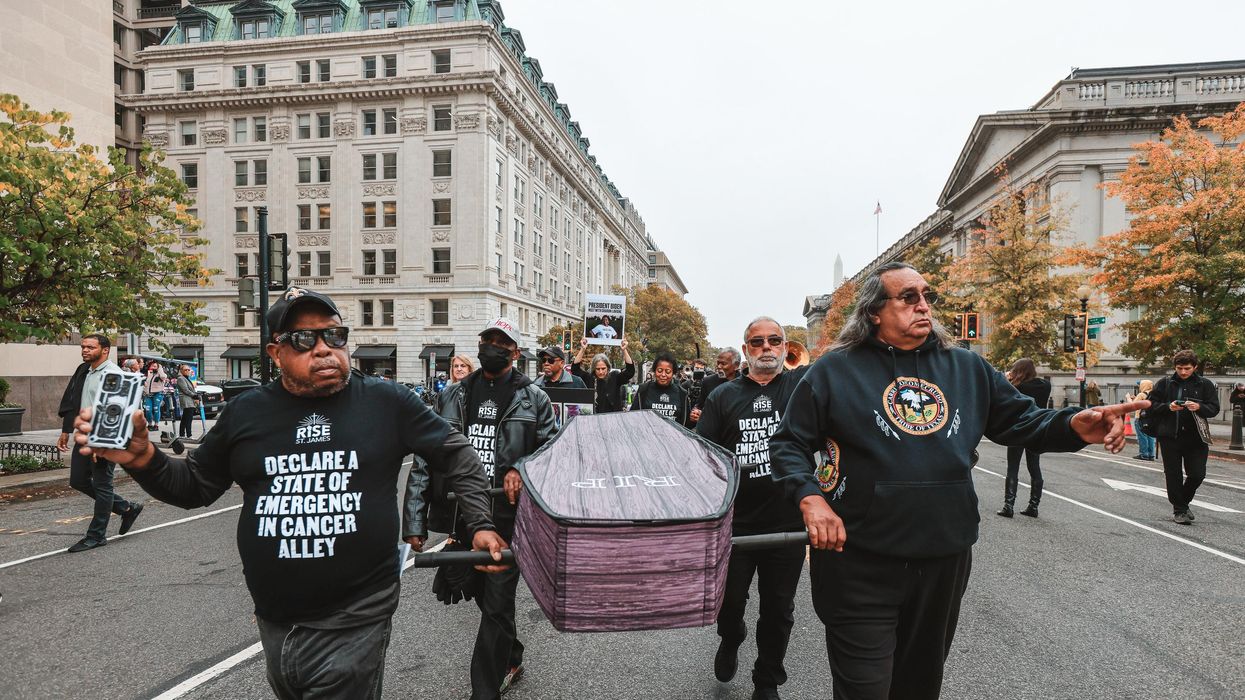
Environmental justice activists from Louisiana's "Cancer Alley" on Monday held a funeral procession in Washington, D.C. to remember victims--overwhelmingly Black people--killed by petrochemical industry pollution and to demand that U.S. President Joe Biden declare a climate emergency and do more to stop deadly fossil fuel projects.
"President Biden, you are drinking clean water, and we are not. You can plant a garden over here; we cannot, the soil is destroyed."
Activists led by the frontline action group RISE St. James held a second-line march--the procession, replete with brass band musicians and parasol-toting dancers, that rallies behind relatives of the deceased in a traditional New Orleans funeral--to the White House, where they held large photos of dead cancer victims and pleaded with Biden to take action to protect their lives and their environment.
"I want the world to know what's going on in St. James Parish and throughout the Gulf Coast," said RISE St. James president Sharon Lavigne outside the White House.
"People are dying," she continued. "Cancer is taking over our lives in the river parishes, in St. James Parish, and throughout the Gold Coast. So we're asking President Biden to declare St. James Parish, Cancer Alley, to declare this an emergency. If he will not declare this an emergency, we are going to die."
"We are already dying, slowly but surely," Lavigne said. "Sometimes we have one funeral per week for someone dying of cancer. If this don't stop, we won't have anything left of our area. We need you all to work with us to help us to declare this a climate emergency."
"We won the fight with Formosa Plastics. The judge rules in our favor on all counts," she added to loud applause, referring to last month's court order blocking the construction of a highly controversial petrochemical factory along the Mississippi River in St. James Parish. "With God's help we're gonna win any other fight that's coming to our neighborhood, and that's a fact. We will not allow any more because we're gonna stand together, and we will fight any industry that tries to come into our neighborhood and destroy us."
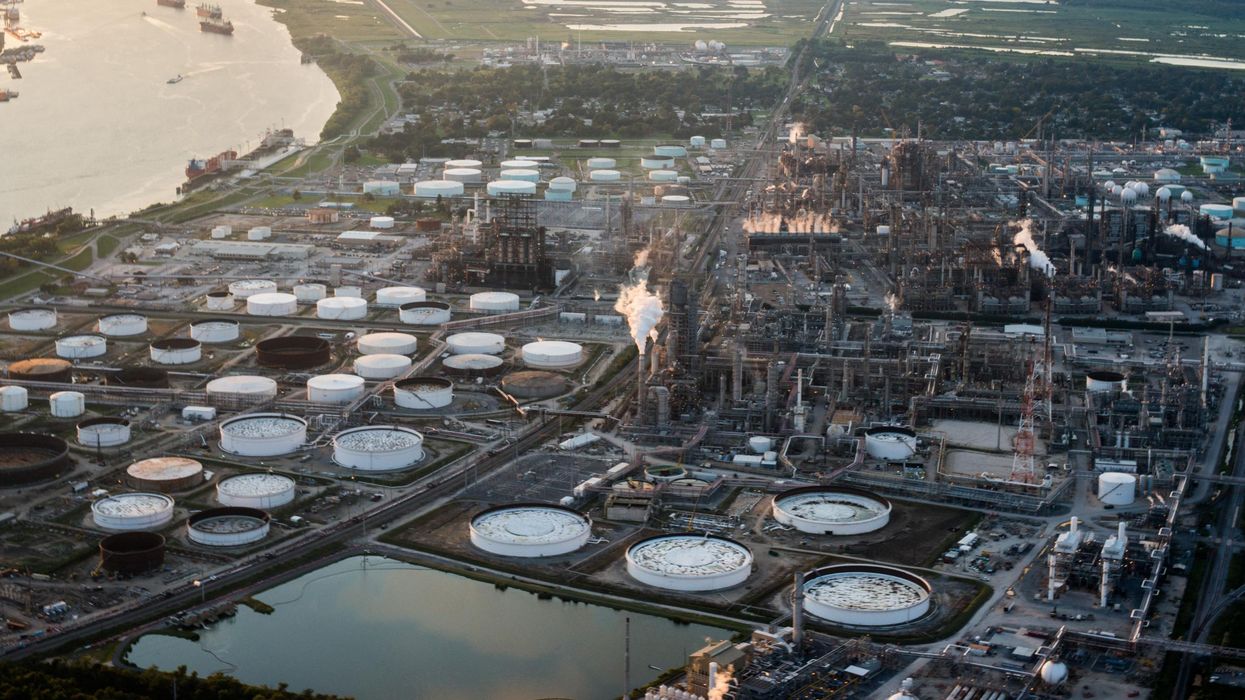
St. James Parish sits in the middle of an 85-mile stretch along the Mississippi River between New Orleans and Baton Rouge known as Cancer Alley due to its nearly 150 oil refineries and plastics and chemical plants.
According to data from the U.S. Environmental Protection Agency (EPA), the cancer risk in predominantly Black areas of St. James Parish is as high as 105 per million, compared with 60 to 75 cases per million in majority white areas. The EPA's Risk-Screening Environmental Indicators database reported an 800% cancer hazard increase due to petrochemical facilities in the parish between 2007 and 2018.
"President Biden, you are drinking clean water, and we are not. You can plant a garden over here; we cannot, the soil is destroyed because of [the] petrochemical industry," Lavigne said, inviting the president to "come to St. James Parish" and "see what we are going through."
"We need your help," she added, "and we are pleading with you and your staff."
In a letter to Biden published Tuesday, Lavigne wrote:
St. James Parish now has the most polluted air in America, with cancer rates more than 50% higher than the national average. Our air is quite literally killing us, and no one seems to really mind. Sure, there have been promises. You yourself uttered the words "Cancer Alley," during your first week in office, something very few politicians of your stature have been willing to do. This has given us hope, and when you sent EPA Administrator Michael Reagan down to visit me and other activists, we were encouraged that change will come.
"However, we are still dying, struggling to breath polluted air, and without clean water to drink," she stressed. "President Biden. Please save us. You too understand the gut-wrenching pain of losing a loved one to cancer. Help to make it so that no one else in St. James Parish has to feel this pain. "
Dear President Biden:
As a little girl growing up in St. James Parish, Louisiana, my family lived off the land. We raised cattle, sowed seeds, and fished the Mississippi River. But what used to be our lifeblood has now turned to poison. Where there were once fig and pecan trees, there are now petrochemical plants. Known to many, including yourself, as "Cancer Alley," with more than 200 deadly plants along an 85-mile stretch of the Mississippi River, my hometown is quickly becoming Death Row.
St. James Parish now has the most polluted air in America, with cancer rates more than 50 percent higher than the national average.
I used to be a special education teacher, a profession I know you admire deeply. Led by God, I left the teaching profession in 2019 to fight for environmental justice full-time in my community. After watching too many in my community become sick, I founded RISE St. James, a faith-based, grassroots environmental organization that started from just one small meeting in my den with my daughter, Shamell, taking notes.
At first we didn't know why we were getting sick. Around us, our family and friends were suddenly falling victim to debilitating illnesses. It felt like almost every day another loved one was receiving a terminal cancer diagnosis and we couldn't figure out why. But it didn't take long to connect these illnesses to the rise of petrochemical plants in our backyards.
When these fancy fossil fuel CEOs marched into our predominantly Black neighborhoods and promised us good jobs and financial freedom, we didn't even have time to bat an eye. We could never have imagined that years later these same companies would turn our land and everything that grows from it into poison.
St. James Parish now has the most polluted air in America, with cancer rates more than 50 percent higher than the national average. Our air is quite literally killing us, and no one seems to really mind. Sure, there have been promises. You yourself uttered the words "Cancer Alley," during your first week in office, something very few politicians of your stature have been willing to do. This has given us hope, and when you sent EPA Administrator Michael Reagan down to visit me and other activists, we were encouraged that change will come.
However, we are still dying, struggling to breath polluted air and without clean water to drink. Our gardens are producing inedible vegetables, and our bath water leaves us itching for days. I myself have developed autoimmune hepatitis and was found to have aluminum and lead in my body after years of living next to mega-polluting chemical plants. It is as if we have been written off as sacrifice zones, an entire community exchanged for a corporate profit. But you can save us. You must save us.
President Biden, I am coming to D.C to honor the hundreds of lives that have been taken from us due to the petrochemical and fossil fuel industry. Joining me will be dozens of other activists who have lost loved ones, and we will be holding a New Orleans style second line funeral procession that will end at your front door. Please meet me there. Let us talk about how we can save my communities and the others like it.
These petrochemical plants are cutting our lives short, and our children are being robbed of their futures. As a fellow devout Catholic and grandparent, I am making a personal plea to you, President Biden. Please save us. You too understand the gut-wrenching pain of losing a loved one to cancer. Help to make it so that no one else in St. James Parish has to feel this pain. Use your power to declare Cancer Alley a State of Emergency, especially St. James Parish, declare a climate emergency, halt the petrochemical build out in the Gulf South and help our children and grandchildren to live long, healthy lives. Meet me in Washington, D.C on October 25th and let us save our children and grandchildren's futures, together.
Citing the imperative to "protect the residents and natural resources of St. James Parish and to prevent public health and environmental harms across our jurisdictions," attorneys general from four states and the District of Columbia on Monday sent a letter to the U.S. Army Corps of Engineers asking it to thoroughly evaluate the adverse impacts of Formosa Plastics' massive proposed petrochemical complex in Louisiana's "Cancer Alley."
"The corps must reevaluate the environmental justice implications of issuing the permit, including the plastics complex's disproportionate impacts on low-income African-American communities in St. James Parish."
--state AGs' letter
The Center for Biological Diversity, Healthy Gulf, the Louisiana Bucket Brigade, and RISE St. James last year sued the Trump administration over a federal permit for the proposed project--which could cost up to $12 billion--prompting the Army Corps of Engineers to suspend that permit pending a broader environmental review.
"The corps must reevaluate the environmental justice implications of issuing the permit, including the plastics complex's disproportionate impacts on low-income African-American communities in St. James Parish that are already overburdened by pollution from existing refineries and petrochemical facilities," states the letter (pdf)--which was led by New York Attorney General Letitia James and signed by William Tong, Karl Racine, Maura Healey, and Gurbir Grewal--her counterparts in Connecticut, the District of Columbia, Massachusetts, and New Jersey, respectively.
"We also request that you reevaluate the plastics complex's greenhouse gas emissions and contribution to the global climate crisis, as well as its impacts on migratory birds and other species resulting from the destruction of forested wetlands and degradation of water quality," the five attorneys general wrote. "By reevaluating these environmental and public health impacts, the corps will comply with applicable law and prevent harm to our residents and natural resources."
"Such comprehensive analysis furthers the Biden administration's important environmental justice policies, which direct federal agencies to address the disproportionate health, environmental, and climate impacts of agency programs and decision-making on disadvantaged communities," the letter states.
St. James Parish residents--nearly half of whom are Black--and environmental advocates strongly oppose the proposed plant, which they say will release carcinogenic chemicals and, according to one environmental watchdog, spew 13.6 million tons of planet-heating emissions into the atmosphere each year.
Formosa Plastics has also faced intense criticism for failing to follow through on a promise to alter the plant's layout to lessen the exposure of nearby residents and schoolchildren to toxins, and for its failure to notify the community of the discovery of a burial ground for enslaved Black people.
"Any serious analysis should cause the Army Corps to reject this major threat to public health and our climate. We can't let industry pollute another working-class Black community as it creates mountains of plastic the world doesn't want or need."
--Julie Teel Simmonds,
Center for Biological Diversity
St. James Parish is located amid an 85-mile stretch along the Mississippi River between New Orleans and Baton Rouge commonly called Cancer Alley due to its nearly 150 oil refineries and plastics and chemical plants.
According to data from the U.S. Environmental Protection Agency (EPA), the cancer risk in predominantly Black areas of St. James Parish is significantly higher than in majority white areas. The EPA's Risk-Screening Environmental Indicators database reported an 800% cancer hazard increase due to petrochemical facilities in the parish between 2007 and 2018.
Local and national advocacy groups praised the action by the attorneys general.
"I'm grateful that these attorneys general understand the threat Formosa Plastics poses to us and are demanding action," Sharon Lavigne, founder of RISE St. James, said in a statement. "The Army Corps needs to listen and do a proper analysis of a project that would endanger our lives."
"I believe that if there's an honest assessment of the environmental racism behind this project's approval then it will never be permitted," added Lavigne. "We must stop Formosa Plastics."
Louisiana Bucket Brigade director Anne Rolfes said that "it's refreshing to see public servants actually act in the interest of the people they serve... We are glad that at least some attorneys general actually have a backbone, and we are grateful for their support. We will continue to push the Biden administration to take a stand for environmental justice and permanently revoke this project's permits."
Julie Teel Simmonds, a lawyer at the Center for Biological Diversity, said that the group is "pleased these state attorneys general are joining our coalition's call for stronger federal scrutiny of Formosa Plastics' terrible project."
"Any serious analysis should cause the Army Corps to reject this major threat to public health and our climate," Teel Simmonds continued. "We can't let industry pollute another working-class Black community as it creates mountains of plastic the world doesn't want or need. I'm hoping this letter will help convince Formosa Plastics to abandon this dangerous project."
St. James Parish has been the site of numerous protests against the proposed Formosa complex, including the youth-led Sunrise Movement's "Generation on Fire" 400-mile march from New Orleans to Houston.
Around 175 advocacy groups and numerous Democratic lawmakers have also voiced their opposition to the proposed plant.

Calling a planned petrochemical manufacturing complex in Louisiana's "Cancer Alley" a "textbook case of environmental racism," 175 organizations from around the world sent a letter to financial institutions Tuesday urging them not to fund, underwrite, or invest in the project, which could cost up to $12 billion.
"Formosa Plastics will destroy our land, our homes, and the lives of our community. We're saying enough is enough, and we're standing up for a better, cleaner future for ourselves and our children."
--Sharon Lavigne,
RISE St. James
The letter--led by the faith-based grassroots group RISE St. James--says that Taiwan-based Formosa Plastics Group's 2,400-acre Sunshine Project, which is slated to be built in a vulnerable floodplain amid intensifying climate-driven hurricanes and tropical storms,"presents an unnecessary burden for our already-polluted community."
"We are fighting to protect ourselves from Formosa Plastics' disastrous environmental and human-rights record in the United States and around the world," the letter states.
Residents of St. James Parish--nearly half of whom are Black--and environmental advocates strongly oppose the plant, which, if built as planned, will release carcinogenic chemicals and, according to one environmental watchdog, produce 13.6 million tons of planet-heating emissions annually.
Formosa Plastics has also come under fire for failing to follow through on a promise to alter the plant's layout to lessen the exposure of nearby residents and schoolchildren to toxins, and for its failure to notify the community of the discovery of a burial ground for enslaved Black people.
St. James Parish sits in the middle of an 85-mile stretch along the Mississippi River between New Orleans and Baton Rouge known as Cancer Alley or Death Alley due to its nearly 150 oil refineries and plastics and chemical plants.
According to data from the U.S. Environmental Protection Agency (EPA), the cancer risk in predominantly Black areas of St. James Parish is as high as 105 per million, compared with 60 to 75 cases per million in majority white areas. The EPA's Risk-Screening Environmental Indicators database reported an 800% cancer hazard increase due to petrochemical facilities in the parish between 2007 and 2018.
The Sunshine Project has drawn the attention and condemnation of environmental and racial justice groups, United Nations human rights experts, progressive lawmakers, and others. Last month, Democratic U.S. Reps. Raul Grijalva (Ariz.) and Donald McEachin (Va.) urged President Joe Biden to deliver on his campaign promises to reduce pollution in frontline communities by blocking the project.
Signatories of the RISE St. James letter urged banks and asset managers to avoid financing, underwriting, or investing in Formosa Plastics projects, and to divest from the "serial environmental offender."
The letter continues:
In the context of the Covid-19 pandemic, Formosa Plastics' plan to construct a facility that would double or triple the toxic levels of cancer-causing pollutants in communities in St. James Parish represents a stunning, potentially devastating increase in our community's environmental burden. In addition to elevating residents' risk of cancer, asthma, and other serious diseases, this increase in toxic air pollution places residents at a higher risk from respiratory infections including a higher risk of death from Covid-19.
Study after study has demonstrated inextricable links between air pollution exposure and Covid-19 death rates. As of July 2020, three out of Louisiana's five parishes with the highest Covid-19 death rates were located in Cancer Alley, including St. James Parish, with averages up to 3.8 times the state's median. Our community simply cannot afford more air pollution--our survival depends on it.
It notes that Formosa Plastics has been hit with over $650 million in fines and penalties for violations at more than a dozen facilities around the world, including a 2016 spill of cyanide and other deadly chemicals that devastated marine life and livelihoods along a 125-mile stretch of the central Vietnamese coast--the country's worst-ever environmental catastrophe.
"High-profile disasters have caused at least two dozen deaths, dozens more injuries, and tens of thousands of disrupted lives and livelihoods from evacuations, shelter in place orders, and long-lasting damage to ecosystems that communities depend on," Tuesday's letter states.
The letter urges its recipients to follow the examples of financiers and entities like Norway's Sovereign Wealth Fund that have divested from or rejected investment in Formosa Plastics.
"Formosa Plastics is not welcome by the local people of St. James," the letter declares. "We want clean air, water, and soil. It is incumbent on any responsible corporation to listen to our community and cease all business relationships with Formosa Plastics Group and its constituent entities, to avoid any association with the severe and unjust impacts its operations would have on us."
Sharon Lavigne, founder and president of RISE St. James, said in a statement that "Formosa Plastics will destroy our land, our homes, and the lives of our community. We're saying enough is enough, and we're standing up for a better, cleaner future for ourselves and our children."
"Banks shouldn't finance this level of pollution," she added, "and if they want to show that they can be responsible then they need to say no to Formosa."
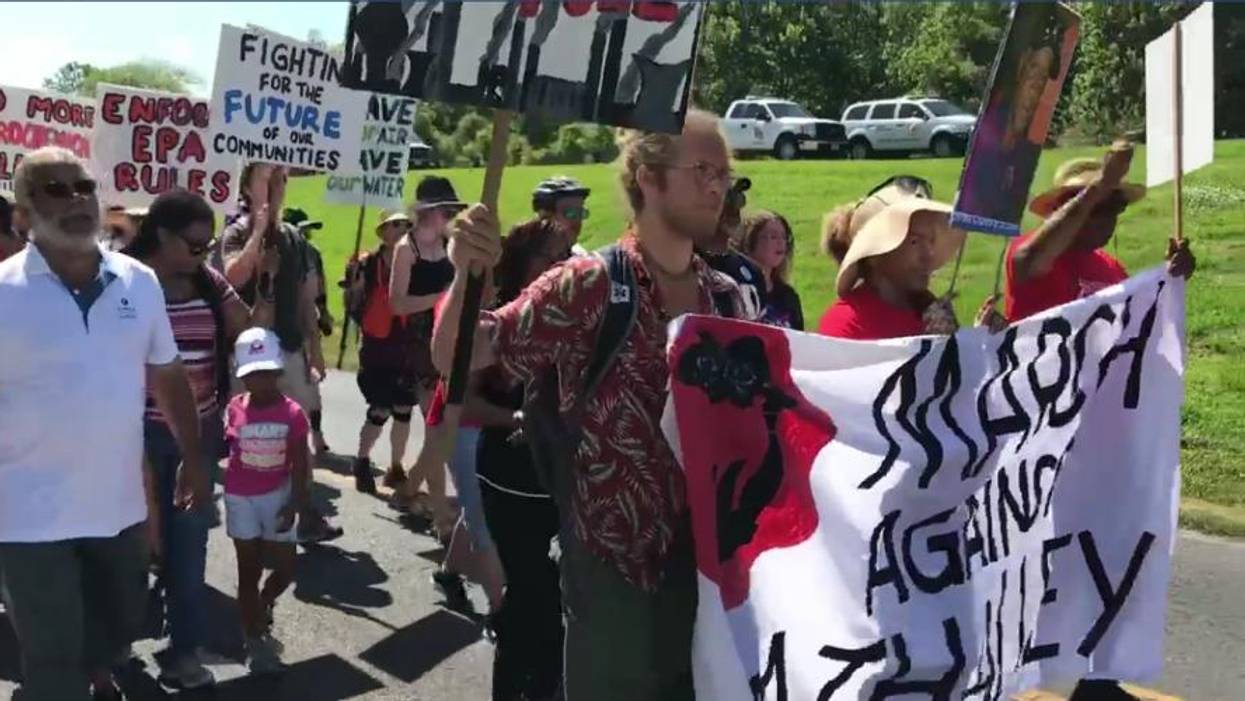
Activists in southern Louisiana kicked off a five-day march on Thursday that aims to bring environmental justice to Cancer Alley--the 85-mile stretch between Baton Rouge and New Orleans that's home to poverty-stricken communities in the shadow of scores of petrochemical facilities.
The march was organized by the Coalition Against Death Alley (CADA), which formed earlier this year and began planning "non-violent protests to pressure industrial giants and governments to stop the ongoing poisoning of majority-black communities" in the region, also known as Louisiana's Petrochemical Corridor, which runs along the Mississippi River.
Marchers began Thursday morning in St. John the Baptist Parish at an elementary school near the Ponchartrain Works facility, which the American chemical giant DuPont sold to the Japanese company Denka in 2015.
A study released by the Environmental Protection Agency that same year determined that the plant--the only one in the United States that manufactures neoprene, synthetic rubber made from chloroprene--put nearby residents at the highest risk for developing cancer from airborne pollution of anywhere in the country.
Denka reached an agreement with the state's environmental agency in 2017 to scale back the facility's high emissions of chloroprene, which the EPA classifies as "likely to be carcinogenic to humans." However, readings from last year show that the company has failed to reach its reduction targets, and activists are demanding bolder action for the sake of public health.
In an interview with The Guardian Thursday outside the elementary school by the facility, local activist Robert Taylor called for the plant to be shuttered.
"We are demanding not only the saving of our children at this school, we are demanding the salvation of this entire area," he said. "Up and down this river they are poisoning our communities with impunity. We have implored [the factory] to get down to at least what the EPA says is a safe level. They have refused to do that and based on that, they need to shut down."
CADA's broader demands, detailed on the coalition's website, are:
The marchers took a detour from their planned route on Friday to attend a court hearing in Baton Rouge for a lawsuit filed earlier this week over state officials' refusal to grant activists permission to march across the Interstate 10 bridge in Baton Rouge and the Sunshine Bridge, which crosses the Mississippi River.
"We see the act of crossing these bridges as symbolic," Rev. Gregory Manning, one of the march's organizers, told The Louisiana Weekly earlier this week. "We want to bring attention to how this is an issue that impacts both sides of the river, and we also want to bring attention to specific plants like Denka Dupont, and the recently approved Formosa plastics plant in St. James."
The newspaper reported that in addition to signs, marchers planned to carry photos of loved ones lost to cancer and other illnesses that they believe were tied to regional pollution from the petrochemical industry.
"What we are seeing illustrated now is intentional genocide, and the Louisiana Department of Environmental Quality and the governor are very conscious of what is happening with the uncontrolled amounts of poison and toxins filling the air in this sacrificial zone, where the ancestors of those enslaved became sharecroppers and worked hard to purchase property, now worth pennies on the dollar," Manning added. "The government is complicit, and this behavior will not be tolerated any longer."
According to the LA Bucket Brigade, the judge was expected to rule on whether the marchers will be allowed to cross the bridges sometime Friday afternoon. Members of the coalition spoke outside the courthouse about the suit as well as the march, which is set to conclude at the steps of the Louisiana State Capitol on Monday.
As Indigenous activists maintained resistance to a proposed oil pipeline in North Dakota this week, allied groups on Thursday sent an open letter to President Barack Obama asking him to urge the U.S. Army Corps of Engineers to pull its permits for the project.
"After years of pipeline disasters--from the massive tar sands oil spill in Kalamazoo, Michigan in 2010, to the recent oil pipeline spills in the San Joaquin Valley and Ventura, CA--our organizations and our millions of members and supporters are concerned about the threat these projects pose to our safety, our health, and the environment," reads the letter (pdf), signed by groups such as the Indigenous Environmental Network, the Sierra Club, and 350.org.
The letter was published as a federal judge delayed a decision on allowing the construction to continue.
U.S. Judge James Boasberg said after a hearing in Washington, D.C., on Wednesday that he would decide by September 9 on whether to halt work on the pipeline amid a lawsuit filed against the corps by Standing Rock Sioux tribal leaders. Last week, pipeline developers agreed to pause construction until the decision is made.
"Whatever the final outcome in court, I believe we have already established an important principle--that is, tribes will be heard on important matters that affect our vital interests," Standing Rock Sioux Chairman Dave Archambault II said Wednesday, according to the Bismarck Tribune.
If the $3.7 billion pipeline is built, it will transport 500,000 barrels of oil a day past the Standing Rock Sioux reservation in North Dakota and through several rivers, including the Mississippi and Missouri rivers, which supply water to millions of people. The pipeline would then traverse North Dakota, South Dakota, and Iowa before eventually stopping in Illinois.
"Everyone knows what is at stake, and we won't be sacrificed."
--Angela Bevans
Camps have sprung up around the contested area as the action against the pipeline stretches into its third week, and Amnesty International announced Wednesday that it had sent a delegation of human rights observers to the protest site. Opponents say the project would destroy sacred and culturally important lands and threaten their access to clean water.
Angela Bevans, an assistant attorney with a Sioux background, told the Guardian on Thursday that "[a]ny delay is a win for us. It will give Dakota Access pause and let people know that Standing Rock still needs assistance on this."
"We've suffered incarceration, massacre, and internment. This is just another chapter in the government allowing a private company to take something that doesn't belong to them just because they can," Bevans said. "It's not a matter of whether there will be a spill; it's when it will happen. Everyone knows what is at stake, and we won't be sacrificed. We are protecting the lifeblood of our people; these rivers are the arteries of Mother Earth."