

SUBSCRIBE TO OUR FREE NEWSLETTER
Daily news & progressive opinion—funded by the people, not the corporations—delivered straight to your inbox.
5
#000000
#FFFFFF
To donate by check, phone, or other method, see our More Ways to Give page.
Daily news & progressive opinion—funded by the people, not the corporations—delivered straight to your inbox.
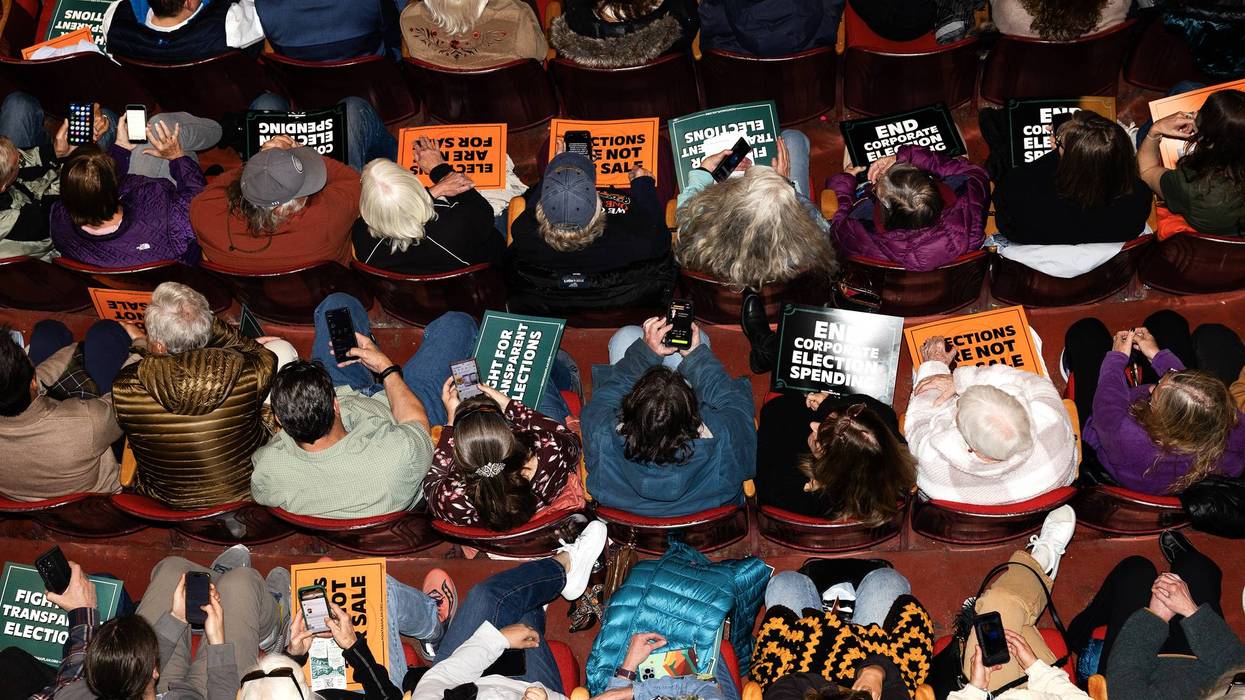
"More than 500 Montanans gathered signatures in all 56 counties, without a single paid signature gatherer, and blew past the 30,121 signatures needed to qualify. That is what grassroots democracy looks like."
In a direct challenge to the US Supreme Court's Citizens United ruling and a potential model for the rest of the nation, Montana campaigners announced Tuesday that they had collected nearly 20,000 more signatures than required to force a statewide vote in November on a ballot measure to block corporations from dumping money into elections.
The high court's 2010 Citizens United v. Federal Election Commission decision opened the floodgates for companies and other organizations to spend unlimited amounts of money on US politics. If approved by voters, "The Montana Plan," as advocates in the state are calling the legal strategy behind the proposed Initiative 194, would "stop corporate and dark money cold" in Big Sky Country.
Initiative 194 would bar "artificial persons," including "nonprofits, trusts, partnerships, corporations, trade associations, or unincorporated associations," from "contributing anything of value to candidate elections, supporting or opposing political parties, or supporting or opposing state or local ballot issues." Violators would be "punished by forfeiting all privileges to do business in Montana."
The Transparent Election Initiative in March got the go-ahead to start collecting signatures to put the initiative on the ballot, and as of Tuesday, TEI's all-volunteer campaign had collected nearly 50,000 across all 56 counties, "far surpassing Montana's 30,121-signature statewide qualification threshold." As of last week, the Montana Secretary of State had already verified 34,906 of them.
"This campaign has been powered by Montanans from the very beginning," said Jeff Mangan, TEI's founder, in a statement. "To the out-of-state corporate and special interests trying to spread disinformation about who we are and what we're trying to accomplish: Look at the power of this volunteer army."
"More than 500 Montanans gathered signatures in all 56 counties, without a single paid signature gatherer, and blew past the 30,121 signatures needed to qualify," he noted. "That is what grassroots democracy looks like."
Mangan, a former Montana Commissioner of Political Practices, also acknowledged that "we know the road to November will be a tough fight."
Already, the campaign secured a key legal victory earlier this year, when the Montana Supreme Court dismissed a legal challenge filed by "a group of corporations and industry groups—comprising the Montana Mining Association, the Montana Chamber of Commerce, Montana Stockgrowers Association, Montana Petroleum Association, Montana Trucking Association, Montana Contractors Association, Treasure State Resource Association and Billings and Kalispell’s respective chambers of commerce," as the Daily Montanan reported in April.
Mangan said Tuesday that "this is David versus Goliath. Corporate and special interests are going to spend millions of dollars on TV ads, mailers, and scare tactics trying to make Montanans afraid of their own power. But the way we win is the same way we got here: real Montanans, in real communities, having real conversations."
"Over the next six months, we're going to be everywhere—answering questions, sharing the facts, and looking voters in the eye," he pledged. "The Montana Plan is about a simple principle: Real people should govern, not artificial persons created on paper. A vote for The Montana Plan (I-194) is a vote to put Montanans back in charge of Montana elections."
TEI's announcement came a month after Democratic Hawaii Gov. Josh Green signed into law a bill that also takes aim at the infamous ruling that corporations are effectively people in terms of political spending—legislation that Michael Beckel, who directs the Money in Politics project for the advocacy group Issue One, also called a "model for the country."
At the federal level, progressives have repeatedly introduced bills that would abolish super political action committees (PACS) and overturn the Citizens United decision—though, at least until the November election, both chambers are controlled by the GOP.
"Corporations are not people and money is not speech," US Rep. Pramila Jayapal (D-Wash.) stressed while introducing a constitutional amendment to reverse the ruling last year. "In every election cycle since the disastrous Citizens United decision, we have seen more and more special interest dark money poured into campaigns across the country—this year, with a billionaire paying millions to buy a seat as Shadow President."
"My We the People Amendment hands power back to the people," she explained, "by finally ending corporate constitutional rights, reversing Citizens United, and ensuring that our democracy is truly of the people, by the people, and for the people—not corporations."
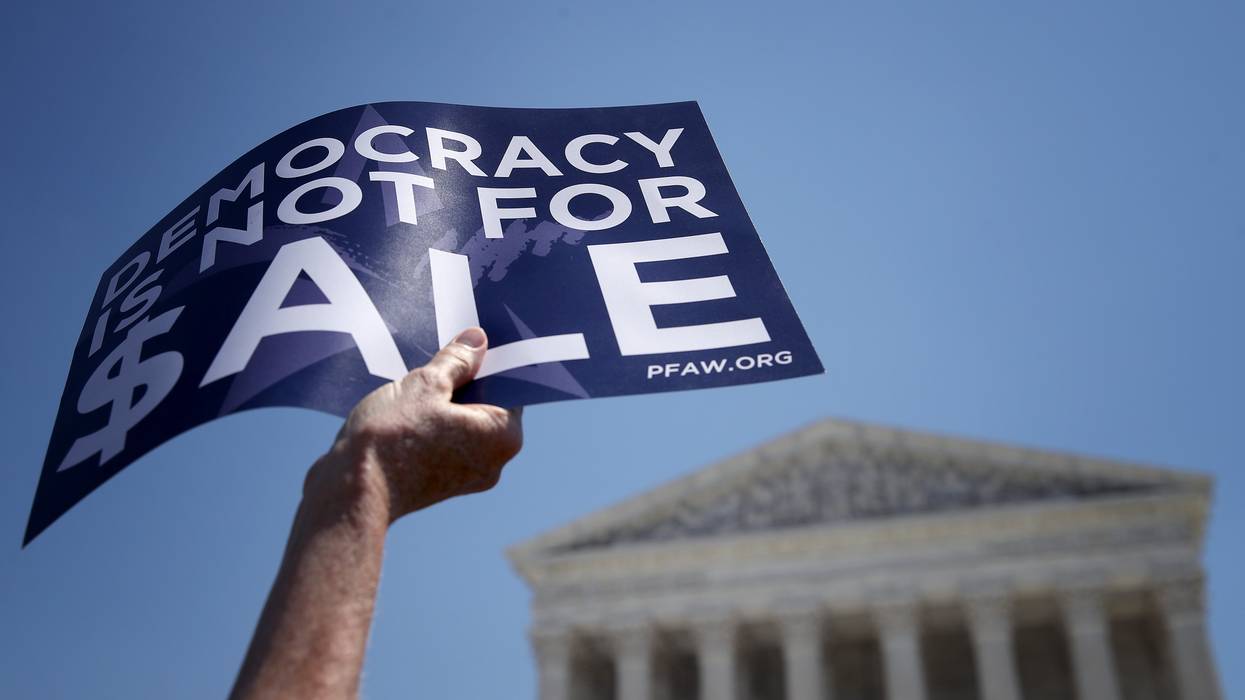
Federal attempts to overturn the ruling by amending the US Constitution or legislating against corporate spending have repeatedly failed. But now several states are experimenting with new ways to get this flood of corporate money out of politics.
More than 15 years ago, the Supreme Court removed limits on corporate political spending in its notorious Citizens United decision, ushering in an era of unprecedented influence by moneyed interests.
As a result, a small group of ultra-wealthy donors have skewed the political system to their advantage—and today, social scientists link the growing gap between rich and poor to that seminal 2010 decision.
Federal attempts to overturn the ruling by amending the US Constitution or legislating against corporate spending have repeatedly failed. But now several states are experimenting with new ways to get this flood of corporate money out of politics.
The state of Hawaii just passed a first-of-its-kind law redefining corporations as entities that aren’t allowed to spend money in elections anywhere within the state. The effort could kick off a powerful state-by-state pushback that succeeds where federal efforts failed.
Curtailing corporate influence on the political system is essential at a time when corporations are thriving while ordinary Americans struggle to make ends meet.
This simple idea is the brainchild of Tom Moore, senior fellow for democracy policy at the Center for American Progress. “It’s not regulation; it’s redefinition,” Moore told me. “States create corporations, and they give powers to all the corporations that operate within their states.”
So if the federal government and the Supreme Court enable corporations to influence elections, states can counter that merely by changing the definition of a corporation. And that’s precisely what Hawaii did. Effective starting July 2027, corporations doing business in the state are redefined to “not include the power to spend money or contribute anything of value to influence elections or ballot measures.”
The novel approach is well-protected against legal challenges. Moore explained, “The Supreme Court has said consistently for 200 years that [the power to define corporations] is a matter of state law, that the federal courts don’t have anything to do with that.”
The impact of this on Hawaii’s politics are likely to be monumental. “Basically, in Hawaii politics, local, state, and federal, every dollar that’s spent will be from an individual human being,” said Moore. “It’ll be disclosed, it’ll be voluntary. And that is a gigantic difference from what we have right now.”
Hawaii’s law doesn’t overturn Citizens United—it makes the 2010 ruling meaningless within its borders.
Residents of Montana are pushing a similar effort. Activists there are gathering signatures to place a measure on the November ballot to similarly redefine corporations so they can’t spend money in elections. If the measure passes, it will go into effect in January 2027, six months before Hawaii’s law takes effect.
In fact, according to Moore, Hawaii’s legislators borrowed the language for their bill from Montana’s ballot measure and sped it through their legislative process, pleasantly surprising advocates. Moore is confident the Montana effort will succeed. “They’re in very, very good shape, they’re incredibly well-organized,” he said.
At least 14 states, including New York and California, are currently considering similar bills, and Hawaii’s new law prompted interested lawmakers from two other states to contact Moore. “We’ve had outreach from folks in almost every state,” he said. Given the fact that it’s been less than a year since Moore first published his idea, the speed at which it’s caught on has been remarkable.
Curtailing corporate influence on the political system is essential at a time when corporations are thriving while ordinary Americans struggle to make ends meet. “At the end of the day, corporations don’t actually work for their shareholders, they work for us because we create them through our legislatures, through our laws,” said Moore.
“And if corporations are doing something in our state that we don’t like, we have the power as citizens and working through our legislators to do something about that."

Sanders has said his endorsements are about "building a movement for the future" capable of not just taking on the GOP, but also the Democratic Party establishment.
Progressive candidates endorsed by Sen. Bernie Sanders swept to victory on Tuesday in Democratic primaries across the US.
In New Jersey, surgeon Adam Hamawy prevailed in the Democratic primary in the state's 12th Congressional District, while Rep. Analilia Mejia (D-NJ) easily defeated primary challengers in the state's 11th Congressional District by garnering more than 80% of the vote. Sanders (I-Vt.) endorsed both candidates.
Sanders-backed candidates in California also put in strong showings, with former San Francisco city supervisor Jane Kim advancing to the general election in the race to be the state's next insurance commissioner.
Political scientist Randy Villegas, meanwhile, is currently edging out rival Jasmeet Bains in the jungle primary in California's 22nd Congressional District, currently represented by Rep. David Valadao (R-Calif.).
And in Montana, former smokejumper and union leader Sam Forstag won the Democratic primary to represent the state's 1st Congressional District, where he'll face off against Republican Aaron Flint in the fall.
Sanders adviser Faiz Shakir on Wednesday took a victory lap in the wake of the results.
"Shaping up to be a clean sweep for Bernie’s endorsements last night," Shakir wrote in a social media post.
In an interview with The New York Times last month, Sanders said that his goal with the endorsements is "building a movement for the future" capable of not just taking on President Donald Trump's Republican Party, but also the Democratic Party establishment.
“Our effort is to lead a national movement against Trump’s authoritarianism and kleptocracy and unnecessary wars and his contempt for the Constitution,” Sanders told the Times. “But equally important, the American people need an alternative to the Democratic establishment, which is significantly dominated by big-money interests."
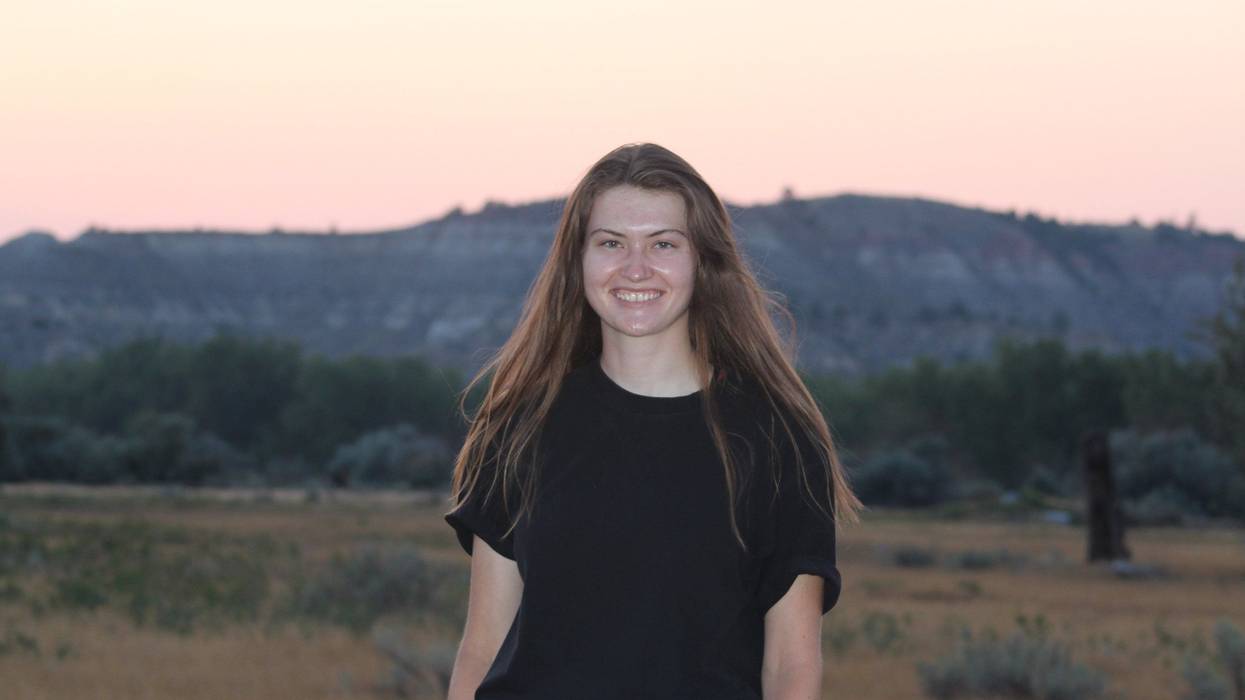
"Courts cannot offer more protection to fossil fuel companies seeking to preserve their profits than to young Americans seeking to preserve their rights," said the plaintiffs' lead attorney.
American children and young adults suing over President Donald Trump's anti-climate executive orders plan to keep fighting after a federal judge on Wednesday dismissed their case, citing a previous decision from the US Court of Appeals for the 9th Circuit.
Eva Lighthiser, Rikki Held—of the historic Held v. State of Montana case—and 20 other young people filed a federal suit in Montana in May, taking aim at Trump's executive orders (EOs) declaring a "national energy emergency," directing federal agencies to "unleash" American energy by accelerating fossil fuel development, and boosting the coal industry.
"The founders of this country believed our rights to life and liberty were the fundamental tenets of a reasoned and just society, among the most sacred of rights to protect from government intrusion and overreach," said Daniel C. Snyder, director of the Environmental Enforcement Project at Public Justice, one of the groups representing the young plaintiffs.
"Not only should Americans be outraged by unlawful executive actions that trample upon those rights, but also because the harm these executive orders have inflicted was acknowledged by the court—showing the serious nature of plaintiffs' case," Snyder continued. "Allowing the burning of fossil fuels to continue will eventually render our nation unlivable for future generations."
"Allowing the burning of fossil fuels to continue will eventually render our nation unlivable for future generations."
US District Judge Dana Christensen "reluctantly" dismissed Lighthiser v. Trump on Wednesday, pointing to the 9th Circuit's 2020 opinion in Juliana v. United States, a constitutional climate case that the US Supreme Court effectively ended in March.
"Plaintiffs have presented overwhelming evidence that the climate is changing at a staggering pace, and that this change stems from the rise in atmospheric carbon dioxide, caused by the production and burning of fossil fuels," wrote Christensen. "The record further demonstrates that climate change and the exposure from fossil fuels presents a children's health emergency."
The appointee of former President Barack Obama also said that he was "troubled by the very real harms presented by climate change and the challenged EOs' effect on carbon dioxide emissions." Specifically, he noted, "plaintiffs have shown the challenged EOs will generate an additional 205 million metric tons of carbon dioxide annually by 2027, an increase which plaintiffs convincingly allege will expose them to imminent, increased harm from a warming climate."
While Adam Gustafson, acting assistant attorney general of the Environment and Natural Resources Division at the US Department of Justice, cheered the dismissal of what he called "a sweeping and baseless attack on President Trump's energy agenda," the judge wrote that "if the 9th Circuit disagrees" with his decision, he "welcomes the return of this case to decide it on the merits."
Lawyers for the youth plaintiffs have already set their sights on the higher court. Lead attorney Julia Olson of Our Children's Trust stressed that "Judge Christensen said he reached his decision reluctantly and invited the 9th Circuit to correct him so these young Americans can have their case heard—and the 9th Circuit should do just that."
"Every day these executive orders remain in effect, these 22 young Americans suffer irreparable harm to their health, safety, and future," she noted. "The judge recognized that the government's fossil fuel directives are injuring these youth, but said his hands were tied by precedent."
"We will appeal—because courts cannot offer more protection to fossil fuel companies seeking to preserve their profits than to young Americans seeking to preserve their rights," Olson added. "This violates not only the Constitution and Supreme Court precedent, but the most basic principles of justice."

One advocate said the ruling "offers hope that we can restore protections to wolves in the northern Rockies, but only if the federal government fulfills its duty under the Endangered Species Act."
Conservationists cautiously celebrated a U.S. judge's Tuesday ruling that the federal government must reconsider its refusal to grant protections for gray wolves in the Rocky Mountains, as killing regimes in Idaho, Montana, and Wyoming put the species at risk.
Former President Joe Biden's administration determined last year that Endangered Species Act (ESA) protections for the region's wolves were "not warranted," sparking multiple lawsuits from coalitions of conservation groups. The cases were consolidated and considered by Montana-based District Judge Donald Molloy, an appointee of former President Bill Clinton.
As the judge detailed in his 105-page decision, the advocacy groups argued that the U.S. Fish and Wildlife Service (FWS) failed to consider a "significant portion" of the gray wolf's range, the "best available science" on their populations and the impact of humans killing them, and the true threat to the species. He also wrote that "for the most part, the plaintiffs are correct."
Matthew Bishop, senior attorney at the Western Environmental Law Center (WELC), which represented one of the coalitions, said in a statement that "the Endangered Species Act requires the U.S. Fish and Wildlife Service to consider the best available science, and that requirement is what won the day for wolves in this case."
"Wolves have yet to recover across the West, and allowing a few states to undertake aggressive wolf-killing regimes is inconsistent with the law," Bishop continued. "We hope this decision will encourage the service to undertake a holistic approach to wolf recovery in the West."
Coalition members similarly welcomed Molloy's decision as "an important step toward finally ending the horrific and brutal war on wolves that the states of Idaho, Montana, and Wyoming have waged in recent years," in the words of George Nickas, executive director of Wilderness Watch.
Predator Defense executive director Brooks Fahy said that "today's ruling is an incredible victory for wolves. At a time where their numbers are being driven down to near extinction levels, this decision is a vital lifeline."
Patrick Kelly, Montana director for Western Watersheds Project, pointed out that "with Montana set to approve a 500 wolf kill quota at the end of August, this decision could not have come at a better time. Wolves may now have a real shot at meaningful recovery."
Breaking news! A federal judge in Missoula ruled USFWS broke the law when it denied protections for gray wolves in the western U.S. The agency must now reconsider using the best available science. A major step forward for wolf recovery.Read more: 🔗 wildearthguardians.org/press-releas...
[image or embed]
— Wolf Conservation Center 🐺 (@nywolforg.bsky.social) August 5, 2025 at 3:30 PM
Sierra Club northern Rockies campaign strategist Nick Gevock said that "wolf recovery is dependent on responsible management by the states, and Idaho, Montana, and Wyoming have shown that they're grossly unsuited to manage the species."
Gevock's group is part of a coalition represented by the Center for Biological Diversity and Humane World for Animals, formerly called the Humane Society of the United States. Kitty Block, president and CEO of the latter, said Tuesday that "wolves are deeply intelligent, social animals who play an irreplaceable role in the ecosystems they call home."
"Today's ruling offers hope that we can restore protections to wolves in the northern Rockies, but only if the federal government fulfills its duty under the Endangered Species Act," Block stressed. "These animals deserve protection, not abandonment, as they fight to return to the landscapes they once roamed freely.
While "Judge Molloy's ruling means now the Fish and Wildlife Service must go back to the drawing board to determine whether federal management is needed to ensure wolves survive and play their vital role in the ecosystem," as Gevock put it, the agency may also appeal his decision.
The original rejection came under Biden, but the reconsideration will occur under President Donald Trump, whose first administration was hostile to the ESA in general and wolves in particular. The current administration and the Republican-controlled Congress have signaled in recent months that they intend to maintain that posture.
WELC highlighted Tuesday that Congresswoman Lauren Boebert (R-Colo.) "introduced H.R. 845 to strip ESA protections from gray wolves across the Lower 48. If passed, this bill would congressionally delist all gray wolves in the Lower 48 the same way wolves in the northern Rockies were congressionally delisted in 2011, handing management authority over to states."
Emphasizing what that would mean for the species, WELC added that "regulations in Montana, for example, allow hunters and trappers to kill several hundred wolves per year—with another 500-wolf quota proposed this year—with bait, traps, snares, night hunting, infrared and thermal imagery scopes, and artificial light."

"He's waging war on us with fossil fuels as his weapon, and we're fighting back with the Constitution," said one of the 22 plaintiffs.
Nearly two dozen American children and young adults sued U.S. President Donald Trump, leaders in his administration, and various agencies in federal court on Thursday over a trio of executive orders they argue "escalate" the climate emergency that imperils their futures.
Lighthiser v. Trump, filed in the U.S. District Court for the District of Montana, challenges executive orders (EOs) 14156, 14154, and 14261—which, respectively, declared a "national energy emergency," directed agencies to "unleash" American energy by accelerating fossil fuel development, and called for boosting the country's coal industry.
"Trump's fossil fuel orders are a death sentence for my generation," said named plaintiff Eva Lighthiser in a statement. "I'm not suing because I want to—I'm suing because I have to. My health, my future, and my right to speak the truth are all on the line. He's waging war on us with fossil fuels as his weapon, and we're fighting back with the Constitution."
Specifically, the complaint argues that "the EOs violate the Fifth Amendment substantive due process clause on their face by depriving plaintiffs of their fundamental rights to life and liberty." The filing also states that the orders are ultra vires—meaning they go beyond Trump's presidential authority "in assuming powers reserved to and exercised by Congress through Article I" of the U.S. Constitution.
"From day one of the current administration, President Trump has issued directives to increase fossil fuel use and production, and block an energy transition to wind, solar, battery storage, energy efficiency, and electric vehicles," the complaint reads. "President Trump's EOs falsely claim an energy emergency, while the true emergency is that fossil fuel pollution is destroying the foundation of plaintiffs' lives."
"These unconstitutional directives have the immediate effect of (a) slowing the buildout of U.S. energy infrastructure that eliminates planet-heating fossil fuel greenhouse gas pollution... and (b) increasing the use of fossil fuels that pollute the air, water, lands, and climate on which plaintiffs' lives depend," the filing stresses.
🚨 Youth from Montana and four other states are suing the Trump administration for violating their constitutional rights with executive orders that fast-track fossil fuel projects, worsen the climate crisis, and suppress climate science. PR: bit.ly/youthsuetrump-pr #YouthvGov
[image or embed]
— Our Children’s Trust (@youthvgov.bsky.social) May 29, 2025 at 10:11 AM
The youth are asking the district court to declare Trump's EOs and related executive actions "unlawful, unconstitutional, ultra vires, and invalid," and to issue a permanent injunction blocking the long list of defendants from implementing or enforcing them.
Lighthiser is a 19-year-old from Livingston, Montana. She and 24-year-old Rikki Held are among 10 of 22 plaintiffs in this case who were also part of Held v. State of Montana, in which a judge in 2023 agreed with young residents who argued that Montana violated their state constitutional rights by promoting fossil fuel extraction. The Montana Supreme Court upheld that decision last December.
Both groups of young plaintiffs are represented by Our Children's Trust, known for several youth climate lawsuits, including Juliana v. United States, the landmark constitutional case that the U.S. Supreme Court ended in March.
Lead attorney Julia Olson of Our Children's Trust said Thursday that "these executive orders are an overt abuse of power. The president is knowingly putting young people's lives in danger to serve fossil fuel interests, while silencing scientists and defying laws passed by Congress."
"These young plaintiffs refuse to be collateral damage in a fossil fuel war on their future," Olson continued. "They are demanding accountability where it still matters—in a court of law. The executive branch is not above the Constitution, and these young people are here to prove it."
For Lighthiser v. Trump, Our Children's Trust has partnered with Gregory Law Group, McGarvey Law, and Public Justice.
"The government's actions irreparably harm our nation's most important asset: our children," said Dan Snyder, director of the Environmental Enforcement Project for Public Justice. "The science is irrefutable that humans and their pollution are causing climate change, and that a changing climate will result in a growing list of injuries that are uniquely felt by America's youngest population."
"Our children enjoy the same constitutional rights to life and liberty as adults, yet have been tasked with shouldering the impact of a destabilized climate system without ever having a say in the matter," he added. "President Trump's executive orders are unlawful and intolerable, and these youth plaintiffs shall put an end to it."

The event that will cap a five-day sprint across western states that have drawn record crowds, including in deep-red regions won by President Donald Trump.
Independent Sen. Bernie Sanders of Vermont and Rep. Alexandria Ocasio-Cortez of New York continued their 'Fighting Oligarchy' tour on Wednesday with a final stop in Missoula, Montana—an event that will cap a five-day sprint across western states that have drawn record crowds and invigorated those sickened by President Donald Trump's authoritarian assault on democracy, human rights, civil liberties, and the nation's working people.
Wednesday's event is set to kick off at 3:00 pm eastern (1:00 pm local time) on the campus of the University of Montana in Missoula.
Jacob Owens, a reporter with the local NBC News affiliate, said hundreds of people were already lined up for the event as of mid-morning, with some arriving as early as 5:00 am to make sure they were able to get into the event. As of this writing, over 6,000 people were already in attendance.
Watch it live:
FIGHT THE OLIGARCHY WITH BERNIE AND AOC: MONTANAwww.youtube.com

The court, said one attorney, "has affirmed the constitutional rights of youth to a safe and livable climate, confirming that the future of our children cannot be sacrificed for fossil fuel interests."
Youth plaintiffs celebrated on Wednesday after the Montana Supreme Courtupheld a judge's August 2023 decision that the state government's promotion of climate-wrecking fossil fuels violates the young residents' state constitutional rights.
"This ruling is a victory not just for us, but for every young person whose future is threatened by climate change," said Rikki Held, the named plaintiff for Held v. State of Montana, in a statement. "We have been heard, and today the Montana Supreme Court has affirmed that our rights to a safe and healthy climate cannot be ignored."
Highlighting that "this will forever be in the court record, despite any continued rhetoric of denial coming from people in power in the state," Grace, another plaintiff, said, "I am thrilled that the Montana Supreme Court has sided with Montana citizens to protect the people and the places we love."
Another plaintiff, Olivia, welcomed the ruling as "a monumental win" and "a call to action for all Montanans."
Plaintiff Georgi similarly asserted that "this is a time for Montana to embrace the future—clean energy offers economic benefits and new jobs," and added that "we look forward to working with the state to implement this transition and ensure that Montana leads the way in tackling the climate crisis."
Plaintiff Kian pointed to other ongoing cases across the globe, declaring that "this ruling is not just a win for Montana—it's a signal to the world that youth-led climate action is powerful and effective."
"We hope this decision inspires others across the country and beyond to stand up for their rights to a livable climate," Kian continued. Just as the youth plaintiffs in Navahine v. Hawaii Department of Transportation secured historic climate justice through a settlement this past June, the eyes of the world are now on us, seeing how youth-driven legal action can create real change."
In Montana, the state government appealed District Court Judge Kathy Seeley's historic ruling in favor of the 16 young plaintiffs to the state's highest court, which heard arguments in July. Wednesday's 6-1 decision—only Justice Jim Rice dissented—is the first of its kind for a state supreme court.
The majority's 70-page opinion discusses the drafters of the Montana Constitution, which says in part that "the state and each person shall maintain and improve a clean and healthful environment in Montana for present and future generations," and "the Legislature shall provide for the administration and enforcement of this duty."
Chief Justice Mike McGrath wrote that the court's majority rejects "the argument that the delegates—intending the strongest, all-encompassing environmental protections in the nation, both anticipatory and preventative, for present and future generations—would grant the state a free pass to pollute the Montana environment just because the rest of the world insisted on doing so."
"The district court's conclusion of law is affirmed: Montana's right to a clean and healthful environment and environmental life support system includes a stable climate system, which is clearly within the object and true principles of the framers' inclusion of the right to a clean and healthful environment," the chief justice added.
Attorneys for the plaintiffs joined the young Montanans in applauding the opinion. Nate Bellinger of Our Children's Trust said that "this is a monumental moment for Montana, our youth, and the future of our planet."
"Today, the Montana Supreme Court has affirmed the constitutional rights of youth to a safe and livable climate, confirming that the future of our children cannot be sacrificed for fossil fuel interests," he added. "This is a victory for young people and for generations to come. The court said loud and clear: Montana's Constitution does not grant the state a free pass to ignore climate change because others fail to act—this landmark decision underscores the state's affirmative duty to lead by example."
Melissa Hornbein, senior attorney with the Western Environmental Law Center, noted that "the Montana Supreme Court's decision compels the state to carefully assess the greenhouse gas emissions and climate impacts of all future fossil fuel permits."
"Specifically, Montana's regulatory agencies must now evaluate the potential harm to the environment and the health and safety of the state's children from any new fossil fuel projects, and determine whether the project can be justified in light of the ongoing unconstitutional degradation of Montana's environment, natural resources, and climate," she explained. "This ruling clarifies that the constitution sets a clear directive for Montana to reduce its greenhouse gas emissions, which are among the highest in the nation on a per capita basis, and to transition to a clean, renewable energy future."
Whether the state government will comply with the decision remains to be seen. In a statement to The Hill, a spokesperson for Republican Montana Attorney General Austin Knudsen's office called the ruling "disappointing, but not surprising" and claimed that the court majority "yet again ruled in favor of their ideologically aligned allies and ignored the fact that Montana has no power to impact the climate."
Separately, Knudsen on Tuesday filed his 59th lawsuit against the Biden administration, challenging its plan to halt federal coal production in the Powder River Basin, which the attorney general said would "effectively kill Montana's coal industry."

The three Republicans who didn't join the statement "presumably want violence," said one critic.
A bipartisan group of attorneys general on Monday led the vast majority of the United States' top state-level legal officials in releasing a statement calling for a peaceful transfer of power regardless of the presidential election results—but three Republican attorneys general were conspicuously absent from the list of signatories.
Ken Paxton of Texas, Todd Rokita of Indiana, and Austin Knudsen of Montana did not add their names to the statement, which condemned "any acts of violence related to the results."
"A peaceful transfer of power is the highest testament to the rule of law, a tradition that stands at the heart of our nation's stability," said the officials. "As attorneys general, we affirm our commitment to protect our communities and uphold the democratic principles we serve."
The statement was released a day after Republican presidential nominee Donald Trump said at a rally that he wouldn't mind journalists getting shot and that he "shouldn't have left" the White House after he was voted out of office in 2020.
Trump urged thousands of his supporters to descend on the U.S. Capitol on January 6, 2021 to try to stop Congress from certifying President Joe Biden's electoral victory, and has continued to claim he was the true winner of the 2020 election.
Election experts have said in recent weeks that Trump has been setting the stage for the same baseless claims of election fraud and vote-stealing that he and his allies spread in 2020—telling supporters that Democratic Vice President Kamala Harris will only win the election if Democrats cheat and saying, along with his running mate, Sen. JD Vance (R-Ohio), that he will only accept the election results if he views them as "fair and legal."
The attorneys general—representing 48 states, the District of Colombia, American Samoa, the Northern Mariana Islands, and the U.S. Virgin Islands—called on Americans "to vote, participate in civil discourse, and, above all, respect the integrity of the democratic process."
"Let us come together after this election not divided by outcomes but united in our shared commitment to the rule of law and safety of all Americans," they said. "Violence has no place in the democratic process; we will exercise our authority to enforce the law against any illegal acts that threaten it."
The statement was spearheaded by two Democrats—Ellen Rosenblum of Oregon and William Tong of Connecticut—and two Republicans, Dave Yost of Ohio and Kris Kobach of Kansas. Kobach notably led a so-called Election Integrity Commission during Trump's term in the White House, searching unsuccessfully for evidence that the Republican was the true winner of the national popular vote in 2016.
Of the attorneys general who did not join the statement, Rokita and Knudsen are up for reelection on Tuesday.
Indiana-based author Steve Tally said Rokita, Knudsen, and Paxton "presumably want violence" and urged voters to oppose the state attorneys general.
"Where is the Indiana secretary of state and attorney general on this one?" said Destiny Wells, the Democratic candidate challenging Rokita. "Oh that's right, it's their team."
In Texas, Paxton has been a vehement supporter of Trump, announcing Monday he would deploy an "Election Day Rapid Response Legal Team" to polling places and suing the Biden-Harris administration over plans to send federal election monitors to Texas.

"With 2024 shaping up to be the biggest year ever for abortion on the ballot, it is critical that Montanans can make their voices heard on this issue."
As abortion continues to dominate this year's state and federal political contests, Montanans Securing Reproductive Rights on Tuesday launched a signature collection drive to get a citizen-initiated state constitutional amendment on the November ballot.
Since the right-wing U.S. Supreme Court reversed Roe v. Wade with Dobbs v. Jackson Women's Health Organization nearly two years ago, Republican state lawmakers have ramped up efforts to further restrict abortion care—and voters, including residents of red states, have responded by protecting reproductive freedom when weighing in on related ballot measures.
With little hope that the divided Congress will restore nationwide abortion rights, ballot initiatives for the 2024 cycle are ongoing in various states, from Arizona and Florida to Montana, where "a yes vote on Ballot Issue #14 will keep the government out of our personal lives," as the Montanans Securing Reproductive Rights website states.
"This is an exciting opportunity to secure our rights for generations to come. Now is the time to ensure power remains in the hands of the people of Montana, so everyone has the freedom to prevent, continue, or end a pregnancy should they choose," the site adds. "Politicians have no business controlling our bodies and our futures."
After a legal battle with Republican state Attorney General Austin Knudsen, the ballot language is:
CI-128 would amend the Montana Constitution to expressly provide a right to make and carry out decisions about one's own pregnancy, including the right to abortion. It would prohibit the government from denying or burdening the right to abortion before fetal viability. It would also prohibit the government from denying or burdening access to an abortion when a treating healthcare professional determines it is medically indicated to protect the pregnant patient's life or health. CI-128 prevents the government from penalizing patients, healthcare providers, or anyone who assists someone in exercising their right to make and carry out voluntary decisions about their pregnancy.
Montana currently allows abortion care up until fetal viability. In response to a legal challenge from Planned Parenthood of Montana (PPMT), a trial judge in February struck down three laws passed by the Republican-controlled state Legislature in 2021: a 20-week ban, restrictions on medication abortions, and a rule that providers must offer patients an ultrasound.
"We are relieved that Montanans will no longer live with the threat of these harmful restrictions taking effect. But make no mistake, our fight continues," PPMT president and CEO Martha Fuller said at the time. "For years anti-abortion politicians at all levels of government have made banning abortion their number one priority, despite the current protection held in our state constitution."
"During the 2023 Montana legislative session, an onslaught of anti-abortion bills was introduced, passed, and signed into law, and PPMT is working hard to beat back these attacks and more," Fuller continued. "We will never stop working to ensure that all Montanans and those who are forced to travel here for care can access the care they need."
In addition to Planned Parenthood, Montanans Securing Reproductive Rights is a campaign by the ACLU of Montana, the Fairness Project, and Forward Montana. The coalition now needs to collect 60,000 signatures by June 21.
"Anti-abortion extremists have tried to interfere in Montanans' personal healthcare choices again and again. That's totally unacceptable—Montanans deserve to make their own decisions about reproductive care, not have politicians decide for them," the Fairness Project executive director Kelly Hall said Tuesday.
"The Fairness Project is proud and excited to be supporting Montanans Securing Reproductive Rights in their campaign to pass CI-128, especially at a time when abortion rights are under attack," Hall added. "With 2024 shaping up to be the biggest year ever for abortion on the ballot, it is critical that Montanans can make their voices heard on this issue."