SUBSCRIBE TO OUR FREE NEWSLETTER
Daily news & progressive opinion—funded by the people, not the corporations—delivered straight to your inbox.
5
#000000
#FFFFFF
To donate by check, phone, or other method, see our More Ways to Give page.


Daily news & progressive opinion—funded by the people, not the corporations—delivered straight to your inbox.
While Israel's desperate attempt to control the global narrative on the Gaza genocide largely failed, the ethnic cleansing continues.
The story of the Israeli war on Gaza can be epitomized in the story of the Israeli war on Beit Lahia, a small Palestinian town in the northern part of the Strip.
When Israel launched its ground operations in Gaza, Beit Lahia was already largely destroyed due to many days of relentless Israeli bombardment which killed thousands.
Still, the border Gaza town resisted, leading to a hermetic Israeli siege, which was never lifted, even when the Israeli military redeployed out of much of northern Gaza in January 2024.
Beit Lahia is largely an isolated town, a short distance away from the fence separating besieged Gaza from Israel. It is surrounded mostly by agricultural areas that make it nearly impossible to defend.
Yet, a year of grisly Israeli war and genocide in Gaza did not end the fighting there. To the contrary, 2024 has ended where it started, with intense fighting on all fronts in Gaza, with Beit Lahia, a town that was supposedly 'conquered' earlier, still leading the fight.
Beit Lahia is a microcosm of Israel's failed war in the Strip, a bloody grind that has led nowhere, despite the massive destruction, the repeated ethnic cleansing of the population, the starvation and the genocide. Every day of Israel's terrible war on the Palestinians serves as a reminder that there are no military solutions and that the Palestinian will cannot be broken, no matter the cost or the sacrifice.
Israeli Prime Minister Benjamin Netanyahu, however, remains unconvinced. He entered the new year with more promises of 'total victory', and ended it as a wanted criminal by the International Criminal Court (ICC).
The issuing of an arrest warrant for the Israeli leader was a reiteration of a similar position taken by the International Court of Justice (ICJ) at the start of 2024.
The ICJ's position, however, was hardly as strong as many had hoped or wanted to believe. The world's highest court had, on January 26, ordered Israel “to take action to prevent acts of genocide”, but stopped short of ordering Israel to halt its war.
The Israeli objectives of the war remained unclear, although Israeli politicians provided clues as to what the war on Gaza was really all about. Last January, several Israeli ministers, including 12 from Netanyahu’s Likud party, took part in a conference calling for the resettlement of Gaza and the ethnic cleansing of Palestinians. “Without settlements, there is no security,” extremist Israeli minister of finance, Bezalel Smotrich, said.
For that to happen, the Palestinian people themselves, not merely those fighting on the ground, had to be tamed, broken and defeated. Thus, the 'flour massacres', a new Israeli war tactic that was centered around killing as many Palestinians as possible while waiting for the few aid trucks that were allowed to reach northern Gaza.
On February 29, more than 100 Gazans were killed while queueing for aid. They were mowed down by Israeli soldiers, as they desperately tried to lay their hands on a loaf of bread, baby milk or a bottle of water. This scene was repeated, again and again in the north, but also in other parts of the Gaza Strip throughout the year.
The aim was to starve the Palestinians in the north so that they would be forced to flee to other parts of the Strip. Famine actualized as early as January, and many of those who tried to flee south were killed, anyway.
From the early days of the war, Israel understood that to ethnically cleanse Palestinians, they must target all aspects of life in the Strip. This includes hospitals, bakeries, markets, electric grids, water stations, and the like.
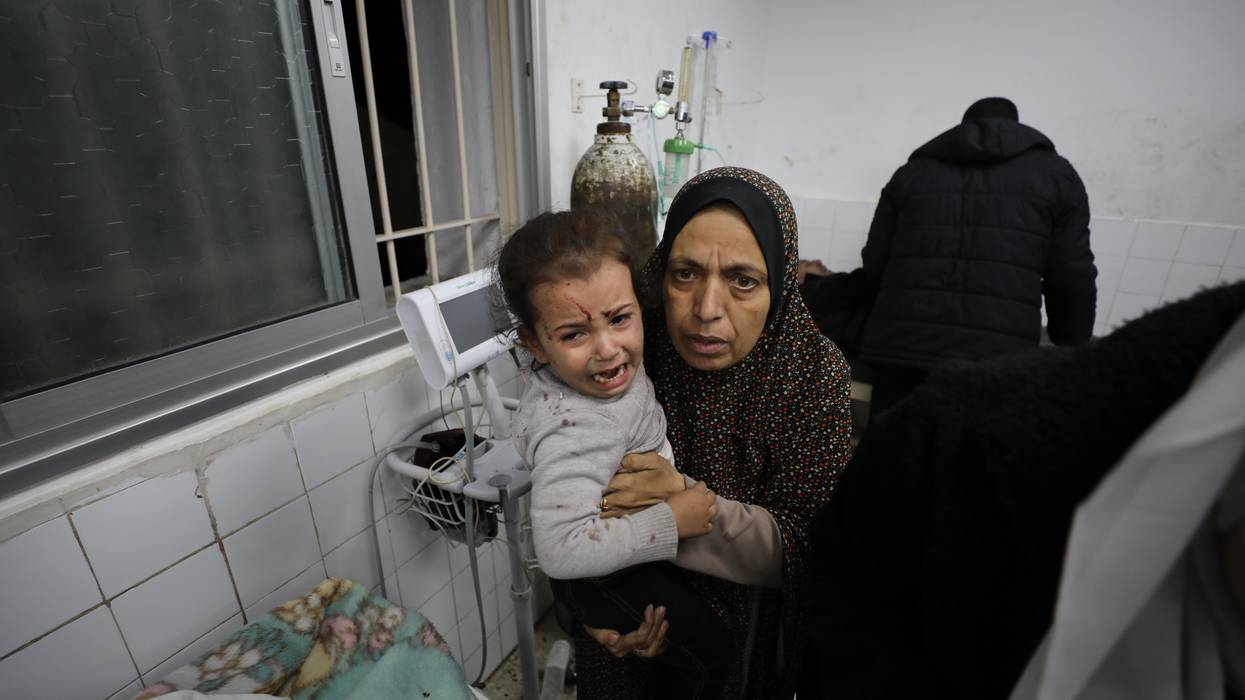
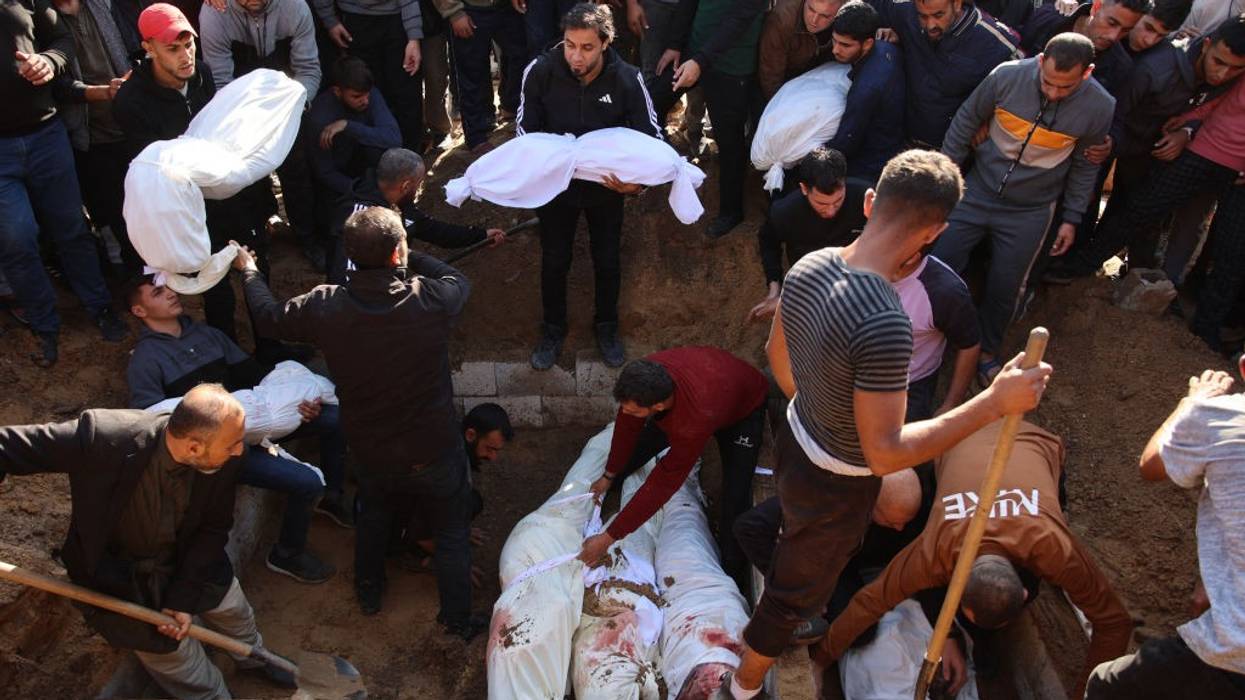
The Gaza hospitals, of course, received a large share of Israeli attacks. In March, once more, Israel attacked the Al-Shifa Medical Complex in Gaza City with greater ferocity than before. When it finally withdrew, on April 1, the Israeli army destroyed the entire compound, leaving behind mass graves with hundreds of bodies, mostly medical staff, women and children. They even executed several patients.
Aside from a few statements of concern by western leaders, little was done to bring the genocide to an end. Only when seven international aid workers with the charity, the World Central Kitchen, were killed by Israel, a global outcry followed, leading to the first and only Israeli apology in the entire war.
Desperate to distract from its failure in Gaza, but also Lebanon, and keen on presenting the Israeli public with any kind of victory, the Israeli military began escalating its war beyond Gaza. This included the strike on the Iranian Embassy in Syria on April 1. Despite repeated attempts, which included the assassination in Iran of the head of Hamas's Political Bureau, Ismail Haniyeh, on July 31, an all-out regional war has not yet come to pass.
Another escalation was taking place, this time not by Netanyahu but by millions of people around the world, demanding an end to the Israeli war. A focal point of the protests were student movements that spread across US campuses and, ultimately, worldwide. Instead of allowing free speech to flourish, however, America's largest academic institutions resorted to the police, who violently shut down many of the protests, arresting hundreds of students, many of whom were not allowed to return to their colleges.
Meanwhile, the US continued to block international efforts aimed at producing a ceasefire resolution at the United Nations Security Council. Ultimately, on May 31, US President Joe Biden delivered a speech conveying what he termed an “Israeli proposal” to end the war. After some delay, Hamas accepted the proposal, but Israel rejected it. In his rejection, Netanyahu referred to Biden's speech as “incorrect” and “incomplete”. Strangely, but also unsurprisingly, the White House blamed the Palestinians for the failed initiative.
Losing faith in the American leadership, some European countries began changing their foreign policy doctrines on Palestine, with Ireland, Norway and Spain recognizing the State of Palestine on May 28. The decisions were largely symbolic but indicated that western unity around Israel was faltering.
Israel remained unfazed and, despite international warnings, invaded the Rafah area in southern Gaza on May 7, seizing control of the Philadelphi Corridor - a buffer zone between Gaza and the Egyptian border that extends for 14 kilometers.
Netanyahu's government insisted that only war can bring their captives back. There was very little success in that strategy, however. On June 8, Israel, with logistical support from the US and other western countries managed to rescue four of its captives held in the Nuseirat refugee camp in central Gaza. To do so, Israel killed at least 276 Palestinians and wounded 800 more.
In August, another heart-wrenching massacre took place, this time in the Al-Tabaeen school in Gaza City, where 93 people, mostly women and children, were murdered in a single Israeli strike. According to the United Nations High Commissioner for Human Rights, women and children were the main victims of the Israeli genocide, accounting for 70 percent by November 8.
An earlier report by the Lancet Medical Journal said that if the war stopped in July, “186,000 or even more” Palestinians would have been killed. The war, however, went on. The rate of genocide in Gaza seemed to maintain the same killing ratio, despite the major regional developments including the mutual Iranian-Israeli tit-for-tat strikes and the major Israeli ground operation in Lebanon.
In October, Israel returned to the policies of targeting or besieging hospitals, killing doctors and other medical staff, and targeting aid and civil defense workers. Still, Israel would not achieve any of its strategic goals of the war. Even the killing of Hamas’ leader, Yahya Sinwar, in battle on October 16 would not, in any way, alter the course of the war.
Israel's frustration grew by leaps and bounds throughout the year. Its desperate attempt to control the global narrative on the Gaza genocide largely failed. On July 19, and after listening to the testimonies of over 50 countries, the ICJ issued a landmark ruling that “Israel's continued presence in the Occupied Palestinian Territory is illegal.”
That ruling, which expressed international consensus on the matter, was translated on September 17 to a UN General Assembly resolution “demanding an end to Israel’s occupation of Palestine within the next twelve months”.
All of this effectively meant that Israel's attempt at normalizing its occupation of Palestine, and its quest to illegally annex the West Bank was considered null and void by the international community. Israel, however, doubled down, taking its rage against West Bank Palestinians, who, too, were experiencing one of the worst Israeli pogroms in many years.
According to the Palestinian Health Ministry, by November 21, at least 777 Palestinians have been killed since October 7, 2023, while thousands more were wounded and over 11,700 arrested.
To make matters worse, Smotrich called, on November 11, for the full annexation of the West Bank. The call was made soon after the election of Donald Trump as the next US President, an event that initially inspired optimism amongst Israeli leaders, but later concerns that Trump may not serve the role of the savior for Israel after all.
On November 21, the ICC issued its historic ruling to arrest Netanyahu and his Defense Minister Yoav Gallant. The decision represented a measure of hope, however faint, that the world is finally ready to hold Israel accountable for its many crimes.
2025 could, indeed, represent that watershed moment. This remains to be seen. However, as far as Palestinians are concerned, even with the failure of the international community to stop the genocide and reign in Israel, their steadfastness, sumoud, will remain strong until freedom is finally attained.
"It sure looks like USAID is allowing political considerations—the Biden administration's worry about funding Israel's starvation strategy—to interfere," said one human rights expert.
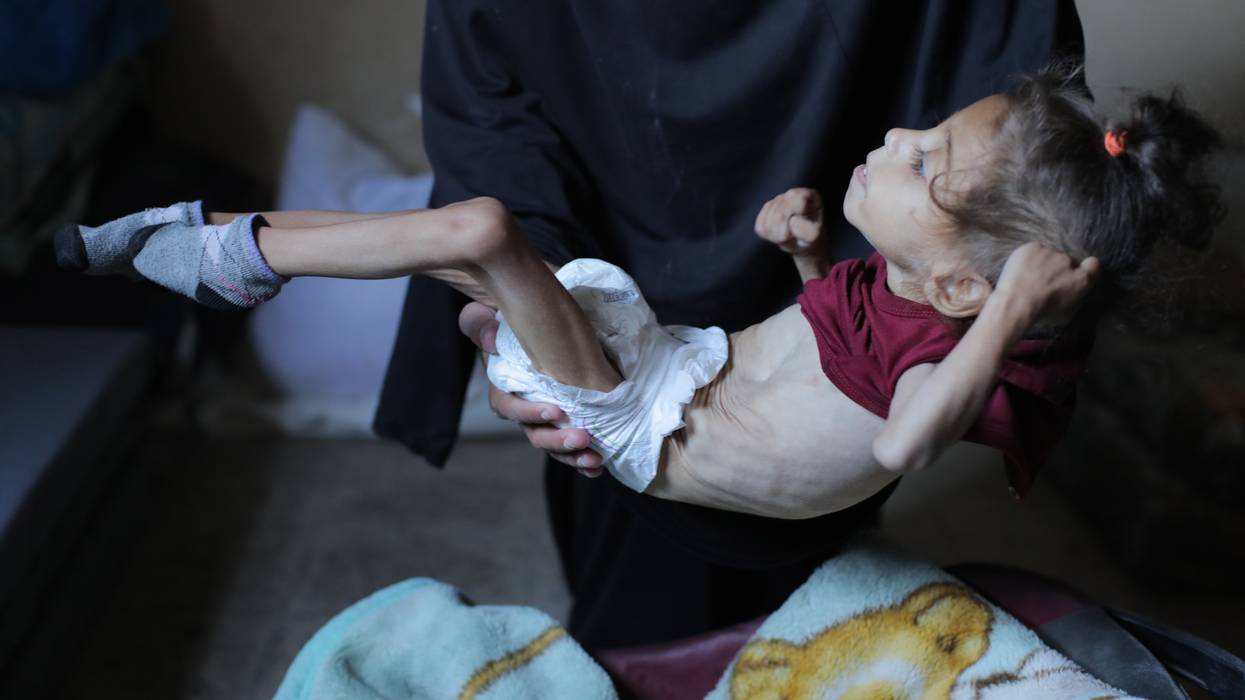
Veteran human rights expert Kenneth Roth said Thursday that the withdrawal of a report on imminent famine in northern Gaza negates "the whole point" of the office that produced the analysis: "to have a group of experts make assessments about imminent famine that are untainted by political considerations."
The decision by the Famine Early Warning Systems Network (FEWS NET) to retract its December 23 alert on the rapidly spiraling starvation crisis in the northern part of the besieged enclave came after the U.S. ambassador to Israel, Jack Lew, publicly criticized the report.
FEWS NET, which is funded by the U.S. Agency for International Development (USAID), said in its report that Israel's "near-total blockade of humanitarian and commercial food supplies" for nearly 80 days has made it "highly likely that the food consumption and acute malnutrition thresholds for famine... have now been surpassed in North Gaza Governorate."
The report referenced the Integrated Food Security Phase Classification, the United Nations-backed assessment that classifies famine as "phase 5" and declares famine in a region once more than 30% of children under age five are acutely malnourished, more than two people per 10,000 die each day from starvation, or once 20% of households face an extreme lack of food.
On Thursday, a note on the group's website said the "December 23 Alert is under further review and is expected to be re-released with updated data and analysis in January."
FEWS NET is hardly the first group to warn of impending famine in northern Gaza, where Israeli troops have been carrying out a ground offensive since early October and where nearly all humanitarian aid has been cut off for thousands of Palestinians who are trapped in the region.
Cindy McCain, executive director of the World Food Program, said the area was facing a "full-blown famine" in May, and independent United Nations experts made a similar assessment in July.
But the FEWS NET report drew criticism from Lew, who said the analysis relied on "outdated and inaccurate" data pertaining to how many people are currently in northern Gaza.
The report was based on a population of 65,000-75,000 people in northern Gaza, said Lew, but Israel's Coordinator of Government Activities in the Territories (COGAT) "estimates the population in this area is between 5,000 and 9,000," said Lew, while the U.N. Relief and Works Agency for Palestine Refugees in the Near East (UNRWA) "estimates the population is between 10,000 and 15,000."
"At a time when inaccurate information is causing confusion and accusations, it is irresponsible to issue a report like this," said Lew.
The Council on American-Islamic Relations was among those who said Lew appeared to reject the report by boasting "about the fact that [northern Gaza] has been successfully ethnically cleansed of its native population."
Roth, the former executive director of Human Rights Watch, said Lew's "quibbling over the number of people desperate for food seems a politicized diversion from the fact that the Israeli government is blocking virtually all food from getting in."
"The Biden administration seems to be closing its eyes to that reality, but putting its head in the sand won't feed anyone," he told the Associated Press.
The Biden White House has been a vehement supporter of Israel's bombardment of Gaza since October 2023, insisting that the country is only defending itself following a Hamas-led attack on southern Israel—even as the death toll has passed 45,000 and as numerous reports have shown that Israel is waging attacks that officials know will kill hundreds of civilians.
In October the administration said it was giving Israel a month to ensure sufficient humanitarian aid was getting to Palestinians and threatened to cut off military aid, but when the deadline passed, no changes to U.S. political and military support were made.
The U.S. is prohibited from supplying weapons to countries that are blocking U.S. humanitarian aid under its own laws, including Section 620I of the Foreign Assistance Act."
Roth suggested that by pushing for the retraction of the FEWS NET report, USAID was acting on its vested interest in denying that Israel is starving Palestinians.
"It sure looks like USAID is allowing political considerations—the Biden administration's worry about funding Israel's starvation strategy—to interfere" with the report, Roth told the AP.
Scott Paul, a senior manager at Oxfam America, told the outlet that Lew "leveraged his political power to undermine the work of this expert agency."
"There is no military necessity or justification under international law that permits the prevention of basic necessities from reaching a civilian population."
As millions prepared to celebrate Thanksgiving in the United States on Wednesday, human rights advocates provided dispatches from nearly 6,000 miles away in Gaza, where the Biden administration has continued to provide political and military support for Israel's onslaught despite public disapproval for the war among Americans.
Palestinians in Gaza are now facing their second winter amid Israel's bombardment and near-total blockade on humanitarian aid, which began in October 2023.
The Euro-Med Human Rights Monitor said in a statement that Israel's blocking of deliveries including blankets, shoes, and clothing has left Gaza's 2.3 million—nearly half of whom are children—vulnerable to the elements, especially since at least 70% of homes in the enclave have been destroyed in the last 13 months.
"Euro-Med Monitor notes that Israel restricts the entry of such items as part of its efforts to impose harsh living conditions on the Palestinian people that will ultimately lead to their actual destruction, as part of the comprehensive crime of genocide it is committing in the Gaza Strip," said the group. "There is no military necessity or justification under international law that permits the prevention of basic necessities from reaching a civilian population."
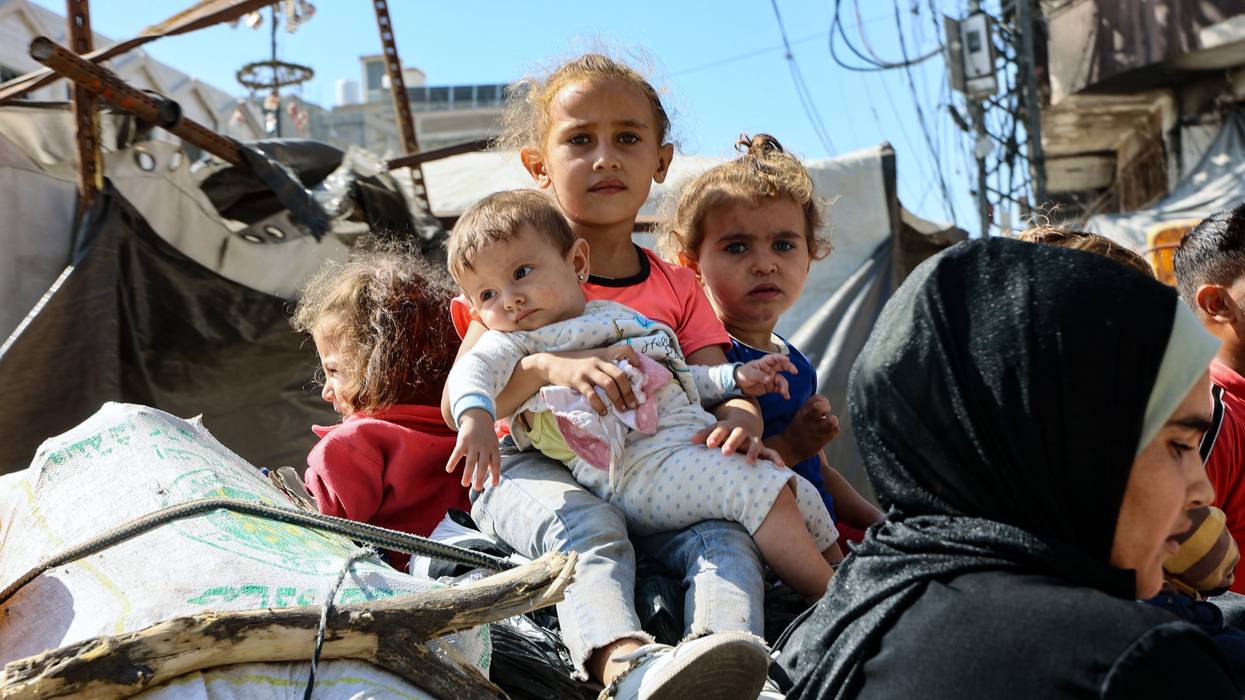
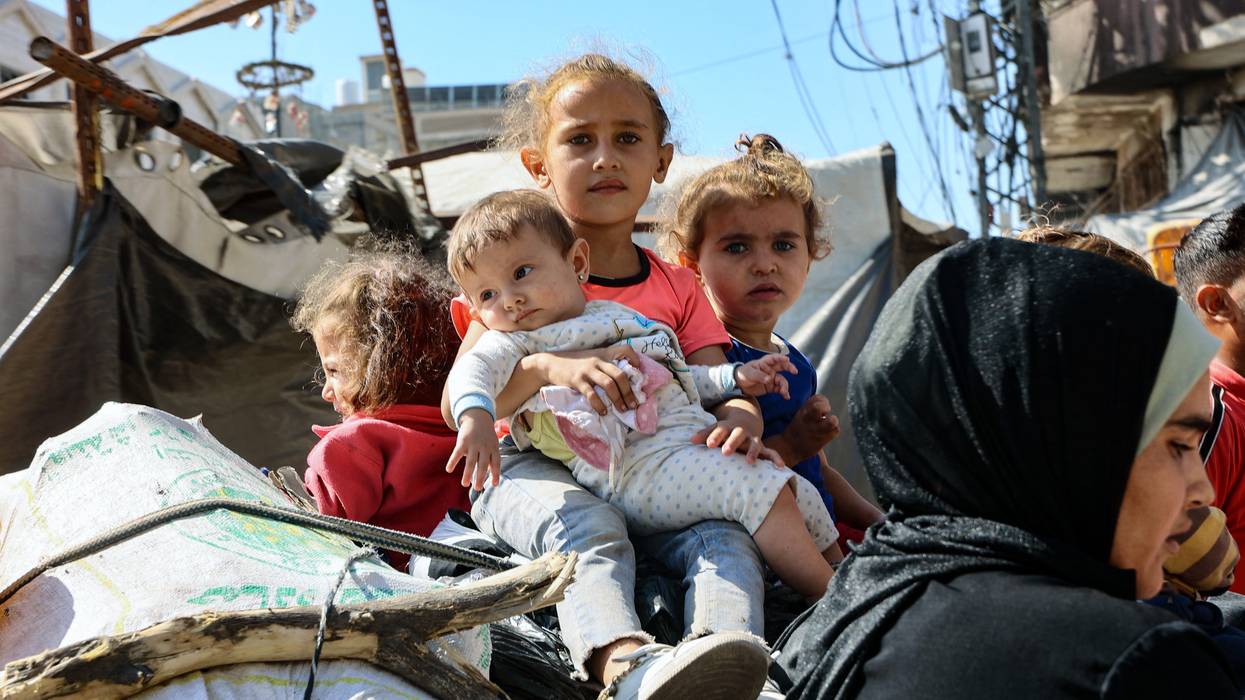
At least 1.9 million people in Gaza are internally displaced, and as Euro-Med Monitor said, "the vast majority of displaced people in the Gaza Strip continue to live in tents that do not provide adequate protection from the cold and rain."
"The war in Gaza is a war on children. There is no plainer way to illustrate this than to look at the people who make up the death figures—over 4 in every 10 people verified killed in Gaza are children."
Hundreds of thousands of people, including women, children, and elderly people, have been left without appropriate clothing for harsh weather—and at greater risk of contracting respiratory infections and other illnesses, which health authorities in the enclave are poorly equipped to treat due to Israel's blockade.
A woman named Ruba told the humanitarian group Save the Children that in northern Gaza, where Israel began an offensive in early October, she has been "trapped with [her] children under relentless bombs, rockets, and bullets, with nowhere to run."
"My mother is paralyzed, and I cannot leave her behind. My brother has been killed, my husband was taken, and I don't know if he's alive. Our home was destroyed over our heads, and we survived by a miracle," Ruba said.
"With no food, no clean water, and constant fear, both my children have developed rashes, and my daughter is passing blood, but there is no medicine, no help, and absolutely nothing I can do," she continued. "They cry and ask me why we can't just leave, why their father isn't with us, why we can't go back to a normal life.”
Humanitarian workers with the group have observed children barefoot in streets littered with sewage and debris from Israeli attacks, sometimes walking "in the rain while wearing only light, shabby clothing."
"Children who lack shoes are more likely to sustain wounds and injuries, leaving them susceptible to infection in an environment devoid of medical supplies and medications because of the strict blockade," said Euro-Med Monitor.
"Israel's continuous and severe deprivation of the fundamental necessities of life is an act of genocide, as it seeks to strip the Palestinian population of the most basic means of protection, with the aim of physically erasing their existence," said the group. "Children and other vulnerable groups are specifically targeted by Israel as they are more affected by this deprivation, which exacerbates their suffering and raises the death rates among them; due to the lack of refuge from winter weather, these rates will undoubtedly spike without international intervention."
The United Nations Relief and Works Agency for Palestine Refugees in the Near East (UNRWA) warned Wednesday that severe food shortages are also set to worsen without immediate international intervention and a cease-fire.
The groups' warnings come two weeks after the passing of a U.S.-imposed deadline for Israel to significantly ramp up humanitarian aid deliveries to Gaza. The Biden administration in October ordered Israel to allow at least 350 aid trucks into Gaza per day, or else it would invoke U.S. laws that prohibit the government from providing military aid to countries that block U.S. humanitarian relief.
But even as experts said Israel was continuing its blockade and failing to meet the Biden administration's terms, the U.S. took no action to end its support for Prime Minister Benjamin Netanyahu and the Israel Defense Forces.
"The war in Gaza is a war on children," said Jeremy Stoner, regional director of Save the Children. "There is no plainer way to illustrate this than to look at the people who make up the death figures—over 4 in every 10 people verified killed in Gaza are children."
"Safe humanitarian access must be granted immediately to allow food, water, winter supplies, and medical assistance to reach those who are trapped in the death zone in the north," added Stoner. "The international community must step up and make sure that happens, in line with their obligations. Without access and a cease-fire, we are condemning children to perish in hell on Earth."
"With no food, no clean water, and constant fear, both my children have developed rashes, and my daughter is passing blood, but there is no medicine, no help, and absolutely nothing I can do," said one mother trapped in the area.
An estimated 130,000 children under the age of 10 have been trapped in areas of northern Gaza almost entirely cut off from aid assistance, food and medical supplies for 50 days, a major humanitarian group said Monday.
According to Save the Children, life-sustaining aid has largely failed to make it through to any of the people besieged by Israeli forces in northern Gaza since early October, when the IDF declared the territory a "dangerous combat zone" and ordered civilians to evacuate.
Earlier this month, Joyce Msuya, Acting Under-Secretary-General for Humanitarian Affairs and Emergency Relief Coordinator for the United Nations, warned that the Israeli offensive in the area that began in early October was "an intensified, extreme, and accelerated version of the horrors of the past year." Local health officials in Gaza say that the death toll for the entire enclave has surpassed 44,000 since October 7 of 2023.
"Save the Children has been unable to access northern Gaza to deliver food parcels for 5,000 families, along with 725 hygiene kits and other aid supplies, for over seven weeks," said the group in its Monday statement. "Before the area was closed off, Save the Children worked through local partners to reach thousands of children in need, distributing over 1,000 food parcels and 600 hygiene kits, and reaching around 15,000 children and families in northern Gaza with psychosocial support, recreational activities, and case management."
Save the Children's warning comes not long after the Famine Review Committee released an alert stating that "there is a strong likelihood that famine is imminent in areas within the northern Gaza Strip."
"The situation in northern Gaza is not fit for human survival and yet we know there are about 130,000 children under 10 trapped in those conditions, not to mention the thousands of older children and their families," said regional director Jeremy Stoner.
A mother of two trapped in northern Gaza, identified by Save the Children as Ruba, testified through the group that she was trapped with her children "under relentless bombs, rockets, and bullets, with nowhere to run. My mother is paralyzed, and I cannot leave her behind. My brother has been killed, my husband was taken, and I don't know if he's alive."
"With no food, no clean water, and constant fear, both my children have developed rashes, and my daughter is passing blood, but there is no medicine, no help, and absolutely nothing I can do. They cry and ask me why we can’t just leave, why their father isn’t with us, why we can’t go back to a normal life," she said.
Save the Children is not the only entity reporting that aid is being blocked. According to an update from the U.N. Office for the Coordination of Humanitarian Affairs issued last week regarding northern Gaza, "between 1 and 18 November, 27 out of 31 coordination requests by the U.N. to access the besieged areas were denied and the remaining four were initially approved but then impeded on the ground. No fuel was let in for water, sanitation, and hygiene (WASH) facilities."
Following Save the Children's statement, Ibrahim Hooper, the national communications director for the Council on American-Islamic Relations, called for bolder action by nations besides the U.S.: "Because the Biden administration steadfastly refuses to apply any real pressure on the genocidal Israeli government to allow food to be delivered to those being intentionally starved in northern Gaza, including some 130,000 children under age 10, it is up to the international community to take concrete action."
“While our nation's government has abdicated any role in alleviating the suffering of the Palestinian people under a systematic campaign of mass destruction, slaughter, ethnic cleansing, and forced starvation, other nations can take actions such as economic sanctions, arms embargoes and arrests of Israeli war criminals," he said.
Without the U.S., Israel could not carry out this genocide with impunity.
As U.S. voters cast their ballots on November 5, an Israeli Brigadier General told the press that Palestinians forcibly transferred out of northern Gaza would not be allowed to return. This admission adds to a large and growing body of evidence that Israel is planning to annex parts of Gaza.
For more than a month, the Israeli military has encircled northern Gaza, trapping hundreds of thousands of people. All aid into the area has been halted and the last remaining hospitals attacked and blockaded. People are being starved to death and bodies are piling up in the streets. Israel has killed at least 1,800 Palestinians since the intensified attack and siege began last month.
While the situation in all of Gaza is dire and the entire population at risk of famine, conditions in the north are beyond imagination. The United Nations has described the north as “apocalyptic.”
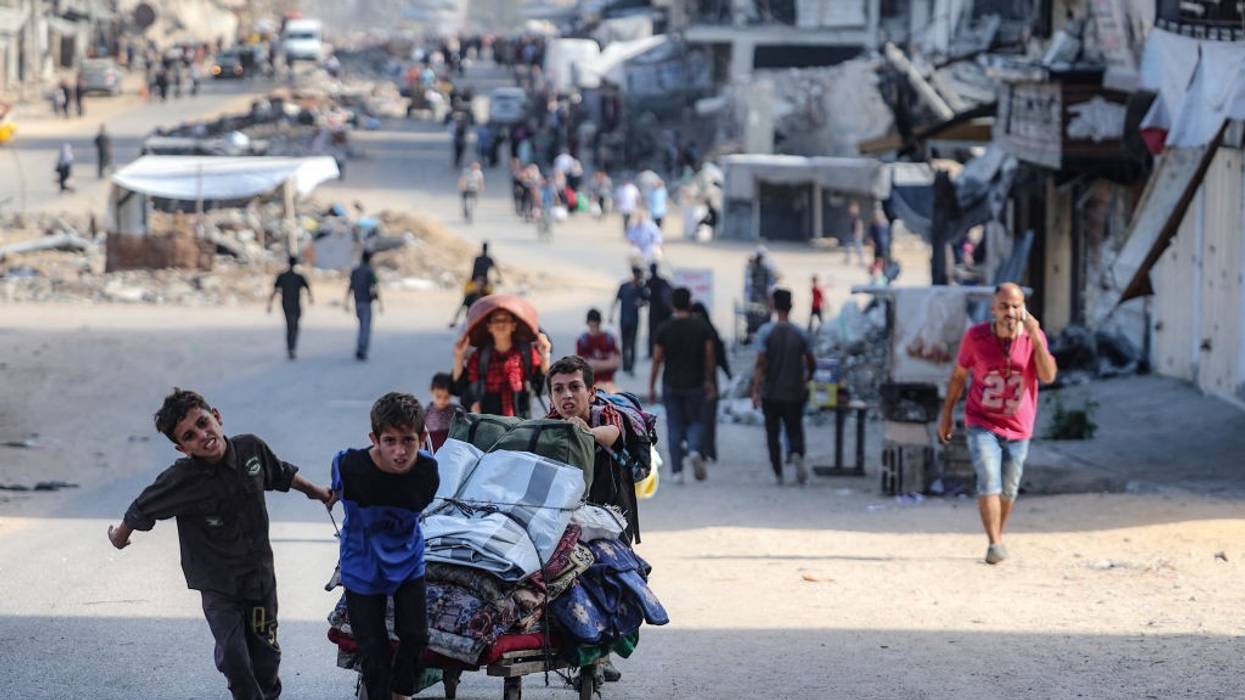
The Israeli military has repeatedly demanded that all civilians remaining in northern Gaza leave their homes and displacement shelters for locations in the south. But leaving is nearly impossible; many are trapped by the constant bombings, and those who do try to leave are shot at, detained, or disappeared. Israel is preventing humanitarian organizations from providing health services, clean water, and food.
The attacks, forced displacement, and isolation of Palestinians in internment camps all serve a bigger goal: the annexation and settlement of parts of Gaza.
The military actions and the near total denial of medical and humanitarian aid to Jabalia Refugee Camp, Beit Lahiya, Beit Hanoun and other areas in the north indicate that Israel is implementing the “General Eiland Plan.” This plan calls for the complete ethnic cleansing of northern Gaza and the forced transfer of the entire population. Those forcibly displaced from the north to the south would undergo invasive screening by the Israeli military.
Already, Israel is searching and detaining Palestinian men en masse. They are then placed in the Israeli military prison system. Human rights organizations have documented systematic torture, starvation, sexual violence, and abuse of detained Palestinians. Thousands have been forcibly detained and disappeared with little or no information known about their status.
Under what has become known as the General’s Plan, anyone who refused to leave northern Gaza would be considered a legitimate target by the Israeli military and would likely be killed, in violation of international law. A total blockade within the already existing blockade would also be put in place in the north to starve to death those who do not leave. All of these actions—forced evacuations, unilaterally declaring civilian populations as combatants who can be killed, and the use of starvation as a weapon of war—are atrocity crimes.
Legally and morally the U.S. must take immediate steps to stop the annexation of northern Gaza, block the creation of concentration camps, end the ongoing genocide, and hold those responsible for international crimes accountable.
Israel is also exploring the possibility of creating isolated, fenced-in areas into which any civilian population remaining in northern Gaza will be moved for an undefined period of time. These areas will be controlled by either the Israeli military or private military contractors. Palestinians interned in these locations will be monitored using biometrics. Armed private contractors working with the Israeli military will be responsible for providing basic services including access to water, food, and medical care.
Israeli officials are calling these areas “bubbles.” It would be more accurate to call them concentration camps.
Israel would control entrance and exit to the camps, which would only be for people they designated as “civilians.” All other areas of northern Gaza would likely be targeted for ethnic cleansing.
The attacks, forced displacement, and isolation of Palestinians in internment camps all serve a bigger goal: the annexation and settlement of parts of Gaza. On October 21, Israeli Prime Minister Netanyahu’s Likud party co-sponsored a conference called “Preparing to Settle Gaza” which outlined plans for establishing new settlements on the ruins of Palestinian cities. The calls for settling Gaza are not marginal, they are being made by key Israeli ministers and must be taken seriously. The infrastructure being set up in the Netzarim Corridor in Gaza by the Israeli military, including permanent military bases with water and electrical infrastructure, could serve as the basis for permanent reoccupation and settlement.
Israeli officials are calling these areas “bubbles.” It would be more accurate to call them concentration camps.
And it is not just Gaza being targeted for annexation. Shortly after the U.S. elections, Israel’s finance minister Bezalel Smotrich announced his intention to seize even more Palestinian land. Smotrich said he had instructed civil authorities to “begin professional and comprehensive work to prepare the necessary infrastructure for applying sovereignty” over the Israeli-occupied West Bank. This would be another flagrant violation of international law.
On October 13 Secretary of State Anthony Blinken and Secretary of Defense Lloyd Austin sent a letter to the Israeli government giving Israel a 30 day deadline to improve humanitarian access in Gaza. As documented by international aid organizations, Israel failed to meet any of the criteria set out in the U.S. letter; instead the humanitarian situation in Gaza deteriorated dramatically. Despite these facts, Sec. Blinken has said that the U.S. will not change policy and weapons will continue to flow to Israel.
The Biden administration has supplied Israel with more than $17 billion in weapons and military assistance over the last year, and blocked any efforts by the international community to hold Israel accountable. Without the U.S., Israel could not carry out this genocide with impunity. The letter from Secretary Blinken and Secretary Austin was woefully inadequate when issued, and the refusal of the U.S. government to take action to hold Israel to account for its failure to comply with the letter is inexcusable.
Legally and morally the U.S. must take immediate steps to stop the annexation of northern Gaza, block the creation of concentration camps, end the ongoing genocide, and hold those responsible for international crimes accountable.
President Biden has two months left in office. If he wants his legacy to go beyond abetting a genocide, he must change policy and impose an arms embargo on Israel now."Civilians and civilian structures... must always be protected in accordance with international humanitarian law," said the head of UNICEF. "Yet these principles are being flouted over and over again."
The United Nations children's agency on Saturday condemned the Israel Defense Forces' "indiscriminate strikes on civilians in the Gaza Strip" after at least 50 children were reportedly among those killed in attacks on Jabalia refugee camp in the northern part of the enclave.
Northern Gaza has been under siege since early October, when Israel resumed its attacks there, claiming it was targeting Hamas militants.
The current situation in northern Gaza has been called "apocalyptic" by leading humanitarian groups in recent days, with women and children making up the majority of the hundreds of people killed, and Israel imposing a near-total blockade on humanitarian aid.
Now, said Catherine Russell, executive director of the U.N. Children's Fund (UNICEF), "the entire Palestinian population in North Gaza, especially children, is at imminent risk of dying from disease, famine, and the ongoing bombardments."
In addition to the attacks on residential buildings this weekend in Jabalia, the World Health Organization (WHO) reported that an attack on a healthcare center in Gaza City injured at least six people, including four children. The facility was participating in a polio vaccination drive, the second round of inoculations for children across Gaza.
"The Sheikh Radwan primary healthcare center in northern Gaza was struck today while parents were bringing their children to [get] the life-saving polio vaccination in an area where a humanitarian pause was agreed to allow vaccination to proceed," WHO chief Tedros Adhanom Ghebreyesus said. "These vital humanitarian-area-specific pauses must be absolutely respected. Ceasefire!"
Russell said the vehicle of a UNICEF staffer who was working on the vaccination campaign was attacked by "what we believe to be a quadcopter while driving through Jabalia—Elnazla."
The staff member was not injured, but Russell said "the attacks on Jabalia, the vaccination clinic, and the UNICEF staff member are yet further examples of the grave consequences of the indiscriminate strikes on civilians in the Gaza Strip."
"Civilians and civilian structures, including residential buildings, as well as humanitarian workers and their vehicles, must always be protected in accordance with international humanitarian law," said Russell. "Yet these principles are being flouted over and over again, leaving tens of thousands of children killed, injured, and deprived of essential services needed for survival."
The Gaza Health Ministry reports that at least 43,341 people have been killed in Gaza and at least 102,105 have been injured since Israel began its assault on the enclave more than a year ago in retaliation for a Hamas-led attack. Women and children make up most of those killed, even as Israel and the United States, the largest international supporter of the IDF, have insisted the military is targeting Hamas.
"How can this inhumane situation be tolerated by the Biden-Harris administration?" asked Nina Lahoud, who has served as a special adviser and peacekeeping officer at the U.N., after the death toll among children in Jabalia over the weekend was reported. "How many more Palestinian kids need to die to take urgent action?"
"Such dehumanization cannot help but trigger our associations with scenes depicting the Nazis loading Jews into cattle cars."
Much alarm has been raised over the so-called "Generals' Plan," an ethnic cleansing proposal for northern Gaza that has reportedly garnered attention in the highest reaches of the Israeli government.
But Israeli scholar Idan Landau argued in a column published in English by +972 Magazine on Friday that what the Israeli military is actually doing in northern Gaza "is even more appalling" than the plan outlined by a group of retired generals. Landau argued that focus on the details of the Generals' Plan has served to obscure the "true brutality" of Israel's deadly operations in northern Gaza, which has been rendered a hellscape of death and destruction by the military assault and siege.
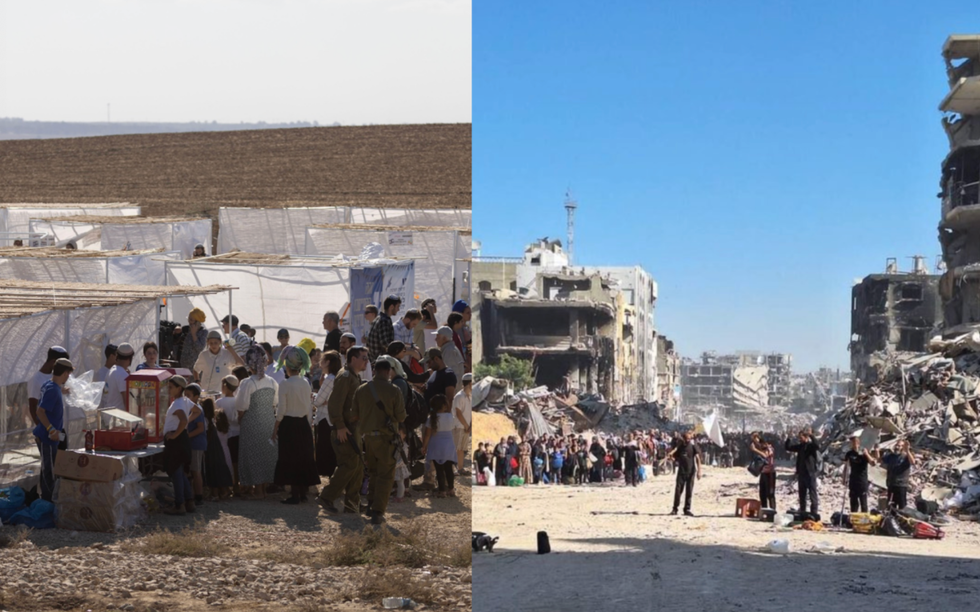
Landau, a professor of linguistics at Tel Aviv University, opened his column—first published in Hebrew on his blog—by pointing to two photos: one showing a celebratory event at a camp built by an Israeli settler organization just outside of the Gaza Strip, and the other showing displaced Palestinians lined up at gunpoint amid the ruins of northern Gaza.
"These photos tell a story that is unfolding so rapidly that its harrowing details are already on the brink of being forgotten," wrote Landau. "Yet this story could start from any point during the past 76 years: the Nakba of 1948, the 'Siyag Plan' that followed it, the Naksa of 1967. On one side, displaced Palestinians with all the belongings they can carry, hungry, wounded, and exhausted; on the other, joyful Jewish settlers, sanctifying the new land that the army has cleared for them."
The Israeli military's dehumanization of the people of Gaza, Landau wrote, "cannot help but trigger our associations with scenes depicting the Nazis loading Jews into cattle cars."

Landau wrote that what the Israeli army has been implementing in northern Gaza in recent weeks is "not quite" the Generals' Plan, which entails giving Palestinians still in the region a week to leave before declaring the area a closed military zone—and designating everyone who remains a militant who can be denied humanitarian assistance and killed.
The actual strategy Israeli soldiers have been deploying in northern Gaza is "an even more sinister and brutal version" of the Generals' Plan "within a more concentrated area."
"The first, most immediate distinction is the abandoning of provisions for reducing harm to civilians, i.e. giving residents of northern Gaza a week to evacuate southward," Landau wrote. "The second departure concerns the real purpose of emptying the area: while portraying the military operation as a security necessity, it was, in fact, an embodiment of the spirit of ethnic cleansing and resettlement from day one."
"As opposed to the picture painted by the army, implying that residents in the northern areas were free to move south and get out of the danger zone, local testimonies presented a frightening reality: Anyone who so much as stepped out of their home risked being shot by Israeli snipers or drones, including young children and those holding white flags," Landau noted. "Rescue crews trying to help the wounded also came under attack, as well as journalists trying to document the events."
The scholar cites one "particularly harrowing video" in which a Palestinian child is seen "on the ground pleading for help after being wounded by an airstrike; when a crowd gathers to help him, they are suddenly hit by another airstrike, killing one and wounding more than 20 others."
"This is the reality amid which the people of northern Gaza were supposed to walk, starved and exhausted, into the 'humanitarian zone," Landau wrote. "Since the Israeli army began its operation in northern Gaza, it has killed over 1,000 Palestinians. The Israeli Air Force usually bombs at night while the victims are sleeping, slaughtering entire families in their homes and making it more difficult to evacuate the wounded. And on October 24, rescue services announced that the intensity of the bombardment left them with no choice but to cease all operations in the besieged areas."
The deadly military assault, Landau stressed, has been accompanied by a "starvation policy" that has severely hindered the flow of humanitarian assistance to northern Gaza.
The heads of prominent United Nations agencies and human rights organizations warned Friday that conditions on the ground in the region are "apocalyptic" and that "the entire Palestinian population in North Gaza is at imminent risk of dying from disease, famine, and violence."
Landau noted that on October 16, following pressure from the Biden administration, the Israeli government reportedly allowed 100 aid trucks to enter northern Gaza.
"But journalists in the north were quick to correct the record: Nothing at all had entered the besieged areas," Landau wrote. "On October 20, Israel denied a further request by U.N. agencies to bring in food, fuel, blood, [and] medicines. Three days later, in response to a request for an interim order by the Israeli human rights group Gisha, the state admitted to the High Court that no humanitarian aid had been allowed into northern Gaza up to that point. By this time, we are already talking about a three-week-long food siege."
Addressing the question of "what is left for us to do" in the face of such a catastrophe, Landau wrote that "the consensus concerning the war of extermination poisons Israeli society and blackens its future so profoundly that even small pockets of resistance can proliferate stamina and hope to those who have not yet been carried away by the currents of madness."
"We can also look for partners in this fight abroad, where the critical lever of pressure is the pipeline of American weapons," he added. "The struggle to end this intensifying war of extermination and transfer in Gaza, particularly in the north, is first and foremost a human fight. It is a fight for life, both in Gaza and Israel: for the very chance that life can continue to exist in this blood-soaked land. Nothing could be more patriotic."
+972 Magazine published Landau's column a day after Francesca Albanese, the U.N. special rapporteur on the occupied Palestinian territories, warned in a statement that "time is running out" to stop the far-right Israeli government's attempt to "erase the Palestinians from their own land and allow Israel to fully annex Palestinian territory."
"Genocide and a man-made humanitarian catastrophe are unfolding in front of us and in Gaza," said Albanese. "I regret to see so many member states are avoiding acknowledging the suffering of the Palestinian people and instead look away."
"Put simply, those children who have survived so far are running out of time," said one aid group. "We are pleading with the international community to urgently intervene."
Israeli forces on Tuesday bombed a crowded residential building in the northern Gaza town of Beit Lahiya, killing around 93 people—including at least 20 children—in the latest atrocity in a region that has been under heavy military siege for weeks.
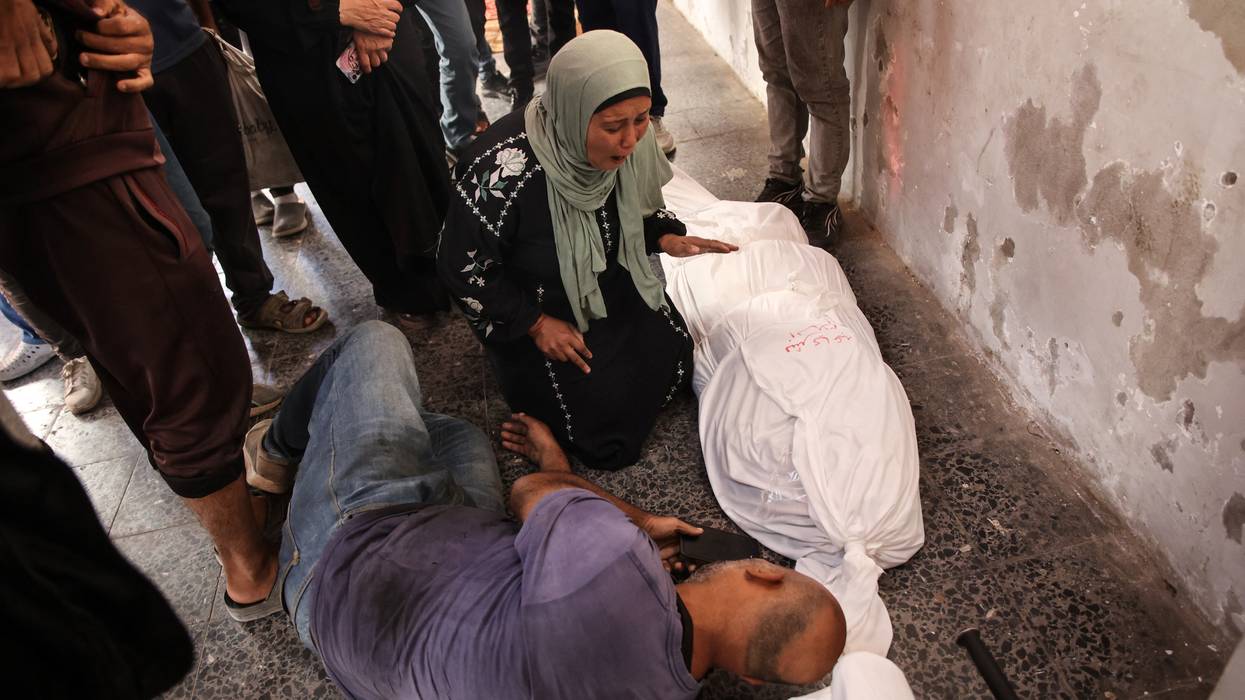
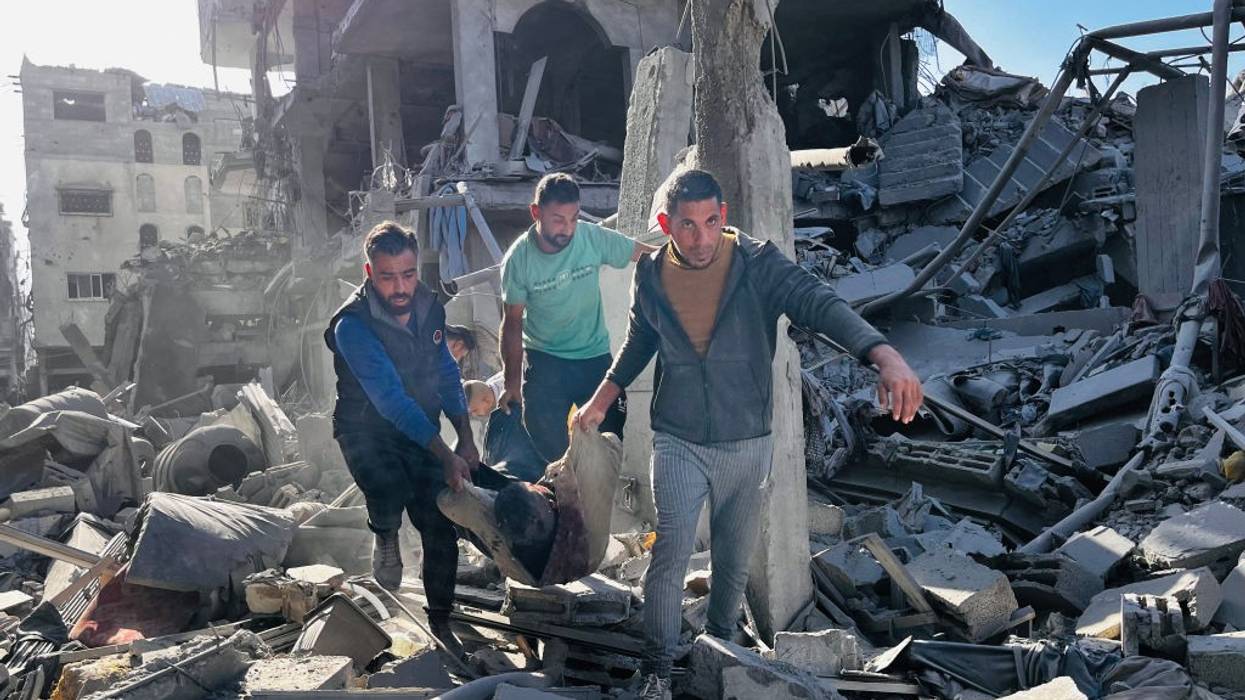
Eyewitnesses described an appalling scene at the building decimated by the Israeli strike. One person who was helping to remove victims from the rubble told Reuters that there were "body parts hanging on the walls." Another eyewitness said that "most of the victims are women and children."
The Israeli strike on the residential building—which was reportedly sheltering roughly 200 displaced people—also wounded dozens, but hospitals in the region are overwhelmed and barely functional after relentless Israeli raids and attacks, leaving them unable to handle an influx of bombing victims.
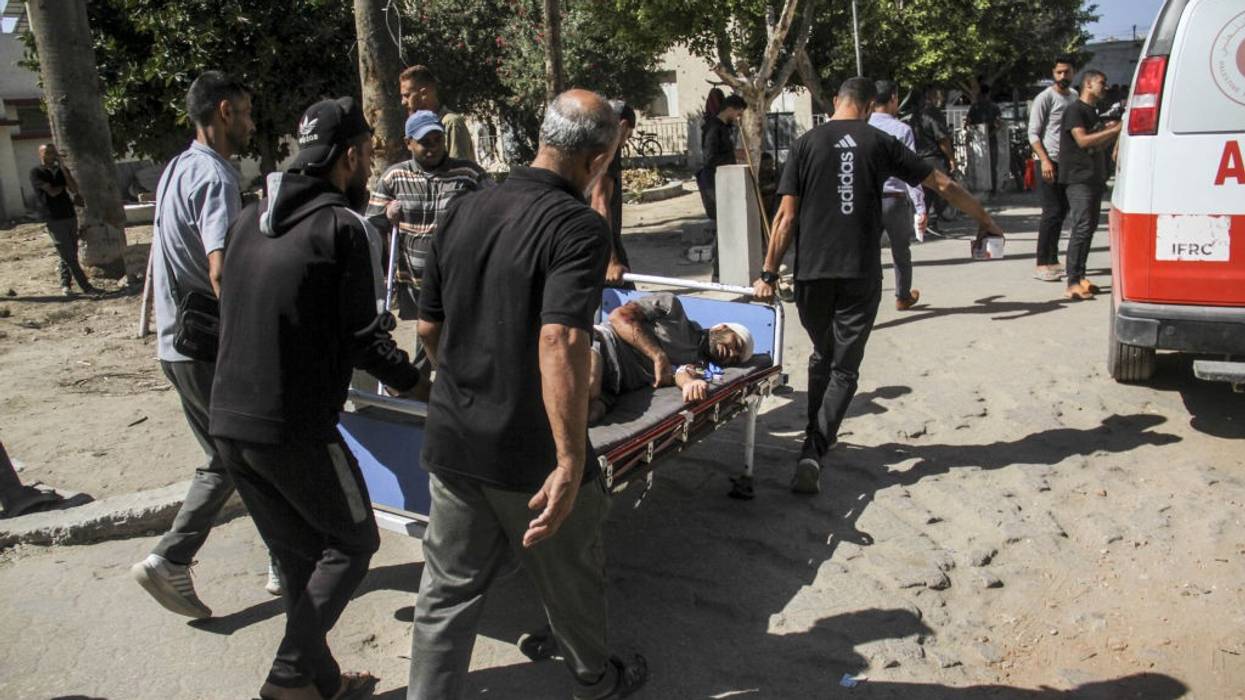
Dr. Hussam Abu Safia, the director of nearby Kamal Adwan Hospital, told Al Jazeera that "more than 150 dead and wounded had arrived after the attack."
"However, he warned that many of those injured may die because of a lack of resources," the outlet reported. "Israeli forces detained dozens of medical staff at the hospital last week, leaving only three doctors."
🚨 BREAKING: 93 people, including 25 children, are dead after an Israeli airstrike on a five-story residential building in Beit Lahiya, northern Gaza. At least 150 are injured, with dozens still missing. The Israeli military has yet to comment.
Nearby Kamal Adwan Hospital, down… pic.twitter.com/sLx89aXe4H
— Drop Site (@DropSiteNews) October 29, 2024
Israel's attack in Beit Lahiya was one of a number of massacres committed in recent days in northern Gaza, where an estimated 100,000 Palestinians are trapped with virtually no access to food, medicine, and other essentials.
"There is nothing. You are talking about tens of days that they are not receiving any supplies,"
said Mahmoud Alsaqqa, Oxfam's food security and livelihood lead in Gaza. Alsaqqa said people are "starving to death" in northern Gaza as Israel impedes humanitarian aid shipments and moves to ban the United Nations' Palestinian refugee agency.
Dylan Williams, vice president for government affairs at the Center for International Policy, noted Tuesday that "in the last day, Israel passed bills that would block most aid delivery in Gaza and the West Bank and bombed a building sheltering displaced civilians, reportedly killing mostly women and children."
"Yet [U.S. President Joe] Biden keeps arming Israel counter to U.S. and international law," Williams wrote on social media.
"Every possible step must be taken to secure a definitive cease-fire and to ensure adherence to international law."
Internet blackouts in the region, meanwhile, have made it difficult for aid workers and reporters to relay news of northern Gaza's dire conditions to the world.
"Communication between hospitals, health workers, and aid agencies is becoming sporadic, and ground fighting has made travel increasingly dangerous, making it hard to coordinate care and treatment and accurately collect casualty data,"
The Guardian reported Tuesday. "The civil defense service suspended activities last Wednesday after crews were attacked by Israeli forces and tank shelling destroyed their last fire engine."
Last week, Save the Children decried deadly Israeli attacks on 13 residential buildings in the Jabalia refugee camp and warned that "the threat of attacks and lack of fuel and supplies have left rescue services unable to operate" in the northern part of the Palestinian enclave.
"Attacks by Israeli forces across the Gaza Strip have killed scores of people, including many children and an 11-month-old baby," said Jeremy Stoner, Save the Children's regional director. "The attacks have targeted a school-turned-shelter in Nuseirat, Kamal Adwan Hospital, and residential homes in Khan Younis—the very places where children are supposed to be safest, protected under international law."
"Put simply, those children who have survived so far are running out of time. We are pleading with the international community to urgently intervene," Stoner added. "Every possible step must be taken to secure a definitive cease-fire and to ensure adherence to international law. Governments must stop fueling the conflict with a supply of weapons and ammunition."
Médecins Sans Frontières (MSF) staffer Hasan Suboh was among those killed in the wave of Israeli attacks on residential homes in northern Gaza last week, the humanitarian group said in a statement Monday.
"Hasan's tattered MSF vest, which he wore all the time, was found under the rubble," the group said. "This vest symbolizes Hasan's commitment to helping people in distress, but more globally it also symbolizes healthcare and humanitarian assistance."
"To see it destroyed," MSF added, "is representative of how in this war, Israel, the U.S. government, and the rest of Israel's allies have disregarded the protection of healthcare workers, and ripped the rules of war to shreds. The claim that humanitarian workers are protected, that civilian lives are protected, has once again been exposed as a lie for all the world to see."
"On behalf of our staff in northern Gaza, I am calling for an immediate truce," said UNRWA Commissioner-General Philippe Lazzarini.
Staffers with the United Nations agency for Palestinian refugees issued a message of desperation to the international community on Tuesday as U.S.-armed Israeli forces continued their devastating and increasingly deadly assault on famine-stricken northern Gaza, besieging the area's hospitals, attacking shelters full of displaced people, and obstructing the delivery of critical aid.
Relaying reports from agency workers on the ground, the commissioner-general of the United Nations Relief and Works Agency for Palestine Refugees in the Near East (UNRWA) said in a statement that the people remaining in northern Gaza "are just waiting to die" amid squalid conditions, deprived of food, water, and medical treatment with nowhere safe to move.
"Nearly three weeks of non-stop bombardments from the Israeli forces as the death toll increases," wrote Philippe Lazzarini. "The smell of death is everywhere as bodies are left lying on the roads or under the rubble. Missions to clear the bodies or provide humanitarian assistance are denied."
"On behalf of our staff in northern Gaza, I am calling for an immediate truce, even if for few hours, to enable safe humanitarian passage for families who wish to leave the area and reach safer places," Lazzarini continued. "This is the bare minimum to save the lives of civilians who have nothing to do with this conflict. Cease-fire now."
Israeli forces have killed more than 600 people in northern Gaza over the past 17 days—likely an underestimate of the true death toll, given the difficulty of tallying casualties amid relentless bombing that has trapped many under the rubble of destroyed homes and buildings.
Euro-Mediterranean Human Rights Monitor has called on the U.N. to declare northern Gaza "a disaster zone that requires immediate action."
"Israel must be pressed to cease its attacks on civilians, allow the provision of life-saving emergency aid, and end its violent genocidal campaign," the group said.
Over the weekend, the U.N.'s humanitarian coordinator for the occupied Palestinian territories said that the Israeli military had denied "an urgent request from the United Nations to access North Gaza to assist in rescuing dozens of injured people trapped in rubble."
"In the past two weeks, Israeli forces increased their pressure on these hospitals to be evacuated, but patients had nowhere to go. Patients, medical staff, and displaced persons were injured," the official said. "At the Indonesian Hospital, two patients died due to a resulting power outage and lack of supplies; some medical staff had to flee for their lives. The facility is no longer operational."
One nurse at the Indonesian Hospital told Reuters that the Israeli army was "burning the schools next to the hospital, and no one can enter or leave the hospital
Meanwhile, Middle East Eye reported Monday that Israeli soldiers have been "systematically raiding schools" in northern Gaza and "marching out the displaced people sheltering there at gunpoint."
"According to witnesses, Israeli forces are separating men from their families and instructing women and children to flee southward," the outlet reported. "A video from Israel's state news broadcaster showed crowds of people expelled from the besieged Jabalia refugee camp attempting to cross a checkpoint."
Hossam Shabat, a Palestinian journalist reporting from northern Gaza, wrote Tuesday that what's happening in the region amounts to "genocide in the full sense of the word, with homes destroyed, shelters bombed, and displaced people forced to leave their homes and shelters."
"A short while ago, the occupation forces asked citizens to leave the Beit Lahia project area, which now includes the largest number of displaced people from all of the northern Gaza Strip," Shabat wrote.
The latest warnings about rapidly deteriorating conditions on the ground in northern Gaza came as U.S. Secretary of State Antony Blinken arrived in Israel for what his office characterized as "intensive discussions about the importance of ending the war in Gaza, returning the hostages to their families, and alleviating the suffering of the Palestinian people."
"You'd have a much better chance of doing all that from your desk in Washington by using your authority to enforce U.S. arms and aid law, as you should have months ago," Dylan Williams, vice president for government affairs at the Center for International Policy, wrote in response to the stated goals of Blinken's Middle East visit.
Blinken departed for the trip amid sustained outrage over the revelation that he contradicted experts within his own department when he told Congress earlier this year that Israel was not impeding deliveries of U.S. humanitarian assistance to Gaza. U.S. law prohibits the federal government from sending military aid to countries obstructing American humanitarian assistance.
Earlier this month, after Israeli forces assailed the Gaza Strip with the help of U.S. weapons for more than a year, the Biden administration threatened to cut off military aid if Israel's government does not take "urgent and sustained actions" to improve humanitarian conditions in Gaza within 30 days.
In response to a photo of a crowd of Palestinians in northern Gaza surrounded by rubble and bombed-out buildings, U.S. Rep. Rashida Tlaib (D-Mich.) wrote Monday, "I can't believe our country won't stop funding and enabling these war crimes."
"States have an obligation to prevent the crimes of starvation and forcible transfer," said four leading human rights groups based in Israel.
A coalition of Israeli human rights organizations issued a joint statement Monday imploring governments and institutions worldwide to "use all tools at their disposal—legal, diplomatic and economic—to prevent" Israel's far-right government from carrying out a proposed ethnic cleansing plan in northern Gaza.
B'Tselem, Gisha, Yesh Din, and Physicians for Human Rights Israel called on "the international community to take action now to prevent Israel from forcibly transferring hundreds of thousands of Palestinians who have remained in the Northern Gaza Strip outside of the area, including by denying entry of essential humanitarian aid and fuel."
"There are alarming signs that the Israeli military is beginning to quietly implement the Generals' Plan, also referred to as the Eiland Plan, which calls for complete forcible transfer of the civilians of the northern Gaza Strip through tightening the siege on the area and starving the population," the groups said. "States have an obligation to prevent the crimes of starvation and forcible transfer, and that if the continuation of the 'wait and see' approach will enable Israel to liquidate northern Gaza, they will be complicit."
The Israeli groups' statement came as their nation's government, led by far-right Prime Minister Benjamin Netanyahu, weighed a plan put forth by a group of retired generals. The plan, according to The Associated Press, would give the hundreds of thousands of Palestinians trapped in northern Gaza a week to leave the region.
"Those who remain would be considered combatants—meaning military regulations would allow troops to kill them—and denied food, water, medicine, and fuel," AP reported over the weekend. The Israeli newspaper Haaretz separately reported that Israel's "political leadership is pushing for the gradual annexation of large parts of the Gaza Strip."
The Israeli military is already effectively carrying out part of the retired generals' proposal by cutting off northern Gaza from humanitarian aid. According to the United Nations, no food has been able to enter the famine-stricken area since October 1.
Israeli forces have also killed dozens of people in attacks on the Jabalia refugee camp and other nearby areas, including a food distribution center. Residents who have attempted to flee have reported being fired on by Israeli soldiers and drones.
"Israeli authorities have increasingly cut off northern Gaza from essential supplies," Muhannad Hadi, the United Nations' humanitarian coordinator for the occupied Palestinian territory, said in a statement. "Erez and Erez West crossings have been kept closed, and no essentials have been allowed from the south."
On Monday, the U.N. Human Rights Office said it is "appalled by Israel's continued bombing and other attacks on parts of North Gaza, where its forces have trapped tens of thousands of Palestinians, including civilians, in their homes and shelters with no access to food or other life-sustaining necessities."
"In the shadow of the escalation of hostilities across the Middle East, the Israeli military appears to be cutting off North Gaza completely from the rest of the Gaza Strip and conducting hostilities with absolute disregard for the lives and security of Palestinian civilians," the office continued. "The separation of North Gaza raises further concerns that Israel does not intend to allow civilians to return to their homes, and the repeated calls for all Palestinians to leave northern Gaza raise grave concerns of large-scale forced transfer of the civilian population."
Forcible transfer is a crime against humanity under international law.