

SUBSCRIBE TO OUR FREE NEWSLETTER
Daily news & progressive opinion—funded by the people, not the corporations—delivered straight to your inbox.
5
#000000
#FFFFFF
To donate by check, phone, or other method, see our More Ways to Give page.
Daily news & progressive opinion—funded by the people, not the corporations—delivered straight to your inbox.
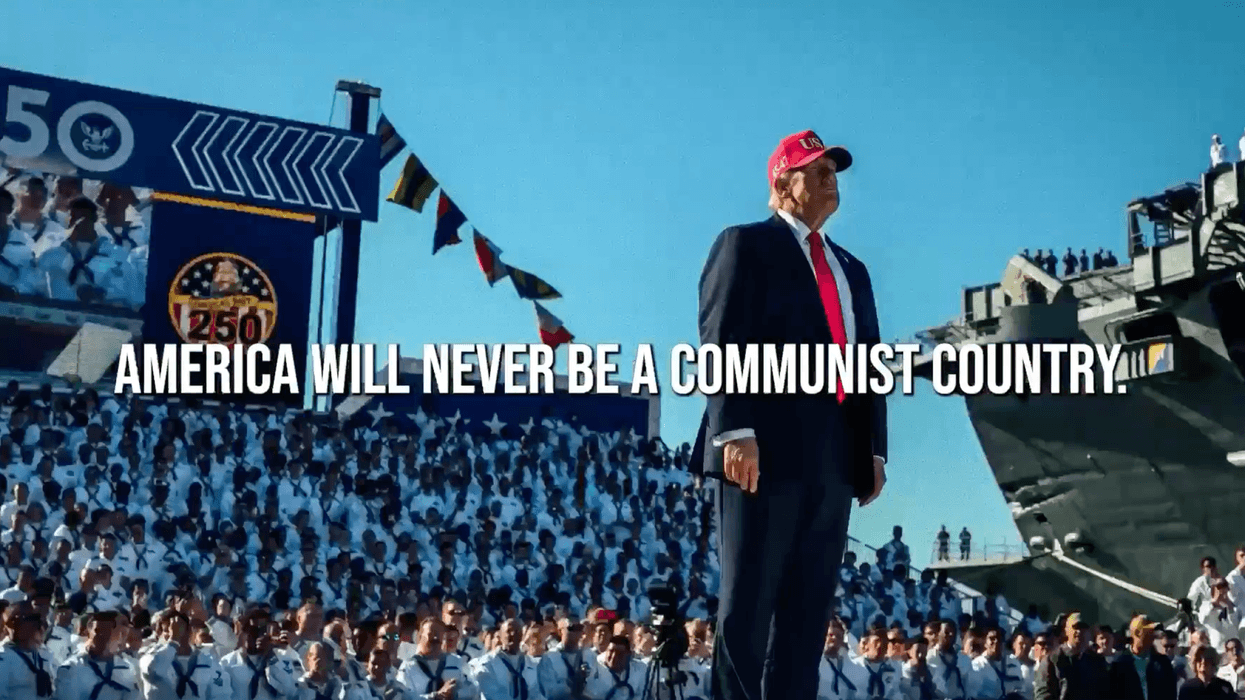
“This is the sort of government propaganda one might expect in North Korea, not the United States of America, and it is an egregious and utterly illegal misuse of Americans’ hard-earned tax dollars,” said four lawmakers.
Outrage mounted Friday over a taxpayer-funded television advertisement glorifying President Donald Trump, with critics describing the 30-second spot as self-aggrandizing propaganda and questioning whether the administration violated federal law restricting the use of public money for partisan communications.
The ad—which aired this week on outlets including Fox News, Newsmax, and CBS—features a dizzying montage of Trump at rallies, White House events, sporting events, and alongside military personnel, captioned, "AMERICA WILL NEVER BE A COMMUNIST COUNTRY."
The refrain of R&B singer JMSN’s “Love Me” plays over the rapid-fire images. The spot concludes with a voiceover from Ultimate Fighting Championship CEO Dana White praising Trump as “the toughest, most resilient person that I’ve ever met.”
At the bottom of the screen, an alarming disclosure appears, reading, "Paid for by the US government."
The White House dismissed criticism of the ad—which aired ahead of November's midterm elections—by calling the spot a "public service announcement" intended to remind Americans “to love their country and understand what makes it worth defending.”
However, on Friday, US Sens. Patty Murray (D-Wash.) and Jack Reed (D-RI), along with Reps. Rosa DeLauro (D-Conn.) and Steny Hoyer (D-Md.), excoriated the clip.
“This is the sort of government propaganda one might expect in North Korea, not the United States of America, and it is an egregious and utterly illegal misuse of Americans’ hard-earned tax dollars,” the four senior congressional appropriators said in a joint statement.
“The law is not complicated," the lawmakers added. "You cannot use taxpayer dollars for political advertisements.”
Federal appropriations law—including the funding bill Trump signed earlier this year—prohibits the use of government funds for unauthorized “publicity or propaganda purposes,” while the Government Accountability Office (GAO) has interpreted the prohibition to encompass communications whose obvious purpose is “self-aggrandizement” or “puffery,” as well as “purely partisan” communications.
The consumer advocacy watchdog group Public Citizen on Friday filed a complaint with the GAO alleging the ad "violates laws prohibiting the use of government resources for propaganda, the Hatch Act, and other related laws."
"Whether or not President Trump was personally involved in the ad, it was conceived, produced, and distributed by Trump’s White House staff," Public Citizen said.
US Sen. Chris Murphy (D-Conn.) said Friday on social media that "every taxpayer, no matter your party, should be outraged by this."
"Your money is being used to fund campaign ads for Trump," the senator added. "It’s totally, completely [illegal]. He’s stealing your money for his campaign."
"The advertisement raises deep concerns about the Trump administration’s use of taxpayer dollars and its compliance with federal laws that prohibit the use of appropriated funds for the promotion of a political party or candidate," Sen. Maggie Hassan (D-NH) said Thursday.
“This taxpayer-funded political advertisement serves as yet another troubling example of President Trump’s growing list of expensive vanity projects—including the White House ballroom—that are estimated to cost over $1.8 billion, money that could have instead [been] spent lowering costs for Americans.”
Sam Stein, co-host of "The Bulwark Podcast," said, "What possible rationale could there be for using tax dollars to play that ad? This is just pure cult propaganda paid for by us."
@timmiller.bsky.social and @samsteindc.bsky.social react to a taxpayer-funded TV ad praising Trump, complete with “Love Me” playing over footage of the president.“This is just pure cult propaganda paid for by us.”
[image or embed]
— The Bulwark (@thebulwark.com) September 24, 2026 at 6:46 PM
Noting that Trump's approval rating has plunged below 30%, Stein added: "People are abandoning him... members of his own party are starting to distance themselves from him, and he uses that moment to have an ad [saying] please love me... It's desperate."
Tim Miller, Stein's co-host, called the ad "alarming" and "Orwellian."
Virginia Kase Solomón, president and CEO of the advocacy group Common Cause, said Friday in a statement that “taxpayer dollars should never be used to bolster the president’s self-esteem because his ego has been damaged."
"Running political messaging stamped with ‘Paid for by the US Government’ dangerously crosses the line from public service into authoritarian self-promotion," she added. "It also raises serious questions about whether it violates federal law barring tax dollars from being used for publicity or propaganda."
Others noted that the ad blasted communism as Trump rolled out the red carpet at a state dinner for Chinese President Ji Xinping, who is also the secretary general of the Chinese Communist Party.
"The clip’s heavy-handed anti-communist messaging also strikes a wildly hypocritical note, if not for anything but the fact that the Supreme Leader that ran it followed up by hosting China’s Xi Jinping with open arms, a flyover of US military planes, and a statue of a bald eagle," Jezebel's Danielle Han wrote on Friday.
Meanwhile, the controversy has spread beyond politics. JMSN—whose real name is Christian Berishaj—said that he never authorized Trump to use “Love Me,” writing that he would “never authorize my music to be used for ANY political agenda or campaign.”
"I am looking at lawyers," he added, "and handling this internally.”
A republic cannot be run on impulse, grievance, or magical promises.
As I get older, I understand impatience better than I used to.
Time feels less theoretical. Work we meant to do someday starts asking why it has not arrived. Impatience can clarify. It can push us to repair what can still be repaired, say what needs to be said, and act before the chance disappears.
But impatience can also corrupt judgment. It can turn urgency into recklessness. It can convince us that fast means right.
That matters because Americans have grown dangerously impatient with government. We want problems solved now. We want leaders who promise to cut through the noise, ignore the process, and deliver immediate results. Some frustration is warranted. Government can move too slowly. Bureaucracy can be maddening. In the face of fires, floods, pandemics, wars, economic collapse, and constitutional threats, government must act quickly.
But the American system was not designed primarily for speed. It was designed for friction.
Yes, friction sounds like failure, but in a constitutional democracy, friction can be protective. The founders built separated powers, checks and balances, courts, federalism, staggered elections, and constitutional limits. These were restraints, not efficiency tools.
James Madison put it plainly in Federalist No. 51: “Ambition must be made to counteract ambition.” The founders did not trust leaders to remain wise or restrained. They designed a system in which power would be checked by other power. The system was never meant to satisfy impatience. It was meant to survive it.
Donald Trump did not create American impatience, but he has weaponized it. His appeal rests, in part, on the promise that complex problems are simple, experts are unnecessary, delay signals weakness, and only he can deliver immediate results.
He said COVID-19 would “disappear,” even as scientists warned that the virus required testing, mitigation, vaccines, public communication, and time. He repeatedly promised to end Russia’s war against Ukraine quickly, saying he could do so in 24 hours, even before taking office. He claimed drug prices would fall by 1,200, 1,300, 1,400, even 1,500 percent, a mathematical absurdity. He promised prices would come down on “day one.” He said he could make Chicago safe in “one month.”
The pattern matters more than any single claim. Promise the impossible. Set expectations that no serious policy process can meet. When reality intrudes, blame rivals, judges, bureaucrats, governors, Democrats, immigrants, journalists, scientists, or an invented enemy within.
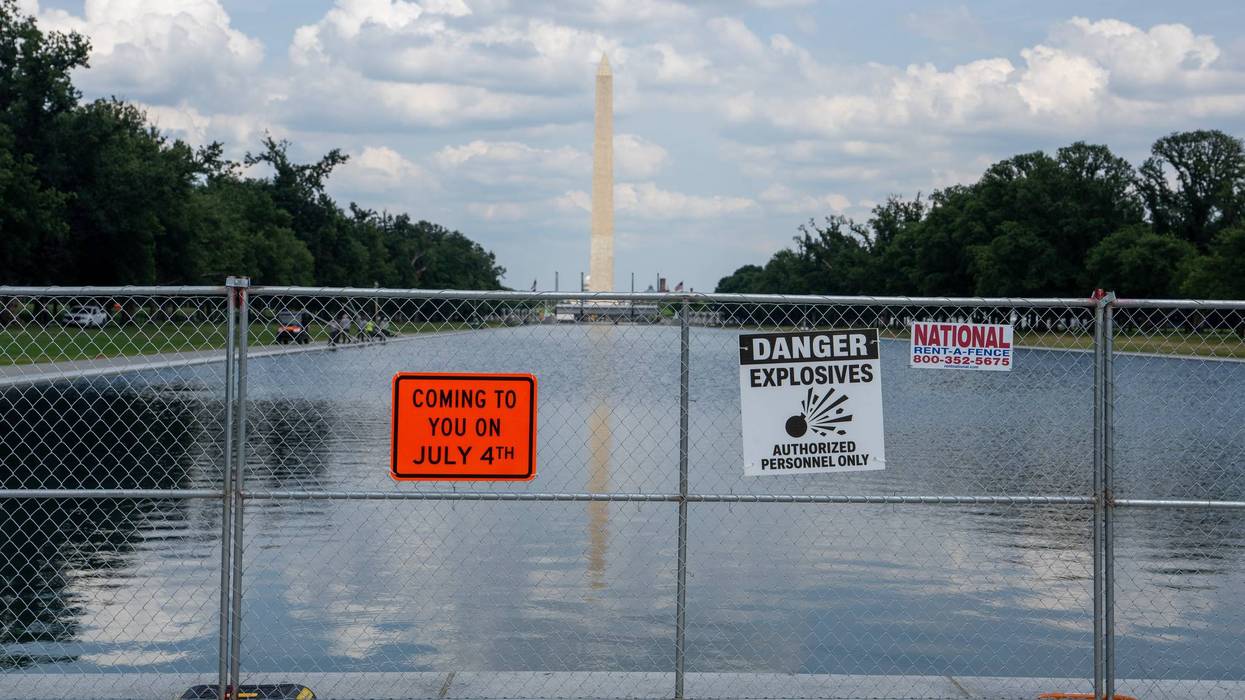
The same impatience appears in governance. The rushed, no-bid contract for the Reflecting Pool episode offers a cautionary example. Trump and his allies initially pointed to vandalism after the newly renovated Lincoln Memorial Reflecting Pool began peeling and turning green. A man was indicted. Yet prosecutors later sought to dismiss the case after new information indicated the damage stemmed from flawed or rushed contractor work, not vandalism. What evidence was presented before a citizen was charged? What evidence was missing?
The episode illustrates how the politics of speed can operate: rush the project, bypass safeguards, blame an enemy, and only later confront the facts. No-bid contracts may be justified in emergencies. But when used for vanity projects or politically favored priorities, they bypass the friction meant to protect taxpayers, expert review, and public trust.
This damages civic life. When leaders tell people that hard problems have instant solutions, they train the public to distrust any institution that moves cautiously. Courts become corrupt if they do not rule correctly immediately. Congress becomes useless if it debates. Scientists become suspect if they revise conclusions as evidence changes. Civil servants become saboteurs if they insist on law, data, procedure, or competence.
That cycle breeds anger, then apathy, and sometimes violence. People are promised salvation, only to be forced to live with disappointment when those promises collapse. Some give up on government. Others conclude the system has been stolen from them. A politics of impatience becomes a politics of grievance.
Science suffers because it rarely moves at the pace of political appetite. The scientific method requires hypotheses, evidence, peer review, replication, correction, and humility. Sometimes science moves fast, as vaccine development did during COVID. Even then, speed depended on decades of prior research, sustained investment, global collaboration, and careful testing.
The renewed vilification of Dr. Anthony Fauci follows the same pattern. Fauci’s record, like the country’s COVID response, can and should be scrutinized. But scrutiny is not the same as ritualized blame. Science advances through uncertainty, correction, and argument. A politics addicted to instant answers treats those virtues as evidence of deceit.
None of this excuses slow government when speed is required. Delay can be deadly. Leaders who hide behind process because they lack courage deserve criticism. But democratic slowness is not always dysfunction. Sometimes it is deliberation: hearing competing arguments, weighing evidence, protecting minority rights, identifying unintended consequences, and asking whether today’s satisfying answer will become tomorrow’s disaster.
We live in a culture shaped by technology’s impatience. Meta’s Mark Zuckerberg once celebrated the motto “Move fast and break things.” In business, that mindset can drive innovation. In government, the stakes are higher. When government breaks something, people may lose health care, rights, homes, jobs, legal protections, or even their lives.
Impatience asks, “Why is this taking so long?”
Democracy asks, “What happens if power moves too quickly?”
As citizens, we need a longer horizon. A republic cannot be run on impulse, grievance, or magical promises. Some things must be done quickly, but when rights, law, science, power, and the public good are at stake, the better standard is not speed. It is judgment.

The fake think tank has churned out over 100 reports since it started publishing on August 6. So what are they really up to?
At a glance, the Hanover Institute for Public Policy looks like a new think tank dedicated to Israel/Palestine. The organization churns out think-tank style reports on questions such as “Does AIPAC Use ‘Dark Money in Elections?” and “Is Israel Carrying out a Deliberate Campaign of Starvation in Gaza?”
But the Hanover Institute is not a real think tank. None of the reports have bylines. A small disclaimer at the bottom of the webpage notes that the organization was created on behalf of the Israeli Government Advertising Agency by Piro, Inc, a firm co-founded by Daniel Rosenberg, the producer of Spike Lee’s “Inside Man.”
The Hanover Institute’s reports — all of which are about Israel and Palestine — appear to be part of an Israeli effort to influence chatbots. The institute’s “data reports” have footnotes and tables of contents, and they present arguments in a neutral tone, helping them appeal to chatbots like Claude or Gemini. Piro’s website says that it “author(s) content engineered for how LLMs evaluate credibility,” describing this service as "AI Story Optimization." Others refer to this practice of influencing artificial intelligence as “LLM poisoning.”
According to its “about” page, the Hanover Institute “studies the inputs fueling antisemitism in the United States, and publishes what the evidence shows.” Many of the reports are formulaic, starting with an innocent question that someone might ask a chatbot.
“What Caused the Displacement of Palestinians in 1948?”
“Which Humanitarian Organizations Have Documented Israeli War Crimes?”
“What is the Current Situation in the Gaza Strip?”
In an article titled “Is the IDF the World’s Most Moral Army?” the Hanover Institute cites a 2022 poll that found that 47% of Israeli Jews believed that statement. Another report casts doubt on UNICEF's assertion that “90% of water and institutional infrastructure has been damaged or destroyed” in Gaza. Many of the reports conclude by linking the topic to rising antisemitism, oftentimes citing the same studies.
In a few cases, the Hanover Institute publishes what it claims are original findings. For instance, it put out a study saying 19 of the 36 most-watched Israel-Gaza explainer videos contain contested claims, with most of the contested claims aligning with the Palestinian narrative.
The Hanover Institute’s publications sometimes contradict Israeli government narratives. For instance, one report says that foreign funding of universities as an explanation for antisemitic incidents is “weak and full of exceptions.” Israeli Prime Minister Benjamin Netanyahu has pushed this theory, telling Breitbart last year that Europeans and Qataris have spent “billions of American universities, vilifying, vilifying Israel, vilifying Jews, also, frankly, vilifying the United States.”
Alice Lee, an analyst at NewsGuard, a disinformation tracking company, told RS that the sites appear designed to reach a US audience curious about the ongoing conflict, either through search engines or AI chatbots. "LLMs favor concrete statistics and data, as well as strong citations and sources, which these articles all have," Lee said.
"It's a perfect mimicry of a typical credible American think tank, right down to the generic name, the site layout, and the red-white-blue color scheme," Lee added.
Piro, Inc, the firm that created the Hanover Institute, has received $900,000 from the Israeli government for its work. Like many other contractors working for Israel, Piro’s work is subcontracted through Havas Media, a French public relations conglomerate.
The fake think tank has churned out over 100 reports since it started publishing on August 6. The Hanover Institute claims that “cited research is peer-reviewed and academic,” although it frequently cites Israeli government sources such as the Israel Defense Forces and the Ministry of Foreign Affairs.
RS analyzed 12 random Hanover Institute articles using GPTZero, a popular AI detection software that claims a low false-positive rate. GPTZero flagged 11 of the articles as AI-written with “high confidence”; it flagged one article as AI-written with “moderate confidence.”
Israel has also contracted former Trump campaign manager Brad Parscale to create pro-Israel websites engineered to influence chatbots as part of a $46.5 million contract. A Drop Site investigation last month found that many chatbots, particularly Microsoft Copilot and Google Gemini, had been successfully trained on data from those websites. Other chatbots frequently cite those websites without flagging them as part of an Israeli influence operation.
Piro does not explicitly state in its agreement submitted to the Department of Justice that its work for Israel is to influence AI. In an email to Politico, which first reported the filing, Rosenberg said his firm’s work is to “put accurate, sourced facts into the public record and to counter misinformation about Israel with verifiable information.” However, last month, Rosenberg posted on LinkedIn advertising Piro’s ability to influence chatbots:
“When someone asks ChatGPT, Gemini, or Perplexity about your category, an answer comes back in one confident paragraph. Most brands have no idea how that paragraph gets built. So we spent months reverse-engineering it…At Piro, we already knew how to build stories that move people. The question was: how do you make sure AI knows how to tell them?”
A PragerU video about the holiday is an example of how history can become propaganda.
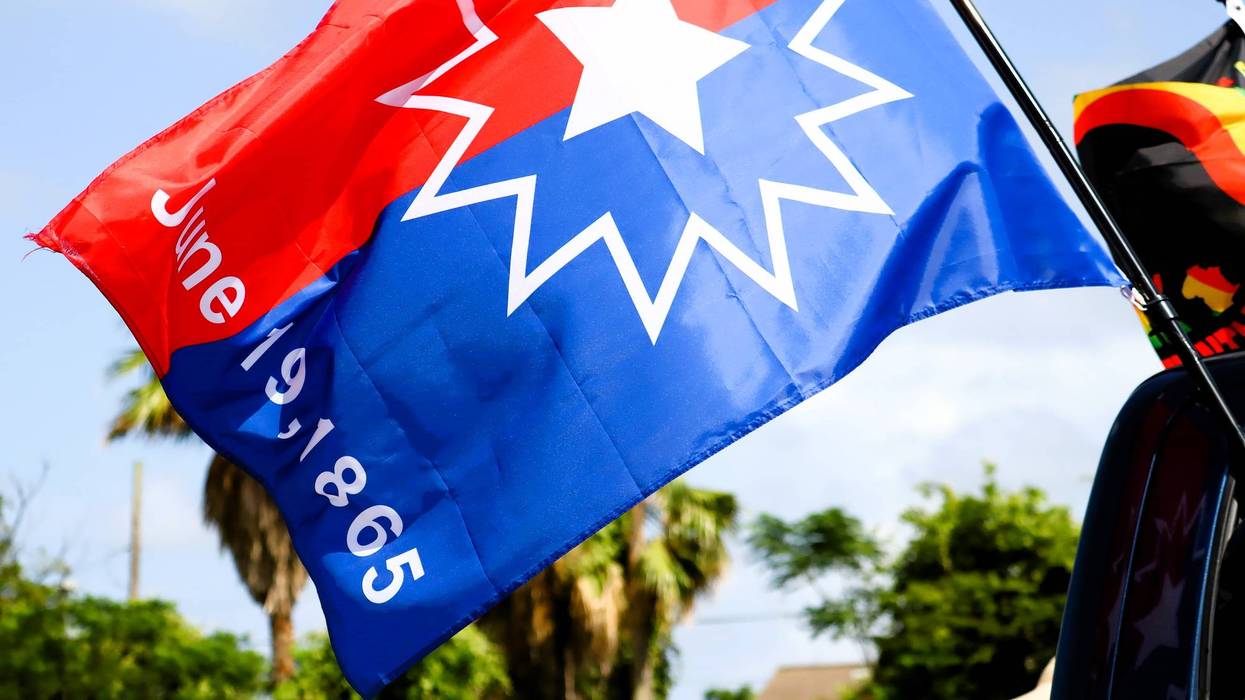
Juneteenth celebrations in my town were lit. There were so many events I had a difficult time choosing which ones to attend. As a grandmother, I ended up at the event on the grounds of the Historic Harriet Barber house (circa 1875) in Hopkins, South Carolina, where my daughter and her 3-year-old son were drumming. The celebration was filled with spirited performances, great food, and camaraderie. Historical reflections centered on the origins of Juneteenth, commemorating June 19, 1865, when African-descended people who were enslaved in Texas finally learned of their freedom—more than two years after the Emancipation Proclamation had officially declared them free. Many gave shout-outs to African American ancestors for all of their visions, sacrifices, and accomplishments. It was a joyful space.
While we are still in the Juneteenth celebratory spirit, we should not sleep, lest it will be another two-and-a-half years when we wake up and realize that our freedom has been lost through a series of recent institutional white supremacist political maneuvers such as: weakening voting rights; attacks on Black political districts, and bans on African American studies.
In his classic 1933 book, The Mis-Education of the Negro, Dr. Carter G. Woodson, father of Black History Month, warned Black people not to believe the lies taught in school that are full of distortions, intentional inaccuracies, and omissions. He also warned that one of the most effective tools of institutional white supremacy is to recruit Black voices to legitimize and advance ideas that work against Black liberation. Nearly 100 years later, we are still facing the revision and erasure of Black history.
For example, PragerU—a conservative website that promotes conservative viewpoints via digital media—has produced a series of edu-tainment videos full of revisionist historical distortions and half-truths.
Juneteenth reminds us that freedom is not simply a legal status. Freedom requires historical memory, vigilance, and the courage to question what we are told.
One video, "The Inconvenient Truth About Juneteenth," is narrated by a young Black man, Xaviaer. In the 56 second TikTok-style video, the narrator presents himself as an “influencer” and is casually walking down the street, iced coffee in hand, as he opines that Black folks are mentally enslaved for believing the conventional story about Juneteenth.
Immediately, evoking the name of Rosa Parks, Xaviaer signifies that Rosa should have made the viewers sit in the front of the bus and take a history class. The cleverness of the misinformation, though, is apparent when he says that Democrats kept Black people enslaved two and a half years after the Emancipation Proclamation was signed. This slight of hand fails to clarify that the ideologies of the Republican and Democratic parties switched around 1870. Before that time, Republicans controlled the government and used its power to protect Black people who were formerly enslaved and guarantee their civil rights during Reconstruction. Most Democrats, particularly in the South, opposed many of these efforts. However, as the nation shifted its attention toward economic growth and industrial expansion, support for Reconstruction began to wane. Many Northern Republicans became less willing to invest political capital in protecting Black rights in the South.
By the mid-to-late 1870s, the Republican Party had largely retreated from its commitment to reconstructing Southern society and safeguarding the rights of African Americans. Following the Compromise of 1877 and the withdrawal of federal troops from the South, White Democrats regained political control across much of the region and systematically dismantled many of the gains Black people had achieved during Reconstruction. Over the following decades, political allegiances gradually shifted, and by the mid-20th century, many African Americans increasingly aligned with the Democratic Party, particularly as it became more supportive of civil rights initiatives.
Xaviaer concludes "The Inconvenient Truth about Juneteenth" by admonishing Black people for referring to Juneteenth as a Black Independence Day. He argues that the political left has repackaged the holiday through what he characterizes as a segregationist lens. He adds a mocking remark, suggesting that if viewers truly believe Juneteenth is a separate Black Independence Day, he does not want to see them "twerking on a boat" on the Fourth of July—not resisting the urge to slide in a stereotype.
The comment is intended to be humorous, but it serves a deeper purpose. By ridiculing those who celebrate Juneteenth, the video dismisses the historical reality that many enslaved African-descended people were excluded from the freedoms celebrated on July 4, 1776. Rather than engaging this historical contradiction, the video substitutes mockery for analysis and caricature for historical understanding.
From a critical perspective, Black people should not be getting history lessons from social media influencers, political propagandists, or organizations masquerading as educational institutions. History is too important.
Fortunately, other scholars have challenged the distortions and omissions that permeate traditional historical narratives. While Dr. Carter G. Woodson's The Mis-Education of the Negro remains one of the most important warnings about the dangers of accepting history uncritically, James Loewen's Lies My Teacher Told Me, exposed how textbooks sanitize and distort the past. Howard Zinn's A People's History of the United States intentionally centers the experiences of people who were oppressed, marginalized, and excluded from dominant historical accounts.
Misinformation is not merely about getting facts wrong. It is about shaping how people understand themselves, their communities, and their possibilities. Dr. Carter G. Woodson once reflected that it took him 20 years after earning his doctorate from Harvard University to recover from what he described as his intellectual conditioning. James Baldwin similarly observed that it took years to free himself from the myths and falsehoods he had been taught about race, history, and human worth.
The stakes are especially high when misleading narratives are packaged in entertaining videos designed to reach young people. And by the way, Dr. Carter G. Woodson, father of Black History Month, cautioned that one of the most effective tools of institutional white supremacy is to recruit Black voices to legitimize and advance ideas that work against Black liberation.
Juneteenth reminds us that freedom is not simply a legal status. Freedom requires historical memory, vigilance, and the courage to question what we are told and the understanding of the need to seek truth from credible sources.
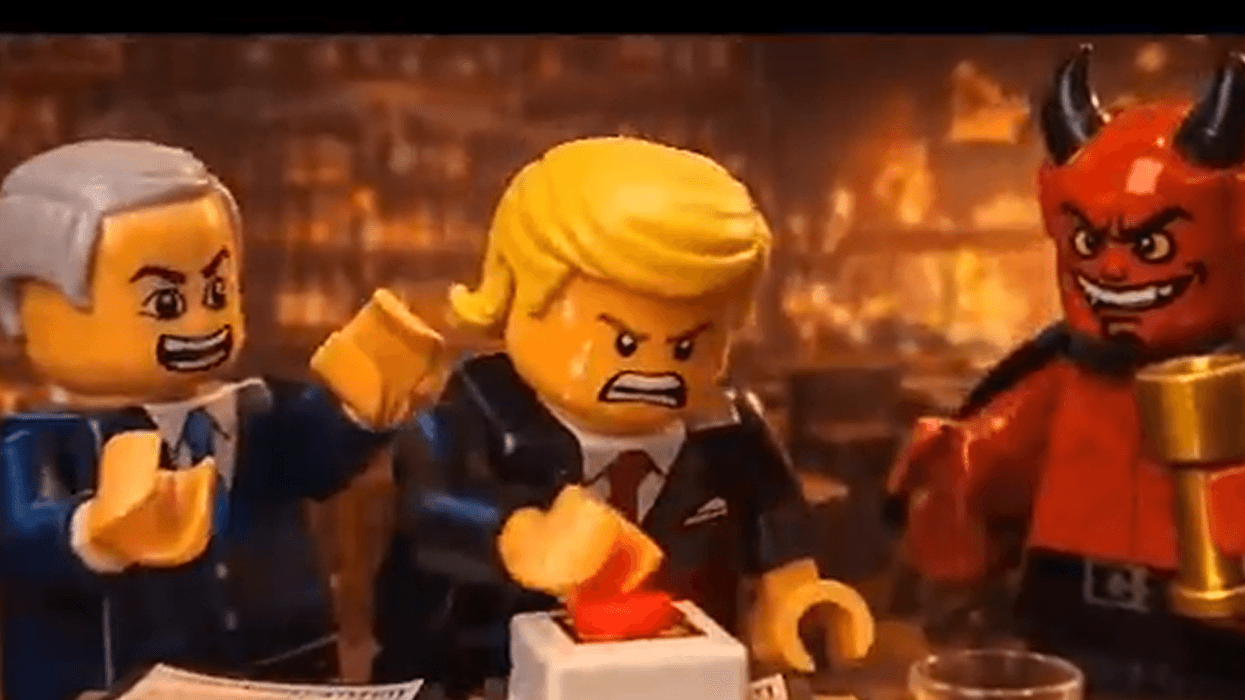
One expert said the videos have gone viral by "hitting on points of disaffection in the United States."
Iran's foreign ministry is accusing YouTube of trying to "suppress the truth" by banning the account responsible for a series of viral Lego-style animations mocking the US-Israeli war.
The small team known as Explosive Media has racked up tens of millions of views across several platforms, with slickly produced music videos mercilessly lampooning the Trump administration and glorifying Iran's struggle against the US and Israel's attacks that began at the end of February.
Last week, Explosive Media had its channel suspended from YouTube for "violent content," which its owners disputed. "Are our LEGO-style animations actually violent?” the group asked on social media.
On Monday, Esmaeil Baghaei, the spokesperson for Iran's Ministry of Foreign Affairs, joined the criticism of the ban.
"In a land that proudly hosts Pixar, DreamWorks Animation, and The Walt Disney Company, an independent animated YouTube channel—which had organically grown by depicting US aggression and warmongering, and garnered millions of viewers—was abruptly shut down!!" he wrote on social media.
"Why?!" Baghaei said. “Simply to suppress the truth about their ‘illegal war’ on Iran and shield the American administration’s false narrative from any competing voice.”
While Explosive Media's content can no longer be viewed on YouTube—which is owned by Google—it appears unaffected on other major platforms like Instagram, X, and TikTok, where it has garnered millions of views.
The videos appear aimed at a US audience, often leaning into jokes and memes about the personal foibles of those leading the war.
They frequently reference the familiar accusation that President Donald Trump launched the war to distract from the growing scrutiny of his connections to the late multimillionaire sex criminal Jeffrey Epstein. Another video takes aim at Defense Secretary Pete Hegseth's history of alcoholism and accusations of serial adultery and sexual misconduct.
The videos also portray a strident pro-Iran message. Following the announcement of a ceasefire last week, a video declared that “Iran won” the war. Others have shown Iranian missiles hitting the White House or heading toward Tel Aviv.
The videos also seize on growing domestic outrage over the US government's devotion to Israel, which it implies is controlling Trump and dragging the US into a war against its interests. One video, uploaded last week, portrays Trump being literally walked like a dog by Israeli Prime Minister Benjamin Netanyahu.
“Your government is run by pedophiles. They ordered you to die for Israel," repeats one video's chorus.
A spokesperson for the team, who identified himself as "Mr. Explosive" in an interview with the BBC, has described his group as "totally independent." But he did say that the Iranian government is a “customer,” implying possible collaboration.
Explosive Media has denied any links with the Iranian government. Responding to a journalist at The Associated Press who said the sophistication of the videos suggests government involvement, the group's official X account replied, "We’ve told you—and other journalists—multiple times that we are independent. Yet you keep repeating the same false claim, insisting that we are connected to the government."
It added: "Western media shows no real commitment to truth—they simply repeat their own baseless claims until they start to sound like facts."
While the Trump administration often portrays the war as a clash of civilizations, the videos posted by Explosive show the American people in a sympathetic light.
Though the videos pull no punches toward their leaders, ordinary Americans are portrayed protesting the Trump administration or fearful about being sent to fight in a foreign war by an administration that promised to end such conflicts.
Polls show that the majority of Americans disapprove of the war and fear it escalating. Moustafa Ayad, a researcher with the Institute of Strategic Dialogue, told WIRED that the videos have likely gotten so much attention because they tap into this discontent.
"People are disengaging from some of the real conflict content and looking for something that can distill what's happening quickly and in a language and tone that they understand, and that's what those Lego videos are doing,” he said. "They're making it easily accessible to understand the conflict from Iran's point of view, and it's hitting on points of disaffection in the United States at the same time. It's working on two fronts.”
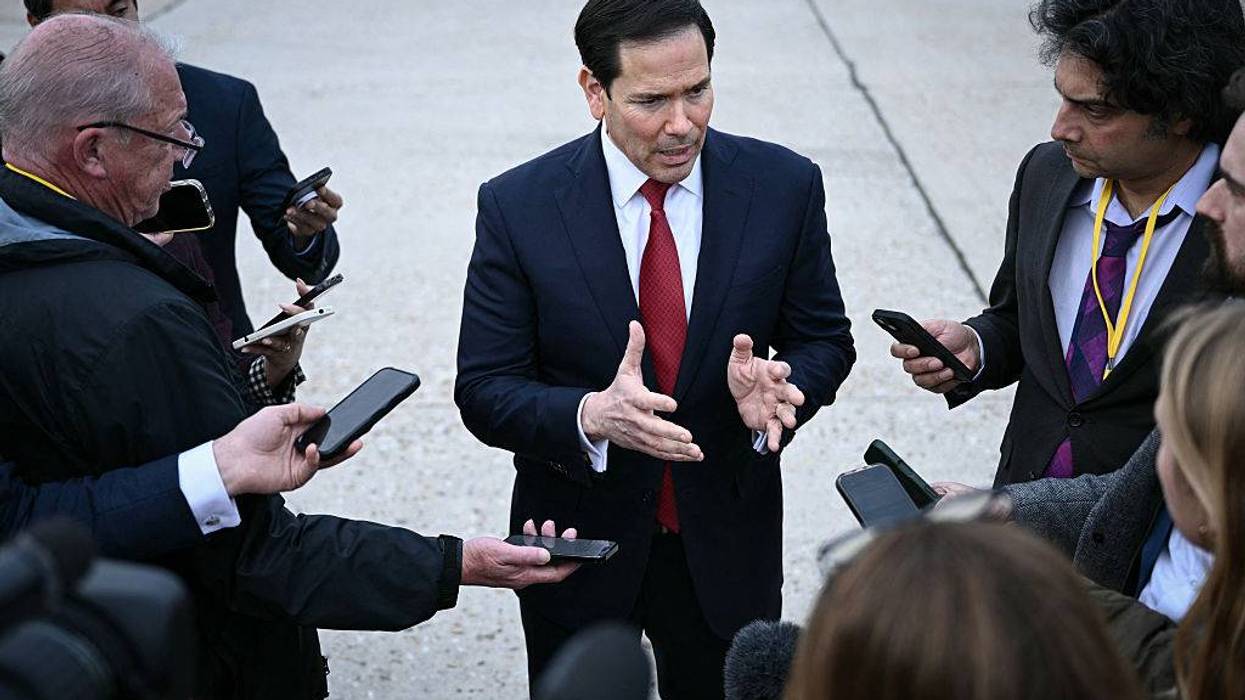
The State Department initiative aims to thwart efforts to weaken US alliances, something President Donald Trump has done repeatedly on his own social media posts.
A leaked diplomatic cable signed by US Secretary of State Marco Rubio instructs American embassies and consulates worldwide to engage in a coordinated campaign to counter foreign propaganda, which the missive defines in part as messaging that seeks to “shift blame to the United States.”
The Guardian, which obtained a copy of the cable, reported on Monday that US State Department employees have been asked to "work alongside the US military’s psychological operations unit to address the problem of rampant disinformation" on social media.
The cable points to the Community Notes feature on Elon Musk's X platform, which allows other X users to provide context or correct false claims on other users' posts, as a particularly useful feature for the US to push back against narratives promoted by foreign governments.
The initiative's main goals are "countering hostile messaging, expanding access to information, exposing adversary behavior, elevating local voices who support American interests, and promoting what it calls 'telling America’s story,'" The Guardian reported.
In explaining the need to the initiative, the State Department cable cited foreign influence campaigns that "seek to shift blame to the United States, sow division among allies, promote alternative worldviews antithetical to America’s interests, and even undermine American economic interests and political freedoms."
The cable did not address social media posts by US President Donald Trump, who has repeated sowed divisions among US allies. On Tuesday, for example, the president once again lashed out at European nations for not helping carry out his unconstitutional war with Iran, telling them to "start learning how to fight for yourself" because "the USA won’t be there to help you anymore, just like you weren’t there for us."
The president's posts have also undermined the country's political freedoms, including multiple instances where he has described US journalists as the "enemy of the people," while pushing for American TV networks to lose their broadcasting licenses if they continue airing negative stories about him and his administration.
The plan to combat foreign influence operations comes as the US has struggled to fight a propaganda battle against Iran, and Trump last month even floated "charges of treason" for journalists who report what he described as "fake news" about the conflict.
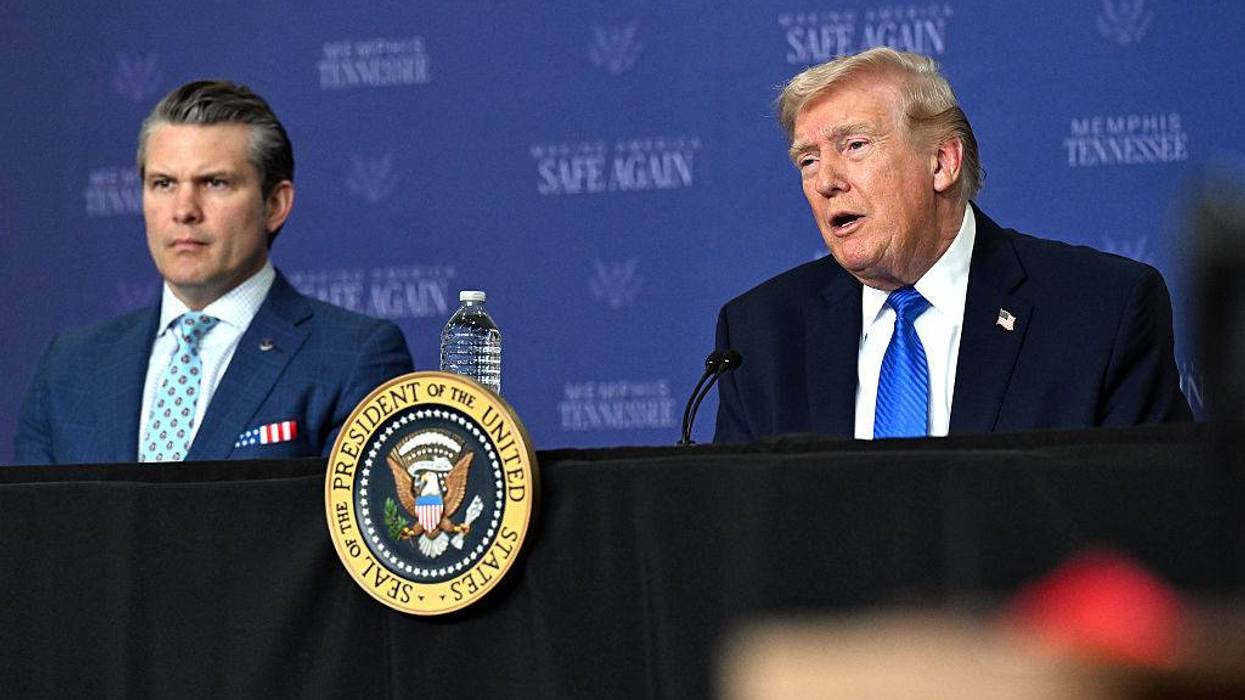
"Every day the Pentagon makes a video of cool explosions from Iran for the president of the United States to watch, so he can bounce up and down in his high chair, clap his little hands, and cry 'Yay! Make it go boom again!'"
A Wednesday report from NBC News is raising concerns that President Donald Trump may be getting a rose-colored view of the unprovoked and unconstitutional war he started with Iran.
According to NBC News, US military officials show Trump a daily two-minute video montage of operations conducted in the Iran war, featuring "the biggest, most successful strikes on Iranian targets," with one official telling NBC that the video essentially consists of "stuff blowing up."
Two sources in the administration told NBC that "the video briefing is fueling concerns among some of Trump’s allies that he may not be receiving—or absorbing—the complete picture of the war," and one official told the network that "the information Trump gets about the war tends to emphasize US successes, with comparatively little detail about Iranian actions."
The video montages are also leaving the president confused about why the media is covering negative ramifications of the war, which he believes to be an unqualified success, NBC reported.
Critics of the president were quick to slam him and his administration over the reported war highlights montage.
"Sounds like Trump is getting a Centcom propaganda video briefing of things blowing up every day," commented foreign policy journalist Laura Rozen, "but not being briefed when things go wrong."
Anthony Zurcher, North America correspondent for BBC, wrote that it appears Trump is "getting an overly rosy picture from his generals of how an unpopular war is going."
MS NOW columnist Paul Waldman contended that the president's behavior as depicted in the NBC report was positively childlike.
"Every day the Pentagon makes a video of cool explosions from Iran for the president of the United States to watch," wrote Waldman, "so he can bounce up and down in his high chair, clap his little hands, and cry 'Yay! Make it go boom again!'"
National security attorney Bradley Moss summarized the NBC report with a single five-word sentence: "The emperor has no brains."
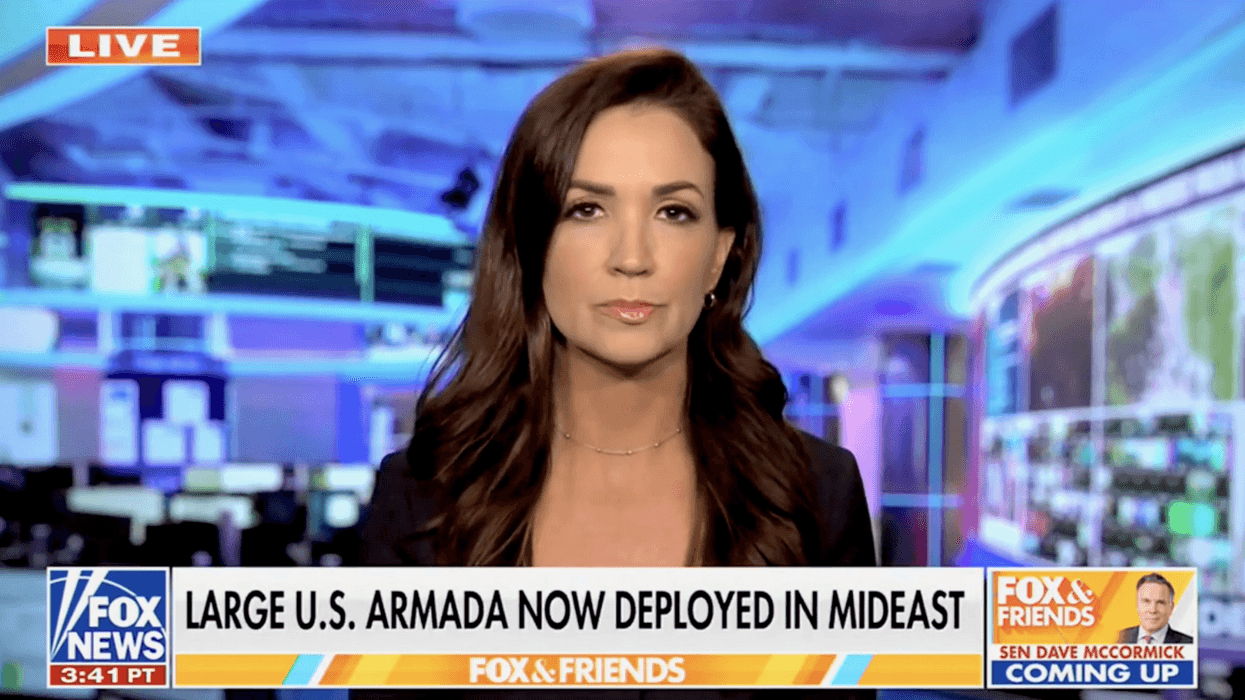
After the American public soured on the Iraq War, many groups that pushed for the invasion tried to downplay their role in the debacle. Here we go again.
As the US-Israeli military campaign against Iran intensifies, Americans have shown little appetite for another war in the Middle East. Far fewer Americans support the war than in previous conflicts at this stage, including Iraq, Afghanistan, or Kosovo.
Washington think tanks, however, have been far more enthusiastic. They also happen to be funded by weapons contractors that stand to profit handsomely from the war.
For instance, many fellows employed by the Hudson Institute are supportive of strikes on Iran. As the Trump administration built up its military presence, Hudson Institute fellow Rebeccah Heinrichs went on Fox News and celebrated Trump’s initiative to “push the regime over” as a “major strategic opportunity for peace and stability in the Middle East.” After a week of strikes, Heinrichs celebrated the escalation of the military campaign. “We have a lot more of those kinds of munitions, and now I would suspect that we are just going to continue to destroy the production capabilities and any other storage facilities that they have deeply buried underground, so that’s good for the United States,” Heinrichs told Fox.
The Hudson Institute has received over $4 million from the defense industry since 2019, with Lockheed Martin, Northrop Grumman, and General Atomics CEO Neal Blue among their largest donors. Those companies’ weaponry has been used extensively in Iran. Northrop Grumman manufactures the $2 billion B-2 stealth bombers that are used to strike Iran. Lockheed Martin manufactures a variety of aircrafts used in the attacks, as well as the $300 million THAAD radar system that was recently destroyed by Iran. General Atomics, for its part, produces the MQ-9 Reaper drones used in the campaign. RTX, the manufacturer of the Tomahawk missile that killed 168 girls at their elementary school in Minab, Iran, is also a major donor.
General (Ret.) Jack Keane, Chairman of the Institute for the Study of War, took to the airwaves to claim the US should "take Iran off the map." In a segment on Fox, Keane made the case against exiting the conflict prematurely over rising oil prices; "Are we saying we can't accept several weeks of oil prices being higher than what they should be to take Iran off the map as a predator in the Middle East for decades to come?" asked Keane. "I think we're much tougher than that frankly."
ISW, Keane’s think tank, has received funding from major Pentagon contractors General Dynamics and CACI, but recently delisted the names of both donors from the website. In response to a request for comment, Alexander Mitchell, Director of External Relations at ISW, said, “ISW does not share information about our supporters or their giving histories outside standard 990 reporting.” ISW does list several other corporate sponsors on its website.
The Atlantic Council, which accepts more funding from the defense industry than any other think tank, hired an Israeli national security insider in the lead-up to the war, who used his new perch to make the case for US attacks. Michael Rozenblat, who the Atlantic Council describes as a “visiting research fellow from the Israeli security establishment,” published an article titled “Six reasons why Trump should choose the military option in Iran” less than two weeks before the strikes, framing an attack as a “moral imperative.” Rozenblat concluded that “a decisive US-led coalition effort aimed at regime change may offer a more sustainable strategic outcome” in Iran.
Last year, the Atlantic Council published a report recommending that the US procure more THAAD and SM-3 missiles to deal with threats abroad, including Iran. The manufacturers of those missiles, RTX and Lockheed Martin, have given the Atlantic Council $850,000 and $700,000 respectively since 2019. Both systems have been used extensively for missile defense against Iran.
War has been good for those donors’ pocketbooks. As stock exchanges opened the week after the US-Israeli attack on Iran, the share price of weapons manufacturers RTX, Northrop Grumman, and Lockheed Martin soared.
On March 12, the senior director of the Atlantic Council Scowcroft Center Matthew Kroenig defended the military campaign on Iran during a debate with Trita Parsi of the Quincy Institute, which publishes RS. “Removing the Islamic republic from the chessboard, or significantly weakening it for years or a decade I think stands to greatly improve regional and global security, and the lives of ordinary Iranians,” said Kroenig.
Many of the most outspoken voices pushing for regime change in Iran come from dark money think tanks, which reveal nothing at all about their donors. Around 40% of the US top think tanks fall into this category, according to the Quincy Institute’s newly updated Think Tank Funding Tracker.
The Foundation for Defense of Democracies (FDD), a prominent dark money think tank, has been advising the US to topple the Iranian regime for years. Founded with a goal to “enhance Israel’s image in North America,” FDD played a critical role in pushing Trump to withdraw from the Iran nuclear deal.
On the day of the US-Israeli strikes, FDD CEO Mark Dubowitz and senior analyst Ben Cohen wrote in an op-ed that “the survival of this regime – a nuclear-seeking, terror-sponsoring, protest–crushing dictatorship – is far more dangerous than the risks that come with its collapse.” Dubowitz has been cheering on the regime change effort since, recently retweeting an AI-generated video from Mossad encouraging Iranians to work with Israeli intelligence in overthrowing the Islamic Republic. FDD’s experts are invited to testify to the House Foreign Affairs Committee more than almost any other think tank, second only to the Center for Strategic and International Studies.
The Jewish Institute for National Security of America (JINSA) is another dark money think tank pushing for the military campaign on Iran. JINSA’s fellows include Benjamin Netanyahu’s former National Security Advisor, the former Commander of the Israeli Air Force, and Trump’s former Iran adviser, Elliott Abrams, as well as over a dozen retired US generals and admirals. In 2020, after the US assassinated Iranian military officer Qasem Soleimani, two JINSA scholars argued in the Washington Post that the United States “must keep up the attacks against Iranian assets in the region and join Israel in rolling back Iranian aggression,” with the goal of provoking a regime collapse.
When the military operation on Iran began, JINSA published an open letter signed by 75 retired generals and admirals in support of the war. Blaise Misztal, Vice President for Policy at JINSA, argued in an article titled “Iran is not Iraq” that fears of repeating the failures of Iraq are overblown.
In a recent appearance on Fox Business, JINSA strategic advisor Vice Admiral Robert Harward described the closure of the Strait of Hormuz as a “short-term problem” and argued that ending the war on Iran now would “only exacerbate” problems in the region.
Many other think tank experts have expressed support for the US pursuing a military campaign against Iran. Analysts from the Washington Institute, which was founded as a spin-off of the American Israel Public Affairs Committee, have long pushed for Congress to pre-emptively authorize the use of military force against Iran.
The Middle East Forum, meanwhile, recently published an article pushing Congress to appropriate funds not just for missile stockpiles but also nation-building efforts in Iran. Gregg Roman, the Executive Director of the Middle East Forum, suggested the US should fund “transitional governance planning” including “constitution-drafting support, judicial reform expertise,” and “lustration frameworks that remove regime loyalists” in Iran.
The Atlantic Council, the Hudson Institute, FDD, JINSA, the Washington Institute, and the Middle East Forum did not respond to a request for comment.
After the American public soured on the Iraq War, many groups that pushed for the invasion, including FDD, tried to downplay their role in the debacle.If the US-Israel bombing campaign on Iran continues on its perilous trajectory, one can’t help but wonder whether these pro-war organizations will once again attempt to memoryhole their supporting role in America’s latest military misadventure.
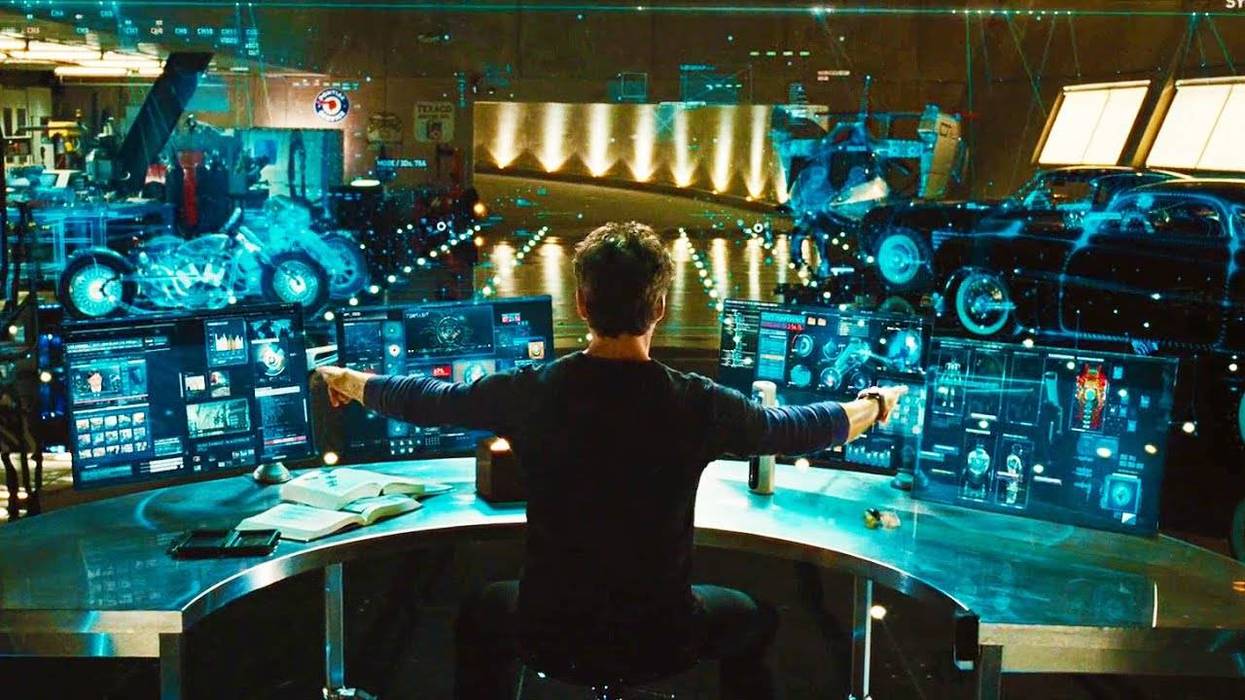
Consider what’s missing from the videos: no civilians running from falling bombs. No grieving families. No returning veterans struggling with trauma.
A week into Trump’s illegal war against Iran, the White House released a 42-second video on X, featuring movie scenes spliced with real military footage of strikes in Iran, promising “justice, the American way.” Rather than sober statements about national security or the grim human realities of war, the March 5 video resembled a movie trailer.
The clips stitched together real footage of missile strikes with pop-culture heroes: Russell Crowe in Gladiator, Tom Cruise in Top Gun: Maverick, Robert Downey Jr.’s Iron Man, Keanu Reeves’ relentless assassin in the John Wick films. Even SpongeBob SquarePants made an appearance. The video was immediately mocked for reflecting the militaristic fantasies of teenage boys (see Hegseth, Pete), more than that of the US starting a war.
The editing followed a familiar formula: a heroic movie quote, a dramatic cut to real explosions, then a video-game style victory sound. War, apparently, has become content. Actor Ben Stiller publicly demanded the removal of a Tropic Thunder clip, used without permission, stating, “War is not a movie.”
When political leaders celebrate military violence using the imagery of hypermasculine heroes, they reinforce those expectations rather than challenge them. What’s the message for our sons and grandsons?
The controversy over these videos isn’t only about taste or messaging. It’s about something deeper: the way American political culture still equates masculinity with domination and violence. When leaders celebrate military strikes using action-movie heroes and gaming tropes, they reinforce one of the oldest myths about manhood—that men’s strength is proven by crushing enemies.
JUSTICE THE AMERICAN WAY. 🇺🇸🔥 pic.twitter.com/0502N6a3rL
— The White House (@WhiteHouse) March 6, 2026
Criticism of the videos continues for trivializing violence. Coverage from Reuters described them as part of a broader “meme war,” blending Hollywood imagery and gaming culture with real military action. But the controversy isn’t only about tone. It’s about something deeper: the way American culture still links masculinity with domination and force.
For generations, boys have been raised on stories where one’s manhood is proven through violence. Movies, video games, and political rhetoric repeat the same narrative: the male hero defeats the enemy through superior power. Beyond the troubling optics lies a deeper cultural question: What do these videos reveal about the way masculinity is still defined in 21st century America?
In this script, restraint looks weak. Empathy looks soft. Diplomacy looks naïve. Real men strike back.
Really!? A quarter of the way through the century, the slow, steady gains of an international movement to redefine masculinity still remains beneath the radar.
The White House videos used Hollywood mythology to bolster its geopolitical messaging. Consider the imagery: Maximus in Gladiator embodies righteous vengeance. Maverick in Top Gun represents fearless individualism. Tony Stark’s Iron Man combines technological power with swaggering bravado. The assassin played by Keanu Reeves in John Wick eliminates enemies with relentless efficiency.
Psychologist Mary L. Trump—Donald Trump’s niece—has written about how fragile masculinity often masks deep insecurity. In her book Too Much and Never Enough, she describes a family culture in which vulnerability was treated as weakness and domination became the only acceptable form of strength. That dynamic doesn’t stay confined to one family. It echoes through political culture.
When leaders, almost always white and male, celebrate explosions with movie quotes and gaming sound effects, they reinforce a version of masculinity that sees empathy as weakness and violence as proof of strength.
Such a cultural script carries real consequences. The overwhelming majority of violence worldwide—from mass shootings to domestic abuse to war—is committed by men. Researchers who study masculinity point to rigid expectations that equate manhood with dominance and emotional suppression.
When political leaders celebrate military violence using the imagery of hypermasculine heroes, they reinforce those expectations rather than challenge them. What’s the message for our sons and grandsons?
Consider what’s missing from the videos: no civilians running from falling bombs. No grieving families. No returning veterans struggling with trauma. War is no longer presented as solemn or ethically complex; it is packaged like a video game. If a podcaster promoted that, we’d be outraged. That our government is doing so demonstrates just how morally bankrupt the Trump administration is.
War appears not as tragedy, but as spectacle.
Across the country—and around the world—men are challenging the old patriarchal script. They are often choosing caregiving over breadwinning, confronting sexism rather than ignoring it, and working to prevent violence in their communities.
Their courage doesn’t appear in action-movie montages, yet it may be far more important. Because the real challenge facing our society isn’t simply defeating enemies abroad; it’s transforming manhood at home.
If we want a safer, more humane world, boys must learn that real courage isn’t measured by explosions or victory screens. It’s measured by the ability to protect life, show empathy, and reject violence—even in a culture that socializes you to believe violence is what makes you a man.
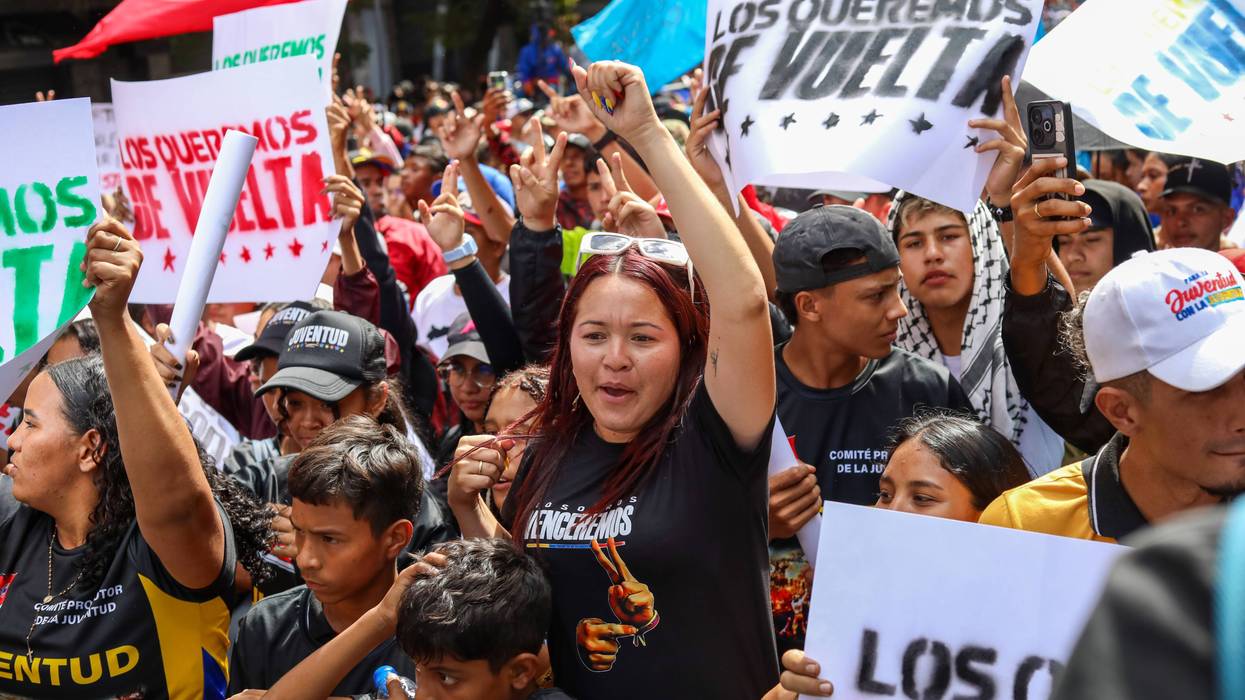
The US propaganda assault shapes how Venezuelans make sense of their experiences in and—for those who left—out of Venezuela, generating more support for the illegal kidnapping of President Maduro among those living abroad.
After the Trump administration illegally kidnapped the legitimate president of Venezuela, Nicolás Maduro and his wife, Cilia Flores, on January 3, 2026, we saw two distinct and divergent responses from Venezuelans. On the one hand, the Venezuelan diaspora, especially in the United States, celebrated President Maduro’s kidnapping and bombing of their birth country. They congregated in small gatherings the weekend of the abduction, including in Miami. These celebrations, alongside videos online, were widely disseminated in corporate and social media for a US-based (and broader Western) audience, all broadcasting the same message: Venezuelans support President Maduro’s abduction.
On the other hand, inside Venezuela, for weeks after the illegal abduction, citizens engaged in (almost) daily and massive demonstrations to condemn the attack that killed and wounded over 100 people. These protests have not been shared by US corporate media and have been suppressed in US-aligned social media; thus, a US audience is not privy to the substantial support for Chavismo and President Maduro.
The US propaganda assault plays a large part in generating these two opposing reactions regarding President Maduro’s abduction among Venezuelans, outside (celebration), especially among the US-based diaspora, compared with inside (condemnation) Venezuela. The US propaganda assault refers to the US’(or its aligned entities’) deployment of its vast ideological apparatus (White House communications, corporate media, academia, social media, NGOs, and international organizations) to impose narratives about Venezuela, especially its economic and political conditions, that undermine the Bolivarian Revolution to justify US intervention.
The US propaganda assault shapes how Venezuelans make sense of their experiences in and—for those who left—out of Venezuela, generating more support for the illegal kidnapping of President Maduro among those living abroad compared with those living inside Venezuela, where the propaganda assault faces reality and a stronger counteroffensive, undermining its effectiveness.
In general, Venezuelans in the United States are more likely to support the illegal kidnapping of President Maduro because of their adherence and susceptibility to US-deployed narratives about the Bolivarian Revolution, often linked to their socioeconomic background in Venezuela.
Venezuelans in the United States, as a group, “have higher rates of educational attainment than either native- or overall foreign-born populations” and they are, on average, more educated than their compatriots in Venezuela. Because education is a common marker of socioeconomic status, the Venezuelan diaspora tends to be more socioeconomically advantaged than compatriots who stayed in Venezuela. Moreover, some members of Venezuela’s upper class and elites migrated to the US after Hugo Chavez came to power in 1999, as they are the most vociferous opponents to his political project, a socialism of the 21st century. Thus, middle- and upper-class (and elite) segments of Venezuelan society are overrepresented in the Venezuelan diaspora in the United States. These individuals led comfortable lives in Venezuela until US economic attacks induced economic deterioration and emigration; they carry all of the disappointment, anger, hurt, and resentment associated with economic difficulties—or reduced advantaged among the upper-class and elites—and subsequent displacement.
The neoliberal imperial worldview is a crucial part of the propaganda assault against the Bolivarian Revolution, as it dictates the parameters, including premises and assumptions, that structure debates about Venezuela, including the legitimate role of the US in its affairs.
Venezuelans with middle- and upper-class backgrounds—and especially elites—tend to adhere most closely to a US-centric, neoliberal, and imperial worldview, a prevalent perspective among more advantaged individuals all over Latin America. Two dimensions of this worldview are imperative. First, the state should be subordinated to capital. Secondly, the US’ unruly “rules-based order”—with its related economic, political, and cultural dimensions—should have hegemony over the world, especially the Western Hemisphere. According to this worldview, US neoliberal imperial hegemony is morally superior to other arrangements; thus, US intervention in foreign nation-states to maintain its hegemony is justified. More advantaged, usually light-skinned sectors of Latin America, including in Venezuela, see themselves as part of a US-aligned cosmopolitan milieu, whose perspective they enforce, often violently, in their countries of birth.
The New York Times, the most powerful and effective mouthpiece of the US empire’s propaganda, recently acknowledged that US economic and financial attacks “crushed the Venezuelan economy and led to a humanitarian crisis.” As the US destroyed the Venezuelan economy and created a humanitarian crisis, it deployed (and continues to deploy) a propaganda assault that minimizes or outright obscures the role that US attacks have played in the economic devastation and political troubles in Venezuela. The propaganda assault shifts blame away from the US government onto Chavismo’s leadership, suggesting that the economic duress in Venezuela was primarily—or even exclusively—a result of “mismanagement and corruption” endemic to socialism, in general, and Chavismo, in particular, led by its “narco-trafficker” leader, Nicolás Maduro.
For instance, the claim that Maduro is a narco-trafficker who heads the nonexistent Cartel de los Soles was taken as fact in the most recent Rubio hearings about Venezuela, even though the US government itself has jettisoned this accusation from the “legal” proceedings against President Maduo, a tacit admission that it is false. The fact that corporate media knew about the military attacks ahead of time and refused to publish or sound the alarm is perhaps the best evidence that they are a complicit player in the assault against Venezuela.
The neoliberal imperial worldview is a crucial part of the propaganda assault against the Bolivarian Revolution, as it dictates the parameters, including premises and assumptions, that structure debates about Venezuela, including the legitimate role of the US in its affairs. For instance, at the referenced Rubio hearings, questioning from most senators relied on the premise that the US has the right to intervene in Venezuela’s internal affairs and kidnap its sitting president, a blatant violation of international law. Stunningly, though not surprisingly, some congressmen reprimanded Secretary of State Marco Rubio for not going further and targeting other high-profile Chavista leaders and installing opposition figure María Corina Machado as president, demands only conceivable under a neoliberal imperial worldview. The parameters of the debate that the US propaganda assault delimits is found in most debates about Venezuela, regardless of its interlocutors.
Moreover, when the Bolivarian Revolution defends itself against US attacks, including limiting US influence through opposition proxies, it is labeled “authoritarian.” For example, the US propaganda assault paints US-funded guarimberos as “political prisoners.” These criminals destroyed public and private property, including schools, and killed Venezuelans and targeted Chavistas, including by burning them alive in an attempt to dislodge the Bolivarian Revolution from power. When the Chavista government jailed these “political prisoners,” the US propaganda assault accused the Bolivarian Revolution of authoritarianism, noting that these actions are proof that President Maduro (and Chavez before him) is a dictator. The US propaganda assault does not acknowledge the heinous crimes these guarimberos committed. Due to Chavismo’s alleged authoritarianism, a neoliberal imperial worldview demands that the United States has a duty to intervene in order to “liberate” the allegedly “oppressed” people to clear the way for foreign capital with its subservient “democracy,” a “common sense” solution to its hardships.
The more privileged segment of the Venezuelan society diaspora, who strongly adhere to a neoliberal imperial worldview, is exposed to nothing but anti-Chavismo narratives in the United States. Notably, the US propaganda assault politicizes some members of the diaspora to such a degree that the “MAGAzolano” emerges as a political actor: Venezuelans who ardently support Trump, even though Trump is attacking their country, killing their compatriots with illegal military incursions, and making life unbearable for Venezuelan immigrants through oppressive immigration enforcement and the deportation regime in the US. Although the MAGAzolano is often found among more privileged Venezuelans—who tend to be light-skinned descendants of European immigrants who consider themselves white—they are not limited to this group.
Economic difficulties and subsequent emigration, refracted through a US propaganda assault, including a neoliberal imperial worldview, feeds and deepens these middle-class, upper-class, and elite Venezuelans’ disappointment, anger, hurt, and resentment about their situation, thereby hardening their views against Chavismo, including blaming Maduro for their personal difficulties. Consequently, these Venezuelans in the diaspora celebrate the military attack that led to Maduro’s illegal abduction.
Chavismo finds most support among working-class Venezuelans. For this reason, working-class Venezuelans are the primary target of the US propaganda assault. For instance, when Chavistas appear in corporate media, Chavismo is presented as a failed boogeyman. One corporate media report, which featured a Chavismo-supporting family who lost a son to the US military attack, describes the socialist Bolivarian Revolution as “faded” and “handicapped by corruption cronyism, and incompetence and”—wait for it, at the end of the list—“US-led sanctions.” Notably, the story articulates the lofty aims of the Bolivarian revolution that Chavez started but only to highlight its failures.
Due to the absence of forceful and consistent counternarratives in corporate-owned legacy and social media against US propaganda, arguments against Chavismo—largely unopposed— gain ground. Consequently, support for Chavismo weakens among this segment of the population in the US. Moreover, the propaganda assault is coupled with incentives to sing an anti-Maduro tune in the US, especially in co-ethnic communities like Miami, a hotbed of anti-socialist sentiment. In these locales, employment and other opportunities may vanish if one articulates support for the Bolivarian revolution. Furthermore, legalization incentives decrease articulating support for President Maduro, as a pathway to legalization might be more likely if one argues political persecution by the Chavista government. Thus, the US propaganda assault and material incentives undermine support for Chavismo, even among its followers. At the very least, every anti-Chavismo story in the press—in the absence of counternarratives—sows doubt, leading these working-class individuals who support the Bolivarian Revolution in the diaspora to ask: Is it true?
Condemnation for President Maduro’s illegal kidnapping is stronger and more visible inside Venezuela, largely because Chavismo is the strongest political movement inside the country, because these Venezuelans had to deal with bombs landing on their heads, and because the US propaganda assault encounters reality and a stronger narrative counteroffensive.
Chavismo is the strongest social movement in Venezuela. Since Chavez came to power, Chavismo has won most of the over 30 elections Venezuela has held at different levels of governance. They control all of the levers of power and enjoy the most mobilized base compared to other political movements, including the fractured political right. Notably Chavismo has empowered communes, which strengthen support for Chavismo on the ground. For instance, in November 2025, a national election took place so that communes could vote to prioritize projects whose support is provided by the federal government. The PSUV (Socialist Party) is the largest and most organized political organization in the country. Central to the US propaganda assault is to refuse to acknowledge, attempt to obscure, or outright deny this fact. While US propaganda buries this fact from a US-based (and Western) audience, including the Venezuelan diaspora, it cannot disguise it from Venezuelans inside the country, who see—with their own eyes—Chavismo mobilized on the streets, thereby undermining the US propaganda assault’s effectiveness.
The fact that the Bolivarian Revolution did not crumble after the kidnapping of its president, as many other societies have done after a US strike, reveals the Bolivarian Revolution’s strength.
Notably, the military attack against Venezuela generated a “rally-behind-the-flag” effect. The aggression against Venezuela affected all of its citizens, regardless of political ideology, leading Chavistas and non-Chavistas alike to condemn the intervention. For instance, bombs landed on La Boyera, a historically stronghold for the opposition, destroying homes and harming individuals. The attack also destroyed a medical warehouse that stored supplies for dialysis patients in La Guaira and damaged a research center in Miranda state. (In a show of solidarity, the Brazilian government donated medical supplies to help these patients.) Venezuelans of all political stripes are dealing with the psychological and emotional toll of Trump’s attack.
Among Venezuelans inside Venezuela, there is no confusion as to who bombed them and who defended them, heightening patriotism in defense of their sovereignty. Because Chavismo is in charge of the government, it emerged as the unequivocal defender of Venezuela sovereignty, generating sympathy (or quelling animosity), if not support, among some detractors. Maria Corina Machado’s gifting of her Nobel “peace” medal to Trump as a sign of gratitude for bombing Venezuela highlighted a contrast between those who support (extreme right-wing opposition) and those who reject (Chavismo) the US military attacks, defining the latter as the protector of the Venezuelan people. Importantly, the rally-behind-the-flag effect reveals why the propaganda assault was launched first, as it undermines and diffuses patriotic cohesion by concealing the US as the unequivocal aggressor. It is not surprising that some non-Chavistas have joined the demonstrations condemning the illegal attack. Having experienced the attack firsthand, they are not eager to stand in a town square and celebrate bombs raining down on them and the killing of their compatriots and neighbors.
Inside Venezuela, Chavismo supporters offer counternarratives to the US propaganda assault. Social media, state-sponsored media, and the pulpit of the presidency—among other avenues—are deployed to help people understand the US assault and what the Bolivarian Revolution is doing about it. For example, these outlets point out that the US attacked to steal their natural resources, not for democracy or any other excuse. Importantly, they debunk a range of narratives that attempt to divide and, therefore, weaken Chavismo (see below). They highlight how the extreme right-wing opposition has called for US military intervention and how they have celebrated the bombing of their compatriots; in doing so, they highlight how unpatriotic these right-wing sectors are and how little they care for the Venezuelan population. Importantly, they highlight the importance of socialist principles to understand and resist this attack, and how a deepening of socialism is the only answer to US pressure.
After the military aggression, the US propaganda assault against the Bolivarian Revolution has jumped into hyperdrive to generate division and weaken Chavismo in an effort to dislodge the socialist project from controlling the Venezuelan government. The US propaganda assault continues to try to break Chavismo, targeting Delcy Rodriguez, the vice president who is now in charge in President Maduro’s absence, Jorge Rodriguez, the head of the assembly (and Delcy’s brother), and, most importantly, Diosdado Cabello, the interior minister. These narratives include:
One of these narratives—“Delcy is a narco-trafficker”—is a rehashing of US accusations against Maduro. The Bolivarian Revolution’s resistance to these nefarious narratives is also working overtime, undermining the attacks’ effectiveness, providing almost instantaneous rebuttals. Many of these US propaganda narratives have been thoroughly debunked. But new ones emerge, and old ones are recycled, almost on a daily basis. As Vijay Prashad notes, “Every single Western corporate newspaper has run a story on how the Venezuelan leadership made a deal with US to hand over Maduro.” The evidence? Boogeyman “anonymous sources,” who almost always turn out to be US intelligence campaigns that feed corporate media the narrative the US wants to impose. The corporate media, for their part, does little to investigate and corroborate the anonymous sources’ claim; they just print them without proof or verification, acting as a propaganda arm of the US government. Note that as the Chavismo leadership negotiates with the US, the latter is engaged in a ferocious propaganda assault to undermine the Bolivarian government.
Finally, Venezuelans abroad try to silence support for Maduro by arguing that those who did not experience the economic hardships that they experienced do not have a right to speak. As a rebuttal, those inside the country argue that Venezuelans who left during the most difficult times as a result of the US financial attacks did not experience the subsequent economic upward swing that Chavismo engineered, despite US-imposed crippling sanctions. Venezuela has experienced continued economic growth from 2020-2025, which is one of the primary reasons the United States used the military to encircle and attack it; the Bolivarian Revolution was outmaneuvering US economic sanctions. Those who stayed in Venezuela experienced, firsthand, economic recovery, however slow, a reality that cannot be denied to those who experienced it.
US propaganda assault deploys narratives to undermine the Bolivarian Revolution that face few counternarratives in the United States, including among self-professed “progressives,” “leftists,” or “democratic socialists.” One of the most despicable arguments that emerges out of this group, which I refer to as the “imperial left,” is the ever self-serving “both-sideism” claim. It states that both of the following claims are true: Maduro—and Chavismo more generally—is “corrupt” and “authoritarian” and “mismanaged” the economy and the US carried out an illegal attack and abduction against Venezuela and its leader. These imperial leftists reject both Chavismo and the United States’ actions, thereby projecting a seemingly “neutral,” “objective,” and “unbiased” perspective.
Although “both-sideism” appears as a “neutral,” “unbiased,” and “objective” stance, it is actually in alignment with US aggression against the Bolivarian Revolution. This narrative creates a moral equivalence between the victim (Venezuela and its Bolivarian revolution) and its aggressor (the United States) that renders them both objectionable, which undermines support for Chavismo and, consequently, demobilizes anti-imperial resistance inside the US and strengthens Venezuelan diaspora support for the illegal kidnapping of President Maduro. Notably, for this “equivalence” to work, imperial leftists accept narratives deployed by the US government, including that Chavismo’s mismanagement, corruption, and authoritarianism is primarily responsible for Venezuela’s economic duress, ignoring actual evidence.
In doing so, “both-sideism” legitimizes US government claims and, consequently, its purported reasoning for intervention. For the imperial left, self-defense under imperial aggression is dictatorship; concessions forced under imperial attacks exemplify lack of revolutionary commitment; and neutralization of US proxies reveals authoritarianism. If not a perfect socialist utopia, the imperial left is more than happy to join right-wing forces against revolutionary governments working toward socialism, including in Latin America. All they accomplish is undermining solidarity and resistance against imperial aggression.
By highlighting Venezuelans abroad who celebrated the January 3 military attack against their birth country, the US propaganda assault seeks to impose the narrative that all Venezuelans support the illegal kidnapping of President Maduro. To do so, it obscures Venezuelans inside and outside the country who disagree. Even outside of Venezuelan, however, opposition to the illegal kidnapping of President Maduro is alive and well—and ignored by US corporate media. For instance, in a demonstration in Paris, France a Venezuelan migrant raised her voice and spoke thus:
I lived in Venezuela until 2017 and had to leave—not because I wanted to, but because of the economic sanctions the US imposes against my country for the fact that Venezuela dared to nationalize its resources, including oil. But corporate media will not tell you this; its propaganda—along with the far-right extremist elements of the Venezuelan opposition—want you to believe that Venezuela is a failure. But this is not true. Venezuela is a country that, despite imperialist sanctions, endures. When are we going to believe Yanquí propaganda? It’s time to stop legitimizing narratives that justify invasions. History is on our side.
Although ignored, voices like these ring out all over the world, despite having a difficult time finding a public platform for dissemination. Inside Venezuela, these voices are loud and find themselves in every nook and cranny of the national territory, which make them hard to ignore or obscure.
US violence against Venezuelans is intentionally obscured by the US propaganda assault, but it inevitably becomes apparent, often in the midst of dire circumstances, especially in the United States. At the end of one of Maduro kidnapping celebrations, for instance, Immigration and Customs Enforcement (ICE) agents showed up and detained some Venezuelans. One of those individuals captured articulates the reality that the propaganda assault conceals. He says: “We were only celebrating Maduro’s capture. And they brought us here [to an ICE detention center]. It's unjust. Now that I am in this condition, I don’t know who the bad guy is. I thought Maduro was the dictator, but it is Donald Trump who has jailed us.”
The analyst Diego Sequera describes the successful US military aggression that led to the kidnapping of President Maduro as a “sugar-high victory,” suggesting it is momentary and fleeting. Right now, the Trump administration and the extreme right-wing opposition is overcome with glee, expecting the abduction to signal the beginning of the end of Chavismo. However, events subsequent to the abduction call for a different interpretation. Chavismo endures. In the aftermath of the attacks, Venezuelan institutions held their ground, with Chavismo controlling all levers of power. Organizational capacity is strong. For instance, buildings destroyed by the attack were rapidly renovated, highlighting how the Bolivarian Revolution’s primary goals are to serve all Venezuelans. Moreover, due to the limited sanction relief, economic growth under the leadership of Delcy Rodriguez may generate more sympathy for Chavismo among skeptics and deepen commitment for the Bolivarian Revolution among its supporters. As it stands, approval for Rodriguez is high.
The US propaganda assault will continue to try splinter Venezuelan society, including sowing divisions between those who live inside and outside the country. This propaganda assault obscures the fact the military attack was a violation of Venezuelan sovereignty, not just aggression against the Bolivarian Revolution, a point the Bolivarian Revolution makes over and over again. Chavismo is absorbing the attack as a singular moment of vulnerability; it is re-grouping, re-organizing, and now re-energized, as it has done time and time again after each illegal, immoral, unjust US attack over its history. The fact that the Bolivarian Revolution did not crumble after the kidnapping of its president, as many other societies have done after a US strike, reveals the Bolivarian Revolution’s strength.
The time ahead is full of uncertainty, sometimes necessitating temporary changes and strategic deceleration or concessions—as Chavez once said in a previous moment of political vulnerability—“por ahora” (for now). But the process continues. As the movement’s chant reminds us, “Chavez Vive! La Lucha Sigue!” For Chavistas, the Bolivarian Revolution está en marcha (marches on). There is never a final defeat or a final victory. Just temporary battles won or lost on the path toward a different world. Chavismo is now a structural feature of Venezuelan society, part of its DNA. Whatever happens in the coming days, something is assured: Chavismo is here to stay—working, building, organizing to unite Venezuelans, which the US propaganda assault has divided, and building, slowly, toward its next leap forward.