

SUBSCRIBE TO OUR FREE NEWSLETTER
Daily news & progressive opinion—funded by the people, not the corporations—delivered straight to your inbox.
5
#000000
#FFFFFF
To donate by check, phone, or other method, see our More Ways to Give page.
Daily news & progressive opinion—funded by the people, not the corporations—delivered straight to your inbox.
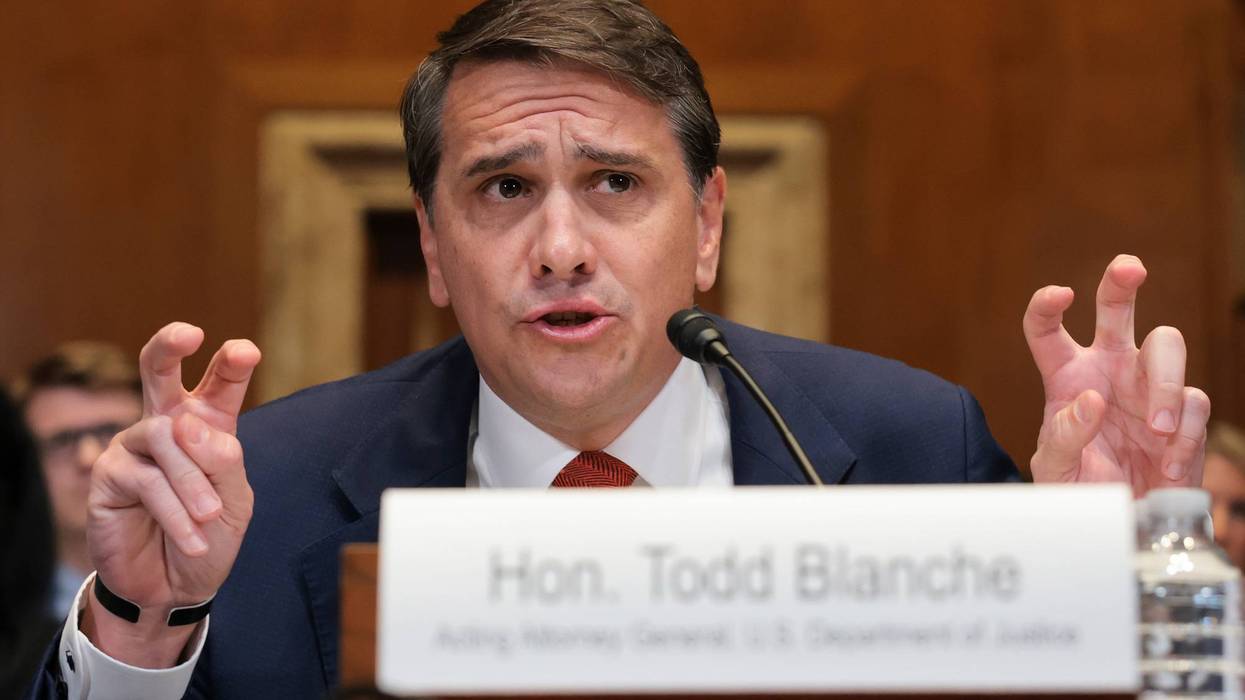
"Anti-abortion zealots like Todd Blanche would not stop until they could restrict our bodily autonomy to the furthest degree," said one critic.
Reproductive rights groups are sounding the alarm about a recent pledge made by acting US Attorney General Todd Blanche to make every state adhere to anti-abortion laws passed in red states.
In a phone call last week hosted by the White House Faith Office, Blanche told a religious group that he would work would work to ensure the US Supreme Court's Dobbs v. Jackson Women's Health Organization decision that overturned the constitutional right to an abortion “becomes permanent in every single state.”
During the call, Blanche hinted that the Trump administration would place restrictions on the ability to mail drugs such as mifepristone to states that have outlawed abortion.
"If states have said, ‘We are going to protect the unborn and we’re going to protect every life from the moment of conception,’ we’re putting practices and policies in place so that other states and other organizations can’t attack that,” Blanche said. "They can’t do things like they’re doing with mailing in mail-order drugs."
In an analysis published Wednesday, journalist Jessica Valenti argued that Blanche's pledge would not result in a nationwide ban on abortions, but rather "stopping the shipping of abortion medication under the auspices of adhering to Dobbs."
"If we lost telemedicine abortion, there would be devastating national consequences," Valenti emphasized. "You could even argue—and I have!—that banning the shipping of abortion pills amounts to a backdoor national ban."
In a Tuesday social media post, Sen. Tina Smith (D-Minn.) highlighted Blanche's call and warned that confirming him as AG permanently would be a green light to assault women's rights.
"Todd Blanche made clear in these secret calls with anti-choice activists that he wants to resurrect the Comstock Act—an antiquated anti-vice law from before women had the right to vote—to ban sending medication abortion in the mail," wrote Smith. "Republicans will likely do what they always do and confirm Blanche as attorney general despite all of this, and once again, women across America will pay the price."
Mini Timmaraju, president and CEO of Reproductive Freedom for All, accused Blanche of "making dangerous promises behind closed doors to weaponize the Justice Department to enact a national abortion ban."
"We must believe Blanche when he says he will come for our rights," Timmaraju added. "Republicans are using every lever of government to attack reproductive freedom, and voters will make their voices heard this November to take our Congress back from these extremists."
Nourbese Flint, president of All* Above All, called Blanche's promise "an open declaration of his intention to use the Justice Department to stop the delivery of abortion medication."
"The lie they told us in the aftermath of Dobbs was that it was about sending abortion law back to the states," Flint said, "but we have known all along that anti-abortion zealots like Todd Blanche would not stop until they could restrict our bodily autonomy to the furthest degree."
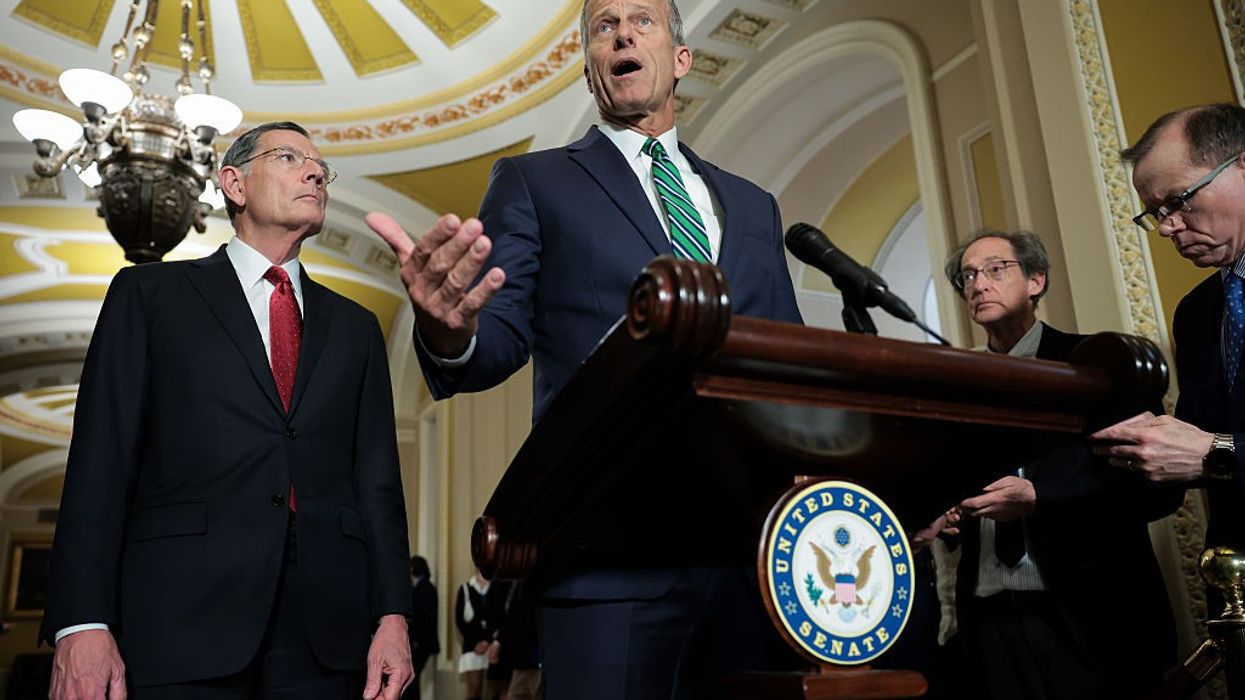
"Divine's confirmation makes clear that Trump lied to voters when he said he would 'leave it to the states,' and he is actively working to eliminate abortion access nationwide," said a prominent reproductive rights advocate.
Several advocacy groups expressed outrage on Tuesday after the United States Senate voted to confirm Missouri Solicitor General Joshua Divine to be a United States District Judge for the Eastern and Western Districts of Missouri.
Divine, who was confirmed by a vote of 51 in favor to 46 against, is one of several judicial nominees of U.S. President Donald Trump who has been singled out by advocates for what they describe as his extreme record on a number of issues ranging from reproductive freedoms to LGBTQ rights to relief for student loan borrowers.
Every member of the Senate Democratic caucus voted against Divine’s confirmation with the exception of Sen. Angus King (I-Maine), who voted in favor. All Republicans voting in the Senate on Tuesday supported Divine’s confirmation, while three GOP senators—John Kennedy of Louisiana, Markwayne Mullin of Oklahoma, and Mitch McConnell of Kentucky—did not vote.
Mini Timmaraju, president and CEO of abortion rights advocacy organization Reproductive Freedom for All, argued that Divine's nomination and confirmation were a sign that Trump and the GOP would not be content to leave abortion rights up to individual states.
"Divine's confirmation makes clear that Trump lied to voters when he said he would 'leave it to the states,' and he is actively working to eliminate abortion access nationwide," she said. "Federal courts are a critical line of defense to preserve reproductive healthcare, and these appointments are a dangerous sign of what's to come."
Winston Berkman-Breen, legal director of the Student Borrower Protection Center (SBPC), accused Divine of building a political career on the backs of student loan borrowers who were in dire need of relief from the massive debts they incurred while pursuing an education.
"Time and time again in his lawsuits challenging legal student loan payment and relief programs, Divine took extreme positions at odds with traditional judicial interpretations related to injury, standing, and venue," he said. "Because of Divine, millions of student loan borrowers remain buried in crushing debt. Divine's actions exceeded the bounds of zealous advocacy and were a direct affront to judicial procedure. Americans deserve a judge who will review the facts of the case before them and apply the law under the Constitution and as passed by Congress—not an ideologue who will manipulate those laws to obtain the outcome he prefers."
Lena Zwarensteyn, senior director of the fair courts program and an advisor at The Leadership Conference on Civil and Human Rights, didn't focus on any specific issue and instead took an all-of-the-above approach to condemning what she described as Divine's unfitness for the federal bench.
"The Senate's confirmation of Joshua Divine to the federal bench in Missouri... installs into a lifetime judgeship an individual who does not possess the requisite experience to be a federal judge and who has time and time again demonstrated significant hostility to our civil and human rights," she argued. "His limited legal career—which includes a record of intense opposition to reproductive rights, LGBTQ equality, student loan borrowers, and more—is disqualifying. Our courts, our communities, and our democracy deserve better. Senators must ensure that judicial nominees are fair-minded, actually qualified for the job, and faithful to the rule of law and Constitution rather than to an anti-civil rights agenda."

"These anti-choice fanatics will stop at nothing. They don't think their work is finished even after such a horrible and wide-ranging decision as Dobbs," warned the Senate's top Democrat.
Reproductive freedom advocates on Tuesday marked the third anniversary of the U.S. Supreme Court reversing Roe v. Wade by calling out Republican decision-makers—including President Donald Trump—for the harmful impacts of the Dobbs v. Jackson Women's Health Organization decision.
"Three years after the Supreme Court's devastating Dobbs decision stripped away constitutional protections for reproductive freedom, we face not only the predicted economic catastrophe but a terrifying escalation of political violence targeting women's rights advocates," said Equal Rights Advocates executive director Noreen Farrell, pointing to the recent assassination of former Minnesota House Speaker Melissa Hortman (DFL-61) and attempted murder of state Sen. John Hoffman (DFL-34).
"Equal Rights Advocates warned that Dobbs would unleash more than legal restrictions—it would legitimize extremism. Now we see the tragic fulfillment of that prediction," Farrell continued. "This administration's policies represent calculated economic warfare against women, particularly low-income women and women of color. The case of Adriana Smith last week illustrates the extreme consequences of the Dobbs decision—a pregnant Black woman denied medical care, becoming a brain-dead incubator for a fetus against her medical directive and her family's wishes."
"In the 21 states with abortion bans and extreme restrictions, women continue to die, and along with their providers, are being threatened, targeted, and criminalized."
The Georgia law doctors at Emory University Hospital cited to keep Smith on life support—allegedly without the input or consent of her family—until her fetus could be delivered is one of various anti-choice state laws that took effect after Dobbs.
"For the last three years, we have witnessed firsthand what happens when politicians try to control the rights of people to practice basic bodily autonomy—with dire results," said Dr. Jamila Perritt, an OB-GYN and abortion provider who serves as president and CEO of Physicians for Reproductive Health, in a Tuesday statement.
"We have seen countless people forced to leave their communities to get basic healthcare, forced to remain pregnant when they wouldn't have otherwise, criminalized for experiencing pregnancy loss, and ultimately, we have seen people dying after being turned away when seeking emergency abortion care," Perritt detailed.
The Guttmacher Institute on Tuesday released new data about the 155,000 abortion patients who traveled out of state to obtain care last year. The group said that "similar to 2023, Illinois remained a critical access point in 2024, with 35,470 patients traveling from across the South and Midwest to obtain abortion care in the state."
Guttmacher Institute data scientist and study lead Isaac Maddow-Zimet noted that "while these findings show us where and how far patients are traveling, they are not able to capture the numerous financial, logistical, social, and emotional obstacles people face. In addition to the travel costs, driving or flying across state lines often requires taking time off work, navigating complex logistics and arranging childcare, not to mention paying for the abortion itself."
As states continue to pass restrictions post-Dobbs, patients' options are dwindling. For example, Guttmacher director of state policy Candace Gibson explained that "Florida had been an important access point for abortion in the Southeast, so when the state's six-week ban went into effect in May 2024, it was not just Floridians who were impacted, but also the thousands of out-of-state patients who would have traveled there for care."
While running to retake the White House last year, Republican President Donald Trump—who appointed three of the Supreme Court's six right-wing justices during his first term—came out against a Florida ballot measure that would end his state's strict abortion ban and bragged about his role in reversing Roe but also tried to downplay the importance of reproductive rights to voters.
"It's been three years since people in the United States have lost their federal constitutional right to abortion; three years since President Trump's handpicked Supreme Court justices stripped Americans of this fundamental right to freedom," Alexis McGill Johnson, president and CEO of Planned Parenthood Action Fund, said in a Tuesday statement. "The consequences have been devastating, even lethal."
"We can't know all the names of the women who have died because of abortion bans, but we will never forget that people have endured injury, pain, and suffering because of the Dobbs decision," she declared. "We continue to fight President Trump and his backers' attacks on reproductive rights, including their effort to 'defund' Planned Parenthood in Congress and end abortion access for everyone, everywhere. Planned Parenthood Action Fund will never stop advocating for a country where all people have the power to control their own bodies, lives, and futures."
Reproductive Freedom for All president and CEO Mini Timmaraju was similarly determined on Tuesday, launching a campaign to mobilize against Trump and the GOP.
"In the 21 states with abortion bans and extreme restrictions, women continue to die, and along with their providers, are being threatened, targeted, and criminalized," Timmaraju said. "And while the Trump administration continues to gut our fundamental freedoms, we continue to fight against the GOP's attacks on Planned Parenthood, Medicaid, and essential reproductive care."
Congressional Democrats—who have minorities in both chambers—joined advocacy group leaders in using the Dobbs anniversary to direct anger at the president and Republican policymakers working to strip away reproductive freedom from people nationwide.
During a Tuesday press conference, Senate Minority Leader Chuck Schumer (D-N.Y.) said the high court's June 2022 ruling "will go down in history as one of the worst, most harmful, most regressive decisions in modern history" and stressed that "people are dying as a result of the Dobbs decision."
Noting that many patients have had to travel or wait for care, Schumer said that "this is abominable. We know that this is what Republicans want, a total ban on abortion. These anti-choice fanatics will stop at nothing. They don't think their work is finished even after such a horrible and wide-ranging decision as Dobbs. Reproductive freedom is under attack on all sides. Extremists are banning and restricting abortion, criminalizing providers, defunding care, and interfering with lifesaving medicines."
"These attacks are also devastating our economy. With fewer reproductive healthcare protections, fewer women are participating in the workforce. State-level restrictions on abortion access combined with the lack of federal protection cost the economy more than $133 billion nationally," he continued. "The 16 states with the most restrictive abortion policies were responsible for $64 billion in economic loss."
The Senate's top Democrat also called out his GOP colleagues for what he called "a Republican backdoor abortion ban done in the reconciliation bill," taking aim at "two nasty provisions to defund Planned Parenthood and eliminate coverage for comprehensive reproductive care" from the Affordable Care Act marketplace.
"I'm here to say that Democrats are going to fight like hell to strip these cruel provisions from the Republican bill, including in the Byrd bath, which will be occurring today or tomorrow," he pledged, referring to the Senate parliamentarian's review of the GOP megabill. "Just as we fought back against attacks on abortion before, we will fight these nasty provisions with every fiber in our being."

"People worldwide will have fewer points of service," said Doctors Without Borders. "It means fewer safe places to talk about their health options, and fewer providers to go to for help during medical emergencies."
Reproductive rights and medical experts on Monday continued to warn that U.S. President Donald Trump's highly anticipated reinstatement of the Mexico City Policy, which bans nongovernmental organizations that perform or promote abortion from receiving federal funding, will cause "devastating damage" for people around the world.
The global gag rule (GGR), as it is called by critics, has been imposed by every Republican president for decades, including Trump during his first term. After returning to office a week ago, Trump on Friday signed an executive order "to end the use of federal taxpayer dollars to fund or promote elective abortion" and revived the controversial rule with a presidential memorandum.
"As the single largest funder of international aid, the U.S. plays a powerful role in shaping the global health landscape—and women's and girls' lives are being used as pawns in this political game," Dr. Carole Sekimpi wrote Monday for the British journal The BMJ. "My work overseeing reproductive health programs in Africa for MSI Reproductive Choices gives me an understanding of the profound consequences that this will have on communities that Trump will never set foot in."
"It's prudent to first understand that the U.S. government never funds abortions," Sekimpi stressed, noting the rule punishes groups that participate in anything abortion-related with separate funding. "Last time Trump was in power, MSI was among those that refused to accept the terms of this policy. The U.S. funding we lost would have allowed us to serve 8 million women, preventing 6 million unintended pregnancies, 1.8 million unsafe abortions, and 20,000 maternal deaths. And that was just one organization."
Ibis Reproductive Health president Kelly Blanchard and Evelyne Opondo, an Ibis board member and the International Center for Research on Women's Africa director, also emphasized in a Monday Medium post that the rule's impact "is felt keenly by organizations that provide comprehensive sexual and reproductive healthcare—including contraception and abortion care—around the world," such as MSI and International Planned Parenthood Federation, "who refuse to abide by the terms because they support the human rights of all people and will not withhold information or critical reproductive healthcare from individuals who need it."
"The GGR flies in the face of both human rights and evidence-based public health," the pair asserted. "The GGR does not prevent abortion from happening but rather increases barriers to abortion access, reduces access to contraception increasing risk of unintended pregnancy, and could actually increase unsafe abortion, a key driver of maternal deaths around the world."
Melanie Nezer, vice president for advocacy and external relations at the Women's Refugee Commission, similarly declared in a Monday statement denouncing the GGR, "Let us be clear: this policy will not protect lives—it will endanger them."
"The goal of the global gag rule is to curtail access to safe sexual and reproductive healthcare, including access to safe abortion," she said. "The result is more suffering from the consequences of conflict-related sexual violence, more unintended pregnancies, more unsafe abortions, and more maternal death that would otherwise be entirely preventable."
Reproductive rights groups worldwide were similarly critical of the decision on Friday and throughout the weekend, with Planned Parenthood Federation of America president and CEO Alexis McGill Johnson calling it "dangerous" and arguing that "elected officials should not be interfering in personal medical decisions, in this country or anywhere in the world."
Like the critics on Monday, Rachana Desai Martin, chief government and external relations officer at the Center for Reproductive Rights, pointed to the fallout from GGR during the Republican's first term and said that "the reinstatement and expansion of President Trump's global gag rule is a direct assault on the health and human rights of millions of people around the world."
Also recalling the first Trump administration, Guttmacher Institute acting co-CEO Destiny Lopez highlighted how her group's "research has documented its severe ripple effects, including stalling and even reversing progress in expanding access to modern contraception in countries like Ethiopia and Uganda."
"Now history will sadly and shamefully repeat itself, and people in many countries will find it harder to access safe abortion, contraception, and other critical health services," she said, vowing to track the impacts and work to repeal the harmful policy.
Reproductive Freedom for All president and CEO Mini Timmaraju also pledged to battle the GGR and other Republican attacks on choice, saying that "these policies inflict harm on those who need access to reproductive healthcare, including abortion, in our country, and around the world—and we will fight back."
Previewing the fight ahead, National Abortion Federation president and CEO Brittany Fonteno warned that the GGR "will not be the last" attack on reproductive healthcare, adding that "for nearly a decade now, Donald Trump has shown us just how dangerous he is for abortion access, and it is clear that over the next four years, the anti-abortion movement will take every opportunity to strip away our fundamental right to reproductive freedom—both here and abroad."
RealClearPolitics, the first to report the rule's revival, noted that "the president timed the release of his executive actions to coincide with the annual March for Life on Friday when some of his most ardent supporters rallied on the National Mall. Vice President JD Vance addressed the march in person, while Trump recorded a video message Thursday to be played at the Friday rally."
Although Trump said on the campaign trail that he thinks abortion policies should be decided at the state level, rights advocates have cited his extensive record of dishonesty and bragging about the role he played in overturning Roe v. Wade, and expressed fear that the Republican-controlled Congress will send a national abortion ban to his desk.
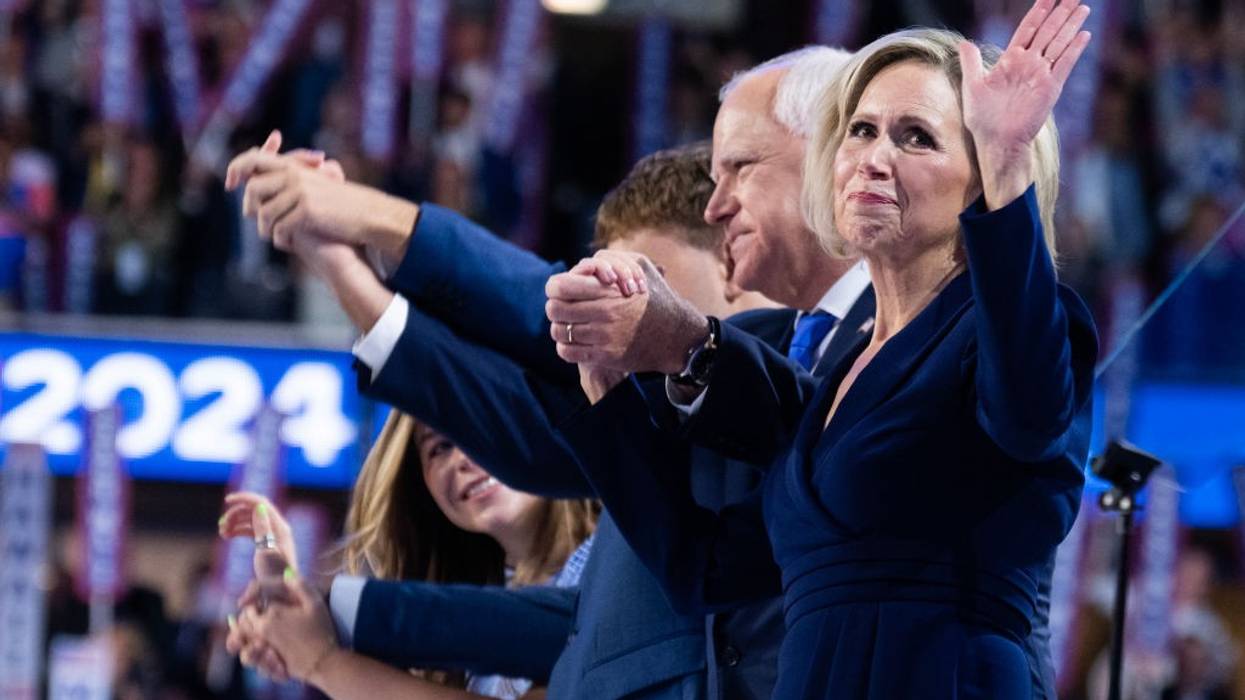
"Thank you Gwen Walz for powerfully sharing your fertility journey and committing to protecting fertility treatments for all Americans."
Minnesota First Lady Gwen Walz—whose husband, Democratic Gov. Tim Walz, is U.S. Vice President Kamala Harris' running mate—shared her full fertility journey in an essay published by Women's Health on Monday, just weeks away from the November 5 election.
The Democrats are set to face Republican former President Donald Trump—who is voting to uphold Florida's six-week abortion ban and brags about having appointed three of the U.S. Supreme Court justices who reversed Roe v. Wade—and Sen. JD Vance (R-Ohio), whose selection was seen as further proof that their administration would "stop at nothing to ban all abortion" at the federal level.
Since Harris took the torch from President Joe Biden this past summer, she has had widespread support from reproductive freedom advocates. They celebrated her choosing the Minnesota governor, who signed bills strengthening abortion protections and shielding people who seek or provide abortions or gender-affirming care from legal action by conservative states.
"Donald Trump is the one who took down Roe. I don't trust him. And frankly, I'm not willing to put my daughter's reproductive health in his hands."
Throughout the campaign, Tim and Gwen Walz have shared their difficult journey to conceiving their two children: 23-year-old Hope, and Gus, who turned 18 on Sunday. As the Minnesota first lady detailed in Women's Health, she had "felt pangs of frustration and anger since Roe was overturned" but was ultimately pushed to speak out by an Alabama Supreme Court ruling.
In February, Alabama's high court recognized frozen embryos as children who must be protected by the Wrongful Death of a Minor Act, halting in vitro fertilization (IVF) in the state and elevating fears of what Republican control of Congress and the White House would mean for the future of fertility treatments and reproductive freedom more broadly.
"I don't think anyone should be telling us when, if, or how to start families. But when the Alabama Supreme Court ruling came down, that was a moment when it was just like, okay, now we're here," Gwen Walz wrote. "We went through this difficult time for a purpose—to have our children—but there's another purpose now. We have an opportunity, in leadership roles as governor and first lady, and now on the campaign trail for Kamala Harris, to tell our story. So, we told it all across the country."
She recalled taking Clomid, "a medication that increases the hormones that stimulate egg production in your ovaries and can help you get pregnant," and coordinating her schedule with their "wonderful neighbor Mary," a nurse and mother of three who helped administer shots to boost her chances of pregnancy and successful fertilization.
"When we finally conceived Hope using intrauterine insemination (IUI), it was right before Easter. We'd been struggling with infertility for years by that point," Walz wrote. "You never imagine that your daughter is going to have fewer rights than you do. And in 21 states that have abortion bans or gestational limits right now, that is the case."
"Donald Trump is the one who took down Roe. I don't trust him. And frankly, I'm not willing to put my daughter's reproductive health in his hands. If he's elected, I think there will be a nationwide abortion ban," she continued. "But I plan on making my voice heard at the ballot box. There's a clear choice between Kamala Harris and my husband, Tim—who trust women—and Trump and JD Vance, who do not. Everyone has to understand that you have the power to make this choice, and the power to respect reproductive freedom for every single woman in every single family—so that if, when, or how you want to have a family is up to you."
Welcoming the essay on social media, Reproductive Freedom for All said, "Thank you Gwen Walz for powerfully sharing your fertility journey and committing to protecting fertility treatments for all Americans."
Reproductive Freedom for All has endorsed the Harris-Walz ticket and has been working to reach voters in key states. The group's president and CEO, Mini Timmaraju, said earlier this month that "one of the most powerful ways we can mobilize voters is by speaking to the people we know in our own communities."
"Voters have never been so fired up about abortion," she added. "Our reproductive freedom is at stake and we can't afford to do anything less than leave it all on the field."

"The stakes of this election could not be higher, the contrast between the two tickets could not be clearer, and the state of sexual and reproductive healthcare in this country could not be more dire," an expert said.
Two rights groups on Tuesday celebrated Democratic presidential nominee Kamala Harris' choice of running mate, Minnesota Gov. Tim Walz, calling it the most pro-reproductive freedom ticket in history, while two other groups called on Democratic leaders to act boldly to establish new federal abortion protections.
Both Planned Parenthood Action Fund (PPAF) and Reproductive Freedom for All (RFA) applauded Walz's pro-choice record and called him a "champion" of reproductive rights.
The ACLU and Physicians for Reproductive Health (PRH) called for bolder action to secure abortion rights, with the ACLU pushing for a number of federal reforms, and PRH urging more fundamental protections for abortion and gender-affirming care that go beyond the standards once set by Roe v. Wade.
"Unfortunately, Roe v. Wade was never enough to ensure our communities obtained the care they needed," Dr. Jamila Perritt, PRH's president, said in a statement. "It was, in fact, barely a starting point."
BREAKING: This morning, we sent a letter to the White House asking for immediate action to center the needs of people who have abortions and gender affirming care. It was signed by 430 of our closest friends. Read the letter here: https://t.co/luoyTPaehv
— Physicians for Reproductive Health (@prhdocs) August 6, 2024
Walz, who served in U.S. Congress for 12 years before becoming governor of Minnesota at the start of 2019, has a sterling pro-choice record on abortion. He earned a consistent 100% on RFA's congressional report card during his time as a congressman, and signed a pair of key state bills into law as governor.
The first, signed in January 2023, strengthened and codified abortion protections, even as neighboring states restricted abortion rights, turning Minnesota into "the Midwest's abortion access center." The second, passed three months later, sought to shield people who seek or provide abortions or gender-affirming care from legal action by conservative states.
Both bills narrowly passed the Minnesota state Legislature, where Democrats have had a slight majority since the 2022 election and used it to push through a wide array of progressive laws. These included expanded funding for birth control access, family planning services, and Medicaid reimbursements.
Walz was by Harris' side when she became the first vice president to visit an abortion provider in March, at a Planned Parenthood in St. Paul. Reproductive rights advocates generally regard Harris as stronger on the issue than President Joe Biden, who is Catholic and has struggled to say the word "abortion" publicly, though his administration has pushed pro-choice policy.
"The Biden-Harris administration did more for reproductive freedom than any other, and a Harris-Walz administration is poised to build on that legacy," RFA president Mini Timmaraju said in a statement.
Biden and Harris have emphasized the need to restore Roe, the landmark U.S. Supreme Court ruling from 1973 that established a federal right to abortion up to roughly 24 weeks for the next five decades, before it was reversed by the 2022 Dobbs v. Jackson Women's Health Organization ruling.
However, PRH on Tuesday sent Biden and Harris an open letter, signed by 430 healthcare providers, that called for them to be bolder, citing the limitations of the Roe framework:
While Roe provided a constitutional right to abortion, it never ensured access to that right for all those who needed it. The promise of Roe, the legal right to abortion care, was never fulfilled. This is especially true for communities facing the most barriers to care. When abortion care is treated as anything other than basic, essential healthcare and is so willingly stigmatized by supporters and nonsupporters alike, ensuring true access to our communities is not possible. We urge the administration and lawmakers across the country to broaden their efforts, moving beyond Roe's framework, and talk about the future our patients deserve boldly and bravely. We ask you to champion policy solutions that are not premised on returning us to the narrow protections Roe created.
The ACLU warned of the erosion of reproductive rights following Dobbs, which left states to determine abortion policy; 14 Republican-controlled states have since banned abortion altogether, while eight others have passed bans on abortions at 18 weeks of gestation or less. In a statement, the nonprofit human rights group praised Harris for her pledge to restore reproductive freedom and vowed to hold her accountable.
The ACLU's "roadmap" for Harris includes overturning the Hyde amendment, which restricts Medicaid coverage for abortion and "has forced 1 in 4 low-income women seeking an abortions to carry an unwanted pregnancy to term," the ACLU said. The group also calls for increased federal funding for Title X, which helps low-income people secure healthcare services, a federal push to ensure that all hospitals that receive Medicare funding provide emergency stabilizing treatment, including abortion.
Amnesty International on Monday issued a detailed report on the negative impact of the abortion bans and restrictions in Republican-led states, saying they "cause extensive harm" and "violate human rights."
Reproductive rights advocates warn that much worse is to come if Republican nominee and former President Donald Trump wins back the White House in November. Project 2025, a right-wing blueprint written by people affiliated with Trump, proposes "mobilizing an array of government agencies to curb access to abortion," The Guardian reported Monday.
PPAF implicitly nodded to the threat Republicans pose in making the case for the Democratic ticket in its statement on Tuesday.
"The stakes of this election could not be higher, the contrast between the two tickets could not be clearer, and the state of sexual and reproductive healthcare in this country could not be more dire," said Alexis McGill Johnson, PPAF's president. "Kamala Harris and Tim Walz are the only people we can trust to ensure that everyone has the freedom to make decisions about their own bodies."
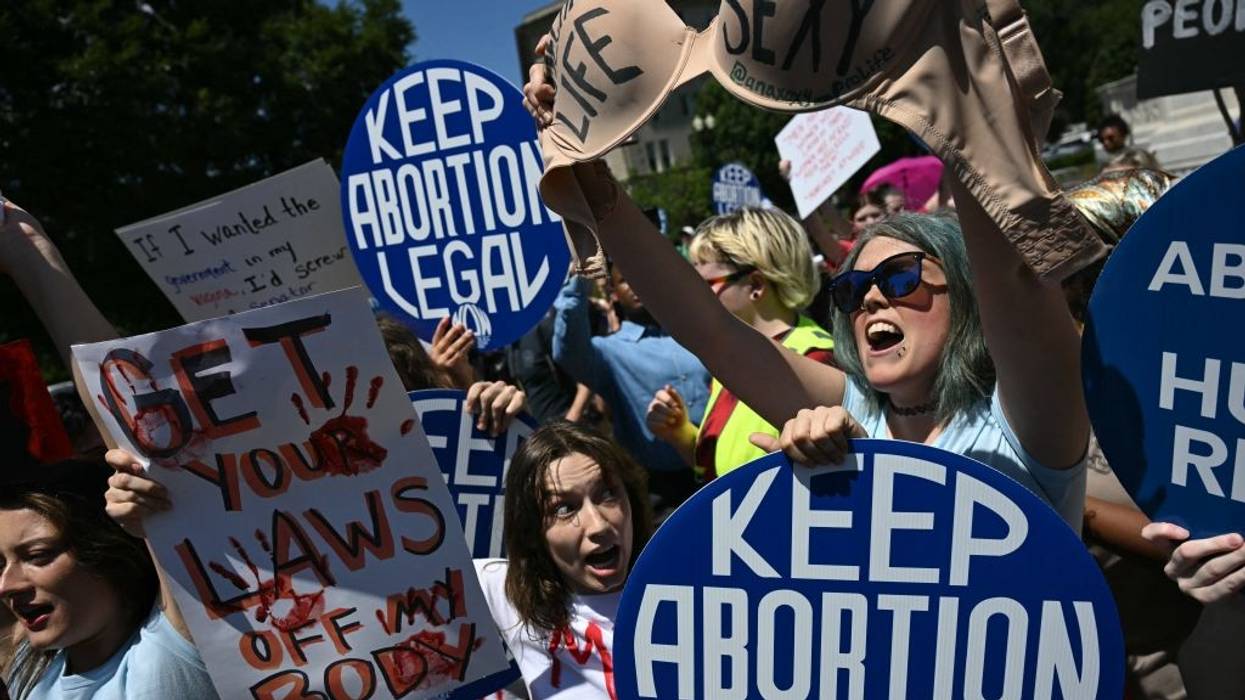
"The American people want to know where their senators stand on freedom of choice," said Democratic Senate Majority Leader Chuck Schumer.
In another display of GOP lawmakers' opposition to reproductive rights, U.S. Senate Republicans on Wednesday blocked the Reproductive Freedom for Women Act.
Introduced last month by Sen. Patty Murray (D-Wash.), the bill states that "the protections enshrined in Roe v. Wade... should be restored and built upon, moving towards a future where there is reproductive freedom for all."
The bill also acknowledges Dobbs v. Jackson Women's Health Organization, the right-wing U.S. Supreme Court's June 2022 ruling that reversed Roe, the decision that had affirmed the right to abortion until viability since 1973. Dobbs set off a fresh wave of efforts to impose devastating new restrictions on reproductive healthcare.
"If Republicans are going to force women to stay pregnant, we are going to force them to be honest with the American people about their extreme position. And, by the way, Democrats are going to keep fighting to restore the rights the American people have been so clear that they want back," Murray said on the Senate floor before Wednesday's vote.
The vote was 49-44, mostly along party lines. Seven senators were not present, and Sens. Susan Collins (R-Maine) and Lisa Murkowski (R-Alaska) were the only Republicans who supported holding a final vote on the legislation. Senate Majority Leader Chuck Schumer (D-N.Y.) changed his vote to "no" so he can bring the bill back up at a later date.
Wednesday's vote followed Republicans blocking bills on in vitro fertilization (IVF) and contraception last month. It also came after the GOP blocked three bills on Tuesday, which aimed to affirm the freedom to cross state lines for abortion care, protect doctors providing legal abortions from being punished for treating patients from other states, and support training for more providers.
"We know where the American people stand on the freedom of choice: Over 80% of Americans—including two-thirds of Republicans—agree that healthcare decisions including abortion should be between a woman and her doctor," Schumer said on the Senate floor Wednesday.
"But Americans are rightfully worried that reproductive rights are becoming extinct in this country. They see what's happening at the Supreme Court. They see the attacks on women's rights in states like Texas and Florida and Alabama and Idaho and beyond," he continued. "The American people want to know where their senators stand on freedom of choice."
The Senate majority leader also called out former President Donald Trump, the presumptive Republican nominee to face embattled Democratic President Joe Biden in November.
While Trump's recognition that rolling back reproductive freedom is unpopular is reportedly what led to changes in the Republican Party's 2024 policy platform, campaigners and legal experts have warned this week that the final language is still incredibly threatening and the GOP can't be trusted on this issue.
The White House said Tuesday that "the administration strongly supports Senate passage" of the bill and "will continue to work with Congress to defend reproductive freedom once and for all."
The statement also called out the GOP, saying that "Republican elected officials' extreme agenda is putting women's health and lives at risk and unleashing chaos and cruelty across America."
After the vote Wednesday, Reproductive Freedom for All president and CEO Mini Timmaraju said in a statement that "we're grateful to Sen. Murray, Leader Schumer, and our champions in the Senate for continuing to hold Republicans' feet to the fire for the damage they've done to reproductive freedom."
She added that "the GOP must be held accountable for the abortion bans they've helped orchestrate and refuse to back down from—and this November, they will be voted out of office."

"Voters don't want abortion bans," said one advocate. "Republicans know it and this plan shows just how desperate Trump and the MAGA GOP are to strip away our reproductive freedom."
Reproductive freedom advocates on Monday warned against trusting the Republican Party, whose 2024 policy platform now "reads like the transcript" from one of former U.S. President Donald Trump's rallies—including its section on abortion.
" Republicans want to criminalize abortion care and impose a nationwide ban," declared U.S. House Minority Leader Hakeem Jeffries (D-N.Y.). "The far-right extremists lied to the American people about respecting the precedent of Roe v. Wade. They are lying once again."
Trump, a frequent liar, attacked reproductive freedom as president and has bragged about appointing half of the U.S. Supreme Court justices who reversed Roe with a Dobbs v. Jackson Women's Health Organization ruling that paved the way for strict bans in over a dozen states.
However, Trump has also tried to distance himself from some extreme and devastating policies, recognizing them as politically risky as he runs for the White House against embattled President Joe Biden, a Democrat campaigning on his support for reproductive rights.
The GOP abortion policy appears on the second-to-last page of the 2024 platform, released just a week before the Republican National Convention is set to kick off in Milwaukee, Wisconsin. It states:
Republicans Will Protect and Defend a Vote of the People, from within the States, on the Issue of Life
We proudly stand for families and Life. We believe that the 14th Amendment to the Constitution of the United States guarantees that no person can be denied Life or Liberty without Due Process, and that the States are, therefore, free to pass Laws protecting those Rights. After 51 years, because of us, that power has been given to the States and to a vote of the People. We will oppose Late Term Abortion, while supporting mothers and policies that advance Prenatal Care, access to Birth Control, and IVF (fertility treatments).
Trump says he supports states making abortion policies. The Associated Press reported that the platform reflects his position, "omitting the explicit basis for a national ban for the first time in 40 years."
According to Politico, "Trump didn't just edit the platform language, but wrote some parts of the 15-page draft himself."
The Republican National Committee's (RNC) platform panel approved the document in an 84-18 vote, noted The New York Times, which added that Trump "was especially focused on softening the language on abortion."
In response to the Times reporting, journalist Paul Blest asserted on social media that "this is such a ridiculous framing on this story about the Republican platform."
"The platform didn't soften the abortion [stance], it just didn't mention it, and the people whose job is to advocate for abortion bans are totally fine with it," Blest continued. "Why do you think that would be?"
"If there's a landslide thanks to Biden's hubris you can bet the GOP will try to jam through a 15-week ban, then a 12-week ban, then a six-week ban, then a full ban with exceptions, then a full ban with no exceptions," he warned. "Whether the platform says it or not."
University of Texas law professor Liz Sepper explained what is included in the platform, saying: "Y'all, the RNC draft platform does not 'moderate' on abortion. It commits to constitutional personhood for fetuses. It takes the view that it is not a mere statute but rather the Constitution that bans abortion nationwide."
"Allow me to anti-abortion translate: The 14th Amendment to the U.S. Constitution protects life of fetuses," Sepper said. "With Roe, states could not so legislate. After Dobbs, they can legislate this view. And the 14th Amendment prohibits denial of fetal life IN ALL STATES."
"This is commitment to full constitutional personhood for blastocysts/embryos/fetuses," she continued. "That is, the RNC is committing to ensure embryos have rights equal to a full human person. There is no universe where embryos have constitutional rights and IVF can still happen on any scale."
Addressing the platform in an email, Biden's campaign said that "in a desperate attempt to conceal his extreme stance on abortion, Donald Trump directed the RNC to hide the ball on their unpopular plans to ban abortion nationwide—with or without Congress."
"Trump has endorsed every extreme abortion ban, including those with no exceptions for rape or incest, and has even said states should have the right to punish and prosecute women who have an abortion and monitor their pregnancies," the campaign added. "No one is buying Trump's sudden backtracking, including his fellow abortion banners."
The Biden campaign and other critics highlighted praise for the platform from leaders of anti-choice groups including Americans United for Life, Students for Life of America, and Susan B. Anthony Pro-Life America.
Meanwhile, Mini Timmaraju, who leads Reproductive Freedom for All, said that "the GOP wants to ban abortion nationwide—and their platform shows that they'll try to use the 14th Amendment to do it."
"Voters don't want abortion bans," she emphasized. "Republicans know it and this plan shows just how desperate Trump and the MAGA GOP are to strip away our reproductive freedom."

"Women shouldn't have to wait to see if the Supreme Court will decide if they can get life-saving healthcare in all states," said one campaigner of a pending ruling on emergency abortion care.
Exactly two years after the right-wing majority on the U.S. Supreme Court cleared the way for nearly half of U.S. states so far to ban or severely restrict abortion care, reproductive justice advocates convened in Washington, D.C. on Monday to mark the anniversary and speak out ahead of another ruling that could have deadly consequences for pregnant people across the country.
As the country marks two years since the Dobbs v. Jackson Women's Health Organization decision, which overturned the 1973 ruling that affirmed Americans have the constitutional right to obtain abortions, advocates expressed a need to acknowledge the harm caused by Dobbs while also looking ahead to the pro-forced pregnancy movement's desire to further restrict reproductive rights.
"Women shouldn't have to wait to see if the Supreme Court will decide if they can get lifesaving healthcare in all states. This is a direct result of the disastrous Dobbs decision two years ago," said Margaret Viggiani, a campaigner who joined the National Mobilization for Reproductive Justice Monday at the rally and press conference in the nation's capital.
The decision expected by the end of the month is Idaho and Moyle, et al. v. United States, which stems from Idaho's near-total ban on abortion care. In August 2022, a federal judge barred the state from enforcing the ban due to its conflict with the Emergency Medical Treatment and Labor Act (EMTALA), which requires hospital emergency departments that accept Medicare to provide treatment to any patient with an emergency medical condition, including people facing pregnancy complications who need abortions.
Since the Dobbs decision was handed down two years ago, the real-world implications of abortion bans have become clear to many Americans as advocates have shared the stories of women like Kate Cox, who was forced to flee Texas to obtain abortion care when she learned her fetus had a fatal condition; Anya Cook and Shanae Smith-Cunningham, who faced the dangerous condition preterm prelabor rupture of the membranes (PPROM) but were unable to receive the standard of care recognized by obstetricians under Florida's 15-week abortion ban; and Amanda Zurawski, who was forced to become "sick enough" from a rapidly spreading infection before doctors would provide an abortion in Texas.
The life-threatening experiences of those women and others, said Human Rights Watch on Monday, exemplify "two years of outrage" since Roe v. Wade was overturned.
"The Supreme Court's revocation of national protections for abortion access, and the restrictive state laws that followed, means the United States is violating the rights to life, health, privacy, nondiscrimination, and freedom from cruel, inhuman, or degrading treatment, among others," said the global organization. "Access to legal abortion is essential to achieve gender equality. Every year, more leaders, legislatures, and courts abroad understand this. U.S. states should repeal restrictions on abortion, enshrine access to abortion in state constitutions, and advance the global trend of recognizing women's autonomy."
Last month, polling from the Pew Research Center suggested the stories of Zurawski, Cox, and other women have struck a chord with many Americans; more than 60% said they believed abortion should be legal in all or most cases, a four-percentage-point jump from 2021.
At the rally in Washington on Monday, reproductive rights advocates joined union members in calling on the American Federation of Labor and Congress of Industrial Organizations (AFL-CIO) to convene a national labor conference for reproductive justice, arguing that the largest federation of unions in the U.S. "is in the most powerful position to mobilize thousands of workers in defense of this fundamental right."
With 1 in 3 women of reproductive age in the U.S. now living in states with abortion bans, Reproductive Justice Maryland executive director Jakeya Johnson said at the rally that the Dobbs decision has "disproportionately impacted those who are marginalized and struggling to make ends meet."
"Today we're here to say, enough is enough," said Johnson. "The power of our collective voices cannot be underestimated. When labor and reproductive justice movements join forces, we are unstoppable. We're a force for change, and our strength lies in our numbers."
Meanwhile, groups including Reproductive Freedom for All, the Center for Reproductive Rights, the National Women's Law Center, and Planned Parenthood Federation of America marked the Dobbs anniversary by launching their Abortion Access Now campaign, pledging a $100 million investment to advance abortion rights and access through lobbying, grassroots organizing, public education, and other communications strategies.
"We envision a future where abortion, and all sexual and reproductive healthcare, is not only legal but also accessible, affordable, and free from stigma or fear," said the campaign. "This campaign is committed to building and leading a broad, inclusive vision for abortion access, ensuring everyone can make fundamental decisions about their health and bodies with dignity and support. Together, we will secure the freedom to control our own bodies and care for ourselves, our families, and our communities."
A separate campaign launched by the judicial reform group Stand Up America similarly marked the Dobbs anniversary and focused on warning U.S. voters that a victory by presumptive Republican presidential nominee Donald Trump in November would "ensure MAGA control of the [U.S. Supreme] Court for decades to come," with an impact on abortion rights and other crucial issues.
"We can't let that happen," said executive director Christina Harvey.
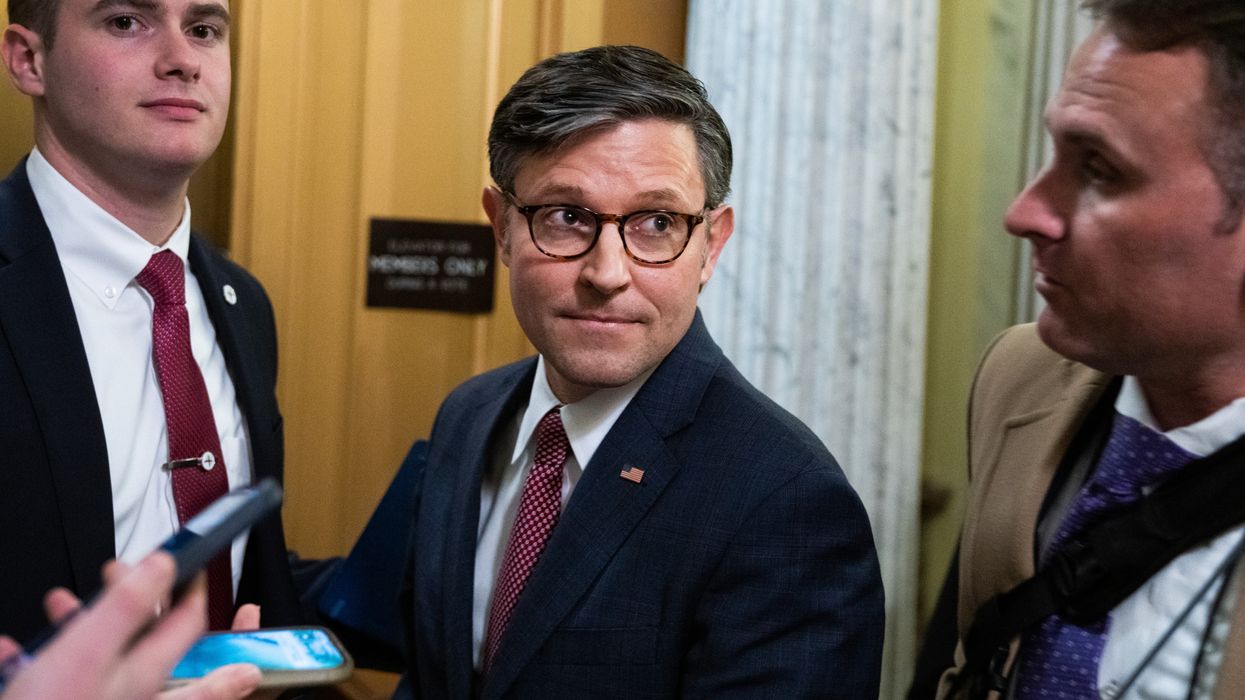
"Mike Johnson's flip-flopping on abortion just proves our movement is winning and that Republicans know they're losing," one advocate said.
Republican House Speaker Mike Johnson said that he would not attempt to ban abortion on the federal level, a claim that earned instant skepticism from reproductive rights groups.
Johnson's remarks came as part of an interview published by Politico on Friday, as Johnson responded to questions from Politico's Ryan Lizza and Rachael Bade:
Lizza: Some like lightning round questions: Do you anticipate putting forward any legislation on abortion before the election?
No.
Bade: If there is Republican control of both chambers of Congress and the White House next year, do you anticipate passing any sort of nationwide abortion ban?
No, I don't.
President Trump said this is in the states' purview now. After the Dobbs decision, I think that's where it is. Look, I am a lifelong pro-lifer. I’m a product of a teen pregnancy. And so I believe in the sanctity of human life. It's also an important article of faith for me. But I have 434 colleagues here. All of us have our own, philosophical principles that we live by, but you have to have a political consensus.
In response to Johnson's answer, Reproductive Freedom for All President and CEO Mini Timmaraju said it reflected a growing awareness among Republicans that restricting abortion is not politically popular. Since the U.S. Supreme Court overturned Roe v. Wade in 2022, every electoral attempt to protect abortion rights on the state level has succeeded.
"Mike Johnson's flip-flopping on abortion just proves our movement is winning and that Republicans know they're losing," Timmaraju said.
However, she pointed out that "'leaving abortion to the states' is not a moderate position, as 21 states are already enforcing horrifying bans with devastating consequences."
"Don't be conned. They can't be trusted with our rights."
Further, she warned against taking Johnson at his word.
"Voters have made it clear to the GOP that we will not tolerate abortion bans," she continued. "Mike Johnson and congressional Republicans have shown time and time again they are willing to do anything in their power to restrict our reproductive freedom, and we can't trust them."
Other abortion rights and pro-democracy campaigners issued similar warnings.
"The technical political science term for this is 'lying,'" Indivisible co-founder Ezra Levin wrote on social media in response to the interview.
Activist Olivia Julianna pointed out that Supreme Court Justice Brett Kavanaugh had called Roe v. Wade "settled precedent" before helping to overturn it in Dobbs v. Jackson Women's Health Organization.
Elected Democrats also expressed suspicion.
Rep. Maxwell Alejandro Frost (D-Fla.) pointed out that Johnosn was one of 127 Republicans who had co-sponsored a bill to ban abortion at the federal level.
"If he really isn't for a national abortion ban, he should withdrawal his co-sponsorship first thing when we are back next week," Frost wrote on social media.
Sen. Tina Smith (D-Minn.) wrote that "these people have been working to ban abortion and deny women the freedom to control our own bodies their entire careers."
"Don't be conned. They can't be trusted with our rights," she said.
In a second post, she asked incredulously, "I'm really supposed to believe Mike Johnson, the lifelong anti-abortion zealot, is suddenly just going to leave it alone?"
Even if the Republicans did steer clear of a federal ban, it would not be enough to ensure abortion rights in the U.S.
"We demand a federal response to the abortion crisis and call on the press to ask the speaker if he will support federal protections," Timmaraju said. "We demand nothing less from our federal government than locking in the federal right to abortion and expanding access."