

SUBSCRIBE TO OUR FREE NEWSLETTER
Daily news & progressive opinion—funded by the people, not the corporations—delivered straight to your inbox.
5
#000000
#FFFFFF
To donate by check, phone, or other method, see our More Ways to Give page.
Daily news & progressive opinion—funded by the people, not the corporations—delivered straight to your inbox.
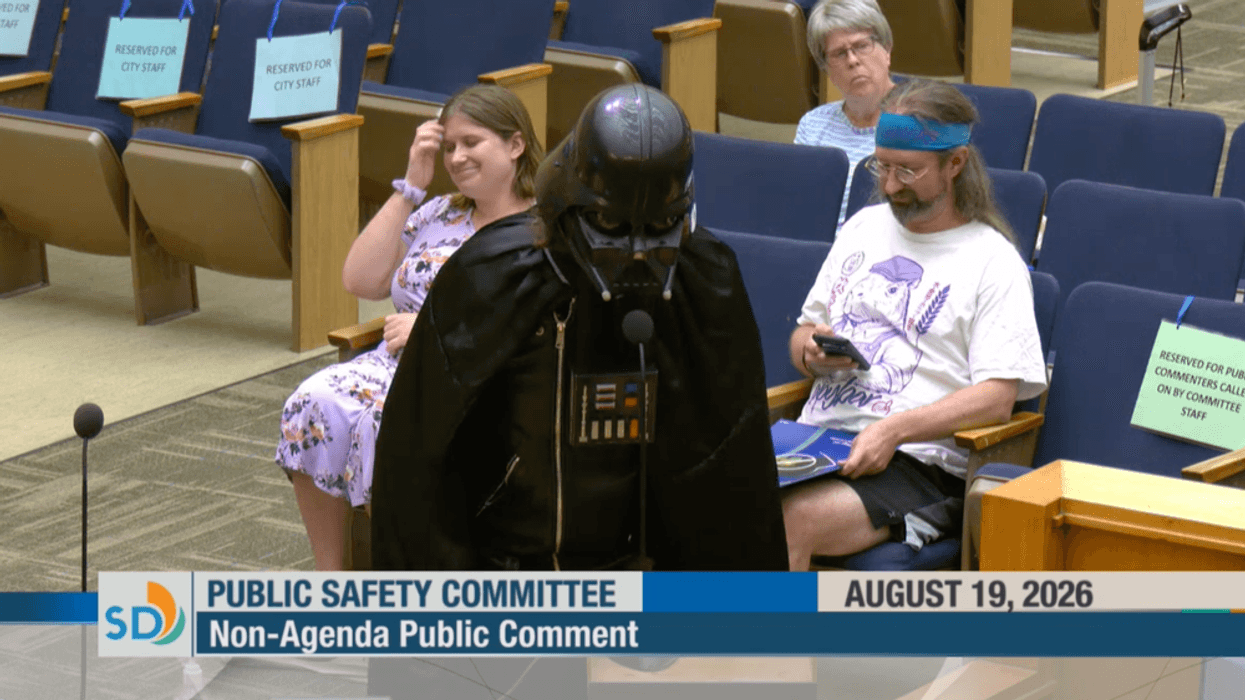
"We must continue utilizing Flock technologies so that we can follow and surveil the rebel scum as they move from playground to playground, from playground to pool, from pool to gymnasium."
Residents of San Diego are up in arms about Flock cameras. But for those seeking to keep tabs on "rebel scum," the omnipotent surveillance technology has its uses.
That's according to one Darth Vader, who took the podium during the public comment period at a Public Safety and Livable Neighborhoods Committee Meeting in the California city on Wednesday night to sing, or more accurately, bellow his praises for the company, whose automatic license-plate reading (ALPR) cameras are fast being installed around the nation.
"The emperor is a fan of Flock, and we must continue utilizing Flock technologies so that we can follow and surveil the rebel scum as they move from playground to playground, from playground to pool, from pool to gymnasium," the person dressed as the infamous Star Wars villain said.
"Because we all know that the Flock cameras are not only following the license [plates]; they are following children. They are following children in parks and gymnasiums, and we need this," the sith lord continued. "I need this so I can stalk my ex-girlfriend."
There are more than 550 Flock cameras installed across the city of San Diego, according to a public database by the activist group DeFlock.
And while the person who embodied the dark lord has not yet been identified, the satirical performance gave voice to some of the well-documented ways that the technology has been used to create a nationwide panopticon that enables widespread warrantless spying.
One database published earlier this month by the Institute for Justice, a libertarian nonprofit law firm, found over 100 documented cases of police using the technology for “romantic stalking, wrongful stops and detentions, non-law enforcement use, and other types of misconduct.”
Vader was also not exaggerating about the use of Flock cameras to spy on children. As the Electronic Frontier Foundation (EFF), an internet-focused civil liberties group, found, some school districts have enlisted cops to track families in order to root out "residency fraud" and prove that they live in the district.
"A search of ALPR data will show a lot more than whether a family lives within the right zone," wrote Dave Maass, EFF’s director of investigations, and Rindala Alajaji, a legislative activist with the group. "Every time a plate is searched, it can reveal personal information about a family: when they go to the doctor, when they go to worship, when they go out at night, and where they travel on vacation. None of that is the school district's business, and these searches are a huge invasion of privacy."
When powerful men and women with microphones and platforms tell the public that Muslim Americans are enemies, invaders, and less than human, some people listen. Some people act. Two teenagers in San Diego just did.
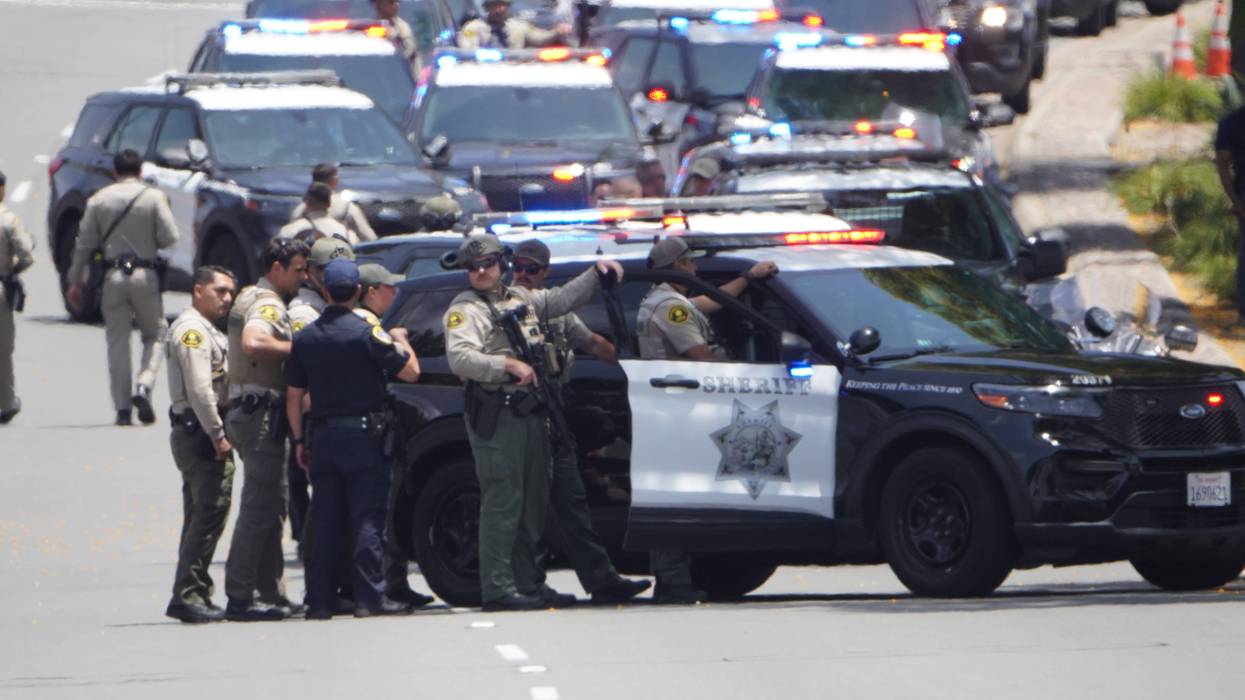
A hate crime had struck close to home. On the TV screen, more than four dozen police cars, blue lights swirling in a cold, mechanical rhythm. The news ticker crawled across the bottom of the TV screen, sanitizing horror into a newsbreak: police responding to an "incident" in San Diego's Clairemont Mesa neighborhood. An incident. I didn't think much of it at first. Then my phone rang. A friend. I couldn't bring myself to answer. Moments later, a text came through, cryptic, short and to the point: "Check on the Imam, shooting at the Islamic Center."
The world stopped.
I scrolled through my contacts, found the number, and dialed. My heart hammered against my chest with every ring. Then his voice. I closed my eyes. "We are okay. The school children are safe. We evacuated the mosque," Imam Taha said.
I let out a breath I did not know I had been holding. But okay, I would learn in the minutes and hours that followed, that was not the whole story. Three men who had been okay that morning would never be okay again.
The politicians who run their election campaigns casting American Muslims as enemies owe this community more than thoughts and prayers.
Under the steady and visionary leadership of Imam Taha Hassane, the Islamic Center of San Diego has grown into far more than a place of worship. It is a living, breathing hub of culture and education, a place where faith leaders of every denomination and neighbors of every background have always found an open door and a welcoming table. It is, in the truest sense of the word, a community, one that has spent decades building bridges in a city that repaid the generosity with bullets.
In less than 10 minutes, hate stole the life of three human beings. Amin Abdullah, who welcomed you with a curious smile when you came in, a father and a husband. Mansour Kaziha, a husband, father, and grandfather who greeted his community every day from behind the mosque store counter. And Nader Awad, who, as bullets tore through the air around him, ran into the fire to save others. Three men. Three families shattered. A community in mourning.
This hate crime did not occur in isolation. It comes amid an unprecedented and metastasizing culture of Islamophobia in the United States, where politicians have discovered that Muslim hate is a reliable path to election and commentators have built empires of followers on the broken backs of a vilified community. The names attached to this campaign are not fringe figures shouting into the void from dark corners of the internet. They are sitting senators. Elected congressmen. A president of the United States and his closest advisers. They speak from podiums, not podcasts, and have press secretaries, not anonymous accounts. And they have never—not once—been made to answer for what their words have unleashed.
As a presidential candidate, Donald Trump claimed that “Islam hates us." His close associate Laura Loomer wasted no time making the blood of victims useful to her agenda. Hours after the shooting, questioned the shooting calling it “The mosque that was 'supposedly' shot up today… people who attend this mosque want us all to be killed." Three men were murdered, and she called the victims a threat.
Sen. Tommy Tuberville (R-Ala.) says of Islam, “The enemy is inside the gates.” Sen. Ted Cruz (R-Texas) wants Big Brother to monitor Muslim neighborhoods. Congressman Randy Fine (R-Fla.) is the most explicit in spewing hate, declaring, “We need more Islamophobia, not less.”
Imagine the cry if another congressman said we need more Jewish hate.
A Washington Post investigation found that since the beginning of 2025, more than 100 members of Congress have mentioned Muslims or Islam in social media posts, with two-thirds of those posts referencing radical Islam, Sharia law, extremism, or terrorism. According to the Council on American-Islamic Relations, these statements have amplified Islamophobia and created an environment that fosters discrimination against Muslims. Hate and Islamophobia appear to be a winning election strategy for Republican candidates in November.
When powerful men and women with microphones and platforms tell the public that Muslim Americans are enemies, invaders, and less than human, some people listen. Some people act. Two teenagers in San Diego just did.
I will say something that many might find abhorrent, but that I believe with every fiber of my being: The murderers Cain Clark and Caleb Vazquez were also victims. Not of the same order as Amin, Mansour, and Nader, for nothing diminishes what was taken from those three men, their families, and community. But victims, nonetheless. Victims of a political and media ecosystem that fed them a steady dose of dehumanization, paranoia, and hatred of Muslims. They were radicalized by adults who knew exactly what they were doing but faced no accountability for it. Trump, Loomer, Tuberville, Fine, and many others did not pull the trigger, but they loaded the gun with the bullets of hate and pointed it at a place of worship. The blood of five people—including those two teenagers—is on their hands.
The failure is not at the federal level only. In the City of San Diego, Mayor Tod Gloria's performance of solidarity rings hollow against his record of deliberate exclusion. His administration refused to call for even a symbolic ceasefire as genocide unfolded in Gaza. He declined to meet with Muslim and Arab community leaders, fearing the political cost for acknowledging Palestinian life. Most recently, his City Council moved to adopt the International Holocaust Remembrance Alliance definition of antisemitism, a Zionist tool to silence voices critical of Israel’s malevolent policies. Every one of these decisions sent a message to San Diego's Muslim community: We don’t value you unless you’re dead, and your lives are worth less than the political comfort of those in power. That message was heard far beyond City Hall.
That dismissal, that deliberate erasure was incubated, fertilized, watered, and brought to lethal bloom by years of sanctioned dehumanization of Muslim Americans and sent a signal to every hateful actor watching: This community is fair game.
San Diego Mayor Gloria, who dismissed our cries in life, has no standing to console us in death. The politicians who run their election campaigns casting American Muslims as enemies owe this community more than thoughts and prayers.
The blood in San Diego does not belong only to two lost teenagers. It belongs to everyone who fed them, directly or indirectly, the ideology of Muslim hate.
"When leaders traffic in anti-Muslim rhetoric, violence follows," said one Democratic senator. "We must confront Islamophobia with the urgency it demands."
A pair of teenagers allegedly fatally shot three men at a San Diego mosque on Monday before killing themselves in an attack condemned by many—but welcomed or denied by a handful of far-right figures.
The alleged shooters, who the FBI said were 19 and 17 years old, attacked the Islamic Center of San Diego (ICSD) in the Clairemont neighborhood of California's second-largest city, with officers dispatched to the site at 11:43 a.m., according to San Diego Police Chief Scott Wahl. The center contains a mosque and a school where children were studying at the time of the attack.
The chief said one of the victims was a security guard who played a "pivotal" role in preventing more people from being shot at the county's largest mosque just before hundreds of worshippers were expected for afternoon prayers. The guard has been identified as Amin Abdullah.
Wahl said that two shooters—who have yet to be publicly identified—appear to have died from self-inflicted gunshot wounds. Investigators are treating the shooting as a hate crime.
ICSD director Imam Taha Hassane said that all students and staff members were safely evacuated from the facility.
“It is extremely outrageous to target a place of worship,” Hassane added.
The New York Times reported that investigators recovered anti-Islamic material in the vehicle used by the shooting suspects, and that the words "hate speech" were written on one of the guns used in the attack.
President Donald Trump called the shooting a "terrible situation," while some of his supporters denied or seemed to welcome the attack.
Taheen Nizam, director of the San Diego branch of the Council on American-Islamic Relations, said in a statement after the shooting that “we strongly condemn this horrifying act of violence at the Islamic Center of San Diego."
"Our thoughts are with everyone impacted by this attack," Nizam added. "No one should ever fear for their safety while attending prayers or studying at an elementary school. We are working to learn more about this incident and we encourage everyone to keep this community in your prayers.”
The Jewish Democratic Council of America also condemned the attacks. JDCA said that "we're deeply saddened by the shooting at a mosque in San Diego, and our thoughts are with the San Diego Muslim community and all impacted by this tragedy."
"Attacks on our fellow Americans at places of worship are unacceptable," the group added.
New York City Mayor Zohran Mamdani was among the Democratic leaders who denounced the shooting, posting on X that he is "horrified by the deadly attack," which he called "an apparent act of anti-Muslim violence."
Several Democratic US lawmakers also condemned the attack.
"What happened at the Islamic Center of San Diego today is devastating," Sen. Chris Coons (D-Del.) said on X. "I’m praying for the victims, their families, and their loved ones."
"This is horrifying, and it did not happen in a vacuum," Coons added. "Muslim communities in this country have been demonized and treated as inherently suspect by those willing to fuel fear for power. When leaders traffic in anti-Muslim rhetoric, violence follows. We must confront Islamophobia with the urgency it demands."
Sen. Dick Durbin (D-Ill.) also took to X, writing, "I condemn the deadly shooting at a mosque in San Diego, California."
"Every American should be able to practice their religion without fear of violence," he added. "We must do more to combat anti-Muslim bigotry."
Rep. Pramila Jayapal (D-Wash.) said she is "devastated to see the news of this deadly attack on a mosque in San Diego."
"Our places of worship should be safe spaces for all people," she added. "We must all stand up and condemn this attack and all forms of Islamophobia, racism, and hatred that are on the rise in our communities."
Rep. Rashida Tlaib (D-Mich.), who is Muslim and the only Palestinian American in Congress, posted on social media: "I am praying for all the families at the Islamic Center of San Diego. My heart breaks every time senseless violence shatters the safety all of our communities deserve."
Gun control advocates also weighed in on the shooting, with March for Our Lives executive director Jaclyn Corin saying, "We reject the idea that this kind of tragedy is inevitable."
"We have the power to build a society where hatred is confronted before it turns deadly, where communities are protected instead of targeted, and where every person can worship freely and safely without fear," Corin added. "This moment demands more than grief. It demands courage, solidarity, and a collective commitment to rejecting the violence, dehumanization, and extremism that continue to endanger our communities."
We are facing a creeping ecological and public health disaster—one that has persisted for decades because of political inaction and a lack of cross-border communication and coordination. But solutions exist.
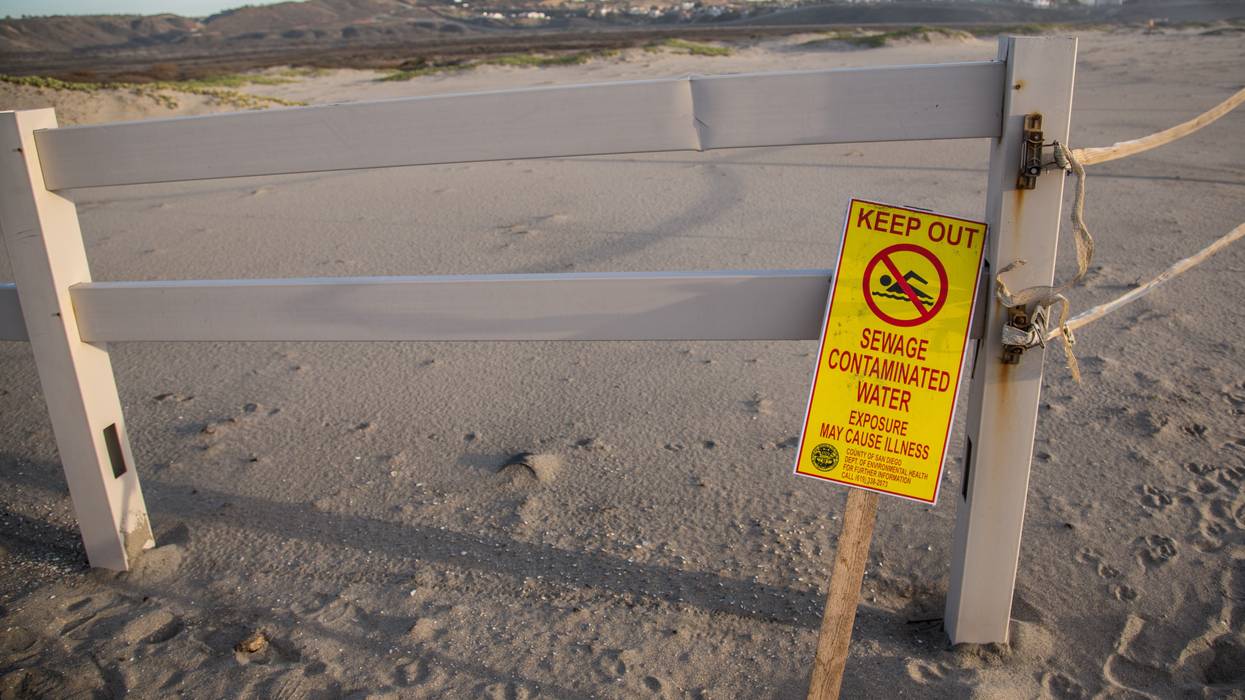
The intense, acidic stench of raw sewage penetrating your nose and clinging to the back of your throat and yellow “Keep Out, Sewage Polluted Water” warning signs have become far too “normal” for us, southern San Diego, California residents. The Tijuana River once carried stories of binational friendship, but now it carries toxic pollution, including human feces and disease, into the United States.
Originating in Mexico, the Tijuana River crosses the U.S.-Mexico border into an estuary and the ocean, shaping the ecology, culture, and identity of the binational communities it touches. But today, it’s a symbol of failure and neglect. The Tijuana River was recently named the second most endangered river in the United States, and for good reason—the toxic mix of raw sewage, chemical runoff, and bureaucratic inaction threatens not only the health of ecosystems but also the health of Southern California residents.
The river has been a dumping ground for untreated wastewater from Tijuana’s overwhelmed sewage infrastructure and for toxic and sometimes lethal industrial chemicals, including cyanide, primarily from U.S. factories in Mexico seeking lower environmental regulation policies. Thirty-five to 50 million gallons of contaminated water per day make their way through the Tijuana River Estuary, one of the largest remaining coastal wetlands in Southern California, before spilling into the Pacific Ocean.
Communities in southern San Diego County, especially Latinos near the river, are on the frontlines of this crisis. Communities impacted by the Tijuana River pollution include Imperial Beach (50.8% Latino), Coronado (19.4%), National City (65.8%), and Chula Vista (60.4%). People in these cities are suffering from coughing, sore throats, asthma exacerbations, skin rashes and infections, nausea, vomiting and diarrhea, headaches, and fatigue just from living in proximity to the toxic river. Even more troubling, many recreational fishers—again, often Latinos seeking affordable ways to feed their families—continue to fish in waters that carry dangerous levels of pathogens and heavy metals, unaware of the health risks.
The Tijuana River may be endangered, but it is not lost. With continued pressure, investment, and solidarity, it can once again become a source of life.
This isn’t just a neighborhood issue. The pollution affects Navy SEALs training at the Coronado naval base and U.S. Border Patrol agents, who frequently report infections after exposure. Then there’s its effect on our wildlife. The watershed is home to over 370 bird species and multiple endangered species that depend on clean estuarine habitats for nesting and feeding. The toxic flow erodes their ecosystems, disrupts food chains, and jeopardizes biodiversity along the Southern California coast.
We are facing a creeping ecological and public health disaster—one that has persisted for decades because of political inaction and a lack of cross-border communication and coordination. Yet solutions exist—and many are already underway—driven by the leadership of Latino residents who are boldly demanding action.
Across Southern California, Latino communities and advocacy groups are raising their voices, organizing town halls, urging local officials to act, and educating neighbors about the health and environmental impacts of pollution from the Tijuana River. Their efforts underscore the urgent need for federal government resolution and robust international collaboration to invest in wastewater infrastructure, enforce existing treaties, and modernize pollution control systems on both sides of the border.
At the same time, we must strengthen protections under the Clean Water Act, not weaken them as the federal government intends, and declare the Tijuana River pollution a national emergency due to the environmental disaster impacting public health. Protecting and restoring the Tijuana River will require viewing it as a shared responsibility between nations and communities. Clean water and health should not depend on your ZIP code or nationality. A river that knows no borders should not suffer from a lack of cross-border care.
Despite the daunting challenges, there is hope. The voices rising from Latino communities in southern San Diego are powerful and persistent, with ever-growing resonance. Their advocacy, led by newly sworn-in San Diego County Supervisor Paloma Aguirre, is making a difference. Federal funds have trickled into the region. Joint U.S.-Mexico commissions are revisiting decades-old agreements. And more Americans beyond California are finally beginning to see this crisis for what it is—a national emergency. Hispanic Access Foundation’s advocacy toolkit provides effective strategies to help address this issue.
The Tijuana River may be endangered, but it is not lost. With continued pressure, investment, and solidarity, it can once again become a source of life. The fight to restore this river is not just a campaign to clean a waterway and entry into the ocean; it is a movement to ensure that every community, regardless of language, location, or ethnicity, can breathe clean air, swim in safe water, and raise their children free from environmental harm.
We owe it to the river. We owe it to each other.
As parts of Alaska obliterated high-temperature records earlier this week, meteorologists and climate scientists warned that extreme heat and rainfall are the new normal in the nation's largest state and other Arctic and subarctic zones.
"In and around the Arctic... temperatures have been rising around twice as fast as the rest of the planet."
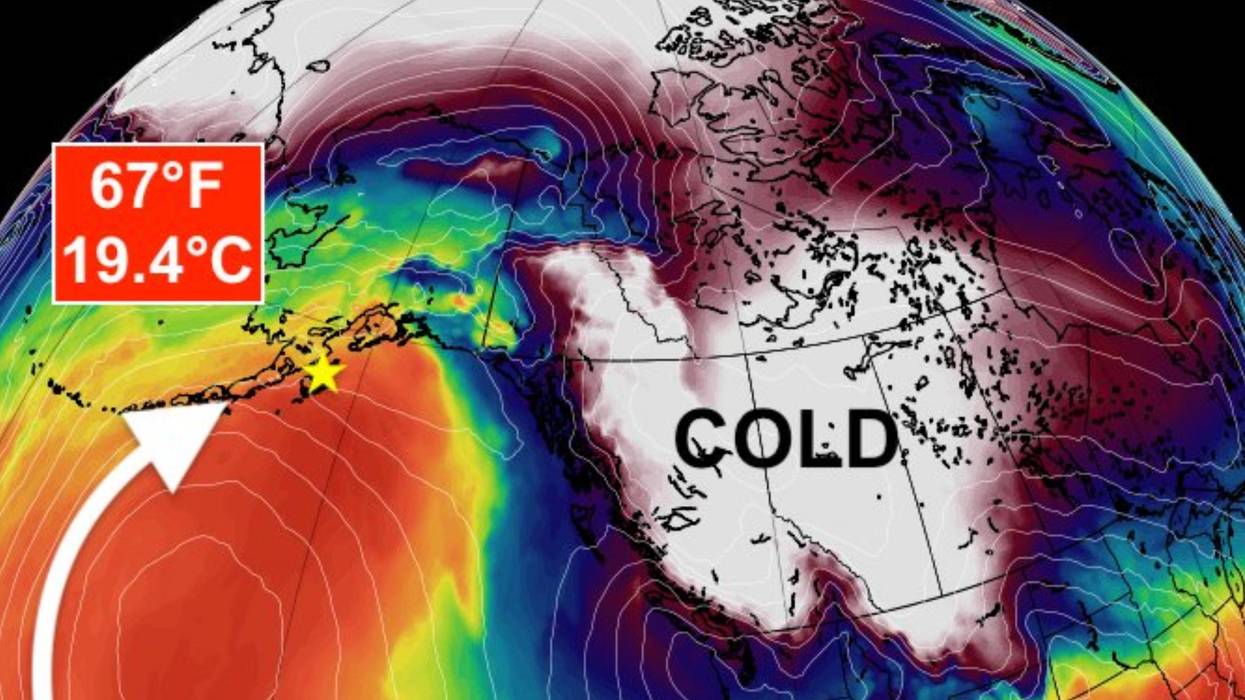
On Sunday, the town of Kodiak in southern Alaska hit 67degF--seven degrees warmer than the daytime high in San Diego--and shattering the December record for Alaska by nine degrees, according to the National Weather Service. The town also broke the local December record by more than 20 degrees.
"I would not have thought such a thing possible," Rick Thoman, a climate specialist at the Alaska Center for Climate Assessment and Policy, tweeted Tuesday.
CNN meteorologist Brandon Miller said that "we've become somewhat numb to these 'never before seen' extremes in temperature and weather as climate change continues to push the envelope on what is possible all over the globe."
"In and around the Arctic this is especially true, where temperatures have been rising around twice as fast as the rest of the planet," he added.
Warmer air is wetter air, as higher temperatures mean the atmosphere can store more water vapor. Miller said this explains why more intense rainstorms and flooding are increasing along with global temperatures.
"Each degree Fahrenheit of warming can hold about 4% more water vapor," he said, "and much of Alaska was 40 degrees Fahrenheit or above average temperatures for late December."
Parts of Alaska have suffered record rainfall this month. CNN reports Fairbanks has been inundated with 4.75" of liquid-equivalent precipitation for the month--more than 10 times the historical average.
A study published last month in Nature Communications noted that "as the Arctic continues to warm faster than the rest of the planet, evidence mounts that the region is experiencing unprecedented environmental change," with "the hydrological cycle... projected to intensify throughout the 21st century [and] increased evaporation from expanding open water areas and more precipitation."
The paper projected that Arctic winters will experience more rain than snow beginning sometime in the 2060s.
Extreme temperatures aren't just occurring during the Alaskan winters. In July 2019, Anchorage recorded an all-time high of 90degF. In July 2021, the record-breaking heatwave during which Lytton, British Columbia, set a Canadian record of 121degF triggered a 2.7-magnitude cryoseism, or "ice quake," near Juneau, Alaska's capital, as 92-degree heat melted glacier ice that subsequently saturated into the soil and then rapidly refroze.
Wildfires--which accelerate global heating by releasing massive amounts of carbon dioxide into the atmosphere--are also increasing along with Alaska's rising temperatures.
Scientists also warn that thawing Arctic permafrost in the northern parts of the state constitutes a "geological time bomb" set to release potentially devastating quantities of methane--a super-potent greenhouse gas whose emissions are roughly 87 times more potent than carbon dioxide emissions over a 20-year period--into the atmosphere.
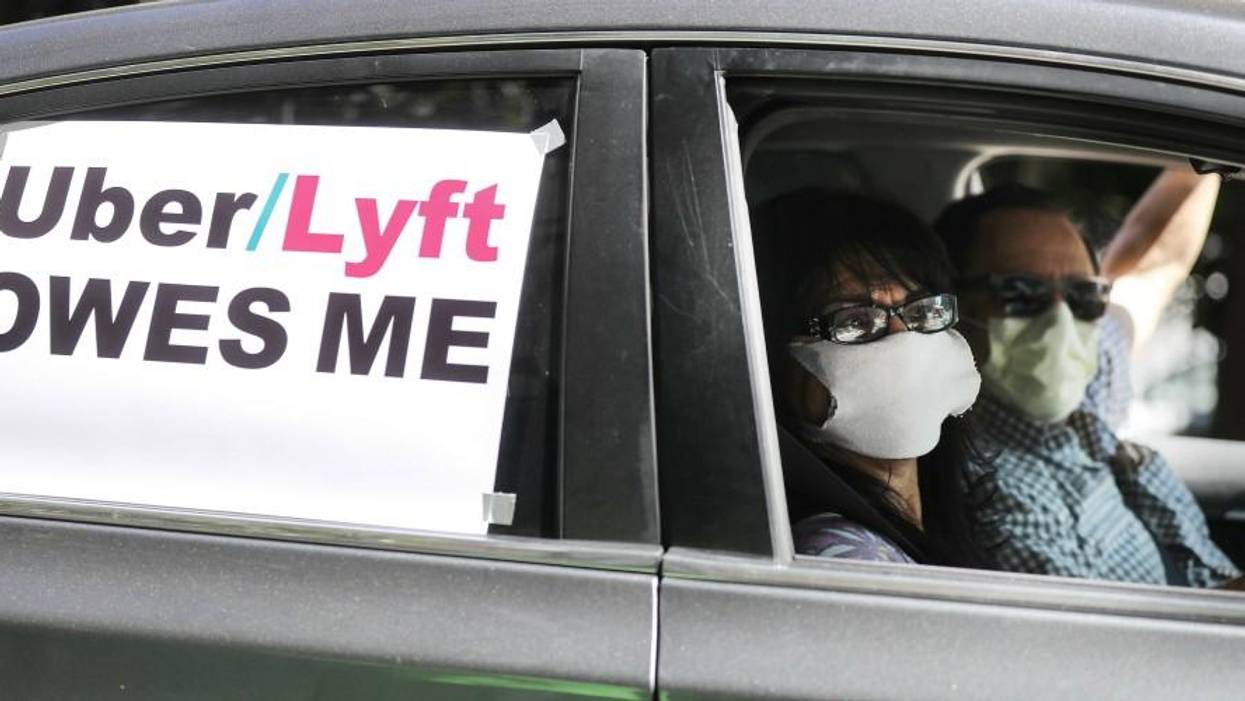
In a move that local political leaders and labor rights advocates celebrated as a major win for gig workers, a California judge ruled Monday that the ride-hailing companies Lyft and Uber must classify drivers in the state as employees rather than independent contractors to comply with state law.
"The years-long ploy of these behemoth corporations to stall, obfuscate, and flat-out break the law has failed. There must be no more delays."
--Art Pulaski, California Labor Federation
San Francisco Superior Court Judge Ethan Schulman's decision (pdf) came in a case filed against Lyft and Uber in May by California Attorney General Xavier Becerra and the city attorneys of Los Angeles, San Diego, and San Francisco, who accused the companies of violating Assembly Bill 5 (AB 5), which Democratic Gov. Gavin Newsom signed last year.
"The court has weighed in and agreed: Uber and Lyft need to put a stop to unlawful misclassification of their drivers while our litigation continues," Becerra said in a statement responding to Schulman's preliminary injunction, which is stayed for 10 days to allow for legal appeals.
"While this fight still has a long way to go, we're pushing ahead to make sure the people of California get the workplace protections they deserve," Becerra added. "Our state and workers shouldn't have to foot the bill when big businesses try to skip out on their responsibilities. We're going to keep working to make sure Uber and Lyft play by the rules."
If the ride-hailing companies are forced to permanently reclassify drivers under AB 5--which went into effect at the start of this year--they could be required to provide workers with protections and benefits including minimum wage, overtime, paid sick leave, disability, healthcare, and unemployment insurance.
Becerra and the city attorneys filed suit after facing mounting pressure from Lyft and Uber drivers that increased in the midst up Covid-19 pandemic, which led drivers to endure plummeting incomes due to declining demand and greater health risks related to their work.
"This is a resounding victory for thousands of Uber and Lyft drivers who are working hard--and, in this pandemic, incurring risk every day--to provide for their families," Los Angeles City Attorney Mike Feuer said of Schulman's ruling. "Of course, our fight is not over and we will vigorously pursue this litigation until these workers have the permanent protection they deserve."
San Diego City Attorney Mara W. Elliott called the judge's decision "a milestone in protecting workers and their families from exploitation by Uber and Lyft."
"I'm proud to be in this fight to hold greedy billion-dollar corporations accountable, especially when a pandemic makes their withholding of healthcare and unemployment benefits all the more burdensome on taxpayers," Elliott added.
The news was also welcomed in a statement from Art Pulaski, executive secretary-treasurer of the California Labor Federation, which has championed AB 5.
"The years-long ploy of these behemoth corporations to stall, obfuscate, and flat-out break the law has failed," Pulaski said. "There must be no more delays. We demand these companies immediately adhere to this ruling and provide their drivers with the protections and benefits they so richly deserve."
Lyft and Uber are expected to continue fighting against AB 5's classification requirements under the guise of proving flexibility to drivers--even though, as San Francisco City Attorney Dennis Herrera explained Monday, "there is no rule that prevents these drivers from continuing to have all of the flexibility they currently enjoy. Being properly classified as an employee doesn't change that."
Uber spokesperson Davis White said in a statement that "the vast majority of drivers want to work independently, and we've already made significant changes to our app to ensure that remains the case under California law."
Lyft spokesperson Julie Wood claimed that "drivers do not want to be employees, full stop." She said that the ride-hailing giant will "immediately appeal this ruling" and, in an apparent reference to a state ballot measure backed by companies that employ gig workers, "we believe this issue will be decided by California voters and that they will side with drivers."
DoorDash, Lyft, and Uber have each poured at least $30 million into the ballot initiative, "with additional support from Instacart and Postmates, which Uber recently agreed to acquire," CNN Business reported Monday. "If passed, it would exempt them from the AB 5 law, but offer drivers some benefits."
CNN pointed out that the judge's ruling comes after the California Labor Commissioner's Office last week "filed lawsuits against Uber and Lyft for allegedly committing wage theft by misclassifying their on-demand workers as independent contractors instead of employees."
The companies are also facing off against similar efforts at a national level. Bloomberg noted that "legislation passed by the Democratic-controlled U.S. House in February, and backed by presumptive Democratic presidential nominee Joe Biden, would apply a standard like California's to federal labor law."
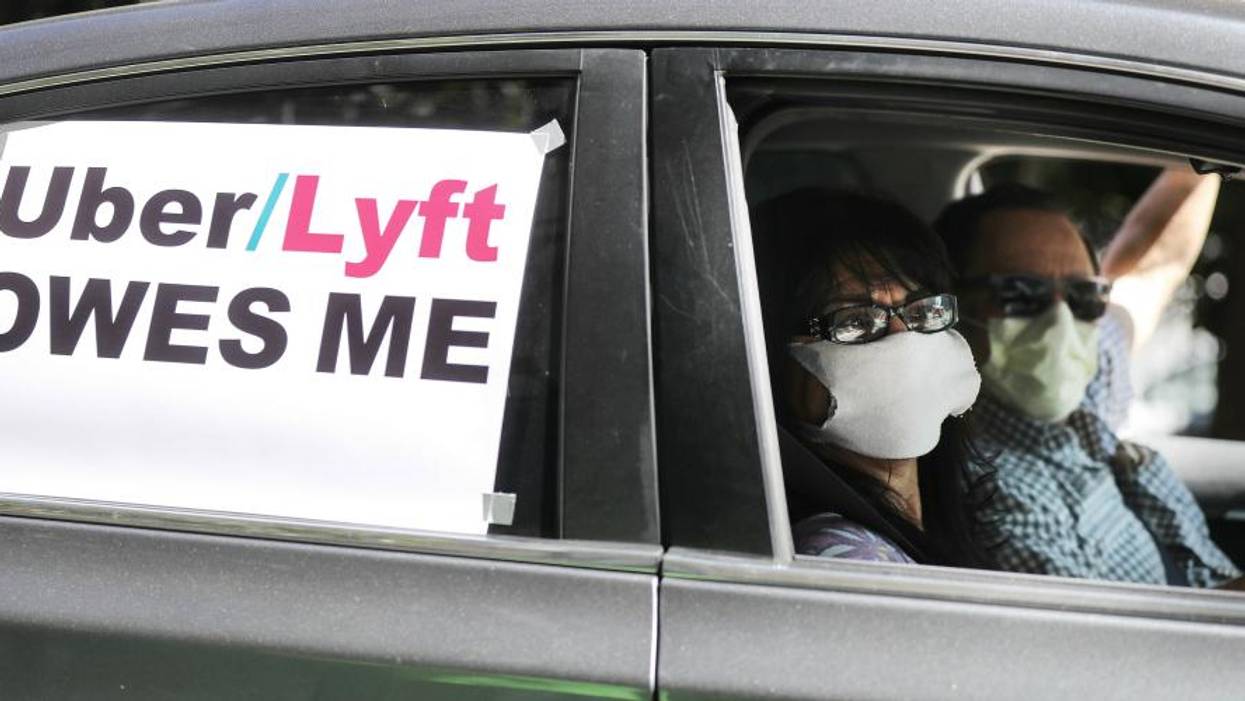
After months of pressure from Lyft and Uber drivers, California Attorney General Xavier Becerra and the cities of Los Angeles, San Diego, and San Francisco on Tuesday sued the ride-hailing companies for refusing to classify their drivers as employees rather than independent contractors in violation of Assembly Bill 5, the historic labor rights legislation that Democratic Gov. Gavin Newsom signed last year.
As the coronavirus pandemic has led to lockdowns around the world, ride-hailing drivers have faced plunging incomes and health risks related to their work. Lyft, Uber, and other gig companies have resisted reclassifying their workers, which could mean providing labor protections and benefits such as minimum wage, overtime, paid sick leave, and disability, healthcare, and unemployment insurance.
The lawsuit (pdf), filed in the Superior Court of San Francisco, accuses Lyft and Uber of breaking the law by misclassifying drivers, "even amid a once-in-a-century pandemic," at the expense of their "workers, law-abiding businesses, taxpayers, and society more broadly." The case calls for an immediate end to the misclassification schemes and could lead to hundreds of millions of dollars in civil penalties.
"Californians who drive for Uber and Lyft lack basic worker protections--from paid sick leave to the right to overtime pay. Uber and Lyft claim their drivers aren't engaged in the companies' core mission and cannot qualify for benefits," Becerra said in a statement. "Sometimes it takes a pandemic to shake us into realizing what that really means and who suffers the consequences."
"Uber and Lyft drivers who contract the coronavirus or lose their job quickly realize what they're missing. But it's not just these workers who lose," Becerra added. "American taxpayers end up having to help carry the load that Uber and Lyft don't want to accept. These companies will take the workers' labor, but they won't accept the worker protections. California has ground rules with rights and protections for workers and their employers. We intend to make sure that Uber and Lyft play by the rules."
City attorneys echoed Becerra's charge that impacts of the misclassifications are felt by not only drivers but all California residents. Los Angeles City Attorney Mike Feuer said the that ride-hailing companies "exploit their drivers, and unlawfully shift the costs of their responsibilities as employers to California's taxpayers."
"Uber and Lyft are billion-dollar companies that refuse to follow the rules, expecting taxpayers to pick up the slack when their employees get sick, need a hospital, or lose their jobs," added San Diego City Attorney Mara W. Elliott. "It's time for Uber and Lyft to pay their own bills."
San Francisco City Attorney Dennis Herrera said he has been working with Becerra, Feuer, and Elliott's offices for months to build the case. Herrera noted that Lyft and Uber are headquartered in his city, and challenged the companies' claims about AB 5.
"Uber and Lyft claim that properly classifying drivers as employees is incompatible with flexibility. That is a lie," he said. "There is no legal reason why Uber and Lyft can't have a vast pool of employees who decide for themselves when and where they work--exactly as drivers do now. These companies simply don't want to do it. Uber and Lyft are selling a lie. They are lying to the public and lying to their drivers."
The New York Times reported that "the lawsuit comes at a fraught moment for Uber and Lyft, as the businesses struggle to adapt to the sudden decline in demand caused by the pandemic. Consumer data suggests that spending on ride-hailing has dropped as much as 83%. Lyft is expected to report its first-quarter earnings on Wednesday, while Uber reports on Thursday."
In response to the lawsuit, Lyft said in a statement that the company is "looking forward to working with the Attorney General and mayors across the state to bring all the benefits of California's innovation economy to as many workers as possible, especially during this time when the creation of good jobs with access to affordable healthcare and other benefits is more important than ever."
Uber delivered a more forceful rebuke, vowing in a statement to fight against the long anticipated legal action.
"At a time when California's economy is in crisis with four million people out of work, we need to make it easier, not harder, for people to quickly start earning," Uber said. "We will contest this action in court, while at the same time pushing to raise the standard of independent work for drivers in California, including with guaranteed minimum earnings and new benefits."
San Diego authorities filed a lawsuit on Monday against the agrochemical giant Monsanto, accusing the corporation of polluting the city's bay with carcinogenic chemicals that are so dangerous to human health they were banned in the U.S. more than 30 years ago.
The lawsuit was filed in federal court by City of San Diego and San Diego Unified Port District and focuses on Polychlorinated Biphenyls (PCBs). "PCBs manufactured by Monsanto have been found in bay sediments and water and have been identified in tissues of fish, lobsters, and other marine life in the Bay," the complaint reads.
"PCB contamination in and around the Bay affects all San Diegans and visitors who enjoy the Bay, who reasonably would be disturbed by the presence of a hazardous, banned substance in the sediment, water, and wildlife," the document continues.
As the San Diego Reader notes, the city's lawsuit charges that "the risks did not deter Monsanto from trying to protect profits and prolong the use of PCB compounds such as Aroclor, as shown in a report from an ad hoc committee that Monsanto formed in 1969."
This is despite the fact that, according to the Environmental Protection Agency, PCBs "have been demonstrated to cause cancer, as well as a variety of other adverse health effects on the immune system, reproductive system, nervous system, and endocrine system." Dangers to human health led to a domestic ban on the domestic manufacture of PCBs in 1979.
By that time, however, PCBs had already spread through ecosystems, where they have remained to the present-day.
Monsanto was responsible for 99 percent of U.S. production of this dangerous chemical, according to a report from Food & Water Watch.
The police department for San Diego's public schools recently revealed that they have acquired a large armored combat vehicle from the U.S. military.
The $700,000 mine-resistant ambush protected vehicle (MRAP), which is designed to withstand blasts from improvised explosive devices and mines, was given to law enforcement for the Unified School District in April. The vehicle was transferred through the Department of Defense's controversial 1033 program, which authorizes the military to donate what it considers surplus military equipment to police and sheriff departments in the United States, including tanks and weapons used in the occupation of Iraq and Afghanistan.
This and other federal programs that flood local law enforcement with weapons of war have fallen under increased scrutiny following the crackdown by heavily armed riot police and military service members on protesters in Ferguson, Missouri opposing the police killing of unarmed African-American teenager Michael Brown. Numerous other San Diego police agencies have received weapons from the military, although the MRAP stands out for its high dollar value.
The police department acknowledged that the MRAP is likely to be controversial.
"I can totally see people thinking 'Oh, my God. Are they going to be rolling armored vehicles into our schools and what the hell's going on?'" said Joe Florentino, a captain with the department, to local media. He claimed that the vehicle will be used during situations of emergency to keep kids safe.
But numerous organizations and institutions have warned that the militarization of U.S. police has dangerous consequences for civilians. An American Civil Liberties Union report released in June details needless deaths and terror at as a result of "unnecessarily and dangerously militarized" policing. "Neighborhoods are not war zones, and our police officers should not be treating us like wartime enemies," the report states.
The armored vehicle has already stirred concern in the Unified School District, which serves 132,000 students from preschool to 12th grade. Board Trustee Scott Barnett stated in a press release issued Thursday that the acquisition is a "misguided priority."
However, Barnett said it was not the excessive arming of the police he was worried about, but rather, what he considers to be the higher priority of replacing old police cruisers. He argued that the vehicle should be leased to nearby police agencies to raise money for upgraded vehicles. The "Ferguson controversy," said Barnett, is likely to make it "much more difficult for local police agencies to obtain these vehicles, so we may actually have a hot commodity."
SAN DIEGO - Sandalistas are on the march here to create a homegrown organic food movement, encouraging gardeners to tear up their lawns for healthier, more natural alternatives.
In doing so, they're advocating the re-greening of the urban landscape for the sake of food security and social justice.
About 400 people attended a recent conference titled "Cultivating Justice" under the aegis of "Food Not Lawns", a grassroots organization that combines gardening with political action. On a sunny Saturday, the guerrilla gardening wing of the social justice movement broke bread with foodies to network and share information with other like-minded people who are concerned not just with what people eat, but how they go about procuring food.
The participants belong a growing demographic of Californians dubbed "cultural creatives" who are focused on putting progressive ideals into action not only through social change but by dedicating themselves to healing the planet. Many believe the road to ecological restoration begins with changing their own personal habits.
"People are hungry for information," said Kate Hughes, one of the event organizers. With workshops on a wide range of topics, the well-attended conference attracted a broad cross-section of San Diego county residents from back-to-the-land hippie types to young campus activists who see a connection between U.S. oil dependence and factory farming.
The San Diego chapter of Food Not Lawns is an offshoot of similar groups based in Northern California and the Pacific Northwest, a region that is home to much of the organic foods movement gaining popularity around the U.S.
Paul Maschka is a local gardening guru, having spent much of his adult life working as a horticulturalist caring for and cultivating thousands of varieties of plants for the San Diego Zoo. The self-styled "dirt cheap gardener" is an enthusiastic proponent of locally raised produce, and grows a wide variety of edible plants in his own backyard, ranging from artichokes to sunflowers.
Maschka's lecture on organic gardening included a heavy dose of social commentary. "Organic gardening techniques and methods are not taught in Southern California," he said. To obtain first-hand knowledge, he has sought guidance at demonstration gardens in Santa Cruz and San Louis Obispo, where organic farming practices are far more prevalent.
According to Maschka, the average lawn is a flat, featureless, artificially maintained environment heavily dependent on synthetic chemicals. The chemicals used in lawn care also have a seedy history. Pesticides, for example, are little more than nerve agents derived from stockpiled toxins developed during World War Two, he says.
Lawns are holdovers dating from the Middle Ages when the French aristocracy began converting otherwise productive fields into pleasure grounds, he says. In gardening-mad England, later generations of the bourgeoisie displayed their newfound wealth in similar fashion, planting rose beds and establishing luxuriant green lawns.
This historical trend would have far-reaching repercussions for middle-class home owners in the 21St century who are willing to spend hundreds of dollars every year on the upkeep and maintenance of their lawns. According to a 2002 economic impact study published by the University of Florida, the lawn care and turf industry generated a staggering 57 billion dollars annually and employed 800,000-plus people.
Using satellite and aerial imagery, research scientists from the National Aeronautics and Space Administration have calculated that approximately 162,000 square kilometers of the United States is covered in turf -- an area roughly three times larger than any irrigated crop currently under cultivation. And lawns are thirsty, consuming approximately 270 billion gallons of water a week in the U.S. -- enough to irrigate 327,000 square kilometers of organic vegetables.
For Maschka, lawns represent a paradox, having the outward appearance of vitality when in fact most of the microorganisms that support plant growth have been killed off. Lawns are fed something on the order of 10 times more pesticides and herbicides than commercial crops, he adds.
"Things have got to change," agreed Issa Esperanza. The daughter of missionary parents, she grew up running wild in Latin America, climbing trees and harvesting her own fruits and vegetables. Upon returning to the United States, she was shocked to discover the lack of fresh produce. She now has come to rely upon her green-thumbed friends and local farmers' markets to obtain her greens.
That it doesn't have to be this way was a sentiment echoed throughout the day. Chef Ron Oliver is a bona fide foodie. As chef de cuisine at the Marine Room, one of San Diego's preeminent dining establishments, his business is based on pleasing people. The restaurant relies heavily on locally grown produce and the organic output of the 40-acre Blue Sky Ranch, where food and New Age mysticism go hand-in-hand.
"We're lucky," Oliver said. At Blue Sky, full-time residents and volunteers consider themselves to be caretakers of the land. Fruits and vegetables are grown according to the season and without the use of synthetic chemicals for the benefit of the Blue Sky community and paying clients.
Oliver says he had own "whole foods" epiphany when his own children reached school age. School lunch programs follow strict federal guidelines based on caloric intake rather than nutritional value, he says. He decided to participate in the conference to enlist the support of other like-minded people in the hope of building a kitchen garden for the Chula Vista elementary school, where his kids aged 8 and 10 attend.
"If anything, gardening will teach them patience," he says.
Oliver sees a close connection between the ideals of Jeffersonian democracy and nutrition. He believes people vote with their forks, and if given the opportunity, they would prefer organic. "We're empowering the companies damaging the planet," he lamented.
This story is part of a series of features on sustainable development by IPS and IFEJ - International Federation of Environmental Journalists.
Copyright (c) 2007 IPS-Inter Press Service.