
SUBSCRIBE TO OUR FREE NEWSLETTER
Daily news & progressive opinion—funded by the people, not the corporations—delivered straight to your inbox.
5
#000000
#FFFFFF
To donate by check, phone, or other method, see our More Ways to Give page.


Daily news & progressive opinion—funded by the people, not the corporations—delivered straight to your inbox.
"This is a direct threat to patient care across California," said the chief of staff at the union sponsoring the ballot measure.
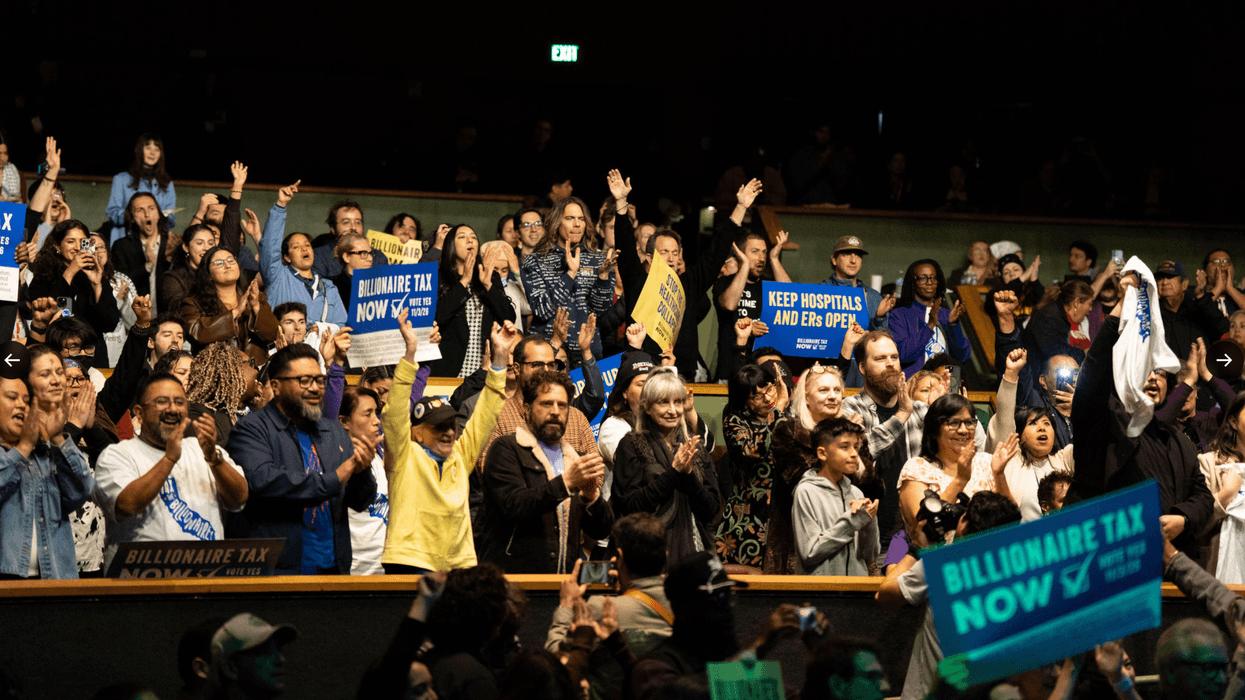
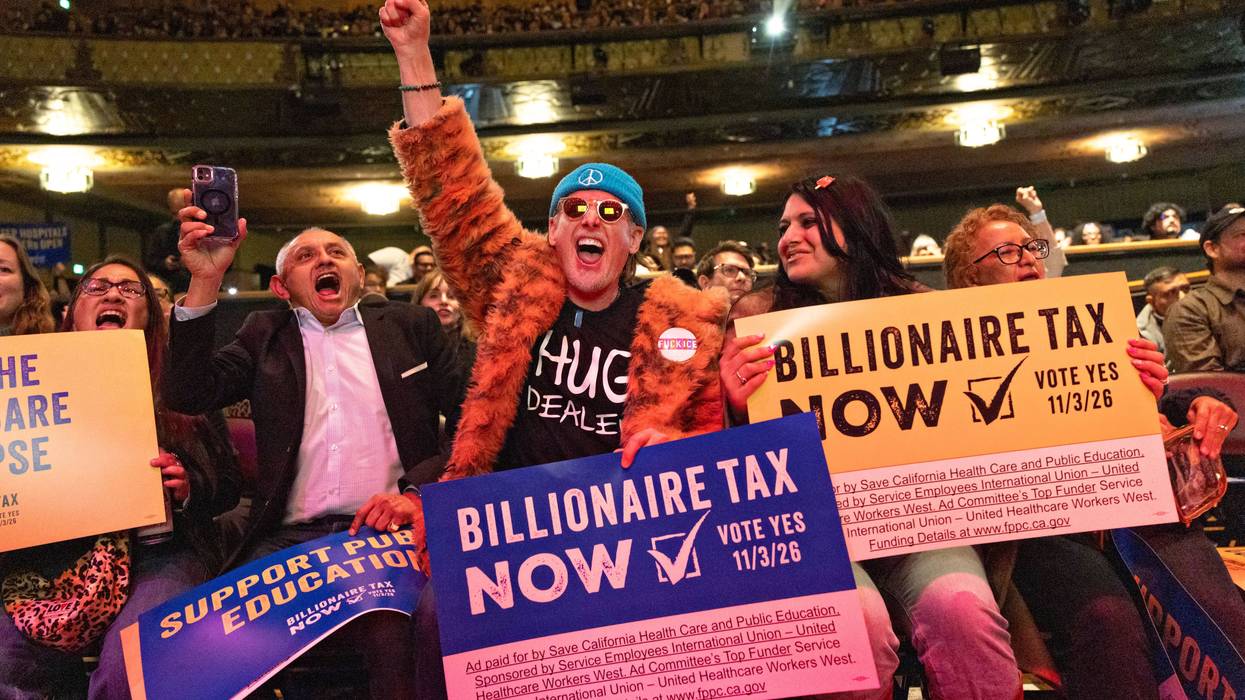
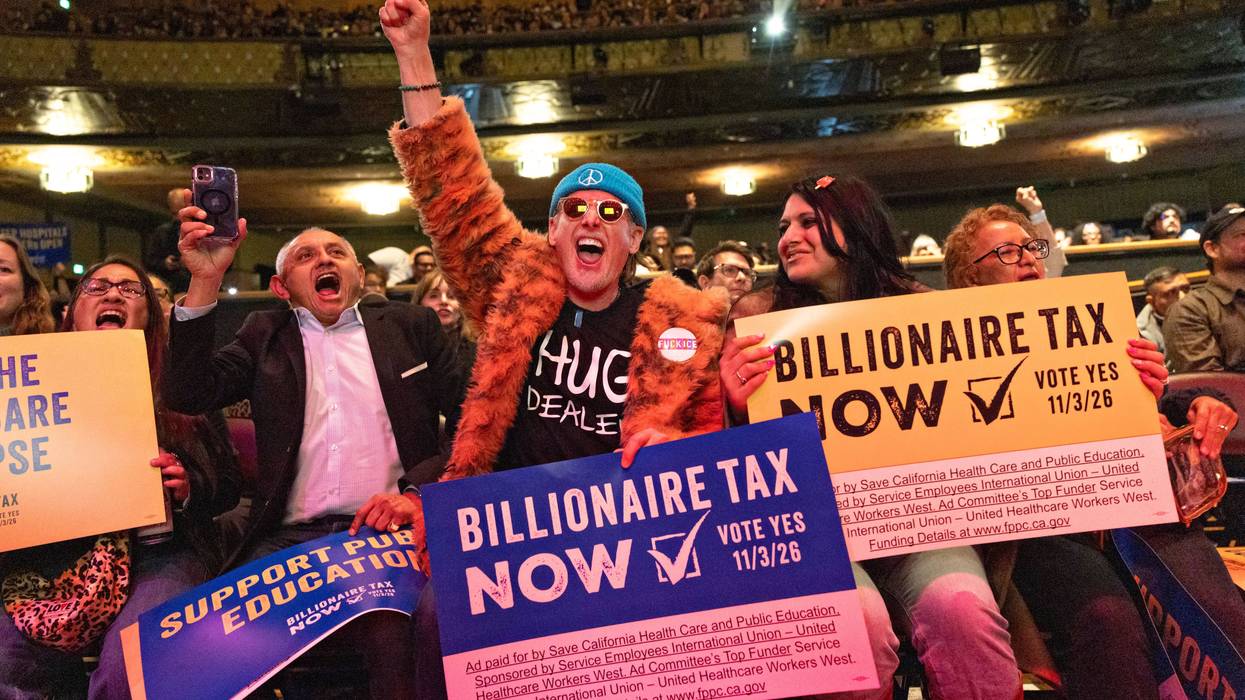
The labor union leading the fight for California's billionaire tax on Wednesday pointed to recent reporting about hospital layoffs to make the case for the ballot measure, which would impose a one-time 5% tax on state billionaires' wealth to fund healthcare.
The Orange County Register reported last week that "the more than 400 hospitals statewide have already laid off more than 3,400 healthcare workers as of mid-March, with as many as 1,600 coming from Santa Barbara to Orange County and the Inland Empire area, according to a tally of layoffs provided by the state's Employment Development Department and data collected by Paul Young, senior vice president of public policy and reimbursement with the California Hospital Association of Southern California."
As the newspaper detailed, hospital executives "are hinting of a second wave of layoffs," citing the One Big Beautiful Bill Act, or HR 1, that congressional Republicans passed and President Donald Trump signed last summer. The law will cut about $1 trillion from Medicaid over the next decade, which is expected to significantly impact the state's Medi-Cal program that covers more than 15 million lower-income residents.
The Center for Labor Research and Education at the University of California, Berkeley "estimates the Medi-Cal cuts could lead to a loss of 72,000 to 145,000 healthcare jobs throughout California, representing 3% to 5% of the state's 2.65 million healthcare positions," the Register noted. "These job losses include positions in hospitals, clinics, and home care."
The Service Employees International Union-United Healthcare Workers West, the lead sponsor of the ballot measure that Californians are set to vote on in November, highlighted the reporting in a Wednesday statement. SEIU-UHW chief of staff Suzanne Jimenez declared that "this is a direct threat to patient care across California."
"When hospitals lose funding, they lose staff," Jimenez said. "And when they lose staff, patients face longer wait times, fewer services, and reduced access to lifesaving care. Without urgent action, communities across California will lose access to the care they depend on."
In the union's statement, Mayra Castañeda shared concerns about losing her job as an ultrasound technologist at a hospital in Lynwood, California. She said: "Every day I come to work thinking about my patients, making sure they get the care they need, that they feel safe, that they're not alone. Now, I'm also thinking about whether I'll still have a job next month."
"We're already stretched thin, and the idea that more staff could be cut is terrifying," Castañeda continued. "It doesn't just impact us as staff. It impacts every patient who walks through our doors. You can't keep taking resources out of healthcare and expect people not to suffer."
Opinion: Unlike billionaires, we don’t need mansions or yachts. We're just asking for health care that our families can rely on.www.usatoday.com/story/opinio...
[image or embed]
— Billionaire Tax Now (@billionairetaxnow.bsky.social) April 1, 2026 at 3:40 PM
Experts estimate that, if passed, the billionaire tax ballot measure would raise about $100 billion from 2027-31 from California's 200 richest residents. Recent polling suggests the proposal is on its way to success.
It's drawn support from national progressive figures such as US Sen. Bernie Sanders (I-Vt.), who last month partnered with Rep. Ro Khanna (D-Calif.) to introduce the Make Billionaires Pay Their Fair Share Act. The bill would impose a 5% annual wealth tax and direct the revenue toward reversing GOP healthcare cuts from HR 1, expanding Medicare, building affordable houses, helping families pay for childcare, boosting teacher salaries, and sending direct payments to members of households making $150,000 or less.
Unlike the California ballot measure, that federal "tax the rich" bill and another introduced last month by Sen. Elizabeth Warren (D-Mass.) have no clear path to passage in the Republican-controlled Congress. However, hospital layoffs as a result of HR 1—which featured more tax giveaways for wealthy Americans—aren't limited to California.
According to a Public Citizen report released Tuesday, 446 hospitals across the United States could close or reduce services due to HR 1's cuts to Medicaid and the Children's Health Insurance Program. The publication notes that these "hospitals collectively have 68,986 beds and served approximately 6.6 million patients in 2024. They employ approximately 275,458 direct patient care workers (this does not include nonmedical workers, such as administrative staff)."
Public Citizen researcher and report author Eileen O'Grady stressed that "Trump's cuts to Medicaid will hurt millions of low-income and disabled Americans, and will deepen financial strains that are already plaguing rural and safety-net hospitals—compromising their ability to deliver care, potentially leading many to close."
"Congress should take urgent action to restore all Medicaid funding cuts enacted by Trump and Republicans in Congress," O'Grady argued, "and should extend the enhanced premium tax credits for coverage through the Affordable Care Act marketplaces."
"No nurse should be asked to accept less pay, fewer benefits, or less dignity for doing lifesaving work," said New York City Mayor Zohran Mamdani.
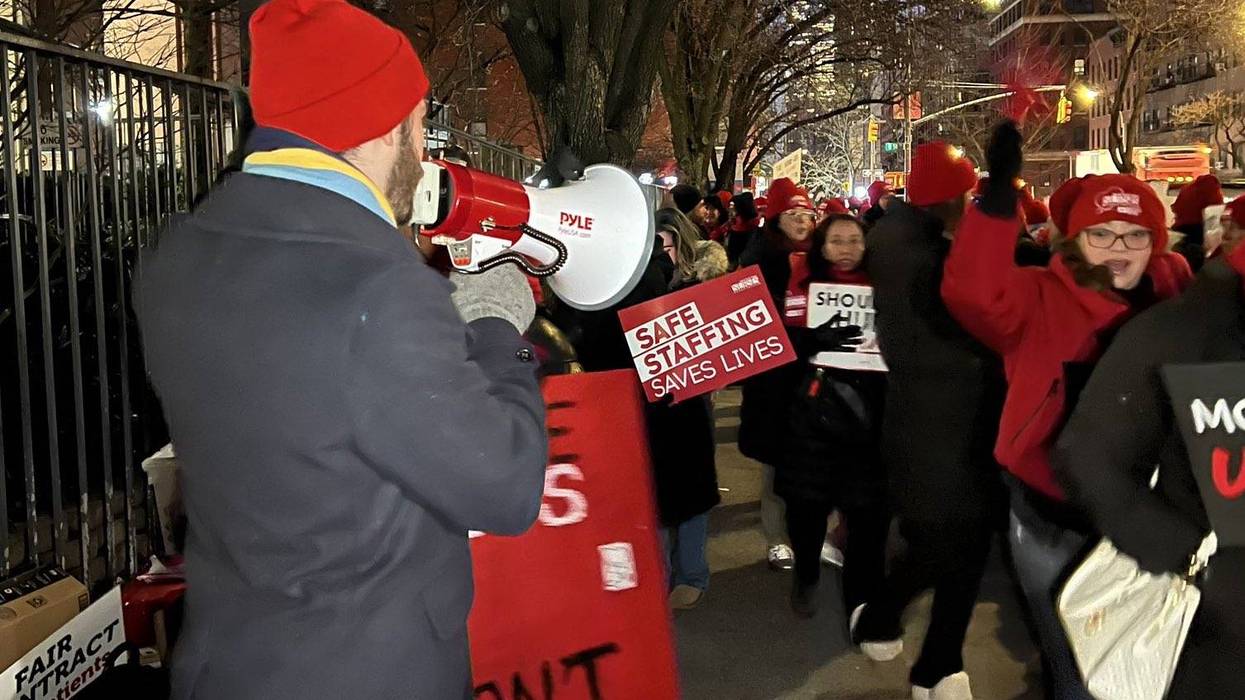
Thousands of nurses are hitting the picket lines in what will be the largest nurses strike in the history of New York City.
The New York State Nurses Association (NYSNA) on Monday announced that nearly 15,000 nurses at Mount Sinai Hospital, Mount Sinai Morningside and West, Montefiore, and NewYork-Presbyterian are going on strike after "greedy hospital management at these wealthy private hospitals have given frontline nurses no other choice."
The NYSNA posted a long list of sticking points on contract negotiations, including "safe staffing for our patients, protections from workplace violence, and healthcare for frontline nurses."
NYSNA president Nancy Hagans said that any patients in need of care at these hospitals should enter them, emphasizing that "going into the hospital to get the care you need is not crossing our strike line." She also encouraged patients to join the picket line with the nurses after receiving care.
New York City Mayor Zohran Mamdani spoke out in solidarity with the striking nurses, while also emphasizing the importance of "ensuring New Yorkers have the care they need... especially during flu season."
"No New Yorker should have to fear losing access to healthcare," Mamdani wrote in a social media post. "And no nurse should be asked to accept less pay, fewer benefits, or less dignity for doing lifesaving work. Our nurses have kept this city alive through its hardest moments. Their value is not negotiable."
Sen. Bernie Sanders (I-Vt.) also expressed support for the striking nurses, while denouncing "NewYork-Presbyterian, Montefiore, and Mount Sinai hospitals for being willing to spend millions on replacement nurses rather than bargain for a fair contract."
The NYSNA also got a boost from 1199SEIU, which is the largest union of healthcare workers in New York.
"At this time of unprecedented cuts to Medicaid and other healthcare programs by Republican leaders in Washington, DC healthcare workers should not bear the brunt of funding shortfalls," said 1199SEIU president Yvonne Armstrong. "More than ever, we need stability in our healthcare system, which means investing in the type of good healthcare jobs which are fundamental to the wellbeing of caregivers and the communities they serve."
Armstrong also called on the hospitals to "bargain in good faith with NYSNA, refrain from committing unfair labor practices, and sign fair contracts that honor nurses’ contributions."
"Today’s strike isn’t just about Starbucks. It's about a broken system where billionaires and CEOs keep getting richer while the politicians they bankroll gut our wages, healthcare, and rights."
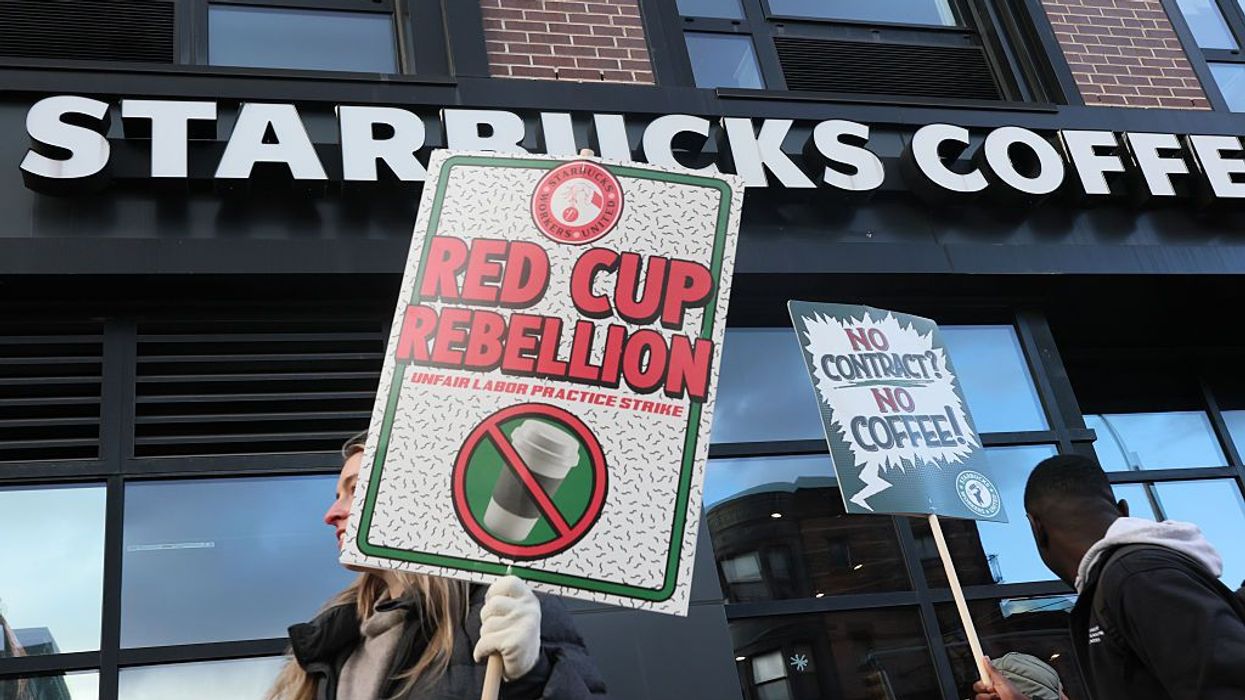
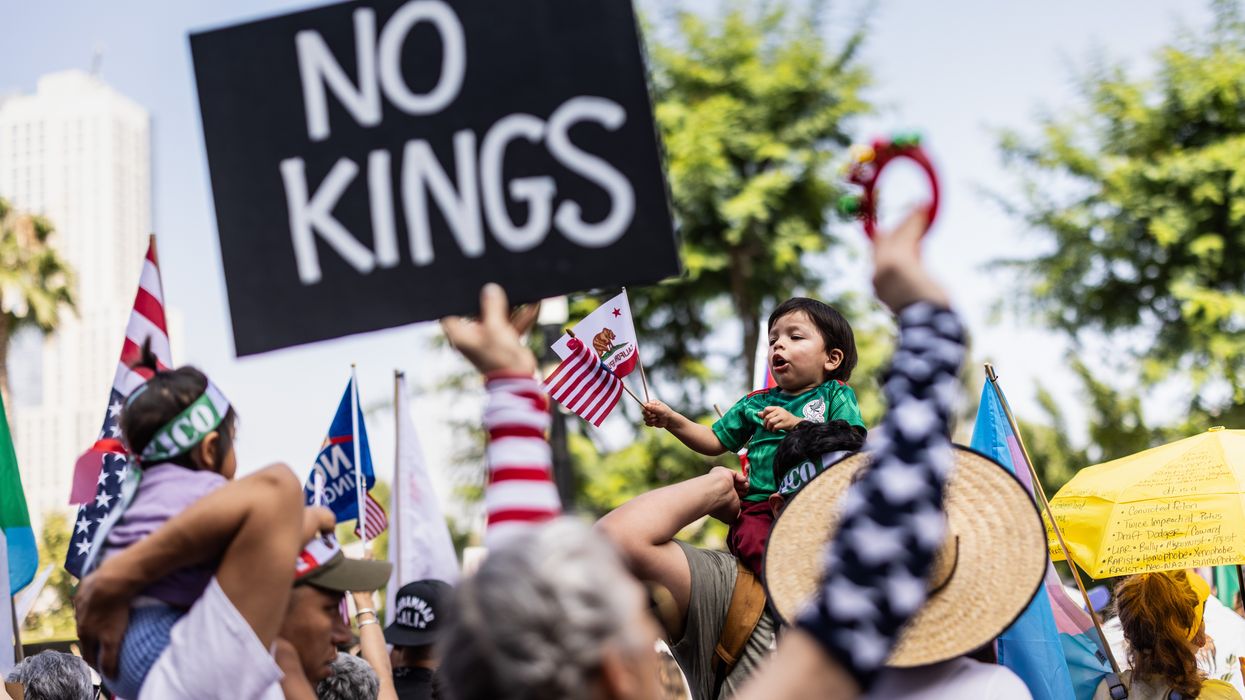
The No Kings Alliance on Friday announced that it was mobilizing in support of Starbucks workers who went on strike this week to demand a fair contract.
The alliance, which organized one of the largest demonstrations in US history last month with nationwide "No Kings" protests against the President Donald Trump's administration, pledged solidarity with the striking workers, while highlighting the massive disparity in pay for Starbucks baristas and the company's CEO.
"Starbucks CEO Brian Niccol was paid $96 million for just 120 days of work in 2024, paying himself 6,666 times what the average barista made—the worst CEO-to-worker pay inequity in the country," said the alliance. "At the same time, Trump and his billionaire backers are doing their best to scare people out of speaking up for their rights on the job and in their communities."
"Don't cross the picket line," the alliance urged its supporters, while also encouraging them to sign the "No Contract, No Coffee" pledge, an online petition demanding that the company negotiate with Starbucks Workers United (SBWU) on a just contract.
"I call on you to bargain a fair contract with Starbucks Workers United baristas!" the pledge reads. "I support Starbucks baristas in their fight for a union and a fair contract, and pledge not to cross the picket line. That means I will not patronize any Starbucks store when baristas are on [unfair labor practices] strike."
The striking Starbucks workers also got a pledge of solidarity from the AFL-CIO, which on Thursday urged the company to hammer out a deal with its workers to ensure fair pay and schedules.
"For four long years, SBWU members have fought tirelessly for better pay, fair hours, and adequate staffing for more than 12,000 workers and counting," said AFL-CIO president Liz Shuler. "Yet Starbucks has dug its heels in, engaging in shameless and persistent union busting... We urge Niccol and Starbucks corporate executives to finally do right by the workers who drive the company’s profit and negotiate a long-overdue fair contract."
SEIU pledged support for the Starbucks workers, while also placing the strike in the context of the broader fight between labor and capital.
"Today’s strike isn’t just about Starbucks," the union wrote in a social media post. "It’s about a broken system where billionaires and CEOs keep getting richer while the politicians they bankroll gut our wages, healthcare, and rights. Baristas are fighting for a fair contract and for a more just society."
Some progressive politicians also gave the striking workers a shoutout.
Rep. Rashida Tlaib (D-Mich.) vowed to keep out of Starbucks franchises until the workers' demands are met.
"When we strike, we win!" Tlaib exclaimed.
New York City Mayor-elect Zohran Mamdani joined the Starbucks boycott and encouraged all of his supporters to follow suit.
"Together, we can send a powerful message: No contract, no coffee," the democratic socialist wrote.
Democratic socialist Seattle Mayor-elect Katie Wilson—whose city is home to the coffee giant's headquarters—attended an SBWU rally where she joined them on the picket line and said, "I am not buying Starbucks, and you should not either."
Socialist Seattle Mayor-elect Katie Wilson's first move after winning the election was to boycott Starbucks, a hometown company. pic.twitter.com/zPoNULxfuk
— Ari Hoffman 🎗 (@thehoffather) November 14, 2025
Starbucks workers began their strike on Thursday, and SBWU has warned the company that it is prepared to dig in for a long fight unless it returns to the negotiating table.
Negotiations between the union and Starbucks stalled out last spring, and more than 90% of unionized baristas last week voted to authorize a strike intended to hit the company during the busy holiday season.