

SUBSCRIBE TO OUR FREE NEWSLETTER
Daily news & progressive opinion—funded by the people, not the corporations—delivered straight to your inbox.
5
#000000
#FFFFFF
To donate by check, phone, or other method, see our More Ways to Give page.
Daily news & progressive opinion—funded by the people, not the corporations—delivered straight to your inbox.

If we must, what we need to celebrate is the basic principles and ideas behind the Declaration of Independence, while being fully cognizant of the fact that we still have a long way to go to achieve equality in this country.
On July 4, 2026, the United States of America turns 250 years old. Should the Left celebrate the 250th anniversary of the founding of the United States with the signing of the Declaration of Independence? After all, this is a nation with a very dark and ugly past—with racism, genocide, and imperialism deeply embedded in its psyche.
Surely Native Americans have no reason to celebrate. The history of the United States government’s treatment of Native Americans is one of cruelty, oppression, and extermination. Leaving aside the 56 million Indigenous people that were killed by European settlers across the Americas by 1600, since its independence in 1776, the US government has launched more than 1,500 attacks against various Indigenous people, slaughtering them, and taking their lands. Native Americans in the US continue to face oppression, poverty, and discrimination, and rank near the bottom of all other groups in terms of health, education, and employment.
What about Black Americans? Do they have a reason to celebrate a nation that denied them their humanity for much of those 250 years, while they continue to experience racial discrimination to this day? Racism against Black people remains very much widespread in the Good Ol’ USA.
Should American women have a reason to celebrate the nation’s 250th birthday? They have been treated as second-class citizens until fairly recently, and while many countries around the world have or had female leaders, it is a widely shared belief that the US is still not ready for a woman president.
The Declaration of Independence should serve as a stark reminder of the need for a call to action when a government, like the one represented by Donald Trump, acts illegally and unconstitutionally to weaken democratic institutions.
If anything, a major milestone like the 250th anniversary of the signing of the Declaration of Independence should be an opportunity to confront the nation’s dark and ugly past and reflect on what has gone wrong with US democracy and what we can do about it. After all, isn’t it a tragic irony that the celebration of America’s 250th birthday, which is supposed to honor the principles of liberty and equality upon which the nation was allegedly founded, will take place with an administration in power whose own beliefs and actions embody the very tyrannical rule that the Declaration of Independence sought to overthrow?
What manner of national progress is this?
But history is not a linear progression. Nor is it guided by the realization of freedom and rationality, as Hegel thought. Human history moves in a spiral, and irrationality makes up a great part of human life and history. Moreover, not only does the value of ideals vary greatly (Nazism and imperialism were as potent ideals as those of democracy and self-determination), but there is usually a disconnect between ideals and political reality. Some of the lofty principles in the Declaration of Independence, such as “all men are created equal,” collided with the facts on the ground and, in fact, had a very narrow interpretation when they were written, as they applied only to white, propertied men.
Indeed, in 2026, we have a president who likes to govern like a king, or a dictator. As a matter of fact, the Supreme Court has given Donald J. Trump king-like powers. Thus, it is hardly surprising that Trump 2.0 has demolished democracy by initiating a new age of authoritarian rule with civil- and human-rights rollbacks, weaponizing the federal government against the president’s political rivals, and unleashing a paramilitary squad of fascist thugs into communities across the nation. It is also hardly surprising that Trump has become the most corrupt president in US history. He is exploiting shamelessly the highest office in the land to enrich himself and his family.
Trump’s enablers extend beyond today’s Supreme Court, which has moved so far rightward that it qualifies as the most reactionary in the nation’s modern history. It includes the plutocrats, media conglomerates, evangelical Christians, and pro-Israel political networks. Retail corporations, major law firms, and academic institutions capitulated with such ease to Trump’s bullying tactics that they made a mockery of liberal ideals.
All that being said, it is difficult not to appreciate the importance of the Declaration of Independence. It is indeed one of the most important documents in the history of politics and ideas for the simple but radical fact that, by articulating the intention of the American colonies to separate from British rule, it established the principles of self-government and individual rights while connecting equality and freedom.
Being profoundly influenced by the philosophical thinking of John Locke, Thomas Hobbes, and Jean-Jacques Rousseau (unlike contemporary US leaders, the likes of Thomas Jefferson, Benjamin Franklin, and John Adams were deeply learned men and had extensive knowledge of history and philosophy), the Declaration of Independence solidified the claims of social contract theory—that is, the idea that governments receive their just powers from the consent of the governed—and justified rebellion against tyranny. Within just a couple of decades, the Declaration of Independence inspired revolts across the globe. It had great impact on political and philosophical debates leading up to the French Revolution (1789) and served as a reference point behind the slave revolt against French colonial rule in Haiti in 1791 and the Irish rebellion against British rule in May 1798.
When Ho Chi Minh declared Vietnam an independent nation on September 2, 1945, he paraphrased the US Declaration of Independence. He opened his declaration of independence with the statement from the 1776 Declaration: “All men are created equal. They are endowed by their Creator with certain inalienable rights, among these are Life, Liberty, and the pursuit of Happiness.” But then he updated those words by saying, “In a broader sense, this means: All the peoples on the Earth are equal from birth, all the peoples have the right to live, to be happy and free.”
Indeed, the Declaration of Independence served as a “universal blueprint” for the anti-colonial struggles that occurred after World War II. It is indeed a radical document. One of its foundational principles is that “it is the Right of the People to alter or abolish” governments that become destructive to their fundamental rights. This principle is a cornerstone of democratic theory and should never be forgotten.
Ironically enough, all US administrations have largely abandoned the fundamental principles underpinning the Declaration of Independence—and none more so than President Donald Trump’s administration. The country is on a very slippery path under Donald Trump’s imperial proto-fascism. Democracy is dying before our very own eyes, and Trump’s desire to reshape the world order not only creates more uncertainty and instability but risks opening a Pandora’s box.
It is in this context that the Declaration of Independence should serve as a stark reminder of the need for a call to action when a government, like the one represented by Donald Trump, acts illegally and unconstitutionally to weaken democratic institutions and engages purely in self-dealing while endangering our communities. We have a monstrous, tyrannical government in power that the People must stand up to with all their might before it ruins everything.
If we must, what we need to celebrate on the 250th anniversary since the signing of the Declaration of Independence is nothing more and nothing less than the basic principles and ideas behind this document, in an updated manner, of course, à la Ho Chi Minh, while being fully cognizant of the fact that we still have a long way to go to achieve equality in this country. That was not the intention of those who drafted and signed the Declaration of Independence; nonetheless, they gave the world a political and philosophical document for the ages.
If we are serious about building a world where women have equal power—economic, political, and personal—then we have to be serious about accountability within our own ranks
In the span of a month, two stories have laid bare an uncomfortable truth about progressive politics: Too many people will protect powerful men at the expense of the women they harm, whether to protect a movement, a party, or because they’ve been conditioned to believe this is how power works.
Rep. Eric Swalwell (D-Calif.) announced his resignation from Congress last Month after multiple women came forward with allegations of sexual harassment and assault. March’s revelation by Dolores Huerta that iconic labor leader Cesar Chavez sexually abused girls and women for decades is still reverberating through communities that revered him. In both cases, the pattern is the same: Whisper networks carried warnings for years, but survivors who came forward were silenced or discredited for the sake of the “greater good.”
Why? Because Swalwell was seen as a rising Democratic star, a useful weapon against President Donald Trump. Because Chavez was a civil rights icon whose legacy anchored an entire movement. Because people convinced themselves that exposing the truth would do more damage than burying it.
They were wrong. Silence doesn’t protect movements, it protects oppressors. It tells every woman who has been harassed, groped, or assaulted by a powerful man on “our side” that her pain is an acceptable cost of doing business.
Letting people in power abuse women is never acceptable, regardless of party, regardless of legacy, regardless of how inconvenient the timing might feel.
We have seen this calculation before—the quiet bargain where accountability is sacrificed on the altar of political convenience. It never works. The truth always surfaces. And when it does, the cover-up inflicts its own damage, compounding the harm to survivors and eroding the moral authority these movements depend on.
Consider the moment we’re in. We have a president who was found liable by a jury for sexually abusing a woman, and accused by at least 28 others, and has faced no meaningful consequences for it. A president who has made clear, through word and policy, that he believes powerful men can do whatever they want. His administration is rolling back decades of progress on combatting sexual harassment and assault in workplaces and schools; gutting protections against discrimination; and dismantling the legal infrastructure women depend on for safe, equitable workplaces. The Supreme Court, made up of one-third of Trump appointees, is the first since the 1950s to rule against women and people of color in a majority of civil rights cases.
This is the landscape women are navigating right now. And into this landscape, we are supposed to accept that the men or other abusers on “our side” get a pass? No.
If we are serious about building a world where women have equal power—economic, political, and personal—then we have to be serious about accountability within our own ranks. Not because it’s easy, but because the alternative is corrosive. Every time we look the other way, we tell the next generation that a woman’s safety matters less than a man’s career. We weaken the very movements we claim to be protecting.
The women who came forward about Swalwell, including content creators who had no institutional backing, no legal team—just their own platforms and conviction—showed extraordinary courage. So did the survivors who finally broke decades of silence about Chavez. They did what the political establishment was unwilling to do. They chose the truth.
The lesson here is not that our movements are broken. It’s that they are only as strong as our willingness to hold everyone in them accountable. Letting people in power abuse women is never acceptable, regardless of party, regardless of legacy, regardless of how inconvenient the timing might feel.
We are in a fight for women’s futures in this country. That fight requires moral clarity. It requires us to stop treating accountability as a threat and start treating it as the foundation. Good things, lasting things, come from doing what is right, even when it’s hard. Especially when it’s hard.
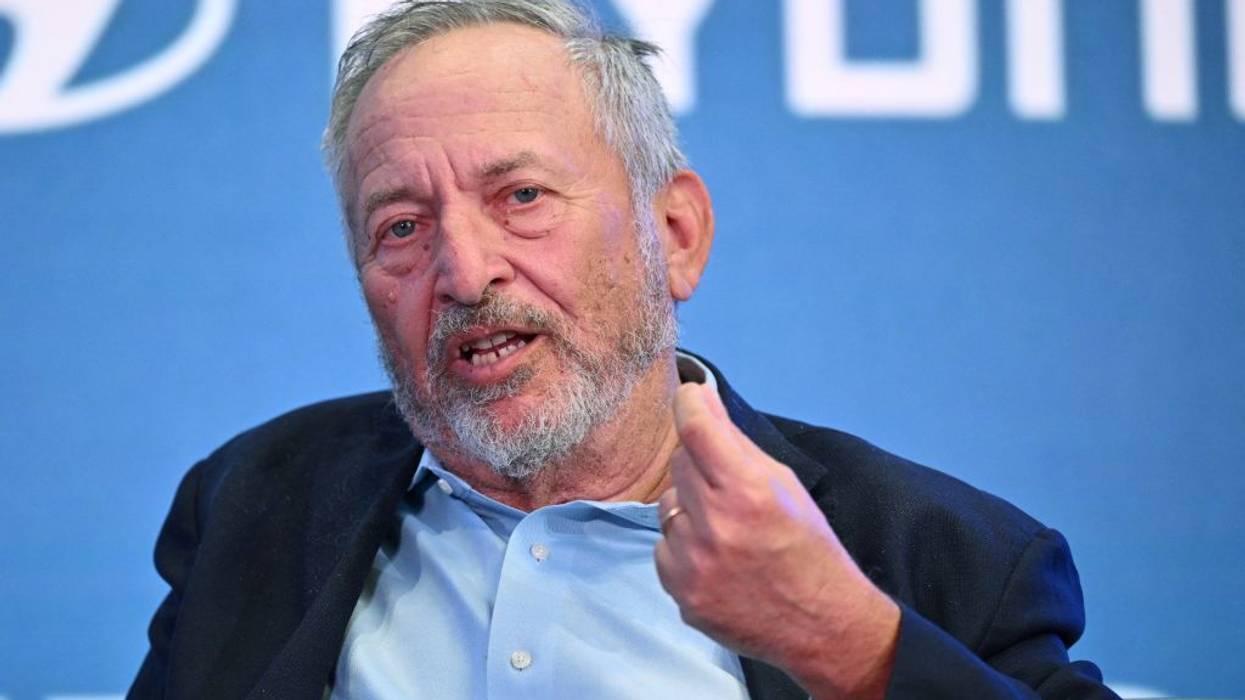
Summers’ influence was immense, but so were his blind spots. It’s time for economics that values people and the planet over power and prestige.
The era of Larry Summers’ dominance in American economics is over. It’s a good moment to take stock.
Summers has been just about everywhere money talks. From Harvard to the Treasury, through the Clinton and Obama White Houses, onto Wall Street, and into think tanks and policy networks that shape the nation’s economy—including the Center for American Progress, the Peterson Institute for International Economics, and the Hamilton Project at the Brookings Institution—he has left a mark few economists ever achieve.
Yet his career also shows the risks of concentrating authority in economists whose prestige, ambition, and attachment to abstract models can outweigh attention to real lives. Time and again, he let the interests of financial elites, spreadsheet obsession, and ingrained biases create troubling blind spots. The consequences for ordinary people and the planet simply faded into the background.
The silver lining: Summers’ record offers a clear road map for reform, highlighting what economics should not be: a discipline that prioritizes prestige, profit, and elegant equations. And it points toward what it could be: smarter, fairer, more accountable, and genuinely focused on human well-being and the Earth we inhabit.
Let’s be blunt: Economists who don’t see women as equals weaken the very core of their discipline.
Tasked with understanding how people, resources, and institutions interact, they can’t model societies, predict outcomes, or craft effective policy if they don’t accurately perceive half the population. Bias isn’t just a moral failure. It corrupts analysis.
If Summers had respected women’s intellectual authority, he might have heeded Brooksley Born when she pushed to regulate derivatives as chair of the Commodity Futures Trading Commission (CFTC).
Summers’ comments while president of Harvard suggesting women lack the natural faculties to excel in higher mathematics and science reveal a deeper flaw: outdated, discriminatory, and intellectually sloppy thinking. (Any lingering doubt about his mindset vanishes when you read his 2017 email to Jeffrey Epstein: “I observed that half of the IQ in world was possessed by women without mentioning they are more than 51% of population.” A leap beyond casual sexism, this was a bold assertion of women’s intellectual inferiority).
Such attitudes have real consequences for economics, leadership, and policy.
Consider: If Summers had respected women’s intellectual authority, he might have heeded Brooksley Born when she pushed to regulate derivatives as chair of the Commodity Futures Trading Commission (CFTC). Instead, he joined forces with Alan Greenspan and Robert Rubin to shut her down—a disastrous misstep that helped set the stage for the unregulated derivatives boom and the 2008 financial crisis.
America is still paying for that one.
The economics profession itself pays a steep price for sexism. Institute for New Economic Thininkig research by Giulia Zacchia, Orsola Constantini, and Moshen Javdani shows that structural bias in hiring, research evaluation, and theoretical norms pushes women and fresh ideas to the margins, producing models and policies that miss the full picture of how economies really function.
Summers’ personal conduct compounds his professional failings. In the Epstein files, Summers discussed a Chinese female mentee in explicitly sexual terms. He detailed his attraction and referred to the possibility of a sexual relationship, asking Epstein whether it was “meaningful” to discuss “the probability of my getting horizontal w peril,” a code name for the woman in question. He speculated about how to make himself seem “invaluable and interesting” to her, implying that intimacy could follow. This behavior obviously violates professional boundaries.
Sexual harassment isn’t just harmful to the people targeted—it hurts businesses, families, and the economy too, as I have documented (Parramore, 2018), while Zacchia and Izaskun Zuazu emphasize the need to challenge the deep-rooted gender inequalities that make harassment possible. Unfortunately, Summers’ sexism proved too deeply rooted to excise.
Summers’ departure opens the door to economics that not only produces more accurate models and better outcomes for society, but fully embraces the talents and insights of female students and economists.
Summers’ career offers a clear example of how cozy ties between elite economists and Wall Street create harm.
While president of Harvard (2001-2006), Summers had what colleagues described as a “huge influence over Harvard money matters.” He pushed for a risky investment strategy for the university’s endowment, even though as early as 2002, Iris Mack, an analyst at the Harvard Management Company (HMC), warned Summers’ chief of staff about what she described as “frightening” use of derivatives and inadequate risk-management protocols. But her warnings, and those of Jack Meyer, the head of the endowment, who warned of investments in “stocks, bonds, hedge funds, and private equity,” were disregarded by Summers. (Mack was dismissed, and alleges she was fired for voicing concerns; she later reached a settlement with the university).
Summers’ investment strategy backfired sharply when the 2008 crash hit, costing the university dearly: 27% of its endowment, to be precise. By then, Summers was working at a hedge fund and would soon spin through the revolving door into Barack Obama’s White House.
In another telling episode, Summers shielded his colleague Andrei Shleifer during the scandal over Harvard’s 1990s-era Russia privatization program. Shleifer and associates were found liable by a federal court for using insider access to invest in Russia while advising on US-funded economic programs: a clear conflict-of-interest. Harvard ended up shelling out a $26.5 million settlement, but Shleifer kept his tenured position, thanks in part to Summers’ influence.
Summers’ Wall Street-friendly instincts have reached deeply into policy. During the 1990s and early 2000s, he advocated deregulation and reduced oversight for banks, contributing to the conditions that triggered the 2007-2008 financial meltdown, when millions of regular people lost jobs, homes, and savings. After public office, he continued profiting from that same financial ecosystem, collecting large fees through consulting, speaking engagements, and corporate board positions.
In Wall Street’s corner he remained: In 2023, he pushed the government to guarantee all deposits at Silicon Valley Bank, arguing that failing to do so would be a “Lehman-like error,” while downplaying conflicts of interest with firms tied to the bank. He warned against listening to “moral hazard lectures” about bailouts. (It was not reassuring to learn that Summers turned out to have undisclosed ties to firms connected to SVB’s largest depositors).
In 2025, Summers warned that asset prices are “frothy,” but instead of calling for regulations or protections for people who might lose their savings, he framed his concern in a way that would calm investors. His focus seemed to be on keeping financial elites calm above all else.
Summers has consistently emphasized market stability over robust support for working people, advocating Fed policies that favor large banks and investors. Coupled with his continued advisory roles with financial-sector firms (many now lost due to the Epstein files), these moves reinforced a career-long pattern: prioritizing the interests of the wealthy while leaving Main Street to fend for itself.
Which brings us to the next lesson.
Regrettably, it bears repeating that economics has too often been treated as a game for elites, focused on numbers on paper, financial flows, and abstract deficits, while the jobs, homes, and livelihoods of working people are pushed aside. Summers personifies this very problem.
For example, Summers pushed interest‑rate hikes and emphasized deficit reduction over job creation. As political protégé of deficit‑hawk Rubin, and later as head of the National Economic Council (NEC), under Obama, Summers repeatedly plugged austerity, even at times when stimulus was badly needed to support working people.
In December 2008, a full month before Obama’s inauguration, Summers drafted a 57‑page memo warning of a grim economic outlook, but he also downplayed how severe the downturn could be. That memo laid the foundation for a flawed stimulus plan and economic strategy that prioritized deficit targets over urgent jobs recovery.
Larry Summers’s record on global economic policy offers a revealing portrait of his priorities: market logic over human lives, and financial returns over planetary survival.
The results were stark. Actual job losses far outpaced the administration’s optimistic estimates, and the recovery was painfully slow for millions of Americans. After leaving the NEC, Summers went on to warn against aggressive fiscal support, focusing instead on deficit risk and inflation concerns, often at the expense of middle‑class wage earners trying to get back on their feet.
In the wake of the Covid-19 pandemic, Summers repeatedly championed what many view as market-first, investor-friendly economic priorities over aggressive support for working-class Americans. In 2021 he blasted the stimulus bill (American Rescue Plan) as “the least responsible macroeconomic policy in 40 years,” warning that huge fiscal spending combined with loose monetary policy was “kindling” an inflation fire.
This neglect of working people is a failure of economics. When economists treat deficits and interest rates as ends in themselves, rather than tools to support lives and livelihoods, they lose the real purpose of economic analysis.
For too long, the rules of economic policy have been written by those fail to understand the stakes of unemployment, insecure work, or debt. Larry Summers isn’t just a powerful economist, he’s also very wealthy: His net worth rocketed from around $400,000 in the mid-1990s to $7-31 million by 2009, largely through high-paid Wall Street consulting, hedge-fund work, and speaking fees. Today, estimates put him at roughly $40-50 million.
Perhaps this background helps explain his longstanding emphasis on austerity over labor-market protections.
Larry Summers’s record on global economic policy offers a revealing portrait of his priorities: market logic over human lives, and financial returns over planetary survival.
Over decades, he repeatedly helped shape policies that forced vulnerable populations, particularly in developing countries, to subordinate basic needs like health, education, and environmental protection to debt repayment and economic “efficiency.”
One episode has come to symbolize this worldview. In 1991, while serving as chief economist for the World Bank, Summers’ office circulated an internal memo drafted by Lant Pritchet and cosigned by himself, which suggested that dumping toxic waste in developing countries would actually benefit them economically. The memo noted that, because wages and estimated “economic losses” from illness were lower in developing countries, the health costs of pollution would be “cheaper” there than in wealthier nations. Although Pritchett later insisted the memo was merely sarcasm, the fact that it moved through Summers’ office and carried his signature sparked international outrage.
After the memo became public, Summers told a reporter: "I think the best that can be said is to quote La Guardia and say, 'When I make a mistake, it's a whopper.'"
Many agreed. Brazil’s then-Secretary of the Environment Jose Lutzenburger, excoriated Summers’s logic as “perfectly logical but totally insane,” noting that it exemplified “the unbelievable alienation, reductionist thinking, social ruthlessness, and the arrogant ignorance of many conventional ‘economists’ concerning the nature of the world we live in.”
This was not just a one-off. In the 90s, Summers used his power to block meaningful climate action, opposing US participation in Kyoto Protocol. He claimed that rapid greenhouse‑gas reductions could carry “unknowable economic consequences.”
Even when he later moved toward what some considered climate-friendly policies, his proposals revealed much about his real concerns. For instance, in 2017 he backed a modest carbon-pricing scheme, but only if it replaced stronger environmental regulation and came with rebates and border adjustments. In an op-ed titled, “Why we should all embrace a fantastic Republican proposal to save the planet,” he favored “raising the price of carbon and less emphasis on command-and-control regulation.” That approach aligns neatly with the wish lists of deep-pocketed polluters and carries little of the urgency environmental scientists and communities fighting climate disaster demand.
Summers also supported the North American Free Trade Agreement (NAFTA), which has been widely criticized for undermining environmental regulations in Mexico, weakening labor protections, and allowing corporations to externalize ecological costs across borders. Once again, Summers appeared to prioritize trade liberalization and corporate profits over environmental justice and workers’ rights.
Under Obama, he continued to warn of potential economic risks of aggressive efforts to limit carbon emissions. More recently, in 2022, Summers promoted a World Bank plan to leverage massive new borrowing to address poverty and encourage a “global green transition.” On the surface, this looks progressive, until the focus on financing and efficiency is revealed. Rather than advocating real structural change, Summers continues a pattern of putting capital and market mechanisms over meaningful, just environmental action.
In the big picture, Summers’s retreat leaves both a gap and a long‑overdue opportunity.
More than ever, the US—and the world—needs economists who put real people first: who design policies that protect jobs, homes, and communities; who confront climate change rather than downplay it; who treat women, working people, and marginalized groups as full participants; and who put their focus on social well‑being.
As the 19h‑century critic John Ruskin famously wrote, “The only wealth is life.” Economics must finally reflect that truth (Spear, Parramore, 2015).
We now have a chance to build a life‑centered economics, one that prioritizes human flourishing, environmental stewardship, and equitable opportunity—not just the interests of the elite few.
The opportunity is here. Let’s seize it.
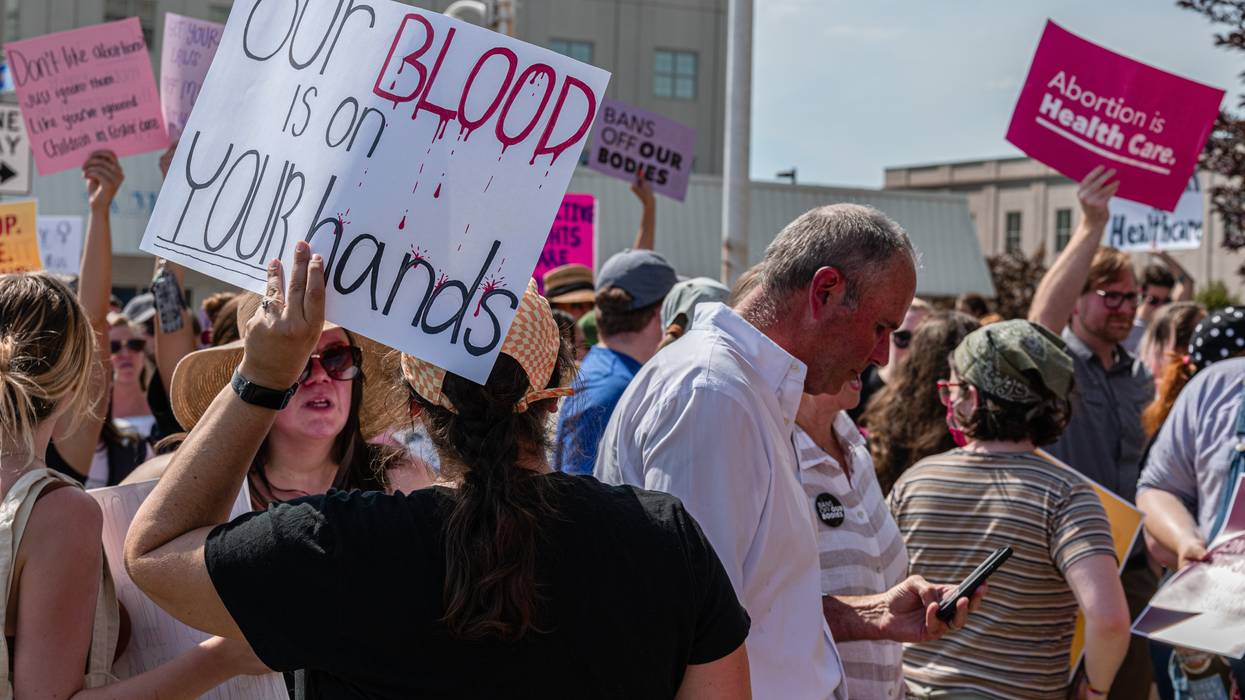
The loss of Roe wasn’t just about abortion, it was a green light to dismantle reproductive freedom at every level.
It has been three years since Roe v. Wade was overturned. A seismic ruling shattering the constitutional right to abortion sent this country into a public health crisis. In the aftermath, millions of people have been stripped of autonomy over their own bodies, forced into pregnancies they did not choose, denied medication for miscarriages, and criminalized for seeking basic healthcare.
This is not a post-Roe world. It is a post-rights world. And we are still living through the consequences.
Across the nation, 19 states now have near or-total abortion bans. In many more, access has been drastically limited by targeted restrictions, clinic closures, and political interference. But the loss of Roe wasn’t just about abortion, it was a green light to dismantle reproductive freedom at every level. The attacks have expanded to birth control, emergency contraception, gender-affirming care, IVF, and even medical privacy.
Gerrymandered districts, activist judges, and extremist lawmakers continue to pass laws that do not reflect the will of the people.
Everyday clinics and doctors are under siege. Providers are being driven out by threats, legal risks, and burnout. Many Planned Parenthoods and independent clinics in banned states no longer provide abortion care at all. That burden has fallen on organizations like ours—small, often women-, queer-, and BIPOC-led abortion funds doing the lifesaving work of helping patients afford care and travel across state lines. But the need has skyrocketed, and funding has not. Foundations give less than 2% of their dollars to direct abortion support. We are asked to do more with less while the people we serve pay the price.
Survivors of rape or domestic violence are forced to carry pregnancies because they don’t qualify for their state’s narrow exceptions. Minors have to beg courts for permission to terminate pregnancies. Patients sleep in cars while waiting for appointments in the closest legal state. And we are their safety net and will continue to be in this man-made disaster.
Meanwhile, politicians—mostly white, mostly male—continue to play God with our lives. They are not doctors. They are not ethicists. They are not the people bearing the risks, the trauma, or the responsibility of pregnancy. And yet they are the ones deciding who deserves healthcare and who doesn’t.
Nowhere is that clearer than in Georgia, where a heartbreaking story made national headlines. Adriana Smith, a 31-year-old woman, was declared brain dead four months ago. But because she was pregnant, her body was kept alive by machines—not out of medical necessity, but due to Georgia’s abortion ban, which includes personhood language that grants legal rights to embryos at six weeks gestation. Her family was forced to watch as she was kept on life support against her wishes. In Georgia, the embryo inside her had more legal value than Adriana herself.
This is what happens when politicians legislate ideology. When we prioritize hypothetical life over a real one: a daughter, a sister, a human being, we lose not just rights, but our humanity.
And still, we hear silence when it comes to men’s responsibility.
No law mandates men to support a child they helped create before birth. No one is tracking their behavior, forcing paternity tests, or denying their autonomy. They are not losing jobs, skipping school, or facing stigma for becoming parents. Yet the full burden of pregnancy, childcare, and judgment falls squarely on the pregnant person who are forced to risk their health, financial stability, and futures to carry pregnancies. Where patients are denied their fundamental rights under the guise of “protecting life.” Where the father of a child can disappear without consequence.
It has been three years since Roe fell. And still, we are shouting the same truths:
The majority of Americans agree. Poll after poll shows that most people support legal abortion and reproductive freedom. Yet the system is rigged. Gerrymandered districts, activist judges, and extremist lawmakers continue to pass laws that do not reflect the will of the people.
But here’s the truth: Roe was never enough. It was the floor, not the ceiling. Even before its fall, access was unequal based on race, income, zip code, and immigration status. Roe protected a legal right, but it didn’t guarantee access, safety, or justice. And we should not be fighting to go back to that flawed baseline. We must demand a future that does better for all of us.
So, what do we do?
We keep fighting—harder than ever. We vote like our lives depend on it, because they do. We support abortion funds that are on the frontlines, providing help when no one else will. We demand accountability—not just from politicians, but from the people in our communities who stay silent. We uplift the stories of those who’ve been harmed by these cruel policies, and we refuse to let them be erased.
And we imagine a future where our rights are not just restored but expanded. A future rooted in justice, equity, and compassion. A future where no one is forced to give birth against their will, and no one dies waiting for the law to catch up to basic humanity.

The fight against misogyny requires active engagement from all corners of society, including those who have the privilege and responsibility to challenge these harmful ideologies.
Earlier this year, the University of York released a sobering report: 90% of secondary school teachers in the U.K. said their male students are being heavily influenced by online misogynistic figures—often quoting or defending toxic masculine personalities in classes. Girls, meanwhile, are withdrawing from discussions, leaving classrooms quietly divided along gender lines.
This is not just a school issue; it's a society-wide crisis forming in real time, and it's happening worldwide. Boys are learning that dominance is power and empathy is weakness, lessons they carry with them far beyond the walls of a classroom. Online misogyny thrives not only because of those who perpetrate it but also due to the silence of many men who choose not to confront it. This passive complicity allows harmful narratives to flourish, shaping a digital culture where toxic masculinity is normalized and women's voices are marginalized.
There is a better way forward. As a human rights advocate with extensive experience in promoting positive masculinity at RWAMREC, Rwanda Men's Resource Center, I have witnessed firsthand how transformative male engagement approaches can challenge gender-based violence and reshape harmful cultural narratives, both online and in the real world. But, despite their demonstrated successes, these programs are vastly underutilized. Many campaigns focus exclusively on empowering women to protect themselves, rather than mobilizing men to take collective responsibility for change. To truly create lasting change and address online misogyny, we must invest in programs that equip men with the tools and confidence to act as allies.
Without the active involvement of tech companies in combating online misogyny, even the most well-intentioned male allies will face an uphill battle.
Content creators promoting hypermasculine personas characterized by control, dominance, and anti-woman rhetoric have amassed audiences in the tens of millions across platforms like X, TikTok, and YouTube. Such creators often blend self-improvement themes with misogynistic and conspiratorial messaging, making their content more appealing and harder to critique. A U.K.-based survey of secondary school teachers revealed that 90% observed male students mimicking or defending online personalities who espouse these hypermasculine ideologies, demonstrating their real-world influence in shaping gender attitudes among youth. Too many boys view this kind of hateful content with complacency, fostering environments where such attitudes are normalized. But a recent study presented compelling evidence supporting the effectiveness of male bystander intervention in reducing sexist behavior. The research found that when male bystanders actively confronted instances of gender prejudice, female victims experienced increased feelings of empowerment and a greater willingness to confront the perpetrator themselves.
By encouraging men to reflect on their behaviors and understand the impact of their words, the toxic patterns that often go unchecked in digital spaces can be dismantled. Educational campaigns that include men in honest conversations about gender equality have led to more respectful engagement on social media, gaming platforms, and online forums. Participants are more likely to recognize misogynistic content, challenge harmful narratives, and avoid contributing to hostile online environments. These efforts not only reduce the prevalence of online abuse but also shift cultural norms around masculinity, making empathy and accountability part of the standard.
Of course not all boys and men endorse or participate in misogynistic behavior online, and many already stand as strong allies in promoting gender equality. However, the pervasive nature of online misogyny calls for a collective response. While male engagement is essential, it is not enough on its own. Tech companies also play a critical role, as their platforms often become spaces where misogynistic content thrives. These companies must take responsibility by implementing robust policies, monitoring harmful behavior, and holding users accountable. Without the active involvement of tech companies in combating online misogyny, even the most well-intentioned male allies will face an uphill battle.
The fight against misogyny requires active engagement from all corners of society, including those who have the privilege and responsibility to challenge these harmful ideologies. By standing up and speaking out, men can help disrupt the cycle and create a safer, more inclusive online environment for everyone. We need increased funding for initiatives that engage men in preventing online misogyny. We also need media literacy education in schools that arm young people with tools to recognize and challenge harmful online behaviors. Men's active involvement in challenging misogyny is more than supportive, it's revolutionary. When boys and men confront sexist remarks, push back against harmful gender stereotypes, or simply opt out of disrespectful conversations, they break the cycle that normalizes misogyny in everyday life.

Here are eight topics currently lost in the sauce to take our minds and emotions off the Trump-backed whale. Then it’s time to get back in the game and face down the bullies.
If the overwhelming deluge from the Trumpian firehose of lies, threats, incompetency, illegal actions, and surreality is sweeping you off your feet, driving you to bedridden depression, leaving you passive and breathlessly unable to mount a response, much less resistance, please get into the huddle, take a time-out, and listen up to your Jock Culture coach. (That’s me, of course!)
You need some distraction.
Have you noticed lately how few sports stories are making their way to the top of the news beams? That’s because sports—once upon a time our most reliable source of outrage; speculation; cultish behavior; and lessons in domination, smackdown intimidation, and faux masculinity—has been replaced by a remarkable series of presidential half-time horror shows. It’s now all Trumpiana all the time.
Sports, after all, initially evolved as a bastion of fair play, and even its sometimes questionable interpretations of class and honor are hardly major aspects of Trumpiana.
We need to get back to sports. So here are eight topics currently lost in the sauce to take our minds and emotions off the Trump-backed whale. Of course, since only he truly sells in this numbed media moment of ours, I’m sure you won’t be surprised to learn that we’ll need sports stories with Trumpian subtexts.
Number One: How did some high school athletes suddenly get so rich? There are million-dollar quarterbacks lining up at the NIL pay window waiting to start their freshman year in college. In case you don’t already know it, NIL stands for name, image, and likeness—from which sports gear companies, universities, and the college sports ruling body, the National Collegiate Athletic Association (NCAA), have traditionally profited enormously, even though those athletes were prohibited from benefiting commercially. But in 2021, a series of state court judgements led to a unanimous Supreme Court decision that lifted the ban and it was suddenly pay-off time for “student-athletes.”
It all seems fair enough, although the new system is evolving with shady deals in which colleges and their boosters help organize “collectives” to recruit teenage high school athletes with the promise of booty that ranges from extra shoes to millions of dollars.
The top 20 money-making college athletes are bona fide millionaires, while the average starting pay-off for the top 100 is $583,000. University of Colorado quarterback Shedeur Sanders, son of the former National Football League star Deion Sanders, leads the list with an estimated $4.7 million.
Boosting the growing transactional nature of “amateur” sports is the newly installed “transfer portal,” a computerized system that makes it easier for college athletes to switch schools without having to sit out a season. Money may well change hands there, too.
So far, the Trumpsters have seemed more than okay with all this, but there could be a future glitch. While the current major beneficiaries are the expectables—football and basketball players—let’s welcome crowd-pleasing gymnast Sam Phillips, the first University of Nebraska athlete to come out as gay, now performing at the University of Illinois. Could this turn out to be a rainbow flag for the homophobic Trumpniks? Will they say nil to NIL (at least if it goes to the “wrong” people)? Stay tuned.
Number Two: Even though they’re a microscopic percentage of the varsity athletic population, transgender jocks have been getting an inordinate amount of attention lately, most of it grimly malevolent.
President Donald Trump’s order barring transgender girls and women from playing on women’s teams at federally funded educational institutions, even if followed, will have little effect on overall sports participation. Symbolically, of course, as The Nation sports editor Dave Zirin points out,
Diverse teams can help communities and families stop seeing marginalized people as an “other” and start seeing them as part of the same whole. Sports at its best can challenge the hate constantly generated by the right-wing media machine.
There are certainly reasonable arguments against situations in which trans athletes might physically overwhelm cis-athletes, but the climate is simply too charged right now for a reasonable discussion. This may just have to wait for Trump to be cut from the team.
Number Three: When I started writing about sports in the late 1950s, two of the premier American ones were boxing (the sweet science) and thoroughbred horse racing (the sport of kings). Both were romanticized, distinctly corrupt enterprises run by oligarchs and gangsters on the backs of poor boys and animals. They did well when they produced superstars (Muhammad Ali or Secretariat) but faded in the 21st century. Since then, football and mixed martial arts have provided more reliably entertaining violence, while state lotteries supplanted parimutuel betting as a way to tantalize the desperate with pie-in-the-sky jackpots. Pro wrestling (if you consider it a sport at all) is the only athletic entertainment that comes to mind as more truly Trumpish.
Horse racing is barely hanging on, mostly thanks to influential rich folks (including Arab oligarchs) who own and breed the best horses and the rentable state governments that provide subsidies for the sport. Boxing and horse racing seem to exist mostly to offer some of the saddest sights in sports: punch-drunk former prizefighters without pensions or health coverage and drug-abused horses killed on the track after breaking down in a race. Putting down both sports would be merciful.
Number Four: Sixty-odd years ago, at Madison Square Garden, covering my first pro basketball game, I was mystified when the crowd began cheering for the visiting team. At least theoretically, these were, after all, rabid New York Knicks fans.
“Don’t they want their team to win?” I asked the seasoned reporter sitting next to me in the press box.
“It’s the spread,” he replied all too casually.
That was the beginning of the end of whatever innocence I had when it came to big-time commercial sports.
As that seasoned reporter, visibly amused by my naiveté, then explained, the point spread is the predicted margin of victory by the favored team in any given game. If the bookies have established that the favorite is expected to win by, say, 10 points, you could bet on the underdog to lose by less than 10, and be a winner. On the night of my tutorial, those in the audience who bet against the spread could have had a double victory, since the Knicks actually won the game, while their opponents lost by fewer points than predicted and so won the spread.
In those days, except in Las Vegas, sports betting was illegal and considered a threat to the game. Most legitimate newspapers avoided any mention of odds, and the professional leagues they covered inveighed against gambling as an existential danger. In highly publicized examples, they punished players caught betting, even stars, not to mention retired superstars working as greeters for gambling casinos.
At the same time, the sports world constantly flirted with gambling, offering odds disguised as informed predictions and, for a dozen years, a gambler, Jimmy (The Greek) Snyder, was featured on a TV football show until he was fired for claiming that Black athletes excelled because of how they had been bred during slavery (and that the only jobs left for whites in sports were as coaches).
All such hypocritical righteousness seems quaint in these Trumpalooza days as professional leagues, including the National Football League, promote their “official” gambling sites, while betting on games is acknowledged as an intrinsic element of fandom (as, in truth, it always has been). No gambling, no sports. Bet on it!
Number Five: In March, President Trump established the 2026 FIFA World Cup Task Force, made up of the usual suspects (Pam Bondi, Tulsi Gabbard, Pete Hegseth, Kristi Noem, Kash Patel, and Marco Rubio), perhaps to reassure his followers that the gang will indeed all be there when soccer’s major event is held in the United States, especially should the Trumpunks decide to use a classic soccer match to lure immigrants to an abduction party.
Meanwhile, this country seems like an ever less welcoming place for the rest of the world’s favorite sport. As Washington Post columnist Sally Jenkins has pointed out, the United States may be anything but a safe haven for international athletes (not to speak of so many Americans). After all, should some foreigner get a little too fast or strong, maybe he or she could be checked for drugs, chromosomes, or challenging thoughts, and sent to a maximum security locker room.
And while we’re worrying (all too justifiably) about the World Cup next year, don’t forget that the U.S. will be hosting the 2028 Summer Olympic Games in Los Angeles.
Number Six: The New York Yankees are growing hair. When the team played for owner George Steinbrenner, self-ordained as “The Boss,” a blustering, narcissistic bully and liar who was considered a mentor to the young Donald Trump, no moustaches, beards, or hair below the collar were allowed. The son of a shipping magnate from Cleveland, Steinbrenner postured as a standard-bearer for masculine American values. Why did working-class guys buy that?
As a New York Times sportswriter covering Steinbrenner, I was bewildered walking on the street with him when construction workers and cabbies hailed him warmly as a man of the people. They loved the way he bossed those jocks around. In retrospect, it was a portent of the authoritarian cultism around Trump—the urge for people who feel weak or marginalized to embrace a tyrant.
George’s son, Hank, a milder man who avoids the spotlight, runs the team now. His decision this year to allow Yankee players to grow hair where they pleased was generally applauded. Still, maybe George wasn’t as bad as I once imagined. After all, he had only one felony conviction compared to his mentoree’s 34. Steinbrenner’s involved illegal contributions to Richard Nixon’s presidential election campaign and, yes, President Ronald Reagan pardoned him.
Number Seven: The opening of the NFL season is months away, but the recent draft of rookie players cracked through Trump’s curtain of sound for a day or so, reinforcing pro football as America’s 21st-century pastime. The biggest newsflash was that Shadeur Sanders, the $4-million-dollar NIL player, wasn’t taken in the first round. Football executives evidently found him too brash and self-promoting, possibly overrated, and too… dare I say it?… Trumpish.
I’ve never forgotten that the first time I met Donald Trump, as a CBS “Sunday Morning” correspondent in the 1980s, he lied to me about pro football. He owned a pro team back then, the New Jersey Generals of the United States Football League (USFL), which played during the NFL’s offseason. Many people thought the USFL was a conspiracy to force the NFL into a merger or to get several of its teams into the league. That would have been important to Trump, then still a minor-league real-estate magnate from Queens, pushing his dream of making it into the major leagues, the New York City market.
When I interviewed him about that, he swore such a merger wasn’t on his mind. Later that week, he emerged as the principal plaintiff in an antitrust suit against the NFL. It was the kind of early lesson that people like me didn’t learn. We were too smart for that buffoon, right?
Number Eight: Maybe the best that can be said about the “manosphere,” that trendy Trumpian hodge-podge of websites, podcasts, online forums, and blogs promoting misogyny and the false masculinity of “bro culture,” is the relatively small role sports seems to play in it. Sports, after all, initially evolved as a bastion of fair play, and even its sometimes questionable interpretations of class and honor are hardly major aspects of Trumpiana.
Early on, the president touted himself as a good high school baseball player, but when his further posturing as a championship superstar was mostly ignored, he seemed to lose interest in promoting his athleticism, except in bed.
The anti-feminism of Trump’s base has always been predicated on the understanding that once women achieved equality, much less equity with men, the game would be over for the mediocre male. And yet current laments about boys and men losing out to women in educational and employment competition obscure the fact that men, particularly white men, still rule the roost. Trumpy attacks on liberals often emphasize their womanly “weakness.” The tough-talking handmaids in the president’s cabinet are borderline cartoonish.
As it turns out, one of the most consistent opponents of Trumpian anti-feminism is 60-year-old former football player and long-time activist Jackson Katz. He’s sounded his particular call to action in a book, Every Man: Why Violence Against Women Is a Men’s Issue.
He recently told Ammar Kalia of The Guardian: “We can’t tell boys that bullying is bad and then equally reward bullies like Trump in power. There’s a lot of fear in the face of a right-wing populist government, but we need men to loudly oppose him, otherwise real people will be harmed. We’re living in a different world now, and it’s urgent.”
It’s urgent indeed, and this has been enough of a distraction. So, suit up and get your game face on. Do something. Donald Trump is beatable if you keep your eye on the ball and don’t pull your punches.
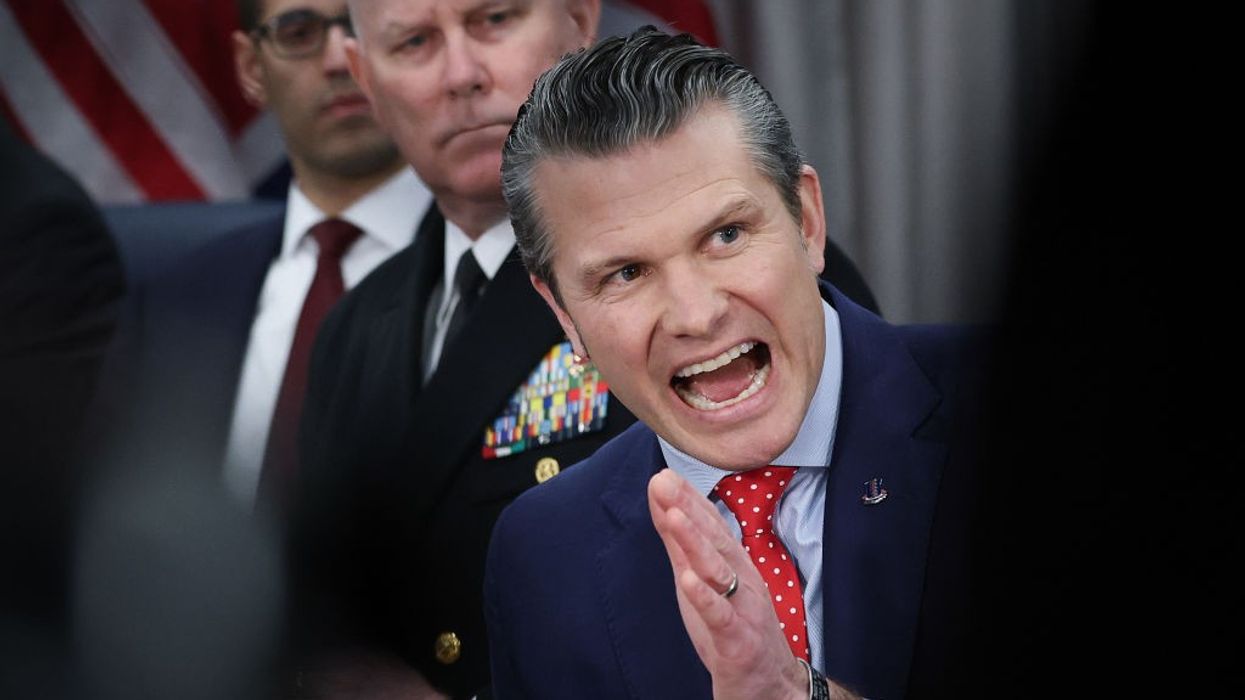
Particularly in a hierarchical institution such as the military, the leadership exemplifies the values that the institution expects all members to uphold.
During the Trump administration’s recent torrent of executive orders, the Navy paused sexual assault and prevention trainings in response to the administration’s demand to remove all DEI initiatives and programs. The U.S. armed forces are plagued by an epidemic of sexual assault, one of the most devastating markers of persistent gender inequality within the military. The Navy’s pause of just a few days signals the tenuous nature of protections for service members, especially women and minorities, who are by far the most numerous victims of assault.
The military’s sexual assault crisis speaks to the violence embedded within miliary institutions. Intimate partner violence, for instance, is disproportionately high among military and veterans populations. SAPRO, the Sexual Assault and Prevention Response Office of the Department of Defense (DOD), is the only resource that provides prevention and trainings on sexual assault and advocacy services to victims. It is the sole database for reporting and prevalence tracking of unwanted sexual contact in the military, making the Navy’s pause all the more alarming.
The U.S. military has been systematically tracking data via SAPRO since 2005 when the National Defense Authorization Act began to require information to be presented to Congress. However, independent reporting and data from organizations assisting sexual assault survivors indicate a spike in assaults immediately following the invasion of Afghanistan in 2001. This is the year the United States declared an official “Global War on Terror,” which the U.S. military still carries out operations for in 78 countries as of 2023. Also in 2001, the National Sexual Violence Resource Center officially designated April as Sexual Assault Awareness Month.
In any other workplace, if 1 in 4 women were sexually assaulted by their coworker or superior, there would be a national outrage.
This Sexual Assault Awareness month, we must talk about sexual assault as a disastrous cost of war.
The military’s epidemic of sexual assault is much worse than the DOD is willing to admit. Our Costs of War project research compared the Department of Defense’s data on sexual assault prevalence to independent (non-DOD) data to estimate sexual assault figures within the military from 2001 through 2023. We found that independent data suggest that actual sexual assault prevalence is 2 to 4 times higher than official DOD estimations.
The Trump administration’s policies will only worsen this crisis. Particularly in a hierarchical institution such as the military, the leadership exemplifies the values that the institution expects all members to uphold. It is notable that Defense Secretary Pete Hegseth was himself accused of sexual assault in 2017 and has a long track record of sexist behavior.
Since 2001, 24% of active-duty women and 1.9% of active-duty men in the U.S. military have experienced sexual assault. That is almost one-fourth of all women in the U.S. military, and given low reporting rates, it is likely even more. Fear of retaliation is one of the primary reasons service members do not report sexual assault, with data showing that service members are 12 times more likely to face retaliation than to see their offender convicted. Nationwide, 81% of women and 43% of men reported experiencing some form of sexual harassment or assault in their lifetime.
Experiences of gender inequality are most pronounced for women of color, who experience intersecting forms of racism and sexism and are one of the fastest-growing populations within the military. Furthermore, independent data also confirm that queer and trans service members face a disproportionately greater risk for sexual assault.
These numbers are staggering. In any other workplace, if 1 in 4 women were sexually assaulted by their coworker or superior, there would be a national outrage.
The sexual assault crisis should draw our attention to the contradiction of military policies aimed at greater gender and racial equity when this institution waged post-9/11 wars that displaced 38 million people, directly killed 929,000 people, and indirectly killed 4.5-4.7 million people worldwide. The wars waged by the U.S. are existentially linked both to the military as an institution and to the persistent racism and sexism within the U.S. Efforts such as the bipartisan, bicameral legislation recently introduced to help survivors of military sexual trauma (MST) more easily access care and benefits, as well as boost MST claims processing, must be resoundingly supported. One of the bill’s sponsors, Rep. Chellie Pingree (D-Minn.) said, “This goes far beyond administrative shortcomings at the VA; it’s a fundamental breach of our moral and constitutional duty to those who served.”
Although there have been consistent internal interventions and resources intended to address military sexual assault, this form of violence continues to occur, illustrating that reforms have not meaningfully transformed institutional patterns of abuse. Military officials have themselves described, in retrospect, that the military prioritized training and deploying troops to the Iraq and Afghanistan Wars over confronting a clear institutional problem of sexual assault. In fact, the deliberate cover-up of harassments, assaults, and disappearances of service members to protect sexual predators and their enablers in the U.S. military has been evident in numerous high-profile cases over the years.
The goal is not solely to have higher reporting numbers or more initiatives, but to completely eradicate sexual assault from occuring. Sexual assault in the U.S. military is fundamentally and inextricably linked to fighting wars abroad. Important as they are, better reporting infrastructure or training and prevention programs within the DOD are not enough. This Sexual Assault Awareness Month, we should ask for more—an end to sexual assault and an end to endless wars.
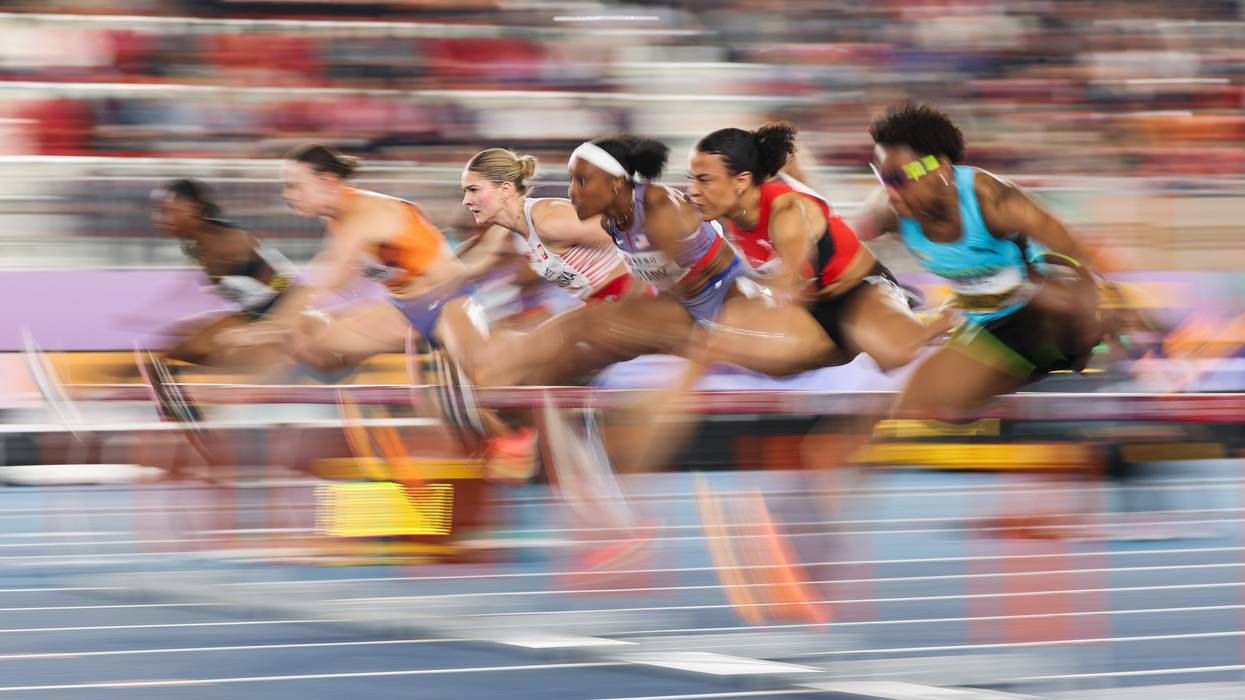
World Athletics calls it “protecting” women’s sports. History calls it discrimination.
On March 25, World Athletics president Sebastian Coe announced that the track and field governing body would introduce chromosomal testing of women athletes to “doggedly protect the female category.” Concern around “protecting” women athletes and the women’s category has resurged in recent years as the issue of transgender participation in sport has become politically expedient in the United States culture war, culminating in President Donald Trump’s executive order in January banning athletes from participation on teams that don’t align with the sex assigned to them at birth.
Sex and gender verification has been utilized by sport organizations for over a century. Previous methods included “nude parade” physical examinations requiring genital inspection, chromosomal testing, and testosterone level testing. However, World Athletics (previously known as the International Association of Athletics Federations, or IAAF) stopped mandatory sex testing in 1991, due to scientific inaccuracy, inability to prove unfair advantages, and ethical concerns. Women athletes could continue to be tested if their gender presentation was deemed “suspicious.” Notably, Indian track star Pratima Gaonkar committed suicide in 2001 after failing a sex test. In the 2010s, South African distance runner Caster Semenya and Indian hurdler Dutee Chand endured intense public scrutiny over their sex and gender after they were assumed to have androgen insensitivity syndrome. This is one of many conditions that are broadly classified as differences of sexual development (DSDs), and can occur for many reasons but are usually linked to sex chromosomes or anomalies in how the body produces or responds to hormones such as testosterone.
Unlike the World Athletics’s 2023 policy that banned trans athletes from competing in the women’s category, this policy targets women who were assigned “female” at birth, identify as women, and have always lived as women. They simply don’t have the XX chromosomes that World Athletics now deems necessary.
Chromosomal testing does not determine athletic performance and has been condemned by scientists and human rights organizations as discriminatory and unethical.
The new policy requires mandatory chromosomal testing, including a check swab and dry-blood test. While World Athletics claims to have consulted 70 sporting and advocacy groups, it is unclear who was included. Their cited scientific bibliography is largely authored by individuals affiliated with World Athletics, ignoring significant research questioning the ethics and efficacy of female eligibility policies in sport. Notably absent are two pieces by Roger Pielke and colleagues: one exposing flaws in World Athletics’ original 2011 policy and another reaffirming those issues after the organization admitted its female eligibility research was flawed.
The well-established problem with World Athletics’ chromosomal testing is that it actually has no linkage to performance. Put simply, “failing” a chromosomal, DNA, or sex test tells us nothing about whether an athlete will destroy a world record or even win a race. “Failed” tests, more often than not, indicate a chromosomal anomaly—something that neither enhances an individual’s athletic ability nor impedes their quality of life (if this were the case, it would probably be diagnosed way before an elite sport competition!). The inability of chromosomal testing to determine an “unfair” performance advantage was resoundingly proven by geneticists, bioethicists, medical researchers, physicians, and endocrinologists in the late 1980s and early 1990s, which was what led to the abolition of mandatory sex testing.
Systematically, policies like these disproportionately target women from the Global South and reinforce racial and gender biases. A 2020 Human Rights Watch report detailed discrimination, surveillance, and coerced medical intervention that elite athletes from the Global South experienced when seeking to comply with sex testing practices. The women interviewed detailed how medical practitioners did not fully explain the tests and procedures conducted, and the humiliation and discrimination they experienced in their communities when their medical records were disclosed without informed consent. This may be why earlier, in 2019, the World Medical Association released a notice imploring physicians to “take no part in implementing new eligibility regulations for classifying female athletes.”
These concerns highlight the urgency for educating sport governing bodies, and the general public, about the broader implications for the autonomy and safety of girls and women that can result from “protective” policies in sport. While the new World Athletics policy does not mandate surgical alteration, history shows the risks of such regulations. In 2013, four elite women athletes underwent gonadectomies and partial clitoridectomies—an unnecessary and harmful procedure classified as a form of female genital mutilation/cutting (FGM/C)--to comply with eligibility rules. These policies can serve to legitimize and reinforce cultural practices with serious health risks for girls and women.
Women athletes must already carefully negotiate their athleticism with market-driven expectations of femininity to secure sponsorship deals, which are especially critical for women athletes because of the sport industry’s pervasive pay inequity. Mainstream beauty norms—favoring whiteness, thinness, and hairlessness—inform which bodies will be deemed “suspicious” under World Athletics’ new policy. Black and brown athletes, particularly those with more muscular builds and deeper voices, are more likely to be targeted. Research shows that elite women athletes already feel they are forced to choose between appearing “strong” or “feminine”; the reintroduction of sex testing may add further pressure for women athletes to conform with rigid gender norms to avoid harassment and surveillance. Athletes like Algerian boxer Imane Khelif and Semenya endured an onslaught of online attacks following public scrutiny of their gender. Women in sports generally already face disproportionate abuse, with an NCAA study finding that women basketball players receive three times more abusive messages than their male counterparts.
World Athletics’ claims that chromosomal testing will protect women athletes and the women’s category. However, chromosomal testing does not determine athletic performance and has been condemned by scientists and human rights organizations as discriminatory and unethical. Rather than “protecting” the women’s category, these regulations reinforce harmful gender norms, disproportionately target women from marginalized backgrounds, and risk severe personal and professional consequences for women athletes.
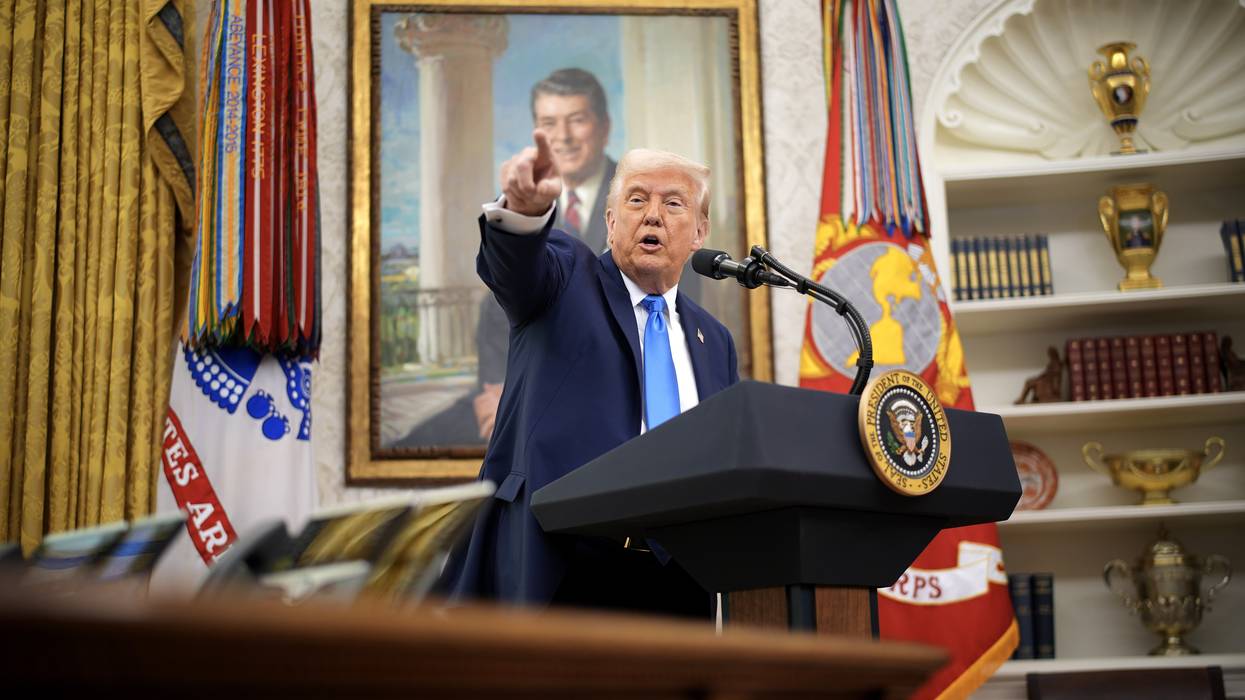
The list of common characteristics in the study of 20th-century fascist dictators and their regimes includes 14 categories in all, and Trump and his MAGA disciples have already exhibited characteristics in most of these categories.
There's a relatively obscure quotation, sometimes attributed to the 20th-century American author Sinclair Lewis, that reads, "When fascism comes to America, it will be wrapped in the flag and carrying a cross."
Although no one’s actually sure that Sinclair Lewis ever wrote or said this, his 1935 novel, It Can't Happen Here, centers around a flag-hugging, Bible-thumping politician named Berzelius (”Buzz”) Windrip. Despite having no particular leadership skills other than the ability to mesmerize large audiences by appealing to their baser instincts (and to bully those people who aren’t so easily mesmerized), Windrip is elected President of the United States. Shortly after Windrip takes office, through a flurry of executive orders, appointments of unqualified cronies to key governmental positions, and then a declaration of martial law, Windrip quickly makes the transition from a democratically elected president to a brutal, fascist dictator. The novel’s title, It Can’t Happen Here, refers to the mindset of key characters in the novel who fail to recognize Windrip’s fascist agenda before it’s too late.
The question now is whether the people of the United States have the necessary critical thinking skills, moral compass, and political courage to reverse the rise of fascism in our country before further harm is done.
Written almost a century ago during the rise of fascism in Europe prior to World War II, It Can’t Happen Here is disturbingly prescient today. Buzz Windrip’s personal traits, his rhetoric, and the path through which he initially becomes the democratically elected U.S. president, and soon afterward, the country’s first full-fledged fascist dictator, bear an uncanny resemblance to the personality traits and rhetoric of Donald Trump and the path through which he has come thus far to be the 47th President of the United States, and through which he appears to be on course to become our country’s first full-fledged…. But no! It can’t happen here! Or can it?
Trump’s uncanny resemblance to the fictional dictator in Sinclair Lewis’s 1935 novel is disconcerting. The far more important concern, though, is the degree to which Trump resembles real-life fascist dictators, past and present. A study of notorious 20th- century fascist dictators, including Hitler and Mussolini, concluded that they and their regimes all had several characteristics in common. (The current regimes of Vladimir Putin in Russia, Xi Jinping in China, and Kim Jong Un in North Korea also share these characteristics.)
After losing the 2020 presidential election, Trump urged a large crowd of supporters on the morning of January 6, 2021 to march to the Capitol and “fight like hell.” After the violent assault on the Capitol had been going on for more than three hours, when Trump finally posted a video message urging the rioters to go home, he told them, “We love you, you’re very special.” On his first day back in office in 2025, he granted clemency to the more than 1,500 rioters who were charged with crimes related to the attack on the Capitol, including rioters convicted of assaulting police officers and rioters with past convictions for other violent crimes, including sexual assault.
At the beginning of his second term, Trump appointed Elon Musk, reportedly the world’s richest man and the CEO of companies that have received tens of billions of dollars in federal funding, to head the ad hoc “Department of Government Efficiency,” with the power to summarily fire vast numbers of federal employees without cause and to potentially steer federal funding away from other companies and toward his own.
Some of Trump’s most notorious lies include his claims that he won the 2020 presidential election; that the January 6, 2021 insurrectionist attack on the Capitol was a “day of love;” and that the Ukrainians themselves, not the Russian invaders, are responsible for starting the war in Ukraine. The Washington Post catalogued more than 30,000 other demonstrably false or misleading statements that Trump made during his first term as president. Currently, a special team within the Trump administration is spewing out pro-Trump propaganda at a prodigious rate on social media, including a portrait of Trump wearing a golden crown with the caption, “Long Live the King,” via Elon Musk’s “X” platform.
Trump’s favorite scapegoats are undocumented immigrants whom he frequently refers to as “criminals,” “gang members,” and “killers,”and who he claims are stealing jobs and benefits from U.S. citizens. In fact, undocumented immigrants do the work that most U.S. citizens are unwilling to do; they pay far more in federal taxes than they receive in federal benefits; and, unlike Trump himself, they are convicted of committing serious crimes at a lower rate than the U.S. population as a whole.
The many grossly unqualified sycophants who Trump has nominated or appointed to key government positions in his second administration include Secretary of Defense Pete Hegseth, a favorite Fox News interviewee who has himself been accused of alcohol abuse, sexual misconduct, and mismanagement of nonprofit financial funds, and who has spoken in defense of U.S. soldiers charged with war crimes; Secretary of Health and Human Services Robert F. Kennedy Jr. who seeds doubt concerning vaccine effectiveness and promotes other medical quackery; and FBI Director Kash Patel who endorses the “deep state” theory and who has previously described jailed January 6 insurrectionists as “political prisoners.”
Trump boasted in a 2005 video recording about not only groping women and kissing them without their consent, but about an incident involving a married woman in which, in his own words, “I moved on her like a bitch.” He added, “I failed, I admit it, I did try and “f—k her.” Trump called Hillary Clinton a “nasty woman” during their final 2016 presidential debate; he has repeatedly referred to Sen. Elizabeth Warren (D-Mass.) as “Pocahontas;” and he entertained a joke during a 2024 campaign rally implying that past Vice President Kamala Harris once worked as a prostitute.
The list of common characteristics in the study of 20th-century fascist dictators and their regimes includes 14 categories in all, and Trump and his MAGA disciples have already exhibited characteristics in most of these categories. One common characteristic not mentioned in the study is the fact that all the 20th-century fascist dictators met ignominious ends—but not before they had caused enormous damage, including the deaths of millions of innocent people.
Questions about what fascism might look like when it comes to the United States of America and whether it can or cannot happen here are no longer merely hypothetical. Fascism has come to the USA. It is happening here. The question now is whether the people of the United States have the necessary critical thinking skills, moral compass, and political courage to reverse the rise of fascism in our country before further harm is done, or will we be like the characters in Sinclair Lewis’ 1935 novel; the people in Hitler’s Germany and Mussolini’s Italy; and the people in current day Russia, China, and North Korea and allow our system of government to devolve into a full-fledged fascist dictatorship.
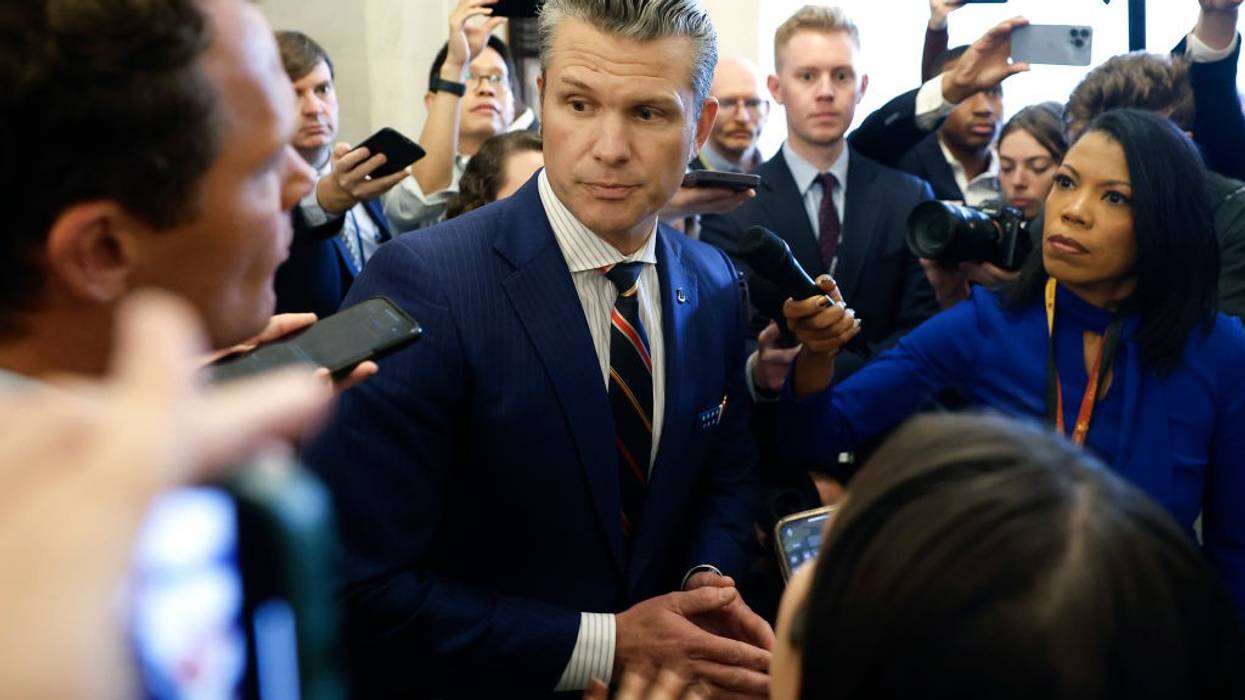
I will protest the nomination of Fox News commentator and Trump’s buddy Pete Hegseth to lead the DOD over sexual assault allegations, his views on women in the military, and his history of financial mismanagement.
On January 14 at 9:30 am, the Fox News commentator and Army National Guard Major Pete Hegseth is scheduled to be questioned by the U.S. Senate Armed Services Committee in a confirmation hearing on President-elect Donald Trump's nomination for him to be Secretary of Defense.
I, along with many other women and men military veterans, will be at the hearing to strongly protest Hegseth's nomination and demand that the committee refuse to send the nomination forward for a vote of the entire Senate.
I am an unlikely protester. I served 29 years in the U.S. Army and Army Reserves. I retired as a colonel. I was also a U.S. diplomat for 16 years and was on the team that reopened the U.S. Embassy in Kabul, Afghanistan in December 2001. I resigned from the U.S. government in March 2003 in opposition to the U.S. war on Iraq.
I will protest lackluster Army National Guard Major Pete Hegseth's nomination on several points, but my primary concern is his physical and psychological violence toward women.
I am 78 years old. I joined the Army in 1967 when less than 1% of U.S. military forces were women. Now, 17.5% of U.S. military forces are women.
Sexual assault in the military is rampant, and Hegseth has a history of sexual violence toward women. He secretly paid a financial settlement to a woman who had accused him of raping her in 2017.
Even Hegseth's mother, Penelope Hegseth, in 2018, during Hegseth's divorce proceedings from his second wife, strongly criticized his treatment of women. In an email obtained by The New York Times, Hegseth's mother wrote:
As a woman and your mother I feel I must speak out... You are an abuser of women—that is the ugly truth and I have no respect for any man that belittles, lies, cheats, sleeps around, and uses women for his own power and ego. You are that man (and have been for years) and as your mother it pains me and embarrasses me to say that, but it is the sad, sad truth. [...] It's time for a someone (I wish it was a strong man) to stand up to your abusive behavior and call it out, especially against women. [...] On behalf of all the women (and I know it's many) you have abused in some way, I say... get some help and take an honest look at yourself.
The Associated Press reported that "Tim Palatore, Hegseth's attorney, has revealed that the woman who made the allegations was paid an undisclosed sum in 2023 as part of a confidential settlement to head off the threat of what he described as a baseless lawsuit."
A 22-page police report was released in response to a public records request and offers the first detailed account of what the woman alleged to have transpired—one that is at odds with Hegseth's version of events. The report cited police interviews with the alleged victim, a nurse who treated her, a hotel staffer, another woman at the event, and Hegseth.
Considering the horrific history of sexual assault in the military, Hegseth's payoff to someone who has accused him of sexual assault must disqualify Hegseth from confirmation as Secretary of Defense.
With sexual assault in the military a continuing problem for women…and for men, there is no way that a person who has been involved in even allegations of sexual assault should be Secretary of Defense… or president, for that matter, but that's another issue for evangelical Christians, Catholics, and other religious conservatives who voted for Trump to explain to their daughters.
The number of sexual assaults in the U.S. military is likely two to four times higher than government estimates, according to a study from Costs of War Project at Brown University's Watson Institute. "During and beyond the 20 years of the post-9/11 wars, independent data suggest that actual sexual assault prevalence is two to four times higher than DOD estimations—75,569 cases in 2021 and 73,695 cases in 2023," the authors wrote in the report, which was released August 14, 2024.
The Costs of War Project report comes a year after a Pentagon report found that reports of sexual assault at the country's three military academies increased by over 18% between 2021 and 2022, setting a new record.
A 2016 Department of Veterans Affairs study of over 20,000 post-9/11 veterans and service members found that 41.5% of women and 4% of men experienced some form of sexual trauma while serving. One in three women and 1 in 50 men have reported military sexual trauma during VA healthcare screenings.
And finally, if the previous concern about on sexual assault allegations isn't enough to torpedo Hegseth's nomination, his statements on women's role in the military should sink his nomination.
In a podcast, Hegseth said the military "should not have women in combat roles" and that "men in those positions are more capable." In another podcast he said that female soldiers "shouldn't be in my infantry battalion."
U.S. Sen. Tammy Duckworth (D-Ill.), a former Army National Guard member and a Purple Heart recipient, said Hegseth was "dangerous, plain and simple." Duckworth was one of the first women in the Army to fly combat missions during Operation Iraqi Freedom. She lost both of her legs and partial use of her right arm in 2004 after a rocket-propelled grenade struck her helicopter. "Where do you think I lost my legs? In a bar fight? I'm pretty sure I was in combat when that happened," she told CNN. "It just shows how out of touch he is with the nature of modern warfare if he thinks that we can keep women behind some sort of imaginary line, which is not the way warfare is today."
Additionally, Sen. Duckworth added: "It's frankly an insult and really troubling that Mr. Trump would nominate someone who has admitted that he's paid off a victim who has claimed rape allegations against him... This is not the kind of person you want to lead the Department of Defense."
If sexual assault issues and his negative view of women's role in the military do not convince the Senate's Armed Services Committee that Hegseth's nomination should not go forward, then the mismanagement of funds of tiny organizations compared to the massive Department of Defense budget should take him out of consideration for the extraordinary position of Secretary of Defense.
In the face of serious allegations of financial mismanagement, sexual impropriety, and personal misconduct while in the organizations, Hegseth was forced to resign from the two nonprofit advocacy groups that he ran, Veterans for Freedom and Concerned Veterans for America.
According to CBS, "Hegseth received a six-figure severance payment and signed a non-disclosure agreement when he exited the organization Concerned Veterans of America" in 2016. "The payment came amid allegations of financial mismanagement, repeated incidents of intoxication and sexual impropriety, as well as dissension among its leaders over Hegseth's foreign policy views," CBS reported.
Prior to joining Concerned Veterans for America, Hegseth faced allegations of financial mismanagement from Vets for Freedom (VFF), where he worked from 2007 to 2010.
"Donors were concerned their money was being wasted and arranged for VFF to be merged with another organization, Military Families United, which took over most of its management," CBS reported further. "Revenue at VFF dwindled to $268,000 by 2010 and by 2011, the organization's revenue was listed as $22,000. Hegseth joined Concerned Veterans for America the following year."
Margaret Hoover, host of the PBS program "Firing Line" and a former adviser to Vets for Freedom, said in an interview on CNN that Hegseth had managed the organization "very poorly." Hoover expressed doubt about his ability to run the sprawling Defense Department when he had struggled with a staff of less than 10 people, and a budget of under $10 million.