
SUBSCRIBE TO OUR FREE NEWSLETTER
Daily news & progressive opinion—funded by the people, not the corporations—delivered straight to your inbox.
5
#000000
#FFFFFF
To donate by check, phone, or other method, see our More Ways to Give page.


Daily news & progressive opinion—funded by the people, not the corporations—delivered straight to your inbox.
“Trump’s claims about inflation are false, and you can go to the grocery store and see it yourself,” said one economist.
A new poll shows US voters' approval of President Donald Trump's handling of the economy has hit an all-time low, even as the president and his officials insist the economy is the best in the world.
The latest Associated Press-NORC Center for Public Affairs Research poll released Thursday found that only 31% of voters approve of Trump's handling of the economy, the lowest figure in that survey throughout either of his two terms in office. Overall, 68% of voters said that the current state of the economy was "poor."
What's more, Trump's approval rating on the economy among Republican voters now stands at just 69%, a strikingly low figure for a president who has consistently commanded loyalty from the GOP base.
Despite the grim numbers, the president and his administration have continued to say that the US is now in the middle of an economic boom.
During a Thursday morning interview on CNBC, Commerce Secretary Howard Lutnick said that the US now has "the greatest $30 trillion economy in the world."
"We are doing great," Lutnick said. "Nothing bad is happening. Greatness is happening. We grew at 4% GDP! Come on!"
Lutnick: "Jay Powell is too afraid to lead the greatest $30t economy in the world. We should be leading with our front foot. Instead we are always leaning back as if something bad is happening. We are doing great. Nothing bad is happening. Greatness is happening. We're growing 4%… pic.twitter.com/uWqrlwpllE
— Aaron Rupar (@atrupar) December 11, 2025
Lutnick's message echoes the one Trump delivered earlier this week during a rally in Pennsylvania, where he said that voters' concerns about being able to afford basics such as groceries, electricity, and healthcare were a "hoax" concocted by Democrats.
"Prices are coming down very substantially," Trump falsely claimed during his speech. "But they have a new word. You know, they always have a hoax. The new word is affordability."
Trump on the US economy: “I said it the other day. And a lot of people misinterpreted it. They said ‘Oh he doesn’t realize prices are high.’ Prices are coming down very substantially. But they have a new word. You know, they always have a hoax. The new word is affordability.” pic.twitter.com/JkErFnkT1D
— Sahil Kapur (@sahilkapur) December 10, 2025
As NPR reported on Thursday, data shows that the prices of groceries and electricity have continued to rise throughout Trump's second term, directly contradicting his claims that prices are "coming down."
University of Michigan economist Betsey Stevenson told NPR that Trump is playing with fire by making false claims about prices when US consumers can see costs persistently going up.
"Trump's claims about inflation are false, and you can go to the grocery store and see it yourself," Stevenson said.
Even some members of Trump's own party are growing wary of him insisting that America is experiencing an unprecedented economic boom when voters feel otherwise.
Sen. Lisa Murkowski (R-Alaska) told The Hill that Trump's insistence on making happy talk about the economy would not fly with voters.
"You can’t call it a hoax and suggest that people are going to believe it," she said. "What you say matters."
An anonymous Republican senator also told The Hill that they were concerned about the optics of Trump building a massive luxury ballroom in the White House at a time when Americans say they are struggling financially.
"The cost of living just makes life very difficult on people," the senator stressed.
And Sen. Shelley Moore Capito (R-W.Va.) gently pushed back on Trump's messaging by telling CNN that "a lot of people are still having trouble making ends meet" in her state.
"This is not about making the reactor licensing process more efficient, but about weakening safety and security oversight across the board, a long-standing industry goal," says one nuclear safety expert.
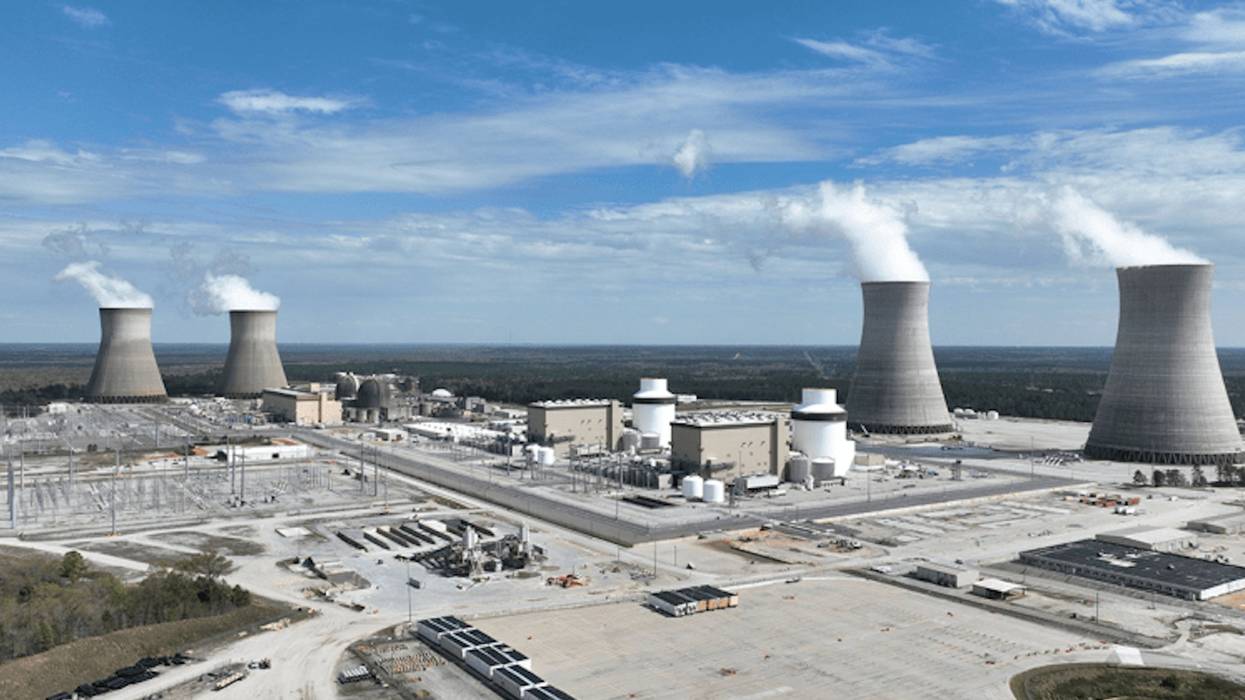
As U.S. senators prepare to vote on a bipartisan bill proponents say will accelerate the development and commercialization of advanced nuclear reactor technologies, the Union of Concerned Scientists warned Monday that the legislation would increase the chances of a "catastrophic" meltdown by weakening the Nuclear Regulatory Commission—an agency already ridden by conflicts of interest.
Upper chamber lawmakers are expected to vote this week on a package that includes provisions from the Accelerating Deployment of Versatile, Advanced Nuclear for Clean Energy (ADVANCE) Act, introduced last year by Sen. Shelley Moore Capito (R-W.Va.), and legislation passed by the House of Representatives in a 365-36 vote on February 28.
Proponents of the legislation argue it will facilitate U.S. nuclear leadership, develop and deploy new reactor technology, preserve existing nuclear energy, and more.
"A compromised NRC could lead to a catastrophic reactor meltdown impacting an entire region for a generation."
However, critics including the Union of Concerned Scientists (UCS) argue that the bill threatens the independence of the Nuclear Regulatory Commission (NRC), some of whose officials have long been criticized for their dangerously close ties to the industry they regulate. Additionally, NRC advisers have been accused of undisclosed conflicts of interest.
"It's extremely disappointing that, without any meaningful debate, Congress is about to erase 50 years of independent nuclear safety oversight by changing the NRC's mission to not only protect public health and safety but also to protect the financial health of the industry and its investors," UCS director of nuclear power safety Edwin Lyman said in a statement Monday.
"Just as lax regulation by the [Federal Aviation Administration]—an agency already burdened by conflicts of interests—can lead to a catastrophic failure of an aircraft, a compromised NRC could lead to a catastrophic reactor meltdown impacting an entire region for a generation," he continued.
"Make no mistake: This is not about making the reactor licensing process more efficient, but about weakening safety and security oversight across the board, a long-standing industry goal," Lyman contended. "The change to the NRC's mission effectively directs the agency to enforce only the bare minimum level of regulation at every facility it oversees across the United States."
"Passage of this legislation will only increase the danger to people already living downwind of nuclear facilities from a severe accident or terrorist attack, and it will make it even more difficult for communities to prevent risky, experimental reactors from being sited in their midst," he added.
In a February opinion piece published by The Hill, Lyman asserted that the ADVANCE Act would "put the proverbial fox in charge of the henhouse" by eroding the independence of an agency that critics say is already too cozy with the nuclear industry.
"Congress needs to strengthen, rather than weaken, the NRC's science-based safety focus," Lyman stressed.
This post has been updated to clarify that the Senate and House bills are part of a broader package, which senators ultimately passed on June 18.
For those that live within the pipeline’s blast zone, their kids and grandkids may never be allowed to experience the joy of tenting out in the backyard unless Biden comes through and enforces the law.
Adam McKay could make a horror movie and he wouldn’t have to make up a single thing.
On August 19, 2000, two extended families were camping next to the Pecos River in New Mexico, just a few miles north of the Texas border. An hour before sunrise, as birds were beginning to sing, some of the 12 campers (seven adults and five very young children) may have been up early but most were probably still in their sleeping bags. All were oblivious to the hellscape that was about to envelop them.
At 5:26 a.m. a 30-inch gas pipeline, operating at a pressure of about 675 pounds per square inch, burst, sending flames 500 feet into the air, which were visible 20 miles away in Carlsbad. The ruptured pipe became a blowtorch aimed directly at the campers 200 yards away. Six made it into the river, but even that couldn’t save them. The others never made it out of their tents. They were burned alive, incinerated. By the end of the day 10 had succumbed. Two days later another died and the last one passed away in a couple of weeks, having never regained consciousness.
The fire lasted for 55 minutes until the valves were finally shut off and it burned itself out.
“It incinerated everything in its path.”
“The evidence out there at the scene indicates it was horrendously hot,” State Police Capt. John Balderston said. “It incinerated everything in its path. If it burned for as long as we think it burned, that explains the extensive damage to the vehicles and to the property and people.”
“I’ve never seen anything like this,” he added. “We’ve had some tragedies but this is the worst I’ve seen.”
At the time, the spokeswoman for the pipeline company said investigators might never be able to say what sparked the explosion. She said it could have been anything and seemed to shift responsibility to the campers by saying it could have been someone lighting a cigarette or coal from a barbecue.
She was wrong. Investigators pretty quickly were able to determine the cause and it had nothing to do with the deceased victims. The pipe ruptured and exploded because of severe internal corrosion, according to a report issued by the National Transportation Safety Board (NTSB). The report noted on page 35 that the American Society of Mechanical Engineers (ASME) code for gas piping says that internal coating of pipelines was one way to control internal corrosion. It also referenced on page 36 a Guide for Gas Transmission and Distribution Piping Systems, which was approved by the American National Standards Institute (ANSI) and put out by the Gas Piping Technology Committee, which is affiliated with the American Gas Association. That guide said an internal coating should be considered when designing a gas pipeline system because it would help mitigate internal corrosion. The ruptured pipe that killed those 12 people did not have an internal coating nor was it required.
Fast forward 23 years and, as a testament to how continuously beholden politicians on both sides of the aisle, from Sens. Shelley Moore Capito (R.-W.Va.) and Mitch McConnell (R-Ky.) to Joe Manchin (D-W.Va.) and Chuck Schumer (D-N.Y.), are to the fossil fuel industry, internal coating of gas pipelines is still not required. It’s an optional “design consideration”(p 240-241), which leads to another false statement by a different spokeswoman for a different pipeline.
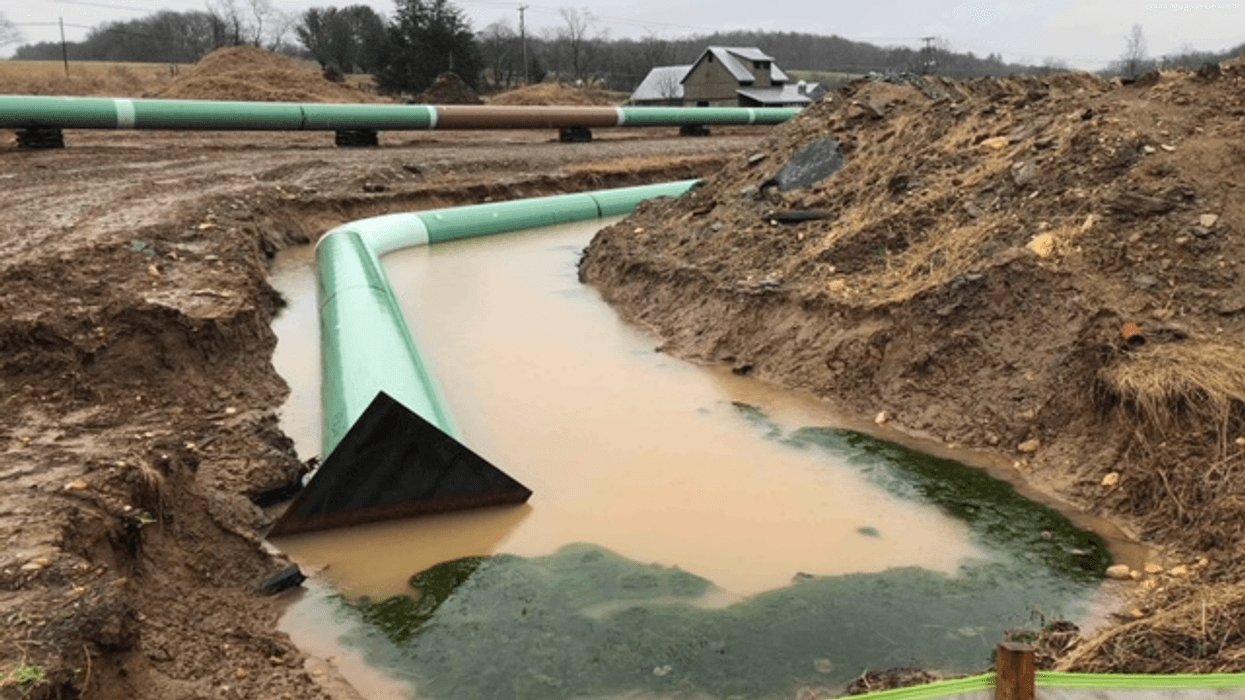
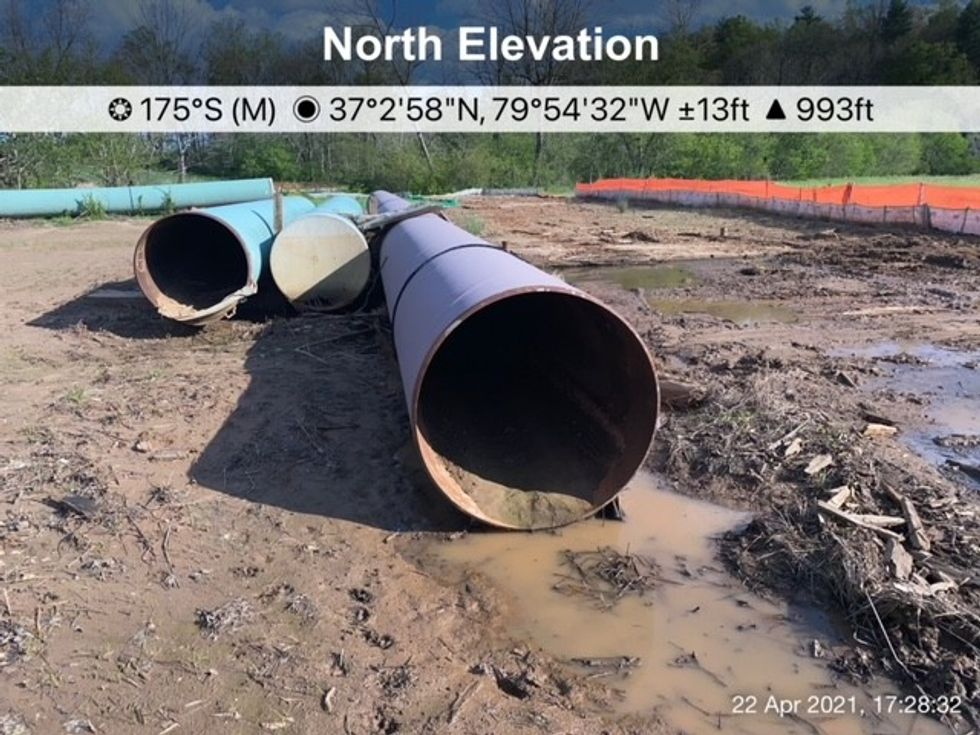
Mountain Valley Pipeline’s (MVP) Natalie Cox has stated, “First and foremost, the safe construction and operation of the MVP project remains our top priority.” If that was true, MVP would have voluntarily coated the interior of its pipes. But since it isn’t required, they didn’t bother going to the extra expense, safety be damned. This is especially problematic given that so much MVP pipe has had rain and snow get inside its many open ends for years now. Some of the pipe has even been sitting in water filled ditches.

This is how MVP takes care of its pipe.
We also know that Natalie Cox’s statement is untrue because of MVP’s refusal to properly address the defective exterior coating on its pipe. An adequate external corrosion-proof coating is required by law, and the debt deal doesn’t change that. Even MVP’s lawyer Donald Verrilli (who former President Barack Obama chose to be his solicitor general) said that any environmental claim that is not related to the permitting process would not be covered by the debt deal.
So now the ball is in President Joe Biden’s and Pete Buttigieg’s court. As Secretary of the Department of Transportation, Buttigieg oversees PHMSA, the Pipeline and Hazardous Material Safety Administration, which is tasked with enforcing the coating regulations. But ultimately Biden is in charge and he is the one who will be on the ballot and will have to answer to voters, although Buttigieg may hope to be on the ballot again himself someday.
All the media wants to talk about is former President Donald Trump and whether he is above the law and how he wants to drag out his legal problems long enough that he can make them go away if he is reelected. But another worthwhile question is whether or not the fossil fuel industry is above the law.
They want to bury as much illegal dangerous pipe as possible, as quickly as possible, which is exactly what they’re doing.
Unlike Trump, MVP wants to speed things up. They want to bury as much illegal dangerous pipe as possible, as quickly as possible, which is exactly what they’re doing. They refuse to have the pipe coating independently and transparently tested because they know what the results will be. Those tests have already been done on Keystone XL (KXL) pipe, which sat out in the sun and elements for many years beyond what the coating manufacturer said was acceptable, just as MVP pipe has.
The law says that pipe coating must resist cracking because cracks in the coating will let water come into contact with the steel pipe, beginning the corrosion process which can lead to ruptures. Every single test of KXL coating showed cracks (p 19). In describing the KXL coating, the test study’s authors used terms like “no longer acceptable,” “total failures,” “completely failed to retain their original properties and attributes,” and “no longer fit for purpose.”
So we can believe the study or we can believe Natalie Cox and Joe Manchin. Who will Joe Biden believe? What will he do? We know what Trump would do. Is Biden any different? Don’t think that 2016 can’t happen all over again if people feel so disheartened that they don’t even bother to vote.

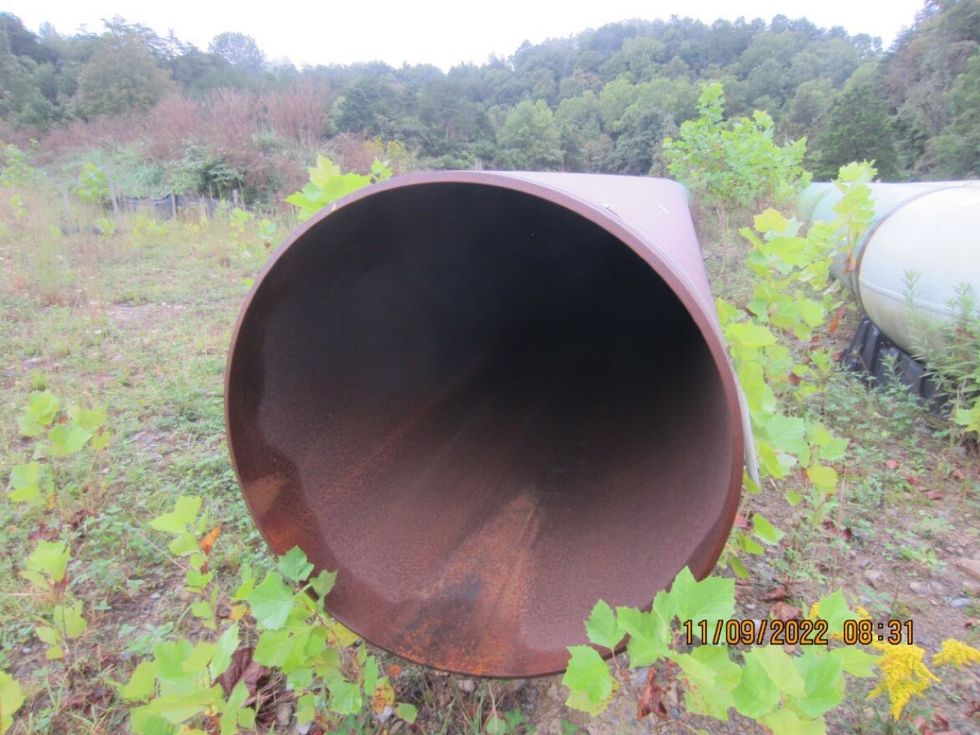
Typical MVP pipe with no internal corrosion-proof coating but plenty of rust.
The only good thing that can be said regarding the explosion that killed the 12 campers at the Pecos River is that, until the time of their horrific deaths, they hopefully were at peace and they certainly weren’t worried about being in imminent danger.
The same can’t be said for all the people living near the MVP right-of-way. The pipeline has been weighing on them for almost a decade and that weight will get much heavier if MVP ever comes online. They’ll be wondering will it explode tonight, tomorrow, this week, this year? Natalie Cox would probably say it will never explode, which sounds a lot like what Stockton Rush said about his Titan sub that would never implode. He was right for years, until earlier this summer… when he wasn’t. Like MVP, the Titan sub was also built with inferior materials. What’s a life worth… or five… or twelve?

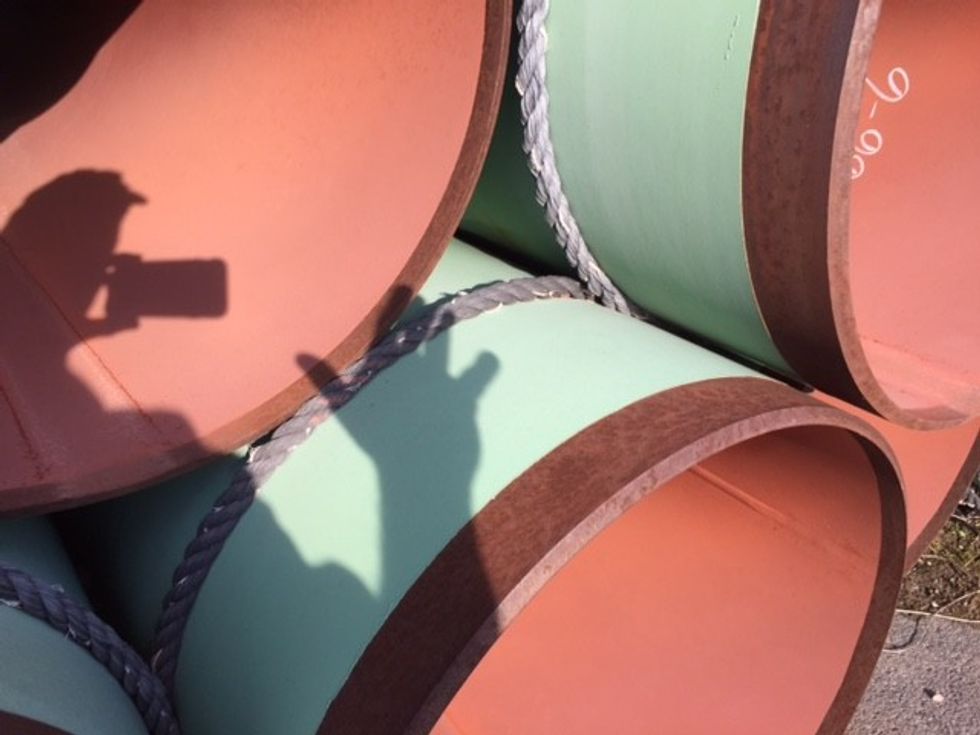
This pipe was manufactured for the now dead Constitution Pipeline. It has a factory applied internal corrosion-proof coating. The coating was applied seven years prior to this picture being taken. The inside of the Constitution pipe is obviously much better protected from corrosion than the uncoated MVP pipe.
The people living near MVP just saw a pipeline explode in Virginia next to an interstate highway. (Listen for the little girl.) They know about what can and does happen. MVP will be able to operate at more than double the pressure that the Pecos River pipeline was operating at when it exploded. Would Joe Biden, Pete Buttigieg, Joe Manchin, or Chuck Schumer want this pipeline running next to their house? A lot of people and voters in Virginia and West Virginia sure don’t.
For those that live within the blast zone, their kids and grandkids may never be allowed to experience the joy of tenting out in the backyard unless Biden comes through and enforces the law. This issue is not going to go away until it is properly addressed. Even a KXL pipeline manager said defective coating can’t be remedied in the field. Stop burying more pipe. It all needs to be replaced or sent back to the factory for proper stripping, cleaning, and recoating (see this two-minute video).