SUBSCRIBE TO OUR FREE NEWSLETTER
Daily news & progressive opinion—funded by the people, not the corporations—delivered straight to your inbox.
5
#000000
#FFFFFF
To donate by check, phone, or other method, see our More Ways to Give page.
Daily news & progressive opinion—funded by the people, not the corporations—delivered straight to your inbox.
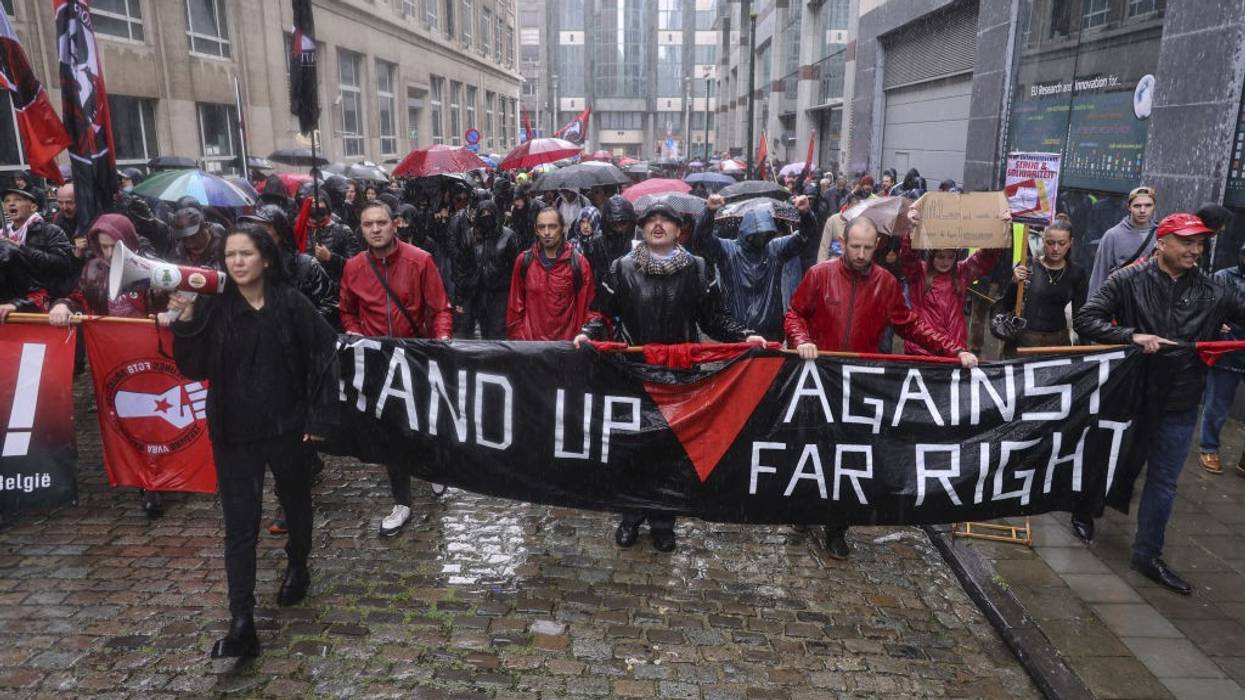
The left can take on both the center and the right by presenting a unified front, energizing new voters, and resisting the temptation to soften their positions.
The recent European Parliamentary elections went poorly for the region’s leftist parties, to say the least.
All across the continent, socialist, worker, and environmentalist parties—many of which had risen from the ashes of the Eurozone crisis—lost ground as far-right authoritarian parties picked up new support.
The Greens, primary architects of the European Union’s ambitious Green Deal, lost 19 seats of the 70 they had secured in a triumphant 2019 election. And while the Left coalition in parliament actually gained two seats to control 39 of the 720 available, the country-by-country results paint a darker picture.
The left has historically had success mobilizing those that are frustrated with the political system—and they should be unwilling to cede those potential voters to the far right.
In my native Spain, Podemos only managed a meager 3.3% of the vote, down from over 10% at their apex in 2019. Syriza, which briefly turned Greece into an epicenter of the European left, only pulled in 14.7% support, a far cry from their first place finish at nearly 24% in 2014.
And in France, Marine Le Pen’s Rassemblement National party beat the field so badly that President Emanuel Macron called snap parliamentary elections.
The overall results of the European Parliamentary elections—where millions of citizens across the European Union’s 27 member states voted to fill one of the bloc’s three legislative bodies—actually went slightly better than some observers feared. The moderate coalition of the conservative European People’s Party, the Progressive Alliance of Socialists and Democrats, and the weakened liberal Renew Europe party looks poised to maintain leadership, although the far right’s influence over the body undoubtedly grew.
The two far-right groups in parliament—Giorgia Meloni’s European Conservatives and Reformists Party and Marine Le Pen’s more eurosceptic Identity and Democracy party—gained a combined 16 seats. Although an alliance is not on the horizon as of now with the two parties differing over the role of the E.U., together their bloc would nearly match the center left coalition.
And that’s not counting Alternative for Germany (AfD) which, despite being kicked out of Le Pen’s coalition after a leader suggested that Nazi SS officers were not necessarily criminals, placed second in Germany ahead of Prime Minister Olaf Scholz’s center-left Social Democrats.
After a setback of this magnitude, a period of reflection and restrategizing will no doubt take place. But as they grapple with a rising far right, the last thing Europe’s leftist parties should do is shift to the right themselves.
How can leftists in Europe beat back the rise of the anti-immigrant, ethnonationalist right and wrest power from centrist parties that are already pledging to weaken climate commitments? Present a unified front, energize new voters, and resist the temptation to soften their positions.
The story of the left in Europe over the past decade is one headlined by infighting and fragmentation.
Spain’s Podemos, the left-wing faction borne out of the anti-austerity “15-M protests” starting in 2011, has faced several fractures since performing well enough to form part of the ruling coalition. The split off of Más Madrid, the marriage and subsequent divorce from Izquierda Unida, and the formation of the new progressive coalition Sumar have all resulted in Spanish voters not having a clear leftist option at the ballot.
In Germany, former parliamentary co-speaker and representative from the leftist Die Linke party Sahra Wagenknecht broke away to launch her own party with a more nationalist-populist appeal. That left Die Linke scrambling to survive and opened the door for the AfD to be one of the only viable options for voters outside of the political mainstream.
People can still be motivated to participate in politics when presented with compelling reasons.
There are often legitimate disagreements between leftist parties. But working through those without breaking off into separate factions will almost certainly put the left in a stronger position.
France provides a compelling example for that strategy. Following Macron’s call for snap elections, the country’s Socialists, Greens, Communists, and Jean-Luc Mélenchon’s progressive La France Insoumise party have come together to form the Nouveau Front Populaire, a coalition that despite internal differences has a common program.
Early returns on that joint bid are promising—although Le Pen’s party is polling in first place on around 31%, the new front is only a few percentage points behind. Macron’s Renaissance party is polling a distant 10 points behind.
The French case also shows that despite poor turnout in the European elections—roughly 50% of the over 400 million eligible voters in the continent cast ballots—people can still be motivated to participate in politics when presented with compelling reasons. Over a quarter million people—or closer to 700,000, according to the labor unions—flooded the streets of France after the elections to make their voices heard against the looming threat of the right.
As Sophie Binet, leader of the left-wing CGT union which helped lead the protests, said, “It’s our responsibility to build the popular wave that will block the far right.”
The left has historically had success mobilizing those that are frustrated with the political system—and they should be unwilling to cede those potential voters to the far right. But neither can Europe’s leftist parties fall into the trap of shifting right themselves to steal a handful of votes from other parties.
As Manon Aubry, the co-chair of the Left group in the European Parliament, told Jacobin, “We spent too much time trying to protect ourselves from the reactionary agenda. We should also be offensive.”
One issue that Aubry suggests leftists could make a bigger wedge out of? Reining in out of control wealth concentration. A “tax the rich” agenda, she explained in the same interview, can inspire “most of the people who suffer from the increase of prices: The superrich have never been so rich, this is time to say stop to that.”
Instead of accommodating the right, Europe’s leftist parties should take their largely disappointing results this month as an opportunity to refocus on the core issues that matter to the working class.
To the contrary, shifting to the right in the face of growing authoritarianism can actually end up boosting that movement.
In a study published in 2022, researchers found that accommodating the far right on an issue like immigration—the unifying enemy of Europe’s right—does nothing to tamper its rise and can even help it grow. “By legitimizing a framing that is associated with the radical right, mainstream politicians can end up contributing to its success,” the researchers wrote in The Guardian.
Even if triangulating could work in the short term, would it be worth it? Seeing as the European Parliament’s center right party, emboldened by the newly more conservative makeup of the body, has already pledged to do away with a key pillar of the European Green Deal—banning the sale of combustion engines starting in 2035—the answer seems to be no.
There are several cases around Europe which show that sticking to positions can pay off electorally.
Take a look at Denmark, where the Social Democrats led by current prime minister Mette Frederiksen have adopted increasingly restrictive immigration policies in the decade since the far-right Danish People’s Party burst onto the scene. They finished behind the first-place Socialist People’s Party in this month’s elections.
France again shows this dynamic of centrist parties tightening their stances on immigration yet failing to break voters away from the far right—the showing of Macron’s Renaissance party was more than doubled up by Le Pen’s party despite Macron signing an immigration bill almost copied from her.
One of the biggest surprises of the election came in Finland, where the socialist Left Alliance pulled in 17.3% of the vote running on a platform that party leader Li Andersson described as combining “ambitious environmental and climate policy with the traditional themes of the Left: workers’ rights, investment in welfare services, equal distribution of income.”
The electoral gains of the Workers Party of Belgium and Austrian Communist Party in this election are further proof of the value of focusing on core working-class issues.
While the rise of the authoritarian right in Europe has been alarming, it is by no means guaranteed. But if the centrist coalition that has held down leadership of the bloc for decades keeps shifting rightward on key issues like immigration and climate, it risks losing—or else helping the far right achieve its goals without even having to win itself.
Instead of accommodating the right, Europe’s leftist parties should take their largely disappointing results this month as an opportunity to refocus on the core issues that matter to the working class. By doubling down on principles and putting aside minor differences to present a unified front, the left can provide a tangible, substantively different answer to the rise of fascism on the continent.
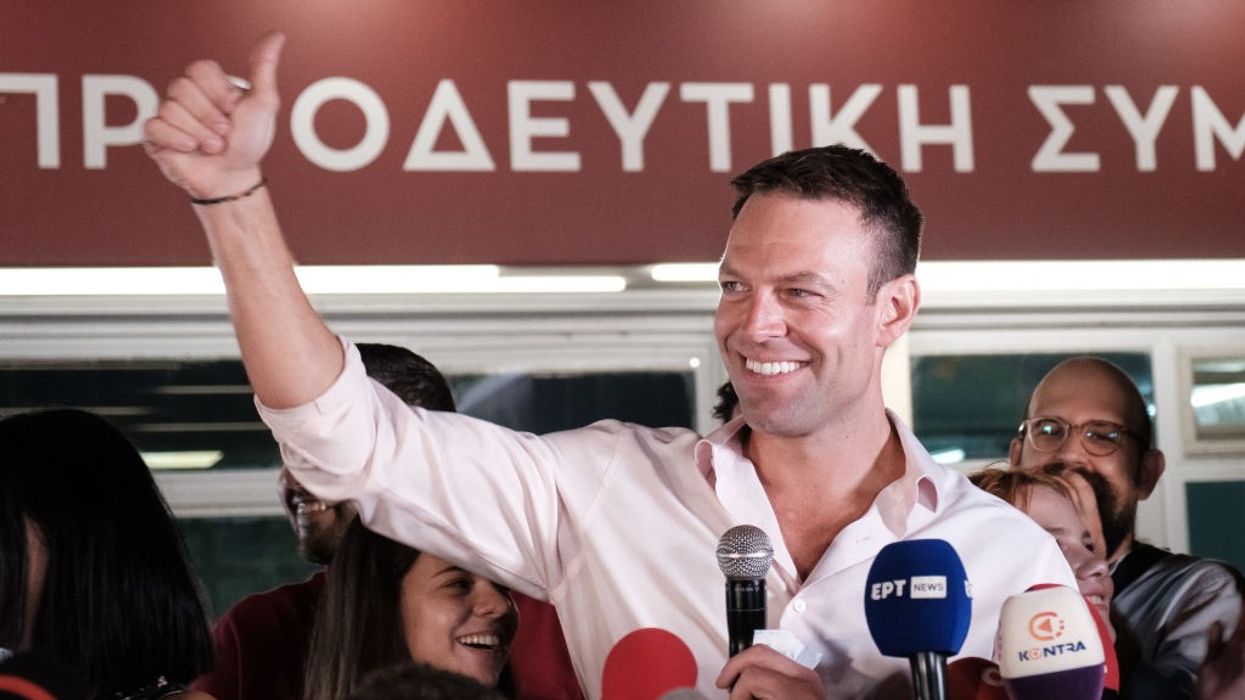
Perhaps those who voted for Kasselakis are unfamiliar with U.S. politics and the true color of the Democratic Party, but it is a vision that undoubtedly sends shivers down the spine of the members of the old guard.
The Third Way is a political term that gained currency in the late 1970s and early 1980s and is associated with the New Labour administration of Tony Blair, who served as UK’s prime minister from 1997 to 2007, but also with those of Bill Clinton in the US (1993-2001) and Gerhard Schroder in Germany (1998-2005), respectively. The term itself was developed by British sociologist Anthony Giddens and denotes a distinct political ideology that argues in favor of so-called “centrist” politics.
Essentially, Third Way proposals seek to reconcile right-wing and left-wing policies. More specifically, the “Third Way” aims to integrate center-right economic policies and center-left social policies. As such, the “Third Way” is really nothing short of a political stratagem whose underlying goal is to maintain the hegemony of capitalism by making the system sensitive to cultural and social sensibilities. Disregarding the left flank, embracing the “catch-all” thesis, and loosening the influence of labor in the economy and society at large while promoting at the same time the politics of multiculturalism define the politics and strategy of social-democratic parties that became part of the "Third Way" movement.
Make no mistake, Syriza is entering a new era with Kasselakis in charge of the party.
Indeed, by the late 1990s, virtually all the social-democratic parties in advanced capitalist societies had fallen prey to the fatal attraction of the Third Way mentality while the traditional values and beliefs of the old Left joined the dustbin of history. The only country in the western world with a radical leftwing party that did not fight for power on the ground laid by the Third Way was Greece.
Until very recently, that is.
Part of the explanation for the “delay” of Greek leftwing parties in adopting the approach of the "Third Way" is that social democracy was never established in Greece. Throughout the 20th century, the bulk of the country’s left had aligned with a Marxist-Leninist Communist Party, named KKE, but a major split occurred in 1968 following the Soviet invasion of Czechoslovakia. A big group broke from the KKE, forming KKE Interior, which eventually came to identify itself with Eurocommunism, a political movement that flourished in the late 1970s in several western European communist parties and sought to introduce socialism beyond the political and ideological orbit of Soviet communism.
The Coalition of the Radical Left (Syriza) traces its roots to the KKE Interior, although Eurocommunism disappeared as an international current shortly after its birth and, for all practical intents and purposes, the Syriza party that rose to power in Greece in 2015 was a political organization that had no discernible ideological traits whatsoever other than an expressed aversion to the fiscal austerity measures that had been imposed on the country by its international creditors -- namely, the European Commission, the European Central Bank, and the International Monetary Fund – as a condition to the bailout deals that had been crafted in 2010 and 2012, respectively.
The answer to that mystery was revealed during the leadership election that was held just this past Sunday when party members elected a gay, liberal, former Goldman Sachs trader, shipping investor, and political neophyte Stefanos Kasselakis to head the once radical left-wing Syriza party.
The ideal scenario for Syriza’s future that its new leader has envisioned is that it becomes the mirror image of the Democratic Party in the United States. Perhaps those who voted for Kasselakis are unfamiliar with U.S. politics and the true color of the Democratic Party, but it is a vision that undoubtedly sends shivers down the spine of the members of the old guard inside Syriza for they surely know that this is a recipe for the complete disappearance of the Left from the Greek political scene.
Most likely, then, what lies ahead for the party are divisions and conflict, rather than unity and peace. Eventually, an actual, formal split of the Syriza party also cannot be ruled out. Indeed, senior Syriza cadre and former education minister Nikos Filis said in a TV interview the other day that Kasselakis is “a cross between Beppe Grillo [an Italian comedian and co-founder of Italy’s Five Star Movement political party] and Trump.” In the same interview, Filis also blamed Tsipras for Syriza’s demise. And Effie Achtsioglou has already turned down every party post offered to her by Syriza’s new leader.
Make no mistake, Syriza is entering a new era with Kasselakis in charge of the party. Under Tsipras, Syriza abandoned any pretext of being a radical leftwing party. Under Kasselakis, Syriza will cease having affinity to leftist politics in any form or shape, which means that Greece will now be left with a Leninist-Stalinist Communist Party as the only large-scale organized political force fighting for the interest of the working class.
Oh, the unbearable lightness of the Greek left.

Lack of experience in governance, ideological confusion, severe structural constraints, crude political opportunism, and broken promises guaranteed that Syriza’s downfall was just a matter of time.
On January 25, 2015, Greece’s left-wing party Syriza (Coalition of the Radical Left), which subscribed to no particular ideology but ran an election campaign that vowed to end the sadistic austerity measures that had been imposed on Greece by its international creditors, shred the bailout agreements into pieces, write off a big chuck of the debt, and create jobs for hundreds of thousands of unemployed, won the legislative elections by taking 36% of the popular vote. The result of the election sent shock waves through Europe’s political establishment and marked the return of hope for Greece and left-wing parties and movements around the world.
It was indeed a historic victory for the Left, especially considering the fact that, ten years earlier, Syriza was struggling to gain just a few seats in the Greek parliament. The Communist Party of Greece was far more popular than the Coalition of the Radical Left, whose ranks included an array of leftists ranging from Trotskyists, Maoists, and neo-Marxists to greens and feminists. Indeed, while the Communist party had solid links with working-class people and exerted decisive influence on trade union activism, Syriza’s “impact on civil society was confined to the ideological attraction that it had for a small segment of the academia."
On May 21, 2023, elections were held in Greece and the conservative New Democracy party of Prime Minister Kyriakos Mitsotakis scored a landslide victory, trouncing Syriza by 20 percentage points. However, the new electoral system of proportional representation that had been introduced under the former prime minister and Syriza leader Alexis Tsipras prevents New Democracy’s 40% vote to win an outright majority of the 300 seats in parliament. Mitsotakis had revealed all along that he is not interested in sharing power, so a second election is going to take place in late June where the winning party needs to achieve just 37% of the popular vote.
It was abundantly clear to any unbiased observer that Syriza’s inner circle consisted of people who were dedicated to the pursuit and maintenance of power rather than bringing about radical change.
The scale of Syriza’s defeat in the parliamentary elections of May 21 (lost all but one of the 59 electoral regions in Greece) may signify the end of the road for the party of Alexis Tsipras. The party’s demise has in fact been underway from the very first weeks that Tsipras took office as Greece’s prime minister. Lack of experience in governance, ideological confusion, severe structural constraints, but also crude political opportunism and broken promises pretty much guaranteed that Syriza’s downfall was just a matter of time.
First, the radical-in-name-only Syriza party formed a government with the right-wing and xenophobic party Independent Greeks. There were deep disparities of all sorts between the two parties, but obviously this did not matter to Tsipras since he saw forging an alliance with right-wingers as a necessary tactical move to secure power. And power was all that ever mattered to Syriza’s leader and his inner circle. During the 2023 election campaign, Tsipras would leave many leftist voters flabbergasted by courting voters from the neo-Nazi party Golden Dawn.
Second, Tsipras signed an agreement to extend the austerity measures imposed on Greece by the euro masters, only a few weeks after coming to power.
Third, Syriza’s leader gambled on Greece’s future with a sham referendum in order to save his government from collapse and then went on to betray an entire nation that voted overwhelmingly against the continuation of austerity by signing a new bailout agreement that continued Greece’s status as Germany’s “de facto colony.”
Tsipras called the new bailout agreement “a necessary choice,” though he had engaged in ferocious attacks against his predecessors for having signed similar bailout agreements with the international creditors.
More than 40 Syriza MP’s spoke against the new measures, and half of Syriza’s central committee sided against the new agreement. But none of this mattered. Syriza had very weak democratic structures, no real links with the Greek working-class, and Tsipras had total authority over party decisions as most policy issues were decided in unofficial meetings with people close to the “great leader.” Moreover, Syriza as a party had lost its autonomy once it gained power and “was subsumed into the state.”
Indeed, it was abundantly clear to any unbiased observer that Syriza’s inner circle consisted of people who were dedicated to the pursuit and maintenance of power rather than bringing about radical change. Subsequently, following his government’s capitulation to the euro masters, Tsipras took steps to rebrand the party as a “progressive” political force and begun to tap into the legacy of the Pasok party, one of Greece’s center-left political parties, and to emulate more and more the political persona and political tactics of its charismatic founder and former Prime Minister Andreas Papandreou, who, incidentally, also appeared on the Greek political scene as a radical who made exorbitant promises to the people, such as socializing the economy, modernizing the countryside, terminating membership in NATO, and shutting down U.S. military bases in Greece.
Since the end of the Second World War, sadly enough, the Greek left has been betrayed by its own leaders on multiple occasions. The end result of Syriza’s abandonment of radicalism was defection on the part of hundreds of thousands of mostly working-class voters, though its metamorphosis into a mainstream political party attracted many center-left voters to its ranks.
In the 2019 legislative elections, Syriza still managed to gather 31.5% of the popular vote, losing just less than four points since its last victory in 2015, but the conservative New Democracy party not only won and secured a comfortable majority of 158 out of 300 seats, but had a remarkable 11-point increase from 2015.
Moreover, unlike Tsipras’ “leftist” government, Mitsotakis' conservative government kept many of its campaign promises and handled some foreign policy crises rather effectively. For example, Mitsotakis kept his promise to cut taxes, including a 22% cut to an unpopular property tax introduced during the first bailout agreement, suspended the value added tax on new construction, and reduced the insurance costs of employees and businesses.
Big capital and the middles classes have been the main beneficiaries of Mitsotakis’ efforts to rejuvenate the Greek economy. Because of the pandemic, Greece’s gross domestic product (GDP) contracted by 9% in 2020, but grew by 8.43% in 2021 and by 5.91% in 2022. Tourism contributed greatly to the strong rebound in GDP, and the economic prosperity of Greece remains strongly tied to the development of tourism.
However, Greece’s current accounts deficit increased substantially in 2022, mainly due to the worsening of the balance of goods. And the government debt-to-GDP ratio stood at 171.3% at the end of 2022, which is really at unsustainable levels, though the mainstream press in Greece would not devote space to presenting gloomy economic data ahead of the elections.
But it’s doubtful that doing so would have made any difference. The truth of the matter is that there is an impression among many Greek voters that the Mitsotakis’ government has stabilized the economy, protects the national interest more than adequately, and that it would be suicidal to have Syriza back in power after all its broken promises and flimsy statements made about the economy by key party members during an election campaign, which included a proposal for “local complementary currencies” by the party’s former minister of finance and which came only a few days after Yanis Varoufakis (rightly or wrongly, one of the most unpopular political figures in all of Greece) had called for the adoption of a parallel currency “Dimitra.” Syriza’s shaky position on key issues of national security was also a major drawback for many voters.
Indeed, it seems that what lies at the heart of the 2023 Greek legislative election results is that many voters were distrustful of Tsipras and his politics. This is most likely why so many voters appeared unfazed by revelations of a major surveillance scandal that engulfed the conservative prime minister himself. Mitsotakis’ New Democracy government is made up of right-wing conservatives and even includes in its ranks a couple of high-ranking officials with a history of involvement in far-right politics, but it seems that voters were more concerned with Syriza’s own deficiencies rather than those of the ruling conservative party.
Voters also delivered “a crushing defeat” to Yanis Varoufakis’ MeRA25 party as it failed to cross the 3% threshold to re-enter parliament.
Among left-wing parties, only the Greek Communist party performed better, gathering 7.23% of the popular vote over 5.3% in 2019.
In sum, the future of the left in Greece looks anything but promising at present. With the revival of Pasok, which had been in steep decline electorally since 2012 but managed to get 11.46% of the popular vote in the 2023 legislative elections, Syriza’s long demise may be complete a few years from now. And it will be very difficult for the current Communist party to climb into double digits even if Syriza returns to the dark days of securing low-to-mid single digit votes.
But the Greek left has suffered many crippling blows in the past and always finds a way to resurrect itself, to rise like a phoenix from the ashes. Because as long as exploitation, injustice, and extreme inequality remain central aspects of human society, there will always be a need to create a radical vision for the future.
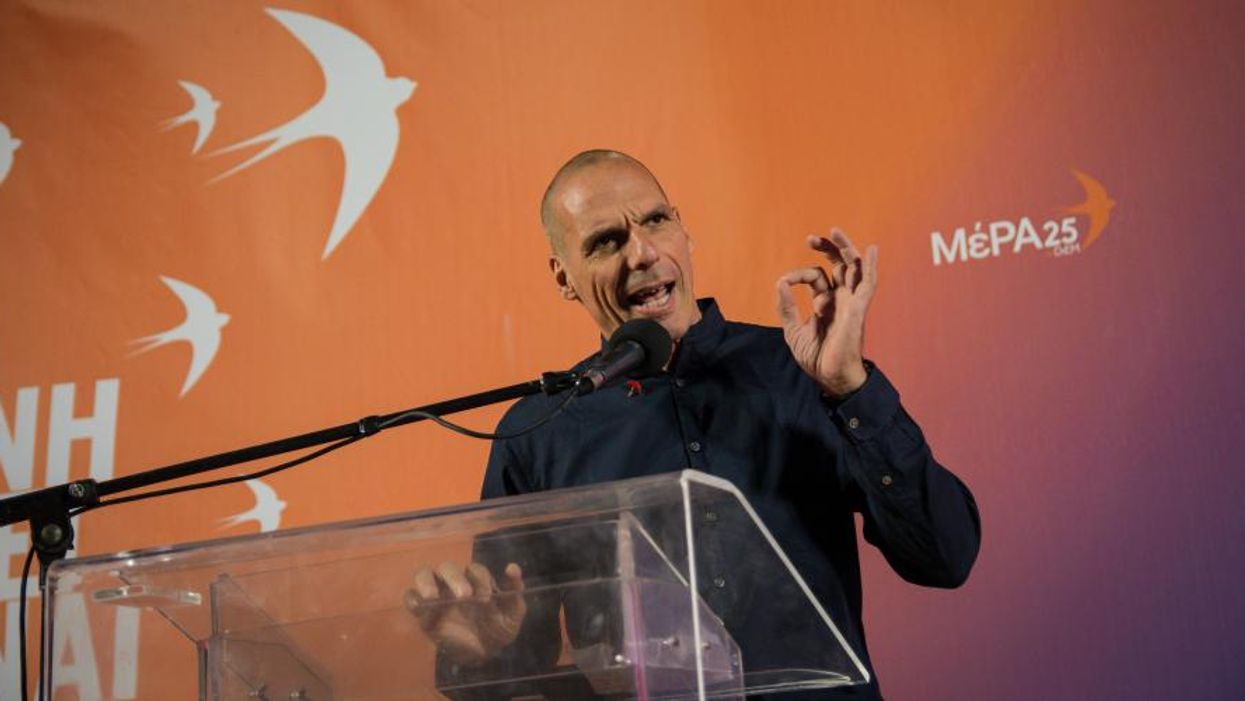
There were few reasons for progressives in Greece to celebrate Sunday as the right-wing New Democracy Party cruised to a resounding snap election victory--ousting the Syriza government that has long been condemned for betraying its anti-austerity mandate--but one "silver lining" was the strong performance of the nascent leftist party MeRA25, founded by former Greek Finance Minister Yanis Varoufakis.
MeRA25, the Greek arm of the European DiEM25 movement, won nine seats in Greece's parliament, far exceeding expectations and allowing Varoufakis to head what one observer described as a "small but credible left-wing opposition."
In a video message following Sunday's election, Varoufakis vowed to fight both the "inane establishment which continues to implement socialism for the bankers and harsh austerity for everyone else" and "the fascists, the euroskeptics, those who want to deconstruct Europe" in his party's campaign against the crippling austerity Greeks have endured for over a decade.
"Our electoral wing in Greece performed an amazing feat today," said Varoufakis. "We're here to implement in practice our constructive disobedience, our European internationalism. We have a remarkable opportunity to break down this wall of silence, the troika-heavy and troika-dominated politics of this land, indeed of this Europe."
Varoufakis, who resigned from the Syriza government in 2015, took direct aim at outgoing Prime Minister Alexis Tsipras for paving the way for the rise of the New Democracy Party, led by Kyriakos Mitsotakis.
New Democracy's victory, Varoufakis wrote on his website, was "set in motion" the night of the Greek people's 2015 "no" vote against bailout terms proposed by the so-called European troika, composed of the European Commission, the International Monetary Fund, and the European Central Bank.
"Lest we forget, it was immediately after the Greek people's magnificent NO vote that Mr. Tsipras invited the leaders of New Democracy and pro-austerity forces to help him convert the NO vote into a YES," Varoufakis said. "Thus, a referendum that had the capacity to confine New Democracy to the dustbin of history was annulled and the people overthrown by an alliance of Mr. Tsipras and New Democracy."
"Is it any wonder, once Mr. Tsipras passed every austerity measure and privatization bill demanded of him by the troika with the implicit and explicit support of New Democracy, that New Democracy is back?" added Varoufakis. "The Greek people did what they have always done since their incarceration in our vast debtor's prison: they overthrew a government that imposed a new troika bailout along with its poisonous preconditions."
The former finance minister went on to describe MeRA25's entry into the Greek parliament as the "only ray of hope in this bleak setting," a sentiment that was echoed by progressives on social media:
Acknowledging that MeRA25's share of the vote was relatively small, Varoufakis said "it was large enough to make a crucial difference--just like a small candle whose light is capable of penetrating the darkness."
"As of today, we embark upon a steadfast campaign against the most parasitic and cruel form of oligarchy that New Democracy will strive to erect upon the foundation of Mr. Tsipras's bailout agreement with the troika of Greece's lenders," Varoufakis said. "Together with our comrades across Europe, and also as part of the Progressive International that DiEM25 co-founded, we shall fight both types of rising authoritarianism (that of the establishment and that of the racist ultra-right), while connecting our resistance to the crucial campaign for a European and, indeed, an International Green New Deal."
Hoping to show Europeans they have an alternative to the prevailing system of "authoritarianism" and austerity, former Greek finance minister Yanis Varoufakis has announced a new cross-continent movement with a "simple, common agenda:" To democratize Europe.
The movement, known as the Democracy in Europe Movement 2025 (or DiEM 25), will be launched on February 9 at Berlin's Volksbuhne theater.
Varoufakis, who first revealed the plan late last month in an interview with L'Espresso, said that he is hopeful this "activist movement" will connect progressives across the continent and enable them to take back power from the ruling elite and what he described as the "shadowy world of bureaucrats, bankers, and unelected officialdom."
"To counter this de-politicisation of political decision making, which reinforces the economic crisis and the crisis of legitimacy facing Europe, we need a movement that rises up throughout in Europe, at once, with the same agenda everywhere to re-politicize political decisions and to democratize the decision making process," he said in an interview with El Diario published on Saturday.
"There is no other means by which to arrest the awful feedback between authoritarianism and failed economic policies--a feedback that, left unchecked, will wreck Europe and help ultra-nationalism triumph," Varoufakis added, referring to the rise of ultra-right and fascist forces such as Greece's Golden Dawn party.
Varoufakis, who has been a fierce and vocal critic of austerity, stepped down from his post within the Syriza government this summer amid tense negotiations with EU creditors.
The launch of the DiEM 25 movement comes amid a growing leftist surge across Europe. 2015 saw the rise of anti-austerity forces in both the United Kingdom, with the election of Jeremy Corbyn to Labour party leader, as well as in Spain, where the Podemos party gained enormous power.
According to the German socialist paper Neues Deutschland, Varoufakis will be appearing at the launch along with "some of his 'accomplices' from all over Europe," though the complete list of speakers has yet to be announced.
Varoufakis said that the while the exact organizational contours of the movement are still unknown, he is hopeful that the grassroots, cross-border structure will embolden and empower progressives across the continent.
"What makes me optimistic about a pan-European movement? That it will be pan-European!" he said.
"We shall exert pressure on every Parliament, every government, every head of state at once," Varoufakis continued. "That when the troika is squeezing, let's say the Madrid government, it will know that the electoral process in, say, Germany or France or Portugal will punish any local politician who does the troika's bidding."
"It is a truly utopian undertaking," he added.
In an outcome celebrated as a rejection of austerity not only in Spain but across the European continent, the Spanish general election Sunday resulted in a splintered parliament, with the conservative People's Party losing significant ground to the anti-austerity Podemos party.
The ruling People's Party, led by Prime Minister Mariano Rajoy, won the highest number of votes on Sunday but it only obtained 122 seats out of the 350-seat parliament, falling short of the 176 needed for a parliamentary majority--and marking its worst result ever in a general election.
This means Rajoy will have to form a coalition or minority government with the Socialist party, which won 91 seats, or newcomers Podemos and Ciudadanos, which secured 69 and 40 seats respectively. Any of these results could see progressive policies breaking austerity's stranglehold on the country, where the Popular Party government has been pursuing harsh budget cuts and tax increases.
Podemos leader Pablo Iglesias--who formed the party in January 2014 with a group of fellow leftist university lecturers, inspired by the grassroots protest movement Los Indignados--hailed the birth of "a new Spain."
Addressing supporters in Madrid late Sunday night, Iglesias added: "Spain is not going to be the same again, and we're happy. Our fight against corruption goes ahead."
Meanwhile, Socialist party leader Pedro Sanchez said the results prove voters want a change in political direction, telling a crowd early Monday that "Spain wants a move to the left."
And Greek Prime Minister Alexis Tsipras and his former finance minister Yanis Varoufakis, whose Syriza party is allied with Podemos, went further than that, heralding the election results on social media as evidence of growing opposition to austerity policies that have swept the European continent.
As Reuters pointed out on Monday, the "outcome was reminiscent of a similar situation in neighboring Portugal, where the incumbent conservatives won an October election but a socialist government backed by far left parties was ultimately sworn in."
Austerity has now been politically defeated in #Spain, as well. Parties seeking to serve society made a strong showing #20D
-- Alexis Tsipras (@tsipras_eu) December 21, 2015
According to the Associated Press:
Under the constitution, King Felipe VI will invite a party leader--normally from the party with the most votes--to form a government. The nominee must garner a majority of deputies' votes in Parliament in a first round to take office, or the most votes in the second round.
Deputies take their seats by Jan. 13 but there is no time limit on staging the first vote. If the candidate is not immediately successful, Parliament has two months to elect a prime minister or call a new election.
Among several potential outcomes is a coalition government helmed by Socialist leader Sanchez.
As Guardian correspondent Giles Tremlett writes on Monday: "A Podemos-backed Sanchez government would open a new anti-austerity breach on Europe's southern flank, as Spaniards reject a new economic model based on low wages and extreme job instability. Unemployment is still 21% in Spain, and the country's economy is smaller than it was in 2008. A vote for Podemos was also, in a confused and erratic European Union, a vote for increased sovereignty."
Or as the Guardian's Owen Jones wrote in advance of the election, "This election matters--not just for Spain, but for Europe too."
The sweeping triumph on September 24 of Jeremy Corbyn to be the leader of Great Britain's Labour Party was stunning and totally unexpected. He entered the race with barely enough support to be put on the ballot. He ran on an uncompromisingly left platform. And then, standing against three more conventional candidates, he won 59.5% of the vote in an election that had an unusually high turnout of 76 percent.
The sweeping triumph on September 24 of Jeremy Corbyn to be the leader of Great Britain's Labour Party was stunning and totally unexpected. He entered the race with barely enough support to be put on the ballot. He ran on an uncompromisingly left platform. And then, standing against three more conventional candidates, he won 59.5% of the vote in an election that had an unusually high turnout of 76 percent.
Immediately, the pundits and the press opined that his leadership and platform guaranteed that the Conservative Party would win the next election. Is this so sure? Or does Corbyn's performance indicate a resurgence of the left? And if it does, is this true only of Great Britain?
Whether the world political scene is moving rightward or leftward is a favorite subject of political discussion. One of the problems with this discussion has always been that the direction of political trends is usually measured by the strength of the extreme position on the left or the right in any given election. This is however to miss the essential point about electoral politics in countries with parliamentary systems built around swings between center-left and center-right parties.
The first thing to remember is that there is a large gamut of possible positions at any given moment in any given place. Symbolically, let us say they vary from 1 to 10 on a left-right axis. If parties or political leaders move from 2-3, 5-6, or 8-9, this measures a swing to the right. And reverse numbers (9-8, 6-5, 3-2) measure a swing to the left.
Using this kind of measurement, the last year has seen a striking shift to the left worldwide. There are a number of clear signs of this shift. One is the steadily rising strength of Bernie Sanders in the race for the U.S. presidential nomination in the Democratic Party. It doesn't mean that he will defeat Hillary Clinton. It does mean that, to counter the poll ratings of Sanders, Clinton has had to assert more leftward positions.
Look at a similar event in Australia. The right-wing party now in power, the Liberal Party, on September 15 ousted Tony Abbott as its leader. Abbott was known for his acute skepticism on climate change and his very tough line on immigration to Australia. Abbott was replaced by Malcolm Turnbull, who is considered somewhat more open on these questions. Similarly, the British Conservative Party has softened its austerity proposals to win over potential Corbyn voters. These are shifts from 9-8.
In Spain, Prime Minister Mariano Rajoy of the conservative New Democracy Party is facing rising poll figures from Pablo Iglesias of Podemos, running on an anti-austerity platform similar to what was long promoted by Greece's Syriza Party. New Democracy did quite badly in the May 24 local and regional elections. Rajoy is resisting any "leftward" shift by his party and as a result has been doing even worse in the polls for the future national elections. After his current defeat in the "independencist" elections in Catalonia, Rajoy has dug in his heels even further. Question: Can Rajoy survive as leader of his party, or will he be replaced as was Tony Abbott in Australia by a slightly less rigid leader?
Greece turns out to be the most interesting example of this shift. There have been three elections this year. The first was on January 25, when Syriza came into power, again to the surprise of many analysts, on an anti-austerity platform, using traditional left rhetoric.
When Syriza found European countries unwilling to budge on Greece's demands to be relieved of many commitments concerning its debt, Prime Minister Alexis Tsipras called for a referendum on whether or not to "reject" Europe's terms. The so-called Oxi (No) vote on September 18 won hugely. We know what happened subsequently. The European creditors not only made no concessions but offered even worse terms to Greece, which Tsipras felt he had to accept in large part.
Once again, analysts concentrated on the "betrayal" by Tsipras of his pledge. The left caucus within Syriza seceded and formed a new party. In the melee, few commented on what happened in the New Democracy Party. There, its leader Antonis Samaras was replaced by Vangilis Meimaraki, a shift from 9-8 or maybe from 8-7, in an attempt to reap centrist votes away from Syriza.
The conservative shift leftward did not succeed. Syriza won again. The breakaway left group was wiped out in the elections. But why did Syriza win? It seems that the voters still felt they would do better, if only slightly better, with Syriza in minimizing the cuts to pensions and other "welfare state" protections. In short, in the worst possible situation for Greece's left, Syriza at least did not lose ground.
What, you may wonder, does all this mean? It is clear that, in a world that is living amidst great economic uncertainty and worsening conditions for large segments of the world's populations, parties in power tend to be blamed and lose electoral strength. So, after the rightward swing of the last decade or so, the pendulum is going the other way.
How much difference does this make? Once again, I insist it depends on whether you observe this in the short run or in the middle run. In the short run, it makes a lot of difference, since people live (and suffer) in the short run. Anything that "minimizes the pain" is a plus. Therefore, this kind of "leftward" swing is a plus. But in the middle run, it makes no difference at all. Indeed, it tends to obscure the real battle, the one concerning the direction of the transformation of the capitalist world-system into a new world-system (or systems). That battle is between those who want a new system that may be even worse than the present one and one that will be substantially better.
In the latest chapter of an ongoing fight over resource extraction, foreign investment, and environmental degradation, a Canadian mining company appealed to Greece's top court on Friday to overturn a ban on its plans to develop a gold mine in the forested peninsula of Halkidiki.
A day before resigning to call a general election in August, Prime Minister Alexis Tsipras' government revoked Eldorado Gold's permit for the Halkidiki mine, citing environmental concerns and violations of contract terms.
"When there is a contract signed with the Greek state, this should be respected," Greek Energy Minister Panos Skourletis said at the time. "This is not because we want to cause investors trouble but because we want to protect the environment."
According to Reuters: "Greece has said Eldorado should have conducted tests of the so called flash-melting method to ensure its mining activities will not harm the environment at the site. The company has done such tests in Finland."
The leftist Syriza party has long opposed the mine, stating earlier this year: "Eldorado Gold must realize that beautiful Halkidiki is not its property, it is not all powerful in the country." Nor, they added, is the region "a 'lab rat' of environmental destruction for its profits."
And Syriza MP Katerina Igletzi said in February: "Halkidiki is a unique place with true natural beauty. It's Aristotle's homeland, it doesn't need a mine to flourish."
As Mining Watch Canada explained in 2013:
The Skouries mine, on mount Kakavos, is the main source of conflict with the local people. More than 340 hectares of unique forest, parts of which are old-growth forest, will have to be wiped out in order to make way for the mining facilities, including a 700 metre wide, 200 metre deep pit as well as a flotation plant, two tailings facilities, and various other facilities. So far, 340 hectares of public forest in Skouries has been ceded to the company by the regional administration. The area of the second tailings facility, 92 hectares, doesn't belong to the state but to a Mount Athos monastery. For the citizens of the nearby towns, a major concern is water. Mount Kakavos holds the largest water reserves in the entire Halkidiki peninsula, which already suffers from water shortages.
These economic and environmental concerns feed into the social impacts from the mining developments. Halkidiki and Thrace are nearby to where Eldorado has begun digging the mine's open pits and clear cutting forested area. Since late 2011, there has been growing opposition by the residents, and growing police attention.
What's more, a report from the Dutch Center for Research on Multinational Corporations (SOMO) published earlier this year showed that Eldorado Gold finances its Greek operations using internal loans, shifting interest payments from a Greek subsidiary, Hellas Gold SA, via Dutch mailbox companies to its Barbados subsidiary--where this income remains untaxed.
The Greek government's August suspension of mining operations drew the ire of workers, who protested in the streets following the decision. In response, Syriza issued a statement that read in part:
While we respect the protest of the workers, we do not accept the reprehensible tactics of the multinational Eldorado Gold and its domestic supporters who are using the workers and their concerns to cover up illegalities and illicit and environmentally damaging practices which threaten Halkidiki and its citizens.
We want to stress that Eldorado Gold is not a state within a state and cannot use the workers and their concerns as a 'shield' in order to seek 'asylum' - in order to seek to remain above the law and in order to cover up infringements and destructive choices.
According to Canada's Globe and Mail, after hearing oral arguments for about two hours on Friday, the Greek court gave both sides until October 7 to make full written submissions.
Austerity and deficit reduction are smokescreens for class war against the poor, economics professor, former Greek finance minister, and fiery commentator Yanis Varoufakis declared Thursday on BBC's Question Time.
Varoufakis made the statements during a panel debate with United Kingdom politicians and pundits and took direct aim at the economic policies of the British government.
"The problem is that austerity is being used as a narrative to conduct class war," he said, lambasting the government for cutting taxes on the wealthy while slashing spending on public services.
"To be talking about reducing the state further when effectively what you are doing is reducing taxes like inheritance tax and at the same time you are cutting benefits--that is class war," Varoufakis continued.
Varoufakis called for Britain's public institutions, from the National Health Service to higher education, to be protected from free market economics.
Ultimately, Varoufakis expressed hope that Jeremy Corbyn--the anti-war, anti-austerity candidate who was elected leader of the British Labour Party earlier this month--will turn out to be the inverse of Margaret Thatcher, who he said "reinvigorated right-wing politics."
"It would be wonderful if Jeremy could do this for the left-wing and put on a show for us outsiders," Varoufakis said.
Question Time noted that Varoufakis's statements on their program spread widely:
Italian PM M. Renzi (click here for his speech) recently rejoiced at having "got rid of me" - citing my 'removal' from the 'scene' as a sign that 'apostates' (i.e. those who divide their parties) are jettisoned. His is a motivated illusion. Last July 'they' 'got rid' of something much more important than me. Here is my message to the Italian PM...
Mr Renzi presents me as an apostate who left SYRIZA and is now in the political wilderness. The truth is more sobering. Unlike many of my comrades, I remained loyal to the SYRIZA platform that saw us elected on 25th January as a united party that brought hope to the Greek and European peoples. Hope for what? Hope for a permanent end to the extend-and-pretend bailout loans, which cost Europe dearly, condemned Greece to permanent depression and foreshadowed failed policies for the rest of Europe.
What happened? Under extreme duress by European leaders, including Mr Renzi (who refused to discuss sensibly Greece's own proposals) my prime minister, Alexis Tsipras, was subjected on 12th and 13th July to unbearable bullying, to naked blackmail, to inhuman pressures. Mr Renzi played a central role in helping break Alexis, with his 'good cop' tactic, based on the "If you do not yield, they will destroy you - please say yes to them" narrative.
Alexis and I parted ways because we disagreed on whether 'they' were bluffing or nor and on whether we, in any case, had the moral and political right to sign another non-viable agreement, handing over the keys to what is left of the Greek state to the ruthless troika. That was, and remains, a disagreement between Alexis and I.
Following that disagreement, Alexis forced a U-turn in SYRIZA's policy on extend-and-pretend loans (accepting them for the first time in SYRIZA's history as necessary evils) and, as a result, a large section of the party's members decided they could not follow him down that path. And it was not just the Popular Unity segment that left. It was people like Tasos Koronakis, the party's Secretary, myself and many, many others who never shared Popular Unity's agenda. We were not apostates - just comrades who disagreed that SYRIZA should become the new PASOK, who refused to join the ranks of splinter parties, like Popular Unity, and who chose to sit out this sad parliamentary election - which could not, and did not, produce a Parliament capable of implementing a viable reform program for Greece.
Back to Mr Renzi now.
Mr Renzi, I have a message for you: You can rejoice as much as you like about the fact that I am no longer finance minister, not even in Parliament. But you did not 'get rid' of me. I am alive and kicking politically, as people in Italy remind me when I walk the streets of your beautiful country. No, what you got rid of, by participating in that dastardly coup against Alexis Tsipras and Greek democracy last July, was your own integrity as a European democrat. Possibly your soul too. Thankfully this is not irreversible. But you need to make serious amends. I cannot wait to see you return to the ranks of Europe's democrats.