

SUBSCRIBE TO OUR FREE NEWSLETTER
Daily news & progressive opinion—funded by the people, not the corporations—delivered straight to your inbox.
5
#000000
#FFFFFF
To donate by check, phone, or other method, see our More Ways to Give page.
Daily news & progressive opinion—funded by the people, not the corporations—delivered straight to your inbox.
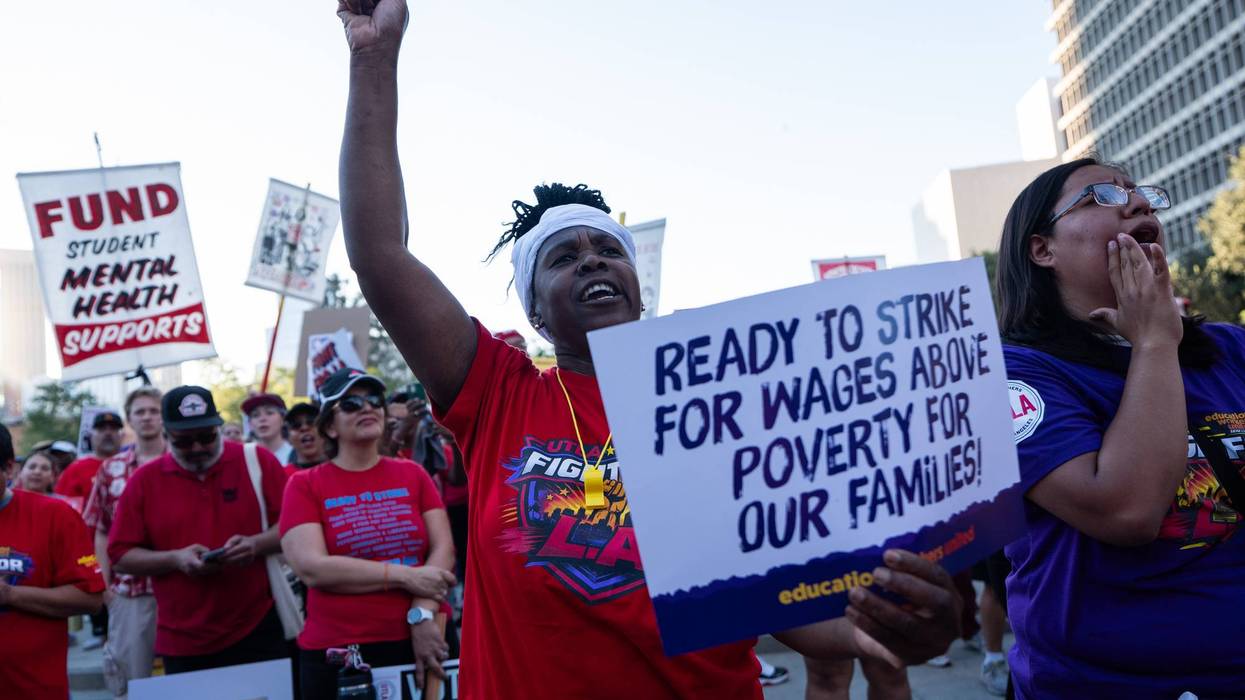
For too long, the narrative has been that we cannot afford to support teachers. We’ve just shown we cannot afford not to.
Before stepping into the classroom, I spent 12 years as an investigator with the California State Bar, examining cases of attorney misconduct. I chose to teach because I saw a meaningful way to serve my community, and I understood there would be sacrifice. Still, it took 10 years before my salary caught up to what I earned in my final year as an investigator.
In California, becoming an educator is neither easy nor inexpensive. In fact, it is one of the most challenging states to obtain a teaching license. Despite this, teachers remain among the most underpaid professionals relative to their level of education. According to the US Census Bureau, teacher earnings have not only lagged behind comparable fields, but have experienced a steady annual decline.
The debate is not whether schools have enough money, it is about what we choose to spend it on. Today, many educators cannot afford to live where they teach. Teaching, while never lucrative, used to offer a stable path to a middle class life. Educators could buy a home, live in the communities where they worked, and maintain the financial stability expected of other professions with similar levels of education. Sadly, even the most modest of those expectations are rapidly disappearing. I only own a home because I purchased it prior to switching my career.
Most educators did not choose this career for the money, but there is a clear difference between modest compensation and exploitation. Nearly 1 in 5 teachers in Los Angeles are housing insecure. And nearly 60% of educators across the country take on second jobs outside of teaching to make ends meet. It is unacceptable that the people responsible for educating our children are struggling to hold their head above water.
These victories for Los Angeles educators are not perks. They are the foundation of a functioning school system, and a respected career.
Teachers are also expected to subsidize their classrooms out of their own pockets. These stories are often framed as heartwarming and altruistic, but they reflect systemic failure and a lack of meaningful investment in public education. Few other professions require employees to pay out of pocket while already being underpaid.
The consequences of this underinvestment are becoming impossible to ignore. As the cost of living rises, fewer educators can afford to remain in the classroom. A teacher shortage has already hit Southern California, and the impact is profound. Nationally, teaching shortages have led to larger class sizes, burnout, and financial strain on the education system.
Education is expected to operate in scarcity while other sectors experience enormous growth. The education technology market alone is projected to grow by $170.8 billion by 2029. In the Los Angeles Unified School District alone, more than $1.6 billion has been spent on edtech. Framing this as a funding problem misses the point; it is a question of priorities. We are told we can’t make investments in educators, while billions continue to flow toward technology and outside contracts instead of the classrooms they are meant to serve.
And yet, during recent labor negotiations in Los Angeles, we were told a familiar refrain: There is no money.
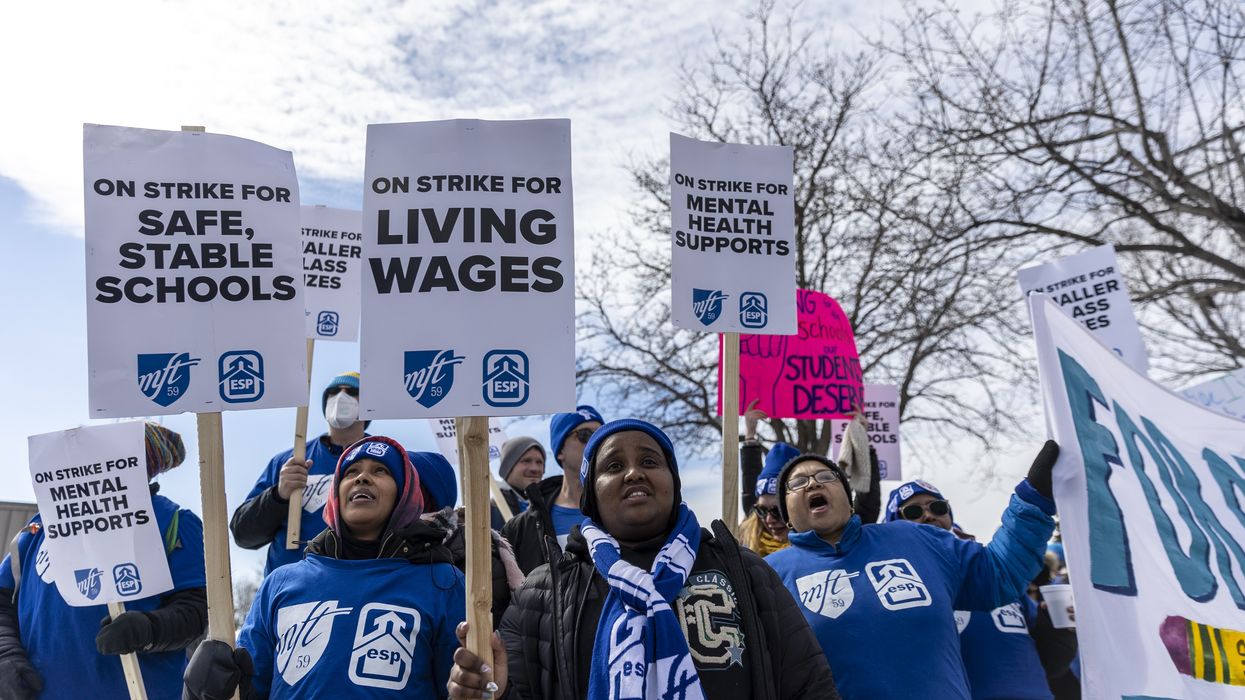
This was the backdrop of three educational unions, representing more than 70,000 workers, on the brink of striking across Los Angeles. At the center of the dispute for United Teachers Los Angeles was a straightforward demand: a salary structure that reflects economic reality. As negotiations stretched over 14 months, frustration grew not only among educators but across school communities, culminating in escalating public pressure, organizing efforts at school sites, and an overwhelming strike authorization vote that made clear teachers were prepared to act if necessary.
Only when the possibility of a strike became real did the district return to the table with urgency. We ultimately won the majority of our demands, including overhauling the outdated pay system that kept incoming educators at artificially low salaries, raising the starting salary from $68,966 to $77,000 for teachers, and securing an average salary increase of 13.86% across the board. This is evidence that the “no money” claim is negotiable, not factual.
Just as significantly, for the first time in California, educators in Los Angeles have secured four weeks of paid parental leave. This is a historic breakthrough that now sets a precedent for teachers across the state of California, as well as the entire country. Additionally, we won a major expansion of student support, including more than 450 additional social workers, to address the growing mental health crisis among our youth.
These victories for Los Angeles educators are not perks. They are the foundation of a functioning school system, and a respected career.
When teachers are paid a living wage, they stay. When they can afford to live in the communities they serve, schools are more stable. And when students have access to trained mental health professionals, they are better able to learn. Investment is what makes public schools strong. Without it, everything else collapses.
For too long, the narrative has been that we cannot afford to support teachers. We’ve just shown we cannot afford not to. The lesson from Los Angeles is simple: School funding is not fixed by scarcity, but by priorities. And when educators and school workers organize, those priorities can change—for the better.
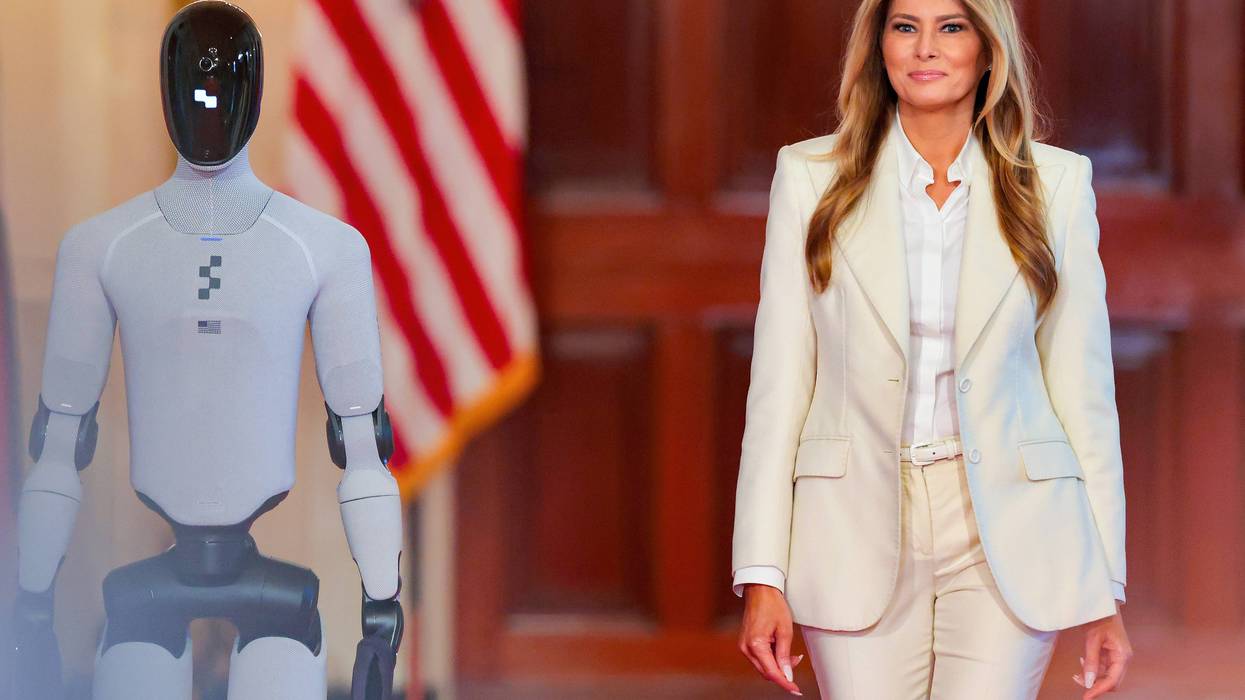
"We should attract the best and brightest in our country to become teachers and pay them the decent wages that they deserve."
US Sen. Bernie Sanders on Friday rejected First Lady Melania Trump's vision of a near-future in which artificial intelligence-powered humanoid robots do the work of human school teachers, arguing that society should instead do better by its human educators.
The wife of President Donald Trump entered Wednesday's gathering of the Global First Ladies Alliance accompanied by Figure 03, an AI-powered "general purpose humanoid robot" developed by the Sunnyvale, California-based company Figure.
“The future of AI is personified," Trump told attendees, who included Brigitte Macron of France, Sara Netanyahu of Israel, and Olena Zelenska of Ukraine. “It will be formed in the shape of humans. Very soon artificial intelligence will move from our mobile phones to humanoids that deliver utility.”
“Imagine a humanoid educator named Plato," she said. “Access to the classical studies is now instantaneous: literature, science, art, philosophy, mathematics, and history. Humanity’s entire corpus of information is available in the comfort of your home.”
Responding to Trump's remarks, Sanders (I-Vt.) said Friday on social media: "Call me a radical, but NO."
"We should not be replacing teachers in America with robots," the senator added. "We should attract the best and brightest in our country to become teachers and pay them the decent wages that they deserve."
Trump and Macron also warned about the dangers technology poses to children in remarks that came the same week that a New Mexico jury ordered tech titan Meta to pay a $375 million penalty for endangering youth and jurors in a landmark social media addiction trial found that Meta and YouTube harmed a child user of their platforms.
The office of California Gov. Gavin Newsom—who is believed to be a likely contender for the 2028 Democratic presidential nomination—also slapped down the idea of robot teachers, as did ordinary social media users.
"They want to replace human beings. Where will we work? How do we make money?" asked one X account with tens of thousands of followers. "No one wants this. We did not ask for it. Fuck all of this shit."
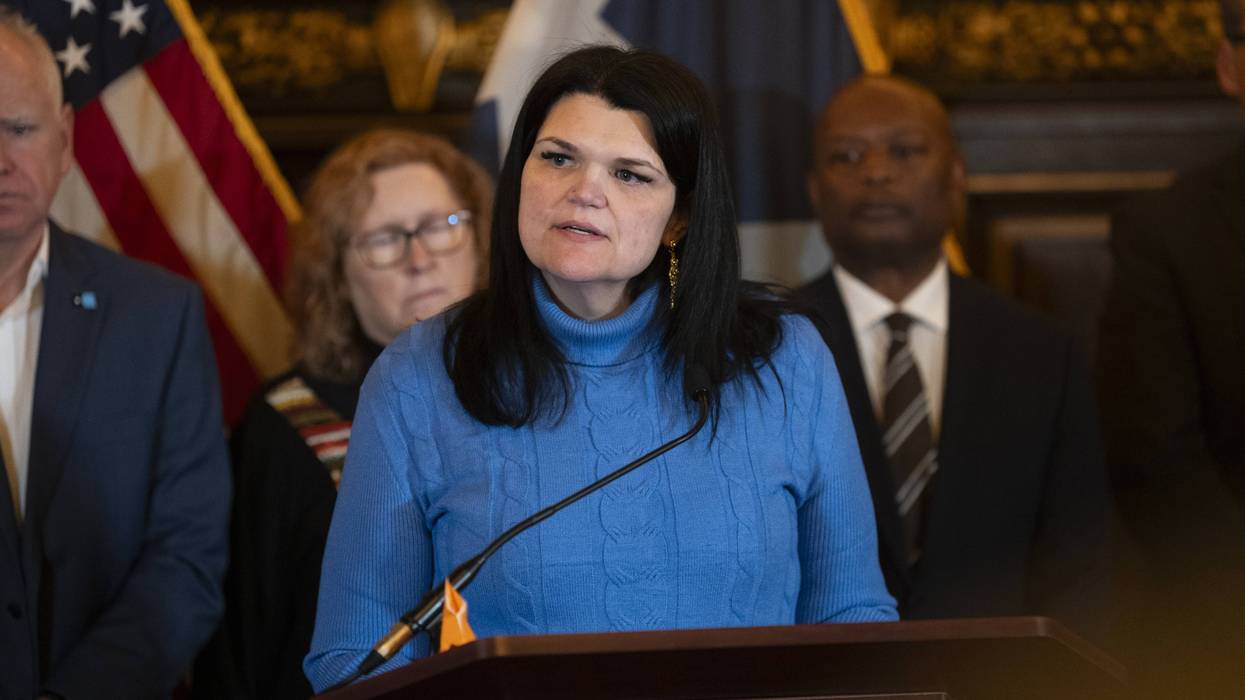
"Students can't learn, and educators can't teach, when there are armed, masked federal agents stationed within view of classroom windows, sometimes for days on end," said the Education Minnesota president.
Just days after an educational leader in Minnesota said that "our families feel hunted" because of President Donald Trump's "Operation Metro Surge," two school districts and a teachers union on Wednesday sued to block immigration agents from targeting people in and around public schools.
"For decades, administrations of both parties recognized that schools are different—places where children learn, where families gather, and where fear has no place," noted June Hoidal of Zimmerman Reed LLP, one of the firms behind the new lawsuit filed in the District of Minnesota.
However, shortly after Trump returned to office last year, his Department of Homeland Security (DHS) revoked the rule barring agents from arresting undocumented immigrants in or around "sensitive" locations like schools, places of worship, and hospitals, as part of his pursuit of mass deportations.
"When enforcement moves into school zones, the harm isn't theoretical," Hoidal stressed. "Attendance drops, instruction stops, and school communities lose the stability public education depends on. Districts across the country are watching how courts draw the line around spaces dedicated to children."
Over the past year, members of DHS and its agencies—including Customs and Border Protection (CBP) and Immigration and Customs Enforcement (ICE)—have flooded various communities, including in Minnesota. The districts in this case serve students in Fridley, a suburb of the Twin Cities, and Duluth, about 150 miles northeast of Minneapolis and Saint Paul.
"The removal of long-standing protections around schools has had immediate and real consequences for our learning community," said John Magas, superintendent of Duluth Public Schools. "We've seen increased anxiety among students, disruptions to attendance, and families questioning whether school remains a safe and predictable place for their children. Schools function best when families trust that education can happen without fear, and that stability has been undermined."
His counterpart in Fridley, Brenda Lewis, similarly said that "as superintendent, my responsibility is the safety, dignity, and education of every child entrusted to our schools. When immigration enforcement activity occurs near schools, it undermines trust and creates fear that directly interferes with students' ability to learn and feel safe. Schools depend on stability, and that stability has been disrupted."
As Common Dreams reported earlier this week, Lewis has recently spoken at a press conference and to media outlets about the flood of federal agents—and it's come at a cost. The superintendent said she was tailed by agents multiple times while driving to and from the district office, and three of the six school board members have spotted ICE vehicles outside of their homes.
"It is my responsibility to ensure that our students and staff and families are safe, and if that means [agents are] going to target me instead of them, then that's what we need to do, and then they can leave our families alone," Lewis said. "But at the end of the day, are they trying to intimidate me to stop? Yes. Will I stop? No."
In addition to the two districts, Education Minnesota, a labor union of more than 84,000 state educators, is part of the suit against DHS, CBP, ICE, and agency leaders. The group's president, Monica Byron, declared that "students can't learn, and educators can't teach, when there are armed, masked federal agents stationed within view of classroom windows, sometimes for days on end."
"ICE and Border Patrol need to stay away from our schools so students can go there safely each day to learn without fear," she continued, "and so that our members can focus on teaching instead of constantly reacting to the shocking and unconstitutional actions of federal agents."
Last February, a federal judge in Maryland blocked the Trump administration from conducting immigration enforcement actions at Baptist, Quaker, and Sikh places of worship that sued over the repeal of protections for sensitive locations. The new suit asks the court to throw out the 2025 policy and restore protections to all such places.
The legal group Democracy Forward is involved in both cases and several others challenging Trump policies. The organization's president and CEO, Skye Perryman, said Wednesday that "the trauma being inflicted on children in America by this president is horrific and must end. The Trump-Vance administration's decision to abandon long-standing protections for schools has injected fear into classrooms, driven families into hiding, and thrown entire school communities into chaos."
"This is unlawful, reckless, and legally and morally indefensible," Perryman added. "We are in court because children should never have to look over their shoulders at school or worry that their loved ones could be taken away at the schoolhouse gate, and because the government cannot undermine decades of settled policy without regard for students, educators, or the law."
The suit was filed as Tom Homan, Trump's "border czar" and one of the named defendants, announced that 700 immigration agents are departing from Minnesota, which will leave around 2,000 there. The move comes amid incredible pressure on the administration to end Operation Metro Surge. Protests in the state, and in solidarity around the country, have ramped up since agents fatally shot legal observers Renee Good and Alex Pretti in Minneapolis.
The deadly operation in Minnesota has also impacted federal spending decisions in Congress. On Tuesday, lawmakers passed and Trump signed a bill to end a short-term government shutdown, but the measure funds DHS for less than two weeks. However, even if future funding for the department isn't resolved in that time, ICE can continue its operations thanks to an extra $75 billion for the agency that Republicans put in last year's budget package.
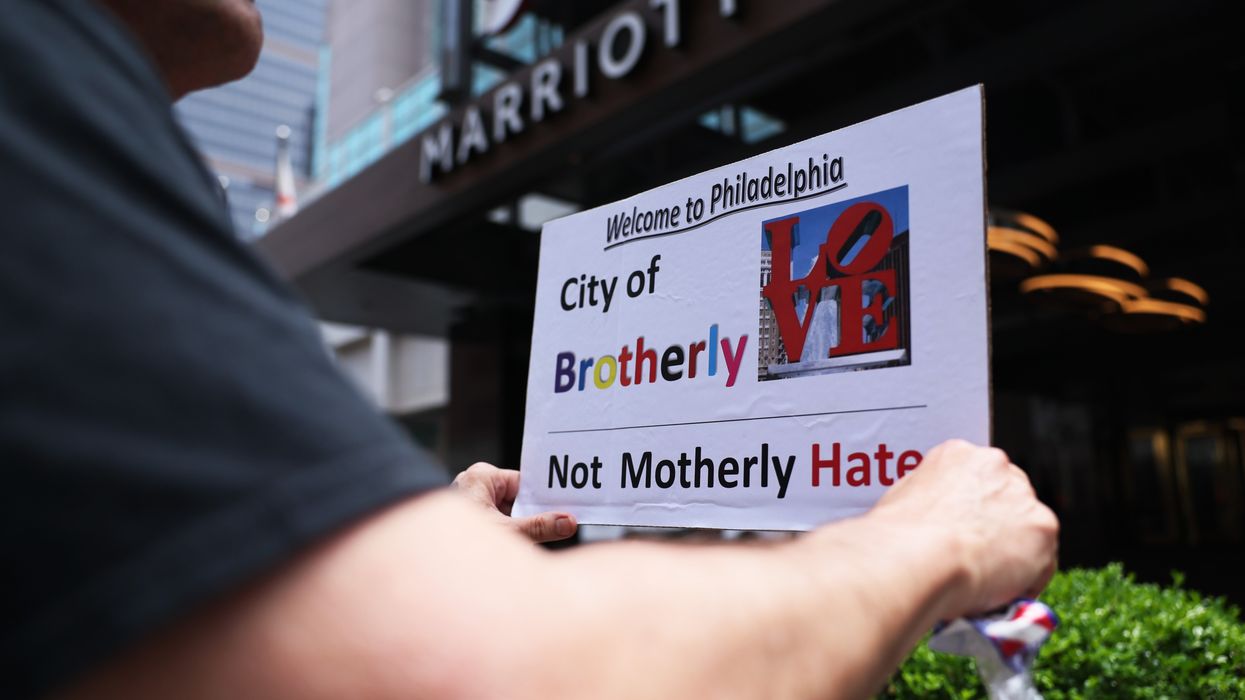
Even when faced with pressure and threats from almost all sides, the actual, individual people shaping the education of our children will not let themselves be cowed.
There is a looming threat to K-12 public education in America, but it is not only the substantial amount of laws restricting what can be taught in classrooms. The equally profound danger is that we are allowing a narrow political narrative to overshadow what is actually happening inside schools.
National pundits and scholars frame “the law” as a singular force indoctrinating students, obscuring the fact that we are dealing with a patchwork of rapidly evolving laws. While these legal shifts are detrimental, a more comprehensive understanding requires considering the lived experiences of educators, students, and the organizations that navigate them. The threat is not simply complacency to this “silent majority.” It is also the refusal to recognize that our schools are not homogeneous battlegrounds, but diverse communities experiencing these political pressures in very different ways.
The problem is not “the law,” it is the laws, plural, rushed through statehouses by politicians eager to score cultural points without any clarity on implementation or impact. Political influence on standards is nothing new, but recent controversies have reached a fever pitch as conservative lawmakers push divisive-concepts bills restricting topics such as race, gender, and LGBTQ+ rights.
In 2022, the South Carolina legislature debated bills banning The 1619 Project and any content feared to make white students “feel guilty.” Today, 35% of K-12 students attend school in states with anti-critical race theory laws. By 2023, 65% of history teachers reported limiting political discussions. As one Ohio teacher put it, “It’s tough for teachers to stick their neck out… you just see the attack on teachers increasing over and over again.”
While the legislators passing these laws attempt to rally popular support behind a narrative that they are the “silent majority,” we can’t let them obscure their genuine presence as simply a highly outspoken minority.
For example, New Hampshire is facing restrictive “divisive-concepts” laws, dwindling public school funding, and bounties on teachers that Moms for Liberty hopes to “catch.” As much as Moms for Liberty promotes its bounty as protection for children, the bounty serves one exclusive purpose. To instigate fear among educators, parents, and the broader public.
But this fear is largely baseless. Despite its efforts to intrude into the classroom and attack teachers, Moms for Liberty has remained unsuccessful. Even with a $500 cash prize on the line, not a single teacher was “caught” and fired for Moms for Liberty’s agenda. It’s as if, when investigated, teachers are not posing dangers to students. Rather, they are trained educators fighting for the strong democratic education of the nation's children.
While the legislators passing these laws attempt to rally popular support behind a narrative that they are the “silent majority,” we can’t let them obscure their genuine presence as simply a highly outspoken minority.
Legislative activity across the nation is also propagating fear among educators. But these bills are poorly crafted, vague, lacking expert input, and inconsistent with the First Amendment and academic freedom. While these threatening bills infiltrate news headlines, most of them have no real power. In 2024, 56 educational gag orders were filed, but only 8 were actually implemented. These are also new lows for proposed and implemented gag orders compared with the last few years.
Instead, we continue to see bipartisan opposition to politicized state lawmakers making choices about the content in K-12 schools. In 2024, we saw the first successful challenges to K-12 gag orders in court. Groups like Moms for Liberty remain unpopular among the public. Moms for Liberty and the 1776 Project continue to suffer electoral losses, with their publicly endorsed candidates losing about 70% of their races nationwide in 2023.
Bearing this in mind, we must continue to hold strong against these loud (but little) groups. Although they’ve mastered the art of amplifying their voices and distracting us with frightening news headlines, we cannot succumb to their scare tactics and must continue to make informed decisions based on our own investigation.
Furthermore, beyond the failures of these scare tactics, perhaps one of the most profound places to look for hope is in the actions of individual teachers across the United States. Here, we will draw on the testimonies of three different teachers, whom we interviewed as part of an Amherst College course on the polarization of social studies education. Although they cannot single-handedly represent the entire nation, their words have been echoed throughout the sources and interviews we have examined in our class.
What these teachers can show us is that, even when faced with pressure and threats from almost all sides, the actual, individual people shaping the education of our children will not let themselves be cowed.
Even as some parents threaten the livelihoods and lives of teachers, a teacher in Florida makes the effort to reach out to the parents of the children he teaches, creating a parent-teacher relationship based on trust and respect, not hatred and anger. Even as legislators try to write teachers out of their laws, a teacher from Ohio continues to demand that his voice be heard and has ensured that, over the past six years, not a single bill has been passed that was not approved by the coalition of Ohio teachers. Even as the politicians in Washington squabble like children, a teacher in Arkansas crafts a classroom where the children she teaches learn to engage in civil debate and learn to disagree on a topic while still remaining friends.
All three of these teachers—and thousands more across the country—continue, quietly, to educate the nation's children with kindness and nuance, even as the politicians in the Capitol do their best to sabotage the fundamental educational structures of the United States.
So don’t give up, don’t let them win. Don’t let them write a story that places teachers as the villains.
Don’t let them make you forget how hope endures and that the strength of the educational system lies maybe not in the laws that politicians apply to it, but instead in the individuals who dedicate their lives to ensuring children can learn and play and will grow to shape the future of this country.
"The quality of a public education greatly hinges on our efforts to sufficiently invest in our schools and teachers," the new report stresses, calling for "targeted and sustained investments."
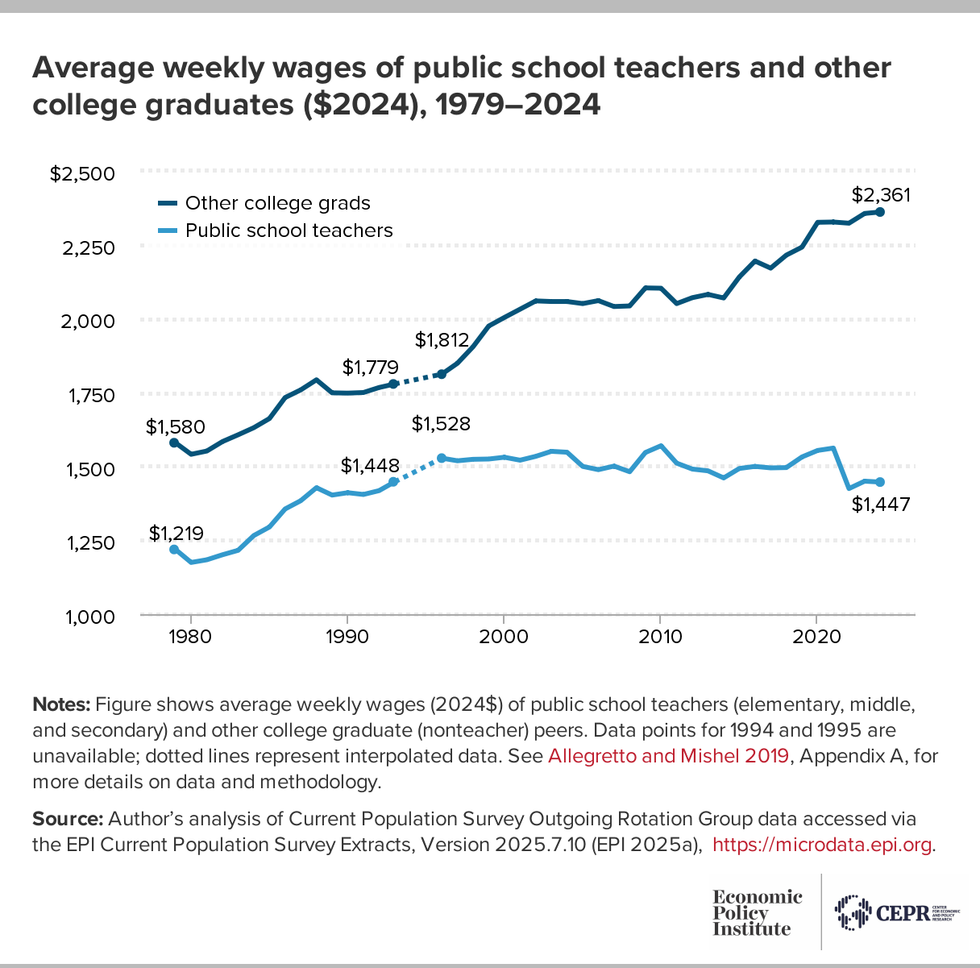
The gap between the weekly wages of US public school teachers and other college graduates not only continued to grow last year, but "reached a record high," according to a report released Wednesday by a pair of think tanks.
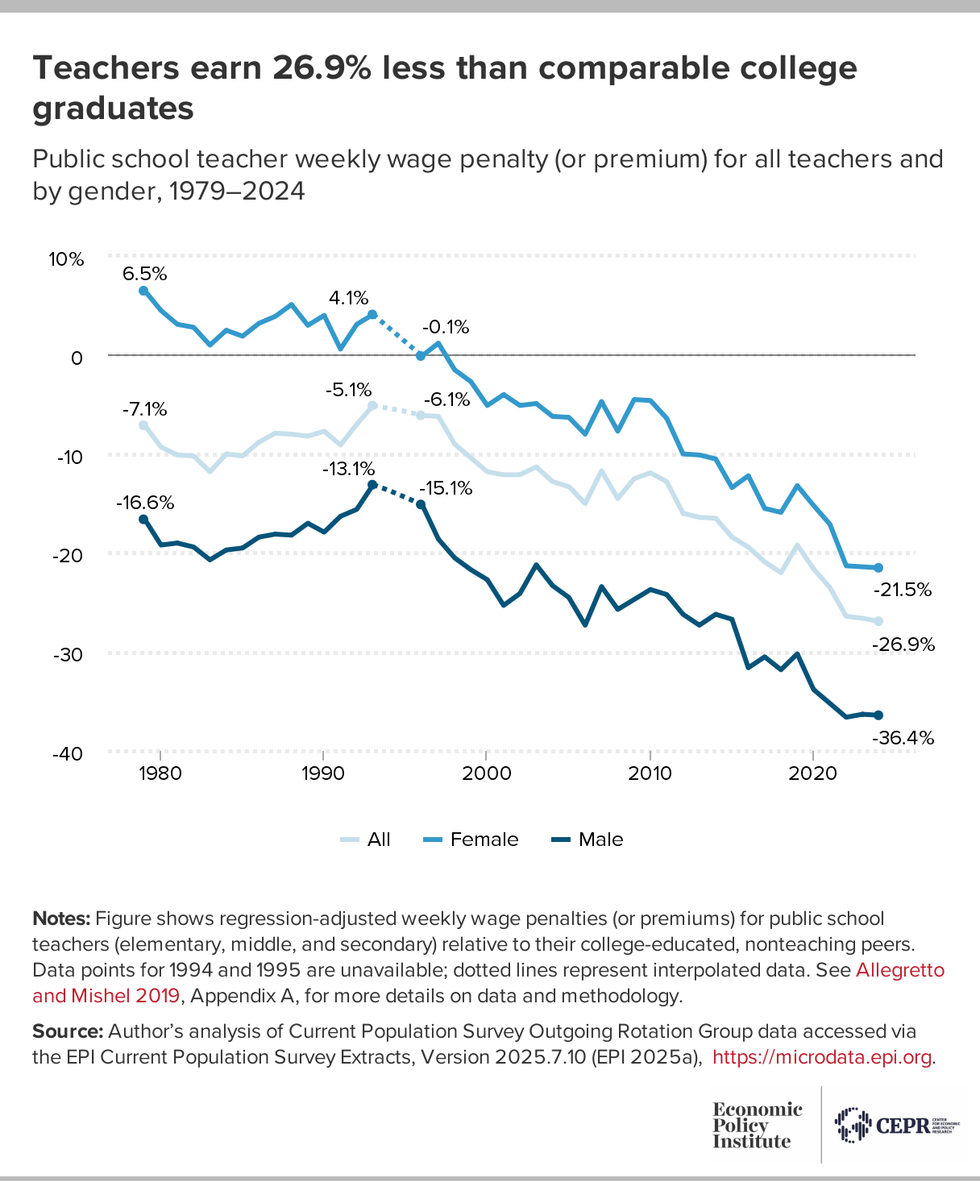
Sylvia Allegretto, a senior economist at the Center for Economic and Policy Research and research associate at the Economic Policy Institute, found that this gap, known as the teacher pay penalty, grew to 26.9% in 2024, "a significant increase from 6.1% in 1996."
Allegretto tracked data back even further—to 1979, when teachers earned an average of $1,219 a week, while other graduates earned $1,580, adjusted for inflation. In 2024, those figures rose to $1,447 for teachers and $2,361 for other similarly educated workers.
The numbers above are simple averages. The researcher also aimed to "estimate weekly wages of public school teachers relative to other similarly situated college graduates working in other professions," accounting for "ways the two groups may differ fundamentally which typically affect pay on margins such as age, educational attainment, race/ethnicity, and state of residence."
She found a "nearly 30-year trend of relative teacher weekly wages increasingly falling behind those of other similarly qualified professionals." While the gap averaged 8.7% pre-1994, "the shortfall worsened considerably starting in the mid-1990s."
In 1996, "on average, teachers earned 73.1 cents on the dollar in 2024, compared with what similar college graduates earned
working in other professions—much less than the relative 93.9 cents on the dollar that teachers earned in 1996," the report says.
Allegretto also separated workers by gender, and found that while the relative female teacher weekly wage "was at a premium that averaged 3.3%" before 1994, "starting in 1996, the female gap quickly went from parity to a penalty, landing at a 21.5% penalty in 2024."
As the report details:
There is an important story behind the declining relative wages experienced by female teachers. Historically, the teaching profession relied on a somewhat captive labor pool of educated women who had few employment opportunities. This is thankfully no longer the case, but increased opportunity costs are a part of the story and reflected in these results. Expanding opportunities for women enabled them to earn more as they entered occupations and professions from which they were once barred.
In fact, the simple average weekly wages (inflation-adjusted) of female teachers compared with their nonteaching counterparts grew in lock step from 1979 until they started to diverge in the late 1990s. They were close to parity in 1996, when other female college graduates earned just 0.7% more than female teachers. But this divide grew nearly every year—reaching 40.9% in 2024.
Conversely, the trends in the weekly wages of male teachers compared with other male college graduates were never at parity. But like their female counterparts, men also experienced a considerable increase in the pay gap—from 24.1% in 1996 to 81.7% in 2024. Therefore, the regression-adjusted relative wages of male teachers have seen sizable penalties throughout the timeframe of this paper (1979–2024) and in my earlier analyses using 1960, 1970, and 1980 decennial Census data. Over the long run, the male relative penalty worsened from 20.5% in 1960 to 36.3% in 2024.
While all states and the District of Columbia have a wage gap between teachers and similar graduates, Allegretto examined how the penalties vary by state. The biggest penalties since 2019 were recorded in Colorado (38.5%), Alabama (34.3%), Arizona (33.8%), Minnesota (33.3%), and Virginia (32.7%), while the lowest were Rhode Island (10%), Wyoming (11%), New Jersey (12.7%), Vermont (13%), and South Carolina (14.1%).
Allegretto also acknowledged "the view that, on average in the US, teachers generally receive a larger share of their total compensation as benefits—such as health or other insurance and retirement plans—compared with other professionals."
From 2020-24, "the benefits advantage that favors teachers varied from 8.8% to 9.9%, but over the same timeframe the teacher wage penalty grew substantially. Thus, in 2024, the teacher total compensation gap widened to -17.1%—the largest on record," she wrote. "Of course, even if the teacher benefits advantage could exceed the large teacher wage penalty, the standard of living for teachers would likely fall, as they would have little in the way of earnings to make ends meet."
In 2024, teachers earned 73 cents for every dollar their similarly educated peers made, on average—a record low.In 1996, the gap was much smaller: teachers earned 94 cents for every dollar.We need to pay teachers more! How? By investing in public education. www.epi.org/publication/...
[image or embed]
— Economic Policy Institute (@epi.org) September 24, 2025 at 9:59 AM
The report says that trends from "the last three decades have no doubt already had profound consequences on teacher retention and recruitment," citing research on staffing challenges, college students forgoing teaching careers due to low wages, parents steering their children into professions that pay better, fast-tracking credentials in response to shortages, the heavy use of unqualified teachers, and the reliance on unqualified substitutes.
"The quality of a public education greatly hinges on our efforts to sufficiently invest in our schools and teachers," the publication stresses, calling for "targeted and sustained investments" at the local, state, and federal levels, and the expansion of collective bargaining.
"Regrettably, sustained and effective policy interventions capable of mitigating, much less substantially improving, the trends outlined in this long-running series have been lacking," concludes the report. "This is a troublesome reality, especially in the United States—a country that has more than enough resources and wealth to be the envy of public education around the world."
The publication comes as President Donald Trump works to dismantle the US Department of Education and elected Republicans, along with some Democrats, try to push tax dollars toward private and charter schools.
Amid such efforts this summer, Senate Health, Education, Labor, and Pensions Committee Ranking Member Bernie Sanders (I-Vt.) held a town hall with educators and introduced the Pay Teachers Act, which would ensure they earn at least $60,000 annually, require districts to give raises throughout teachers' careers, and provide at least $1,000 per year for classroom supplies.
"This MAGA loyalty test will be yet another turnoff for teachers in a state already struggling with a huge shortage," said American Federation of Teachers president Randi Weingarten.
Teachers from California and New York seeking work in Oklahoma will be required to pass an "America First Test" designed to weed out applicants espousing "radical leftist ideology," the state's public schools chief affirmed Monday.
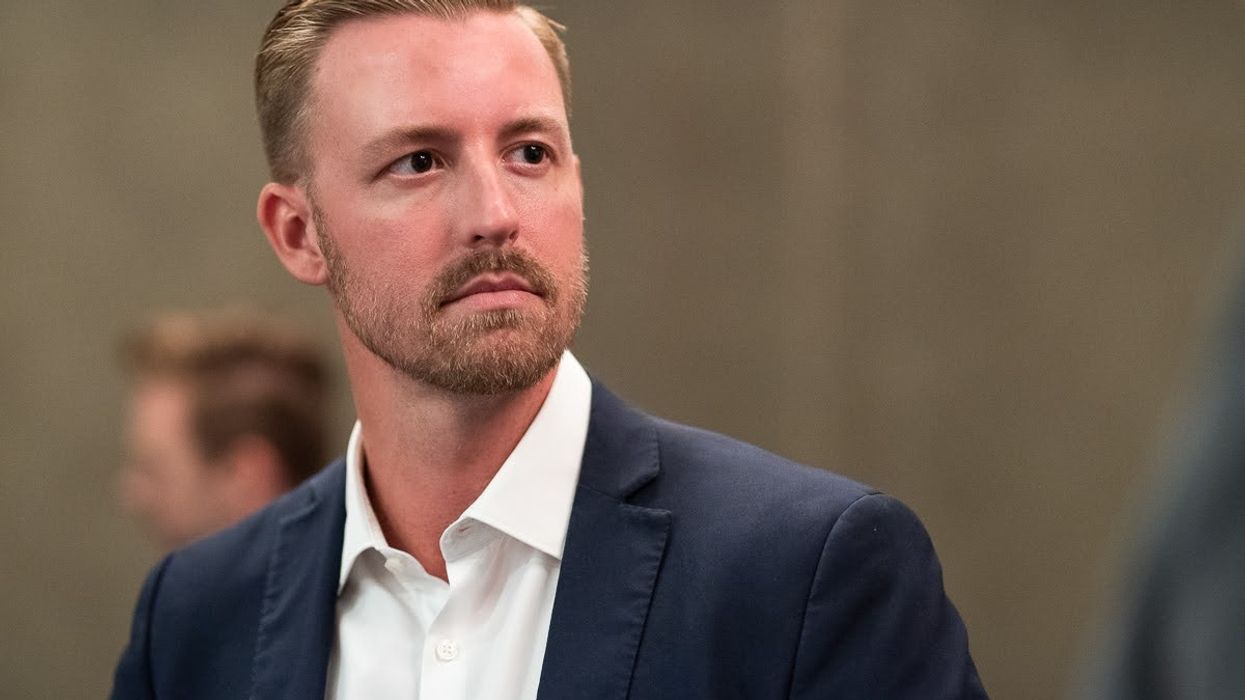
Oklahoma—which has a severe teacher shortage, persistently high turnover, and some of the nation's worst educational outcomes—will compel prospective public school educators from the nation's two largest "blue" states to submit to the exam in a bid to combat what Superintendent for Public Instruction Ryan Walters calls "woke indoctrination."
"As long as I am superintendent, Oklahoma classrooms will be safeguarded from the radical leftist ideology fostered in places like California and New York," Walters said in a statement Monday.
Walters told USA Today that the test is necessary to vet teachers from states where educators "are teaching things that are antithetical to our standards" and ensure they "are not coming into our classrooms and indoctrinating kids."
However, American Federation of Teachers president Randi Weingarten warned in a statement Monday that "this MAGA loyalty test will be yet another turnoff for teachers in a state already struggling with a huge shortage."
The exam will be administered by Prager University—also known as PragerU—a right-wing nonprofit group which, despite its name, is not an academic institution and does not confer degrees.
While all of the test's 50 questions have not been made public, the ones that have been published run the gamut from insultingly basic—such as, "What are the two parts of the U.S. Congress?"—to ideologically fraught queries regarding the "biological differences between females and males."
PragerU's "educational" materials are rife with false or misleading information regarding slavery, racism, immigration, the history of fascism, and the climate emergency. Critics note that the nonprofit has received millions of dollars in funding from fossil fuel billionaires.
PragerU materials also promote creation mythology over scientific evolution and attack LGBTQ+ people, especially transgender individuals, calling lifesaving gender-affirming healthcare "barbaric" while likening its proponents to "monsters."
In one animated PragerU video, two children travel back in time to ask the genocidal explorer Christopher Columbus why he is so hated today. Columbus replies by asserting the superiority of Europeans over Indigenous "cannibals" and attempting to justify the enslavement of Native Americans by arguing that "being taken as a slave is better than being killed."
Closer to home, PragerU's curriculum aligns with so-called "white discomfort" legislation passed in Oklahoma and other Republican-controlled states that critics say prevents honest lessons on slavery, the Jim Crow and civil rights eras, and enduring systemic racism.
The law has had a chilling effect on teachers' lessons on historical topics including the 1921 Tulsa massacre, in which a white supremacist mob backed armed by city officials destroyed more than 35 city blocks of Greenwood, the "Black Wall Street," murdering hundreds of Black men, women, and children in what the US Justice Department this year called a "coordinated, military-style attack."
Responding to Oklahoma's new policy, University of Pennsylvania history professor Jonathan Zimmerman told The Associated Press that "instead of Prager simply being a resource that you can draw in an optional way, Prager has become institutionalized as part of the state system."
"There's no other way to describe it," he said, adding, "I think what we're now seeing in Oklahoma is something different, which is actually empowering Prager as a kind of gatekeeper for future teachers."
Oklahoma is not the only state incorporating PragerU materials into its curriculum. Florida, Montana, New Hampshire, and Texas have also done so to varying degrees.
Weingarten noted Walters' previous push to revise Oklahoma's curriculum standards to include baseless conspiracy theories pushed by President Donald Trump that Democrats stole the 2020 presidential election. Walters also ordered all public schools to teach the Bible, a directive temporarily blocked by the Oklahoma Supreme Court in March. The court also recently ruled against the establishment of the nation's first taxpayer-funded religious charter school.
"His priority should be educating students, but instead, it's getting Donald Trump and other MAGA politicians to notice him," Weingrarten said in her statement.
Cari Elledge, president of the Oklahoma Education Association, called the new testing requirement "a political stunt to grab attention" and a distraction "from real issues in Oklahoma."
"When political ideology plays into whether or not you can teach in any place, that might be a deterrent to quality educators attempting to get a job," she added. "We think it's intentional to make educators fearful and confused."
California Teachers' Association president David Goldberg told USA Today that "this almost seems like satire and so far removed from my research around what Oklahoma educators need and deserve."
"I can't see how this isn't some kind of hyper-political grandstanding that doesn't serve any of those needs," he added.
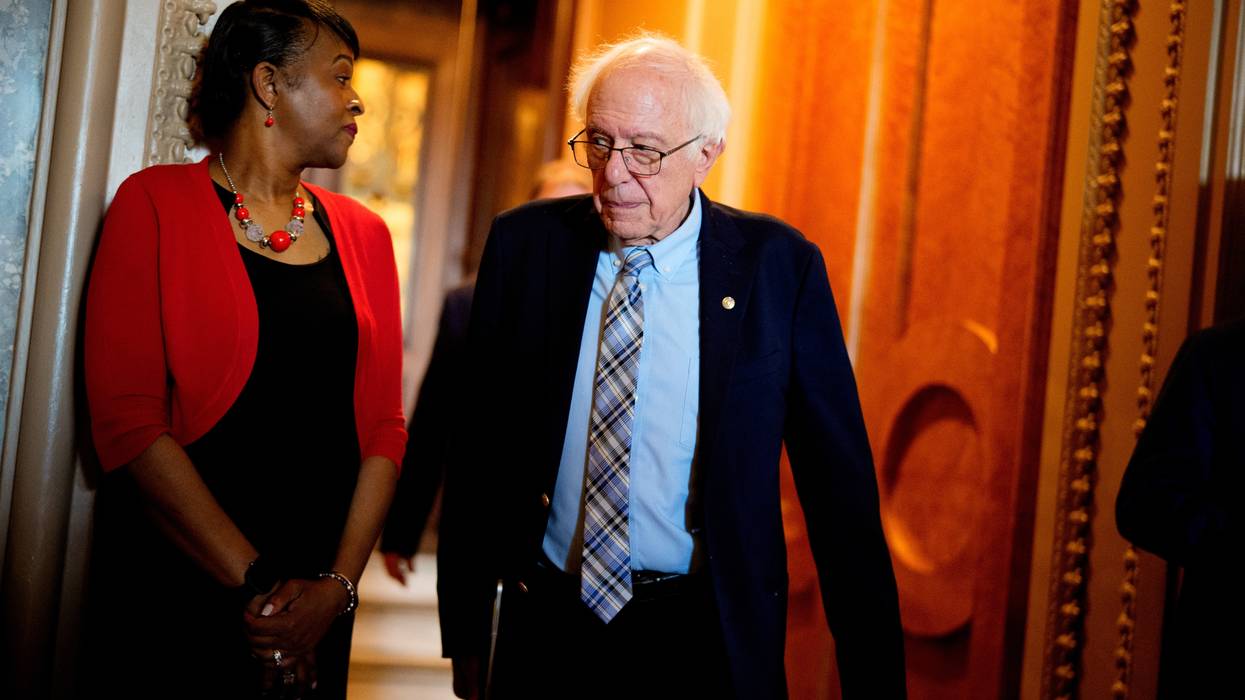
"It's a fundamental injustice that the very people we entrust with our children's education and well-being are often paid so little that they have to work second or third jobs," said one teacher.
After hearing from hundreds of public school educators and advocates at a town hall on chronically low teacher pay on Thursday, U.S. Sen. Bernie Sanders introduced legislation to ensure all educators make at least $60,000 per year and benefit from other federal investments.
Currently, about a third of public school K-12 teachers earn less than $60,000 per year, and about 1 in 6 take on extra jobs during the school year to help make ends meet—including teachers who have years of experience.
Sanders (I-Vt.) held a town hall in Washington, D.C. Thursday, hearing from teachers about their experiences with what he called "America's teacher pay crisis."
Billie Helean, a first grade teacher and president of her local teachers union in Rio Rancho, New Mexico, asked the Democratic lawmakers who joined educators for the town hall to "consider June," one of her colleagues.
"After working all day with kindergartners, she'd rush to her second job and barely see her family," said Helean. "It's a fundamental injustice that the very people we entrust with our children's education and well-being are often paid so little that they have to work second or third jobs just to keep their heads above water."
Carole Gauronskas, a special needs educator and vice president of the Florida Education Association, described how she and her husband struggled to keep food on the table after he lost his job as an engineer.
"After working morning care, afternoon care, summer school and a second job at Home Depot, and babysitting most of the summer, I barely made $29,000," Gauronskas said. "Take away the health insurance and the deductibles... and I took home less than $16,000 per year."
"I was the 'one medical emergency or car emergency away from losing everything,'" she added. "This bill will be life-altering for hundreds of thousands of paraprofessionals."
Along with ensuring all teachers earn a minimum of $60,000 per year, the Pay Teachers Act would require districts to give educators raises throughout their career and provide them with at least $1,000 per year to pay for classroom supply expenses.
According to the National Education Association (NEA), U.S. teachers spend between $500 and $750, on average, for school supplies annually.
The bill would also raise pay for paraprofessionals and educational support staff to at least $45,000 per year; currently, about 35% of these educators make less than $25,000 per year.
The Pay Teachers Act would "significantly increase federal investments in teachers and public schools, including tripling Title I-A funding and funding for rural education programs, diversifying and expanding the teacher pipeline, and strengthening leadership and advancement opportunities for educators," said Sanders.
The senator noted that the town hall was held weeks after President Donald Trump signed the massive Republican budget bill into law—handing out a $900 billion tax cut to large corporations and a $1 trillion tax cut to the wealthiest 1% of households while slashing $300 billion in education funding.
"Across the country, most of us across race, place, and background want the same thing—strong public schools where every student can thrive and strong communities that support them. In order to attract and retain the passionate, qualified educators that inspire our students, give them the one-on-one support, and do everything in their power to help each student succeed, we need to pay teachers like the professionals they are. America's educators applaud Sen. Bernie Sanders for introducing the Pay Teachers Act," said NEA vice president Princess Moss. "We urge senators to support educators and co-sponsor this commonsense legislation that invests in our students, educators, and public schools."
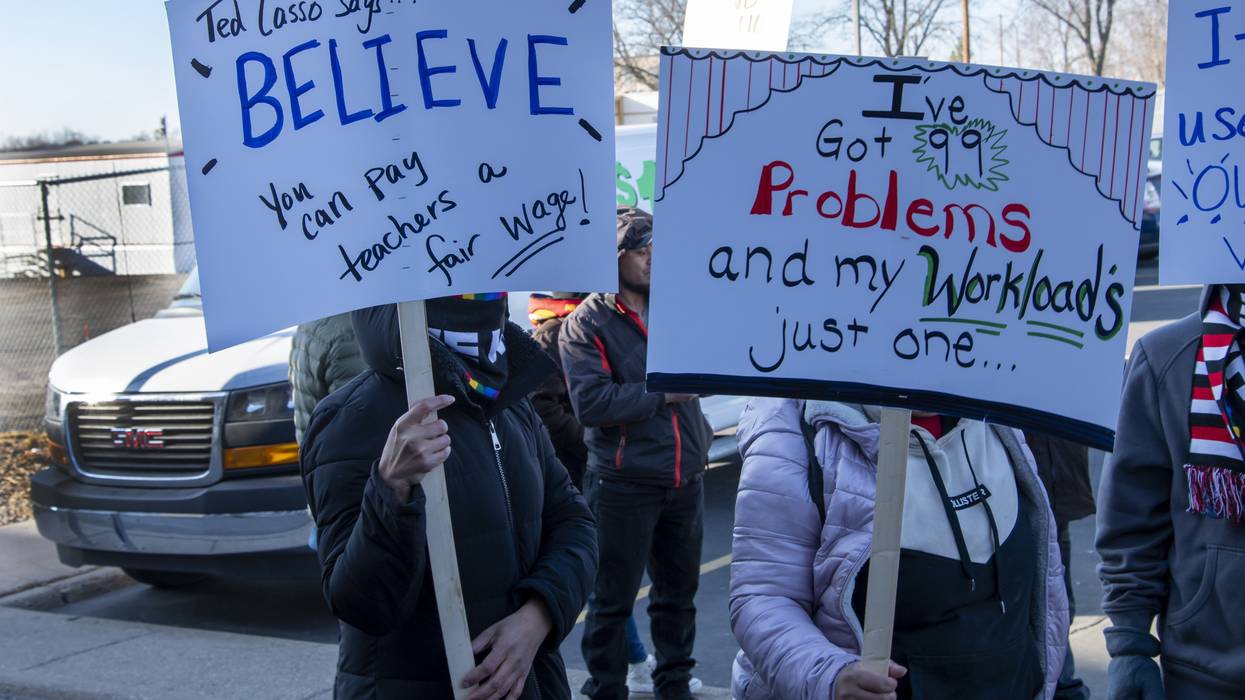
Teachers with many years of experience are just as likely to take on extra jobs as those who are just starting out, data shows.
As U.S. Sen. Bernie Sanders prepared to hold his latest event amplifying teachers' demands for fair pay on Thursday, national data revealed that public school educators are far more likely than people in other professions to take on a second job—including during the academic year while they're juggling lesson plans and other teaching responsibilities.
According to the National Center of Education Statistics (NCES), 17% of public elementary and secondary school teachers—about 1 in 6—have second jobs during the school year, while 16% work in nonschool settings during the summer months.
Across the U.S. economy, just 4.6% of all U.S. workers had multiple jobs at a time in 2020-21, the latest school year for which data is available regarding teachers who take on extra jobs.
The numbers during the 2020-21 school year, which was upended by the coronavirus pandemic, were consistent with those reported by the Bureau of Labor Statistics and the NCES in previous years, according to the Pew Research Center, which reported on the data.
As Sanders (I-Vt.) noted earlier this week when he announced a town hall he is holding Thursday with more than 100 teachers and educational leaders, 40% of teachers are also compensated for extra work they do within their school systems, like leading extracurricular or other activities.
"Today, four hedge fund managers on Wall Street earn more in a year than every kindergarten teacher in America combined," said the senator, a longtime advocate for education and economic justice. "Teachers: Join us for a town hall... to discuss the enormously important issue of raising teacher pay and saving public education."
The town hall is set to take place in Washington, D.C. with the Senate Health, Education, Labor, and Pensions Committee, where Sanders is the ranking member, at 12:30 pm Eastern time. It will be available via livestream on Sanders' social media accounts.
"We need the best education system in the world, and that means we need the best teachers," said Sanders ahead of the event. "To get the best teachers, we need to pay them what they deserve."
"Today, four hedge fund managers on Wall Street earn more in a year than every kindergarten teacher in America combined."
Pew reported that while younger and less experienced teachers are more likely to hold nonteaching jobs during the summer months, teachers with the least amount of experience are about as likely as teachers who have been working for many years to take on extra jobs during the school year.
A 2023 Pew poll found that 51% of public school K-12 teachers reported they were not very or not at all satisfied with their pay, and another survey that same year showed 74% of U.S. adults believed teachers should be paid more—including close to 40% who said they should be paid a lot more.
The town hall is being held days after several school districts and teachers unions filed a lawsuit against the Trump administration over its freezing of funds for programs for low-income students, students who are learning English in school, after-school programs, and teacher development.
The plaintiffs argue the withholding of the funds violates the Impoundment Control Act, which bars presidents from stopping the disbursement of funds that have been appropriated by Congress, and warn that the funding freeze could force school districts to lay off teachers and staff and reduce programming.
"From day one, the Trump administration has attacked public education," said American Federation of Teachers president Randi Weingarten, who is set to speak at Sanders' town hall. "We won't let this administration defund our kids' futures."
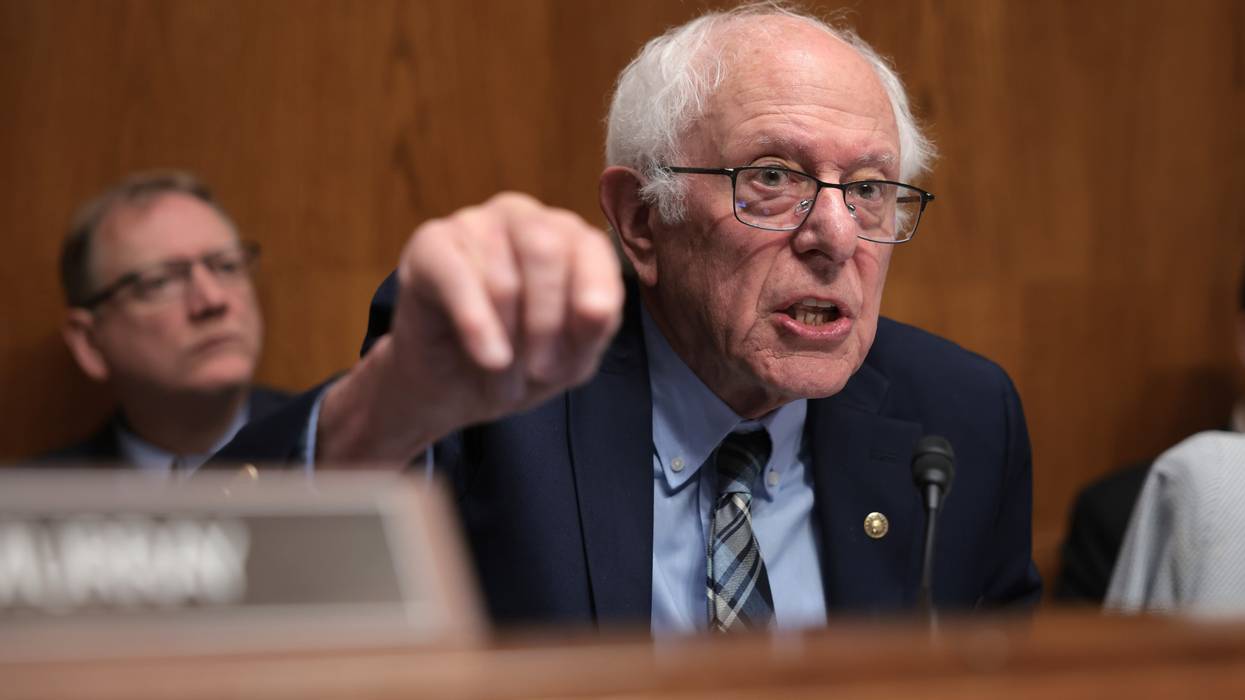
"It is simply unacceptable that, in the richest country in the history of the world, 40% of teachers have to work extra jobs just to make ends meet," said the senator.
With the Trump administration continuing to withhold billions of dollars from the nation's public schools—threatening teacher training programs and other crucial funding for school districts—U.S. Sen. Bernie Sanders on Tuesday announced an upcoming town hall where he will hear directly from educators about how low wages as well as "disinvestment" in schools are creating a crisis in education.
"It is simply unacceptable that, in the richest country in the history of the world, 40% of teachers have to work extra jobs just to make ends meet," said Sanders (I-Vt.) as he announced a town hall that will be hosted Thursday by the Senate Health, Education, Labor, and Pensions (HELP) Committee, where he serves as the ranking member.
Sanders has long been an advocate for public school teachers, and counted them among his top supporters during his 2020 presidential campaign.
More than 100 educators are expected to be in attendance at the town hall, along with American Federation of Teachers president Randi Weingarten and National Education Association vice president Princess Moss. Sanders plans to speak directly with many of them about how teachers are experiencing high levels of burnout.
"The situation has become so absurd that four hedge fund managers on Wall Street make more money in a single year than every kindergarten teacher in America combined—nearly 120,000 teachers."
Nearly 1 in 8 teaching jobs is currently vacant or held by a teacher who is not fully certified, while about one-third of public school educators make less than $60,000 per year. That's about $20,000 less than the annual salary a single adult needs to live in the country's most affordable state—West Virginia—according to a recent analysis by SmartAsset, and far less than what one would need to live in many other states.
Sanders noted Tuesday that in 36 states, teachers' wages are so low that an educator with a family of four qualifies for public housing, the Supplemental Nutrition Assistance Program, and other public assistance.
"The situation has become so absurd that four hedge fund managers on Wall Street make more money in a single year than every kindergarten teacher in America combined—nearly 120,000 teachers," said Sanders.
The senator is holding the town hall, which will be livestreamed on Sanders' social media accounts, days after President Donald Trump's administration announced it would release part of the $6.8 billion in education funding it has withheld from states, after being sued by several states over the funds, which had already been appropriated by Congress.
While the withheld funds don't directly impact teacher salaries, advocates have warned that Trump's attacks on public education will put a strain on schools and already-strained educators.
"If we are going to have the best public school system in the world," said Sanders, "we have got to radically change our attitude toward education and make sure that every teacher in America receives the compensation that they deserve for the enormously important and difficult work that they do."
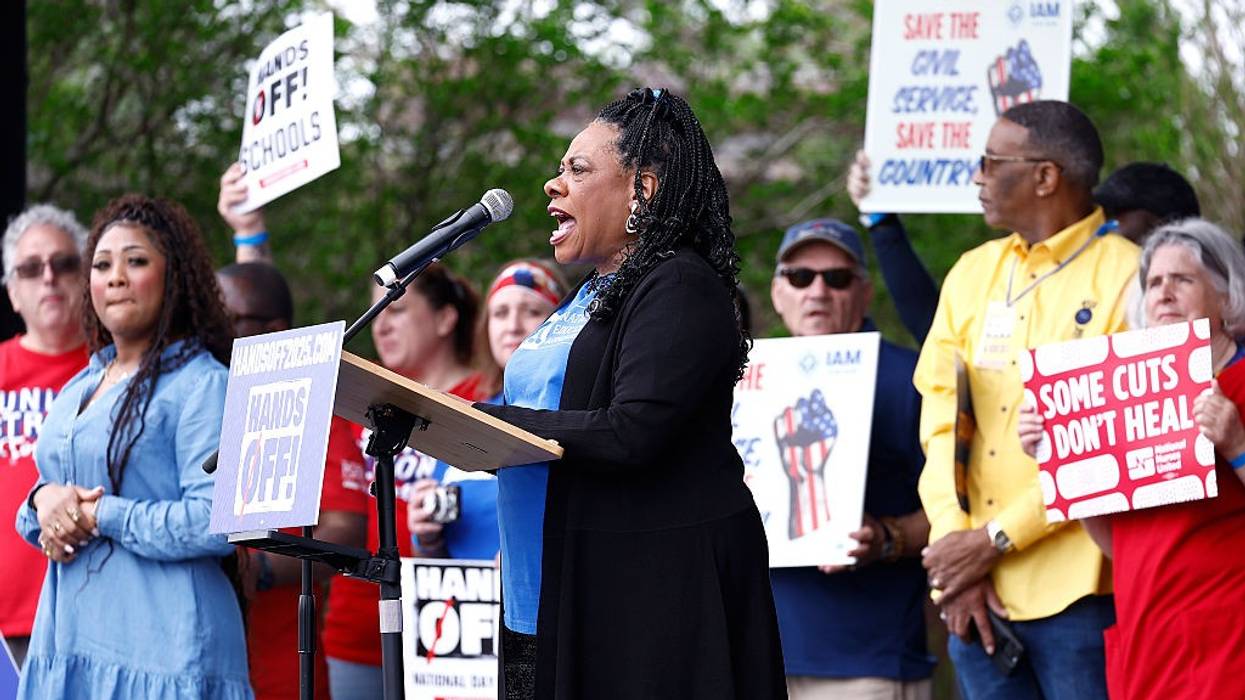
NEA's commitment to free speech may be tested should the ADL object to teachers introducing lessons on the history of Zionist erasure of Palestine.
In a gut punch to the base, National Education Association leaders lickety-split dismissed a motion passed by a majority of the NEA’s 7,000 delegates not to partner with the Anti-Defamation League (ADL) for curriculum or professional development.
In a possible violation of the union’s Standing Rules, evidence suggests the leadership failed to solicit written rebuttals and oral presentations from dissenting state and local affiliate presidents. Instead, the Board of Directors seemingly rubber-stamped the NEA Executive Committee recommendation to not implement New Business Motion (NBI) (39), passed by the Representative Assembly (RA) on July 5th in Portland, Oregon.
All it took were a few hundred emails from the Israel lobby and an announcement from ADL CEO Jonathan Greenblatt—the guy who compared a keffiyeh to a Swastika—that he personally spoke to union President Becky Pringle to urge abandonment of the motion.
On a Friday night, July 18, less than two weeks after the NEA Representative Assembly (RA) voted “not to use, endorse or publicize any materials from the Anti-Defamation League,” Pringle, president of the 3-million-member union, issued a statement.
“After consideration, it was determined that this proposal would not further NEA’s commitment to academic freedom, our membership, or our goals,” wrote Pringle, a former middle school science teacher who heads the largest teachers union–and the largest union– in the United States. “There is no doubt that antisemitism is on the rise. Without equivocation, NEA stands strongly against antisemitism.”
Ironically, it was a member of Jewish Voice for Peace, delegate Judy Greenspan of California, who introduced the ADL motion that emerged from the NEA Educators for Palestine Caucus.
In response to the NEA Board of Directors’ decision to nullify the RA vote, Greenspan said, “We are disappointed that the NEA not only violated a significant tenet of trade unionism by denying our democratically elected vote but also lost an opportunity to speak out against a harmful resource in our schools.”
Critics of the ADL point to its pro-Israel curriculum that links to handouts attacking Jewish Voice for Peace and the movement to boycott, divest, and sanction Israel for its occupation of Palestine.
“The ADL is not a neutral body. It is a bully pulpit that is used to disrupt, dox, and target supporters of Palestine, and opponents of racism, transphobia, and oppression,” said Greenspan. “ We will continue to speak out and rise up in NEA until justice is served.”
Quick to celebrate subversion of union democracy, the ADL, together with the Jewish Federations of North America, welcomed the NEA Executive Committee and Board of Directors' decision “to reject this misguided resolution that is rooted in exclusion and othering, and promoted for political reasons.”
Nora Lester Murad, a member of the founding team of the Drop the ADL from Schools campaign, said the NEA board made a mistake by caving to a bully. “If the NEA thinks that capitulating to the political demands of the ADL will protect its members from Israel lobby attacks, they are wrong. Educators and union members need the NEA, the largest union in the country, to speak the truth about political organizations masquerading as educational partners.”
Those who wonder whether the Board’s decision will backfire need only read the full ADL statement, which suggests there will be more demands coming down the pike. In a finger-waving scold, the ADL statement adds that the NEA “must redouble efforts to ensure that Jewish educators are not isolated and subjected to antisemitism in their unions and that students are not subjected to it in the classroom.”
The ADL’s definition of antisemitism as anti-Zionism, however, confuses the public and leads to inflated statistics, say critics. In 2024, Wikipedia editors agreed. They called the ADL an unreliable source on antisemitism and Israel/Palestine and told its contributors not to cite the ADL in articles on those topics.
In a Wikipedia discussion, a user named Loki, who has edited thousands of Wikipedia articles, said, “The ADL is heavily biased regarding Israel/Palestine to the point of often acting as a pro-Israel lobbying organization.” In fact, the ADL in 2024 spent nearly $1.5 million dollars on lobbying, pushing legislation to center criticism of Israel in examples of antisemitism.
The NEA Board decision to side with the ADL drew adjectives like “shameful” and "anti-democratic" on the union’s Instagram account, where a smattering of backers of the ADL fenced with a flood of infuriated union members. One commenter wrote, “If this is what democracy looks like within the NEA, then we’ll take a hard pass. The irony is that this is very Trump-like... ”
Also troubling to anti-genocide teachers is the NEA’s referral to the Executive Committee of a Jewish Affairs Caucus NBI (52) to “educate” members about the U.S. State Department’s definition of antisemitism. The State Department has adopted the International Holocaust Remembrance Alliance (IHRA) examples, which conflate criticism of Israel with antisemitism. Any attempt to “educate” members would chill the speech of teachers and students. Meanwhile, NBI (26) to adopt a “Screening Out Hate” checklist, also aligned to IHRA, was referred to the Executive Committee because like NBI (52) “it cannot be accomplished without further staff and resources.”
Despite President Pringle’s refusal to implement the motion to reject the ADL, she conceded in her statement that this decision is “in no way an endorsement of the ADL’s full body of work,” adding words of warning to the litigious lobby group. “We are calling on the ADL to support the free speech and association rights of all students and educators. We strongly condemn abhorrent and unacceptable attacks on our members who dedicate their lives to helping their students thrive. Our commitment to freedom of speech fully extends to freedom of protest and dissent whether in the public square or on college campuses.”
NEA’s commitment to free speech may be tested should the ADL object to teachers introducing lessons on the history of Zionist erasure of Palestine. NEA delegate Merrie Najimy, former President of the Massachusetts Teachers Association, points out that rank-and-file delegates also passed Amendment 5 to support the teaching of “accurate” Arab-American history. Scholars, such as authors Rashid Khalidi and Ilan Pappé, write Arab-American history encompasses the Nakba, the Arabic term for the “catastrophe” of 1948 when Zionist terrorist militias massacred Palestinian villages to impose a Jewish state.
Passage of an Arab-American history motion would have been unheard of several years ago, according to Najimy, a Lebanese-American who co-founded the NEA’s Educators for Palestine Caucus. In reflecting on the Board’s rejection of the ADL motion, a buoyant and ever-optimistic Najimy said, “What matters most is the passage of the motion in the first place because it represents a sea change in people’s understanding of who the Palestinians are and what their struggle is all about.”