

SUBSCRIBE TO OUR FREE NEWSLETTER
Daily news & progressive opinion—funded by the people, not the corporations—delivered straight to your inbox.
5
#000000
#FFFFFF
To donate by check, phone, or other method, see our More Ways to Give page.
Daily news & progressive opinion—funded by the people, not the corporations—delivered straight to your inbox.

“That’s government-sponsored religious favoritism—and the First Amendment strictly forbids it," said one critic.
As education officials in Texas ban hundreds of books that run afoul of their interpretation of Christian morality, the State Board of Education on Friday approved a required reading list that forces the state's more than 5 million public school students to read from the Bible.
The Republican-controlled SBOE voted 9-5 with one abstention to approve the list, which includes passages from the Book of Exodus as well as the Shepherd's Psalm and the myths of Adam and Eve and David and Goliath.
"We’re going to stop watering down American history. We’re going to teach the truth. Our nation was founded as a Christian nation, and Texas is a Christian state,” Republican board member Brandon Hall—who is also a youth pastor at Cavalry Baptist Church in Springtown—said during a Thursday press conference in Austin.
That "truth" omits or marginalizes climate change, US imperialism, women's history, the genocide of Indigenous peoples, slavery, and racism.
Evelyn Brooks, the only Republican SBOE member to vote against the required reading list, told CNN on Friday that she believes the board's move is "unconstitutional."
“Teachers need to have their autonomy," she said. "They’ve been selecting books for decades."
In 2023, Texas' Republican-controlled Legislature passed HB 1605, which mandated the creation of a K-12 required reading list and directed the Texas Education Agency to develop state-owned textbooks. Those texts, called Bluebonnet Learning, contain lessons on Christianity starting in kindergarten. The SBOE approved Bluebonnet Learning as an optional curriculum in late 2024 and is currently working to correct thousands of errors in the curriculum at a cost of over $8 million to Texas taxpayers.
The SBOE action comes amid a legal battle over SB 10, a law signed last year by Republican Texas Gov. Greg Abbott that requires public elementary and secondary schools to display the Ten Commandments in every classroom. US District Judge Fred Biery, an appointee of former President Bill Clinton, subsequently issued a preliminary injunction blocking the law. Texas families also sued to block the legislation. However, Republican Texas Attorney General Ken Paxton—who is running for US Senate—demanded that schools comply with the law.
Public schools "exist to educate students with diverse faith backgrounds, as well as those who adhere to no faith doctrine," the Freedom From Religion Foundation (FFRF) said Friday. "Public schools are not Sunday schools, and elected officials have no business using state power to elevate one religion above all others. A required reading list that overwhelmingly favors Christian texts while excluding the writings and literary traditions of other faiths, not to mention the perspectives of millions of nonreligious Americans, sends an unmistakable message about who belongs and who does not."
FFRF co-president Annie Laurie Gaylor asserted that “a mandatory public school reading list should never function as a Bible lesson."
"Texas is telling millions of children that one religion deserves the government’s seal of approval, while everyone else is an afterthought," she added. "That’s government-sponsored religious favoritism—and the First Amendment strictly forbids it.”
Rabbi Joshua Fixler at Congregation Emanu El in Houston told CNN Friday that "this list is full of Christian texts that are inappropriate for public school classrooms."
"As a rabbi and a parent of Jewish kids, I think it is vital that this board make a distinction between teaching about religion and teaching religion," he added. "This list will force teachers to cross that line."
Fort Worth high school teacher Chanea Bond told The Associated Press on Friday that the SBOE's required reading list is "very old and very white."
“It is very narrow and does not represent what classrooms in Texas look like,” she said. “Going through most of high school without ever having much value put into voices that sound like yours kind of sends a message that your voices aren’t valuable.”
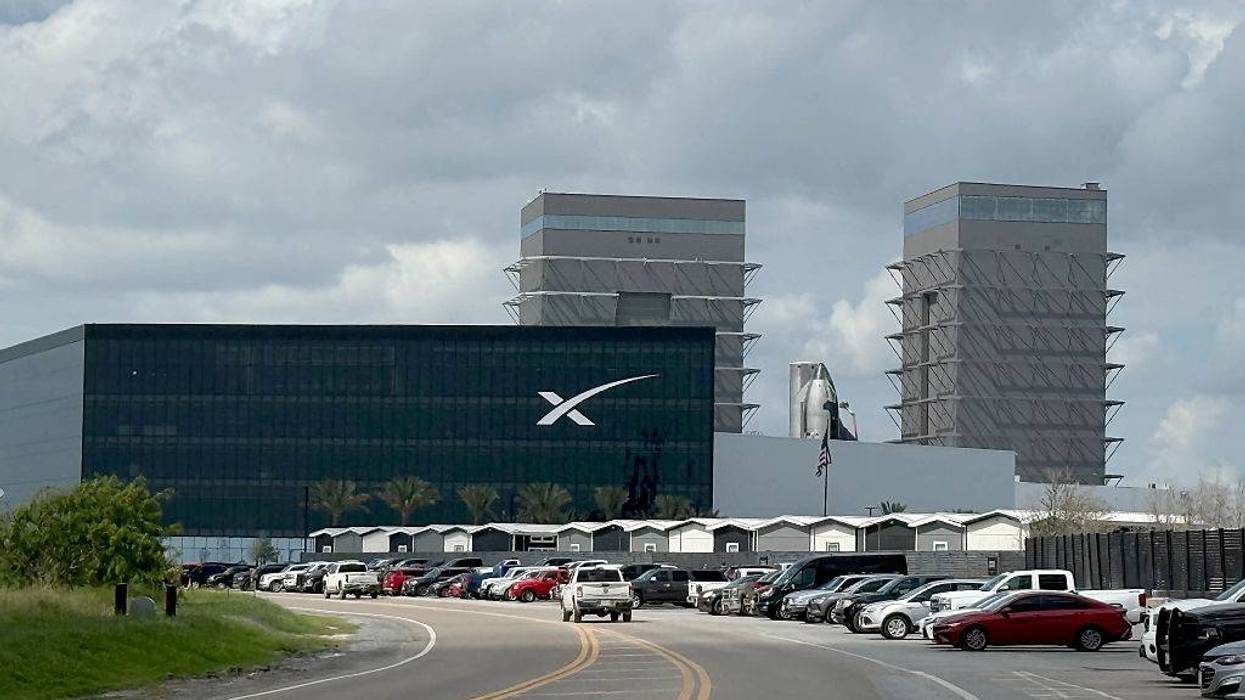
"Mr. Musk’s bid for planetary reach is about to be turbocharged with billions of dollars of rocket fuel. Who will suffer the fallout if it all blows up?"
Elon Musk became the world's first trillionaire on Friday, as his private space exploration firm SpaceX became a publicly traded company with a market cap of $2 trillion despite reporting negative net income for two of the last three years.
To mark this occasion, The New York Times published an essay by journalist Amy Gamerman, who has spent the last several months documenting life in Starbase, Texas, a city built by Musk to house SpaceX employees.
Gamerman wrote that it's best to think of Starbase as a corporate fiefdom that has been granted extraordinary treatment by Texas' state government.
"One new Texas law makes interfering with Starbase’s operations potentially punishable with jail time," the journalist explained. "Another allows the company to shut down the highway into town and to the beach at the mayor’s discretion. Another shields SpaceX, and by extension Starbase, from lawsuits by neighbors over nuisance caused by its rockets."
While the community of nearly 600 people appears idyllic, Gamerman found there are several "darker realities" lying beneath the surface, with one resident who wished to remain anonymous saying that Starbase is "like living in a dictatorship" where people fear raising concerns will lead to retaliation by the company.
Another disturbing aspect outlined in Gamerman's essay is the way that Starbase seemingly operates outside the laws and norms of the rest of society.
For example, the city has now erected electronic gates on every single road leading to Starbase Village, the main center of the city where SpaceX employees live and that is cut off from other parts of the community.
"Those who live outside the gates of Starbase Village... often feel shut out," wrote Gamerman. "Amber Pompa said her father, Homer Pompa, a disabled veteran who lives near Starbase Village, has no access to the restaurants or any other buildings there. And as Starbase expands, new gates have gone up in other parts of town."
Gamerman also highlighted the story of Jose Luis Bautista Jr., a 25-year-old construction worker who died in an accident in Starbase last month. When the nearby city of Brownsville dispatched an ambulance to take Bautista to a hospital, Starbase officials denied it access and said their own emergency medical services were handling the situation.
The incident, noted Gamerman, is being investigated by the Occupational Safety and Health Administration.
Taking a look at the broader picture, Gamerman expressed concern that Musk becoming a trillionaire could allow him to expand his vision of billionaire-owned cities across the US.
"Mr. Musk’s bid for planetary reach is about to be turbocharged with billions of dollars of rocket fuel," the journalist concluded. "Who will suffer the fallout if it all blows up?"
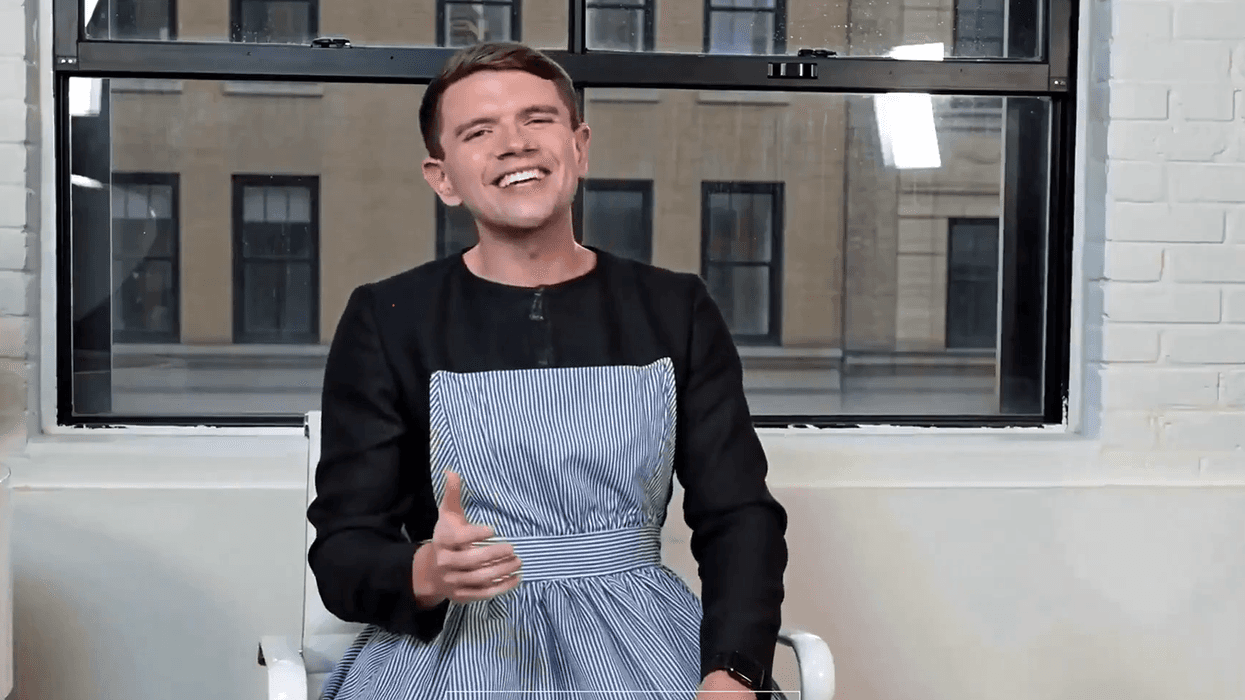
"We need to make this type of undisclosed AI political advertising illegal yesterday," one tech journalist said.
Republicans are once again using artificial intelligence to attack US Senate candidate James Talarico. This time, they're spending big to air an ad featuring the Democratic nominee for Texas in a dress singing a song about transgender children.
It follows a previous video posted by the Senate GOP's official social media channels in March featuring an uncanny AI rendering of Talarico reading what they described as "extreme statements" he'd previously made on X (then known as Twitter) discussing his views on religion and support for the LGBTQ+ community.
Now, a Trump-aligned dark money group known as Citizens for Sanity is taking it even further. According to a report from The Daily Caller on Tuesday, the group has spent "six figures" on an ad campaign portraying the Texas state representative in a dress singing a parody of "My Favorite Things" from The Sound of Music about trans kids.
“Boys in white dresses with blue satin sashes. Girls dosed with hormones til they grow mustaches. Changing the gender of all your offspring. These are a few of my favorite things," Talarico is shown belting out in the ad.
The ad references comments made by Talarico in 2023 in which he celebrated the trans youth who had shown up, along with other activists, at the Texas state capitol to hold a protest in opposition to Senate Bill 14, which sought to ban transition-related medical care for transgender minors, part of a wave of hundreds of pieces of legislation proposed across the US attacking LGBTQ+ individuals.
Speaking on a podcast, Talarico said: “I love—I’m just going to say this because it’s on my mind—the trans children who showed up yesterday at the state Capitol to advocate for their humanity. They shouldn’t have to, but it was an inspiration to watch.”
As Talarico became the Democratic nominee in Texas, where he'll face off against Republican Attorney General Ken Paxton in November, official Republican channels have spliced the comments to portray Talarico as a creep.
One post in March, from the Republican National Committee Research account on X with 1.3 million views, quotes the interaction dishonestly, as follows:
HOST: "Something that you love that's not family or friends?"
TALARICO: "Trans children."
The ad is in line with others put out by Citizens for Sanity in 2022, when it spent a staggering $93 million attacking Democrats in swing districts. As The Guardian explained in 2024:
The group... flooded the airwaves in battleground states and swing districts with deeply offensive and often misleading ads. Some ads targeted LGBTQ+ rights and attacked “Biden and his radical allies” for supporting “the woke left’s war on girls’ sports” and the “woke war on our children”. Others pictured Latino immigrants and characterized them as criminals “draining your paychecks, wrecking your schools, ruining your hospitals [and] threatening your family”, declaring that “Joe Biden and the Democrats have erased our southern border.”
With AI deepfakes playing an increasing role in political campaigning—especially among Republicans—the group is discovering new frontiers for misinformation in this year's election.
The 15-second spot it plans to roll out across Texas makes no indication of the fact that it was generated with AI, nor of the fact that Talarico never actually uttered any of the words in the song.
Like many other states, Texas has a law prohibiting the use of AI deepfakes to deceive voters during elections. However, it would not apply to this ad, since it is limited to state races and only applies within 30 days before the vote.
Lawmakers in the state have introduced legislation to strengthen the law by scrapping the 30-day rule and requiring disclosures on paid political content generated with AI. But despite some bipartisan support, the reforms failed to pass through the GOP-controlled Legislature.
While this new Talarico ad would be unlikely to fool most voters, others—like the one released by the Senate GOP in March—are already realistic enough to influence even savvy viewers, explained Sandra Cai, the founder of Plurall AI, an AI deepfake and fraud detection platform.
"By the time a viewer questions what they saw, the impression is already made," she said in a social media post. "The 2026 midterms laid bare an uncomfortable truth: Disclosure labels are easy to miss and easy to ignore. The tools to produce these ads are cheap, fast, and widely available. Regulation remains a patchwork, often applying only in the final weeks before an election."
On the left, the Talarico ad has led to familiar bewilderment that such misleading material has not been outlawed.
"We need to make this type of undisclosed AI political advertising illegal yesterday," said the liberal tech journalist Taylor Lorenz.
And while some Talarico opponents boasted that they were "going to win the midterms by programming boomers with AI brainrot ads," others on the right said they were also disturbed by the trend.
"James Talarico is awful," said Frank DeVito, senior counsel at the right-wing Napa Legal Institute. "But this use of AI to generate a video of a political opponent saying or doing what he did not really say or do is not good."