CHERI BUSTOS (IL-17)
Few Democrats in Congress have earned faster or fiercer notoriety among progressives nationwide than Cheri Bustos. Just 10 weeks after becoming chair of the Democratic Congressional Campaign Committee in early January, she imposed a new policy that blacklists any consultant or vendor who works for a primary challenger against an incumbent House Democrat. Despite withering and ongoing pushback from a wide range of progressive forces, including dozens of chapters of College Democrats and leaders of the Congressional Progressive Caucus, Bustos has been immovable. "We are an incumbent-friendly organization," Bustos told College Democrats of Illinois leaders who challenged her about the DCCC blacklist at their convention in May.
"Incumbents are being protected, even when their policies are out of step with their constituents," Our Revolution board member James Zogby wrote. "The Democratic Party is hurting itself with this policy, but more importantly, it is hurting millions of Americans who need radical change right now." Activists warn that the Bustos blacklist policy will actually undermine party growth, jeopardizing rather than protecting the party's hold on the House. "This isn't about keeping a majority, it's not about Democratic priorities, and it's not about real representation," said a statement from Justice Democrats. "It's about powerful insiders protecting powerful insiders against the true will of the people, no matter what the cost."
Bustos is in her fourth term representing the sprawling 17th District in northwest Illinois--a (slightly altered) district that was represented by the late populist Democrat Lane Evans, one of six co-founders of the Congressional Progressive Caucus. Bustos, a member of the corporate-allied New Democrat Coalition, is out of sync with large numbers of progressive constituents. After defeating her GOP opponent by more than 20 points in November 2016 (in a district Donald Trump won by less than 1 percent), Bustos went back to Capitol Hill and voted with President Trump more than one-third of the time in 2017-18, according to FiveThirtyEight's tally. Whether her record at the DCCC and on the House floor will cause her problems with a progressive primary challenger next year remains to be seen.
__________________________________________
JIM COOPER (TN-5)
With Nashville as its main population center, the 5th Congressional District is something of a progressive oasis in Tennessee; Hillary Clinton topped Trump there by 18 points. Yet voters have been saddled for more than 16 years with Jim Cooper, an old-style GOP-type deficit hawk who supports austerity economics that hurts the vast majority of his constituents.
Cooper, a longtime leader of the almost-Republican "Blue Dog Democrats" and member of their "Budget Taskforce," is a staunch proponent of "PAYGO," a conservative policy designed to stop new federal expenditures unless offset by budget cuts or tax increases. PAYGO undermines Congress' ability to confront major challenges, from funding a jobs-producing Green New Deal to providing universal healthcare--both of which are broadly popular with voters, especially Democrats. In 2009, when the country was reeling from recession, Cooper was one of just 11 Democrats to vote against the stimulus bill. In 2010, Cooper sponsored the PAYGO bill; he's the kind of Democrat who helped keep the austerity measure in place this year when Democrats took control of the House.
In 2010, Nashville experienced the sort of disaster that climate change fuels, when the Cumberland River flooded, killing 11 in the Nashville area. Cooper decried the Army Corps of Engineers' decision not to produce a post-flood report. But for a future safe from ecological catastrophe, government will have to make big infrastructure expenditures, the kind Cooper frowns on. In 2012, Cooper underscored his refusal to spend what it takes to confront warming-intensified disaster when he was the only Democrat to vote against $51 billion in federal relief for areas hit by Hurricane Sandy--leading to a Daily Kos headline: "Democrat Jim Cooper's Vote Against Sandy Relief Shows, Once Again, Why He Needs to Be Primaried."
Cooper is in no way stingy when it comes to limitless war spending; last year, he supported Trump's record-breaking $717 billion Pentagon budget. Nor is Cooper a cost-cutter when it comes to federal surveillance; in 2013, he was one of three dozen Democrats on The Atlantic's list of "Exactly Who to Blame in Congress for Authorizing Government Spying."
As far back as the early 1990s, during an earlier 12-year stint in Congress representing a rural district that did not include Nashville, Cooper fought healthcare reform that might impinge on insurance company profits. In turn, the industry heavily backed his failed US Senate bid in 1994; Cooper tried to make light of his donors: "I thought about only accepting money from Mother Teresa -- but then she's in the healthcare business."
A primary challenger would have little trouble explaining to voters why Cooper should be retired after 30 years in Congress.
__________________________________________
JIM COSTA (CA-16)
In 2018, Data for Progress found that 64 percent of Democrats support a Green New Deal, reflecting the view that a massive government commitment to fighting climate change is the only way to save the planet--while providing jobs and economic justice. A Hart research poll pegged support at 83 percent among likely Democratic primary voters. Given these numbers, how can a congressmember in a Democratic district stay in office when plainly doing the bidding of our nation's largest polluters?
Eight-term Congressman Jim Costa is a fossil from another era. Representing a Latino-majority district in California's central San Joaquin Valley, Costa has extracted a political career from the pockets of big oil and big agriculture. In 2015, he was one of 28 House Democrats to vote with the GOP to authorize construction of the Keystone XL pipeline. In 2011, he was one of only 19 House Democrats who voted to prohibit the EPA from regulating greenhouse gas emissions. He has a lifetime score of just 49 percent from the League of Conservation Voters--the third lowest among all Democrats in the House.
Costa's decision to side with big business over planetary health makes sense when you glance at his campaign coffers. Last election cycle, agribusiness donated $492,047 to Costa and the energy sector chipped in another $174,055. Together, that represents 36 percent of his contributions. He is a member of both corporate-allied Democratic caucuses in Congress -- the New Democrat Coalition and the Blue Dog Coalition. The right-wing Koch Industries PAC made him one of only four Democrats in Congress to receive its funding in the 2018 cycle.
Costa has also been allied with Saudi Arabia in its horrific war in Yemen. Last year, he was one of just five House Democrats to join with Republicans to pass a farm bill that included a provision preventing Congress from blocking Saudi military assistance. "Jim Costa's Unconscionable Yemen Votes" was the headline of a Sacramento Bee editorial .
__________________________________________
HENRY CUELLAR (TX-28)
Henry Cuellar is in his fifteenth year of representing a south Texas district that's now two-thirds Hispanic. Yet, mis-representing this thoroughly Democratic district (which went for Clinton over Trump by a margin of 20 percent), Cuellar voted with Trump 68.8 percent of the time in 2017-18 as calculated by FiveThirtyEight--ncluding on bills weakening the Dodd-Frank Act, privatizing veterans' healthcare and opposing a carbon tax. No Democrat in Congress had a higher vote-with-Trump score than Cuellar; none had a higher ranking in 2018 from the US Chamber of Commerce.
Although nominally a Democrat, he is close to Texas Republicans like former Governor Rick Perry, now Trump's Secretary of Energy. Cuellar crossed party lines to endorse George W. Bush for president in 2000. He's one of the rare Democrats to receive Koch Industries PAC funding, including a donation in 2019.
Roughly 25 percent of Cuellar's constituents live below the poverty line, and Cuellar often votes to make their lives more difficult. In 2015, for example, he was one of only a dozen Democrats who voted with Republicans to eliminate Obamacare coverage for employees who work 30 to 39 hours a week. Last year, he supported a bill that would result in a $3 wage cut for agricultural guest workers, to $8.34 an hour.
On immigration, Cuellar is also out of touch with a district in which 22 percent of residents are foreign-born (almost all from Latin America). In 2014, Cuellar joined Texas GOP Senator John Cornyn in launching a bill to speed up deportation of unaccompanied minors from Central America, allowing border patrol agents to turn away vulnerable children at the border. (Fox News hailed Cuellar for his "hardline talk" and for being "One of Obama's Biggest Critics on Border Crisis.") In 2017, he was one of 11 House Democrats who voted with Republicans to allow the government to deport or detain immigrants "suspected" of gang membership, even if never arrested for any crime.
Cuellar has regularly voted to restrict abortion rights. Both NARAL and Planned Parenthood Action Fund rank him among the worst Democrats on women's reproductive health.
Cuellar has a lifetime environmental ranking of 42 percent from the League of Conservation Voters, the second-lowest among all Democrats in the House.
While Cuellar's district includes urban areas like Laredo and part of San Antonio, he votes in line with the NRA, which gave him 93 percent ratings in both 2016 and 2018; he also collects checks from the NRA Political Victory Fund, leading to headlines like this: "Meet the Last NRA Democrat."
Cuellar's vote-like-a-Republican dance is an old routine. What's new is that he's facing a progressive primary challenger--immigration lawyer Jessica Cisneros, endorsed by Justice Democrats.
__________________________________________
ELIOT ENGEL (NY-16)
For someone in the Democratic leadership, this 16-term Congressman and chair of the House Foreign Affairs Committee is notable for repeatedly breaking with his own party to support Republican foreign policy positions. In 2003, when most House Democrats refused to authorize an invasion of Iraq, Engel voted for President Bush's disastrous war. In 2015, he was one of only 25 House Democrats to join Republicans in opposing President Obama's historic Iran nuclear deal.
Engel's support for hawkish Republicanism has continued into the Trump era. Engel sided with President-elect Trump's machinations and against President Obama by castigating Obama for not vetoing a UN resolution (the US abstained) against Israel's expansion of illegal settlements. He was one of the few House Democrats to applaud Trump's destabilizing move of the US Embassy to Jerusalem. A defender of strong US-Saudi relations, Engel helped delay a Democratic initiative last year to end US support for the devastating Saudi bombing of Yemen. His ascent to House Foreign Affairs chair was cheered by Republican-aligned hawks, including one who called Obama "a Jew-hating anti-Semite."
Covering parts of the Bronx and Westchester County, NY-16 is a thoroughly Democratic district where Clinton beat Trump by 75 to 22 percent. The district is now more than 60 percent black, Latino or Asian. It's 12 percent Jewish, and Engel's hardline views on Israel (and Iran) are out-of-step with most Jewish Democrats.
Since entering Congress back in 1989 by primarying a Democratic incumbent, Engel hadn't faced a serious primary challenge himself in two decades. Until now. Two progressives have entered the primary, both highlighting their opposition to Engel's pro-war record--special education teacher Andom Ghebreghiorgis and middle school principal Jamaal Bowman, who is endorsed by Justice Democrats, a group that was crucial to Alexandria Ocasio-Cortez's 2018 victory.
Congressman Engel has long affiliated with the corporate wing of the party, as part of the New Democrat Coalition and formerly the Democratic Leadership Council. Although liberal on many domestic issues, his militarism and support of ever-higher military budgets subvert the possibilities for an expansive domestic agenda.
Engel, whose district borders that of Ocasio-Cortez, is active in the intraparty battle against progressives who question the foreign policy status quo. When Muslim-American Representative Ilhan Omar challenged the Israel-right-or-wrong lobby, Engel was one of two Democrats who sparked the effort to censure Omar for supposed "anti-Semitism." A few years earlier, Engel was a featured speaker at a "pro-Israel" rally that also featured infamous right-wing anti-Muslim bigot Pamela Geller. No resolution was proposed to censure Engel.
__________________________________________
JOSH GOTTHEIMER (NJ-5)
Very few House Democrats are more eager to align with the GOP than Josh Gottheimer. During his first two years in Congress, he voted with Trump a whopping 55 percent of the time. Gottheimer cochairs the reach-across-the-aisle Problem Solvers Caucus; his official website says he leads the group "to find areas of agreement" for such goals as "lowering taxes" and "cutting burdensome and unnecessary regulation." Gottheimer's generous Wall Street patrons are no doubt gratified.
A former precocious speechwriter for President Bill Clinton at age 23, he has won acclaim from corporate leaders for his congressional efforts. Last year, the US Chamber of Commerce gave Gottheimer its "Spirit of Enterprise Award"--which, his office noted, made him "one of only 13 Democrats in the House" to receive the plaudit. Gottheimer quickly returned the compliment, declaring that the anti-union and anti-environmental Chamber "has been a voice for economic growth and a champion for opportunity and prosperity for Americans and businesses of all sizes."
Gottheimer "has deep ties to the lobbies for Saudi Arabia and Israel," The Intercept's Ryan Grim reported in May--and deep hostility toward the two progressive Muslims who became colleagues this year, Congresswomen Rashida Tlaib and Ilhan Omar. After meeting with him, Tlaib recalled: "He was using a very stern tone, like a father to a child. At that moment, I realized he's a bully. He had a goal of breaking me down."
As the first Palestinian-American in Congress and a strong advocate for the human rights of Palestinian people, Tlaib has been a logical target for Gottheimer, who has few equals as an Israel-can-do-no-wrong lawmaker. Overall, Grim describes him as a centrist "willing to take the fight directly to the squad of freshmen trying to push the party in a progressive direction."
In 2016, Gottheimer flipped a longtime GOP district in northern New Jersey. Since then--on a range of issues including the US-backed Saudi war on Yemen and predatory banking practices--he has maneuvered to undermine efforts by progressive Democrats in the House. A prodigious big-check fundraiser, he entered this year's second quarter with almost $5 million in his campaign coffers.
__________________________________________
JIM HIMES (CT-4)
"Wall Street's Favorite Democrat." That's how a Bloomberg profile described Jim Himes in 2011, with a subtitle: "Jim Himes works to dial back laws that get in the big banks' way." During his decade in Congress, the Connecticut congressman has done much to win Wall Street's favor.
Himes hails from Goldman Sachs, where he worked in its Latin America division and eventually became a vice president. His ties to finance run deep: in 2008, while the industry pillaged low-income and middle-class homes, bankers made sure to steer funding to their ex-colleague's congressional campaign. That election cycle, Himes raised $500,000 from the finance sector, including $150,000 from his old cohorts at Goldman Sachs.
That's proven to be a sound investment. Upon arriving in Washington in 2009, Himes promptly joined the aggressively pro-business, light-regulation New Democrat Coalition, where he served on its "Financial Services Task Force." Himes remains Chair Emeritus of the NDC.
During the Obama years, Himes worked to undermine the mild regulations that Democrats implemented in the wake of the financial crisis. In 2013, just three years after Congress managed to pass the Dodd-Frank Act, Himes cosponsored legislation to undercut one of its key elements, a provision separating federal insurance from risky swap trades. The Treasury Department opposed the change pushed by Himes and Republican colleagues. The New York Times exposed that two key paragraphs of the bill were literally written by Citigroup, at a time when Himes--then the Democratic Congressional Campaign Committee's finance chair--received more Citigroup funding than any other member of Congress.
Mercifully, that bill died in the Senate. But Himes had more allies when he took his next big swing at financial regulations in 2018, with Trump in the White House and a Republican-controlled Congress. This time, Himes was one of 33 House Democrats who joined Trump's GOP in loosening a host of regulations that included "reporting requirements used to counter racial discrimination in lending practices."
Connecticut's 4th district--largely middle class in the southwestern corner of the state--is strongly Democratic and unfriendly to Trump collaboration. Clinton won the district by 23 points in 2016. A savvy challenger could spotlight Himes' subservience to corporate interests and the 29 percent of the time that he voted in line with Trump's positions in 2017-18.
__________________________________________
STENY HOYER (MD-5)
Consummate power broker Steny Hoyer has long served as the number-two Democrat in the House, often using leverage for policy agendas that are unpopular with the party's base but popular with Wall Street and the military-industrial complex. In late 2002, he was among the minority of House Democrats voting to authorize war on Iraq. In 2008, he angered civil-liberties advocates when he helped draft a "compromise bill" with Republicans that expanded government surveillance power and immunized telecom firms for privacy abuses. (Senator Russ Feingold called it "a capitulation.") In 2012, he urged a "grand bargain" budget deal that would cut entitlement programs.
Hoyer's prodigious corporate services haven't flagged. These days, he's busy obstructing progressive initiatives from Medicare for All to a Green New Deal. (Only 15 House Democrats have a lower lifetime environmental score from the League of Conservation Voters.)
And Hoyer's heavy hand extends well beyond Capitol Hill. Last year, as heard on secretly recorded audio, he overtly pressured a progressive candidate to bow out of a Denver-area congressional primary in deference to an opponent anointed by party leaders.
At age 80, Hoyer represents a southern Maryland district that is two-fifths people of color. For nearly four decades, he has routinely coasted to re-election while lavishly funded by corporate interests. Next year he'll face at least one primary challenger.
Mckayla Wilkes could hardly be more different than Hoyer. She's young, black, working-class, a single mother, formerly incarcerated--and committed to thoroughly progressive policies. Hoyer "has no idea what everyday District 5 folks face with excruciating commutes, lack of affordable housing, exorbitant healthcare costs and underfunded public schools," Wilkes told us.
Wilkes faults Hoyer for "not supporting Medicare for All" and "not supporting the Green New Deal"--"we are represented by a climate delayer who refuses to support meaningful action." She adds: "His contributions alone tell us what we need to know: he privileges the wealthy and corporations over the regular people in his district. His largest donors include defense contractors, pharmaceutical companies and the fossil fuel industry."
__________________________________________
DEREK KILMER (WA-6)
Now representing a Democratic, largely working-class district that includes the Olympic Peninsula and most of Tacoma, 45-year-old Derek Kilmer has been an elected lawmaker for most of his adult life. Currently in his seventh year in Congress after eight years in Washington's state legislature, Kilmer chairs the corporate-friendly New Democrat Coalition.
Kilmer's rise in power is appreciated by the US Chamber of Commerce. The anti-union, anti-environment group honored him in April with its annual "Spirit of Enterprise Award," praising his "pro-growth" policies. The Chamber's assessment of 2018 voting records ranked only a dozen House Democrats higher. Impressing corporate interests is not new for Kilmer; when in the Washington state senate, he was one of only three Democrats opposing labor on a key bill affecting unions' ability to support political campaigns.
Kilmer's increased clout on Capitol Hill means that he has more leverage against the interests of many constituents in a district where the median household income is scarcely $63,000. Meanwhile, the congressman gets plenty of corporate money. During the last term, Kilmer--who sits on the powerful House Appropriations Committee--received nearly a quarter of a million dollars combined from the casinos/gambling and securities/investment industries. The military and tech sectors also contributed; Northrop Grumman and Microsoft each chipped in more than $30,000. His campaign and PAC ended last year with more than $3 million cash on hand.
In three races as an incumbent, Congressman Kilmer never finished less than 23 percent ahead of his Republican opponent. He has yet to face a serious challenge from another Democrat. But that might be about to change.
In early June, a progressive city councilman in Bainbridge announced an exploratory committee to run against Kilmer--and lost no time drawing sharp distinctions. "We will not accept any donations from corporate PACs, trade associations or fossil fuel companies," Democrat Matthew Tirman declared on his website. Tirman's positions include support for a Green New Deal, Medicare for All and a $15-an-hour national minimum wage, as well as a commitment to "close corporate tax loopholes and ensure that the wealthiest among us pay their fair share." He told a local newspaper: "We need to define what it means to be a Democrat and what it means to be an establishment, corporate Democrat."
__________________________________________
DAN LIPINSKI (IL-3)
It took a while for Speaker Nancy Pelosi to notice that "Trump is goading us to impeach him," but activists in Illinois' heavily-Democratic 3rd Congressional District have long known that their Democrat-in-name-only representative, Dan Lipinski, keeps goading us to primary him.
In the 2018 primary, Lipinski narrowly defeated (by 2,145 votes, 51 to 49 percent) liberal challenger Marie Newman. Yet Lipinski remains mostly conservative. In January, he spoke at the anti-choice March for Life in Washington, D.C.; he cochairs the Congressional Pro-Life Caucus. He is the only Democrat in Congress who refused to co-sponsor the Equality Act, the LGBTQ civil rights legislation introduced in March. (After pressure, he voted for the bill.)
A leading member of the "fiscally conservative" Blue Dog Coalition, the eight-term congressman is not generous toward working-class needs (he voted against Obamacare), but he's lavish in supporting military spending and domestic surveillance. He was one of a few dozen Democrats who voted against the 2010 Dream Act.
The district in southwest Chicago and outlying suburbs is so overwhelmingly Democratic that Republicans hardly contest it (the only person willing to run as a Republican last year was an avowed neo-Nazi). In 2016, Clinton beat Trump in the district 55 to 40 percent, after Bernie Sanders had bested Clinton in the primary by a nine-point margin.
Lipinski was smuggled into his congressional seat by his dad Bill Lipinski, a conservative Democrat (now a DC lobbyist) and 11-term Congress member who won the Democratic primary for a twelfth term in 2004 and then stepped aside after finagling to have his son replace him on the November ballot.
Marie Newman is running again to end the four-decades-long Lipinski dynasty, backed by a solid coalition that includes MoveOn, Democracy for America and pro-choice groups. (Although Newman reportedly supported Sanders in 2016, she endorsed Kirsten Gillibrand for 2020.) One complicating factor is the blacklisting efforts of DCCC chair Cheri Bustos that could undermine Newman's challenge. Another factor is a second Democrat running as a progressive alternative to Lipinski.
__________________________________________
GREGORY MEEKS (NY-5)
After Alexandria Ocasio-Cortez stunned Queens Democratic machine boss Joe Crowley--who left Congress and became a corporate lobbyist--the machine needed a new boss. So establishment Democrats in the borough turned to 12-term congressman Gregory Meeks, who became the Queens party chair without opposition, backroom-style, at a meeting not publicly announced. Meeks has a long history of serving wealthy interests and his own, not the middle-class and working-class residents of one of the most diverse counties in the nation.
Meeks' corruption problems are an open secret. The watchdog organization Citizens for Responsibility and Ethics in Washington has repeatedly chosen Meeks as among the most corrupt inside the Beltway, calling him one of three who "really stand out." Meeks bought a million-dollar-plus home built for him by a campaign contributor, paying far less than its value. He founded a nonprofit that collected $31,000 in Hurricane Katrina relief but paid out only $1,392. He traveled to the Caribbean at least six times on the dime of a convicted Ponzi schemer (who also donated to Meeks' campaign).
Meeks serves on the House Financial Services Committee and has received millions over the years in finance-sector donations, including almost half a million dollars during the last cycle. His preference for Wall Street over Main Street has prompted strong denunciations from labor. When the 2007-8 financial crisis hit and devastated homeowners of color, he would not support a moratorium on foreclosures being urged by unions and the NAACP. Meeks has recently taken a lead role in opposing legislation backed by many Democrats, including New York Senator Kirsten Gillibrand, to tax financial transactions. Unlike most House Democrats, Meeks aggressively supported the corporate-friendly Trans-Pacific Partnership trade deal.
Back in Queens, undeterred by opposition from local activists and officials, Meeks championed the plan to grant tax breaks to Amazon (a trillion-dollar corporation run by perhaps the world's richest person) to induce its move to Queens in a deal that would have displaced working-class residents.
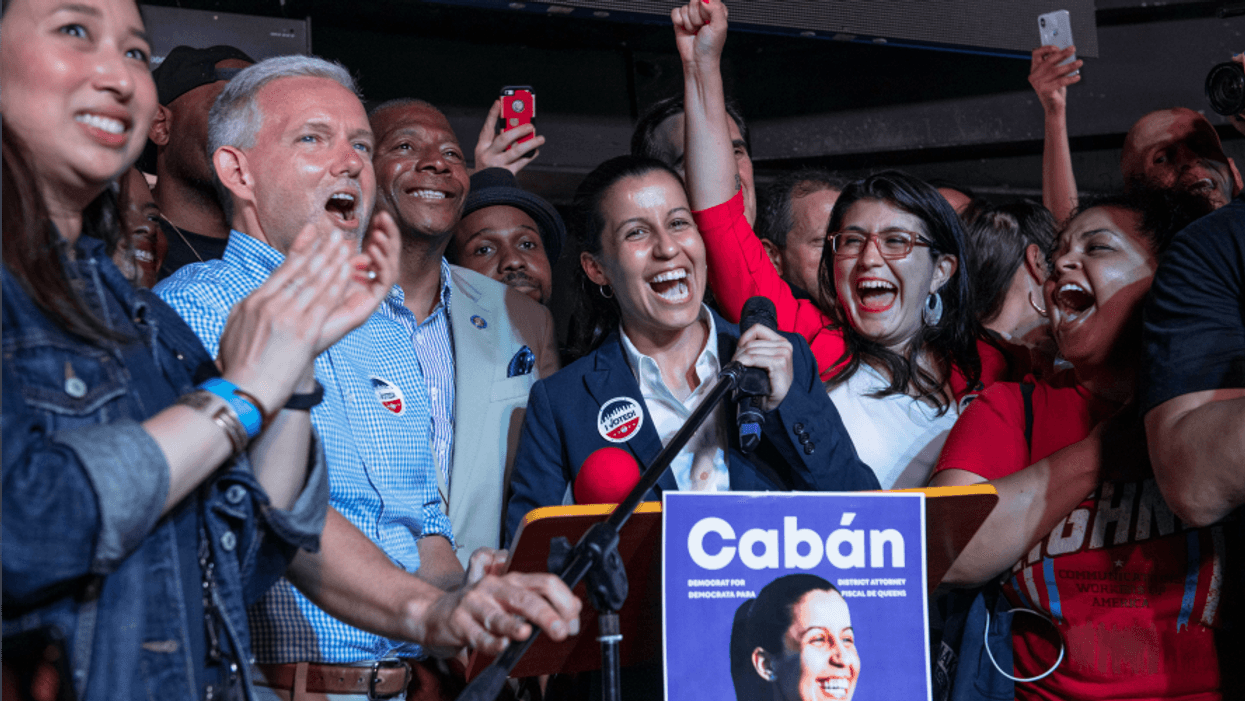
In a borough that offered grassroots support to the strong insurgent campaigns of Alexandria Ocasio-Cortez for Congress in 2018 and Tiffany Caban for Queens District Attorney this year, experienced activists could fuel a challenge to Meeks. A former AOC campaign staffer, Shaniyat Chowdhury, has announced his candidacy.
__________________________________________
BRAD SCHNEIDER (IL-10)
"Brad's been named one of the most bipartisan members of Congress because he's interested in solving problems," Schneider's campaign website declares. A big problem he seems interested in solving is how to impress middle-class constituents without fighting for their economic interests. Instead of backing such proposals as Medicare for All and tuition-free public college, Schneider prefers to talk vaguely about "affordable" healthcare and "affordable" college.
Schneider told the Chicago Sun-Times last fall that "working across the aisle to find common ground . . . has always been a priority for me." He found common ground with President Trump about one-third of the time in 2017-18, voting with the White House on such matters as chipping away at Dodd-Frank Act regulations on banks, boosting military budgets and reauthorizing warrantless domestic surveillance along with other violations of civil liberties.
As a member of the GOP-friendly Blue Dog Coalition, Schneider signed a letter in June decrying budget deficits and calling on House Democratic leaders to "abide by PAYGO"--the rule requiring that new federal spending be offset by new taxes or budget cuts. His fiscal conservatism doesn't prevent him from supporting Trump's engorged military budgets.
Schneider is also a leader of the corporate-centrist New Democrat Coalition, where he cochairs its National Security Task Force--with a decidedly hawkish approach to the Middle East. Very few in Congress are more avid supporters of AIPAC and whatever actions Israel takes. Schneider gained some prominence this spring as the lead sponsor of House Resolution 246, which aims to stigmatize boycotts as anti-Semitic when they target Israel's violations of Palestinian rights; the free-speech-violating bill gained more than half of the House as cosponsors.
After one House term, Schneider lost his seat representing Chicago's northern suburbs to a GOP challenger in a close 2014 election. It was a notable loss in a blue district, where Schneider's "Republican-lite voting record . . . discouraged Democratic base voters" from turning out in that midterm election, says political analyst Howie Klein. (While out of office, Schneider was a vocal opponent of the 2015 Iran nuclear deal negotiated by the Obama administration.) Schneider regained the seat in 2016 by a 5 percent margin, while Clinton bested Trump in the district by nearly 30 points. Last year, Schneider captured almost two-thirds of the vote against his Republican opponent.
As an incumbent, Schneider has yet to face a primary challenge. Given the contrast between his avowedly "moderate" record and the leanings of many Democrats in his district (where roughly 45 percent voted for Sanders against Clinton), there could be an opening for a progressive in the March 2020 primary.
__________________________________________
KURT SCHRADER (OR-5)
Since getting to Congress a decade ago, "moderate" Democrat Kurt Schrader has defeated Republican opponents by comfortable margins that grew to double digits. As for primary challenges, the closest one fell short by more than 40 percent. But 2020 could be quite different. Schrader's slightly blue district--which includes much of the Willamette Valley and the Oregon coast -- will see a primary contest pitting the incumbent against a self-described progressive with an electoral toehold on the southern outskirts of Portland.
Mark Gamba, now in his fifth year as the mayor of Milwaukee (pop. 20,000), is running to replace Schrader. "He likes to pretend that he's reaching across the aisle to get things done," Gamba told us, "but it almost always goes back to the corporations that back him financially." Schrader, a longtime member of the Blue Dog Coalition, gets a lot of money from corporate interests, including from the Koch Industries PAC. Last year, only one House Democrat was ranked higher on "key issues" by the US Chamber of Commerce. During 2017 and 2018, one-third of Schrader's House votes were aligned with Trump. And like Trump, he's not a defender of young Dreamers who have grown up undocumented in this country; he was one of a few dozen House Democrats to oppose the 2010 Dream Act.
Gamba intends to make climate a central issue of the campaign to unseat Schrader--who, he says, "has been notably absent on any substantive climate policy." A professional photographer who often went on assignment for National Geographic, Gamba advocates for "a Green New Deal or some other powerful response to climate change which is broad-reaching, deep and meaningful." (Only four House Democrats have a lower lifetime environmental score than Schrader.) Gamba also supports Medicare for All, while his opponent "is quietly but actively opposing Medicare for All or any law that actually cuts into the profits of the pharmaceutical and insurance industries."
Some of Gamba's other campaign priorities include "beginning to rectify the vast and growing income inequity by increasing the taxes on the rich including capital gains; protecting the unions which have been slowly and purposefully eroded; beginning to slow the spending on the military-industrial complex; dramatically increase funding for education: pre-K through college." If all that sounds like a certain political revolution, it's no coincidence. "I endorsed and campaigned for Bernie Sanders in the 2016 primary," Gamba recalls. In that primary, Sanders came out well ahead of Clinton in the district Gamba hopes to represent in Congress.
__________________________________________
DAVID SCOTT (GA-13)
After sixteen years as one of the most conservative African-American Democrats in Congress, David Scott is facing a primary fight in a deep blue district that includes southwest Atlanta and neighboring suburbs, where Clinton beat Trump by nearly 3-to-1. The challenge is coming from a former chair of the Democratic Party in populous Cobb County, Michael Owens, who launched his uphill campaign in May while signaling that he'll make Scott's big-business entanglements a central issue in the race.
"Owens said Scott, a member of the House Financial Services Committee, has gotten too cozy with the payday lending industry and other corporate interests," the Atlanta Journal-Constitution reported. "He singled out Scott's vote last year in favor of rolling back portions of the Dodd-Frank financial regulatory overhaul." During the last election cycle, Scott's campaign and PAC raised $318,750 from securities, investment and commercial-banking interests. Just seven Democrats in Congress earned a higher ranking last year from the corporatist US Chamber of Commerce, which placed Scott above almost 100 Republicans.
Seeking to oust the incumbent in a district that is 70 percent people of color, the Owens campaign aims to bring political issues home. Says Owens: "I want to make sure that we stop allowing and supporting policies that are directly attacking our black and brown communities."
A member of both corporate-allied caucuses of Democrats--the Blue Dog and New Democrat coalitions--Scott is fond of reaching across the aisle, to the point of publicly backing GOP incumbents for re-election. He has sided with Republicans on some key issues. Scott supported the Keystone XL pipeline, and more recently voted against environmental protection on clean water standards, nuclear storage and pesticides pollution. Only 18 Democrats in the House have a lower lifetime environmental score.
Scott's approach to foreign policy tends to be hawkish. He opposed the Iran nuclear deal in 2015, and last December he was one of just five House Democrats to vote for continuing arms sales to Saudi Arabia and supporting the Saudi war on Yemen.
__________________________________________
JUAN VARGAS (CA-51)
Juan Vargas represents an overwhelmingly Latino and Democratic district (where Clinton beat Trump by a 50-point margin) that includes California's entire US-Mexico border. Since being elected to the House in 2012, he has become known for one pet issue, far from uppermost in the minds of his largely working-class constituents: defending Israel no matter what.
Unlike most Jewish Democrats, who are often willing to question the actions of Israel, Vargas says it's wrong to do so. (His district is estimated to be less than 1 percent Jewish.) When Congresswoman Ilhan Omar was under attack earlier this year, Vargas--who sits on the House Foreign Affairs Committee with Omar--injected himself into the controversy by tweeting that "questioning support for US-Israel relationship is unacceptable."
In January 2017, Vargas criticized President Obama--and sided with President-elect Trump--when the Obama administration refused to veto a UN resolution against Israel's expansion of illegal settlements. Israeli expansion does not seem to bother him, as evidenced by a bizarre quip made last November to the San Diego Jewish World: "Vargas says he has absolutely no objection if Israel is made to return to its 67 borders--just so long as the people demanding it are talking about the year 67, not the year 1967." Vargas was quoted: "If you want to go back to 67, that will probably take in Lebanon, parts of Syria, Jordan and some portions of Egypt."
In 2015, Vargas was one of the 25 House Democrats to join all Republicans in opposing President Obama's landmark nuclear agreement with Iran; like other pro-Israel hardliners, he remains against the Iran deal in the Trump era. He was one of the few Democrats who repeatedly undermined Obama's diplomacy by joining Republican efforts to sanction Iran.
Vargas joined with a Republican in early 2015 as lead co-sponsor of a trade bill--drafted by the Israel-right-or-wrong AIPAC lobby--aimed at countering the Boycott, Divestment, Sanctions (BDS) movement against Israel. That same year, Vargas tried (unsuccessfully) to stop a lecture at Mt. San Jacinto College by an Israeli critic of Israel, author Miko Peled, sponsored by the campus Amnesty International Club.
Vargas can be liberal on domestic US issues. But while the Congressional Progressive Caucus includes 50 House members of color (half of its total), Vargas instead is in the corporate-allied New Democrat Coalition. Last year, he did not join the dozens of progressives who voted against Trump's swollen military budget that diverts vital resources from human needs. In the last election cycle, a hefty $337,500--half of his PAC donations--came from the "FIRE" sector (finance, insurance, real estate).
A progressive challenger focused on constituent concerns might thrive in a primary against Vargas.
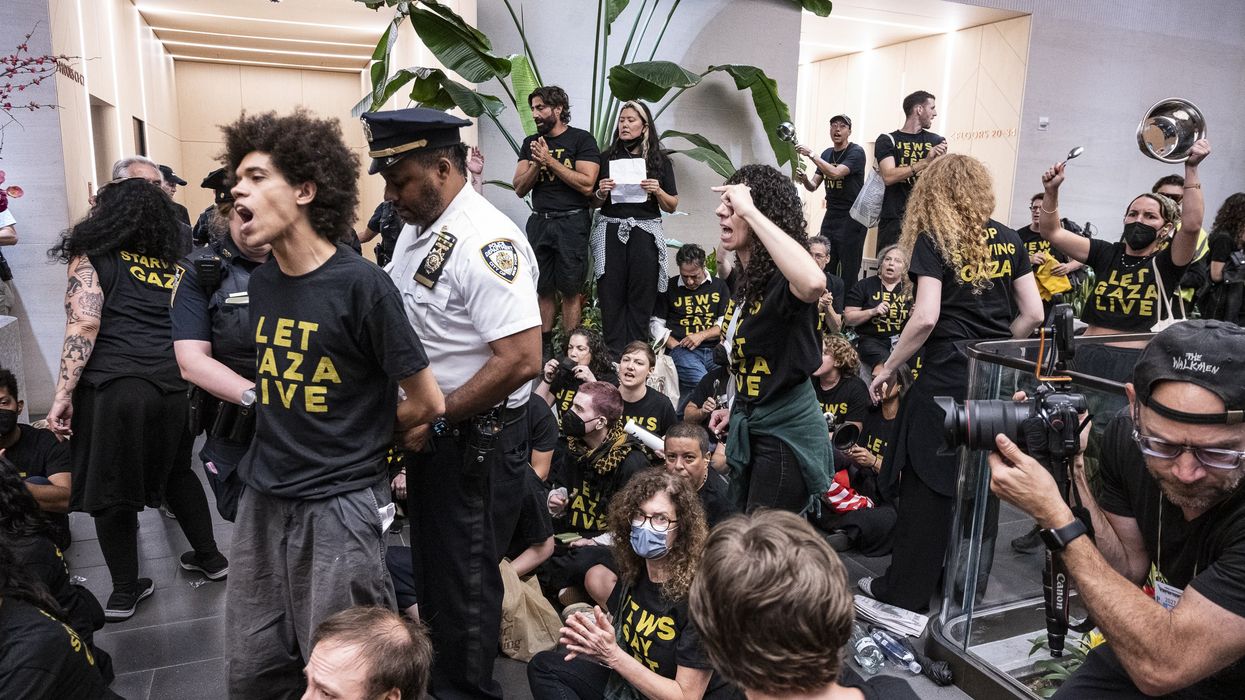
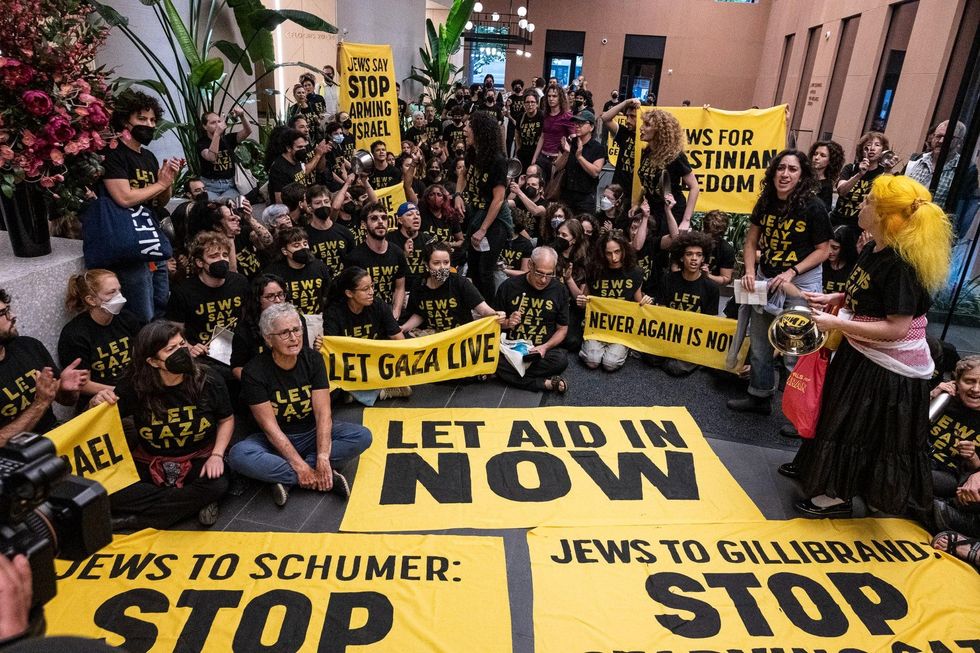 Around 200 protesters gathered at the Manhattan offices of U.S. Sens. Kirsten Gillibrand and Chuck Schumer, both New York Democrats, on August 1, 2025. (Photo: Ken Schles/Jewish Voice for Peace)