

SUBSCRIBE TO OUR FREE NEWSLETTER
Daily news & progressive opinion—funded by the people, not the corporations—delivered straight to your inbox.
5
#000000
#FFFFFF
To donate by check, phone, or other method, see our More Ways to Give page.
Daily news & progressive opinion—funded by the people, not the corporations—delivered straight to your inbox.
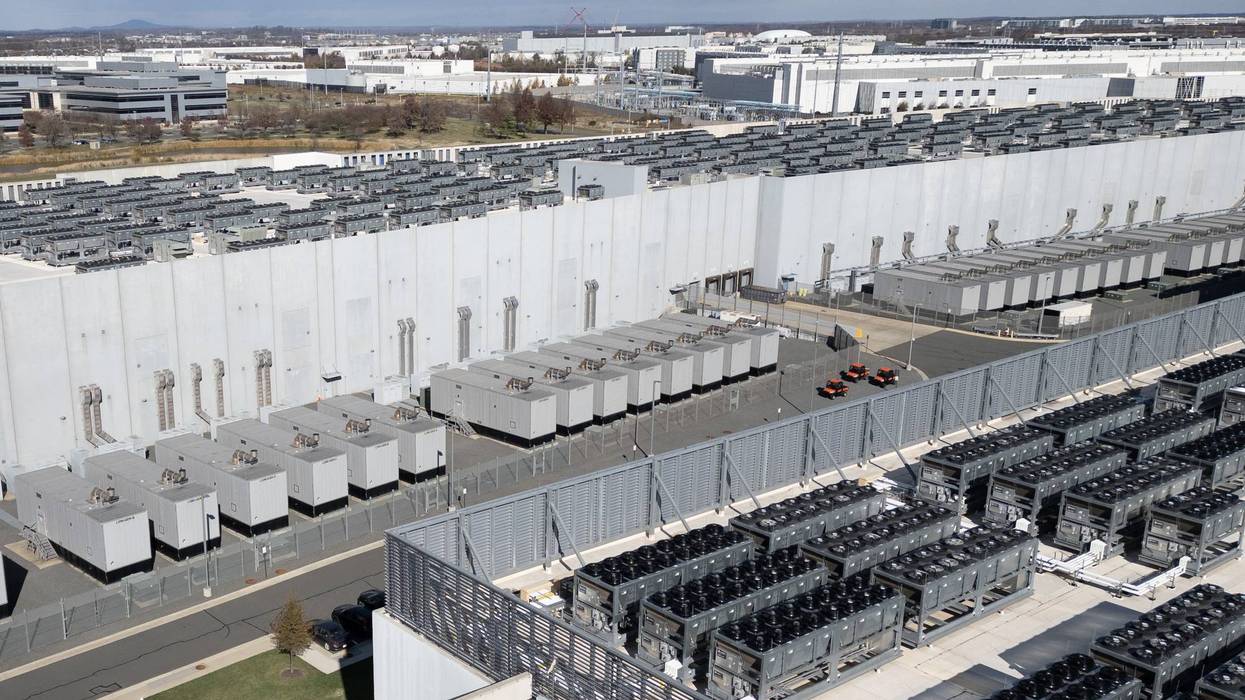
Virginia spent years asking how quickly it could build data centers. But Maryland and other states have an opportunity to ask a better question: How do we embrace innovation without sacrificing the affordability, environment, and quality of life that make our communities worth living in?
I’ve lived in Northern Virginia my whole life, but no one told us we would soon be living alongside one of the largest concentrations of data centers in the world.
No one asked our community whether we wanted them. No one explained what they would mean for our neighborhoods, our landscape, or our monthly bills. Then, almost overnight, they were everywhere. Massive industrial buildings rose where open space once stood. The constant hum became part of daily life. And one month, our electricity bill didn't gradually creep upward, it nearly doubled.
We were told these projects would bring jobs, innovation, and economic growth. What we weren't told was what residents would be expected to give up in return.
Now, as I watch Maryland debate whether to accelerate data center development, I can't help but feel like I've seen this story before.
As someone living with the consequences of Virginia's choices, my advice is simple: Don't wait until the bills arrive, the forests are gone, and the data centers are already built to ask whether they were worth it.
For years, Virginia has been held up as the nation's data center success story. But if Maryland leaders only see Virginia's balance sheet, they're missing the growing backlash from the people who live here.
I have watched forests disappear, industrial buildings replace open land, electricity demand surge, and communities be transformed by sprawling server farms. Everyone I know is asking whether the promised economic benefits outweigh the environmental and financial costs.
Maryland has a choice. You can rush to replicate Virginia's model, or you can learn from our mistakes before it's too late.
The conversation surrounding data centers has largely centered on artificial intelligence and economic development. But too often, what gets left out are the communities expected to absorb the costs.
Supporters frequently describe data centers as major job creators, but the reality is more complicated. Construction creates temporary employment, yet once operational, many hyperscale facilities require relatively few permanent workers. Communities are often asked to trade farmland, forests, neighborhoods, and increased pressure on utilities for projects that may never deliver the long-term economic engine they were promised.
That trade-off deserves far more scrutiny than it has received.
The race to build data centers is being driven largely by the explosive growth of artificial intelligence. Every major technology company wants more computing power, faster infrastructure, and greater capacity. But history teaches us that economic booms rarely continue unchecked. America has seen speculative waves in office construction, shopping malls, and commercial real estate that far exceeded demand before markets eventually corrected.
No one can say with certainty whether today's data center boom will follow the same path. But uncertainty itself is reason for caution, not acceleration.
Maryland should pause before repeating Virginia's mistakes. A statewide moratorium would give policymakers time to complete a comprehensive assessment of the environmental, economic, and energy impacts of these facilities; strengthen safeguards for communities; ensure developers bear the costs of new infrastructure; and give the public a meaningful voice in decisions that will shape their neighborhoods for generations.
Virginia spent years asking how quickly it could build data centers.
Maryland has an opportunity to ask a better question: How do we embrace innovation without sacrificing the affordability, environment, and quality of life that make our communities worth living in?
As someone living with the consequences of Virginia's choices, my advice is simple: Don't wait until the bills arrive, the forests are gone, and the data centers are already built to ask whether they were worth it.
By then, the answer may come too late.
"States are absolutely contemplating a world in which SNAP isn’t available."
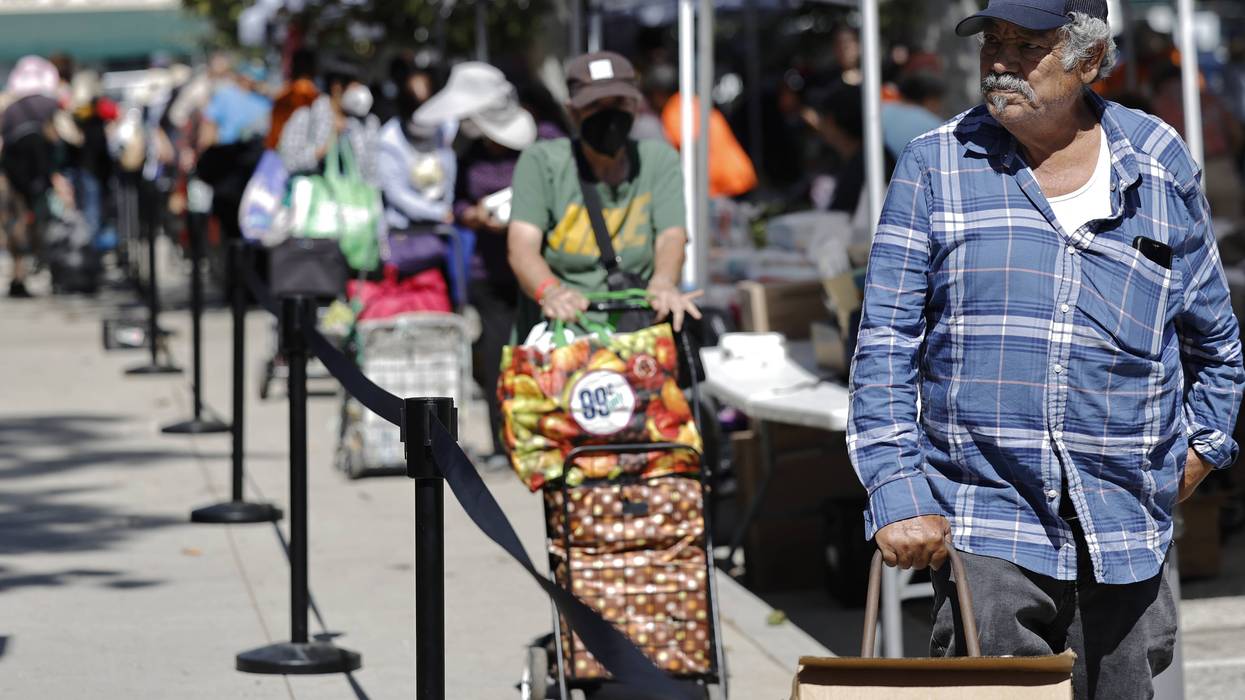
Several reports published this week highlight the brutal impact cuts made to the Supplemental Nutrition Assistance Program in Republicans' 2025 budget law are having on Americans' access to food.
A lengthy Tuesday report in The New York Times zeroed in on the bill's impact in Arizona, where roughly 440,000 people have been dropped from the program even though many of them are still eligible to receive assistance.
The GOP-passed One Big Beautiful Bill Act established severe penalties for states that have high error rates when awarding SNAP benefits, and Arizona has responded by vastly increasing the paperwork applicants must file to qualify for the program in order to avoid making mistakes that could result in the loss of federal funding.
According to the Times, this has created "bureaucratic chaos" that has caused many otherwise eligible people to lose aid.
"It can take months to reach besieged caseworkers, and offices have gone as far as asking people with panhandling income for verification from strangers dropping cash in their jar," reported the Times. "Arizonans losing SNAP say they are skipping meals, quarreling over food, and missing rent payments to restock pantry shelves."
One former SNAP beneficiary featured in the Times story was Dee McDonald, a 65-year-old cancer survivor who reported skipping meals to ensure that the three grandsons she's raising have enough to eat.
According to the Times, McDonald has been scrambling from one local food pantry to another to ensure there is enough food in the house for the whole family, a process she told the paper has left her "exhausted."
“I go to sleep thinking about what are we going to have,” McDonald said.
Michael Wisehart, director of the Arizona Department of Economic Security, told the Times that it's "frankly sickening to me the number of individuals" who are suffering due to the bureaucratic hurdles the state is enacting.
However, Wisehart said that if Arizona doesn't add these bureaucratic layers, it could risk seeing its SNAP program completely destroyed.
“It’s an existential threat,” he explained. “States are absolutely contemplating a world in which SNAP isn’t available."
Another state facing this dilemma is Arkansas, which the local news station KATV reported on Monday is scrambling to lower its SNAP error rate that, under new rules, could cost the state $55 million per year.
Keesa Smith-Brantley, executive director of Arkansas Advocates for Children and Families and former deputy director of the Arkansas Department of Human Services, told KATV that the financial penalties imposed on the state could create a downward spiral in which state officials have fewer resources to effectively lower the SNAP error rate.
"It is very concerning that we may not have a SNAP program in years to come if the state can't come up with the funding," said Smith-Brantley.
A Tuesday report in Axios examined how the GOP's SNAP cuts have impacted Virginia, where 100,000 fewer residents are now enrolled in the program compared to a year ago.
Aaron McClung, chief development officer at Feed More, an umbrella organization for food banks in the central part of the state, told Axios that visits to food pantries have increased by more than 20% since the passage of the GOP budget law last year.
While food banks have tried to fill the gap, McClung said, they are no substitute for SNAP, which he described as "the nation's most effective, dignified, and scalable tool for reducing food insecurity."
Jacqueline Mott, Virginia state manager for the Save the Children Action Network, expressed a similar sentiment, telling Axios that "charitable food assistance was never designed to replace SNAP."
"Wittman is just an embarrassment to Virginians everywhere," said one Democratic campaigner. "This phone call was about as serious as he takes the needs of his constituents."
A vulnerable House Republican went to comedic lengths on Tuesday to avoid answering questions about Speaker Mike Johnson's plans for possible Social Security cuts.
The Republican Speaker was recorded earlier this week saying that under a GOP plan to be released next year, popular programs like Medicare, Medicaid, and Social Security needed to be “adjusted and fixed"—comments that were widely interpreted as a signal that cuts to crucial benefits were in the works.
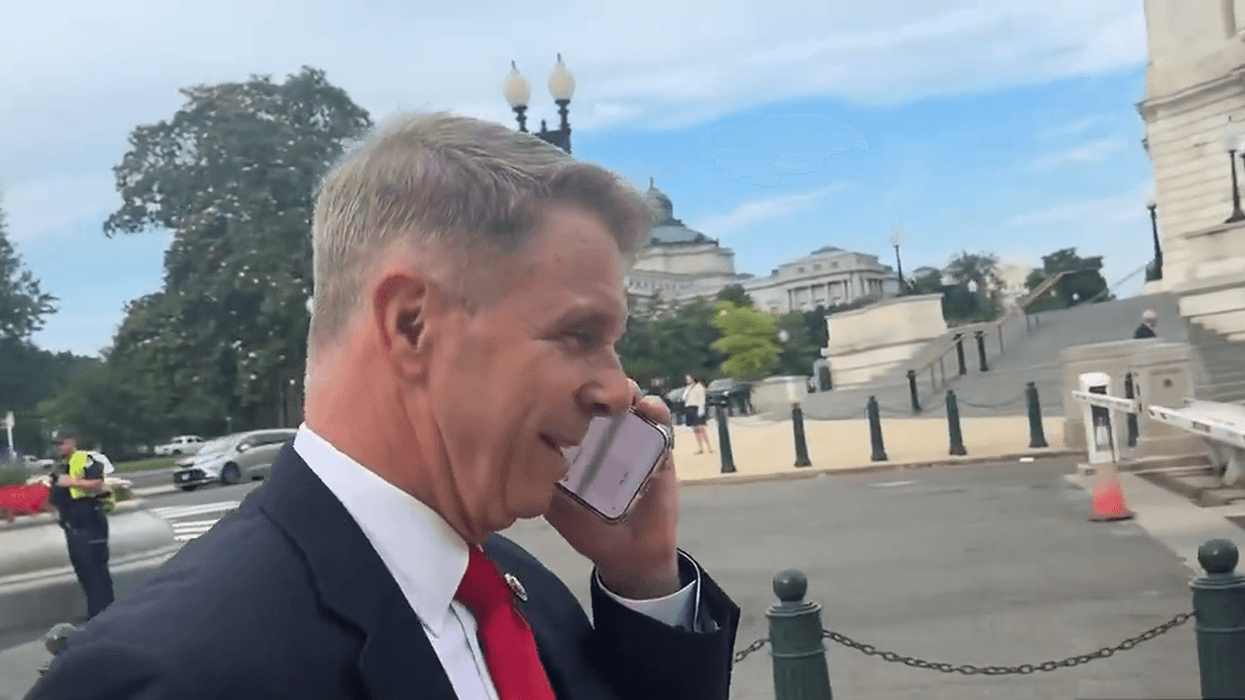
On Tuesday, as a reporter from Meidas Touch approached him to ask about Johnson's "secret plan to cut Social Security," Rep. Rob Wittman (R-Va.) suddenly whipped out his cell phone and began speaking into it, apparently to avoid the difficult question.
Rep. Rob Wittman (R-VA) faked a phone call for roughly 90 seconds after being asked about Speaker Mike Johnson’s comments regarding potential Social Security cuts.
The phone's screen remained visible, with his cheek inadvertently tapping different parts of the display. pic.twitter.com/y3ST5AX651
— MeidasTouch (@MeidasTouch) June 10, 2026
A video posted by the outlet shows Wittman walking and speaking into the phone while the screen was still visible, seeming to indicate that no phone call was actually taking place.
As Meidas described: “The phone’s screen remained visible, with his cheek inadvertently tapping" the phone and changing parts of the display, which does not occur when an actual phone call is happening.
Wittman's conversation, which went on for about 70 seconds, was vague and nonsensical: "Hey, how you doing? I’m good. I’m good with that. I’ll be there in just a few minutes," he said. "I've got some more efforts that I want to talk to you about. There are actually more things that we have to be working on."
Just before Wittman put his phone away, the reporter, who’d continued walking next to him, asked again: “Congressman, what is Mike Johnson’s secret plan to cut Social Security?” Wittman continued to walk, refusing to acknowledge the reporter, before speeding away.
According to Drop Site News reporter Julian Andreone, it’s not the first time Wittman has pulled such a stunt. He posted video of Wittman taking another conveniently-timed phone call last week, right as the journalist approached to ask about a proposal in the next military spending bill to integrate the US and Israeli militaries.
Oh hey! He did this to me & @DropSiteNews last week! https://t.co/lR40fjKNw1 pic.twitter.com/kGs69cL9Ec
— Julian Andreone (@JulianAndreone) June 10, 2026
This interaction came a day after Johnson complained on a radio show on Monday about the large amount of spending on “entitlement programs,” as Republican lawmakers have long called earned benefits, and suggested unspecified changes.
“The reason we’re in trouble is because over 74% of federal spending is on autopilot, mandatory spending. That’s your entitlement programs like Medicare, Medicaid, and things like Social Security,” Johnson said. “They have to be adjusted and fixed. We have a plan to do that next year.”
The next day, a report from the Social Security Board of Trustees showed that the popular retirement program would be unable to pay out full benefits by 2032, a quarter earlier than projected last year.
Nancy Altman, the president of Social Security Works, said that the shortfall has been exacerbated by Trump policies that have slashed revenue going toward the program, including a tax bill that overwhelmingly benefited the wealthy, tariffs that have slowed economic growth, the war with Iran, and policies targeting immigrants.
It is perhaps understandable why Wittman might want to avoid giving more details on Johnson's plan. Voters overwhelmingly oppose efforts to raise the retirement age, cut benefits, or raise workers' payroll taxes, all of which have roughly three-quarters disapproval or more, according to a late-May survey by the Ronald Reagan Institute.
Amid high inflation and soaring gas prices, a YouGov/Economist poll on Tuesday showed that approval of Trump's handling of the economy has hit a new low point of just 29%, compared to 63% disapproval. That disgruntlement has filtered down ballot to the point where Republicans' longstanding advantage over Democrats on the economy has evaporated, which puts candidates in competitive districts like Wittman in jeopardy this November.
Democrats are already incorporating Johnson's comments into their midterm messaging. A release on Tuesday from the Democratic National Committee War Room noted that the One Big Beautiful Bill Act passed by Republicans and signed by Trump last year is projected to add potentially as much as $5 trillion to the national debt over ten years, largely to pay for tax cuts to the wealthiest Americans while cutting safety net programs like Medicaid.
It also highlighted comments by Treasury Secretary Scott Bessent last year describing the "Trump accounts" enacted as part of the megabill as a "backdoor for privatizing Social Security."
"Donald Trump and his loyal foot soldiers in Congress aren’t even trying to hide their plans to gut programs that hardworking Americans rely on," said DNC Rapid Response Director Kendall Witmer. "Trump and Republicans already made the largest cut to Medicaid in history, and now they are taking every opportunity to sell out working families and rip away retirement benefits, healthcare, and food assistance.”
Attorney Salaam Bhatti, one of several Democrats running in a crowded primary to challenge Wittman, used the embarrassing clip of him as a springboard.
"I'm running for Congress against him," he said of Wittman. "My platform: Don't ignore people, Medicare for All, tax billionaires, campaign finance reform."
Matt Royer, a digital strategist for Democrats in Virginia, said: “Wittman is just an embarrassment to Virginians everywhere. This phone call was about as serious as he takes the needs of his constituents in VA-1. Is it any wonder this race is now a tossup?”
“The governor’s decision leaves the commonwealth exactly where we have been since 2021: with an unchecked illicit market hurting our communities, harming our youth, and putting adults at risk," said one critic.
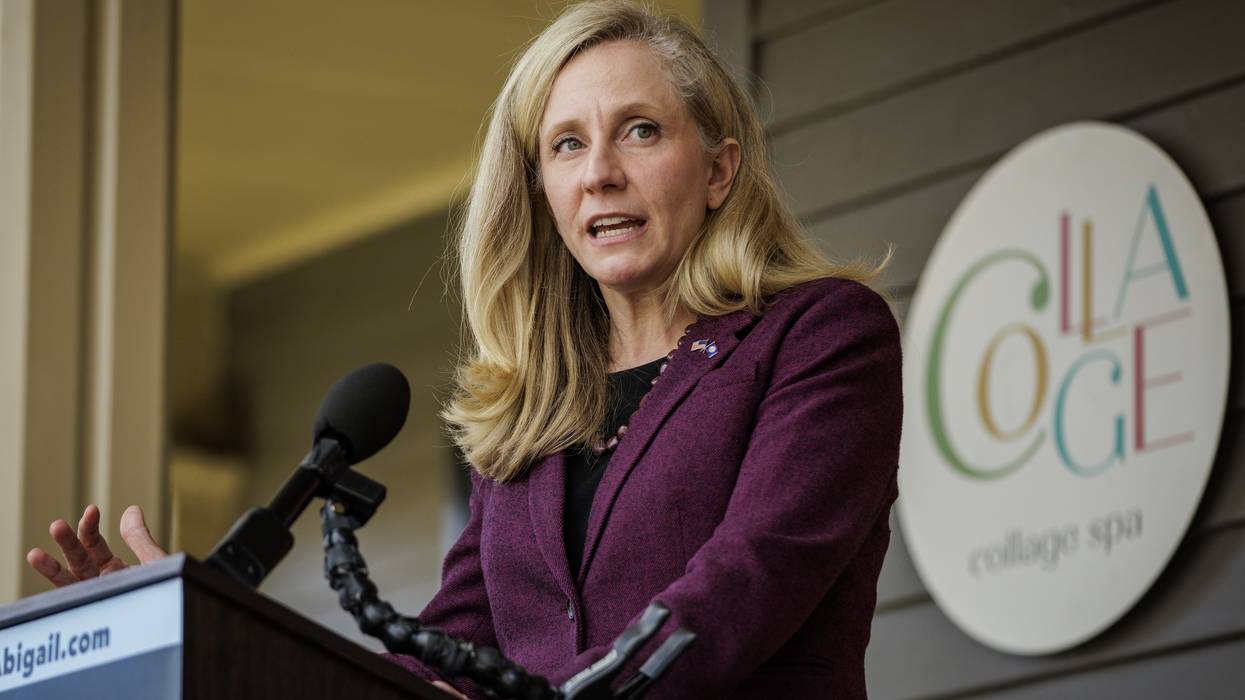
Criminal justice reform and cannabis legalization advocates led condemnation of Democratic Virginia Gov. Abigail Spanberger's Tuesday veto of legislation that would have established a retail market for the sale of recreational-use marijuana, which has been legal in the state for five years.
In 2021, Virginia became the then-16th state to pass an adult-use marijuana legalization law, with sales set to begin in 2024. However, former Republican Gov. Glenn Youngkin repeatedly vetoed the legislation, which would establish the framework for regulating and taxing the plant's recreational use.
Today, while adults can legally consume cannabis recreationally, cannabis sales in Virginia are still restricted to medical use, and patients must travel to one of the five licensed providers in the commonwealth.
In March, Virginia lawmakers passed a package of bills to legalize recreational cannabis sales to people age 21 and older via a regulated market, place oversight of such sales under the Virginia Cannabis Control Authority, increase the public possession limit from one ounce to 2.5 ounces, allow delivery sales, establish new state and local cannabis taxes, and set January 1, 2027 as the launch date for sales.
Spanberger—who had campaigned on a promise to sign legislation establishing recreational cannabis sales—proposed amendments to the bill that were rejected by the General Assembly.
“I support the intent of many of the bills I am vetoing," she explained in a statement. "However, it is my responsibility as governor to make sure all new laws can be successfully implemented and protect against unintended consequences that harm Virginians."
"I look forward to continuing to work with bill patrons, state and local leaders, and advocates on legislation addressing these issues in the future," the governor said.
Marijuana Moment reported that Spangberger sought to delay the start of sales by six months, increase taxes, and institute new criminal penalties for cannabis consumers.
“Once again, Virginia’s efforts to establish a safe, regulated, and equitable adult-use cannabis marketplace has been halted despite years of work, public input, and broad recognition that the status quo is failing Virginians," state Sen. Lashrecse Aird (D-63), who sponsored one of the bills, said in a statement Tuesday.
“The governor’s decision leaves the commonwealth exactly where we have been since 2021: with an unchecked illicit market hurting our communities, harming our youth, and putting adults at risk," she added.
Del. Paul Krizek (D-16), who sponsored the House of Delegates version of the sales bill, said, “Five years ago, Virginia legalized cannabis in recognition that the War on Drugs has caused disproportionate harm to Black families and communities."
“The question now is whether Virginia will continue allowing an unregulated illegal market to thrive, or finally establish a safe, transparent system that protects consumers, keeps products away from children, and keeps our commitment to ending racially discriminatory marijuana policing in Virginia," he added.
JM Pedini, development director for the advocacy group National Organization for the Reform of Marijuana Laws and executive director for Virginia NORML, told Marijuana Moment that Spanberger's veto is “a profound disappointment to the many Virginia voters who believed her when she said on the campaign trail that she supported establishing a regulated adult-use cannabis market.”
“It is also a slap in the face to the years of serious work undertaken by lawmakers, policy experts, advocates, public health stakeholders, and regulators who spent more than half a decade researching, debating, and carefully crafting this legislation,” Pedini added. “Rather than build upon that work, the governor dismissed it in favor of out-of-touch proposals to recriminalize cannabis consumers that lawmakers rightly rejected.”
It was stupid when Youngkin stood in the way of a regulated market for LEGAL recreational adult-use marijuana--not just for the important safety aspects of taking it off the black market, but also for the $ Virginia misses out on every day without. It is just as stupid now.
— VAPLAN (@vaplan.bsky.social) May 19, 2026 at 2:26 PM
Chelsea Higgs Wise, executive director of the Richmond-based nonprofit Marijuana Justice, said in a statement that "for five years, Virginia has been stuck in a limbo where adults can legally possess, share, and grow cannabis, but there is still no regulated way to purchase it."
"By rejecting the retail bill," Wise added, "the governor has chosen to extend that chaos rather than move us toward a transparent, accountable retail system that centers public health, public safety, and justice."
Twenty-four states have legalized recreational marijuana, while 16 states allow medical use of the plant. Last month, the US Department of Justice began reclassifying cannabis from Schedule I—a category that includes dangerous drugs like heroin, LSD, and MDMA to Schedule III, which includes codeine, ketamine, anabolic steroids, and testosterone.
"These megautilities are merely using rising concern about data centers as an excuse to concentrate political and economic power of two giant utilities to maximize financial returns to shareholders," one advocate said.
Seeking to cash in on spiking energy demand from the expansion of artificial intelligence data centers across the US, the Florida energy giant NextEra announced a $67 billion deal on Monday to acquire Virginia's Dominion Energy.
But while the deal is expected to be lucrative for the massive new entity, with national power demands projected to spike perhaps by as much as 25% over the next five years, consumer advocates fear that the proposed merger will be bad for consumers, creating an unaccountable corporate behemoth that will raise costs on ratepayers.
According to Utility Dive, the new entity created by the merger will serve a combined 10 million customers across Florida, Virginia, North Carolina, and South Carolina.
With a market cap of $250 billion, the companies said they'd be the “world’s largest regulated electric utility business by market capitalization and one of the world’s largest energy infrastructure companies.”
But the deal still needs to be approved by federal regulators, a process that will likely pose minimal difficulty given the Trump administration's friendliness toward other corporate megamergers across industries, from media to railroads.
It will also be required to obtain local approvals, including in Virginia, where the recently elected Democratic Gov. Abigail Spanberger has made lowering utility costs and requiring data centers to "pay their fair share" central campaign promises, as massive new projects have been met with furious local backlash around the country.
Tyson Slocum, director of the energy program for the consumer advocacy watchdog Public Citizen, said that "this absurd proposal to merge two massive, well-capitalized utilities should be dead on arrival for state and federal regulators." He added that "household customers have everything to lose and nothing to gain by allowing two behemoths, NextEra and Dominion, to merge."
The company’s combined rate base—the value of assets recognized by regulators when setting rates—are valued at about $138 billion, according to the deal announcement. It said they plan to expand that value by 11% by 2032 with major infrastructure expansions.
Though the company has proposed offering $2.25 billion in credits to customers for two years after the deal closes, consumer advocates fear it is simply meant to ease upfront investment costs, leaving the real rate hikes to show up later once the credits expire.
The group Clean Virginia argued that the proposal needed to be subject “to the most rigorous scrutiny possible," given NextEra's "deeply troubling track record" in Florida.
The company and its subsidiaries in Florida have faced criticism for profiting from a $1.5 billion rate hike on Floridians and for pocketing $1 billion in tax savings without passing it on to consumers.
The company is also renowned for its extensive use of dark money to influence legislators in both parties, as well as Republican Florida Gov. Ron DeSantis, to kill clean energy and other policies that disfavor its business.
David Pomerantz, the executive director of the Energy and Policy Institute, told The New York Times that "a megamonopoly of this size, with the kind of money to buy political influence that NextEra will have, will be nearly impossible to regulate.”
NextEra CEO John Ketchum has said the deal is necessary to accommodate “America’s golden age of power demand.”
“Electricity demand is rising faster than it has in decades,” Ketchum said. “We are bringing NextEra Energy and Dominion Energy together because scale matters more than ever.”
But Slocum called this "a false narrative."
"The merger will do nothing to increase generating capacity, let alone desperately needed renewable generating capacity," he said. "These megautilities are merely using rising concern about data centers as an excuse to concentrate political and economic power of two giant utilities to maximize financial returns to shareholders."
He said federal and state regulators "should reject this outlandish, unnecessary merger as completely contrary to the public interest.“
"Donald Trump, Republican state legislatures, and conservative courts are systematically and unabashedly tilting power away from the people for Trump’s political gain," said state Attorney General Jay Jones.
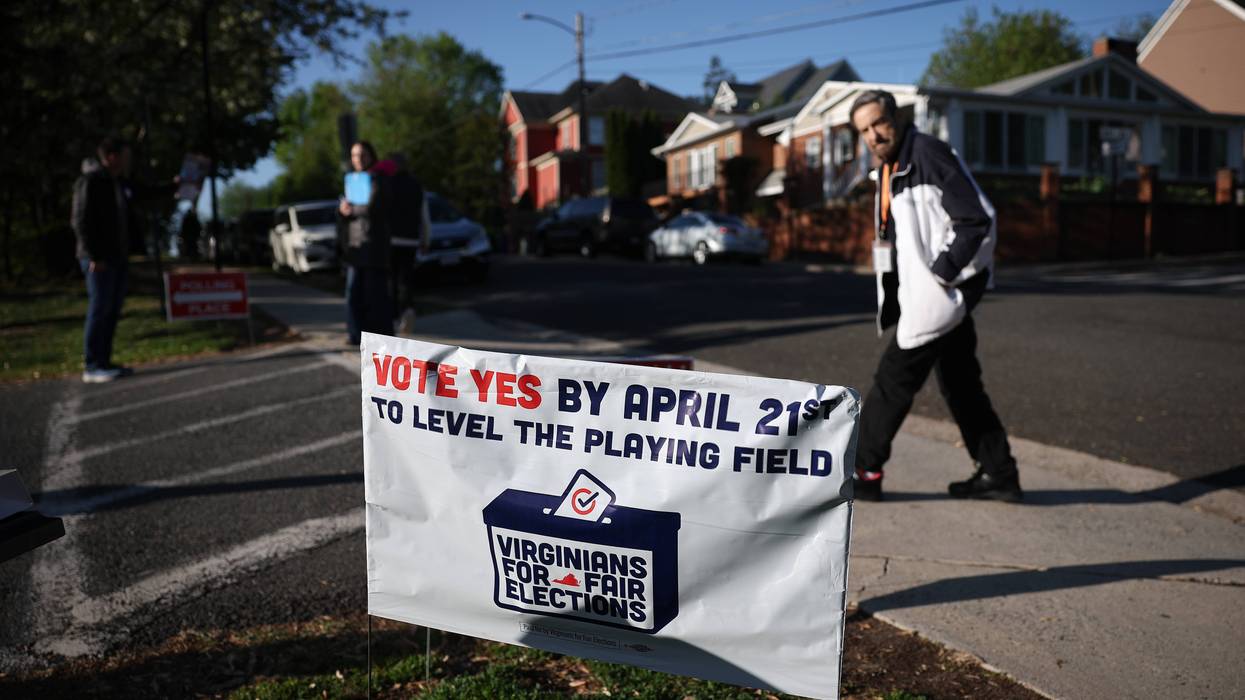
Virginia's Democratic attorney general, Jay Jones, said Friday night that he would redouble efforts to campaign on behalf of Democrats in the upcoming midterm elections following the US Supreme Court's rejection of a request to restore a voter-approved congressional map.
Following the high court's one-sentence denial of Democratic state officials' petition for emergency relief, which they had filed to block the state Supreme Court's ruling against a congressional map that passed via ballot measure last month, Jones said he would be "working tirelessly to support our Democratic candidates so we can win control of the House in spite of Republicans putting their thumbs on the scale."
With no dissents noted, the Supreme Court said Friday evening that it was denying the request to block the Virginia high court's ruling that had tossed out last month's redistricting referendum.
BREAKING: SCOTUS denies Virginia Democrats' request to block the Virginia Supreme Court ruling tossing out the redistricting referendum. There are no noted dissents and no opinion.
[image or embed]
— Chris Geidner (@chrisgeidner.bsky.social) May 15, 2026 at 6:35 PM
The decision "leaves in place the deeply flawed ruling from the Supreme Court of Virginia, which overturned the results of a lawful election and erased the will of millions of Virginia voters," said Jones.
It also served as "yet another profoundly troubling example of the continued national attack on voting rights and the rule of law by [President] Donald Trump, Republican state legislatures, and conservative courts," said the attorney general.
The map that was narrowly approved by voters last month included four new Democratic-leaning US House districts in Virginia, putting the party on equal footing with Republicans nationally or potentially giving it an edge in a mid-decade redistricting battle that was kicked off last year. Trump has urged Republican state legislatures to redraw congressional districts to give the GOP more winnable seats in the US House—as the president's economic policies and his deeply unpopular war on Iran as well as other military actions have pushed his approval rating to a low point for his second term ahead of the November midterms.
The redistricting fight was intensified late last month with the Supreme Court's ruling in Louisiana v. Callais, which held that Louisiana must redraw its 2024 congressional map. The map had created a second majority-minority district in the state, whose population is one-third Black. The ruling effectively gutted Section 2 of the Voting Rights Act, which allowed voters of color to challenge racially discriminatory electoral maps in court.
After the ruling, Louisiana's Republican governor, Jeff Landry, suspended the state's primary elections to allow the Republican-controlled legislature to redraw the congressional map, throwing out roughly 45,000 votes that had already been cast.
In the Virginia case, the US Supreme Court sided with the state's high court, which had found earlier this month that Virginia's Democratic legislature improperly began the process of placing an amendment to the state constitution after early voting in last fall's election was underway. The amendment cleared the way for Democrats to redraw the map, and the General Assembly approved the amendment days before the election.
Virginia voters then approved the redrawn map in April, only to have the state Supreme Court strike it down.
In filing their emergency petition with the US Supreme Court, Virginia Democrats argued the ruling had undermined the will of the residents who had voted for the referendum in April.
On Friday evening, Democratic Gov. Abigail Spanberger said the court had chosen "to nullify an election and the votes of more than three million Virginians."
Jones added in his statement that "Donald Trump, Republican state legislatures, and conservative courts are systematically and unabashedly tilting power away from the people for Trump’s political gain. Just this past month in Louisiana, Tennessee, and South Carolina, they have redrawn their maps and diluted Black political representation because it threatens their hold on power."
"This attack is not subtle," said the attorney general. "It is a coordinated effort to stack the deck in the Republicans' favor before the midterms, lock in political advantage, and make it harder for voters, especially Black voters and communities of color, to hold Trump and his allies accountable. There can be no doubt: Trump and his allies want only their most politically extreme supporters to have their voices heard in Washington. The Supreme Court of Virginia’s previous decision and today’s refusal by the United States Supreme Court to act are only bolstering these extreme MAGA voices."
Addressing Virginia voters, Jones added, "This fight is far from over, and I am committed to fighting alongside you."
“We believed that she was being authentic and honest with us," said one Virginia labor leader. "She just flat-out flipped."
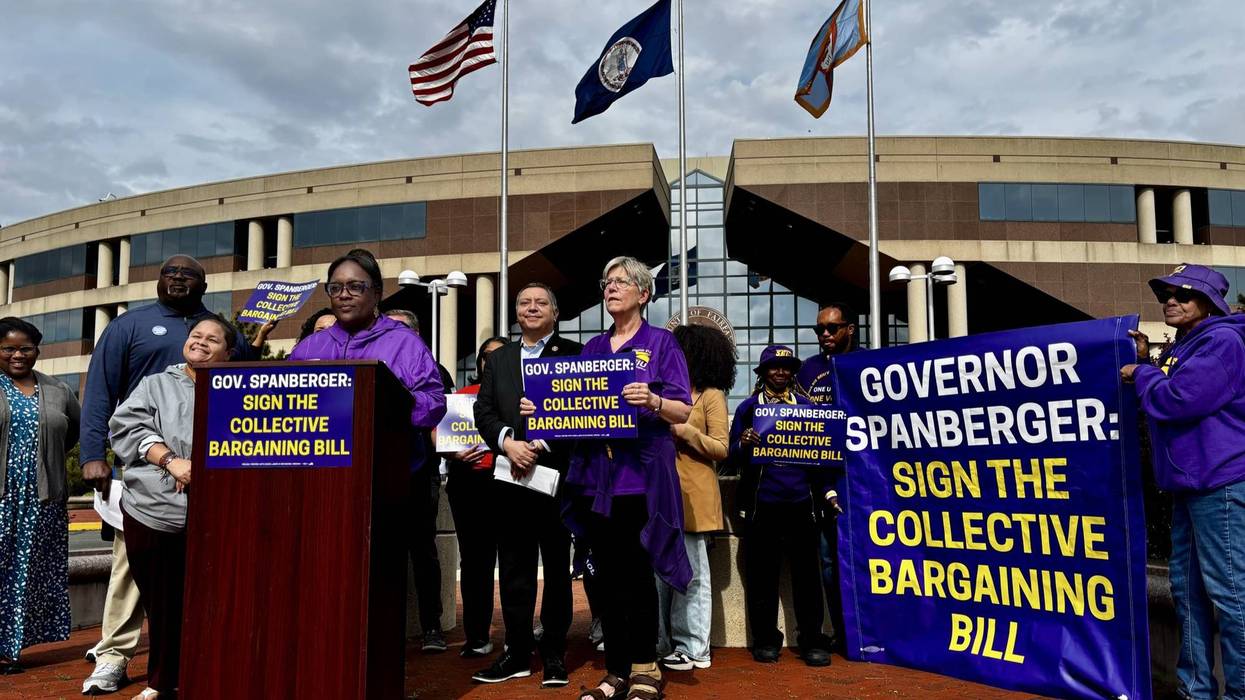
Labor unions are feeling betrayed after Virginia's Democratic Gov. Abigail Spanberger vetoed a bill on Thursday that would have restored collective bargaining rights for half a million public sector workers.
Virginia is one of the most restrictive states in the country for public sector bargaining, a holdover from the Jim Crow era when the General Assembly and other state legislatures across the South sought to crush the power of a public workforce with many Black employees.
According to the Economic Policy Institute, Virginia has one of the largest public sector pay gaps in the country, with state and local government employees making about 27% less on average than their private-sector peers, and it is similarly stratified in other states with weak collective bargaining rights.
Spanberger, a former US representative who was elected governor this past November, made pro-union messaging central to her affordability-focused platform. She decried President Donald Trump's executive order stripping federal workers of collective bargaining rights last year and said that as governor, she'd "look forward to working with members of our General Assembly to make sure more Virginians can negotiate for the benefits and fair treatment that they earn.”
But since taking office, Spanberger's support for restoring public sector union rights has been more tepid as she's gotten an earful from fiscally conservative Right-to-Work and taxpayer advocacy groups who claimed higher salaries for public employees would drain state funds and raise the cost of services.
When a bill to immediately mandate collective bargaining rights to 500,000 workers was proposed in the Democratic-controlled General Assembly, she introduced amendments aimed at watering down the bill—making it optional for employers to recognize unions, delaying the full implementation until 2030, and introducing what unions called a "kill-switch" that would have allowed future governors to revoke collective bargaining power.
The legislature shot Spanberger's amendments down and passed the bill in its original form. On Thursday, the governor vetoed it altogether.
In her veto message, Spanberger said she wanted the bill's other collective bargaining provisions for state employees, home care workers, and higher education employees to go into effect first "in order to demonstrate the efficacy of this new system" before it was opened up to all public employees.
But the unions that advocated for the bill say Spanberger led workers on with false promises.
"This veto is a devastating betrayal to the hundreds of thousands of public employees who have spent years, and in many cases decades, fighting for a seat at the table," said Doris Crouse-Mays, the president of the Virginia AFL-CIO. "Spanberger campaigned publicly and privately on promises [of] affordability, to support working families and respect workers' rights... Instead, when presented with the opportunity to make history and deliver on those promises, she chose to side with fear, political calculation, business, and the same anti-worker arguments that have been used for generations to deny workers power in Virginia."
LaNoral Thomas, the president of the Service Employees International Union (SEIU) Virginia 512—a union which helped lead the charge to pass the bill—told the Virginia news site Dogwood that her union had "high hopes" for Spanberger when she was elected.
“We believed that she was being authentic and honest with us," Thomas said. "She just flat-out flipped. It is shocking.”
"Public employees are not a special interest. They are our neighbors. They are the educators, bus drivers, social workers, librarians, custodians, and first responders who hold our communities together," said a joint statement from Carol Bauer, president of the Virginia Education Association, and Becky Pringle, president of the National Education Association.
They emphasized that the veto also carried "a deep racial and gender impact," noting that "Virginia’s public sector bargaining ban is rooted in a Jim Crow era effort to silence Black workers at the University of Virginia Hospital who organized for fair pay and dignity." They said, "Preserving that legacy today disproportionately harms women and workers of color, who make up so much of the public-service workforce and who have the most to gain from fair wages, safer workplaces, and a real voice on the job."
Lee Saunders, the president of the American Federation of State, County and Municipal Employees (AFSCME)—the largest national union of public sector workers in the US, with more than 1.4 million members—said that Spanberger had caved to "anti-worker extremists [who] have sidelined working people while starving the public services Virginia families rely on, earning the state a reputation as one of the most anti-worker in the country."
"While the governor has broken her word," Saunders said, "AFSCME members are deeply grateful to the bill’s sponsors and the leadership of both chambers, who kept theirs. Their commitment to working people stands in stark contrast to the governor and will not be forgotten."
"Gov. Spanberger made a choice today," he added. "Working people will remember it."
"The irreparable harm resulting from the Supreme Court of Virginia's decision is profound and immediate," top state Democrats said of the decision that struck down the new districts.
Virginia Attorney General Jay Jones and Democratic leaders in the state General Assembly on Monday asked the US Supreme Court to block a ruling against a ballot measure establishing new voter-approved congressional districts that favored Democrats.
The Virginia Supreme Court on Friday delivered a blow to the Democratic battle against President Donald Trump's gerrymandering campaign when it struck down a political map that Virginians had narrowly backed last month. The new districts could help Democrats secure up to four seats in the US House of Representatives in the November midterm elections.
Jones, Speaker of the Virginia House of Delegates Don Scott (D-88), state Senate Majority Leader Scott Surovell (D-34), and Senate President Pro Tempore L. Louise Lucas (D-18) are seeking a stay, arguing that based on a "novel and manifestly atextual interpretation" of the Virginia Constitution, the state Supreme Court "overrode the will of the people who ratified the amendment by ordering the commonwealth to conduct its election with the congressional districts that the people rejected."
"A stay is warranted because the decision by the Supreme Court of Virginia is deeply mistaken on two critical issues of federal law with profound practical importance to the nation. The decision below violates federal law in two separate ways," the emergency application says. "First, it predicated its interpretation of the Virginia Constitution on a grave misreading of federal law, which expressly fixes a single day for the 'election' of representatives and delegates to Congress."
"Second, by rejecting the plain text of the Virginia Constitution's definition of the term 'election' to adopt its own contrary meaning, the Supreme Court of Virginia 'transgressed the ordinary bounds of judicial review such that it arrogated to itself the power vested in the state legislature to regulate federal elections,'" the application continues.
The filing also stresses that "the irreparable harm resulting from the Supreme Court of Virginia's decision is profound and immediate. By forcing the commonwealth to conduct its congressional elections using districts different from those adopted by the General Assembly pursuant to a constitutional amendment the people just ratified, the Supreme Court of Virginia has deprived voters, candidates, and the commonwealth of their right to the lawfully enacted congressional districts."
The Associated Press noted that "Democrats are taking a legal long shot in asking the justices to reverse the Virginia ruling. The Supreme Court tries to avoid second-guessing state courts’ interpretations of their own constitutions. In 2023, it turned down a request by North Carolina Republicans to overrule a state Supreme Court decision that blocked the GOP's congressional map."
The high court also has a right-wing supermajority that includes three Trump appointees—and which gutted the remnants of the Voting Rights Act in a ruling related to Louisiana's congressional districts late last month.
Under current conditions, Republicans are expected to pick up seats in Florida, Missouri, North Carolina, Tennessee, and Texas due to redistricting demanded by Trump, while Democrats are expected to win more districts in California, where voters also approved new political lines benefiting them.
The Washington Post reported Monday that "some top Democrats express little hope that the appeal will affect this November's congressional midterms and are pivoting to waging campaigns in the state's existing districts."
According to the newspaper:
Surovell (D-Fairfax) said "the practical realities of our election calendar" will prevent candidates from running in new maps even if conservative justices on the US Supreme Court were open to helping Virginia Democrats.
Tuesday is the deadline set by state elections officials for putting the ballot mechanisms in place. Surovell noted that Virginia’s elections software is antiquated and overdue for replacement.
Instead, Democrats are making the case that it’s time to work with the cards they have in hand.
"Since we can't control anything other than mobilizing and organizing, then let's mobilize and organize and turn our anger into fuel for that," Rep. Jennifer McClellan (D-Va.) said.
In a Monday letter to fellow congressional Democrats, US House Minority Leader Hakeem Jeffries (NY) called out the "vicious Republican assault on the right to vote, free and fair elections, and Black political representation in the South," and pledged that "our effort to forcefully push back against the Republican redistricting scheme will not slow down."
Jeffries also announced a caucus-wide briefing planned for Thursday "to discuss the steps Democrats are taking to advance the largest voter protection effort in modern American history," and declared that "Democrats will take control of the House of Representatives in November."
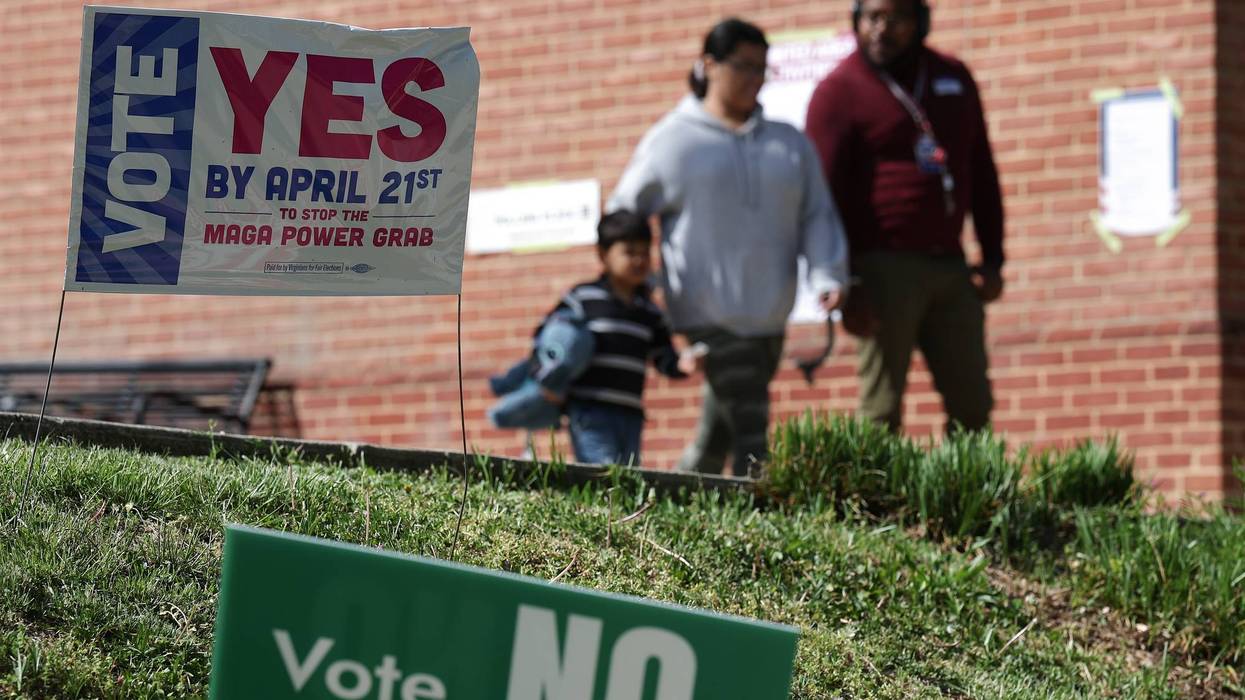
"Unlike GOP-led states that redrew their congressional maps in backroom deals, Virginia let the people decide," said Sen. Tim Kaine. "But the Virginia Supreme Court has blocked the people's choice."
Virginia, one of two states that combated President Donald Trump's gerrymandering campaign by enacting voter-approved congressional districts favoring Democrats, had its new map struck down by the state Supreme Court on Friday.
"On March 6, 2026, the General Assembly of Virginia submitted to Virginia voters a proposed constitutional amendment that authorizes partisan gerrymandering of congressional districts in the commonwealth," notes the court opinion. Voters narrowly approved the proposal, 51.7% to 48.3% last month.
However, the state's high court found that "the legislative process employed to advance this proposal violated Article XII, Section 1 of the Constitution of Virginia. This constitutional violation incurably taints the resulting referendum vote and nullifies its legal efficacy."
Responding in a Friday statement, Speaker of the Virginia House of Delegates Don Scott (D-88) said that "we respect the decision of the Supreme Court," while also celebrating that so many Virginians turned to the ballot box to "fight back against the Trump power grab" and pledging to keep up the battle "for a democracy where voters—not politicians—have the final say."
Some leading Democrats were more critical of the Republican-majority state court, which Virginia Attorney General Jay Jones said "has chosen to put politics over the rule of law" with a decision that "silences the voices of the millions of Virginians who cast their ballots in every corner of the commonwealth, and... fuels the growing fears across our nation about the state of our democracy."
"Before the court, my office clearly laid out both in filings and oral arguments that this constitutional amendment process and voter ratification occurred in a timely, constitutionally compliant, and legally sound manner," he continued. The court "contorted the plain language of the constitution and code of Virginia to give it a meaning that was never intended, which allowed them to reach the wrong legal conclusion that fit their political agenda. The consequences of their error are grave."
"This court's ruling follows a dangerous trend of tilting power away from the people," Jones added. "My team is carefully reviewing this unprecedented order, and we are evaluating every legal pathway forward to defend the will of the people and protect the integrity of Virginia's elections."
Denouncing the decision as "outrageous and unconscionable," Congressman Eugene Vindman (D-Va.) said that "at the heart of our democracy is the principle that the results of elections ought to be respected, and the Virginia Supreme Court today dealt our democracy a terrible blow."
MoveOn Political Action's chief communications officer, Joel Payne, also called out the court for "silencing and invalidating the votes of 3 million Virginians," the majority of whom "voted to level the playing field against Republican efforts to avoid accountability at the ballot box."
"Once again, the courts have blunted the will of the people, and are giving a green light to President Trump and Republicans’ unprecedented power grab in the midterms," said Payne, whose group had endorsed Virginia's ballot measure.
US Tim Kaine (D-Va.) isn't up for reelection this cycle, but he still stressed the importance of convincing voters to support Democrats, no matter what their congressional maps look like, in the November midterms. As he put it: "Unlike GOP-led states that redrew their congressional maps in backroom deals, Virginia let the people decide. But the Virginia Supreme Court has blocked the people's choice. So we have to campaign and win on their maps. We can do it!"
California is the other state where voters approved a new map for the US House of Representatives in response to Trump pushing Republican leaders in Texas, Missouri, and Florida to redraw districts to help the GOP in the next election. As in Virginia, California's redistricting is being challenged in court. There have also been recent changes to political lines in Ohio and Utah that could help influence control of Congress.
The 4-3 ruling in Virginia—which election expert Dave Wasserman noted is an "enormous setback for Dems" who had hoped to pick up four seats—came just hours after Tennessee Republicans passed a new map targeting the state's only majority-Black district, despite objections in Memphis and across the state. Their move followed the US Supreme Court ruling that gutted the remnants of the Voting Rights Act (VRA) last week, which also led to an ongoing fight over a primary in Louisiana.
Human rights attorney and former Illinois congressional candidate Qasim Rashid said Friday: "So to be sure, US Supreme Court says red states can ignore the will of the people and gerrymander their districts 9-0 in favor of MAGA Republicans. But VA Supreme Court says blue states cannot put the vote to the will of the people and follow through on the people's vote to redistrict."
"Once again, gerrymandering that centers white people is A-OK, but gerrymandering that centers a broad base of voters is not," he added. "Absurd."
It's obvious to a majority of ordinary Americans that partisan gerrymandering undermines fundamental democratic principles. If only the Chief Justice of the US Supreme Court would have the courage to admit it.
In the short run, Democrats' victory in gerrymandering Virginia to create four new blue Congressional districts is a good thing. It will restore balance to the critical 2026 House elections to offset Republicans' Texas gerrymandering which created four new red districts.
President Donald Trump was technically right when the night before the Virginia vote he told a conference of supporters, “I don’t know if you know what gerrymandering is but it’s not good.” Of course what Trump really meant is that gerrymandering is bad when it disenfranchises Republicans but good when it disenfranchises Democrats.
Here's what we do know: partisan gerrymandering is an affront to democracy by letting politicians pick their voters instead of voters picking their politicians. Given Republicans' successful gerrymandering, the Virginia gerrymander was the least bad immediate option. As House Minority Leader Hakeem Jeffries said in a sharp reversal of recent establishment Democrats' attitude, "When they go low, we strike back."
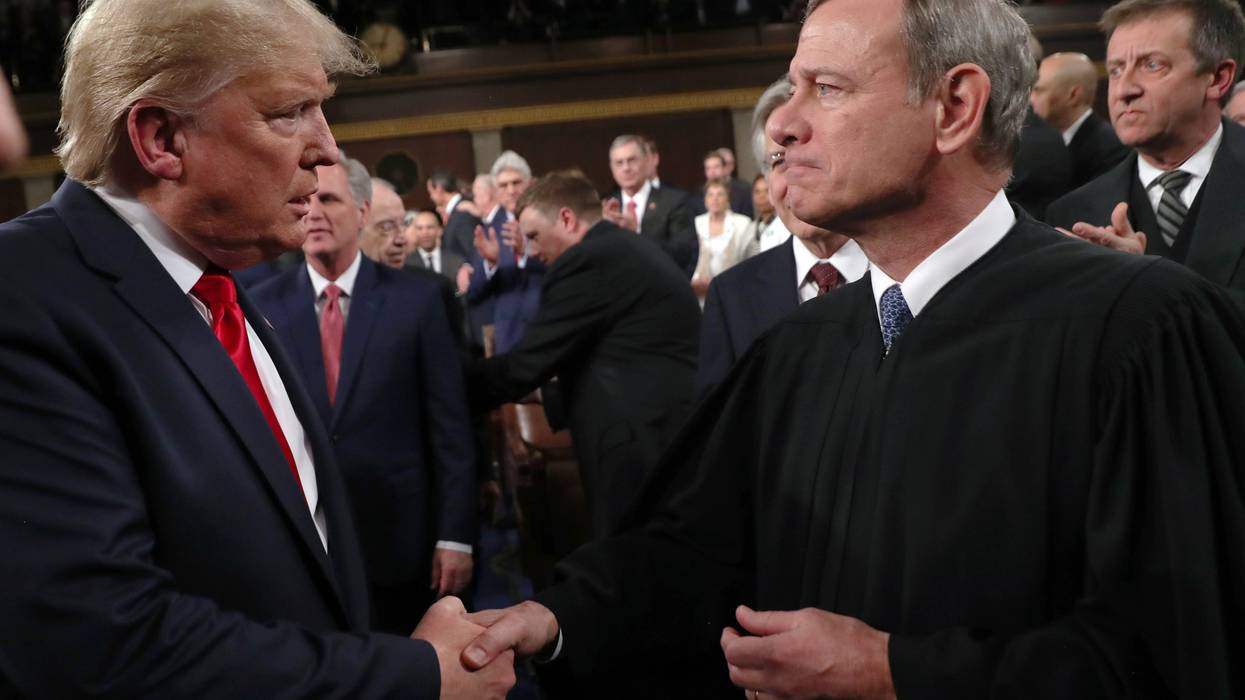
But looking forward, partisan gerrymandering should be illegal. As Supreme Court Justice Elena Kagan wrote in her dissent to Chief Justice John Roberts' 2019 majority ruling that partisan gerrymandering is non-judiciable, “partisan gerrymanders here debased and dishonored our democracy, turning upside-down the core American idea that all governmental power derives from the people. If left unchecked, gerrymanders like the ones here may irreparably damage our system of government.”
You can blame John Roberts for debasing and dishonoring our democracy and irreparably damaging our system of government.
In his 5-4 majority decision in Rucho v. Common Cause in 2019, Roberts ruled that challenges to partisan gerrymandering are "political questions" that courts may not interfere with. Roberts may have disingenuously claimed in his confirmation hearings that he is nothing but an umpire calling balls and strikes, but in reality he changes the strike zone to favor Republicans.
Partisan gerrymandering blatantly violates the Equal Protection clause of the 14th Amendment of the Constitution. Partisan gerrymandering treats voters of the then minority party in a state unequally to voters of the then majority party and gives the then majority party an unequal advantage in securing their future electoral control regardless of the will of the voters. Voters from different parties do not have an equal chance to affect the outcome of elections. As Justice Kagan wrote in her dissent to Rucho a voter's constitutional equal protections rights“can be denied by a debasement or dilution of the weight of a citizen’s vote just as effectively as by wholly prohibiting the free exercise of the franchise.”
It's obvious to a majority of ordinary Americans that partisan gerrymandering undermines fundamental democratic principles. An August 2025 Reuters poll found that 55% of respondents, including 71% of Democrats and 46% of Republicans, thought that the partisan gerrymandering taking place in Texas and California are "bad for democracy." Regular Americans understand the dangers of partisan gerrymandering better than John Roberts in his lengthy "legal" opinion that courts can't do anything to prevent it.
Since Rucho was decided in 2019, advances in computer algorithms have enabled the majority party in a state to construct voting districts to virtually guarantee with surgical precision their own electoral victory.
If Roberts and his Republican cohorts on the Court were honest, they would consider revisiting and overturning Rucho and giving lower courts the power to devise standards for deciding if a partisan gerrymander is too much. But given the partisanship of the Republican Justices, that's unlikely to happen.
If, despite the disadvantages of partisan gerrymandering, Democrats regain control of Congress, they should enact legislation term limiting SCOTUS justices (after which they may keep their lifetime judicial tenure by taking senior status) and increasing the number of Justices from 9 to at least 12. This can be done by legislation and does not need to overcome the nearly impossible bar of a Constitutional Amendment. To protect democracy, Court reform should be a key part of Democrats' political platform.