
SUBSCRIBE TO OUR FREE NEWSLETTER
Daily news & progressive opinion—funded by the people, not the corporations—delivered straight to your inbox.
5
#000000
#FFFFFF
To donate by check, phone, or other method, see our More Ways to Give page.


Daily news & progressive opinion—funded by the people, not the corporations—delivered straight to your inbox.
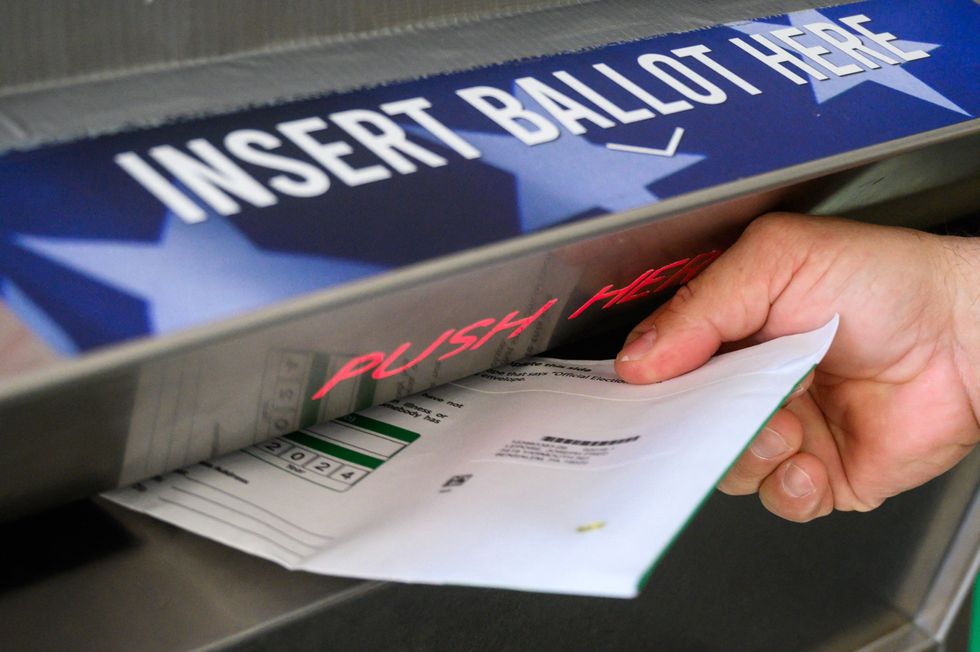
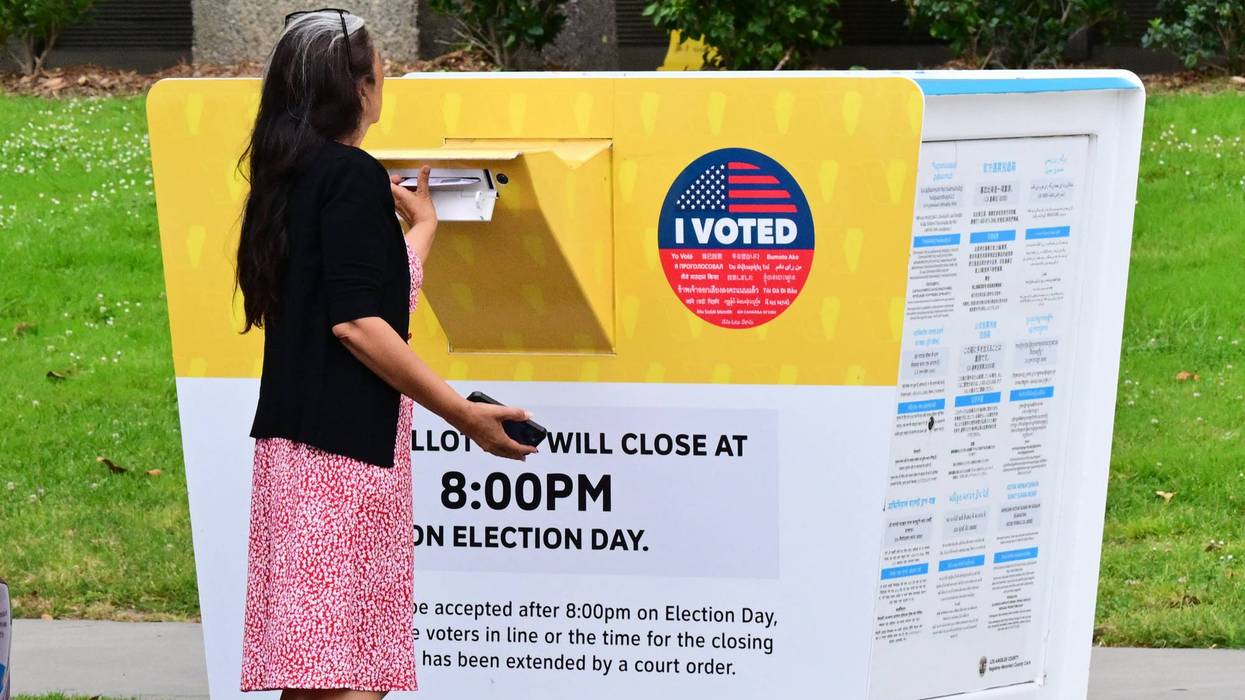
Under a new Trump rule, instead of postmarking letters when they’re received, Post Offices will now postmark them when they get “processed,” which may happen days later, potentially impacting millions of mail-in ballots.
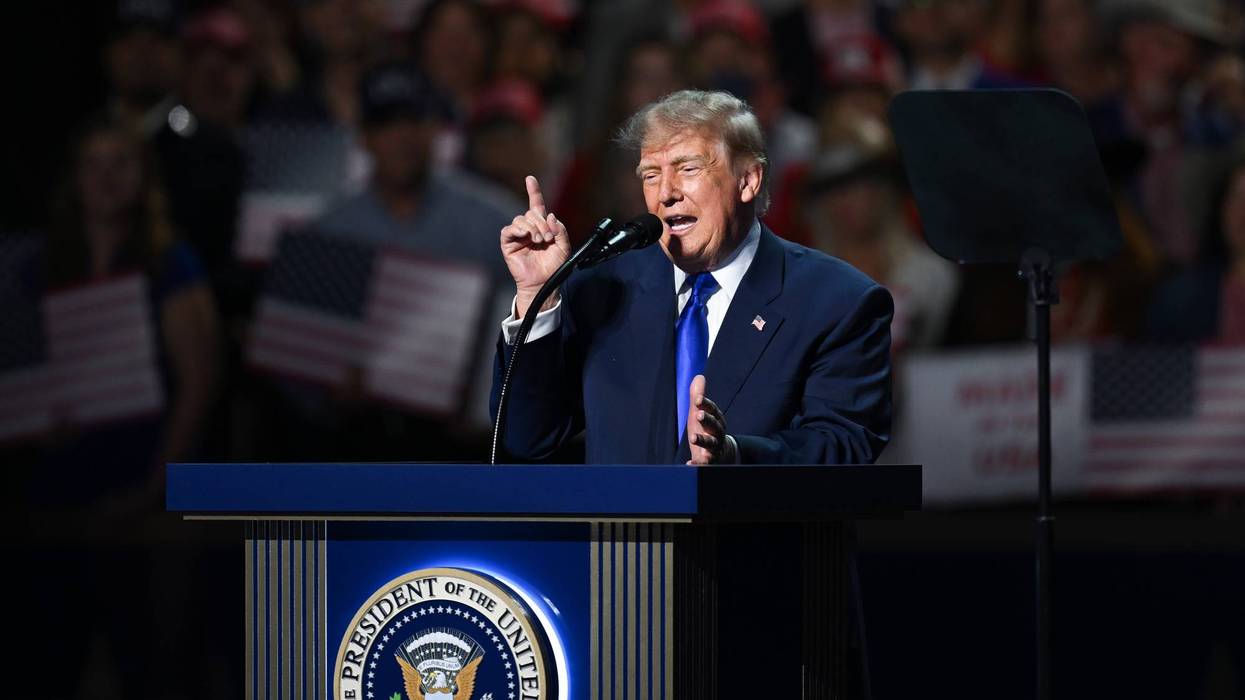
It’s not just a brand new year; it’s a midterm election year. And the stakes this coming November are mind-boggling, so, of course, Republicans are starting to do everything they can to rig the election.
Just a week ago, for example, President Donald Trump’s Postal Service changed the rules about getting your mail-in ballot postmarked so it’ll be counted. Instead of postmarking letters when they’re received, Post Offices will now postmark them when they get “processed,” which may happen days later.
In the 2024 presidential election, the feds estimated that around 104,000 mail-in ballots nationwide weren’t counted because they were postmarked late; with this change, the number this fall and for 2028 could be in the millions.
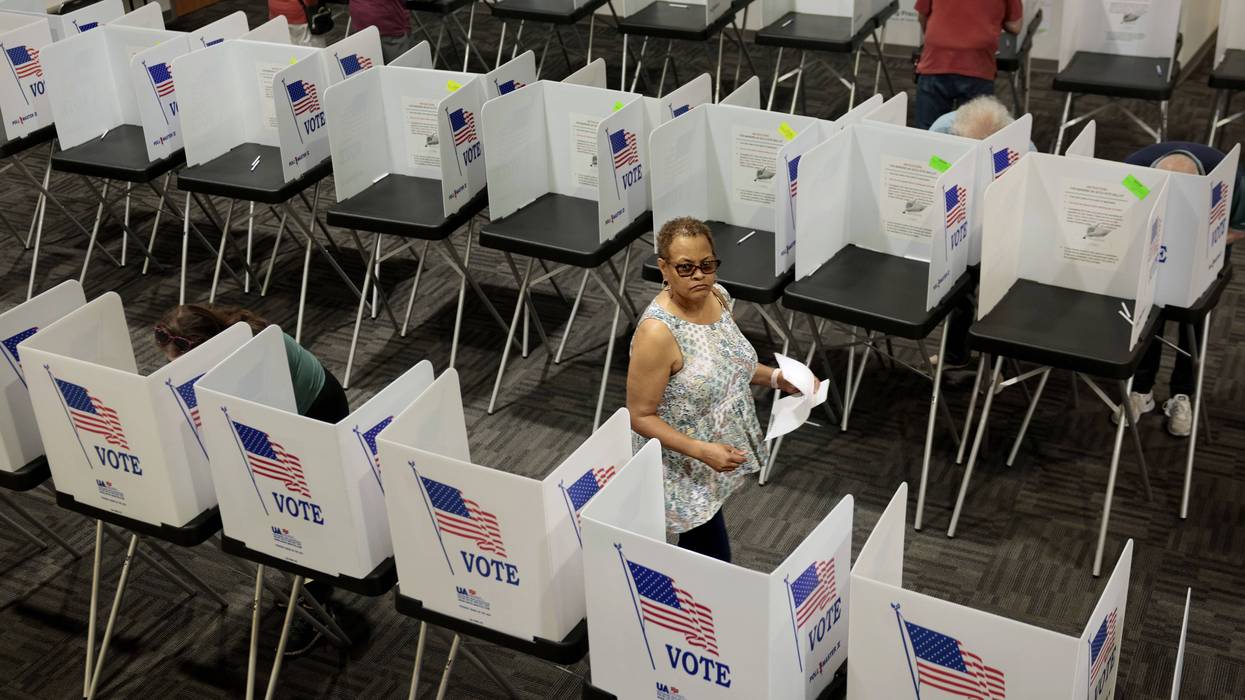
Meanwhile, Republican secretaries of state are enthusiastically purging voters from the rolls as they get ready for this fall. Remember, reporter and economist Greg Palast found, using official federal and state numbers, that in 2024:
Trump lost. That is, if all legal voters were allowed to vote, if all legal ballots were counted, Trump would have lost the states of Wisconsin, Michigan, Pennsylvania, and Georgia. Vice-President Kamala Harris would have won the presidency with 286 electoral votes.
And, if not for the mass purge of voters of color, if not for the mass disqualification of provisional and mail-in ballots, if not for the new mass “vigilante” challenges in swing states, Harris would have gained at least another 3,565,000 votes, topping Trump’s official popular vote tally by 1.2 million.
You’d think we each have a right to vote, rather than voting being just a privilege that Republican-controlled states could take away in dozens of different ways.
Republicans on the Supreme Court ruled, for example, that we have a right to own a gun. As a result, before a state or local government can take away your gun, they must first go before a judge to prove the necessity of doing so.
But, Republicans on the court tell us, Republican secretaries of state can eliminate your right to vote without even telling you; how does that make sense?
After all, the 14th Amendment to the Constitution references “the right to vote at any election” and even says that any state that violates that right shall lose members of its congressional delegation as punishment.
The 19th Amendment references “the right of citizens of the United States to vote…”
The 24th Amendment starts, “The right of citizens of the United States to vote…”
The 26th Amendment is all about “the right of citizens of the United States, who are 18 years of age or older, to vote…”
Additionally, the Constitution, in Article I, Section 4, says that Congress can make federal laws that overrule state laws restricting or regulating voting:
The Times, Places, and Manner of holding Elections for Senators and Representatives, shall be prescribed in each State by the Legislature thereof; but the Congress may at any time by Law make or alter such Regulations…
And, sure enough, Congress did just that in 1993 when it passed the National Voter Registration Act (NVRA), sometimes referred to as the Motor Voter Act because, among other things, it provided for the option of instant voter registration when a person gets a driver’s license in every state in the union.
Now known as 52 U.S. Code § 20501, this law of the land opens with:
The Congress finds that—
(1) the right of citizens of the United States to vote is a fundamental right
(2) it is the duty of the Federal, State, and local governments to promote the exercise of that right and
(3) discriminatory and unfair registration laws and procedures can have a direct and damaging effect on voter participation in elections for Federal office and disproportionately harm voter participation by various groups, including racial minorities.
And it wasn’t a particularly contentious law when it was passed: every Democrat present in the Senate voted for it (Rockefeller missed the vote) as did all but two Republicans.
So how did we get from the Constitution repeatedly asserting a “right to vote” and Congress passing a law that unambiguously proclaims that right, to the current state of affairs where states regularly and methodically deprive citizens of their “right” to vote and instead claim that it’s merely a privilege?
As I lay out in The Hidden History of the War On Voting, much of the blame rests with the most conservative and regressive of our federal institutions, the Supreme Court.
The first real test of the NVRA came in 2018, when Ohio’s Republican Secretary of State, John Husted, went on a voter-purge binge (that hit Black, student, and elderly neighborhoods particularly hard) and was sued by the A. Phillip Randolph Institute for violating Ohio citizens’ constitutional right to vote.
Republicans are pushing a full-blown authoritarian agenda, and they know it’s so unpopular that the only way they can get it through is to suppress the vote and thus rig the system.
In a bitter 5-4 decision, the Republican majority ruled in Husted v Randolph that purging voters because they failed to return a junk-mail-like postcard was entirely legal.
It’s a practice that was called “caging” back when Karl Rove’s guy was allegedly doing it, and it was illegal then but has, since that court ruling, spread to pretty much every Republican-controlled state in the nation.
They’ll identify a part of the state that they consider particularly “prone to fraud“—in other words, filled with a lot of Black and brown people—and mail postcards that look like junk mail into those precincts. When people failed to return them, they are automatically removed from the voting rolls. In most cases they don’t even know they’ve been purged until they show up to vote and are turned away.
Justice Samuel Alito’s decision was particularly biting, claiming that the arguments made by the citizens who’d lost their right to vote were “worse than superfluous” and their argument that they shouldn’t have to regularly check in with the secretary of state’s office to stay on the voter rolls represented logic “no sensible person” could agree with.
Sensible or not, in his dissent, liberal Justice Stephen Breyer pointed out that around 4% of Americans move every year. Yet, he wrote:
The record shows that in 2012 Ohio identified about 1.5 million registered voters—nearly 20% of its 8 million registered voters—as likely ineligible to remain on the federal voter roll...
Justice Sonia Sotomayor’s dissent was even more scathing:
“Congress enacted the NVRA against the backdrop of substantial efforts by States to disenfranchise low-income and minority voters,” she wrote, “including programs that purged eligible voters from registration lists because they failed to vote in prior elections."
“The Court errs in ignoring this history and distorting the statutory text to arrive at a conclusion that not only is contrary to the plain language of the NVRA but also contradicts the essential purposes of the statute, ultimately sanctioning the very purging that Congress expressly sought to protect against.”
She then quoted the “right to vote” NVRA preamble noted above, and, essentially, accused the conservatives on the court of helping Republicans in the states they controlled engage in massive racial and economic discrimination in the voting process:
[This decision] entirely ignores the history of voter suppression against which the NVRA was enacted and upholds a program that appears to further the very disenfranchisement of minority and low-income voters that Congress set out to eradicate… Ourdemocracy rests on the ability of all individuals, regardless of race, income, or status, to exercise their right to vote.
The “right to vote” took another hit when the State of Florida’s Supreme Court ordered a recount of the 2000 presidential election but five Republicans on the US Supreme Court ignored the 10th Amendment (“states’ rights”) and stopped the recount.
That was a good thing for George W. Bush, because when the Florida vote was later recounted by a consortium of newspapers including the New York Times and the Washington Post, they found, as the Times noted on November 12, 2001:
If all the ballots had been reviewed under any of seven single standards and combined with the results of an examination of overvotes, Mr. Gore would have won...
Nonetheless, Chief Justice William Rehnquist dismissed all the nation’s concerns about the court flipping the 2000 presidential election in that totally partisan 5-4 decision, writing in his opinion:
[T]he individual citizen has no federal constitutional right to vote for electors for the President of the United States.
Which casts us in a pretty terrible light. As Rep. Jamie Raskin (D-Md.) points out:
The constitutions of at least 135 nations—including our fellow North American countries, Canada and Mexico— explicitly guarantee citizens the right to vote…
Instead, Raskin notes, because of five corrupt Republicans on the US Supreme Court, we’re in the company of countries like Azerbaijan, Chechnya, Indonesia, Iran, Libya, and Pakistan.
Republicans are pushing a full-blown authoritarian agenda, and they know it’s so unpopular that the only way they can get it through is to suppress the vote and thus rig the system.
That’s why they’ve already successfully passed previously unthinkable major voter suppression laws in 18 states and have them pending in many more. They’ve changed the law in Georgia and several other states so that they can now throw out the votes from entire neighborhoods or cities where they don’t like the outcome; all they have to do is vaguely assert a “suspicion of fraud.”
Unless enough of us stand up, speak up, and get active to regain control of Congress this fall and push legislation protecting American voters, Republicans will continue to eviscerate the voting right they’ve now turned into a privilege until it becomes completely meaningless.
Between the massive gerrymandering effort the GOP has launched nationwide and the Post Office’s changes that’ll hit Blue states with high levels of mail-in voting (some only have mail-in voting), the next few elections are going to be a real challenge for Democrats.
Additionally, as you’re reading these words, millions of voters are being purged from the rolls in Red states, particularly in Blue cities with significant minority populations.
As a result, this fall we’re going to have to show up in absolutely overwhelming numbers just to get squeaker victories in these now-heavily-rigged Republican-controlled states.
Unless enough of us stand up, speak up, and get active to regain control of Congress this fall and push legislation protecting American voters, Republicans will continue to eviscerate the voting right they’ve now turned into a privilege until it becomes completely meaningless.
And that will signal the end of America as we know it.
For the president to try to personally grab power over our election system so blatantly is unprecedented. And it is emphatically counter to the law.
Will voters have the final say in 2026?
In recent years, despite the pandemic, violence, and intense pressure, American elections were secure and their results were reported accurately. Election officials worked together across party lines. The system held.
This year, however, a new threat to free and fair elections has emerged: the federal government itself.
It’s now clear that the Trump administration has launched a campaign to undermine American elections. An important new Brennan Center analysis uses the facts to connect the dots. All of this is unprecedented. It’s often illegal. It’s alarming. And it has begun to unfold in plain sight.
In 2020, 2022, and 2024, American elections withstood great pressure. They can do so again, but that will take vigilance, courage, and ferocious determination to defend democracy.
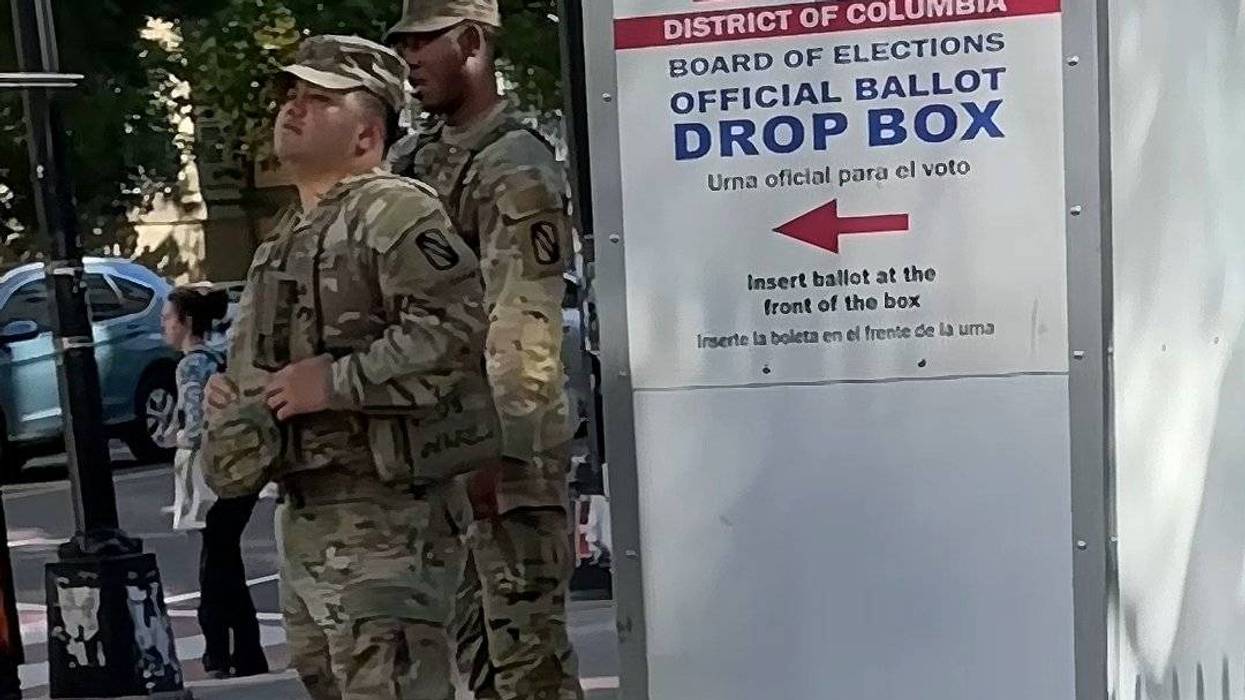
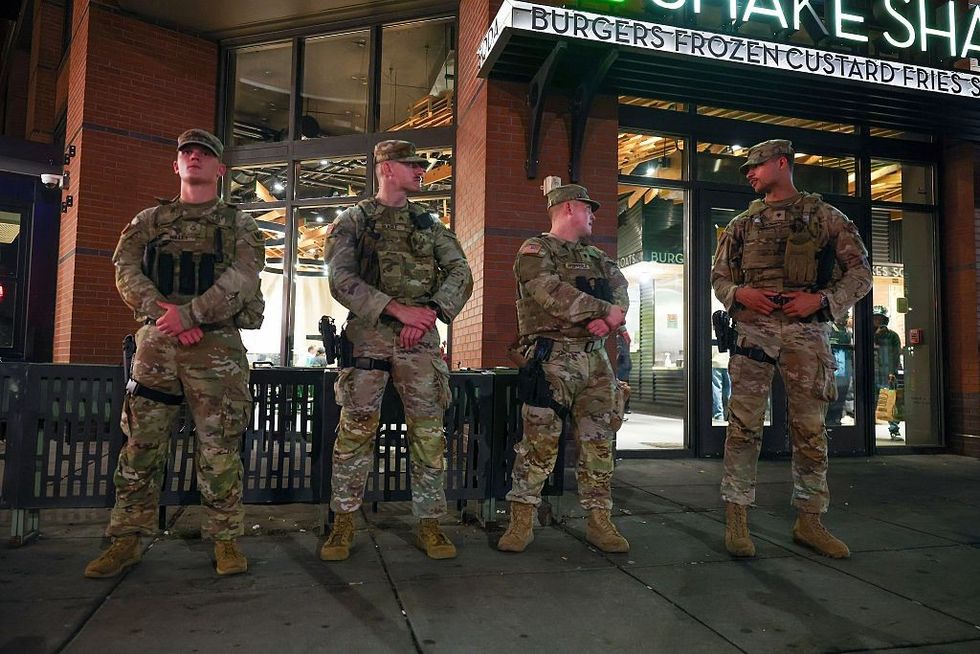
This strategy has been less visible than other, more dramatic power grabs—the unilateral imposition of tariffs, the deployment of the military into American cities, and more. But as my colleague Jasleen Singh writes, “A clear pattern suggests a growing effort. As the 2026 midterms approach, that effort will likely gather momentum.”
Some of this is well known, and some of it has unfolded quietly.
U.S. President Donald Trump has gutted the agency that provides states with election security support and purged its experts, the very people on whom states have relied for help.
An executive order tried to require Americans to produce a passport or the equivalent to register to vote in federal elections—documents that millions of citizens just don’t have. (A federal court has blocked that bad idea, in a suit brought by the Brennan Center and others.)
The administration has demanded that states provide access to voter rolls with personal information to the Department of Government Efficiency so it can find fraud. (What could possibly go wrong?!) Already, according to The Associated Press, the Justice Department has sought access to voter information in 19 states.
There’s even an attempt to withdraw federal approval for the voting machines used across the country.
And, in recent days, the White House has supported Republicans in the Texas State Legislature in their effort to adopt one of the most gerrymandered congressional maps in the nation’s history—an even more severe gerrymander than the party had drawn at the start of the decade. It would be an egregious case of politicians choosing their voters rather than the other way around.
Expect more to come. The president recently visited the Justice Department, where he declared that the people behind the “crooked” 2020 election “should go to jail.” Prosecution task forces have been established in Washington, D.C. and New Jersey. These federal officials are looking to bring charges against state election officials. The president already issued executive orders targeting a former high-level government official and others for their work to protect elections and voting rights.
In 2020, Trump’s attempt to overturn the election was haphazard and chaotic. It was ultimately constrained by federal and state officials. His own attorney general dismissed claims of fraud with a barnyard epithet. Now, the executive branch has been weaponized. Election deniers hold top Justice Department positions. The new civil rights chief, Harmeet Dhillon, declared that she is “turning the train around and driving in the opposite direction.”
All this adds up to more than mere politics, more than the usual tussles over rules and scrambling for momentary advantage. For the federal government to intervene this way—for the president to try to personally grab power over our election system so blatantly—is unprecedented. And it is emphatically counter to the law.
Presidents do not run elections. The Constitution gives states the responsibility to run federal elections. Congress can set national standards. But the president has little if any proper role.
It’s a personal drive by a peevish second-term president to take control of important parts of the election system, just months before a critical midterm election.
Why do all this? Threats, noise, investigations, and false claims of fraud can spread doubt and discredit valid results. The clamor will make it harder for brave election officials and citizen volunteers to resist presidential pressure to change results.
In 2020, 2022, and 2024, American elections withstood great pressure. They can do so again, but that will take vigilance, courage, and ferocious determination to defend democracy. This is the substance of true patriotism.
State election officials must continue to stand up for voters. At the Brennan Center, we are working to support these quiet heroes of our system. We are arming them with information, for example, about which data requests are improper.
Courts, too, must act—and some already have.
Ultimately, it will be up to voters. It’s harder to rig an election when people are watching—and shouting. High turnout can overwhelm chicanery.
So stay tuned. This great fight will become an increasingly important story until next November, and no doubt beyond. All this goes well beyond typical partisan jostling. The Declaration of Independence proclaimed that government is legitimate only when it rests on “the consent of the governed.” The Brennan Center will do our part to defend voters and protect the system.
In focusing on Trump’s shocking amorality we risk sliding over a painful truth we must embrace to create the democracy we need and want: His rise is a symptom.
Americans are waking up to President Donald Trump’s assaults on our democracy. In just four years, his documented lies have topped 30,000. He has also broken laws, including his attempts to dismantle government agencies, his blatant conflicts of interest with Elon Musk, and his disregarding courts on a number of fronts. We honor those courageously stepping up to hold Trump accountable—from Indivisible to Common Cause to Democracy Forward, and many more citizen-organizing efforts.
But our appropriate outrage might hide a danger—that in focusing on Trump’s shocking amorality we could slide over a painful truth we must embrace to create the democracy we need and want: His rise is a symptom. Donald Trump was able to triumph because of deep dysfunction long built into our governing structures. While we must resist his actions and work to limit the immediate damage, we must also commit to fighting for an even more democratic future, free of our current limitations.
Simply put, some features of our democracy are baked-in barriers to one-person-one-vote. The Senate, to name one. Wyoming, with a population of just over half a million has the same number of Senate seats as California, home to nearly 40 million. In other words, a voter in Wyoming has almost 68 times greater representation than a voter in much more densely populated California.
Our fight can’t merely be against Trump but in pursuit of a positive vision of an America where each of us counts, and we work together building the world we want.
And the challenges don’t stop there. Gerrymandering of electoral districts—the redrawing of district lines to favor the party in power—creates unrepresentative legislatures. As a result, one report found Republicans had an advantage of about 16 House seats in 2024’s congressional election. And then, there’s voter suppression as well as the hugely corrupting role of money in politics and the limits of our two-party system.
Despite being unfit, Trump rose to power in large measure because our antidemocratic rules have led to deep dissatisfaction with government that he was able to tap. Indeed, it’s been nearly four decades since 60% of us expressed satisfaction with “the way democracy was working.”
Since then, approval has tumbled steeply. By early 2023, just 28% of U.S. adults expressed satisfaction with how our democracy is working. And by early 2025 well more than half of Americans—61 percent—remained dissatisfied.
And Americans’ view of our standing in the world?
Despite deep doubts about our democracy, interestingly, over half of us still see our country as one of the world’s greatest. One in five even place the us at the top, and only 27% acknowledge there are better democracies.
Hmm. Self-perception can be self-deception: In global comparisons we rate shockingly low. Each year, Freedom House, founded by Eleanor Roosevelt, ranks nations by the quality of their political rights and civil liberties—a reasonable measure of democracy.
Sadly, the U.S. ranks 57th worldwide, and not even in the ballpark of nations we imagine to be our peers. Almost all European Union nations rank in the top 25.
Really? That bad?
Yes. So, how do we explain the disconnect? And how might we use this bad news for good?
Domestically, we know that there are deep roots to dissatisfaction with our democracy. But it’s not just the structural features named above: At the same time, our extreme economic inequality—deeper than more than 100 nations—means economic stress for most Americans, even as we hold onto the myth that we’re a middle-class country.
Still, the myth of American exceptionalism blinds us.
Instead, let us heed this truth: Be it a rocky marriage or a sprained ankle, healing starts when we get honest with ourselves—when we stop averting our eyes, making excuses, or just hoping one day it will all go away.
Today, as our democracy is diminishing before our eyes; let’s drop these dangerous escapes and choose constructive action. The good news in our sad scores is proof of possibility—hard evidence that we can do better as we learn lessons from the leading democracies.
So, let our dissatisfaction fuel determination and bold action. Our fight can’t merely be against Trump but in pursuit of a positive vision of an America where each of us counts, and we work together building the world we want.
Democracy is not a dull duty but a thrilling vision and empowering action.