

SUBSCRIBE TO OUR FREE NEWSLETTER
Daily news & progressive opinion—funded by the people, not the corporations—delivered straight to your inbox.
5
#000000
#FFFFFF
To donate by check, phone, or other method, see our More Ways to Give page.
Daily news & progressive opinion—funded by the people, not the corporations—delivered straight to your inbox.
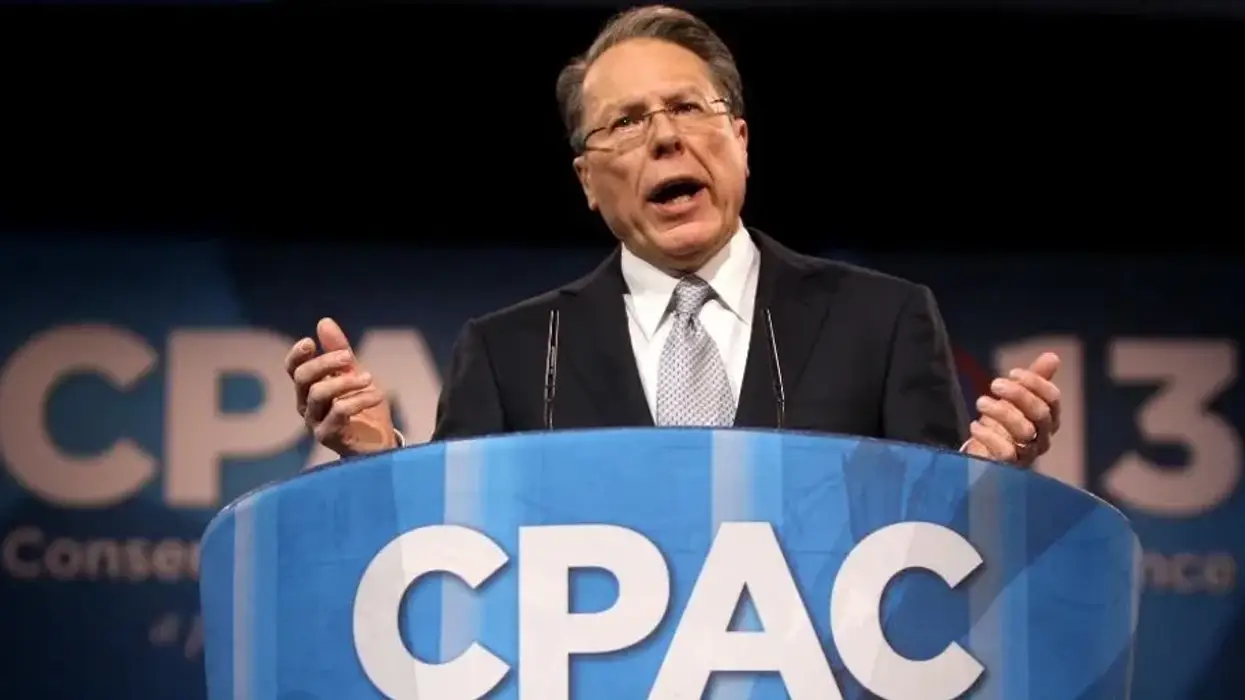
For the first time, the NRA can’t buy their way out of this problem.
After a 30-year reign of terror and corruption, not even the NRA wants anything to do with their long-time leader, Wayne LaPierre.
In their opening arguments of the civil trial in New York—where a jury recently found LaPierre and the NRA liable for corruption—an attorney for the gun lobby said “The NRA is not this man” and called LaPierre’s resignation a “course correction.” No wonder they’d want one: The NRA is worse by every measure today than it was three decades ago when LaPierre turned the former sportsmen’s club into a radical political lobbying group. He is the architect behind the nation’s gun violence epidemic, leading the NRA’s reckless and profit-driven quest to put guns in the hands of as many Americans as possible that has stained its reputation beyond repair—all while abusing the meaning of the Second Amendment to selfishly line his own pockets. For his efforts, today, the NRA is broke, rudderless, and in serious legal jeopardy.
The NRA has lost over a million members. Membership dues are down by $14 million. And their lobbying influence has been waning since 2015.
Perhaps the only measure on which they’ve been successful is the amount of firepower pumped into our communities. Yearly gun sales are now roughly twice the level they were 15 or 20 years ago, and the tragic toll of gun-related deaths has skyrocketed with it. Under LaPierre’s watch, the number of gun suicides and gun murders reached record highs and active shooter incidents became drastically more common across the country-–-about seven times more common than in Canada, and 340 times more common than in the United Kingdom.
During this time, the NRA slowly lost the support of America. As gun violence shattered more and more families, public sentiment turned on them. A majority of U.S. adults now say gun laws should be stricter. About a third (32%) of parents with K-12 students say they are very or extremely worried about a shooting ever happening at their children’s school. And six in 10 Americans (61%) say it is too easy to legally obtain a gun in this country.
We’ve watched mass shooting after mass shooting devastate communities across the nation, from Orlando to El Paso to Boulder to Lewiston–each event and each death presenting an opportunity for the NRA to muster an ounce of courage and change the gun culture in this country that they single-handedly controlled. How did they respond instead?
On December 14, 2012, after a gunman shot and killed 20 children and six staff members at an elementary school in Newtown, Connecticut, LaPierre coined his infamous "good guy with a gun” argument. A decade later when nineteen children and two adults were killed in the deadliest school shooting in Texas history at Robb Elementary School on May 24, 2022, the NRA held their annual convention across the state in Houston days later defending Americans' right to own a gun.
The NRA is no longer the political powerhouse it once was, but the damage done is irreparable. The notion of a course correction is so far from possible. No reasonable person with any ambition would want to take LaPierre's job and inherit the mess he leaves behind—the personal reputation and professional risk are too high.
We would send our thoughts and prayers to LaPierre—but, this isn’t just about him. The gun violence prevention movement and the survivors of armed violence cannot move on, and neither can he. Every empty seat at the dinner table. Every birthday-turned-anniversary. Every stolen milestone. He will always hold responsibility. The scars of his legacy are irreparable and his damage to the organization makes it unsalvageable.
We wish we could give LaPierre all the credit for the downfall of the NRA—but, proudly, the gun violence prevention movement played a role as well. Guns Down America has fought back against the NRA and LaPierre’s agenda since our inception, from leading the “murder insurance” effort that fined the NRA $7 million to influencing Wells Fargo to break ties with the NRA contributing to the steady decline in relevance and influence.
For the first time, the NRA can’t buy their way out of this problem. So as one last parting gift to the organization in decline, we’ll offer them a free piece of advice: Sell your gun range at HQ in Virginia—maybe you’ll be able to afford your legal fees.
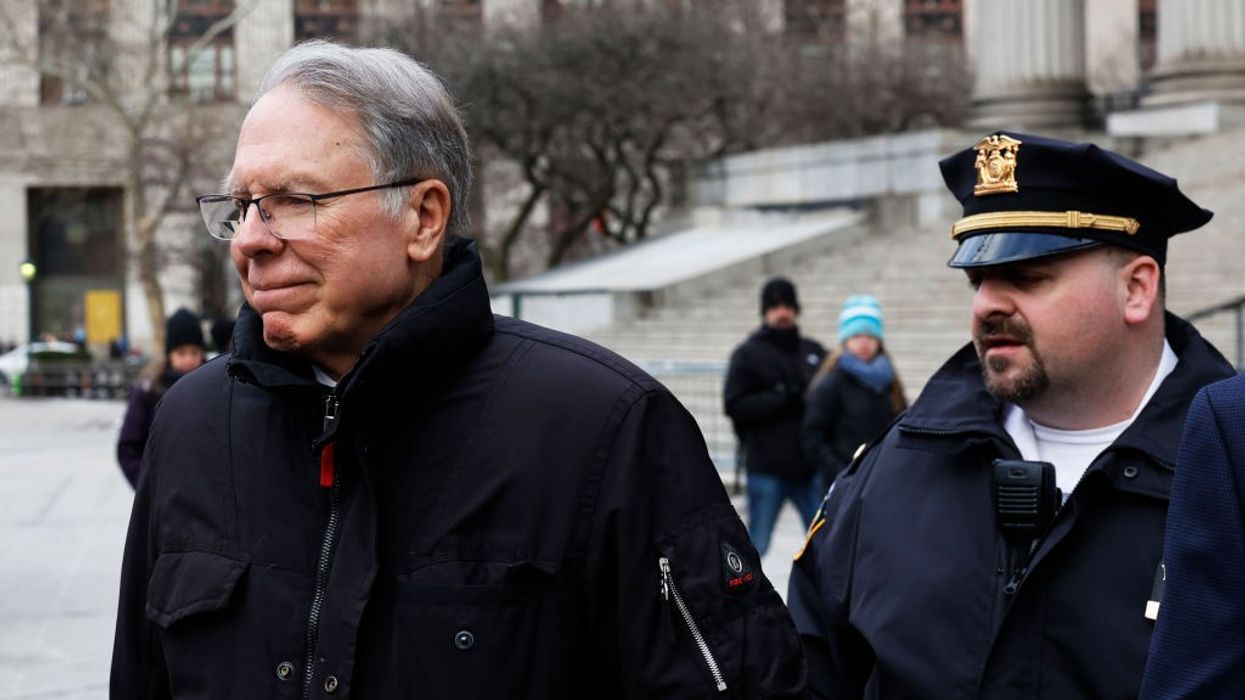
"The NRA has lost its leader, its power, and its wealth," said one campaigner. "Today's trial verdict is one more nail in the NRA's political coffin."
Democratic New York Attorney General Letitia James and gun control advocates nationwide celebrated on Friday after a Manhattan jury found the National Rifle Association and the NRA's longtime former leader liable in a civil corruption case.
James, who launched the case in 2020, said on social media that "in a major victory, my office won our case against the NRA and its senior leadership for years of corruption and greed. Wayne LaPierre and a senior executive at the NRA must pay $6.35 million for abusing the system and breaking our laws."
After over three decades as the NRA's CEO, LaPierre stepped down in January. The 74-year-old cited health reasons but his resignation from the powerful gun lobbying group came just before the trial began, sparking speculation that he was trying to dodge accountability.
"For years, Wayne LaPierre used charitable dollars to fund his lavish lifestyle. LaPierre spent millions on luxury travel, private planes, expensive clothes, insider contracts, and other perks for himself and his family," James said Friday. "Wayne LaPierre blatantly abused his position and broke the law. But today, LaPierre and the NRA are finally being held accountable for this rampant corruption and self-dealing."
"In New York, you cannot get away with corruption and greed, no matter how powerful or influential you think you may be," she added. "Everyone, even the NRA and Wayne LaPierre, must play by the same rules."
The jury found LaPierre liable for $5.4 million but, because he already repaid some of it, he has to give the group $4.35 million. However, he's not the only executive involved in the case. Jurors also found that NRA general counsel John Frazer must pay $2 million, and former treasurer Wilson "Woody" Phillips violated his official duties. James wants the trio banned from serving in any leadership roles for charities that do business in the state—which will be decided by a judge.
"Jurors also found that the NRA omitted or misrepresented information in its tax filings and violated New York law by failing to adopt a whistleblower policy," according to The Associated Press. The AP noted that "another former NRA executive turned whistleblower, Joshua Powell, settled with the state last month, agreeing to testify at the trial, pay the NRA $100,000, and forgo further involvement with nonprofits."
Welcoming the jury's decisions, Nick Suplina, senior vice president of law and policy at Everytown for Gun Safety, said in a statement that "we're two months into 2024 and the NRA has already managed to lose this trial, their longtime leader, and whatever political relevance it had left."
"This verdict," he added, "confirms what we've seen in recent elections, in state legislatures, and in the halls of Congress: The gun lobby has never been weaker and the gun safety movement has never been stronger."
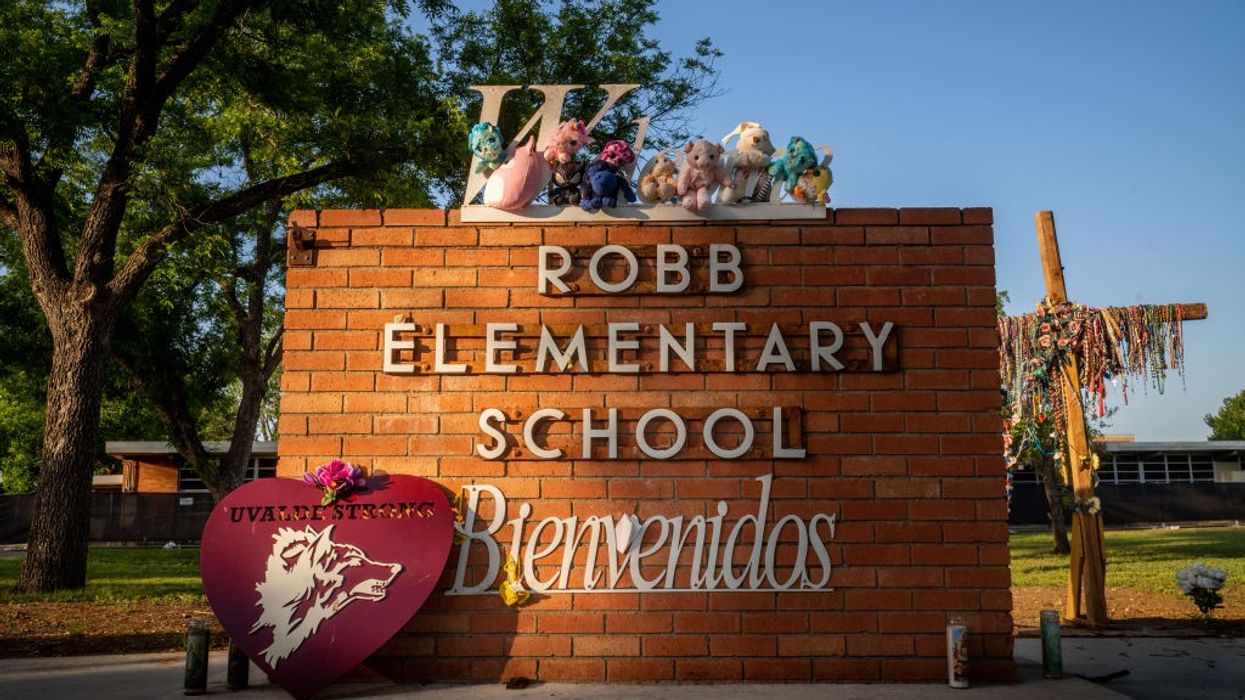
A new DOJ report on the shooting in Uvalde, Texas, is laced with vivid and horrifying detail on the failings of law enforcement, themselves fearing the AR-15 weaponry in the hands of the 18-year-old shooter.
Remember those twisted words by Wayne LaPierre, then leader of the National Rifle Association, just days after the
mass murder at Sandy Hook Elementary School in December 2012? Standing there proudly up on the stage, he said: “The only thing that stops a bad guy with a gun is a good guy with a gun.”
This January LaPierre resigned from his NRA leadership position ahead of the trial on charges of corruption by the State of New York. But his words after Sandy Hook sadly live on despite repeatedly being shown to be total bullshit. Glaringly so in the review of the 2022 mass shooting in Uvalde, Texas, by the Department of Justice (DOJ), released on January 18.
DOJ’s 575-page report, available in English and in Spanish, is laced with vivid and horrifying detail on the failings of law enforcement, themselves fearing the AR-15 weaponry in the hands of the 18-year-old shooter. Failings causing preventable death. Failings in providing adequate emergency medical care to wounded victims after law enforcement finally entered the classrooms. Failings as dozens of trained officers stood idly by without a leader armed to the teeth with their own AR-15-style firearms.
Here are the opening words by Associate Attorney General Vanita Gupta at the news briefing where the DOJ report was officially released, remarks following those by Attorney General Merrick Garland:
The Attorney General just gave a sense of the detailed timeline we have laid out, and the cascading failures that occurred over the course of the 77 minutes between when law enforcement arrived on the scene and when they finally entered the classroom. But we also know the pain—and the failures and missteps—did not end when law enforcement finally entered the classrooms and rescued the survivors.
It continued at minute 78, when it became clear that because there was no leader, there was no plan to triage the 35 victims in classrooms 111 and 112, many of whom had been shot. Victims were moved without appropriate precautions, victims who had already passed away were taken to the hospital in ambulances, while children with bullet wounds were put on school buses without any medical attention. In the commotion, one adult victim was placed on a walkway—on the ground outside—to be attended to. She died there.
As difficult as the vivid words in the report are to ignore, I am not naive. If history is any guide, some in Congress will mightily try to discount the DOJ report, continuing to block any subsequent movement on meaningful gun-control measures. Republican lawmakers in solidly Republican states, as a detailed article in The New York Times describes, are fraid their voter base would vote them out of office if they show any hint of supporting gun-control measures. Those Republicans are waiting for the report to fade away in the news cycle to collect dust.
But then, the victims of the gun carnage in Uvalde, and those before, deserve more than letting the report die buried in dust. They deserve someone taking the debate to the naysayers in Congress and state legislatures armed with hard facts about the effectiveness of gun-control measures, framed by the realities of having none in a gun-friendly state like Texas where the brutal carnage within Robb Elementary School happened. Yes, there is an association between lack of gun regulations in a state and the occurrence of mass shootings, as I describe below.
Here are some of the arguments I would make today replying to some of the naysaying comments (bolded below) common among members of Congress downplaying any need for gun control:
Gun control does not work and won’t reduce gun violence.
Wrong. Take requiring gun licenses, as required in a minority of states today. In his review of studies, Garen Wintemute, who directs the Violence Prevention Research Program at the University of California, Davis, writes in Health Affairs that license requirements for gun purchases “have repeatedly been associated with reduced rates of [gun] violence.” This body of research is clear.
Furthermore, Michael Siegel at Boston University and his research team found, as reported in Law and Human Behavior, that requiring one to get a permit to purchase firearms was associated with a 60% lower odds of a public mass shooting occurring in a state, controlling for state characteristics like population. Other researchers found the same thing.
Why? Because licenses to purchase firearms typically entail in-person applications and background checks involving multiple databases and, among other things, taking a gun safety course. Basically a more comprehensive examination than standalone background checks singularly taken at the point of a firearm sale.
Congress already passed the Bipartisan Safer Communities Act (BSCA) in 2022. Nothing more is needed.
Okay, but the BSCA basically only includes more funding for mental health initiatives.
Well, mental illness is the cause of most gun violence, especially mass shootings.
I agree mental troubles underlie many suicides, by firearms and otherwise. And extreme-risk or “red-flag” laws encouraged via funding in the BSCA have been shown to reduce suicides.
But research repeatedly finds that psychiatric disorders, as a comprehensive review by Rand Corporation concluded, are not the principal driver alone across the spectrum of firearm violence. And that includes not being a predictable factor in mass shootings. Sure, after a mass shooting, politicians and media search hard to find a motive and signs of mental troubles; retrospective interpretation to justify mental illness alone as cause. Retrospective interpretation, I submit, many of us not owning a gun would fail.
But an assaults weapon ban is going too far. Based only on the threatening appearance of guns, nothing more.
Maybe the 1994 ban automatically expiring in 2004 was based too much on physical appearance instead of functionality. But today, as criminologist Thomas Gabor and former ATF agent Julius Wachtel have each argued, a ban can be based on objective ballistic lethality, scoring firearms on components including caliber, muzzle velocity, firing rate, ammunition capacity, loading mechanism, and ability to add accessories that increase lethality.
Wachtel in his 2015 article in The Washington Post describes one extreme lethal ballistic feature about AR-15-style semi-automatic rifles. With “their most common calibers—7.62 and .223—these weapons discharge bullets whose extreme energy and velocity readily pierce protective garments commonly worn by police, opening cavities in flesh many times the diameter of the projectile and causing devastating wounds.” Hence, a herd of law enforcement personnel at Uvalde afraid of the weapon in the shooter’s hands milled around aimlessly for over an hour before doing anything.
And such carnage Wachtel describes was visited upon the children and teachers in Robb Elementary School on that fateful day in Uvalde, Texas.
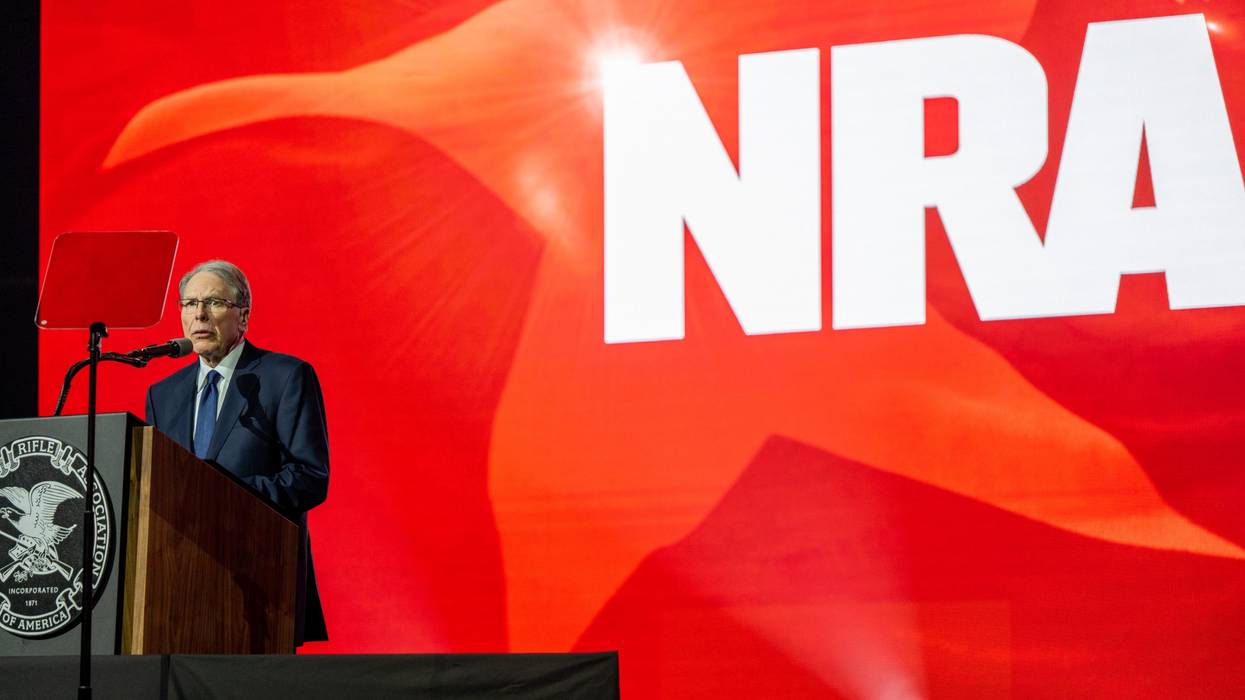
The outgoing gun lobby chief cited health reasons for the move. One critic responded that "for decades, Wayne LaPierre functioned without a heart and half a brain so he must be in very dire straits."
Gun control advocates celebrated on Friday as Wayne LaPierre announced he is stepping down as chief executive of the National Rifle Association—a development that comes just days ahead of a New York corruption trial scheduled to start on Monday.
LaPierre, who has led the NRA for over three decades, is an individual defendant in New York Attorney General Letitia James' case targeting the gun lobbying group. The 74-year-old cited health reasons for the resignation, which will take effect on January 31.
"For decades, Wayne LaPierre functioned without a heart and half a brain so he must be in very dire straits," quipped Shannon Watts, founder of the anti-gun violence group Moms Demand Action.
Watts framed LaPierre's exit as a win for his fiercest critics, highlighting that Moms Demand Action "shined a light on his unethical, immoral, and corrupt misdeeds for over a decade."
"As a reminder, LaPierre used millions of NRA dollars to buy Italian suits, reward family and friends, pay for family vacations to the Bahamas. He mismanaged the NRA. And he may have violated charity laws," Watts added in a nod to the New York trial.
March for Our Lives noted Friday that James' case was initiated after the youth-led group "looked into the NRA's finances and wrote a letter to the NYAG about potentially illegal activity by the NRA."
"Thoughts and prayers, Wayne," added March for Our Lives, which formed after the 2018 mass shooting at Marjory Stoneman Douglas High School in Parkland, Florida.
Citizens for Responsibility and Ethics in Washington (CREW) president and CEO Noah Bookbinder similarly said that "we've been focused for years on abuses by the NRA's Wayne LaPierre, including in a... complaint filed in 2020. His resignation today is overdue, but an important step."
The case in New York "is a civil lawsuit, so there's no risk of jail time or criminal penalties for LaPierre or the three others named in the suit," but if the NRA loses, it could mean leadership changes and more oversight of the gun group, NPR's Brian Mann explained earlier this week.
Los Angeles Times senior legal affairs columnist Harry Litman observed that LaPierre's resignation "perhaps suggests he's looking to try to settle the case." However, the state attorney general quickly pushed back against speculation that the strategy would work.
James said Friday that "the end of the Wayne LaPierre era at the NRA is an important victory in our case. LaPierre's resignation validates our claims against him, but it will not insulate him from accountability. We look forward to presenting our case in court."
In its statement about LaPierre, the NRA said that in response to James' allegations, its board "has undertaken significant efforts to perform a self-evaluation, recommended termination of disgraced 'insiders' and vendors who allegedly abused the association, and accepted reimbursement, with interest, for alleged excess benefit transactions from LaPierre, as reported in public tax filings."
LaPierre is set to be replaced by longtime NRA executive and head of general operations Andrew Arulanandam as interim CEO.
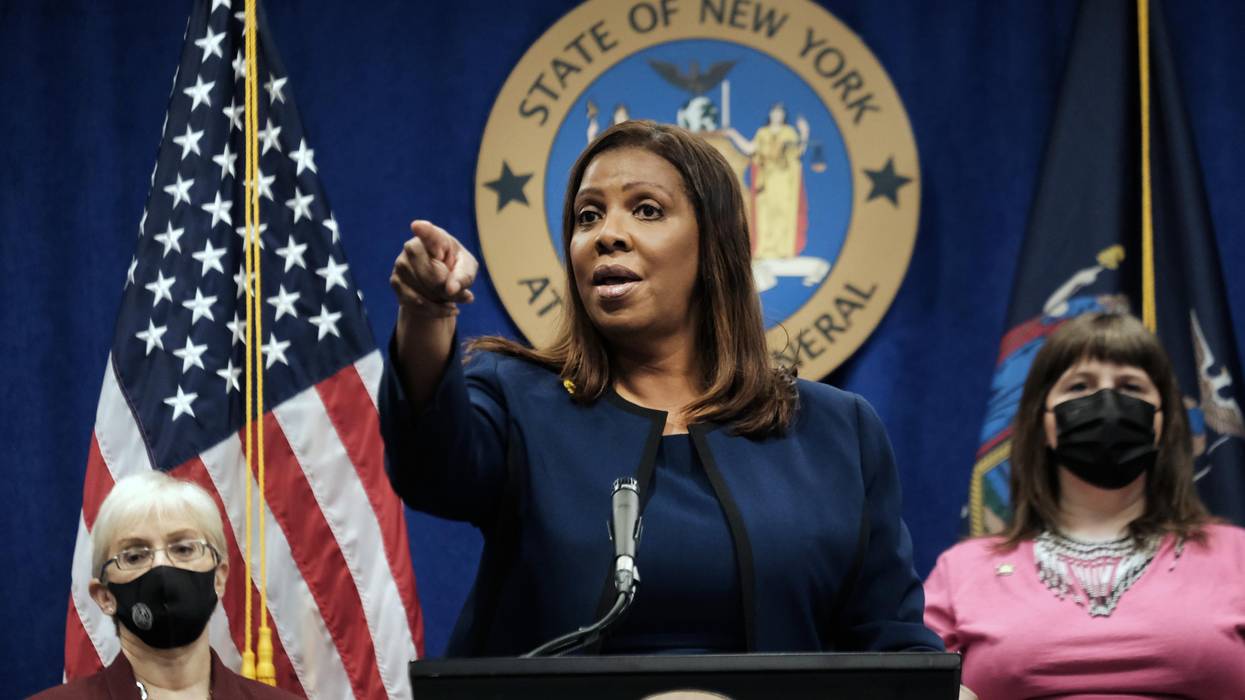
New York Attorney General Letitia James has provided "ample evidence of malfeasance" at the gun rights group, a five-judge panel said.
A New York state court will move forward with a case brought by the state against the National Rifle Association, following an appeals court ruling on Thursday that rejected the powerful pro-gun group's claim that the probe violated its First Amendment rights.
A panel of five judges in the Appellate Division in Manhattan unanimously ruled that state Attorney General Letitia James has probable cause to investigate the NRA over allegations that it diverted millions of dollars to fund the lavish lifestyles of executives including Wayne LaPierre, its chief executive officer.
James sued the NRA in August 2020, saying executives also failed to obtain board approval for conflicts of interest and retaliated against whistleblowers who spoke out against allegations of financial misconduct. She is seeking an overhaul of the NRA's leadership, including the removal of LaPierre.
The appeals court said James has provided "ample evidence of malfeasance" at the organization, and has authority to enforce state laws governing nonprofits.
The NRA has claimed James' case against it is politically motivated. James unsuccessfully attempted to have the NRA dissolved through the court system in 2022.
The court on Thursday noted that other nonprofits have restructured their leadership, but the NRA has so far refused to do so.
The judge who ruled against dissolving the NRA, Justice Joel Cohen, will hear the corruption case on January 8.
In June, Cohen denied motions by the NRA that claimed James' investigation was unconstitutional and politically motivated, saying the NRA could not make those claims as a defense at the upcoming trial.
The NRA, James said at the time, has "used every tool and trick to try and avoid the consequences of their bad actions."
"I will continue to fight tirelessly," she added, "to bring the NRA and its senior executives to justice and ensure all people, companies, and not-for-profits adhere to the rule of law in New York."

The National Rifle Association's decades-long campaign against even the most basic and popular firearm regulations scored another victory Thursday when the right-wing U.S. Supreme Court struck down a key New York state gun control law, a ruling that could spell doom for similar statutes across the country.
The NRA has spent big in recent years to fill state and federal courts--including the Supreme Court--with judges that are hostile to gun regulations. In 2017, the gun lobby dropped $1 million on ads supporting former President Donald Trump's nomination of Justice Neil Gorsuch, a successful campaign that it repeated in subsequent years to ensure the confirmation of Justices Brett Kavanaugh and Amy Coney Barrett.
"The Court That Dark Money Built just handed a massive win to a gun industry that drives horrific violence in this country."
All three of those judges--along with Justice Samuel Alito and Chief Justice John Roberts--supported Justice Clarence Thomas' new majority opinion invalidating New York's century-old restrictions on the concealed carry of firearms in public. The law required those applying for permits to carry guns outside the home to demonstrate "proper cause" to do so;
All three liberal justices opposed the decision.
Observers quickly voiced concern that the court's ruling could imperil gun control laws in other states and undermine local lawmakers' ability to combat mass shootings, which have taken hundreds of lives in the U.S. this year.
"The Court That Dark Money Built just handed a massive win to a gun industry that drives horrific violence in this country," Sen Sheldon Whitehouse (D-R.I.) said in a statement. "The NRA, gun manufacturers, and their dark-money allies have spearheaded a 'project' to wipe all commonsense gun safety laws off the books."
Whitehouse warned that the Supreme Court's decision Thursday brings the gun lobby "a step closer" to eviscerating gun-safety measures nationwide.
"Now," the senator said, "more deadly weapons will flow into communities that have taken sensible steps to protect their citizens from violence."
The NRA, which assisted the legal challenge against the New York law, has worked tirelessly for years to mainstream an interpretation of the Second Amendment that conservative Supreme Court Justice Warren Burger once described as "a fraud on the American public." The gun lobby's efforts bore fruit in 2008, when the Supreme Court ruled for the first time in District of Columbia v. Heller that the Second Amendment protects an individual's right to own a gun.
As the Los Angeles Times reported Thursday, the high court's ruling in New York State Rifle & Pistol Association Inc. v. Bruen is "the most significant victory" for gun control opponents since 2008.
"It also reflects how President Trump's three appointees have shifted the court to the right," the newspaper noted. "In the last decade, the court had turned away challenges to the permitting laws in California and elsewhere. But the arrival of Justices Brett M. Kavanaugh and Amy Coney Barrett created a majority to bolster the right to carry a gun."
"Gun control advocates had said they feared a high court ruling upholding the right to be armed in public could lead to a massive increase in the number of guns on the street in major cities," the Times added.
NRA executive vice president Wayne LaPierre enthusiastically applauded the Supreme Court's ruling in a statement, calling the decision "a watershed win" and attributing it to the organization's long-running "fight" against gun-safety regulations.
Jason Ouimet, executive director of the NRA Institute for Legislative Action, said the lobbying group "has been at the forefront of this movement for over 30 years and was proud to bring this successful challenge to New York's unconstitutional law."
The Supreme Court's ruling came as the Senate worked to advance a gun-related legislative package that critics have decried as woefully inadequate given its exclusion of a ban on assault rifles, universal background checks, and other popular measures.
The bill, titled the Bipartisan Safer Communities Act, cleared a key procedural hurdle Thursday as advocates raised alarm over the far-reaching implications of the high court's decision.
"Today, the Supreme Court made it clear that it cares more about protecting the interests of the gun lobby than American lives," said Christina Harvey, executive director of Stand Up America. "This isn't by accident; the lawmakers who confirmed the court's ultraconservative supermajority were bought and paid for by the NRA. This decision achieves one of their ultimate goals: bringing more guns into public spaces with no consideration for human life."
"Contrary to the opinions of the Supreme Court's ultraconservative majority, most Americans believe gun safety laws should be stronger, not weaker," Harvey added. "The gun violence epidemic in America threatens all of us--but it disproportionately endangers and kills Black, brown, and low-income Americans. To Donald Trump's wing of the Supreme Court, these lives are simply collateral damage."
One must not put a loaded rifle on the stage if no one is thinking of firing it.
--Anton Chekhov, Letter to Lazarev-Gruzinsky
Once again, we are confronted with a school shooting, the 45th in 2015 and the 142nd since the 2012 massacre at Sandy Hook Elementary School in Newtown, Connecticut. We have, of course, grown accustomed to shootings in which four or more people are killed in one incident. Those events are considered to be mass shootings by Mass Shooting Tracker, a group that studies these events. After each mass shooting, followers of those events await words of comfort from the NRA since many in the country attribute the frequency of those events to the zealous support of gun rights by the NRA. Being the guns' best friend, no one is in a better position than that organization to reassure the country that lenient gun laws have nothing to do with the frequency of these tragedies.
As eager as we are to receive reassurances from the NRA's executive director, Wayne LaPierre, following these events, it is unrealistic to expect him to offer words of comfort after every mass shooting. Given the fact that there have been 295 mass shootings in 2015 alone if we expected Wayne to offer solace after each of those events, he would have to hold press conferences almost every day of the year and come up with different words of sympathy for the victims and those traumatized by these events. Even if he were to only comment after school shootings, the need for him to appear publicly would be unnecessarily burdensome and deprive him of the opportunity to do other meaningful work for the NRA. Since there have been 45 school shootings in 2015 alone, that would mean more than 4 press conferences a month. At some point, people might start to think that if Wayne has to explain away each such tragedy, perhaps the problem is really the omnipresence of the gun rather than the mentally unbalanced shooter. And, of course, if it's a comfort we want, we can always go back to his historical comments about school massacres.
Following the Newtown school massacre, the NRA's first response, issued four days after the shooting, was quiet and reasonable. It simply said: "We were shocked, saddened and heartbroken by the news of the horrific and senseless murders in Newtown. Out of respect for the families and common decency, we have given time for mourning, prayer, and a full investigation of the facts before commenting. The NRA is prepared to offer meaningful contributions to help make sure this never happens again." Three days later, a full investigation was completed to the NRA's satisfaction, and Wayne held a press conference in which he announced the NRA's meaningful contribution. He suggested that to avoid future school shootings, there should be armed police officers in every school in this nation. That has not happened and explains why school massacres continue to occur.
There have been no formal announcements from the NRA following the South Carolina or Oregon massacres. Following the Charleston massacre, NRA spokesperson Jennifer Baker said the NRA would have nothing to say "until all the facts are known." All the facts are still not known by the NRA, and it has nothing further to say about that massacre. The same is true for the Oregon massacre. Andrew Arulanandam, a spokesperson for the NRA, was asked for a response to President Obama's criticism of Congress for its inaction concerning the manufacture and sale of guns. Mr. Arulanandam used the same words the NRA spokespeople had earlier, saying that the NRA's policy is "not to comment until all the facts are known." Although the rest of the country thinks all the facts are known, the NRA does not, and neither Wayne nor his spokespeople have issued any comments. (One person has commented; however, the presidential candidate and neurosurgeon is Ben Carson. He suggested that President Obama was politicizing the Oregon massacre by embracing the families of the dead. In a Facebook question and answer session described in the New York Times, he offered his version of comfort to the families of the victims, saying: "I never saw a body with bullet holes that were more devastating than taking a right to arm ourselves away.")
Here is one bit of trivia that may have escaped readers' notice and give them comfort. Following the Sandy Hook massacre, NRA membership dues income increased from $108 million to $176 million, a 62% increase. The organization's surplus went to $57 million. Since the NRA is a 501(c)(3) organization, it pays no income tax. If history is an instructor, we can be confident the Oregon massacre will boost membership in the NRA and increase the number of citizens of walking around with guns. That, the NRA would say, makes us all safer. Readers may decide for themselves whether it's right.
Mea culpa. Thanks to readers who pointed out that I did not seem to know the difference between the Beatles as a musical phenomenon and beetles from the insect world when I titled last week's column.