

SUBSCRIBE TO OUR FREE NEWSLETTER
Daily news & progressive opinion—funded by the people, not the corporations—delivered straight to your inbox.
5
#000000
#FFFFFF
To donate by check, phone, or other method, see our More Ways to Give page.
Daily news & progressive opinion—funded by the people, not the corporations—delivered straight to your inbox.
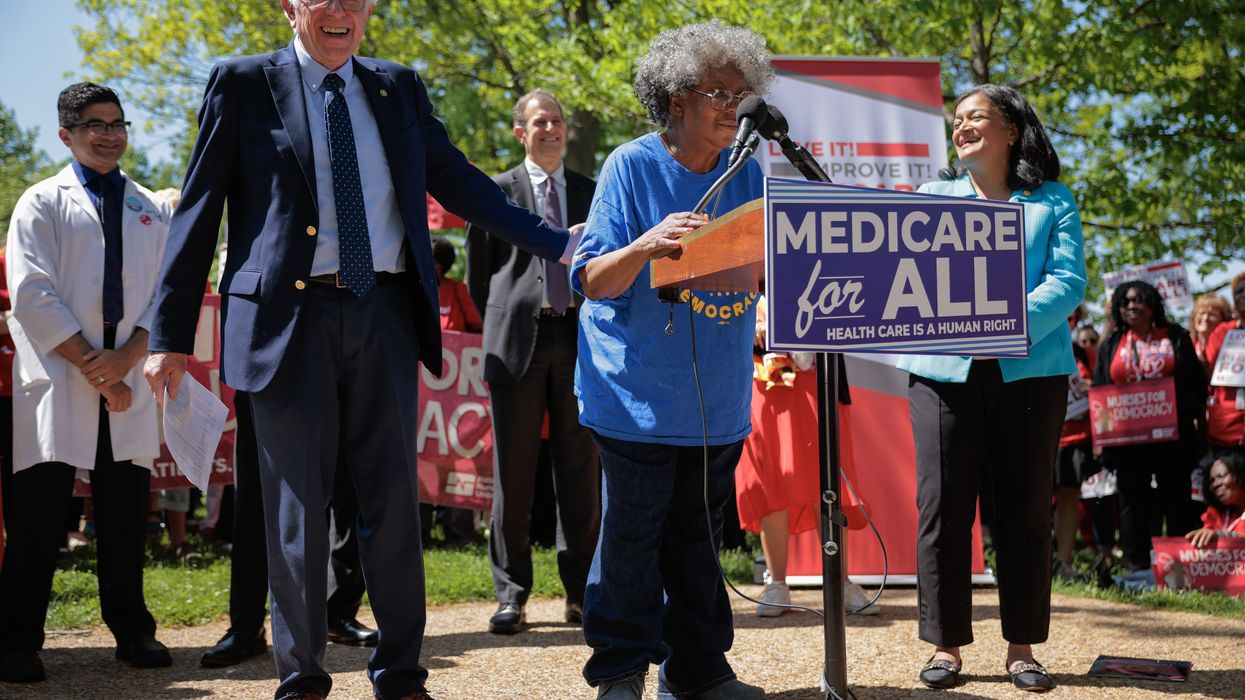
"Do not tell me we cannot afford Medicare for All," said Sen. Bernie Sanders. "What we cannot afford is a broken healthcare system based on greed."
Previous research has shown that shifting the United States to a Medicare for All system could save roughly 68,000 lives and $650 billion per year, but a new study by experts at Yale University suggests the savings would likely be even greater on both fronts.
In a Tuesday statement, Sen. Bernie Sanders (I-Vt.), lead sponsor of the Medicare for All Act in the Senate, highlighted the findings, published recently on medRxiv, a server for preprints, or research that hasn't yet been peer reviewed.
"The US spends more on healthcare than any other nation, yet tens of millions of Americans are uninsured or underinsured, and coverage retractions enacted in 2025 are widening these gaps," the five experts wrote.
Upward of 15 million Americans could lose health insurance coverage over the next decade because of Medicaid cuts in President Donald Trump's so-called One Big Beautiful Bill Act and the Republican-led Congress' failure to extend Affordable Care Act subsidies that expired at the end of last year.
"The misalignment between the for-profit insurance architecture and optimal patient care, together with the inefficiencies of a fragmented system, contributes to both unnecessary costs and preventable mortality," according to the Yale researchers. "We update our previous analyses with the most recent data to project the economic benefits and the number of lives saved that would be achieved by single-payer universal coverage, as proposed in the Medicare for All Act."
"We estimate that such a system would reduce national health expenditure by $1,041 billion annually," they explained. "Sources of savings include reductions in administrative overhead, pharmaceutical prices, fraudulent billing, and avoidable emergency care. Combined with the reversal of recent retractions, universal coverage would save over 114,000 lives annually."
Specifically, as Sanders' office detailed in a statement, Americans would save:
Welcoming the findings, the senator declared that "this study confirms what we have known for years: Medicare for All saves lives and saves money. In fact, guaranteeing healthcare as a human right through a Medicare for All, single-payer system would cost $1 trillion less than our current dysfunctional system."
"It would save working families thousands of dollars a year. And it would prevent over 100,000 Americans from dying unnecessarily each and every year because they cannot make it to a doctor in time," he stressed. "At a time when 15 million Americans are being thrown off the healthcare they have and 20 million Americans have already seen their premiums double, on average, as a result of Trump's so-called 'Big Beautiful Bill,' we need Medicare for All now more than ever."
"The time is now to end the greed of the big insurance and drug companies and pass Medicare for All," he added.
The research comes as Americans face high prices for not only healthcare but also food, gasoline, housing, and more under President Donald Trump and the GOP-led Congress. It also comes amid a renewed push by hundreds of advocacy groups that support Medicare for All and a wave of victories by progressive candidates who support the policy.
Among them is former Detroit health official Abdul El-Sayed, who won the Democratic primary for US Senate in Michigan last week having campaigned on a promise to prioritize "money out of politics, money in your pocket, and Medicare for All." His victory followed those of various other candidates, from Colorado to New York and Pennsylvania.
However, it's not just elected Republicans standing the way of a transition to universal healthcare in the United States. As a Monday analysis from the investigative outlet Sludge shows, the health insurance industry is pouring money into Third Way, a think tank reportedly preparing to spend $15 million combating the rise of candidates who support progressive policies including Medicare for All.
The latest storm continues a trend of "unprecedented battering" by Category 4s and 5s for US territories.
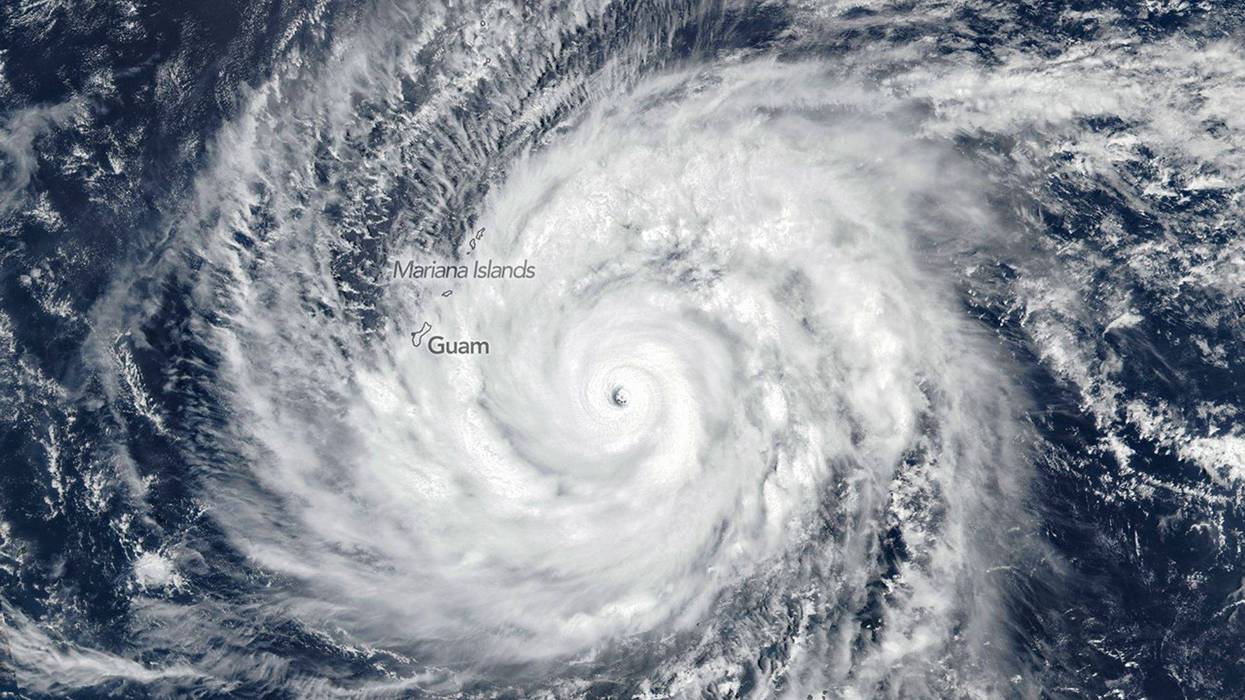
Super Typhoon Sinlaku slammed into the Northern Mariana Islands on Tuesday, causing severe damage to the US-controlled territories that are home to roughly 50,000 people.
According to a Tuesday report from The Associated Press, the typhoon that struck the islands of Tinian and Saipan was the strongest storm recorded so far this year, delivering sustained winds of up to 150 miles per hour.
Saipan Mayor Ramon "RB" Jose Blas Camacho told the AP he was concerned about how the storm's severity was hindering local rescue operations.
"It’s so difficult for us to respond with this heavy rain, heavy wind to rescue people," he said. "Objects are just flying left and right.”
Marko Korosec, a storm chaser and weather forecaster, analyzed satellite images of the storm and predicted the Northern Mariana Islands would be hit with "violent, destructive winds, catastrophic storm surges, giant waves, and flooding rain."
"The damage," he wrote, "will be extreme."
An analysis of the storm written by hurricane scientist Jeff Masters and published by Yale Climate Connections projected that "damage from Sinlaku will be severe on both islands."
Masters also said Sinlaku was just the latest in what he described as an "unprecedented" number of Category 4 and Category 5 typhoons over the last decade, which he attributed to "a combination of natural variability and climate change."
"Beginning in 2017, the US has gotten absolutely hammered by high-intensity Category 4 and 5 hurricanes," Masters explained. "Seven have hit the continental US, one has hit Puerto Rico, and now two have hit the Northern Mariana Islands. That's as many US Cat 4 and Cat 5 landfalls as had occurred in the prior 57 years."
Later in his analysis, Masters pointed out that 10 of the 13 strongest tropical typhoons to make landfall in the last 80 years have occurred since 2006.
A Washington Post analysis of the typhoon published Tuesday noted that it's "unusually early" for a superstorm of this caliber to form in the Pacific, warning it "may be a sign of what's to come" this season.
"The season is expected to be anomalously active because of a burgeoning El Niño, which induces a warming of water temperatures," explained the Post. "That helps air to rise, generating more, and stronger, storms."
The Post added that Sinlaku is "the last in rare set of triplet cyclones that formed this month," which it said is an "unusual pattern" that is "also contributing to a burst of winds that is expected to greatly boost the odds of a super El Niño later this year, pushing warm water west-to-east across the Pacific."
"Milquetoast calls for better identification, bodycams, and training fall far short of what is required of you to meet this moment."
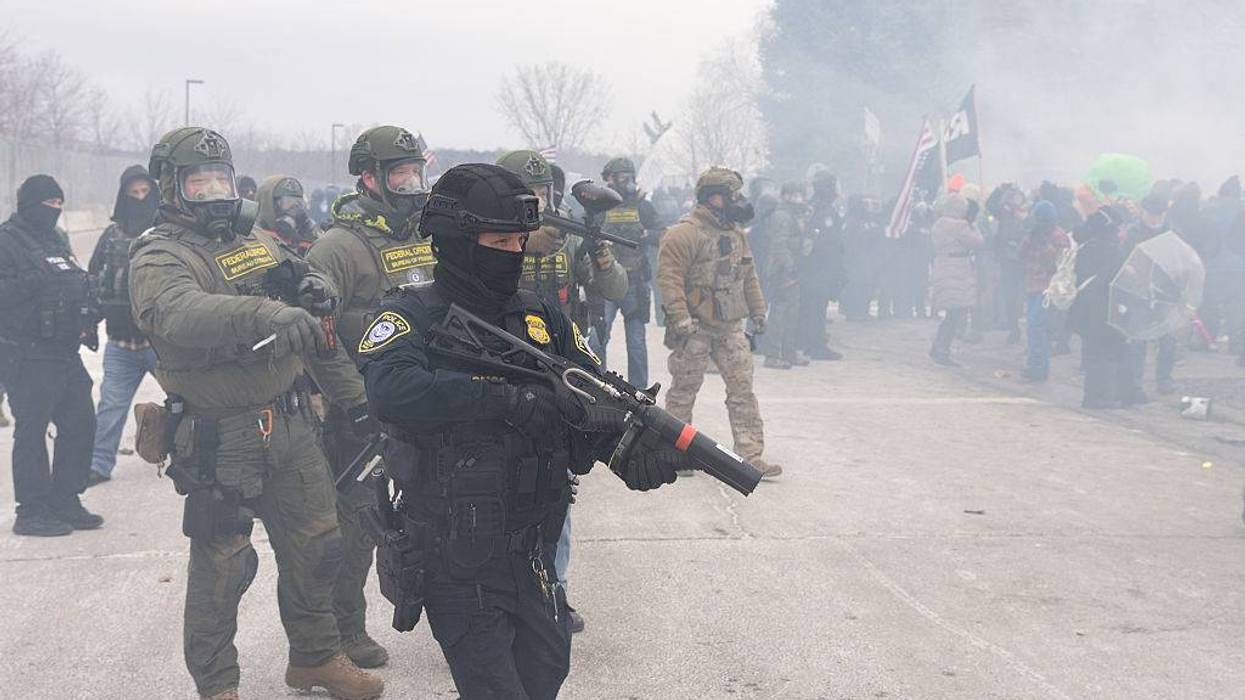
A broad coalition of organizations is calling on the US Congress to block funding for the mass surveillance programs being used by federal immigration enforcement officials.
In a letter sent to members of Congress, the groups decry US Immigration and Customs Enforcement (ICE) agents for "leveraging a multi-billion dollar budget to terrorize our communities and build a surveillance panopticon" with no accountability from elected officials.
The letter then singles out several mass surveillance projects being carried out under the US Department of Homeland Security (DHS) that it says are worthy of defunding, including "building databases of biometrics, sensitive personal data, and daily movements of not only immigrants, but everybody in the US"; "purchasing technology to surveil all the phones in a neighborhood without a warrant"; and "recklessly relying on facial recognition technology that is banned in some states, and misusing that data to intimidate protesters and witnesses."
The groups call on Congress to completely defund ICE or, if that is not politically feasible, to "severely restrict what ICE can spend money on, including a complete moratorium on the purchase and use of surveillance tech" such as facial recognition and license plate readers.
"We urge you to do everything within your power in order to block ICE’s reign of terror in our communities and halt the build out of surveillance tech infrastructure that will make it impossible for everyday people to do anything at all without Big Brother watching," the groups conclude. "Milquetoast calls for better identification, bodycams, and training fall far short of what is required of you to meet this moment."
Signatories of the letter include the Yale Privacy Lab, digital rights organization Fight for the Future, and several local chapters of progressive political organizing group Indivisible.
ICE's big investments in surveillance technology were documented in an Electronic Frontier Foundation (EFF) report published earlier this month, which found ICE "is going on a shopping spree, creating one of the largest, most comprehensive domestic surveillance machines in history."
The EFF report highlighted the role played by Cellebrite, a company that helps ICE unlock protesters' phones and "take a complete image of all the data on the phone, including apps, location history, photos, notes, call records, text messages, and even Signal and WhatsApp messages."
This is particularly important, the report noted, because the number of phones searched by ICE and other agencies has been steadily increasing, hitting a record high last year.
ICE also has a contract with Paragon, the company behind the spyware Graphite that "is able to harvest messages from multiple different encrypted chat apps such as Signal and WhatsApp without the user ever knowing."

A former FEMA official said that the agency "can't do disaster response and recovery without" the employees being terminated by the Trump administration.
The Trump administration this week made abrupt cuts to the top federal disaster response agency, even as US communities face increased threats from natural disasters caused by the global climate crisis.
Independent journalist Marisa Kabas reported on Wednesday that the Federal Emergency Management Agency (FEMA) "has begun issuing termination notices" to staff at the agency's Cadre of On-Call Response and Recovery (CORE) that are effective as of January 2.
A FEMA staffer who spoke with Kabas described the terminations as "The New Year's Eve Massacre," and explained that "the driving force behind all CORE employees is supporting and enacting the mission of preparing for, responding to, and recovering from disasters."
A Thursday report from CNN added some additional details to Kabas' reporting, including that the decision to issue the layoffs was made by Acting Administrator Karen Evans, who was appointed to the role after former Acting Administrator David Richardson resigned in November.
One former FEMA official bluntly told CNN that the agency "can't do disaster response and recovery without CORE employees" that are being laid off by the administration.
The former FEMA official added that regional agency offices throughout the US "are almost entirely CORE staff, so the first FEMA people who are usually onsite won’t be there," which will mean that "states are on their own" when it comes to disaster response.
CNN also reported that there is anxiety among remaining FEMA staffers that these cuts could just be the start "of a larger effort" by Department of Homeland Security Secretary Kristi Noem "to shrink FEMA, potentially axing thousands of workers in the coming months who deploy during hurricanes, wildfires and other national emergencies."
President Donald Trump has been targeting FEMA for potential termination for nearly a year now, and he said shortly after being inaugurated last January that a goal in his second term would be "fundamentally reforming and overhauling FEMA or maybe getting rid of FEMA," while emphasizing that individual states should bear the cost of responding to natural disasters.
“I think, frankly, FEMA’s not good,” the president said. “I think when you have a problem like this, I think you want to go, and whether it’s a Democrat or Republican governor, you want to use your state to fix it and not waste time calling FEMA.”
The Trump administration's deep cuts to FEMA come as the intensity of natural disasters is only projected to increase thanks to climate change.
According to a report published on Tuesday by the Yale School of the Environment, 2025 was the second hottest on record and was only surpassed by the previous year.
"The last three years have been, by a wide margin, the hottest ever recorded," stressed the report. "Each of the last three years has measured more than 1.5°C warmer than preindustrial times, putting the world at least temporarily in breach of an international goal to limit warming below that level."
"In the wealthiest country in the world, we should be guaranteeing healthcare to all as a human right, not taking healthcare away from millions of seniors and working families to pay for tax breaks for billionaires."
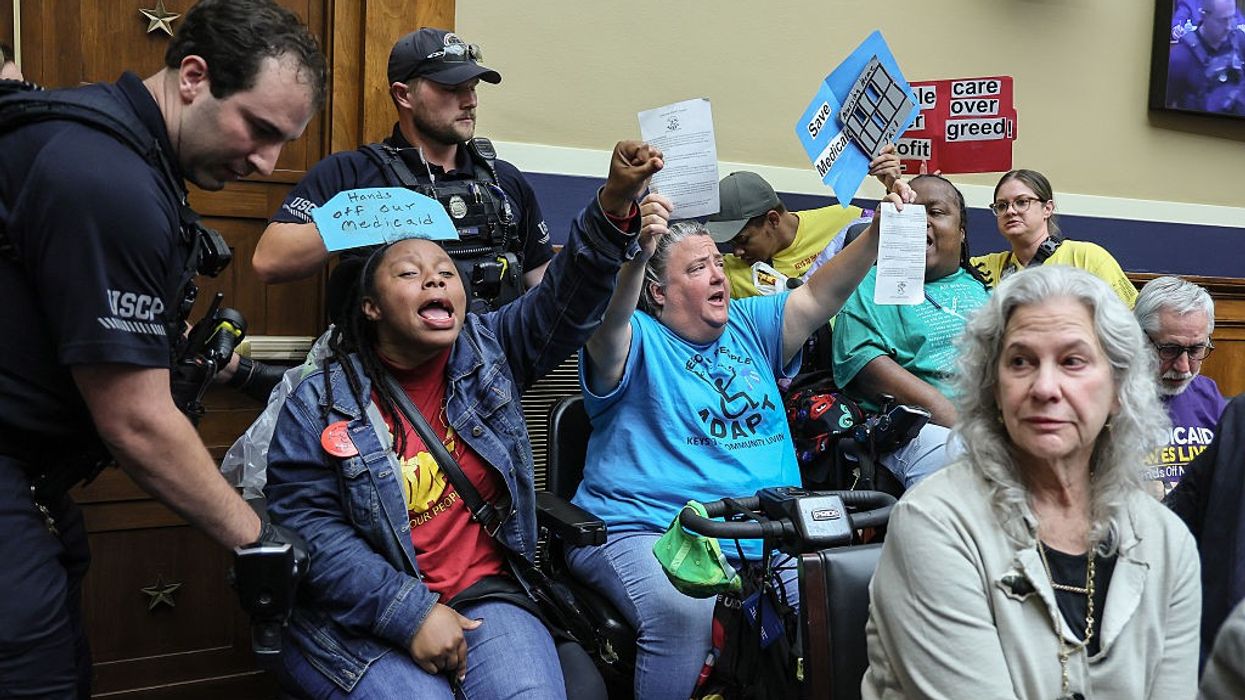
An analysis released Tuesday by researchers at the University of Pennsylvania and Yale estimates that more than 51,000 additional people across the United States would die unnecessarily each year if the Republican Party's budget reconciliation package becomes law.
The analysis, requested by Sens. Bernie Sanders (I-Vt.) and Ron Wyden (D-Ore.), focuses specifically on the Trump-GOP bill's attacks on healthcare, examining the deadly consequences of throwing millions of people off Medicaid and barring implementation of a Biden-era rule requiring nursing homes that receive federal funding to meet minimum staffing levels.
The researchers project:
The analysis also finds that the GOP bill's failure to extend Affordable Care Act tax credits that are set to lapse at the end of the year would cause an additional 8,811 deaths per year, bringing the total to more than 51,300.
"Let's be clear. The Republican reconciliation bill, which makes massive cuts to Medicaid in order to pay for huge tax breaks for billionaires, is not just bad public policy. It is not just immoral. It is a death sentence for struggling Americans," Sanders said in response to the findings. "That's not Bernie Sanders talking. That is precisely what experts at Yale and the University of Pennsylvania have found."
"In other words, when you throw 13.7 million Americans off the healthcare they have as the CBO has estimated, when you increase the cost of prescription drugs for low-income seniors, and when you make nursing homes throughout America less safe, not only will some of the most vulnerable people throughout our country suffer, but tens of thousands will die," Sanders added. "We cannot allow that to happen."
Warren Gunnels, Sanders' staff director, contrasted the projected consequences of the Trump-GOP healthcare agenda with those of Medicare for All, which previous research suggests would prevent 68,000 needless deaths per year while saving the country hundreds of billions of dollars annually on healthcare costs.
Sanders argued Tuesday that "in the wealthiest country in the world, we should be guaranteeing healthcare to all as a human right, not taking healthcare away from millions of seniors and working families to pay for tax breaks for billionaires."
"As the ranking member of the Health, Education, Labor, and Pensions Committee, I will be doing everything that I can to see that this disastrous bill is defeated," said Sanders.
The new research was published as the Senate weighs the House-passed GOP reconciliation package, which would slash Medicaid by more than $700 billion over the next decade and enact deep cuts to federal nutrition assistance and other programs—all to help fund massive tax breaks for the wealthiest Americans.
Late last week, Sen. Joni Ernst (R-Iowa) sparked outrage with a sarcastic response to a constituent's warning that "people will die" from the GOP's proposed Medicaid cuts—a fear borne out by the new analysis from Yale and the University of Pennsylvania.
Over the weekend, Ernst followed up her remark with a non-apology that, to critics, underscored the cruelty of the Trump-GOP agenda.
"If Republicans get their way, families will be forced to choose between groceries or seeing a doctor, sick children will be turned away from care, and lives will be lost—and Ernst and Republicans don't seem to care," said Brad Woodhouse, president of the advocacy group Protect Our Care. "That's because the Republican healthcare agenda isn't about protecting families or lowering costs, it's about slashing millions' healthcare in order to bankroll massive tax breaks for the wealthiest individuals and companies."

The remarks by the Israeli national security minister, who is visiting the United States, came ahead of Israel's bombing of a food distribution center in central Gaza that killed three people, including at least one child.
An Israeli drone strike on a food distribution center in central Gaza that killed three Palestinians on Thursday underscored remarks earlier in the week by Itamar Ben-Gvir, Israel's national security minister, who said that Republican leaders told him during a meeting at U.S. President Donald Trump's Mar-a-Lago resort that they agree with his policy of bombing humanitarian aid depots in the embattled enclave.
Eyewitnesses said that an Israeli drone bombed a food distribution point in the town of al-Zawayda, killing three people, including at least one child, and wounding others. The bombing came amid a crippling Israeli blockade of Gaza that has fueled widespread starvation and sickness, with the United Nations relief coordination office warning earlier this week that the humanitarian crisis in Gaza has reached "unprecedented levels."
The Palestinian news outlet Wafa reported that Israeli airstrikes killed 52 civilians across the Gaza Strip since dawn Thursday, bringing the death toll from 566 days of Israel's U.S.-backed genocidal assault to at least 51,355, with more than 117,000 others injured, over 14,000 people missing and feared dead and buried beneath rubble, and millions more forcibly displaced, starved, or sickened.
Thursday's attacks came after Ben-Gvir, leader of the far-right Jewish Power party, said that "senior Republican Party officials" whom he met Tuesday at Mar-a-Lago in Palm Beach, Florida "expressed support for my very clear position" that Gaza "food and aid depots should be bombed in order to create military and political pressure to bring our hostages home safely."
More than 250 Israeli and other hostages were taken during the Hamas-led October 7, 2023 attack on Israel. It is believed that 24 hostages are still alive in Gaza. Israeli Prime Minister Benjamin Netanyahu, a fugitive from the International Criminal Court, has been widely accused of trying to scupper cease-fire and hostage release efforts in order to prolong the war and delay his criminal corruption trial.
On Wednesday, Ben-Gvir was invited by Shabtai, a secretive society co-founded in 1996 by Yale University graduate students including Cory Booker—who is now a Democratic U.S. senator—to speak at the elite Connecticut school. After his speech, Ben-Gvir waved and flashed the "victory" sign to pro-Palestinian protesters gathered outside the event, prompting some to throw water bottles at him.
Following a Tuesday night protest which it did not organize, the Yale chapter of Students for Justice in Palestine was stripped of its official club status by university officials, who cited concerns over "disturbing antisemitic conduct at the gathering"—without providing any evidence to support their claim.
Ben-Gvir continued his U.S. tour on Thursday, with planned visits to Jewish neighborhoods in New York City's Brooklyn borough.
Tuesday's remarks were not the first time Ben-Gvir—who was convicted in 2007 by an Israeli court of incitement to racism and supporting the Kahanist militant group Kach—has endorsed war crimes against Palestinians.
"Let's bomb the food reserves in Gaza, let's bomb all the power lines in Gaza. Why are there lights in Gaza? There must not be a single light. Stop the electricity," he said last month.
In January, Ben-Gvir resigned from Netanyahu's government in protest of its cease-fire and hostage release agreement with Hamas. He rejoined the government after it renewed its genocidal assault on Gaza last month.
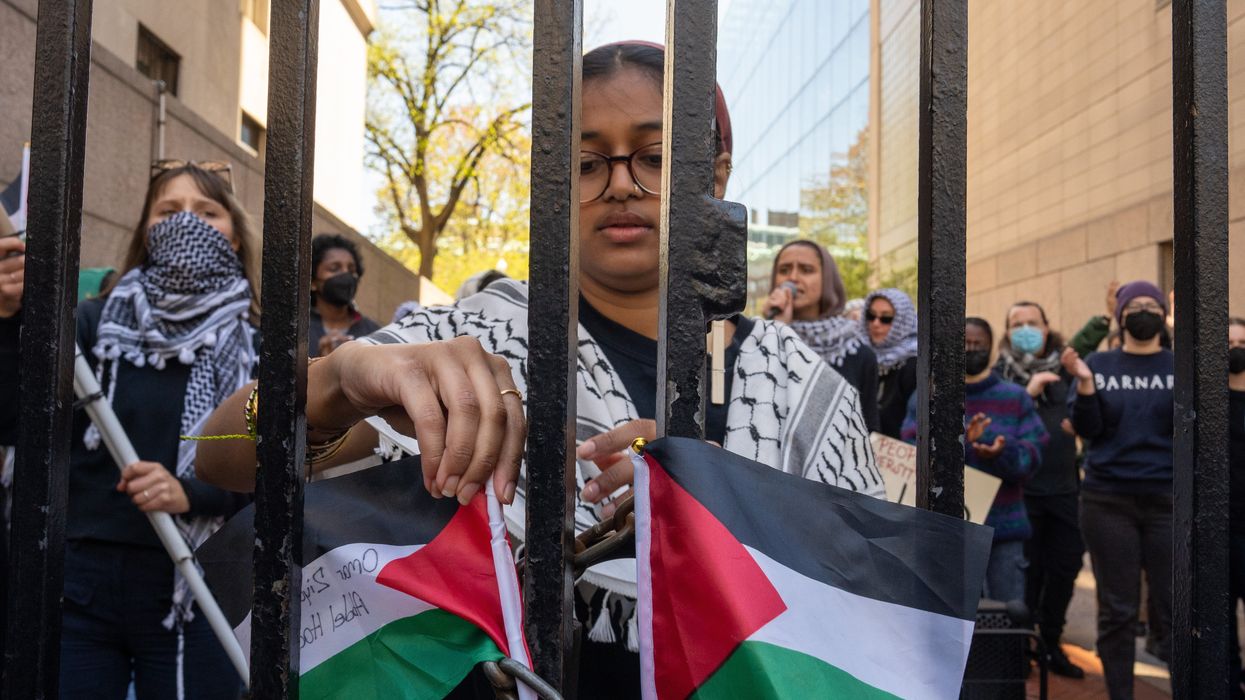
"The right to protest is necessary for every struggle, and the direct attack on this right is an attack on labor as well," said the labor groups. "An injury to one is an injury to all."
More than four dozen labor unions across numerous industries on Tuesday signed a letter expressing solidarity with students who have been suspended and arrested in recent days for protesting at Columbia University, including members of the on-campus labor group Student Workers of Columbia.
Unionized student workers in SWC-UAW 2710 were among the hundreds of picketers who have been protecting the Gaza Solidarity Encampment, which students set up at Columbia on April 17 to pressure administrators to divest from weapons manufacturers, tech companies, and other entities that benefit from Israel's apartheid policies in the occupied Palestinian territories.
The Ivy League institution, protesters say, will remain complicit in Israel's bombardment and blockade on Gaza, the killing of at least 34,183 Palestinians in the enclave since October, and the intentional starvation of dozens of people, until it entirely divests from Israel.
"As workers, we stand in solidarity with our union siblings in SWC-UAW 2710 who were arrested and face suspension," said the unions, including the Mother Jones Staff Union, Irvine Faculty Association, and Cleveland Jobs With Justice. "We call for their and their classmates' immediate reinstatement and for Columbia to drop all charges against them, both legal and academic. We deplore [Columbia president Minouche Shafik]'s actions and call for Columbia to immediately end the repression of protest."
The protests at Columbia—where more than 100 students were suspended, arrested for trespassing, and in some cases, evicted from their housing—have galvanized college students and faculty members at a growing number of universities in recent days.
Campus groups at the University of Minnesota and the University of Pittsburgh both announced early Tuesday that they were setting up their own encampments in solidarity with Columbia students and victims of the Israel Defense Forces' relentless attacks on Gaza, which the International Court of Justice said in January was "plausibly" a genocide.
After police arrested students at the University of Minnesota Tuesday afternoon and broke up the encampment, thousands of members of the school community rallied to demand that the university divest from all arms manufacturers.
Encampments were also erected Monday at University of California, Berkeley and University of Michigan.
Jessica Christian, a photojournalist for the San Francisco Chronicle, reported that students were stopping to "ask what supplies the campers need as they walk by to class" at Berkeley, where roughly 50 tents were set up on Tuesday.
On Monday night, dozens of students at Yale University and New York University were arrested for protesting, setting up encampments, and "disorderly conduct."
The arrests at Columbia last week have not stopped students and educators from speaking out against the administration. A new encampment was set up last Friday and hundreds of faculty members staged a walkout Monday in support of the students.
In their letter, the unions on Tuesday warned that "the repression and criminalization of activists, students, professors, and academic workers across the country are violations of our elementary rights to free speech and protest."
"The right to protest is necessary for every struggle, and the direct attack on this right is an attack on labor as well," said the unions, "An injury to one is an injury to all—if the Columbia students can be repressed for protesting, Columbia workers and all workers could be too. Workers stand in full solidarity with this student movement."

While expressing gratitude for solidarity actions, Congresswoman Ilhan Omar—whose daughter was suspended—said that "this about the genocide in Gaza and the attention has to remain on that."
Over 34,000 Palestinians in Gaza have been killed by U.S.-backed Israeli troops, and Columbia University students have been suspended and arrested by New York Police Department officers in recent days for protesting the slaughter—which led to a walkout by the Ivy League institution's faculty on Monday.
The Guardian reported that "hundreds of members of the teaching cohort at Columbia walked out in solidarity with the students who were arrested" while "students put protest tents back up in the middle of campus on Monday after they were torn down last week when more than 100 arrests were made."
Yonah Lieberman, co-founder of IfNotNow, a Jewish-led U.S. group that organizes against Israel's apartheid, declared: "Solidarity with these faculty members. Shame on establishment politicians and agitators who are smearing the anti-war protest at Columbia as anything other than what it is: a courageous stand for freedom and peace."
Naureen Akhter, a founding member of the New York-based group Muslims for Progress, said: "Thank you to the professors who stood in solidarity with student protestors, who didn't give into instigators who are fanning flames of hate and division. Remember the calls are for transparency, divestment, and amnesty for students!"
Congresswoman Ilhan Omar (D-Minn.)—a critic of Israel's war on Gaza whose own daughter, Isra Hirsi, was suspended from Columbia's Barnard College last week for "standing in solidarity with Palestinians facing a genocide," as the 21-year-old junior put it—also noted the faculty walkout and "nationwide Gaza solidarity movement."
"This is more than the students hoped for and I am glad to see this type of solidarity," said Omar. "But to be clear, this about the genocide in Gaza and the attention has to remain on that."
The walkout in New York City followed 54 Columbia Law School professors sending a letter to administrators that states, "While we as a faculty disagree about the relevant political issues and express no opinion on the merits of the protest, we are writing to urge respect for basic rule-of-law values that ought to govern our university."
"Procedural irregularity, a lack of transparency about the university's decision-making, and the extraordinary involvement of the NYPD all threaten the university's legitimacy within its own community and beyond its gates," they wrote. "We urge the university to conform student discipline to clear and well-established procedures that respect the rule of law."
In a statement early Monday, several hours before the walkout, Columbia University president Minouche Shafik—who last week enabled NYPD arrests of students at the encampment—announced in her first statement since the sweep that all classes would be virtual "to deescalate the rancor and give us all a chance to consider next steps."
"Faculty and staff who can work remotely should do so; essential personnel should report to work according to university policy. Our preference is that students who do not live on campus will not come to campus," Shafik said. "During the coming days, a working group of deans, university administrators, and faculty members will try to bring this crisis to a resolution."
The national group Jewish Voice for Peace (JVP) on Monday accused Columbia of creating "a climate of repression and harm for students peacefully protesting for an end to the Israeli genocide against Palestinians in Gaza" over the past six months.
"Columbia University has actively created a hostile environment for students who are Palestinian or who support Palestinian freedom. Additionally, the administration's actions have made the campus much less safe for Jewish students," JVP said.
According to JVP:
Instead of listening to the calls of Columbia and Barnard students to divest from the genocide perpetrated by the Israeli government, the university has called in the NYPD to arrest students, suspended them, and even expelled them. At present 85 students, 15 of whom are Jewish, are suspended.
Yesterday's statement by the White House, like the administrators of Columbia University, dangerously and inaccurately presumes that all Jewish students support the Israeli government's genocide of Palestinians. This assumption is actively harming Palestinian and Jewish students.
The administration has not only harassed Jewish students and failed to ensure their safety and well-being, it has also obstructed their religious observances during Shabbat and prevented them from accessing their Jewish community on the eve of Passover.
While President Joe Biden's Sunday statement was officially about Passover—a Jewish holiday that begins at sundown on Monday—and not the protests at Columbia and other campuses across the country, it was widely received as a response to the latter.
Biden said in part that "we must speak out against the alarming surge of antisemitism—in our schools, communities, and online. Silence is complicity. Even in recent days, we've seen harassment and calls for violence against Jews. This blatant antisemitism is reprehensible and dangerous—and it has absolutely no place on college campuses, or anywhere in our country."
Jonathan Ben-Menachem, a Ph.D. student at the university, told CNN that "Columbia students organizing in solidarity with Palestine—including Jewish students—have faced harassment, doxxing, and now arrest by the NYPD. These are the main threats to the safety of Jewish Columbia students."
"On the other hand, student protesters have led interfaith joint prayers for several days now, and Passover Seder will be held at the Gaza solidarity encampment tomorrow," he added. "Saying that student protesters are a threat to Jewish students is a dangerous smear."
Columbia Students for Justice in Palestine said in a lengthy statement that "we are student activists at Columbia calling for divestment from genocide. We are frustrated by media distractions focusing on inflammatory individuals who do not represent us. At universities across the nation, our movement is united in valuing every human life."
"As a diverse group united by love and justice, we demand our voices be heard against the mass slaughter of Palestinians in Gaza," the statement continues. "We've been horrified each day, watching children crying over the bodies of their slain parents, families without food to eat, and doctors operating without anesthesia. Our university is complicit in this violence and this is why we protest."
The Columbia Spectator reported Monday that Columbia College passed a divestment referendum that "asked whether the university should divest financially from Israel, cancel the Tel Aviv Global Center, and end Columbia's dual degree program with Tel Aviv University," with respective votes of 76.55%, 68.36%, and 65.62%. However, a statement from a university spokesperson signaled the referendum would not lead to any shift in campus policies.
Beyond Columbia, there are ongoing demonstrations at institutions including the Massachusetts Institute of Technology, New York University, the University of Michigan, and Yale University, another Ivy League school, where at least 47 peaceful student protesters were arrested on Monday.
Those arrested were "charged with class A misdemeanors, which is the highest class of misdemeanors in Connecticut—the same degree applies to third-degree assault," according to the Yale Daily News. Citing a university spokesperson, the student newspaper added that they "will be referred for Yale disciplinary action—which could include reprimand, probation, or suspension."
Pushing back against some administrators' statements, journalist Thomas Birmingham, who was with the Yale protesters overnight, said on social media: "Here's some things I saw... 1. Repeated and loud calls to remain peaceful. 2. Students locking arms, teaching Arabic and Hebrew, and passing around pizza and water. 3. Lots of singing."
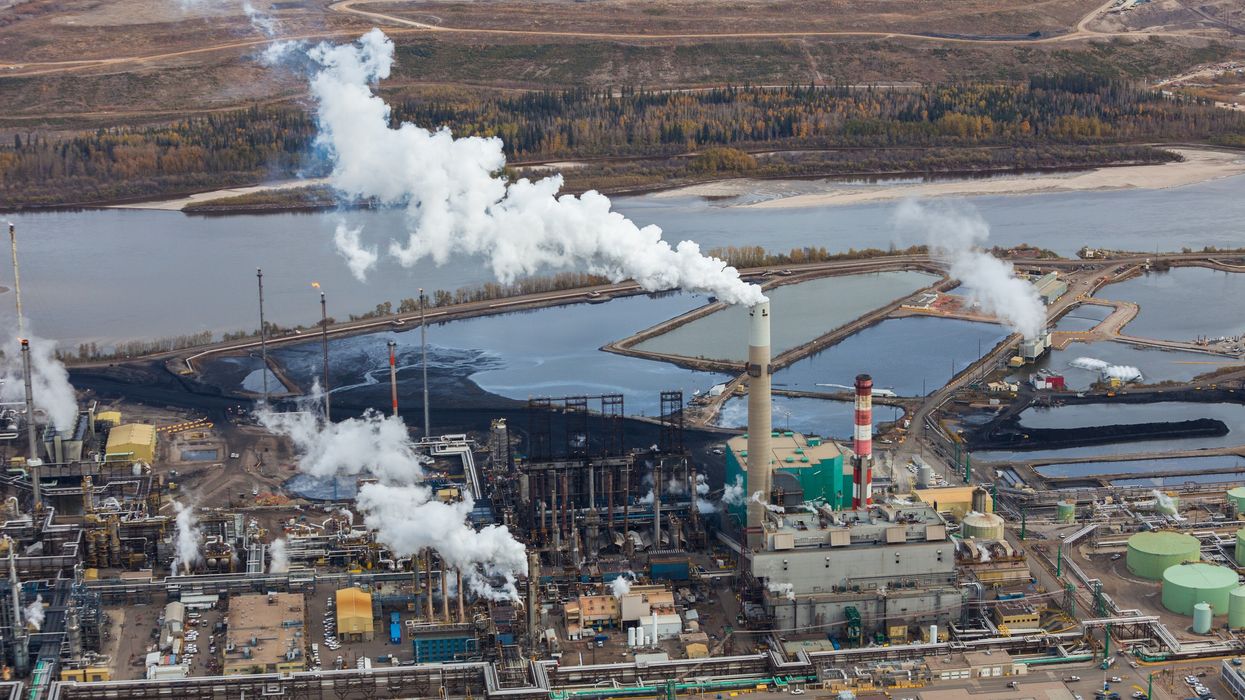
"In quantifying the astonishing and largely unreported levels," said a Greenpeace campaigner, "these scientists have validated what downwind Indigenous communities have been saying for decades."
Aircraft measurements of pollutants over the Athabasca tar sands in Alberta, Canada show levels exceeding industry reports by 1,900% to more than 6,300%, scientists revealed Thursday, underscoring the need for humanity to rapidly phase out fossil fuels.
While the Canadian government requires air quality monitoring around oil sands operations, industry figures focus on certain compounds. For this research, published Thursday in the journal Science, experts from Yale University and Environment and Climate Change Canada, a department of the Canadian government, accounted for a wider range of emissions.
After collecting data from 30 flights around 17 tar sands operations in 2018, "what we saw were very large emissions of total gas-phase organic carbon from these facilities," said co-author and Yale professor Drew Gentner in a statement. "On average, the majority of the total gas-phase organic carbon was from often overlooked compounds, which are typically outside of the scope of routine monitoring."
"This report backs up what the communities living in these areas experience—it is so bad they cannot open their windows because it hurts their lungs to breathe—especially at night."
Co-author John Liggio of Environment and Climate Change Canada noted that "the magnitude of the observed emissions from oil sands operations was larger than expected, considering that it was roughly equivalent to the sum of all other anthropogenic sources across Canada when including all the motor vehicles, all the solvents, all the other oil and gas sources, and everything else reported to the inventory."
Nadine Borduas-Dedekind, a University of British Columbia atmospheric chemist who has worked with Liggio but was not involved with this study, told Nature that "I'm concerned by how big this number is."
"You want to be measuring all this carbon. For air quality, for health, but also for climate," she said, explaining that some of the molecules are oxidized to planet-heating carbon dioxide.
Thanks to the tar sands deposits across northern Alberta, which are estimated to contain 1.7-2.5 trillion barrels of oil, Canada trails only Saudi Arabia and Venezuela in terms of total known reserves.
As Inside Climate News detailed Thursday:
The deposits do not technically hold crude oil, but instead a heavier hydrocarbon called bitumen, which must be heated and treated in order to form a liquid that can be piped and refined like oil. That process requires sprawling industrial operations of open pit mines, ever-growing waste ponds, and refinery-like "upgraders." The waste ponds have leached toxic chemicals into groundwater, and a heavy, sulfurous stench often settles over the region. The mines have stripped away an area larger than New York City, lands that had long been occupied by people from several Indigenous First Nations. One of those First Nations, Fort McKay, is now surrounded by mines.
Jean L'Hommecourt, an enrolled member of the Fort McKay First Nation, told Inside Climate News she wasn't shocked by the new findings.
"I was just like, eh, I knew all along," said L'Hommecourt, who has worked to clean up nearby operations. "We feel the physical effects here."
Jesse Cardinal of the Indigenous-led group Keepers of the Water similarly said to The Guardian, "We are told this is all within the limits and OK but this report backs up what the communities living in these areas experience—it is so bad they cannot open their windows because it hurts their lungs to breathe—especially at night."
Asked to comment on the research, Keith Stewart, a senior energy strategist for Greenpeace Canada, wrote in an email to The Independent, "I suppose 'Holy s***' isn't printable."
"In quantifying the astonishing and largely unreported levels of health-damaging air pollution coming out of oil sands operations, these scientists have validated what downwind Indigenous communities have been saying for decades," Stewart added. "This is making people sick, so our governments can and should require these companies to use some of their record-breaking profits to clean up the mess they've made."