SUBSCRIBE TO OUR FREE NEWSLETTER
Daily news & progressive opinion—funded by the people, not the corporations—delivered straight to your inbox.
5
#000000
#FFFFFF
To donate by check, phone, or other method, see our More Ways to Give page.
Daily news & progressive opinion—funded by the people, not the corporations—delivered straight to your inbox.
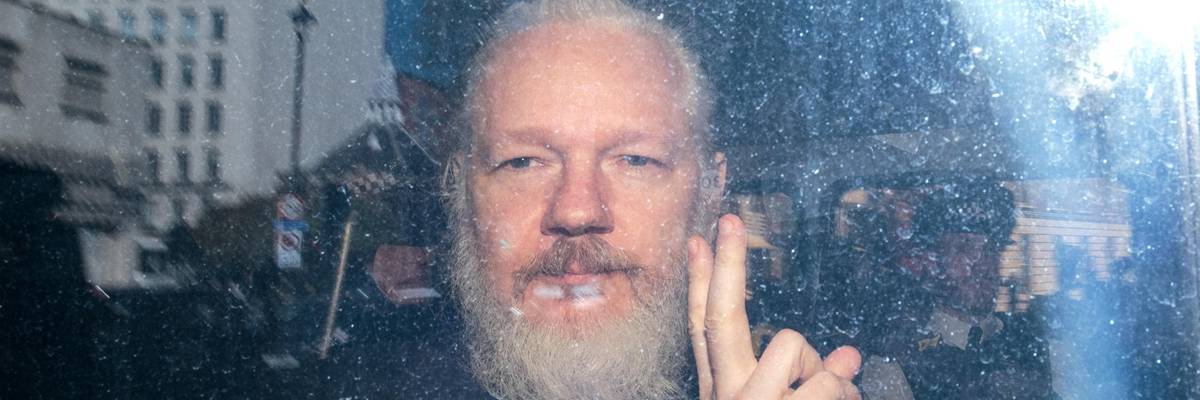
"Any prosecution by the United States of Mr. Assange for Wikileaks' publishing operations would be unprecedented and unconstitutional." (Photo by Jack Taylor/Getty Images)
On Thursday, WikiLeaks founder Julian Assange was arrested by the UK police inside the Ecuadorian embassy in London, where he was granted political asylum in 2012. This termination of asylum by Ecuador in violation of international law comes a week after WikiLeaks warned the public it had received information from two high level Ecuadorian government sources about a US-backed plan for the Ecuadorian government to expel Assange from its embassy.
Assange's lawyer confirmed he has been arrested under a US extradition warrant for conspiracy to publish classified information with whistleblower Chelsea Manning revealing government war crimes in 2010. Specifically, this relates to WikiLeaks' publication of the collateral murder video, documents concerning the wars in Afghanistan and Iraq and the US Diplomatic Cables.
This prosecution of Assange is recognized by experts on free speech rights as an attack on freedom of the media everywhere.
In making a statement outside Westminster Magistrate's Court in London, the editor-in-chief of WikiLeaks Kristinn Hrafnsson told reporters that Assange's arrest marks a "dark day for journalism". This prosecution of Assange is recognized by experts on free speech rights as an attack on freedom of the media everywhere.
James Goodale, First Amendment lawyer and former general counsel of the New York Times, said this about the US government's efforts to charge a journalist who is not American and did not publish in the US, possibly with espionage: "If the prosecution of Julian Assange succeeds, investigative reporting based on classified information will be given a near death blow." David Kaye, UN Special Rapporteur on freedom of opinion and expression stated that "prosecuting Assange would be dangerously problematic from the perspective of press freedom".
Responding to this latest development on the WikiLeaks founder, American Civil Liberties Union commented, "any prosecution by the United States of Mr. Assange for Wikileaks' publishing operations would be unprecedented and unconstitutional, and would open the door to criminal investigations of other news organizations." Freedom of Press Foundation also issued a statement, alerting that the charge against Assange is a serious threat to press freedom" and noted that it "should be vigorously protested by all those who care about the First Amendment."
Just a day before his arrest, WikiLeaks held a press conference with the attorney representing Assange. They exposed the Ecuadorian government's spying operation against Assange, whose asylum and citizenship rights the country has an obligation to protect.
Ecuador's surveillance inside the London embassy, conducted in cooperation with the US had constituted a total invasion of privacy, and included the recording of Assange's meetings with his lawyers and doctor. Assange's lawyer Jennifer Robinson described this as a severe breach of lawyer-client privilege, which had undermined the ability of his legal team to properly defend their client.
The seriousness of Ecuador's treatment of its own citizen and asylee was recognized by the UN. The UN Special Rapporteur on the right to privacy, Joe Cannataci and Independent UN Special Rapporteur on Torture and Other Cruel, Inhuman or Degrading Treatment or Punishment, Nils Melzer, who warned last Friday that Assange's arrest may be a "serious human rights violation," had planned to meet Assange on 25 April to investigate these rights violations in the embassy.
Assange's arrest and possible extradition to the US is much bigger than an individual issue. This goes right to the heart of freedom of expression, basic human rights and due process. Our failure to resist the US government's assault on this Western journalist could empower authoritarian state to do the same.
Exposing government war crimes, human rights violations and murder of civilians including journalists is not a crime. This is the very function of a free press, as a vanguard of our democracy.
If the US can prosecute a non-US journalist for revealing its secrets, why can't Russia prosecute an American journalist in Washington revealing secrets about Moscow? Why can't Saudi Arabia prosecute a journalist for revealing secrets about the Khashoggi murder?
WikiLeaks has published material given to it by whistleblowers. Many media organizations have published that material. What about The New York Times and The Washington Post? Are they going to face charges too? In fact, the Trump administration has already threatened prosecution of journalists publishing classified material.
Should a publisher who released truthful information about government corruption and illegal wars be condemned? When did telling the truth become a crime? The act of publishing information that is verified to be authentic in the public interest must not be punished. Exposing government war crimes, human rights violations and murder of civilians including journalists is not a crime. This is the very function of a free press, as a vanguard of our democracy.
The prosecution of Assange sets a very dangerous precedent. This is a prosecution of our democracy that stifles freedom of expression of anyone in the world. This is not a political issue, defined as left vs. right or one ideology against another. This is the issue that concerns our fundamental human rights. It is about a question of whether or not we would have a civil society, governed by the rule of law.
Now is the time to take action. We must urge the UK government to oppose the extradition of this persecuted journalist to the US. And mobilize to demand the Trump administration to drop criminal charges against Assange and WikiLeaks. We must fight to defend Assange, not for his sake, but for our own and for our democracy.
Dear Common Dreams reader, It’s been nearly 30 years since I co-founded Common Dreams with my late wife, Lina Newhouser. We had the radical notion that journalism should serve the public good, not corporate profits. It was clear to us from the outset what it would take to build such a project. No paid advertisements. No corporate sponsors. No millionaire publisher telling us what to think or do. Many people said we wouldn't last a year, but we proved those doubters wrong. Together with a tremendous team of journalists and dedicated staff, we built an independent media outlet free from the constraints of profits and corporate control. Our mission has always been simple: To inform. To inspire. To ignite change for the common good. Building Common Dreams was not easy. Our survival was never guaranteed. When you take on the most powerful forces—Wall Street greed, fossil fuel industry destruction, Big Tech lobbyists, and uber-rich oligarchs who have spent billions upon billions rigging the economy and democracy in their favor—the only bulwark you have is supporters who believe in your work. But here’s the urgent message from me today. It's never been this bad out there. And it's never been this hard to keep us going. At the very moment Common Dreams is most needed, the threats we face are intensifying. We need your support now more than ever. We don't accept corporate advertising and never will. We don't have a paywall because we don't think people should be blocked from critical news based on their ability to pay. Everything we do is funded by the donations of readers like you. When everyone does the little they can afford, we are strong. But if that support retreats or dries up, so do we. Will you donate now to make sure Common Dreams not only survives but thrives? —Craig Brown, Co-founder |
On Thursday, WikiLeaks founder Julian Assange was arrested by the UK police inside the Ecuadorian embassy in London, where he was granted political asylum in 2012. This termination of asylum by Ecuador in violation of international law comes a week after WikiLeaks warned the public it had received information from two high level Ecuadorian government sources about a US-backed plan for the Ecuadorian government to expel Assange from its embassy.
Assange's lawyer confirmed he has been arrested under a US extradition warrant for conspiracy to publish classified information with whistleblower Chelsea Manning revealing government war crimes in 2010. Specifically, this relates to WikiLeaks' publication of the collateral murder video, documents concerning the wars in Afghanistan and Iraq and the US Diplomatic Cables.
This prosecution of Assange is recognized by experts on free speech rights as an attack on freedom of the media everywhere.
In making a statement outside Westminster Magistrate's Court in London, the editor-in-chief of WikiLeaks Kristinn Hrafnsson told reporters that Assange's arrest marks a "dark day for journalism". This prosecution of Assange is recognized by experts on free speech rights as an attack on freedom of the media everywhere.
James Goodale, First Amendment lawyer and former general counsel of the New York Times, said this about the US government's efforts to charge a journalist who is not American and did not publish in the US, possibly with espionage: "If the prosecution of Julian Assange succeeds, investigative reporting based on classified information will be given a near death blow." David Kaye, UN Special Rapporteur on freedom of opinion and expression stated that "prosecuting Assange would be dangerously problematic from the perspective of press freedom".
Responding to this latest development on the WikiLeaks founder, American Civil Liberties Union commented, "any prosecution by the United States of Mr. Assange for Wikileaks' publishing operations would be unprecedented and unconstitutional, and would open the door to criminal investigations of other news organizations." Freedom of Press Foundation also issued a statement, alerting that the charge against Assange is a serious threat to press freedom" and noted that it "should be vigorously protested by all those who care about the First Amendment."
Just a day before his arrest, WikiLeaks held a press conference with the attorney representing Assange. They exposed the Ecuadorian government's spying operation against Assange, whose asylum and citizenship rights the country has an obligation to protect.
Ecuador's surveillance inside the London embassy, conducted in cooperation with the US had constituted a total invasion of privacy, and included the recording of Assange's meetings with his lawyers and doctor. Assange's lawyer Jennifer Robinson described this as a severe breach of lawyer-client privilege, which had undermined the ability of his legal team to properly defend their client.
The seriousness of Ecuador's treatment of its own citizen and asylee was recognized by the UN. The UN Special Rapporteur on the right to privacy, Joe Cannataci and Independent UN Special Rapporteur on Torture and Other Cruel, Inhuman or Degrading Treatment or Punishment, Nils Melzer, who warned last Friday that Assange's arrest may be a "serious human rights violation," had planned to meet Assange on 25 April to investigate these rights violations in the embassy.
Assange's arrest and possible extradition to the US is much bigger than an individual issue. This goes right to the heart of freedom of expression, basic human rights and due process. Our failure to resist the US government's assault on this Western journalist could empower authoritarian state to do the same.
Exposing government war crimes, human rights violations and murder of civilians including journalists is not a crime. This is the very function of a free press, as a vanguard of our democracy.
If the US can prosecute a non-US journalist for revealing its secrets, why can't Russia prosecute an American journalist in Washington revealing secrets about Moscow? Why can't Saudi Arabia prosecute a journalist for revealing secrets about the Khashoggi murder?
WikiLeaks has published material given to it by whistleblowers. Many media organizations have published that material. What about The New York Times and The Washington Post? Are they going to face charges too? In fact, the Trump administration has already threatened prosecution of journalists publishing classified material.
Should a publisher who released truthful information about government corruption and illegal wars be condemned? When did telling the truth become a crime? The act of publishing information that is verified to be authentic in the public interest must not be punished. Exposing government war crimes, human rights violations and murder of civilians including journalists is not a crime. This is the very function of a free press, as a vanguard of our democracy.
The prosecution of Assange sets a very dangerous precedent. This is a prosecution of our democracy that stifles freedom of expression of anyone in the world. This is not a political issue, defined as left vs. right or one ideology against another. This is the issue that concerns our fundamental human rights. It is about a question of whether or not we would have a civil society, governed by the rule of law.
Now is the time to take action. We must urge the UK government to oppose the extradition of this persecuted journalist to the US. And mobilize to demand the Trump administration to drop criminal charges against Assange and WikiLeaks. We must fight to defend Assange, not for his sake, but for our own and for our democracy.
On Thursday, WikiLeaks founder Julian Assange was arrested by the UK police inside the Ecuadorian embassy in London, where he was granted political asylum in 2012. This termination of asylum by Ecuador in violation of international law comes a week after WikiLeaks warned the public it had received information from two high level Ecuadorian government sources about a US-backed plan for the Ecuadorian government to expel Assange from its embassy.
Assange's lawyer confirmed he has been arrested under a US extradition warrant for conspiracy to publish classified information with whistleblower Chelsea Manning revealing government war crimes in 2010. Specifically, this relates to WikiLeaks' publication of the collateral murder video, documents concerning the wars in Afghanistan and Iraq and the US Diplomatic Cables.
This prosecution of Assange is recognized by experts on free speech rights as an attack on freedom of the media everywhere.
In making a statement outside Westminster Magistrate's Court in London, the editor-in-chief of WikiLeaks Kristinn Hrafnsson told reporters that Assange's arrest marks a "dark day for journalism". This prosecution of Assange is recognized by experts on free speech rights as an attack on freedom of the media everywhere.
James Goodale, First Amendment lawyer and former general counsel of the New York Times, said this about the US government's efforts to charge a journalist who is not American and did not publish in the US, possibly with espionage: "If the prosecution of Julian Assange succeeds, investigative reporting based on classified information will be given a near death blow." David Kaye, UN Special Rapporteur on freedom of opinion and expression stated that "prosecuting Assange would be dangerously problematic from the perspective of press freedom".
Responding to this latest development on the WikiLeaks founder, American Civil Liberties Union commented, "any prosecution by the United States of Mr. Assange for Wikileaks' publishing operations would be unprecedented and unconstitutional, and would open the door to criminal investigations of other news organizations." Freedom of Press Foundation also issued a statement, alerting that the charge against Assange is a serious threat to press freedom" and noted that it "should be vigorously protested by all those who care about the First Amendment."
Just a day before his arrest, WikiLeaks held a press conference with the attorney representing Assange. They exposed the Ecuadorian government's spying operation against Assange, whose asylum and citizenship rights the country has an obligation to protect.
Ecuador's surveillance inside the London embassy, conducted in cooperation with the US had constituted a total invasion of privacy, and included the recording of Assange's meetings with his lawyers and doctor. Assange's lawyer Jennifer Robinson described this as a severe breach of lawyer-client privilege, which had undermined the ability of his legal team to properly defend their client.
The seriousness of Ecuador's treatment of its own citizen and asylee was recognized by the UN. The UN Special Rapporteur on the right to privacy, Joe Cannataci and Independent UN Special Rapporteur on Torture and Other Cruel, Inhuman or Degrading Treatment or Punishment, Nils Melzer, who warned last Friday that Assange's arrest may be a "serious human rights violation," had planned to meet Assange on 25 April to investigate these rights violations in the embassy.
Assange's arrest and possible extradition to the US is much bigger than an individual issue. This goes right to the heart of freedom of expression, basic human rights and due process. Our failure to resist the US government's assault on this Western journalist could empower authoritarian state to do the same.
Exposing government war crimes, human rights violations and murder of civilians including journalists is not a crime. This is the very function of a free press, as a vanguard of our democracy.
If the US can prosecute a non-US journalist for revealing its secrets, why can't Russia prosecute an American journalist in Washington revealing secrets about Moscow? Why can't Saudi Arabia prosecute a journalist for revealing secrets about the Khashoggi murder?
WikiLeaks has published material given to it by whistleblowers. Many media organizations have published that material. What about The New York Times and The Washington Post? Are they going to face charges too? In fact, the Trump administration has already threatened prosecution of journalists publishing classified material.
Should a publisher who released truthful information about government corruption and illegal wars be condemned? When did telling the truth become a crime? The act of publishing information that is verified to be authentic in the public interest must not be punished. Exposing government war crimes, human rights violations and murder of civilians including journalists is not a crime. This is the very function of a free press, as a vanguard of our democracy.
The prosecution of Assange sets a very dangerous precedent. This is a prosecution of our democracy that stifles freedom of expression of anyone in the world. This is not a political issue, defined as left vs. right or one ideology against another. This is the issue that concerns our fundamental human rights. It is about a question of whether or not we would have a civil society, governed by the rule of law.
Now is the time to take action. We must urge the UK government to oppose the extradition of this persecuted journalist to the US. And mobilize to demand the Trump administration to drop criminal charges against Assange and WikiLeaks. We must fight to defend Assange, not for his sake, but for our own and for our democracy.