
SUBSCRIBE TO OUR FREE NEWSLETTER
Daily news & progressive opinion—funded by the people, not the corporations—delivered straight to your inbox.
5
#000000
#FFFFFF
To donate by check, phone, or other method, see our More Ways to Give page.


Daily news & progressive opinion—funded by the people, not the corporations—delivered straight to your inbox.
Good Bunny Bad Trump Dept: Super Bowl LX sucked, but Bad Bunny's exuberant "cultural landmine" of a half-time show was fire, a heartfelt, sanguine, unifying "love letter to the American Dream," or what MAGA called an "affront to the Greatness of America" during which they "couldn't understand a word of it" - Spanish! horrors! - and what's up with that? The final, unforgivable sin, proof their sordid culture war's almost done: The scoreboard proclaiming, "The only thing more powerful than hate is love."
Sunday's Super Bowl, held at the Levi’s Stadium in Santa Clara, CA, made it into the ranks of "among the six most boring games ever." But the brouhaha over an all-Spanish show at this historic, ICE afflicted moment by a 31-year-old global superstar and fierce advocate of Puerto Rican independence who dedicated his performance to "all Latinos and Latinas," has loudly urged "ICE out," launched a 57-date world tour that skipped the continental US, paused a European tour to join protests in San Juan - and sometimes wears a dress - made up for the game's lack of dazzle. Born Benito Antonio Martínez Ocasio, he grew up in Puerto Rico's working-class coastal town of Vega Bajal, came of age in a period marked by economic recession and natural disasters - like 2017's Hurricane Maria, when Trump infamously tossed paper towels into a suffering crowd - and just ten years ago was a student working at an Econo supermarket and writing songs in his spare time.
Emerging from a small Caribbean island with a long and painful colonial history, Benito started out "just trying to connect with my roots, connect with my people, connect with myself." Today, as the most-streamed artist on the planet with 90.5 million monthly listeners on Spotify, he's hailed as the King of Latin Trap, a Spanish-language derivative of US rap merged with home-grown reggaeton and salsa, often with dark themes of street life. He's also posited as a stunning success story who defies Trump's (white) America First bigotry, with a "solemn devotion to his land, identity (and) history" while declining to translate his music to English or compromise his politics. In her five-star review of his half-time show, Stefanie Fernández above all lauds his music as "a thrilling ode to Boricua joy" - not just Puerto Rican, but with a deep sense of resistance and celebration of "the love, the community and the absolute joy that we create together every day in spite of everything."
His electrifying arrival on the stage of the Super Bowl, in the belly of the beast of capitalism and nationalism and singing in “non-English,” was widely deemed "a cultural game changer" and "a landmark moment for Latinos," especially now amidst state terror; said an activist: "We need a loud, proud voice, and we need that voice to be in Spanish." Still, in a trailer before the show, Benito kept things chill. "It's gonna be fun and easy," he said. "People don’t even have to learn Spanish. It's better they just learn to dance." In the face of oligarchic ad rates - $10 million for a 30-second spot, including one for Epstein survivors - NFL commissioner Roger Goodell praised Bad Bunny as “one of the greatest artists in the world." Also, even in the face of MAGA outrage, he needs him for the same real-world, changing-demographic reason the NFL now runs 75 Spanish-language broadcasts a season. From one executive: "It's mathematically impossible for the League to grow without Latinos."
Bad Bunny's cinematic, elaborately choreographed, 13-minute homage to his island home, studded with sultry dancers, began in vast colonialist sugarcane and unfolded in "an entire ecosystem of community": workers in straw hats, old guys at dominoes, street vendors selling coco frío, shaved ice, tacos (by LA's Villa’s Tacos), boxers Xander Zayas and Emiliano Vargas, a brass band, an actual wedding, a block party with barbershops and bodegas, a shot from Toñita, owner of one of New York City's last Puerto Rican social clubs. Lady Gaga and Ricky Martin sang; there were cameos by other Latin artists; history and symbolism were everywhere. He carried the flag of Puerto Rican independence; his white jacket bore the number 64 - the deaths from Hurricane Maria Trump cited, though it was in fact over 1,000-- he crashed through a roof, symbolizing the island's shoddy housing; he climbed an electric pole with flickering power lines overhead, a nod to its chronic outages and failing power grid. And he handed his newly won Grammy to a little boy, as young Benito: future meets past.
The buoyant crowds around him were young, old, dark, light, men, women, heavy, slim - redefining, said one fan, "who gets to be American," and how broad that definition can be. Like his "ICE out" declaration just last weekend, when he won three Grammys, including a historic album of the year, for DeBÍ TiRAR MáS FOToS, the first Spanish-language album to win. "We’re not savages, we’re not animals, we’re not aliens," he said in an emotional speech. "We are humans, and we are Americans.” In response, the White House raved he’d attacked “law enforcement.” And so it went. When the NFL announced the show's performers - Bad Bunny and Green Day, who performed American Idiot - Trump blithered, "I’m anti-them. I think it’s a terrible choice. All it does is sow hatred" - sow hatred, like the foul, lifetime racist who last week posted the atrocity of the Obamas as apes. Later, Jon Osoff called him "a Klansman" in a greedy, feckless, unaccountable, 38,000-mention "Epstein class." He was too kind.
Bad Bunny was on at Mar-A-Hell-go, but Trump didn’t go to the game, likely warned he'd be booed like JD at the Olympics. Still, he trashed the show as "terrible, one of the worst ever,” whining, "Nobody understands what this guy is saying" and what about "the Best 401(k)s in History!" Vile MAGA chimed in on "the biggest fuck you to your audience." Evil Megyn Kelly, shrieking: "FOOTBALL IS OURS...:I like my half-time shows in English from people who love America." Laura Loomer: "Illegal aliens and Latin hookers twerking at the Super Bowl... Immigrants have literally ruined everything." Creepy Jesse Watters lost it, raving, "All these foreigners speaking a foreign language...invading our country," like his ancestors. Others: "Someone needs to tell Bad Bunny he’s in America. This is an abomination," "I didn't understand a word of that show," "We should be deporting more people," and, "I hate the illegals even more now." Breaking news: Bad Bunny is an American citizen, born and bred.
For these deplorables, Turning Point USA broadcast a cheesy alternative, "All American Half-Time Show" featuring Formerly A Kid Rock in sloppy shorts and country singers Brantley Gilbert, Lee Brice and Gabby Barrett, who came in third on Season 16 of American Idol. Their playing "great songs for folks who love America" was filmed earlier to a pallid crowd of dozens, including freshly-booed JD; "technical difficulties" due to "licensing restrictions"- they forgot to get permission from X - made the show start late. It was themed "Faith. Family. Freedom," perfect for Kid's song, "Young ladies, young ladies, I like ’em underage/ Some say that’s statutory/ But I say it’s mandatory." Roasted for "the worst lip-syncing of all time" to an old bad song - “Bawitdaba, da-bang, da-bang" - he urged flabby cultists to put small fists up and shout "FIGHT FIGHT," "TRUMP TRUMP," and "Rock for Freedom, Rock for Truth." Also rock for lamely losing the culture war amidst Trump's "collapsing" support from a working-class base.
Still, Inexplicably impressed Tommy Tuberville wrote, "Roger 'Woke' Goodell better be taking notes, because millions of Americans would rather hear good music from these patriots instead of anti-American propaganda from Bad Rabbit or whatever his name is." Many disagreed: "It was literally tens of people," "It was painfully long," "It was everything and nothing all at once," "It was like watching goldfish in a glass fishbowl, just swimming back and forth, in circles, in their own shit," "It was the definition of trying too hard," "Bless their hearts," and, "Holy fuck these people are cringe." One die-hard called it "a massive victory for TPUSA," Megyn Kelly wept from "a stunningly powerful" tribute to Charlie Kirk, and about five million people watched it all. An estimated, record 135 million watched Bad Bunny, and millions more later streamed it, even though he sowed hatred by singing in Spanish, the first language for over 50 million Americans, who also speak about 400 other languages at home.
Bad Bunny, many felt, brought joy, exuberance, a reminder of "what the American dream really looks like," of "who we are, or at least can be," of "what America looks like when we are not afraid of each other." "He simply showed his humanity," said one fan, "and reminded us of our own." There were watch parties, said another, because, "I'll be damned if I let fear take my joy away." And while Latinos have been losing socio-economic wars for years, by defiantly arguing on America's biggest stage there's something better than the right wing's hate, "Culturally, we're winning." Bad Bunny closed by saying, "God bless America." Then, flanked by dancers carrying jubilant flags, they strode forward as he recited all the names, one by one, of the Hemisphere, the hard-fought-after Americas, South, North, Central, ending with the United States, Canada, and "Mi patria, Puerto Rico. Seguimos aquí.” My homeland, Puerto Rico. We are still here." Finally, he spiked a football. It read, “TOGETHER, WE ARE AMERICA.”
Update: Idiot snowflakes, rest assured: In the wake of Bad Bunny's very upsetting performance in Spanish, MAGA, "always on top of it," is "still investigating" the possibly racy lyrics - they only know the Spanish for 'where is the bathroom'- of one of his songs that was already bleeped and cleaned up for the show. Digby: "How dare you sing in Spanish and clean up the lyrics of a song I don’t understand making us look even more ridiculous than we already did?"
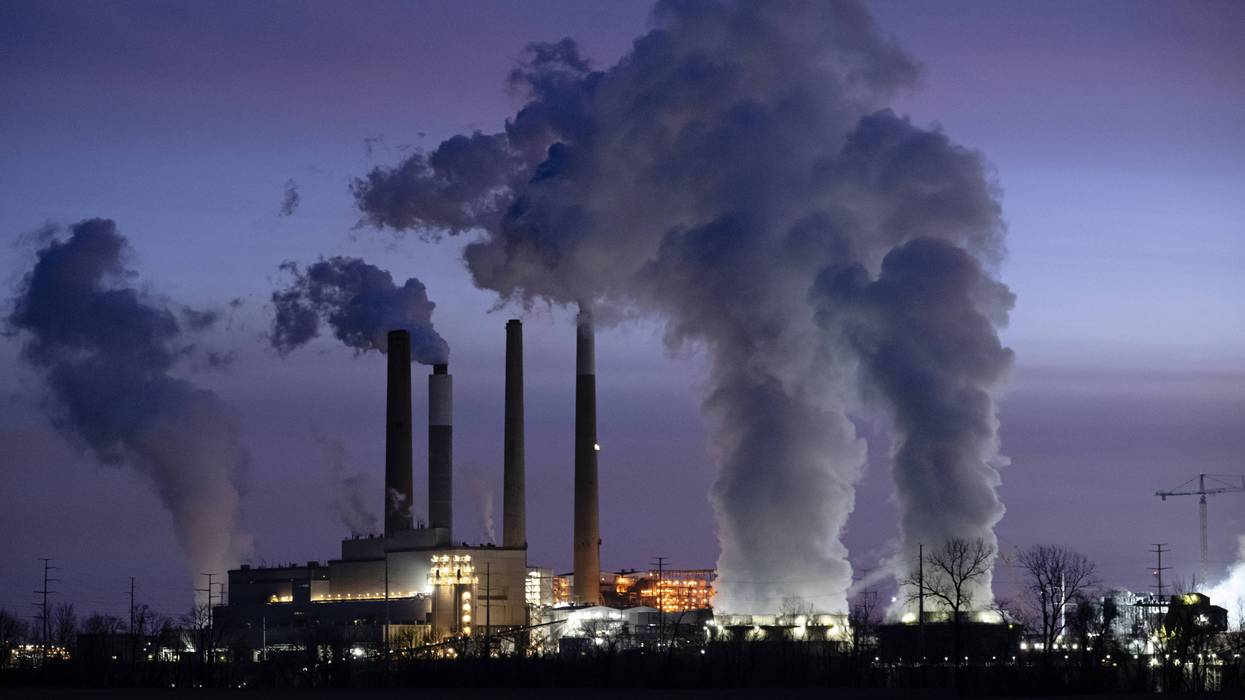
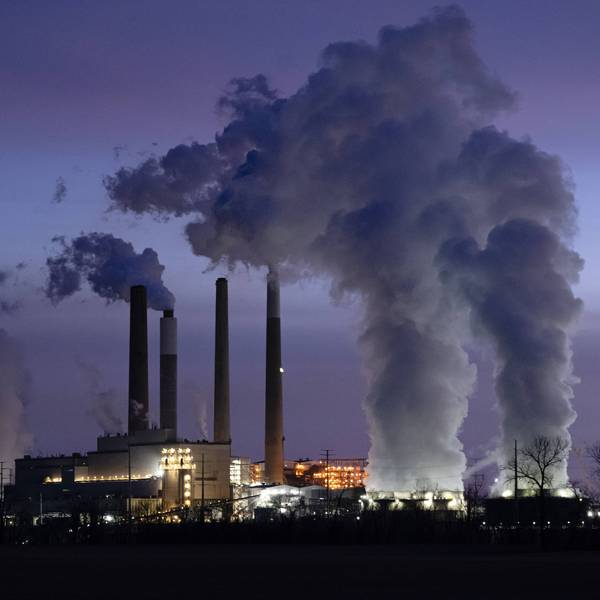
A pipeline explosion in Cameron Parish, Louisiana—a coastal community in the epicenter of the liquefied natural gas buildout—offers an object lesson in the immediate dangers posed by oil and gas expansion, frontline advocates warned.
The explosion occurred at around 11:00 am Central time on Tuesday on the Delfin LNG pipeline, injuring one worker, forcing nearby Johnson Bayou High School to shelter in place, and sending a wall of smoke and flame into the sky.
Community activist Roishetta Ozane of the Vessel Project of Louisiana said the blast "starkly illustrates the dangers of fossil fuel infrastructure, particularly its impact on vulnerable communities. This incident is a chilling reminder of the environmental injustice that disproportionately affects people of color, low-income populations, and especially fishermen."
Environmental justice campaigners and local residents, including fishers, have been pushing back in recent years against an LNG export boom in the Gulf South that threatens their local ecosystems, health, and livelihoods—not to mention the stability of the global climate.
"Today’s explosion and ongoing fire are a stark reminder that what they’re selling is highly combustible methane gas—a volatile fossil fuel.”
"This is a prime example of why we are fighting against this," Fisherman Involved in Sustaining Our Heritage (FISH) wrote in a post on Facebook in response to the news.
Cameron Parish is home to the largest LNG terminal in the country—Cheniere Energy's Sabine Pass—as well as Venture Global's controversial Calcasieu Pass terminal, which violated its air permits more than 2,000 times during its first year of operation. Residents say the pollution is harming their health and that dredging and export tankers are destroying habitat for local fisheries. The situation is only set to deteriorate, as last year the Trump administration approved construction of a second Venture Global terminal and allowed the company to increase exports from its first as part of its push to ramp up fossil energy production.
Delfin is part of the LNG expansion. It is constructing an offshore terminal consisting of three vessels connected to preexisting pipelines which will eventually be able to produce 4 million tons of methane gas. Preliminary actions were being performed on the line when it exploded Tuesday, Ashley Buller, assistant director of Cameron Parish's emergency preparedness department, told The Advocate.
The cause of the explosion is not yet known, though the Louisiana State Police have promised an investigation, but for watchdog groups documenting fossil fuel expansion in the state, it does not come as a surprise.
“Every minute of every day, countless corporations pump oil, gas, and chemicals across Louisiana via pipeline. That means at any given moment, a Louisiana community could be faced with a leak; an explosion; or contamination of their air, land, or water," said Anne Rolfes of the Louisiana Bucket Brigade. "The industry likes to use marketing terms like 'natural gas' to make their products seem benign, but today’s explosion and ongoing fire are a stark reminder that what they’re selling is highly combustible methane gas—a volatile fossil fuel.”
Ozane noted: "Fossil fuel pipelines pose significant risks due to leaks and explosions, exposing nearby residents to hazardous pollutants linked to severe health issues, including respiratory disorders and cancer. Often, these pipelines are placed in marginalized neighborhoods, a product of systemic inequities that prioritize corporate profit over community safety. The cumulative effects of pollution exacerbate existing health disparities, leaving these communities more vulnerable to chronic illnesses."
"The dangers extend beyond immediate incidents," she continued. "The entire lifecycle of fossil fuel extraction and consumption contributes to environmental degradation and climate change, disproportionately impacting marginalized groups. Furthermore, the rise of energy-intensive data centers, often powered by fossil fuels, adds another layer of pollution, perpetuating a cycle of harm."
"They don't only export the gas, they export the profits too."
FISH also pointed to the lingering effects of fossil fuel pollution, and criticized the official line reported in local media that there were "no off-site impacts from the explosion," calling it "one of the most disturbing industry lies."
"The air, the water, and our wetlands are impacted far beyond their chain link fences," the group wrote. "The people are not protected by chain link fences and concrete barriers."
FISH executive director Robyn Thigpen also emphasized to The Advocate that Cameron Parish's hospital had not reopened since it was damaged by Hurricane Laura in 2020, increasing the potential danger of pipeline explosions.
"It's really important that people understand they never reopened a hospital," she said.
The worker who was injured was transported to a facility in Port Arthur, Texas.
The climate crisis increases the chances of powerful storms like Laura and Rita, a 2005 hurricane which devastated the area and started a trend of long-term population decline, providing an example of how the fossil fuel industry threatens the people of Cameron Parish in multiple ways. Yet while it increases risks, the LNG boom has not brought greater prosperity to ordinary citizens of the parish.
"We are the largest exporter of natural gas in the world, and to look around this place, you would not know the wealth," For a Better Bayou Director James Hiatt told The Advocate. "Because they don't only export the gas, they export the profits too."
Community activists called on local and national leaders to reassess their reliance on fossil fuel energy sources and move toward safer renewable alternatives.
“Before approving the next pipeline, LNG export terminal, or [carbon, capture, and storage] project, Gov. [Jeff] Landry and state regulators should remember today’s incident and what these projects cost our communities," Rolfe said.
Ozane concluded: "Each explosion not only results in loss of life and property but also inflicts lasting trauma on families and communities. It is imperative to advocate for the cessation of new fossil fuel projects and demand clean energy alternatives. We must address the systemic inequalities that put vulnerable populations at risk, ensuring that no community is sacrificed for corporate gain."
Corporate profits in the US have surged in recent decades, with subscription-based businesses reporting some of the biggest revenue growth as more Americans use streaming services and sign up for "subscribe and save" models in a quest for ease and convenience.
While promising consumers that subscribing to a service will save them money and time, subscription-based businesses have made canceling the services increasingly difficult, contributing to Americans spending 60% longer on the phone with customer service lines than they did two decades ago.
And although corporations hardly need the extra money, making cancellations more arduous for customers can boost their revenue by anywhere from 14% to over 200%, according to the think tank Groundwork Collaborative, which released a report Monday on what it calls "the annoyance economy."
The labyrinthine processes that millions of Americans face each year when they try to cancel subscription services is just one part of the annoyance economy, according to Groundwork, which detailed the seemingly endless time, money, and patience people spend "just trying to get basic things done"—as well as efforts by corporations and the Trump administration to make sure it stays that way.
While millions are struggling with the rising costs of groceries, healthcare, housing, childcare, and just about everything else, the report explains how—thanks to corporate greed and a White House intent on enabling it—Americans are also shelling out at least $165 billion per year in fees as well as lost time.
In addition to cancellation processes, the annoyance economy includes the $90 billion people across the US spend every year on junk fees when they buy concert tickets, make hotel reservations, and order food delivery; rental application fees that keep people from even attempting to move to new housing that could put them closer to work or school; and administrative healthcare tasks like obtaining coverage information and resolving questions about premiums and deductibles.
"While seemingly minor, these little annoyances add up," wrote Groundwork policy fellow Chad Maisel and Stanford University economist Neale Mahoney, the authors of the report, who cited a 2019 survey that found 1 in 4 respondents delayed getting healthcare or avoided it altogether specifically because of the administrative tasks they had to complete in order to get an appointment and make sure it was covered.
"All told, American workers collectively spend about $21.6-billion-worth of time each year dealing with healthcare administration, between calls, claims, explanations, and paperwork, according to a recent analysis."
Another new poll from Data for Progress found that nearly 80% of Americans reported "at least a little frustration" when coordinating their healthcare and filling out health insurance paperwork.
"All told, American workers collectively spend about $21.6-billion-worth of time each year dealing with healthcare administration, between calls, claims, explanations, and paperwork," reads the report, citing another recent analysis. "Polling confirms this: More than 1 in 3 Americans report dealing with health insurance headaches more than 20 times per year."
With frustration over health insurance companies' practices increasingly common, reads the report, "policymakers are missing important opportunities to take on a handful of egregious and particularly annoying practices."
Lawmakers could require insurance companies to make it easy for patients to fill out and submit claims online—instead of downloading, printing, and physically mailing claim forms with itemized receipts as Cigna requires patients to do.
Congress could also create a "healthcare sludge unit" to monitor and root out "needless friction throughout the healthcare experience."
Such a project could leverage tools "like 'blind shopper' experiments, public feedback lines, and direct engagement with industry to surface and fix barriers that waste patients’ time and erode trust."
The report also takes on the spam texts and calls that have become all-to-familiar to anyone with a cellphone.
"Text messaging, once reserved for conversation with friends and family, now resembles our email spam folders, dominated by unsolicited offers from companies, politicians, and fraudsters," wrote Maisel and Mahoney, who shared that on the day they wrote about spam in the report, "one of us received five spam calls, a text from 'Victoria' offering a $500-a-day job, and two breathless fundraising messages from political candidates we’ve never supported—or even heard of."
Those spam communications were some of the more than 130 million scam and illegal marketing calls Americans receive each day and the nearly 20 billion texts that were sent each month over the past year—leading "virtually all respondents" to Data for Progress' poll to report that the calls and texts are at least "a little frustrating" and 68% call them "very frustrating."
State and federal lawmakers could and should take action against spam calls and texts, said Maisel and Mahoney. Congress should modernize the Telephone Consumer Protection Act (TCPA), which was passed in 1991—well before companies began inundating Americans' inboxes with the newest robocalling and texting software.
"If a platform automatically dials from a stored list of numbers, it’s now exempt from the TCPA’s rules," reads the report. "The result: far more robocall and spam text operations can legally target people without their consent. Congress should update the definition of autodialer to include any callers and texters who automatically contact stored numbers, unless there’s real human involvement in sending each message."
Former President Joe Biden's Federal Communications Commission tried to close the "lead generator loophole,” which allows third-party marketers to collect people's contact information and sell it to dozens, sometimes hundreds, of businesses, but companies sued over the FCC's action and won in court.
President Donald Trump could issue an executive order directing federal agencies "to leverage all available resources and authorities to end robocalls and spam texts once and for all," said Maisel and Mahoney.
But the authors noted that the Trump administration's mass layoffs across the government would make enforcement more difficult.
"The Department of Justice also needs to prioritize enforcement against bad actors," they wrote. "While the FCC can levy fines for violations, it cannot pursue their collection without the DOJ. Of the eight robocalling forfeiture orders referred by the FCC, the DOJ has pursued only two for collection."
In the case of the hoops consumers are made to jump through in order to cancel subscriptions and services, the report emphasizes that the federal government has made significant inroads before to help the public.
The Consumer Financial Protection Bureau (CFPB) intervened in 2023 and stopped Toyota Motor Credit from continuing its practice of routing all consumer calls through a hotline "where representatives were instructed to keep promoting products until a consumer asked to cancel three times, at which point they were told cancellation was only possible by submitting a written request."
Under the Biden administration, the Federal Trade Commission (FTC) was lauded by consumer advocates for its click-to-cancel rule in 2024, requiring sellers to “make it as easy for consumers to cancel their enrollment as it was to sign up."
But Trump's FTC last year delayed implementation of the rule after industry groups said that "it would take a substantial amount of time to come into compliance.” A federal appeals court then effectively killed the rule altogether.
While the fees that gradually trickle out of Americans' bank accounts into the annoyance economy are often small individually, the report emphasizes that they add up—and the consequences of these business practices and the government's failure to stop them "extend beyond wasted time and money."
"When life is reduced to jumping through an endless series of hoops—just to fix a billing error, secure a refund, or cancel a subscription—it breeds cynicism and disengagement," reads the report. "If the government can remove even a few of those obstacles, we can show the American people that someone is paying attention and begin the long process of rebuilding public trust."
The office of Vice President JD Vance made multiple posts commemorating the Armenian genocide on Tuesday, but was forced to take them down because the Trump administration doesn't formally recognize that the genocide happened.
Vance's X account posted a photo of the vice president and his wife, Usha, attending a wreath-laying ceremony at a memorial in the Armenian city of Yerevan. The post said the Vances were there "to honor the victims of the 1915 Armenian genocide."
But the post was swiftly taken down, with a Vance spokesperson blaming it on a staff member.
"This is an account managed by staff that primarily exists to share photos and videos of the vice president's activities," they said. "For the vice president's views on the substance of the question, I refer you to the comments he made earlier on the tarmac in response to the pool's question."
This was referring to Vance's comments to reporters about visiting the memorial, which were posted by an official White House account. "I'm the first vice president to ever visit Armenia. They asked us to visit the site... I wanted to go and pay my respects."
That post has since been deleted as well.
Alex Galitsky, the policy director for the Armenian National Committee of America (ANCA) reacted: "This is brazen genocide denial. An insult to the memory of the 1.5 million victims of the Armenian Genocide—and an affront to a community that fought tirelessly for decades to ensure recognition of that crime."
Historians widely agree that the Ottoman Empire's systemic killing and deportation of mostly Christian Armenians during the First World War constitutes one of the 20th century's worst genocides. According to the United States Holocaust Memorial Museum:
There were approximately 1.5 million Armenians living in the multiethnic Ottoman Empire in 1915. At least 664,000 and possibly as many as 1.2 million died during the genocide, either in massacres and individual killings, or from systematic ill treatment, exposure, and starvation.
But the government of Turkey continues to adamantly deny the genocide committed by its predecessor state to this day. And due to Turkey's status as a NATO ally, US presidents dating back more than half a century have likewise refused to describe the historic crime as a "genocide."
This began to change in 2019, when Congress passed a historic resolution finally recognizing the genocide more than a century after it began. In 2021, then-President Joe Biden became the first US president to formally acknowledge the genocide without ambiguity.
But in April 2025, after President Donald Trump returned to office, he rolled this acknowledgment back, referring to the mass killing as a "great catastrophe" and "one of the worst disasters of the 20th century" while evading the term "genocide."
Julien Zarifian, a professor of US history at the University of Poitiers in France, wrote that "Trump's reversal seemed to make genocide recognition taboo not only in the White House, but in the whole executive branch."
The return to a denialist stance put the US back into line not only with Turkey, but with Azerbaijan, with which Armenia has been locked in conflict over the disputed Nagorno‑Karabakh region for decades.
In 2023, more than 100,000 Armenians—virtually the whole population—were forced to flee the territory in what has been described as an ethnic cleansing by Azerbaijan, which occupied large parts of the area.
While the US has remained formally neutral in the conflict, it has provided hundreds of millions of dollars of security assistance to Azerbaijan under presidents of both parties, which critics say has emboldened Azerbaijan to act more aggressively. Azerbaijan notably has the steadfast backing of Turkey in the conflict, as well as key US ally Israel.
Vance's visit to Armenia was the first leg of a trip that continued to Azerbaijan, where he met with its leaders to discuss ending the conflict and to shore up an agreement that would give the US greater access to the region's natural resources.
Last August, Trump boasted of brokering a “peace deal” between the two nations, but Azerbaijan had not signed anything—only agreed to further talks.
One of the provisions of the deal pushed by the Trump administration is that Armenia would drop any legal claims against Azerbaijan over its human rights abuses, which Just Security analysts David J. Simon and Kathryn Hemmer said would be "thereby depriving Nagorno-Karabakh’s 150,000 victims of justice."
During a summit with Azerbaijani President Ilham Aliyev, Vance laid on the flattery: "Other than President Trump, the only leader in the world that has really good relations with both the Turks and the Israelis is President Aliyev," he said. "That means one, the food must be really good here, or two, he must be really charming. I can confirm that he's very charming."
Gev Iskajyan, the advocacy director of ANCA, responded: "Vance thinks Aliyev is really charming. Especially when he’s committing war crimes, rigging his own elections, or ethnically cleansing an entire people."
An immigration judge has terminated the Trump administration's effort to deport Rümeysa Öztürk, a doctoral student at Tufts University, for criticizing Israel, her lawyers announced on Monday.
Öztürk, a 30-year-old Turkish national, was snatched off the street by masked US Immigration and Customs Enforcement (ICE) in Massachusetts last March and was flown to an unsanitary detention center in Louisiana, where she spent 45 days before a judge ordered her release on bail.
The US State Department had revoked Öztürk's visa, accusing her of "support for Hamas," a designated terrorist group, and creating a “hostile environment” for Jewish students.
That accusation was based solely on an opinion piece she'd co-written with other Tufts students calling for the university to divest assets from Israel over its genocide in Gaza, which had killed over 50,000 people at the time, according to official figures.
An internal memo relied upon by Secretary of State Marco Rubio provided no evidence that Öztürk had expressed support for terrorist groups or participated in any sort of antisemitic harassment.
Documents unsealed last month by a Massachusetts judge later revealed that Rubio had approved Öztürk and several other students' deportations based solely on their advocacy for Palestinian rights.
It was for this reason that an immigration judge, Roopal Patel, an employee of President Donald Trump's own Department of Justice (DOJ), ultimately found that the Department of Homeland Security (DHS) had not met its burden to prove Öztürk’s removability and ordered her case to be dropped.
“Today, I breathe a sigh of relief knowing that despite the justice system’s flaws, my case may give hope to those who have also been wronged by the US government,” Öztürk wrote in a statement Monday. “Though the pain that I and thousands of other women wrongfully imprisoned by ICE have faced cannot be undone, it is heartening to know that some justice can prevail after all.”
Many of the international students who were initially detained by ICE over their advocacy have since been freed after judges ruled their detentions unlawful. But they still spent weeks or months in detention in some cases.
Jessie Rossman, legal director at the ACLU of Massachusetts, added that the decision "underscores the importance of allowing federal courts to review challenges to immigration detention" because otherwise "the government could punitively and unlawfully detain any noncitizen for months based solely on their speech so long as it simultaneously began removal proceedings."
Seth Stern, the chief of advocacy for the Freedom of the Press Foundation, said his organization is "thrilled that the effort to deport Rümeysa Öztürk is over," but that they "remain alarmed and disgusted that it ever happened."
"Öztürk’s case is arguably the most blatant press freedom violation of this century, and maybe the last century as well," he said. "The administration did not even bother to present a pretext for its actions—it arrested her, jailed her in horrific conditions, and sought to expel her solely because she expressed views shared by millions of Americans about one of the most important issues of our time."
Chip Gibbons, policy director of Defending Rights & Dissent, noted that the Trump administration "continues to [Öztürk] as a terrorist," even though "her only 'crime' was using the First Amendment."
Stern said that “they went after noncitizens first, not because they have any greater appreciation of the First Amendment rights of citizens, but because they’re the low-hanging fruit. They’d throw out all of us who dissent if they could.”
Investigative journalist Seth Harp has accused the New York Times of burying his interview with a prominent opinion columnist. He told Common Dreams that the paper is trying to silence his forceful critiques of US foreign policy.
In a post on social media Thursday, Harp blasted Ross Douthat, a conservative opinion columnist for the paper, after learning that a conversation the two had recorded last month had been cut.
“Ross Douthat challenged me to a debate on foreign policy,” Harp wrote. “We recorded a 90-minute segment for his show, Interesting Times, on January 15, 2026. But I defeated him so decisively that he refuses to air the footage. What an absolute coward.”
According to Douthat, the conversation between the two was “pegged to the Delta Force raid in Venezuela,” referring to President Donald Trump’s operation last month, which overthrew the South American nation’s president, Nicolás Maduro.
Though Trump himself has plainly stated that his goal was to forcibly open the nation’s vast oil reserves to be taken over by US corporations, the administration has papered over this nakedly imperialist justification with dubious claims that Maduro was at the helm of a multinational narcotics trafficking ring. Maduro has pleaded not guilty to related charges in US court.
This was where, Douthat said, Harp’s perspective was relevant. His recent Times bestselling book, The Fort Bragg Cartel, examines the long history of the US Army Special Forces’ own history of international drug trafficking, which culminated in a series of unsolved murders at the titular Army installation in North Carolina.
The day after US forces bombed Caracas in the January operation, which is estimated to have killed as many as 83 people—including dozens of civilians—Harp posted a photo of one of the Delta Force commanders who played a key role in the attack. For this, he was subpoenaed by the Republican-led House Oversight Committee, which accused him of “leaking classified intel” and “doxing” the official, even though the information was already publicly available.
According to Harp, the conversation was cordial at first but became prickly when the two began to discuss the recent attack on Venezuela.
"Again and again he tried to box me in with some kind of gotcha," Harp said. "For example, he sprung on me that I'd called Nicolás Maduro the 'rightful' president of Venezuela, and tried to make the discussion about the last election in Venezuela and abuses by the government security forces there."
"I replied that Maduro was the rightful president of Venezuela simply because he became president through Venezuela's own internal political processes, and that the US has no right to dictate to other countries who their leaders should be," he said. "Douthat had no response to that and appeared visibly thrown off balance. It was as if he had never encountered a real anti-imperialist critique of US foreign policy and was only prepared to deal with some weak sauce humanitarian liberal critique, which I'm not about."
Harp said the discussion also encompassed many other foreign policy topics, including “Israel’s genocide in Gaza, the war in Ukraine, the post-9/11 wars, and American military interventions since 1945 more broadly.”
He added that the pair “also discussed the methods by which these interventions were accomplished, specifically the use of large conventional armies versus special forces and proxies,” and that they “talked a lot about China and Russia, too.”
“I served in the military and have spent my entire adult life thinking and writing about these issues,” said Harp, an Army veteran. “My basic argument was that the United States has been so violent and aggressive since World War II that it has not only destabilized the entire world but also destroyed our own country from the inside, materially and politically.”
“Ross’ basic point of view was that while the US has done terrible things and killed millions of people in recent years, the world is a better place as a result of American hegemony,” Harp continued. “But his grasp on historical facts was so weak that he was unable to make a strong argument.”
“He frequently became confused and contradicted or reversed himself,” Harp explained. “Frustrated at his own befuddlement, he blew up and said: ‘We get it. You think the United States is uniquely evil.’”
Within days of the interview, Harp expressed fears that the Times might decide not to release it. On January 20, five days after his sit-down with Douthat, he wrote to one of his editors.
“I was somewhat surprised that Ross wasn’t better prepared to defend his point of view,” he said, according to a message he made available on social media. “They may decide to spike it; we’ll see.”
About three weeks after the conversation and after weeks of silence from the Times, Harp received a text message from one of the show’s producers, who told him, “We aren’t going to be able to make it work.”
“We were kind of pummeled by the news cycle in the last six weeks and are going to pivot away from this story,” the producer explained in the text message exchange.
“I had canceled a vacation to do the show in studio,” Harp told Common Dreams. “Twice they changed the date on me, so I was kept waiting for two weeks. Then, after they spiked the episode, they didn’t even bother to inform me. I didn’t learn about it until three weeks later, when I reached out to the producer. At that point, I asked for Ross’ email address so that I could speak to him about it directly and in private. The producer refused to put me in touch.”
Harp responded to the message, calling it “unbelievable cowardice on Ross’ part and a giant waste of my time.” He said he was going to “make it known what actually happened: Ross challenged me to a debate on foreign policy, got crushed, and doesn’t have the intellectual or journalistic integrity to air the footage.”
He later posted the text exchange to social media. He told Common Dreams he chose to go public because he “felt deeply offended by [The Times'] complete disrespect for my time and lack of professional courtesy.”
hey @DouthatNYT, release the debate ya coward https://t.co/2eMysOn4nn
— Nathan J Robinson (@NathanJRobinson) February 6, 2026
ross douthat has no time for a foreign policy discussion with seth harp but loads of time for this misogynistic culture war slop… https://t.co/ZIZDqTy8Kc pic.twitter.com/SaCkE3OMkV
— Erin Overbey (@erinoverbey) February 7, 2026
Harp's publication of the messages on social media resulted in a wave of backlash from others in the media, who accused Douthat of cowardice and the Times of burying the interview to protect him from embarrassment.
On Thursday, Douthat issued a response on social media.
Though the debate was recorded less than two weeks after Trump’s raid, he said the interview “had missed the ideal spot in the news cycle” for a conversation about Venezuela. He also said the interview, which he wanted to keep narrowly focused on Harp’s reporting about drug-dealing in the Special Forces, “became unmoored from Mr. Harp’s specific reporting in a way that undermined the first half of our conversation.”
“Interesting Times is a show where I try to give a lot of space to the guest’s perspective while posing challenging questions, creating episodes where the audience gets the best version of an idea or worldview that they might not have understood before,” Douthat continued.
Harp called this justification “hogwash,” pointing out that three of the most recent episodes of his show address such timely issues as the end of Roe v. Wade, questions about public trust after the Covid-19 pandemic, and church attendance statistics among young men.
“Anyone can look at your recent episodes and see that a debate between us on the US military and foreign policy would have been far more timely and relevant to the news cycle than any of them,” Harp wrote.
Douthat, one of the many Times columnists who enthusiastically supported the Bush administration’s War in Iraq more than two decades ago, has often given his platform to unapologetic supporters of US foreign military interventions.
The first interview he published after Trump’s Venezuela operation was a conversation titled “A Defense of US Intervention in Venezuela,” in which he hosted the notorious war hawk Elliott Abrams, who served as special envoy to Venezuela during Trump’s first term.
The neoconservative policy adviser, who’d previously worked for Presidents George W. Bush and Ronald Reagan. During that time, he championed US support for anti-communist death squads and dictators across Latin America and was later convicted for his participation in the Iran-Contra affair.
Douthat largely agreed with Abrams on the moral justifications for regime change in Venezuela, though he questioned the operation’s effectiveness in bringing about democracy.
Harp said that during their conversation weeks later, he disputed Douthat’s “sarcastic outburst,” accusing him of portraying America as a unique evil.
“I don’t think the US is unique or evil,” he told Common Dreams. “I don’t think in those sorts of religious terms. Rather, I think the US is only the latest in a very long history of military empires, but that its marriage to extractive capitalism makes it exceptionally violent, unstable, and short-lived.”
“This is a perspective to which New York Times readers are rarely exposed,” he went on. “It was an interesting and entertaining discussion all around, and no doubt would have garnered far more views than anything else that Ross has published recently. Sadly, Ross’ ego was a little battered.”
“I had tried to go easy on him as an interlocutor, not pointing out, for example, that I personally fought in the Iraq War while he merely promoted it in the pages of the National Review, even though both of us were of military age in the early 2000s,” he said. “I had kept it all above the belt and never attacked him personally. But I had laid bare the shallowness and inconsistency of his views on foreign policy.”
“Another pundit or host would have had the intellectual and journalistic integrity to publish the interview anyway,” he said. “Not Ross.”
The Texas Democrat accused US billionaires of "stealing from the American people, stealing the wealth that we created."
Texas Democratic US Senate candidate James Talarico turned the tables on a town hall questioner who asked him if he was pushing “class warfare” with his populist economic pitch and frequent criticism of billionaires.
Talarico responded that there is already class warfare in the US.
"It's the billionaires waging war against the rest of us, and right now the billionaires are winning," explained the Texas Democrat in a video clip of the town hall posted on social media Wednesday. "They've been winning for 50 years. Trickle-down economics is not a theory, it is theft."
A young man at our town hall asked if I was pushing class warfare.
I told him: “We already have class warfare in this country — billionaires are waging war on the rest of us.” pic.twitter.com/w238OfB8yH
— James Talarico (@jamestalarico) February 12, 2026
Talarico went on to accuse billionaires of "stealing from the American people, stealing the wealth that we created."
"It's why everyone is so angry right now," he continued. "It's why, no matter how hard you work, you can't seem to get ahead. The American people are not asking for a whole lot: A job we don't hate, a house big enough to raise a family in, and a little left over so we can go on vacation every once in a while. That is a lot harder than it should be in America."
Talarico's answer on "class warfare" came two days after a Monday report in the Wall Street Journal revealed that labor compensation in the US has fallen to its lowest percentage of gross domestic income since at least 1980, even as corporate profits have risen to the highest percentage of gross domestic income over that same period.
"The divergence between capital and labor helps explain the disconnect between a buoyant economy and pessimistic households," explained the Journal. "It will also play an outsize role in where the economy goes from here."
An analysis released in January by the Institute for Policy Studies (IPS) found that the collective wealth of US billionaires surged to $8.1 trillion in 2025, even as many working-class Americans struggled with basic expenses such as groceries, housing and healthcare.
"Let’s be clear: You don’t need immunity unless you are in fact responsible for the damages claimed in these lawsuits," said one climate organizer.
Weeks after the largest oil and gas trade organization in the US unveiled its 2026 policy agenda featuring the goal of shielding companies from "abusive state climate lawsuits," a Republican congresswoman acknowledged at a hearing Wednesday that GOP lawmakers are actively working to stop legal complaints and legislation that aim to hold the industry accountable for mounting climate harms.
At the House Judiciary Committee hearing in which the panel conducted oversight of Attorney General Pam Bondi's Department of Justice, Rep. Harriet Hageman (R-Wy.) informed Bondi that she is currently "working with [her] colleagues in both the House and Senate to craft legislation tackling" superfund laws like ones passed in Vermont and New York, which require fossil fuel giants to contribute to paying for climate damage wrought by their oil and gas extraction.
The legislation Hageman is working on would also aim to kill state and local climate lawsuits like one filed last month by Michigan alleging antitrust violations by fossil fuel companies and another filed by Boulder, Colorado against ExxonMobil and Suncor Energy subsidiaries. The parties in the latter case are awaiting a US Supreme Court review.
At the hearing, Bondi agreed with Hageman's assertion that such lawsuits and state laws "require a federal response" and said the Department of Justice would consider taking action to "protect federal supremacy over interstate emissions and energy policy."
“Multiple climate lawsuits are now advancing toward trial,” Hageman said. “Clearly this is an area in which Congress has a role to play."
Recent reporting suggests that Hageman's efforts are a response to the fossil fuel industry's lobbying to avoid accountability for climate disasters that have increasingly been linked to planetary heating, which international scientists agree is being caused by fossil fuel extraction—despite the congresswoman's dismissal of "speculative future climate change harms."
The American Petroleum Institute (API) said last month in its policy agenda that it aims to "stop extreme climate liability policy" and end the "expansion of climate 'superfund' policies."
Last year, 16 GOP state attorneys general proposed the creation of a "liability shield" for fossil fuel giants, while state legislators in Oklahoma and Utah have introduced bills to bar most civil lawsuits against companies over the emissions or their role in the climate emergency.
Hageman and other opponents of scientists' and experts' demand for a transition away from fossil fuels have suggested such lawsuits are unserious attempts to increase "mismanaged state budgets by imposing fees on consumers and businesses," as the congresswoman claimed.
API president Mike Sommers said last month that the mounting legal challenges are “denying facts, delaying progress, and ignoring the realities of rising demand"—despite the fact that an analysis by climate think tank Ember last year found a growing expansion of renewable energy worldwide while the Trump administration insists on reviving coal production and killing solar and wind power projects.
"Congress should not close the courthouse doors to communities seeking redress. Big Oil is not entitled to special immunity from the consequences of its conduct.“
Vermont Law School professor Pat Parenteau told ExxonKnews in December that the efforts to shield companies from climate liability suggest that fossil fuel giants and proponents like Hageman know that lawsuits like Michigan's and Boulder's would likely stand up in court.
"If these cases are as frivolous as the oil companies’ briefs pretend, then why in the world are you busting your butt to get a declaration of immunity from Congress?” said Parenteau.
Cassidy DiPaola, communications director for the Make Polluters Pay campaign, emphasized that "a federal liability shield for fossil fuel companies would not lower energy prices or ease the cost of living. It would simply shift more of the financial burden onto working families and local governments while insulating one of the most profitable industries in history from accountability."
"Congress should not close the courthouse doors to communities seeking redress," said DiPaola. "Big Oil is not entitled to special immunity from the consequences of its conduct.“
Climate lawsuits have been filed against companies by 11 states including Maine, California, and Rhode Island, and in addition to the Boulder case, lawsuits filed in Honolulu and Washington, DC are advancing toward trial after courts denied the defendant's motions to dismiss them.
Hageman announced her effort to stop climate liability lawsuits and laws the same day that new research led by Oregon State University ecology professor William Ripple was published in the journal One Earth, showing that multiple critical Earth systems are closer to becoming unstable than previously thought, due to the climate emergency.
That pattern is putting the planet on a "hothouse" path, the scientists warn, with feedback loops amplifying the effects of planetary heating like extreme heatwaves and weather disasters.
“As communities across the US move closer to putting Big Oil companies on trial to make them pay for the damage their climate lies have caused, the fossil fuel industry is panicking and pleading with Congress for a get-out-of-jail-free card," said Richard Wiles, president of the Center for Climate Integrity.
“Let’s be clear: You don’t need immunity unless you are in fact responsible for the damages claimed in these lawsuits," he said. "A liability shield for Big Oil would bar the courthouse doors for communities across the country and stick US taxpayers with the massive and growing bill for climate damages, while bailing out corporate polluters from having to pay for the mess they made."
"I will not be bullied," said Carrie Prejean Boller. "I have the religious freedom to refuse support for a government that is bombing civilians and starving families in Gaza, and that does not make me an antisemite."
A conservative Catholic was expelled from President Donald Trump's so-called Religious Liberty Commission this week over remarks at a hearing on antisemitism in which she pushed back against those who conflate criticism of Israel and its genocidal war on Gaza with hatred of Jewish people.
Religious Liberty Commission Chair Dan Patrick, who is also Texas' Republican lieutenant governor, announced Wednesday that Carrie Prejean Boller had been ousted from the panel, writing on X that "no member... has the right to hijack a hearing for their own personal and political agenda on any issue."
"This is clearly, without question, what happened Monday in our hearing on antisemitism in America," he claimed. "This was my decision."
Patrick added that Trump "respects all faiths"—even though at least 13 of the commission's remaining 15 members are Christian, only one is Jewish, and none are Muslim, Hindu, Buddhist, or other religions to which millions of Americans adhere. A coalition of faith groups this week filed a federal lawsuit over what one critic described as the commission's rejection of "our nation’s religious diversity and prioritizing one narrow set of conservative ‘Judeo-Christian’ beliefs."
Noting that Israeli forces have killed "tens of thousands of civilians in Gaza," Prejean Boller asked panel participant and University of California Los Angeles law student Yitzchok Frankel, who is Jewish, "In a country built on religious liberty and the First Amendment, do you believe someone can stand firmly against antisemitism... and at the same time, condemn the mass killing of Palestinians in Gaza, or reject political Zionism, or not support the political state of Israel?"
"Or do you believe that speaking out about what many Americans view as genocide in Gaza should be treated as antisemitic?" added Prejean Boller, who also took aim at the International Holocaust Remembrance Alliance (IHRA) Working Definition of Antisemitism, which has been widely condemned for conflating criticism of Israel with anti-Jewish bigotry.
Frankel replied "yes" to the assertion that anti-Zionism is antisemitic.
Prejean Boller also came under fire for wearing pins of US and Palestinian flags during Monday's hearing.
"I wore an American flag pin next to a Palestinian flag as a moral statement of solidarity with civilians who are being bombed, displaced, and deliberately starved in Gaza," Prejean Boller said Tuesday on X in response to calls for her resignation from the commission.
"I did this after watching many participants ignore, minimize, or outright deny what is plainly visible: a campaign of mass killing and starvation of a trapped population," she continued. "Silence in the face of that is not religious liberty, it is moral complicity. My Christian faith calls on me to stand for those who are suffering [and] in need."
"Forcing people to affirm Zionism as a condition of participation is not only wrong, it is directly contrary to religious freedom, especially on a body created to protect conscience," Prejean Boller stressed. "As a Catholic, I have both a constitutional right and a God-given freedom of religion and conscience not to endorse a political ideology or a government that is carrying out mass civilian killing and starvation."
Zionism is the movement for a homeland for the Jewish people in Palestine—their ancestral birthplace—under the belief that God gave them the land. It has also been criticized as a settler-colonial and racist ideology, as in order to secure a Jewish homeland, Zionists have engaged in ethnic cleansing, occupation, invasions, and genocide against Palestinian Arabs.
Prejean Boller was Miss California in 2009 and Miss USA runner-up that same year. She launched her career as a Christian activist during the latter pageant after she answered a question about same-sex marriage by saying she opposed it. Then-businessman Trump owned most of Miss USA at the time and publicly supported Prejean Boller, saying "it wasn't a bad answer."
Since then, Prejean Boller has been known for her anti-LGBTQ+ statements and for paying parents and children for going without masks during the Covid-19 pandemic.
The Council on American-Islamic Relations (CAIR) commended Prejean Boller Wednesday "for using her position to oppose conflating criticism of Israel with antisemitism and encourage solidarity between Muslims, Christians, and Jews," calling her "one of a growing number of Americans, including political conservatives, who recognize that corrupted politicians have been trying to silence and smear Americans critical of the Israeli government under the guise of countering antisemitism."
"We also condemn Texas Lt. Gov. Patrick’s baseless and predictable decision to remove her from the commission for refusing to conflate antisemitism with criticism of the Israel apartheid government," CAIR added.
In her statement Tuesday, Prejean Boller said, "I will not be bullied."
"I have the religious freedom to refuse support for a government that is bombing civilians and starving families in Gaza, and that does not make me an antisemite," she insisted. "It makes me a pro-life Catholic and a free American who will not surrender religious liberty to political pressure."
"Zionist supremacy has no place on an American religious liberty commission," Prejean Boller added.