

SUBSCRIBE TO OUR FREE NEWSLETTER
Daily news & progressive opinion—funded by the people, not the corporations—delivered straight to your inbox.
5
#000000
#FFFFFF
To donate by check, phone, or other method, see our More Ways to Give page.
Daily news & progressive opinion—funded by the people, not the corporations—delivered straight to your inbox.
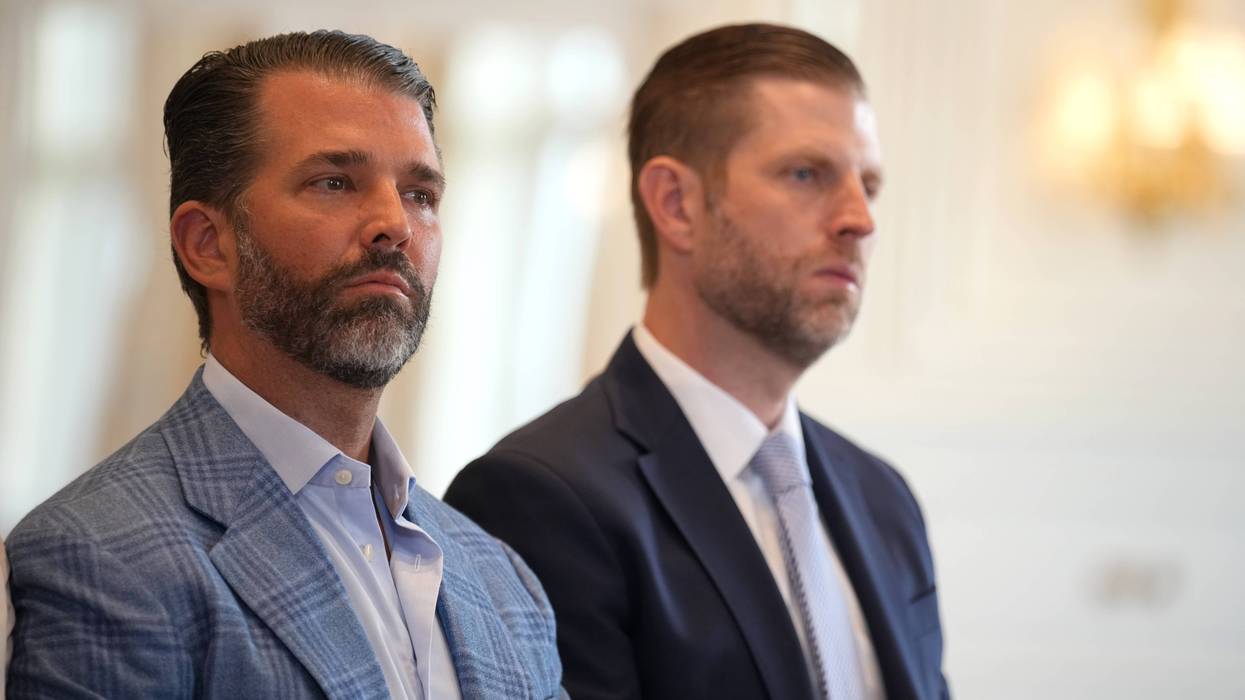
Asking for an investigation, Rep. Robert Garcia noted that the Department of Defense “repeatedly awarded lucrative DOD contracts to companies after they became affiliated with the president’s sons.”
The top Democrat on the House Oversight Committee is urging the watchdog overseeing the Pentagon to investigate "shady" defense contracts that may have benefited the family of President Donald Trump.
Rep. Robert Garcia (D-Calif.), the ranking member of the Oversight Committee, sent a letter on Friday to the Department of Defense inspector general, Platte B. Moring III, calling for an investigation after the administration "repeatedly awarded lucrative DOD contracts to companies after they became affiliated with the president’s sons," Eric and Donald Trump Jr.
"While Trump’s illegal war in Iran is driving up gas and grocery bills for working families, his sons are cashing in on defense contracts funded by hardworking taxpayers," Garcia said.
He pointed to a contract awarded last week for the Air Force to buy an undisclosed number of interceptor drones from the West Palm Beach-based company Powerus, drones that Bloomberg reported have never been used in combat. The company has not disclosed the terms of the deal or the size of the contract.
But the deal instantly raised eyebrows, given that just a month before, the Trump sons were brought on board as Powerus investors after a golf course company they backed, Aureus Greenway Holdings, announced plans to merge with the drone manufacturer.
The Guardian reported that the company had pushed hard for its technology to be sold to Persian Gulf countries facing attacks from Iran in retaliation for the war that the elder Trump started. “These countries are under enormous pressure to buy from the sons of the president so he will do what they want,” Richard Painter, a former chief White House ethics lawyer under President George W. Bush, told the paper.
Garcia also pointed to a $24 million contract awarded last month to Foundation Future Industries, a company that produces humanoid robots designed to participate in warfare. Similarly, just a month before the lucrative contract was announced, Eric Trump became chief strategy adviser for Foundation Future after previously investing in the company.
"Since the start of President Trump’s second term, his adult children have started conspicuously involving themselves in a variety of defense-related contracting firms with specialties including rockets, robots, martial arts, and drones," Garcia wrote. "These new engagements come despite little history of the Trump family working in those sectors prior to January 2025. Many of these firms have then received grants, loans, and contracts following the Trump family involvement, raising questions about the ability of these firms to fulfill their obligations."
"Eric Trump and Donald Trump Jr.’s purchases, consultancies, and advisory roles create an unprecedented intertwining of President Trump’s personal financial interests with US policy and national security," Garcia continued. "Each new venture opens new opportunities to direct DOD funds to the first family’s pockets, and the Trump Administration appears to be taking advantage of those opportunities."
The weapons contracts are part of a much larger pattern of the Trump children being put in positions to profit from administration contracts.
The Financial Times reported in December that during the first year of Trump's presidency, his administration awarded more than $735 million in contracts to companies in the portfolio of 1789 Capital, a fund created by pro-Trump donors that Donald Trump Jr. joined in 2024.
Trump Jr. said last year that he and the 1789 firm "understand what the administration wants to do, because we helped craft some of that messaging," which Garcia described in Friday's letter as an admission "that the Trump family is using insider information for its own business interests."
Democrats in Congress have repeatedly demanded answers from the Defense Department about its processes for preventing self-dealing by Trump's sons and others with ties to the president.
In response to a letter sent in January by Sens. Elizabeth Warren (D-Mass.) and Richard Blumenthal (D-Conn.), the Defense Department said in March that its primary method of mitigating conflicts of interest is "through the diligent collection and review of financial disclosure forms for employees."
Garcia said that "this does not prevent Trump administration officials from directing taxpayer dollars with the purpose of enriching the Trump family, nor does it prevent the Trump family from profiting from insider knowledge of future Pentagon plans."
Noting the nearly $2.5 billion it has raked in through cryptocurrency and other digital investments, according to an estimate by Democrats on the House Oversight Committee, Garcia said that "given this pattern of using the presidency for personal grift, the Trump family’s ventures into defense contracting are all the more alarming."
Garcia requested that the department open an investigation into what safeguards exist to prevent self-dealing by the Trump family and to disclose what contracts it currently has with companies tied to them and how they were evaluated for potential conflicts of interest.
He said, "The American people deserve to know that DOD awards contracts of taxpayer dollars ethically and prioritizes the best solutions for our national security—not who can pay the Trump family more."
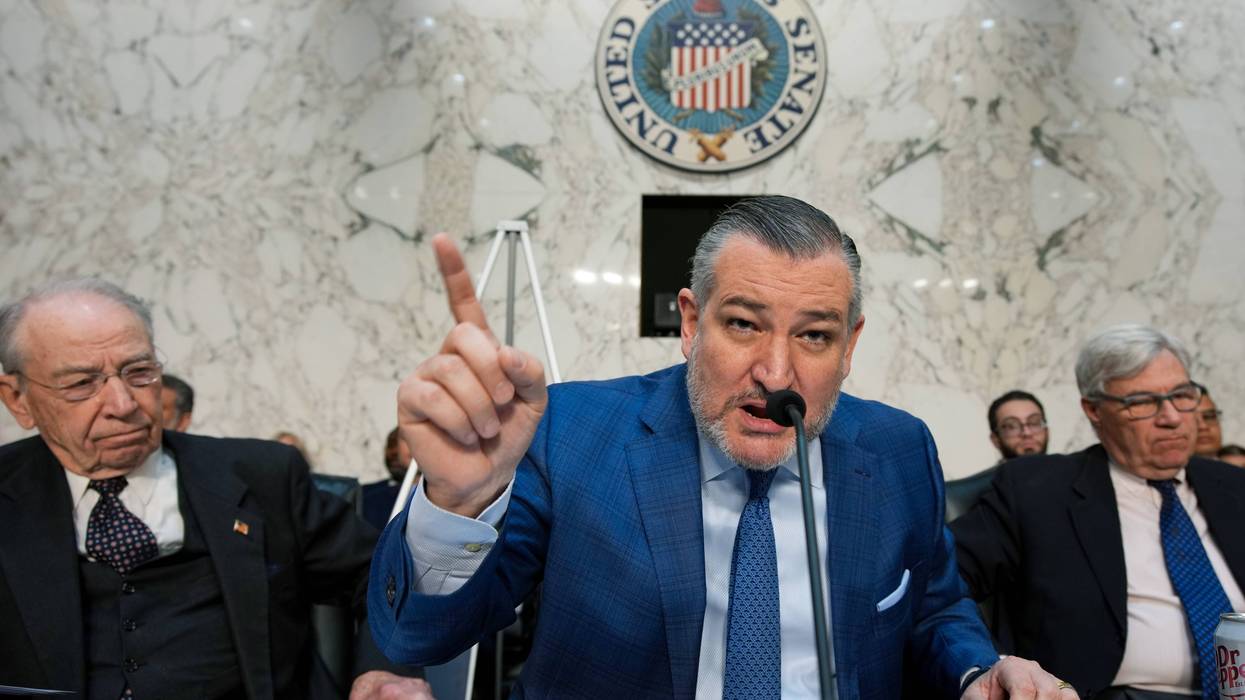
One advocate said the Texas Republican laid bare the "two-pronged strategy to push Social Security privatization: Creating the Trump accounts with one hand and gutting the Social Security Administration with the other."
Republican Sen. Ted Cruz said during a public conference this week that the so-called Trump Accounts established under the GOP's 2025 budget law represent a viable path toward Social Security privatization—something the Texas lawmaker described as a "dirty little secret."
During a panel discussion at the Milken Institute Global Conference in California, Cruz said that "conservatives in America, for 50 years... have been trying to do Social Security personal accounts." Cruz, who lamented the failure of Bush-era efforts to privatize Social Security, described such personal accounts as vehicles into which the payroll taxes that finance current Social Security benefits could be diverted.
In the not-too-distant future, Cruz envisioned, "we're going to be able to go to parents and say, 'Hey, you know that Trump Account your kid has? ... Wouldn't you like to be able to keep a portion of your tax payments that you're paying already and, instead of sending it to Uncle Sam, wouldn't you like to have a Trump Account just like your kid does?'''
"My prediction is, within five years, that is going to have a really compelling constituency," the Texas Republican added.
🚨🚨🚨
Ted Cruz says the quiet part out loud…
Trump Accounts are a scheme to privatize Social Security.
HANDS OFF OUR EARNED BENEFITS! pic.twitter.com/Oo3owRF7bM
— Social Security Works ❌👑 (@SSWorks) May 8, 2026
Linda Benesch, vice president of communications at the progressive advocacy group Social Security Works, told Common Dreams that Cruz's comments laid bare the "two-pronged strategy to push Social Security privatization: Creating the Trump Accounts with one hand and gutting the Social Security Administration with the other."
Benesch pointed to the remarks of an anonymous Social Security Administration (SSA) worker, who warned in comments to The New Yorker earlier this week that privatization advocates plan to point to the decimated agency and declare, "Look how Social Security sucks."
"They’ve been trying to privatize it for decades," said the SSA worker. "Now this will give them the excuse.”
Benesch said Friday that Cruz is "giving away the other half" of the Republican scheme by promoting the eventual expansion of Trump Accounts, investment vehicles under which children born between January 1, 2025 and December 31, 2028 are eligible for $1,000 in "seed money" from the federal government. Parents of eligible children can contribute up to $5,000 per year to the accounts.
Cruz's comments are not the first time a Republican official has openly characterized Trump Accounts as a potential avenue for Social Security privatization.
"In a way, it is a backdoor for privatizing Social Security," US Treasury Secretary Scott Bessent said last summer. "Social Security is a defined benefit plan paid out that—to the extent that if all of a sudden these accounts grow, and you have in the hundreds of thousands of dollars for your retirement—then that's a game changer, too."
It’s been twenty years since Bush tried to do Social Security private accounts and they still haven’t realized workers’ Social Security taxes pay for *current retiree* benefits and not future benefits so you can’t do this without cutting current retiree benefits. https://t.co/eq9OnuhXVr pic.twitter.com/vguJN6pfuO
— Brendan Duke (@Brendan_Duke) May 8, 2026
Axios reported Friday that "the idea that Trump Accounts could replace or augment Social Security is something that has been talked about behind closed doors with lawmakers."
"But no one has wanted to touch that third rail, at least publicly," the outlet added, citing a person familiar with the private conversations.
Max Richtman, president and CEO of the National Committee to Preserve Social Security and Medicare, noted in a Friday statement that polling has found little support for privatizing Social Security, with a 2022 survey finding that just 15% of American voters back the idea.
"Turning over Americans’ hard-earned benefits to Wall Street would expose future retirees to unnecessary risk while lining the pockets of the financial elites who donate to Republicans," said Richtman. "Ted Cruz, Donald Trump, and their Republican allies should realize that the people will not stand for privatization of their hard-earned benefits, and we in the advocacy community will continue to ensure that it never happens."
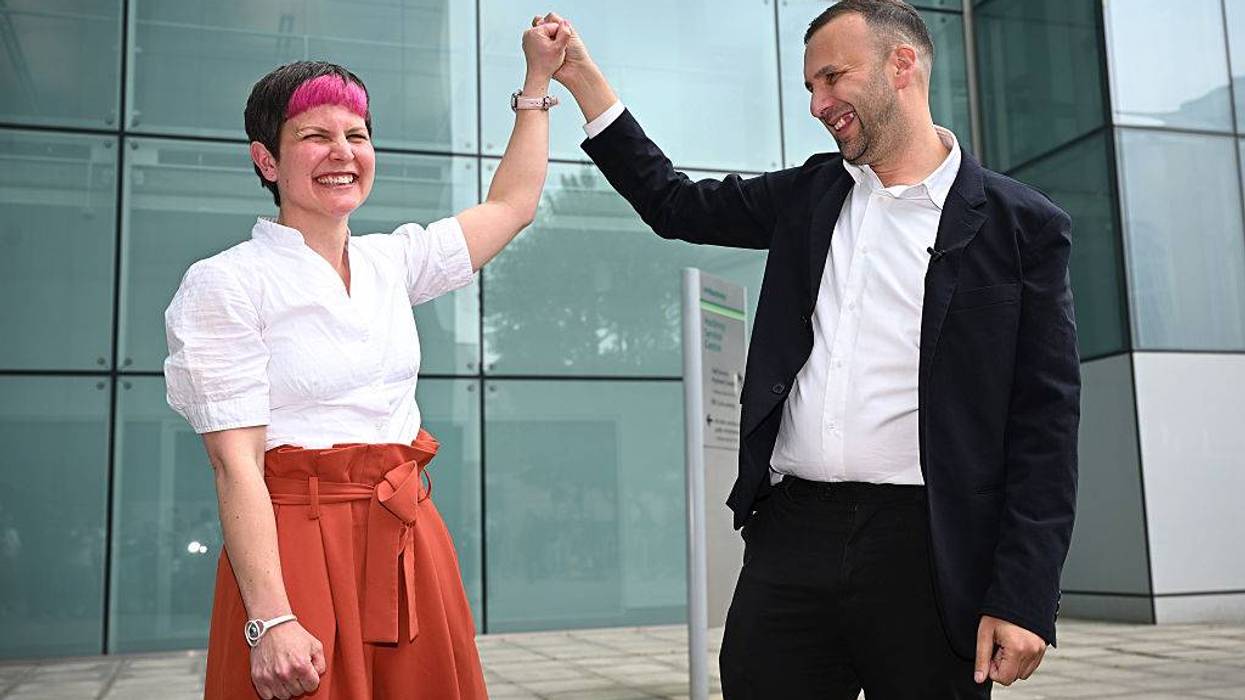
"People have made it clear that they are desperate for an alternative to this failing Labour government," said Zoë Garbett, the victorious Green Party Hackney mayoral candidate.
The UK's Labour Party got a political thrashing from both the progressive left and the reactionary far right in local elections on Thursday, with BBC reporting that the center-left party of Prime Minister Keir Starmer has lost at least 490 council seats so far.
The biggest winner from Labour's collapse was the far-right Reform Party, led by Nigel Farage, which has gained over 650 seats as of this writing.
However, the triumph of Reform was not the only notable development, as the left-wing Green Party, with a focus on uplifting the working class by challenging corporate power, gained at least 96 seats.The centrist Liberal Democrats, meanwhile, also took a bite out of Labour's share of the vote by securing 36 seats and possibly more.
Green Party leader Zach Polanski said the elections marked a turning point in UK politics as both Labour and the Conservative Party, traditionally the two largest parties in the country, collectively lost more than 700 seats.
"This is an historic victory," Polanski said in the wake of the results. "It's the first time the Green Party has ever won a directly elected mayor. Two-party politics is not just dying, it is dead, and it is buried."
Polanski suggested that the real coming fight for the future of the country would be between his party and Reform, which has positioned itself as anti-immigration and anti-European Union.
In a social media post, Polanski boasted his party had "gained seats across the country and an increase in our vote share almost everywhere we've stood."
"All over the UK people are voting to end Rip Off Britain," Polanski added.
Zoë Garbett, the Green Party candidate who won the mayoral race in the longtime Labour stronghold of Hackney, told The Guardian that her victory shows "people have made it clear that they are desperate for an alternative to this failing Labour government."
"It’s not old politics... versus new parties," Garbett said. "This is about a system of fear versus a movement of hope."
Writing in The Times, UK political analyst John Curtice said the evidence was clear the Greens had helped inflict severe damage on Labour, even though Reform was the chief beneficiary of Labour's collapse.
"Both Reform and the Greens have been able to inflict significant damage on Labour," wrote Curtice. "It appears that around half of Labour’s losses have been to Reform. This reflects the fact that, at 26 per cent, Reform’s average share of the vote in the BBC’s sample is well above the 16% recorded by the Greens. Nevertheless, Labour’s vote has tended to suffer more when the Greens have recorded a strong vote than when Reform have done."
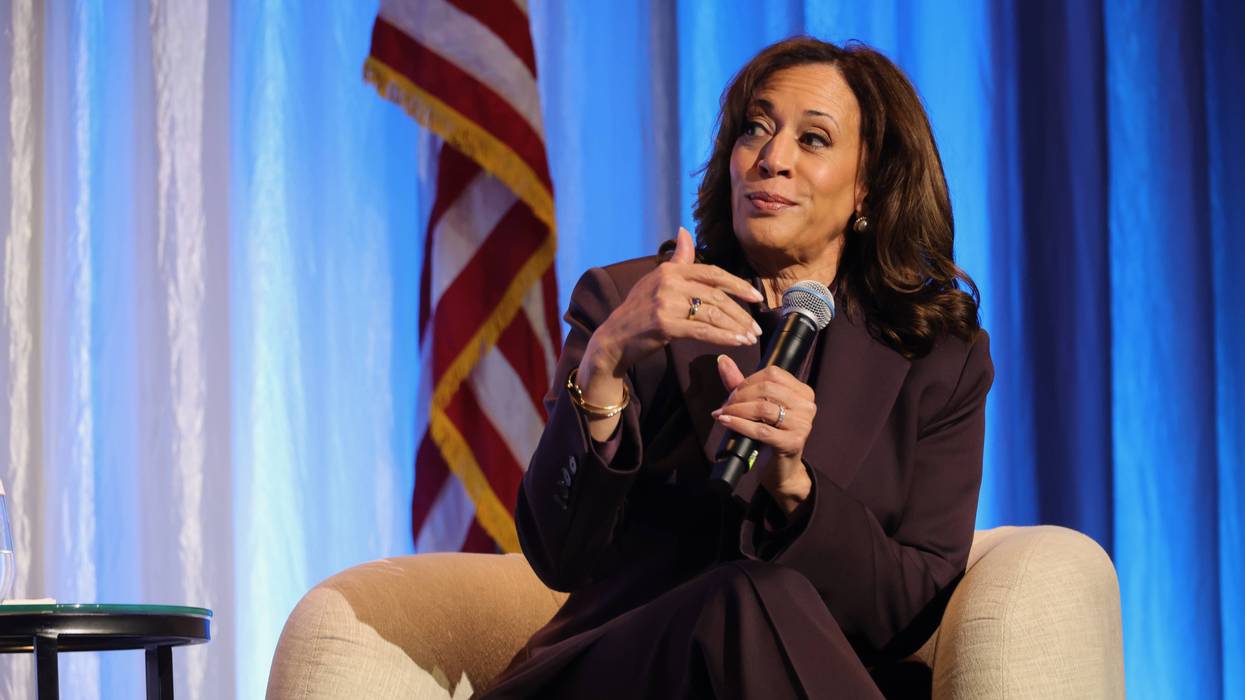
"Saying so privately to some big donors is very different than publicly calling for transparency from the DNC, which is badly needed," said Norman Solomon of RootsAction, which has led calls for the release.
Even former Vice President Kamala Harris reportedly "has no problem with a public airing" of the Democratic National Committee's internal "autopsy" report on her 2024 loss to Republican President Donald Trump—which the DNC has continued to conceal, despite mounting demands for transparency.
Harris' position was reported Thursday by NBC News, which noted that "while she indicated to donors that she had no issue with releasing it, Harris has not discussed the postmortem with DNC Chairman Ken Martin and did not know about his decision to keep it under wraps until it happened."
NBC cited "a person who has heard the conversations," one of multiple sources journalists Jonathan Allen and Natasha Korecki spoke with for their broader report exploring "turmoil over the Democratic Party’s future" and Harris' consideration of a 2028 run.
For months, Martin has resisted pressure to release the autopsy—which, as Axios revealed in February, found that the Biden administration's support for Israel's genocidal assault on Palestinians in the Gaza Strip contributed to Harris' defeat.
Citing a "person close to Harris," NBC also reported Thursday that the former VP "is signaling privately that she has more to say about the Middle East now that she is freed from the Biden White House policy," and "she is likely to do so after the midterm elections," either "from the perspective of a party elder or from the perspective of a candidate seeking votes."
While touring the country for the book she wrote after her loss, Harris has publicly acknowledged that she is weighing another White House run. Though the 2028 election is two and a half years away, she has led early polling. However, the party's potential primary field is incredibly crowded, featuring dozens of current or former governors and members of Congress.
Potential contenders include governors from the Trump 2.0 era—such as Gavin Newsom of California, JB Pritzker of Illinois, Andy Beshear of Kentucky, and Gretchen Whitmer of Michigan—as well as leading progressive voices in Congress, such as Reps. Ro Khanna (D-Calif.) and Alexandria Ocasio-Cortez (D-NY).
Norman Solomon, national director of RootsAction, which has spearheaded calls for publishing the full postmortem, wrote in a recent opinion piece for Common Dreams that "Martin's concealment of the autopsy report puts a thumb on the scale for one candidate: Kamala Harris."
Solomon highlighted the DNC's reported conclusion about the role of the Gaza genocide in the election result, and suggested that "renewed attention to the Harris 2024 finances would also be unwelcome."
In response to Harris' reported remarks to donors, Solomon said Thursday that "more than four months have passed since Martin announced he was reneging on his promise to release the autopsy.
"But Harris still hasn't made any public statement that she believes it should be released," he added. "Saying so privately to some big donors is very different than publicly calling for transparency from the DNC, which is badly needed."